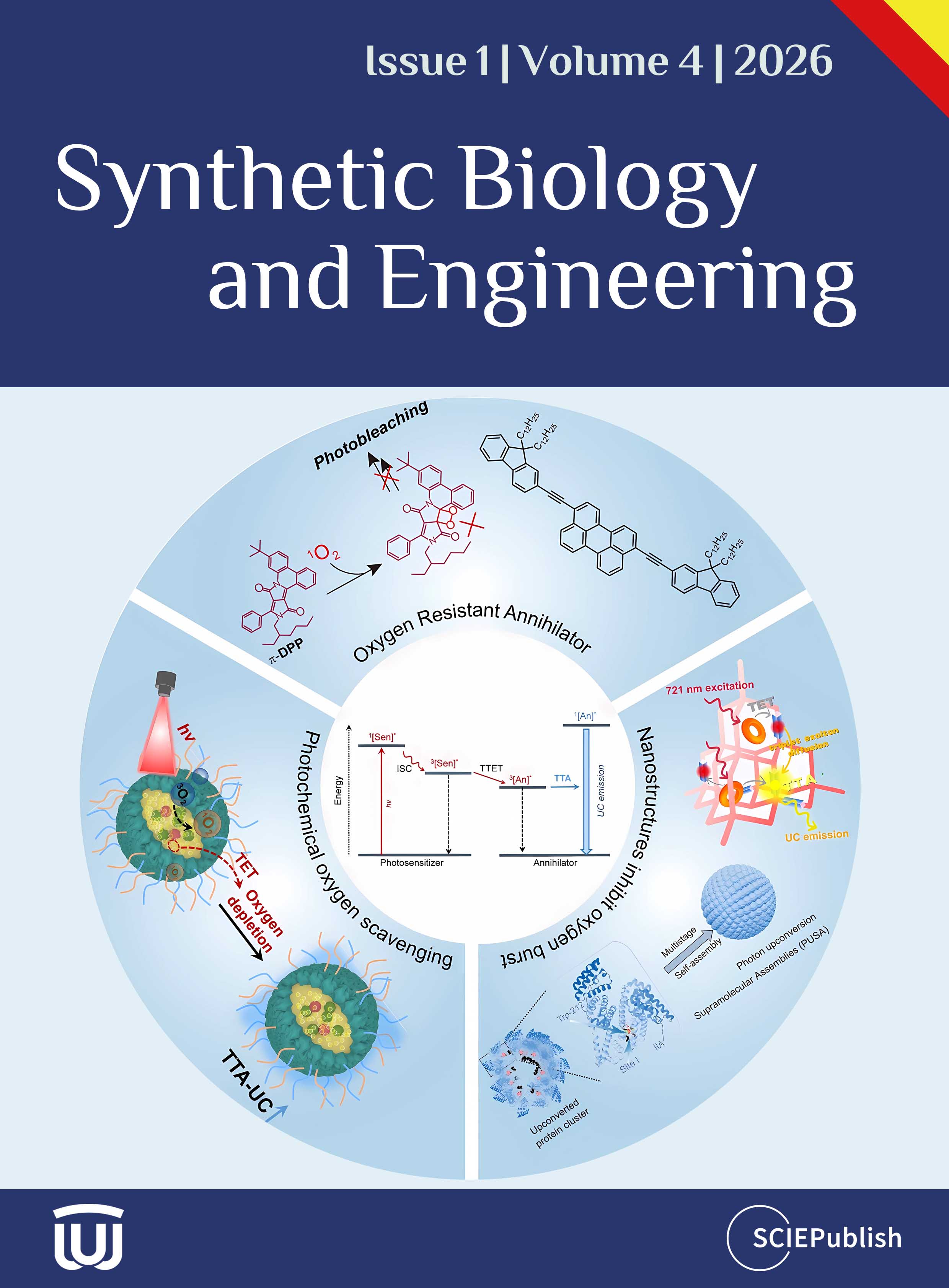
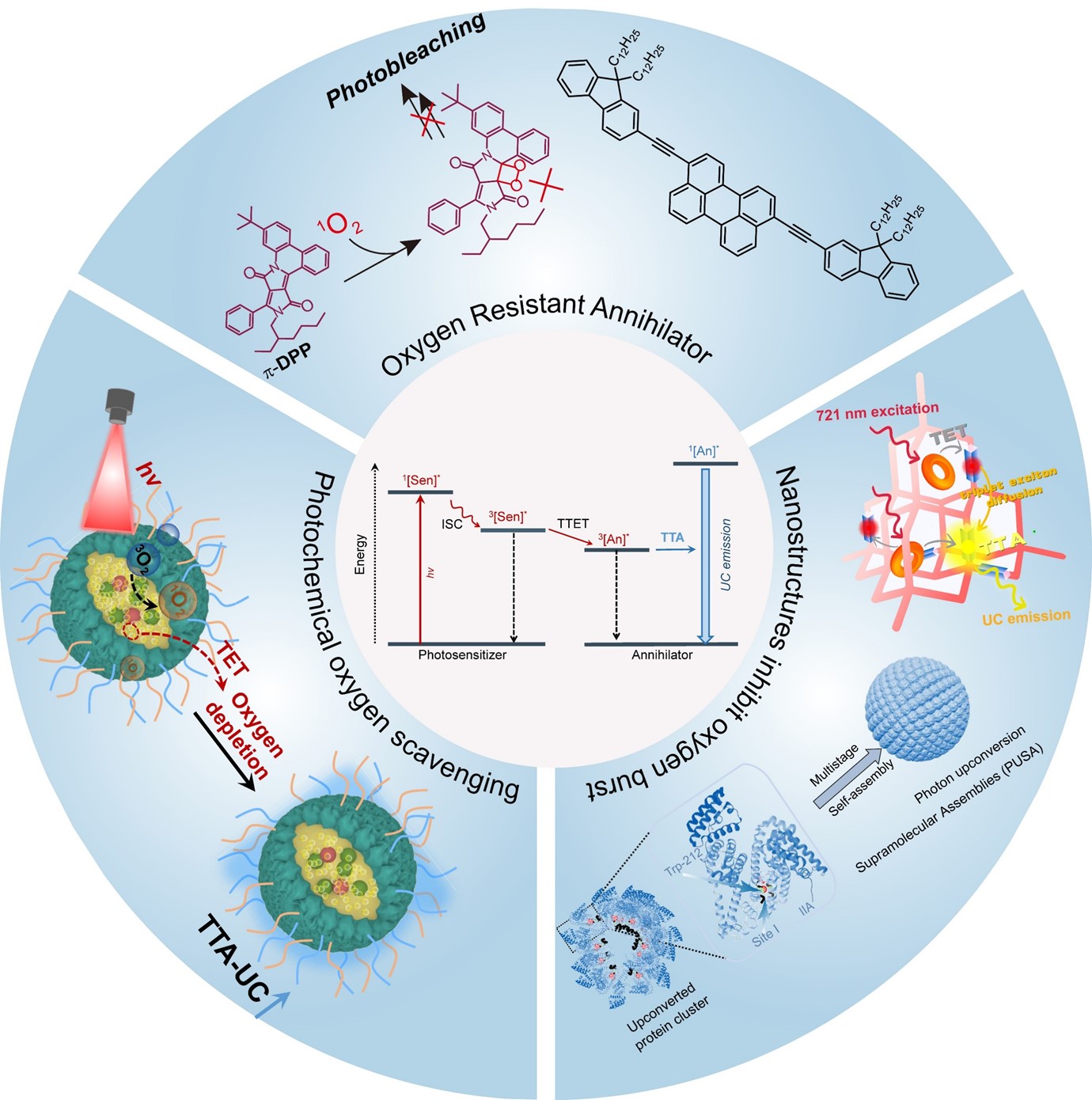
Triplet–triplet annihilation upconversion (TTA-UC) is an emerging class of photonic upconversion materials notable for low excitation power thresholds, high upconversion quantum yields, and tunable absorption and emission profiles. These unique features give TTA-UC materials significant potential across diverse fields such as chemistry, biology, and materials science. A typical TTA-UC system consists of sensitizers and annihilators, functioning through a sequence where the sensitizer absorbs photons and transfers triplet energy to the annihilator via triplet–triplet energy transfer, followed by triplet–triplet annihilation (TTA) that emits higher-energy photons. Because TTA-UC materials can be excited by long-wavelength light, they overcome the limitations in penetration depth of conventional fluorescence technologies, showing great promise for applications such as deep-tissue imaging, targeted photodynamic therapy, and precise optogenetic modulation. However, molecular oxygen causes non-radiative decay pathways that severely quench upconversion efficiency, posing a major challenge for practical use. Over the past decade, researchers have developed various innovative strategies to counteract oxygen-induced quenching. This review systematically summarizes key scientific approaches to creating high-performance, oxygen-tolerant TTA-UC materials, with a focus on their underlying mechanisms. First, we discuss molecular engineering strategies involving electron-deficient groups and conformational control to improve the photostability of TTA-UC chromophores. Second, we describe the fabrication of oxygen-resistant TTA-UC nanoparticles using reductive oil droplets as soft templates. Finally, we discuss nanostructure-mediated optimization of intermolecular triplet energy transfer dynamics to enhance oxygen resilience. A critical evaluation of the advantages and limitations of each approach is provided. Additionally, we highlight key challenges, including improving the upconversion efficiency of near-infrared-responsive TTA-UC, developing novel nanoparticle fabrication methods, and refining surface bioconjugation chemistry. We conclude by exploring prospects for integrating TTA-UC with synthetic biology techniques to design biosynthetic upconversion proteins, potentially establishing upconversion luminescence as a vital tool in fundamental life science research and accelerating its application in diverse biomedical fields.
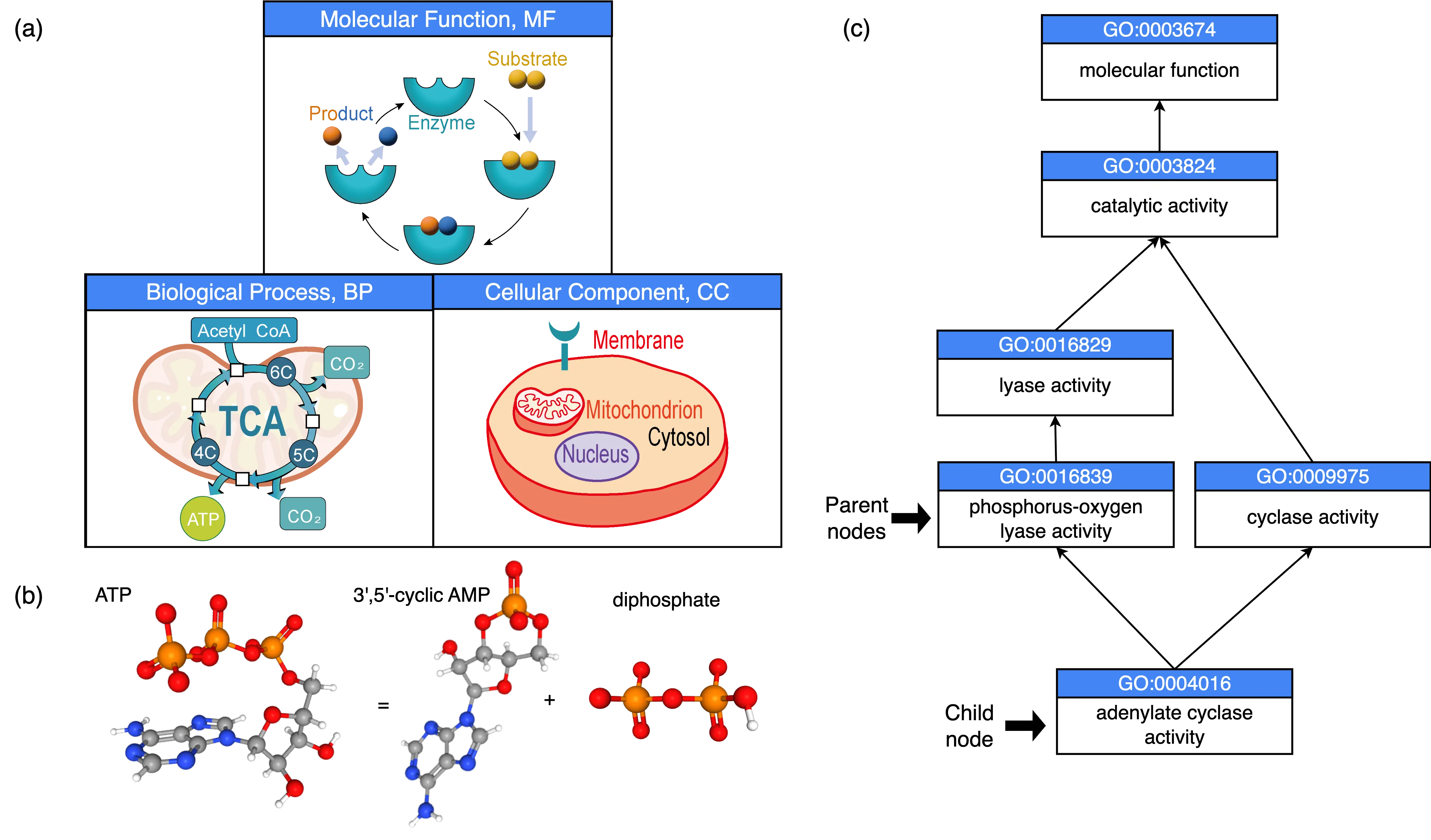
Understanding protein functions is essential for advancing quantitative synthetic biology, which applies quantitative and systems approaches to understand how biological functions emerge from building blocks, thereby guiding the rational design of complex living systems. Apart from a few model organisms, most species contain many proteins with unverified functions, highlighting the need for accurate, automated protein function annotation methods. Recent advances in protein bioinformatics, particularly in predicting structures and functions, have been driven by artificial intelligence (AI), especially deep learning models. Top-performing methods in the Critical Assessment of Function Annotation (CAFA) challenge have leveraged large language models to perform text mining-based protein function prediction, extracting features from scientific literature or using template proteins with similar descriptions in the literature. Despite these advances, several challenges remain. Current predictors often depend on PubMed abstracts curated by UniProt, leading to redundancy with manual annotations and to the overlooking of uncurated or full-text literature that contains richer functional evidence. Few systems automatically classify literature types or assess their relevance, limiting precision and interpretability. Benchmarking remains difficult due to the absence of unbiased gold standards, making it hard to evaluate true predictive capability. Furthermore, integrating heterogeneous evidence—from text, sequences, and structural or network data—presents additional challenges for model harmonization. This review not only summarizes current methods and limitations but also highlights strategies to improve text mining-based protein function annotation using recent AI developments. Overall, this work aims to guide the development of next-generation tools for more accurate and comprehensive protein function predictions.
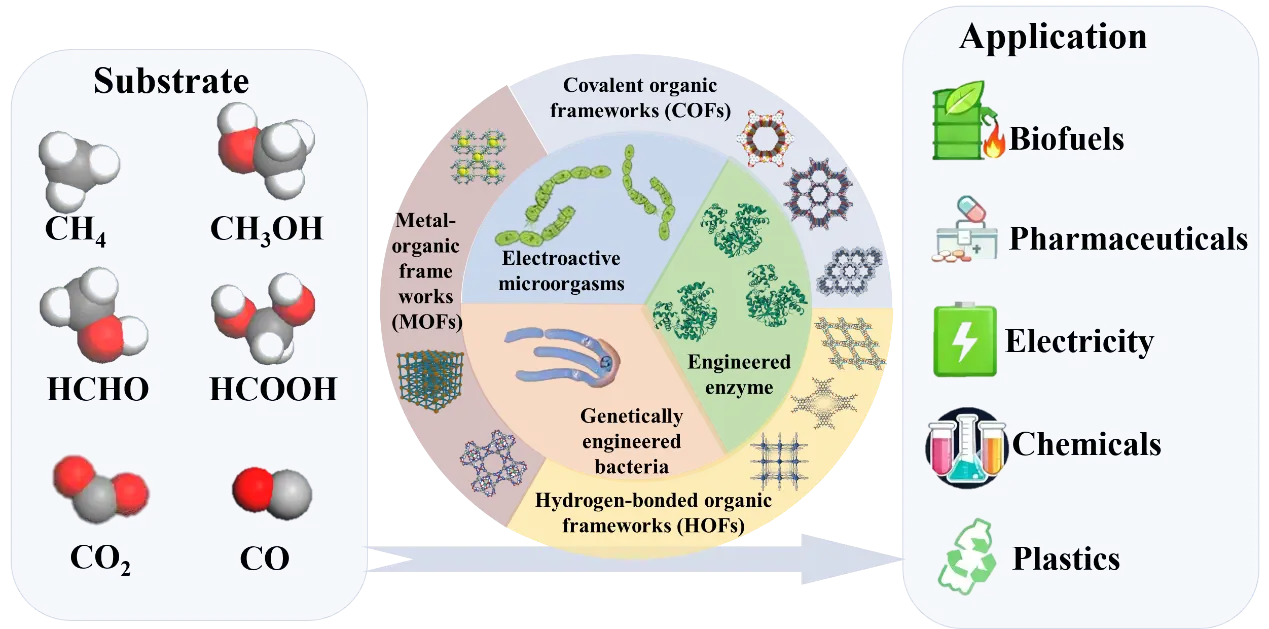
The bioconversion of C1 compounds (CO2, methane, methanol, etc.) constitutes a crucial pathway for green biomanufacturing. However, the process efficiency is constrained by several challenges, including the difficult capture of gaseous substrates, instability of biocatalysts, and the high cost as well as operational complexity of cofactor regeneration. Porous framework materials offer promising solutions due to their high specific surface area, tunable pore structures, and ease of functionalization. This review provides a systematic and forward-looking analysis that moves beyond the conventional view of porous frameworks as simple immobilization matrices. We distinctly highlight their emerging multifunctional and integrative roles in C1 bioconversion, emphasizing several novel strategic contributions: (1) Serving as intelligent immobilization carriers that not only enhance biocatalyst stability and recyclability but also concurrently enable efficient C1 substrate enrichment and localized concentration; (2) Facilitating synergistic energy conversion by interfacing with photocatalysis or electrocatalysis to enable in-situ and sustainable cofactor regeneration, thereby addressing a key economic bottleneck; (3) Actively regulating microbial metabolism and community dynamics through tailored material-microbe interactions, optimizing carbon flux and system resilience; and (4) Mimicking natural enzymes to create robust and tunable biomimetic catalysts for C1 conversion under non-physiological conditions. Remaining challenges, such as mass transfer limitations, the scalability of material synthesis, and the integration of hybrid systems, are analyzed through the lens of these advanced functionalities. We conclude that the synergistic and rational integration of synthetic biology-designed biocatalysts with engineered multifunctional frameworks represents a paradigm shift, paving the way for efficient, stable, and high-value utilization of C1 resources.
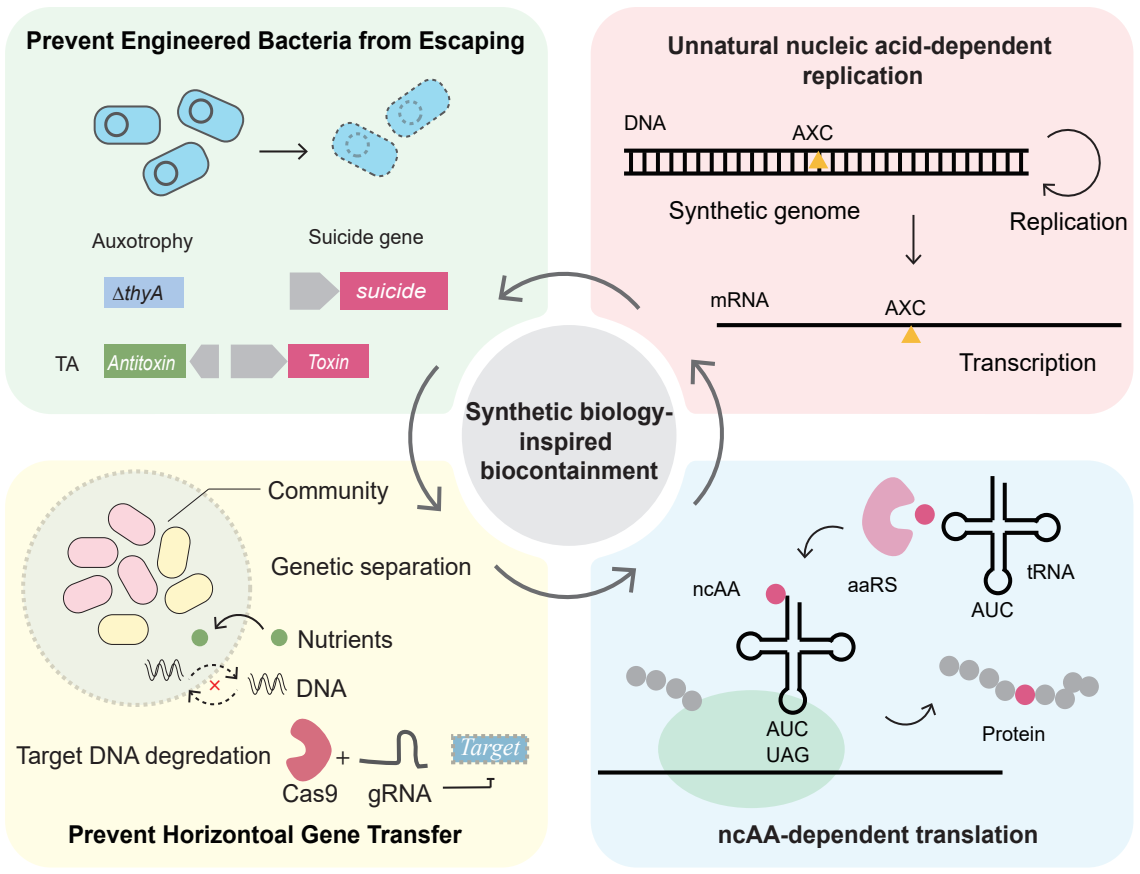
With the rapid expansion of synthetic gene technologies and engineered bacteria for disease diagnosis or therapy, biosafety concerns have intensified. Substantial efforts have therefore been directed toward developing biocontainment systems that prevent the unintended release of engineered microorganisms and the horizontal transfer of synthetic genetic elements into natural ecosystems. Recent advances in synthetic biology have yielded a diverse suite of biocontainment strategies, including engineered biosafety genetic circuits, genetic isolation approaches, targeted degradation of genetic material, and physical encapsulation of microbial chassis. Furthermore, the incorporation of unnatural nucleic acids and noncanonical amino acid-based orthogonal replication, transcription, and translation systems has markedly improved the robustness and orthogonality of these containment platforms. In this review, we summarize the latest developments in biocontainment strategies for genetically engineered bacteria and discuss how these innovations may address current and emerging biosafety challenges.
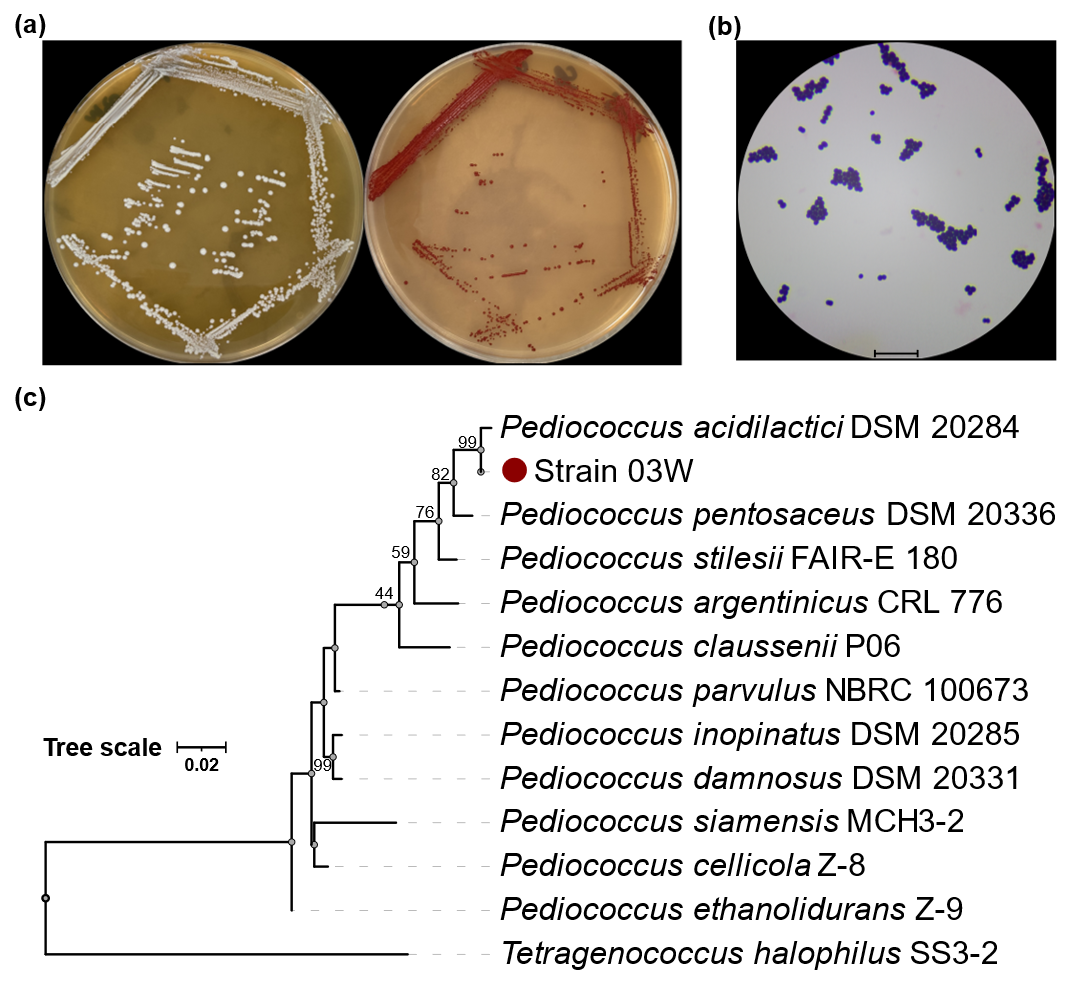
Many microorganisms are capable of surviving selenium (Se)-rich environments and efficiently transforming inorganic Se into organic Se, enabling them to act as a potent biocatalyst for the synthesis of organic Se. Here, we isolated a novel selenium-enriching lactic acid bacterium, Pediococcus acidilactici 03W, from the selenium-rich soil. The growth experiment showed that glucose is the optimal carbon source for P. acidilactici 03W when grown in 1000 µg·mL−1 sodium selenite at pH 6. RNA-seq analysis revealed that a total of 761 genes exhibited altered expression in response to selenite exposure. Downregulation of the phosphate transporter operon (pstA/B/C) and TauE/SafE-type exporters signaled a flux-throttling program that curtailed transmembrane anion flow—limiting high-affinity phosphate uptake and modulating sulfur/selenite export—thereby aligning net anion influx with the cell’s available reductive capacity. In contrast, the expression of the key genes responsible for NAD(P)H or FMN-dependent oxidoreductases and thiol-based redox systems (e.g., trxA/B, tpx, gor, and garB) was induced, together with cysteine desulfurases and sulfurtransferases, supporting the enzymatic reduction of selenite. Interestingly, Fe–S cluster assembly genes (e.g., sufU) were suppressed (not induced), suggesting a shift away from de novo Fe–S biogenesis toward sulfur–selenium transfer and detoxification under oxidative stress. Also, some key genes involved in central carbon metabolism, including the glycolytic pathway (e.g., pfkA) and the pentose phosphate pathway (PPP) (e.g., zwf), were downregulated, which is consistent with reallocating resources from rapid growth to redox homeostasis. Collectively, selenium assimilation in P. acidilactici 03W proceeds through anion transport, enzymatic reduction to Se0 or H2Se, and incorporation into seleno-amino acids (selenocysteine and selenomethionine). Our findings provide a basis for microbial selenium transformation and highlight the potential of P. acidilactici 03W for developing selenium-enriched probiotic foods.
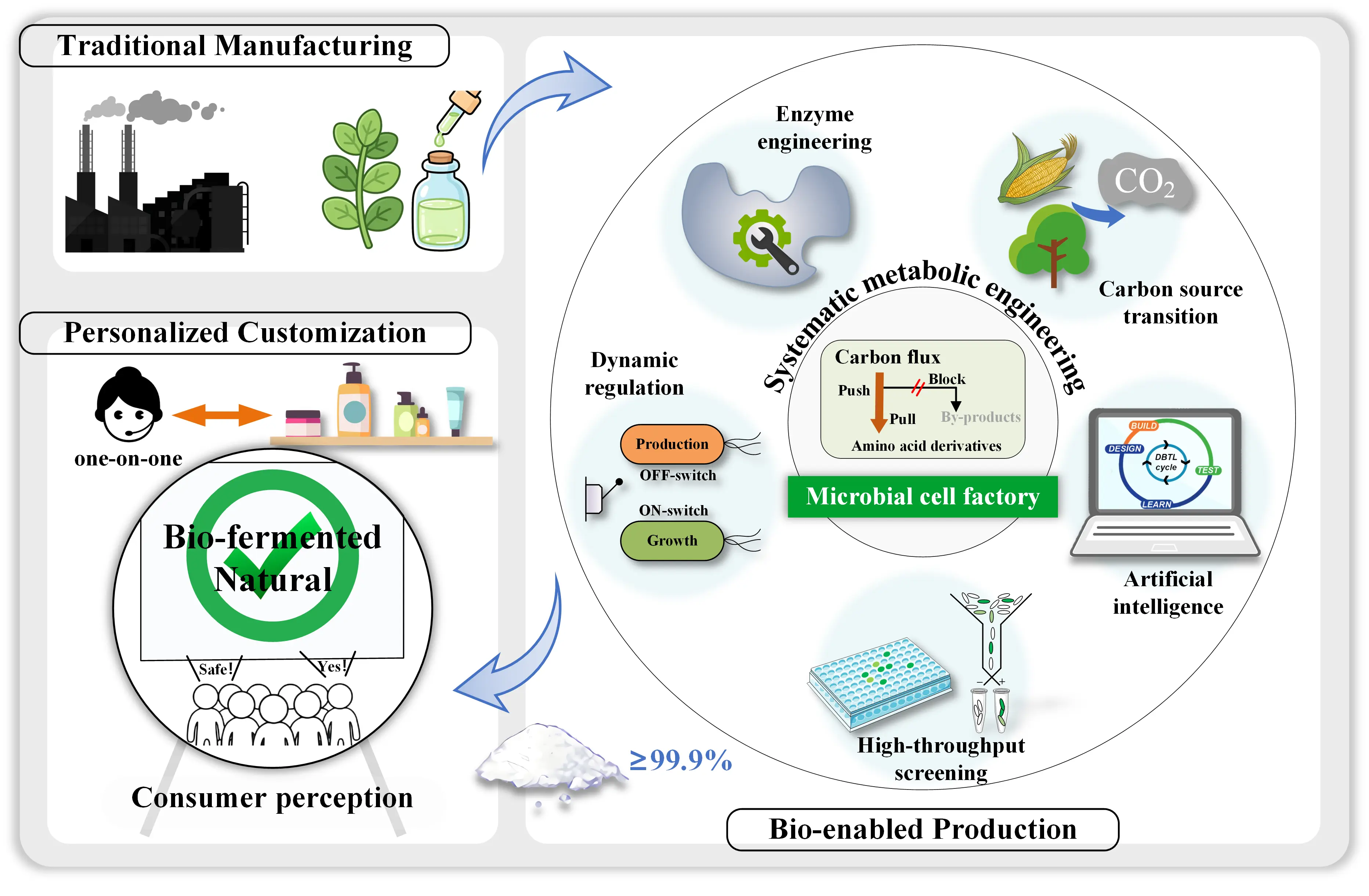
The cosmetics industry is undergoing a historic transition from natural extraction to precision biomanufacturing. Amino acid derivatives, as a kind of core functional cosmetic ingredient, have witnessed synthetic biology–based production technologies overcome traditional bottlenecks in efficiency and cost. In this Perspective, grounded in recent advances in the construction of amino acid derivative cell factories, we propose the core trends for the future development of cosmetic ingredients: enzyme engineering, dynamic metabolic control, and irrational strategies are converging to enable both functional customization and production intelligence. Star molecules such as ergothioneine, spermidine, and bioactive peptides are poised to redefine the boundaries of anti-aging efficacy, while AI-driven R&D paradigms offer broad prospects but must still overcome cost, regulatory, and consumer perception barriers. We emphasize that only by establishing an integrated “efficient synthesis–precise delivery–validated activity” end-to-end chain can cosmetic ingredients move from laboratory to market, achieving an industrial leap from chemical addition to biological empowerment.