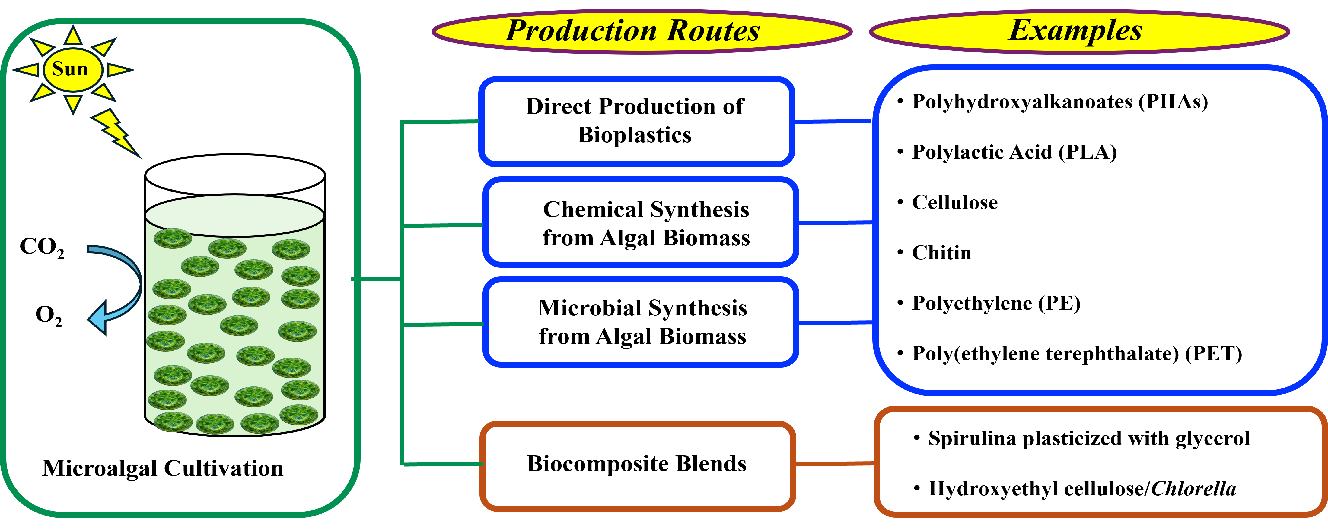
Bioplastics are biomaterial-derived plastics and are superior to petrochemical-based plastics in terms of resource renewability, planetary sustainability, and environmental biodegradability. Extensive research has been carried out over the last decades to identify and characterize desirable biomaterials for bioplastic manufacturing, and among those explored, microalgal biomass has received special attention due to its numerous advantages over other bioresources, including high areal productivity, the potential to use non-arable land, and the ability to reduce waste. Nonetheless, the cultivation and biorefinery processes for microalgae still need innovative development to make microalgal bioplastics economically viable. The primary focus of this review is to examine the established and emerging technologies for manufacturing bioplastics from microalgal biomass, starting from the exploration of bioresource availability and outlining technical routes of production. In particular, both upstream and downstream processes of microalgal cultivation pertinent to bioplastic production are reviewed in detail, analyzed in depth, and evaluated from the perspective of economic viability. The technical challenges and research opportunities, as well as prospects of current approaches and future methodologies for microalgal production of bioplastics, are also discussed, mostly based upon our research experiences in microalgal bioengineering, and it is our opinion that, despite these existing challenges, microalgal biomass could still be one of the most promising feedstocks for sustainable manufacturing of bioplastics.
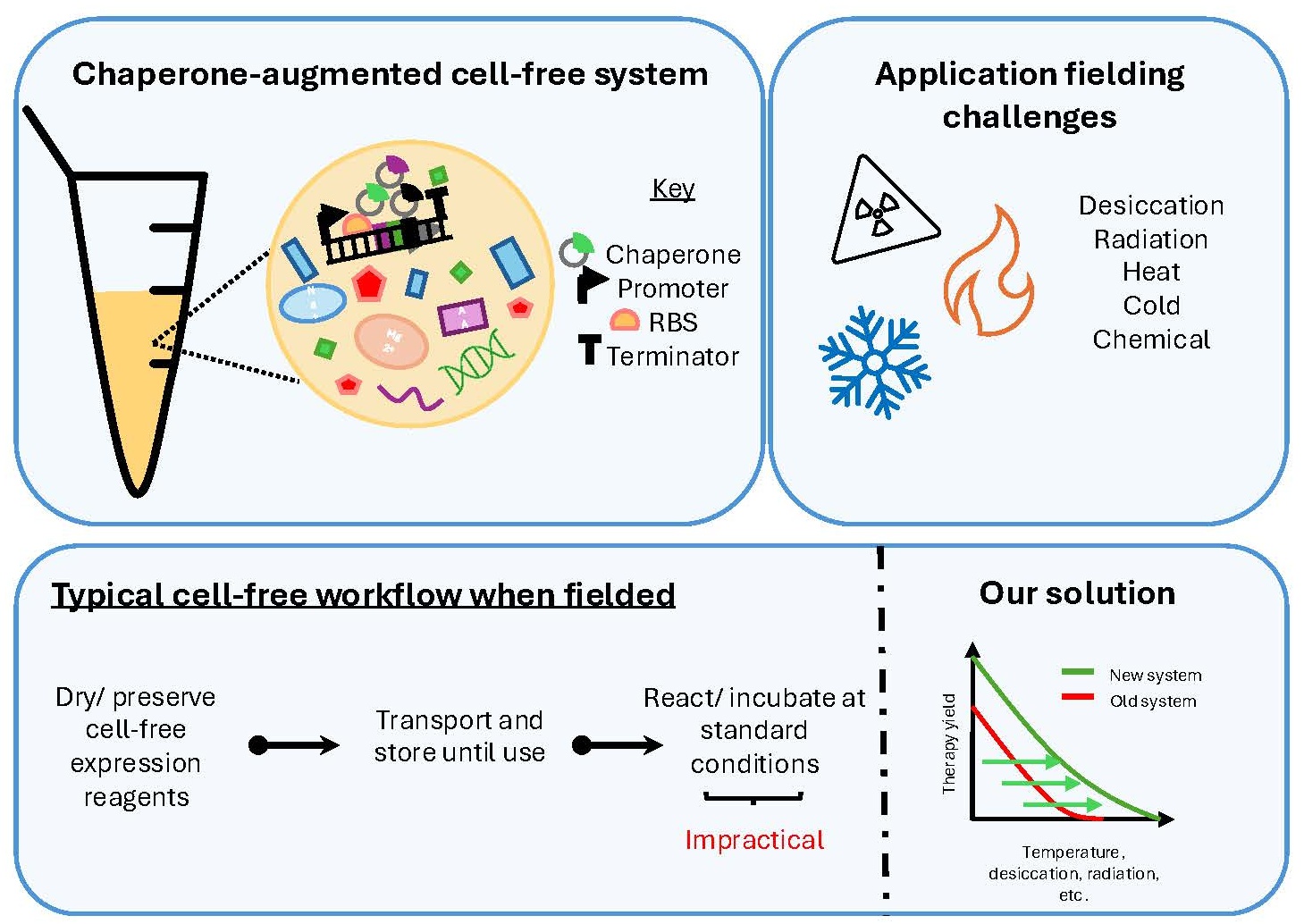
Cell-free gene expression (CFE) technology is an appealing expression chassis for fieldable synthetic biology. Reagents for cell-free protein expression can be preserved, transported, or stored over long periods, even at elevated temperatures. Therefore, cell-free synthetic biology efforts are practical for applications such as fieldable biosensing and decentralized or on-demand therapeutics production in austere environments and at emergency or natural disaster sites. However, these systems still require incubation to operate under standard conditions (e.g., 16 °C to 37 °C), whereas the conditions in the application environment often lie outside these limits. To address this technological gap, we propose adding heat-shock chaperones from diverse organisms to expand the cell-free system’s operating range. We present a method for assessing protective protein candidates, and we demonstrate a 100-fold improvement in fluorescent reporter expression at non-standard temperatures and a widening of the temperature range for system operation by more than 4 °C, as measured by fluorescence from reporter expression. Moreover, we show that dual-chaperone systems can yield higher fluorescence output compared to single-chaperone ones. These chaperone-inspired systems may perform in environments where standard ones fall short, expanding their usability and application potential.
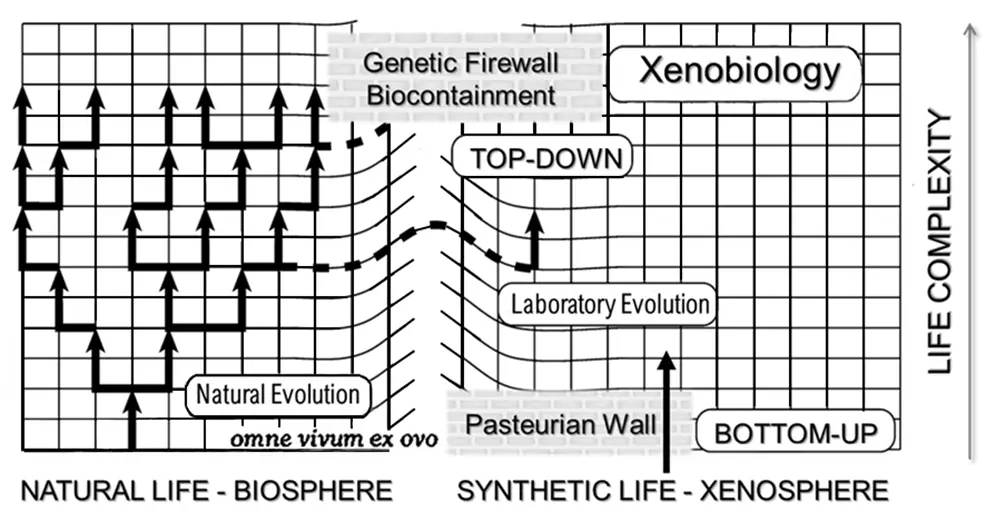
Synthetic biology increasingly pursues the construction of engineered biological systems, yet the field lacks operational categories for interpreting claims of “life creation”. Rather than asking whether life has already been created in the laboratory, this article argues that synthetic biology requires a pragmatic framework that distinguishes modification, reconstruction, assembly, and autonomous synthesis of biological systems. Building on a historical analysis of recurring life-creation claims throughout twentieth-century biology, we develop a taxonomy that situates contemporary synthetic biology and xenobiology along a continuum of increasing engineering depth. Current achievements—including genome rewriting, orthogonal translation systems, and expanded genetic codes—represent a deep reconstruction of living systems, but do not yet constitute fully autonomous synthetic life. To clarify these distinctions, we introduce several conceptual tools: the Pasteurian Wall separating living from non-living systems, the Genetic Firewall as a biosafety principle for engineered organisms, and an Expanded Chemoton framework that provides an engineering-oriented operational definition of life based on metabolic autonomy, informational closure, and evolvability. Together, these elements allow experimental systems to be positioned along a functional continuum from sophisticated biochemical artifacts to genuinely alternative living systems. By replacing metaphor-driven narratives with operational categories, this framework aims to strengthen conceptual clarity, experimental comparability, and governance of emerging synthetic life technologies.
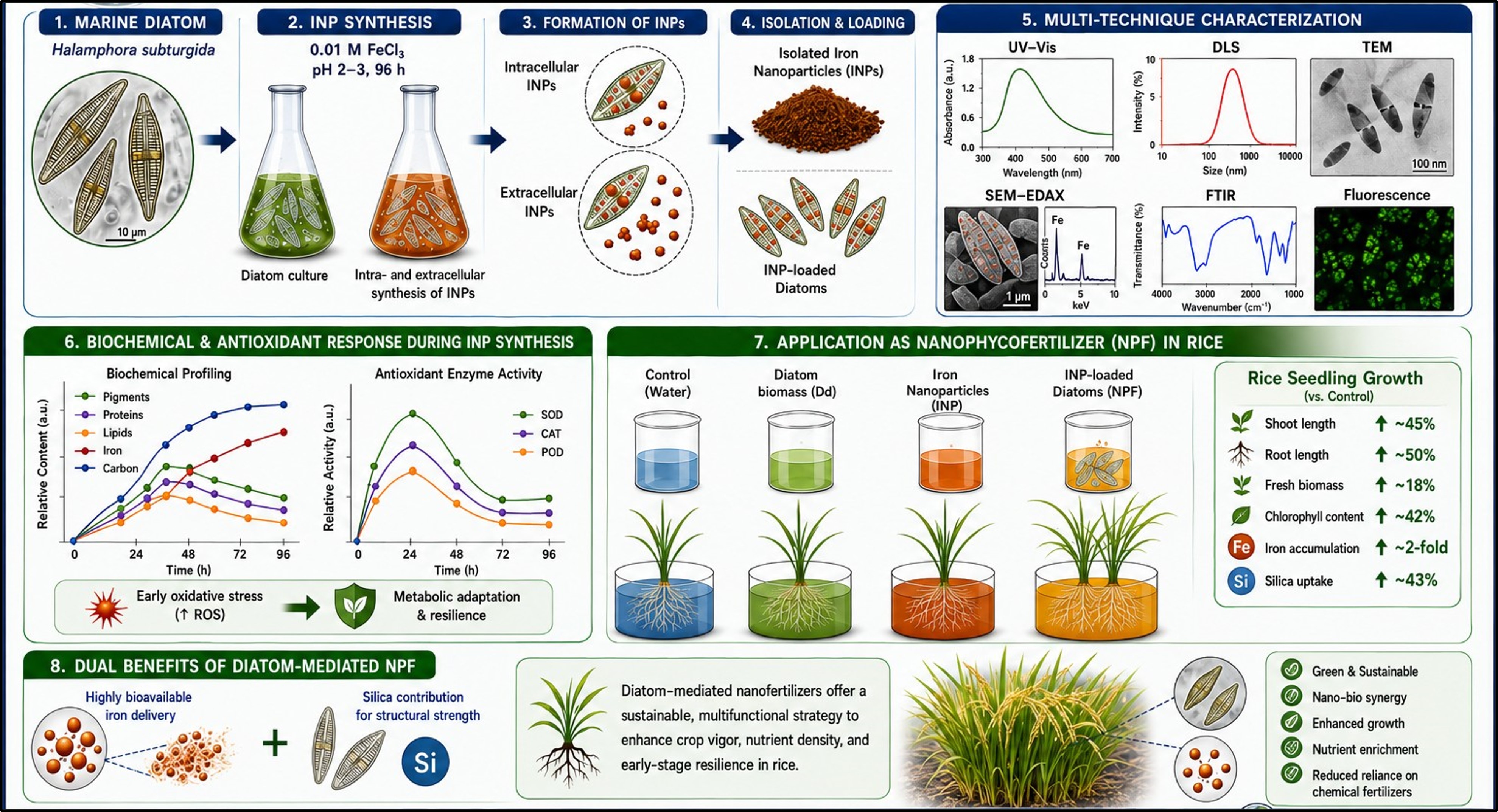
Merging nanotechnology with biology, diatoms reveal an extraordinary capacity to fabricate iron nanoparticles (INPs) while simultaneously acting as nutrient carriers for crops. The marine diatom Halamphora subturgida was employed for the first time to synthesize INPs and evaluate their application as a nanophycofertilizer (NPF) for rice (Oryza sativa L.). The diatom facilitated both intra- and extracellular formation of spindle-shaped nanoparticles (70–100 nm) as confirmed by UV–Vis, DLS, TEM, SEM-EDAX, FTIR, and fluorescence analyses. Biochemical profiling revealed dynamic metabolic shifts during nanoparticle synthesis, with transient increases in pigments, proteins, and lipids followed by their decline, while iron and carbon content rose steadily. Antioxidant enzyme assays indicated early oxidative stress followed by metabolic adaptation, underscoring the diatom’s resilience as a biofactory. When applied to rice seedlings, the INP-loaded diatoms significantly outperformed diatoms or nanoparticles alone, increasing shoot length by approximately 45%, root length by 50%, fresh biomass by 18%, chlorophyll content by 42%, iron accumulation by nearly twofold, and silica uptake by about 43% compared with the untreated control. These synergistic effects highlight the dual role of diatoms as both stabilizers and nutrient carriers, delivering iron in a highly bioavailable form while simultaneously contributing silica for structural strength. The findings position diatom-mediated nanofertilizers as sustainable alternatives to chemical fertilizers, offering a multifaceted strategy to boost crop vigor, nutrient density, and early-stage resilience in rice.
The success of COVID-19 mRNA vaccines has established mRNA as a powerful therapeutic platform. Key advantages of mRNA drugs include transient expression, rapid scalability, and universal protein-encoding capability. This review focuses on the application of mRNA therapies across a broad spectrum of diseases, including cancer, infectious diseases, genetic disorders, autoimmune diseases, and cardiovascular conditions. It systematically summarizes the latest progress in mRNA drug development, covering three major therapeutic paradigms: mRNA vaccines, protein replacement therapy, and mRNA-based gene editing. Emerging approaches, such as artificial intelligence tools for mRNA therapeutic design and advanced delivery systems, are also discussed. By integrating foundational mechanisms, engineering strategies, and translational examples, this review provides a comprehensive overview of the current landscape and future directions of mRNA-based therapeutics.
Fucosylated human milk oligosaccharides are valuable targets for microbial biomanufacturing. Here we engineered the probiotic Escherichia coli Nissle 1917 as a versatile chassis for synthesizing both 2′-fucosyllactose and 3-fucosyllactose. We implemented lactose preservation and blocked colanic acid precursor consumption while reinforcing the de novo GDP-L-fucose pathway. This core module was coupled with either WbgL or FutM2 to drive terminal fucosylation. Initial screening yielded a 2′-fucosyllactose titer of approximately 1.21 g/L. Integrating an additional chromosomal wbgL cassette increased the titer to approximately 1.58 g/L, whereas subsequent genomic modifications did not further improve the 2′-FL titer. Cultivation with 30 g/L glycerol and 5 g/L yeast extract significantly improved productivity, enabling the strain to produce approximately 7.71 g/L of 2′-fucosyllactose in shake-flask cultures. Conversely, the FutM2 strain produced 0.38 g/L 3-fucosyllactose without yeast extract and nutrient supplementation unexpectedly suppressed product accumulation despite promoting biomass formation. The work provides a probiotic-chassis proof of concept and identifies product-module physiology as a priority for further engineering.