Found 497 results
Open Access
Article
19 March 2026Intelligent Real-Time Kanban Automation Using Ultra-Wideband Positioning: Methodologies and Performance Evaluation
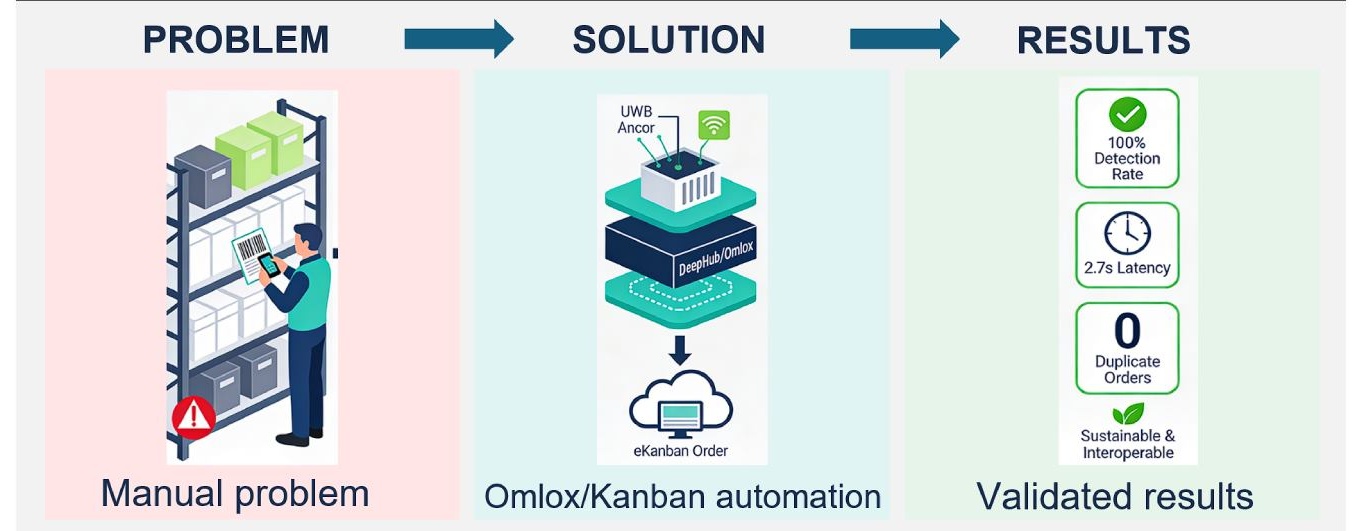
Traditional electronic Kanban (eKanban) systems depend on manual scans and offer only discrete material visibility, limiting responsiveness and automation in lean manufacturing environments. These operational bottlenecks are magnified in high-mix contexts, where delayed replenishment signals degrade flow stability, increase work-in-progress, and hinder sustainable material handling. Furthermore, vendor-specific systems lack interoperability for scalable automation, constraining the development of intelligent manufacturing solutions. This work investigates whether zone-based replenishment automation can be enabled through real-time locating systems (RTLS) using open interoperability standards, addressing a gap in empirical validation of such approaches. A middleware architecture was developed that integrates ultra-wideband (UWB) positioning, an Omlox-compliant location middleware (DeepHub), and a cloud-based eKanban system to replace manual triggers with geofence-driven order creation. The novelty of this study lies in demonstrating a fully automated Kanban signaling loop built on the open Omlox standard, providing vendor-independent RTLS interoperability and eliminating human intervention in replenishment signaling. This contributes new knowledge on how continuous location data can be converted into actionable replenishment events in a standards-based, modular manner, enabling more intelligent and autonomous material-flow control. A controlled proof-of-concept experiment simulating shop-floor conditions showed that the system achieved a 100% detection success rate, zero duplicate orders, and an average trigger-to-action latency of 2.7 s, while automatically recovering from authentication and WebSocket failures. These results provide the first empirical evidence that Omlox-compliant RTLS middleware can reliably support zone-based eKanban automation. The findings have direct implications for intelligent and sustainable manufacturing by demonstrating a scalable pathway toward interoperable, real-time material-flow systems that reduce manual intervention, avoid unnecessary handling, and lower work-in-progress. More broadly, the work addresses the current lack of empirical validation of open-standard RTLS integration within lean and sustainable production environments.
Open Access
Article
18 March 2026Living as Nature: Māori Political Ecology and Bruno Latour’s Challenge to Western Modernity
This article examines the emancipatory potential of the rights of nature in Aotearoa New Zealand through Bruno Latour’s concept of political ecology. We argue that the legal recognition of entities such as Te Urewera Forest and the Whanganui River as legal persons constitutes a paradigmatic experiment in reconfiguring the modern division between nature and politics. Drawing on Latour’s critique of Western modernity and his notion of hybrids and actants, we show how Māori struggles for land, mana, and “geographical identity” generate a political collective in which decolonial and ecological motives are inseparably intertwined. Rights of nature function here not merely as environmental protection instruments, but also as devices for redistributing power and legally encoding Māori concepts such as kaitiakitanga, whakapapa, and ‘listening to Papatūānuku’. In this sense, ecological and decolonial objectives converge rather than compete. We then contrast these developments with global biodiversity governance, focusing on Intergovernmental Science-Policy Platform on Biodiversity and Ecosystem Services and its Life Framework of Values. While Life framework of values (IPBES) has significantly broadened its conceptual framework—particularly through the recognition of the relational and cultural values of nature—the challenge lies in translating this expanded recognition into governance practice. Policy and decision-making processes still often tend to privilege measurable and instrumental, and benefit-oriented valuation frameworks, which can make the integration of relational values difficult. The New Zealand cases thus illuminate both the radical promise and the structural limits of institutionalizing Latourian political ecology: they realize a non-modern governance of human and non-human actors domestically, while exposing the continued dominance of capitalist modernity at the global level.

Open Access
Article
16 March 2026Domain-Specific Cloud Business Operating System for New Power Systems: Concept, Key Technologies and Initial Applications
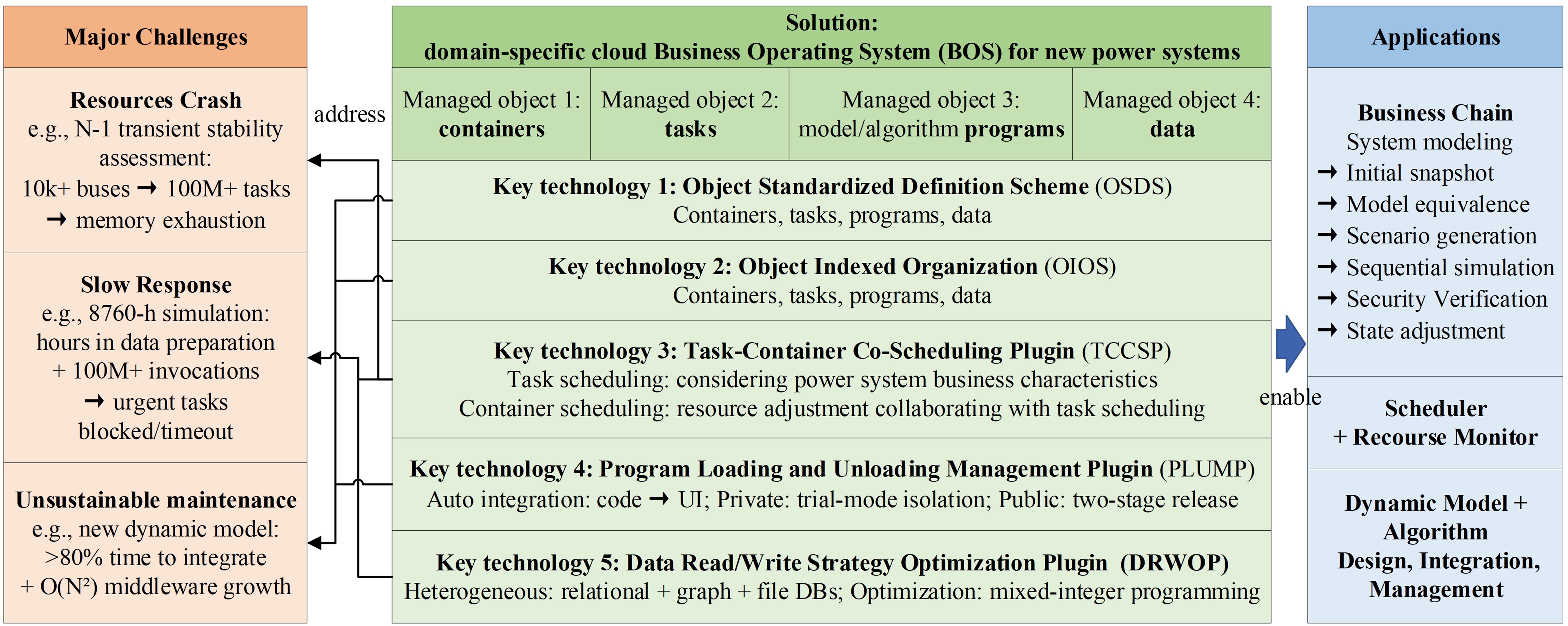
The deep digitization of power system business faces three major challenges: computational resources are prone to crashes, business response is slow, and platform maintenance is unsustainable. To address these issues, this paper proposes a domain-specific cloud Business Operating System (BOS) for new power systems. BOS establishes a unified management paradigm for four core digital objects—Containers, Tasks, Programs, and Data—through their standardized definition and indexed organization. Building upon this foundation, it implements three dedicated plugins to enable synergistic task-container co-scheduling, plug-and-play program integration, and optimized data access. This paper elaborates on BOS’s architecture and its rationale as an operating system, detailing the key technologies for object management. Case studies on a real-world regional power grid demonstrate that BOS effectively ensures the efficient execution of large-scale computational tasks, supports the agile integration of domain-specific models and algorithms, achieves seamless and efficient data connectivity across business chains, thereby providing a robust foundation for next-generation power system digitization.
Open Access
Article
13 March 2026Beneficial Effects of Food Containing Lactononadecapeptide on Memory Function in Elderly Japanese Subjects—A Randomized, Double-Blind, Placebo-Controlled Study
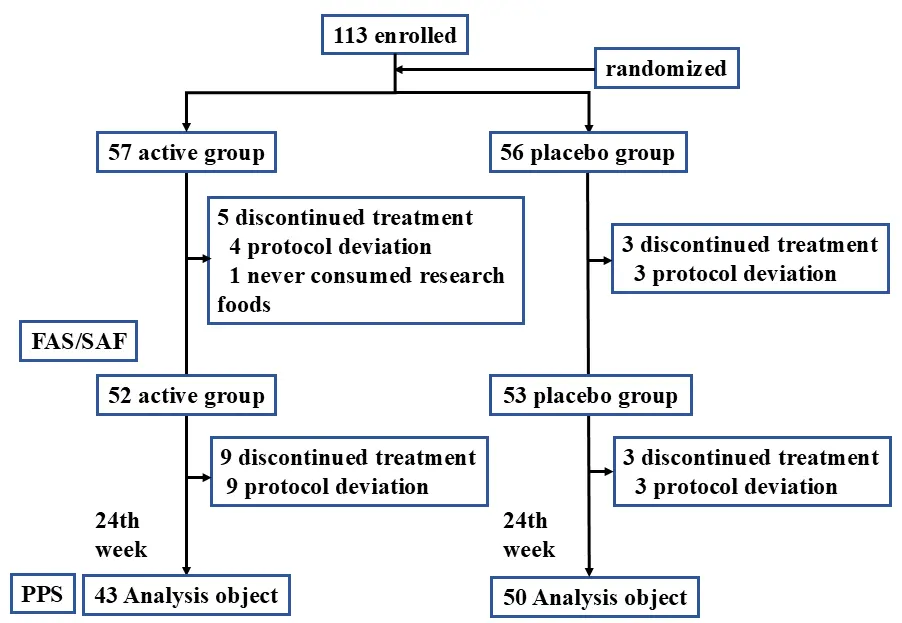
With the extension of average life expectancy, diseases accompanied by cognitive and memory impairments, such as dementia, are increasing. The risk of dementia has been suggested to decrease with an increase in the intake of milk and dairy products. Therefore, the present study investigated the effects of consuming test food containing lactononadecapeptide (LNDP) on memory and attention in healthy elderly Japanese subjects aged 65 years or older over 24 weeks. A placebo-controlled, double-blind, randomized trial was conducted, and memory function was evaluated using the Rey-Osterrieth Complex Figure (ROCF) test and the total score of the Symbol Digit Modalities Test (SDMT). Based on the results of the ROCF test and SDMT, the repeated intake of the test food significantly improved memory function in elderly subjects. Therefore, the repeated intake of test food containing LNDP may improve memory and attention in elderly Japanese individuals with mild cognitive decline.
Open Access
Article
13 March 2026Te Substitution-Induced Structural Evolution and Thermoelectric Properties of Quasi-1D BiSeI
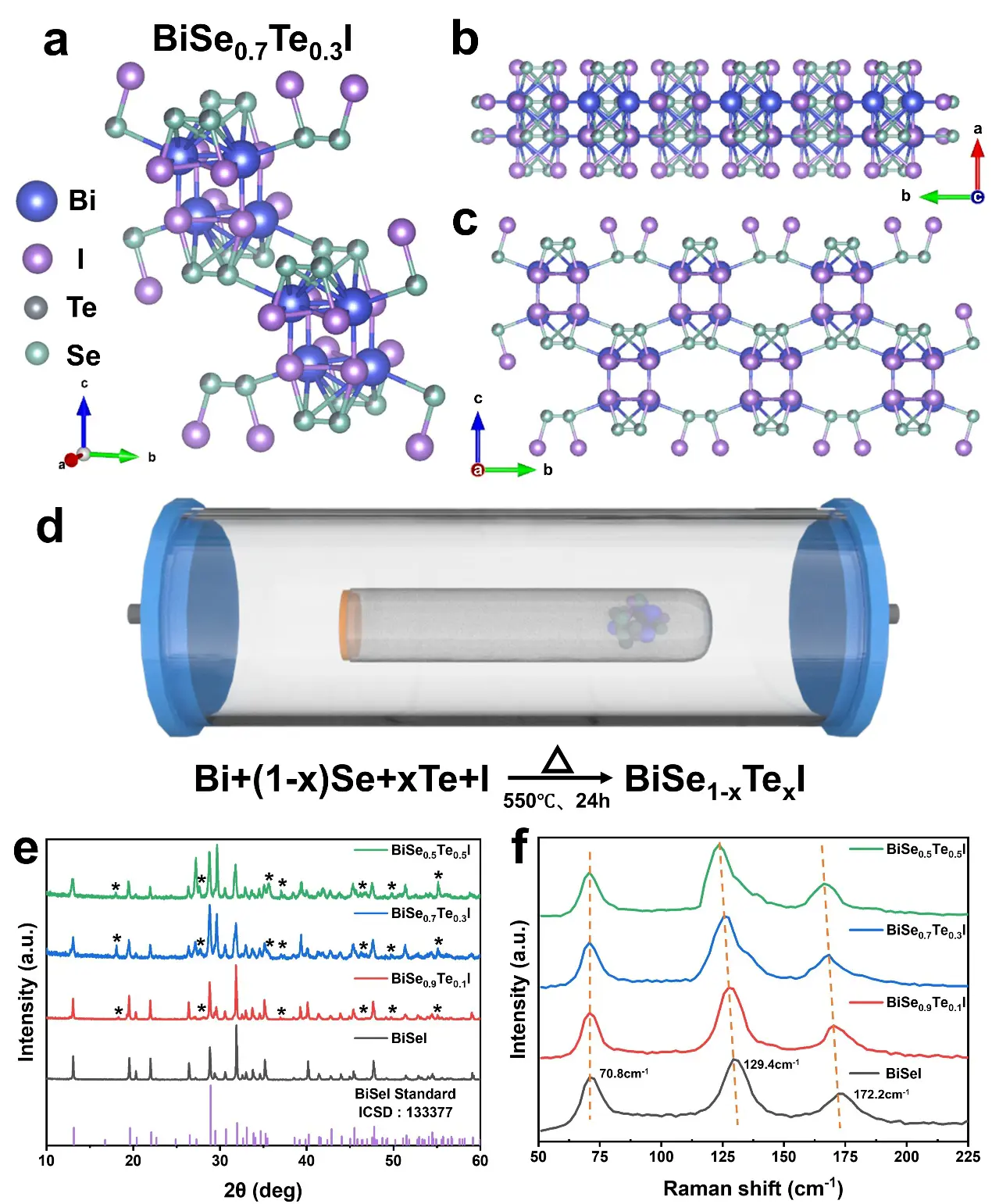
Halide-chalcogenide compounds are promising candidates for thermoelectric applications owing to their low thermal conductivity and tunable electronic structures. Here, we systematically investigate Te-substituted BiSe1−xTexI (x = 0, 0.1, 0.3, 0.5). Structural and spectroscopic analyses confirm the successful incorporation of Te into the BiSeI-type framework, accompanied by lattice expansion, vibrational softening, and pronounced bandgap tuning. X-ray photoelectron spectroscopy verifies that Te occupies Se sites and modifies the local electronic environment, while electron microscopy reveals a morphology evolution from ribbon-like grains to plate-like and fragmented particles with increasing Te content. Thermoelectric measurements show that Te substitution simultaneously enhances electrical conductivity and suppresses thermal conductivity, arising from band-structure modulation, increased carrier concentration, mass fluctuation, and strengthened phonon scattering. Consequently, BiSe0.7Te0.3I achieves the highest ZT (~0.27 at 400 K), substantially higher than pristine BiSeI. This work demonstrates that heavy-element doping is an effective strategy for optimizing the thermoelectric performance of halide-chalcogenides.
Open Access
Review
13 March 2026Recent Progress in Photonic Design and Charge Transport Optimization for Organic Solar Cells
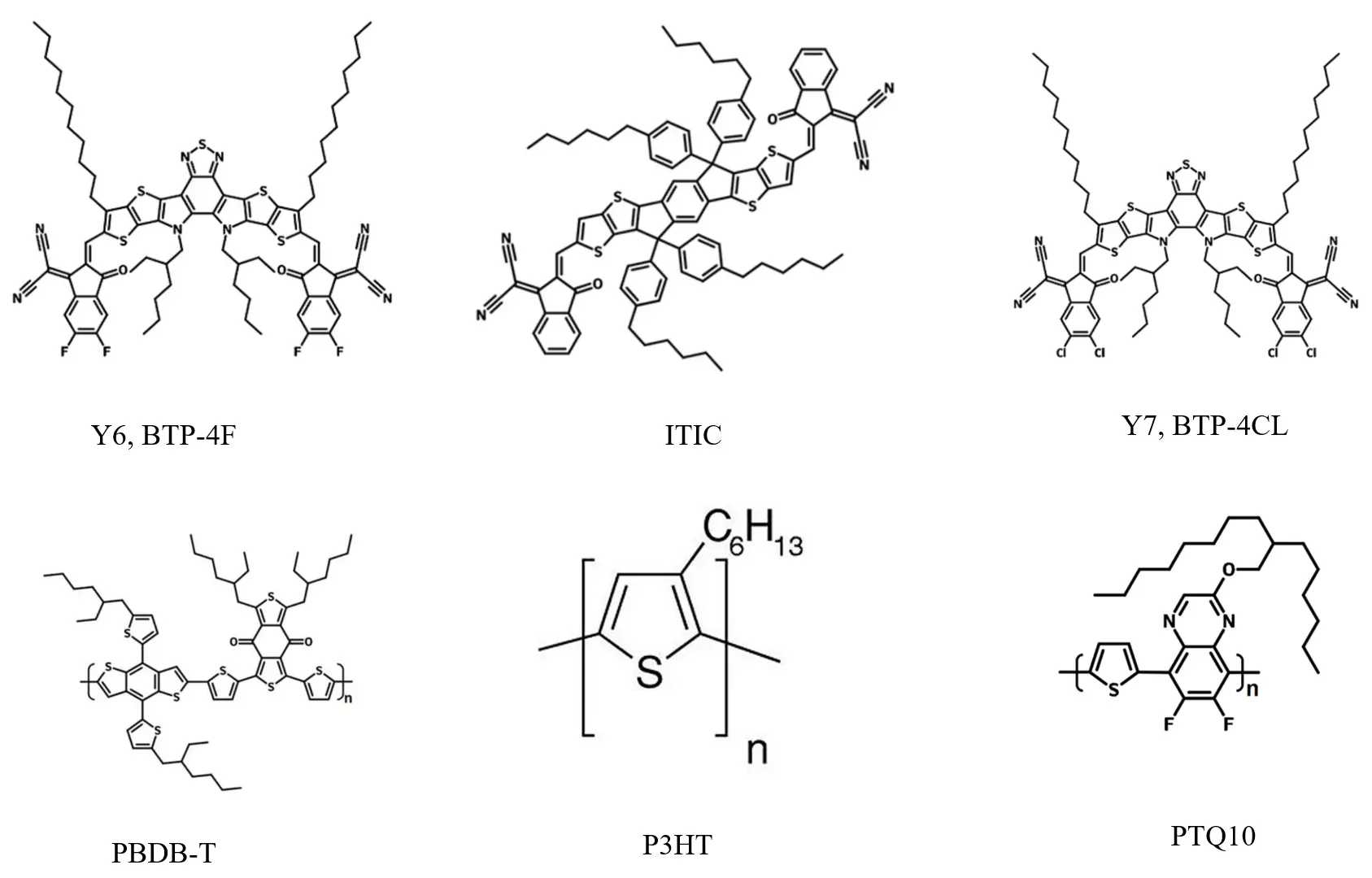
Organic solar cells (OSCs) are attracting attention as a possible replacement for traditional photovoltaics because they are low-cost, lightweight, and have adjustable optoelectronic features. The commercialization of single-junction OSCs still faces challenges in achieving high power conversion efficiency (PCE) and operating stability. Recent developments in photonic crystals, plasmonics, nanophotonics, and metamaterials have significantly addressed these issues, especially in single-junction systems. This paper reviews the latest advancements in charge transport engineering, nanophotonic light-trapping methods, and nanostructured interfaces specifically designed for single-junction OSCs. It also highlights recent record-breaking efficiencies that exceed 20% PCE. We discussed integrating plasmonic nanoparticles, optical microcavities, nanostructured electrodes, and improved photonic materials to increase light absorption, exciton dissociation, and charge collection within the specific limitations of single-junction devices. Furthermore, we stress the important role of computational modeling and recent experimental breakthroughs in enhancing optical and electrical performance. Rather than treating optical and electrical processes independently, this review emphasizes the synergistic role of photonic enhancement strategies in simultaneously improving light trapping and charge transport, highlighting how nanophotonic designs influence carrier generation, recombination, and extraction in single-junction OSCs.
Open Access
Research Highlight
12 March 2026A Novel Approach to Synthesis Alkyd Resin from Recycled Polyethylene Terephthalate (rPET)
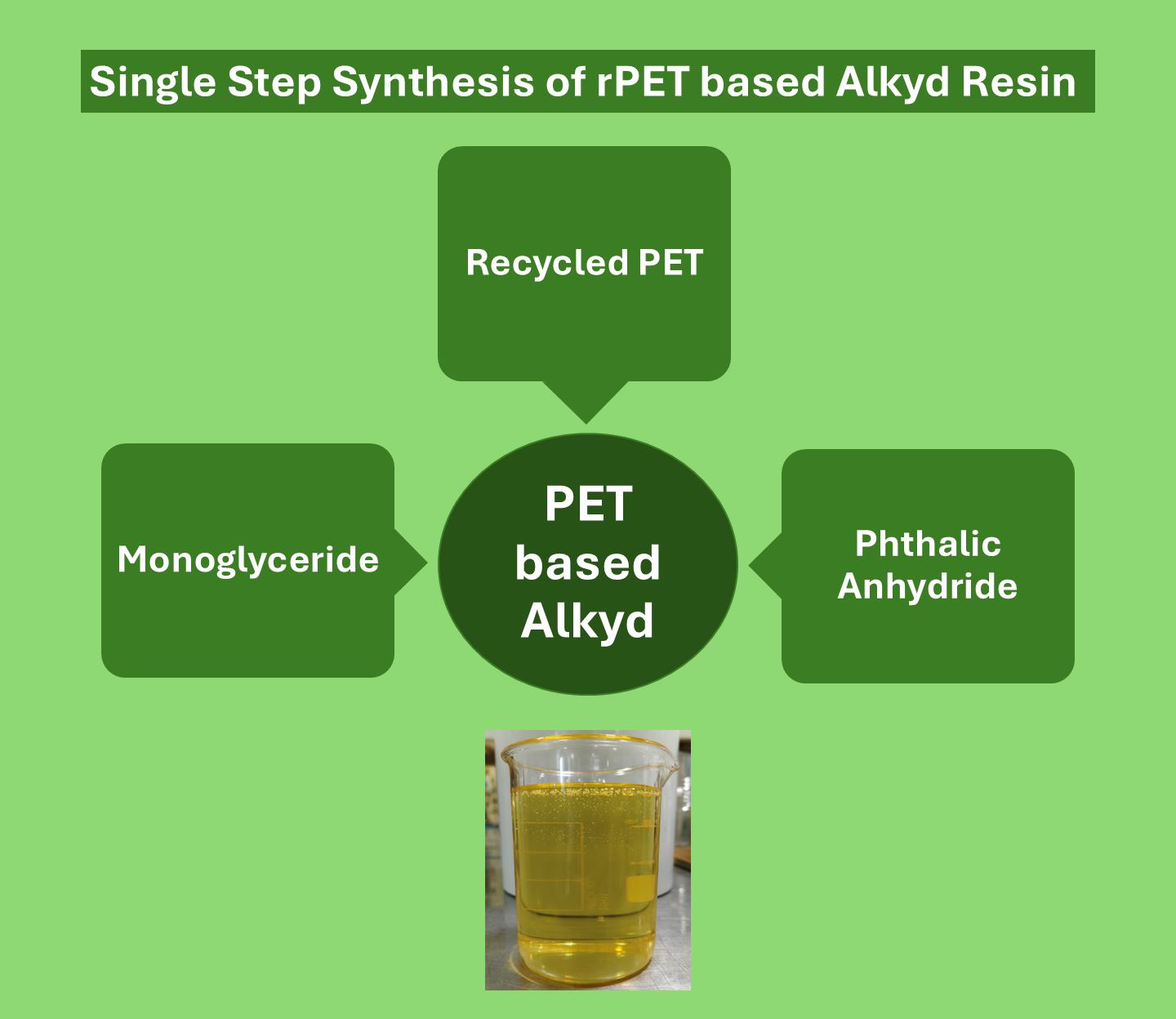
Reducing carbon footprints is an essential requirement in the chemical industry. Researchers are concentrating on creating sustainable products derived from renewable resources or waste materials. Polyethylene terephthalate (PET) waste significantly contributes to carbon footprints; the chemical recycling of PET waste possesses extensive opportunities within the chemical sector. For instance, PET waste can be transformed into valuable alkyd resin, which is utilized in the production of oil-based paints. This research work focuses on the synthesis of long oil alkyd resin using recycled polyethylene terephthalate (rPET). As the incorporation of rPET in alkyd resin has several limitations such as two-step synthesis, inability to produce long oil alkyd, and long drying time. To overcome these limitations, a novel synthesis route has been devised to produce long oil alkyd resin. In this study, three long oil alkyd resins were synthesized, each containing varying amounts of rPET. The presence of rPET in the alkyd resins was confirmed by spectroscopic techniques. To assess the impact of rPET content on alkyd resin, physicochemical properties, performance testing, and instrumental analysis have been conducted. A comparison is made between these resins and the benchmark long oil alkyd resin, and the results are discussed. Furthermore, to synergize the coating applications, viscoelastic behavior and mechanical properties of the dried films were assessed, including exterior durability. Alkyd resin containing 8% rPET shows performance properties that are comparable to the benchmark alkyd resin. This alkyd requires 80 min for surface drying and 4 h to reach a tack-free state. It has a gloss value of 86 at 20° angle. The scratch hardness is recorded as 900 g, while the gloss retention stands at 88.34% following 240 h of QUV exposure. This novel synthesis route helps to incorporate the rPET in the alkyd backbone with reduced carbon footprint to meet the goal of sustainability and the circular economy.
Open Access
Article
11 March 2026Cost-Aware UAV Photogrammetric Mission Design: Experimental Trade-Offs Between Overlap, Geometry, and Mapping Quality
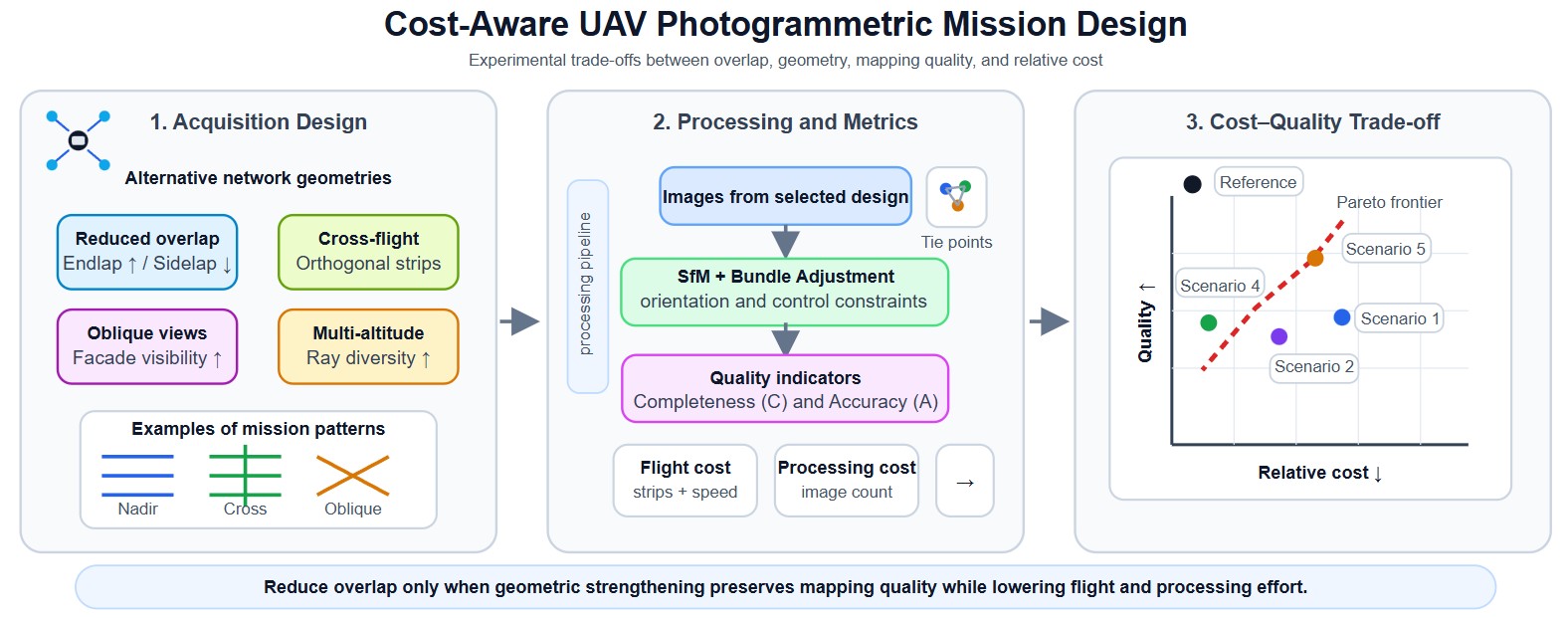
Unmanned Aerial Vehicle (UAV) photogrammetry enables high-resolution mapping and 3D reconstruction, yet operational and processing costs often scale rapidly with conservative mission designs (e.g., high overlap and redundant geometries). This paper presents an experimentally validated, cost-aware network-design study that quantifies cost–quality trade-offs in urban UAV photogrammetry. Five mission strategies—reduced sidelap with increased endlap, cross-flight compensation, partial high-overlap calibration, multi-altitude acquisition, and oblique cross-flight integration—are evaluated using a controlled experimental campaign over two urban test areas (2 × 20 ha), comprising 98 test blocks with overlaps ranging from 60% to 95%, sidelap from 20% to 80%, image counts from 70 to 2961, 7 check points, 15–17 ground control points, and GSD values between 2.6 cm and 4.6 cm, including nadir, oblique, cross-flight, and multi-altitude imagery. Each configuration is assessed using three indicators: (i) cost (flight and processing cost proxies), (ii) completeness, quantified by the number of reconstructed tie points, and (iii) accuracy, defined as a combined image–ground error at check points. Results show that cost reductions of over 50% in both flight and processing proxies can be achieved under the tested conditions while maintaining checkpoint accuracy comparable to a high-overlap reference configuration, provided that reduced overlap is compensated by stronger network geometry (e.g., cross-flight and/or oblique views). The analysis highlights product-dependent recommendations: vector map (MAP) generation can remain reliable even with very low sidelap (down to approximately 20%) when supported by adequate longitudinal overlap, whereas ortho-image mosaic (OIM) production requires at least moderate overlap in both directions (typically ≥60% endlap and sidelap) to ensure radiometric and geometric consistency. In contrast, dense 3D mesh reconstruction demands substantially stronger network geometry, including cross-flight and oblique imagery in addition to nadir views, with overlap levels exceeding 60% and preferably approaching 80%. These findings provide practical mission-planning guidelines that support efficient autonomous and semi-autonomous UAV mapping workflows.
Open Access
Article
10 March 2026Assessing Community Needs, Stakeholder Collaboration and the Influence of Modernization: A Case Study on Transforming Handloom Practices
This study investigates the need for the adoption of modern handloom tools, including jacquard and warping drums, and evaluates their impact on income generation, production efficiency, market reach, and women’s empowerment in rural areas of Udalguri District, Assam. A purposive sampling method was used to survey 50 households in total. The findings reveal that the jacquard and warping drums significantly reduced the time required for weaving, mitigating weather dependence and improving productivity. Consequently, beneficiaries reported increased income, leading to independent entrepreneurship. The marketing strategies employed included direct market linkage through Civil Society Organizations (CSOs), participation, and connection with buyers to expand market access. Types of products included Silk and Cotton, and most of the products were sold in local markets. Training initiatives have been conducted to enhance product quality and design diversity. Weavers, who previously worked with limited designs, have now adopted innovative patterns to boost product demand. The study underscores the pivotal role of CSOs in hand-holding support, development of marketing linkage, tracking systems, and development of community resource persons (CRPs) through cluster-based training programs. The modern handloom tools play a transformative role in enhancing productivity, income, and market access, while simultaneously empowering women and strengthening rural economies.

Open Access
Communication
09 March 2026Detailed Analyses of Light Intensity Dependence to Uncover Multielectron Oxygen-Reduction Mechanism by Platinum-Loaded Tungsten(VI) Oxide
Elucidation of the mechanism of multielectron transfer reactions, such as photocatalytic water oxidation and oxygen reduction, is essential for achieving high efficiency in the utilization of sustainable solar energy. Herein, we demonstrate that photocatalytic oxygen reduction on platinum-loaded tungsten(VI) oxide (Pt/WO3) photocatalyst proceeds predominantly by two-electron transfer pathway under conventional light-intensity conditions. Light intensity-dependence analyses of the acetic acid decomposition reaction revealed the role of the Pt co-catalyst in enhancing overall quantum efficiency. We also report for the first time that the reaction can be initiated even on bare WO3, in addition to Pt, under extremely high light-intensity conditions.
