
Assessing Community Needs, Stakeholder Collaboration and the Influence of Modernization: A Case Study on Transforming Handloom Practices
Assessing Community Needs, Stakeholder Collaboration and the Influence of Modernization: A Case Study on Transforming Handloom Practices

Received: 04 January 2026 Revised: 26 January 2026 Accepted: 28 February 2026 Published: 10 March 2026

© 2026 The authors. This is an open access article under the Creative Commons Attribution 4.0 International License (https://creativecommons.org/licenses/by/4.0/).
1. Introduction
The handloom textile sector in Assam remains a significant rural employer, second only to agriculture [1]. Handloom weaving in Assam reflects the intricate cultural identity of its people and serves as a testament to their resilience and creativity [2,3]. The Udalguri district of the Bodoland Territorial Region (BTR), Assam, is one of the important sources of traditional handloom products. The handloom weaving is a pivotal aspect of the socio-economic fabric in this region [4]. Different types of products from various tribal communities (Bodo, Rabha, etc.) reflect the rich cultural heritage of this region [4,5]. This traditional practice, passed down through generations of rural weavers [1,6], with the majority being women [6], functions not only as a primary or supplementary source of livelihood but also as a vital means of preserving cultural legacy and constructing social identity [4,7]. Historically, handloom weaving in Udalguri has been a family-centric activity [8]. Despite its great cultural and economic significance, the sector faces challenges like rising input cost [9], low credit coverage [10], marketing challenges such as dependence on middlemen and limited market access [10,11,12], poor institutional management [13], inadequate policy dissemination, constraint on the wider deployment of weaving technologies [14], non-upgraded loom leading to low productivity [13,15], information gap [12], resources gaps, inadequate data base and lack of skill development training [6,10], unorganized production [1,12], competition from power looms [6,12], limited productivity, lack of interest among youth [12,13,16,17] and limited design options [15], exploitation by intermediaries [18], time-consuming production processes, and financial constraints like minimal profit margins due to absent organized marketing [9,19,20] and marketing organisation [9]. Efforts toward modernization, such as technology adoption in micro-enterprises, remain constrained by financial inclusion barriers, market distance, and extension service gaps [14]. Besides, as market demand changed, the traditional handloom processes, which involved cotton cultivation, hand-spinning, and the use of natural dyes, have mostly been replaced by machines and synthetic (acrylic) colours, and weavers have also started using different kinds of fabrics alongside cotton [4,21].
Recognizing these problems, several institutes like KVK, NGOs, and the Handloom department of government (under the Bodoland Handloom Mission) have been working for the development of this sector by providing training, subsidies on modern handloom tools, and guidance on modern marketing techniques [9].
Similarly, the DWIMU project (The “Diversification With Integrated Management for Upliftment (DWIMU) of people’s live” is a collaborative initiative by the BTR Government, Bharat Rural Livelihoods Foundation (BRLF), and five Civil Society Organizations (CSOs). The project aims to transform 40,000 households in Bodoland, boosting income and promoting sustainable development with a focus on NRM, farm and non-farm-based livelihoods and capacity building) is also promoting modern handloom tools in the area, such as jacquard and warping drums, to modernize handloom weaving in Udalguri district. What makes the project unique is its collaborative platform, which brings together government, NGOs, and corporates to provide beneficiaries with both physical support (e.g., equipment and training) and virtual benefits (e.g., market linkages and digital resources).
The goal of the study was to understand the mindset regarding the adoption of modern handloom machinery, examine the effects of modernization on handloom weavers, and evaluate the comprehensive impact of the DWIMU project. This paper also deals with the importance of Civil Society Organization (CSO) in the development of the handloom sector in this region.
This study seeks to open a new area of research by linking micro-level findings from a specific intervention to broader themes of inclusive modernization and tribal empowerment. The unique contribution of this study lies in its empirical examination of community needs and stakeholder collaboration under the DWIMU project, alongside the project’s specific influence on handloom modernization in Udalguri District of the Bodoland Territorial Region (BTR). It further underscores the pivotal role of Civil Society Organizations (CSOs) in facilitating technology adoption, improving market access, and promoting sustainable livelihoods for tribal weavers. Additionally, the study provides a cost analysis of handloom products and draws inferences on the most profitable items for effective marketing strategies.
2. Objectives
- a
-
To evaluate the impact of modern methods on productivity and income for weavers.
- b
-
To identify the impact of the DWIMU project on the transition of weaving practices from traditional methods to modern technology in the Udalguri District.
- c
-
To identify challenges and potential areas for further technological and marketing improvements.
3. Materials and Methods
A purposive sampling method was used to survey 50 households, including 20 weavers using the modern handloom method and 30 weavers using traditional methods. The survey covered eight villages, i.e., Phuluguri and Deochani of Majbut block and Langdang Chuburi, Tamulbari, Borigaon, Khusurabari, Trajuli and Khoirabari of Udalguri where DWIMU project is ongoing. Data collection focused on the diversification of products, the challenges faced by weavers, the importance of Government and Non-Government Organisation (GO-NGO) collaboration, and the impact of the DWIMU project. A survey was conducted using a semi-structured questionnaire and personal interviews, consisting of 30 questions: 21 closed-ended and 9 open-ended (30%) (find supplementary materials). The survey gathered primary data and information directly from the weavers. The questionnaire captured information on socio-economic characteristics, production practices, technology adoption (e.g., Jacquard and warping drum usage), cost components, market access, design preferences, and perceptions regarding modernization. In addition to the survey, key information interviews (KII) were conducted with Government officials and NGO (the ant) representatives. These interviews served as a triangulation mechanism to validate quantitative responses and enhance the accuracy and credibility of the study findings. Fieldwork was conducted over a period of almost four months (from December 2024 to January 2025 and March 2025 to April 2025).
The study utilized both primary and secondary data sources. Secondary data included information from government reports, articles, and online resources to provide contextual insights. Additionally, records maintained by weavers, such as wage logs, income statements, and annual earnings, were analyzed alongside production records like output registers to assess productivity and income variations.
Data analysis was conducted using rigorous methods like ‘Descriptive Statistical Analysis’, ‘Garrett Ranking Method’, ‘Cost Assessment Analysis’, ‘Comparative Analysis’, ‘Triangulation of Data’ and ‘Qualitative Thematic Analysis’. The Garrett ranking method [9] was used to systematically analyse and prioritise multiple factors based on weavers’ perceptions and experiences. It identified critical factors influencing the adoption of modern handloom machines, the potential market, and the impact on women.
Product-based cost analysis has been done to compare traditional handlooms with modern practices. The cost analysis does not include the installation cost of the jacquard, wrapping drum, etc. The total production cost per unit was computed by aggregating yarn, design, and labour costs, with labour cost estimated by multiplying the average hourly wage rate by the total hours required to produce one unit. Annual production cost was derived by multiplying the unit production cost by the total output per year. Revenue was calculated based on the prevailing selling price per unit, and profit or loss was estimated as the difference between revenue and total production cost. To assess economic viability under different labour valuation assumptions, profit was calculated both including and excluding labour costs. A comparative analysis of traditional and modern weaving methods was conducted using percentage change indicators for production, cost, and profit. Labour cost differentials were analysed to assess changes in drudgery and wage efficiency. Descriptive statistical tools, including mean, median, standard deviation, minimum, maximum, and range, were applied to examine the distribution and variability of profits across weavers. This systematic cost and profitability analysis enabled an evidence-based assessment of technological interventions under the DWIMU project and their implications for weaver livelihoods.
4. Location of the Study Area
Udalguri district (Figure 1) is part of the Bodoland Territorial Region (BTR) of Assam. It is situated along the foothills of the Eastern Himalayas and is bordered by Bhutan to the north, Sonitpur to the east, Darrang to the south and Tamulpur district to the west.

5. Results
5.1. Brief Description of the Respondents
All (100%) of the respondents are women. Nearly 70% of respondents have been associated with the handloom industry for over a decade. Only 2% of respondents are newly associated with handloom activity. About 72% of the total respondents’ primary occupation is weaving.
5.2. Reason Behind the Adoption of Modern Handloom Tools
The diagram (Figure 2) shows the reason behind the adaptation of modern technology (Jacquard and Warping Drum) in the Handloom. The analysis reveals that “Support from Government and CSOs” under “Bodoland Handloom Mission” and the “DWIMU” project, respectively, have the highest Garrett Score (68.50), indicating they are the most influential factors. The civil society organization (CSO) named “the ant” and “Bharat Rural Livelihoods Foundation”, focuses on awakening the weavers to protect the tradition of handloom by introducing modern technology to the weavers to get proper profit as per labour and skill. So “the ant” team is giving training on the use of modern machines, different designs, market linkage, and product quality, with professional trainers. The community resource person (CRP) and cluster coordinator (CC) have been visiting different villages in the DWIMU project intervention area daily and communicating with weavers to effectively resolve handloom-related problems. Under the Bodoland Handloom mission, the government provided various facilities for weavers, such as weavers’ insurance, training in modern handloom operations, etc. Besides, under this handloom mission, weaving centers have been established in this area on a cluster basis. So that weavers are taking an interest in engaging with and pursuing the handloom sector.
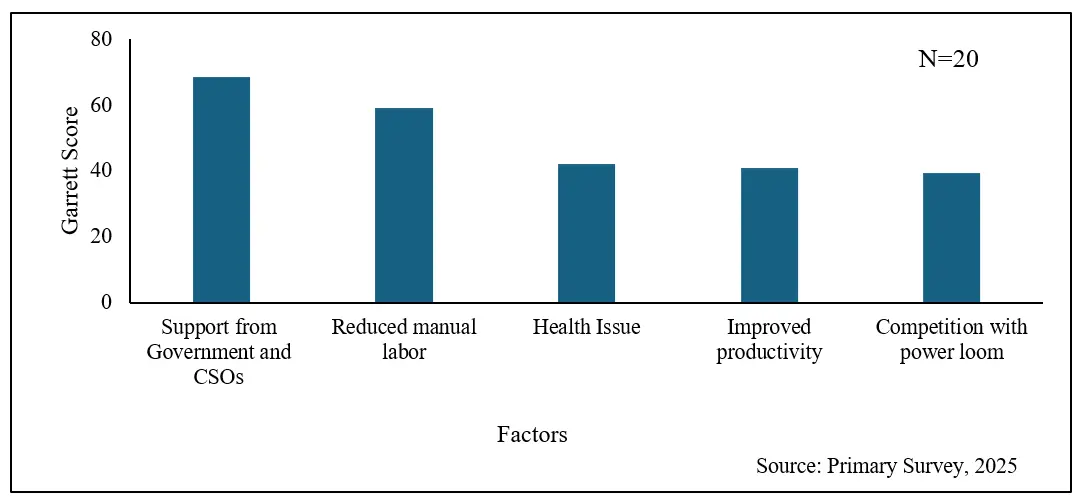
This is closely followed by “Reduced manual labor” (59.25). “Health Issue” also holds significant weight (42.00). In the traditional process, the weavers spend a significant amount of time each day, leaving them with little time for their personal health. For instance, when weaving the Eri shawl, the weavers experienced hand pain because this product was much wider. In traditional methods of weaving, they are facing problems related to frequent pain in their hands, arms, limbs, shoulders, and neck [22,23,24]. To get rid of this health issue, they adopted modernization in the handloom. Factor regarding “Competition with power loom” had relatively low scores (39.50) but had a considerable impact on the respondents. During certain seasons, weavers face stiff competition from power loom products that flood the market, resulting in lower demand and reduced prices for handloom items [9]. Although power looms continue to shape long-term market trends and demand patterns, local markets still value handloom products for their cultural significance. To preserve this heritage while competing effectively, weavers are increasingly adopting modern handloom tools.
5.3. Reason Behind the Non-Adoption of Modern Handloom Tools
Repeating findings from Gunti and Balanagalakshmi (2022), who identified old age, low education, lack of family support, infrastructure deficits, financial issues, technical skill gaps (e.g., for Jacquard looms), and small-scale operations as primary barriers to modern technology adoption in the Pochampally Ikkat sector [25], the present study in Udalguri reveals comparable constraints. The diagram (Figure 3) highlights several key reasons why weavers have not adopted modern handloom machines, as indicated by the Garrett Scores.
The foremost reason is inadequate investment funds, with a score of 89. Modern weavers need to invest approximately ₹22,000, which includes the cost of a jacquard machine (₹7000), a loom (₹10,000), and hiring a person to fit the jacquard in the loom (₹5000). Additionally, for using a warping drum, each member in a cluster (50 members) contributes ₹50 per time of use. This overall financial burden makes modern technology adoption unaffordable for many weavers. Government schemes do provide subsidised Jacquard looms, but high maintenance costs and the lack of affordable design services keep them out of reach for many marginalised weavers, and without stable incomes or financial buffers, these advanced tools eventually become unsustainable and fall into disuse [6].
Assam’s handloom sector also struggles with a fragmented and poorly connected value chain [6]. According to their opinion, the supply chain issues are closely followed by a score of 88.5. While modern methods allow weavers to produce more, they require efficient monthly product sales. Many weavers struggle to identify market linkages and understand the supply chain, which creates a fear of waste and hampers the adoption of new technology.
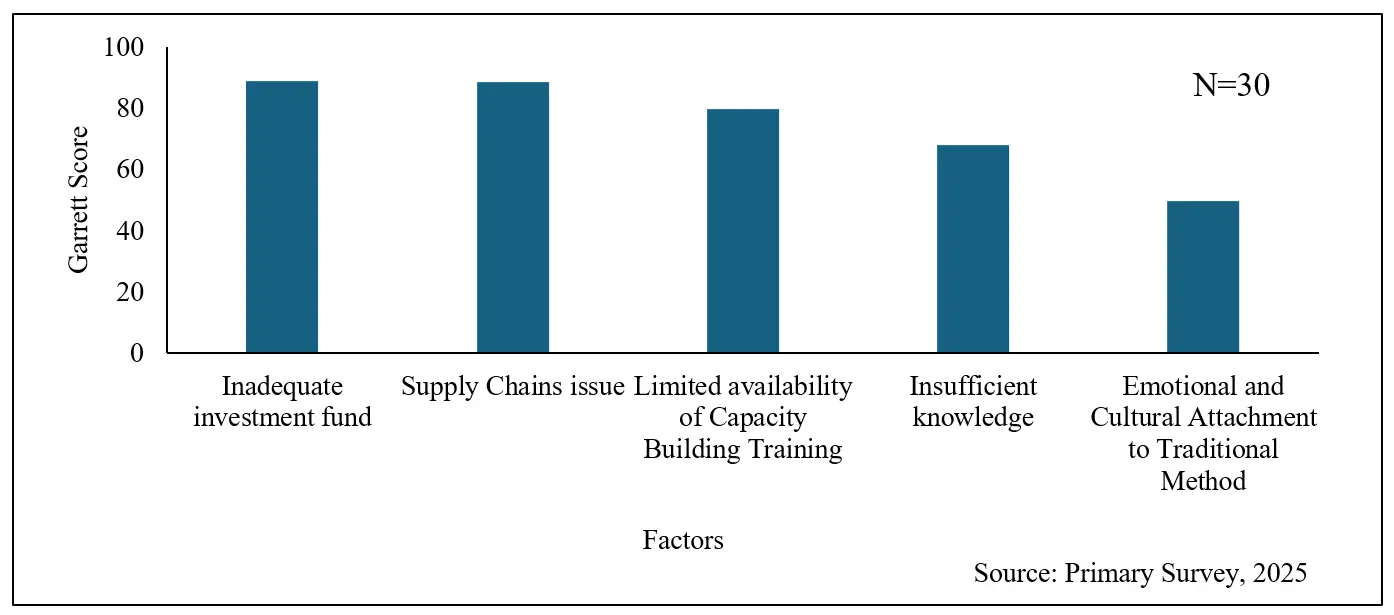
The limited availability of capacity-building training, with a score of 79.75, is another major barrier. NGOs have specific operational areas and cannot cover all blocks or support all weavers simultaneously. The government also faces challenges in providing comprehensive training, leaving many weavers without proper capacity building.
Insufficient knowledge, with a score of 68, further hinders adoption. Many weavers lack awareness of modern technology and the various government and NGO initiatives available. Their reliance on traditional looms and a life confined to their homes limits their exposure to new opportunities.
Lastly, the emotional and cultural attachment to traditional methods, with a score of 49.75, plays a significant role. Handloom weaving is a longstanding tradition in Assam, with many weavers viewing it as their primary occupation and comfort zone. Their proficiency in traditional techniques makes them resistant to adopting new weaving processes and designs.
5.4. Impact Analysis of Modern Low-Cost Tools in Handloom
5.4.1. Impact on Productivity
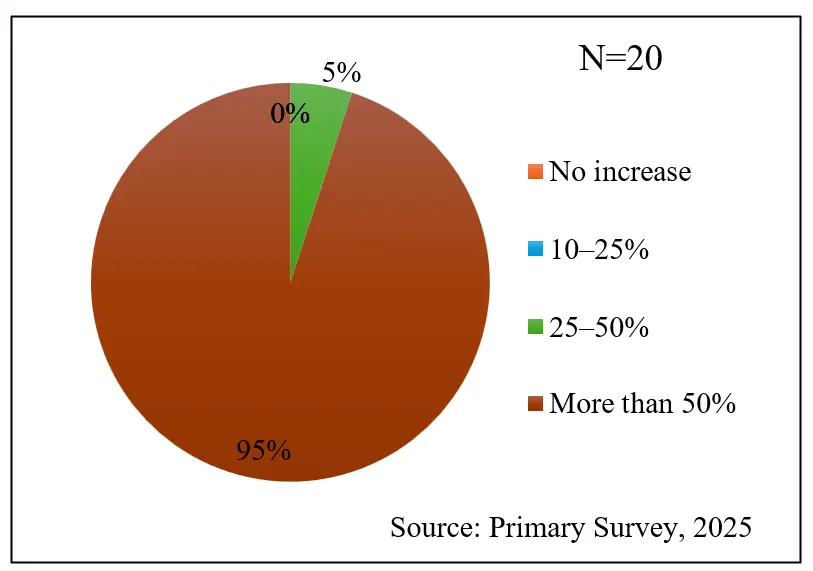
The diagram (Figure 4) demonstrates a significant increase in productivity within the respondents. A substantial 95% of participants experienced a growth of productivity exceeding 50%, while a mere 5% reported an increase within the 25–50% range. With modern handloom machines, there are no weather-related interruptions, no issues with thread cutting, and fewer problems related to the weavers’ eye strain and hand pain. These improvements have collectively contributed to higher productivity in the handloom sector.
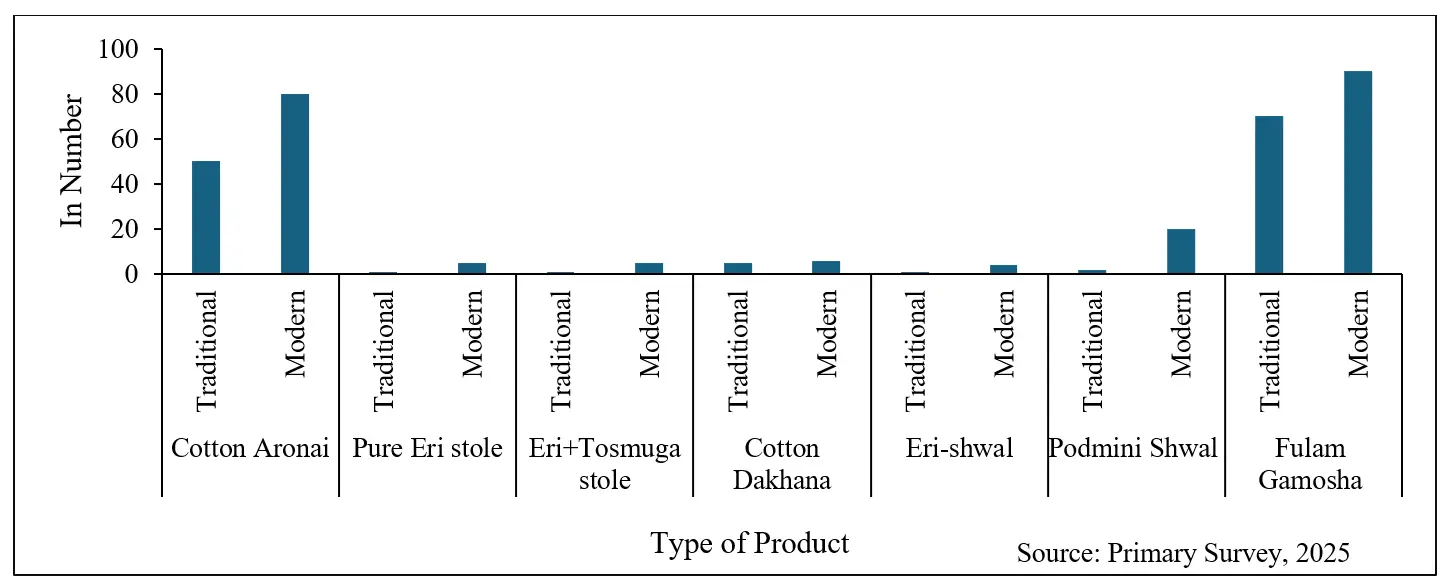
The diagram (Figure 5) has added the impact on different products through the use of modern technology. There were mainly 10 types of handloom products producing by the respondents, namely Eri Shwal, Eri with Tosmuga Stole, Pure Eri Stole, Fulam Gamosha, Cotton Aronai, Cotton Dokhona, Podmini Sador, Podmini Mekhla, Eri Aronai, and Eri Sador. But they do not produce all items; rather, they work on 3 to 4 types of items, depending on their skills and market demand. But to assess the potential difference in production average per weaver, production has been taken into consideration. The calculation has been done on a yearly basis.
Across all items, modern methods consistently yield higher annual outputs compared to traditional techniques. For instance, in the case of Cotton Aronai, modern production has reached 80 units per year, surpassing the 50 units produced by traditional methods. Similarly, Pure Eri Stole, Eri-Tosmuga Stole, and Cotton Dakhana show significant improvements, with modern production yielding 5, 5, and 6 units, respectively, while traditional methods yield only 1, 1, and 5 units, respectively.
In the case of Eri-shwal, production increases from 1 unit traditionally to 4 units using modern techniques. Likewise, Podmini Shwal production rises from 2 units with traditional methods to 20 units with modern ones. The most notable difference is seen in Fulam Gamosha, where modern production achieves 90 units per year, compared to 70 units using traditional processes.
Overall, the total production using modern methods (210 units) far exceeds that of traditional techniques (130 units), clearly demonstrating the impact of modern technology in improving productivity and efficiency in the handloom sector.
5.4.2. Impact on Quality of Product
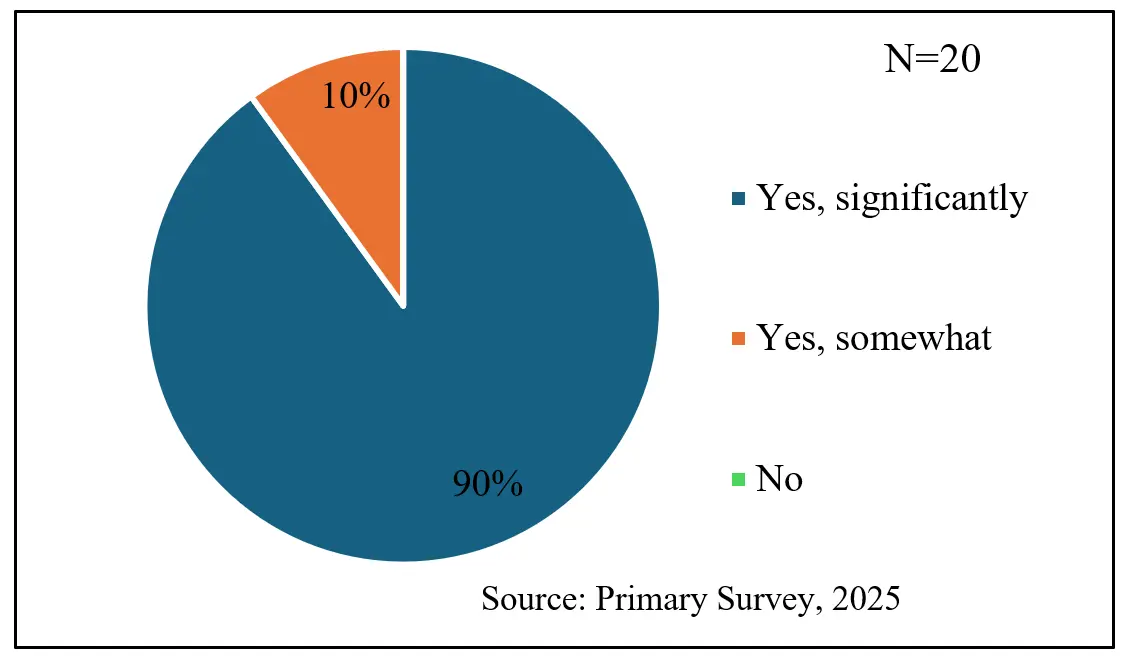
Based on the survey results (Figure 6), it is evident that the adoption of modern handloom machines has had a notably positive impact on the quality of products. Specifically, 90% of respondents believe that the quality of their products has improved significantly due to the use of these modern machines. Additionally, 10% of respondents feel that the quality has somewhat improved. No respondents indicated that modern handloom tools had a negative effect on product quality. Now they are using different types of designs as per recent trends, which have contributed considerably to the quality of the product.
5.4.3. Impact on Work Time
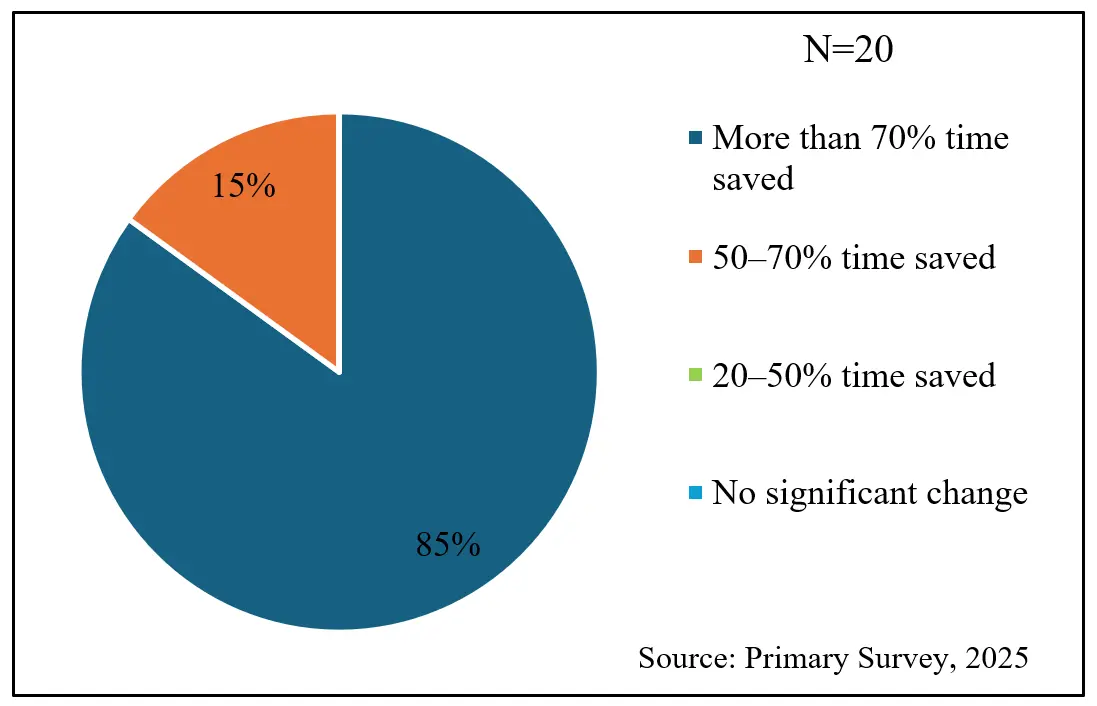
The diagram (Figure 7) illustrates the impact of modern handloom machines on time savings for weavers. A significant majority of respondents (85%) reported that after using the modern handloom machines, weaving time has been saved by more than 70% to the traditional way of weaving. Additionally, 15% of respondents experienced time savings in the range of 50–70%. Remarkably, no respondents reported time savings below 50% or no significant change. It emphasizes the machines’ ability to reduce the labour-intensive weaving activity.
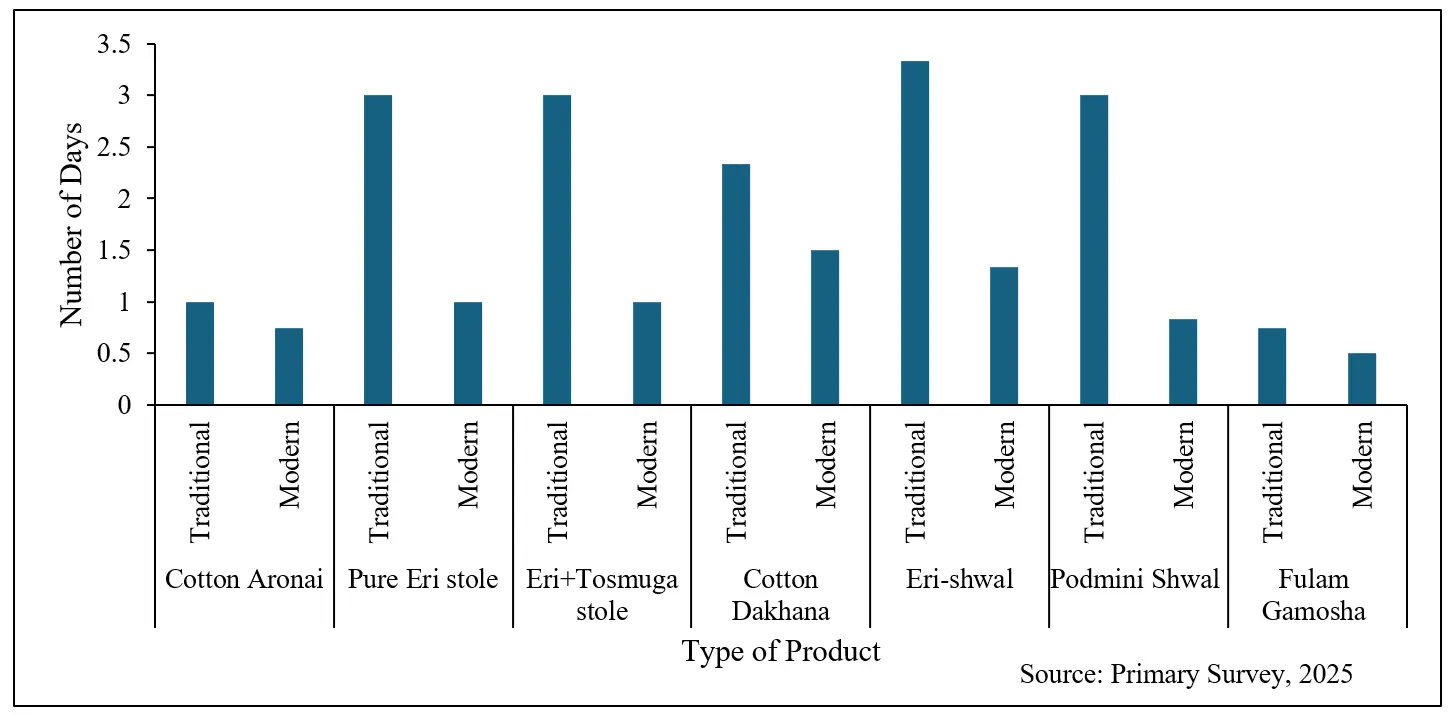
The bar diagram (Figure 8) shows the difference in the number of days required to produce a single unit of various handloom products using traditional and modern production methods. It can be identified that modern methods significantly reduce the time needed for production. Here, the average working time per weaver is 6 h, and based on this, the average number of days per unit has been calculated. For example, the production of a Cotton Aronai traditionally takes about 1 day per unit, while modern methods require only 0.75 days. Similarly, shawl production shows notable time differences: in traditional processes, Pure Eri Stole, Eri-Tosmuga Stole, Eri-Shwal, and Podmini Shwal take 3, 3, 3.33, and 3 days, respectively. In contrast, modern methods bring this down to 1, 1, 1.33, and 0.83 days per unit, demonstrating significant gains in efficiency.
Cotton Dakhana also reveals clear improvements, with traditional production requiring 2.33 days per unit, while the modern method needs only 1.5 days. The Fulam Gamosha illustrates the most striking difference: traditional production takes 0.75 days, whereas the modern method reduces it to just 0.5 days per unit.
Beyond the weaving process, traditional warping typically requires 2 to 3 skilled weavers, but modern techniques allow a single weaver to warp threads within 1.5 to 2 h using a wrapping drum.
Overall, modern production techniques offer consistent time savings and reduced labor intensity. These improvements highlight the positive impact of mechanization, enhanced tools, and process optimization in textile production.
5.4.4. Impact on Income
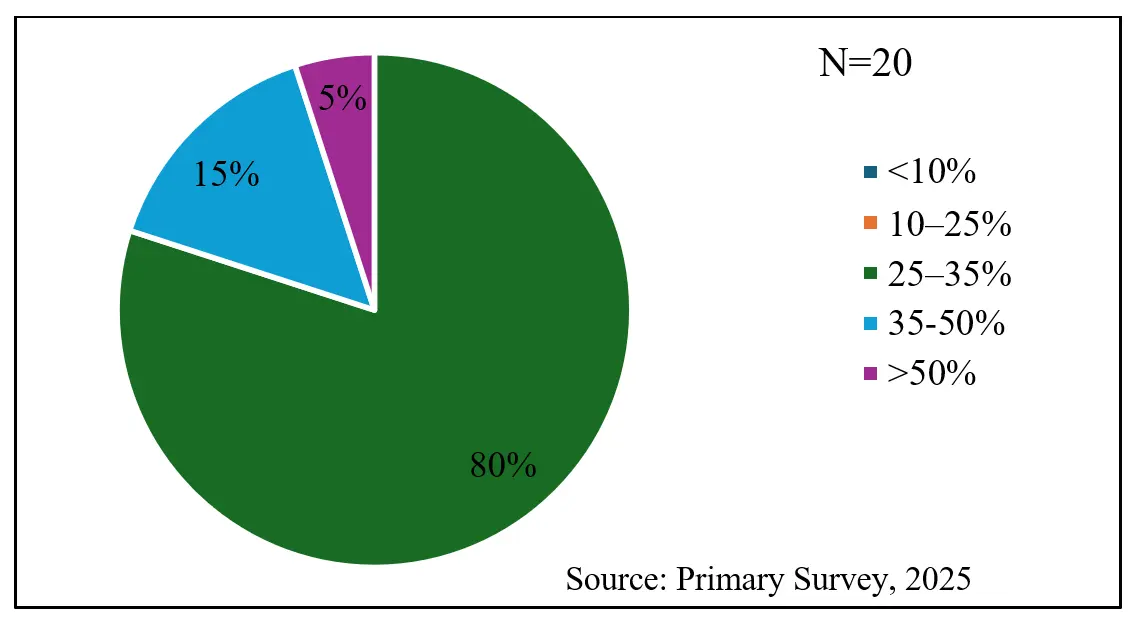
The diagram (Figure 9) illustrates a significant positive impact on income among users of modern handloom practice. 80% of respondents reported an income increase of 25–35%. Furthermore, 15% of the respondents experienced an income increase of 35–50%. About 5% of respondents opined that their income has increased by more than 50% after using such modern tools in the handloom. This suggests that the adoption of modern handlooms has markedly improved their earnings. According to the respondents, income growth has been modest so far, as they are in the transitional phase of modernization. However, they expressed hope that their income could grow two to three times higher next year if they continue to receive similar support.
5.4.5. Comparison in Yearly Revenue
The above analysis comparing traditional and modern process production in the handloom industry of Udalguri district demonstrates a significant impact on productivity and a reduction in weaving time with the adoption of modern technology. Considering the yearly total working days and production units, traditional handloom methods operate for 129.5 days, producing 130 units, while modern methods operate for 146 days, producing 210 units annually.
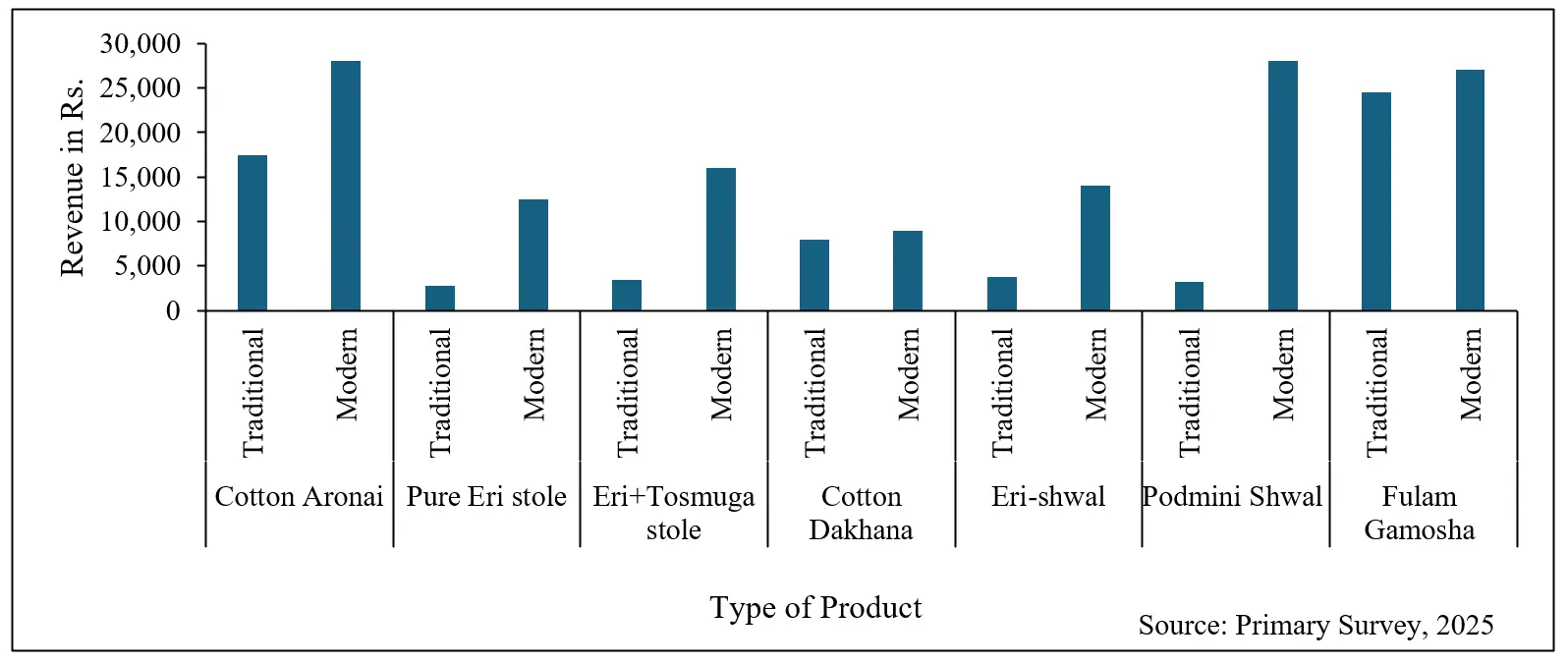
The average revenue (Figure 10) earned by respondents, as shown in the chart, clearly highlights the advantage of modern techniques. For instance, in the case of Cotton Aronai, the average revenue per weaver through traditional methods is ₹17,500, whereas it increases significantly to ₹28,000 with modern methods. Similarly, Pure Eri Stole and Eri with Tosmuga Stole show revenue growth from ₹2800 and ₹3500 (traditional) to ₹12,500 and ₹16,000, respectively, under modern methods.
Eri- Shwal and Podmini Shwal witnessed a notable rise in revenue, from ₹3800 and ₹3200 respectively in traditional to ₹14,000 and ₹28,000 in modern handloom practice. The revenue of Cotton Dakhana has increased from ₹8000 to ₹9000. Fulam Gamosha realizes an impressive rise from ₹24,500 (traditional) to ₹27,000 (modern).
In total, the combined average revenue per weaver under traditional practices is ₹63,300, whereas with the modern method, it increases to ₹134,500 annually, reflecting a more than twofold (2.12 times) increase in average revenue.
5.5. Market of Product
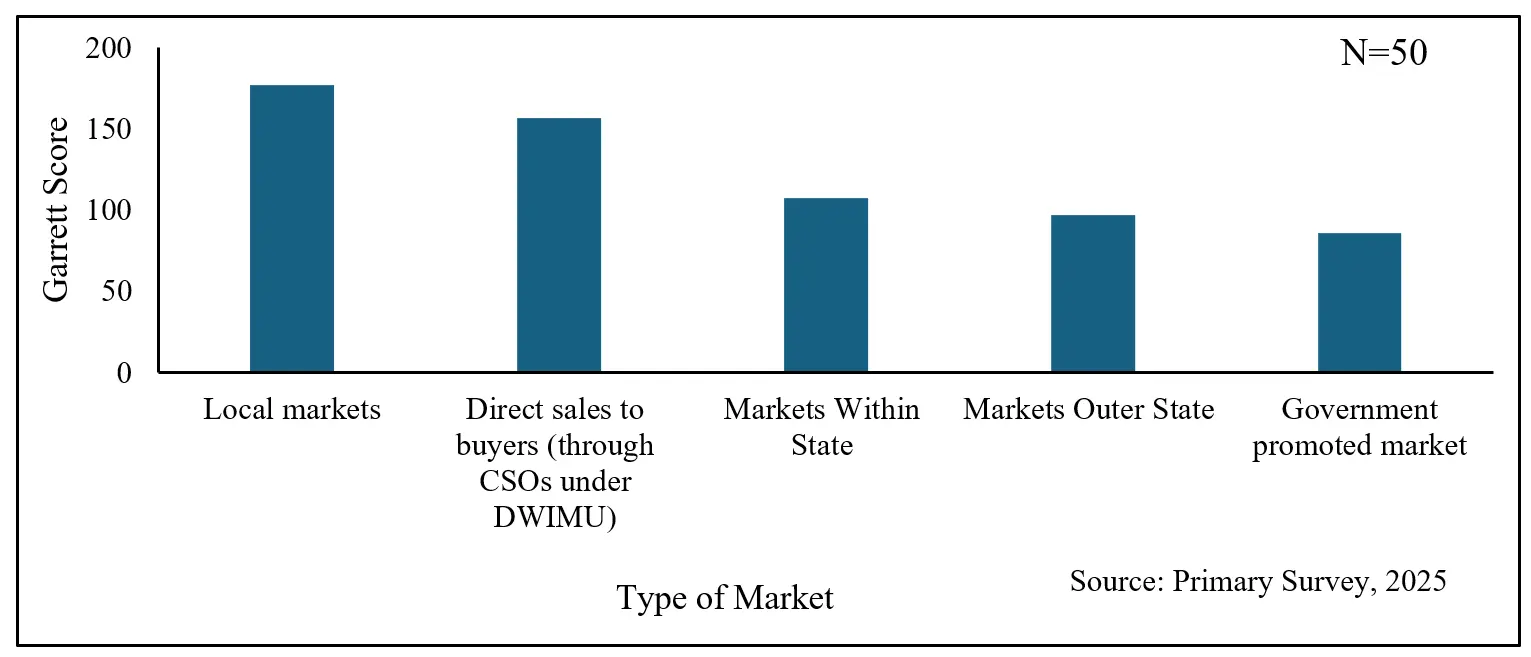
The diagram shows (Figure 11) a diverse type of market for handloom products. Local markets stand out as the primary and most effective outlets with the highest Garrett score of 177.25. Direct sales through CSOs under the DWIMU project are also significant, with a Garrett score of 157.00. In this project, “BRLF” and “the ant” team, facilitates direct engagement by setting up Stoles at various exposition, raising awareness of Udalguri’s handloom products and generating bulk customized orders. The market within the state has a Garrett Score of 107.50, reflecting opportunities for reaching the but also challenges in navigating complex regulations and establishing buyer connections. Markets outside the state with a score of 97.25, present the underutilized opportunities, as some weavers participate in national expos and connect with large markets through vendors, but there is potential for greater engagement. The markets of the inside and outside states are both dominated by middlemen. Government-promoted markets (ONDC—Open Network for Digital Commerce), GeM—Government e-Marketplace, trade fairs, trade exposition etc.) with a score of 86.00, indicate limited success but further amplifies awareness about the handloom and textile heritage.
5.6. Perception Study
While designers and entrepreneurs are often in the spotlight, the real foundation of this industry is the women who quietly work on inherited looms, using traditional skills passed down through generations [6].
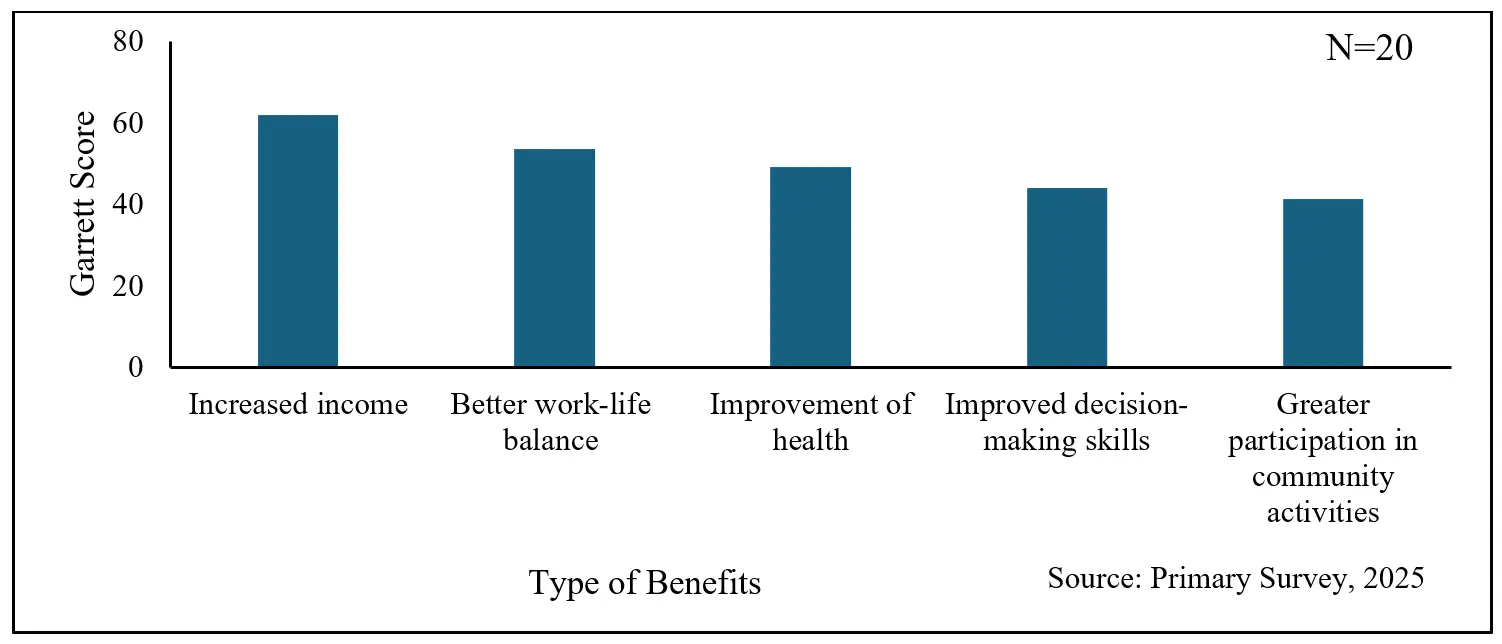
The Garrett Score results (Figure 12) reveal several key benefits women have experienced from adopting modern handloom tools. The most prominent advantage is the increased income, with a Garrett Score of 62.00. Following this, better work-life balance scores of 53.50 indicate that these tools have helped women better manage their professional and personal lives. Additionally, the improvement of health, with a score of 49.25, stands as the third most important benefit.
Improved decision-making skills are scoring 44.00. Lastly, greater participation in community activities, with a score of 41.25, points to increased engagement in social life, facilitated by the adoption of these tools. Overall, these findings demonstrate the multifaceted and positive impact of modern handloom machines on women’s lives.
All respondents (100%) have indicated that they would recommend the use of these machines to other weavers.
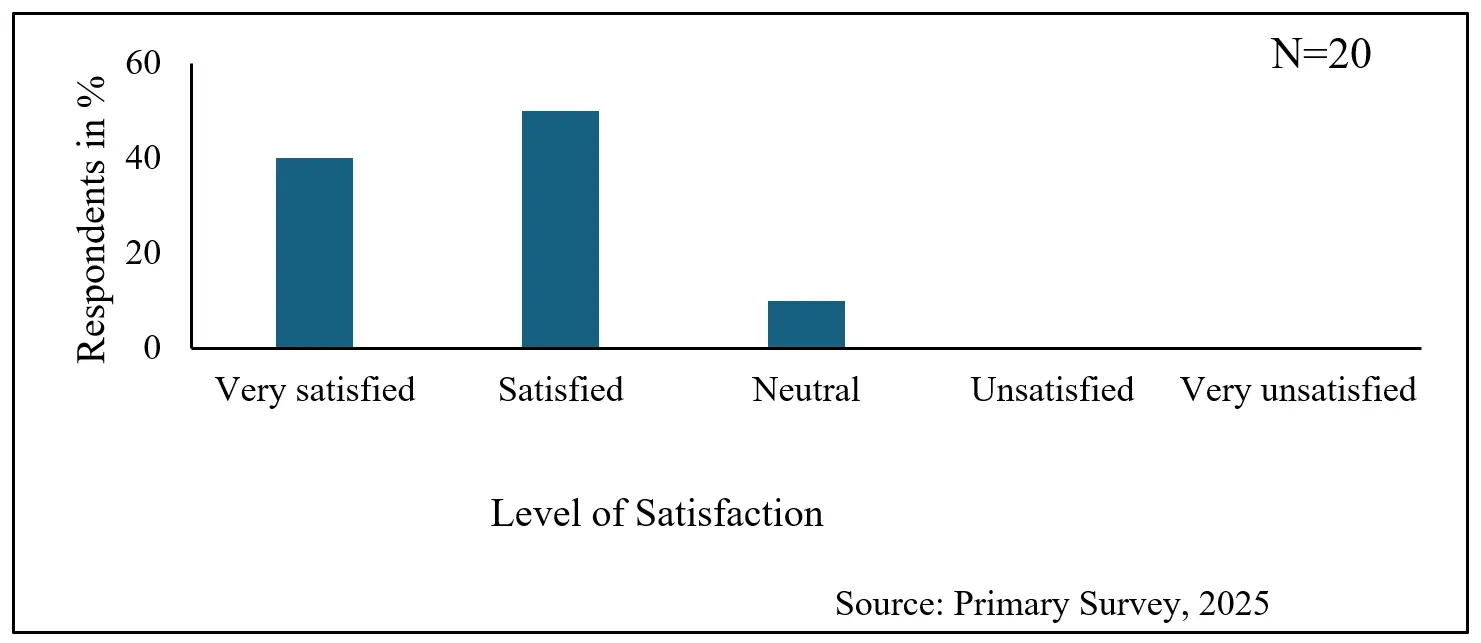
The survey results (Figure 13) indicate a high level of satisfaction among respondents regarding the adoption of modern handloom tools. Specifically, 40% of respondents are very satisfied with the adoption, and 50% of respondents are satisfied. This means that a total of 90% of respondents have positive experiences and opinions about the use of modern handloom machines. Additionally, 10% of respondents have a neutral stance on the adoption, and notably, there are no respondents who are unsatisfied or very unsatisfied. This suggests that the modern handloom machines have been successful in meeting or exceeding the expectations of users,
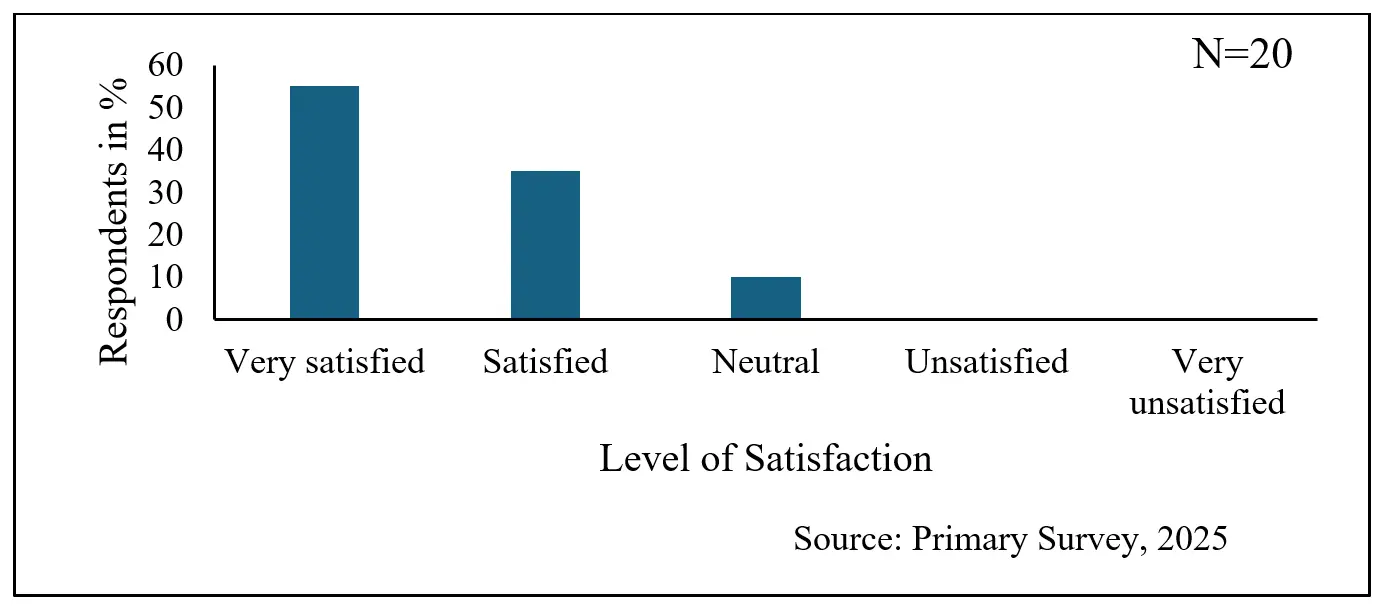
It is a fact that the impact of Government and non-government collaboration has significantly helping to support the handloom industry in the region. To assess the impact of DWIMU project, a perception study has been conducted. The survey results reveal (Figure 14) a high level of satisfaction among respondents with the DWIMU project’s initiative to modernize handloom machines. Notably, 55% of respondents reported being very satisfied, while 35% indicated they were satisfied. This results in 90% of respondents having a positive opinion of the initiative. Additionally, 10% of respondents expressed a neutral stance, and no respondents reported being unsatisfied or very unsatisfied. These findings suggest that the DWIMU project’s efforts to modernize handlooms have been well received and are effectively meeting the expectations of weavers.
5.7. Challenges in the Modernization of Handloom
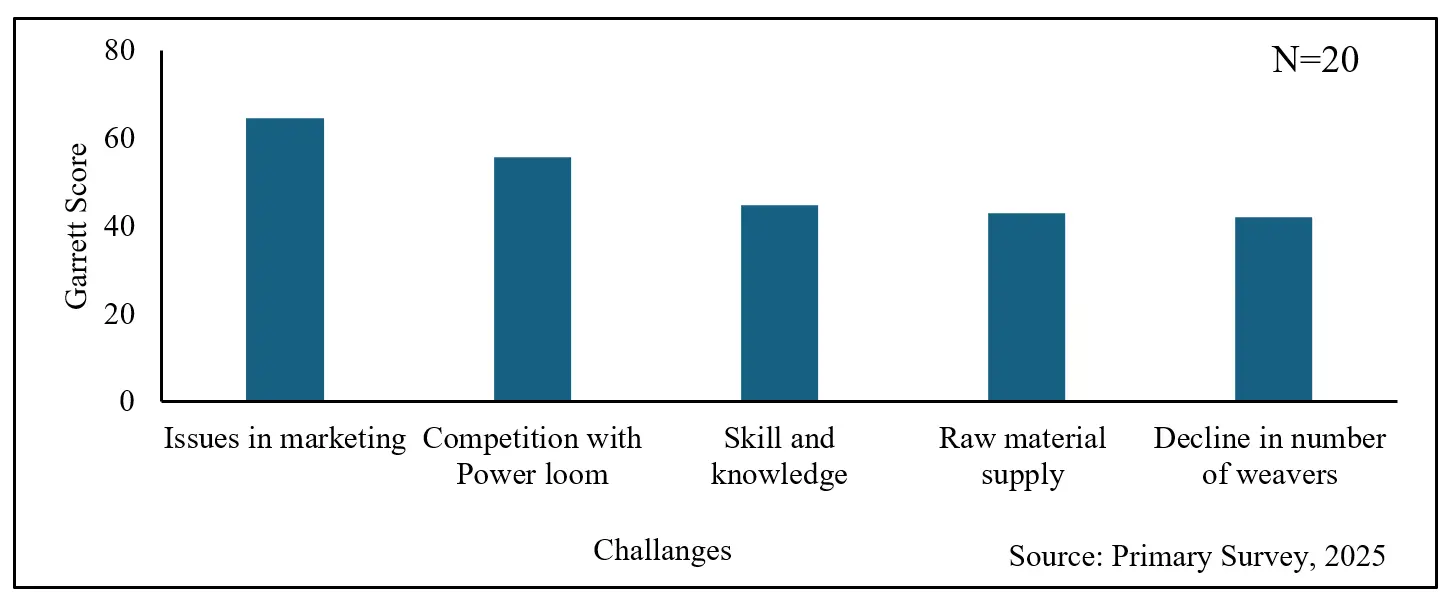
The Garrett Score results show (Figure 15) several key challenges after modernizing handlooms. The biggest problem is marketing, with a score of 64.5. Consumers remain unaware of the quality and unique features of handloom products because they often confuse them with power loom items, which frequently copy traditional handloom designs [12]. Here, such a misconception has also emerged among customers who believe that handloom products made with modern handloom tools are a type of power loom product. While this belief is incorrect, it is nonetheless affecting the market. Besides, the market for handloom products is scattered, sporadic, and mostly localized. Competition with power looms is another major issue, scoring 55.75. In the traditional handloom process, production levels were low, and the market was distinct. However, with the mechanization of the handloom sector, production has improved, leading to a continuous shift of weavers from traditional handlooms to modern handloom methods. This transition has resulted in healthy competition with power loom products. Skill and knowledge, scoring 44.75, indicate that more training is needed to use modern machines effectively. With the assistance of the CSO, around 26 new designs have been developed. However, respondents have only adopted 4 to 5 of these new designs, influenced by their skill levels, economic conditions, and market demand. Currently, building capacity and analyzing market demand for these designs presents a significant challenge. Raw material supply, scoring 43, means there are still problems getting the materials needed. This aligns with broader challenges in Assam’s handloom sector, where a fragmented value chain forces independent weavers to source yarn and other inputs from inconsistent open markets, leading to volatile pricing and variable quality [6]. Finally, the decline in the number of weavers, with a Garrett score of 42, is one of the great challenges. New generations are not significantly interested in this labour-oriented work. Due to this the family-based labourer becomes decreasing leading the involvement of hired labourer.
5.8. Initiative under DWIMU Project for Solution
5.8.1. Highlights of Handloom Cluster Development Model under DWIMU Project
A holistic approach of cluster development has been adopted to enhance the handloom sector by integrating technological advancements, skill development, community support, and market linkages. This interconnected approach suggests that the success of one component can positively influence the others, creating a synergistic effect that strengthens the entire handloom cluster. For instance, adopting new technology requires skill enhancement, which, in turn, can lead to better-quality products suitable for collective marketing.
Focus area under the Model:
-
-
Technological Upgradation: Introducing new technologies like Jacquard, Warping Drums, and Framed Looms to enhance productivity and design capabilities.
-
-
Efficiency Enhancement in Traditional Looms: Implementing new designs, modern warping techniques, and quality control measures to optimize existing traditional looms.
-
-
Skill Development: Equipping weavers with the necessary skills to utilize new technologies and create contemporary designs.
-
-
Community Resource Persons: Establishing resource individuals within the community who possess expertise in specific areas like warping, Jacquard operation, and punching of design cards.
-
-
Entrepreneurship Development: Promoting entrepreneurial skills among weavers to manage their production and business effectively.
-
-
Collective Procurement (Yarn): Enabling weavers to collectively source raw materials like yarn, potentially leading to cost reduction and better-quality control.
-
-
Collective Marketing (Bulk Orders): Facilitating joint marketing efforts to secure larger orders and improve market access for the handloom products.
5.8.2. Key Activities and Support Provided to Weavers under the DWIMU Project
Under the DWIMU project, “BRLF” and “the ant” support weavers through skill development, equipment distribution, financial assistance, and market linkage. Training is provided in design, Jacquard operation and installation, and warping techniques. Framed looms, Jacquard machines, and warping drums are distributed, and solar panels are provided through convergence from other CSR (Corporate Social Responsibility) projects to enhance efficiency. Handholding support ensures seamless adoption of these skills. Entrepreneurs receive assets, training, and market access, while mobilization efforts help artisans secure Udyam and BTR Weaver’s registration, Yarn Passbooks, and Mudra Loans. MEDP (Micro Enterprise Development Programme)/EDP (Entrepreneurship Development Programme) training strengthens business skills and market linkage, connects weavers with customers, retailers, and wholesalers, and encourages a self-sufficient weaving community.
Under the project, 37 Jacquard machines have already been distributed. Additionally, metal warping drums have been developed, and to ensure that all weavers could benefit, the team distributed six warping drums in the clusters. “BRLF” and “the ant” have also established a revolving fund to assist beneficiaries. Beneficiaries can borrow approximately ₹7000 from this fund and repay it in equal installments within six months, without interest. This fund is used to purchase modern handloom machines. Besides, CSO also engages in market research to understand the demand of new design by developing sample copy [5].
To strengthen repayment discipline and to address this challenge, under the DWIMU project, several convergence processes with different departments have been done. The CSO, “the ant”, creates a staff contribution fund for support to poor weavers for asset creation (handloom machine tools), and the “CLF” fund also mobilize to distribute Jacquard and warping drum, etc. In line with this, “BRLF” and “the ant” are making efforts to provide credit linkage to beneficiaries through the Assam State Livelihood Mission (ASRLM). To reinforce the credit linkage with the bank, the Self-Help Group (SHG) members who have not repaid previous loans are motivated to repay, improving trust among financial institutions and federations, leading to improved lending opportunities and increased fund availability for new loans.
Through dedicated training and hands-on mentorship under the DWIMU project, Community Resource Persons (CRPs) have been equipped with expertise in Warping, Jacquard Installation, and Punching Design Cards. This initiative ensures weavers have access to reliable, timely local support. CRPs specialize in Warping Drum assist weavers with technical guidance, charging ₹6 per meter. For Jacquard Loom installation, skilled CRPs provide professional setup services at a rate of ₹4000 per installation. Likewise, CRPs proficient in Punching Design Cards offer their expertise, charging ₹5 per card for their service. By enabling weavers with accessible technical assistance, this approach enhances efficiency and fosters growth in their craft.
To address the misconception between handloom and power loom products, “BRLF” and “the ant” are actively engaged in proper marketing. One initiative involves attaching a registered tag to handloom products to assure customers of their authenticity. Another solution includes providing a catalog with each product that explains the production process of handloom items using modern handloom machines, aiming to raise awareness and ensure customer satisfaction. Under the DWIMU project, market linkage will also be intensified through participation in expos (like the “Little Folk Fellowship Expo”, “Bodo Sahitya Sabha”, and the “East Himalayan Expo”), order-specific supplies (like BRLF’s Samanvay event), and direct customer sales through stall setup in different places.
5.9. Cost-Benefit Analysis: Traditional vs. Modern Handloom Methods
The cost-benefit analysis for traditional and modern handloom methods has been discussed below, including all components of expenditure (labour cost, material cost, etc.).
5.9.1. Method Wise Analysis on Yield of Profit
On average (Table 1), products under the modern method yield ₹320.52 is a higher profit than under the traditional method. The variation in profits (as measured by the standard deviation) is also slightly higher under the modern method, suggesting a wider spread in earnings due to higher returns on premium products.
Table 1. Descriptive Statistics Showing Difference in Profit for Traditional and Modern Handloom.
|
Metrics |
Traditional Method |
Modern Method |
|---|---|---|
|
Average Profit (₹) |
667.96 |
988.48 |
|
Median Profit (₹) |
662.5 |
861.25 |
|
Standard Deviation (₹) |
853.3 |
893.31 |
|
Minimum Profit (₹) |
−62.5 |
3.13 |
|
Maximum Profit (₹) |
2202.5 |
2427.5 |
|
Range (₹) |
2265 |
2424.37 |
Source: Calculated by researchers based on primary data.
5.9.2. Product-Wise Comparative Profitability (₹)
Every product shows improved profit margins under the modern method. Notably, Cotton Aronai, which had been traditionally unprofitable, became marginally profitable. The highest proportional gain is seen in Podmini Shwal. Significant improvement has been observed, with average profits (Table 2) increasing by approximately 44% across all handloom products using the modern method.
Table 2. Difference in Profitability for Traditional and Modern Handloom.
|
Product |
Traditional Method (₹) |
Modern Method (₹) |
% Increase |
|---|---|---|---|
|
Cotton Aronai |
−62.5 |
3.13 |
105% |
|
Pure Eri Stole |
1584.5 |
1809.5 |
14.20% |
|
Eri-Tosmuga Stole |
2202.5 |
2427.5 |
10.20% |
|
Cotton Dakhana |
662.5 |
781.25 |
17.90% |
|
Eri-shwal |
765 |
990 |
29.40% |
|
Podmini Shwal |
492.5 |
861.25 |
74.80% |
|
Fulam Gamosha |
27.13 |
42.75 |
57.50% |
Source: Calculated by researchers based on primary data.
5.9.3. Labour Cost Differential for Traditional and Modern Process
Labour cost efficiency (Table 3) is the main driver behind profitability under modern methods, with reductions averaging over 50% across all products under the modern method, ranging from 72% for Podmini Shwal to 25% for Cotton Aronai. It has become a key contributor to increased net profits in the modern weaving method.
Table 3. Impact of Wage on the Production Cost for Traditional and Modern Handloom.
|
Product |
Traditional Wage (₹) |
Modern Wage (₹) |
% Reduction |
|---|---|---|---|
|
Cotton Aronai |
262.5 |
196.88 |
24.98% |
|
Pure Eri Stole |
787.5 |
262.5 |
66.67% |
|
Eri-Tosmuga Stole |
787.5 |
262.5 |
66.67% |
|
Cotton Dakhana |
612.5 |
393.75 |
35.71% |
|
Eri-shwal |
875 |
350 |
60.00% |
|
Podmini Shwal |
787.5 |
218.75 |
72.22% |
|
Fulam Gamosha |
196.88 |
131.25 |
33.33% |
Source: Calculated by researchers based on primary data.
5.9.4. Product Wise Profitability Analysis
High Profitability (Profit greater than ₹1500): Eri-Tosmuga Stole (about ₹1585 to ₹1810 per piece) and Pure Eri Stole (₹2203 to ₹2428 per piece) fall under this category in both methods.
Moderate Profitability (Profit ₹500 to ₹1500): Cotton Dakhana, Eri-shwal both fall in this category in both methods. Profits of Podmini Shwal improved further under the modern method and fall in this category.
Low Profitability (Profit less than ₹500): Profit of Podmini Shwal under traditional method fall below 500 per piece. Cotton Aronai and Fulam Gamosha generate considerably low profit (below ₹50) in both cases.
Premium silk-based products (Eri varieties) consistently outperform others in both cost efficiency and returns. Cotton-based products show low margins, suggesting limited economic incentives unless mechanization or design innovation is introduced.
6. Discussion
The efficiency and profitability brought by modern handloom can be easily understood from the analysis. Modern handloom greatly improves production efficiency, reduce labour costs, substantially increase revenue and making the handloom industry more profitable and sustainable while maintaining the quality and craftsmanship of the textiles. By adopting modern technology, the industry can preserve cultural heritage while ensuring better financial returns for artisans, ultimately benefiting both producers and consumers.
In the traditional method, weavers purchase the threads and spend around 19 to 20 h to bobbin it (3 to 4 person @ 6 to 5 h of work per day respectively). After this, they begin wrapping the threads to shape the product, a process that requires considerable space and time. An extended ground area is needed, with the required space depending on the product quantity, usually around 90 to 100 m in length. Following this, the threads need around 5 to 6 h for the design system, such as “bor tula”. Overall, it takes approximately 2 to 3 days to complete the pre-weaving process. Additionally, more time was needed when the yarn became tangled or damaged. This method is weather-dependent, as the process of warping needs to be performed outside, making it impossible to proceed in bad weather. The southwest monsoon begins in May and continues through September-October, and the air is highly humid throughout the year, except during February to April [26]. So, the weavers using traditional handlooms get very few months for “Dakhana” and “Shawl” production. Besides, “Eri” yarn is affected by fungus during humid weather. So, Eri product is only produced in the dry season in the traditional process. Furthermore, this process requires the skills of three to four weavers.
Using traditional weaving methods, the products created were limited in design [15], and no significant improvements were observed. These designs were handcrafted and lacked variety. But the Jacquard loom operates through a punched-card mechanism that allows precise control over individual warp threads and enables the creation of highly intricate, non-repetitive designs, including brocades, elaborate floral motifs etc. [27]. With the adoption of the Jacquard, weavers of this area can now effortlessly create a variety of “Saneki” (ethnic) designs in a short span of time. This technology also enables them to produce customized products efficiently, catering to specific customer demands. In the market, identical designs tend to lose their appeal, leading to a drop in demand. It has been understood that designs featuring large flowers were top sellers. Customers were particularly attracted to big flower patterns in various color combinations, as these were the most striking and unique designs. Such intricate designs could be produced quickly only by using modern machines. The Jacquard machine enables the creation of unique, high-quality designs that capture customers’ interest and significantly boost product demand.
Considering the recent scenario the recommended strategies for stable profit in handloom sector need to focus on Eri-Tosmuga Stole, Pure Eri Stole, Eri-shwal, Cotton Dakhana is recommended for maintaining stable profits, as these products remain profitable even with labor costs, making them excellent items for production expansion. In contrast, labor optimization is critical for items like Podmini Swal Cotton Aronai, Fulam Gamosha, etc, which are highly sensitive to labor expenses. Implementing automation or enhancing worker efficiency through skill-based training can help minimize dependency on labor costs. Additionally, adopting piece-rate payment systems rather than fixed wages could further reduce overall labor costs. Effective labor cost management is also essential for products such as Eri-shwal, Cotton Dakhana, Cotton Aronai, and Fulam Gamosha. Negotiating improved wage structures or boosting worker productivity can help lower labor expenses without cutting jobs. If labor costs continue to rise, transitioning to more automated production processes may become necessary for heavily labor-dependent items like Fulam Gamosha and Cotton Aronai. Lastly, items like Cotton Aronai and Fulam Gamosha are advisable to produce individually and sell the items collectively unless there is a strong demand-driven justification. Business models cannot be sustainable for these items with hired labourers. These products should only be produced if labor costs are reduced or production efficiency is significantly improved to prevent financial losses.
The handloom sector in Udalguri district is still primarily dominated by family labor and higher demand in the local area, the production of Cotton Aronai and Fulam Gamosha is still ongoing, although its profit cannot compensate the family labour significantly. On the other hand, though there is less demand in the local market of Eri-Shawl, Eri Tosmuga shawl, Eri-Sadar, etc., the profitability is considerably high. The production of Dakhana remains limited in Udalguri, and most of it is sourced from Kokrajhar, but the Eri thread products have a good market demand in different areas of Assam. So, considering the demand structure, profitability, and inter-regional trade flows, there is a need to focus on the production and marketing of Eri-Tosmuga Stole, Pure Eri Stole, Eri-shwal, Cotton Dakhana, etc.
The DWIMU project has significantly increased production levels. Many weavers who previously operated at smaller scales are now engaged in diversified garment production. A strong preference has been identified for direct support from CSOs such as “BRLF” and “the ant” under the DWIMU project, which are perceived as more responsive and impactful. Initiatives to reduce manual labour are highly valued, likely due to their direct benefits on work efficiency and quality of life. Overall, CSOs and the Government play a crucial role in ensuring comprehensive training in the use of modern machines, such as jacquard, warping drum, design making, and handholding support for all weavers.
The backward linkage (access to tools and equipment, support services such as credit, training, and infrastructure) for the handloom in this area has been significantly strengthened, and now much focus needs to be paid to the forward linkage (marketing, distribution, and sales channels) of the sector. Increased production has led to reduced market prices due to higher supply. While this has made products more accessible to consumers, it has reduced per-unit profit margins for weavers. However, respondents reported that overall income has improved due to higher production volume and reduced time of weaving. Research on handloom value chains in India shows that although organized support has helped increase production, weak marketing systems, fragmented distribution, and dependence on middlemen still limit weavers’ bargaining power and reduce their economic benefits [28]. If the project successfully gets all targeted weavers to use modern handloom methods but does not build proper forward linkages (like good marketing channels), inventory will pile up. This will make weavers more dependent on middlemen, who will gain even stronger control because of the lack of structured ways to sell directly. To strengthen the market channel, the creation of brands and the establishment of online direct sales platforms are needed. Though the project has introduced an authentication tag for marketing purposes, it also needs to focus on a storytelling approach that emotionally connects customers with the handloom weavers [29]. This will boost brand value, support sustainability, preserve traditions, and meet the rising consumer demand.
Modernisation of the handloom helps cultural preservation in this area. Traditional garments such as Aronai, shwal, and Dakhana are not merely economic goods; they are carriers of cultural identity. Previously, limited production led to high prices and fewer consumer options. If that situation had continued, traditional garments might have gradually become confined to festive occasions, losing relevance in daily life. Similar findings appear in the study by R. M. Dias (2019), which shows that the introduction of modern handloom technology enabled weavers in Ri-Bhoi, Meghalaya, to increase production and create a surplus of traditional textiles, and these surplus items were then sold locally to women who did not weave themselves but wanted special traditional pieces for themselves and their families [30].
However, the current expansion in production in Udalguri has made traditional garments more accessible, thereby supporting cultural preservation and slowing cultural assimilation. The adoption of Jacquard weaving, Doli Rayon thread, nylon mixed thread, etc., does not signify cultural erosion. Instead, it represents adaptive innovation, where traditional producers selectively adopt technology to remain competitive.
The balanced production of highly profitable and high demand handloom products may ensure optimum profit among the weavers. For labour cost reduction, weavers should be skilled in different types of new designs and weaving processes. Modernization is essential for ensuring long-term sustainability in textile production.
7. Conclusions
This study concludes that the adoption of modern handloom technologies has significantly enhanced productivity, reduced production time, and increased weaver incomes in Udalguri District, thereby improving operational efficiency, alleviating physical strain, and bolstering the economic viability and livelihood security of the handloom sector.
However, production gains alone cannot guarantee long-term sustainability. To maximize the benefits of modernization, policymakers must pair technological interventions with strong marketing support, while development practitioners should focus on collective marketing, strengthen producer institutions, and establish direct weaver-consumer linkages Weaver groups should prioritize design innovations that align with evolving market preferences while safeguarding traditional knowledge and cultural identity. Ultimately, for sustainable growth in this sector, it requires balanced value chain integration.
The DWIMU project, initiated in 2023 through a collaborative GO-NGO model, exemplifies this integrated approach. By coordinating efforts across stakeholders, it has effectively improved skills, production capacity, and income levels among tribal weavers, offering a replicable model for inclusive rural development that simultaneously achieves economic empowerment and cultural preservation in the handloom sector.
Statement of the Use of Generative AI and AI-Assisted Technologies in the Writing Process
The authors used the free versions of ChatGPT and Grok for grammar correction and sentence refinement for improving clarity. The free version of TurboScribe was used to transcribe portions of interview content from regional languages into English. The authors declare that artificial intelligence tools were used only for language editing and transcription support. AI tools were not involved in any other aspects of the research, including study design, concept development, data collection, data analysis, interpretation of results or data presentation. The authors take full responsibility for the content of the manuscript.
Supplementary Materials
The following supporting information can be found at: https://www.sciepublish.com/article/pii/899. The questionnaire titled “Questionnaire for Assessing Community Needs, Stakeholder Collaboration and the Influence of Modernization: A Case Study on Transforming Handloom Practices” is provided as supplementary material.
Acknowledgments
We extend our heartfelt gratitude to ‘BRLF’s Central Research Team’ for their encouragement and to the DWIMU project functionaries of ‘the ant’, as well as all individuals in Udalguri District who supported us, for their invaluable assistance in conducting the survey.
Author Contributions
S.H. and P.B. conceptualized the study with a focus on Community Needs, Stakeholder Collaboration and the Influence of Modernization of handloom systems and its socio-economic dimensions. They jointly developed the research methodology and carried out the analytical framework of the study. Field investigation and primary data collection, along with data curation, were undertaken by S.H., P.B., H.D. and B.M. The initial manuscript draft was prepared collaboratively by all four authors. S.H. and P.B. critically reviewed, revised and finalized the manuscript for submission. Overall supervision of the research work and guidance throughout the study was provided by S.H. and H.D.
Ethics Statement
No sensitive information, including identity documents, bank details or financial records of the respondents, was collected at any stage of the study. The assessment was conducted solely for research and analytical purposes.
Informed Consent Statement
Informed consent was obtained from all subjects involved in the study.
Data Availability Statement
The secondary data and information have been sourced from relevant literature, reports and other materials, and the links to these sources are provided in the reference section. The primary data were collected through questionnaires and similar information can be gathered using these questionnaires.
Funding
This research received no external funding.
Declaration of Competing Interest:
The authors declare that they have no known competing financial interests or personal relationships that could have appeared to influence the work reported in this paper.
References
-
Tripathy GS. Odisha handlooms: Problems and perspectives. Orissa Rev. 2009, 54–56. [Google Scholar]
-
Handique KJ. An appraisal of the handloom industry in Assam. Soc. Sci. J. Gargaon Coll. 2016, 1, 50–63. [Google Scholar]
-
Shaieka P. History of handloom industry in Assam with special reference to Sualkuchi. J. Adv. Zool. 2023, 44, 1614–1627. DOI:10.17762/jaz.v44iS-3.1942 [Google Scholar]
-
Basumatary R, Khawzawl TL. Handloom and construction of identity: A study among the Bodo women weavers of Assam. ShodhKosh: J. Vis. Perform. Arts 2024, 5, 349–360. DOI:10.29121/shodhkosh.v5.i1.2024.786 [Google Scholar]
-
Mochahary R, Chennattuserry JC. Exploring the indigenous weaving and craft and its economic significance: A case study of Bodo community in Assam. In Indigenous Knowledge System—Beliefs & Practices; Bhattacharjee A, Ed.; Iterative International Publishers: Chikmagalur, India, 2024; Volume II; pp. 404–425. [Google Scholar]
-
Rajkumari V. Weaving Change: Why Assam’s Handloom Sector Needs More than Recognition. The Assam Tribune, 6 August 2025. Available online: https://assamtribune.com/article/weaving-change-why-assams-handloom-sector-needs-more-than-recognition-1587490 (accessed on 10 November 2025).
-
Devi CV. Handlooms for Livelihood in North-Eastern Region: Problems and Prospects. J. Rural. Dev. 2013, 32, 427–438. Available online: https://nirdprojms.in/index.php/jrd/article/view/93328 (accessed on 3 February 2025).
-
Hazarika B. Decomposition of Gender Income Gap in Rural Informal Micro-Enterprises: An Unconditional Quantile Approach in the Handloom Industry; National Institute of Public Finance and Policy: New Delhi, India, 2017; NIPFP Working Paper No. 216. Available online: https://www.nipfp.org.in/media/documents/WP_2017_216.pdf (accessed on 3 February 2025).
-
Deka P, Barman P, Rabha H, Bora P, Borah D, Das P. Empowering rural women through handloom micro enterprises: A case study of Udalguri District, Assam. Bhartiya Krishi Anusandhan Patrika 2024, 39, 191–195. DOI:10.18805/BKAP709 [Google Scholar]
-
Narzary J. A study on the challenges faced by the handloom industry in BTAD, Assam. Glob. Res. Methodol. J. 2013, 2, 1–11. Available online: https://grmgrlaranya.org/Journals/8th%20issue/18.pdf (accessed on 3 February 2025).
-
Baruah M, Saha P, Ahmed M. Marketing practices and challenges of handloom-based micro-enterprises in Assam. Indian J. Commer. 2023, 76, 1–17. Available online: https://zenodo.org/records/11144768 (accessed on 3 February 2025).
-
Vijayakumar BS, Rejitha K. Challenges faced by the Indian handloom industry and strategies to overcome the challenges. In Emerging Issues in Business, Economics and Accounting; Bloomsbury: New Delhi, India, 2023; pp. 71–79. [Google Scholar]
-
Deka AC. Handloom industry in Assam: Challenges and opportunities. Int. Res. J. Manag. Sci. Technol. 2023, 14, 103–107. DOI:10.32804/IRJMST [Google Scholar]
-
Hazarika B, Bezbaruah MP, Goswami K. Adoption of modern weaving technology in the handloom micro-enterprises in Assam: A double hurdle approach. Technol. Forecast. Soc. Change 2016, 102, 344–356. DOI:10.1016/j.techfore.2015.08.009 [Google Scholar]
-
Goswami R, Jain R. Strategy for sustainable development of handloom industry. Glob. J. Financ. Manag. 2014, 6, 93–98. Available online: https://livelihoods.net.in/wp-content/uploads/2020/07/Strategy-for-Sustainable-Development-of-Handloom-18-july2020.pdf (accessed on 3 February 2025).
-
Kalita R. Is the traditional handloom industry in Assam in trouble? Evidence from the weavers in Barpeta District. Int. J. Innov. Technol. Explor. Eng. 2019, 9, 1934–1937. DOI:10.35940/ijitee.A5167.119119 [Google Scholar]
-
Bajpeyi CM, Padaki N, Mishra S. Review of silk handloom weaving in Assam. Text. Rev. 2010, 2010, 19–22. [Google Scholar]
-
Brahma P, Subrahmanyam A. Fostering women empowerment through handloom. J. ReAttach Ther. Dev. Divers. 2023, 6, 381–389. Available online: https://jrtdd.com/index.php/journal/article/view/1852/1313 (accessed on 3 February 2025).
-
Hujuri A. Problems of handloom weavers in Assam: A case study of Kamrup district, Assam. Eur. Chem. Bull. 2023, 12, 6264–6272. Available online: https://www.eurchembull.com/archives/volume-12/special%20issue-8/11748 (accessed on 3 February 2025).
-
Boro S. Marketing practices of tribal handloom weavers: A study on Bodo weavers from Udalguri district of Assam. Int. J. Appl. Res. 2017, 3, 1041–1046. Available online: https://www.allresearchjournal.com/archives/2017/vol3issue7/PartO/3-7-118-785.pdf (accessed on 3 February 2025).
-
Goyary SB, Chanu AI. Marketing of tribal-based handloom products with reference to the Bodo tribe of Assam. Int. J. Innov. Res. Growth 2025, 14, 144095–144100. DOI:10.26671/IJIRG.2025.4.14.337 [Google Scholar]
-
Pandit S, Kumar P, Chakrabarti D. Ergonomics problems prevalent in handloom units of North East India. Int. J. Sci. Res. Publ. 2013, 26, 18–35. Available online: https://www.ijsrp.org/research-paper-1301/ijsrp-p1302.pdf(accessed on 3 February 2025).
-
Koiri P. Occupational health problems of the handloom workers: A cross-sectional study of Sualkuchi, Assam, Northeast India. Clin. Epidemiol. Glob. Health 2020, 8, 1264–1271. DOI:10.1016/j.cegh.2020.04.025 [Google Scholar]
-
Sarkar K. A study on health issues of weavers (handloom weaving). Int. J. Technol. Res. Manag. 2016, 3, 1–4. Available online: https://www.ijtrm.com/PublishedPaper/3Vol/Issue11/2016IJTRM1120167148-0592bb15-a5d6-4ee7-8a49-a8574aec3eca31211.pdf (accessed on 3 February 2025).
-
Gunti A, Balanagalakshmi B. The study on the deployment of modern handloom technologies in the Pochampally Ikkat handloom industry. J. Pharm. Negat. Results 2022, 13, 6273–6284. DOI:10.47750/pnr.2022.13.S09.748 [Google Scholar]
-
Central Ground Water Board. Ground Water Information Booklet: Udalguri District; Technical Report Series D; Ministry of Water Resources, North Eastern Region: Guwahati, India, March 2013. Available online: https://cgwb.gov.in/old_website/District_Profile/Assam/Udalguri.pdf (accessed on 3 February 2025).
-
Gautam P, Mathur R, Rastogi D. Handloom Weaving in India: Historical Evolution, Technological Advancements, and Socio-Economic Significance. Int. J. Hist. 2025, 7, 30–42. Available online: https://www.historyjournal.net/article/465/7-7-22-131.pdf (accessed on 08 August 2025).
-
Singh L. A comprehensive analysis of value chain integration in the Varanasi handloom cluster (silk sarees), Uttar Pradesh. Int. J. Res. Innov. Appl. Sci. 2025, 10, 243–255. DOI:10.51584/IJRIAS.2025.101100022 [Google Scholar]
-
Kemanabally A, Nair VV. Storytelling Strategy to Build Luxury Handloom Brands with Sustainable Identity. Textile Value Chain, 27 October 2025. Available online: https://textilevaluechain.in/storytelling-strategy-to-build-luxury-handloom-brands-with-sustainable-identity (accessed on 20 December 2025).
-
Dias RM. Modernization and Cultural Identity: The Case of Ri-Bhoi Women Handloom Weavers. Master’s Thesis, Colorado State University, Fort Collins, CO, USA, 2019. Available online: https://api.mountainscholar.org/server/api/core/bitstreams/c2305465-6fed-415c-b939-50e04b9f3cf5/content (accessed on 25 May 2025).