Found 496 results
Open Access
Article
02 April 2026Thick and Thin Roots—Rights of Nature in Germany and New Zealand
Rights of Nature (RoN) represent an innovative form of environmental governance. However, the diverse application of RoN across varying socio-ecological contexts remains under-researched. This paper employs the “Roots of Rights” (RoR) approach for a comparative analysis. We examine RoN’s institutionalisation, implementation, and contestation in Germany and Aotearoa New Zealand, focusing on underlying relational values. Our analytical framework investigates two core dimensions: political dynamics of marginalisation and the role of relational approaches in the codification process. The findings reveal a fundamental divergence in RoN’s function. In Germany, RoN operates primarily as a radical theoretical tool. It is used by civil society to challenge the prevailing anthropocentric legal tradition. Conversely, legal personhood in New Zealand (e.g., Whanganui River) is a direct political product of Treaty Settlements. These frameworks serve the political self-determination and emancipation of Māori Iwi. Crucially, they codify a deeply-rooted, pre-existing relational worldview (tikanga). We conclude that RoN functions as a “thin” conceptual instrument in Germany, but as a ‘”hick”, politically instrumental means of securing non-hegemonic norms in New Zealand.

Open Access
Article
02 April 2026Understanding Community Perceptions of Climate Change and Mitigation Strategies: Evidence from Dakodwom, Ghana
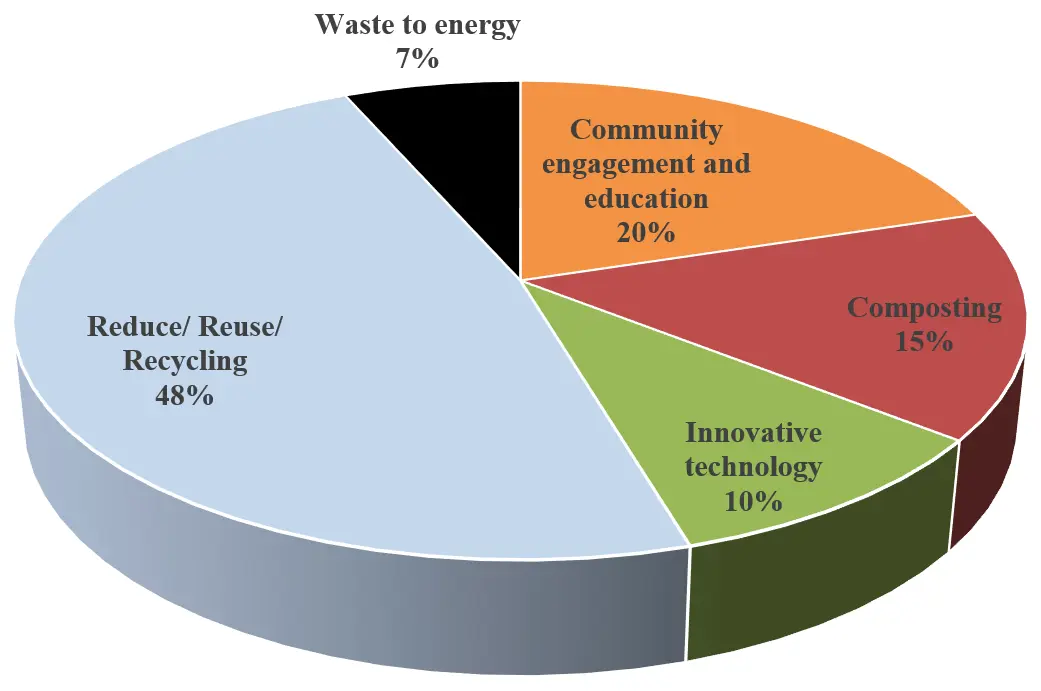
Climate change has become a critical global concern due to its adverse impacts on both humans and the environment. In alignment with Sustainable Development Goal 13, which calls for urgent action to combat climate change and its effects, this study examines community perceptions of climate change in Ghana, using evidence from Dakodwom in the Ashanti Region. The study specifically aims to: (1) examine the association between perceived climate change and the perceptions of its causes within the Dakodwom community, (2) assess the association between perceived climate change, its indicators, and trends, (3) examine the determinants of perceived climate change, and (4) identify practices that could mitigate climate change–related challenges. A structured questionnaire comprising closed-ended questions was used to collect data. Pearson’s chi-square test was employed to determine the relationship between perceived climate change and its perceived causes, as well as to assess the significance of respondents’ perceptions of various climate indicators and trends. Binary logistic regression was further applied to identify the factors influencing perceived climate change. The findings reveal that respondents attribute perceived climate change primarily to burning, deforestation, vehicle emissions, industrial emissions, agricultural activities, and urbanization. Participants demonstrated statistically significant awareness of changes in rainfall patterns, temperature increases, wind activity, and extreme weather events, indicating noticeable environmental changes. The regression results show that employment status and awareness of activities such as burning, agricultural activities, and industrial emissions are the significant determinants of perceived climate change. Additionally, the study identifies recycling, composting, community education, and the adoption of innovative waste-management technologies as practical strategies with potential to mitigate climate change–related challenges. Based on these findings, local authorities and environmental agencies should prioritize investments in improved waste-management systems, community composting facilities, and green infrastructure initiatives, including tree planting and environmentally sustainable agricultural practices, to address the observed increases in temperature, wind activity, and extreme weather events.
Open Access
Perspective
31 March 2026Ecological Civilization (Eco-Civ) in the Perspective of Geographical Processes of Revitalization of Remote Rural Areas
The global urbanization process is currently taking diverse territorial forms, leading to increased consumption of rural space through the creation of eco-cities. Within this context of transformation and the shifting nature of urban spaces, concepts and ideological frameworks are emerging to address environmental degradation caused by population concentration. Ecological Civilization (eco-civ) originated in China as a broad framework for managing new territorial processes through the construction of new eco-cities or the development of a comprehensive rural revitalization program that strengthens the urban-rural relationship. The major questions arising from this new process of rural revitalization in Chinese territories—and from the very concept of ecological civilization—can be summarized as follows: a simplification of the countryside, a loss of rural identity, the emergence of a post-agrarian society, the urbanization of rural areas, and an exacerbation of urban dependence on rural areas. Consequently, alternative approaches are proposed, based on multiple place-based approaches and actions that develop and adapt the fundamental principles of environmental and spatial renewal to each specific territory.
Open Access
Review
31 March 2026The Future of Environmentally Powered Gliders: Emerging Prospects and Trends
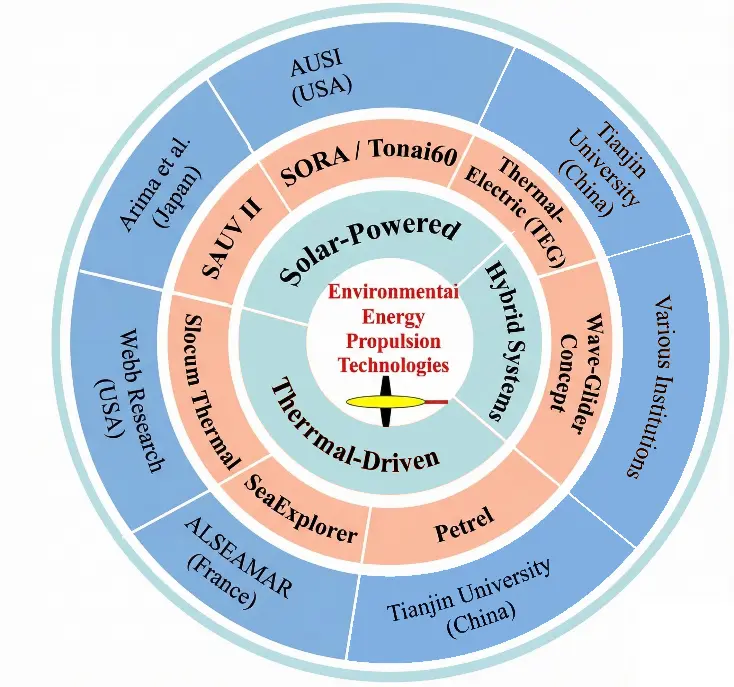
To address the endurance limitations of traditional electrically driven underwater gliders, which are constrained by onboard battery energy density, harnessing marine renewable energy for propulsion or supplemental power has emerged as a critical approach to overcoming their operational endurance bottleneck. This paper systematically reviews the research progress on underwater gliders powered by environmental energy sources, such as thermal and solar. It provides an in-depth analysis of the utilization mechanisms, core technologies, and current challenges associated with each energy type, with a focused exploration of technical pathways for achieving energy synergy and enhancing system endurance through multi-energy integration and intelligent energy management. Furthermore, this study is the first to establish a comprehensive technical evaluation framework for environmentally powered gliders from three dimensions: energy coupling, system design, and mission adaptability, offering a systematic reference for subsequent research. The paper also explores the application potential of this technology in advanced scenarios, such as long-term ocean observation and dynamic environmental monitoring. Future efforts should prioritize efficient multi-energy hybridization, dynamic energy management, and mission-adaptive control to comprehensively enhance the endurance and operational reliability of gliders in complex marine environments.
Open Access
Article
30 March 2026Adjusted Net Savings and Sustainable Development in Africa: A Panel Evidence Approach
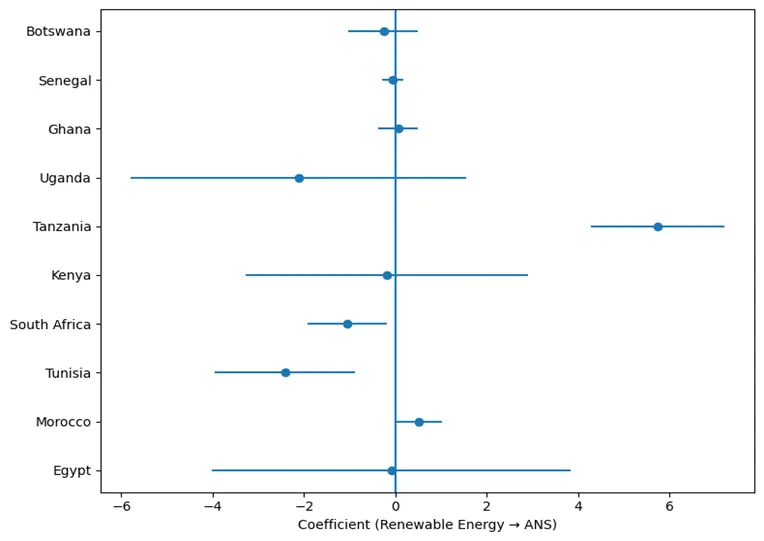
This study investigates the key drivers of sustainable development in African economies using Adjusted Net Savings (ANS) as an indicator of long-term sustainability. Employing second-generation panel data methods—namely the Augmented Mean Group (AMG) estimator, System GMM, and the Dumitrescu–Hurlin panel causality test—the analysis accounts for cross-sectional dependence, heterogeneity, and potential endogeneity across countries. The results indicate that economic growth significantly enhances sustainable development in the long run: a one-unit increase in GDP per capita is associated with approximately a 31-point increase in ANS. In contrast, renewable energy consumption exerts a negative short-run effect on sustainability (−0.38), reflecting transition-related costs and efficiency constraints in developing economies. Carbon intensity adversely affects sustainability, while the impact of trade openness remains heterogeneous across countries. Country-specific estimates further reveal substantial cross-country differences driven by variations in economic structure, energy systems, and institutional capacity. Overall, the findings suggest that achieving sustainable development in Africa requires aligning economic growth with environmental efficiency through well-sequenced renewable energy investments, green trade policies, and strengthened institutional frameworks.
JEL Codes: Q01; O44; Q56; C23; F18
Open Access
Article
30 March 2026Sexual Dimorphism in the Association Between Status Symbols and Body Height in the Early Medieval Avar Population from the Csokorgasse Burial Ground (Vienna, Austria)
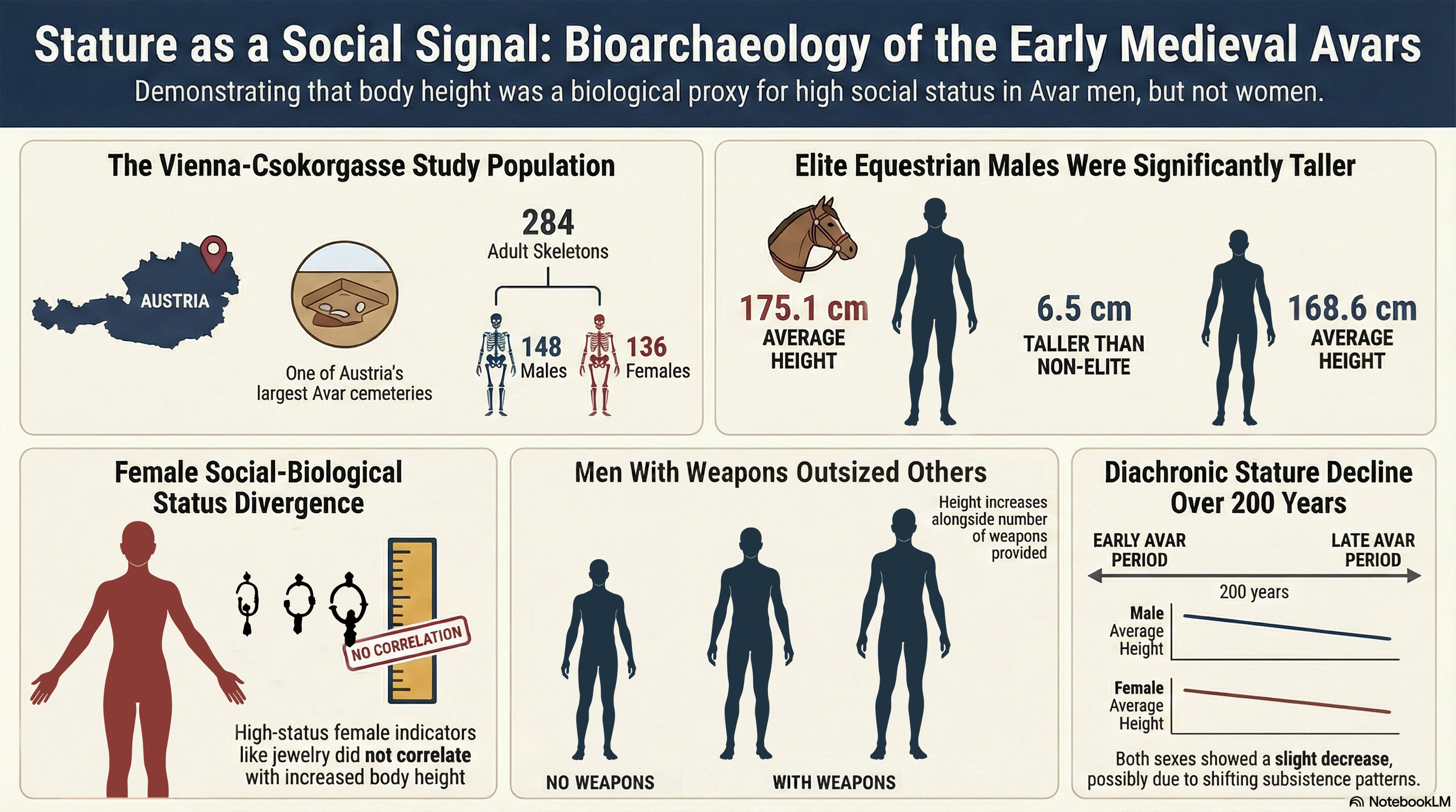
The relationship between material culture and body height, commonly used as a proxy for reconstructing economic conditions and social stratification, has not previously been examined for early medieval Avar populations. Therefore, this study investigates the association between estimated body height and grave goods, funerary characteristics, and activity-related indicators interpreted as markers of elevated social status in 148 male and 136 female individuals from the Avar burial ground Csokorgasse (Vienna, Austria). In addition, diachronic changes in body height from the late 6th to the late 8th century CE, a period marked by substantial transformations in subsistence strategies and lifestyle, are assessed. Overall, body height shows a slight but statistically insignificant decrease over time in both sexes. Among males, individuals interred in equestrian graves together with horses were on average more than 6 cm taller than males buried without horses. Similarly, males identified as warriors based on the presence of weapons as grave goods were significantly taller than those without weapons. Multipart belt sets, commonly interpreted as indicators of high-status males, display only a weak and statistically insignificant positive association with body height. In contrast, patterns observed among females differ markedly: Of the categories examined, only jewelry shows a statistically significant association with body height, with shorter women being buried with a greater quantity of jewelry. Thus, whereas male body height is positively associated with several markers of elevated social status, no comparable pattern can be identified for females. These results indicate a pronounced sex-specific divergence in the relationship between biological status, as reflected by body height, and socially expressed status in early medieval Avar society.
Open Access
Article
30 March 2026Mechanical Properties of Developed Corncob-Urea Particles Hybrid Reinforced Polyester-Based Composites
This study investigates the development of hybrid-reinforced polyester composites using corncob and urea particles as reinforcement for sustainable applications. Composites were fabricated by the stir casting method with varying weight fractions of corncob and urea. The mechanical and physical properties of the developed composites were evaluated, while fracture surface morphology was examined using scanning electron microscopy (SEM). The burning rates of the samples were investigated to evaluate their flame-retardant potential. The results demonstrate that incorporating corncob and urea effectively enhances stiffness-related mechanical properties, including tensile and flexural moduli and hardness. Composite containing 12 wt% urea and 3 wt% corncob exhibited the highest flexural moduli and hardness with an improvement of 122% and 45%, respectively. Composite with 3 wt% corncob and 18 wt% urea has the highest flexural strength with an increase of 44%, composite with 9 wt% corncob and 18 wt% urea has the highest tensile modulus with an improvement of 22%. In addition, it was found that the presence of corncob and urea reduced burning rates, with the sample containing 15 wt% corncob and 18 wt% urea exhibiting the lowest burning rate, indicating better flame-retardant potential. Thus, the findings indicate that corncob–urea hybrid reinforcement offers a promising, sustainable approach to enhancing the mechanical stiffness and reducing the burning rate of polyester composites. These materials have potential for use in applications requiring improved durability and low burning rate potentials while reducing reliance on conventional synthetic additives.

Open Access
Article
27 March 2026Intra- and Inter-Watershed Variability in Benthic Macroinvertebrate Community Diversity, Taxa Richness, and Biotic Integrity: Citizen Scientist Sampling Within a Minnesota USA Region Dominated by Agriculture
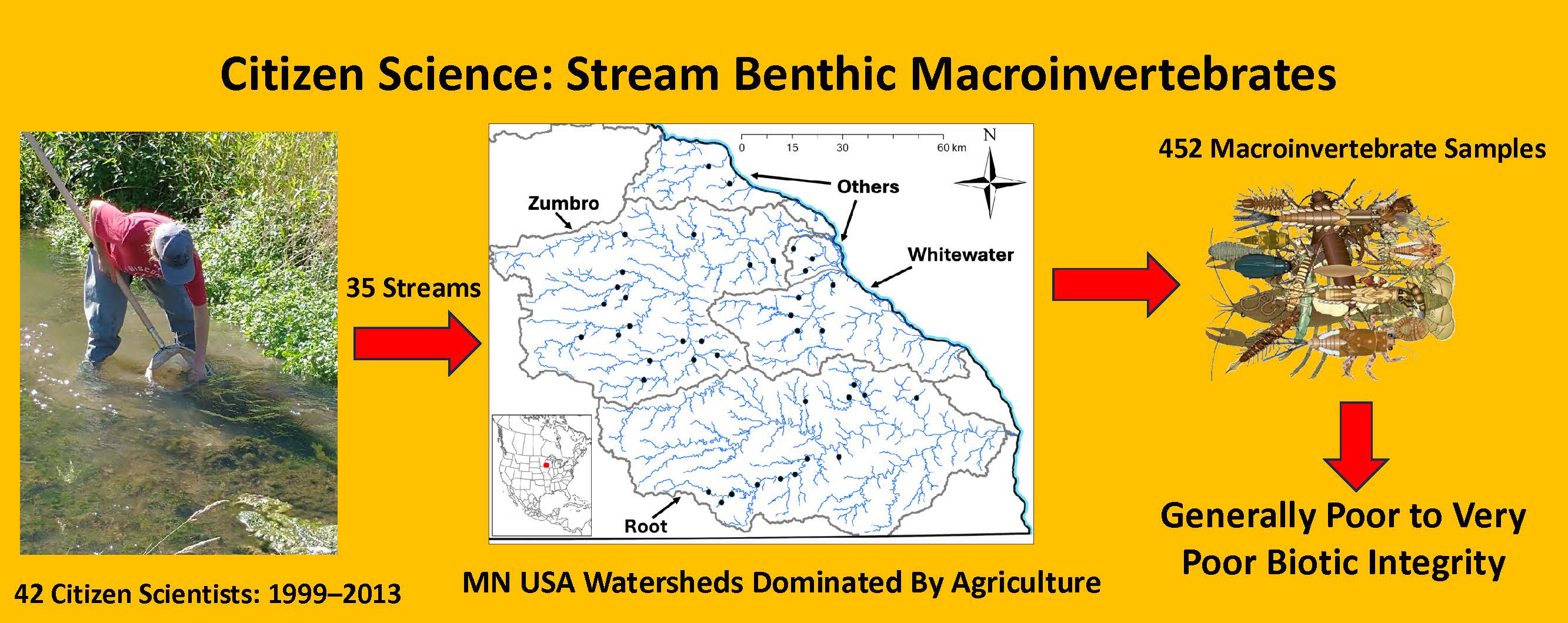
Volunteer citizen scientists collected benthic macroinvertebrate samples from 35 streams throughout multiple watersheds in southeastern Minnesota, USA, during the period 1999–2013 to assess community diversity, taxa richness, and biotic integrity as indicators of water quality and general habitat conditions. In total, 452 invertebrate samples containing >46,000 organisms were collected, processed, and analyzed. Only 45% of the citizen scientists completed their 5-year sampling commitment. However, their samples generally demonstrated significant differences in total taxa richness, Ephemeroptera-Plecoptera-Trichoptera (EPT) taxa richness, Simpson and Shannon diversities, and a regional benthic index of biotic integrity (BIBI) within and/or among the watersheds examined. Streams in the two larger watersheds averaged significantly higher taxa richness and BIBI scores than those in smaller watersheds. Overall, streams in this region exhibited mostly poor or very poor biotic integrity based on their macroinvertebrate communities, indicating continued impacts from environmental stressors within these agricultural watersheds.
Open Access
Review
27 March 2026Artificial Intelligence in Photovoltaic Power Systems: A Bibliometric and Thematic Analysis of Knowledge Structures, Research Evolution, and Emerging Directions Toward Sustainable Energy Systems
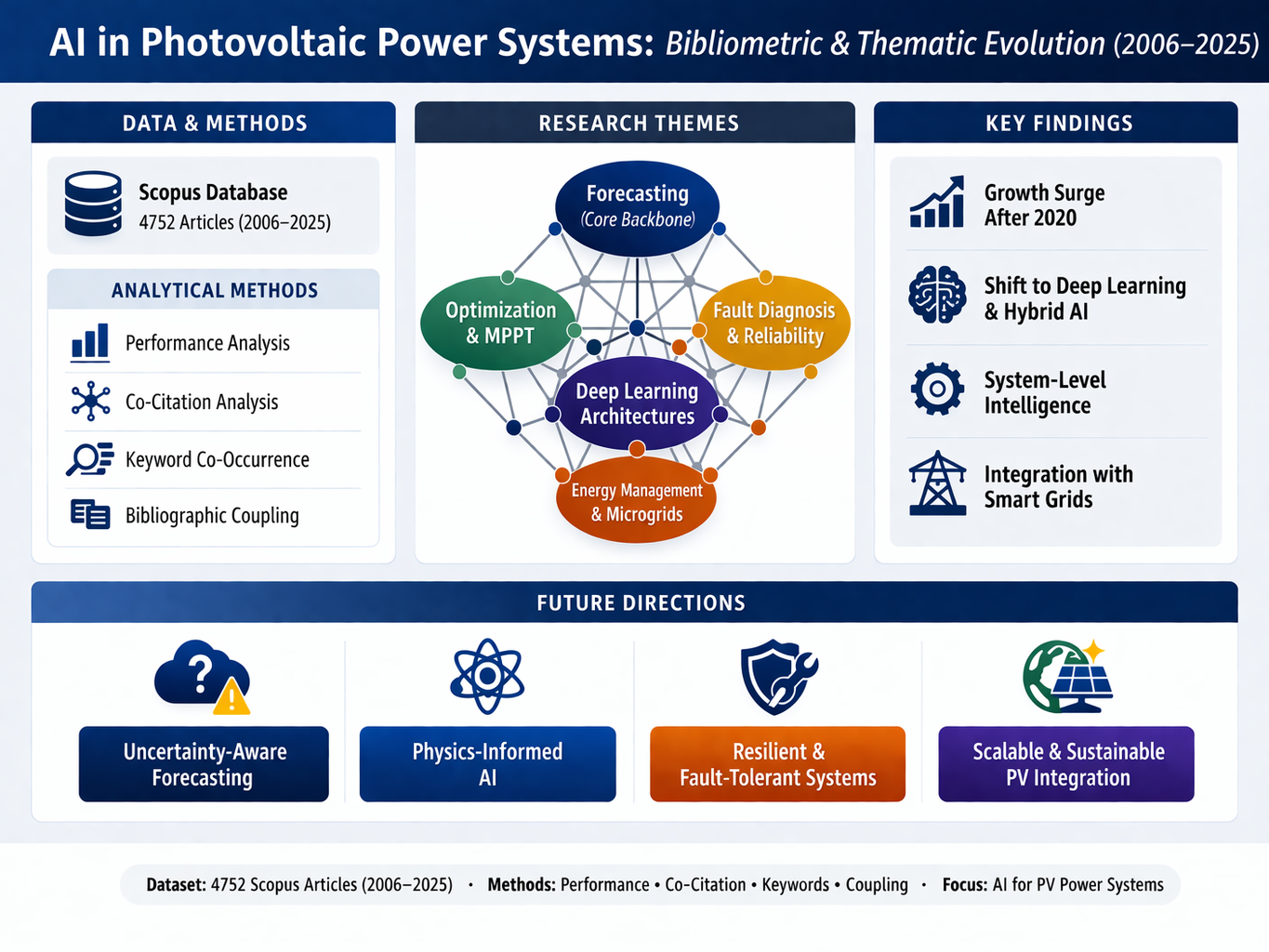
Artificial intelligence (AI) has rapidly become a core enabling technology in photovoltaic (PV) power systems, supporting improvements in forecasting accuracy, operational control, fault diagnosis, and system-level energy management. Despite the rapid growth of this field, a comprehensive understanding of its intellectual structure, thematic evolution, and emerging methodological directions remains fragmented. To address this gap, this study develops an integrated bibliometric-thematic analysis framework to systematically map the knowledge structure, research trajectories, and methodological frontiers of AI applications in PV power systems. The analysis is based on 4752 peer-reviewed journal articles indexed in Scopus (2006–2025). It combines performance analysis, co-citation analysis, keyword co-occurrence analysis, and bibliographic coupling to answer five structured research questions. The results demonstrate that PV power forecasting constitutes the central intellectual backbone of AI-based PV research, with the highest citation concentration and the strongest thematic connectivity across clusters. Thematic evolution analysis reveals a clear methodological transition from conventional machine learning models toward hybrid deep learning architectures, uncertainty-aware prediction frameworks, and physics-based AI integration. Furthermore, emerging research frontiers are characterized by generative learning models, multi-source data fusion strategies, and resilience-oriented fault diagnostics, while critical gaps persist in benchmarking standardization, uncertainty quantification, system-level integration, and large-scale industrial deployment. Unlike prior reviews that focus on isolated technical applications, this study provides the first integrated performance analysis and science-mapping synthesis that connects intellectual foundations, thematic evolution, and frontier innovations across the entire AI-based PV ecosystem. The findings offer a structured research roadmap and actionable guidance for researchers, PV plant operators, and policymakers aiming to design intelligent, scalable, and resilient PV energy systems that support the global low-carbon transition.
Open Access
Review
26 March 2026Starch-Based Edible Coatings for Sustainable Food Packaging: A Comprehensive Review
The demand for sustainable, biodegradable alternatives in the food industry has increased globally due to the growing environmental impact of plastic packaging. Due to their outstanding film-forming qualities, safety, affordability, and renewability, starch-based edible coatings have become a promising solution. This article offers a thorough overview of starch-based edible coatings, including formulation strategies, coating application techniques, chemical modification methods, and sources of starch. A critical review is conducted of the functional aspects of starch coatings, such as barrier qualities, mechanical behavior, biodegradability, and compatibility with active additives like antimicrobials, antioxidants, and nanoparticles. Applications across a variety of food systems, including fruits, vegetables, meat, seafood, dairy, bakery, and confectionery products, demonstrate the ability of starch coatings to reduce moisture loss, delay oxidative and microbial spoilage, and extend shelf life. Advancements in nanocomposite films, intelligent pH-sensitive systems, and starch-polymer blends highlight emerging opportunities for next-generation active and smart packaging. Despite their potential, commercial adoption is hindered by factors like moisture sensitivity, limited mechanical strength, and scale-up barriers. The review also emphasizes the need for optimized modification methods, green processing technologies, and improved cost-effectiveness to enhance industrial applicability.