
Thick and Thin Roots—Rights of Nature in Germany and New Zealand
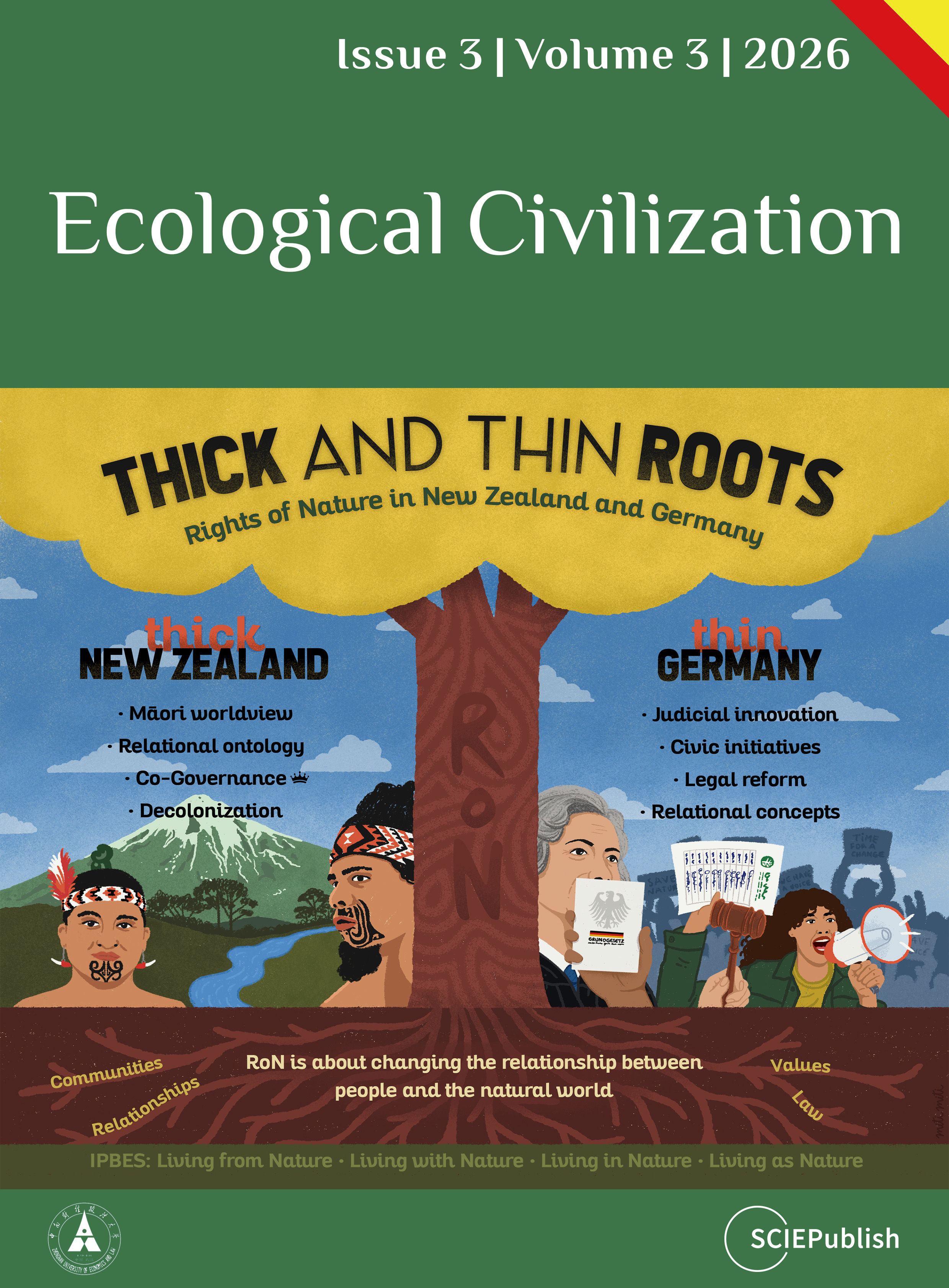
Thick and Thin Roots—Rights of Nature in Germany and New Zealand
Stefan Knauß 1,* Andreas Gutmann 2 André Kahl 3 Jenny García Ruales 4 Tim Wiliams 5 Janina Reimann 2 Klaus Bosselmann 5
Received: 18 November 2025 Revised: 15 December 2025 Accepted: 05 March 2026 Published: 02 April 2026

© 2026 The authors. This is an open access article under the Creative Commons Attribution 4.0 International License (https://creativecommons.org/licenses/by/4.0/).
1. Introduction
The ecological crisis has sharply exposed the limitations of the existing legal system, which is fundamentally based on anthropocentric principles. Environmental governance is the “set of regulatory processes, mechanisms and organizations through which political actors influence environmental actions and outcomes” [1]. Since the 1970s, it has revealed a paradoxical outcome: Awareness of environmental threats and ways to address them has been growing constantly. Despite these developments, the world is witnessing the worst global environmental crisis to date. “From Environmental to Ecological Law” is the title of the Oslo Manifesto [2]. It was adopted in 2016 by one hundred leading scholars of environmental law and governance from around the world. The key passages of the Oslo Manifesto read as follows: Environmental law is rooted in modern Western law with its origins in religious anthropocentrism, Cartesian dualism, philosophical individualism, and ethical utilitarianism. In our ecological age, this worldview is outdated and counterproductive, yet it continues to dominate the way environmental laws are conceived and interpreted. Most notably, nature is perceived as “the other”, defying ecological interdependencies and human-nature interrelations. Among the flaws of environmental law are its anthropocentric, fragmented, and reductionist characteristics that are blind to ecological interdependencies (...). To overcome the flaws of environmental law, mere reform is not enough. We do not need more laws, but different ones (...).
Understood in the context of ineffectiveness and the anthropocentrism of environmental law, the concept of the Rights of Nature (RoN) has emerged as an innovative form of environmental governance and legislation, rapidly gaining importance globally. For the purpose of this analysis, Rights of Nature (RoN) constitute a transformative paradigm in both ethics and jurisprudence, fundamentally challenging the traditional Western dualism that categorises the environment as a passive object of human property. From a legal-theoretical perspective, RoN is defined as the conferral of juridical personality (or legal subjecthood) upon natural entities, such as animals, rivers, forests, or entire ecosystems. This shift represents a departure from conventional environmental governance—where nature is treated as res nullius or an object of state regulation—to a framework where natural entities possess independent legal standing (locus standi). As legal subjects, these entities are recognised as capable of possessing interests and acting on their own behalf through human guardians.
From an environmental-ethical perspective, the doctrine is grounded in a rejection of anthropocentric utilitarianism. RoN posits that the natural world possesses intrinsic value and inherent dignity, independent of its instrumental worth to human society. By encoding this value into law, RoN seeks to move beyond mere “resource management” toward a model of ecocentric justice. While the technical application of RoN varies significantly across diverse cultural and constitutional contexts, its primary objective remains the de-commodification of the environment to protect its right to exist, flourish, and regenerate. The fact that RoN finds fertile ground in such diverse contexts and societies raises essential questions about its particularities.
Despite the global proliferation of RoN, exemplified by constitutional amendments in Ecuador or groundbreaking laws in New Zealand, the implementation remains inconsistent. The debate frequently concentrates on the technical question of “legal personhood”, often overlooking the underlying “roots”, such as values, goals, and paradigms, situated within highly varied socio-ecological settings. The objective of this article is therefore to understand the dynamics of the institutionalisation, implementation, and contestation of RoN, and specifically to examine the role of values throughout their affirmation and enactment in New Zealand (Aotearoa) and Germany.
To capture the complex evolution of the “Rights of Nature”, this article employs the “Roots of Rights” (RoR) approach. This framework was specifically adopted to facilitate a robust interdisciplinary dialogue between the fields of law, environmental ethics, political science, and anthropology. By integrating these perspectives, the RoR approach examines the socio-ethical foundations of legal innovation.
The framework is inspired by the legal-philosophical debate between positive law (legality) and social morality (legitimacy), allowing us to grasp the tension between formal codification and normative affirmation. Crucially, this approach rejects a “view from nowhere”; we contend that legitimacy cannot be expressed universalistically through abstract principles. Instead, legitimacy is understood as being grounded in specific social practices—the continuous affirmation and contestation of normative claims within a given society.
Consequently, our analysis adopts a context-sensitive approach to values, highlighting the role of normative conflict not as a failure of the system, but as a productive force for legal and social innovation. This perspective is vital for our comparative analysis of Germany and Aotearoa New Zealand. While the selection of these two case-study regions was facilitated by the German Academic Exchange Service (DAAD) through the Project “The Roots of Rights—Participatory Democracy, Indigenous and Local Knowledge and Rights of Nature” [3].
By employing a culturally open analysis of the social practices that form the “roots” of these rights, the RoR framework allows for a meaningful comparison. It enables us to identify shared patterns of innovation while carefully preserving the distinctions of Aotearoa New Zealand’s deeply rooted relational worldview—ensuring that Māori cosmovisions are not blurred into Western legal categories, but are recognised in their own right, without exoticising, romanticising, or homogenising the place-specific political struggles involved.
We discuss six key examples across both countries. In New Zealand, the geographical features Te Urewera (2014), the Whanganui River (2017), and Mount Taranaki (2025) were granted legal personality, largely at the instigation of Māori People. Crucially, the recognition of the intrinsic relationship between iwi (Māori tribal groups) and ancestral places is paramount, rather than a universalised concept of intrinsic value. This acknowledgement of interconnectedness points a path towards a paradigmatic and transformational shift away from the instrumentalisation of nature solely for human benefit. In Germany, RoN are currently demanded by numerous civil society actors and a citizens’ initiative in the Free State of Bavaria. Furthermore, in August 2024, the Local Court of Erfurt became the first in Germany to recognise RoN, which is also expressed through artistic endeavours.
The investigation of these cases seeks to reveal the processes that have led to, or could lead to, the establishment and use of the Rights of Nature. A central question is whether the socio-ecological roots of RoN demonstrate commonalities across global contexts (Oceania, Latin America, Europe) or if they must be understood as locally distinct initiatives driven by specific interests. We attempt to address this twofold question (the “Roots of Rights”) by focusing on:
-
The Dynamics of Value Conflicts (Formal/Political Dimension): Are the dynamics of contestation similar? This involves analysing the degrees of marginalisation and decolonisation in the context of non-hegemonic understandings of nature in law.
-
The Values as Such (Content/Moral Dimension): Is there a continuous shift towards relational values that can be found in both Germany and New Zealand? This employs the Life-framework of Values, as adopted inter alia by IPBES, particularly focusing on relational values as analytical categories.
The comparative analysis leads to the central thesis that RoN is not monolithic, but rather falls into two distinct models across jurisdictions: Thick Rights of Nature (NZ) and Thin Rights of Nature (GER). Thick RoN are profoundly rooted in relational ontology and serve the purpose of decolonisation; Thin RoN stem from judicial pragmatism and civil system critique within the established liberal legal framework. This distinction is decisive for evaluating the actual transformative potential of RoN in global contexts. While both the New Zealand and German initiatives represent a shift toward non-anthropocentric legal paradigms—aligning them with the ambitions of “deep ecology”—they differ profoundly in their socio-political saturation. To capture these nuances, we move beyond the binary of deep versus shallow ecology and instead adopt a framework of “thick” and ”thin” commitments. Drawing on the work of Clifford Geertz and Michael Walzer, this nomenclature allows us to distinguish between RoN as a culturally embedded, place-based ontology (thick) and RoN as an innovative, yet still relatively detached, legal experiment (thin).
2. Theoretical and Methodological Framework
2.1. Theoretical Foundation: The RoR Approach and Value Pluralism
“The way people understand their world shapes their values and, in turn, their perspective on how to regulate and conduct their society”.
—New Zealand Law Commission
In this section, we argue that positive/legal rights are often justified or criticized in terms of fundamental societal paradigms that carry value attributions, moral principles, and ethical convictions. Values are not given a priori. They do not stem from an eternal sphere, being the same for every culture. Values rather describe and emerge from dynamic relationships between people and nature that change over time. Consequently, our Roots of Rights (RoR) approach investigates RoN and the underlying values as social-natural relationships. We are particularly interested in understanding the dynamics and contextualization of these value changes that may result in the establishment or the contestation of Rights of Nature in very different societies.
The RoR approach analyses the political-social dynamics that shape the establishment, maintenance, and application of RoN in the two case countries. We postulate that the active thought and action of actors in the sense of “cosmoliving”1 [4] or the Lifeframework of Values (IPBES) form the fundamental lived-world background for the necessary knowledge and values within the human-nature relationship. Our approach is anti-essential, as we claim that there is not just one universal background for rights, but that grounds for attributing rights to entities are based on different practices and beliefs of diverse collectives, communities, and socio-ecological-systems.
Values of nature can be defined in many ways. Based on approaches from the Intergovernmental Science-Policy Platform on Biodiversity and Ecosystem Services2 and scholars Seb O’Connor and Jasper O. Kenter [5], the significance of nature for people can be defined in four different ways:
-
-
“Living from nature”: Direct material benefits (food, raw materials).
-
-
“Living with nature”: Cultural, spiritual, and identity-related meanings.
-
-
“Living in nature”: Physical and mental benefits (health and well-being).
-
-
“Living as nature”: Deeper philosophical interconnectedness, recognizing humans as an inseparable part of nature3 [6] (pp. 99–100).
More technically, three value categories are distinguished: instrumental values (utility value), intrinsic values (protection for its own sake), and relational values (focus on human-nature relationships). The fundamental insight of the IPBES Values Assessment is that, while there is great diversity in ways to value nature, Western social practices, often associated with property rights, tend to reduce nature to its utility value. The status quo of biodiversity policy can therefore only be overcome by recognizing the intrinsic value and the value of human-nature relationships.
2.2. Analytical Focus: Relational Values and the Legal-Relational Turn
An important step toward the protection of cultural and biocultural diversity is the increasing attention in the conservation debate to so-called relational values. Chan et al. [7] (p. 1462) argue that people also consider the appropriateness of how they relate to nature and others, including actions and habits conducive to a good life, both meaningful and satisfying, which they define as relational values. The introduction of relational values aims to capture a dimension that supports the concept of biocultural diversity by enriching understandings of human–nature interactions [8] (p. 34).
There is an inevitable overlap between intrinsic and relational values because, in any genuinely reciprocal relationship, relational values are bound to imply recognition of the intrinsic value of the relationship partner. Rather than the bifurcation between intrinsic and instrumental values, Morito suggests that it would be better to think of interdependent values, recognising the interconnectedness of nature [9] (p. 326). He argues that the concept of personhood needs to be reimagined in an ecological context, where it serves as a “locus” or “nexus” of value (as opposed to the source of value, or paradigm of intrinsic value), which could provide a bridge between classical and ecological ways of thinking and being [9] (p. 328).
RoN advocates often claim that this approach shifts the legal focus away from an instrumental perception of nature. Nature is not a legal object but a subject in an inevitable relation to humans because of interrelatedness, reciprocity, and dependency. Using a “relational approach to rights” [10] (pp. 65 et seqq.) reveals a cultural way of interpreting rights on the basis of a specific set of underlying values.
This relational approach manifests in different legal forms. For instance, Rafi Youatt advocates an understanding of persons as figures that are sometimes also produced by relations between human and nonhuman actors, seeing RoN as emerging from relationships between humans and more-than-non-humans existing together as a collective [11] (p. 41). Furthermore, in cases like the Atrato River, the Constitutional Court of Colombia treated biocultural rights as the foundation for legal personhood and RoN [12] (no.9.28) [13]. Biocultural rights are understood as the collective rights of communities to carry out traditional stewardship roles vis-à-vis Nature [14] (p. 21), affirming the bond between Indigenous, tribal, and other communities with their land [15] (p. 8). This raises the question of whether the kind of collectives needed to properly ground these rights must include Indigenous groups, and to what extent the idea of RoN can be transformative in non-Indigenous contexts like Germany.
2.3. Comparative Method: Analytical Dimensions
We clearly position ourselves against essentialising concepts that do not reflect the diverse communities that form the Rights of Nature movement. While acknowledging that the most powerful examples of RoN laws are firmly grounded in Indigenous worldviews, we do not support the idea that RoN can only be justified when directly associated with Indigeneity. A viewpoint that restricts RoN to Indigenous legal frameworks is neither justified by the factual diversity of our world(s) nor ethically-morally tenable.
The central research question is whether and to what extent “resonant” self, social, and nature relations represent both the starting point and the objective of the Rights of Nature.
Our approach is divided into two analytical areas, applied to the legal genesis processes of RoN in Germany (GER) and Aotearoa New Zealand (NZ):
A. Political Dynamics and Marginalisation
-
-
Focus: Analysis of the degrees of marginalisation and decolonisation in the context of non-hegemonic understandings of nature, which are certainly not represented in law.
-
-
Foundation: We regard RoN as a potential strategy for the political emancipation of worldviews and status groups.
B. Relational Approaches and the Codification Process
-
-
Hypothesis: RoN are particularly reliant on, and can foster, a relational worldview. To assess the transformative potential, we dissect the codification process along three interconnected dimensions derived from the study of legal genesis, allowing us to compare the trajectory from initial worldview to legal outcome:
-
Starting Dimension (Cultural Background)
-
Process Dimension (Negotiation and Establishment)
-
Target Dimension (Normative Implications)
-
3. Results
3.1. Aotearoa New Zealand
In Aotearoa New Zealand, the paradigmatic examples of collective relationships between people and place are the “intrinsic” relationships between hapu, iwi, and whenua (the land). These relationships also illustrate the plurality of human–nature relations that structure environmental governance. As elaborated elsewhere in this special issue, human–nature relations can be understood as spanning multiple modes, including “living from nature” (nature as a source of material sustenance), “living with nature” (coexistence with ecological processes), “living in nature” (place-based identity and belonging), and “living as nature” (ontological continuity between humans and the natural world). The Māori understanding of whenua fundamentally transcends instrumental and spatial relations and instead expresses a relational ontology in which people and land are genealogically and normatively intertwined. The recognition of legal personhood in the following cases can therefore be interpreted as an institutional mechanism that reinforces and operationalises this latter relational mode of living as nature, thereby contributing to more transformative sustainability pathways. Internationally, the Whanganui River and Te Urewera are often regarded as leading examples of Rights of Nature laws [16]. However, as Ngā Tāngata Tiaki o Whanganui4 has explained: “Numerous links have been made to the “Rights of Nature” movement. However, the Te Awa Tupua status isn’t about nature only, it isn’t about rights for People, it isn’t about rights to culture—it is about obligations and duties to see and place ourselves within nature’s scheme and ensure that we work with nature rather than against it” [17].
It is also about the empowerment of Māori communities and Māori sovereignty, both of which are deeply rooted in the whenua (land, placenta).
Treaty Settlement Legislation in Aotearoa New Zealand has established detailed and relatively well-resourced governance frameworks that have been integrated into environmental decision-making processes. These frameworks embody at least three of the IPBES “values-based leverage points”: embedding values in decision-making, reforming policy, and shifting societal goals [18].
3.1.1. Te Urewera
Case Background and Legal Genesis
In 2013, as part of a Treaty Settlement between the Tūhoe People and the New Zealand Crown, Te Urewera, the ancestral homeland of Tūhoe, was declared to be a legal person. Te Urewera Act 2013 was the first New Zealand Act of Parliament to use legal personhood in this way, and in this respect was “undoubtedly legally revolutionary” [19]. The declaration of legal personhood is integral to a co-governance agreement for Te Urewera, which is intended to provide redress for historical Tūhoe grievances and to enable Tūhoe to restore their ancestral relationship with Te Urewera into the future [20].
The Waitangi Tribunal’s Te Urewera report found that the Crown’s confiscation of Tūhoe land and its conduct during the subsequent military conflict were unlawful and wrong, and that the grievances of Tūhoe had never been addressed or acknowledged by the Crown [17]. The creation of the Te Urewera national park (in two stages in 1954 and 1957), which enclosed Tūhoe communities without giving them any governance or management role and transformed Tūhoe customary practices into criminal offences, was a further serious breach of the Crown’s Treaty obligations [18]. The Waitangi Tribunal recommended title-return and joint management arrangements.
In this historical context, the agreement to recognise Te Urewera itself as a legal person, rather than transferring legal title to Tūhoe has been regarded by some as a weak compromise. For example, Brad Coombes has described how interviews with Tūhoe elders, including some involved in the Treaty settlement negotiations, have revealed concerns that personhood is a “diversionary tactic” [21] (para. 23), distracting from the central issue of ownership and entrenching a preservationist or “wilderness” ethic imported from a Western worldview that will limit co-evolution between Tūhoe and Te Urewera. Coombes also expresses concern that, in this context, the Tūhoe desire to own their ancestral land may be construed as inappropriate, and perhaps even perceived as an enslavement of Te Urewera (the legal person). However, the innovative use of legal personhood also challenges important underlying assumptions in Western law—especially the idea that the relationship between people and place must inevitably be framed as a hierarchical relationship of property ownership. In Te Urewera, collective and relational values are now placed firmly at the heart of the new governance arrangements.
The Crown’s apology for its illegal and egregious treatment of the Tūhoe people, including unjustified warfare and the unlawful confiscation of their homeland, can be found in sections 7 to 10 of the Tūhoe Claims Settlement Act 20145 [22]. Further background to the relationship between Te Urewera and the Tūhoe People is provided in section 3 of Te Urewera Act, which also refers to Te Urewera’s previous legal status as a National Park and the relationship that all New Zealander’s have with this very special place [23].
The purpose of Te Urewera Act, and the principles that must be applied to achieve this purpose, are set out in sections 4 to 6 of the Act. Section 20 of Te Urewera Act provides that, when making decisions, the Board “… must consider and provide appropriately for the relationship of iwi and hapū and their culture and traditions with Te Urewera” [23] (section 20). For the first 3 years after the settlement date, the Board consisted of 8 members, with equal numbers appointed by Tūhoe and the Crown (section 21(2)). Since then, the Board has consisted of 9 members, with 6 members appointed by Tūhoe and 3 by the Minister of Conservation, thereby providing a majority for Tūhoe on the Board [23] (section 21(2)).
Political Dynamics and Marginalisation (Dimension A)
In the context of Dimension A, the Te Urewera settlement represents a profound, yet contested, act of decolonisation. The legal personhood status directly addresses the historical marginalisation of the Tūhoe cosmovision—which fundamentally views the land as an ancestor—by supplanting the colonial property ownership paradigm. Although concerns remain regarding the “diversionary tactic” argument [21] (para. 23) that shifts focus from ownership to a preservationist ethic [19], the core political achievement is the transfer of institutional control to a Tūhoe-majority board [24] (section 21 (2)), thereby empowering a non-hegemonic worldview against the state’s historical land confiscations. This makes RoN a strategy for political emancipation.
Relational Approaches and Codification Process (Dimension B)
Starting Dimension (Cultural Background): The entire process is grounded in the tikanga Māori concept of whanaungatanga (kinship, relationship) between the Tūhoe Iwi and their ancestral land. This pre-existing, deeply relational value system provided the necessary cosmological and ethical anchor for the subsequent legal instrument, making the relational approach the foundation, not the outcome, of the rights.
Process Dimension (Negotiation and Establishment): The codification was driven by the formal Treaty Settlement process—a state mechanism for restitution. The negotiation resulted in a hybrid legal structure where the Crown offered personhood as a form of cultural and political redress in place of title return. This process institutionalised Tūhoe’s collective relational values (the existing relationship) at the core of the new co-governance arrangements.
Target Dimension (Normative Implications): The normative target is a shift from the colonial focus on individual property rights to collective duties and obligations (mana motuhake o Tūhoe). The law formally mandates the Board to consider and provide for the relationship of iwi and hapū with Te Urewera [23], solidifying a relational ethic as the foundational principle for all future management and decision-making. In analytical terms, this shift represents a move away from governance frameworks primarily structured around living from nature and living in nature—where land is treated as a resource or spatial jurisdiction—towards a framework that institutionalises living as nature. By codifying duties grounded in genealogical and relational continuity, legal personhood strengthens a governance model in which ecological integrity and collective identity are co-constitutive rather than separate domains.
3.1.2. Te Awa Tupua (Whanganui River)
Case Background and Legal Genesis
The recognition of the Whanganui River as a legal entity in 2017 marked a turning point in the global debate on the Rights of Nature. While Western-influenced legal systems long considered only humans and institutions as legal entities, with this step, New Zealand has built a bridge between Indigenous knowledge and state law. The case impressively demonstrates how the empowerment of marginalized groups, post-colonial recognition, and ecological justice can interact.
The history of the Whanganui River can only be understood in the light of long political and cultural conflict. For more than 140 years, the Whanganui iwi, the local Māori community, fought for recognition of their relationship with the river. Since the 19th century, they had been confronted with dispossession and encroachment on the river landscape: the construction of dams, commercial exploitation, and changes to the river’s course not only destroyed ecological structures but also interfered with the spiritual foundations of the iwi. For the Māori, the river is not a mere natural space, but a living being and ancestor with whom they are genealogically connected. Their belief “Ko au te awa, ko te awa ko au”—“I am the river, and the river is me”—was long unrecognized in colonial courts.
It was not until the establishment of the Waitangi Tribunal in 1975 that a new path opened up. This body examined the historical violations of the Treaty of Waitangi of 1840 and confirmed that the government had violated the treaty-guaranteed rights of the Māori. This gave new legitimacy to the decades-long struggle of the Whanganui iwi. The ensuing political negotiations finally culminated in a comprehensive agreement between the government and the iwi in 2014. This agreement was implemented in 2017 with the “Te Awa Tupua (Whanganui River Claims Settlement) Act”. This law officially recognized Te Awa Tupua (“river with ancestral power”) [25] (p. 294) as a legal entity—a construct that already existed in the Western legal system, but was primarily reserved for human beings (“natural” legal persons) and companies or organizations (“artificial” legal persons). The Whanganui River was the first river to be legally described in this way. The river thus received its own rights and responsibilities, represented by Te Pou Tupua (the “human face” of the river), consisting of one representative of the government and one representative of the Whanganui iwi. Te Awa Tupua Act also established Te Kōpuka, a collaborative group representing diverse community interests, with responsibility for developing Te Heke Ngahuru, a plan to address and advance the health and well-being of the river. At the same time, a fund was established to ensure the long-term protection and health of the river.
Whanganui iwi’s success in achieving these law changes is the result of several factors. Their perseverance over more than a century made the Whanganui River a symbol of colonial injustice. New Zealand’s political climate has changed since the 1980s, becoming increasingly focused on reconciliation and restitution. Added to this was the cultural strength of the iwi, who unwaveringly adhered to their worldview and ultimately placed it within Western legal structures through the concept of legal personhood. By recognizing the river as a legal entity, not only was a historical injustice partially remedied, but a new model of legal and cultural integration was also created. The concept of legal pluralism is particularly relevant here. Western legal order and tikanga Māori (Māori law and custom) sit side-by-side in the new legal framework that has been created. The result is a hybrid model. The recognition of the river as a legal entity is an act of restitution and a step towards reconciliation. The colonial discourse that understood nature as a resource to be exploited is being replaced by an Indigenous narrative that honors the river as a living ancestor. The river now has legal rights regarding its own health and well-being.
Political Dynamics and Marginalisaton (Dimension A)
The Whanganui River settlement is a prime example of Rights of Nature legislation serving as a strategy for the political emancipation of a marginalised group. The 140-year struggle by the Whanganui iwi was not primarily about environmental protection, but about recognition of their foundational worldview: “Ko au te awa, ko te awa ko au”. The resulting Act thus functions as a decolonisation tool, explicitly granting institutional power to the Whanganui iwi (via Te Pou Tupua and Te Kōpuka). The legal personhood is the political product of restitution, successfully challenging the historically hegemonic, anthropocentric (colonial) discourse that reduced the river to an exploitable resource.
Relational Approaches and Codification Process (Dimension B)
Starting Dimension (Cultural Background): The foundation is the pre-existing, collective relational value system of tikanga Māori, which views the river as a living ancestor (tupuna). This starting dimension is the deepest possible expression of the “Living as nature” perspective [15] and served as the immutable basis for the iwi’s legal claim, ultimately compelling the state to integrate this worldview. This ontological position fundamentally differs from modes of living from nature, which emphasise extraction, or living in nature, which emphasises spatial belonging without necessarily implying ontological unity. Instead, the Whanganui case demonstrates how legal personhood can stabilise and institutionalise living as nature as a governing principle. As discussed in more detail elsewhere in this special issue, Rights of Nature frameworks thus play a critical role in enabling a shift towards relational modes of governance that align ecological sustainability with collective identity and responsibility.
Process Dimension (Negotiation and Establishment): The codification process was the formal Treaty Settlement negotiation, validating the Waitangi Tribunal’s findings of historical violation. The result is a hybrid legal model that institutionalises legal pluralism. It uses the Western concept of “legal personhood” to empower an Indigenous normative system, thus creating a mechanism for co-governance that translates deeply rooted relationality into operational legal clout.
Target Dimension (Normative Implications): The normative target is the establishment of a framework based on duties and responsibilities towards the river (tupua), which leads to ecological justice. By granting the river rights to its own health and well-being, the normative framework is shifted from human utility (instrumentalism) to the inherent value and relational dependence of the whole collective.
3.1.3. Taranaki Maunga
Case Background and Legal Genesis
This section evaluates the case of Mount Taranaki, which was officially granted legal personhood under the Taranaki Maunga Collective Redress Act 2025 (Te Ture Whakatupua mō Te Kāhui Tupua). The Record of Understanding (Te Anga Pūtakerongo), which was signed by the Taranaki iwi and the Crown on 20 December 2017, served as a preliminary agreement that established the framework and key issues for a collective redress deed concerning Taranaki Maunga (Mount Egmont). A key result was the mutual aim to recognise Mount Taranaki as a living entity with legal personality, a principle that also informed other settlements, including those for Te Urewera and the Whanganui River.
The Mount Taranaki volcano, located on New Zealand’s North Island, possesses deep historical and cultural significance. It is known by the Māori as Taranaki Maunga, a name referencing the first ancestor of the Taranaki iwi (tribe), Rua Taranaki (Reed, 2016; Hōhaia, 2017). Its designation also reflects its physical characteristics: the Māori word “tara” denotes a mountain peak, while “naki” may signify “cleared of vegetation” [26,27]. This prominent landmark was historically known as Mount Egmont, a name bestowed upon it by the British explorer James Cook in 1770 [28] and was designated a National Park in 1900.
In a landmark decision, the volcano was formally recognised as a legal person on 30 January 2025, under the Taranaki Maunga Collective Redress Act (Te Ture Whakatupua mō Te Kāhui Tupua 2025). This legislation grants the mountain rights and responsibilities akin to those of a human being and acknowledges it as an ancestor of the Māori People. The development follows similar legal precedents in New Zealand, such as the recognition of the Te Urewera forest in 2014 and the Whanganui River in 2017.
Similarly to Te Urewera, this case serves as an example of a complex negotiation between the relational Māori worldview and the statutory framework of a national park. The foundation for this new legal relationship was laid by redress efforts that began in the 1970s, spurred by a revitalisation of Māori rights and culture. In 2017, the Crown and the Taranaki iwi signed a Record of Understanding, which acknowledged historical injustices and set in motion the process that led to the Taranaki Maunga Collective Redress Act 2025 (Te Anga Pūtakerongo 2017). The agreement included a public apology and cultural redress in the form of legal personhood for Taranaki Maunga, reflecting its role as an ancestor (tupuna) for Māori [29] (pp. 7–8).
At the core of this framework is Te Mana o Nga Maunga, a guiding principle that can be translated as the authority or essence of the mountains. This “mana” represents a hybrid understanding that profoundly integrates the mountain’s ecological health with its spiritual role as an ancestor (tupuna) (Te Anga Pūtakerongo 2017, pp. 7–8).
The governance structure operationalises legal personhood through Te Tōpuni Kōkōrangi o Nga Maunga, a representative entity composed of an equal number of members appointed by the Crown and by the iwi [29] (p. 12). This body is responsible for promoting the well-being of the maunga and ensuring that policy decisions align with its values—acting “in the name” of the legal person [30]. This hybrid legal structure moves beyond the classical view of nature as a park or a collection of resources (National Parks Act 1980). Instead, it provides a pluriversal framework for governance that reflects both state institutions and Indigenous worldviews, setting a precedent for addressing historical injustices and also responding to the growing demand for ecological justice [31].
Political Dynamics and Marginalisation (Dimension A)
The Taranaki Maunga settlement is politically an act of decolonisation that directly tackles the historical marginalisation of the Taranaki iwi’s worldview. The colonial naming (Mount Egmont) and the designation as a National Park (1900) stripped the maunga of its ancestral status (tupuna) and reduced it to a state-controlled resource. The granting of legal personhood through a collective redress act is thus a strategic tool for the political emancipation of a non-hegemonial understanding of nature. It restores political authority (Te Mana o Nga Maunga) to the iwi’s spiritual and ecological framework and establishes institutional parity through the equal representation in the new governance structure.
Relational Approaches and Codification Process (Dimension B)
Starting Dimension (Cultural Background): The claim is founded on the thick, pre-existing collective relational value that the maunga is an ancestor (tupuna). This value aligns perfectly with the IPBES concept of “living as nature”, making the relational link non-negotiable and serving as the cosmological anchor for the legal instrument.
Process Dimension (Negotiation and Establishment): The negotiation resulted in the Record of Understanding (2017) and the final Hybrid Governance Structure (Te Tōpuni Kōkōrangi o Nga Maunga). The process successfully integrated the relational principle of Te Mana o Nga Maunga into a statutory framework. This demonstrates how the hybrid legal structure uses legal personhood as a mechanism to shift the legal locus of control and valuation away from the colonial resource paradigm (National Parks Act) towards a shared, biocultural governance.
Target Dimension (Normative Implications): The normative target is to establish a framework that defines duties and responsibilities to promote the well-being of the maunga and ensure that policy decisions align with its values. This codifies the collective relational duty (mana) and shifts the legal focus from instrumental use to biocultural stewardship and inherent value, thereby creating a transformative potential for the surrounding region.
3.2. Germany: Judicial Pragmatism and Relational Concepts
Institutionalized Rights of Nature do not exist in Germany. Nevertheless, the country has a long history of discussion of this legal instrument [32]. RoN has been proposed at different epochs and levels.
Some claims for RoN appear to have been made for pragmatic reasons and are not based on specific values. In the 1980s, for example, several environmental organizations filed a lawsuit on behalf of the seals of the North Sea against marine pollution [33]. This famous Robbenklage was the first case of judicial enforcement of nature’s rights, but ultimately it was not immediately successful, as the Hamburg Administrative Court dismissed the lawsuit [34]. In this case, the route via RoN was taken simply because there was no other way to bring the case to court. There was a legal protection gap that they tried to close through RoN. Despite this seemingly very pragmatic approach, the Robbenklage sparked fundamental discussions about the status of nature in law, in which the existing legal system was measured against extra-legal values [35].
German proponents of RoN regularly present this instrument as an alternative to the legal system, which has been criticized as anthropocentric [33]. RoN is not only seen as a tool to improve access to justice in environmental matters. Rather, the initiatives aim to fundamentally change the image of nature that underlies the law. They often argue from a living with nature perspective, stressing their relatedness to the ecosystems they aim to protect.
3.2.1. Case 1: RoN at the Erfurt Regional Court
On 2 August 2024, the Erfurt Regional Court (LG Erfurt) became the first German court to recognize RoN [36] and announced a second similar ruling on 17 October [37]. In the latter, the court elaborates on the reasoning behind the first ruling and addresses some of the criticism [38]. The court is convinced that such rights can already be inferred de lege lata from the EU Charter of Fundamental Rights, even if the topic may sound “esoteric”, as the judge admitted at the beginning of the hearing preceding the ruling [39]. The Charter of Fundamental Rights applies to diesel cases determined by EU law. According to the Regional Court of Erfurt, the fundamental rights it grants are “by their nature applicable to nature and individual ecosystems—ecological persons” [37] (para 27). In addition to the urgency of the ecological crisis, this is supported by Article 37 of the Charter, which calls for a high level of environmental protection [3] (para 27). The term “person” as used in the Charter could also include ecological persons [36] (para 24).
Although the Erfurt Regional Court places its considerations within the context of a global development, the case is exceptional within the trend toward Rights of Nature. In most cases, the rights of individual ecosystems, such as rivers or forests, affected by environmental damage are being asserted. In the Erfurt courtroom, however, the Rights of Nature are entering through the back door [39]. The court is convinced that such rights can effectively strengthen protection for injured car buyers in the diesel cases. These car buyers are acting as plaintiffs in the cases under review, seeking compensation, but they are not explicitly representing nature. After all, the Erfurt Court rules that illegal defeat devices not only harm the buyer, but also the natural environment. Their interests are now to be enforced against the automobile companies concerned in the spirit of private enforcement. Beside these efficiency arguments, the Erfurt Court seems to be driven by ecological values. It stresses the urgency of the environmental crisis and the judge’s responsibility to address it [37] (para 36 et seqq.).
Political Dynamics and Marginalisation (Dimension A)
The LG Erfurt ruling is not a result of political emancipation or immediate grassroots mobilisation, which are central to the New Zealand cases. Instead, it is a top-down judicial interpretation used for pragmatic purposes: to enhance private enforcement in the Diesel-Skandal (diesel scandal) and overcome the marginalisation of environmental interests within the existing anthropocentric tort law framework.
As in a court ruling, the underlying values are less clear than in civil society activism, the case is not isolated from grassroots forms of participation. This might appear counterintuitive, as the rulings did not arise from grassroots legal mobilization, and the plaintiffs themselves were surprised by the reference to RoN. Nevertheless, the rulings would have been inconceivable without the diverse grassroots activism. The court’s reasoning is therefore based on an epistemological foundation established by grassroots movements and thus also refers to their values. It explicitly mentions some of the German grassroots initiatives [37] (para 42).
Relational Approaches and Codification Process (Dimension B)
Starting Dimension (Cultural Background): Unlike the NZ cases, the starting relational value is abstract and not rooted in a specific, collective cultural tradition. The court draws its basis de lege lata from the EU Charter. The initial premise is that the underlying values are less clear, yet between the lines of the court’s reasoning, we can find some thoughts that resonate with the above-mentioned values that nurture RoN.
Process Dimension (Negotiation and Establishment): The codification process is purely judicial and non-participatory, applying RoN as a tool for legal interpretation. Firstly, the court’s approach can be classified as radical relationist. It broadens the scope of tort law, which traditionally governs the legal relationship between two persons (the injuring party and the injured party), to include nature. This approach is even more challenging for the traditional liberal tradition than recognizing more-than-human rights holders. It detaches the legal proceedings from their adversarial nature and ultimately requires that all natural concerns be taken into account from a living with nature perspective.
Target Dimension (Normative Implications): The normative target is the establishment of a fundamental relationality. The ruling is based on the idea that this relationship not only unfolds between two (human) persons, but is also embedded in a relationally interconnected environment. The judicial re-framing implies that “human activities, such as selling and buying cars, are not a matter for the individuals concerned, but are embedded in a comprehensive relationality. This codification of radical relationalism is the primary normative achievement.
3.2.2. Initiatives, Artistic Projects, and Legal Petitions
Case Background and Legal Genesis
In Germany, initiatives are seeking to implement the Rights of Nature at various levels. For example, there is a popular initiative to implement RoN in the constitution of Bavaria. In Bavaria, the constitution can be amended via popular initiative: people must collect a certain number of signatures, and then the population votes. The initiative is still in the process of collecting signatures; they take their time. They propose a very slight change, Art 101 reads “Everyone has the freedom to do everything that does not harm others” and they want to add “and the rights of nature”.
Bridging these two parts of the sentence, the proponents of the popular initiative (Volksbegehren) make clear that the RoN is to change our human behaviour.
The initiative aims to improve environmental protection, convinced that existing environmental law does not offer effective measures to deal with the environmental crisis. Many of the proponents who want to implement RoN in Germany are convinced that the law is based on premises that do not correspond to their perception of nature, or of the relationship between humans and nature. They point to the criticism that nature is seen as a mere object. They criticize the anthropocentrism of law and see humans as part of nature, and hope that the RoN can make their views on nature visible in law and put an end to its absence. Such an argumentation is very much value based and drawing on relational concepts similar to the life frame “living with nature”.
We could, of course, think of other ways to improve the legal protection of nature. But some people think that the value nature has for them can only be reflected by RoN. Ironically and what sparks attention is that many of those RoN advocates do not have a legal training but they are convinced the law is helpful for their case.
Another initiative or rather artistic project is the Organismen Demokratie in Berlin, which puts into practice a political framework that incorporates more-than-human living entities as rightsholders. The Organisms Democracy is located on a small parcel of uncultivated land in the densely populated urban district of Berlin-Wedding. Since 2019, it has its own constitution, which is based on the ‘Universal Declaration of Organism Rights’ (UDOR) [40].
As stated in the UDOR, “[i]t is a catalogue of basic rights aspiring to global recognition for the future of all living beings on Earth”. The organisms dwelling on the premises are constantly being mapped in order to determine their presence. This mapping enables them to be part of this democracy and be entitled to human representation in parliament (Article 6). The mapping process has evolved to include the political integration of organisms that have immigrated without human intervention. As per Article 7, these organisms become citizens of the Republic.
Twice a year, the organisation holds its “parliamentary sessions” where the residing organisms (which include bacteria, protozoa, viruses, fungi, mosses, lichens, arthropods, vertebrates, mollusks, worms, trees, shrubs, climbers, herbs, grasses, perennials, and neobiota groups) meet and deliberate, represented by humans, on the fate of the community. These organisms can bring forward different claims. Despite the proclaimed territory of the ”Republic” being quite limited, its members, as specific types of citizen organisms, are too numerous to gather all at once. This idea of a parliament, therefore, consists of 15 members, chosen randomly from the community of citizen organisms to serve for one legislative period (Art. 9 of the constitution)6 [41].
The Organisms Democracy offers a political framework that not only exposes but also creatively addresses shortcomings at both the levels of governance and representation. This brings us to another recent case we would like to highlight: granting voting rights to an oak tree (Quercus robur) in the municipality of Grosspösna, in the state of Saxony, Germany, initiated by civil society in February 2025 [42].
The oak tree is important for Grosspösna, even in the coat of arms, green and white leaves feature an oak tree. In the legal petition, it was claimed that the oak should have the right to vote and hold political rights. One of the grounds for the petition, in addition to coal mining in East Germany affecting the oaks and other biodiversity, is that “nonhuman Germans” are not excluded from voting (12 § Federal Election Act, Art. 116 German Basic Law). If some humans who are not German citizens do not even have political rights, how can this legal petition not be provocative? especially as for the German symbolism behind the Eiche (oak). Who will vote for the oak(s), and for whom? In any case, it is likely to provoke a variety of reactions and perhaps irritations. The final outcome of this legal petition is still under review.
These debates, emerging in Germany through the translation of RoN to Europe [43], have taken different trajectories. For example, the case of the oak was not necessarily about legal personhood, but rather about RoN expressed and flourishing in other ways than the Roots of Rights present in Ecuador or New Zealand, bringing us to reflect on this diversity of socio-ecological terrains. The creativity and approaches behind these claims go even beyond RoN. Legal argumentation regarding the value of nature, and what kind of nature or its components, such as a whole democracy of organisms or the oak reveals convergences and similar legal flows, building on one another.
Each case, or rather initiative, makes a fragment of the “patchy landscape” [41] (p. 48, 63) not institutionalized of RoN in the German terrain. However, this patchiness gives force to RoN by highlighting diverse values and, at the same time, returns to the roots, drawing inspiration from the Global South as essential for the flourishing of these roots. Examples include the Mar Menor lagoon as the first ecosystem granted legal personhood in Europe, and movements of “personhood recognitions across borders” [44] that will be likely to continue.
Political Dynamics and Marginalisation (Dimension A)
These cases represent a classic example of RoN as a tool for political contestation and emancipation through civil society. Unlike the New Zealand cases, the conflict does not take place between the state and a marginalised, non-hegemonic ethnic group, but between the civic environmental movement and the existing anthropocentric legal system. Initiatives, such as the Bavarian popular initiative, are directly designed to overcome the marginalisation of nature’s perspectives in formal political processes by employing a value-based argument that criticises the anthropocentrism of the law. Projects like the Organisms Democracy and the petition for the oak’s right to vote go beyond the traditional RoN debate by inventing representative and institutional mechanisms. They are a direct political challenge to the exclusivity of human legal subjectivity and governance by forcing more-than-human entities into the political arena.
Relational Approaches and Codification Process (Dimension B)
Starting Dimension (Cultural Background): The basis is a specifically German relational concept: the term “Mitwelt” (co-world), as coined by Klaus Michael Meyer-Abich [45]. This concept emphasizes that natural entities are “with us in this world”. It serves as a philosophical anchor for the initiatives and is intended to fundamentally reformulate the relationship between humans and nature. It therefore goes beyond a mere “living from nature”. The prefix “Mit” (with) hints at an understanding of human life enfolding within nature, which addresses the dimensions of “living with nature” and “living in nature”. One could even go further: Since humans are intertwined with nature within a co-world, the concept of “Mitwelt” also sees humans as “living as nature”. Therefore, human and nonhuman life together form a common world.
Process Dimension (Negotiation and Establishment): The process is bottom-up, participatory, and primarily occurs outside the state codification process (except for the popular initiative). The Organisms Democracy codifies relational values through a creative, institutional setting (UDOR, Parliamentary sessions). The popular initiative attempts to transfer relational values directly into the highest legal norm (State Constitution). These diverse approaches show how RoN can be realised not only through Legal Personhood (as in NZ), but also through the insertion of duties into fundamental rights or by the invention of political representation mechanisms.
Target Dimension (Normative Implications): The normative goal is a shift in human behaviour norms. As proponents of the Bavarian popular initiative clearly state, RoN are intended to change our human behaviour by prohibiting actions that violate the “Rights of Nature”. The initiatives aim to transform nature from an object into a visible subject, whose value (value-based) is reflected in the codification of political or legal rights, thereby creating a pluriversal framework for governance.
4. Discussion
4.1. Divergent Political Contexts (Dimension A): Decolonisation vs. Judicial/Civic Contest
The comparative analysis of the six case studies reveals a fundamental divergence in the political function of the Rights of Nature (RoN) across the two jurisdictions. In Aotearoa New Zealand, RoN legislation is intrinsically linked to decolonisation and ethnic emancipation. The political process is thus restitutional and bottom-up, driven by a marginalized group (Māori) seeking to institutionalize their non-hegemonic worldview as an act of sovereignty restoration.
In contrast, the German cases are characterized by judicial pragmatism and civic contestation, operating within an already anthropocentric and liberal democratic legal framework. The LG Erfurt ruling represents a top-down judicial innovation, where the RoN concept is used to close a technical legal protection gap (in tort law) and enhance private enforcement in an environmental scandal. Similarly, the civic initiatives (Bavarian referendum, Organisms Democracy) as well as the Erfurt rulings are value-driven contestations by the environmental movement against the established anthropocentric law.
4.2. The Spectrum of Relationality (Dimension B): From Cultural Anchor to Abstract Interpretation
The comparison along Dimension B (Relational Approaches and Codification) reveals a spectrum of relational concepts, ranging from the deeply embedded and culturally specific to the abstract and juristically inferred.
The New Zealand cases are grounded in a thick, pre-existing relational value system—namely, tikanga Māori, which views nature (whenua, awa, maunga) as an ancestor (tupuna). This starting dimension is collective, spiritual, and immutable, serving as the non-negotiable cosmological anchor for the legal claim. The legal tool, legal personhood, is merely a mechanism for translating this pre-existing relationality into a usable legal language, resulting in a Hybrid Governance Structure (co-governance boards) that institutionalizes this biocultural relationship. The normative target is the formal codification of collective duties and responsibilities, shifting the focus from individual property rights to biocultural stewardship.
In the German cases, the relationality is abstract, philosophical, individualistic or procedurally invented. The LG Erfurt ruling lacks a specific cultural anchor, relying instead on the interpretation of the EU Charter and the abstract concept of “ecological persons”. Similarly, the civic initiatives are philosophically anchored in the German concept of “Mitwelt” (co-world). This starting dimension requires translation not from a distinct cultural system to a legal one, but from an abstract idea to a legal norm. The German codification process reflects this: it avoids the Legal Personhood model in favor of creative institutional mechanisms (Organisms Democracy, voting rights petition) or the direct modification of Fundamental Rights (Bavarian referendum). The normative target in Germany is less about co-governance and more about the radical broadening of existing legal concepts (tort law, fundamental rights) to reflect a comprehensive relationality, thereby transforming human behaviour within the established legal system.
4.3. Overall Outcome and Future Research: Thin vs. Thick Rights of Nature: A Conceptual Framework
Based on the comparative analysis, we propose a conceptual distinction between “Deep Rights of Nature” and “Thin Rights of Nature”. This framework moves beyond a simple dichotomy of success or failure, focusing instead on the ontological depth underpinning the legal claims.
4.3.1. The Thick Rights of Nature (Aotearoa New Zealand & Global Indigenous Frameworks)
Thick RoN are characterized by their ontological origin in a pre-existing, non-hegemonic, collective relational worldview. The primary political function of the legal instrument is restorative justice, decolonisation, and the institutionalization of sovereignty over this worldview.
-
-
Source of Relationality: Thick RoN are anchored in a substantive cultural or cosmological foundation (e.g., tikanga Māori, the ancestral status of tupuna). This relationality is collective, non-negotiable, and pre-dates the legal concept.
-
-
Contested Legal Mechanism: In New Zealand, the RoN terminology is often contested or rejected by local actors as being a “thin” Western legal compromise for a deep ontological reality. However, the legal mechanism of Legal Personhood serves as a political strategy to facilitate the direct codification of Indigenous relational ethics (tikanga) into the statutory framework.
-
-
Transformative Goal: The goal is the rehabilitation of local relational ethics and the establishment of a Hybrid Governance structure, thereby achieving a fundamental, ontological shift in the human-nature relationship within the jurisdiction. This resonates with cases like the proposal of the Kichwa People of Sarayaku, Kawsak Sacha (Ecuadorian Amazon) [46,47], where the legal framework is designed to protect a specific “living being” as a unique ontological entity.
4.3.2. The Thin Rights of Nature (Germany)
Thin RoN are characterized by their juridical or philosophical origin within an established, anthropocentric legal system. The primary function is legal critique, procedural intervention, and civil contestation by non-governmental actors.
-
-
Source of Relationality: Thin RoN are anchored in abstract, non-Indigenous concepts such as “Mitwelt” (co-world) and personal perceptions, or juristically inferred from existing high-level norms (e.g., the EU Charter). The relationality requires translation not from a distinct cultural system to a legal one, but from an abstract idea to a legal norm.
-
-
Process and Mechanism: The codification process is either judicial and technocratic (Erfurt court, surprising the actors) or civic and inventive (Organisms Democracy, referendums). The legal mechanism is not legal personhood but the radical broadening of existing concepts (e.g., tort law, voting rights, constitutional duties) to create a relational understanding of the law.
-
-
Transformative Goal: The goal is to challenge the anthropocentrism of the law and create a symmetrical framework for ecological interests. While the LG Erfurt ruling implies a radical relationist perspective by embedding human activities in a “comprehensive relationality”, this transformation remains procedural and abstract, lacking the cultural and restorative depth of the NZ cases.
4.3.3. Future Research Perspectives
Beyond providing in-depth insights into emerging legal and societal initiatives aimed at decentering anthropocentric law, we propose a nomenclature of “thin” and “thick” Rights of Nature (RoN) to circumvent a conceptual “double trap”.
On the one hand, this framework acknowledges that RoN do not constitute a single, universal discourse, thereby challenging the assumption that all such initiatives belong to a monolithic movement [48]. On the other hand, it recognizes that despite the significant differences between the German and New Zealand contexts, a comparison of their political dynamics and their respective commitments to a relational paradigm—such as the “living with nature” framework—is highly instructive.
Distinguishing between thin and thick commitments to a lived, place-based ontology serves as a methodological middle ground. It avoids the colonial binary of “the West and the rest” while resisting the tendency to homogenize, exoticize, or romanticize contemporary indigenous-inspired ontologies. Furthermore, this distinction highlights the divergent historical trajectories involved: whereas New Zealand’s initiatives are rooted in a sustained resistance to British settler colonialism, the German context is characterized by ”niche” experiments—innovative, occasionally utopian, and legally binding, yet often operating as fragmented departures from the legal mainstream.
Further research is required to determine the threshold of socio-cultural “thinness” at which Rights of Nature can still be operationalized as robust and functional governance instruments. While legal personhood is increasingly granted in Western contexts, these jurisdictions often lack a tradition of “comprehensive relationality”. In secular societies grounded in civic nationalism, the introduction of RoN may serve as a catalyst for broader ontological shifts. A pivotal question for future inquiry remains: can the implementation of legal rights independently precipitate a culture of relationalism, or does the efficacy of such “thin” legal tools depend on a pre-existing “thick” cultural foundation?
5. Conclusions
The comparative analysis of the six case studies from Aotearoa New Zealand and Germany substantiates the thesis that the Rights of Nature (RoN) represent a patchwork of political strategies and ontological transformations rather than a unified legal concept. The decisive factor for the form and function of RoN is not the juridical tool (e.g., legal personhood), but the depth of the relational anchor and the political dynamic (Dimension A) of the respective context.
5.1. The Thesis of Thin Versus Thick Rights of Nature
The proposed distinction between Thick Rights of Nature (New Zealand) and Thin Rights of Nature (Germany) summarises the central divergences
-
-
Thick RoN (New Zealand): The RoN legislation is intrinsically linked to decolonial redress and ethnic emancipation. The relational foundation is collective, spiritual, and ontological (tikanga Māori, tupuna). Here, “Legal Personhood” functions merely as a juridical mechanism to restore and codify the political sovereignty and governance control over the Māori relational worldview. As the critique from iwi demonstrates, RoN in this context represents a contested and thin compromise for a richer reality.
-
-
Thin RoN (Germany): The German cases are characterised by judicial pragmatism and civil society critique. The relational foundation is abstract, philosophical (Mitwelt—co-world) or juridically inferred (e.g., from the EU Charter). RoN primarily serves as an internal system critique, either to close procedural protection gaps in civil law (LG Erfurt, seemingly “out of the blue”) or to challenge the anthropocentrism of the law through the radical expansion of existing concepts (voting rights for oaks, modification of fundamental rights).
5.2. Implications for the Global Discourse
The analysis of the case studies suggests the following key conclusions:
-
Political Function Precedes Legality: The transformative power of RoN in New Zealand is determined not merely by legal recognition but by its political function as a decolonisation strategy, which results in a substantial transfer of governance power.
-
The Relational Anchor is Decisive: RoN based on deeply rooted, collective, and ontological values (as in NZ or Kawsak Sacha/Ecuador) possess the potential for a fundamentally different systemic change compared to those based on abstract, juridical, or philosophical concepts.
-
RoN as a Bridge and Critique: The German cases demonstrate, however, that RoN can also be an effective instrument for civil system critique in liberal legal systems without an Indigenous anchor. The “radical relationalist” interpretation by the LG Erfurt court illustrates the capacity of law to transform through bottom-up activism and judicial creativity.
In summation, the success and depth of the RoN movement should not solely be measured by the granting of rights, but rather by the profoundness of the relational transformation it politically and culturally effectuates. The distinction between Thin and Thick RoN offers a necessary framework for precisely analysing and evaluating the different pathways towards a post-anthropocentric legal order.
Statement of the Use of Generative AI and AI-Assisted Technologies in the Writing Process
During the preparation of this work the authors used Gemini 2.5 to synthesise text written by the authors, format references, and polish the language. After using this tool, the authors reviewed and edited the content as needed and take full responsibility for the content of the published article.
Author Contributions
Conceptualization, S.K.; Methodology, S.K.; Investigation, S.K., A.G., A.K., J.G.R., T.W., J.R. and K.B.; Resources, S.K.; Writing—Original Draft Preparation, S.K., A.G., A.K., J.G.R., T.W., J.R.; Writing—Review & Editing, S.K., A.G., A.K., J.G.R., T.W. and J.R.; Supervision, S.K. and K.B.; Project Administration, S.K.; Funding Acquisition, S.K. and K.B.
Ethics Statement
Not applicable. Ethical review and approval were waived for this study as it was based exclusively on the analysis of publicly available legal documents, legislative texts, and existing academic literature, and did not involve any intervention or interaction with human subjects or animals.
Informed Consent Statement
Not applicable. This study did not involve human subjects as it was based exclusively on the analysis of publicly available legal and political documents.
Data Availability Statement
The data analyzed in this study consist of publicly available documents, legal settlements, and academic texts. All sources used for this research are cited in the References section of this article. No additional datasets were generated or analyzed during the current study.
Funding
This research was supported by the German Academic Exchange Service (DAAD) under the Project-Related Personnel Exchange Programme (PPP) New Zealand 2023–2025, Project ID 57659221: “The Roots of Rights—Participatory Democracy, Indigenous and Local Knowledge and Rights of Nature”.
Declaration of Competing Interest
The authors declare that they have no known competing financial interests or personal relationships that could have appeared to influence the work reported in this paper.
Footnotes
-
Or “cosmovivencia” in Spanish, is a principle from the Kitu Kara People in Ecuador, it means pluralism and relationality across worlds, the dwelling of a specific cosmos. One of our authors explores this cosmoliving in a specific cosmo-material Indigenous political claim of the Kichwa People of Sarayaku in the ecuadorian Amazon, the Living Forest or Kawsak Sacha and the different contours with Pacha Mama. The Indigenous community has taken part in the collaborative IPBES approaches and being used as a category for approaching the transformation in values.
-
The Intergovernmental Science-Policy Platform on Biodiversity and Ecosystem Services (IPBES) is an independent intergovernmental body, often dubbed the “IPCC for biodiversity”, that provides objective scientific assessments to policy-makers. Its function is to synthesize the global state of biodiversity, ecosystems, and their contributions to people, as demonstrated by the landmark 2019 Global Assessment.
-
These fundamental ways resonate with the two principles developed by the Constitutional Court of Ecuador in the guide jurisprudence on RoN. Interspecies principle recognizes rights in accordance with the specific properties of each of the holder, in line with biological norms—respecting “specific characteristics, processes, life cycles, structures, functions, and evolutionary processes differentiating each species” and the principle of ecological interpretation, “which respects the biological interactions that exist between species and between populations and individuals of each species”.
-
Ngā Tāngata Tiaki o Whanganui is the post-settlement governance entity established to receive and manage settlement assets under the Whanganui River settlement for and on behalf of Whanganui iwi (and to replace the Whanganui River Māori Trust Board, which was established under the Whanganui River Trust Board Act 1988, now repealed).
-
These apologies need to be read in full to be properly understood. In section 10(2), the Crown “… unreservedly apologises for not having honoured its obligations to Tūhoe under te Tiriti o Waitangi (the Treaty of Waitangi) and profoundly regrets its failure to appropriately acknowledge and respect te mana motuhake o Tūhoe for many generations”.
-
These paragraphs reproduce verbatim a passage from a previously published article [41].
References
-
Lemos MC, Agrawal A. Environmental governance. Annu. Rev. Environ. Resour. 2006, 31, 297–325. DOI:10.1146/annurev.energy.31.042605.135621 [Google Scholar]
-
Oslo Manifesto. From Environmental Law to Ecological Law: A Call for Re-Framing Law and Governance. 2016. Available online: http://files.harmonywithnatureun.org/uploads/upload691.pdf (accessed on 19 March 2026).
-
DAAD. The Roots of Rights—Participatory Democracy, Indigenous and Local Knowledge and Rights of Nature. Project-Related Personnel Exchange Programme (PPP) New Zealand 2023–2025. 2022. Grant ID: 57659221. [Google Scholar]
-
García Ruales J. (forth) Corazonando from the Amazon. In Worlds Beyond Bios: The Life of Matter and the Matter of Life; Chao S, Winter C, Schlosberg D, Eds.; Duke Press: Durham, NC, USA. 2026. [Google Scholar]
-
O’Connor S, Kenter JO. Making Intrinsic Values Work: Integrating Intrinsic Values of the More-than-human World Through the Life Framework of Values. Sustain. Sci. 2019, 14, 1247–1265. DOI:10.1007/s11625-019-00715-7 [Google Scholar]
-
Corte Constitucional. Guía de Jurisprudencia Constitucional—Derechos de la Naturaleza; Corte Constitucional: Quito, Ecuador, 2023. [Google Scholar]
-
Chan KM, Balvanera P, Benessaiah K, Chapman M, Díaz S, Gómez-Baggethun E, et al. Opinion: Why Protect Nature? Rethinking Values and the Environment. Proc. Natl. Acad. Sci. USA 2016, 113, 1462–1465. DOI:10.1073/pnas.1525003113 [Google Scholar]
-
Keune H, Immovilli M, Keller R, Maynard S, McElwee P, Molnár Z, et al. Defining Nature. In Transforming Biodiversity Governance; Visseren-Hamakers IJ, Kok MTJ, Eds.; Cambridge University Press: Cambridge, UK, 2022; pp. 25–42. DOI:10.1017/9781108856348.003 [Google Scholar]
-
Morito B. Intrinsic Value: A Modern Albatross for the Ecological Approach. Environ. Values 2003, 12, 317–336. DOI:10.3197/096327103129341342 [Google Scholar]
-
Nedelsky J. Law’s Relation: A Relational Theory of Self, Autonomy, and Law; Oxford University Press: New York, NY, USA, 2012. [Google Scholar]
-
Youatt R. Personhood and the Rights of Nature: The New Subjects of Contemporary Earth Politics. Int. Political Sociol. 2017, 11, 39–54. DOI:10.1093/ips/olw032 [Google Scholar]
-
Corte Constitucional de Colombia. Atrato River Decision T-622/16 of November 10, 2016; Corte Constitucional de Colombia: Bogotá, Colombia, 2015. [Google Scholar]
-
Donoso A. Towards a New Framework for Rights of the Biotic Community. In Rights of Nature: A Re-Examination; Corrigan DP, Oksanen M, Eds.; Routledge: Abingdon, NY, USA, 2021; pp. 140–155. DOI:10.4324/9780367479589-9 [Google Scholar]
-
Bavikatte SK. Stewarding the Earth: Rethinking Property and the Emergence of Biocultural Rights; Oxford University Press: New Delhi, India, 2014. [Google Scholar]
-
Bavikatte SK, Bennett T. Community stewardship: The foundation of biocultural rights. J. Hum. Rights Environ. 2015, 6, 7–29. DOI:10.4337/jhre.2015.01.01 [Google Scholar]
-
Finlayson C. Internationally Hot, Domestically Not: New Zealand and the Global Rights of Nature Movement. New Zealand Centre for Global Studies, 2020. Available online: https://nzcgs.org.nz/guest/internationally-hot-domestically-not/ (accessed on 16 November 2025).
-
Ngā Tāngata Tiaki o Whanganui, Frequently Asked Questions. Availiable online: https://www.ngatangatatiaki.co.nz/for-your-information/faqs/ (accessed on 16 November 2025). [Google Scholar]
-
Intergovernmental Science-Policy Platform on Biodiversity and Ecosystem Services. Summary for Policymakers of the Methodological Assessment of the Diverse Values and Valuation of Nature of the Intergovernmental Science-Policy Platform on Biodiversity and Ecosystem Services; IPBES Secretariat: Bonn, Germany, 2022. DOI:10.5281/zenodo.7410287 [Google Scholar]
-
Ruru J. Tuhoe-Crown Settlement—Te Urewera Act 2014. Māori Law Review. 2014. Availiable online https://maorilawreview.co.nz/2014/10/tuhoe-crown-settlement-te-urewera-act-2014/ (accessed on 16 November 2025). [Google Scholar]
-
Wai 894 Vol 1 P J Savage, Presiding Officer Letter of transmittal 6 April 2009, Accompanying Part 1 at xxxvi. Availiable online: https://www.waitangitribunal.govt.nz/en/news/wai-894-te-urewera-pre-publication-part-i (accessed on 16 November 2025). [Google Scholar]
-
Coombes B. Nature’s rights as Indigenous rights? Mis/recognition through personhood for Te Urewera. Espace Popul. Soc. 2020, 1. Para. 23. DOI:10.4000/eps.9857 [Google Scholar]
-
Tūhoe Claims Settlement Act 2014 (NZ). Available online: https://www.legislation.govt.nz/act/public/2017/7/en/latest/ (accessed on 17 December 2025)
-
Te Urewera Act 2014 (NZ). Available online: https://www.legislation.govt.nz/act/public/2014/51/en/latest/#DLM6183601 (accessed 18 December 2025). [Google Scholar]
-
Wai 894 Vol 1 Letter of transmittal 19 October 2012 Accompanying Part 1 at xlix—li per P J Savage Te Urewera Act 2014 (NZ). [Google Scholar]
-
Salmond A. Tears of Rangi: Experiments Across Worlds; Auckland University Press: Auckland, New Zealand, 2017. [Google Scholar]
-
Reed AW. Māori Place Names: Their Meanings and Origins, 4th ed.; Dowling P, Ed.; Oratia Media: Auckland, New Zealand, 2016. [Google Scholar]
-
Hōhaia T. Taranaki tribe—Tribal origins. Te Ara—the Encyclopedia of New Zealand. 2017. Available online: https://teara.govt.nz/en/taranaki-tribe/print (accessed on 16 November 2025)
-
McNab R. Chapter IV. Cook Completes His Survey, 1769 and 1770. In From Tasman To Marsden: A History of Northern New Zealand from 1642 to 1818; McNab R, Ed.; J. Wilkie & Co.: Dunedin, New Zealand, 1914. [Google Scholar]
-
Te Anga Pūtakerongo 2017. Availiable online: https://www.govt.nz/assets/Documents/OTS/Taranaki-Maunga/Taranaki-Maunga-Te-Anga-Putakerongo-Record-of-Understanding-20-December-2017.pdf (accessed on 16 November 2025) [Google Scholar]
-
Knauß S. Pachamama als Ökosystemintegrität—Die Rechte der Natur in der Verfassung von Ecuador und ihre umweltethische Rechtfertigung. Zeitschrift für Praktische Philosophie 2020, 7, 221–244. DOI:10.22613/zfpp/7.2.9 [Google Scholar]
-
Escobar A. Designs for the Pluriverse: Radical Interdependence, Autonomy, and the Making of Worlds; Duke University Press: Durham, New Zealand; 2018. DOI:10.1215/9780822371816 [Google Scholar]
-
Schröter MW, Bosselmann K. Die Robbenklage im Lichte der Nachhaltigkeit. Zeitschrift für Umweltrecht 2018, 29, 195–205. [Google Scholar]
-
Blume H. Robbenklage: Eigenrechte der Natur; Wortraum-Edition: Huy-Neinstedt, Germany, 2004. [Google Scholar]
-
Verwaltungsgericht Hamburg (Hamburg Administrative Court) Decision 7 VG 2499/88 of 11.9.1988. Availiable online: https://dejure.org/dienste/vernetzung/rechtsprechung?Gericht=VG%20Hamburg&Datum=22.09.1988&Aktenzeichen=7%20VG%202499/88 (accessed on 16 November 2025). [Google Scholar]
-
Gutmann A. Hybride Rechtssubjektivität: Die Rechte der “Natur oder Pacha Mama” in der ecuadorianischen Verfassung von 2008; Nomos: Baden-Baden, Germany, 2021; p. 87. DOI:10.5771/9783748926757 [Google Scholar]
-
Landgericht Erfurt (Erfurt Regional Court) Decision 8 O 1373/21 of 2.8.2024. Availiable online: https://dejure.org/dienste/vernetzung/rechtsprechung?Gericht=LG%20Erfurt&Datum=02.08.2024&Aktenzeichen=8%20O%201373%2F21 (accessed on 16 November 2025). [Google Scholar]
-
Landgericht Erfurt (Erfurt Regional Court) Decision 8 O 836/22 of 17.10.2024. Availiable online: https://dejure.org/dienste/vernetzung/rechtsprechung?Gericht=LG%20Erfurt&Datum=17.10.2024&Aktenzeichen=8%20O%20836/22 (accessed on 16 November 2025). [Google Scholar]
-
Gutmann A. Fruchtbare Irritationen Das zweite Urteil des LG Erfurt zu Rechten der Natur. 28 October 2024. Available online: https://verfassungsblog.de/rechte-der-natur-erfurt-2/ (accessed on 16 November 2025).
-
Gutmann A, García Ruales J. Von Flüssen und Dieselabgasen Rechte der Natur am LG Erfurt. 18 June 2024. Available online: https://verfassungsblog.de/rechte-der-natur-rio-machangara-dieselskandal/ (accessed on 16 November 2025).
-
Organismendemokratie. Available online: https://organismendemokratie.org/wp-content/ uploads/2020/08/19DeclarationOrgRights.pdf (accessed on 16 November 2025). [Google Scholar]
-
Dietrich MC, Affolter L, Gutmann A, García Ruales J. Stories of Systemic Failure? Landscaping the Rights of Nature in Europe. J. Leg. Anthropol. 2024, 8, 46–76. DOI:10.3167/jla.2024.080103 [Google Scholar]
-
Eco Jurisprudence Monitor. Available online: https://ecojurisprudence.org/initiatives/grossposna-germany-court-case-on-voting-rights-for-oak-trees (accessed on 16 November 2025).
-
García Ruales J, Hovden K, Kopnina H, Robertson CD, Schoukens H. (Eds.). Rights of Nature in Europe: Encounters and Visions; Routledge: Abingdon, NY, USA, 2024. [Google Scholar]
-
Kerstensteiner N, Aiwanger F. Personhood Across Borders: The Mar Menor Before Swiss Authorities. VerfBlog. 2025. Available online: https://verfassungsblog.de/mar-menor-switzerland/ (accessed on 16 November 2025).
-
Meyer-Abich KM. Rechte der Natur zur kulturellen Wahrnehmung unseren natürlichen Mitwelt. Eine Kritik des Umweltrechts am Beispiel des Naturschutzes. Zeitschrift für Umweltpolitik und Umweltrecht 2012, 4, 376–398. [Google Scholar]
-
Pueblo Originario Kichwa de Sarayaku. Declaration Kawsak Sacha–The Living Forest; Eco Jurisprudence Monitor: Online, 2018. [Google Scholar]
-
García RJ. Forest moralities, Sacha Runakuna and kindred knowledge: Kawsak Sacha as a law. Int. J. Hum. Rights 2024, 28, 1662–1686. [Google Scholar]
-
Kahl A, Knauß S. Living as Nature: Māori Political Ecology and Bruno Latour’s Challenge to Western Modernity. Ecol. Civiliz. 2026, 3, 10007. DOI:10.70322/ecolciviliz.2026.10007 [Google Scholar]