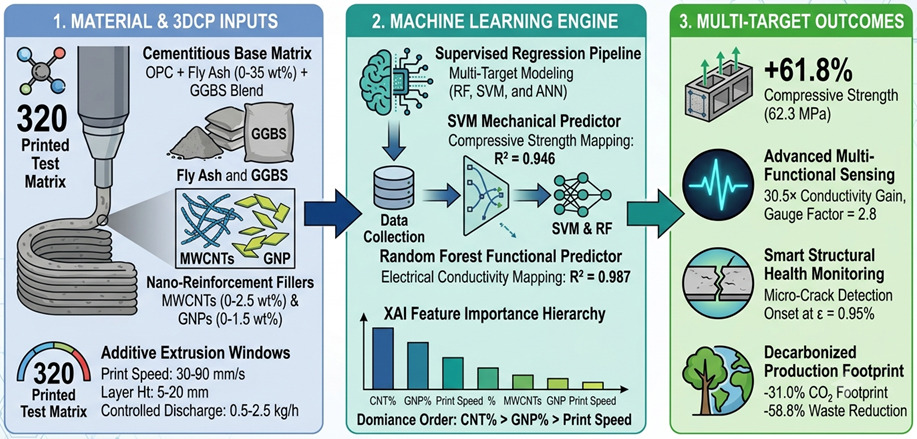
This research study describes a machine learning (ML)-driven model for producing smart structural materials via additive manufacturing (AM) by extrusion. A 3D concrete printing system was used to make cementitious composites that were reinforced with carbon nanotubes (CNTs) and graphene nanoplatelets (GNPs). Random Forest (RF), Support Vector Machine (SVM), and Artificial Neural Network (ANN) models were used to undergo supervised learning on an experimental dataset consisting of 320 specimens to predict compressive strength, electrical conductivity, and print quality as dependent on process parameters and material composition. The highest R2 of compressive strength prediction of SVM was 0.946, whereas RF had the highest R2 of 0.987, which was used to predict electrical conductivity. Optimization of parameters guided by ML had a 61.8% enhancement of compressive strength and 30.5 times increase in electrical conductivity in comparison to non-optimized baselines. Nanomaterial networks were also found to be conductive, allowing individual networks to detect their strain levels through changes in current at a strain of 0.1%, which facilitates real-time structural health sensing. The artificial system showed a 31% decrease in CO2 emissions and a 58.8% decrease in material wastage compared with the usual way of building, proving to be a valid route towards intelligent and sustainable infrastructure.
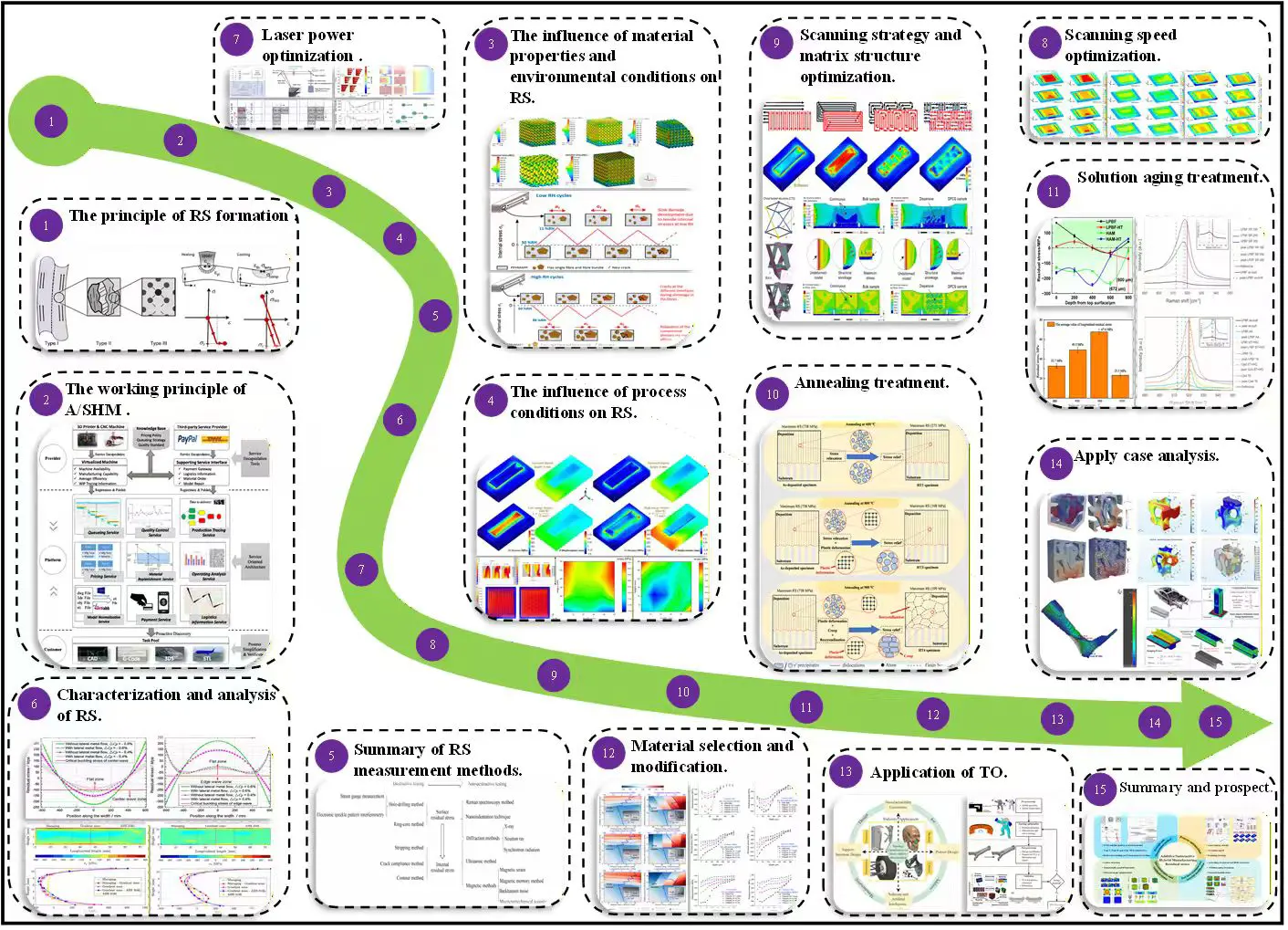
This review methodically expounds on the genesis, distribution characteristics, and control methodologies of residual stress (RS) in additive/subtractive hybrid manufacturing (A/SHM). RS, originating from non-uniform temperature fields during manufacturing, rapid solidification of the molten pool, and complex thermal cycling, are key factors causing component deformation, performance degradation, and even cracking. It is evident that significant limitations are imposed on the industrial implementation of A/SHM technology in the domain of high-end equipment manufacturing. This review methodically unveils the influence patterns of process conditions, such as scanning strategies and laser parameters, on RS distribution. It elucidates the intrinsic relationship between microstructural evolution and RS and summarizes effective approaches to regulating RS through process optimization, post-heat treatment, and material modification. This paper proactively proposes a development direction for precise RS regulation through intelligent monitoring and control. This approach provides a theoretical foundation and technical support to enhance the reliability of A/SHM components and advance their industrial applications.
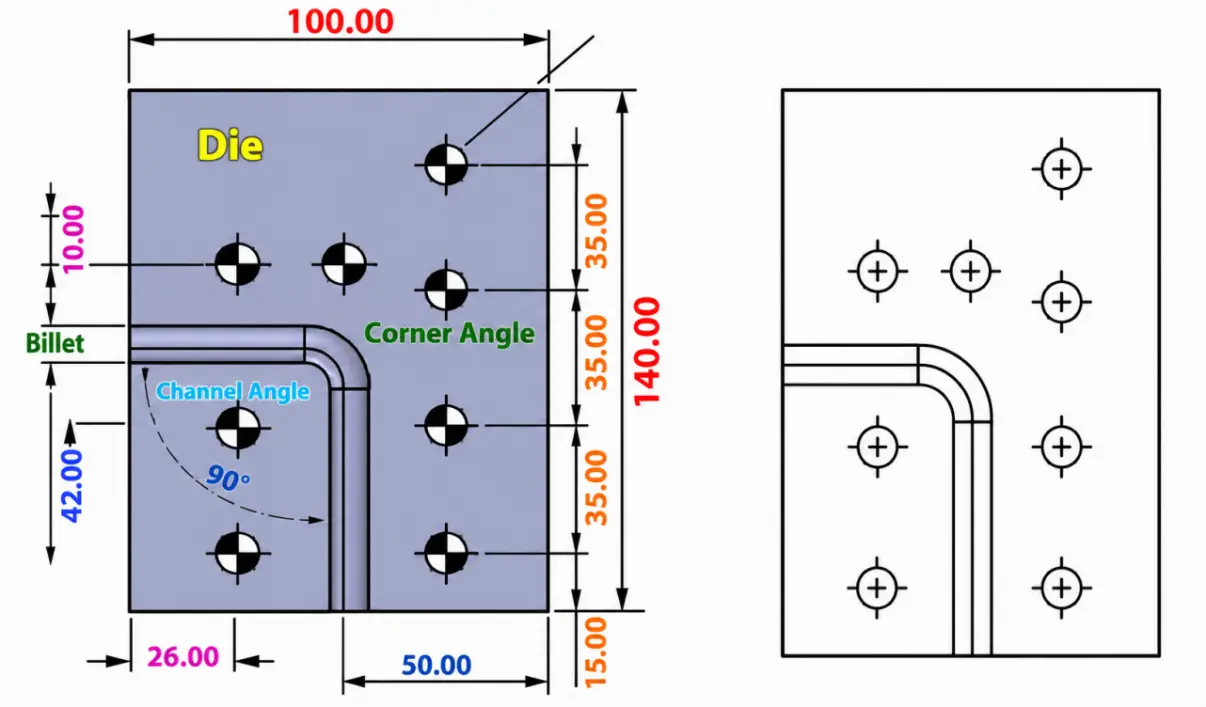
A metal forming technique called equal channel angular pressing is used to produce alloys and metals with ultrafine grain and nanocrystalline structure. Using this method, grain refining to the nano or submicron-scale is possible in materials with high strain super plasticity without affecting the size of the workpiece. One of the greatest techniques for creating bulk materials with ultra-fine grains is equal channel angular pressing. During this procedure, metal is continuously pushed through a channel die that has been particularly made with intersecting channels at different angles. The material is pass through a die in this procedure that has two channels that meet at a particular angle. Finer grains are formed as a result of the material’s deformation when it passes through the die. The creation of ultra-fine grains is influenced by a number of die design characteristics. The effects of processing route, corner angle, channel angle, and number of passes in die design on grain refinement. After comparing the results of several parameters, it was found that (90°) is the ideal channel angle for producing the maximum shear strain, and this strain reduces as the channel angle increases. The die was designed and produced in the lab with ideal design specifications, including a corner angle of (20°) and a channel angle of (90°). The mechanical characteristics of AA5083 were examined both before and after the Equal Channel Angular Pressing method. This study examines and analyses the mechanical behaviour of AA5083 that is treated through the use of an ECAP die that has ideal design specifications. Pressing was done between 0 and 2 times when using the (BC) path. According to the results, the grain size decreased from 480 nm to 170 nm, and the tensile strength increased from 225.8 MPa to 358.4 MPa after two ECAP runs.
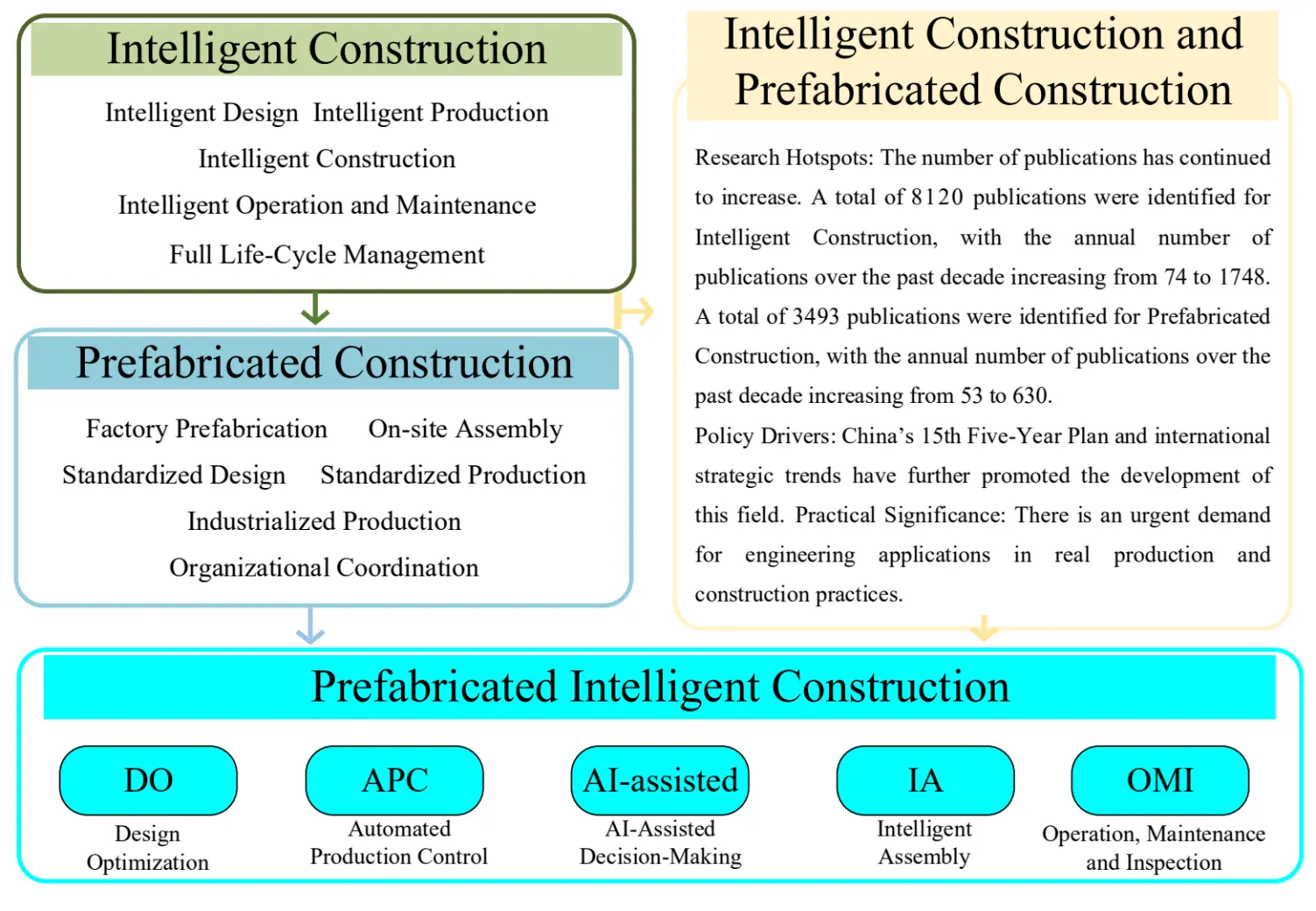
As the construction industry shifts toward industrialization, digitalization, intelligence, and low-carbon development, prefabricated intelligent construction has emerged as a key pathway for enhancing efficiency, quality control, resource utilization, and full life-cycle management. Yet existing studies remain largely confined to single-technology applications, local process optimization, or isolated engineering cases, lacking a systematic grasp of the field’s development trajectory, knowledge structure, research hotspots, and future challenges. Addressing this gap, this study presents a bibliometric review aimed at clarifying the research evolution, core knowledge domains, technological frontiers, and application-oriented challenges in prefabricated intelligent construction. Based on the Web of Science Core Collection, 583 journal articles published from 2015 to 2025 were retained after standardized search and screening. Using VOSviewer and bibliometrix, the study analyzed publication trends, subject distribution, national and institutional collaboration, author networks, keyword co-occurrence, thematic clustering, and research frontiers. Compared with traditional narrative reviews, this approach integrates quantitative bibliometric analysis with thematic content interpretation, constructing a panoramic and dynamic analytical framework for the field. Research shows that prefabricated intelligent construction underwent a leap from initial exploration to rapid expansion during 2015–2025, with publications and citations from 2023–2025 accounting for 76.16% and 84.07% of the total sample, respectively, establishing it as an active research frontier. In the global landscape, China contributes prominently in output volume, while Australia, the United States, the United Kingdom, and Germany demonstrate relatively high per-publication impact. The disciplinary structure is dominated by engineering, construction, and building technology, supported by multidisciplinary intersections, forming three major research hotspots: the integration of prefabricated construction and intelligent technologies, process innovation and intelligent equipment, and structural performance and engineering applications. In essence, this field represents a full life-cycle construction paradigm arising from the deep coupling of industrialization, digitalization, intelligence, and performance control. Future breakthroughs are needed in four dimensions: full life-cycle data standards, digital twin-driven closed-loop platforms, equipment–process collaborative optimization, and multi-scenario engineering validation to drive the transition toward large-scale application.
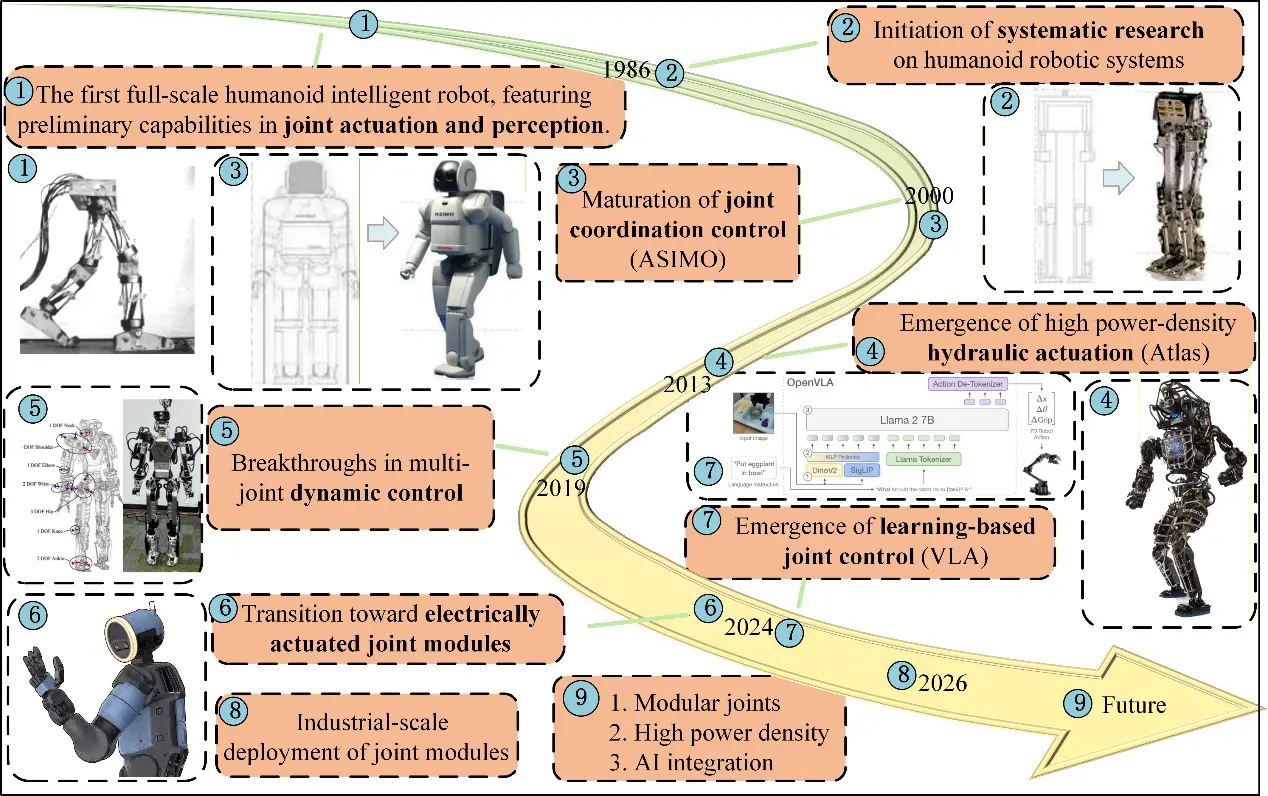
As an intelligence paradigm, embodied intelligence emphasizes that intelligent capabilities emerge from the dynamic interaction between an intelligent agent and its physical embodiment, and are realized through a continuous closed-loop process integrating perception, decision-making, action, and feedback. With the rapid development of embodied intelligence, humanoid robots have become increasingly important in intelligent manufacturing, service, and human-robot collaboration. Joint modules, as the core units responsible for perception, decision-making, and actuation, determine the motion performance, interaction capability, and intelligence level of humanoid robots. Research directions in this field remain fragmented, technological pathways are diverse, and systematic summaries of evolutionary patterns are lacking. First, publication trends, country and institutional collaboration networks, and major research contributors were analyzed. Research on humanoid robot joint modules has entered a phase of rapid growth since 2018, indicating a shift from early exploratory studies toward engineering and large-scale applications. Second keyword co-occurrence, clustering analysis, and burst detection were used to identify research hotspots and evolutionary features, research focus gradually shifted from traditional electromechanical actuation to compliant actuation, intelligent control, multimodal perception, and embodied intelligence. Furthermore, key technologies of joint modules were systematically summarized and reviewed from four aspects: structural design and performance optimization, motion control, human-robot interaction, and biomimetic actuation for human-like performance enhancement. Joint modules gradually evolved toward structural integration, intelligent control, natural interaction, and human-like system characteristics. Technical bottlenecks in current humanoid robot joint modules were analyzed, and future research directions were proposed to provide technical support and theoretical guidance for both industrial applications and academic research in humanoid robotics.
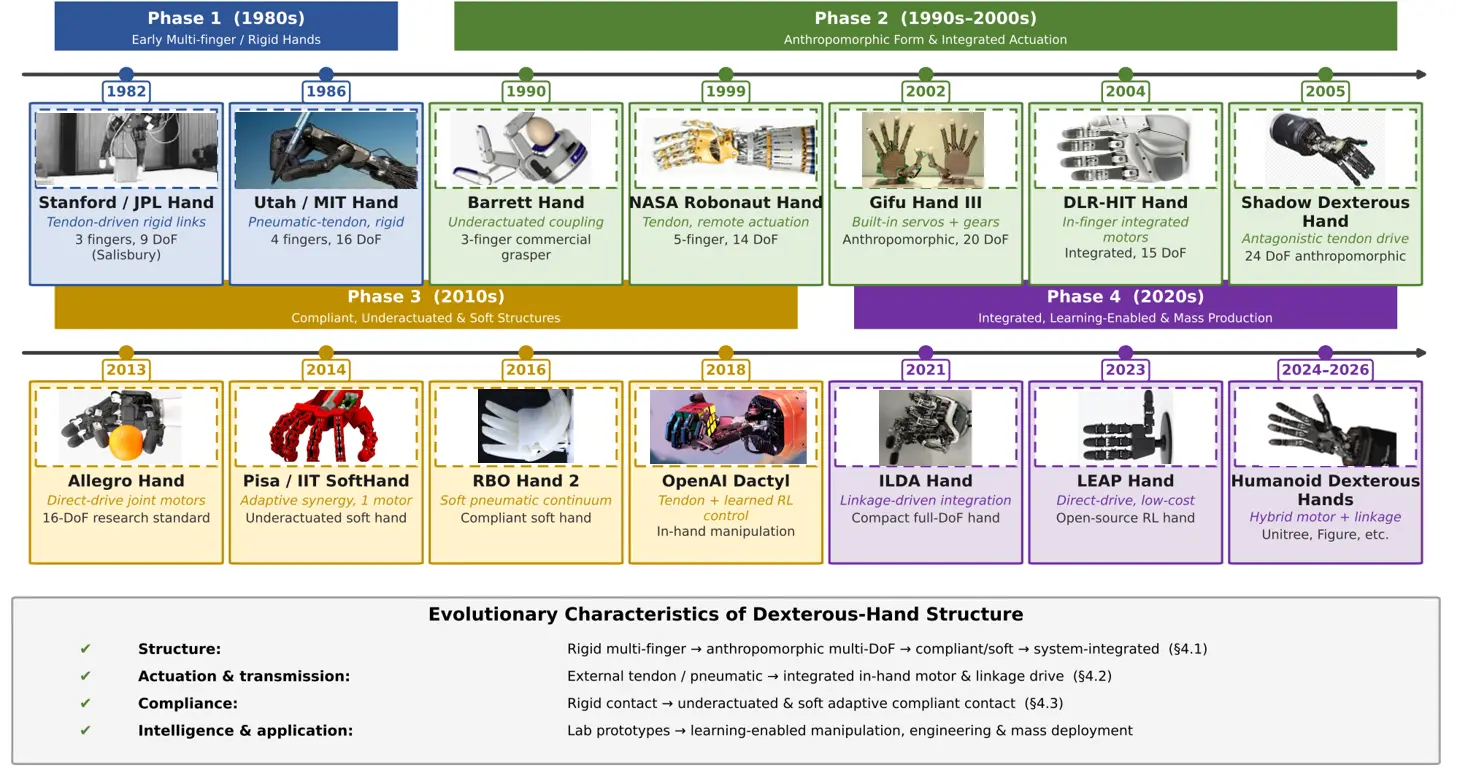
Robotic dexterous hands, as the primary end-effectors through which embodied agents interact with the physical world, directly determine grasp stability, manipulation accuracy, environmental adaptability, and human–robot interaction safety. Research on dexterous hand mechanical structures has expanded rapidly and become increasingly interdisciplinary, so conventional narrative reviews can no longer capture its knowledge base, research drivers, and the evolution of hotspots. A systematic framework that combines bibliometric quantification with mechanism-oriented synthesis is therefore needed. This study presents a bibliometric review of dexterous hand mechanical structures based on Web of Science Core Collection publications from 2016 to 2025, combining bibliometric statistics, collaboration-network analysis, keyword co-occurrence, cluster analysis, and trend synthesis to reveal the field’s research landscape, intellectual structure, and technological evolution. Publications increased steadily, rising from 64 in 2016 to 252 in 2025, with marked acceleration after 2022. China leads in publication volume, whereas the United States, Germany, and the United Kingdom show strong citation impact and international collaboration. Core journals concentrate on robotics, mechatronics, sensing, soft robotics, and rehabilitation engineering, and keyword evolution shows a shift from prosthetic hands and basic mechanism design toward compliant structures, soft actuation, tactile perception, and dexterous manipulation. Based on keyword clustering, three principal research streams are identified: body configuration and degree-of-freedom (DoF) evolution, drive and transmission structure design, and soft/compliant structure expansion. The central challenge of dexterous hand design is no longer the accumulation of DoFs but the coordinated optimization of DoF allocation, actuation mapping, contact stability, and compliant adaptation under strict constraints of space, energy, and reliability. Tendon-driven, internally integrated, and underactuated architectures emphasize lightweight dexterity, precision control, and adaptive grasping, respectively, while soft continuum, rigid–soft hybrid, and variable-stiffness structures are reshaping dexterous hands from rigid execution mechanisms into physically intelligent interaction systems. Overall, the field has entered a stage of interdisciplinary system integration, with its core mission shifting from building complex mechanical hands to constructing perceptive, adaptive, and controllable end-effectors. Future work should strengthen task-oriented structural optimization, hybrid actuation, rigid–soft coupling, integrated flexible sensing and closed-loop control, and unified performance evaluation, accelerating the transition from laboratory prototypes to standardized assessment and large-scale deployment.
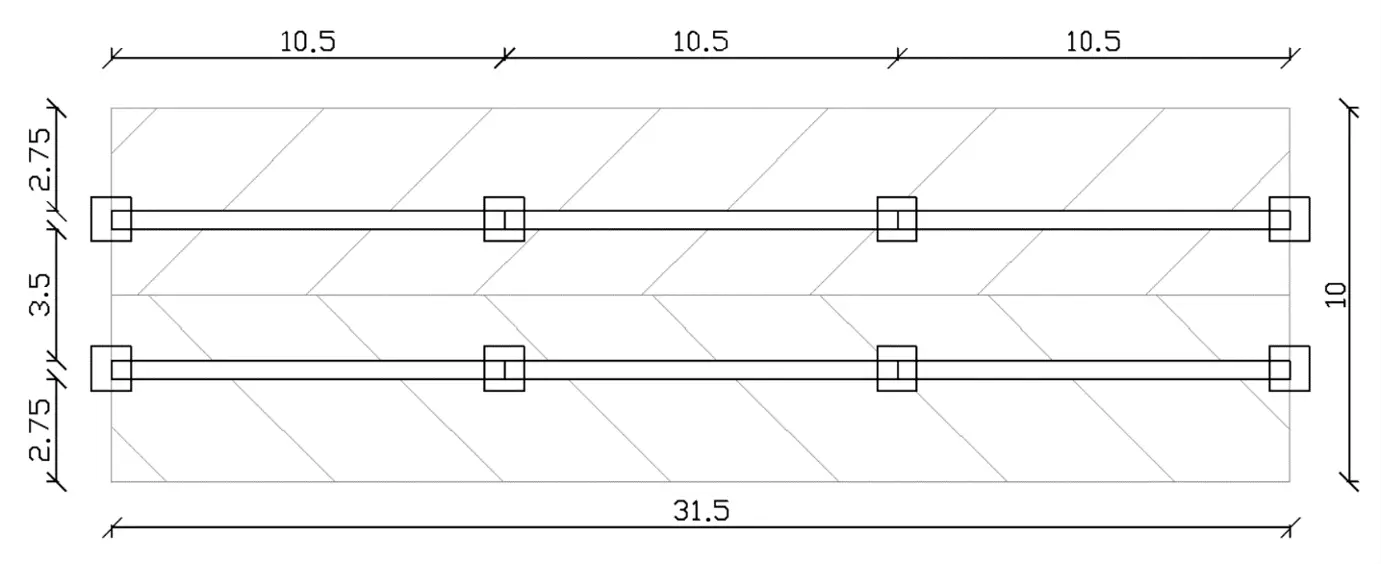
The rising need for economical and ecologically friendly bridges calls for practical solutions that do not compromise the strength, utility, and safety of the structures. The steel-concrete bridge system uses steel girders that carry most of the weight. Thus, an optimal arrangement of girders is necessary for structural efficiency and economic advantage. This study investigates the structural optimization of steel main girders for composite bridges to obtain optimum structural weight and economy. To investigate the coupled behavior of steel girders and concrete decks under realistic conditions, Finite Element Modeling (FEM) is used. In this approach, alternative sizes or configurations for the steel girder are evaluated to predict tensile and compressive stresses as well as deflections. This involves a comparison between the material savings and cost benefits of optimized or conventional designs/configurations. The optimization approaches used in designing composite bridges seem effective at reducing steel mass without affecting bridge performance in terms of stresses and deflections. This study shows that cross-sectional and topology optimization result in a bridge that is more economical, using less steel than previous bridges. Optimization techniques are suggested for designing and building bridges, especially large-scale projects, because of their importance in providing cost-effective and energy-efficient solutions.
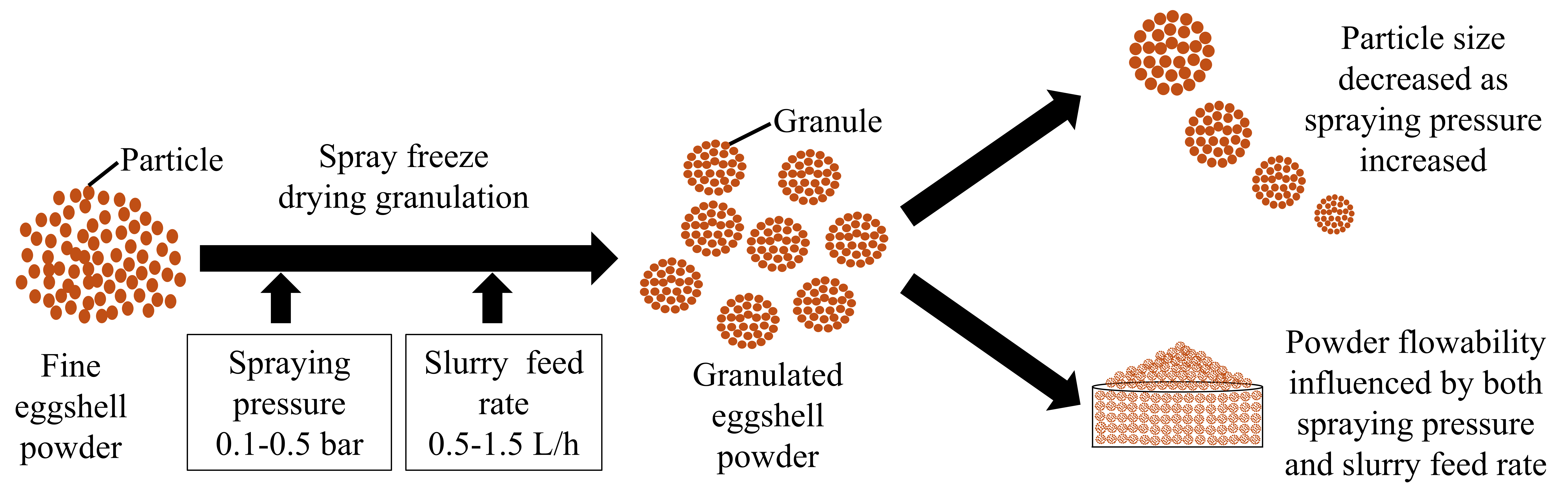
Eggshell powder is a sustainable calcium carbonate-based material with potential as a feedstock for binder jetting additive manufacturing. However, its irregular particles exhibit poor flowability and powder spreading characteristics. Although spray freeze drying granulation has previously been shown to improve the properties of eggshell powder, the influence of process variables on the resulting granules remains insufficiently understood. This study investigates the effects of spraying pressure and slurry feed rate on the properties of granulated eggshell powder. One-factor-at-a-time experiments were conducted to identify feasible ranges of these process variables, and a full factorial design of experiments with two replications was employed to evaluate the main and interaction effects of spraying pressure and slurry feed rate on particle size and flowability of granulated eggshell powder. Spraying pressure had a statistically significant effect on particle size, whereas slurry feed rate did not significantly affect particle size within the investigated range. Increasing spraying pressure resulted in smaller granules. Powder flowability was evaluated using both the Hausner ratio and repose angle. Both measures showed a significant interaction between spraying pressure and slurry feed rate, indicating that powder flowability depends on the combined effects of these two variables. The findings suggest that spraying pressure is the key variable governing particle size, while the combined influence of spraying pressure and slurry feed rate must be considered when controlling powder flowability. The resulting process–property relationships provide a basis for selecting spray freeze drying conditions for converting eggshell waste into more suitable granulated feedstock for binder jetting additive manufacturing.
Surface mechanical attrition treatment (SMAT) has been used to treat the surfaces of an aluminium alloy manufactured by selective laser melting (SLM). SMAT involved impacting the SLM sample surface with spherical balls at a frequency of 30 Hz for 10 min to 30 min, which induced plastic deformation of the sample surface, leading to a change in surface finish and surface hardness. The surface finish, morphology, hardness, and structural features have been investigated. The results show that SMAT is very effective in improving the surface finish of the SLM aluminium alloy surface. After 30 min of treatment, the roughness value (Ra) was reduced by 87%, from 19.4 μm to 2.6 μm. SMAT also has the benefit of increasing the surface hardness of SLM aluminium alloy from 125 HV0.1 to 160 HV0.1, and generating a strain hardened layer of about 300 μm thick at the subsurface, and thus has the potential of improving wear resistance. In addition, SMAT induced a compressive residual stress of around 100 MPa on the treated surface, which would be beneficial in improving the fatigue properties of SLM aluminium alloy. The mechanisms underlying surface smoothing, hardness increase, and the evolution of compressive residual stress in SMAT are discussed in terms of severe surface plastic deformation and strain hardening.
Due to their dense microstructure and excellent thickness controllability, copper films are widely utilized in flexible electronics and energy storage device systems. Their interfacial stability in electrochemical environments becomes the critical factor limiting device cycle life and safety. However, in fluorine-containing electrolyte environments, copper is susceptible to severe HF-induced corrosion, generating unstable products such as CuF2, which can lead to structural degradation and functional failure. The results indicated that the film with a low Zn content (Cu-Zn (9.5:0.5 wt%)) exhibited deteriorated corrosion resistance due to a significant micro-galvanic effect. Its corrosion current was as high as 6.87 × 10⁻⁵ mA·cm−2. By contrast, the high-Zn-content film (Cu-Zn (9:1 wt%)) formed a composite passivation film that increased charge transfer resistance to 1.22 × 10⁴ Ω·cm2 and reduced the corrosion current to 2.08 × 10⁻⁵ mA·cm−2. The introduction of an additional carbon layer resulted in optimal stability of the Cu-Zn (9:1 wt%)@C composite film, with the corrosion current decreasing to 6.14 × 10⁻⁶ mA·cm−2 and the structure remaining intact after corrosion. Multi-scale characterization revealed that the addition of zinc to the alloy enhanced the film’s intrinsic passivation capability, while the carbon layer provided an external barrier effect through physical isolation, charge regulation, and stress relief. This synergy effectively suppressed the formation of by-products. In summary, the Cu-Zn (9:1 wt%)@C composite film demonstrated the greatest corrosion resistance, establishing a theoretical foundation and engineering approach for the design of highly stable metallic films for use in intricate electrochemical environments.
