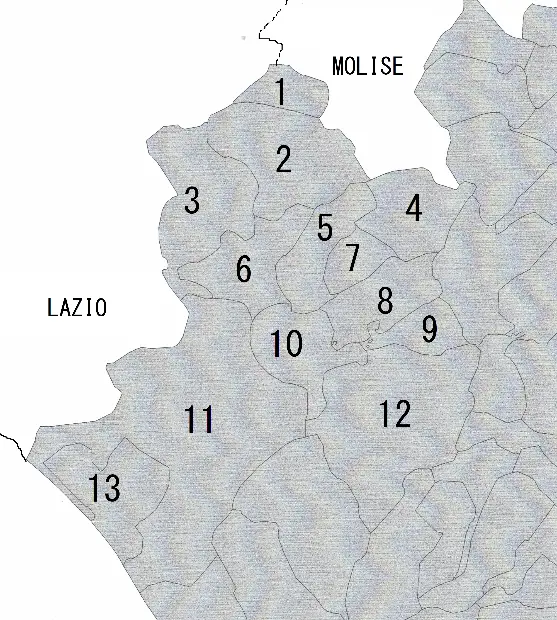
The paper aims to contribute to planning decisions, policies, strategies, and management of inland areas affected by a protected natural area in the Campania region (Italy). Inland and rural areas, often affected by depopulation and economic decline, can and must be a crucial resource in the ecological transition. At a time when urbanisation is expected to increase, the bioeconomy offers a way to repopulate rural areas, promoting a transition to a more sustainable and inclusive production model and making the best use of the resources already present in the area. A significant example of the circular bioeconomy in action is the Campania region, which has been designated as a hub for a series of European projects currently underway that aim to integrate innovation, sustainability, and social inclusion. In this context, the area chosen is Roccamonfina, a volcanic area that has been inactive for thousands of years, with forests at the top and very fertile foothills. The area, which is part of the province of Caserta, one of the five provinces of the Campania Region (Italy), is characterised by a sparse human presence and by abandonment, in which local communities alone are unable to create conditions for sustainable development. The methodological approach starts from an analysis of the territory and gives priority to landscape, environmental, socio-economic, productive, and cultural characteristics, using a SWOT analysis. This approach aims to define policy scenarios to promote conditions for sustainable development. The results achieved in the study are designed to be scalable to similar areas.
This study investigates the need for the adoption of modern handloom tools, including jacquard and warping drums, and evaluates their impact on income generation, production efficiency, market reach, and women’s empowerment in rural areas of Udalguri District, Assam. A purposive sampling method was used to survey 50 households in total. The findings reveal that the jacquard and warping drums significantly reduced the time required for weaving, mitigating weather dependence and improving productivity. Consequently, beneficiaries reported increased income, leading to independent entrepreneurship. The marketing strategies employed included direct market linkage through Civil Society Organizations (CSOs), participation, and connection with buyers to expand market access. Types of products included Silk and Cotton, and most of the products were sold in local markets. Training initiatives have been conducted to enhance product quality and design diversity. Weavers, who previously worked with limited designs, have now adopted innovative patterns to boost product demand. The study underscores the pivotal role of CSOs in hand-holding support, development of marketing linkage, tracking systems, and development of community resource persons (CRPs) through cluster-based training programs. The modern handloom tools play a transformative role in enhancing productivity, income, and market access, while simultaneously empowering women and strengthening rural economies.

Rural and regional development is often framed as an economic or service-delivery challenge, whereas water is treated as infrastructure or compliance. That separation is analytically convenient but operationally false. Hydrologic regime reality and water quality dynamics are non-negotiable physical constraints that quietly determine what rural communities can credibly promise, finance, permit, and defend over time. At the same time, many rural water systems and watershed programs operate within institutional arrangements that were not designed for slow hydrologic lags, cross-boundary pollutant legacies, or the legitimacy demands created by uneven exposure to risk. This perspective, therefore, suggests that rural development should be recentered on water governance: the coupled system of hydrologic processes, water-quality legacies, and organizational capabilities that together produce reliability, safety, and trust. Recent primary research is synthesized showing that (1) legacy nutrients and ecosystem memory create multi-decade time lags that can invalidate short political or funding cycles, (2) rural and small system compliance and exposure burdens remain structurally unequal, and (3) adaptive governance capacity depends on institutional fit, partnerships, and policy and planning choices that are themselves socially patterned. A practical agenda for scholars and practitioners is proposed: build hydrologic legitimacy by aligning project claims with hydrologic time, making governance fit explicit across scales, and treating organizational change capacity as core water and rural development infrastructure. The resulting framework provides decision-makers with operational guidance for aligning development claims, governance structures, and investments with hydrologic constraints that ultimately determine long-term feasibility and trust. Rather than presenting new empirical results, this Perspective synthesizes evidence from hydrology, water quality, governance, and organizational change to conceptually reframe rural and regional development around hydrologic legitimacy as a governing constraint.
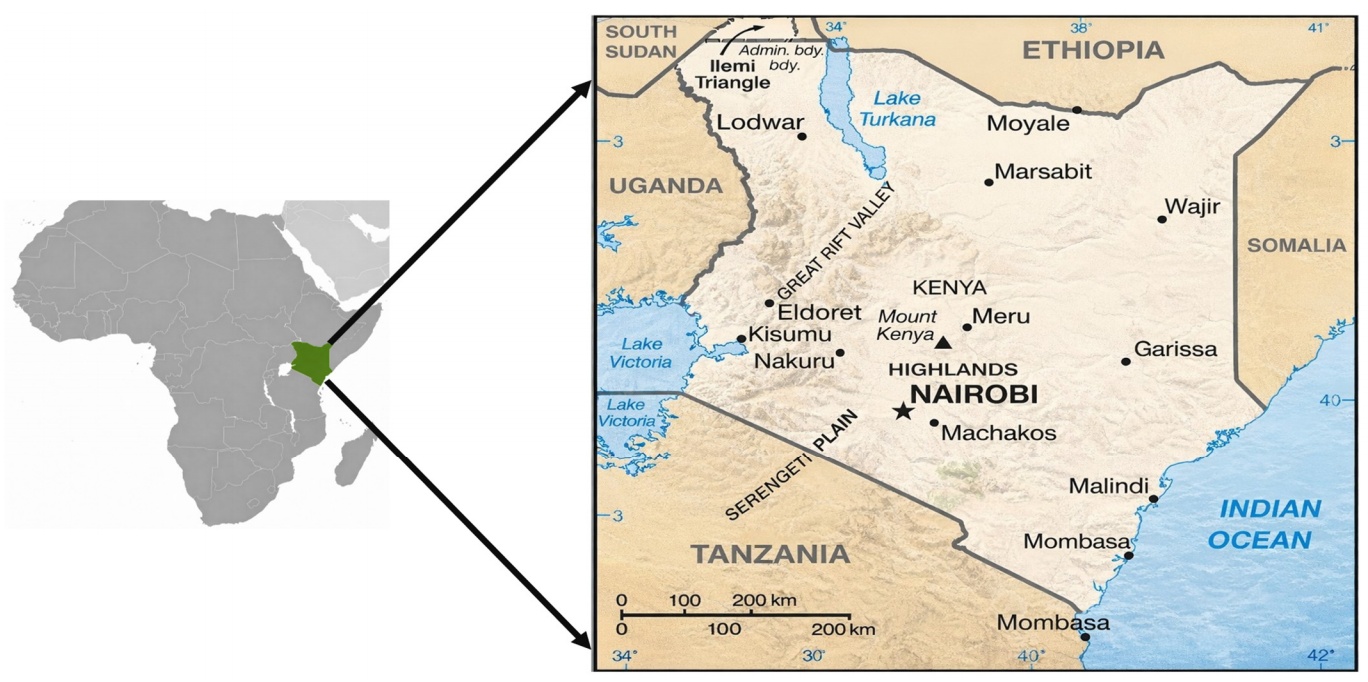
Kenya’s sustainable development is increasingly shaped by climate variability and climate change, which affect both the availability and quality of water resources. Existing research shows that these impacts are often gendered, particularly where women and girls hold primary household responsibilities for water collection and water-related care work. Literature also indicates that impacts differ substantially by location (arid versus highland versus informal urban settlements), livelihood system (pastoral versus agro-pastoral versus peri-urban), socio-economic status, and age. This study presents a systematic review of peer-reviewed literature examining how water stress, climate pressures, and gender dynamics intersect in Kenya. Three recurring themes emerge: first, climate change makes water supplies less safe, more expensive, and harder to predict. Second, social and political structures dictate who suffers most from these changes. Third, while women drive local climate adaptation and advocacy, they still lack a consistent voice in formal decision-making. The study concludes by identifying points of agreement and disagreement in current literature, while highlighting remaining evidence gaps regarding the shifting dynamics of climate, water, and gender relations in Kenya.
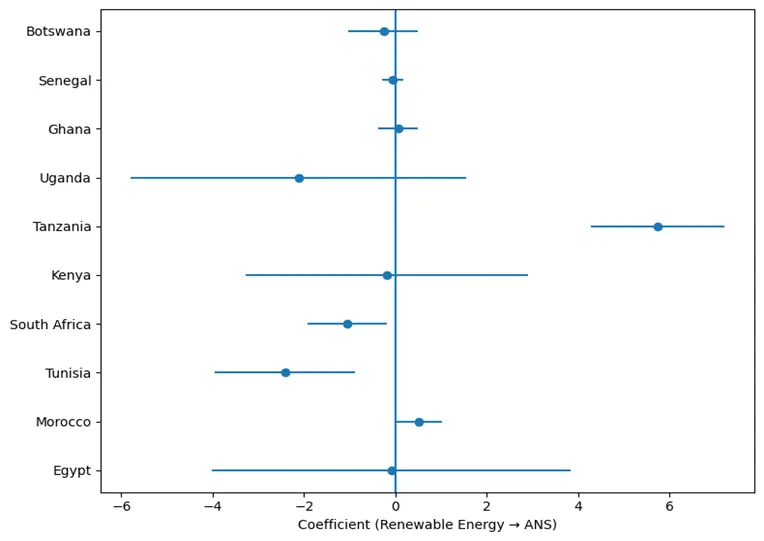
This study investigates the key drivers of sustainable development in African economies using Adjusted Net Savings (ANS) as an indicator of long-term sustainability. Employing second-generation panel data methods—namely the Augmented Mean Group (AMG) estimator, System GMM, and the Dumitrescu–Hurlin panel causality test—the analysis accounts for cross-sectional dependence, heterogeneity, and potential endogeneity across countries. The results indicate that economic growth significantly enhances sustainable development in the long run: a one-unit increase in GDP per capita is associated with approximately a 31-point increase in ANS. In contrast, renewable energy consumption exerts a negative short-run effect on sustainability (−0.38), reflecting transition-related costs and efficiency constraints in developing economies. Carbon intensity adversely affects sustainability, while the impact of trade openness remains heterogeneous across countries. Country-specific estimates further reveal substantial cross-country differences driven by variations in economic structure, energy systems, and institutional capacity. Overall, the findings suggest that achieving sustainable development in Africa requires aligning economic growth with environmental efficiency through well-sequenced renewable energy investments, green trade policies, and strengthened institutional frameworks.
Groundwater availability has been a growing problem in the state of Kansas, where the High Plains aquifer (HPA) has been declining. Simultaneously, the Sunflower State is moving toward wind energy, investing in red meat production, and eyeing a proposal for the Kansas Aqueduct (a tremendous water transfer from eastern to semiarid western Kansas, a region with a distinct vulnerability to drought that overlies the HPA). What do Kansans think about these changes in their environment and infrastructure? Using a survey of the state’s residents (n = 864), we find that owning a private water well is a significant predictor of opposition to the colossal aqueduct, while living above the HPA predicts support for the water transfer. Well owners and women oppose the construction of coal-fired power plants, oil pipelines, hydraulic fracturing, and large corporate feedlots, while politically conservative ideologies predict support. Furthermore, well owners and women are nearly twice as likely to disapprove of fracking; conservatives have lower odds of fracking opposition. The Just Transition in Kansas is not only a question of how water, agribusiness, and wind and nuclear energy are developed, but also residents’ perceptions of these projects.
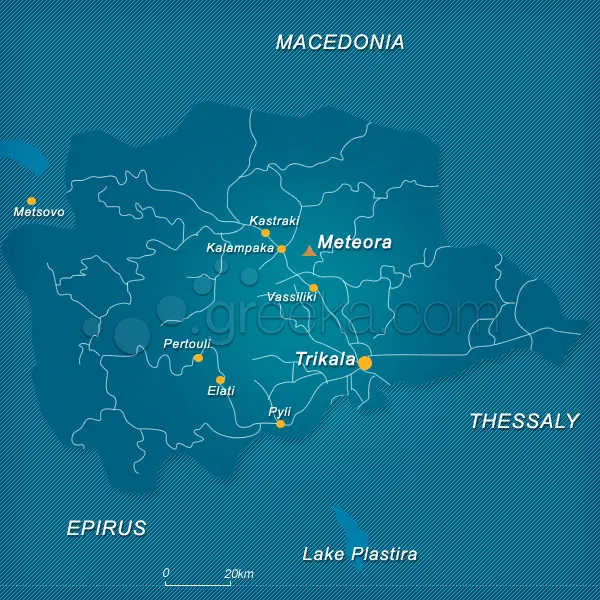
This study analyzes Meteora in Greece, a tourism destination whose spatial formation is shaped by bioclimatic factors, as a case study. The study analyzes how orientation, wind influence, thermal mass, and microclimate conditions affect spatial organization and architectural typologies. The relationship between space and climate is investigated using spatial mapping, orientation analysis, field observation, and photographic documentation methods. Findings indicate that monastic entrances are predominantly oriented toward southeastern exposures to maximize winter solar gain and reduce northern wind impact, while hermit caves cluster on south-facing rock surfaces, benefiting from thermal stability. The study concludes that Meteora represents an early example of climate-adaptive spatial planning, where bioclimatic intelligence shaped both sacred settlement patterns and contemporary tourism sustainability.
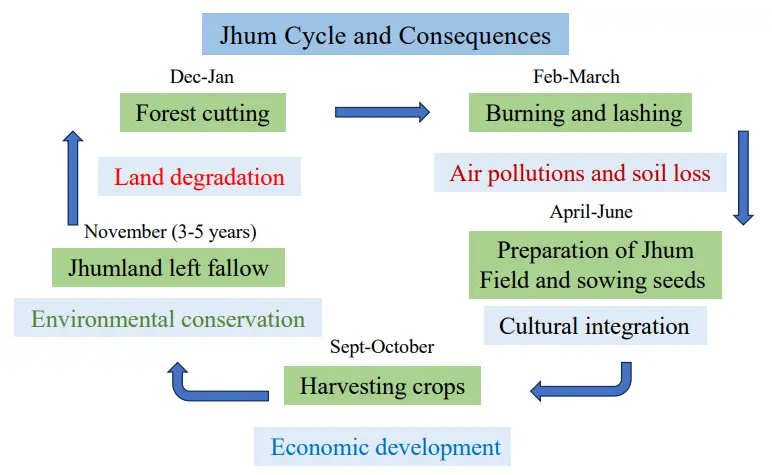
Shifting cultivation is a way of life and the major source of livelihood in Mizoram, Northeast India. More than 80% of the rural population traditionally practices shifting cultivation. Since production is largely subsistence-oriented, a significant proportion of people live below the poverty line. This study aims to examine the spatial and temporal changes in shifting cultivation, identify the major drivers influencing it, and analyze its implications for the economy and environment. Data were primarily collected from satellite imagery for four years—2009, 2014, 2019, and 2024—during February and March, which is the period of burning Jhum plots. The data were analyzed using Geographical Information System (GIS) tools, and changes in the area under shifting cultivation were calculated using the exponential growth rate. The study reveals that between 2009 and 2024, the area under shifting cultivation declined by more than 80%. The major factors affecting the decline of shifting cultivation were assessed. These factors were climate variability and change, shortened Jhum cycles, reduced production and productivity, increasing population, higher levels of education, inadequate markets, and greater availability of jobs. Land degradation, reduction of biological diversity and gene pool, and food insecurity were also identified as significant implications. Transforming Jhum plots into permanent agricultural land could make farming practices more sustainable and improve livelihoods.
The present study aimed to examines regional inequalities in age at first marriage among Bengali-speaking women in Howrah district, West Bengal, It hypothesized that women in urban areas were more likely to marry after 18 years compared to rural women. The analysis draws on cross-sectional data collected from 665 ever-married women, of whom 60.15% resided in urban areas and 39.85% in rural areas. Bivariate analysis, independent sample t-tests, and binary logistic regression were employed, complemented by qualitative in-depth interviews from each region. The mean age at marriage was 22.25 years (±4.4), with a pronounced rural–urban regional difference: rural women married significantly earlier (19.83 years) than urban women (23.85 years) (t = 12.80; p < 0.001). Nearly 48.30% of rural women were married at or below 18 years, compared to only 7.25% of urban women (p < 0.001). Logistic regression results reveal strong and persistent regional disparities. In the unadjusted Model I, urban women had significantly higher odds of marrying after 18 years than rural women (OR = 11.95; p < 0.001). After adjusting for socio-demographic, familial, and economic factors in Model II, the association remained robust (OR = 9.67; p < 0.001). Generational patterns were non linear: women from Generation II were more likely to marry after 18 years (OR = 1.09; p < 0.01), while those from Generation III had significantly lower odds (OR = 0.39; p < 0.01). Higher education of respondents (OR = 1.66; p < 0.01), respondents’ fathers (OR = 3.12; p < 0.01), and mothers (OR = 3.58; p < 0.01) substantially increased the likelihood of delayed marriage. Respondents (OR = 1.51; p < 0.05) and respondents’ fathers (OR = 1.92; p < 0.05) with white-collar jobs significantly increase the likelihood of being delayed in marriage. Respondents belonging to the upper wealth quintile (OR = 1.92; p < 0.05) were more likely to marry at later ages. Respondents with ≥3 siblings(OR = 0.65; p < 0.05)and those whose husbands had 1–2 siblings (OR = 0.37; p < 0.01) and ≥3 siblings (OR = 0.39; p < 0.01) were significantly less likely to marry after 18 years compared to the reference category. The qualitative findings reveal the intersection of socio-cultural and kinship obligation in marital timing. The finding underscores that delaying marriage requires interventions beyond legal enforcement and schooling alone, highlighting the need for rural-specific, intergenerational, and economically grounded policy strategies.