Universities are ranked and clustered into ‘like-minded’ institutions. Regional universities—as an adjective and noun or a compound noun—are defined via location, rather than academic standards, teaching innovation, research rigour, or the use of innovative technology. Through the ‘regional’ labelling, they are marked and separated as different from, and implicitly less than, urban and metropolitan institutions, which carry the excitement of urbanity, encompassing Virilian speed and prestigious alumni. This differentiation has consequences for grants, funding, academic staff attrition, and leadership. But what happens to PhD students at regional universities? Where is their voice? How are their views recognized, codified, and understood? Written between an experienced supervisor and a PhD student, this paper offers a different pathway through the regional graduate programme, offering a different lens to re-vision regional higher education, beyond cliches of partnerships and collaborations. As a theoretical and conceptual paper, it creates and holds space for PhD students in a revisioning of regional universities.
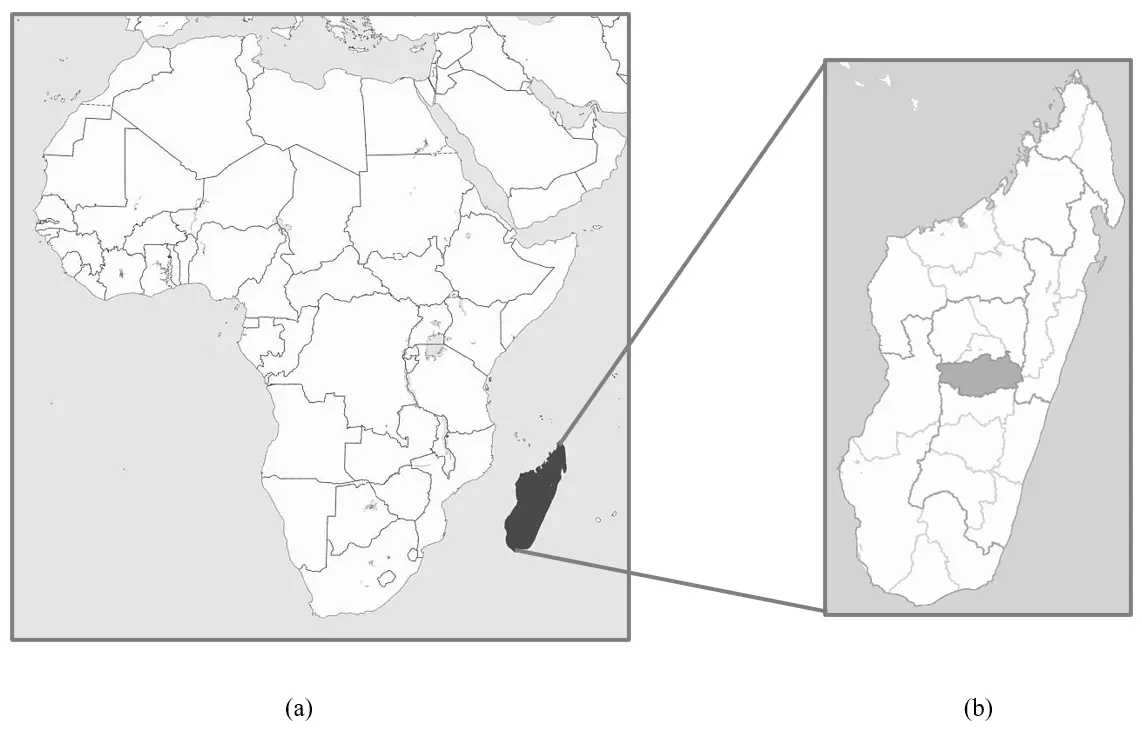
Milk production in developing African countries is a viable path for smallholders’ sustainable development. Supporting interventions should be shaped by evidence from comprehensive, context-specific analyses. Using survey data, this study contributes to the development-oriented literature on dairy productivity in African smallholder systems by conducting the first stochastic frontier analysis in the Malagasy context. Focusing on milk producers in central Madagascar’s crop-livestock family farms, a stochastic frontier production function with inefficiency effects is developed. The fitted frontier comprises the number of cows, annual purchased feed expenditure, farmer’s labor, and total household assets owned. Distance from the frontier is explained by the use of improved breeds, integration in the regional milk zone, farmer years of experience, the presence of off-farm income, and the number of oxen owned. Technical efficiency ranged from 4.6% to 90.8% around a mean of 55.5%. Results revealed how, in this context, cows are embedded in diversified family farming systems where resources are allocated across production activities and household needs. The study’s multidisciplinary stochastic frontier analysis provides a more complete picture to guide research and policy for smallholders’ sustainable rural development.
Many family farmers depend on public support to maintain their activity, which highlights the need to review the challenges associated with their farming system and marketing. The importance of family farming reinforces the need to include this sector in agricultural, environmental, and social policies, identifying opportunities and promoting the necessary changes to ensure more equitable and balanced development. In Portugal, in 2018, the Family Farming Statute was established to distinguish, recognise, and value family farming through specific local support measures. In this study, farmers with the Family Farming Statute in the North of Portugal were characterised. Interviews were conducted using questionnaires, and the indicators/requirements currently provided in the statute were analysed. Based on the literature review, new indicators have been suggested to help increase the number of family farmers included in the Statute. Despite being a good policy to support family farming, the Family Farming Statute needs revision to ensure wider inclusion. Support should be more attractive and comprehensive, including economic support, technical assistance, training programmes, local marketing channels, valorisation of traditional products, and short supply chains.

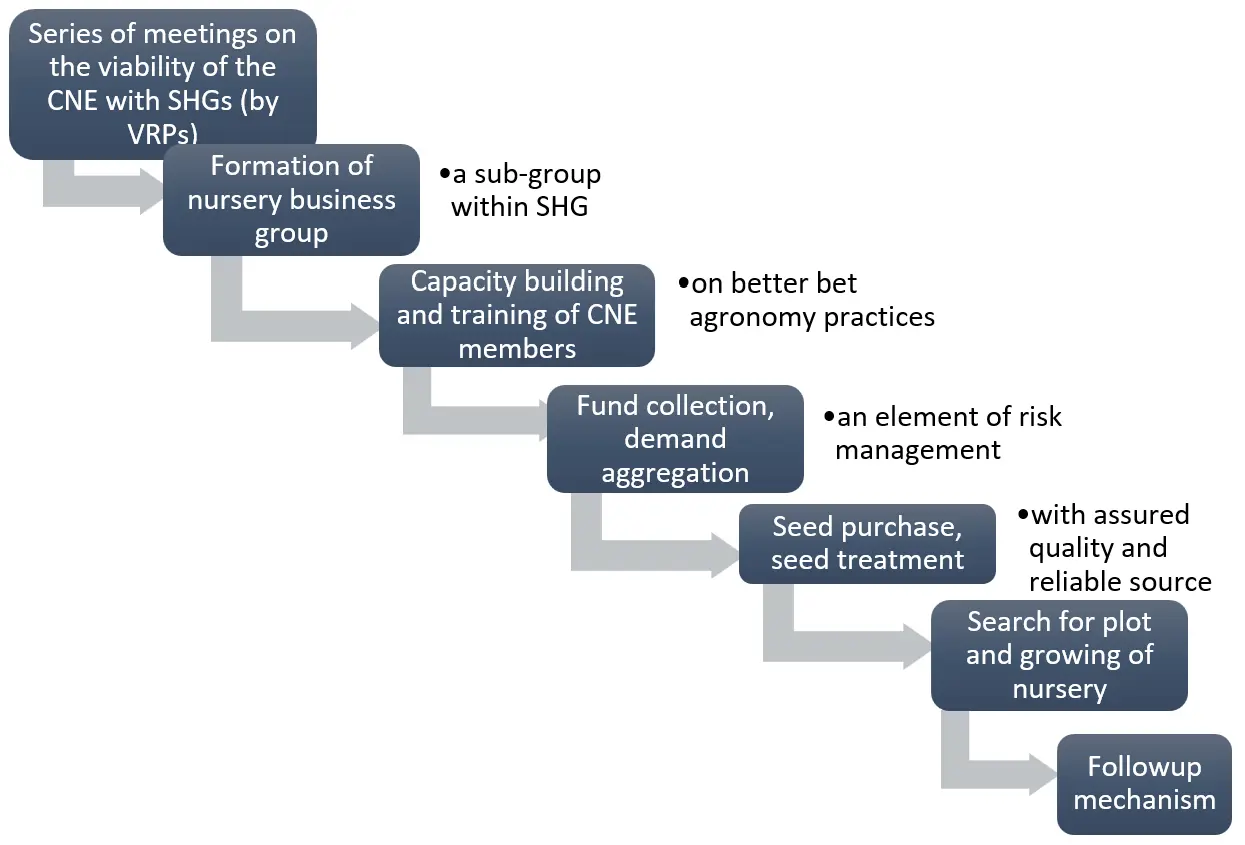
With increasing climate stress and monsoon variability, it becomes imperative to design and plan innovations catering to the needs of small and marginalized farmers in rice farming. This requires interventions to encourage farmers to adopt better management practices in their fields, using cost-saving technologies. Along with technology innovation improving yields, strategy promoting inclusion is equally important to address the gender gap existing in rice farming for equitable development. Cereal Systems Initiative for South Asia has initiated one such innovation known as Rice Nursery Enterprise (RNE), led by small and marginal farmers in the state of Bihar, India. This very innovation adopted a livelihood centric approach, reaching out to farmers through strategic partnerships with community-based organization, research universities, government agencies, private players, and Bihar Rural Livelihood Promotion Society, popularly known as JEEVIKA. In order to understand the process, characteristics, and feasibility of rice nursery entrepreneurship (RNE), a field study was organized with both men and women farmers in the state of Bihar. It was found that RNE helps both women and men farmers to set up a coping mechanism tackling monsoon variability with the availability of timely seedlings and generating additional income in their household through the service economy. Importantly, when women farmers are strategically mainstreamed with informed choices to lead through Self Help Groups (SHGs), it was found that, along with added income and coping variable monsoon, they are increasingly establishing their identity as farmers at both the household and community level.
Youth engagement in agriculture has emerged as a critical issue for sustainable agri-food systems, yet policies remain fragmented and uneven across countries. This paper presents a comparative case study of four national contexts to assess how governments address or neglect the challenges young people face in the agricultural sector. Using a desk-based review of policy documents, reports, and secondary literature, this study critically compares the policy environments of Uganda, Cameroon, Nigeria, and Italy. It explores the role of youth in agriculture and rural development by identifying gaps in institutional support, policy coherence and access to resources, while also highlighting areas of innovation and promising practices. This paper develops a conceptual framework to capture the key aspects necessary to increase youth participation in agriculture and rural development. The framework emphasises the importance of integrated strategies combining structural access, system-level integration, youth agency, and institutional capacity. Overall, this cross-country analysis aims to enhance the understanding of youth-in-agriculture policy environments, providing a roadmap for future policy-making and the development of sustainable rural communities.

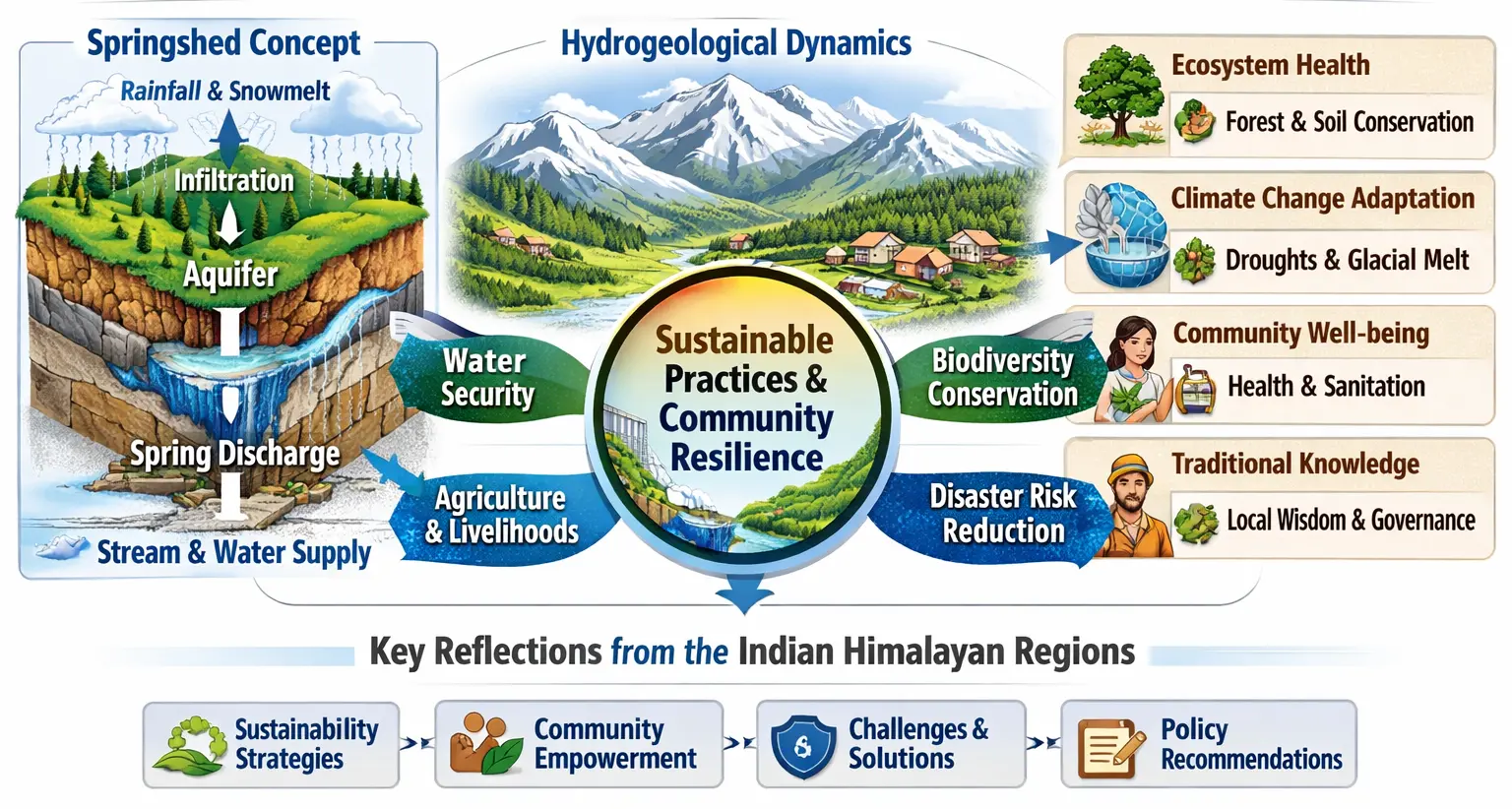
This study examines the critical role of springsheds in fostering resilient communities and sustainable practices in the Indian Himalayan regions, focusing on Kalimpong I (Kalimpong) and Bhurung (Sikkim). The research addresses the pressing environmental challenges, particularly resource depletion and water scarcity, that threaten these ecologically sensitive areas. By integrating physical, environmental, and socio-economic analyses, the study compares the spring water quality, utility, and mobility in the two springsheds. It also identifies obstacles residents face in accessing these water sources. Utilizing mixed methods, including field surveys, in-depth interviews, GIS-based mapping, and water quality analysis, the study reveals the indispensable role of springs in daily life, providing essential water for drinking, agriculture, and domestic use. The findings emphasize the need to integrate traditional knowledge with sustainable practices, such as rainwater harvesting and afforestation, to enhance community resilience. This research highlights the importance of community-driven approaches to environmental sustainability, offering valuable insights for similar ecological settings worldwide.
Rural out-migration has become one of the most significant drivers of social and institutional fragility in contemporary Europe, particularly in peripheral and migrant-sending regions. Beyond demographic decline, sustained mobility generates care drain, school disengagement, elderly isolation, and erosion of interpersonal and institutional trust, ultimately leading to community fragmentation. While existing research has extensively documented these effects, far less attention has been given to how they can be systematically reversed through coordinated public policy and social intervention. This paper proposes a governance-ready Theory of Change that integrates social capital theory, social disorganization, rural migration studies, and cohesion-oriented social policy into a unified framework for restoring community cohesion in migrant-sending rural areas. The model specifies how multi-sectoral policy inputs, spanning social work, education, local government, civil society, and EU cohesion instruments, activate bonding, bridging, and linking forms of social capital, generating measurable improvements in school engagement, community participation, intergenerational solidarity, return-migrant reintegration, and institutional trust. Through two complementary visual models, a linear recovery pathway and a self-reinforcing cohesion cycle, the paper demonstrates how social recovery becomes cumulative and resilient once critical relational and institutional thresholds are reached. The proposed framework advances rural development scholarship by shifting the focus from managing migration impacts to governing social regeneration, offering a transferable policy architecture for strengthening cohesion, resilience, and sustainable development in mobility-affected rural regions.
Digital economy is a vital driving engine for new-type urbanization and continues to promote the regional economy. In this study, it adopts the entropy weight method is adopted to measure the digital economy and new-type urbanization in 31 provinces in China from 2011 to 2021, and conducts an in-depth analysis on the relationship between them. The conclusions are: Digital economy has a significant role in promoting new-type urbanization and is regionally heterogeneous, especially the impact in eastern region; Moreover, through the mediating mechanisms analysis, it indicates that industrial structure and innovation level are important paths to promote new-type urbanization. Along with the increase of R&D intensity, the promotion effect shows a non-linear characteristic of “increasing marginal effect”. In light of this, the following countermeasures are put forward to strengthen digital economy’s impetus for new-type urbanization: promote the gradient development of digital technologies and innovate digital economy application scenarios to fuel new-type urbanization; establish a novel digital-industrial integration model and capitalize on the fundamental role of industrial transformation in new-type urbanization; and refine the innovation system and fully realize the marginal incremental effect of R&D intensity once it crosses the threshold.