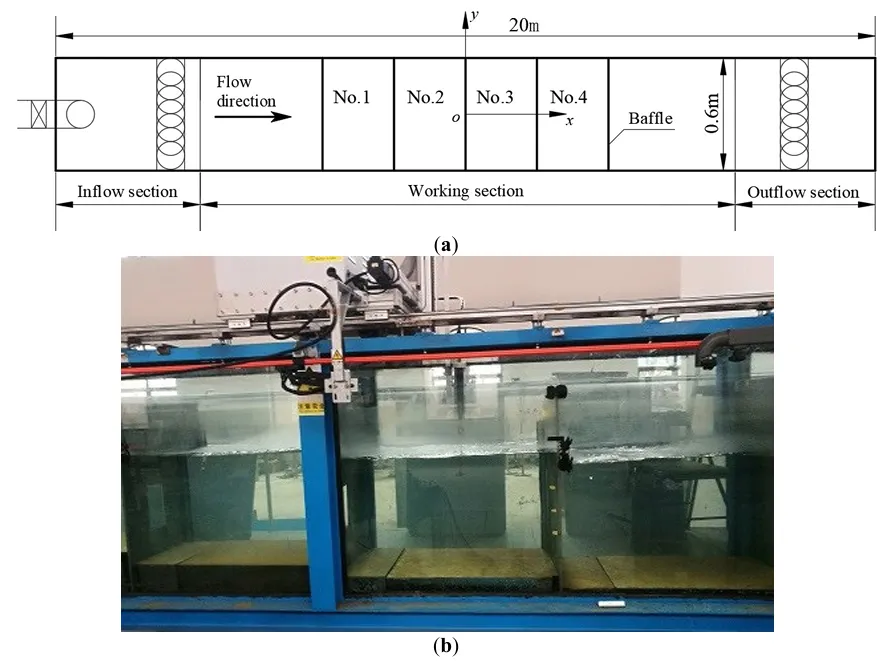
A fishway can assist fish species in overcoming barriers to migration, which depends on the eco-hydraulic characteristics of the fishway. Based on the tail fish benefiting when at the rear of a school than when at the front, and taking into account most anadromous fish species being characterized by egg-shaped morphology, the turbulent characteristics of an egg-shaped orifice fishway were experimentally studied in a fishway flume, a comparison with a rectangular orifice fishway with the same aspect ratio was made. The results showed that the maximum longitudinal velocity for the egg-shaped orifice decays faster than that for the rectangular one, the longitudinal velocity profile exhibits two peak values, while the corresponding velocity distribution for the rectangular orifice only reveals one peak, peak values of turbulence intensity on the different horizontal plane of egg-shaped orifice occur in the orifice edges, the larger turbulence intensities still exists in the central besides the edges for the rectangular orifice, Reynolds stress reaches peak value at the orifice edges, Auto-correlation coefficient of longitudinal velocity within orifice region is of small amplitude and short period relative to the outside the orifice region, microscale eddies within the orifice region were larger than those outside, mean scale of eddy is of larger variation and shorter period, and develops outside the orifice region, frequency-spectrum of velocity fluctuation exhibits dominant frequency in the low-frequency domain.
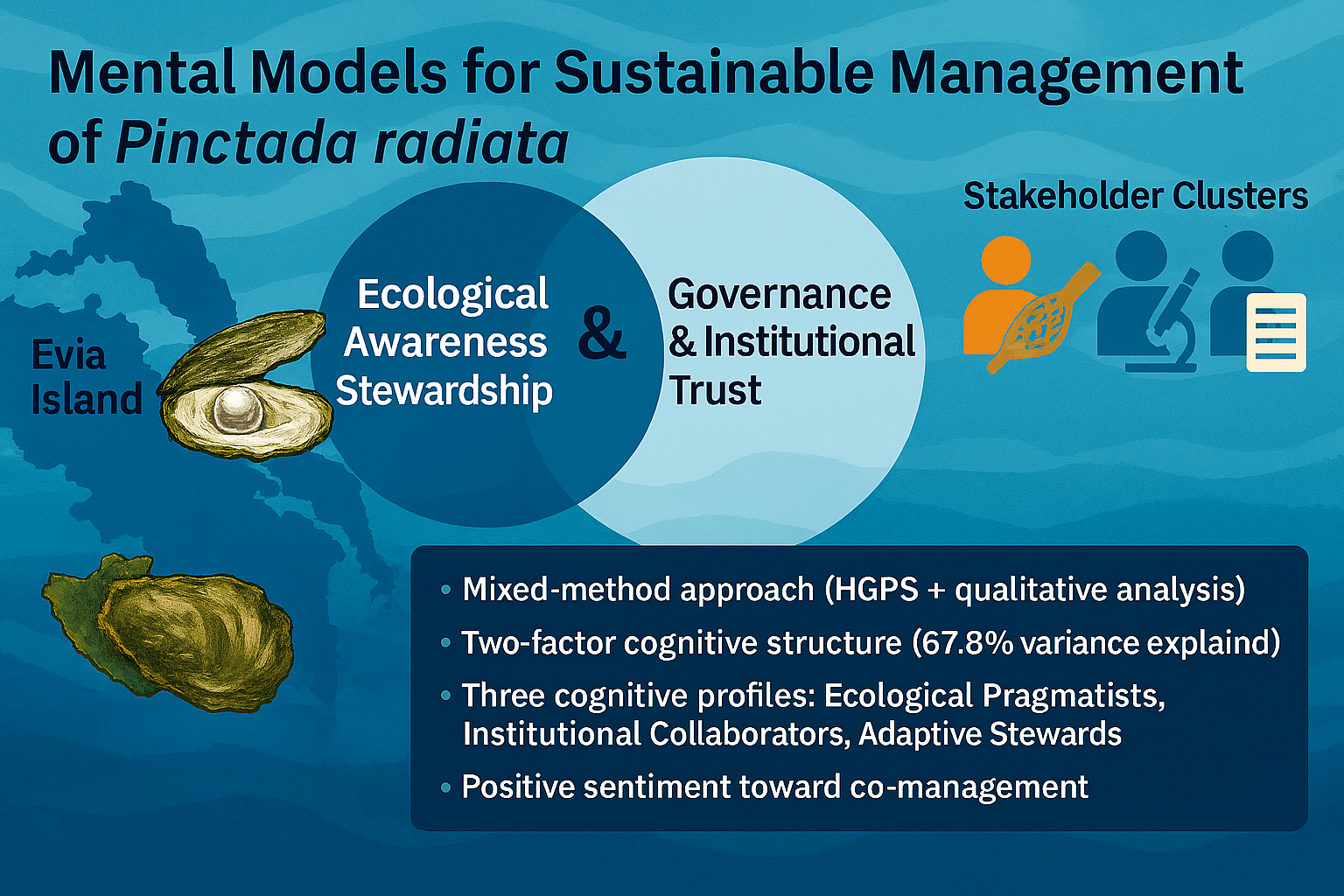
Sustainable management of marine and coastal systems depends not only on ecological dynamics but also on the ways stakeholders perceive and interpret them. This study investigates how fishers, scientists, and government officials understand and frame the management of the Indo-Pacific pearl oyster Pinctada radiata, a non-native yet economically valuable species established around Evia Island, Greece. Using a mixed-methods approach (N = 80), we combined an eleven-item Hydro-ecological Governance Perception Scale (HGPS) with open-ended responses to explore cognitive patterns and governance perspectives. Sampling adequacy was satisfactory (KMO = 0.74; Bartlett’s χ2(55) = 350.41, p < 0.001) and factor analysis revealed two interrelated dimensions explaining 67.8% of total variance (α = 0.84; ω = 0.86; CR = 0.82). Although Kruskal–Wallis tests showed no statistically significant differences among groups (p > 0.05), hierarchical clustering distinguished three partially overlapping cognitive profiles: Ecological Pragmatists, Institutional Collaborators, and Adaptive Stewards (Silhouette = 0.45; CH = 150.23; DBI = 0.75). Thematic and sentiment analyses underscored the importance of collaboration, transparency, and education (mean sentiment = 0.58). The findings demonstrate how cognitive diversity can improve hydro-ecological resilience and the sustainability of coastal governance when it is mobilized through co-management and participatory monitoring.
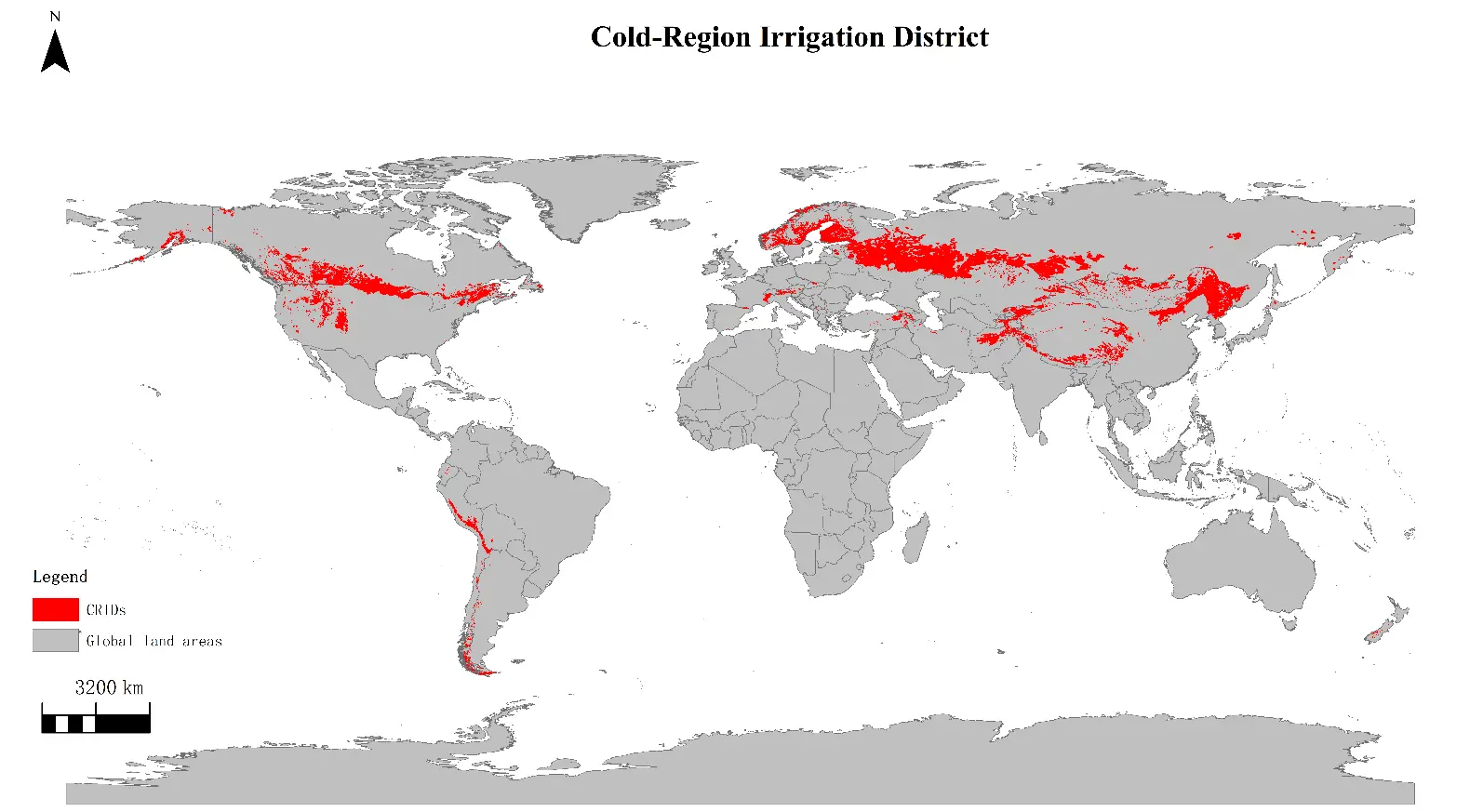
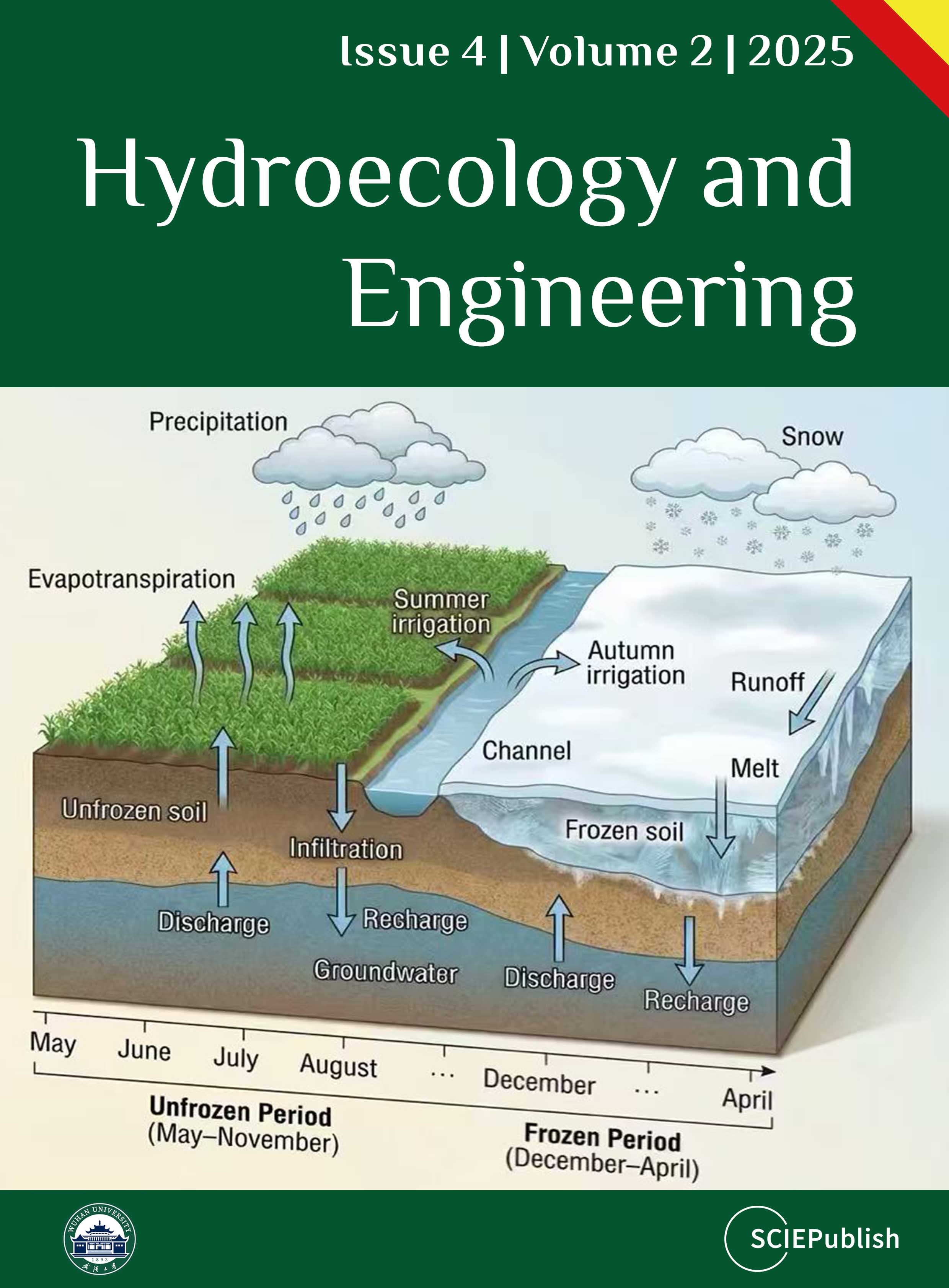
Given the extreme complexity of systems, the strategic importance of water resources, and the high ecological vulnerability in cold-region irrigation districts (CRIDs), research on the hydrological processes in these areas represents not only an interdisciplinary scientific endeavor, but also a critical practical challenge with direct implications for food security, water security, ecological safety, and sustainable regional development in high-altitude and high-latitude regions. The evolution of this field has progressed from early phenomenon identification to mechanistic analysis and, more recently, to multi-process and multi-scale simulation frameworks. This paper provides a systematic review of hydrological processes in CRIDs. It first examines fundamental components such as precipitation, evaporation, snowmelt, and groundwater recharge, highlighting their distinct behaviors under the combined influence of freeze–thaw cycles and irrigation practices, and further discusses the interactions and coupling mechanisms among these processes. Irrigation not only alters soil moisture distribution and freeze–thaw dynamics but also, together with freeze–thaw processes, shapes the transient hydrological dynamics characteristics of water and energy transfer, thereby influencing system stability and agricultural productivity. Hydrological modeling has advanced from simplified empirical approaches to mechanistic frameworks that integrate multiple processes and scales, yet challenges remain in the representation of nonlinear freeze–thaw, the integration of irrigation management, and cross-scale consistency. Moreover, cold-region irrigation districts exhibit heightened sensitivity to extreme events, such as rapid snowmelt, severe droughts or heavy rainfall. Future research should deepen the integration of freeze–thaw mechanisms with crop models, advance multi-scale coupled simulations, enhance long-term monitoring and scenario analysis, and systematically incorporate water–carbon balance and ecological effects into hydrological assessments. These efforts will support sustainable management and precision regulation of water resources in cold-region irrigation districts.