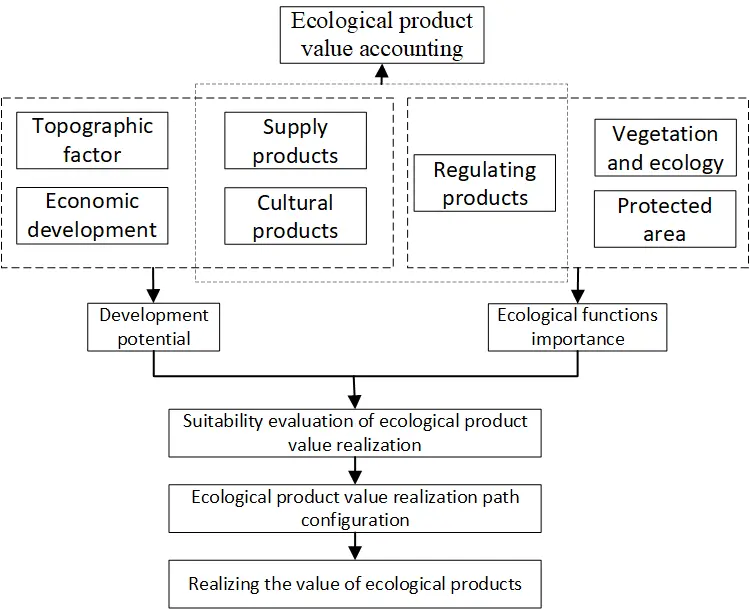
This study develops a dual-dimensional framework integrating development capacity and ecological function importance to assess ecological product value realization suitability across 76 cities in the Yellow River Basin. Using multi-source data and the CRITIC weighting method, we identified four suitability zones: suitable (25.02%), marginally suitable (6.11%), marginally unsuitable (38.59%), and unsuitable (30.28%). The basin generated an estimated USD 2.15 billion in ecological product value in 2020. We propose differentiated pathways, including ecologically safeguarded green industrial transformation in suitable zones, ecological restoration in marginally suitable zones, protection-oriented management in marginally unsuitable zones, and compensation mechanisms in unsuitable zones. Here, ‘suitable’ denotes conditional opportunity for low-impact value-realization instruments under ecological safeguards, not permission for unconstrained development. The framework links ecological-product accounting with spatial planning while acknowledging that social, cultural, and governance dimensions require complementary assessment.
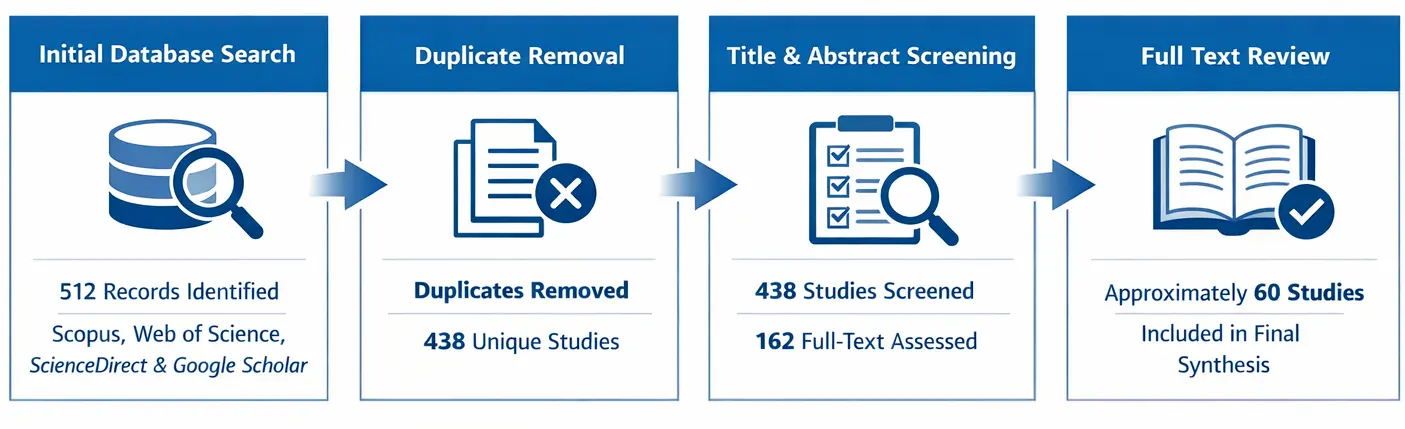
Sustainable transformation of agri-food systems has become increasingly important as environmental pressures intensify, resource availability declines, and global food demand rises. This study presents a structured review of sustainable business models in agri-food systems, examining their contributions to environmental performance, economic resilience, and sustainability trade-offs. Approximately 60 academic publications published between 2010 and 2024 were analyzed to evaluate theoretical foundations, sectoral applications, and enabling mechanisms, including digitalization, circular economy practices, and governance frameworks. Unlike previous studies focused on specific sustainability practices or sectors, this review provides an integrated assessment of environmental performance, economic resilience, and sustainability trade-offs within sustainable agri-food business models. The findings indicate that sustainable business models integrate ecological considerations into value creation, improve resource efficiency, and strengthen resilience across sectors such as aquaculture, dairy, and wine production. Sustainability outcomes are shaped by tensions among economic growth, ecological limits, and social equity, resulting in uneven and context-dependent outcomes. Digitalization and circular economy approaches create opportunities for innovation, resource optimization, and value recovery, but also introduce challenges related to energy consumption, data governance, unequal access, and implementation costs. Stakeholder engagement, performance measurement, and supportive institutions emerge as critical drivers of sustainability transitions. Thus, sustainable business models can enhance environmental performance and economic resilience, although their effectiveness depends on governance quality, equitable access to innovation, and the management of environmental, economic, and social trade-offs.
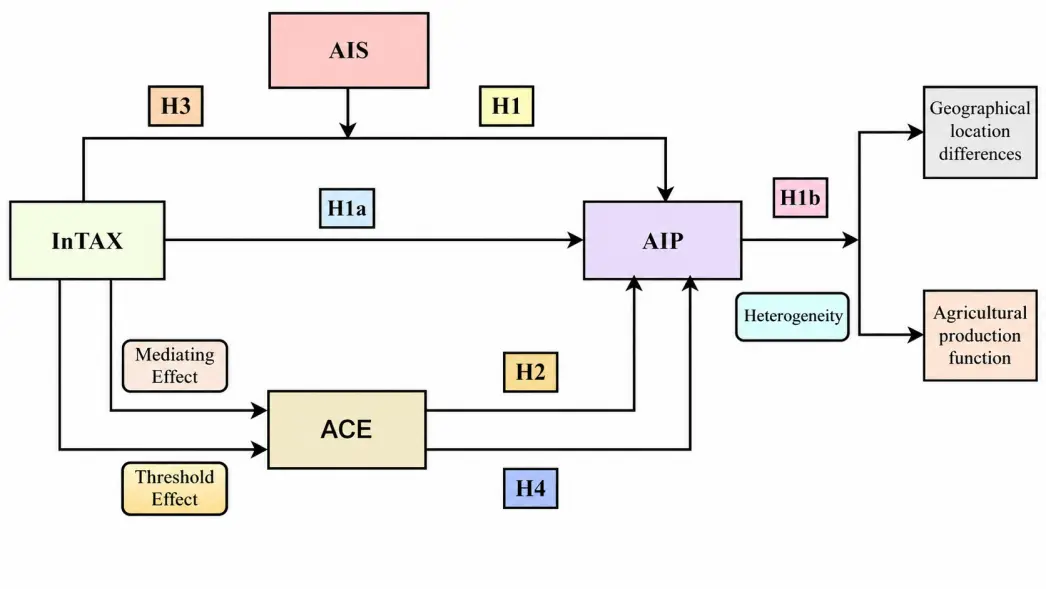
This study defines environmental tax as a flexible policy instrument that promotes the green and efficient transformation of agricultural production and enhances agricultural innovation productivity; in line with China’s institutional context, it is continuously measured using pollution discharge fees before 2018 and Environmental Protection Tax revenue after the implementation of the Environmental Protection Tax Law in 2018. This paper uses panel data from 30 provinces in China to empirically test the magnitude, direction, and mechanism of environmental taxes on the development of agricultural innovation productivity using a two-way fixed effects model, heterogeneity test model, mediation effect model, moderation effect model, and threshold effect model. The study finds that environmental taxes can significantly promote the development of agricultural innovation productivity. Furthermore, by analyzing geographical locations and functional Positioning of Agricultural Production, it is found that environmental taxes exhibit differentiated characteristics in driving agricultural innovation productivity; Mediation effect tests revealed that environmental taxes promote agricultural innovation productivity by suppressing agricultural carbon emissions; moderation effect tests showed that agricultural industrial structure upgrading plays a positive moderating role in the promotion of agricultural innovation productivity by environmental taxes; The threshold analysis identifies a single carbon-emission threshold: when agricultural carbon emissions exceed the threshold, the productivity-enhancing effect of environmental tax becomes stronger. Heterogeneity tests further show that the effect is most evident in central China and major grain-producing areas, while the western region faces stronger compliance-cost pressure. The study contributes by integrating the compliance-cost, Porter-hypothesis, and nonlinear-threshold perspectives into one agricultural setting and by clarifying the policy boundary under which environmental taxation can foster agricultural innovation productivity.
The Sahel is a strip of land that begins in Mauritania and ends in Eritrea. It is approximately 5400 km long and varies in width from 100 to 1000 km. Based on different historical perspectives, the Sahel can be considered to encompass a total of five countries. Subsequently, other countries have been added that, due to their geographical and climatic characteristics, can be considered Sahelian. The Sahelian countries emerged after 1960, the year in which decolonization began, but also the instability that was initially triggered by military coups aimed at destabilizing power. Later, climatic instability, famine, political instability, terrorism, and other factors have also played a role. This essay focuses on analyzing the actions and current activities of certain actors in the Sahel.
Multi-jurisdictional carbon modelling for coastal zone management and rural development planning is constrained by data sovereignty barriers that prevent collaborative analysis across administrative boundaries. A novel FedProx-PLUS-InVEST framework was developed to enable privacy-preserving land-use simulations and carbon storage assessments using federated learning. The framework was validated in the Batticaloa Lagoon watershed, Eastern Sri Lanka, where three scenarios were simulated: Business as Usual, Rapid Rural Economic Expansion, and Ecological Protection. Model accuracy approaching centralised training performance was achieved while maintaining complete data locality across the participating jurisdictions. Carbon storage projections revealed that carbon neutrality targets require stringent mangrove protection measures, with the Ecological Protection scenario achieving a net carbon gain relative to the baseline (+2.4%), demonstrating the highest carbon sequestration potential among the three scenarios evaluated. This framework represents the first coupling of federated learning with PLUS-InVEST modelling, addressing critical gaps in collaborative regional planning where sensitive land-use data cannot be centralised. This approach enables multi-stakeholder environmental planning for coastal zone management and rural development in Sri Lanka and other data-scarce regions of the Global South without exposing proprietary datasets, facilitating coordinated climate adaptation strategies across institutional and political boundaries in Sri Lanka. The methodology provides a replicable template for privacy-preserving ecosystem service modeling in data-sensitive contexts globally.
This paper investigates whether climate-related preferences and risks constitute a systematically priced factor in financial markets and whether the observed greenium provides evidence of such pricing across sovereign bonds, corporate bonds, and equity markets. The development of green finance has been an important financial breakthrough in the domain of sustainable finance. Green bonds and green equities constitute the two primary categories of environmentally oriented investment instruments that have gained significant traction in financial markets. They constitute a financial market response to the challenges and risks brought about by climate change and are an important driver in accelerating the transition of the planet toward a more sustainable economic development model and carbon neutrality. An important question, from the investors and issuers (including sovereign) standpoint, is the extent to which climate change risk is (systematically) priced in financial markets. Establishing the size of the implied green risk premium is relevant for all market participants (investors and issuers) and policymakers alike. We review the evidence of green risk premium (greenium) in asset markets across jurisdictions in developed and (some) emerging markets. All in all, the estimated greenium is more often than not statistically significant, albeit relatively small in its size. Based on evidence from (mostly) academic and institutional literature, we present key insights into how investors’ environmental concerns can drive green asset prices. We report that over time the greenium can widen from 0 up to nearly 20 basis points; its impact on asset prices is tangible, especially for long duration assets. This does indicate that the greenium exists, and it is relevant. Also, it suggests that (at least some) investors appear to be willing to “subsidise” green projects by paying a premium on holding green assets. Moreover, greenium can have a persistent, albeit time-varying, impact on asset prices. Green bonds issued by the public sector display a more consistent pattern in the estimated greenium level across different markets, possibly with a greater size for emerging market debt.
