The global urbanization process is currently taking diverse territorial forms, leading to increased consumption of rural space through the creation of eco-cities. Within this context of transformation and the shifting nature of urban spaces, concepts and ideological frameworks are emerging to address environmental degradation caused by population concentration. Ecological Civilization (eco-civ) originated in China as a broad framework for managing new territorial processes through the construction of new eco-cities or the development of a comprehensive rural revitalization program that strengthens the urban-rural relationship. The major questions arising from this new process of rural revitalization in Chinese territories—and from the very concept of ecological civilization—can be summarized as follows: a simplification of the countryside, a loss of rural identity, the emergence of a post-agrarian society, the urbanization of rural areas, and an exacerbation of urban dependence on rural areas. Consequently, alternative approaches are proposed, based on multiple place-based approaches and actions that develop and adapt the fundamental principles of environmental and spatial renewal to each specific territory.
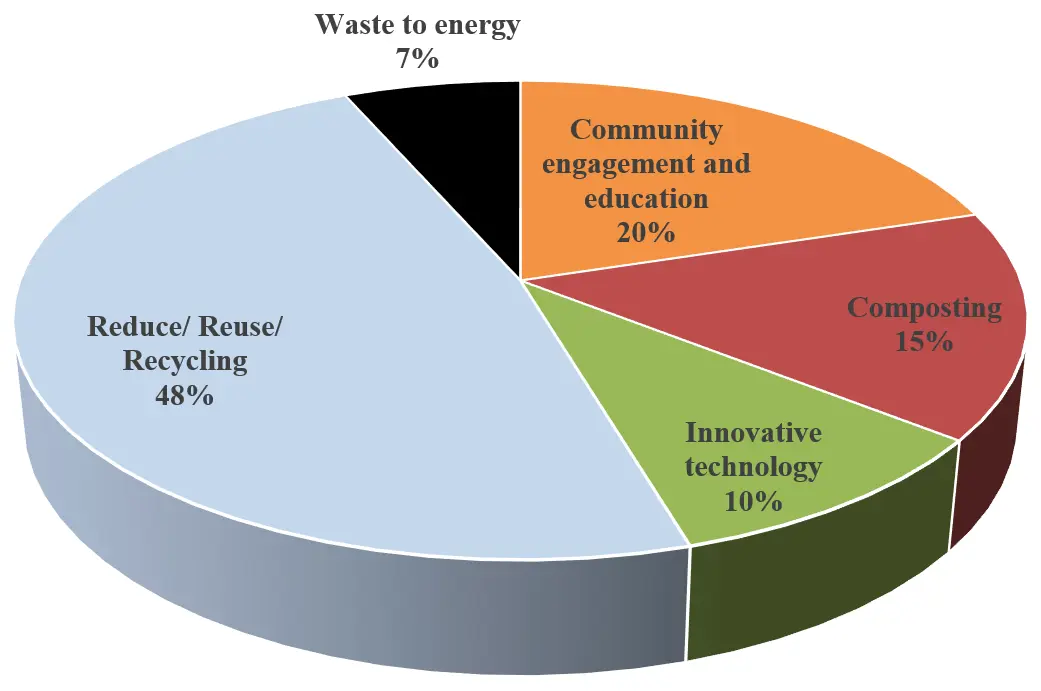
Climate change has become a critical global concern due to its adverse impacts on both humans and the environment. In alignment with Sustainable Development Goal 13, which calls for urgent action to combat climate change and its effects, this study examines community perceptions of climate change in Ghana, using evidence from Dakodwom in the Ashanti Region. The study specifically aims to: (1) examine the association between perceived climate change and the perceptions of its causes within the Dakodwom community, (2) assess the association between perceived climate change, its indicators, and trends, (3) examine the determinants of perceived climate change, and (4) identify practices that could mitigate climate change–related challenges. A structured questionnaire comprising closed-ended questions was used to collect data. Pearson’s chi-square test was employed to determine the relationship between perceived climate change and its perceived causes, as well as to assess the significance of respondents’ perceptions of various climate indicators and trends. Binary logistic regression was further applied to identify the factors influencing perceived climate change. The findings reveal that respondents attribute perceived climate change primarily to burning, deforestation, vehicle emissions, industrial emissions, agricultural activities, and urbanization. Participants demonstrated statistically significant awareness of changes in rainfall patterns, temperature increases, wind activity, and extreme weather events, indicating noticeable environmental changes. The regression results show that employment status and awareness of activities such as burning, agricultural activities, and industrial emissions are the significant determinants of perceived climate change. Additionally, the study identifies recycling, composting, community education, and the adoption of innovative waste-management technologies as practical strategies with potential to mitigate climate change–related challenges. Based on these findings, local authorities and environmental agencies should prioritize investments in improved waste-management systems, community composting facilities, and green infrastructure initiatives, including tree planting and environmentally sustainable agricultural practices, to address the observed increases in temperature, wind activity, and extreme weather events.
Rights of Nature (RoN) represent an innovative form of environmental governance. However, the diverse application of RoN across varying socio-ecological contexts remains under-researched. This paper employs the “Roots of Rights” (RoR) approach for a comparative analysis. We examine RoN’s institutionalisation, implementation, and contestation in Germany and Aotearoa New Zealand, focusing on underlying relational values. Our analytical framework investigates two core dimensions: political dynamics of marginalisation and the role of relational approaches in the codification process. The findings reveal a fundamental divergence in RoN’s function. In Germany, RoN operates primarily as a radical theoretical tool. It is used by civil society to challenge the prevailing anthropocentric legal tradition. Conversely, legal personhood in New Zealand (e.g., Whanganui River) is a direct political product of Treaty Settlements. These frameworks serve the political self-determination and emancipation of Māori Iwi. Crucially, they codify a deeply-rooted, pre-existing relational worldview (tikanga). We conclude that RoN functions as a “thin” conceptual instrument in Germany, but as a ‘”hick”, politically instrumental means of securing non-hegemonic norms in New Zealand.
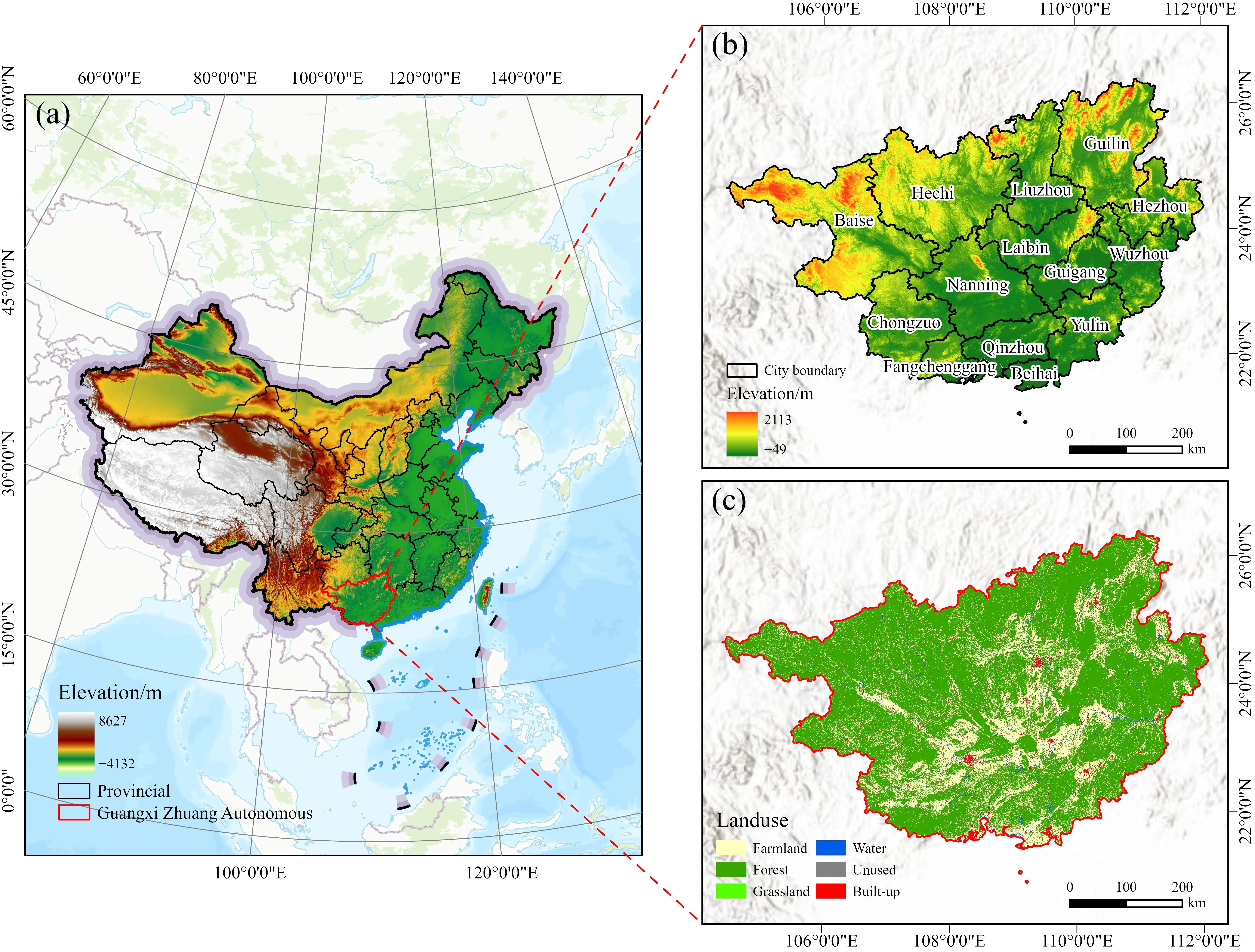
In the context of global climate change, enhancing ecosystem carbon storage (CS) capacity and reducing ecological risk have become essential pathways toward achieving carbon neutrality. Land use/land cover change (LUCC), as a key factor influencing both CS and ecological security, has garnered widespread attention in recent years. However, most existing studies have focused on small-scale regions, lacking comprehensive assessments at the provincial level under multiple scenarios. To address this gap, this study takes the ecologically fragile karst region of Guangxi as a case study. Based on the PLUS-InVEST model, this study construct three land use scenarios (natural development, economic development, and ecological protection) to simulate land use changes by 2030, and then conduct an integrated assessment of the dynamics of ecosystem CS and the spatial distribution of landscape ecological risk under different scenarios. The results show that: (1) From 2000 to 2020, land use in Guangxi has shown a general trend of decreasing farmland area and increasing construction land. CS has exhibited notable spatial heterogeneity over time, with an overall upward trend, particularly in forest-rich areas where CS has increased significantly. (2) By 2030, CS will be jointly driven by land use patterns, climate change, and socioeconomic factors under different scenarios, with the ecological conservation scenario leading to the greatest increase in CS. (3) Spatial auto-correlation and LISA cluster analyses reveal a spatial coupling pattern of high carbon–low risk and low carbon–high risk, suggesting that ecological conservation measures can effectively enhance carbon sequestration. These findings provide scientific support for land use optimization, ecological protection and CS management in Guangxi under the carbon neutrality goal, and offer valuable insights for land use planning and ecological risk regulation in ecologically fragile karst regions.
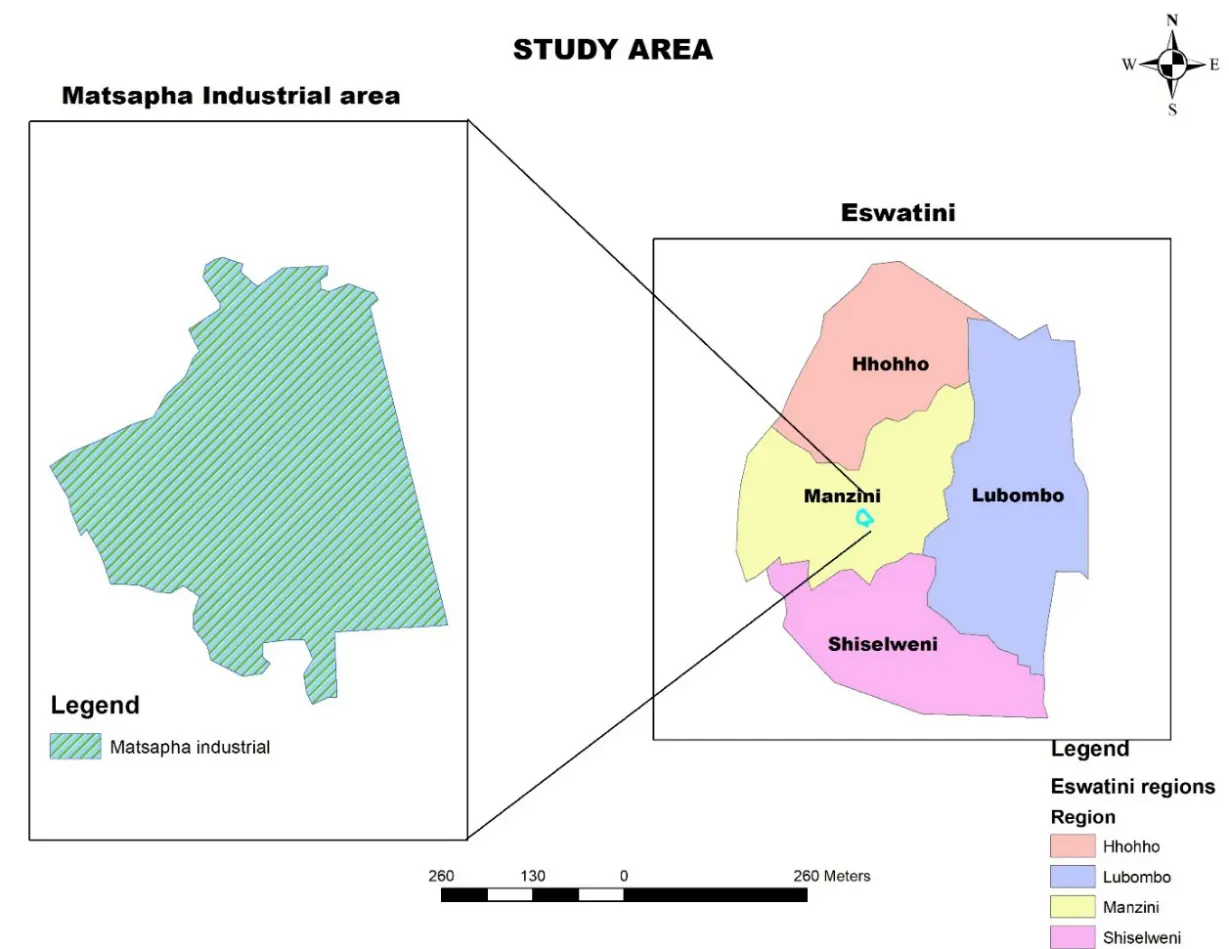
Climate change mitigation in the manufacturing sector is crucial for reducing global greenhouse gas (GHG) emissions. In Eswatini, the industrial sector is the largest contributor to the national GHG inventory. This study provides a comprehensive assessment of the mitigation readiness of this sector through a unique multi-stakeholder approach, using the Matsapha Industrial Area as a case study. Through an extensive survey, between November 2024 and January 2025, of industry managers, achieving an exceptionally high response rate of 91% (n = 21), employees (n = 63), local residents (n = 385), and a key ministry, the study evaluated emission sources, mitigation measures, stakeholder awareness, and the policy framework. The findings reveal a critical awareness-action gap: while basic awareness of climate change is high, a significant limitation was identified where nearly half (48%) of the surveyed industries could not provide quantifiable annual energy use data, and strategic mitigation is limited to cost-saving efficiency measures. Critically, the study confirms a policy vacuum, with no regulations mandating GHG monitoring or mitigation for manufacturing. This governance gap is the primary barrier to decarbonization. The results underscore an urgent need for a sector-specific industrial climate policy with a mandatory Monitoring, Reporting, and Verification (MRV) framework, coupled with targeted capacity-building initiatives to translate awareness into accountable climate action.
Climate change and poverty are intertwined global challenges that disproportionately impact Least Developed Countries (LDCs). However, how global institutions discursively construct the climate-poverty nexus to legitimize their policy recommendations remains underexplored. Drawing on Critical Policy Discourse Analysis (CPDA), this study investigates how the World Bank Group frames the relationship between climate change and poverty in its Country Climate and Development Reports (CCDRs) for LDCs, as well as the discursive legitimation strategies embedded in these constructions. Findings identify two dominant, complementary discursive frames: the vulnerability frame and the causality frame. The vulnerability frame constructs poor and marginalized groups as passive victims of climate impacts, leveraging on attributive relational and passive material processes, and deploys moral evaluation as a legitimization strategy to position adaptation policies as a non-negotiable moral imperative. In contrast, the causality frame positions climate change as an active, causal agent driving poverty dynamics, utilizing active material processes and extended causal chains, and employs scientific rationalization to legitimize mitigation policies as rational, long-term investments aligned with LDCs’ development priorities. These two frames collectively shape a hybrid policy agenda that integrates ethical imperatives with technocratic efficiency, reflecting the World Bank’s attempt to legitimize its institutional influence on LDC climate-development trajectories. This research contributes to the scholarship on discourse in global climate governance by equipping stakeholders to engage with international policy advice critically and fostering more context-sensitive strategies for LDCs.
Understanding the macroeconomic determinants of environmental degradation is critical for designing effective and evidence-based sustainability policies in emerging economies. This study provides a comprehensive empirical re-examination of the growth–energy–environment nexus in India over the period 1990–2023 within an extended macroeconomic framework. It integrates key structural drivers—economic growth, energy consumption, industrialization, trade openness, urbanization, and renewable energy—into a unified analytical model to capture the complex interactions between development processes and environmental outcomes. Methodologically, the study employs the Autoregressive Distributed Lag (ARDL) bounds testing approach within an error-correction framework, allowing for the estimation of both long-run equilibrium relationships and short-run dynamic adjustments under mixed orders of integration. The robustness of long-run estimates is further assessed using alternative cointegration techniques, while diagnostic and stability tests ensure the reliability of the empirical specification. The results confirm the presence of a stable long-run cointegrating relationship among the variables. However, the estimated long-run elasticities are heterogeneous and generally weak in statistical strength. Economic growth and energy consumption exhibit positive but modest associations with environmental degradation, indicating the persistence of scale effects and structural dependence on fossil fuel–based energy systems. In contrast, the effects of trade openness and industrialization are not statistically robust, suggesting that structural transformation and globalization have not yet translated into consistent environmental efficiency gains. Renewable energy does not demonstrate a significant long-run mitigating effect, reflecting its limited penetration and integration within the broader energy system. Short-run dynamics reveal asymmetric adjustment patterns. Energy consumption shows a negative and significant short-run effect, implying transitional efficiency gains, whereas industrialization contributes positively to environmental pressure in the short term. Urbanization exhibits divergent temporal effects, with short-run improvements but long-run environmental costs. The significant error-correction term indicates gradual convergence toward equilibrium. Overall, the findings highlight a nuanced and evolving relationship between macroeconomic processes and environmental degradation in India, underscoring the need for structurally aligned and context-specific policy interventions.
