
Barriers to Low-Carbon Transition: An Empirical Assessment of GHG Emissions and Mitigation Readiness in the Matsapha Industrial Area, Eswatini

Barriers to Low-Carbon Transition: An Empirical Assessment of GHG Emissions and Mitigation Readiness in the Matsapha Industrial Area, Eswatini
Received: 18 December 2025 Revised: 28 February 2026 Accepted: 02 April 2026 Published: 16 April 2026

© 2026 The authors. This is an open access article under the Creative Commons Attribution 4.0 International License (https://creativecommons.org/licenses/by/4.0/).
1. Introduction
1.1. The Global and Sectoral Imperative
Climate change, driven by anthropogenic greenhouse gas (GHG) emissions, is the defining environmental challenge of our time, with far-reaching impacts on ecosystems, human health, and socio-economic stability [1]. The industrial sector, responsible for approximately 25–34% of global emissions when indirect sources are considered, is a critical frontier for decarbonization efforts essential to meeting the Paris Agreement goals [2]. Manufacturing is particularly significant due to its reliance on energy-intensive processes, fossil fuel combustion, and complex supply chains. Key sub-sectors like food and beverage, textiles, and chemicals are major contributors through direct emissions, high energy consumption, and resource-intensive practices [3,4].
Globally, a suite of mitigation strategies for manufacturing is recognized, including energy efficiency improvements, renewable energy adoption, circular economy practices, and carbon pricing [5,6]. However, successful implementation faces persistent barriers, including high upfront costs, technological lock-in, and—crucially—inadequate or misaligned policy frameworks that fail to create enforceable mandates or sufficient incentives [7,8].
The transition toward a low-carbon industrial sector is no longer merely a technical challenge but a complex policy design imperative, particularly in developing economies of the Global South. Recent scholarship emphasizes that while many African nations have successfully integrated climate targets into their Nationally Determined Contributions (NDCs), a significant ‘implementation gap’ persists due to the lack of enforceable industrial regulations and Monitoring, Reporting, and Verification (MRV) frameworks [9,10]. In emerging economies, the transition is often hindered by high capital costs for green technology and a lack of localized technical expertise, necessitating a shift from voluntary measures to structured, policy-driven mitigation strategies [11]. Furthermore, the integration of Circular Economy (CE) principles has emerged as a vital pathway for industrial mitigation in resource-constrained environments, where efficiency gains are driven by both environmental necessity and economic survival. This study situates Eswatini’s industrial sector within this broader continental struggle, examining how local policy vacuums mirror systemic barriers found across Sub-Saharan Africa.
Global industrial decarbonization is increasingly viewed through the lens of ‘systemic transformation’ rather than isolated efficiency gains. Recent research highlights that achieving net-zero targets in heavy industries requires not only radical technological shifts—such as green hydrogen and carbon capture—but also a fundamental restructuring of energy-intensive value chains [5,12]. However, for developing economies, this transition is inextricably linked to financial stability and the ‘Green Finance’ gap. Evidence from emerging markets suggests that the quality of institutional governance and the availability of green credit are primary determinants of whether a firm moves from climate awareness to actual mitigation investment [13].
1.2. The National Context and Research Gap
For developing economies like the Kingdom of Eswatini, industrialization is vital for growth, but must be reconciled with climate resilience and international commitments. Eswatini’s national circumstances highlight a common paradox: while its contribution to global emissions is minimal, it faces severe climate vulnerabilities, including droughts, floods, and threats to its agricultural base. Compounding this, the industrial sector is the largest domestic source of GHG emissions, contributing approximately 45% of the national total. This makes its decarbonization not only an environmental necessity but a cornerstone of the country’s Nationally Determined Contributions (NDCs).
The Matsapha Industrial Area, as Eswatini’s primary manufacturing hub, represents the epicenter of this challenge and opportunity. While Eswatini has a National Climate Change Policy (2016), its broad, cross-sectoral nature lacks specific, enforceable provisions for industrial GHG mitigation, creating a potential policy vacuum. Effective policy intervention requires a clear understanding of the sector’s current state of mitigation readiness—a composite of emission baselines, implemented practices, stakeholder capacity, and the governing regulatory framework. Presently, there is a critical lack of empirical research assessing this readiness in Eswatini and similar small, developing economies, particularly regarding the interplay between stakeholder awareness, on-ground practices, and the policy environment.
1.3. Aim and Objectives
The disconnect between high-level policy and industrial reality represents a primary barrier to Eswatini achieving its updated Nationally Determined Contributions (NDCs), which target a 5% reduction in GHG emissions by 2030 relative to the business-as-usual scenario. While the national framework sets the ambition, the lack of granular, facility-level data—particularly from carbon-intensive hubs like the Matsapha Industrial Area—precludes the development of an effective National Mitigation Plan. Consequently, the specific objectives of this study are designed to operationalize these national goals by identifying the technical and behavioral barriers that prevent local industries from aligning with the NDC targets. By assessing mitigation readiness and stakeholder awareness at the ground level, this research provides the empirical evidence required to transition from abstract policy aspirations to the data-driven Monitoring, Reporting, and Verification (MRV) systems mandated by the Paris Agreement.
In the context of this study, ‘mitigation readiness’ is defined as a multi-dimensional construct comprising four composite elements:
-
Technical Readiness: The capacity to monitor, report, and verify (MRV) greenhouse gas emissions through established energy-tracking systems and carbon accounting protocols.
-
Operational Readiness: The extent to which low-carbon technologies and circular economy principles (e.g., waste heat recovery, fuel switching, or renewable energy integration) have been adopted within production cycles.
-
Institutional/Policy Readiness: The alignment of corporate strategy with national climate frameworks, including the presence of internal environmental policies and dedicated climate-action budgets.
-
Behavioral Readiness: The level of climate literacy and technical training among the workforce, which determines the human capacity to implement and sustain mitigation interventions.
By deconstructing readiness into these measurable indicators, the study provides a diagnostic assessment of the Matsapha Industrial Area. Specifically, the study aims to:
-
Identify and characterize the primary sources and pathways of GHG emissions from manufacturing activities.
-
Inventory and evaluate the effectiveness of mitigation measures currently employed by industries.
-
Analyze the existing national policy and regulatory framework governing industrial emissions.
-
Assess the level of climate change knowledge, perception, and engagement among industry managers, employees, and local community members.
2. Methods
2.1. Study Design and Area
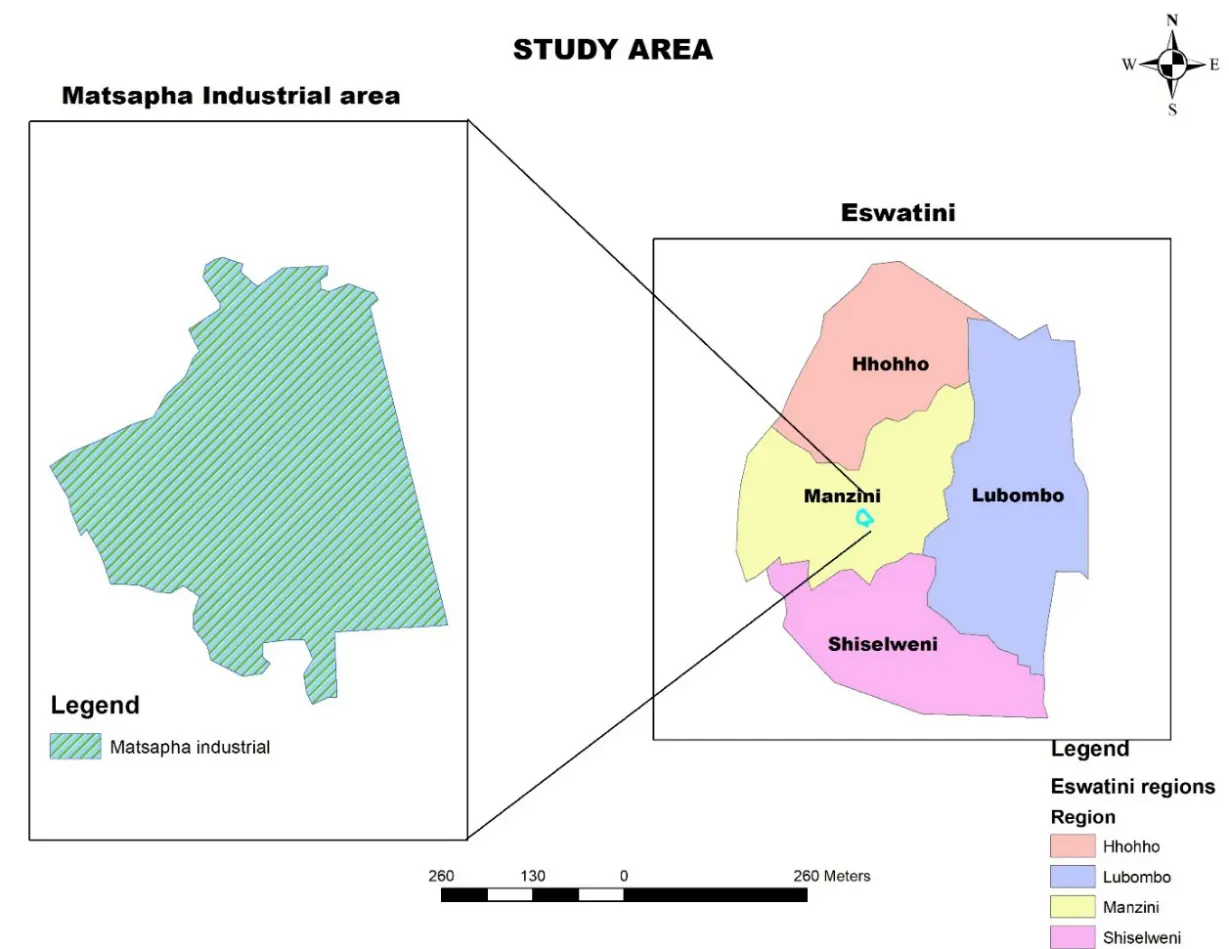
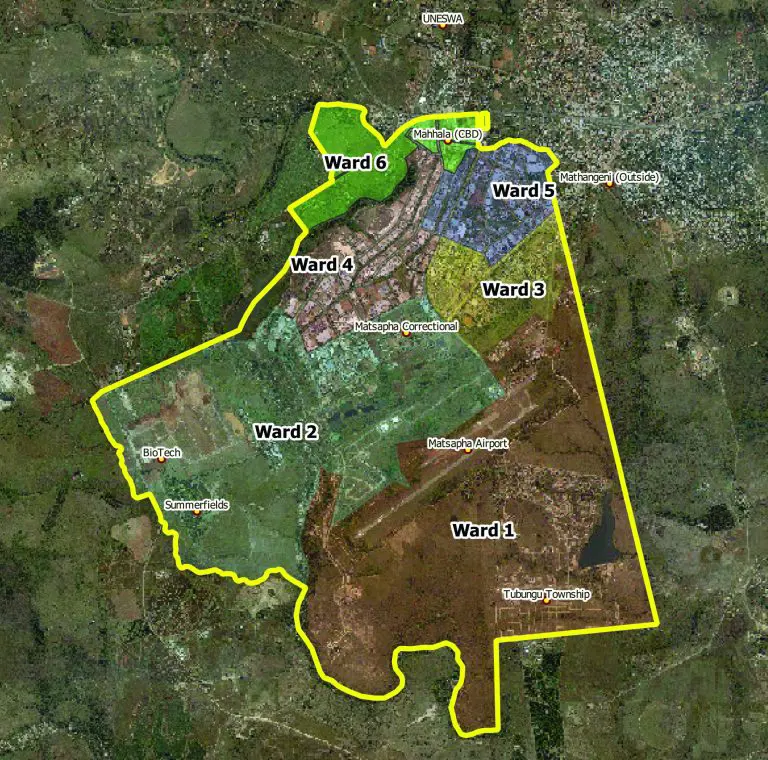
The Kingdom of Eswatini (formally Swaziland) is located in the southeast of Africa and is landlocked and hilly. With a total land area of 17,360 square kilometers (km), Eswatini is the smallest nation in the southern hemisphere. It is landlocked and shares eastern borders with Mozambique and South Africa. Eswatini is divided into four main administrative regions: Manzini, Hhohho, Lubombo, and Shiselweni, as shown in Figure 1 and Figure 2. The study area is the Matsapha Industrial site, which is found in the Manzini region. A number of manufacturing industries are located within this industrial site, as it is the biggest industrial site in Eswatini, and the town Matsapha, is situated at the hub of the country [14].
2.2. Sampling and Data Collection
In general, surveys are most problematic when they are not part of a mixed-methods approach [15]. To reduce methodological problems of surveys, the target population was stratified into four groups:
-
Manufacturing Industries: A full census of all 23 firms registered in Matsapha was attempted. The primary respondent was a manager or environmental officer (Achieved n = 21, 91% response rate).
-
Employees: A purposive sample of three employees from different departments in each participating industry was selected (n = 63).
-
Local Residents: The adult daytime population (~17,500). A minimum sample size of 385 was calculated using Cochran’s formula (1977). A convenience sampling approach was used to administer surveys at central community points.
-
Policy Stakeholders: Purposive sampling of key informants from the Ministry of Tourism and Environmental Affairs (MTEA).
To reduce qualitative vs. quantitative imbalance in the outcomes, four distinct, pre-tested, structured questionnaires were administered via paper-based surveys between November 2024 and January 2025, covering domains aligned with the research objectives. Informed consent, anonymity, and confidentiality were assured.
A significant methodological strength of this research is its multi-stakeholder design, which moves beyond traditional firm-level analysis to include the broader social and policy environment. This holistic approach allows for the triangulation of data: manager surveys assess strategic readiness; employee surveys reveal operational capacity and internal culture; resident surveys provide a measure of social impact and external accountability; and policymaker interviews identify regulatory gaps. This comprehensive mapping ensures that the identified barriers to a low-carbon transition are not viewed in isolation but as part of an integrated socio-technical system.
The sample size for local residents (n = 385) was determined using Cochran’s formula (1977) for large populations, ensuring the findings are statistically significant and representative of the Matsapha community. The following variables were utilized in the calculation:
-
-
Confidence Level: 95% (corresponding to a Z-score of 1.96).
-
-
Margin of Error (e): 5% (0.05).
-
-
Estimated Proportion (p): 0.5 (50%), which is the standard value used to provide the maximum possible sample size when the exact variability of the population is unknown.
The formula was applied as follows:
|
```latexn=\frac{p\left(1-p\right){Z}^{2}}{{e}^{2}}``` |
|
|
```latex384.16=n=\frac{0.5\mathrm{*}0.5\mathrm{*}{1.96}^{2}}{{0.05}^{2}}``` |
Consequently, the sample size was rounded to 385 to satisfy the requirements for a 95% confidence level with a 5% margin of error.
While the sample size of 385 residents provides a robust data set, it is important to note that a convenience sampling approach was employed due to logistical constraints within the Matsapha residential zones. Consequently, there is an inherent risk of sampling bias, as the individuals most accessible or willing to participate may not perfectly represent the demographic diversity of the entire region. This approach was chosen to ensure a high volume of responses within the study’s timeframe, but it necessitates a cautious interpretation of the community’s overall climate perceptions.
2.3. Data Analysis
Quantitative data were analyzed using IBM SPSS Statistics (Version 27). Descriptive statistics (frequencies, percentages, means) were used to summarize responses. A Pearson’s correlation examined the relationship between awareness and action. Qualitative responses from open-ended questions and the concurrent documentary analysis of national policies were analyzed thematically to contextualize survey findings.
3. Results
A defining strength of this research is the exceptionally high response rate of 91% achieved among the manufacturing industries in the Matsapha Industrial Area. In the context of industrial energy auditing and climate reporting—where data is often withheld due to proprietary or competitive concerns—this high level of participation ensures that the resulting baseline data is a highly reliable and representative reflection of the sector’s current mitigation readiness. This robust participation rate underscores the industries’ willingness to engage in climate dialogue and provides a solid empirical foundation for the proposed national Monitoring, Reporting, and Verification (MRV) framework.
3.1. Greenhouse Gas Emission Sources
While the study successfully engaged 91% of manufacturing firms, a critical technical limitation emerged regarding data availability. Only 52% of the surveyed industries were able to provide quantifiable records of their annual energy consumption, leaving a 48% gap in primary data. Consequently, the emission baselines presented in Table 1 represent a conservative estimate based on available reports. This lack of granular data at the facility level indicates that nearly half of the industries in Matsapha operate without the basic accounting tools necessary for a strategic low-carbon transition.
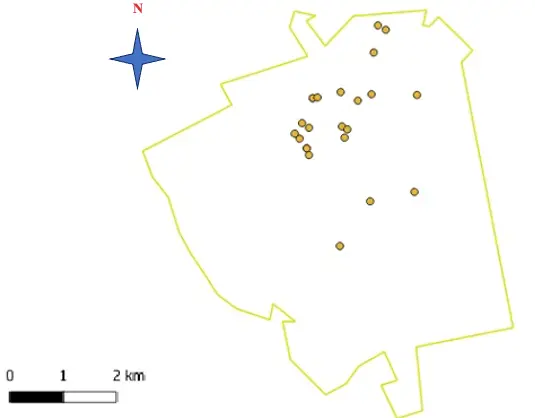
All 21 industries (100%), Figure 3, identified purchased electricity—derived from coal—as a primary emission source. Transport/logistics (90%) and direct fuel combustion (86%) were the next most significant. A critical data gap was revealed: only 11 industries (52%), as seen in Table 1, could provide quantifiable annual energy use data (range: 188–3128 MtCO2eq), while 10 (48%) did not track this information.
To quantify the climate impact of the industrial activities in Matsapha, the emissions resulting from purchased energy were calculated. Table 1 presents the estimated annual GHG emissions from purchased energy (MtCO_2eq) for the eleven industries that provided quantifiable data. It is important to note that these figures represent the carbon footprint associated with energy consumption rather than the raw energy quantity, highlighting the mitigation potential through fuel switching or efficiency gains.
Table 1. Estimated Annual GHG Emissions from Purchased Energy (MtCO_2eq).
|
Energy Used Annually in MtCO2eq |
|||||
|---|---|---|---|---|---|
|
Energy in MtCO2eq |
Frequency |
Percent |
Valid Percent |
Cumulative Percent |
|
|
188 |
1 |
4.8 |
9.1 |
9.1 |
|
|
800 |
1 |
4.8 |
9.1 |
18.2 |
|
|
1354 |
1 |
4.8 |
9.1 |
27.3 |
|
|
1700 |
1 |
4.8 |
9.1 |
36.4 |
|
|
2050 |
1 |
4.8 |
9.1 |
45.5 |
|
|
2161 |
1 |
4.8 |
9.1 |
54.5 |
|
|
2585 |
1 |
4.8 |
9.1 |
63.6 |
|
|
2800 |
1 |
4.8 |
9.1 |
72.7 |
|
|
3003 |
1 |
4.8 |
9.1 |
81.8 |
|
|
3012 |
1 |
4.8 |
9.1 |
90.9 |
|
|
3128 |
1 |
4.8 |
9.1 |
100.0 |
|
|
Total |
11 |
52.4 |
100.0 |
||
|
Missing in |
System a |
10 |
47.6 |
||
|
Total |
21 |
100.0 |
|||
a Note: The “System” category represents industries that do not currently track or quantify their specific energy consumption. This figure reflects the significant data gap in the Matsapha Industrial Area and highlights a lack of technical monitoring infrastructure.
3.2. Mitigation Measures and Practices
While all industry representatives were aware of climate change, only 12 (57%) had a GHG emission tracking system. A moderate positive correlation was found between climate familiarity and having a tracking system (r = 0.538, p < 0.05). Energy efficiency measures were common but driven by cost reduction: upgrading equipment (91%) and optimizing processes (95%).
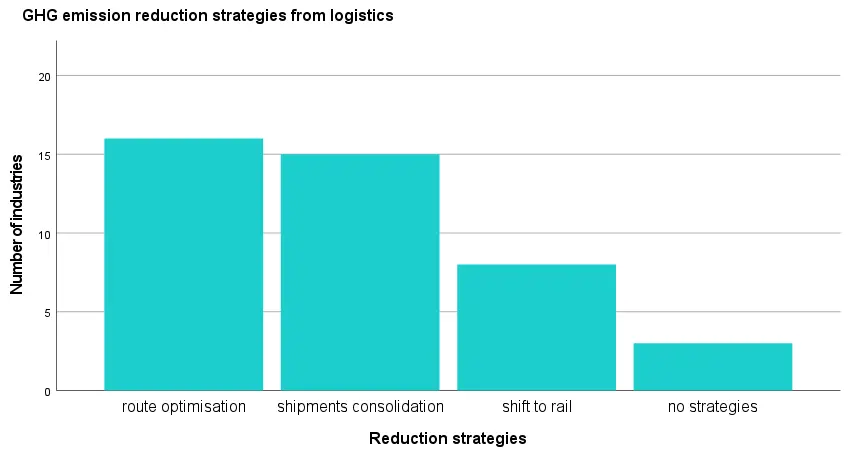
From the transport department, as this forms a large part of manufacturing industries for distribution, there are GHG emission reduction strategies that these industries can use. 16 of the manufacturing industries do route optimization, as seen in Figure 4. Route optimization in manufacturing industries plays a significant role in reducing GHG emissions by improving the efficiency of logistics and transportation processes. Optimizing routes minimizes the distance travelled by vehicles, which directly lowers fuel usage (Turnbull et al., 2011). By selecting the most efficient paths, manufacturers can avoid unnecessary detours and reduce mileage, which can save up to 20% on fuel costs [16]. This reduction in fuel consumption translates to fewer emissions from fossil-fuel-powered vehicles.
In logistics, route optimization was used by 76% of firms, but only 8 of the manufacturing industries, 33%, were using rail in addition to road transport, which is a significant GHG emission reduction strategy. Rail freight emits only 1.99 g of carbon dioxide per tonne-km compared to 46.9 g of carbon dioxide per tonne-km for road transport [5,17]. Moving goods by rail instead of trucks reduces GHG emissions by up to 75% on average [18]. Railways are inherently more energy-efficient due to their ability to carry large volumes of passengers or freight [19]. Therefore, shifting from road to rail for goods distribution and transport is a key strategy for reducing emissions and achieving climate goals.
3.3. The Policy and Regulatory Framework
A key finding from the MTEA informant was the absence of any sector-specific policy or regulation mandating industrial GHG monitoring, reporting, and verification (MRV). While Eswatini has a suite of related environmental policies, such as the National Development Plan (NDP) 2023/24–2027/38 and the Multi hazard contingency Plan (yearly), they lack enforceable provisions for industrial decarbonization. At the firm level, only 43% of industries reported having a climate mitigation plan with defined targets.
3.4. Stakeholder Awareness and Knowledge
Measuring climate change awareness is important. It helps researchers, governments, and organizations gauge how much people know about climate change, its causes, and its impacts. Knowing whether people believe climate change is real, human-caused, or urgent helps shape effective messaging and actions (Suresh et al., 2018). For this study, questionnaires were administered for the purposes of gauging their climate change awareness to employees and surrounding residents:
- (A)
- Employees: Approximately 67% of employees from the 21 manufacturing industries have never received any climate change training of any kind. However, 89% have heard of climate change, but it remains at the surface level. When asked to select how they define climate change, they answered as follows;
-
-
44.4%—rising global temperature
-
-
33.3%—changes in weather patterns
-
-
22.2%—increased frequency of extreme weather events
-
-
0%—melting polar ice caps
The fact that 0% of employees identified ‘melting polar ice caps’ as a climate impact suggests a significant degree of ‘spatial discounting’, where stakeholders prioritize locally observable phenomena—such as droughts or shifting rainfall patterns—over distal global effects. This indicates that while global awareness exists, the perceived relevance of climate change is tied primarily to immediate, tangible threats to the local Eswatini environment and economy.
- (B)
- Residents: 95.3% linked climate change to rising temperatures, but only 39% correctly identified human activity as the main cause as seen in Figure 5. Residents reported observable local impacts like air pollution and changes in weather patterns, linking them to nearby industries.
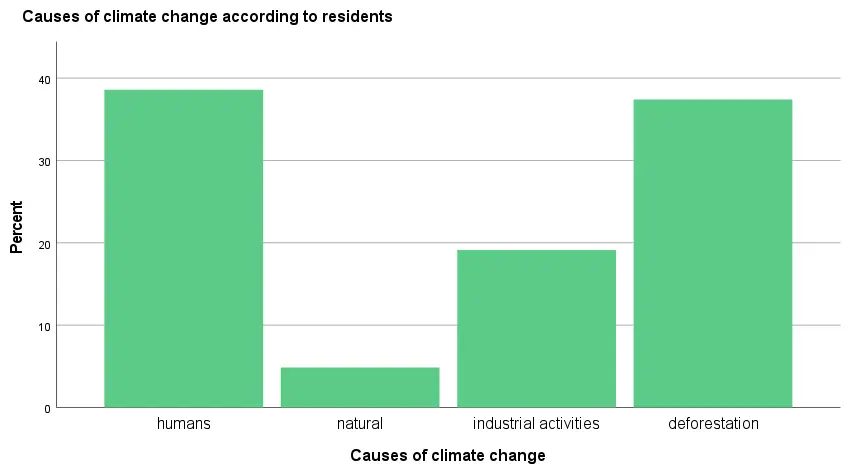
In summary, the quantitative results from the Matsapha Industrial Area reveal a paradoxical landscape of climate readiness. While the study achieved an exceptionally high industry response rate (91%) and found high levels of general climate awareness among stakeholders, these ‘behavioral’ strengths are undercut by a profound ‘technical’ deficit. The fact that nearly half of the surveyed industries (48%) lack the infrastructure to track their annual energy use creates a critical gap in the precision of their emission baselines. These findings suggest that the primary barrier to Eswatini’s industrial decarbonization is not a lack of intent, but a lack of formal monitoring and verification systems. The following section discusses these discrepancies in the context of international literature and proposes a strategic framework to bridge this ‘awareness-action’ gap through targeted policy and technical interventions.
4. Discussion
The findings of this study reinforce the ‘awareness-action gap’ prevalent in developing industrial hubs, where high levels of climate familiarity do not automatically translate into strategic decarbonization. While 91% of firms in Matsapha have adopted efficiency measures, these are largely ‘low-hanging fruit’ motivated by cost-reduction rather than climate-alignment, a trend consistent with recent empirical assessments in other emerging markets [20]. The moderate correlation identified between climate familiarity and tracking systems (r = 0.538) suggests that awareness is a necessary but insufficient precursor to action without the presence of robust institutional mandates. Unlike more advanced industrial greening plans seen in neighboring regions, the lack of a sector-specific MRV framework in Eswatini prevents industries from accessing international climate finance, such as the Green Climate Fund (GCF), which requires rigorous emission data for de-risking investments. Consequently, bridging this gap requires moving beyond general awareness campaigns toward the ‘enabling environments’ and ‘policy-relevant actions’ defined in contemporary Technology Action Plans (TAPs), ensuring that mitigation becomes a core component of industrial governance rather than an incidental byproduct of cost-saving.
The ‘awareness-action gap’ observed in the Matsapha Industrial Area mirrors a global trend where organizational ‘greenwashing’ or surface-level compliance often precedes genuine environmental commitment. Recent empirical evidence suggests that internal ‘green organizational culture’ and employee engagement are critical for translating corporate climate policy into measurable GHG reductions [21]. This aligns with the findings of this study, which showed that 67% of employees lacked technical climate training, thereby acting as a bottleneck to the implementation of the tracking systems reported by management. Factors Influencing Human Behavior
Beyond awareness, and with full agreement, the following are the main factors that significantly influence human behavior:
-
-
Personal norms, & social norms.
-
-
External conditions, such as the availability of infrastructure, financial constraints, and regulatory frameworks.
-
-
Habit, convenience, or conflicting priorities.
-
-
The presence of practical tools, data intelligence, and monitoring systems facilitates behavior.
-
-
Integrated governance and the creation of “enabling environments” are essential to move beyond individual responsibility and foster systemic behavioral shifts.
-
-
Factors like debt pressure, rising costs, and a lack of insurance can limit the capacity of individuals and communities to adopt new behaviors, regardless of their awareness of the benefits.
4.1. The Accountability Void and Data Deficit
The lack of systematic energy and emissions tracking across nearly half of industries creates an “accountability void”. This data deficit is critical, as robust MRV is the bedrock of any effective emissions management system and is a common prerequisite in international climate governance (e.g., the Paris Agreement). This data deficit directly impedes the setting of baselines, the measurement of progress, and informed decision-making, a challenge noted in other studies where voluntary frameworks fail [7]. It is a direct consequence of the absence of mandatory MRV regulations.
4.2. Superficial Action in a Governance Vacuum
The high adoption of basic energy efficiency measures reflects a “low-hanging fruit” approach, widely documented as a first, cost-driven step in corporate environmental management [5]. However, the low uptake of more impactful, strategic interventions, such as a modal shift to rail—despite its proven emission-reduction benefits [17]—underscores a lack of climate-driven strategic planning. This gap between awareness and substantive action persists because the existing policy vacuum provides no regulatory signals, economic incentives (e.g., carbon pricing), or technical guidance to motivate deeper investment. This aligns with literature identifying weak institutional frameworks as a primary barrier in developing countries [8].
4.3. Mitigation Measures and Policy Framework
The assessment of mitigation readiness in the Matsapha Industrial Area reveals a stark imbalance between the different dimensions of climate action. While the results indicate high ‘Behavioral Readiness’ in terms of basic awareness among stakeholders, there is a critical deficit in ‘Technical Readiness’ due to the 48% lack of energy tracking identified in Section 4.1. This gap suggests that while the workforce is cognitively prepared for a transition, the lack of infrastructural monitoring tools prevents the translation of awareness into quantifiable emission reductions. Consequently, the adoption of mitigation measures remains largely reactive rather than strategically aligned with national targets.
The confirmation of no specific industrial GHG policy is the study’s central explanatory finding. While Eswatini has a National Climate Change Policy, our analysis confirms it acts as a broad framework without sector-specific teeth. This vacuum leaves industries without clear signals or requirements, stalling national progress toward NDC targets. This finding resonates with studies emphasizing that effective mitigation requires policies that are not only present but are also specific, mandatory, and enforceable [6]. The 48% deficit in quantifiable energy data is not merely a statistical hurdle but a fundamental policy challenge. As noted in recent literature regarding industrial decarbonization in the Global South [9], the inability to establish a precise emission baseline prevents firms from setting Science-Based Targets (SBTs) and restricts the government’s ability to track progress toward the Paris Agreement’s NDCs. This limitation underscores the urgent need for the ‘Technical Readiness’ interventions defined in Section 1.3, specifically the implementation of mandatory digital monitoring and reporting systems.
4.4. Correlation of High-Polluting Activities and Targeted Mitigation
Based on the empirical findings from the Matsapha Industrial Area, it is essential to correlate the identified high-polluting activities with specific mitigation measures that offer the highest potential for emission reduction and environmental recovery. Table 2 prioritizes the industrial sectors surveyed in this study and aligns their primary pollutants with targeted technological and operational interventions.
Table 2. Correlation between Studied Industrial Activities, Pollutants, and Targeted Mitigation Strategies.
|
Studied Industrial Sector |
Primary Pollutants Identified |
Strategic Mitigation Measure (Low/Zero Carbon) |
Environmental Co-Benefits (Remediation) |
|---|---|---|---|
|
Food & Beverages |
CO2 from boilers, organic solid waste, high-BOD wastewater. |
Transition to biomass boilers and anaerobic digestion (Biogas). |
Water: Improved effluent quality in local streams; Soil: Reduction in organic landfill load. |
|
Textile & Apparel |
CO2 (steam generation), chemical dyes, high water consumption. |
Solar thermal systems for process heat and closed-loop water recycling. |
Water: Reduced chemical and thermal pollution in ground and surface water. |
|
Chemicals & Plastics |
VOCs, CO2 from electricity, hazardous liquid waste. |
Electrification of thermal processes and solvent recovery systems. |
Air: Improved local air quality; Ground: Prevention of hazardous soil contamination. |
|
Metal & Construction |
CO2 (furnaces), particulate matter, mineral waste. |
Waste heat recovery (WHR) and particulate scrubbers. |
Air: Significant reduction in PM10 and PM2.5 emissions; Soil: Decreased industrial slag buildup. |
The nexus between climate mitigation and environmental remediation in Matsapha is particularly evident in the water-energy-waste triad. For instance, in the textile sector, the transition to high-efficiency steam systems not only reduces GHG emissions but also requires better water management, thereby preventing thermal and chemical pollution of ground soil and local water bodies. Similarly, adopting ‘zero-waste’ industrial policies serves as a climate mitigation strategy (reducing methane from landfills) while simultaneously remediating soil quality by preventing the leaching of industrial toxins. By framing mitigation measures as ‘multipurpose interventions’, industries in developing economies can address immediate local environmental degradation while simultaneously fulfilling long-term global climate commitments. Based on the findings from the Matsapha area.
4.5. Limited Capacity as a Reinforcing Barrier
The superficial climate awareness among employees and the lack of training represent a missed opportunity to foster a culture of efficiency and innovation on the shop floor, a factor key to successful mitigation [22]. Furthermore, the study’s finding of zero awareness of carbon market mechanisms among industries is stark. This forecloses a potential avenue for climate finance and incentivized mitigation, highlighting a significant capacity gap that must be addressed alongside regulatory reform.
4.6. Limitations and Future Research Directions
Reliance on self-reported data may introduce social desirability bias. The convenience sampling of residents, while practical, may affect the generalizability of community perceptions. Future research should incorporate direct emission measurements and life-cycle assessments.
While this study provides a critical baseline for industrial decarbonization in Eswatini, several high-priority research pathways are essential for advancing a systemic transition.
First, as the manufacturing sector in Matsapha relies heavily on logistics, transitioning industrial fleets to electric vehicles (EVs) represents a vital decarbonization frontier. Future studies should draw on the work of [23] to investigate smart-charging architectures and vehicle-to-grid (V2G) integration. This research is necessary to ensure that large-scale e-mobility deployment serves as a flexibility asset—balancing the load during peak industrial demand—rather than a strain on Eswatini’s local distribution networks.
Second, managing the increasing complexity of decentralized energy resources within industrial zones requires a move toward Holistic Power System Architectures. Building upon the frameworks proposed by [24], future work should explore how technology, market design, and industrial electricity demand can be co-optimized. Such a systemic approach is required to integrate renewable energy generation directly into industrial operations while maintaining grid stability.
Finally, future research should investigate optimizing supply chain networks to reduce transport-related emissions and operational costs. Applying the framework developed by [25] would provide a robust pathway for using machine learning and financial risk assessment to optimize industrial distribution. Shifting from ad-hoc logistical strategies to strategic, data-driven volume consolidation will be crucial for developing economies to maintain global competitiveness while adhering to the emission reduction targets of the Paris Agreement.
5. Conclusions and Policy Recommendations
5.1. Conclusions
This study concludes that the manufacturing sector in Eswatini is in a state of stalled mitigation readiness. While a foundational awareness of climate change exists, it has not translated into accountable action due to the absence of a supportive governance framework. The policy vacuum, coupled with limited technical capacity and a lack of strategic incentives, has resulted in a clear awareness-action gap. Addressing this gap is imperative for Eswatini to align its industrial development with its climate commitments, build a resilient, competitive economy, and contribute meaningfully to global mitigation efforts.
5.2. Policy Recommendations
Derived directly from the findings and framed within the literature on effective climate governance, the following evidence-based, tiered recommendations are proposed.
5.2.1. Establish a Mandatory Governance Framework
Enact a Sectoral Industrial Climate Policy and MRV Regulation: The MTEA, in collaboration with the Ministry of Commerce, Industry & Trade, must develop and enforce a policy mandating annual GHG inventories for medium and large manufacturers using a standardized national protocol. The gradual introduction of performance standards for energy intensity should follow this.
5.2.2. Build Technical and Human Capacity
Launch a National Industrial Decarbonization Support Programme to provide subsidized energy audits, technical assistance on mitigation technologies, and carbon market literacy training for industry managers.
Integrate climate literacy and green skills into Technical and Vocational Education (TVET) curricula to build a future-ready workforce.
5.2.3. Create Enabling Economic Incentives
Develop a roadmap for carbon pricing (e.g., a tailored emissions trading scheme) and facilitate industry access to international carbon markets under Article 6 of the Paris Agreement, which is clear presented in [26].
Design green financing instruments (e.g., low-interest loans) through financial institutions to de-risk investments in renewable energy (e.g., rooftop solar) and clean technology.
5.2.4. Strengthen Systemic Enablers
Accelerate the implementation of the National Energy Policy (2018) to decarbonize the electricity grid, thereby addressing the largest emission source for manufacturers.
Commission a national industrial mapping and deep-dive assessment to tailor policies to specific sub-sectors and create a public emissions database for transparency.
5.3. Concluding Remarks
Transforming Eswatini’s largest emission source into a leader in climate action is an urgent but achievable task. It requires a decisive move from voluntary gestures to governed accountability. By implementing a coherent strategy of mandatory policy, targeted capacity building, and strategic finance, Eswatini can close its awareness-action gap, foster sustainable industrial growth, and fulfill its role in the global fight against climate change.
Statement of the Use of Generative AI and AI-Assisted Technologies in the Writing Process
The authors used DeepSeek and Grammarly for language refinement and grammar improvement. No AI tools were used for data analysis, statistical computation, scientific interpretation, or figure generation. All content, results, and conclusions were generated and verified solely by the authors. After using this tool/service, the authors reviewed and edited the content as needed and take full responsibility for the content of the published article.
Acknowledgments
The authors would like to express their gratitude to the African Union and the Pan African University, Institute for Water and Energy Sciences (including Climate Change) (PAUWES), along with its entire staff, for their support and funding of this work.
Author Contributions
All authors contributed to the study conception and design. Material preparation, data collection, and analysis were performed by M.N.M. and K.A.M. Filed visits, interviews and statistical analysis were performed by M.N.M. The first draft and the final version have been abstracted from M.N.M.’s Master thesis by K.A.M. M.Sc. supervision and validation by K.A.M. Coordination and co-supervision by S.M.C.S.
Ethics Statement
Not applicable.
Informed Consent Statement
Not applicable.
Data Availability Statement
The data that support the findings of this study are available from M.N.M. upon reasonable request
Funding
The research here is the result of a M.Sc. course that was funded by the African Union. However, the authors declare that no funds, grants, or other support were received during the preparation of this manuscript.
Declaration of Competing Interest
The authors declare that they have no known competing financial interests or personal relationships that could have appeared to influence the work reported in this paper.
References
- Stern N. Conclusions: Building and Sustaining International Co-operation on Climate Change. In The Economics of Climate Change; Cambridge University Press: Cambridge, UK, 2014; pp. 640–644. DOI:10.1017/cbo9780511817434.039 [Google Scholar]
- Bataille C, Åhman M, Neuhoff K, Nilsson LJ, Fischedick M, Lechtenböhmer S, et al. A review of technology and policy deep decarbonization pathway options for making energy-intensive industry production consistent with the Paris Agreement. J. Clean. Prod. 2018, 187, 960–973. DOI:10.1016/j.jclepro.2018.03.107 [Google Scholar]
- Zhang Z, Moore JC, Huisingh D, Zhao Y. Review of geoengineering approaches to mitigating climate change. J. Clean. Prod. 2015, 103, 898–907. DOI:10.1016/j.jclepro.2014.09.076 [Google Scholar]
- Chen Y, Jin S. Artificial Intelligence and Carbon Emissions in Manufacturing Firms: The Moderating Role of Green Innovation. Processes 2023, 11, 2705. DOI:10.3390/pr11092705 [Google Scholar]
- Zhou X, Li T, Chen R, Wei Y, Wang X, Wang N, et al. Ammonia marine engine design for enhanced efficiency and reduced greenhouse gas emissions. Nat. Commun. 2024, 15, 2110. DOI:10.1038/s41467-024-46452-z [Google Scholar]
- Dafermos Y, Nikolaidi M, Galanis G. Climate Change, Financial Stability and Monetary Policy. Ecol. Econ. 2018, 152, 219–234. DOI:10.1016/j.ecolecon.2018.05.011 [Google Scholar]
- Cadez S, Czerny A. Climate change mitigation strategies in carbon-intensive firms. J. Clean. Prod. 2016, 112, 4132–4143. DOI:10.1016/j.jclepro.2015.07.099 [Google Scholar]
- Sinsel SR, Riemke RL, Hoffmann VH. Challenges and solution technologies for the integration of variable renewable energy sources—A review. Renew. Energy 2020, 145, 2271–2285. DOI:10.1016/j.renene.2019.06.147 [Google Scholar]
- NDC. Climate Action in Fragile and Conflict-Affected Situations: Insights from Country Requests. 2026. Available online: https://ndcpartnership.org/news/climate-action-fragile-and-conflict-affected-situations-insights-country-requests (accessed on 14 March 2026).
- Olawuyi DS. Environmental Law in Arab States; Oxford University Press: Oxford, UK, 2022; Relevant for the discussion on industrial regulation in developing frameworks. [Google Scholar]
- Pereira S, Silva C, Ferreira LMDF. Barriers to energy transition: Comparing developing with developed countries. Energy Sustain. Dev. 2025, 87, 101753. DOI:10.1016/j.esd.2025.101753 [Google Scholar]
- Guan Y, Shan Y, Hang Y, Nie Q, Liu Y, Hubacek K. Unlocking global carbon reduction potential by embracing low-carbon lifestyles. Nat. Commun. 2025, 16, 4599. DOI:10.1038/s41467-025-59269-1 [Google Scholar]
- Bai T, Xu D, Bi S, Zhu K, Dávid LD. Impact of green fiscal policy on the collaborative reduction of pollution and carbon emissions: Evidence from energy saving and emission reduction policy in China. Oeconomia Copernic. 2024, 15, 1263–1302. DOI:10.24136/oc.3159 [Google Scholar]
- ESWATINI CLIMATE RISK COUNTRY PROFILE. 2021b. Available online: https://www.worldbank.org/ext/en/home (accessed on 1 March 2025).
- Ekardt F. Sustainability: Transformation, Governance, Ethics, Law; Springer: Berlin/Heidelberg, Germany, 2020. Available online: https://link.springer.com/book/10.1007/978-3-031-62711-8 (accessed on 15 March 2026).
- Abdollahnejad Z, Pacheco-Torgal F, de Aguiar J-B. Development of Foam One-Part Geopolymers with Enhanced Thermal Insulation Performance and Low Carbon Dioxide Emissions. Adv. Mater. Res. 2015, 1129, 565–572. DOI:10.4028/www.scientific.net/amr.1129.565 [Google Scholar]
- Lao J, Song H, Wang C, Zhou Y, Wang J. Reducing atmospheric pollutant and greenhouse gas emissions of heavy duty trucks by substituting diesel with hydrogen in Beijing-Tianjin-Hebei-Shandong region, China. Int. J. Hydrogen Energy 2021, 46, 18137–18152. DOI:10.1016/j.ijhydene.2020.09.132 [Google Scholar]
- Collier S, Ruehl C, Yoon S, Boriboonsomsin K, Durbin TD, Scora G, et al. Impact of Heavy-Duty Diesel Truck Activity on Fuel Consumption and Its Implication for the Reduction of Greenhouse Gas Emissions. Transp. Res. Rec. 2019, 2673, 125–135. DOI:10.1177/0361198119834548 [Google Scholar]
- Thanatrakolsri P, Sirithian D. Evaluation of Greenhouse Gas Emissions and Mitigation Measures at Thammasat University’s Lampang Campus in Thailand. Environ. Health Insights 2024, 18, 11786302241253589. DOI:10.1177/11786302241253589 [Google Scholar]
- Adom RK, Malivhadza T, Simatele MD. Transforming climate change adaptation in South Africa: Addressing leadership, governance, and community vulnerability through inclusive strategies and effective leadership. Environ. Sci. Policy 2025, 174, 104274. DOI:10.1016/j.envsci.2025.104274 [Google Scholar]
- Sairanen M, Aarikka-Stenroos L. Low-carbon business models: Review and typology. Ind. Mark. Manag. 2024, 123, 222–250. DOI:10.1016/j.indmarman.2024.10.001 [Google Scholar]
- Fathi A, Boutaleb N, Bahlaouan B, Bennani M, Lazar S, El Antri S. Filamentous fungi and natural supports as a carrier in moving bed biofilm reactors for ecological treatment of halieutic industrial effluent. Desalination Water Treat. 2021, 237, 37–44. DOI:10.5004/dwt.2021.27737 [Google Scholar]
- Amann G, Escobedo Bermúdez VR, Boskov-Kovacs E, Gallego Amores S, Giannelos S, Iliceto A, et al. E-mobility deployment and impact on grids: Impact of Electric Vehicle and charging infrastructure on European Transmission and Distribution grids: Innovation needs. In MJ-09-22-246-EN-N; Publications Office of the European Union: Luxembourg, 2022. DOI:10.2833/937755 [Google Scholar]
- Ilo A, Prata R, Strbac G, Giannelos S, Bissell GR, Kulmala A, et al. White Paper ETIP SNET—Holistic Architectures for Power Systems. 2019. Available online: http://hdl.handle.net/20.500.12708/39729 (accessed on 15 March 2025).
- Giannelos S, Konstantelos I, Strbac G. Optimal supply chain design using machine learning, risk assessment and optimisation applied to coal distribution. EURO J. Decis. Process. 2025, 13, 100062. DOI:10.1016/j.ejdp.2025.100062 [Google Scholar]
- Ekardt F, Bärenwaldt M, Heyl K. The Paris Target, Human Rights, and IPCC Weaknesses: Legal Arguments in Favour of Smaller Carbon Budgets. Environments 2022, 9, 112. DOI:10.3390/environments9090112 [Google Scholar]