Found 492 results
Open Access
Article
29 October 2025Material Analysis of CNT’s as Conductive Additive for NMC Lithium-Ion Polymer Batteries Cathode Electrode
Carbon nanotubes (CNTs) are promising conductive additives for lithium-ion polymer (LiPo) batteries. The performance of lithium metal oxide cathodes is highly dependent on the properties of the conductive carbon additive. This study investigates the advantages of CNTs over conventional carbon black for this application. Material properties, including hardness, tensile strength, thermal conductivity, and electrical resistivity, were analyzed and compared using Ansys Granta (CES EduPack 2024 R2) software. The results demonstrate that CNTs are superior in tensile strength (110 MPa), hardness (50 HV), and thermal conductivity (210 W/m·°C). These properties enhance the mechanical integrity of the CNT-based cathode composite, leading to improved battery performance. Furthermore, the electrochemical behavior of CNT/LiNi0.5Co0.2Mn0.3O2 composite cathodes was investigated, focusing on the carbon precursor (methane vs. natural gas) and CNT diameter. At a current rate of 3 °C, multi-walled carbon nanotubes (MWCNTs) derived from methane delivered a specific capacity 20 mAh/g higher than those derived from natural gas. This indicates that methane-derived MWCNTs exhibit superior electrochemical performance, which is attributed to reduced polarization and a higher discharge potential. The study also revealed that MWCNTs with a smaller diameter (30–50 nm) performed better at high charge/discharge rates, owing to a higher number of primary particles per unit mass. This analysis aids in understanding material selection and its implications for battery design and lifecycle. The findings serve as a reference for future research exploring the use of CNTs in advanced battery materials.

Open Access
Review
29 October 2025Admixture of Amerindian, African and European Genes: Cuba, Mexico and Colombia as Study Cases
One hundred years after Columbus arrived in America in 1492, Amerindian population had fallen from 80 to 8 million in North and South America. The main causes were new microbes, slavery conditions and war. The people of San Basilio de Palenque (Colombia), close to Cartagena, in the Colombian Caribbean Coast, were established by runaway African slaves who built a refuge in San Basilio. The Spanish governors pressured the Spanish monarchs in Madrid to grant freedom to the Africans of San Basilio de Palenque, who became the first free Africans in the Americas. They speak the only Bantu-Spanish Creole and preserve African genetic traits according to HLA genes. Research also examined Cubans from Havana, showing that around 12% of the typical Amerindian HLA genes are present in Havana’s population. Cubans’ blood contains Amerindian genes in spite of that Amerindian physical traits do not exist now in the Cuban population. Amerindian HLA and other genes analyses and other cultural traits observed in Mexico—such as those of the Pacific Mayo/Yoreme and the Atlantic Huastecan/Teenek groups—suggest that the initial peopling of the American continent occurred much earlier than traditionally proposed, and that there was a bidirectional exchange of populations between the Pacific and Atlantic in relation to Europe (finding in America of European Paleolothic Solutrean traits) peoples may have occurred.

Open Access
Review
28 October 2025Prosecution of Cases Involving Sexual Crimes without Physical Evidence
Sexual crimes are rising at a concerning rate around the globe. The perpetrators are successfully acquitted of the charges, specifically in cases that lack physical evidence. Forensic evidence can associate a perpetrator with criminal activity. Occasionally, the victims of sexual misconduct do not show up right after the incident because of shame, bias, and stereotypes in society. This causes the loss of essential evidence necessary to prove the crime and the guilt of the perpetrator. Such incidents do not have any witnesses either. Therefore, it becomes hard for the jury to give a verdict in favor of the prosecution. This review article explores the factors, evidence, and initiatives that can help prosecute the victims of sexual crimes in the absence of physical evidence. A multifaceted approach comprised of scientific, psychological, and legal innovation can reduce bias, strengthen prosecution, and enhance legal outcomes, leading to improved conviction rates of sexual crimes.

Open Access
Review
28 October 2025Digital Transformation and Circular Economy Integration: Pathways for Sustainable Business Innovation
The accelerating pace of digital transformation has reshaped how industries pursue sustainability, offering innovative ways to integrate environmental responsibility into business strategy. This study examines how digital technologies such as artificial intelligence, blockchain, the Internet of Things, and big data analytics enable the adoption of circular economy principles in sustainable business innovation. Using a systematic literature review of 85 studies published between 2015 and 2025, the research identifies key mechanisms through which digital transformation enhances resource efficiency, extends product lifecycles, and promotes transparent supply chains. The findings show that digitalization strengthens competitiveness and sustainability but presents challenges such as high implementation costs, unequal access to digital infrastructure, and the environmental footprint of information and communication technology systems. The study concludes that aligning digital adoption with organizational culture, governance structures, and supportive policy frameworks is essential for realizing circular economy strategies at scale and achieving resilient, low carbon, and sustainable business models.

Open Access
Article
28 October 2025Phylogeography and Microevolution of Y-Chromosome Haplogroup N-B482: Ancient Diffusion and Modern Relicts
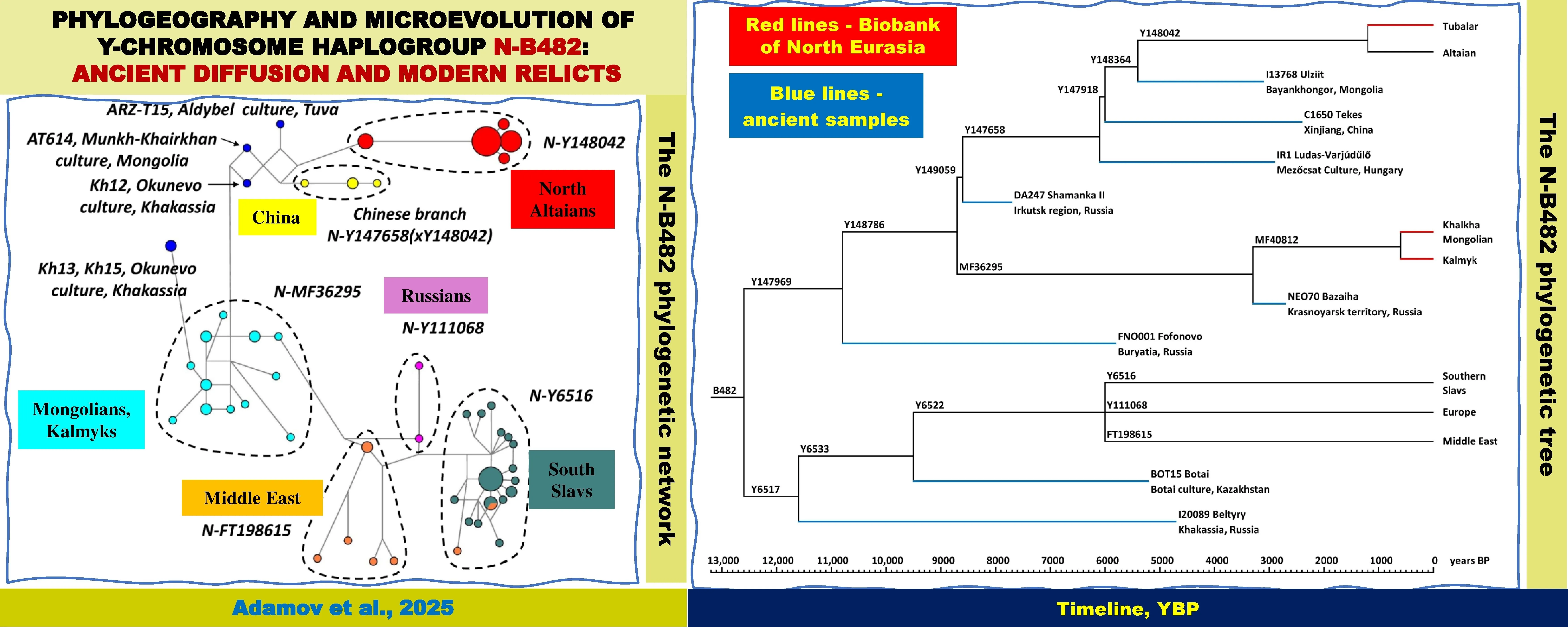
N-M231 is a major human Y-haplogroup comprising the widespread haplogroup N-Z4762 and a rarer haplogroup N-B482. Due to the limited data available, N-B482 has not been previously studied. We have compiled and analyzed a dataset of 88 N-B482 Y-STR haplotypes, utilizing a vast collection of samples from the Biobank of North Eurasia and genetic data published elsewhere. According to the phylogenetic analysis of ancient and modern samples, N-B482 has 2 subhaplogroups that diverged at ~12,600 YBP: the Balkan subhaplogroup N-P189.2 and the Altaian subhaplogroup N-Y147969. According to whole-genome sequencing, N-Y147969 comprises the North Altaian (N-Y149059) and Mongolian (N-MF36295) branches. The analysis of 28 ancient genomes revealed that N-B482 was widespread in Eurasia during the Neolithic, Bronze, and Iron Ages, spanning from Baikal to Hungary and from the Arctic to Uzbekistan, but it is now considered a relict. The number of its modern carriers is vanishingly small: the analysis of our samples from North Eurasia’s indigenous populations (n ≈ 25,000) detects N-B482 presence only in North Altaians (Kumandins, Chelkans, Tubalars), Mongolians, and Kalmyks. The primary cause of extinction for N-B482 lineages is genetic drift. The Galton-Watson theory of branching processes suggests a high probability of extinction for lineages with uniparental inheritance.
Open Access
Communication
24 October 2025Investigating Potential PFAS Emissions from Initial Electrolyzer Operation
The fluoropolymers used in proton exchange membrane (PEM) water electrolysis are part of the broad OECD definition of per- and polyfluoroalkyl substances (PFAS), a family of substances subject to increasing regulation. Potential PFAS emissions during commercial operation have been investigated in PEM fuel cells, but have not been reported for PEM electrolyzers. Based on previous measurements of fluoride release rates in water, potential emissions of fluorinated substances are likely to be detectable during the onset of stack operation. This observation is extended to evaluating potential PFAS emissions by collecting and analyzing recirculated water samples from a multi-megawatt PEM electrolyser plant in the first ~2 weeks of operation. No PFAS substances were detected using U.S. EPA Method 1633, consistent with the lack of observed degradation based on cell voltage and fluoride measurements. Methodologies for selecting and handling water samples were established. Minimizing gas crossover and maintaining water quality during electrolyzer operation can mitigate potential chemical degradation via hydroxyl radical formation. Implementing dual uses of the reverse osmosis deionization system to provide water and wastewater treatment can increase closed-loop operation and minimize potential PFAS emissions from wastewater.

Open Access
Article
24 October 2025N-TiO2 Photonic and Quantum Photocatalytic Efficiency Determined by Monte Carlo Simulation
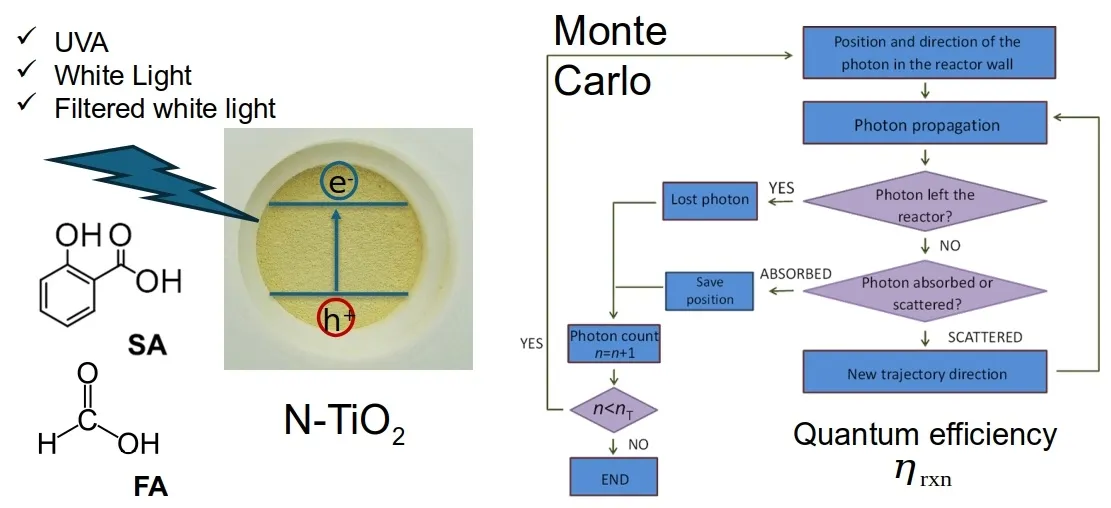
Nitrogen-modified titanium dioxide (N-TiO2) is proposed as an alternative to improve solar light absorption in photocatalytic applications. Due to its high chemical stability and low toxicity, various synthesis methods have been developed, yielding materials with different properties. Evaluating its performance compared to other photocatalysts requires calculating the quantum efficiency, which involves appropriate mathematical models to interpret experimental data. This study used a Monte Carlo approach to determine the local volumetric rate of photon absorption (LVRPA). TiO2 and N-TiO2 were synthesized via the sol-gel method using urea as the nitrogen source, and commercial TiO2 P-25 was used as a reference. Formic acid and salicylic acid were chosen as model pollutants due to their differing adsorption behavior on TiO2. Three light sources were used: UVA, white, and blue light. Nitrogen doping increased quantum efficiency for formic acid degradation under UVA from 2.4 to 3.5 (46% increase) and salicylic acid from 1.0 to 2.1 (110% increase). P-25 showed the highest efficiencies under UVA, with 6.2 for formic acid and 5.2 for salicylic acid. Under white light, salicylic acid degradation efficiency doubled from 0.4 to 0.8 after nitrogen doping. No activity was observed for formic acid with undoped TiO2 under white light, but N-TiO2 achieved 1.1. Under blue light, no activity was detected for formic acid, while salicylic acid degradation showed efficiencies of 0.3 (N-TiO2) and 0.2 (P-25). Quantum efficiency was highest under UVA, indicating that nitrogen doping improves visible light response but does not surpass UVA performance.
Open Access
Review
23 October 2025Unpacking the Transformative Power of the Rights of Nature: Rethinking Self, Society, and Nature in Environmental Governance in Tanzania
This study examines the transformative potential of integrating the Rights of Nature (RoN) into Tanzania’s environmental governance framework to address persistent ecological degradation, legal marginalization of local communities, and systemic governance gaps. Despite global progress in adopting the Rights of Nature (RoN), where ecosystems are granted legal personhood and communities serve as guardians Tanzania’s legal and institutional frameworks remain predominantly anthropocentric, lacking provisions that recognize nature’s intrinsic value. The primary objective of the study was to critically evaluate the extent to which Tanzania’s current governance systems reflect or exclude RoN principles and to propose transformative pathways grounded in justice, inclusivity, and local knowledge. The study analyzed international legal instruments, Tanzanian statutes, scholarly literature, and case studies using a doctrinal and thematic review methodology. Findings reveal that, despite Tanzania’s comprehensive environmental legislation, such as the Environmental Management Act (2004), key provisions fail to ensure procedural justice and exclude communities from meaningful participation, particularly under Strategic Environmental Assessment regulations. Conversely, local and Indigenous communities such as the Maasai, Chagga, and Zaramo have long practiced ecological stewardship grounded in relational worldviews, echoing RoN values. However, these systems are neither legally recognized nor institutionalized. The study concludes that a shift towards rights-based and transformative governance is necessary to address environmental injustice and ecological decline. It recommends revising legal frameworks to grant ecosystem rights, mandating participatory governance, and embedding Indigenous and local knowledge into environmental policy. Such reforms will not only enhance ecological integrity and local empowerment but also contribute to achieving Tanzania’s commitments under Sustainable Development Goals (SDGs) 13, 15, and 16.
Open Access
Article
20 October 2025Divergent Aging Mechanisms of Calcium Arsenic Residue under Dry-Wet and Freeze-Thaw Cycles: Toxic Metal Mobility, Multiscale Physicochemical Characterization, and Escalated Ecological Risks
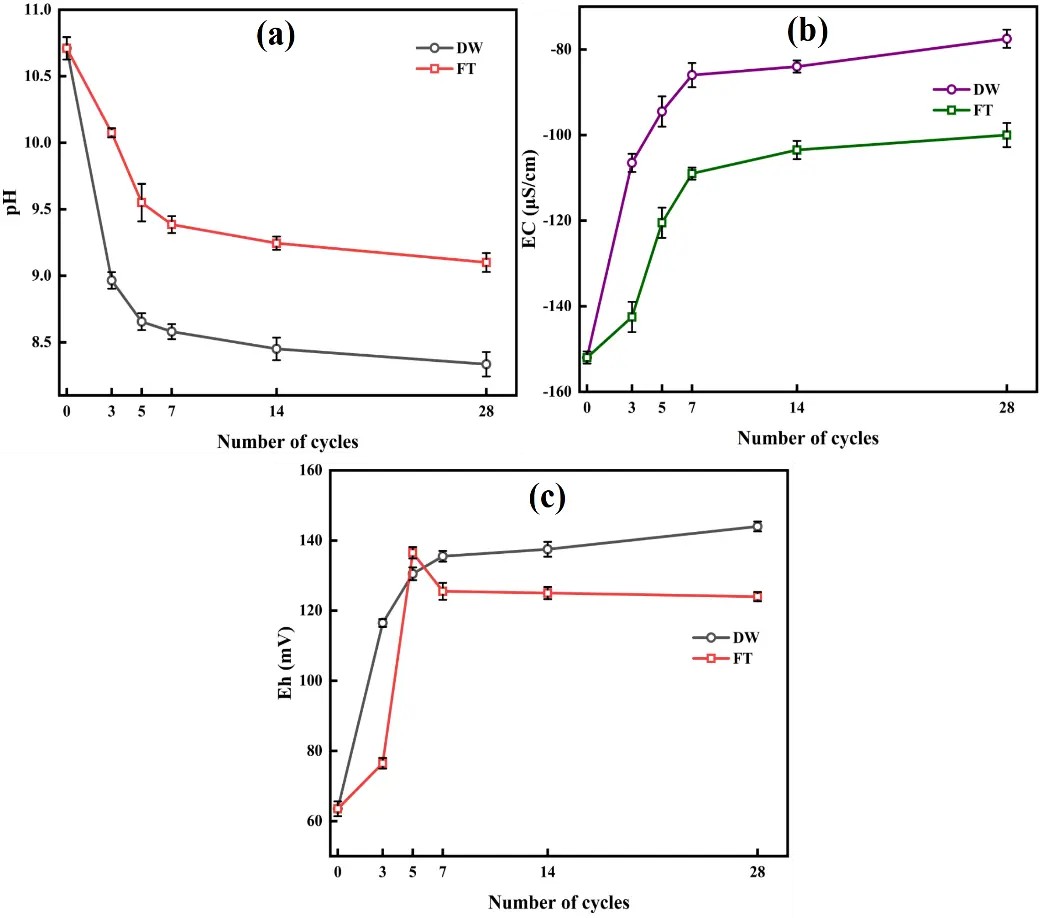
This study investigates the long-term mobility and ecological risks of As, Zn, and Cd in calcium arsenic residue (CAR) under simulated dry-wet (DW) and freeze-thaw (FT) cycles. Accelerated aging experiments, combined with multiscale characterization (XRD, XPS, SEM, FTIR), revealed distinct transformation mechanisms. DW cycles promoted carbonate-driven dissolution, As(III) oxidation to As(V) (resulting in an 18.4% increase in As(V) as shown by XPS), and sulfide oxidation (with reductions of 47.7% in ZnS and 15.08% in CdS). These processes increased the acid-soluble metal fractions (F1: As by 11.3%, Zn by 6.0%, and Cd by 8.7%) and metal release rates (52.39% for As, 42.63% for Zn, and 68.55% for Cd under DW conditions). In contrast, FT cycles induced mechanical fracturing and ice-mediated stabilization, which limited ion migration, partially amorphized ZnO, and promoted the precipitation of Cd(OH)2. Ecological risk assessments indicated rising risks, with integrated potential ecological risk indices (IPER) reaching 11,187.85 under DW conditions and 10,668.29 under FT conditions, with arsenic contributing over 80%. The Risk Assessment Code (RAC) reclassified all metals into moderate-risk categories (As: 11.9–19.7%, Zn: 9.4–15.2%, Cd: 12.1–18.6%). Weibull modeling (α = 6.98–10.98, R2 > 0.96) described the nonlinear kinetics, showing that cadmium aged the fastest (λ: Cd > As > Zn), with delayed but persistent risks under FT conditions. These results underscore the importance of developing climate-resilient stabilization strategies. The integrated framework combining mineral evolution, kinetics, and risk forecasting offers significant insights for managing legacy CAR pollution under changing climate conditions.
Open Access
Article
17 October 2025Bioenergy Technology and Carbon Intensity in U.S. and China: Threshold Roles of Capital Accumulation, Education and Inequality
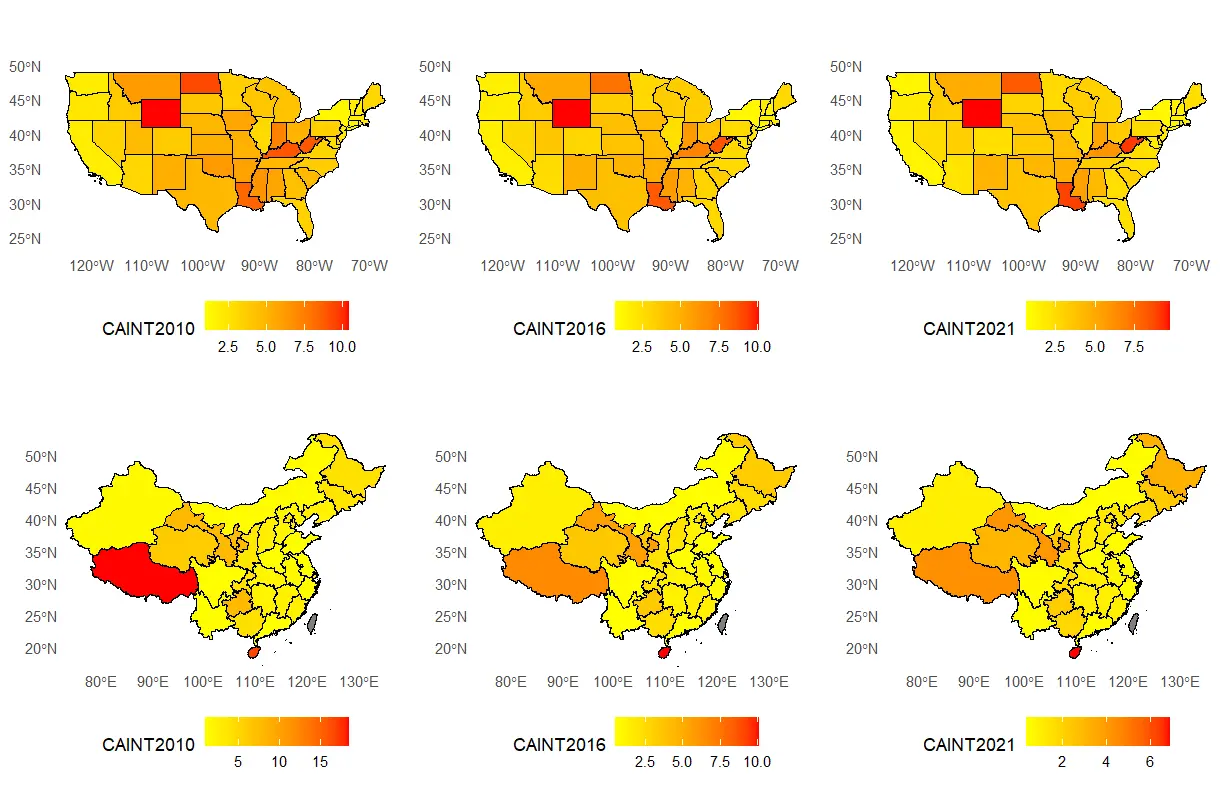
Bioenergy technology holds significant promise for reducing carbon intensity and fostering sustainable development, yet its impact remains unclear. This article employs both a panel threshold model and a random forest model, analyzing data from the primary administrative regions in the United States and China to explore the threshold effects and regional heterogeneity of bioenergy technology on carbon intensity, where the bioenergy technology is measured using patent data. In the United States, the impact of bioenergy technology on carbon intensity initially shows a positive effect, which later turns negative as per capita capital stock increases. The technology’s inhibitory effect strengthens with higher levels of education but becomes insignificant as the Gini coefficient rises. In China, increasing per capita capital stock shifts the impact of bioenergy technology from negative to insignificant, while higher education levels enhance its inhibitory effect. The Gini coefficient, however, does not significantly affect the impact of technology. Additionally, these threshold effects exhibit notable regional variations. The study provides cross-country evidence of how institutional and structural conditions shape the carbon mitigation effects of bioenergy technology, offering practical insights for policies that combine trade facilitation, education, and inequality reduction with low-carbon energy transitions.