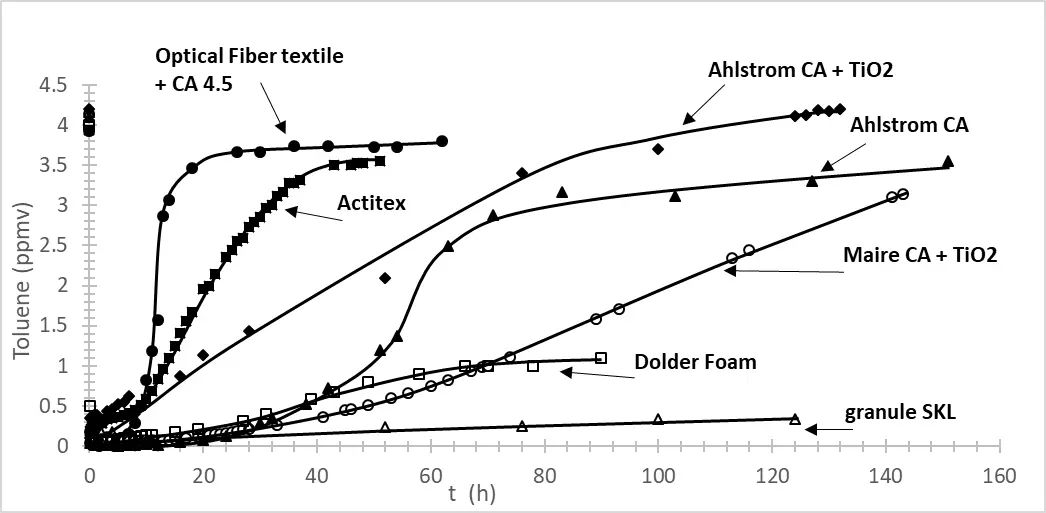
Indoor air treatment has become a significant concern in recent years. The aim of this study is to investigate the effectiveness of coupling adsorption and photocatalysis for the removal of toluene and formaldehyde, especially in the presence of optical fiber textile. First, we examine the adsorption properties of various commercial activated carbon (AC) filters, as well as different amounts of AC deposited on optical fiber textiles, and assess the impact of titanium dioxide (TiO2) on the adsorption performance. In the second phase, we compare the photocatalytic degradation of toluene and formaldehyde under different irradiance levels. Finally, we analyze the impact of three AC-TiO2 combinations: separate filters, TiO2 deposited on AC-impregnated fiber optic textiles, and TiO2 partially deposited on AC filters. The results led us to test a new photocatalytic and adsorbent material, including heating wires and optical fibers.
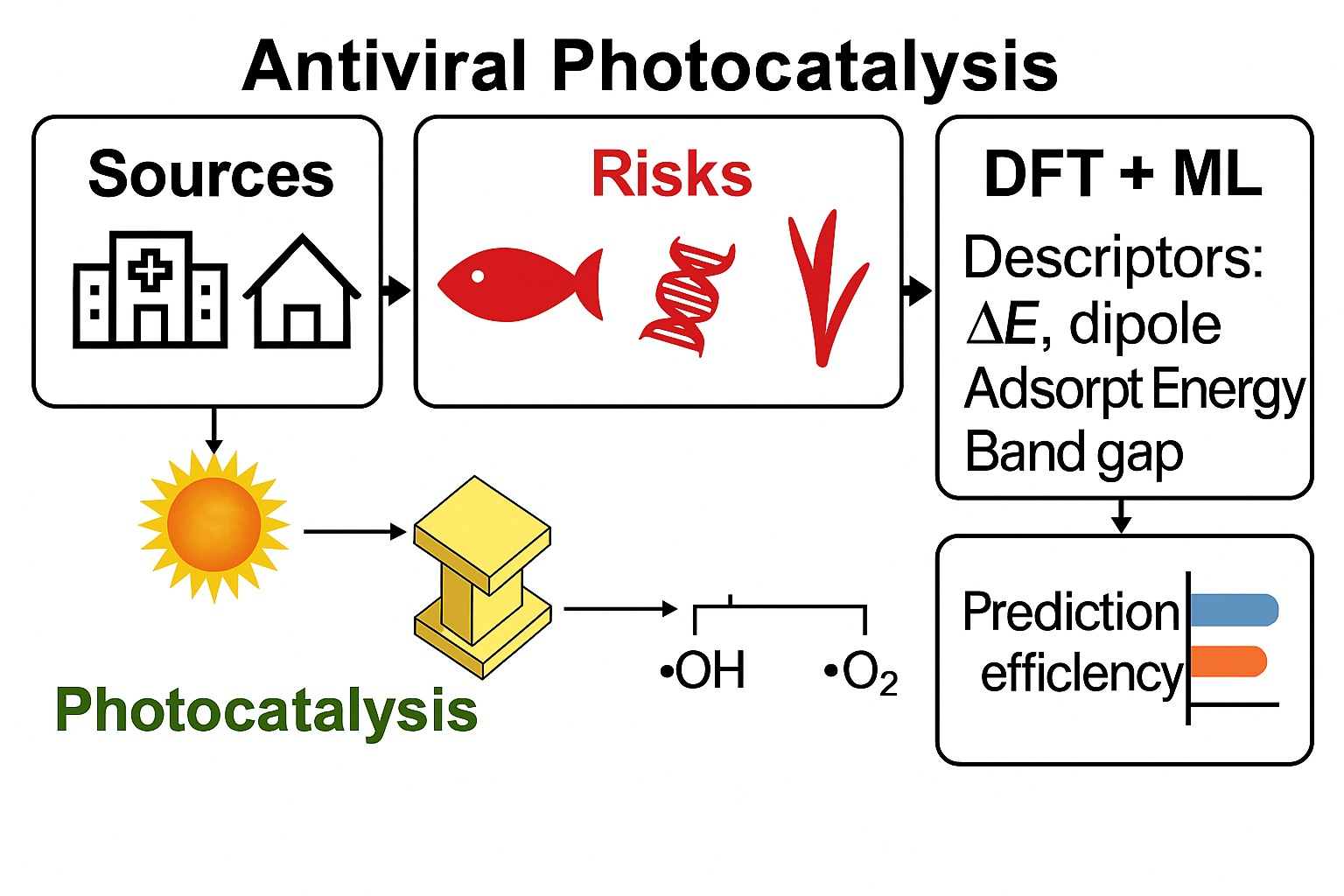
The widespread use of antiviral pharmaceuticals during and after the COVID-19 pandemic has raised growing concerns about their role as emerging environmental contaminants. These compounds, including favipiravir, remdesivir, molnupiravir, and oseltamivir carboxylate, are frequently detected in hospital effluents, municipal wastewater, and surface waters. Unlike many previous reviews that treat pharmaceuticals as a broad and undifferentiated class, this article focuses specifically on antiviral drugs as a distinct group of emerging contaminants and provides an integrated perspective that is still largely missing from the literature. As a review article, this work offers a critical and comprehensive synthesis that brings together environmental monitoring data, ecotoxicological and resistance-related risks, and advanced remediation strategies within a single framework. Particular emphasis is placed on recent advances in semiconductor-based photocatalytic degradation (TiO2, ZnO, g-C3N4, and their hybrids) and on mechanistic insights supported by density functional theory (DFT) and machine-learning (ML) approaches, which are used to link molecular-level properties to degradation efficiency and pathway selectivity. By systematically combining occurrence patterns, risk assessment, and DFT/ML-informed photocatalysis—specifically for antiviral pharmaceuticals—this review is among the first to delineate design principles and knowledge gaps unique to this drug class. The article highlights critical research needs and outlines future directions toward reproducible, computationally guided, and scalable treatment technologies for antiviral pollutants.
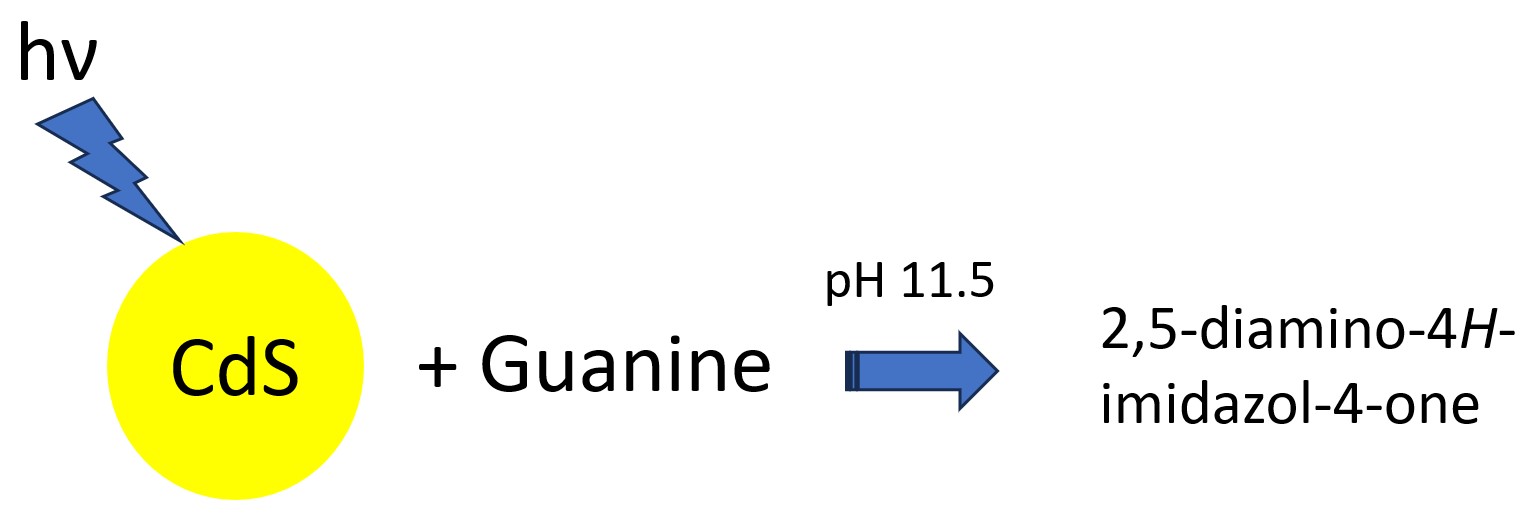
Investigations into the photoinduced reactions of deoxyribonucleic acid (DNA) bases are important for human health. Herein, we have synthesized colloidal CdS nanoparticles by a method reported in the literature. The mean particle diameter of the semiconductor was about 55 nm. The colloidal CdS particles were used as a photocatalyst to investigate the organic transformation of guanine (2-amino-6-oxopurine). The products of the semiconductor-induced reaction were analyzed by liquid chromatography-mass chromatography (LC-MS) measurements. The solitary product of the photocatalytic reaction of guanine was revealed as 2,5-diamino-4H-imidazol-4-one. The likely reaction pathway for the formation of the product has been presented. To our understanding, the present work is the first account on the mechanistic aspects of the semiconductor-induced photocatalytic reaction of guanine.
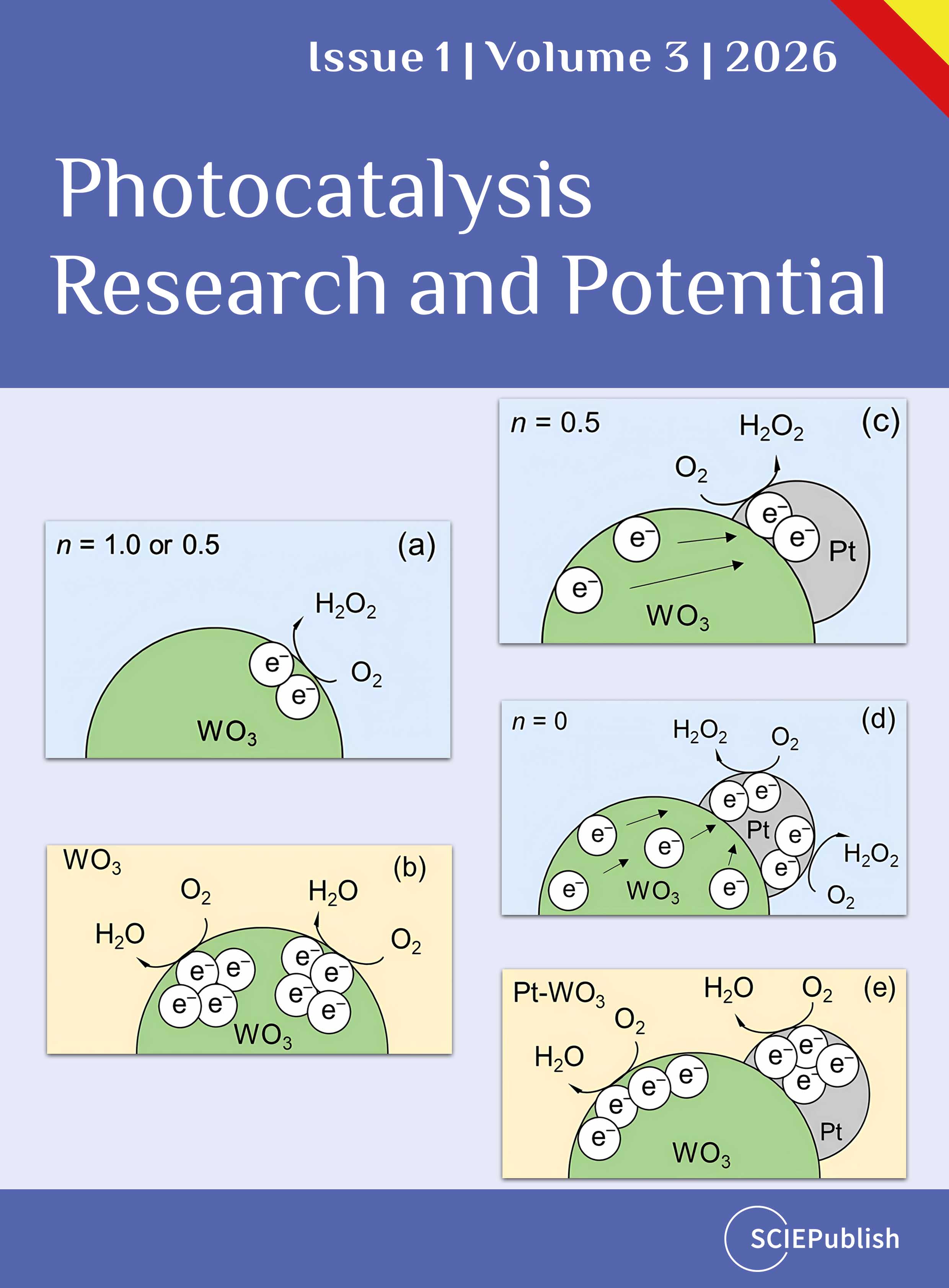
Elucidation of the mechanism of multielectron transfer reactions, such as photocatalytic water oxidation and oxygen reduction, is essential for achieving high efficiency in the utilization of sustainable solar energy. Herein, we demonstrate that photocatalytic oxygen reduction on platinum-loaded tungsten(VI) oxide (Pt/WO3) photocatalyst proceeds predominantly by two-electron transfer pathway under conventional light-intensity conditions. Light intensity-dependence analyses of the acetic acid decomposition reaction revealed the role of the Pt co-catalyst in enhancing overall quantum efficiency. We also report for the first time that the reaction can be initiated even on bare WO3, in addition to Pt, under extremely high light-intensity conditions.