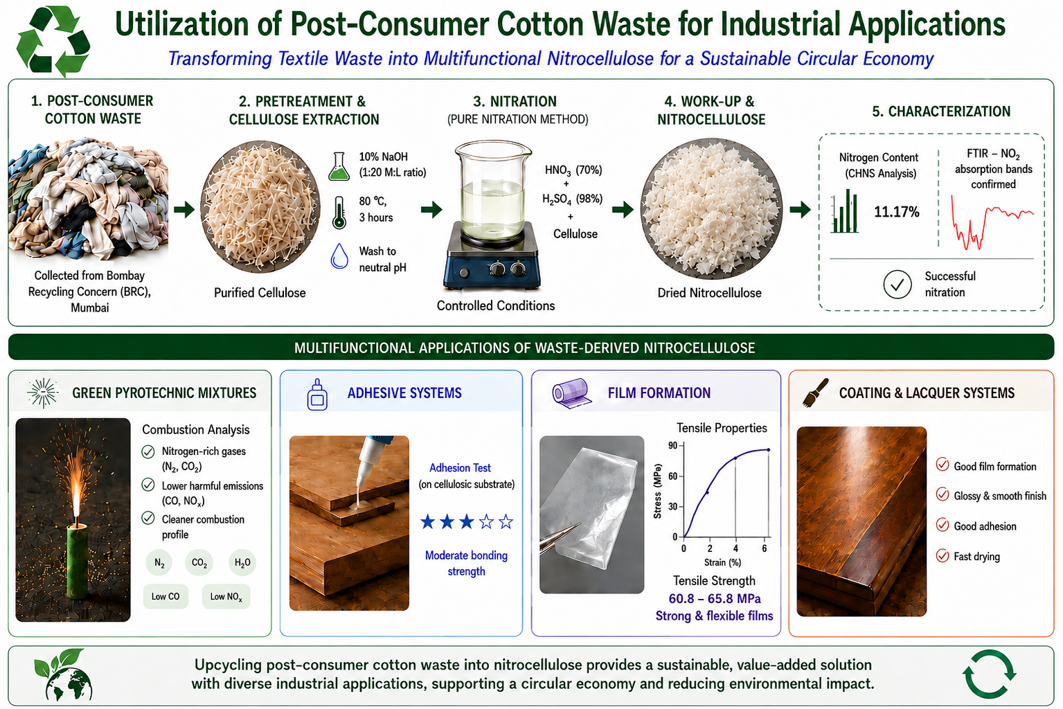
The accumulation of post-consumer cotton textile waste brings environmental challenges and opportunities for resource recovery. In this work, cotton waste was valorized into nitrocellulose via a pure nitration method, and its potential as a multifunctional material was systematically assessed. Response Surface Methodology (RSM) was used to optimize the process parameters with a Box-Behnken design, and the results indicated that nitric acid concentration was the most important parameter affecting nitrogen incorporation. The optimized process produced nitrocellulose with a Nitrogen content of 11.17%, as confirmed by CHNS analysis. However, the FTIR results confirmed that the nitrocellulose was successfully nitrated, as evidenced by the nitro group absorption bands. The produced nitrocellulose was evaluated in various applications, including pyrotechnic green mixtures, adhesive systems, and film production. Gas emission analysis indicated a nitrogen-rich and comparatively cleaner combustion profile. The adhesive test showed moderate bonding to cellulosic materials, whereas the tensile test of films showed a high tensile strength of 60.8–65.8 MPa. The findings indicate that multifunctional nitrocellulose can be successfully produced from post-consumer cotton waste, providing a viable alternative to textile waste recycling methods and adding to efforts to build a sustainable circular economy.
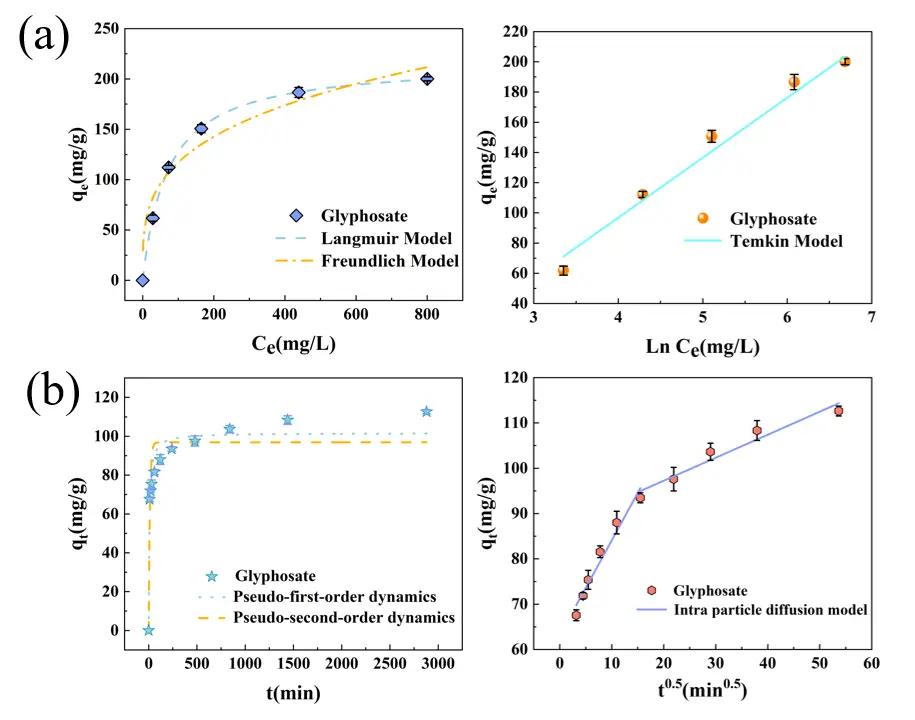
Glyphosate is one of the most extensively used organophosphorus herbicides; however, its excessive application and environmental residues have severely threatened aquatic ecosystems and human health. In this study, a highly efficient lanthanum-modified zeolite (LMZ) adsorbent was synthesized via a hydrothermal method, and its adsorption behaviors and underlying mechanisms for glyphosate removal were systematically investigated. LMZ exhibited exceptional adsorption performance over a broad pH range of 3.0–7.0, achieving a maximum adsorption capacity of 217.39 mg/g. The adsorption process was well described by the Langmuir isotherm and pseudo-second-order kinetic models, indicating a monolayer chemisorption process. Notably, LMZ demonstrated remarkable adsorption selectivity and excellent regenerability, maintaining a high adsorption capacity even after five consecutive adsorption-desorption cycles. In practical application assessments with simulated wastewater, glyphosate removal efficiency exceeded 90% at an adsorbent dosage of 7.5 g/L. Furthermore, dynamic column experiments confirmed that LMZ could maintain effective continuous adsorption, highlighting its substantial application potential for treating glyphosate-contaminated wastewater. X-ray photoelectron spectroscopy (XPS) and Raman spectroscopic characterizations revealed that this outstanding adsorption capability is primarily driven by inner-sphere complexation induced by ligand exchange at the La-OH active sites.
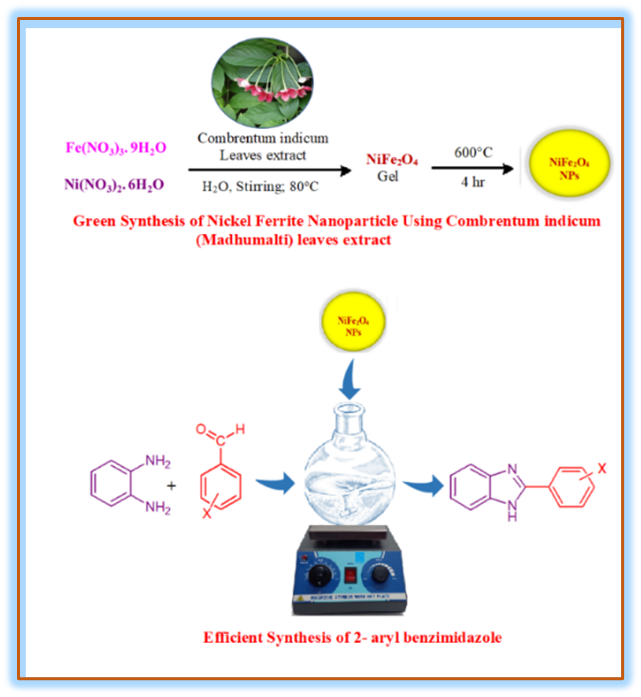
The versatile applications of nitrogen-containing heterocycles in different industries have engendered a lot of research. Benzimidazole derivatives, as isostructural pharmacophores of naturally occurring active biomolecules, are popular chemotherapeutic drugs. The present study focuses on a green methodology for the synthesis of NiFe2O4 nanocomposite using Combretum indicum leaf extract, and for the synthesis of 2-aryl benzimidazole derivatives via the condensation of aromatic aldehydes and O-phenylenediamine. The synthesized catalyst was characterized through various analytical techniques, including FT-IR, XRD, SEM, TEM, and BET. It has several advantages, including a rapid reaction at room temperature, easy work-up, high product yield, simple purification, and a reusable catalyst. The catalyst was reused for up to six consecutive cycles, with the yield decreasing only marginally from 95% (fresh catalyst) to 89% (sixth reuse).
Melaleuca alternifolia is a plant native to Australia, and its essential oil is known for its biological properties, including antimicrobial, anti-inflammatory, and antioxidant effects; as a result, it is used in cosmetic formulations and in the pharmaceutical industry. Few studies have examined the use of these properties as an additive in diesel fuel. In this study, the essential oil inhibited visible fungal growth against two of the main fungi that degrade diesel/biodiesel—Bacillus subtilis with a minimum inhibitory concentration (MIC) of 0.5 μL/mL, and the fungi Aspergillus niger and Aspergillus fumigatus with similar MIC values of 0.25 μL/mL. Based on this, the same potential was tested in Melaleuca oil/diesel blends at various concentrations, demonstrating inhibition of visible fungal growth at blend concentrations of 1% (v/v) and above, whereas the control (without essential oil) and concentrations of 0%, 0.25%, and 0.50% allowed fungal growth. Tests for density and viscosity remained within the quality limits established by ANP Resolution No. 968/2024. The addition of Melaleuca alternifolia essential oil also produced a concentration-dependent reduction in insoluble oxidation products, with the 2% blend showing the highest oxidative stability.
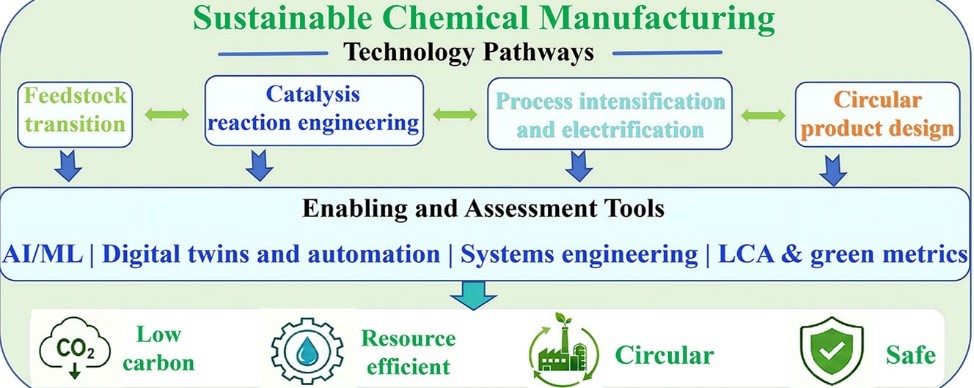
Green chemistry has evolved from a pollution-prevention concept into a practical framework for sustainable chemical manufacturing. To address climate change, resource depletion, and environmental pollution, chemical processes must be redesigned beyond end-of-pipe treatment toward low-carbon, safer, and circular manufacturing systems. This mini-review develops a systems framework for low-carbon and circular technologies in chemical manufacturing by organizing green chemical technologies into four interrelated pathways: feedstock transition, catalysis and reaction engineering, process intensification and electrification, and circular product design. Quantitative metrics such as atom economy, E-factor, process mass intensity, carbon footprint, and life-cycle assessment are emphasized as essential tools for evaluating real sustainability benefits and avoiding burden shifting. The review further highlights the enabling roles of biocatalysis, artificial intelligence, predictive modeling, digital twins, automation, and systems engineering as cross-cutting tools for translating technological advances into industrial-scale sustainable manufacturing. Future green chemical technology should move from isolated greener reactions toward integrated molecular, process, and system design for low-carbon and circular chemical manufacturing.
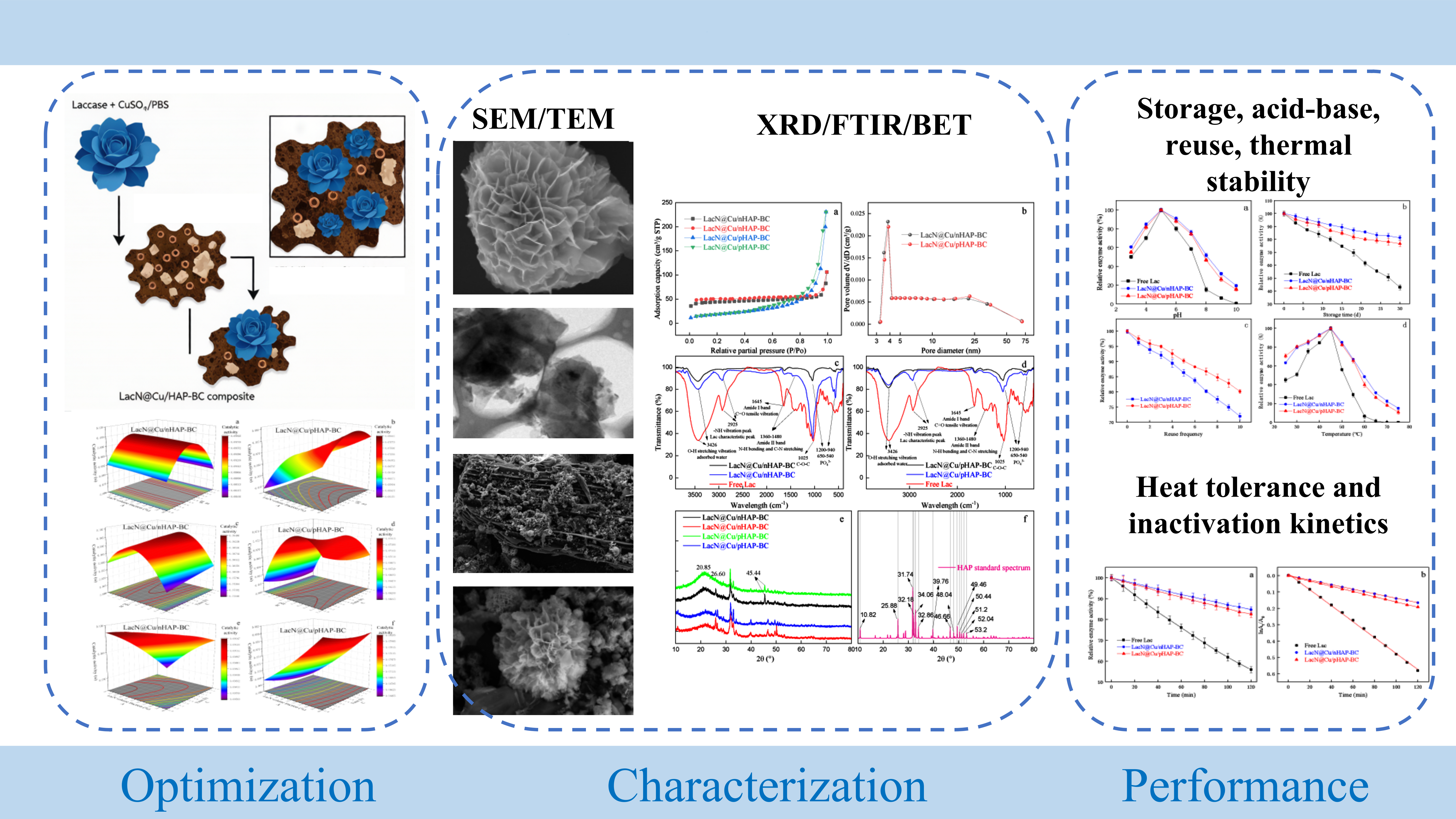
Laccase-inorganic hybrid nanoflowers (LacN) represent a novel enzyme immobilization strategy. The integration of this approach with traditional adsorption-based immobilization offers a novel and efficient pathway for laccase immobilization. In this study, LacN was immobilized onto two types of Cu/HAP-BC (natural mineral-derived Cu/nHAP-BC and porcine bone-derived Cu/pHAP-BC) to synthesize LacN@Cu/HAP-BC. Single-factor experiments, combined with Box-Behnken response surface methodology, were used to optimize the immobilization parameters. The optimal preparation conditions were determined as 60% LacN suspension, pH 6.0, reaction time of 2 h for LacN@Cu/nHAP-BC; and 80% LacN suspension, pH 6.0, reaction time of 2 h for LacN@Cu/pHAP-BC. Multiple characterizations confirmed uniform anchoring of flower-like LacN on porous Cu/HAP-BC. Compared with free laccase, LacN@Cu/HAP-BC showed significantly improved stability: after 30 d of storage, LacN@Cu/nHAP-BC and LacN@Cu/pHAP-BC retained 81.35% and 76.70% of their initial activities, respectively (vs. 42.98% for free laccase); the thermal half-lives (t1/2) at 65 °C were 502 min and 433 min, respectively, approximately 3.0–3.5 times that of free laccase (142 min). Additionally, the two composites retained 71.98% and 80.15% of their initial activity after 10 consecutive catalytic cycles, showing satisfactory reusability. These results verify that the composites deliver favorable storage, thermal, and cyclic stability, acting as a feasible biocatalyst candidate for lab-level water treatment and biomass conversion. Further tests on continuous reactors and real wastewater pollutants are needed to confirm its industrial applicability.
This study investigated the evolution of particle migration and solution seepage caused by clay mineral swelling during the leaching of weathered crust elution-deposited rare earth ore. Column leaching experiments, high-resolution X-ray computed tomography (CT), and Avizo-based seepage simulations were conducted using a composite lixiviant consisting of composite diethylenetriamine-acetate lixiviant (CDETA) (0.2 mol/L ammonium acetate and 1.0 wt% diethylenetriamine). The pore structure, particle migration, seepage velocity, and pore pressure were systematically analyzed before and after leaching. Results showed that fine particles migrated downward under seepage forces. Consequently, in the upper layer, the average pore count increased from 13,362 (raw ore) to 19,160 (leached ore), and the overall average porosity of the ore body rose from 13.04% to 19.78%. The number of pore throats in the leached ore decreased from 19,387 to 16,502 due to particle blockage. The average seepage velocity dropped from 3.50 × 10⁻⁶ m/s to 1.90 × 10⁻⁶ m/s. Pore pressure was higher in the upper layer (3859–4128 Pa) than in the lower layer (3517–3824 Pa). These changes weakened the internal pore connectivity of the ore body and intensified the local pressure gradient, which are important triggers for clay swelling and landslide hazards. This study reveals the coupling mechanism among particle migration, swelling, and seepage. The findings provide a theoretical basis for optimizing lixiviant injection, inhibiting particle migration, and ensuring mine safety.
Hydrochar is a low-cost carbon precursor for water treatment, but its adsorption performance depends on both texture and surface chemistry. This work evaluates whether a nitric acid (HNO3) post-treatment can direct physically activated hydrochar adsorbents toward a target contaminant class. An industrially produced hydrochar was activated at 800 °C for 2 h under N2, CO2, or steam, then treated with 70% HNO3. Adsorption was evaluated using methylene blue as a representative cationic dye and phenol as a representative aromatic micropollutant. The post-treatment altered surface chemistry rather than texture: total acidic groups increased by 86 to 123% and basic groups decreased by 56 to 66%, lowering the point of zero charge to 4.5–5.3, while Brunauer-Emmett-Teller (BET) surface areas were largely preserved (largest reduction of 14%, most changes below 5%). These changes had opposing consequences for the two adsorbates: methylene blue capacity increased by up to 135%, reaching 264 mg·g−1 for the post-treated steam-activated hydrochar, whereas phenol capacity decreased by up to 58% from a maximum of 167 mg·g−1 for the same steam-activated char before post-treatment. The HNO3 post-treatment is therefore selective rather than universally beneficial as it valorizes hydrochar adsorbents for cationic contaminants while reducing their affinity for neutral aromatics.
Ethanol can react with active metals to form alkoxides and hydrogen gas, but metallic silicon exhibits relatively stable chemical properties and does not react with ethanol significantly under catalyst-free and low-temperature conditions. Previous research on organosilicon synthesis has primarily focused on the Rochow reaction, in which metallic silicon reacts with methyl chloride. The extension of copper-based catalysts from the Rochow reaction to enable the direct reaction of metallic silicon with ethanol, in which silicon replaces the hydroxyl hydrogen of ethanol to form silanes, has attracted widespread interest. In this study, we synthesized Cu2O with well-defined exposed crystal facets via facet engineering, modulating the surface facet ratios and systematically investigating the effects of these Cu2O with different morphologies on the direct reaction. Combining advanced spectroscopic techniques, density functional theory calculations, and molecular dynamics simulations, we revealed that Cu2O (111) exhibits the highest surface oxygen vacancy concentration and hydroxyl density. The oxygen vacancies on the Cu2O (111) surface facilitated the adsorption of ethanol, while the surface hydroxyl groups effectively promoted ethanol dehydrogenation. These two effects work in concert to render the Cu2O (111) facet the highest facet-dependent chemical reactivity in the direct reaction of metallic silicon and ethanol relative to those from other facets. Our study provides crucial insights into the cooperative roles of exposed active sites and surface crystal planes that are potentially relevant to heterogeneous catalysis. Furthermore, this work proposes an understanding of product selectivity to guide the development of other copper-based catalysts for the direct synthesis strategy.
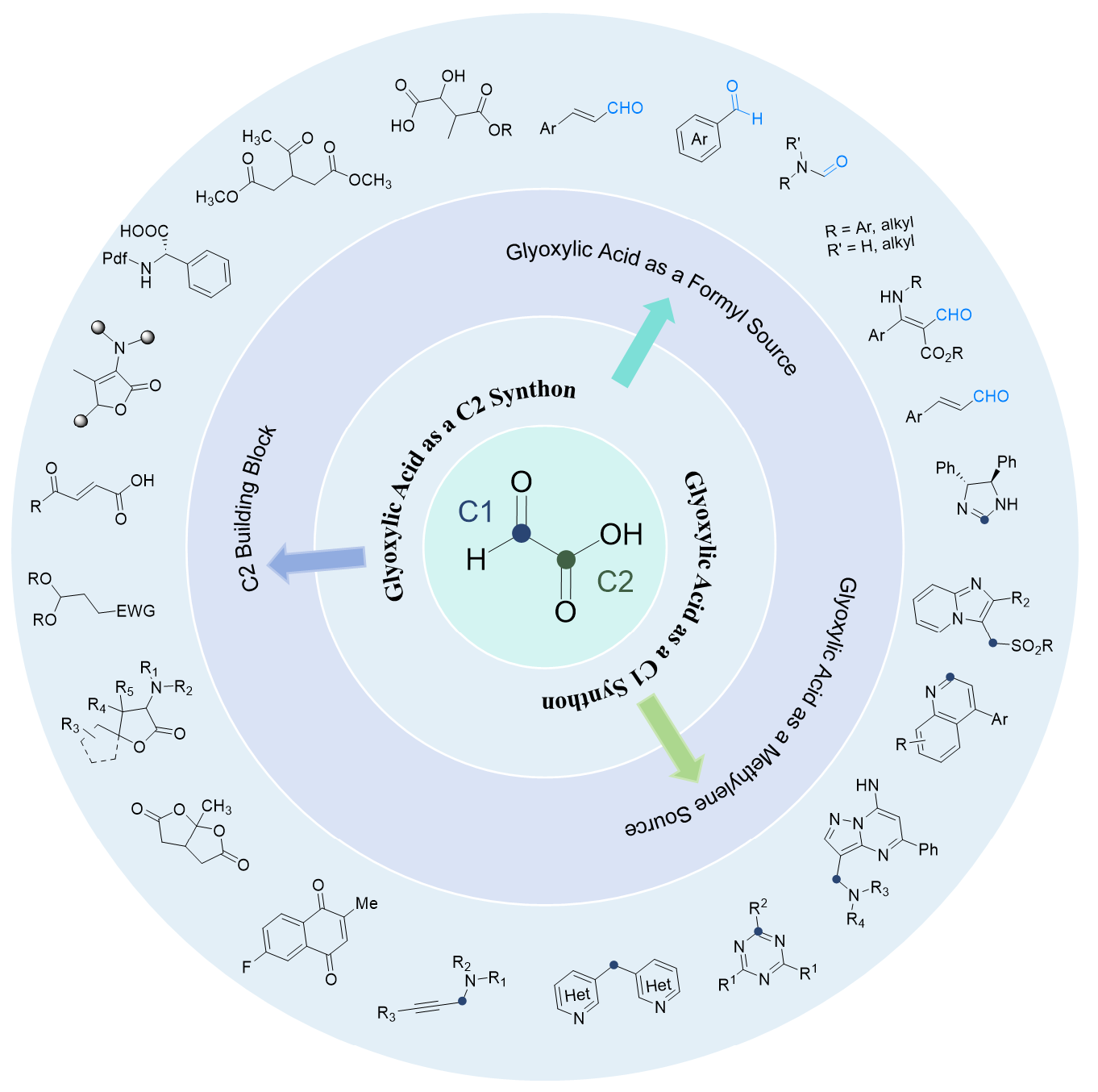
Glyoxylic acid, the simplest α-keto acid, contains both aldehyde and carboxyl groups in its molecule and exhibits the reactivity of both. This compound features low toxicity, low cost, ease of storage and handling, and has become a highly valuable C1 and C2 synthon in organic synthesis. In recent years, new reactions based on decarboxylative coupling, condensation, and cyclization strategies of glyoxylic acid have emerged, providing green and efficient routes for the construction of aldehydes, carboxylic acids, amines, heterocycles, and other structural motifs. This review systematically summarizes representative advances in the past five years in the chemical transformations of glyoxylic acid as a C1 synthon (formyl source, carboxylic acid source, methylene source) and as a C2 synthon (participating in Petasis reaction, Morita-Baylis-Hillman reaction, and cyclization reactions), with emphasis on reaction design, substrate scope, functional group compatibility, and mechanistic features. Future directions are also discussed.
Five compounds, namely, caffeine, theobromine, theophylline, paraxanthine, and xanthine, that exhibit the caffeine-based scaffolds, were assessed using density functional theory (DFT) and molecular dynamics (MD) simulations to elucidate their adsorption behaviour on Fe(110) surface. The potential adsorption sites in the compounds were probed in terms of quantum chemical descriptors, frontier molecular orbitals, Fukui functions, and Mulliken charges, while MD simulations provided insight into adsorption energies, binding, and deformation configurations. Results reveal that theobromine exhibited the highest reactivity and strongest adsorption as a result of favourable electronic properties and potential of interaction with the metal surface through two active sites. Caffeine followed closely, but exhibited slight steric limitations. Paraxanthine and theophylline exhibited moderate behaviour, while xanthine displayed the weakest surface interaction as a result of relatively poor donor-acceptor potential. The results also demonstrate the essential role of N-methyl substitution and electronic softness in optimizing caffeine-derived molecules for application as corrosion inhibitors for steel. The findings from this study offer insights into sustainable adsorption corrosion inhibitors derived from naturally occurring scaffolds before engaging in rigorous experiments on trial and error basis, which often consumes time, energy, and resources.
