
From Green Chemistry to Sustainable Manufacturing: A Systems Framework for Low-Carbon and Circular Technologies
From Green Chemistry to Sustainable Manufacturing: A Systems Framework for Low-Carbon and Circular Technologies
Received: 25 June 2026 Revised: 24 July 2026 Accepted: 21 August 2026 Published: 10 September 2026

© 2026 The authors. This is an open access article under the Creative Commons Attribution 4.0 International License (https://creativecommons.org/licenses/by/4.0/).
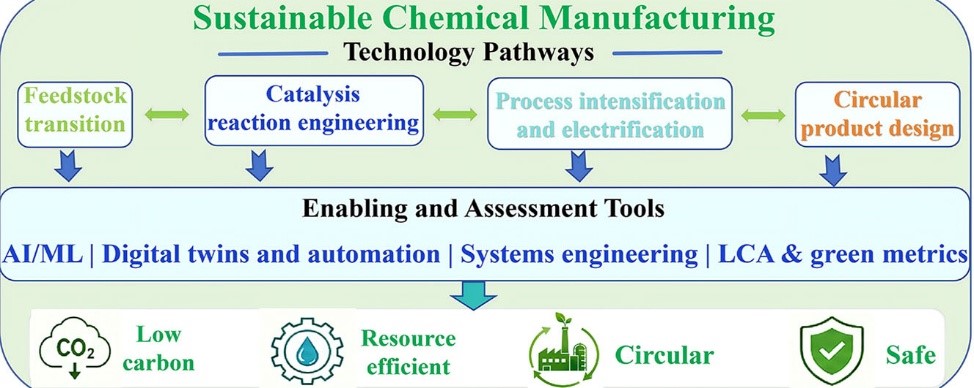
Graphical Abstract
1. Introduction
Chemical manufacturing is essential for modern society because it provides fuels, polymers, pharmaceuticals, agrochemicals, electronic materials, solvents, coatings, and numerous functional products. However, the conventional linear model of chemical production, in which fossil-derived resources are converted into products and ultimately into waste, has become increasingly incompatible with long-term sustainability. Traditional chemical processes often rely on non-renewable feedstocks, hazardous reagents, energy-intensive separations, stoichiometric additives, and limited consideration of product end-of-life. As a result, environmental burdens are frequently transferred from reaction to purification, from production to use, or from use to disposal.
Green chemistry provides a preventive design philosophy for addressing these limitations. Rather than treating pollution after it is generated, green chemistry aims to reduce or eliminate hazardous substances and environmental impacts at the molecular and process design stages [1,2]. The twelve principles of green chemistry, including waste prevention, atom economy, less hazardous synthesis, safer solvents and auxiliaries, energy efficiency, renewable feedstocks, catalysis, and design for degradation, remain the conceptual foundation for sustainable chemical innovation [2,3]. More recently, green chemistry has expanded from molecular-level pollution prevention toward broader system-level design, integrating circular economy principles, life-cycle thinking, and safer chemical design [3,4].
Nevertheless, the practical implementation of green chemistry requires more than simply replacing a toxic solvent or improving a single reaction yield. A reaction conducted in water may still be unsustainable if isolating the product requires a large energy input. A bio-based product may not reduce overall environmental impact if land use, purification, or supply-chain emissions are high. Similarly, carbon dioxide utilization may not be carbon-neutral if it relies on fossil-derived hydrogen or electricity. Therefore, modern green chemistry must be translated into green chemical technology, where molecular design, catalytic transformation, reaction engineering, separation, life-cycle assessment, and circular product design are considered together. From this perspective, green chemical technology is not simply a collection of environmentally benign reactions, but a technical framework for redesigning chemical manufacturing across multiple scales. At the molecular scale, safer and recyclable molecules must be designed; at the reaction scale, catalysts, solvents, and reaction conditions determine selectivity and waste generation; at the process scale, reactors, separations, and energy supply define efficiency and safety; and at the system scale, feedstocks, products, and end-of-life routes determine long-term sustainability.
Several reviews have addressed important components of green and sustainable chemistry, including green chemistry principles and metrics [2,3,4,5,6,7,8,9], CO2 conversion and carbon utilization [10,11,12,13,14], biomass valorization [15,16,17,18,19,20,21,22], biocatalysis [23,24,25,26,27], flow chemistry and process intensification [28,29,30,31,32,33,34,35,36], polymer recycling and circular chemistry [37,38,39,40,41,42,43,44,45], safe-and-sustainable-by-design [46,47,48,49], and artificial intelligence-assisted chemical discovery [50,51,52,53,54,55,56,57]. Recent perspectives have also highlighted the importance of green chemistry in supporting circular economy strategies, sustainable development goals, and future chemical innovation [58,59,60]. However, existing reviews mainly focus on individual technological domains, specific sustainability strategies, or conceptual frameworks. They have provided valuable insights into particular aspects of green chemistry, but the connection between molecular-level innovation, catalytic transformation, process engineering, industrial implementation, and product circularity remains insufficiently integrated.
In this mini-review, we propose a manufacturing-oriented systems framework that connects four interconnected technological pathways: (i) feedstock transition, (ii) catalysis and reaction engineering, (iii) process intensification and electrification, and (iv) circular product design. Unlike previous reviews that primarily discuss individual technologies or sustainability concepts, this work integrates these pathways with cross-cutting enabling tools, including AI/ML, predictive modeling, Digital Twins, systems engineering, and life-cycle assessment. Therefore, the novelty of this review lies not in introducing individual green technologies but in establishing an integrated framework that links technological development, quantitative sustainability evaluation, and industrial implementation challenges toward low-carbon and circular chemical manufacturing.
Review Scope and Literature-Search Methodology
This mini-review was developed based on a targeted literature search to identify recent advances and representative studies related to green chemical technology and sustainable chemical manufacturing. Literature searches were conducted using major scholarly databases, including Web of Science, Scopus, and Google Scholar. The search covered publications primarily from the last two decades, while earlier highly cited studies were included when they provided fundamental concepts or established methodologies. Representative search keywords included “green chemistry”, “sustainable chemical manufacturing”, “low-carbon chemical technology”, “life-cycle assessment”, “CO2 utilization”, “green hydrogen”, “catalysis”, “reaction engineering”, “process intensification”, “electrification”, “chemical recycling”, “circular chemistry”, “machine learning”, “artificial intelligence”, “Digital Twins”, and “systems engineering”. Articles were selected based on their relevance to the major technological pathways discussed in this review, including feedstock transition, catalysis and reaction engineering, process intensification and electrification, and circular product design. Studies focusing on isolated technical improvements without clear relevance to sustainable manufacturing systems were not emphasized. As a narrative mini-review, this work aims to provide a systems-level perspective rather than a quantitative meta-analysis.
An integrated framework linking green chemistry innovations with sustainable chemical manufacturing is proposed in this review. The framework connects four technological pathways with cross-cutting enabling tools and sustainability assessment approaches (Figure 1).
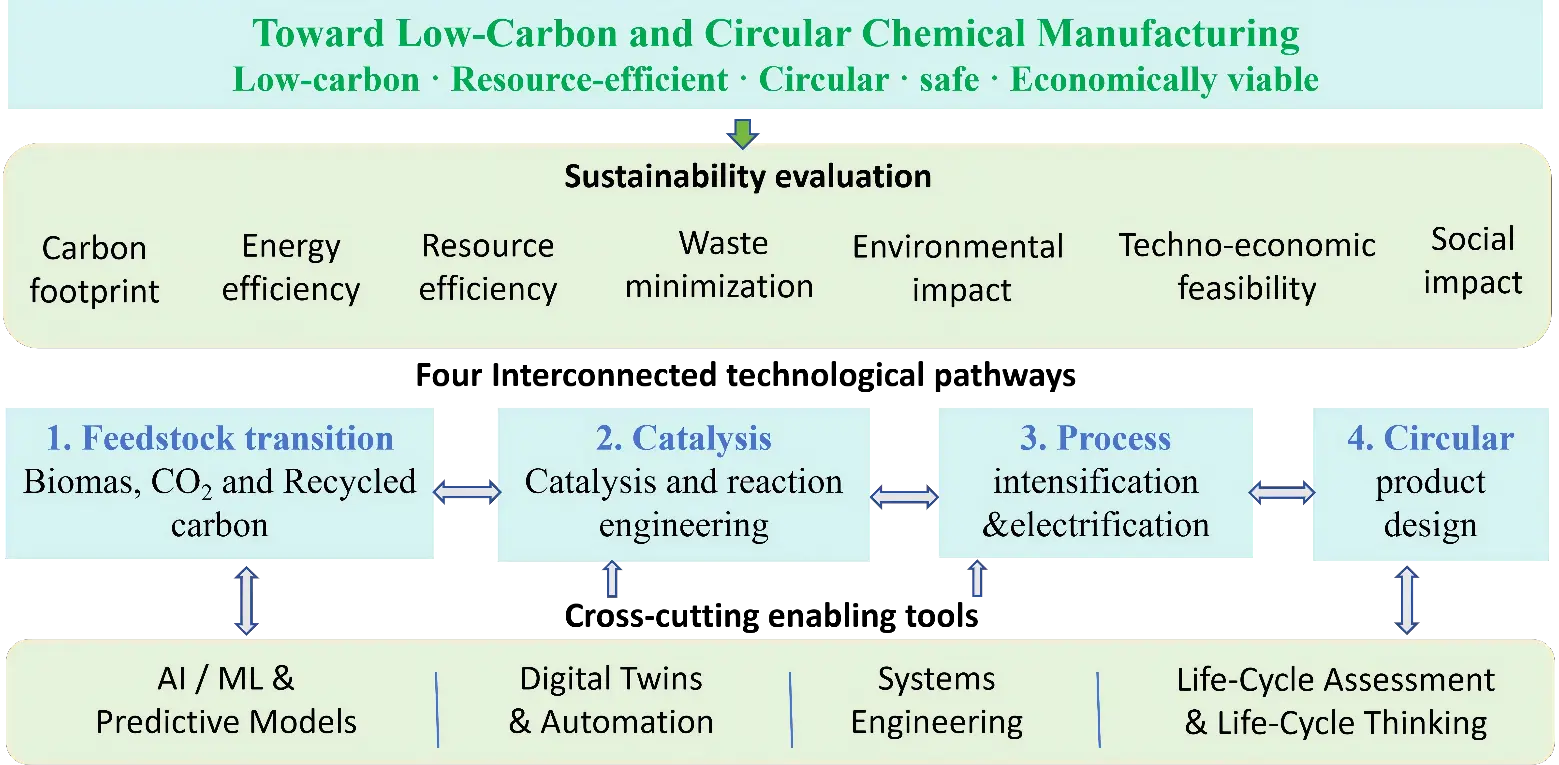
Figure 1. Integrated framework connecting green chemistry innovations with sustainable chemical manufacturing.
2. Systems Evaluation Framework for Low-Carbon and Circular Chemical Technologies
Traditional chemical evaluation often emphasizes conversion, yield, purity, and cost, whereas a systems framework for green chemical technology requires broader criteria, including material efficiency, energy efficiency, hazard reduction, carbon footprint, circularity, and life-cycle impacts. Without quantitative and system-level assessment, a process may appear green in one step while shifting environmental burdens to another stage. Therefore, the evaluation of green chemical technology should combine reaction-level metrics, process-level metrics, and system-level indicators.
Atom economy is one of the earliest and most fundamental green chemistry metrics. It evaluates the fraction of reactant atoms incorporated into the desired product. Reactions with high atom economy generally generate fewer stoichiometric by-products and are more attractive for sustainable synthesis. However, atom economy alone is insufficient because it does not account for solvents, catalysts, energy input, purification, or product isolation.
The E-factor, defined as the mass of waste generated per mass of product, provides a more process-oriented measure of waste generation [5]. It has played an important role in identifying the large waste burden of fine chemical and pharmaceutical manufacturing. Process mass intensity (PMI) further extends this logic by calculating the total mass of materials used to produce a unit mass of product [6,7]. PMI is especially useful in process development because it includes reactants, reagents, solvents, catalysts, and work-up materials. Holistic metric systems have also been proposed to integrate yield, solvent use, safety, energy demand, and environmental burden into a more comprehensive sustainability assessment [8,9].
Based on these evaluation criteria, the representative pathways discussed in this review can be compared in terms of their main sustainability contributions, evaluation metrics, and implementation challenges. As summarized in Table 1, these pathways should not be evaluated as independent or universally green solutions. Their sustainability performance depends on where the main burden is shifted or reduced within the manufacturing system. Feedstock transition mainly changes the origin of carbon, but it may introduce variability, pretreatment, and separation challenges. Catalysis and biocatalysis can improve selectivity and reduce waste, but their practical value depends on stability, recovery, productivity, and tolerance to realistic feedstocks. Process intensification and electrification can improve safety, energy efficiency, and scalability, but their benefits depend strongly on solvent use, downstream purification, equipment integration, and electricity carbon intensity. Circular product design extends the assessment boundary to product use and end-of-life, but it requires suitable recovery infrastructure, recycling routes, and safety evaluation. Therefore, Table 1 should be read as a systems map: the practical sustainability of each pathway depends on how it is integrated with metrics, scale-up, separation, energy supply, safety assessment, and life-cycle thinking [4,5,6,7,8,9,11,28,29,30,31,32,33,34,35,36,42,46,47,48,49,50,51,52,53,54,55,56,57,58,59,60,61,62,63,64,65,66,67].
Table 1. Representative technical pathways, sustainability contributions and evaluation metrics in green chemical technology.
|
Technical Pathway |
Main Green Contribution |
Representative Metrics |
|---|---|---|
|
Biomass-derived feedstocks |
Reduce dependence on fossil carbon; enable renewable carbon cycles |
Carbon efficiency, yield, LCA, energy demand |
|
CO2 utilization |
Convert CO2 into chemicals and fuels; support carbon management |
CO2 conversion, selectivity, energy intensity, carbon footprint |
|
Waste-derived feedstocks |
Convert waste into secondary resources; support circular economy |
Recycling rate, product yield, contamination tolerance, LCA |
|
Heterogeneous catalysis |
Improve selectivity and catalyst recovery |
Conversion, selectivity, TON, TOF, catalyst lifetime |
|
Biocatalysis |
Enable mild and selective transformations |
Enantioselectivity, productivity, enzyme stability, PMI |
|
Continuous-flow chemistry |
Improve heat and mass transfer, safety, and automation |
Space-time yield, PMI, residence time, energy use |
|
Electrified processes |
Couple manufacturing with low-carbon electricity |
Faradaic efficiency, current density, energy intensity, carbon footprint |
|
Circular product design |
Enable recycling, reuse, repair, or degradation |
Recycling efficiency, depolymerization yield, degradation rate, LCA |
Solvent selection is another key issue in green chemical technology because solvents often dominate the material footprint of chemical processes. Solvent guides developed for pharmaceutical and chemical process development provide practical tools to replace hazardous solvents with safer, more sustainable alternatives [68,69,70]. However, solvent greenness depends not only on toxicity or origin but also on function, recyclability, volatility, flammability, stability, and downstream separation. Bio-based solvents may offer opportunities to reduce dependence on fossil resources, but they must also be evaluated for safety, availability, performance, and life-cycle impacts [71,72].
Life-cycle assessment (LCA) provides a more holistic framework because it evaluates environmental impacts across raw material extraction, production, transportation, use, and end-of-life [4,9]. A complete LCA generally comprises four interconnected phases: goal and scope definition, life-cycle inventory analysis, life-cycle impact assessment, and interpretation. The goal and scope phase defines the functional unit, system boundaries, allocation methods, and major assumptions; the inventory phase quantifies material and energy inputs, emissions, coproducts, and waste streams; the impact-assessment phase translates inventory data into environmental impact categories; and the interpretation phase evaluates the robustness, limitations, and implications of the results. LCA is particularly important when comparing fossil-based, bio-based, CO2-derived, and recycled-carbon routes. However, reliable conclusions require high-quality inventory data, appropriate system boundaries, transparent assumptions, and sensitivity or uncertainty analysis. For early-stage research, simplified or prospective LCA may support preliminary decision-making, but more detailed assessments based on measured process data are required during scale-up and industrial implementation. Therefore, green chemical technology should be evaluated by combining reaction-level metrics, process-level metrics, and system-level life-cycle assessment to avoid shifting environmental burdens between stages or impact categories.
2.1. Feedstock Transition in Green Chemical Technology
Feedstock selection determines the origin of carbon, the degree of resource dependence, and the environmental profile of chemical production. Conventional chemical manufacturing is dominated by fossil-derived hydrocarbons, which provide low-cost and highly versatile carbon sources but also embed carbon emissions and resource depletion into the production chain. Feedstock transition is therefore a central pathway for sustainable chemical manufacturing.
2.1.1. Biomass-Derived Feedstocks
Biomass is an important renewable carbon source for chemicals, fuels, and materials. Lignocellulose, sugars, vegetable oils, terpenes, lignin, and fermentation-derived intermediates can be converted into platform molecules such as ethanol, lactic acid, succinic acid, levulinic acid, furfural, 5-hydroxymethylfurfural, and bio-based diols [15,16,17,18,19]. These molecules provide opportunities to produce polymers, solvents, plasticizers, surfactants, and fine chemicals with reduced dependence on petroleum resources.
However, biomass conversion is not a simple replacement of fossil feedstocks. Biomass-derived molecules usually contain high oxygen content, multiple functional groups, and variable composition. These features create both opportunities and challenges. High functionality can enable shorter synthetic routes to oxygenated chemicals, but it can also lead to complex reaction networks, side reactions, catalyst deactivation, and difficult separations. In addition, biomass supply is influenced by season, geography, moisture content, and competing uses in food, feed, and energy sectors.
Catalytic upgrading is therefore essential for biomass utilization. Hydrogenation, dehydration, oxidation, hydrodeoxygenation, reforming, and C–C coupling reactions have been widely investigated for converting biomass-derived platform molecules into fuels and chemicals [20,21,22]. Functionalized heterogeneous catalysts are particularly important because they can combine acid, base, metal, and redox sites to control complex reaction networks [21]. Homogeneous catalysis also provides high selectivity for certain biomass-derived transformations, but catalyst recovery and solvent use remain important challenges [22].
A sustainable biomass process should be evaluated not only by product yield but also by carbon efficiency, energy consumption, solvent use, water demand, land-use implications, and integration with waste valorization. The technical goal is not merely to replace petroleum carbon with renewable carbon, but to design conversion routes that fully exploit the chemical structure of biomass while minimizing energy and separation burdens.
2.1.2. Carbon Dioxide as a C1 Feedstock
Carbon dioxide utilization is attractive because CO2 is abundant, non-flammable, and directly linked to carbon management. CO2 can be converted into carbonates, carbamates, urea derivatives, formic acid, methanol, methane, olefins, and other chemicals through catalytic, electrochemical, photochemical, or biological pathways [10,11,12,13,14]. The use of CO2 as a C1 building block is particularly relevant for low-carbon chemical systems when coupled with renewable electricity and green hydrogen. Green hydrogen produced using renewable electricity is particularly important for reducing the life-cycle emissions of hydrogen-dependent processes, including CO2 hydrogenation, ammonia synthesis, and biomass upgrading.
Nevertheless, CO2 is thermodynamically stable and kinetically inert. Its conversion requires energy input and suitable activation strategies. For example, CO2 hydrogenation depends strongly on the source of hydrogen. If hydrogen is produced from fossil fuels without carbon capture, the environmental benefit can be limited or even negative. Similarly, electrochemical CO2 reduction requires careful evaluation of faradaic efficiency, current density, product selectivity, cell voltage, electrolyte consumption, and electricity carbon intensity [13].
The sustainability of CO2 utilization should therefore be assessed using system-level criteria. Important questions include whether the product stores carbon for a meaningful period, whether the process uses low-carbon energy, whether the reaction avoids excessive separation burdens, and whether the overall life-cycle emissions are lower than those of conventional routes [11,12]. In this sense, CO2 utilization is not automatically green; it becomes green only when integrated into a low-carbon energy and material system.
2.1.3. Waste-Derived Feedstocks
Waste-derived feedstocks connect green chemistry with circular economy principles. Plastic waste, lignin residues, used solvents, agricultural residues, industrial off-gases, and other by-products can be regarded as secondary resources rather than terminal waste. Their valorization can reduce primary resource demand and decrease environmental pressure from disposal.
Plastic waste is a particularly important example. The global production, use, and disposal of plastics have created serious environmental challenges [73]. Mechanical recycling is useful but often limited by polymer degradation, contamination, additive complexity, and property loss after repeated cycles. Chemical recycling and upcycling can convert waste polymers into monomers, fuels, aromatics, carbon materials, or higher-value chemicals [37,38,39,40]. Technologies include solvolysis, glycolysis, methanolysis, hydrocracking, hydrogenolysis, pyrolysis, oxidation, and catalytic depolymerization. However, these routes must be evaluated carefully because high energy input, low selectivity, and difficult purification can offset the benefits of waste utilization.
Waste-derived feedstocks are generally heterogeneous. Their composition may vary by source, collection method, and pretreatment. This variability creates challenges for catalyst stability, reactor operation, product consistency, and quality control. Robust catalysts, flexible reactor systems, adaptive process control, and efficient separation technologies are therefore necessary for converting waste into reliable chemical products. In this context, circular chemistry provides a broader conceptual framework by treating waste streams as potential feedstocks within closed-loop or spiral material systems [41,42,43,44].
2.2. Catalysis and Reaction Engineering
High selectivity reduces by-product formation, downstream separation requirements, solvent consumption, and overall process waste; therefore, it is a central link between catalytic performance and system-level sustainability. Catalysis is one of the most important enabling technologies in green chemical systems because it directly affects selectivity, atom economy, energy consumption, and waste generation. A well-designed catalyst can reduce reaction steps, eliminate protecting groups, avoid stoichiometric reagents, and enable milder operating conditions. However, in green chemical technology, catalyst performance should not be evaluated only by conversion and yield. Stability, recyclability, metal abundance, toxicity, solvent compatibility, separation requirements, and scale-up behavior must also be considered.
2.2.1. Heterogeneous and Homogeneous Catalysis
Heterogeneous catalysts offer clear advantages for green chemical manufacturing because they are easier to separate, recover, and reuse. They are widely used in hydrogenation, oxidation, dehydration, reforming, biomass upgrading, CO2 conversion, and polymer recycling [10,19,20,21]. Solid catalysts can also be integrated into fixed-bed, trickle-bed, monolith, and continuous-flow reactors, making them attractive for industrial implementation.
The main technical challenges are catalyst deactivation, mass-transfer limitations, active-site leaching, coking, poisoning, and structural instability. These challenges are especially serious when using biomass-derived or waste-derived feedstocks, which often contain impurities, water, salts, sulfur, nitrogen, or mixed polymer additives. Green catalyst design should therefore consider not only initial activity but also long-term durability under realistic feed conditions.
Homogeneous catalysts often provide excellent activity and selectivity because their active sites are well-defined and accessible. They are powerful tools for asymmetric synthesis, C–C bond formation, carbonylation, hydroformylation, metathesis, and fine chemical synthesis [22]. In green chemistry, homogeneous catalysis can reduce reaction steps and improve selectivity, thereby decreasing waste and purification demands. However, homogeneous systems frequently face difficulties in catalyst recovery, metal contamination, ligand synthesis, and solvent use. Strategies such as biphasic catalysis, supported homogeneous catalysts, membrane separation, and catalyst immobilization have been developed to address these issues. The sustainability of these strategies should be evaluated by full process metrics rather than catalyst recovery alone.
2.2.2. Biocatalysis
Biocatalysis is highly relevant to green chemical technology because enzymes and whole-cell catalysts can operate under mild temperature, pressure, and pH conditions, often in aqueous media and with excellent chemo-, regio-, and stereoselectivity [23,24,25,26]. These features make biocatalysis attractive for pharmaceuticals, fine chemicals, chiral intermediates, food ingredients, and biomass conversion. The development of protein engineering, immobilization, directed evolution, and synthetic biology has greatly expanded the practical scope of biocatalysis [25]. Enzymes can now be tailored to accept non-natural substrates, tolerate organic solvents, and operate under industrial conditions. Biocatalytic cascades can also combine multiple transformations in one pot, reducing isolation steps and improving overall mass efficiency. From the perspective of circular chemistry, biocatalysis can contribute not only to greener synthesis but also to waste valorization and selective degradation [26,27]. Despite these advantages, challenges remain. Enzymes may suffer from limited substrate scope, inhibition, instability, low volumetric productivity, or mass-transfer limitations. Whole-cell systems may introduce downstream separation challenges and require careful control of metabolism. Therefore, successful industrial biocatalysis requires integration between enzyme design, reaction engineering, immobilization, separation, and process control.
2.2.3. Electrochemical and Photochemical Catalysis
Electrochemical and photochemical methods provide opportunities to replace thermal or stoichiometric activation with electrons or photons. Visible-light photoredox catalysis has enabled new synthetic pathways under mild conditions, while organic electrosynthesis can use electricity as a redox reagent, reducing the need for chemical oxidants or reductants [74,75]. Proton-coupled electron transfer chemistry further expands the reaction design space by linking electron and proton movement in selective transformations [76].
When powered by renewable electricity, electrochemical synthesis can reduce dependence on fossil-derived thermal energy and chemical oxidants or reductants, thereby potentially lowering the life-cycle carbon footprint of chemical production. However, its environmental benefit depends not only on faradaic efficiency and product selectivity, but also on the carbon intensity of the electricity supply, cell voltage, current density, electrode stability, electrolyte consumption, and downstream separation requirements. For photochemical systems, photon penetration, light-source efficiency, reactor geometry, catalyst stability, and quantum efficiency are also critical. Therefore, electrochemical and photochemical processes should be developed together with reactor design, process intensification, renewable-energy integration, and life-cycle assessment.
2.3. Process Intensification and Electrified Manufacturing
Process intensification aims to produce more efficiently by reducing equipment size, energy consumption, solvent use, residence time, and safety risks. In green chemical technology, it provides a practical bridge between laboratory chemistry and industrial manufacturing. The development of intensified processes requires the integration of reaction kinetics, heat and mass transfer, separation, process control, and safety engineering [28,29].
2.3.1. Continuous-Flow Chemistry
Continuous-flow chemistry is one of the most representative process-intensification strategies. Compared with batch reactors, flow reactors offer improved heat and mass transfer, precise control of residence time, safer handling of reactive intermediates, easier automation, and potential scalability through numbering-up [30,31,32,33]. These advantages are particularly valuable for fast reactions, exothermic reactions, photochemical reactions, electrochemical reactions, and hazardous transformations [34,35].
However, flow chemistry should not be considered automatically green. Its sustainability depends on solvent consumption, energy demand, reactor cleaning, pressure drop, catalyst lifetime, productivity, and downstream purification. A flow process that improves safety but requires dilute conditions and large solvent volumes may not reduce overall environmental impact. Therefore, flow chemistry must be evaluated using green metrics, life-cycle assessment, and techno-economic analysis.
2.3.2. Microreactors and Modular Systems
Microreactors provide high surface-area-to-volume ratios, excellent heat transfer, and accurate control over mixing and residence time. These features are useful for reactions that are limited by heat or mass transfer. Microreactor technology also supports modular and distributed manufacturing, in which small-scale units can be located close to feedstock sources or product demand [36].
Modular manufacturing is attractive for renewable and waste-derived feedstocks because such resources may be geographically dispersed. Instead of transporting low-density biomass or waste over long distances, modular units can convert local feedstocks into platform chemicals or intermediates. Nevertheless, modular systems must overcome challenges related to equipment costs, standardization, maintenance, process control, and product quality assurance.
2.3.3. Reaction-Separation Integration
Separation often dominates the energy and material footprint of chemical processes. Distillation, extraction, crystallization, chromatography, and solvent removal can consume large amounts of energy and generate significant waste. Some separations are considered among the most important technological challenges for improving global chemical sustainability [61]. Therefore, integrating reaction and separation is a powerful strategy for greener manufacturing.
Examples include reactive distillation, membrane reactors, adsorption-enhanced reactions, in situ product removal, and catalytic separation. These systems can shift equilibrium, reduce solvent use, improve selectivity, and simplify downstream processing. Membrane-based separation is particularly attractive for sustainable chemical manufacturing because it can replace or reduce the use of energy-intensive thermal separations while enabling continuous operation and process intensification. However, its practical implementation depends on membrane selectivity, permeability, chemical and thermal stability, fouling resistance, solvent compatibility, and long-term durability [62].
2.3.4. Electrification of Chemical Processes
Electrification is increasingly discussed as a route to decarbonize chemical manufacturing. Electrified heating, electrochemical synthesis, plasma-assisted reactions, microwave-assisted processes, and electrically driven separations can reduce dependence on fossil-fuel combustion when powered by low-carbon electricity [63,64,65]. The sustainability benefit of process electrification, however, depends strongly on the carbon intensity, availability, intermittency, and regional characteristics of the electricity supply. Integration with renewable-electricity generation, energy storage, and flexible process operation may therefore be necessary to maintain stable production while reducing life-cycle greenhouse-gas emissions. Joule-heated catalytic reactors, for example, offer opportunities to rapidly and directly heat catalytic systems, potentially improving energy efficiency and process flexibility [65].
Nevertheless, electrification does not automatically guarantee sustainability. In addition to electricity-supply characteristics, its overall performance depends on reactor efficiency, equipment durability, heat integration, energy-storage requirements, process flexibility, and the environmental impacts associated with electrified infrastructure. Electrified processes should therefore be evaluated using life-cycle assessment and techno-economic analysis. For many chemical processes, partial electrification, hybrid energy systems, and flexible operation may be more practical than complete electrification.
2.4. Circular Product Design
Green chemistry must address not only how products are synthesized but also how they are used, recovered, recycled, or degraded. Product design for circularity requires materials and chemicals to be durable during use but recoverable, recyclable, repairable, or safely degradable at end-of-life. This shifts green chemistry from reaction optimization to molecular and material system design. In a circular chemical manufacturing system, product design should be linked with renewable and recycled feedstocks, green manufacturing, product use, collection and sorting, and appropriate end-of-life pathways, including reuse and repair, mechanical recycling, chemical recycling, and safe degradation (Figure 2) [4,37,38,39,40,41,42,43,44,45,46,47,48,49].
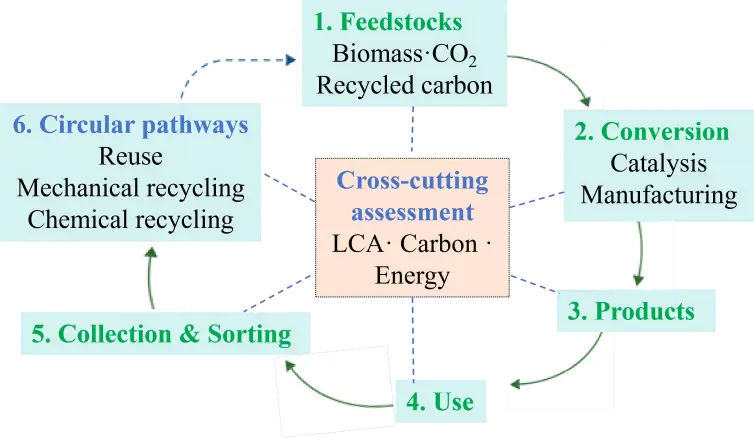
As shown in Figure 2, circularity is not achieved by a single recycling technology but by the coordinated use of multiple value-retention and end-of-life pathways. Reuse and repair generally retain the highest product value by extending service life, while mechanical recycling preserves material value when contamination and degradation are limited. Chemical recycling can recover monomers or chemical feedstocks for renewed production, whereas safe degradation is more appropriate when recovery or recycling is technically impractical. These pathways are complementary and should be selected according to product condition, material composition, energy demand, and available recovery infrastructure [37,38,39,40,41,42,43,44,45].
2.4.1. Molecular Design for Circularity
In traditional product development, performance during use is often prioritized, while end-of-life management is treated as an external problem. Circular product design changes this logic. Molecular structure, bond stability, functional groups, additives, and material architecture should be selected with recovery and recycling in mind. Circular chemistry emphasizes the design of chemical systems in which waste is minimized and material value is retained across repeated cycles.
For polymers, this may involve designing backbones that allow selective depolymerization, using dynamic covalent bonds, improving compatibility with mechanical recycling, or developing monomers that can be recovered with low energy input [44,45]. Chemical recycling to monomer is an ideal pathway for certain polymers because it can regenerate monomers that are repolymerized without loss of material properties [44]. However, not all polymers are suitable for efficient chemical recycling. Depolymerization thermodynamics, catalyst selectivity, product separation, contamination tolerance, and energy demand are decisive factors. Therefore, chemically recyclable polymers should be designed from the beginning rather than retrofitted after large-scale waste generation.
2.4.2. Biodegradable and Degradable Materials
Biodegradable materials are often regarded as green, but their sustainability depends on the conditions of degradation and the resulting products. A biodegradable polymer that degrades only under industrial composting conditions may persist in marine or soil environments. Similarly, degradation products must be non-toxic and should not generate persistent residues. Therefore, biodegradability must be evaluated under realistic environmental and waste-management scenarios.
Design for degradation should be applied where recovery and recycling are impractical, such as agricultural films, biomedical materials, or certain disposable products. For durable goods, recyclability and repairability may be more important than rapid degradation. Thus, circular product design requires matching material properties with actual use patterns and end-of-life infrastructure.
2.4.3. Safe-and-Sustainable-by-Design
Circularity should not be pursued in isolation from safety. A material may be recyclable but still toxic, persistent, bioaccumulative, or dependent on hazardous additives. Conversely, a material may be safer but difficult to recycle or highly energy-intensive to produce. Safe-and-sustainable-by-design frameworks therefore aim to integrate hazard, exposure, functionality, circularity, and life-cycle impacts in the early stages of innovation [46,47,48,49].
This approach is important for avoiding regrettable substitutions. For example, replacing a regulated solvent with a less-studied alternative may reduce the immediate hazard classification but introduce concerns about persistence or toxicity. Similarly, replacing fossil-based materials with bio-based materials may reduce fossil carbon use but increase land, water, or fertilizer impacts. Green chemical technology should therefore combine green chemistry, circular chemistry, and safety assessment in a unified design strategy.
2.5. Digital and Interdisciplinary Integration
Systems engineering provides an integrative approach for coordinating molecular design, reaction engineering, separation, process control, energy supply, and sustainability assessment across multiple scales. In sustainable chemical manufacturing, it supports multi-objective decision-making by balancing productivity, safety, environmental performance, cost, robustness, and scalability. Sustainable chemical manufacturing is a complex systems problem. It requires integration across chemistry, biology, chemical engineering, materials science, data science, environmental science, and industrial systems engineering. No single discipline can solve the challenges of low-carbon and circular chemical manufacturing alone.
2.5.1. Artificial Intelligence and Machine Learning
Artificial intelligence (AI) and machine learning (ML) are emerging as important enabling technologies for sustainable chemical manufacturing [50,51,52,53,56]. AI/ML approaches have been applied in molecular design, catalyst discovery, process optimization, and sustainability assessment. By identifying complex and nonlinear relationships in experimental and process datasets, these methods can accelerate materials and catalyst discovery, improve process efficiency, and support data-driven decision-making.
A typical AI/ML workflow for sustainable chemical technology involves several sequential steps. First, the prediction objective should be clearly defined according to the target application, such as molecular property prediction, catalyst screening, reaction optimization, or process performance evaluation. High-quality datasets are then collected, curated, and preprocessed to remove inconsistencies and generate appropriate molecular or process descriptors. Suitable machine-learning algorithms are selected and trained using available datasets. Model performance should be evaluated through independent validation datasets, appropriate statistical metrics, and uncertainty analysis. Finally, experimental verification is required to confirm model predictions and ensure practical applicability.
Despite their potential, purely data-driven models have important limitations. Their predictive reliability strongly depends on the quantity, quality, and representativeness of the available data, and extrapolation beyond the training domain can be unreliable. In addition, limited interpretability may make it difficult to determine whether predictions are consistent with underlying physical and chemical principles. Similar challenges have been highlighted in predictive modeling of chemical properties and environmental behavior, where data quality, applicability domain, and uncertainty evaluation are essential for reliable model application [77]. These limitations are particularly relevant in sustainable chemical manufacturing, where experimental and industrial datasets are often sparse, heterogeneous, or obtained under restricted operating conditions. Therefore, AI/ML models should be used together with appropriate validation, uncertainty analysis, and available chemical and engineering knowledge.
2.5.2. Mechanistic and Hybrid Predictive Models
Mechanistic models based on first-principles knowledge provide another important foundation for predictive modeling in sustainable chemical manufacturing. Unlike purely data-driven approaches, mechanistic models describe process behavior using fundamental physical and chemical relationships, including mass and energy balances, reaction kinetics, thermodynamics, and transport phenomena [78]. Such models are widely used for reactor design, process simulation, optimization, scale-up, and process control [78]. Their major advantages include physical interpretability and the ability to predict system behavior beyond the range of available experimental data, provided that the underlying mechanisms and model parameters are sufficiently well established.
However, mechanistic models also have limitations. Their development generally requires detailed knowledge of reaction and transport mechanisms, reliable thermodynamic and kinetic parameters, and appropriate model assumptions. For complex multiphase or multiscale chemical systems, high-fidelity mechanistic models may also become computationally demanding [79]. Model uncertainty can additionally arise from simplified assumptions, uncertain parameters, or incomplete descriptions of complex reaction and transport phenomena. These limitations are particularly relevant to real-time applications in which rapid prediction and model updating are required.
Hybrid modeling approaches provide a complementary strategy by integrating mechanistic knowledge with data-driven methods such as machine learning [80,81]. In such models, first-principles relationships can provide physical constraints and improve interpretability, whereas ML components can capture unresolved nonlinearities, compensate for model–plant mismatch, and update predictions using experimental or operational data [78,81]. Hybrid models can therefore combine the extrapolation capability and physical consistency of mechanistic approaches with the flexibility and computational efficiency of data-driven models.
This combination is particularly relevant to digital twins in chemical manufacturing. Digital twins can incorporate mechanistic, data-driven, or hybrid predictive models, along with real-time operational data, sensors, and feedback mechanisms, to create dynamic representations of manufacturing systems [79]. Rather than relying exclusively on ML, the choice of predictive model should depend on process knowledge, data availability, computational requirements, and the intended application. Mechanistic and hybrid digital twins can support process monitoring, optimization, fault detection, predictive control, and adaptive decision-making under changing operating conditions [79]. For sustainable chemical manufacturing, their further integration with energy, environmental, and life-cycle indicators may also enable operational decisions to consider not only productivity and product quality but also resource efficiency and environmental performance.
2.5.3. Automation and Self-Driving Laboratories
Automation and self-driving laboratories are emerging as important tools for sustainable chemical research. Automated platforms can reduce material consumption, accelerate optimization, improve reproducibility, and generate structured datasets for machine learning [54,55,57]. When combined with multi-objective optimization, such platforms can optimize yield, selectivity, solvent use, energy input, and safety simultaneously. Nevertheless, autonomous experimentation should be aligned with sustainability metrics. A platform that accelerates screening but consumes large amounts of solvent or generates poorly reusable data may not be sustainable. Future self-driving laboratories for green chemistry should integrate reaction performance, environmental metrics, process feasibility, and data quality from the beginning.
2.5.4. Interdisciplinary Translation from Laboratory to Industry
Many green chemistry innovations remain at laboratory scale because they are not designed with industrial constraints in mind. Industrial implementation requires stable catalysts, available feedstocks, safe operation, efficient separation, regulatory acceptance, and economic feasibility. Therefore, interdisciplinary collaboration should begin early. Chemists, engineers, toxicologists, data scientists, and life-cycle analysts should work together during molecular and process design rather than after a route has already been selected. This integration changes the definition of success. Instead of optimizing only yield or selectivity, future green chemical technology must optimize multiple objectives: productivity, safety, carbon footprint, circularity, cost, robustness, and scalability. In this sense, green chemical technology is not only a scientific field but also an engineering and systems-design discipline.
3. Key Challenges and Future Perspectives
Although green chemical technology has made substantial progress, several major challenges remain. First, quantitative sustainability assessment is still inconsistent. Different studies use different system boundaries, metrics, and assumptions, making comparisons difficult. A process may appear green under one metric but less favorable under another. Future research should report multiple indicators, including yield, selectivity, solvent use, PMI, E-factor, energy intensity, carbon footprint, and life-cycle assumptions. Second, laboratory-scale green reactions do not necessarily translate into industrially green processes. Many academic studies demonstrate excellent selectivity on a small scale but rely on dilute conditions, expensive catalysts, complex ligands, high-purity feedstocks, or chromatographic purification. These factors can limit industrial relevance. More research should focus on catalyst lifetime, productivity, separation, process safety, and realistic feedstock conditions. Third, feedstock variability is a critical challenge. Renewable and waste-derived feedstocks are often more heterogeneous than fossil feedstocks. This variability affects catalyst performance, reactor control, and product quality. Future systems will require robust catalysts, adaptive control, flexible separation, and real-time feedstock characterization. Fourth, electrification and CO2 utilization depend strongly on the availability of low-carbon energy. Without renewable electricity or green hydrogen, these technologies may shift emissions rather than reduce them. Future research should integrate chemical process design with energy-system modeling, life-cycle assessment, and techno-economic analysis. Fifth, circularity must be realistic. Designing recyclable or biodegradable materials is insufficient if recycling infrastructure, collection systems, or degradation conditions are lacking. Circular product design should therefore consider the entire value chain, including use patterns, waste collection and sorting, recycling technologies, and market demand for recycled products. Sixth, AI and digital tools require high-quality data. Many sustainability-related properties, such as toxicity, persistence, degradability, and life-cycle impacts, are underreported. Open databases, standardized reporting, and integration of experimental and computational data will be necessary for reliable AI-assisted green chemistry.
Future green chemical technology should move from isolated reaction improvement toward integrated molecular, process, and system design. Key research directions include: developing catalysts for variable renewable and waste feedstocks; integrating electrochemical and photochemical processes with renewable electricity; designing polymers and chemicals for both performance and circularity; embedding life-cycle assessment into early-stage design; and using AI-guided automation to accelerate sustainable discovery. The ultimate goal is not merely to make individual reactions greener, but to build low-carbon, safe, and circular chemical manufacturing systems.
4. Conclusions
Green chemical technology is the practical application of green chemistry principles to sustainable chemical manufacturing. This review proposes a systems framework for connecting molecular design, feedstock transition, catalytic transformation, process intensification, electrification, circular product design, digitalization, and life-cycle assessment. Renewable and alternative feedstocks can reduce dependence on fossil carbon, but they require selective conversion and system-level evaluation. Catalysis and reaction engineering improve efficiency and selectivity, but must be assessed by stability, separation, and scalability. Process intensification and electrification provide routes to safer and lower-carbon manufacturing, but their benefits depend on energy sources and holistic process design. Circular product design extends green chemistry beyond synthesis to include use, recovery, recycling, and degradation. Overall, the future development of green chemical technology should shift from isolated greener reactions to integrated, low-carbon, circular chemical manufacturing systems through the coordinated optimization of molecular design, catalytic efficiency, process engineering, circularity, safety, and life-cycle performance.
Statement of the Use of Generative AI and AI-Assisted Technologies in the Writing Process
During the preparation of this manuscript, the authors used Grammarly to improve grammar, clarity, and language quality. After using this tool, the authors carefully reviewed and edited the content as needed and take full responsibility for the content of the published article.
Acknowledgments
The authors gratefully acknowledge the support provided by the China Merchants Charitable Foundation through its C-Green Public Welfare Teaching Assistance Program. The authors also thank all students enrolled in the graduate course “Green Chemistry and Chemical Engineering” for their engaging discussions and valuable perspectives on green chemistry and sustainable manufacturing.
Author Contributions
Conceptualization, M.E.R. and C.Y.; Methodology, M.E.R. and J.S.; Investigation, M.E.R. and J.S.; Data Curation, M.E.R.; Writing—Original Draft Preparation, M.E.R. and J.S.; Writing—Review & Editing, M.E.R., J.S. and C.Y.; Visualization, M.E.R.; Supervision, C.Y.; Project Administration, C.Y.; Funding Acquisition, C.Y. All authors have read and agreed to the published version of the manuscript.
Ethics Statement
Not applicable.
Informed Consent Statement
Not applicable.
Data Availability Statement
No new experimental or numerical datasets were generated for this mini-review. The literature sources discussed are cited in the article.
Funding
This work was financially supported by the National Natural Science Foundation of China (22578005), Anhui Provincial Natural Science Foundation (2408085MB043), Anhui Provincial University Scientific Research Project (2023AH050149), and Anhui Postdoctoral Scientific Research Program Foundation (2025B1098).
Declaration of Competing Interest
The authors declare that they have no known competing financial interests or personal relationships that could have appeared to influence the work reported in this paper.
References
- Anastas PT, Warner JC. Green Chemistry: Theory and Practice; Oxford University Press: Oxford, UK, 1998. [Google Scholar]
- Anastas PT, Eghbali N. Green Chemistry: Principles and Practice. Chem. Soc. Rev. 2010, 39, 301–312. DOI:10.1039/b918763b [Google Scholar]
- Erythropel HC, Zimmerman JB, de Winter TM, Petitjean L, Melnikov F, Lam CH, et al. The Green ChemisTREE: 20 years after taking root with the 12 principles. Green Chem. 2018, 20, 1929–1961. DOI:10.1039/c8gc00482j [Google Scholar]
- Zimmerman JB, Anastas PT, Erythropel HC, Leitner W. Designing for a green chemistry future. Science 2020, 367, 397–400. DOI:10.1126/science.aay3060 [Google Scholar]
- Sheldon RA. The E factor 25 years on: The rise of green chemistry and sustainability. Green Chem. 2017, 19, 18–43. DOI:10.1039/c6gc02157c [Google Scholar]
- Sheldon RA. Metrics of Green Chemistry and Sustainability: Past, Present, and Future. ACS Sustain. Chem. Eng. 2018, 6, 32–48. DOI:10.1021/acssuschemeng.7b03505 [Google Scholar]
- Jimenez-Gonzalez C, Ponder CS, Broxterman QB, Manley JB. Using the Right Green Yardstick: Why Process Mass Intensity Is Used in the Pharmaceutical Industry To Drive More Sustainable Processes. Org. Process Res. Dev. 2011, 15, 912–917. DOI:10.1021/op200097d [Google Scholar]
- McElroy CR, Constantinou A, Jones LC, Summerton L, Clark JH. Towards a holistic approach to metrics for the 21st century pharmaceutical industry. Green Chem. 2015, 17, 3111–3121. DOI:10.1039/c5gc00340g [Google Scholar]
- Fantozzi N, Volle JN, Porcheddu A, Virieux D, García F, Colacino E. Green metrics in mechanochemistry. Chem. Soc. Rev. 2023, 52, 6680–6714. DOI:10.1039/d2cs00997h [Google Scholar]
- Gao W, Liang S, Wang R, Jiang Q, Zhang Y, Zheng Q, et al. Industrial carbon dioxide capture and utilization: State of the art and future challenges. Chem. Soc. Rev. 2020, 49, 8584–8686. DOI:10.1039/d0cs00025f [Google Scholar]
- Artz J, Müller TE, Thenert K, Kleinekorte J, Meys R, Sternberg A, et al. Sustainable Conversion of Carbon Dioxide: An Integrated Review of Catalysis and Life Cycle Assessment. Chem. Rev. 2018, 118, 434–504. DOI:10.1021/acs.chemrev.7b00435 [Google Scholar]
- Hepburn C, Adlen E, Beddington J, Carter EA, Fuss S, Mac Dowell N, et al. The technological and economic prospects for CO2 utilization and removal. Nature 2019, 575, 87–97. DOI:10.1038/s41586-019-1681-6 [Google Scholar]
- De Luna P, Hahn C, Higgins D, Jaffer SA, Jaramillo TF, Sargent EH. What would it take for renewably powered electrosynthesis to displace petrochemical processes? Science 2019, 364, eaav3506. DOI:10.1126/science.aav3506 [Google Scholar]
- Appel AM, Bercaw JE, Bocarsly AB, Dobbek H, DuBois DL, Dupuis M, et al. Frontiers, Opportunities, and Challenges in Biochemical and Chemical Catalysis of CO2 Fixation. Chem. Rev. 2013, 113, 6621–6658. DOI:10.1021/cr300463y [Google Scholar]
- Isikgor FH, Becer CR. Lignocellulosic biomass: A sustainable platform for the production of bio-based chemicals and polymers. Polym. Chem. 2015, 6, 4497–4559. DOI:10.1039/c5py00263j [Google Scholar]
- Corma A, Iborra S, Velty A. Chemical Routes for the Transformation of Biomass into Chemicals. Chem. Rev. 2007, 107, 2411–2502. DOI:10.1021/cr050989d [Google Scholar]
- Ewing TA, Nouse N, van Lint M, van Haveren J, Hugenholtz J, van Es DS. Fermentation for the production of biobased chemicals in a circular economy: A perspective for the period 2022–2050. Green Chem. 2022, 24, 6373–6405. DOI:10.1039/d1gc04758b [Google Scholar]
- Ekeoma BC, Agwu KA, Muojama OE, Arduengo AJ, Bommarius AS, Sheehan JD. Green Chemistry Benchmarking of Lignin Biorefining: A Perspective. ACS Sustain. Chem. Eng. 2026, 14, 2266–2288. DOI:10.1021/acssuschemeng.5c07847 [Google Scholar]
- Climent MJ, Corma A, Iborra S. Conversion of biomass platform molecules into fuel additives and liquid hydrocarbon fuels. Green Chem. 2014, 16, 516. DOI:10.1039/c3gc41492b [Google Scholar]
- Alonso DM, Wettstein SG, Dumesic JA. Bimetallic catalysts for upgrading of biomass to fuels and chemicals. Chem. Soc. Rev. 2012, 41, 8075. DOI:10.1039/c2cs35188a [Google Scholar]
- Sudarsanam P, Zhong R, Van den Bosch S, Coman SM, Parvulescu VI, Sels BF. Functionalised heterogeneous catalysts for sustainable biomass valorisation. Chem. Soc. Rev. 2018, 47, 8349–8402. DOI:10.1039/c8cs00410b [Google Scholar]
- Deuss PJ, Barta K, de Vries JG. Homogeneous catalysis for the conversion of biomass and biomass-derived platform chemicals. Catal. Sci. Technol. 2014, 4, 1174–1196. DOI:10.1039/c3cy01058a [Google Scholar]
- Sheldon RA, Woodley JM. Role of Biocatalysis in Sustainable Chemistry. Chem. Rev. 2018, 118, 801–838. DOI:10.1021/acs.chemrev.7b00203 [Google Scholar]
- Bornscheuer UT, Huisman GW, Kazlauskas RJ, Lutz S, Moore JC, Robins K. Engineering the third wave of biocatalysis. Nature 2012, 485, 185–194. DOI:10.1038/nature11117 [Google Scholar]
- Nöth M, Gau E, Jung F, Davari MD, El-Awaad I, Pich A, et al. Biocatalytic microgels (μ-Gelzymes): Synthesis, concepts, and emerging applications. Green Chem. 2020, 22, 8183–8209. DOI:10.1039/d0gc03229h [Google Scholar]
- Lozano P, García-Verdugo E. From green to circular chemistry paved by biocatalysis. Green Chem. 2023, 25, 7041–7057. DOI:10.1039/d3gc01878d [Google Scholar]
- Falcioni F, Humphreys L, Lloyd RC, Wu H, Martinez I, Jones J, et al. The Evolving Landscape of Industrial Biocatalysis in Perspective from the ACS Green Chemistry Institute Pharmaceutical Roundtable. ACS Catal. 2025, 15, 10780–10794. DOI:10.1021/acscatal.5c01646 [Google Scholar]
- Stankiewicz AI, Moulijn JA. Process intensification: Transforming chemical engineering. Chem. Eng. Prog. 2000, 96, 22–34. Available online: https://www.aiche.org/sites/default/files/docs/news/010022_cep_stankiewicz.pdf (accessed on 8 January 2026).
- Van Gerven T, Stankiewicz A. Structure, Energy, Synergy, Time—The Fundamentals of Process Intensification. Ind. Eng. Chem. Res. 2009, 48, 2465–2474. DOI:10.1021/ie801501y [Google Scholar]
- Plutschack MB, Pieber B, Gilmore K, Seeberger PH. The Hitchhiker’s Guide to Flow Chemistry. Chem. Rev. 2017, 117, 11796–11893. DOI:10.1021/acs.chemrev.7b00183 [Google Scholar]
- Hessel V, Escribà-Gelonch M, Bricout J, Tran NN, Anastasopoulou A, Ferlin F, et al. Quantitative Sustainability Assessment of Flow Chemistry—From Simple Metrics to Holistic Assessment. ACS Sustain. Chem. Eng. 2021, 9, 9508–9540. DOI:10.1021/acssuschemeng.1c02501 [Google Scholar]
- Hessel V, Mukherjee S, Mitra S, Goswami A, Tran NN, Ferlin F, et al. Sustainability of flow chemistry and microreaction technology. Green Chem. 2024, 26, 9503–9528. DOI:10.1039/d4gc01882f [Google Scholar]
- Neyt NC, Riley DL. Application of reactor engineering concepts in continuous flow chemistry: A review. React. Chem. Eng. 2021, 6, 1295–1326. DOI:10.1039/d1re00004g [Google Scholar]
- Cambié D, Bottecchia C, Straathof NJW, Hessel V, Noël T. Applications of Continuous-Flow Photochemistry in Organic Synthesis, Material Science, and Water Treatment. Chem. Rev. 2016, 116, 10276–10341. DOI:10.1021/acs.chemrev.5b00707 [Google Scholar]
- Fitzpatrick DE, Battilocchio C, Ley SV. Enabling Technologies for the Future of Chemical Synthesis. ACS Cent. Sci. 2016, 2, 131–138. DOI:10.1021/acscentsci.6b00015 [Google Scholar]
- Chen TY, Hsiao YW, Baker-Fales M, Cameli F, Dimitrakellis P, Vlachos DG. Microflow chemistry and its electrification for sustainable chemical manufacturing. Chem. Sci. 2022, 13, 10644–10685. DOI:10.1039/d2sc01684b [Google Scholar]
- Rahimi A, García JM. Chemical recycling of waste plastics for new materials production. Nat. Rev. Chem. 2017, 1, 0046. DOI:10.1038/s41570-017-0046 [Google Scholar]
- Ragaert K, Delva L, Van Geem K. Mechanical and chemical recycling of solid plastic waste. Waste Manag. 2017, 69, 24–58. DOI:10.1016/j.wasman.2017.07.044 [Google Scholar]
- Vollmer I, Jenks MJF, Roelands MCP, White RJ, van Harmelen T, de Wild P, et al. Beyond Mechanical Recycling: Giving New Life to Plastic Waste. Angew. Chem. Int. Ed. 2020, 59, 15402–15423. DOI:10.1002/anie.201915651 [Google Scholar]
- Garcia JM, Robertson ML. The future of plastics recycling. Science 2017, 358, 870–872. DOI:10.1126/science.aaq0324 [Google Scholar]
- Keijer T, Bakker V, Slootweg JC. Circular chemistry to enable a circular economy. Nature Chem. 2019, 11, 190–195. DOI:10.1038/s41557-019-0226-9 [Google Scholar]
- Wang Z, Hellweg S. First Steps Toward Sustainable Circular Uses of Chemicals: Advancing the Assessment and Management Paradigm. ACS Sustain. Chem. Eng. 2021, 9, 6939–6951. DOI:10.1021/acssuschemeng.1c00243 [Google Scholar]
- Stathatou PM, Athanasiou CE, Realff MJ. From Circularity to Spirality: An Integrated, Systems-Level Approach to Address the Plastics Problem. J. Am. Chem. Soc. 2025, 147, 32299–32308. DOI:10.1021/jacs.5c05454 [Google Scholar]
- Coates GW, Getzler YDYL. Chemical recycling to monomer for an ideal, circular polymer economy. Nat. Rev. Mater. 2020, 5, 501–516. DOI:10.1038/s41578-020-0190-4 [Google Scholar]
- Xu G, Wang Q. Chemically recyclable polymer materials: Polymerization and depolymerization cycles. Green Chem. 2022, 24, 2321–2346. DOI:10.1039/d1gc03901f [Google Scholar]
- Dhumal P, Bhadane P, Ibrahim B, Chakraborty S. Evaluating the path to sustainability: SWOT analysis of safe and sustainable by design approaches for metal–organic frameworks. Green Chem. 2025, 27, 3815–3850. DOI:10.1039/d5gc00424a [Google Scholar]
- Slootweg JC. Sustainable chemistry: Green, circular, and safe-by-design. One Earth 2024, 7, 754–758. DOI:10.1016/j.oneear.2024.04.006 [Google Scholar]
- European Commission, Joint Research Centre. Safe and Sustainable by Design Chemicals and Materials: Framework for the Definition of Criteria and Evaluation Procedure for Chemicals and Materials; Publications Office of the European Union: Luxembourg, 2022. DOI: 10.2760/487955 [Google Scholar]
- Kümmerer K. Sustainable from the very beginning: Rational design of molecules by life cycle engineering as an important approach for green pharmacy and green chemistry. Green Chem. 2007, 9, 899. DOI:10.1039/b618298b [Google Scholar]
- Ghasemlou M, Nguyen HC, Talekar S, Pfeffer FM, Barrow CJ. Artificial Intelligence (AI) for More Sustainable Chemistry and a Greener Future. ACS Sustain. Chem. Eng. 2025, 13, 3830–3833. DOI:10.1021/acssuschemeng.5c00853 [Google Scholar]
- Butler KT, Davies DW, Cartwright H, Isayev O, Walsh A. Machine learning for molecular and materials science. Nature 2018, 559, 547–555. DOI:10.1038/s41586-018-0337-2 [Google Scholar]
- Moosavi SM, Jablonka KM, Smit B. The Role of Machine Learning in the Understanding and Design of Materials. J. Am. Chem. Soc. 2020, 142, 20273–20287. DOI:10.1021/jacs.0c09105 [Google Scholar]
- Mowbray M, Vallerio M, Perez-Galvan C, Zhang D, Del Rio Chanona A, Navarro-Brull FJ. Industrial data science—A review of machine learning applications for chemical and process industries. React. Chem. Eng. 2022, 7, 1471–1509. DOI:10.1039/d1re00541c [Google Scholar]
- Sadeghi S, Canty RB, Mukhin N, Xu J, Delgado-Licona F, Abolhasani M. Engineering a Sustainable Future: Harnessing Automation, Robotics, and Artificial Intelligence with Self-Driving Laboratories. ACS Sustain. Chem. Eng. 2024, 12, 12695–12707. DOI:10.1021/acssuschemeng.4c02177 [Google Scholar]
- Song T, Luo M, Zhang X, Chen L, Huang Y, Cao J, et al. A Multiagent-Driven Robotic AI Chemist Enabling Autonomous Chemical Research on Demand. J. Am. Chem. Soc. 2025, 147, 12534–12545. DOI:10.1021/jacs.4c17738 [Google Scholar]
- Zeng Y, Wang J, Li F, Liu T, Xu A. AI-Accelerated Discovery of Electrocatalyst Materials. ACS Mater. Au 2026, 6, 72–89. DOI:10.1021/acsmaterialsau.5c00135 [Google Scholar]
- Häse F, Roch LM, Aspuru-Guzik A. Next-Generation Experimentation with Self-Driving Laboratories. Trends Chem. 2019, 1, 282–291. DOI:10.1016/j.trechm.2019.02.007 [Google Scholar]
- Freese T, Vidal JL, George MW, Warner JC, Poliakoff M, Feringa BL. Green and Sustainable Chemistry for a Circular Economy. In The Sustainability of Science: How Science Impacts the Environment, and What Can Be Done; Farley M, Ed.; Royal Society of Chemistry: Cambridge, UK, 2026; pp. 75–148. DOI:10.1039/9781837672202-00075 [Google Scholar]
- Sah MK, Ettarhouni ZO, Pathak R, Gawad J, Bonde C, Arya SP, et al. Green Chemistry: Strategies and Sustainable Approaches for Bridging UN SDGS. ChemistrySelect 2025, 10, e00847. DOI:10.1002/slct.202500847 [Google Scholar]
- Ganesh KN, Zhang D, Miller SJ, Rossen K, Chirik PJ, Kozlowski MC, et al. Green Chemistry: A Framework for a Sustainable Future. ACS Omega 2021, 6, 16254–16258. DOI:10.1021/acsomega.1c03011 [Google Scholar]
- Sholl DS, Lively RP. Seven chemical separations to change the world. Nature 2016, 532, 435–437. DOI:10.1038/532435a [Google Scholar]
- Drioli E, Stankiewicz AI, Macedonio F. Membrane engineering in process intensification—An overview. J. Membr. Sci. 2011, 380, 1–8. DOI:10.1016/j.memsci.2011.06.043 [Google Scholar]
- Zheng L, Ambrosetti M, Tronconi E. Joule-Heated Catalytic Reactors toward Decarbonization and Process Intensification: A Review. ACS Eng. Au 2024, 4, 4–21. DOI:10.1021/acsengineeringau.3c00045 [Google Scholar]
- Segovia-Hernández JG, Núñez-López JM, Cossío-Vargas E, Juárez-García M, Sánchez-Ramírez E. Electrification in the chemical industry and its role in achieving carbon neutrality: Areas, challenges, and opportunities for process intensification. RSC Sustain. 2025, 3, 4955–4974. DOI:10.1039/d5su00356c [Google Scholar]
- Rout A, Lambert S, Barteau MA, Wilhite BA, Green MJ, Sengupta D. Reaching Net-Zero Targets through Electrification and Distributed Manufacturing: Techno-economic Analysis Using Radio Frequency Electrothermal Heating for Endothermic Processes. Ind. Eng. Chem. Res. 2026, 65, 3337–3352. DOI:10.1021/acs.iecr.5c02346 [Google Scholar]
- Gazis TA, Wuyts J, Moutsiou A, Volpin G, Ford MJ, Teixeira RI, et al. Towards greener-by-design fine chemicals. Part 1: Synthetic frontiers. Chem. Soc. Rev. 2026, 55, 619–674. DOI:10.1039/d5cs00929d [Google Scholar]
- Gazis TA, Teixeira RI, Volpin G, Yewale A, Ince MC, Ford MJ, et al. Towards greener-by-design fine chemicals. Part 2: Technological frontiers. Chem. Soc. Rev. 2026, 55, 675–713. DOI:10.1039/d5cs00930h [Google Scholar]
- Bryan MC, Dunn PJ, Entwistle D, Gallou F, Koenig SG, Hayler JD, et al. Key Green Chemistry research areas from a pharmaceutical manufacturers’ perspective revisited. Green Chem. 2018, 20, 5082–5103. DOI:10.1039/c8gc01276h [Google Scholar]
- Prat D, Wells A, Hayler J, Sneddon H, McElroy CR, Abou-Shehada S, et al. CHEM21 selection guide of classical- and less classical-solvents. Green Chem. 2016, 18, 288–296. DOI:10.1039/c5gc01008j [Google Scholar]
- Byrne FP, Jin S, Paggiola G, Petchey THM, Clark JH, Farmer TJ, et al. Tools and techniques for solvent selection: Green solvent selection guides. Sustain. Chem. Process. 2016, 4, 7. DOI:10.1186/s40508-016-0051-z [Google Scholar]
- Welton T. Solvents and sustainable chemistry. Proc. R. Soc. A 2015, 471, 20150502. DOI:10.1098/rspa.2015.0502 [Google Scholar]
- Clark J, Farmer T, Hunt A, Sherwood J. Opportunities for Bio-Based Solvents Created as Petrochemical and Fuel Products Transition towards Renewable Resources. Int. J. Mol. Sci. 2015, 16, 17101–17159. DOI:10.3390/ijms160817101 [Google Scholar]
- Geyer R, Jambeck JR, Law KL. Production, use, and fate of all plastics ever made. Sci. Adv. 2017, 3, e1700782. DOI:10.1126/sciadv.1700782 [Google Scholar]
- Prier CK, Rankic DA, MacMillan DWC. Visible Light Photoredox Catalysis with Transition Metal Complexes: Applications in Organic Synthesis. Chem. Rev. 2013, 113, 5322–5363. DOI:10.1021/cr300503r [Google Scholar]
- Yan M, Kawamata Y, Baran PS. Synthetic Organic Electrochemical Methods Since 2000: On the Verge of a Renaissance. Chem. Rev. 2017, 117, 13230–13319. DOI:10.1021/acs.chemrev.7b00397 [Google Scholar]
- Murray PRD, Cox JH, Chiappini ND, Roos CB, McLoughlin EA, Hejna BG, et al. Photochemical and Electrochemical Applications of Proton-Coupled Electron Transfer in Organic Synthesis. Chem. Rev. 2022, 122, 2017–2291. DOI:10.1021/acs.chemrev.1c00374 [Google Scholar]
- Zhu M, Wei Y, Xu J, Lu G. Prediction and modeling on bioaccumulation of chemicals in aquatic organisms: A critical review. Crit. Rev. Environ. Sci. Technol. 2026, 56, 407–428. DOI:10.1080/10643389.2026.2616220 [Google Scholar]
- Bradley W, Kim J, Kilwein Z, Blakely L, Eydenberg M, Jalvin J, et al. Perspectives on the integration between first-principles and data-driven modeling. Comput. Chem. Eng. 2022, 166, 107898. DOI:10.1016/j.compchemeng.2022.107898 [Google Scholar]
- Peterson L, Gosea IV, Benner P, Sundmacher K. Digital twins in process engineering: An overview on computational and numerical methods. Comput. Chem. Eng. 2025, 193, 108917. DOI:10.1016/j.compchemeng.2024.108917 [Google Scholar]
- Sansana J, Joswiak MN, Castillo I, Wang Z, Rendall R, Chiang LH, et al. Recent trends on hybrid modeling for Industry 4.0. Comput. Chem. Eng. 2021, 151, 107365. DOI:10.1016/j.compchemeng.2021.107365 [Google Scholar]
- Shah P, Pahari S, Bhavsar R, Kwon JSI. Hybrid modeling of first-principles and machine learning: A step-by-step tutorial review for practical implementation. Comput. Chem. Eng. 2025, 194, 108926. DOI:10.1016/j.compchemeng.2024.108926 [Google Scholar]