
Evaluation of Tea Tree Essential Oil (Melaleuca alternifolia) as a Multifunctional Antioxidant and Antimicrobial Additive for Diesel Fuel

Evaluation of Tea Tree Essential Oil (Melaleuca alternifolia) as a Multifunctional Antioxidant and Antimicrobial Additive for Diesel Fuel
Fernando Nogueira Rocha
1
Ellen Tanus Rangel
1
Jefferson Brendon Almeida dos Reis
2
Romulo Davi Albuquerque Andrade
1,3,*
 Paulo Anselmo Ziani Suarez
1
Paulo Anselmo Ziani Suarez
1
Received: 24 May 2026 Revised: 28 July 2026 Accepted: 18 August 2026 Published: 01 September 2026

© 2026 The authors. This is an open access article under the Creative Commons Attribution 4.0 International License (https://creativecommons.org/licenses/by/4.0/).
1. Introduction
Essential oils are natural complex mixture of compounds characterized by volatility and a strong odor; aromatic plants synthesize them during secondary metabolism and are typically extracted from plants found in warm regions, such as the Mediterranean and the tropics, which play an important role in traditional medicine [1]. Among this variety of plants from which essential oils are extracted, Melaleuca alternifolia, known as tea tree, is a species native to Australia that has been widely used in the pharmaceutical, cosmetic, and food industries due to its medicinal properties [1,2].
Tea tree essential oil can be extracted from its leaves by steam distillation or hydrodistillation and is also rich in bioactive chemical compounds that confer antimicrobial, antifungal, and antioxidant properties to the plant. These biological functions are attributed primarily to the chemical compounds present in the oil, such as monoterpenes, sesquiterpenes, and their alcohols, which give it a wide range of uses and applications across diverse economic sectors, particularly in the food, cosmetic, and pharmaceutical industries [3].
In addition to this wide range of uses, one proposal presented here is the use of Melaleuca alternifolia essential oil as an additive in diesel fuel and diesel-biodiesel blends, with the primary function of protecting them from microorganisms that affect their chemical stability and can damage vehicle engines. However, there are still few studies and experiments demonstrating the potential uses and applications of this essential oil, given Brazil’s current energy policy, which establishes percentages for the addition of biodiesel to diesel for commercial purposes [4].
In recent years, considerable attention has been directed toward the use of natural antioxidants and plant-derived essential oils as renewable additives for biodiesel and diesel–biodiesel blends. These compounds have been investigated as sustainable alternatives to conventional synthetic antioxidants because they can scavenge free radicals, delay oxidative degradation, and, in some cases, provide antimicrobial protection during fuel storage. Nevertheless, most published studies have focused either on improving oxidation stability or on evaluating engine performance and exhaust emissions after the addition of antioxidants, whereas the antimicrobial preservation of stored fuels has received considerably less attention. Furthermore, comparative information regarding the simultaneous effects of natural essential oils on oxidative stability, microbial inhibition, and compliance with commercial diesel quality specifications remains limited [5,6].
The use of renewable energy sources has proven to be a viable alternative for mitigating the problems caused by waste emissions. Among these sources, biodiesel-defined by ANP Resolution 920/23 as a fuel composed of alkyl esters of long-chain carboxylic acids, produced through the transesterification or esterification of fats of plant or animal origin (ANP, 2023) [4,5,6,7] can be used as an energy source to replace petroleum derivatives (Figure 1).
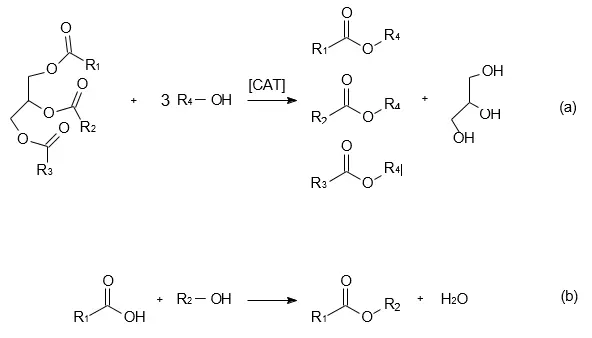
Figure 1. (a) Transesterification reaction under basic catalysis. (b) Reaction via esterification of long-chain carboxylic acids.
One of the advantages of biodiesel is that it is produced from biomass-derived feedstocks. Depending on the feedstock and production process, biodiesel generally contains negligible amounts of sulfur and aromatic hydrocarbons compared with petroleum diesel, while exhibiting higher viscosity, density, and flash point [8]. Nevertheless, unlike diesel, biodiesel use can reduce greenhouse gas emissions, as its combustion produces lower levels of particulate matter, sulfur compounds, carbon monoxide, polyaromatic hydrocarbons, aldehydes, and ketones, which are toxic to human health [9].
Despite these advantages, most of the biodiesel produced in Brazil comes from soybean oil, which consists of unsaturated fatty acids, with the following percentages: oleic acid (C18:1) at 17–30%, linoleic acid (C18:2) at 25–60%, and linolenic acid (C18:3) at 2–15%. Furthermore, high hygroscopicity, temperature, and light conditions, and the presence of metals can create conditions to oxidative deterioration and microbial contamination [10,11]. Consequently, metabolites, peroxides, polymer biofilms, and aldehydes may form, altering the fuel’s acidity and viscosity and directly compromising fuel quality by changing its physicochemical characteristics (Figure 2), leading to deposits [12,13]. The medium- and long-term consequences of these changes include clogged filters and injectors, sediment formation, and corrosion of storage tanks, affecting the performance and service life of vehicle engines [11,12,13,14].
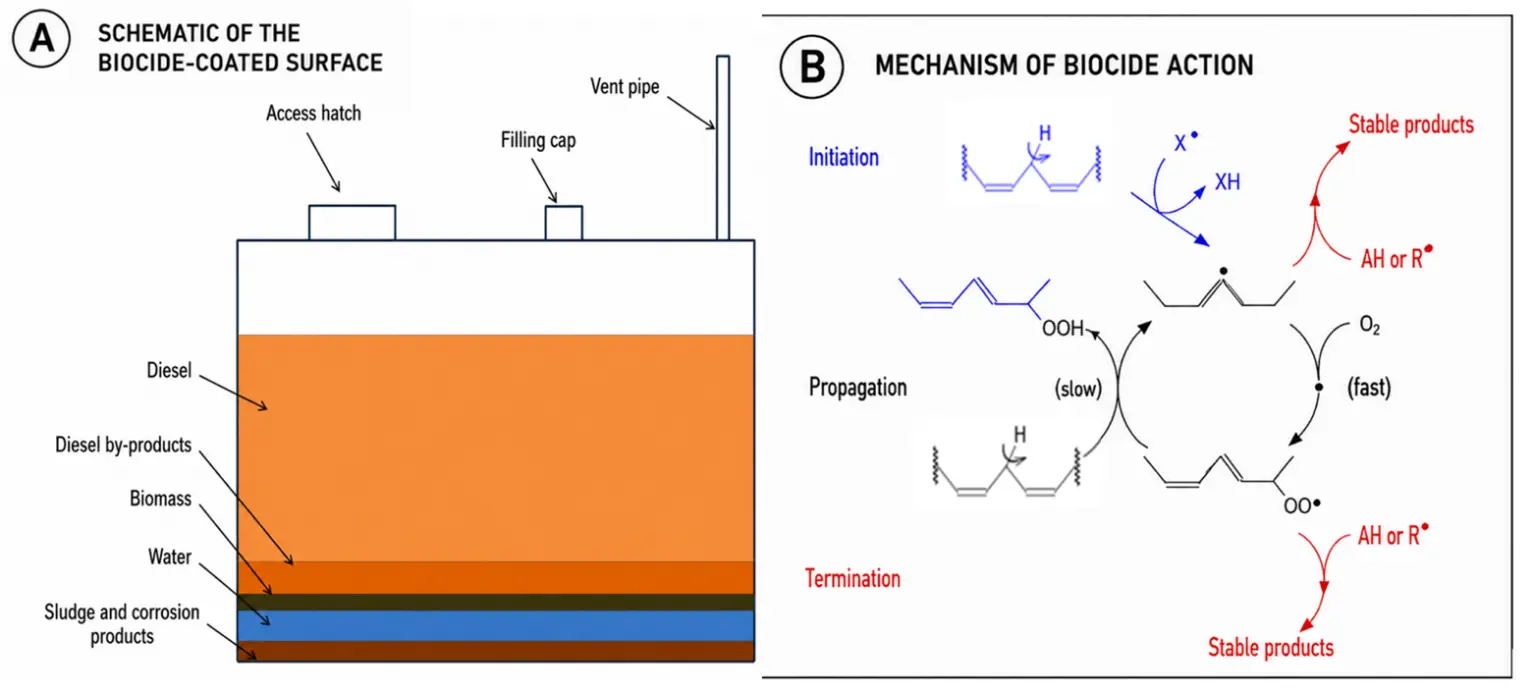
Figure 2. (A) Representation of phases formed during the oxidation process in a fuel tank. (B) Schematic representation of oxidation at the unsaturated bonds in biodiesel (PINHO, 2013).
Recent studies have demonstrated that the development of renewable antioxidant systems has become one of the main strategies to improve the storage stability of biodiesel-containing fuels. Plant-derived antioxidants have shown the ability to delay peroxide formation, suppress radical-chain propagation, and reduce the formation of insoluble oxidation products without significantly affecting the physicochemical properties required by fuel specifications. Consequently, the search for multifunctional additives capable of simultaneously improving oxidation stability and preserving fuel quality has intensified in recent years [14].
There are several additives available on the market that inhibit or stop microbial growth in biodiesel, namely biocides (Figure 3). These additives are widely used, and their targets may vary depending on the type of microorganism, whether bacteria or fungi. In the case of the former, they act as bactericides, and in the case of the latter, as fungicides [15].
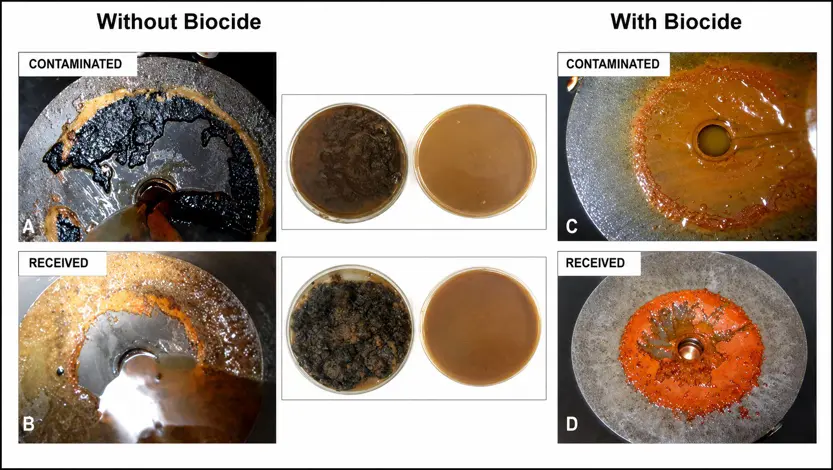
There are also broad-spectrum antimicrobial pesticides that are effective against bacteria, fungi, and algae. In addition to the type of microorganism, their use depends on their physicochemical characteristics, such as solubility in biofuel and water [16].
These additives can be antioxidants or biocides and are subdivided into several groups: chelating antioxidants, primary antioxidants, synergistic antioxidants, oxygen scavengers, biological antioxidants, and mixed antioxidants. It should be noted that primary antioxidants are so named because they contain phenolic functional groups found in nature, such as flavonoids, tocopherols, and cinnamic acids [17,18,19]. These primary antioxidants have the ability to inactivate or remove free radicals formed during degradation, halting their propagation, and may also exhibit biocidal properties [20,21,22]. Terpenes, on the other hand, fall into the class of natural additives and may possess fungicidal and bactericidal properties; they are the main constituent of the essential oil of Melaleuca alternifolia [23,24].
In parallel, increasing attention has been given to essential oils as multifunctional fuel additives because their terpene-rich compositions may simultaneously provide antioxidant and antimicrobial effects. Recent investigations involving clove, thyme, rosemary, lemongrass, and cajuput essential oils have demonstrated promising results for delaying oxidative degradation, inhibiting microbial contamination during storage, and preserving fuel quality. Nevertheless, their performance depends strongly on fuel composition, additive concentration, and storage conditions, indicating that the search for new renewable additives remains an active field of investigation [25].
The constituents of Melaleuca alternifolia essential oil (Figure 4) are substances belonging to a class of volatile aromatic hydrocarbons; its composition includes more than 100 substances, with terpinen-4-ol present in the highest percentage (30–48%) and antimicrobial properties, followed by γ-terpinene (10–28%) and α-terpinene (5–10%) [25,26].
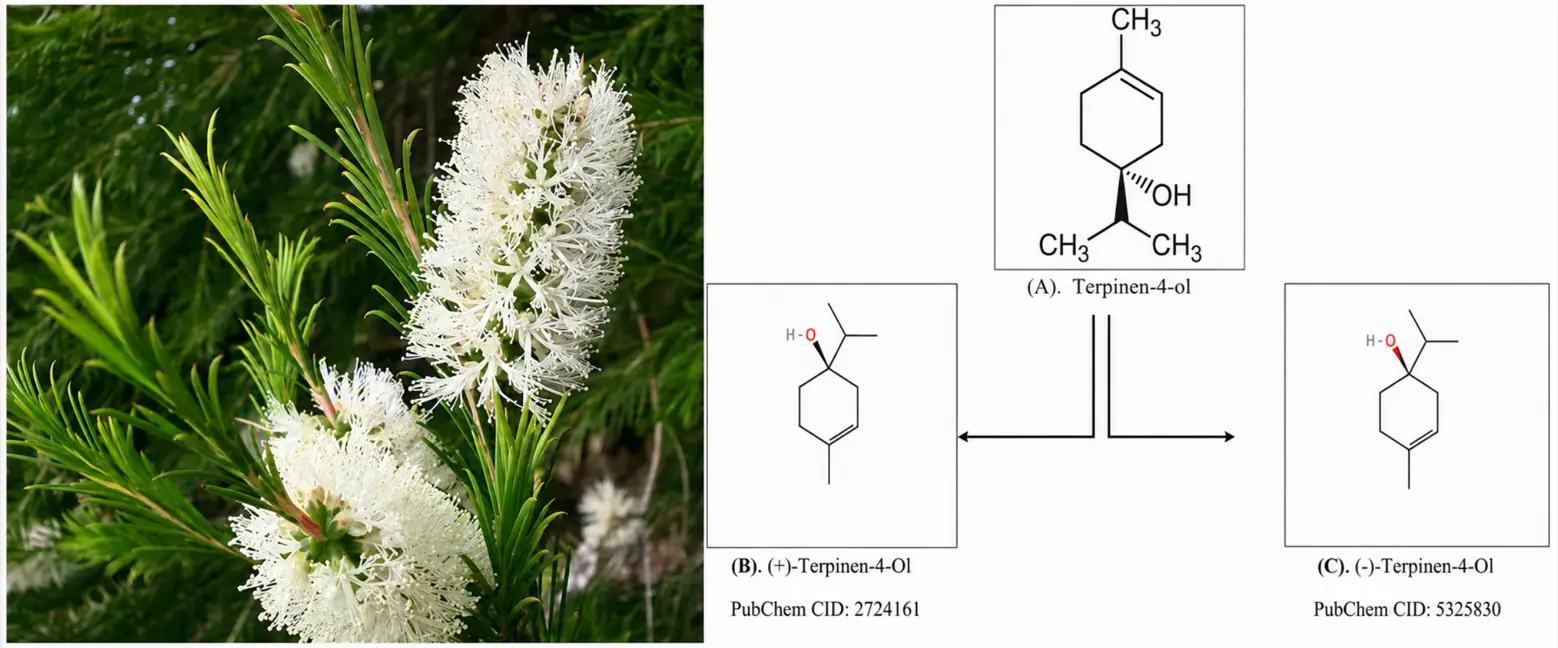
Terpinen-4-ol (Figure 4), an alcohol with the formula C10H18, has the ability to counteract the action of free radicals and reactive oxygen species and to chelate metal ions. When used in combination with essential oils, it exhibits antimicrobial properties against fungi and bacteria, with Gram-positive bacteria typically being more susceptible than Gram-negative bacteria, and low minimum inhibitory concentration (MIC) values inhibiting the growth of these organisms. These compounds are capable of inhibiting the growth of various fungi, including Candida albicans and Aspergillus fumigatus [2,26,27], and various bacteria such as Staphylococcus aureus and Escherichia coli [28].
Although several essential oils, including clove, thyme, and lemongrass, as well as other plant-derived extracts, have been proposed as antioxidant additives for biodiesel, studies specifically investigating Melaleuca alternifolia essential oil as a multifunctional additive for commercial S10 diesel remain scarce. In particular, there is little information addressing whether this essential oil can simultaneously inhibit microbial growth, improve oxidative stability, and preserve the physicochemical properties required by current fuel quality regulations. Therefore, the novelty of the present study lies in the integrated evaluation of these three aspects using a single renewable additive, providing a preliminary assessment of its potential application as a multifunctional antioxidant and antimicrobial additive for diesel fuel storage [14,15,29].
Although several essential oils have been investigated as antioxidant additives, no previous study has simultaneously evaluated the antimicrobial activity, oxidative stability, and compliance with diesel physicochemical specifications using Melaleuca alternifolia essential oil in commercial S10 diesel. Therefore, the novelty of the present work lies in this integrated multifunctional assessment.
Compared with other plant-derived additives reported in the literature, Melaleuca alternifolia essential oil exhibits a distinct balance between antioxidant and antimicrobial performance. Clove (Syzygium aromaticum) essential oil is generally recognized as one of the most effective natural antioxidants because of its high eugenol content, resulting in greater improvements in oxidation stability when incorporated into biodiesel and diesel blends. Likewise, thyme (Thymus vulgaris) essential oil frequently demonstrates stronger antimicrobial activity than tea tree oil due to the presence of phenolic constituents such as thymol and carvacrol. In contrast, Melaleuca alternifolia essential oil is characterized by a terpinen-4-ol-rich composition, which provides simultaneous antimicrobial and antioxidant activities. In the present study, complete inhibition of visible fungal growth was achieved at concentrations of 1% (v/v) and above, while oxidative stability improved progressively with increasing additive concentration [16,17,18,19,20,21,30]. Therefore, although tea tree essential oil may not exhibit the highest antioxidant capacity reported among natural additives, its multifunctional behavior is an important advantage for diesel preservation, as it simultaneously mitigates microbial contamination and oxidative degradation. These characteristics distinguish Melaleuca alternifolia from additives primarily designed to enhance only one of these properties [24,25,26,27,31].
2. Materials and Methods
2.1. Extraction of Essential Oil
The oil used in the tests was derived from Melaleuca alternifolia. This oil was supplied by the Haje Research, Development, and Innovation Institute/Haje Organic Inputs, located in Anápolis, Goiás. The commercial tea tree essential oil complied with ISO 4730 specifications for Melaleuca alternifolia (terpinen-4-ol type).
2.2. Tests with the Oil
2.2.1. Chemical Analysis of Essential Oil
Quality analysis involves physicochemical parameters, including tests for refractive index, optical rotation, pH, density, and moisture content; in addition to organoleptic tests for color, transparency, and aroma. These tests were conducted at the laboratories of UnB, UNIP/DF, and Haje Insumos Orgânicos, in Table 1.
Table 1. Physicochemical properties of OEME.
|
Physicochemical Characteristics |
|||
|---|---|---|---|
|
Parameter |
Result |
Specification |
References |
|
Density (g/mL) |
0.8853 |
0.8850 to 0.9060 |
ISO 279, Essential oil of spearmint, determination of relative density at 20 °C |
|
Refractive Index (nD) |
1.4744 |
1.4740 to 1.4820 |
ISO 280, Essential oil of spearmint, determination of refractive index |
|
Optical Rotation (°) |
+1.48 |
−5° to +15° |
ISO 592, Essential oil of spearmint, determination of optical rotation |
|
Acidity Index (pH) |
4.5 |
3.5 to 5.5 |
Analytical history |
|
Moisture (%) |
4.0% |
<5% |
ISO 4730:2004, Essential oil of Melaleuca, terpinen-4-ol type (Tea Tree oil) |
|
Solubility |
Meets requirement |
Soluble in alcohol; insoluble in water |
ISO 875, Essential oils—Evaluation of miscibility in ethanol |
|
Organoleptic Characteristics |
|||
|
Parameter |
Result |
Specification |
References |
|
Visual Appearance |
Meets requirement |
Clear liquid |
ISO 4730:2004, Essential oil of Melaleuca, terpinen-4-ol type (Tea Tree oil) |
|
Color |
Meets requirement |
Light yellow |
— |
|
Odor |
Meets requirement |
Herbal, fresh, slightly camphoraceous |
ISO 4730:2004, Essential oil of Melaleuca, terpinen-4-ol type (Tea Tree oil) |
2.2.2. Chemical Characterization
Chemical characterization was performed at the Institute for Research on Natural Products (IPPN/UFRJ) using gas chromatography coupled to mass spectrometry (GC–MS) and flame ionization detection (GC–FID). The injector temperature was maintained at 290 °C, and 1.0 μL of sample was injected in split mode (1:20). The oven temperature program started at 100 °C, increased at 5 °C·min−1 to 140 °C with a 5 min hold, then at 5 °C·min−1 to 200 °C, followed by heating at 15 °C·min−1 to 280 °C. Electron ionization (EI) at 70 eV was employed, with the ion source maintained at 250 °C and the transfer line at 290 °C. Mass spectra were acquired in SCAN mode over the m/z range of 40–500. Samples were diluted in ethyl acetate prior to analysis [27,32].
Compounds were identified by comparing the obtained mass spectra with those available in the NIST Mass Spectral Library and by comparing the corresponding Kovats retention indices with the reference values reported by Adams (2007) [28,33]. Compound identification was accepted only when both the mass spectral data and the retention indices were in agreement. The relative composition of the essential oil was determined from normalized GC peak areas.
Before sample analysis, instrument performance was verified using the manufacturer’s routine autotuning procedure to ensure adequate detector performance and analytical consistency. All samples were analyzed under identical chromatographic conditions, and the agreement between mass spectral data and Kovats retention indices was used as an additional quality assurance measure to ensure the reliability and reproducibility of compound identification [29,30,31,32,33,34].
2.2.3. Analysis of the Antioxidant Activity of the Essential Oil
The data from this analysis, used to complement the study, were kindly provided by the research team at UnB and UNIP/DF, and by Haje Insumos Orgânicos. The protocol was as follows: the 1,1-diphenyl-2-picrylhydrazyl (DPPH) method was used to evaluate antioxidant activity. Fifty microliters of Melaleuca alternifolia essential oil (OEME) were added in triplicate to Eppendorf tubes, and 1950 microliters of 0.03 mol/L DPPH in ethanol were added, followed by homogenization and incubation for 60 min in the dark. The control was prepared similarly, replacing the sample with ethanol. The reading was performed at 517 nm, and antioxidant activity was expressed as a percentage of DPPH radical scavenging capacity.
2.2.4. Antimicrobial Analysis of the Essential Oil
The antimicrobial activity of the essential oil was evaluated using two complementary microbiological assays: determination of the minimum inhibitory concentration (MIC) and fungal biomass inhibition. The experimental design was based on comparing untreated cultures (negative controls) with cultures treated with different concentrations of Melaleuca alternifolia essential oil. Accordingly, untreated culture media were used as the negative controls in both assays.
Minimum Inhibitory Concentration (MIC)
The antimicrobial activity of the essential oil was evaluated by the Plant Pathology Laboratory of the University of Brasília using the broth microdilution method. Standard bacterial and fungal strains were used to determine the minimum inhibitory concentration (MIC) of the essential oil. MIC was defined as the lowest concentration that completely inhibited visible microbial growth after incubation. The assays included untreated culture medium as the negative control. The resulting MIC values were determined for Bacillus subtilis, Aspergillus niger, and Aspergillus fumigatus.
Fungal Biomass Inhibition Assay
To evaluate the effect of the essential oil on fungal development, Erlenmeyer flasks inoculated with Aspergillus fumigatus (10 CFU mL−1) were incubated for 7, 14, and 28 days. Fungal growth was quantified by determining the dry biomass after incubation. The untreated culture served as the negative control, and biomass reduction was calculated by comparison with the control culture.
2.3. Fuel Tests
2.3.1. Preparation of Fuel Samples
Commercial S-10 diesel obtained from the Posto-BR gas station near the University of Brasília was mixed with Melaleuca essential oil in a 250 mL volumetric flask. The volumes of essential oil added to this mixture were 5 mL, 2.5 mL, 1.25 mL, and 0.625 mL, resulting in a concentration by volume of 2%, 1%, 0.5%, and 0.25%.
2.3.2. Analysis of the Fuel’s Antioxidant Activity with the Essential Oil
Oxidative Stability
According to ANP Resolution 968/24, the standards describing the oxidative stability test for diesel are ASTM D2274 and D5304. The test was conducted using a stainless-steel reactor in which 100 mL of samples containing blends at 2%, 1%, 0.5%, and 0.25% were placed in a glass container inside the reactor, which was subjected to an oxygen pressure of 8 atm for 16 h at 90 °C.
After this period, the fuel is filtered through AA cellulose ester membranes, 0.8 μm in pore size and 47 mm in diameter, which have been pre-weighed and placed in the oven. Next, the final mass of the dry filter is measured. ANP Resolution 968/24 sets a maximum limit of 2.5 mg/100 mL for insoluble in S-10 diesel [4,5,6,7,8,9,10,11,12,13,14,15,16,17,18,19,20,21,22,23,24,25,26,27,28,29].
Viscosity
The viscosity was calculated according to ASTM D445. This method involves the use of an apparatus called an Ubbelohde viscometer. The viscosity value is determined by measuring the flow time of the blends through a capillary tube, as shown in the apparatus, which is submerged in a bath containing water at 40 °C. The viscosity is then calculated using the viscometer’s calibration constant, which in this case was C = 0.005305. The resulting value is expressed in mm2/s. The limit permitted by ANP Resolution 968/24 is 2 to 4.5 mm2/s for S-10 diesel [4,28].
Density
The method used to analyze the density of commercial S10 diesel and diesel-essential oil blends is the NBR 7148 method, which employs a digital hydrometer as shown in the figure. ANP Resolution 968/24 specifies the density limits at 20 °C as 819.9 to 857.0 kg/m3 for S-10 and 819.9 to 869.9 for S-500 [4,5,6,7,8,9,10,11,12,13,14,15,16,17,18,19,20,21,22,23,24,25,26,27,28,29,30,31,32].
2.4. Antimicrobial Analysis of the Essential Oil-Blended Fuel
The antimicrobial performance of the diesel–Melaleuca alternifolia essential oil blends was evaluated by two complementary qualitative assays. The first assay assessed the resistance of the fuel blends to natural environmental contamination by airborne microorganisms, whereas the second evaluated their antifungal activity under controlled laboratory conditions using an Aspergillus sp. inoculum. In both assays, diesel without essential oil was used as the negative control, and fungal growth was evaluated qualitatively by visual inspection after incubation [33].
2.4.1. Natural Exposure Assay
Different concentrations of Melaleuca alternifolia essential oil (0.25, 0.50, 1.00, and 2.00%, v/v) were added to commercial S10 diesel fuel. Diesel without essential oil served as the negative control. Each blend (50 mL) was transferred to 80 mL glass containers, which were left open under laboratory environmental conditions for 32 days to allow natural contamination by airborne fungal spores. After the exposure period, 100 μL aliquots from each sample were inoculated in triplicate onto Potato Dextrose Agar (PDA), Malt Extract Peptone Agar (MEPA), and Nutrient Agar (NA). The plates were incubated in a BOD chamber at 25 °C under a 12 h light/12 h dark photoperiod for 15 days. Microbial growth was monitored by visual inspection, and the presence or absence of fungal colonies was recorded [35,36].
2.4.2. Controlled Fungal Inoculation Assay
A suspension of Aspergillus sp. spores was prepared from 10-day-old cultures grown on Potato Dextrose Agar (PDA) using sterile 0.85% saline solution (1:5), resulting in a final concentration of approximately 0.4–5.0 × 10⁴ CFU mL−1. Commercial S10 diesel (25 mL) containing Melaleuca alternifolia essential oil at concentrations of 0.25, 0.50, 1.00, and 2.00% (v/v) was dispensed into Falcon tubes. Diesel without essential oil was used as the negative control. Each tube received 100 μL of the fungal spore suspension and was incubated for 48 h at 25 °C under a 12 h light/12 h dark photoperiod. After incubation, the tubes were homogenized, and 100 μL aliquots were plated onto PDA and incubated for an additional 10 days under the same conditions. Fungal growth was evaluated qualitatively by visual inspection, and representative plates were photographed to document the antimicrobial performance of the diesel–essential oil blends [37,38].
2.5. Statistical Analysis
The antioxidant activity (DPPH assay) was performed in triplicate, and the results are presented as mean ± standard deviation. The physicochemical analyses of the diesel blends, including density, kinematic viscosity, and oxidative stability, were conducted as single determinations in accordance with standardized ASTM and ANP methods. Because independent replicate measurements were not performed for these analyses, statistical comparisons such as analysis of variance (ANOVA), Student’s t-test, and confidence interval calculations were not applicable. Accordingly, the results are reported as the experimental values obtained under standardized ASTM and ANP test conditions. These internationally recognized methods are specifically designed to assess fuel quality and regulatory compliance; therefore, the interpretation and scientific validity of the results are based on the robustness and standardization of these analytical procedures rather than on inferential statistical comparisons. Consequently, the uncertainty associated with the physicochemical measurements corresponds to that inherent to the standardized ASTM and ANP methods and the calibrated analytical instrumentation employed, rather than to variability among replicate measurements.
3. Results and Discussion
According to information provided by Haje, the company responsible for the steam distillation, the extraction process was carried out for approximately 1 h and 30 min using a D2 stainless-steel distiller (Linax) with a capacity of 2.0 kg. The extraction was performed to determine the essential oil yield from Melaleuca alternifolia leaves, which was 1.3%. This result indicates that the species is a source of essential oil for industrial extraction. However, the present study was limited to evaluating the technical performance of the essential oil as a diesel additive. No techno-economic assessment of the extraction process or its large-scale application was performed. The physicochemical characteristics of the Melaleuca essential oil (OEME) sample were quantified and can be found in Table 1.
The physicochemical characteristics met the specifications and were as follows: density 0.8853 g/mL; refractive index 1.4744 nD; optical rotation +1.48; moisture content 4%; and acidity 4.5; ensuring the quality of the Melaleuca essential oil. Figure 5 shows that the chemical profile was characterized, with terpinen-4-ol (41.60%) as the major constituent, as expected, followed by the terpinene isomers: γ-terpinene (21.71%) and α-terpinene (11.59%) (Figure 5); these terpenes also possess well-established antimicrobial and antioxidant activity [30,31,32]. The antioxidant activity was 95 ± 0.1% oxidation inhibition percentage based on DPPH radical scavenging capacity.
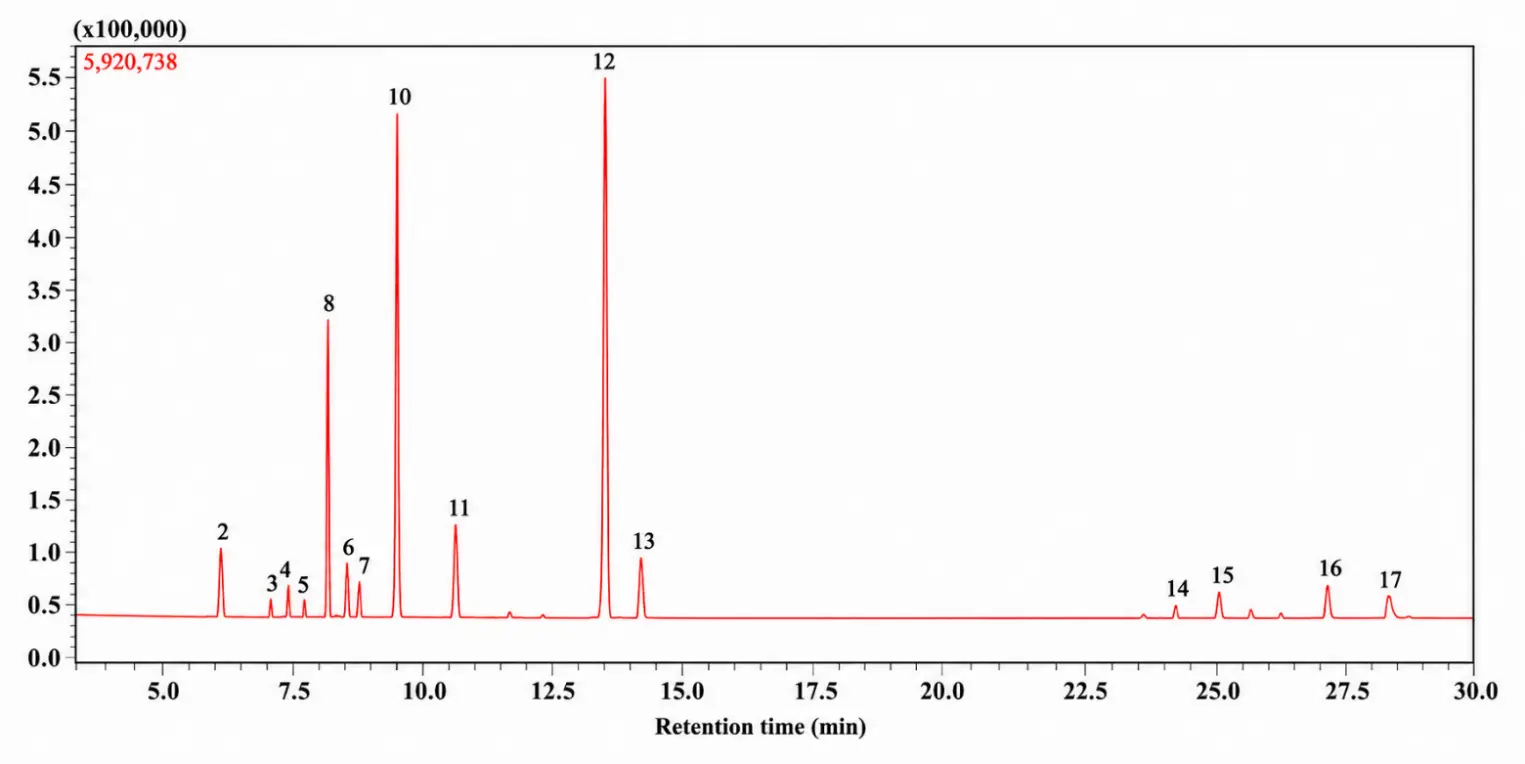
Based on the standards set forth in ANP Resolution No. 968/24, which establishes the specifications for commercial diesel, tests were conducted using pure essential oil and two different batches of blends of diesel and Melaleuca alternifolia essential oil (Table 2) [4].
Table 2. Composition determined by GC-MS and GC-FID.
|
Retention Time (min) |
Kovats Index |
Peak Area (%) |
Compound |
|---|---|---|---|
|
5.33 |
929 |
1.15 |
α-Thujene |
|
5.51 |
937 |
2.63 |
α-Pinene |
|
6.53 |
975 |
0.66 |
Sabinene |
|
6.64 |
979 |
0.80 |
β-Pinene |
|
6.98 |
990 |
0.88 |
β-Myrcene |
|
7.81 |
1017 |
11.59 |
α-Terpinene |
|
8.04 |
1025 |
1.90 |
p-Cymene |
|
8.20 |
1030 |
1.83 |
Limonene |
|
8.27 |
1032 |
2.27 |
1,8-Cineole |
|
9.23 |
1061 |
21.71 |
γ-Terpinene |
|
10.29 |
1088 |
3.91 |
Terpinolene |
|
13.83 |
1178 |
41.60 |
Terpinen-4-ol |
|
14.31 |
1189 |
2.70 |
α-Terpineol |
|
23.95 |
1417 |
0.63 |
β-Caryophyllene |
|
24.75 |
1438 |
1.89 |
Aromadendrene |
|
27.03 |
1493 |
2.58 |
Viridiflorene |
|
28.13 |
1521 |
1.27 |
δ-Cadinene |
The tests performed included measurements of density, viscosity, oxidative stability, and microbial contamination. The results of the analyses are presented in Table 3 and Table 4 below. The measured experimental viscosity of OEME is 1.8320 mm2/s.
With regard to the GC-MS analysis of the pure essential oil, terpinen-4-ol was found to be the major component (41.6%). The DPPH antioxidant activity was 95% ± 0.1. The antimicrobial activity of the pure oil exhibited biocidal capacity against Bacillus subtilis (MIC = 0.5 μL/mL) and the fungi Aspergillus niger and Aspergillus fumigatus (MIC = 0.25 μL/mL), characterizing an antifungal profile for this oil. For the fungal biomass test, the results show that the addition of OEME reduced the growth of the fungus (A. fumigatus) by 30% [33,34,35,36,37,38].
Table 3. Density, viscosity, and oxidative stability values in accordance with ANP Resolution 968/24, as determined for pure diesel and M. alternifolia blends (Source: Author).
|
Reaction 1 |
|||
|---|---|---|---|
|
Sample |
Viscosity Before Oxidation mm2/s |
Density kg/m3 a 20 °C |
Oxidative Stability mg/100 mL |
|
ANP Standard 968/24 Diesel |
2.0–4.5 |
819.9 a 857.0 |
|
|
Blend 0% |
2.891 |
841.8 |
50.10 |
|
Blend 0.25% |
2.903 |
841.5 |
39.15 |
|
Blend 0.5% |
2.909 |
842.2 |
18.33 |
|
Blend 1% |
2.893 |
842.1 |
6.67 |
|
Blend 2% |
2.893 |
842.9 |
5.03 |
Furthermore, if viscosity is too high, for example, the fuel may have difficulty flowing, especially on cold days. Thus, these are the first factors to be considered, for example, when evaluating the addition of a specific type of biodiesel to diesel [34,35,36,37,38,39].
The viscosity and density of fuel are very important physicochemical characteristics when it comes to meeting the operating conditions of diesel engines, as they affect the way the fuel is atomized by the engine’s injection nozzle; in other words, these factors control the delivery of a stoichiometric amount of air and fuel to the engine at the moment of ignition and can influence both engine performance and the emission of gaseous and particulate pollutants due to incomplete combustion and carbon deposits on engine components.
Table 4. Density, viscosity, and oxidative stability values, as defined by ANP Resolution 968/24, were found for pure diesel and M. alternifolia blends in Reaction 2 (Source: Author).
|
Reaction 2 |
|||||
|---|---|---|---|---|---|
|
Sample |
Viscosity Before Oxidation mm2/s |
Viscosity After Oxidation mm2/s |
Density kg/m3 a 20 °C Before Oxidation |
Density kg/m3 a 20 °C After Oxidation |
Oxidative Stability mg/100 mL |
|
ANP Standard 968/24 Diesel |
2.0–4.50 |
|
819.9 a 857.0 |
819.9 a 857.0 |
|
|
Blend 0% |
2.929 |
2.909 |
841.8 |
842.6 |
19.15 |
|
Blend 0.25% |
2.903 |
2.917 |
841.5 |
842.6 |
14.03 |
|
Blend 0.5% |
2.958 |
2.886 |
842.2 |
842.5 |
11.88 |
|
Blend 1% |
2.843 |
2.890 |
842.1 |
843.0 |
9.28 |
|
Blend 2% |
2.849 |
2.881 |
842.9 |
844.2 |
1.41 |
Furthermore, if viscosity is too high, for example, the fuel may have difficulty flowing, especially on cold days. Thus, these are the first factors to be considered, for example, when evaluating the addition of a specific type of biodiesel to diesel.
Given that a large portion of the biodiesel added to diesel in Brazil is derived from soybean oil, which is composed mainly of esters of unsaturated fatty acids such as palmitic, oleic, and linoleic acids, for example. Oleic acid alters the density of the biodiesel added to diesel; its high content contributes to an increase in fuel density, although it is also beneficial for oxidation stability and fuel performance in cold climates. On the other hand, the presence of palmitic acid improves its cetane number; that is, the higher this number, the easier and faster the fuel will ignite [4,5,6,7,8,9,10,11,12,13,14,15,16,17,18,19,20,21,22,35].
In the analysis of the first batch, based on viscosity as determined by ASTM D445 and density, using the NBR7148 method, it is observed that the addition of Melaleuca alternifolia oil to commercial S10 diesel results in a slight increase in the mixture’s density up to a concentration of 0.5%, followed by a decrease at 1% and another increase up to 2%, as shown in Table 3 and Table 4 [36,37,38]. Interestingly, this finding is related to the increase in viscosity up to 0.5%, followed by a subsequent decline starting at 1%. In Test 2, this pattern is practically repeated, with a slight increase in density and a decline in viscosity at a concentration of 1% (Table 3) [37,38,39].
This behavior in the density values, which range from 841.5 to 842.9 kg/m3, falls within the specification limits, the maximum of which is 857 kg/m3. The values suggest that the addition of essential oil does not significantly alter the density of the commercial S10 diesel, and it remains within the standard limits. The small density variations observed among the blends are within the expected experimental uncertainty of the standardized method and do not affect compliance with ANP Resolution No. 968/2024. Additional measurements using complementary techniques, such as pycnometry, may further confirm these results. Conversely, the viscosity of pure Melaleuca alternifolia essential oil was lower than that of commercial S10 diesel (1.83 mm2/s, ASTM D445). Although there are few studies addressing the use of this essential oil as a fuel additive, addressing the use of tea tree essential oil as a fuel additive, its lower viscosity may influence fuel spray characteristics and atomization at the injector nozzle. Based solely on the measured viscosity values, blends containing 1% and 2% (v/v) may be expected to influence spray behavior. However, because no spray characterization, combustion analysis, or engine performance tests were performed in the present study, these potential effects remain hypothetical and require experimental confirmation [22,23,24,25,26,27,28,29,30,31,32,33,34,35,36,37,38,39].
The preservation of density and kinematic viscosity after incorporating Melaleuca alternifolia essential oil can be explained by its chemical composition. As shown in Table 2, the essential oil consists predominantly of monoterpenes and oxygenated monoterpenes, particularly terpinen-4-ol, γ-terpinene, and α-terpinene. These compounds possess relatively low molecular weights and molecular structures compatible with the hydrocarbon matrix of diesel fuel. Consequently, their incorporation at concentrations up to 2% (v/v) does not significantly alter the intermolecular interactions that govern fuel density or flow resistance, allowing the blends to remain within the physicochemical limits established by ANP Resolution No. 968/2024 [4,5,6,7,8,9,10,11,12,13,14,15,16,17,18,19,20,21,22,23,24,25,26,27,28,29,30,31,32,33,34,35,36,37,38,39,40].
This finding is supported by chromatographic and GC-MS analyses, whose retention times identified terpinen-4-ol (41.60%) as the major compound, as expected, followed by the terpinene isomers: γ-terpinene (21.71%) and α-terpinene (11.59%). Other oxygenated constituents, such as α-terpineol, verbenol, and viridiflorol, may also contribute to the overall fluidity of the blends owing to their molecular structures and compatibility with the diesel matrix. Their quantification was performed by calculating the percentage correlation between the areas of each component relative to the total peak areas of the chromatogram. These components also confer sufficient lipophilicity on the essential oil, promoting its miscibility with diesel and enabling the formation of homogeneous blends without visible phase separation up to the concentrations investigated. However, during the preparation of the 2% (v/v) blend, a slight temporary turbidity was observed immediately after mixing, suggesting that this concentration approaches the miscibility limit of the system. Nevertheless, after homogenization, no macroscopic phase separation was observed, and visual inspection performed during the subsequent two-month storage period also revealed no evidence of phase separation. Therefore, although the 2% formulation may be closer to the limit of physical stability, the blend remained visually homogeneous under the storage conditions evaluated [22,41].
Another analysis conducted was that of oxidative stability in accordance with ASTM D5304 standards. However, in Test 1, the data show high levels of insoluble compounds in the 0% control sample—that is, without the addition of Melaleuca oil—with a value of 50.1 mg/100 mL [42,43]. When fractions of the essential oil were added, there was a significant reduction in insoluble values in the blend concentrations ranging from 0.25% to 1%. In both experiments, although the addition of Melaleuca alternifolia essential oil substantially reduced the formation of insoluble oxidation products in both experimental batches, most blends remained above the maximum limit of 2.5 mg/100 mL established by ANP Resolution No. 968/2024. Among the evaluated formulations, only the 2% blend in the second experimental batch (1.41 mg/100 mL) complied with the regulatory specification, whereas the remaining blends, despite exhibiting significant improvements relative to untreated diesel, did not fully satisfy the ANP requirement. These results demonstrate that the essential oil improves oxidative stability in a concentration-dependent manner, but that further optimization is required to consistently achieve regulatory compliance under the accelerated oxidation conditions employed in this study [44,45].
Although the measured viscosity values suggest that the addition of tea tree essential oil does not adversely affect the fuel properties required by current specifications, no spray characterization, combustion analysis, or engine performance tests were conducted. Therefore, any potential influence on fuel injection, atomization, combustion efficiency, engine performance, or exhaust emissions remains hypothetical and should be confirmed through dedicated engine studies.
The improvement in oxidative stability is closely associated with the chemical composition of the essential oil. Oxygenated monoterpenes, particularly terpinen-4-ol, contain hydroxyl groups capable of donating hydrogen atoms to peroxyl radicals generated during diesel oxidation, interrupting the radical chain propagation reactions responsible for gum and insoluble deposit formation. Likewise, γ-terpinene and α-terpinene contain allylic hydrogen atoms that are readily donated and whose resulting radicals are stabilized by resonance, thereby enhancing their radical-scavenging capacity. These mechanisms help delay oxidation and reduce the formation of degradation products during accelerated oxidation.
Upon analyzing the oxidative stability profiles shown in Figure 6 and Figure 7, a similar overall trend is observed in both experiments, characterized by a progressive reduction in the amount of insoluble oxidation products as the concentration of Melaleuca alternifolia essential oil increases [46,47]. The lowest insoluble contents were observed for the 2% blend, indicating that increasing concentrations of the essential oil were associated with improved oxidative stability under the accelerated oxidation conditions employed in this study.
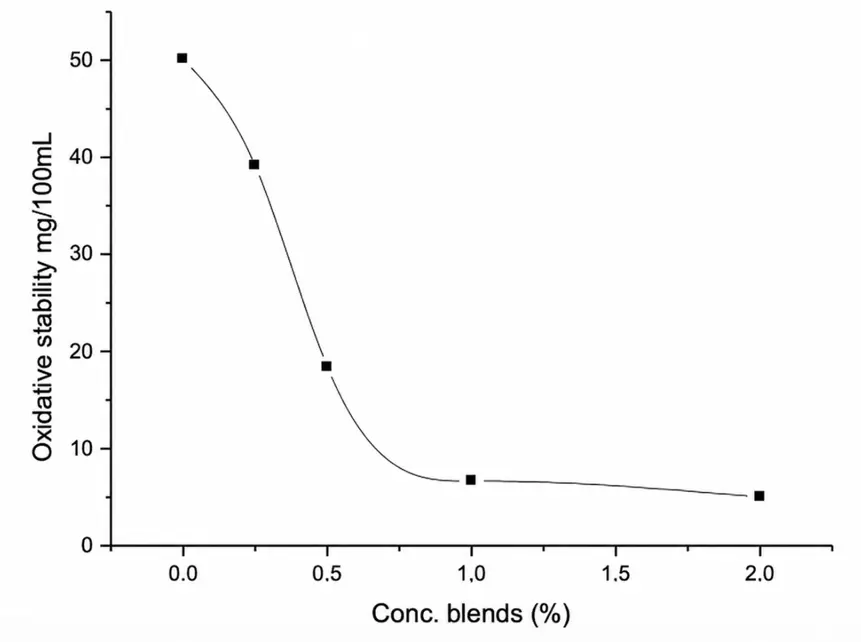
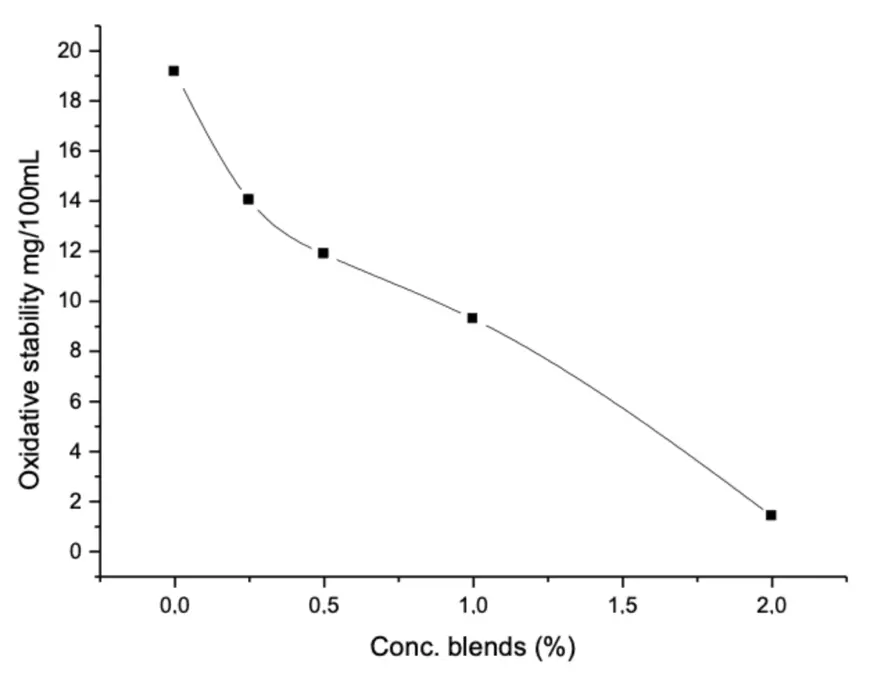
Although the 2% (v/v) blend exhibited the highest oxidative stability, complete inhibition of visible fungal growth was already achieved at 1% (v/v), while both the 1% and 2% formulations maintained density and kinematic viscosity within the limits established by ANP Resolution No. 968/2024. Therefore, the selection of the 1% (v/v) blend as the most suitable formulation was based on a balanced assessment of antimicrobial effectiveness, preservation of fuel physicochemical properties, oxidative stability, and additive concentration. Although the 2% blend provided the greatest antioxidant performance, the additional improvement in oxidative stability was obtained with twice the amount of essential oil. Consequently, the 1% formulation represents the most favorable overall balance between technical performance and additive consumption for practical applications.
When analyzing this behavior in terms of density as well, it is observed that the density of the blends increases both before and after the oxidation reactions as the proportion of essential oil in the mixture with diesel increases [48,49]. Regarding the antimicrobial activity, visual inspection of the Petri dishes showed no visible microbial growth under the evaluated conditions. However, in the experiments conducted in Falcon tubes, fungal growth was visually observed in the control without essential oil addition, as well as at concentrations of 0.25% and 0.5% after 12 days of incubation. Interestingly, there was a visual reduction in fungal growth at concentrations of 1% and 2% (Figure 8).
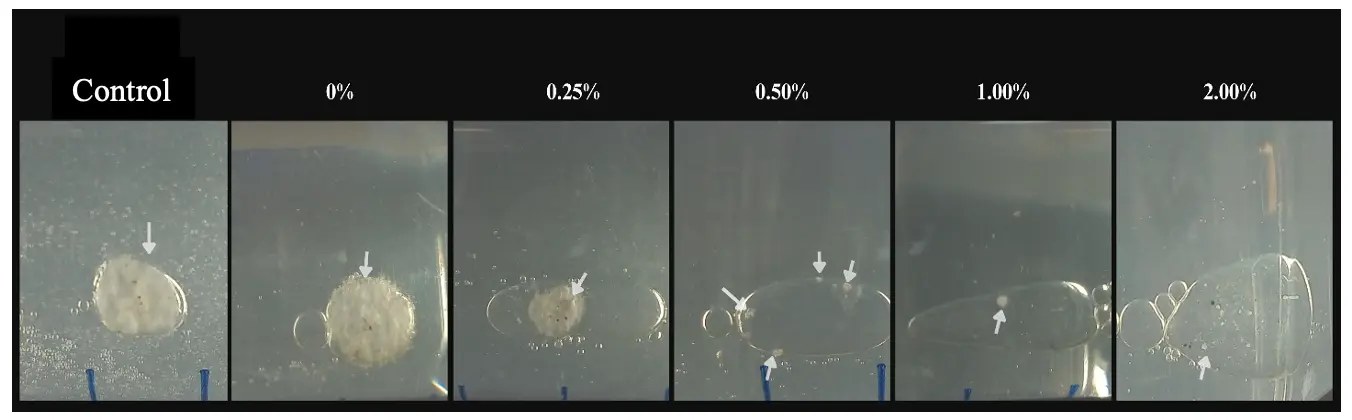
Figure 8. Growth of Aspergillus sp. in S10 diesel containing different concentrations of Melaleuca alternifolia essential oil after 12 days of incubation. The control (without essential oil) and concentrations of 0%, 0.25%, and 0.50% allowed fungal growth, while concentrations of 1% and 2% showed a visible reduction in fungal growth. The white arrows indicate the presence of fungal mycelium.
The results obtained in this study also raise questions about the economic viability of using Melaleuca alternifolia essential oil as a diesel additive. Although the present work did not include a cost analysis, commercial implementation will depend on whether the improved oxidative stability and microbial control demonstrated here can offset the cost of the additive. If these benefits translate into longer storage times, lower fuel deterioration, and reduced maintenance associated with microbial contamination, the use of tea tree essential oil may become an attractive alternative to conventional additives. A definitive assessment, however, requires a dedicated techno-economic analysis that considers production scale, extraction efficiency, additive dosage, and storage conditions.
Considering the combined evaluation of antimicrobial effectiveness, oxidative stability, preservation of fuel physicochemical properties, and additive consumption, the 1% (v/v) formulation represents the most balanced overall composition, whereas the 2% (v/v) blend provided the highest antioxidant performance.
4. Conclusions
This study demonstrated that Melaleuca alternifolia essential oil exhibits multifunctional potential as a renewable additive for commercial S10 diesel by combining antimicrobial and antioxidant properties while preserving the main physicochemical characteristics of the fuel. GC–MS analysis confirmed terpinen-4-ol (41.60%) as the major constituent of the essential oil, followed by γ-terpinene and α-terpinene, compounds known for their antimicrobial and antioxidant activities. The essential oil also exhibited high radical-scavenging capacity (95 ± 0.1% by the DPPH assay) and antimicrobial activity against Bacillus subtilis, Aspergillus niger, and Aspergillus fumigatus, in addition to reducing fungal biomass development.
The incorporation of Melaleuca alternifolia essential oil into S10 diesel did not significantly affect density or kinematic viscosity, and all evaluated blends remained within the limits established by ANP Resolution No. 968/2024 for these physicochemical parameters. Furthermore, the addition of the essential oil promoted a concentration-dependent reduction in the formation of insoluble oxidation products under accelerated oxidation conditions, thereby demonstrating its antioxidant potential. However, although all blends exhibited improved oxidative stability compared with untreated diesel, compliance with the ANP specification for insoluble oxidation products (2.5 mg/100 mL) was achieved only by the 2% (v/v) blend in the second experimental batch. These findings indicate that, while the essential oil effectively delays oxidative degradation, further optimization of the formulation or additive concentration is required to consistently satisfy the regulatory specification. Considering the combined evaluation of antimicrobial effectiveness, oxidative stability, preservation of fuel physicochemical properties, and additive consumption, the 1% (v/v) formulation represents the most balanced overall composition, whereas the 2% (v/v) blend provided the highest antioxidant performance.
The antimicrobial assays performed with diesel–essential oil blends demonstrated complete inhibition of visible fungal growth at concentrations of 1.0% (v/v) and above, confirming the effectiveness of the essential oil as a natural antimicrobial additive under the experimental conditions investigated. This dual antioxidant and antimicrobial behavior represents an important advantage for fuel storage, since oxidative degradation and microbial contamination are two of the principal mechanisms responsible for the deterioration of diesel-containing fuels.
Overall, the results demonstrate that Melaleuca alternifolia essential oil is a promising renewable multifunctional additive for diesel fuel. Although additional studies are still required to optimize oxidative stability, evaluate long-term storage performance, investigate phase stability at higher concentrations, and assess engine performance and exhaust emissions, the present work provides a solid experimental basis for the future development of bio-based additives capable of simultaneously improving fuel preservation and reducing dependence on conventional synthetic additives.
Statement of the Use of Generative AI and AI-Assisted Technologies in the Writing Process
While preparing this manuscript, the authors used Gemini NotebookLM to improve the quality of the images. After using this tool/service, the authors reviewed and edited the content as necessary and assume full responsibility for the content of the published article.
Acknowledgments
The authors would like to thank CAPES, CNPq and FAPDF.
Author Contributions
Conceptualization, P.A.Z.S. and R.D.A.D.; methodology, P.A.Z.S. and R.D.A.D.; software, F.N.R., J.B.A.d.R. and E.T.R.; validation, P.A.Z.S. and R.D.A.D.; formal analysis, F.N.R., J.B.A.d.R. and E.T.R.; investigation, F.N.R., J.B.A.d.R. and E.T.R.; resources, F.N.R. and P.A.Z.S.; data curation, P.A.Z.S.; writing—original draft preparation, P.A.Z.S. and R.D.A.D.; writing—review and editing, R.D.A.D. and P.A.Z.S.; visualization, R.D.A.D. and P.A.Z.S.; supervision, P.A.Z.S.; project administration, P.A.Z.S.; funding acquisition, P.A.Z.S. All authors have read and agreed to the published version of the manuscript.
Ethics Statement
Not applicable.
Informed Consent Statement
Not applicable.
Data Availability Statement
This work is the continuation of a solid and robust study already published in http://repositorio.unb.br/handle/10482/24643, http://dx.doi.org/10.26512/2017.07.D.24643 (accessed on 10 June 2026).
Funding
The authors are in debt to CAPES, CNPq and FAPDF for partial financial support. P.A.Z.S. thanks CNPq for the research fellowship.
Declaration of Competing Interest
The authors declare that they have no known competing financial interests or personal relationships that could have appeared to influence the work reported in this paper.
References
- Bakkali F, Averbeck S, Averbeck D, Idaomar M. Biological effects of essential oils—A review. Food Chem. Toxicol. 2008, 46, 446–475. DOI:10.1016/j.fct.2007.09.106 [Google Scholar]
- Carson CF, Hammer KA, Riley TV. Melaleuca alternifolia (Tea Tree) Oil: A review of antimicrobial and other medicinal properties. Clin. Microbiol. Rev. 2006, 19, 50–62. DOI:10.1128/cmr.19.1.50-62.2006 [Google Scholar]
- Kapse SJ, Naikawadi ND, More MC, Jadhav PD, Redasani V. An overview on pharmaceutical application of tea tree oil. Res. J. Pharmacogn. Phytochem. 2024, 16, 125–129. DOI:10.52711/0975-4385.2024.00024 [Google Scholar]
- National Agency of Petroleum, Natural Gas and Biofuels (ANP). Resolution No. 920. 29 December 2023. Available online: https://atosoficiais.com.br/anp/resolucao-n-920-2023-estabelece-a-especificacao-do-biodiesel-e-as-obrigacoes-quanto-ao-controle-da-qualidade-a-serem-atendidas-pelos-agentes-economicos-que-comercializem-o-produto-em-territorio-nacional?origin=instituicao (accessed on 21 January 2025).
- Rezende MJC, Lima AL, Silva BV, Mota CJA, Torres EA, Rocha GO, et al. Biodiesel: An overview II. J. Braz. Chem. Soc. 2021, 32, 1301–1344. DOI:10.21577/0103-5053.20210046 [Google Scholar]
- Santana GCS. The objectives of the National Biodiesel Program: Between planning and implementation. Ambient. Soc. 2021, 24, e00882. DOI:10.1590/1809-4422asoc20200088r2vu2021L5AO [Google Scholar]
- Brazil Ministry of Mines and Energy. CNPE Resolutions. Available online: https://www.gov.br/mme/pt-br/assuntos/conselhos-e-comites/cnpe/resolucoes-do-cnpe/ (accessed on 21 January 2025).
- Brazil. Law No. 14.993. 27 December 2024. Available online: https://www.planalto.gov.br/ccivil_03/_Ato2023-2026/2024/Lei/L14993.htm#art33 (accessed on 22 January 2025).
- Aslam S, Younis W, Malik MNH, Jahan S, Alamgeer, Uttra AM, et al. Pharmacological evaluation of anti-arthritic potential of terpinen-4-ol using in vitro and in vivo assays. Inflammopharmacology 2022, 30, 945–959. DOI:10.1007/s10787-022-00960-w [Google Scholar]
- Luz GVS, Sousa BASM, Guedes AV, Barreto CC, Brasil LM. Biocides used as additives to biodiesels and their risks to the environment and public health: A review. Molecules 2018, 23, 2698. DOI:10.3390/molecules23102698 [Google Scholar]
- Castro C, Marcelo H, Fábio O, Firmano R, Marcelo O, Resende JCF de, Brighenti AM. Biodiesel No Brasil: Reflexões Sobre o Potencial das Principais Matérias-Primas. 2025. Available online: https://www.sidalc.net/search/Record/dig-alice-doc-1176026/Description (accessed on 21 May 2025).
- Bueno CC, Dyna FAGM, Oliveira FAGM, Silva TAR, Lembi MKS, Moritz CMF, Sakai OA. Profile of the export and import of essential oils in Brazil between 2020 and 2021 and the predominance of essential oil from Melaleuca alternifolia in Paraná. Res. Soc. Dev. 2021, 10, e560101321574. DOI:10.33448/rsd-v10i13.21574 [Google Scholar]
- Castro C, Silva ML, Pinheiro AL, Jacovine LAG. Economic analysis of cultivation and extraction of Melaleuca alternifolia essential oil. Rev. Árvore. 2005, 29, 241–249. DOI:10.1590/S0100-67622005000200007 [Google Scholar]
- Hosseinzadeh-Bandbafha H, Kumar D, Singh B, Shahbeig H, Lam SS, Aghbashlo M, et al. Biodiesel antioxidants and their impact on the behavior of diesel engines: A comprehensive review. Fuel Process. Technol. 2022, 232, 107264. DOI:10.1016/j.fuproc.2022.107264 [Google Scholar]
-
Shadidi B, Darabpour Dezdarani M. Fuel additives for biodiesel: Impacts on fuel properties, combustion behavior, engine performance, and emissions—A systematic review. J. Energy Inst. 2026, 126, 102557. DOI:10.1016/j.joei.2026.102557 [Google Scholar]
-
Zimmer AR, Oliboni A, Viscardi SLC, Teixeira RM, Ferrão MF, Bento FM. Biodiesel blend (B10) treated with a multifunctional additive (biocide) under simulated stored conditions: A field and lab scale monitoring. Biofuel Res. J. 2017, 4, 627–636. DOI:10.18331/BRJ2017.4.2.7 [Google Scholar]
- Schindelin J, Arganda-Carreras I, Frise E, Kaynig V, Longair M, Pietzsch T, et al. Fiji: An open-source platform for biological-image analysis. Nat. Methods 2012, 9, 676–682. DOI:10.1038/nmeth.2019 [Google Scholar]
- Wicklow DT. Ecological adaptation and classification in Aspergillus and Penicillium. In Advances in Penicillium and Aspergillus Systematics; Samson RA, Pitt JI, Eds.; Springer: Boston, MA, USA, 1986; Volume 102, pp. 239–255. DOI:10.1007/978-1-4757-1856-0_22 [Google Scholar]
- Mrabti HN, Hachlafi NE, Al-Mijalli SH, Jeddi M, Elbouzidi A, Abdallah EM, et al. Phytochemical profile, assessment of antimicrobial and antioxidant properties of essential oils of Artemisia herba-alba Asso., and Artemisia dracunculus L.: Experimental and computational approaches. J. Mol. Struct. 2023, 1294, 136479. DOI:10.1016/j.molstruc.2023.136479 [Google Scholar]
- Fogaça de Andrade CS, Batista NF, Lasakovitsch PR, de Souza Antunes VM, Oliveira CR. Evaluation of tea tree oil cytotoxicity and its antimicrobial action against Propionibacterium acnes. Braz. J. Nat. Sci. 2018, 1, 13. DOI:10.31415/bjns.v1i3.37 [Google Scholar]
- Prerna, Chadha J, Khullar L, Mudgil U, Harjai K. A comprehensive review on the pharmacological prospects of terpinen-4-ol: From nature to medicine and beyond. Fitoterapia 2024, 176, 106051. DOI:10.1016/j.fitote.2024.106051 [Google Scholar]
- Sharzali CM, Idroas MY, Teoh YH, Hamid MF. Optimisation of viscosity and density of refined palm oil–Melaleuca cajuputi oil binary blends using mixture design method. Renew. Energy 2019, 133, 393–400. DOI:10.1016/j.renene.2018.10.017 [Google Scholar]
- Sathiyamoorthi G, Sankaranarayanan G. Effect of antioxidant additives on the performance and emission characteristics of a DICI engine using neat lemongrass oil–diesel blend. Fuel 2016, 174, 89–96. DOI:10.1016/j.fuel.2016.01.076 [Google Scholar]
- Maj W, Pertile G, Różalska S, Kamil S, Magdalena F. Comprehensive antifungal investigation of natural plant extracts against Neosartorya spp. (Aspergillus spp.) of agriculturally significant microbiological contaminants and shaping their metabolic profile. Sci. Rep. 2024, 14, 8399. DOI:10.1038/s41598-024-58791-4 [Google Scholar]
- White RL, Burgess DS, Manduru M, Bosso JA. Comparison of three different in vitro methods of detecting synergy: Time-kill, checkerboard, and E test. Antimicrob. Agents Chemother. 1996, 40, 1914–1918. DOI:10.1128/aac.40.8.1914 [Google Scholar]
- Burt S. Essential oils: Their antibacterial properties and potential applications in foods—A review. Int. J. Food Microbiol. 2004, 94, 223–253. DOI:10.1016/j.ijfoodmicro.2004.03.022 [Google Scholar]
- Gochev V, Wlcek K, Buchbauer G, Stoyanova A, Dobreva A, Schmidt E, et al. Comparative evaluation of antimicrobial activity and composition of rose oils from various geographic origins, in particular Bulgarian rose oil. Nat. Prod. Commun. 2008, 3, 1934578X0800300706. DOI:10.1177/1934578X0800300706 [Google Scholar]
- Gao S, Liu G, Li J, Chen J, Li L, Li Z, et al. Antimicrobial activity of lemongrass essential oil (Cymbopogon flexuosus) and its active component citral against dual-species biofilms of Staphylococcus aureus and Candida species. Front. Cell Infect. Microbiol. 2020, 10, 603858. DOI:10.3389/fcimb.2020.603858 [Google Scholar]
- Knothe G. Dependence of biodiesel fuel properties on the structure of fatty acid alkyl esters. Fuel Process. Technol. 2005, 86, 1059–1070. DOI:10.1016/j.fuproc.2004.11.002 [Google Scholar]
- Kavanaugh NL, Ribbeck K. Selected Antimicrobial Essential Oils Eradicate Pseudomonas spp. and Staphylococcus aureus Biofilms. Appl. Environ. Microbiol. 2012, 78, 4057–4061. DOI:10.1128/AEM.07499-11 [Google Scholar]
- Chouhan S, Sharma K, Guleria S. Antimicrobial activity of some essential oils—Present status and future perspectives. Medicines 2017, 4, 58. DOI:10.3390/medicines4030058 [Google Scholar]
- Yan J, Wu H, Chen K, Feng J, Zhang Y. Antifungal activities and mode of action of Cymbopogon citratus, Thymus vulgaris, and Origanum heracleoticum essential oil vapors against Botrytis cinerea and their potential application to control postharvest strawberry gray mold. Foods 2021, 10, 2451. DOI:10.3390/foods10102451 [Google Scholar]
- Xiang Y, Zhang Y, Wang C, Liu S, Liao X. Effects and inhibition mechanism of phenazine-1-carboxamide on the mycelial morphology and ultrastructure of Rhizoctonia solani. Pestic. Biochem. Physiol. 2018, 147, 32–39. DOI:10.1016/j.pestbp.2017.10.006 [Google Scholar]
- Knothe G. Improving biodiesel fuel properties by modifying fatty ester composition. Energy Environ. Sci. 2009, 2, 759–766. DOI:10.1039/B903941D [Google Scholar]
- Moser BR. Biodiesel production, properties, and feedstocks. In Vitro Cell Dev. Biol. Plant 2009, 45, 229–266. DOI:10.1007/s11627-009-9204-z [Google Scholar]
- Dunn RO. Antioxidants for improving storage stability of biodiesel. Biofuels Bioprod. Biorefining 2008, 2, 304–318. DOI:10.1002/bbb.83 [Google Scholar]
- Andrade-Hoyos P, Hernández-Arenas M, Mendieta-Moctezuma A, Barrios-Gómez EJ, Romero-Arenas O, Ríos-Meléndez S, et al. Effect of essential oils on postharvest management of anthracnose associated with Colletotrichum gloeosporioides (Penz.) Penz & Sacc., in mango. Plants 2025, 14, 3249. DOI:10.3390/plants14213249 [Google Scholar]
- Liu H, Wang Z, Yu G, Yan C, Liu Y, Liu S, et al. Antifungal activity and action mechanism of thymol against rice blast fungus Magnaporthe oryzae. Pestic. Biochem. Physiol. 2025, 215, 106646. DOI:10.1016/j.pestbp.2025.106646 [Google Scholar]
- Yaakob Z, Mohammad M, Alherbawi M, Alam Z, Sopian K. Overview of the production of biodiesel from waste cooking oil. Renew. Sustain. Energy Rev. 2013, 18, 184–193. DOI:10.1016/j.rser.2012.10.016 [Google Scholar]
- Mofijur M, Atabani AE, Masjuki HA, Kalam MA, Masum BM. A study on the effects of promising edible and non-edible biodiesel feedstocks on engine performance and emissions production: A comparative evaluation. Renew. Sustain. Energy Rev. 2013, 23, 391–404. DOI:10.1016/j.rser.2013.03.009 [Google Scholar]
- Deen JI, Zawad ANMS, Uddin M, Chowdhury MAH, Al Araby SQ, Rahman MA. Terpinen-4-ol, a volatile terpene molecule, extensively electrifies the biological systems against the oxidative stress-linked pathogenesis. Adv. Redox Res. 2023, 9, 100082. 10.1016/j.arres.2023.100082 [Google Scholar]
- David E, Kopac J. Survey on antioxidants used as additives to improve biodiesel’s stability to degradation through oxidation. Molecules 2023, 28, 7765. DOI:10.3390/molecules28237765 [Google Scholar]
- Fayad MA, Al-Ani RR, Al-Hamid MAI, Rasul MK, Chaichan MT, Mohammed SA, et al. Role of antioxidants additives in alternative fuels on hazardous emission reduction in modern engines: A comprehensive recent review. South Afr. J. Chem. Eng. 2026, 57, 100901. DOI:10.1016/j.sajce.2026.100901 [Google Scholar]
- Arockiasamy P, Anand RB. Influence of antioxidant addition in jatropha biodiesel on the performance, combustion and emission characteristics of a DI diesel engine. J. Inst. Eng. India Ser. C 2018, 99, 207–216. DOI:10.1007/s40032-017-0350-5 [Google Scholar]
- Prabu A. Performance and emission characteristics of a diesel engine fueled with antioxidants dispersed biodiesel and its blend with diesel. Environ. Prog. Sustain. Energy 2017, 36, 565–570. DOI:10.1002/ep.12435 [Google Scholar]
- Prabu A, Premkumar IJI, Pradeep A. The effectiveness of antioxidant additives on the oxidation stability of jatropha biodiesel. Energy Sources Part A Recovery Util. Environ. Eff. 2017, 39, 2203–2209. DOI:10.1080/15567036.2017.1336825 [Google Scholar]
- Prabu A, Pradeep A. Impacts of water and antioxidants on the storage stability of microalgae biodiesel: An experimental study. In Microbial Niche Nexus Sustaining Environmental Biological Wastewater and Water-Energy-Environment Nexus; Environmental Science and Engineering; Kandasamy S, Shah MP, Subbiah K, Manickam N, Eds.; Springer: Cham, Switzerland, 2025; pp. 227–243. DOI:10.1007/978-3-031-62660-9_16 [Google Scholar]
- Adams RP. Identification of Essential Oil Components by Gas Chromatography/Mass Spectrometry, 4th ed.; Allured Publishing Corporation: Carol Stream, IL, USA, 2007. [Google Scholar]
- Vasile C, Sivertsvik M, Miteluț AC, Brebu MA, Stoleru E, Rosnes JT, et al. Comparative analysis of the composition and active property evaluation of certain essential oils to assess their potential applications in active food packaging. Materials 2017, 10, 45. DOI:10.3390/ma10010045 [Google Scholar]