
Utilization of Post-Consumer Cotton Waste for Industrial Applications
Utilization of Post-Consumer Cotton Waste for Industrial Applications
Received: 14 May 2026 Revised: 02 June 2026 Accepted: 09 July 2026 Published: 30 July 2026

© 2026 The authors. This is an open access article under the Creative Commons Attribution 4.0 International License (https://creativecommons.org/licenses/by/4.0/).
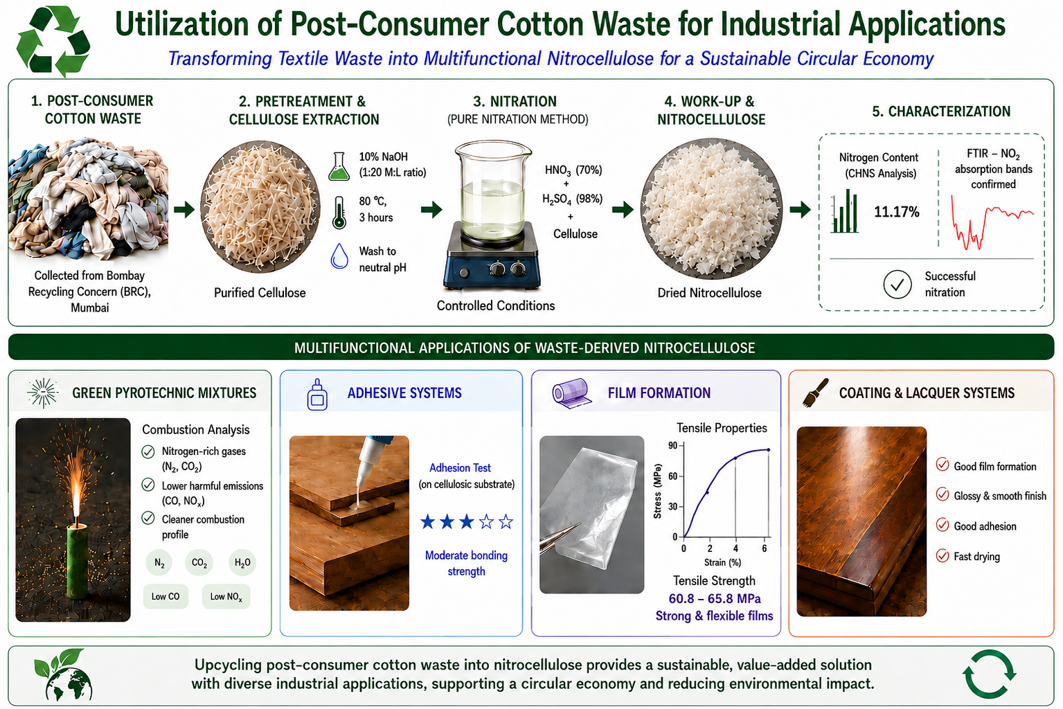
Graphical Abstract
1. Introduction
The textile sector has become the largest source of industrial waste, producing massive amounts of cotton-based residues during garment production and disposal [1]. Cellulose is the main component of cotton fibre, a natural polymer that can be modified chemically to produce a variety of valuable derivatives. When cotton textile waste is improperly disposed of by landfilling or burning, resources are lost, and the environment is polluted [2]. As a result, the invention of sustainable methods for turning textile waste into products of additional value has drawn more attention from researchers.
Nitrocellulose is an important cellulose derivative widely used in coatings, adhesives, printing inks, lacquers, and energetic materials. Cotton textile waste is rich in cellulose, making it a promising alternative feedstock for nitrocellulose synthesis. It is typically produced by nitrating cellulose with an optimized mixture of nitric and sulphuric acids. Conventional nitrocellulose is generally produced from high-purity cellulose sources, thereby increasing production costs [3].
Recent research has explored the valorization of cellulose-based waste for material applications. However, only a few studies have examined the multifunctional potential of nitrocellulose derived from textile waste, with most focus on a single use. Demonstrating multiple applications from a single waste-derived material can significantly enhance the economic feasibility and sustainability of the process. The main objective of this study is to convert post-consumer cotton waste into nitrocellulose and to evaluate its suitability and efficiency for various end-use applications, including adhesive formulations, film formation, coating systems, and ignition materials for green crackers. By exploring a variety of applications, the study will develop a unified way of textile waste valorization and advance material sustainability.
2. Materials and Methods
2.1. Materials
2.1.1. Raw Material
Post-consumer cotton textile waste was used as the primary raw material in this study. Discarded cotton fabric was collected from Bombay Recycling Concern (BRC), Mumbai, India. The collected fabric waste mainly consisted of used cotton garments and textile scraps.
The fabric waste was first manually inspected to remove non-textile components such as buttons, zippers, and other hard materials. The isolated fabric was then shredded mechanically by using a textile shredding machine to convert the material into smaller fibre fragments suitable for further chemical processing. If required, the shredded fibres were subjected to additional cleaning to remove residual contaminants like soil & dust. In this cleaning, the fibres were immersed in warm deionized water (50 °C) for 30 min with gentle agitation, then drained and pressed to remove free water before proceeding to the NaOH bath.
2.1.2. Chemicals
All chemicals used in this study were of analytical grade. Nitric acid (70%), sulphuric acid (98%), and sodium hydroxide (NaOH) were obtained from SD Fine Chemicals Ltd., Mumbai, India. Deionized water was used throughout the experiments for washing and neutralization processes. For application-specific studies, organic solvents and additives, including ethyl acetate, acetone, ethanol, octyl phthalate (plasticizer), and resin (alkyd resin), were used to prepare adhesive, lacquer, and coating formulations.
2.2. Methods
2.2.1. Extraction of Cellulose from Post-Consumer Cotton Waste
The shredded cotton fibres were subjected to alkaline treatment to remove impurities such as waxes, dust, oils, and other non-cellulosic components, thereby enriching the cellulose content. This purification process increases the accessibility of cellulose’s hydroxyl groups, enabling more consistent and effective nitration. As a result, higher quality nitrocellulose with better consistency and nitrogen incorporation is obtained.
-
-
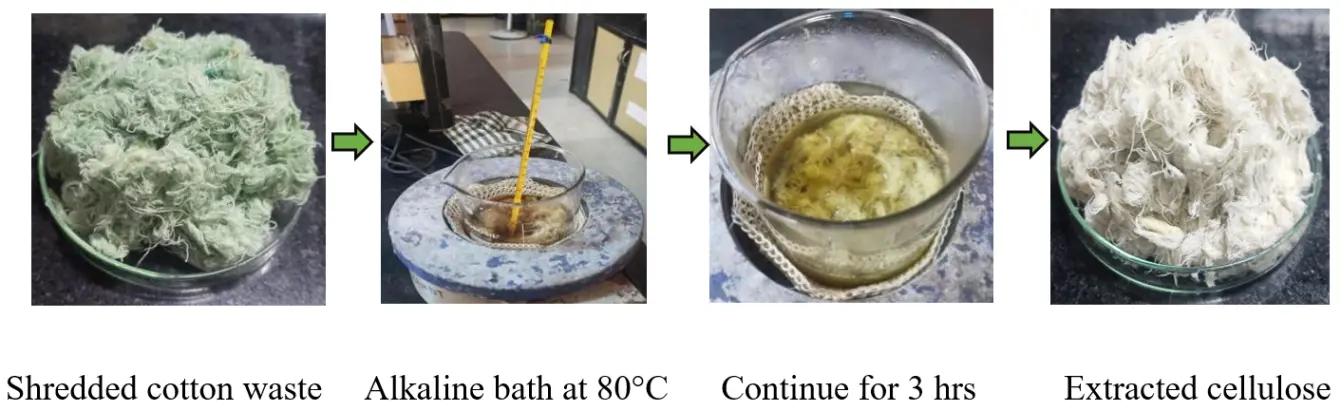
The fibres were treated with a 10% sodium hydroxide (NaOH) solution using a material-to-liquor ratio of 1:20.
-
-
The mixture was heated at 80 °C for 3 h to facilitate the removal of impurities and obtain purified cellulosic pulp, as seen in Figure 1.
-
-
After the alkali treatment, the fibres were filtered and washed repeatedly with deionized water, and the pH was maintained with acetic acid to neutral. This step ensured the removal of residual alkali and dissolved impurities [4].
2.2.2. Drying of Purified Cellulose
The extracted, clean cellulosic material was dried at 105 °C for 5 min in a hot-air oven to remove moisture prior to nitration. This drying step improves the efficiency of the nitration reaction by facilitating the substitution of hydroxyl groups with nitrate groups during the chemical modification process [5].
2.2.3. Process Optimization Using Response Surface Methodology
Initially, the nitration of cellulose was performed under various reaction conditions, but no efficient, consistent results were obtained. Variations in process parameters, such as acid concentration, reaction time, temperature, and material-to-liquor ratio, significantly affected the degree of nitration. Therefore, to systematically optimize these parameters and obtain reliable results, Response Surface Methodology (RSM) based on the Box–Behnken experimental design was adopted. This approach enabled the identification of optimal conditions to maximize the nitrogen content of the synthesized nitrocellulose [6].
This statistical design method allows the investigation of the combined effects of multiple variables while minimizing the number of experimental runs required. Four variables were selected for the optimization study. The factors and their ranges used in the Box-Behnken design are summarized in Table 1.
Table 1. Factors used for Responsive Surface Methodology.
|
Factor |
Name |
Units |
Minimum |
Maximum |
Mean |
Std. Dev. |
|---|---|---|---|---|---|---|
|
a |
HNO3 |
% |
30.00 |
50.00 |
40.00 |
6.55 |
|
b |
Time |
seconds |
60.00 |
180.00 |
120.00 |
39.28 |
|
c |
M.L.R |
mL/g |
10.00 |
20.00 |
15.00 |
3.27 |
|
d |
Temp. |
Degree C |
18.00 |
28.00 |
22.83 |
3.40 |
Each parameter varied within a predefined range based on preliminary experiments. The Box-Behnken design generated 29 experimental runs, enabling the evaluation of both individual and interactive effects of the selected variables on the nitration process.
2.2.4. Synthesis of Nitrocellulose
Nitrocellulose was prepared by nitrating purified cellulose using a mixed acid system consisting of nitric acid and sulphuric acid.
-
-
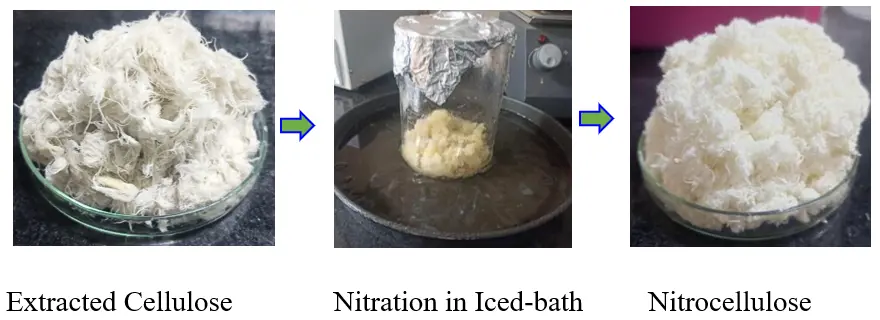
Initially, nitric acid and sulphuric acid were cooled to approximately 20 °C using an ice bath to control the exothermic nature of the nitration reaction. The required concentration of nitric acid was first placed in a reaction beaker, followed by the slow addition of concentrated sulphuric acid while continuously monitoring the temperature.
-
-
Once the reaction temperature stabilised below 20 °C, the dried cellulose fibres were gradually introduced into the nitrating mixture. The fibres were gently pressed using a glass rod to ensure complete penetration of the nitrating solution into the cellulose structure.
-
-
After the reaction time, the nitrated fibres were removed from the acid mixture and immediately washed with water to remove excess acid.
-
-
The material was repeatedly washed until neutral conditions were achieved. The nitrated fibres were then pressed to remove excess water and allowed to dry at 45 °C. After drying, the product appeared as pale white fibres, indicating the formation of Nitrocellulose [7]. The recipe for obtaning maximum nitrocellulose has been optimised & disccused further. The nitrocellulose synthesis process is depicted in Figure 2.
3. Application Study of Nitrocellulose Derived from Post-Consumer Cotton Fabric
The nitrocellulose produced from post-consumer cotton textile waste was utilized in various applications, including firecrackers, lacquers, and adhesive systems, to assess its functional performance and versatility. This strategy seeks to demonstrate that nitrocellulose derived from post-consumer cotton waste can be successfully used in industrial applications, such as coatings and adhesives, as well as in energetic applications, such as ignition systems [8].
The results should confirm that using textile waste as a reliable and sustainable feedstock for nitrocellulose production is feasible. Furthermore, this work contributes to the development of value-added utilization pathways for textile waste and promotes circular economy practices within the textile and chemical industries.
3.1. Application in Green Firecracker
Nitrocellulose derived from cellulose sources was utilized as an energetic component in firecracker formulations to develop environmentally responsible, or “green”, firecrackers. The black powder used in conventional firecrackers, which is mostly made of Sulfur, charcoal, and potassium nitrate, burns inefficiently and releases a lot of smoke, particulate matter, and hazardous gaseous emissions. The presence of Sulfur and inorganic oxidizers is a major contributor to air pollution, producing hazardous gases and solid waste that are harmful to the environment and human health [9].
In this study, nitrocellulose derived from post-consumer cotton textile waste was utilized as an alternative energetic material to address these limitations. Nitrocellulose burns rapidly without the use of sulphur or inorganic oxidizing agents because it contains nitrate groups in its structure. This results in reduced smoke production, reduced particle emissions, and cleaner combustion behavior. There are two advantages to using waste-derived nitrocellulose: the first is the valorization of post-consumer cotton textile waste by making it a high-value, useful material, and the second is the creation of firecracker formulations with a lower ecological footprint. Emission analyses were used to evaluate the performance of the developed system, confirming that it could serve as a sustainable alternative to traditional pyrotechnic compositions.
3.2. Application in Lacquer Systems
Nitrocellulose derived from post-consumer cotton textile waste was utilized in lacquer formulations to evaluate its film-forming ability and suitability as a coating material. Conventional nitrocellulose-based lacquers are widely used due to their rapid drying, smooth surface finish, and ease of application. As a sustainable substitute for commercially manufactured nitrocellulose in coating applications, waste-derived nitrocellulose was examined in this work. The lacquer preparation scheme is shown in Figure 3, and the full formulation is given in Table 2.
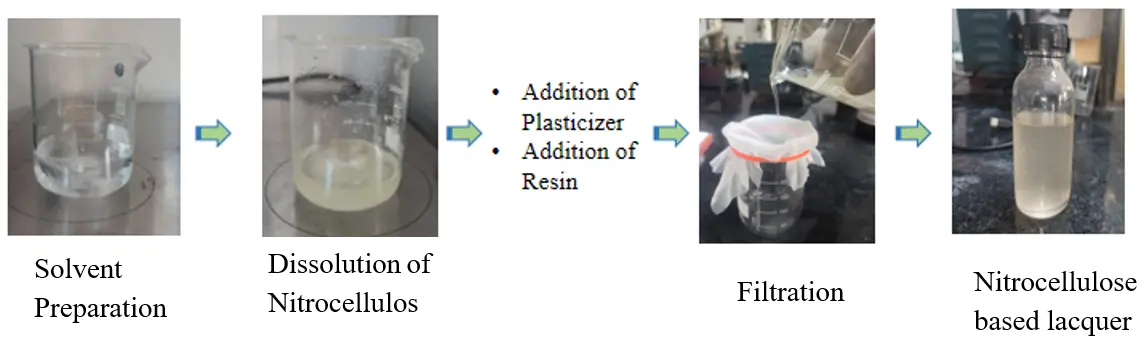
The lacquer formulation was prepared by dissolving nitrocellulose in a solvent system consisting of ethyl acetate, toluene, and ethanol, which provided effective solvency and controlled evaporation during film formation. Dioctyl phthalate was incorporated as a plasticizer to improve film flexibility and reduce brittleness, while alkyd resin was added to enhance adhesion, hardness, and gloss properties of the coating.
Table 2. Composition of Nitrocellulose-Based Lacquer Formulation.
|
Component |
Function |
Quantity |
|---|---|---|
|
Nitrocellulose |
Film-forming polymer |
5 gm |
|
Ethyl acetate |
Primary solvent |
35 mL |
|
Toluene |
Co-solvent |
25 mL |
|
Ethanol |
Co-solvent |
25 mL |
|
Dioctyl phthalate |
Plasticizer |
4 gm |
|
Alkyd resin |
Film hardener |
5 gm |
The viscosity of the prepared lacquer was adjusted by adding small amounts of ethyl acetate as needed. To remove any undissolved particles or contaminants that could affect coating quality, the final solution was filtered through a nylon mesh. The prepared nitrocellulose lacquer was then transferred to airtight glass containers and stored away from heat and direct sunlight to prevent solvent evaporation and degradation [10].
3.3. Application in Adhesive Formulation
Nitrocellulose-derived waste was also evaluated as a binder in adhesive systems to assess its bonding performance and suitability as a sustainable alternative to conventional adhesives. Nitrocellulose is known for its excellent film-forming ability, strong adhesion to porous and cellulosic substrates, and rapid solvent evaporation, making it suitable for fast-drying adhesive formulations. The adhesive formulation was optimized by adjusting the nitrocellulose-to-solvent ratio to achieve consistent bonding and identical viscosity. The solvent of interest was ethyl acetate because it shows better solubilization of the material and has a controlled evaporation rate [11].
The cellulosic, porous nature of the cardboard substrates (5 × 10 cm) was chosen to facilitate bonding. A uniform layer of adhesive, approximately 50 percent of the surface in contact with the bonding substrates, was applied by brushing and allowed to dry to provide a uniform bond to the substrates. The bonded specimens were then left to dry at room temperature to aid solvent evaporation and promote appropriate film formation.
A pull-apart tensile test was performed to determine the mechanical performance of the adhesive. The bonding strength was measured carefully using a 5 kN load cell, as the initially tested load cell exceeded its capacity. These tests were performed with a UTM LD50 general testing instrument (Lloyd Instruments, Bognor Regis, UK). The bonded specimens were subjected to tensile loading until failure to provide a quantitative evaluation of adhesion strength and joint integrity [12].
3.4. Preparation and Mechanical Evaluation of Nitrocellulose Film
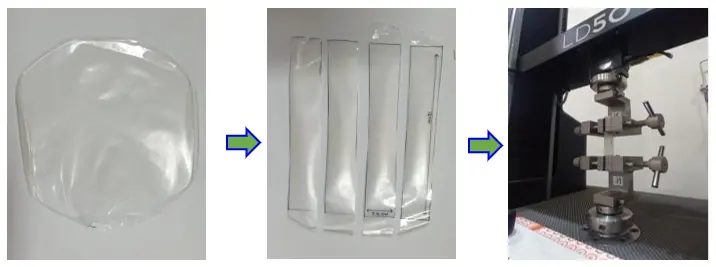
The prepared nitrocellulose film has potential as a sustainable alternative to conventional plastic materials for applications such as coatings, packaging films, and protective layers, thanks to its biodegradability and film-forming properties. In this research study, nitrocellulose has been investigated as a waste product of post-consumer cotton textiles, with its properties used to form uniform, mechanically stable films suitable for such applications. In this research study, nitrocellulose has been developed from post-consumer cotton textiles, a waste product, and its properties have been used to form uniform, mechanically stable films. During film preparation, 1 g of nitrocellulose was dissolved in 30 mL of ethyl acetate, and the mixture was stirred continuously until a clear, homogeneous solution was obtained. The solution was then evenly spread onto a clean and flat glass surface and allowed to dry at room temperature. To ensure proper film formation, the solvent was allowed to evaporate slowly over 3 days. Rapid evaporation was avoided to prevent incomplete or brittle film formation. Controlled slow evaporation enabled the formation of a continuous, uniform, and defect-free nitrocellulose film. After complete drying, the film was carefully peeled from the glass surface for further characterization. The tensile testing setup for the film is shown in Figure 4.
The mechanical properties of the prepared nitrocellulose film were evaluated using a tensile testing machine. Film samples were put between the instrument’s clamps after being cut to the appropriate size. To assess tensile strength and deformation behavior, the test was conducted under carefully controlled conditions.
4. Results and Discussion
4.1. Box-Behnken Method of Response Surface Methodology
The optimization of the nitration of cotton was carried out using Response Surface Methodology (RSM) based on a Box–Behnken design to evaluate the effect of nitric acid concentration (A), reaction time (B), material-to-liquor ratio (C), and temperature (D) on the nitrogen content of the obtained nitrocellulose.
4.1.1. Model Adequacy and Statistical Significance
The nitrogen content model was statistically significant, as indicated by an F-value of 3.08 (p-value = 0.0217). This indicates that the model is a sufficient representation of the correlation between process variables and response. The lack-of-fit test was not significant (p = 0.8341), indicating that the model fits the experimental data.
4.1.2. Effect of Process Variables
The concentration of nitric acid (A) was the most influential linear term with a high level of significance (p = 0.0016), which means that it has the strongest effect on nitrogen content in the nitration process. In contrast, time (B), MLR (C), and temperature (D) were not significantly affecting the range of the study. Even the quadratic A2 (p = 0.0056) was significant, indicating that the acid concentration was not related to incorporating nitrogen in a linear manner. This implies that there is an optimal concentration beyond which the nitrogen content is no longer proportional.
4.1.3. Predicted vs. Actual Relationship
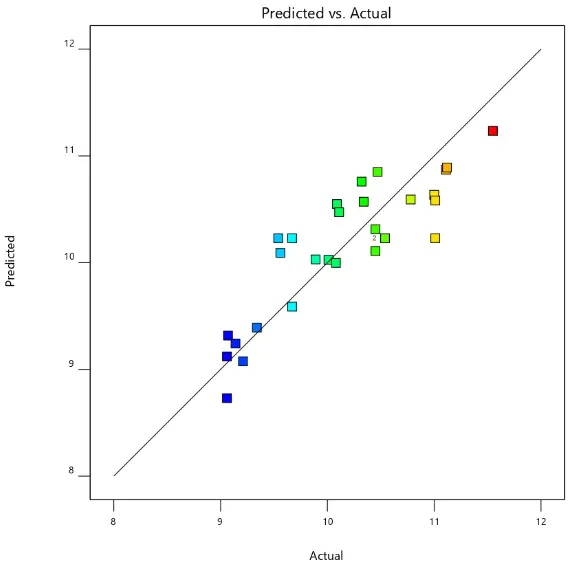
The plotted graph of the predicted and actual proves that the data points of the experiment follow the diagonal line with reasonable accuracy, which can be seen in Figure 5. It means the expected results are close to the observed results. There are no significant deviations, indicating that the model developed has good predictive power.
4.1.4. Response Surface Analysis
The 3D response surface plots provide further insight into the interaction between variables:
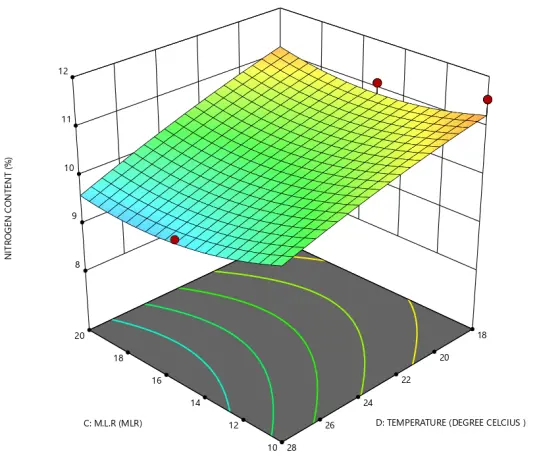
Effect of Temperature and MLR: As temperature rises, nitrogen content shows a moderate increase. While MLR exhibits a comparatively weaker influence. This suggests that higher temperatures slightly enhance nitration efficiency, possibly due to improved diffusion of nitrating species. The response surface for temperature and MLR interaction is shown in Figure 6.
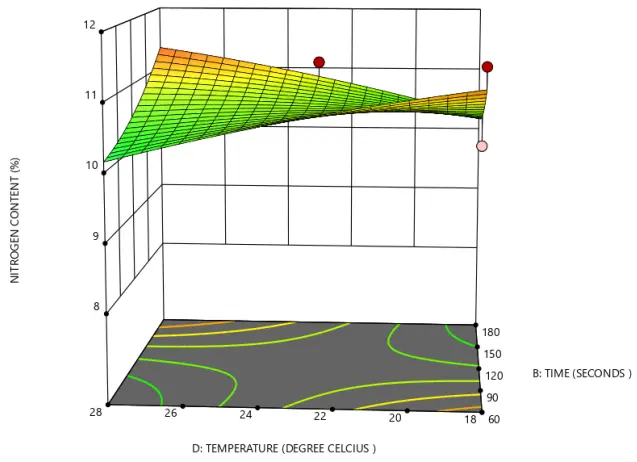
Effect of Time and Temperature: The interaction between time and temperature (BD) is evident from the surface curvature. The statistical significance of the difference in reaction time at higher temperatures indicates that, as temperature increases, nitrogen incorporation increases. The corresponding 3D surface plot is shown in Figure 7.
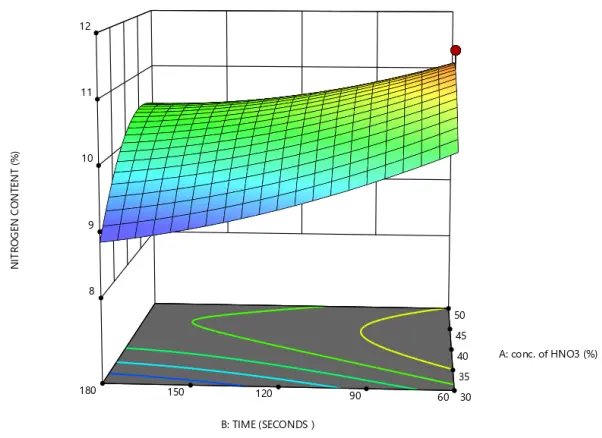
Effect of Acid Concentration and Time: Nitrogen content increases significantly with increasing nitric acid concentration, while time shows a marginal effect. This supports the idea that acid strength, rather than reaction time, controls the degree of nitration within the chosen range. The 3D surface plot for this interaction is presented in Figure 8.
4.1.5. Process Optimization Insight
These findings clearly show that nitric acid concentration is the main parameter regulating nitrogen content. The presence of a large quadratic coefficient indicates that excessively high acid concentrations are unlikely to increase nitrogen incorporation in a proportional manner and may even cause a degradation effect. The interaction between time and temperature highlights that process conditions must be optimized collectively rather than independently. The best experimental results were achieved at the maximum nitrogen level, with a 40% nitric acid solution, a reaction time of 60 s, a material-to-liquid ratio of 1:10, and a reaction temperature of 18 °C. In this case, the nitration process was used, yielding nitrocellulose containing 11.17% nitrogen.
4.2. Fourier Transform Infrared Spectroscopy (FTIR)
Nitrocellulose is characterized by FTIR spectroscopy, which confirms the degree of nitration and structural alterations by detecting distinctive absorption bands for nitro groups, as seen in Figure 9. In order to assess the effectiveness and conversion of cellulose to nitrocellulose component, the presence of chemical functional groups in cotton waste and nitrocellulose material generated from cotton lint, post-consumer cotton, and wood pulp was assessed.
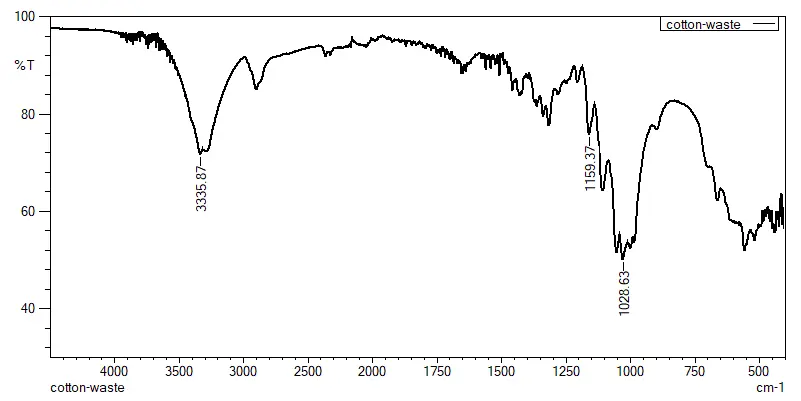
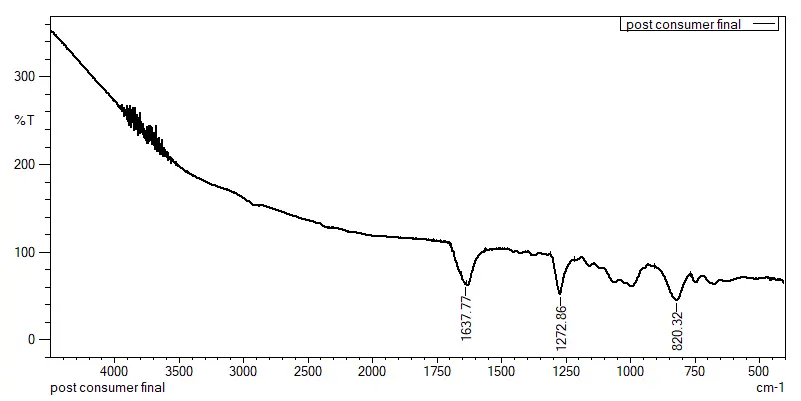
Nitrocellulose derived from post-consumer cotton waste displayed a strong peak at around 1272 cm−1 in FTIR analysis, which is suggestive of symmetric NO2 stretching vibrations. This shows that nitro (NO2) groups effectively substituted for hydroxyl (OH) groups in all samples. The optimum pre-nitration drying temperature for cellulose sources was 105 °C, as it eliminates residual water that would otherwise evaporate without breaking the polymer chains. This reduces hydrolysis side reactions and increases the availability of nitronium ions for dependable esterification.
4.3. Carbon, Hydrogen, Nitrogen, and Sulphur (CHNS) Elemental Analysis
CHNS elemental analysis, a combustion-based method that accurately determines the proportion of Nitrogen (N) together with Carbon (C), Hydrogen (H), and Sulphur (S) by high-temperature oxidation and thermal conductivity detection, was used to evaluate the nitrocellulose sample. The elemental composition results are presented in Table 3.
Table 3. CHNS Analysis Results.
|
Sample |
Carbon (%) |
Hydrogen (%) |
Nitrogen (%) |
Sulphur (%) |
|---|---|---|---|---|
|
Post-consumer cotton |
28.25 |
4.45 |
11.17 |
Not detected |
Elemental analysis of nitrocellulose derived from post-consumer cotton by CHNS showed a nitrogen content of 11.17%, supporting the successful attachment of the nitro groups to the cellulose framework. The carbon percentage (28.25%) is also in line with theoretical values, indicating that the cellulose backbone is preserved, whereas the hydrogen percentage (4.45%) suggests that the backbone was substituted with uniform, moderate numbers, without over degrading the structure.
Notably, there was no sulphur found, which indicated that it was purified effectively and that it did not have any impurities; otherwise, that may interfere with stability or performance. The findings show that post-consumer cotton is viable for conversion into nitrocellulose with characteristics similar to those of traditional sources of the same product, even though the source is recycled.
4.4. Nitrocellulose Preparation Environmental Impact Assessment
The ecological performance of the synthesis of nitrocellulose from post-consumer cellulose waste was estimated in terms of material efficiency, resource consumption, and the sustainability of the entire process.
4.4.1. Process Overview and Yield
The nitrocellulose yield obtained under the selected process conditions was 145% based on the initial weight of cotton waste. Apparent yields exceeding 100% are expected in nitration reactions because nitrate ester groups are incorporated into the cellulose backbone, increasing the mass of the material. The high yield demonstrates the effectiveness of the pretreatment and nitration processes in converting cellulose-rich textile waste into nitrocellulose suitable for industrial applications.
4.4.2. Material Efficiency (PMI and E-Factor)
The Process Mass Intensity (PMI) was also computed to be 108, indicating that 109 g of material was required to produce 1 g of product. Such a high figure indicates significant material consumption during processing. The e-factor was 107, which indicated high levels of waste production. These findings indicate that, despite the raw material being sustainable, the entire process is significantly material-inefficient, mainly due to the use of chemicals and washing processes.
4.4.3. Nitration Efficiency
The calculated theoretical yield of nitrocellulose was 18.3 g, and the experimental yield was 14.5 g; therefore, the nitration efficiency was about 79%. This productivity is within the common industrial range, indicating that the nitration process was successful and that the reaction conditions were suitable for transforming cellulose.
4.4.4. Carbon and Water Footprint
The carbon footprint of the entire process was calculated to be 11.7 kg CO2 per kg of product. The use of water was also observed to be an important factor in the total environmental impact. 140 mL of water was added, amounting to an average of 97 L per 1kg of nitrocellulose generated. The washing phase was found to be the primary driver of water consumption and waste.
4.5. Smoke Analysis of Nitrocellulose-Based Cracker
The gaseous products formed during combustion were identified and quantified using gas analysis, since the material developed is intended for use as a nitrocellulose-based green cracker. This analysis showed Nitrogen, Oxygen, Carbon dioxide, Carbon monoxide, Hydrogen, and trace Methane in the three experimental data sets. The GC chromatograms for H2, CH4, and CO2 are shown in Figure 10, and the data obtained from it are presented in Table 4. The GC chromatograms for N2 and CO2 are shown in Figure 11, and the data obtained from it are presented in Table 5. For O2, N2, and CO, the chromatograms are shown in Figure 12, and the data obtained from it are summarized in Table 6. The major component in Table 4 was hydrogen (64.7%), followed by methane (14.7%) and carbon dioxide (20.6%), suggesting that the light gaseous species were formed rapidly during decomposition. Table 5 showed that nitrogen was the predominant component (94.4%) and carbon dioxide the second (4.0%), confirming that the emission profile in this condition is mainly fueled by inert nitrogen. In Table 6, nitrogen was the major gas (74.9%), followed by oxygen (14.6%) and carbon monoxide (10.5%), indicating partial oxidation and localised oxygen oxidation.
Generally, the collective results show that nitrogen is the most common gaseous product, whereas carbon dioxide and carbon monoxide are the most common oxidation products of the nitrocellulose matrix. Hydrogen and methane identified in Table 4 are further evidence of secondary decomposition pathways involving volatile intermediates. The data indicate a fairly regulated profile of nitrogen-rich emissions, suggesting the potential to use post-consumer cotton-based nitrocellulose in green cracker applications, which offer a relatively cleaner combustion profile with lower sustained pollutant emissions.
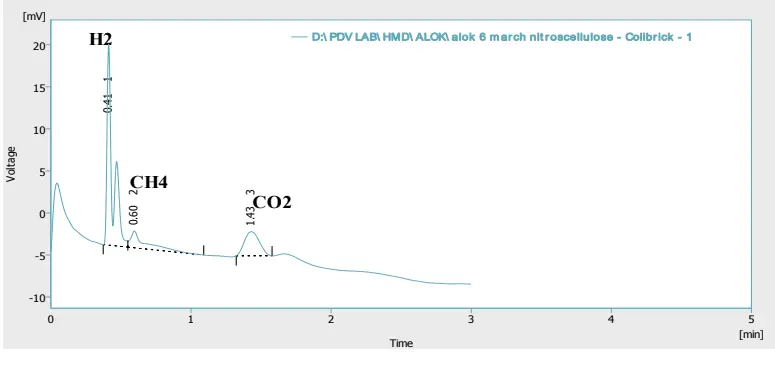
Table 4. Quantitative GC Analysis of H2, CH4 and CO2.
|
Peak No. |
Retention Time (min) |
Height (mV) |
Area (mV·s) |
Area (%) |
Height (%) |
W05 (min) |
Compound |
|---|---|---|---|---|---|---|---|
|
1 |
0.412 |
23.92 |
66.90 |
64.7 |
83.1 |
0.03 |
H2 |
|
2 |
0.596 |
1.99 |
15.17 |
14.7 |
6.9 |
0.06 |
CH4 |
|
3 |
1.432 |
2.88 |
21.33 |
20.6 |
10.0 |
0.12 |
CO2 |
|
Total |
28.80 |
103.41 |
100.0 |
100.0 |
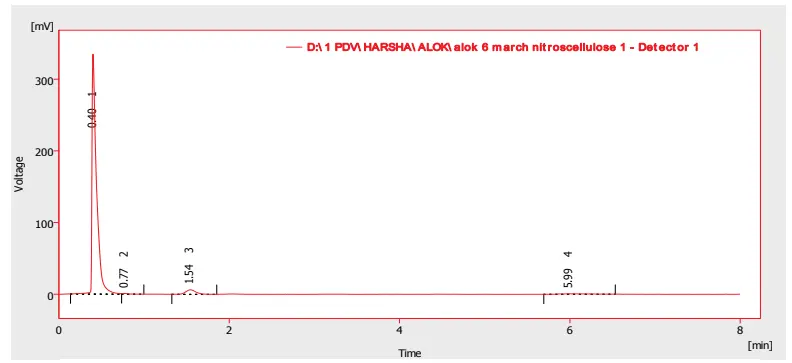
Table 5. Quantitative GC Analysis of N2 and CO2.
|
Peak No. |
Retention Time (min) |
Height (mV) |
Area (mV·s) |
Area (%) |
Height (%) |
W05 (min) |
Compound |
|---|---|---|---|---|---|---|---|
|
1 |
0.400 |
1246.92 |
334.56 |
94.4 |
97.7 |
0.05 |
N2 |
|
2 |
0.773 |
5.05 |
0.96 |
0.4 |
0.3 |
0.07 |
- |
|
3 |
1.541 |
52.81 |
6.26 |
4.0 |
1.8 |
0.13 |
CO2 |
|
4 |
5.989 |
16.76 |
0.71 |
1.3 |
0.2 |
0.43 |
- |
|
Total |
1321.55 |
342.55 |
100.0 |
100.0 |
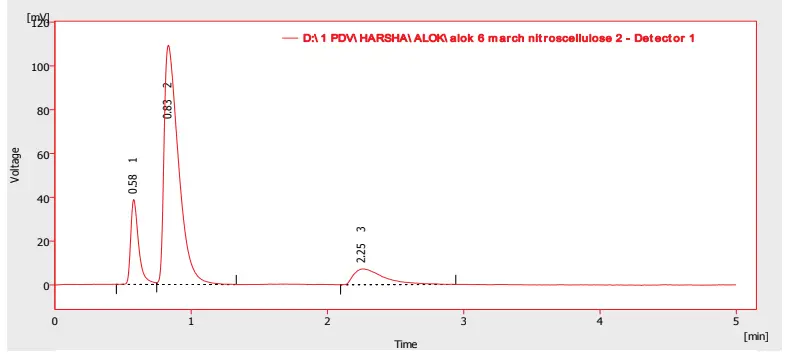
Table 6. Quantitative GC Analysis of O2, N2 and CO.
|
Peak No. |
Retention Time (min) |
Area (mV·s) |
Height (mV) |
Area (%) |
Height (%) |
W05 (min) |
Compound |
|---|---|---|---|---|---|---|---|
|
1 |
0.579 |
156.63 |
38.74 |
14.6 |
25.0 |
0.06 |
O2 |
|
2 |
0.832 |
805.53 |
109.28 |
74.9 |
70.4 |
0.11 |
N2 |
|
3 |
2.253 |
112.83 |
7.21 |
10.5 |
4.6 |
0.23 |
CO |
|
Total |
1075.00 |
155.18 |
100.0 |
100.0 |
4.6. Performance Evaluation and Solvent Evaporation Behavior of Nitrocellulose-Based Lacquer
4.6.1. Properties and Performance
The produced nitrocellulose-based lacquer had a quick drying time, reaching the dry-to-touch level in about 5–6 min at ambient temperature. This rapid drying feature is helpful in practical coating applications, as processing time is shorter than with some traditional systems. The applied coatings formed a smooth, level film on compatible surfaces, especially glass and wood. The appearance was also similar, and no major flaws, such as cracking, peeling, or uneven thickness, were observed upon drying. The lacquer adhered well to these substrates, and the film did not delaminate during handling and subsequent testing. This indicates good contact between the substrate surfaces and the nitrocellulose matrix. Notably, the general performance of the prepared lacquer, such as the drying time, movie uniformity, and bonding, was similar to that of commercially prepared lacquers. This states that the material produced from post-consumer waste can be a feasible and sustainable alternative without compromising key functional characteristics.
4.6.2. Solvent Evaporation and Environmental Impact
The behavior of solvent evaporation largely determines the performance of the developed nitrocellulose lacquer. It controls the behavior of the films formed, the duration of film drying, and the quality of the final coating. The dry process used is more of physical solvent evaporation than chemical evaporation of nitrocellulose lacquers. Thus, the choice of solvents and the mixture is important for creating a flawless, smooth coating. Role of Solvent System in Film Formation.
In this study, a mixture of fast, medium, and slow evaporating solvents was considered essential to balance drying rate and film quality:
-
-
Fast solvents such as acetone and ethyl acetate cause fast drying on the surface. The solvents dry off very quickly (2–10 min), so the coating is tack-free in a relatively short time. Overuse, however, can result in surface defects such as blushing or poor levelling.
-
-
Medium solvents, ethanol and toluene, are involved in film levelling. They have a moderate evaporation rate (10–30 min), enabling the coating to move and spread flat to minimize surface irregularities.
-
-
Slow solvents, such as butyl acetate, evaporate slowly (30–50 min), allowing the film to coalesce properly and achieve a smooth, defect-free finish.
The combination of these solvents ensures controlled evaporation, which is critical for achieving the smooth, uniform, and transparent coatings observed on glass and wood substrates in this study.
4.6.3. Drying Behavior and Film Quality
The formulated lacquer dries quickly (5–6 min) because volatile solvents such as acetone and ethyl acetate were used in its formulation. The slower-evaporating components were most likely added concurrently to improve film uniformity and reduce surface imperfections. This is a balanced solvent system that can be used to explain the similar performance of the developed lacquer in comparison to commercial products.
4.6.4. Environmental and Health Considerations
Despite their effectiveness, the solvents used in nitrocellulose lacquers are associated with environmental and health concerns due to the emission of volatile organic compounds (VOCs):
-
-
Acetone and ethyl acetate contribute to high VOC emissions, which can impact indoor air quality.
-
-
Toluene is particularly concerned due to its neurotoxic effects on the nervous system.
-
-
Ethanol has relatively lower toxicity but still contributes to VOC emissions.
-
-
Butyl acetate, although slower evaporating, also releases VOCs, but at a reduced rate compared to fast solvents.
These emissions highlight one of the main limitations of nitrocellulose-based systems, such as the one developed in our research. Although the synthesized lacquer performs well, solvent evaporation is a major environmental issue.
4.7. Adhesive Performance
The tensile test results for the nitrocellulose-based adhesive from post-consumer cotton are given in Table 7, which shows a maximum load of 566.53 N and a corresponding stress of 0.172 MPa, indicating that a stable, effective bond was formed between the cardboard substrates. The maximum load strain (2.12%) indicates that the adhesive bond can deform to some extent before attaining its maximum strength. Although stress values are moderate compared to those of high-performance synthetic adhesives, they are comparable to those of typical nitrocellulose-based adhesives, where film formation and interfacial compatibility are the main factors rather than effective chemical bonding. The decrease in load (375.43 N), stress (0.114 MPa), and a slight rise in strain (2.29%) at break indicate that failure occurs gradually rather than by brittle fracture. This action is a natural film-forming property of nitrocellulose that permits redistribution of some stress prior to failure.
Table 7. Tensile values of nitrocellulose-based adhesive.
|
Cellulose Source |
Load at Maximum Load (N) |
Stress at Maximum Load (MPa) |
Strain at Maximum Load (%) |
Load at Break (N) |
Stress at Break (MPa) |
Strain at Break (%) |
|---|---|---|---|---|---|---|
|
Post-consumer cotton waste |
566.53 |
0.17 |
2.12 |
375.43 |
0.11 |
2.29 |
The findings indicate that the adhesive does not have extremely high mechanical strength, yet it offers an appropriate trade-off between adhesion and flexibility for cellulosic substrates. All in all, the performance indicates that nitrocellulose produced from post-consumer cotton is a suitable binder for adhesion applications, especially when moderate strength, quick drying, and material compatibility are the primary requirements rather than structural load-bearing capability.
4.8. Nitrocellulose Film: Tensile Behavior and Structural Integrity
The mechanical testing of the prepared nitrocellulose film was conducted to determine its mechanical behavior, including strength, stiffness, and deformation under a given applied load. The test is necessary to determine the film’s suitability for use in areas such as coating, packaging, and protective layers. Three independent tensile tests were performed to ensure reproducibility and reliability of the findings. The results are presented in Table 8.
Table 8. Tensile Behavior and Structural Integrity of Nitrocellulose Film.
|
Sample |
Young’s Modulus |
Tensile Strength (MPa) |
Elongation at MaxForce (%) |
Stress at Break (MPa) |
Elongation at Fracture (%) |
|---|---|---|---|---|---|
|
1 |
2819.0 |
62.3 |
4.07 |
62.3 |
4.07 |
|
2 |
2625.0 |
60.8 |
5.30 |
60.8 |
5.30 |
|
3 |
2877.0 |
65.8 |
5.98 |
65.8 |
5.98 |
The post-consumer cotton nitrocellulose film was relatively stiff, with a Young’s modulus of 26.25–28.77 MPa, indicating a stiff, well-strained polymer backbone. The tensile strength values (60.8–65.8 MPa) are relatively high for nitrocellulose-based films, indicating strong intermolecular interactions during film development. Unanimity in the preparation of the film is demonstrated by the consistency across all three samples. Nevertheless, its maximum force elongation at fracture (4.07–5.98) is low, which implies low ductility and the brittle nature of the material under no plasticizers. The near similarity in tensile strength and stress at break indicates that plastic deformation before breaking is minimal and, therefore, indicates a brittle fracture process. Overall, the movie demonstrates that its structure is very strong and stable for rigid applications, but additional adjustments would be needed to enhance its flexibility for more sophisticated applications, such as flexible packaging.
5. Conclusions
This paper has provided a successful attempt to prove the valorization of the post-consumer cotton textile waste into nitrocellulose and its further use in various application areas. Thus, developing a comprehensive, sustainable materials development strategy. RSM-based optimization application allowed determining important parameters of the process, and the most influential element that determined the incorporation of nitrogen became the concentration of nitric acid. The optimized process gave a nitrocellulose nitrogen content of 11.17 percent, which confirmed that chemical modification effectively took place, and at the same time, structural integrity was maintained.
Application-based assessment of the synthesized nitrocellulose demonstrated its versatile functionality. The burning behaviors in the green cracker recipes exhibited a relatively high nitrogen-based emission profile and relatively reduced emissions of harmful gases, indicating cleaner burning properties. The adhesive system showed good bonding behavior and moderate, controllable strength and was applicable for non-structural use. Also, the films prepared were high in tensile strength and stiffness but low in flexibility because they contained no plasticizers, indicating their use in hard-coating work and protective covers.
Altogether, these results indicate that post-consumer cotton waste can serve as a viable and sustainable feedstock for nitrocellulose production without affecting its material performance. The ability to develop several useful applications from a single waste-based product is crucial to increasing its industrial applicability and financial viability. As it promotes the development of circular economy approaches, changing the textile waste into high-value products, the work also offers the grounds for future optimization and application-specific modification in future research.
Statement of the Use of Generative AI and AI-Assisted Technologies in the Writing Process
During the preparation of this manuscript, the author used Grammarly to improve grammar, clarity, and language quality. After using this tool, the author carefully reviewed and edited the content as needed and take full responsibility for the content of the published article.
Acknowledgments
The authors thank the Institute of Chemical Technology and the Department of Fibres and Textile Processing Technology, Mumbai, for their support.
Author Contributions
Writing-original draft preparation, Methodology, A.V.; Review & Editing, A.A.
Ethics Statement
Not applicable.
Informed Consent Statement
Not applicable.
Data Availability Statement
This review is based exclusively on data from previously published studies, all of which are publicly available and appropriately cited.
Funding
This research received no external funding.
Declaration of Competing Interest
The authors declare that they have no known competing financial interests or personal relationships that could have appeared to influence the work reported in this paper.
References
- Ellen MacArthur Foundation. A New Textiles Economy: Redesigning Fashion’s Future; Ellen MacArthur Foundation: Cowes, UK, 2017; pp. 3–117. [Google Scholar]
- Sandin G, Peters GM. Environmental impact of textile reuse and recycling—A review. J. Clean. Prod. 2018, 184, 353–365. DOI:10.1016/j.jclepro.2018.02.266 [Google Scholar]
- Jiao Y, Li S, Ding S, Yang D, Bai C, Liu J, et al. Preparation and Properties of Nitrocellulose/Viton Based Nano Energetic by Direct Writing. In International Conference on Development and Application of Carbon Nanomaterials in Energetic Materials; Springer: Singapore, 2021; pp. 341–352. [Google Scholar]
- Koistinen A, Vuorinen T, Maloney T. The effect of alkaline pre-treatment on cellulose pulp fiber dissolution. Carbohydr. Polym. Technol. Appl. 2025, 11, 100978. DOI:10.1016/j.carpta.2025.100978 [Google Scholar]
- Jori Roslan N, Jamal SH, Abdul Rashid JI, Norrrahim MNF, Ong KK, Wan Yunus WMZ. Response surface methodology for optimization of nitrocellulose preparation from nata de coco bacterial cellulose for propellant formulation. Heliyon 2024, 10, e25993. DOI:10.1016/j.heliyon.2024.e25993 [Google Scholar]
- Alhajabdalla M, Mahmoud H, Nasser MS, Hussein IA, Ahmed R, Karami H. Application of Response Surface Methodology and Box–Behnken Design for the Optimization of the Stability of Fibrous Dispersion Used in Drilling and Completion Operations. ACS Omega 2021, 6, 2513–2525. DOI:10.1021/acsomega.0c04272 [Google Scholar]
- Rizkiansyah RR, Mardiyati Y, Hariyanto A, Dirgantara T. Selecting appropriate cellulose morphology to enhance the nitrogen content of nitrocellulose. RSC Adv. 2024, 14, 28260–28271. DOI:10.1039/D4RA04172K [Google Scholar]
- Abdul Rahim KS, Samsuri A, Jamal SH, Mohd Nor SA, Rusly SNA, Ariff H, et al. Key attributes of nitrocellulose-based energetic materials and recent developments. Heliyon 2025, 11, e41282. DOI:10.1016/j.heliyon.2024.e41282 [Google Scholar]
- Lin CC. A review of the impact of fireworks on particulate matter in ambient air. J. Air Waste Manag. Assoc. 2016, 66, 1171–1182. DOI:10.1080/10962247.2016.1219280 [Google Scholar]
- Liang L, Luo Q, Xu W, Liang M, Shen H. Effects of several cosolvents and non-solvents on ester true solvents in nitrocellulose lacquer thinner. Prog. Org. Coat. 2022, 172, 107063. DOI:10.1016/j.porgcoat.2022.107063 [Google Scholar]
- Zhang X, Zhou Y, Li Z, Zhu J, Ren J, Duan X, et al. High-performance, formaldehyde-free, multi-functional nitrocellulose adhesive in various environments. Chem. Eng. J. 2025, 511, 162064. DOI:10.1016/j.cej.2025.162064 [Google Scholar]
- Alwis Weerasinghe S, Kłodowski A, Semken RS, Orzechowski G, Mikkola A. Benchmarking adhesive performance in bonding FDM TPU to PBF PA12 3D-printed parts. Sci. Rep. 2025, 16, 2699. DOI:10.1038/s41598-025-32559-w [Google Scholar]