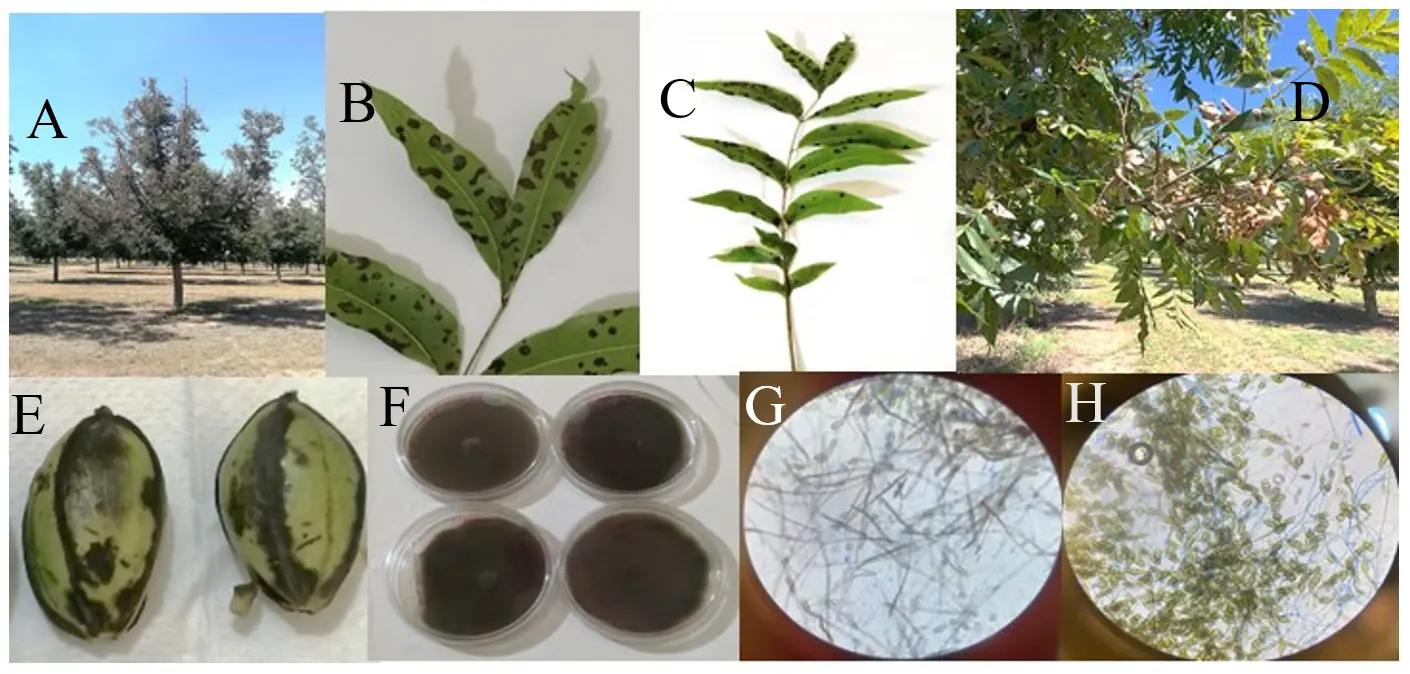
Preliminary observations show that scab-like symptoms are present in pecan orchards in southern Chihuahua, Mexico. However, its presence has gone unnoticed by growers, who attribute the damage to zinc deficiencies. This disease can cause significant damage to trees and may represent a potential risk for pecan production. Two fungi were frequently isolated from the affected trees, Cladosporium-like fungus and Alternaria-like fungus, making it urgent to identify them using molecular techniques. The role of these fungi in the development of the disease—which commonly is attributed to Cladosporium spp.—should be determined through pathogenicity tests. The incidence and severity of the disease across the various growing regions must be assessed, and crop losses must be calculated. Research into disease epidemiology is also important for developing integrated management strategies that emphasize biological control and predictive systems.
Nitric oxide (NO) is increasingly recognized as a central regulator of redox processes in food systems, yet its chemical behavior and biological functions remain fragmented across food chemistry, fungal biology, and preservation research. In particular, how food matrix-dependent NO chemistry is translated into fungal metabolic reprogramming and mycotoxin biosynthesis has not been systematically integrated. This review provides a critical synthesis of current knowledge by linking NO chemistry in food matrices with fungal redox signaling and toxigenesis. We discuss how NO concentration, oxygen availability, and matrix composition govern the formation and transformation of reactive nitrogen species, thereby modulating protein S-nitrosylation, chromatin remodeling, stress adaptation, and secondary metabolism in food-associated fungi. We further evaluate emerging NO-based preservation strategies, including gaseous fumigation, NO donors, and engineered delivery systems, along with their practical limitations in stability, diffusion, nitrosamine formation, and regulatory considerations. Finally, we identify major knowledge gaps and propose a matrix-dependent redox framework to guide future studies on NO-mediated fungal control and the rational design of next-generation food preservation technologies.
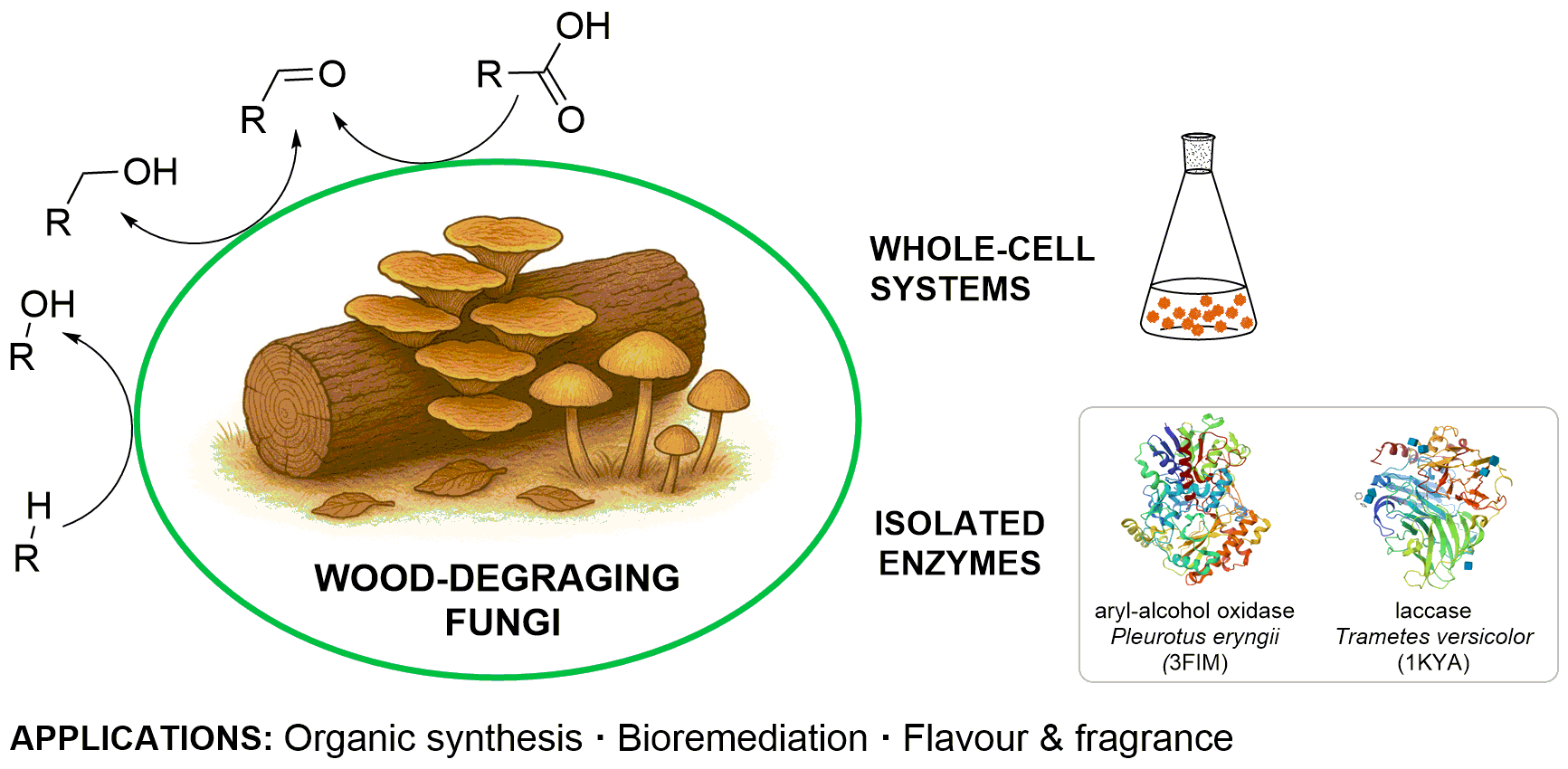
Wood-degrading fungi (WDF) possess an exceptionally diverse enzymatic repertoire that has evolved to depolymerize lignin, one of the most recalcitrant biopolymers found in nature, and to deconstruct lignocellulosic biomass. Over recent decades, these organisms have also attracted growing interest for their capacity to transform a wide range of organic pollutants and xenobiotic compounds. In addition to their central ecological role in lignocellulose turnover, WDF display striking catalytic versatility and can mediate numerous oxidative and reductive transformations of organic molecules. These encompass the oxidation of aromatic, olefinic, and aliphatic substrates, as well as alcohols and aldehydes, along with the reduction of various carbonyl compounds. This review surveys representative biotransformations catalyzed by WDF and highlights their potential as biocatalysts in organic synthesis. Both whole-cell systems and isolated enzymes are considered, illustrating the broad reaction scope and frequently outstanding selectivity achievable with these organisms. Despite the inherent complexity of living fungal cultures, which comprise thousands of enzymes and metabolites whose composition evolves over the course of cultivation, many documented transformations proceed with remarkable chemo-, regio- and stereoselectivity. Recent advances in fungal genomics, bioinformatics, protein engineering and bioprocess development have substantially deepened our understanding of the catalytic machinery of WDF and created new opportunities for their rational application. As a result, WDF are increasingly recognized as a valuable source of biocatalysts for sustainable, selective synthetic transformations and for the development of innovative processes in the bioeconomy.