
Prospects of Wood-Degrading Fungi as Catalysts in Organic Chemistry
Prospects of Wood-Degrading Fungi as Catalysts in Organic Chemistry

Received: 06 July 2026 Revised: 03 August 2026 Accepted: 12 October 2026 Published: 30 October 2026

© 2026 The authors. This is an open access article under the Creative Commons Attribution 4.0 International License (https://creativecommons.org/licenses/by/4.0/).
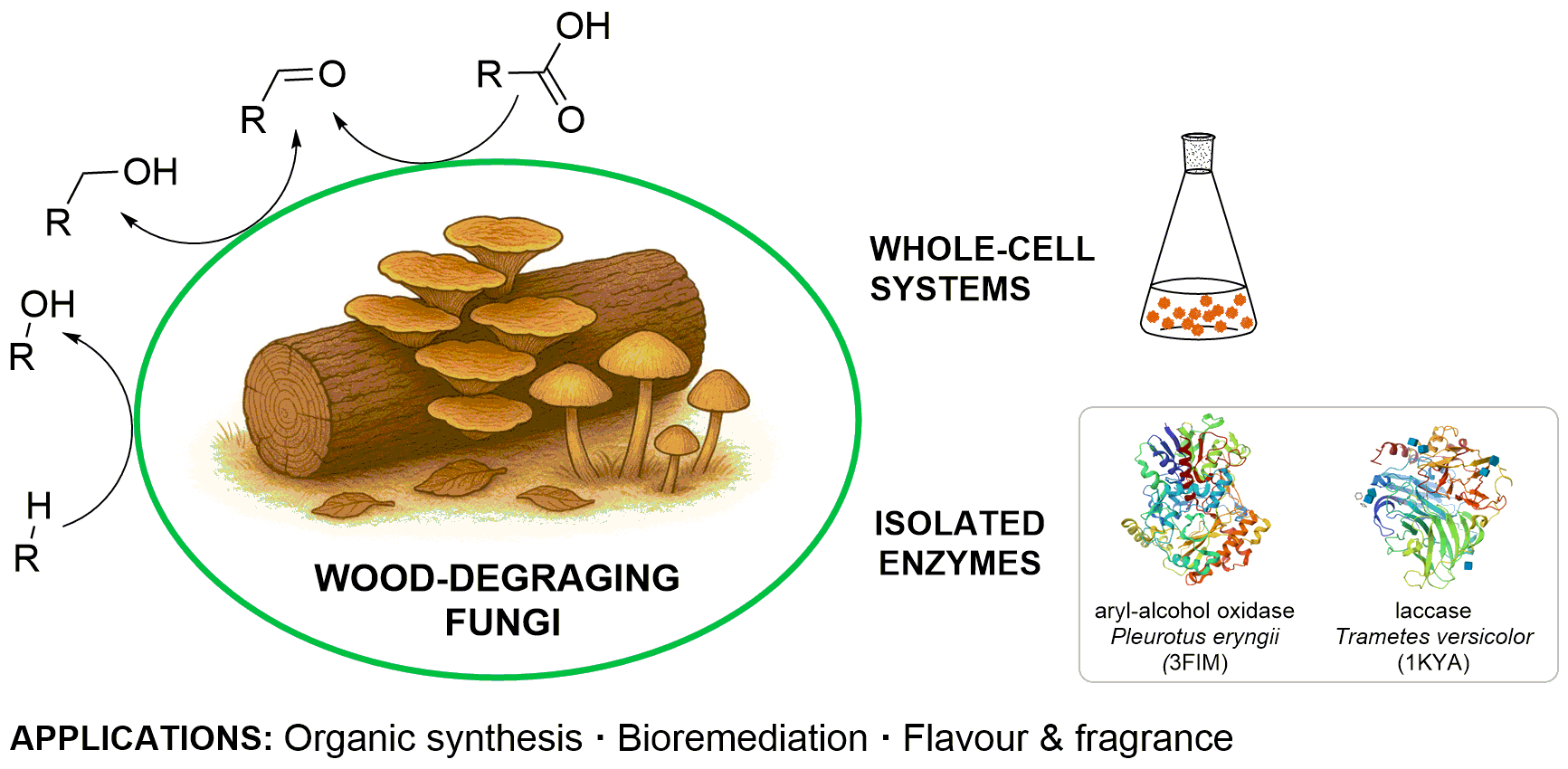
Graphical Abstract
1. Introduction
Biocatalysis has become a powerful strategy in organic synthesis, driven by advances in bioinformatics, protein biochemistry, protein engineering, and biotechnology. These developments have enabled enzymes to rival, or even surpass in some cases, traditional chemical catalysts in terms of selectivity, efficiency, and sustainability [1,2,3]. Isolated enzymes are now routinely employed in pharmaceutical manufacturing, while large-scale industrial processes, such as the enzymatic production of acrylamide exceeding 50,000 tons annually, highlight the capacity of biocatalysts to reach productivity levels comparable to heterogeneous catalysts [4]. The growing commercial availability of diverse enzyme libraries has further facilitated the adoption of biocatalysis in synthetic chemistry [5,6,7,8,9]. However, despite these advances, the range of transformations accessible through biocatalysis remains more limited than that of conventional chemistry, underscoring the need for continued exploration of new catalytic platforms with broader reactivity and diverse mechanistic features.
While much of modern biocatalysis has focused on a relatively narrow set of enzyme families, nature provides a far wider catalytic repertoire that remains largely underexplored. In particular, enzymes evolved to degrade recalcitrant biopolymers exhibit unique reactivity profiles that are difficult to reproduce with synthetic catalysts. Wood-degrading fungi (WDF), including white- and brown-rot fungi, represent a compelling yet insufficiently integrated resource in this context. These organisms have evolved highly sophisticated enzymatic systems to decompose lignocellulosic biomass, one of the most chemically robust forms of organic matter in the biosphere, accounting for approximately 30% of global organic carbon [10].
White- and brown-rot fungi occupy a central ecological role in forest carbon cycling through the selective degradation of lignin and cellulose. White-rot fungi (WRF), such as Trametes versicolor, Pleurotus ostreatus, and Lentinula edodes, are uniquely capable of complete lignin mineralization. To accomplish this, they secrete powerful extracellular oxidative enzymes, including laccases, manganese peroxidases, lignin peroxidases, and unspecific peroxygenases, characterized by low substrate specificity and access to radical-mediated reaction pathways [11,12,13,14,15]. Brown-rot fungi (BRF), in contrast, employ mainly a non-enzymatic oxidative strategy based on Fenton chemistry, generating hydroxyl radicals that depolymerize lignocellulose.
From the perspective of organic synthesis, the catalytic features of WDF are particularly attractive. Their enzymes can oxidize structurally diverse aromatic and aliphatic substrates, including highly substituted, electron-rich, or sterically hindered compounds that pose challenges for conventional catalysts. Controlled biological generation of reactive oxygen species enables selective radical chemistry under mild, aqueous, and environmentally friendly conditions. These properties position fungal enzymes as promising tools for selective oxidation, hydroxylation, bond cleavages, and coupling reactions that remain difficult to achieve synthetically.
Despite these advantages, the synthetic potential of WDF remains largely unrealized. To date, their practical application has been dominated by bioremediation and the aroma industry, where they are used to produce volatile aromatic compounds such as vanillin, benzaldehyde, and cinnamaldehyde [16]. Although whole-cell fungal cultures and isolated enzymes have demonstrated the ability to transform pharmaceuticals, antibiotics, dyes, and persistent environmental pollutants, these studies are often exploratory in nature [17,18,19,20,21]. In many cases, reaction mechanisms are poorly understood, product structures are incompletely characterized, and quantitative assessments of selectivity, scalability, and synthetic utility are lacking. As a result, fungal biocatalysis has yet to be systematically evaluated alongside established enzymatic platforms in organic synthesis.
Moreover, existing reviews tend to focus on individual enzyme classes, such as laccases, unspecific peroxygenases, or aryl-alcohol oxidases, or on specific applications such as lignocellulose degradation or xenobiotic removal. Comprehensive analyses that integrate whole-cell fungal systems with isolated enzyme catalysis, assess their respective strengths and limitations in synthetic contexts, and critically evaluate structure-reactivity relationships remain scarce. In particular, the potential synergy between intact fungal metabolism and purified enzymatic components, offering, respectively, naturally optimized enzyme cocktails with in situ cofactor regeneration versus precise catalytic control, has not been systematically addressed.
This review aims to fill these gaps by providing a critical and chemistry-centered overview of basidiomycetous WDF and their enzymes as biocatalysts for organic synthesis. We analyze whole-cell biotransformations with well-characterized examples, discuss isolated enzymatic systems with mechanistic insight, and quantitatively evaluate their advantages and drawbacks relative to conventional chemical and enzymatic catalysts. By highlighting underexplored reactivity patterns, unresolved mechanistic questions, and emerging opportunities enabled by protein engineering and microbial consortia, this review seeks to position WDF as a distinctive and expandable catalytic platform for future developments in synthetic chemistry and industrial biotechnology.
2. Wood-Degrading Fungi in Natural and Anthropogenic Compound Degradation
Lignin is a highly complex, amorphous aromatic polymer composed of phenylpropanoid units linked by a wide array of C–O and C–C bonds (Figure 1A) [22,23]. Its structure mostly arises from the combinatorial radical coupling of p-coumaryl, coniferyl (feruloyl), and sinapyl monolignols (Figure 1B) that differ in their degree of methoxylation. These precursors give rise to p-hydroxyphenyl (H), guaiacyl (G), and syringyl (S) subunits [24], interconnected through multiple linkage motifs formed during lignin biosynthesis [25]. Although the β-O-4 ether linkage is the most abundant structural element, lignin also contains numerous less common but chemically robust motifs, including β-5 (benzofuranyl), β-β (furofuran), dibenzodioxocin, and various ether-linked structures (Figure 1A). This structural diversity and bonding complexity make lignin exceptionally resistant to chemical depolymerization and have driven the evolution of powerful fungal oxidative systems.
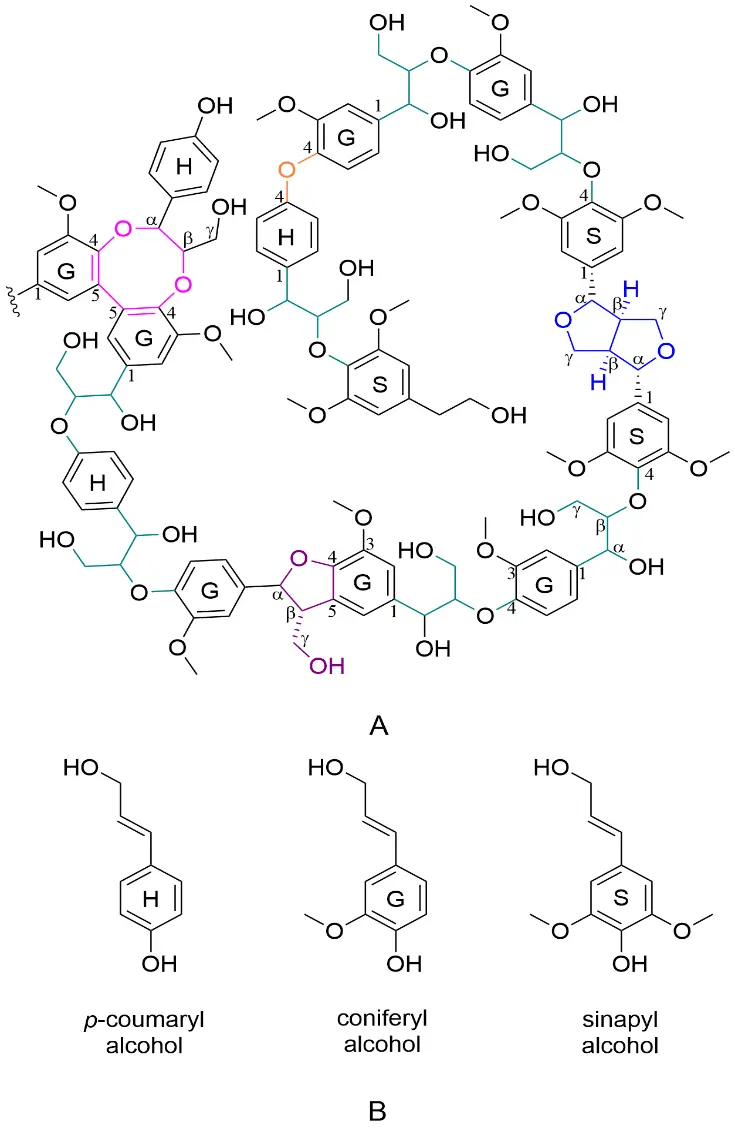
Figure 1. (A) Lignin polymer structure is represented with most abundant aromatic units (highlighted with corresponding capital letters) along with the most important linking motifs (highlighted in colors: light blue for β-O-4 ether linkage; blue for β-β (furofuran) linking motif; pink for dibenzodioxocin linking motif; purple for β-5 (benzofuranyl) linking motif; orange for other ether-linked motifs); (B) Monomeric precursors of lignin.
WDF possess highly specialized enzymatic systems for lignocellulose degradation that constitute a largely unexplored resource for organic synthesis. To deconstruct lignin and lignocellulosic biomass, which are among the most chemically recalcitrant materials in nature, there organisms have evolved diverse oxidative and hydrolytic enzymes [26]. Refined over millions of years, these enzymatic systems enable the efficient cleavage of complex aromatic and aliphatic polymers and provide catalytic strategies of direct relevance to synthetic chemistry.
Comparative fungal genomics studies and molecular evolutionary studies suggest that the crucial ability of WRF to degrade lignin emerged approximately 290 million years ago at the beginning of the Devonian era in ancestral agaricomycetes [27], coinciding with the decline of massive organic carbon accumulation during the late Carboniferous era [28]. The earliest characterized ligninolytic enzymes were manganese-oxidizing peroxidases (MnPs), which evolved from a more generic ancestral peroxidase gene [27]. Subsequent diversification gave rise to a sophisticated enzymatic toolkit for lignin depolymerization [29,30,31], including multiple peroxidase subfamilies, namely short and long MnPs, atypical MnPs, versatile peroxidases (VPs), and lignin peroxidases (LiPs), as well as laccases and cytochrome P450 monooxygenases.
Among extracellular ligninolytic enzymes, laccases (EC 1.10.3.2), lignin peroxidases (EC 1.11.1.14), and manganese peroxidases (EC 1.11.1.13) are the most extensively studied. LiPs and MnPs are heme-dependent enzymes that utilize hydrogen peroxide to generate highly reactive radical species: LiPs oxidize non-phenolic lignin units via radical cation formation, whereas MnPs selectively oxidize phenolic substrates through Mn(III)-mediated phenoxy radical chemistry. Laccases, in contrast, are multicopper oxidases that use molecular oxygen as the terminal electron acceptor and primarily oxidize phenolic substrates [32]. The substrate scope of laccases can be significantly expanded through the use of low-molecular-weight redox mediators such as 2,2′-azino-bis(3-ethylbenzothiazoline-6-sulfonic acid) (ABTS), 1-hydroxybenzotriazole (HBT), or syringaldehyde, thereby enabling oxidation of high-redox-potential non-phenolic compounds [33]. Beyond extracellular depolymerization, recent studies have demonstrated that WRF possess intracellular pathways capable of further modifying lignin-derived fragments and funneling aromatic carbon into central metabolism [34].
The catalytic strategies evolved for lignin and lignocellulose degradation are directly transferable to synthetic chemistry. Enzymes optimized to act on heterogeneous, electron-rich aromatic polymers exhibit notable substrate promiscuity and are capable of mediating oxidative bond cleavage, radical coupling, and selective functionalization of structurally diverse synthetic substrates. Importantly, these transformations proceed through oxidative and hydrolytic mechanisms that rely on molecular oxygen and biological cofactors rather than stoichiometric or toxic reagents, aligning closely with green chemistry principles and offering reduced waste generation under mild reaction conditions.
WDF are particularly promising for biocatalytic applications due to their comprehensive and redundant enzymatic repertoires [30]. Their ligninolytic enzymes display exceptionally broad substrate tolerance, enabling oxidative coupling reactions, selective bond cleavage, and radical-mediated transformations that are challenging to access using conventional chemical catalysts. This inherent promiscuity, coupled with the ability to generate and stabilize reactive radical intermediates, positions fungal enzymes as powerful yet underutilized catalysts for complex organic transformations.
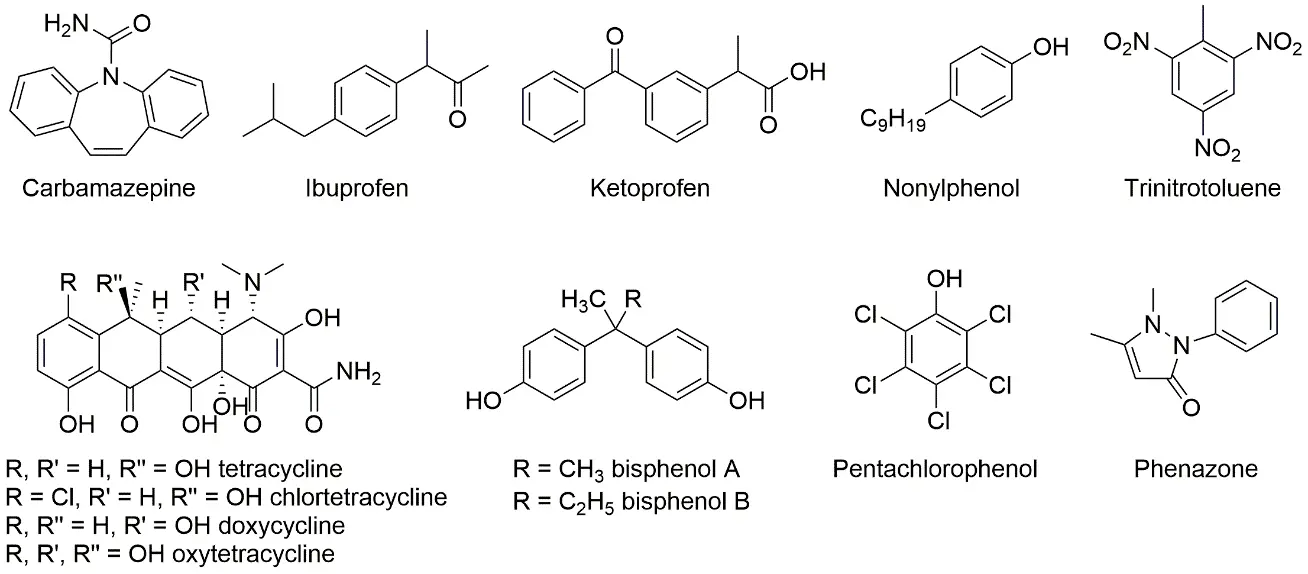
Consistent with this reactivity, extracellular ligninolytic enzymes from WDF have been extensively explored in bioremediation. Their broad substrate specificity enables degradation of a wide range of organopollutants including carbamazepine, ibu- and ketoprofen, phenazone, often yielding less toxic or environmentally benign products [35,36] (Figure 2). Established applications include the removal of trace organic pollutants from wastewater, degradation of endocrine-disrupting chemicals such as bisphenol A, bisphenol B, and nonylphenol [37,38], and dye decolorization [39,40]. WDF are also capable of transforming particularly persistent compounds, including tetracyclines [41], trinitrotoluene [42], and pentachlorophenol [43]. Notably, both whole-cell fungal cultures and isolated extra- and intracellular enzymes have been shown to catalyze antibiotic transformations at the laboratory scale [44,45,46]. However, in most cases, detailed structural elucidation of transformation products by NMR spectroscopy and mass spectrometry remains limited, hindering mechanistic understanding and synthetic evaluation.
Beyond their established roles in bioremediation and biomass processing, WDF and their enzymes have also attracted increasing interest as biocatalysts for fine chemical synthesis, pharmaceutical intermediate production, and materials chemistry. The catalytic versatility of WDF highlights both the opportunities and limitations of their use as biocatalytic systems. While their enzymatic versatility enables a broad range of oxidative transformations, the transition from natural degradation pathways to synthetically useful processes requires a detailed understanding of substrate scope, selectivity, and mechanistic features.
3. Whole-Cell Fungal Systems
From the perspective of classical organic synthesis, biotransformations mediated by living fungal cultures may appear empirical and poorly defined [30]. However, whole-cell experiments remain an indispensable starting point for elucidating the complex metabolic strategies that have evolved in ligninolytic organisms and for identifying the most catalytically effective enzymes within these systems. WDF are capable of catalyzing a range of selective transformations, including regioselective hydroxylations, stereoselective reductions, and oxidative C–C bond cleavages, namely reactions that often require multi-step sequences or harsh conditions in conventional synthesis [47,48]. Yet WDF constitute inherently “black box” catalysts: a single organism may harbor thousands of enzymes alongside a dynamic pool of redox mediators, organic acids, and secondary metabolites whose concentrations fluctuate with culture age, substrate availability, and environmental conditions. This complexity poses considerable challenges for reproducibility and scale-up in preparative chemistry. At the same time, the co-localization of complementary enzymatic activities enables highly integrated, multi-step functionalization cascades that would be difficult to replicate using isolated enzymes or chemical reagents alone.
3.1. Reduction of Carboxylic Acids
The concept of using WDF for the reduction of aryl carboxylic acids to aldehydes and alcohols builds on early studies showing that whole-cell WDF cultures convert simple aromatic acids into the corresponding aldehydes and alcohols [49,50,51]. These pioneering investigations provided the first evidence that fungal catabolic pathways can intercept aryl carboxylic acids and divert them into reductive routes, generating aroma compounds instead of fully mineralizing the substrates. Subsequent systematic screening and mechanistic studies expanded this concept from a limited set of model aryl acids to a broader range of lignin-derived substrates, and began to correlate product profiles with specific fungal species and cultivation conditions.
The selective reduction of aromatic carboxylic acids by WDF has therefore emerged as an attractive strategy for the biocatalytic production of aromatic aldehydes (1–6, 12) and alcohols (7–11, 13–16) (Figure 3). Screening studies have shown that numerous WDF transform substituted benzoic acids, although substantial strain-dependent differences in substrate scope and product selectivity have been observed. The reactions were performed in 250 mL of culture medium containing the substrate at a final concentration of 1.5 g/L. Piperonylic acid, for example, is accepted by several fungi, including Pycnoporus cinnabarinus, Pleurotus sapidus, Pleurotus eryngii, Postia placenta, Laetiporus sulphureus and Lepista nuda, yet only P. sapidus and L. nuda accumulate appreciable amounts of the corresponding aldehyde (4), accounting for 44% and 48% of the biotransformation mixture, respectively, as determined by GC–MS analysis, underscoring the strain dependence of these reductive pathways [52]. Similarly, the reduction of methoxy-substituted benzoic acids has been investigated in detail, and P. eryngii and P. cinnabarinus emerged as the most promising biocatalysts for the production of p-anisaldehyde (1) and vanillin (2) at high yields. L. nuda was the most efficient microorganism for the synthesis of veratraldehyde (3) and piperonal (4), reaching absolute yields of 48% and 45%, respectively. P. cinnabarinus was the only strain capable of generating significant amounts of 3,4,5-trimethoxybenzaldehyde (5) with a yield 71% from the corresponding benzoic acid. Some of the tested strains also produced relatively high amounts of the corresponding benzylic alcohols (7–10), with the formation of these alcohols increasing with prolonged contact time [52].
Screening studies have also revealed WDF with particularly broad reductive capabilities. The white-rot fungus Bjerkandera sp. BOS55 was identified as a highly efficient whole-cell biocatalyst for the reduction of p-anisic acid, combining high reductive activity with notable tolerance toward elevated concentrations of aromatic acids [53]. The biotransformations were performed in 10 mL of culture medium with a final substrate concentration of 1 mM and monitored for up to 16 h. This strain accepts a broad range of substrates, converting p-anisic, veratric, 3-chloro-4-methoxybenzoic, 3,5-dichloro-4-methoxybenzoic, 3,4-dichlorobenzoic, 4-fluorobenzoic and 3-nitrobenzoic acids into their corresponding aldehydes and/or alcohols. Product distributions are strongly dependent on substrate structure. Most acids are converted predominantly to aldehydes, whereas 3-nitrobenzoic acid is reduced mainly to the alcohol, and 3,4-dichlorobenzoic acid yields exclusively the aldehyde.
A particularly illustrative example of chemoselective carboxyl reduction is provided by growing cultures of the white-rot fungus Bjerkandera adusta DSMZ 4708, which catalyze the aerobic reduction of anthranilic acid to 2-aminobenzaldehyde (6), reaching up to 39% isolated yield in aqueous medium [54]. The reaction was performed in 440 mL of culture medium with anthranilic acid at a final concentration of 2 mM, using ethanol as a co-solvent, and was conducted for 2 days. In contrast to conventional chemical reducing agents, which typically promote over-reduction to 2-aminobenzyl alcohol, B. adusta stops the reduction at the aldehyde stage and completely suppresses formation of the corresponding alcohol. The use of ethanol as a co-solvent further increases the yield of 2-aminobenzaldehyde (6), and the reaction shows remarkable substrate specificity, as the meta- and para-aminobenzoic acid isomers are not transformed under identical conditions.
Broad and tunable reductive behavior has likewise been described for Dichomitus albidofuscus [55]. The substrates were added at 1 mmol scale to 200 mL of submerged culture and incubated for 3 days. In this system, product formation depends strongly on the timing of substrate addition. When benzoic acid is supplied during the early growth phase, it is reduced to benzyl alcohol (11) with 82% yield, whereas addition at later stages results in selective accumulation of benzaldehyde (12) with yield 45%. The latter transformation is particularly attractive from an application standpoint, as it provides access to halogen-free benzaldehyde, an important intermediate for flavour and pharmaceutical synthesis. Under similar conditions, meta- and para-nitrobenzoic acids are efficiently converted to the corresponding benzyl alcohols (13, 14) with 69% and 73% yields, respectively, while the nitro groups remain untouched, demonstrating high chemoselectivity. Vanillic acid is selectively reduced to vanillin (2), and substituted cinnamic acids bearing coniferyl and p-coumaryl moieties undergo reduction of both the carboxyl group and the carbon-carbon double bond to give dihydroconiferyl alcohol (15) and 1-hydroxy-3-(4-hydroxyphenyl)propane (16) with 77% and 82% yields, respectively. In contrast, unsubstituted cinnamic acid is only poorly converted, again highlighting the influence of substrate structure on the efficiency and outcome of the bioreduction.
Taken together, these studies demonstrate that WDF constitute a versatile source of whole-cell biocatalysts for the selective reduction of substituted benzoic and related aromatic acids. They provide synthetically useful access to a range of aromatic aldehydes, as well as selected benzyl alcohols and reduced cinnamyl derivatives, often with levels of chemo- and regioselectivity that can be difficult to achieve using conventional chemical methods. The reported substrate scope indicates that the nature and position of substituents on the aromatic ring strongly influence the product profile and selectivity of the transformation, highlighting the importance of substrate–catalyst compatibility for the optimization of fungal reduction systems.
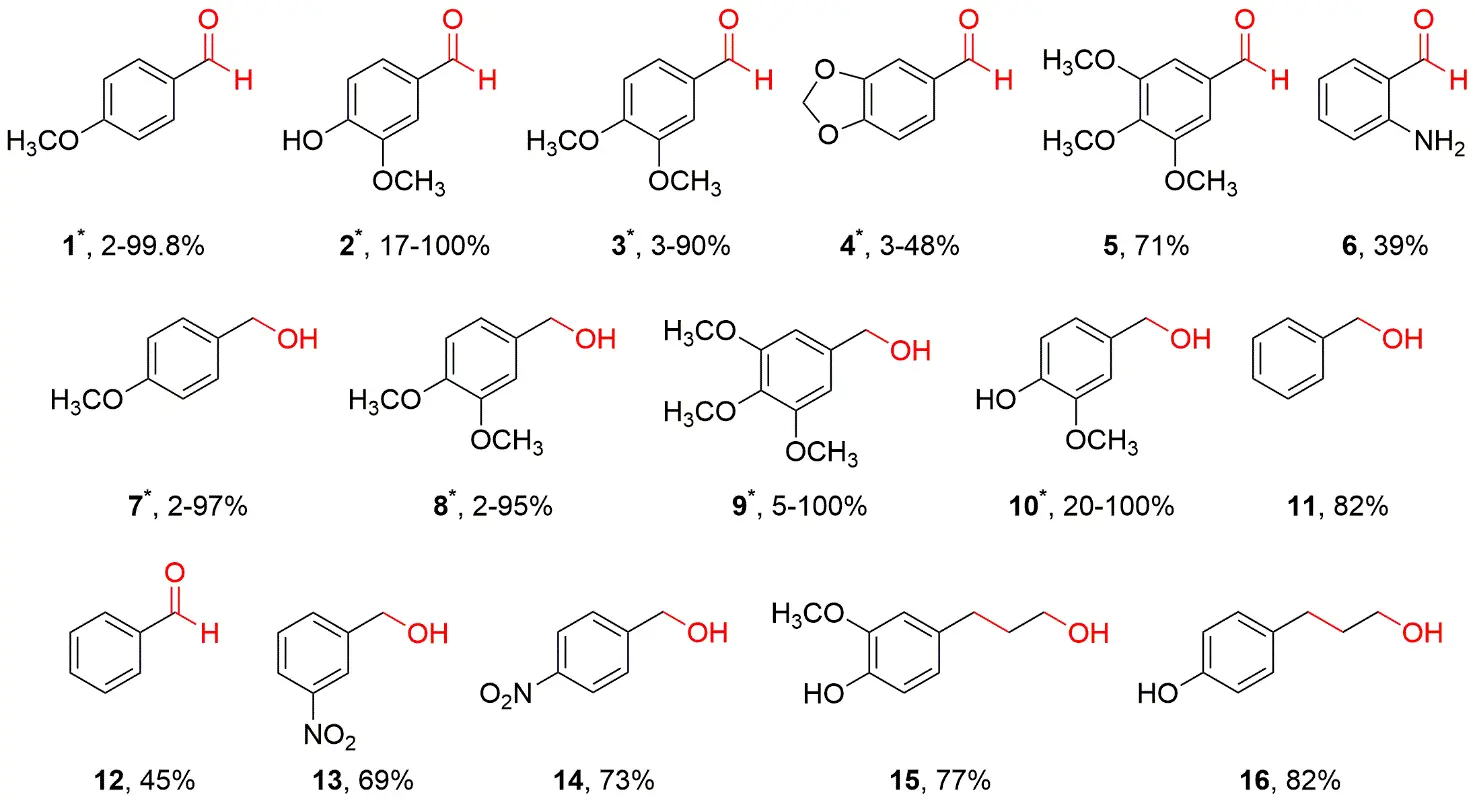
Figure 3. Representative products formed during the reduction of aromatic carboxylic acids by WDF and their corresponding isolated yields or GC–MS peak area percentage (* denotes GC–MS peak area percentage rather than isolated yield; red highlights indicate reduced functional groups and bonds). Detailed information on fungal species, reaction conditions, and references is provided in the corresponding text.
3.2. Reduction of Aldehydes and Ketones
The influence of aromatic substitution on WDF-mediated carbonyl reductions has been examined in detail for Lentinus strigellus, revealing a clear decoupling between reaction rate and stereochemical outcome [56]. Substituent identity and position have a pronounced effect on conversion, whereas enantioselectivity remains consistently high across most substrate classes. The reactions were performed with 10 mg of substrate in 50 mL of culture medium, and incubated for 1, 3, and 6 days. Acetophenone and a broad set of substituted derivatives are reduced to the corresponding secondary alcohols (17–25) with high enantiomeric excess values (up to 99% ee) (Figure 4). Methoxy-substituted acetophenones reliably afford alcohols (18, 19) in near-quantitative conversions and outstanding enantiomeric excess (ee 99%), while nitro-substituted analogues, including the meta- and para-isomer, undergo complete conversion within three days without detectable loss of stereochemical integrity. In contrast, ortho-nitro derivatives exhibit markedly lower reactivity, highlighting the sensitivity of these transformations to steric hindrances in the vicinity of the carbonyl group. The catalytic repertoire of L. strigellus extends beyond aromatic ketones: α-chlorinated ketones are accepted and converted into the corresponding alcohols (24, 25) with moderate to high conversions and high enantioselectivities (up to 91% ee). Moreover, aliphatic substrates such as 2-octanone and cyclohexyl methyl ketone are reduced almost quantitatively to enantiopure (S)-2-octanol (27) and the corresponding chiral alcohol 26, respectively, whereas longer-chain ketones (e.g., 2-undecanone) are transformed less efficiently (alcohols 27, 28). β-Ketoester is chemoselectively reduced at the carbonyl function to give hydroxy ester 29, although with more modest enantiomeric excess, indicating differences in substrate binding and transition-state stabilization for multifunctional substrates. Practically, maximal conversions are typically reached after about three days of incubation; extended reaction times often lead to partial erosion of enantiomeric excess, presumably due to secondary oxidative or racemization processes.
Beyond their role in fine-chemical synthesis, WDF also contribute to flavour modulation through selective aldehyde reduction. Fermentation of soybean-based products with Lycoperdon pyriforme leads to a pronounced attenuation of “green” and “beany” off-flavours, including hexanal, heptanal, (E,E)-2,4-decadienal, (E,Z)-2,4-decadienal, 2-pentylfuran and 1-octen-3-ol [57]. The strongest effects are observed for saturated and di-unsaturated aldehydes, indicating that mitigation of undesirable aroma notes is primarily driven by fungal metabolism of endogenous aldehydes. Feeding experiments show that saturated aldehydes are predominantly reduced to their corresponding alcohols, whereas di-unsaturated aldehydes appear to be converted into non-volatile products, likely via conjugation or addition reactions. These results highlight L. pyriforme as an efficient modulator of aldehyde profiles in food matrices and exemplify the broader potential of WDF as biocatalysts for targeted flavour tailoring.
Whole-cell cultures of D. albidofuscus provide a complementary perspective on WDF-mediated aldehyde reductions, combining broad substrate scope with high levels of chemo- and regioselectivity [55]. The substrates were added at 1 mmol scale to 200 mL of submerged culture and incubated for 4 days. Aromatic aldehydes such as 3-chloro-4-methoxybenzaldehyde and m-methylbenzaldehyde are reduced to alcohols 30 and 31 with yields of approximately 80% and 50%, respectively, while veratraldehyde and m-anisaldehyde give corresponding alcohols 8 and 32 in more moderate yields (31% and 52%). The diminished conversions observed for some products are plausibly linked to their subsequent oxidation by extracellular aryl-alcohol oxidases, which generate hydrogen peroxide via reduction of molecular oxygen. Isomeric nitrobenzaldehydes are transformed almost quantitatively into the corresponding alcohols 13 and 14 within three days, and p-bromobenzaldehyde affords alcohol 33 in moderate yield, demonstrating that electron-withdrawing substituents on the aromatic ring are well tolerated. Particularly notable is the behaviour of the α,β-unsaturated aldehyde 2-heptenal, which is converted predominantly into saturated alcohol 34 in high yield, indicating that D. albidofuscus can reduce both the carbonyl group and the conjugated C=C bond under mild aqueous conditions. Linear aldehydes such as dodecanal and undecanal are likewise transformed efficiently to the primary alcohols 35 and 36. The high selectivity of these reductions was further supported by NMR analysis of crude reaction mixtures, in which the desired alcohols were consistently observed as the major components. Collectively, these observations establish D. albidofuscus as a promising whole-cell biocatalyst for the selective reduction of structurally diverse aldehydes, including functionalized aromatics, α,β-unsaturated systems and long-chain aliphatics.
The performance of WDF-derived carbonyl reductase preparations is, however, subject to intrinsic biological variability, as exemplified by studies on Scleroderma citrinum [58]. The reactions were performed on a 500 µL scale with 3 mmol·L−1 substrate and 100 mg of mushroom preparation for 22 h. Evaluation of five representative substrates across two independent batches revealed broad but generally modest catalytic activity: ethyl pyruvate and 2,3-pentanedione were reduced to hydroxy ketones in low yields (3–5%), benzaldehyde and 3,4-hexanedione reached conversions of around 16%, and acetophenone was only minimally transformed, affording 1-phenylethanol 17 in 0.2% yield. Notably, this activity pattern differed from that of an earlier preparation, which had shown comparable reduction efficiencies for acetophenone and 3,4-hexanedione, whereas the second batch exhibited a clear preference for the latter substrate. Such discrepancies are plausibly attributable to differences in protein expression profiles associated with environmental conditions, growth stage, and physiological status of the fungal material. Despite these fluctuations, all tested substrates confirmed the presence of carbonyl reductase activity, and stereochemical analysis of selected products, including those derived from acetophenone and 2,3-pentanedione, consistently revealed formation of (S)-configured alcohols (17, 37). This suggests that, while overall activity levels may vary among preparations, the underlying enantioselective reduction pathway in S. citrinum is conserved, reinforcing the notion that mushroom-derived enzyme systems can offer robust stereocontrol even in the face of biological variability.
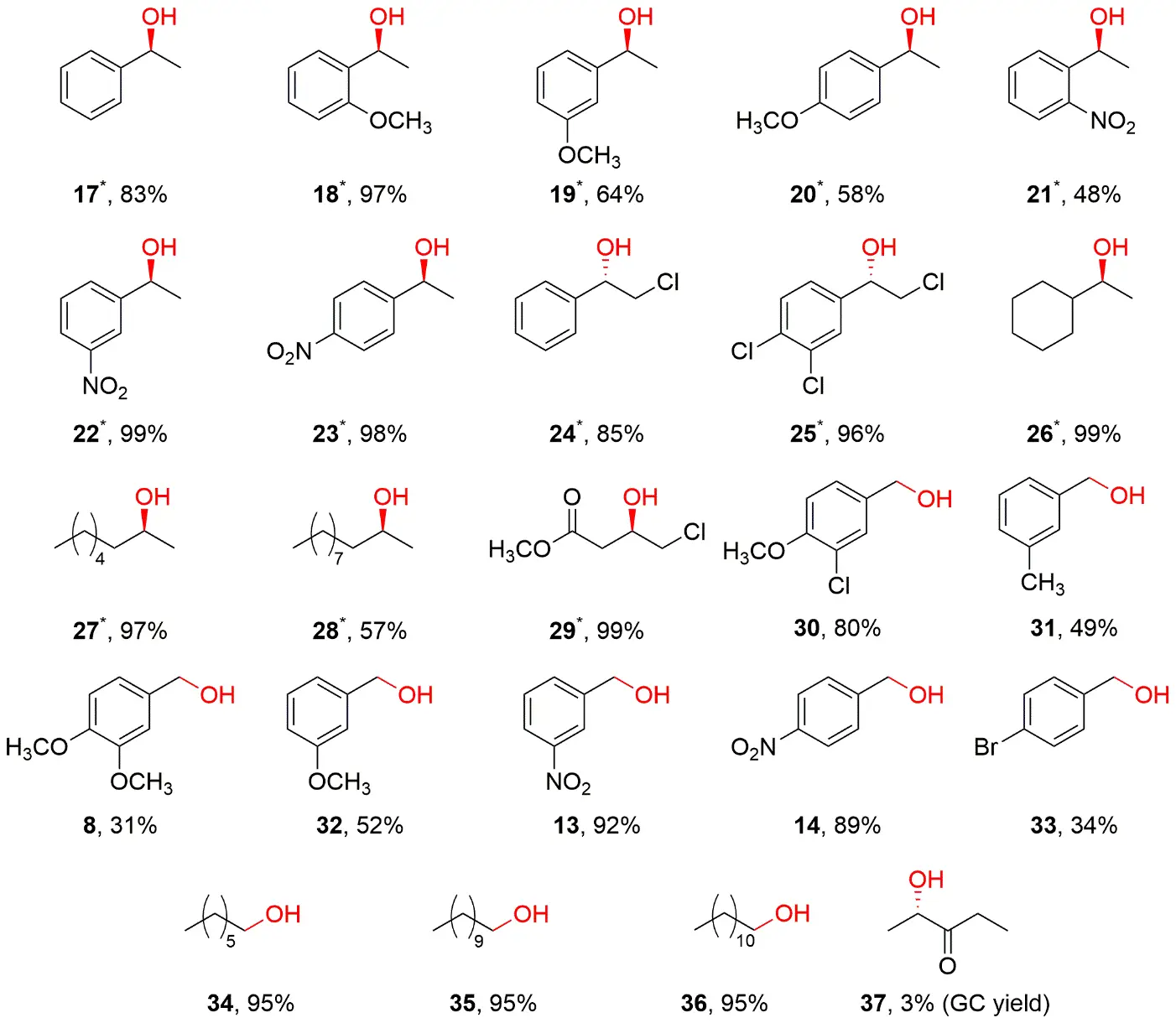
Figure 4. Representative alcohols obtained from the reduction of aldehydes and ketones and their corresponding isolated yields or conversion (* denotes conversion rather than isolated yield; red highlights indicate reduced functional groups). GC yield indicates an analytically determined yield. Detailed information on fungal species, reaction conditions, and references is provided in the corresponding text.
3.3. Allylic C–H Bond Oxidation and Related Terpenoid Transformations
Two white-rot fungi, Ceriporia sp. ZLY-2010 (CER) and Stereum hirsutum (STH), were evaluated as biocatalysts for the transformation of (−)-α-pinene [59]. Biotransformations were performed in 50 mL of culture medium with 0.5 g·L−1 (−)-α-pinene. After 96 h of incubation, CER converted the bicyclic monoterpene hydrocarbon (−)-α-pinene predominantly into α-terpineol (38), a monocyclic monoterpene alcohol, at a product concentration of 0.05 g·L−1, along with several minor products. In contrast, biotransformation by STH resulted in verbenone (39) as the major product, accompanied by minor quantities of myrtenol (40), camphor (41), and isopinocarveol (42) (Figure 5). No inhibitory effects of either the substrate or the resulting transformation products on fungal mycelial growth were observed under the tested conditions. The activities of manganese-dependent peroxidase and laccase were monitored over a 15-day period to assess their potential involvement in the biotransformation process. The results indicate that terpenoid conversion by white-rot fungi proceeds via a complex enzymatic system, involving both intra- and extracellular enzymes.
The oxidation of (+)-valencene to (+)-nootkatone (43) has been described in several studies using various fungal biocatalytic systems, including supernatants of Phanerochaete chrysosporium, fungal laccases, and submerged cultures of ascomycete Chaetomium globosum [60,61,62]. On a preparative scale using a lyophilizate of Pleurotus sapidus, such type of transformations afforded the corresponding α,β-unsaturated ketones along with allylic alcohols as major byproducts, consistent with a radical-based oxidation mechanism [63]. Reactions were performed with 0.25 mmol substrate and 800 mg lyophilizate in 40 mL TRIS-HCl buffer for 48 h. (+)-Valencene was converted to (+)-nootkatone (43) in 58% isolated yield. Biotransformation of α-pinene yielded verbenone (39) and trans-verbenol (44) in 37% and 18% isolated yields, respectively, with stereochemistry confirmed by 2D NOESY NMR. GC–MS analysis indicated near-complete conversion within 48 h, although isolated yields were reduced due to product volatility. Similarly, 3-carene was selectively converted to 3-caren-5-one (45) with high regio- and chemoselectivity and an isolated yield of 55%. Oxidation of theaspirane produced the enone (46) as the major product in 50% yield, alongside minor allylic alcohol and epoxide derivatives, which are relevant intermediates for vitispirane synthesis. In contrast, β-ionone yielded the epoxide (47) in 56% yield with low enantiomeric excess (4% ee), a compound of interest in flavor and medicinal chemistry. Among WDF, Polyporus brumalis stands out for its ability to oxygenate monoterpene scaffolds. The biotransformations were performed in 500 mL Erlenmeyer flasks with 25 mg of substrate for 5 days. This white-rot fungus converted α-pinene to α-terpineol (38) in up to 48% yield, while prolonged incubation of geraniol for up to 20 days afforded p-menthane-3,8-diol (48) in up to 76% yield, as determined by GC-FID using an external standard. These results illustrate the breadth of transformations accessible through fungal biocatalysis. Together with related studies, these results confirm that fungal systems offer a versatile and efficient route to oxygenated monoterpenoids via selective allylic oxidation [64]. Pleurotus sapidus has been demonstrated to mediate efficient allylic oxidation of terpenoid olefins using lyophilized biomass as a simple whole-cell catalyst. Reactions were performed with 1 mmol substrate and 1 g of lyophilizate in 50 mL Tris-HCl buffer for 48 h. The system shows a defined substrate scope, with spiroether derivatives, important to flavor and fragrance applications, being selectively oxidized to the corresponding α,β-unsaturated lactones (49, 50) in moderate yields (up to 45%) [65]. In contrast, structurally related substrates bearing less reactive allylic C–H bonds remain unreacted, highlighting the strong dependence of reactivity on steric and electronic factors and the pronounced selectivity of the fungal oxidation system.
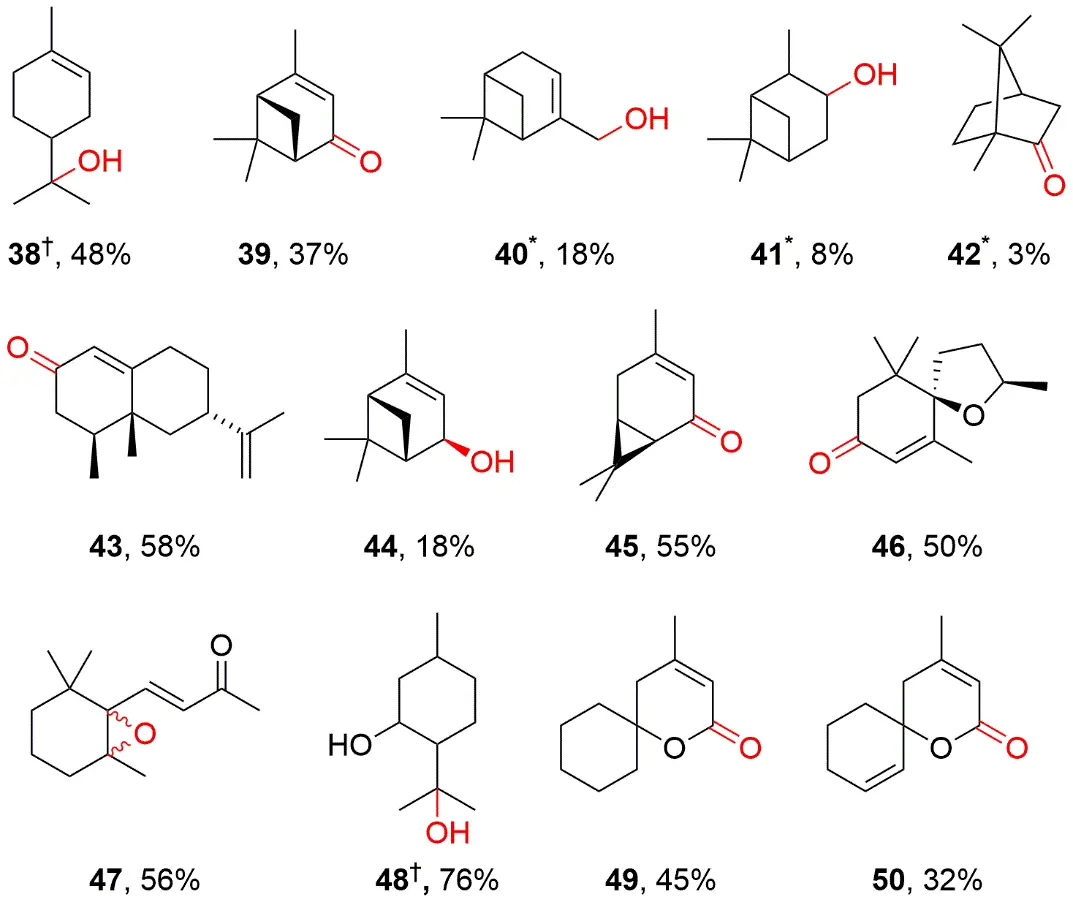
Figure 5. Allylic oxidation products obtained from terpenoid substrates by WRF and their corresponding isolated yields or analytically determined values (* denotes GC–MS peak area percentage rather than isolated yield; † denotes an analytically determined yield based on GC-FID analysis using an external standard; red highlights indicate oxidation sites). Detailed information on fungal species, reaction conditions, and references is provided in the corresponding text.
3.4. Aromatic C–H Bond Oxidation and Pollutant Transformation
The selective hydroxylation of unactivated aromatic C–H bonds remains a challenging and comparatively difficult area of academic research, especially in terms of sustainability. The application of WRF is connected with the fact that polycyclic aromatic hydrocarbons (PAHs) are widespread environmental pollutants with long residence time in the environment, and many of them or their metabolites are mutagenic, carcinogenic or both. Therefore, WRF-mediated aromatic C–H oxidation has been investigated not only as a synthetic transformation but also as a strategy for the biotransformation of persistent aromatic pollutants. In this context, studies on pharmaceutical and PAH transformation primarily provide insights into fungal oxidative mechanisms and degradation pathways.
P. sordida eliminates DCF (diclofenac) and MFA (mefenamic acid), decreasing their content by more than 90% after 6 days of treatment. The main isolated and characterized metabolites are the products of oxidation of aromatic C–H bonds in para-position toward amino-group (Figure 6). Based on experiments with cytochrome P450 (CYP) inhibitor 1-aminobenzotriazole (1-ABT), the involvement of CYPs in the elimination of DCF and MFA was suggested [66]. The non-steroidal anti-inflammatory drugs DCF and MFA were subjected to biotransformation by the white-rot fungus Phanerochaete sordida YK-624. Biotransformations were performed in 20 mL of culture medium with a final substrate concentration of 10−4 M. After 6 days, DCF was completely removed, while MFA was degraded by approximately 90%. This treatment also resulted in a near-complete elimination of acute toxicity toward the freshwater crustacean Thamnocephalus platyurus. Metabolite identification by mass spectrometry and 1H NMR revealed the formation of mono- and dihydroxylated derivatives of DCF (4′-hydroxydiclofenac (51), 5-hydroxydiclofenac (52), and 4′,5-dihydroxydiclofenac (53)). For MFA, four transformation products were detected, including hydroxylated and oxidized derivatives (3′-hydroxymethyl- (54), dihydroxylated (55, 56), and 3′-carboxymefenamic acid (57)). These findings indicate that cytochrome P450-mediated hydroxylation contributes to the degradation and detoxification of both compounds, as further supported by the reduced transformation efficiency observed in the presence of the CYP inhibitor 1-aminobenzotriazole.
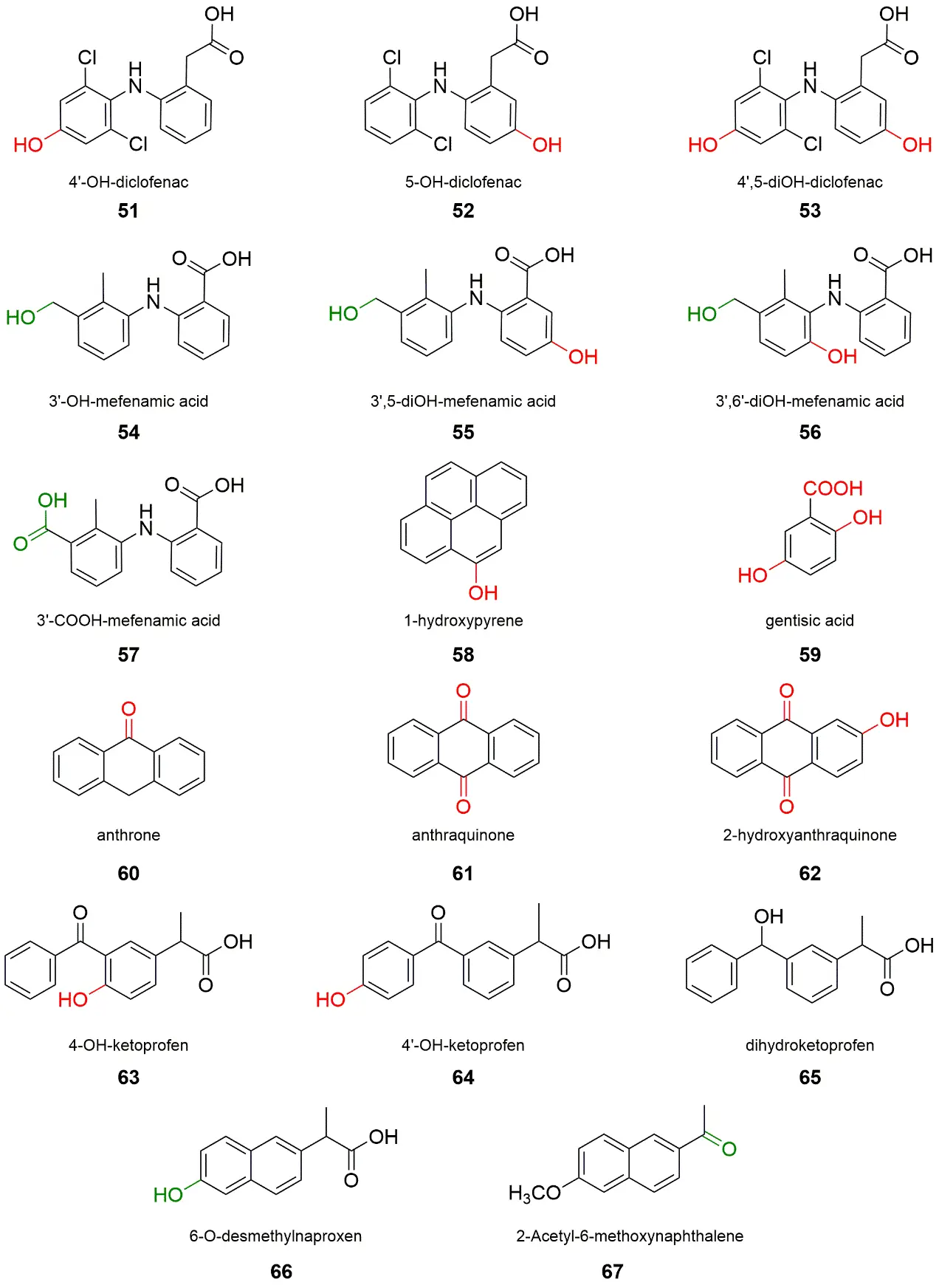
Figure 6. Metabolites detected in the reaction mixtures of biodegradation of corresponding pollutants by fungi. Modifications compared to the starting compounds are marked in red (aromatic C–H bond oxidation) and green (aliphatic C–H bond oxidation).
Pyrene, a four-ring polycyclic aromatic hydrocarbon (PAH), was effectively degraded by Polyporus sp. S133 in liquid MSB (modified mineral salt broth) culture, highlighting its potential for the transformation of high-molecular-weight PAHs [67]. The biotransformations were performed with 5 mg·L−1 pyrene in 20 mL of medium and monitored over 30 days. Enzymatic analyses suggested the involvement of laccase and 1,2-dioxygenase in the degradation process. Metabolite analysis revealed 1-hydroxypyrene (58) as the major product during short-term incubation, whereas gentisic acid (59) was detected after prolonged incubation. These findings underscore the applicability of Polyporus sp. S133 in the bioremediation of PAH-contaminated environments. However, further investigations into the environmental fate and toxicity of the resulting metabolites are necessary to fully assess the suitability of white-rot fungi for soil remediation applications.
Cytochrome P450 monooxygenases (P450s) involved in anthracene metabolism by the white-rot basidiomycete Phanerochaete chrysosporium were identified through combined functional screening and transcriptomic analysis [68]. Anthracene and anthrone were added at 0.025 mM to 10 mL cultures and incubated for 7 days. Catalytic profiling revealed that 14 PcCYP enzymes may participate in the stepwise oxidation of anthracene to anthraquinone (61) via anthrone (60) as an intermediate. Complementary DNA microarray analysis demonstrated that 12 PcCYPs are transcriptionally upregulated in response to anthracene exposure, among which five also exhibited catalytic activity toward this substrate. In addition, 2-hydroxyanthraquinone (62) was identified as a previously unreported metabolite in this system. The overlap of catalytic competence and transcriptional induction supports the potential involvement of these five P450s in anthracene metabolism in vivo. These results highlight the utility of integrating functional and transcriptomic approaches to elucidate the roles of fungal P450 systems in xenobiotic transformation.
The white-rot fungus Trametes versicolor demonstrated the ability to degrade ketoprofen at both 10 mg·L−1 and environmentally relevant concentrations (40 μg·L−1) [69]. The degradation experiments were performed in 25 mL or 50 mL of culture medium, respectively. Rapid removal of the parent compound and its three identified metabolites (63–65) was observed, suggesting the potential for near-complete mineralization, which is relevant for bioremediation applications. Mechanistic insights indicate that the initial oxidation step is mediated by cytochrome P450 enzymes, consistent with pathways reported in mammalian systems, whereas ligninolytic enzymes such as laccase do not appear to contribute significantly. Notably, one of the transformation products, 2-(3-benzoyl-4-hydroxyphenyl)propanoic acid (63), was identified for the first time in a biological context. The degradation of diclofenac sodium by the white-rot fungus Trametes versicolor was evaluated at both high (10 mg·L−1) and environmentally relevant (45 μg·L−1) concentrations [70,71]. The experiments were conducted using culture volumes of 25 and 50 mL, respectively. Rapid removal (≥94%) was observed within the first hour using fungal pellets in defined liquid medium. Mechanistic investigations, including in vivo inhibition with 1-aminobenzotriazole and in vitro assays with purified laccase, indicate that at least two distinct pathways contribute to diclofenac transformation. Cytochrome P450-mediated hydroxylation yielded 4′-(51) and 5-hydroxydiclofenac (52), identified by NMR as key intermediates, which were subsequently eliminated within 24 h, coinciding with a reduction in ecotoxicity as measured by the Microtox assay. In contrast, laccase-catalyzed conversion produced 4-(2,6-dichlorophenylamino)-1,3-benzenedimethanol in vitro; however, this metabolite was not detected in vivo, likely due to low laccase activity during the initial stages of incubation. The fungus T. versicolor has also been shown to efficiently degrade the non-steroidal anti-inflammatory drug naproxen, demonstrating its potential for pharmaceutical bioremediation [71]. The degradation is thought to involve both laccase and cytochrome P450 enzymatic systems, as indicated by inhibitor studies and in vitro experiments. Naproxen (10 mg·L−1) was rapidly removed from liquid culture, reaching non-detectable levels within 6 h, while nearly complete degradation (~95%) was also observed at environmentally relevant concentrations (55 μg·L−1). The degradation experiments were performed in 25 mL or 50 mL of culture medium, respectively. Two degradation products (66, 67) of naproxen were identified and structurally elucidated as intermediates. However, both the parent compound and these intermediates disappeared within hours, suggesting further transformation toward mineralization. Overall, these studies demonstrate the ability of WRF to mediate aromatic C–H oxidation in complex pollutant molecules. While these transformations primarily represent biodegradation and detoxification processes rather than preparative synthetic applications, they provide valuable insights into fungal oxidative mechanisms and substrate-dependent transformation pathways.
3.5. Aliphatic C–H-Bond Oxidation
WDF have recently emerged as promising biocatalysts for the aerobic C–H oxidation of unactivated polycyclic hydrocarbons under mild aqueous conditions (Figure 7). Oxidation of adamantane by submerged cultures of Dichomitus albidofuscus proceeds with a pronounced preference for tertiary over secondary C–H bonds, affording 1-adamantanol (68) as the main product, and kinetic isotope studies suggest that C–H bond cleavage constitutes the rate-determining step, implicating fungal metalloenzymes in the activation process [72]. The transformations were performed with 1.1 mmol substrate in 440 mL of culture medium for 8 days. The process relies on environmentally friendly conditions, without hazardous oxidants and at ambient temperature and pressure, highlighting their potential as sustainable alternatives to conventional oxidation methods.
This oxidative versatility extends beyond hydrocarbons to cage ketones, including adamantanone and diamantanone. Among the screened fungi, white-rot Cerrena zonata and brown-rot Wolfiporia cocos exhibited the highest activities toward C–H-bond oxidation of these ketones [73]. The transformations were performed with 1 mmol substrate in 200 mL of culture medium for 4 days. In C. zonata, the oxidative mechanism was found to be inducible, as activity was only observed after preliminary exposure of the mycelium to the substrate. Oxidation of adamantanone predominantly yielded anti- (69) and syn-1,4-dihydroxyadamantanes (70), with 49% and 33% yields, respectively, together with minor regioisomeric diols (71, 72), isolated as a mixture with 15% yield. In the case of diamantanone, the oxidation afforded a series of regio- and stereoselectively hydroxylated products, with anti-3,6-dihydroxydiamantane (73) identified as the major product (45% yield). The remaining isomeric products (74, 75) were isolated as a mixture with 36% yield.
In contrast, W. cocos displayed a complementary oxidation profile and favored the formation of monohydroxylated ketones. Adamantanone was converted primarily into 5-hydroxyadamantan-2-one (76) and anti-4-hydroxyadamantan-2-one (77), with 59% and 24% yields, respectively, while oxidation of diamantanone produced a defined set of hydroxydiamantanones resulting from selective single C–H activation, including 6-hydroxydiamantane-3-one (78, 23%), 9-hydroxydiamantane-3-one (79, 34%), 11-hydroxydiamantane-3-one (80, 21%), and 1-hydroxydiamantane-3-one (81, 7%).
In addition to diamondoid ketones, fungal C–H bond oxidation systems also exhibit activity toward tertiary-substituted diamondoids. For example, W. cocos cultures oxidized 1-hydroxyadamantane to 1,3-dihydroxyadamantane (82) and anti-1,4-dihydroxyadamantane (69) in yields of 70% and 18%, respectively [74]. The transformations were performed with 2 mmol substrate in 200 mL of culture medium for 6 days. Similar product distributions were observed for 1-bromoadamantane, affording 1,3-dihydroxyadamantane (82, 70%) and anti-1,4-dihydroxyadamantane (69, 18%), together with minor amounts of 1-hydroxyadamantane. In contrast, oxidation of 4-hydroxydiamantane proceeded with pronounced selectivity, affording predominantly 4,9-dihydroxydiamantane (83, 61%) and 1,9-dihydroxydiamantane (84, 28%), the latter representing an unusual site of functionalization at a highly deactivated C–H position.
Collectively, these results demonstrate the broad potential of WDF for the regioselective oxyfunctionalization of both non-functionalized and pre-functionalized rigid diamondoid substrates, providing access to hydroxylated derivatives that are challenging to obtain by conventional synthesis. Complementary oxidative transformations have also been achieved using isolated fungal enzymes, most notably unspecific peroxygenases (UPOs), which enable selective C–H oxyfunctionalization under mild conditions (Section 4).
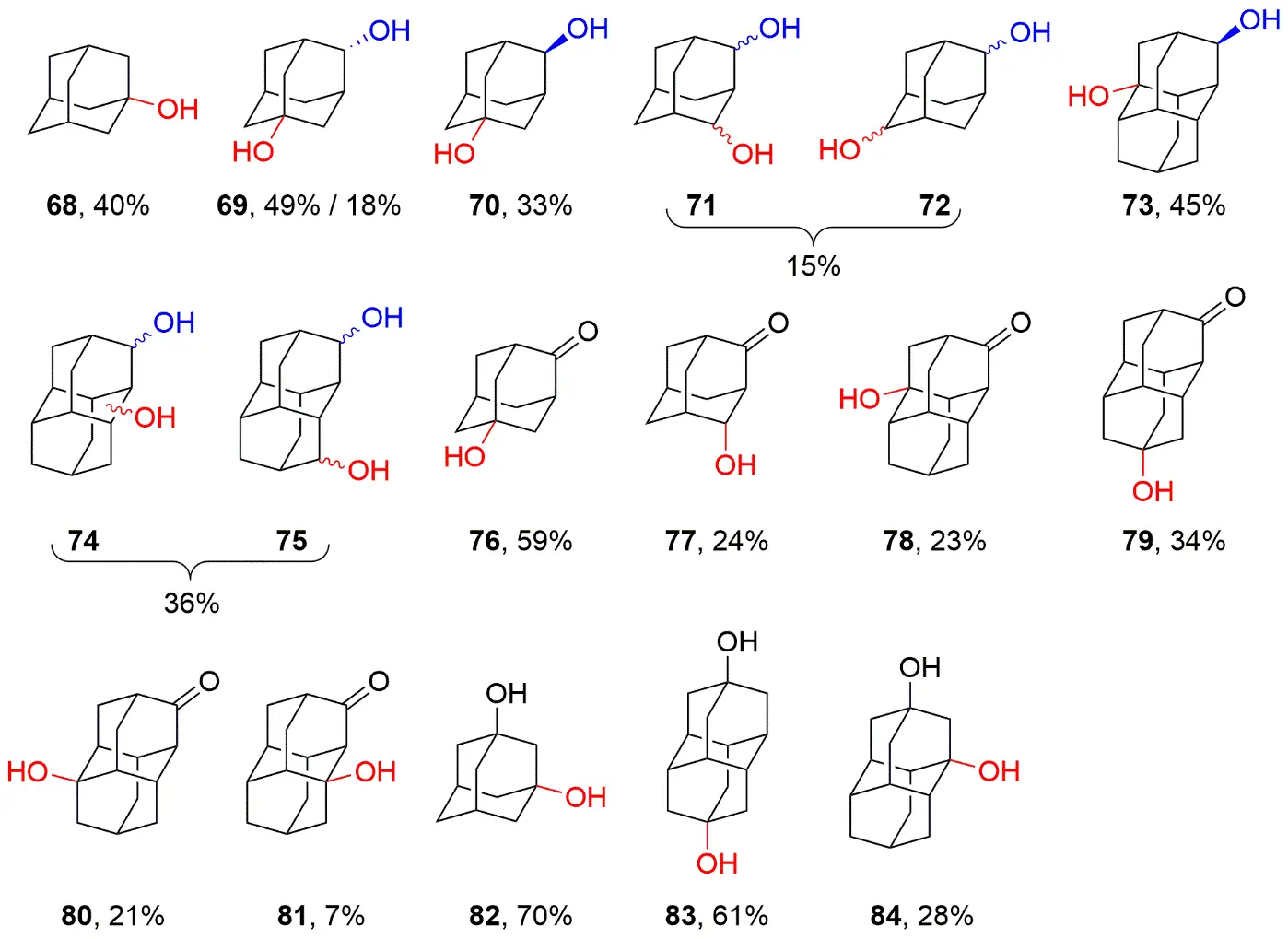
Figure 7. Products obtained from fungal transformation of adamantane and diamantane derivatives and their corresponding isolated yields. For compound 69, the yields shown correspond to C. zonata (49%) and W. cocos (18%), respectively. Red indicates C–H bond oxidation, and blue indicates carbonyl group reduction. Detailed information on fungal species, reaction conditions, and references is provided in the corresponding text.
3.6. Oxidation of Alcohols
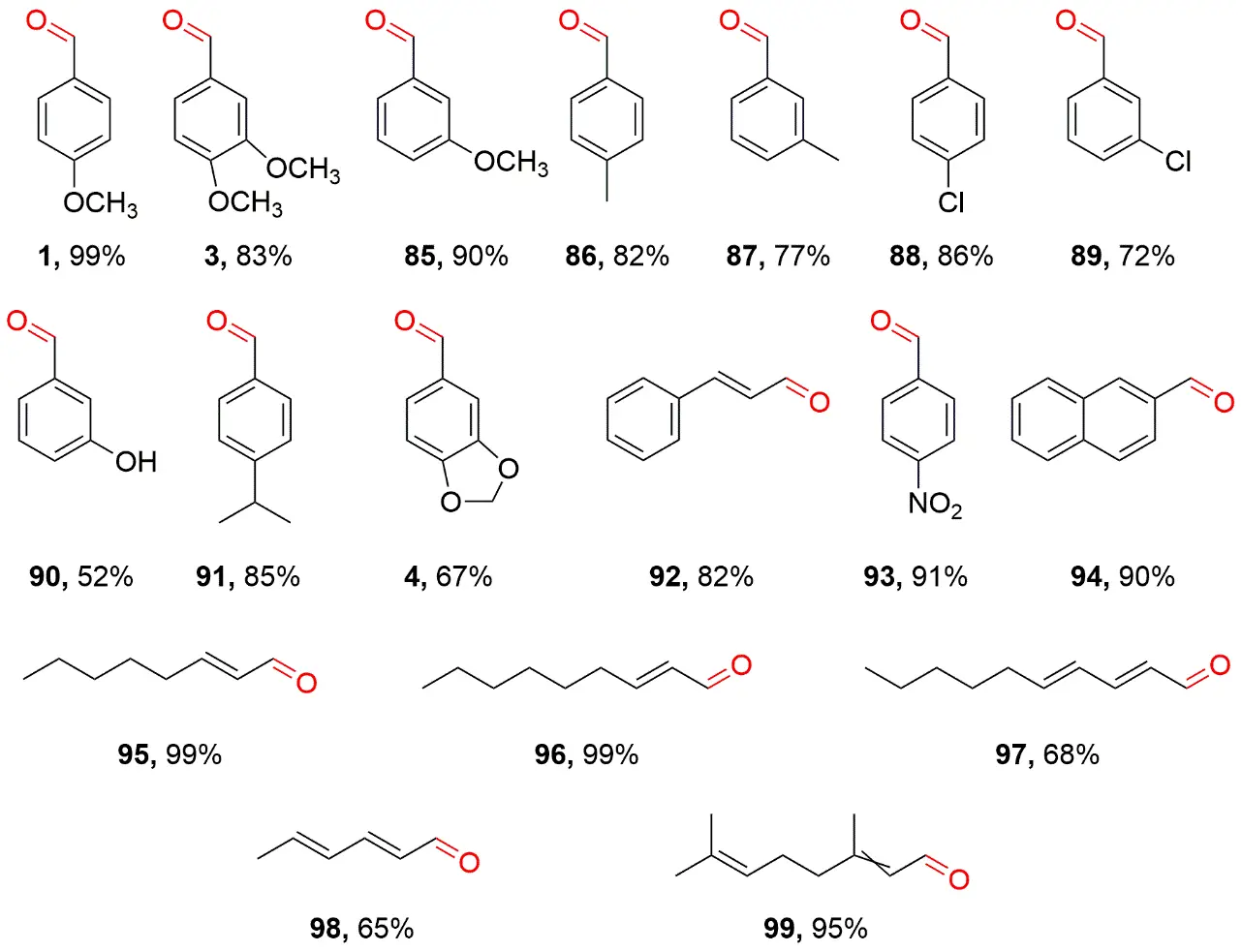
A broad range of primary alcohols was oxidized to the corresponding aldehydes (1, 3, 4, 85–99) using Bjerkandera adusta lyophilisate, typically affording isolated yields of 70–99% (Figure 8) [75,76]. The transformations were performed with 0.5 mmol substrate and 800 mg lyophilisate in 25 mL phosphate buffer for 48 h at 24 °C. Alkylbenzyl alcohols and substituted derivatives were efficiently converted, with para- and meta-substituted substrates generally outperforming ortho analogues, likely due to steric effects. Electron-donating substituents (e.g., methoxy) favored high conversions (>90%), consistent with the known substrate preference of aryl-alcohol oxidases (AAOs), while substrates bearing hydroxyl groups showed diminished reactivity. In particular, p-hydroxybenzyl alcohol was unreactive, and vanillyl alcohol gave only trace conversion, in agreement with reported inhibition of AAO activity by phenolic substituents.
Electron-withdrawing groups were also tolerated, although reactivity depended on substituent position rather than purely electronic effects. Notable products include p-nitrobenzaldehyde (93, 91% yield) and piperonal (4, 67% yield), an industrially relevant benzodioxole derivative. Expansion to polycyclic systems, such as β-naphthalenemethanol, resulted in high yields of corresponding aldehyde (94, 90%), whereas substituted naphthalenes exhibited low reactivity. The observed substrate scope closely parallels that reported for extracellular AAOs from Bjerkandera adusta and Pleurotus eryngii.
Unsaturated primary alcohols were also efficiently transformed [77,78]. The transformations were performed with 320 mg lyophilisate and 10 mM substrate in 20 mL of reaction mixture using 2-propanol as a cosolvent for 4 h. Preparative-scale reactions confirmed the synthetic applicability of the system, affording the corresponding aldehydes in good isolated yields following chromatographic purification. Cinnamyl alcohol and (Z)-2-nonen-1-ol were converted in high isolated yields (up to 99%), with the latter undergoing stereoselective isomerization to the corresponding (E)-aldehyde (96). (E,E)-2,4-Decadienal (97) and (E,E)-2,4-hexadienal (98) were obtained in isolated yields of 68% and 65%, respectively, while (E)-2-octenal (95) was obtained in an isolated yield of 99%. Geraniol was fully oxidized to citral (99), whereas nerol showed lower conversion (57%). Short-chain or structurally constrained substrates exhibited reduced reactivity, and no conversion was observed for secondary or tertiary alcohols, highlighting the selectivity toward primary alcohols.
Overall, these results demonstrate the broad substrate scope and high selectivity of the B. adusta lyophilisate for the oxidation of primary alcohols. Comparable alcohol oxidation reactions have also been reported using isolated fungal enzymes, particularly AAOs from P. eryngii and other oxidoreductases (Section 4), whereas examples employing whole-cell or lyophilized WDF systems remain comparatively limited.
4. Approaches Based on Cell-Free Enzymes Originated from Wood-Degrading Fungi
WDF constitute a rich source of extracellular oxidoreductases that have become highly valuable biocatalysts for selective oxidative and reductive transformations in organic synthesis under mild, aqueous conditions [30,79]. These enzymes enable reaction types and selectivity patterns that are difficult to achieve by conventional chemical methods, particularly for chemo-, regio-, and stereoselective C–O and C–H functionalization of complex substrates. Among them, laccases [80], class II peroxidases (lignin peroxidase, manganese peroxidase, and versatile peroxidase) [81], unspecific peroxygenases (UPOs) [82], aryl-alcohol oxidases (AAOs) [83], and carboxylic acid reductases (CARs) [52] represent key enzyme classes that have been successfully translated into cell-free catalytic systems for synthetic applications. Laccases (EC 1.10.3.2), multicopper oxidases widely produced by white-rot fungi such as Trametes versicolor, Pleurotus ostreatus, and Pycnoporus species, catalyze one-electron oxidation of phenolic substrates coupled to four-electron reduction of dioxygen to water [80]. Their synthetic utility is greatly expanded in laccase-mediator systems, where small redox mediators (e.g., ABTS, 2,2,6,6-tetramethyl-1-piperidinyloxy (TEMPO), or naturally occurring phenols) act as diffusible oxidants that extend the substrate range to non-phenolic and sterically hindered compounds. In organic synthesis, laccase-mediator systems enable regioselective oxidative coupling reactions leading to C–C and C–O bond formation, providing access to lignan-type structures, flavonoids, and alkaloid frameworks, and support selective oxidation of primary alcohols in biomass-derived platform molecules such as the conversion of furfuryl alcohol to furfural.
Class II heme peroxidases further expand the oxidative repertoire of WDF enzymes. Lignin peroxidase (LiP, EC 1.11.1.14), characterized by an exceptionally high redox potential, can directly oxidize non-phenolic aromatic units in lignin and related model compounds via long-range electron transfer mechanisms involving surface-exposed tryptophan residues, enabling oxidative demethylation, aromatic ring opening, and controlled depolymerization of lignin-derived structures [84,85]. Manganese peroxidase (MnP, EC 1.11.1.13) operates via oxidation of Mn2+ to diffusible Mn3+-organic acid complexes, which act as low-molecular-weight oxidants capable of attacking phenolic lignin substructures and related aromatic substrates. Versatile peroxidase (VP, EC 1.11.1.16) integrates the catalytic features of LiP and MnP, combining Mn2+ oxidation with the direct oxidation of high-redox-potential aromatics such as veratryl alcohol, and is therefore applicable both in Mn-dependent and Mn-independent pathways [86]. These peroxidases have been used in cell-free systems for oxidative modification of lignin-derived aromatics, transformation of polycyclic aromatic hydrocarbons, and degradation of recalcitrant dyes, and are increasingly being explored for fine chemical synthesis, where selective aromatic oxyfunctionalization is required. Protein engineering and reaction-optimization studies have improved their tolerance to hydrogen peroxide and broadened operational pH ranges, alleviating major constraints for preparative use.
Unspecific peroxygenases (UPOs, EC 1.11.2.1) have emerged as particularly powerful biocatalysts for organic synthesis owing to their ability to catalyze selective oxyfunctionalization reactions using hydrogen peroxide as the sole oxidant [87,88,89]. These secreted heme-thiolate enzymes combine features of cytochrome P450 monooxygenases with peroxidase-like peroxide activation, enabling a broad range of transformations including aromatic and aliphatic hydroxylation, epoxidation of alkenes, N- and S-oxidation, and O-dealkylation, without requiring nicotinamide adenine dinucleotide (phosphate)-dependent (NAD(P)H-dependent) electron-transfer chains. Agrocybe aegerita UPO and related peroxygenases have demonstrated broad substrate scope across pharmaceuticals, steroids, fatty acids, and hydrocarbons, positioning them as versatile tools for late-stage functionalization and scaffold diversification [90]. Directed evolution has produced improved variants, such as thermostable and solvent-tolerant mutants, which exhibit enhanced performance in non-conventional media and enable preparative-scale oxyfunctionalization of structurally diverse substrates, including pharmaceutical emerging contaminants [91]. These studies highlight the dual relevance of UPOs for fine chemical synthesis and bioremediation, particularly when coupled with in situ hydrogen-peroxide generation systems based on auxiliary oxidases, photocatalysis, or electrochemical methods [82].
Aryl-alcohol oxidases (AAOs, EC 1.1.3.7) are flavin adenine dinucleotide (FAD)-dependent flavoenzymes of the glucose-methanol-choline (GMC) oxidoreductase superfamily that catalyze the aerobic oxidation of activated primary aromatic and conjugated aliphatic alcohols to the corresponding aldehydes, concomitantly generating hydrogen peroxide [83,92,93]. In WDF, AAOs act as auxiliary oxidoreductases in lignin degradation by supplying hydrogen peroxide to ligninolytic peroxidases, thus integrating tightly into the extracellular oxidative machinery. AAOs display broad substrate promiscuity toward benzylic alcohols, lignin-derived side-chain alcohols, and unsaturated primary alcohols, and can also oxidize certain aldehydes further to carboxylic acids, providing flexible entry points into both aldehyde and acid chemistry. From a synthetic perspective, AAOs enable selective aerobic oxidation of alcohols under mild conditions, and have been applied in the production of flavor and fragrance aldehydes (e.g., benzaldehyde, vanillin, and related aroma compounds) as well as in the conversion of furfuryl and hydroxymethylfurfural derivatives toward bio-based precursors such as 2,5-furandicarboxylic acid (FDCA) and 5-formylfuran-2-carboxylic acid (FFCA) [94]. Their dual function as hydrogen-peroxide generators and alcohol/aldehyde oxidases makes AAOs particularly attractive components of multi-enzyme cascades, where they can simultaneously drive peroxidase or UPO catalysis and provide aldehyde intermediates for downstream transformations.
Carboxylic acid reductases (CARs, EC 1.2.1.30) add a complementary reductive dimension to this toolbox by catalyzing the recycle adenosine triphosphate (ATP)- and NADPH-dependent reduction of aliphatic and aromatic carboxylic acids to the corresponding aldehydes [95,96,97]. CARs are large multidomain enzymes broadly distributed in bacteria, fungi, and plants and exhibit wide substrate scope across short-chain dicarboxylic acids, hydroxy acids, and structurally more complex carboxylates that are relevant to industrial chemistry. The carboxylate-to-aldehyde conversion catalyzed by CARs is challenging to perform selectively with conventional chemical reagents, especially in the presence of other reducible functional groups, making CARs valuable biocatalysts for aldehyde synthesis under aqueous, near-neutral conditions. Systematic biochemical characterization has shown that CARs tolerate a broad panel of carboxylic acids and can be implemented in whole-cell or cell-free systems, where ATP- and NADPH-regenerating auxiliary enzymes enable preparative aldehyde formation from stable carboxylate precursors. These aldehydes can be isolated as products, used directly in fragrance and flavor applications, or funneled into multi-enzyme cascades involving aldehyde reductases, transaminases, or cyclases to generate alcohols, chiral diols, amines, and lactams, including stereospecific production of 1,2-diols and intramolecular lactamization reactions. Recent work has demonstrated cell-free CAR-based reduction of carboxylates to pharmaceutically relevant aldehydes using crude enzyme preparations, underscoring the practical feasibility of integrating CARs into scalable synthetic processes.
Integration of oxidoreductases originating from WDF with auxiliary enzymes such as aryl-alcohol oxidases (AAOs) and carboxylic acid reductases (CARs) in multi-enzyme cascades markedly broadens their synthetic utility, especially for aldehyde-centered transformations and in situ oxidant supply [83,98]. For example, laccase-mediator oxidation of biomass-derived furans followed by transaminase-catalyzed amination enables one-pot access to furan amino acids, and UPO-based oxyfunctionalizations can be sustained by in situ hydrogen peroxide generation using auxiliary oxidases or photoenzyme systems, thereby improving selectivity and turnover numbers under mild, green conditions [99].
5. Comparative Analysis: Advantages of Wood-Degrading Fungi-Based Biocatalysis
The advantages of WDF-based biocatalysis further derive from the exceptional enzymatic diversity and complementary catalytic profiles found in Basidiomycota. Beyond the classical ligninolytic machinery, WDF produce lytic polysaccharide monooxygenases (LPMOs), quinone reductases, aryl-alcohol oxidases, cellobiose dehydrogenases, a range of oxygenases acting on terpenoid and aromatic substrates, and DyP-type peroxidases with distinctive alkene-cleavage and dye-decolorizing activities. This breadth of enzyme classes translates into a substantially larger and more functionally varied biocatalytic toolbox than that currently available from the more intensively exploited ascomycete fungi, and represents a reservoir of novel reaction types and selectivities that remain largely untapped. Within the ligninolytic oxidoreductase cohort, manganese peroxidases and versatile peroxidases complement laccase activity by directly accessing non-phenolic lignin units and generating diffusible Mn3+ chelates that function as natural mediators for bulk lignocellulose oxidation. Species such as Trametes versicolor, Pleurotus ostreatus, Ganoderma lucidum, and Trametes polyzona are capable of producing very high extracellular laccase activities, with MnP and VP activities providing extended substrate coverage across structurally diverse aromatic and phenolic targets, thereby supporting both depolymerization and value-adding transformations.
In addition to cell-free applications, WDF can be deployed as whole-cell biocatalysts, offering multi-step biotransformation cascades without the need to isolate and recombine individual enzymes. The ability of WDF to reductively convert substituted benzoic acids, such as p-anisic, vanillic, and piperonylic acids, into their corresponding aromatic aldehydes exemplifies one-pot biosynthetic routes to flavor and fragrance compounds with “natural” status and high market value. Native Ganoderma and Pleurotus strains have likewise been shown to transform carotenoids, styrene derivatives, and a range of aromatic dyes, highlighting the capacity of these fungi to mediate complex sequences that bridge fine-chemistry and mycoremediation objectives in a single whole-cell framework. Critically, WDF can be cultivated on low-cost lignocellulosic agricultural and industrial residues, such as sawdust, cereal straw, and olive mill waste, both as carbon sources and as inducers for enzyme production. This direct alignment of substrate use with waste valorization and circular-economy principles may provide economic and sustainability advantages for WDF-based systems, although the overall process feasibility depends on additional factors such as cultivation rates, downstream processing, and process optimization. Compared with bacterial fermentations relying on glucose or defined synthetic media, this approach represents a potential advantage that requires further techno-economic evaluation.
When benchmarked against bacterial and ascomycete systems, the comparative advantages of WDF-based biocatalysis become particularly evident in the domains of redox performance, post-translational modification, and unique enzyme classes. Fungal laccases from WDF generally exhibit higher redox potentials than their bacterial counterparts, enabling oxidation of substrates that lie beyond the reach of lower-potential bacterial laccases and expanding the accessible space of oxidative biotransformations. WDF laccases and peroxidases are typically glycosylated, which contributes to enhanced thermostability, resistance to proteolysis, and robustness in complex lignocellulosic matrices, traits that are difficult to reproduce in prokaryotic expression systems lacking glycosylation machinery. Compared with ascomycete production hosts such as Aspergillus, Trichoderma, and Pichia, WDF natively generates structurally and functionally unique classes of oxidoreductases, including UPOs, DyPs, and high-redox-potential LiPs, which have not been fully replicated in these conventional industrial fungi without extensive protein engineering and host optimization. Taken together, the distinctive biochemistry of WDF defines a competitive and still underexploited space in oxidative and redox-neutral biocatalysis, offering integrated hydrolytic-oxidative capabilities, broad enzyme diversity, and operational advantages that make WDF-based systems particularly attractive for sustainable organic synthesis, lignocellulose valorization, and environmentally aligned process design.
Table 1 compiles representative WDF-based biotransformations spanning aryl carboxylic acid reductions, ketone/aldehyde reductions, terpenoid oxyfunctionalization, and diamondoid hydroxylation, as well as selected isolated-enzyme applications. Across these examples, reaction times vary by more than two orders of magnitude, from 16 h for the reduction of aryl carboxylic acids by Bjerkandera sp. BOS55 [53] to 30 days for pyrene degradation by Polyporus sp. S133 [67], with biosynthetic reductions and terpenoid oxidations generally proceeding substantially faster than xenobiotic and polycyclic aromatic hydrocarbon degradation. Yields are similarly variable (40–99%) and strongly substrate- and strain-dependent, consistent with the pronounced biological variability discussed throughout this review. Notably, several transformations, including the reduction of primary alcohols by B. adusta lyophilisate [75,76,77,78] and ketone reduction by Lentinus strigellus [56], proceed with near-quantitative conversion, underscoring that high efficiency is achievable under optimized conditions despite the inherent complexity of whole-cell systems. Mechanistic probes such as CYP inhibitors (1-ABT, piperonyl butoxide (PBO) further link several oxidative transformations to cytochrome P450 involvement [66,68], providing a rare direct line of evidence for the enzymatic basis of otherwise “black box” whole-cell biocatalysis.
Table 1. Representative examples of WDF-based biocatalytic transformations and their key reaction parameters.
|
№ |
Fungal Species/Enzyme |
Substrate, Conc. |
Product |
Catalyst Amount/Loading |
Reaction Time |
Reaction Scale |
Isolated Yield/Conv. a |
Selectivity |
Productivity d |
Reaction Requirements/Additives § |
Product Characterization |
Refs. |
|---|---|---|---|---|---|---|---|---|---|---|---|---|
|
1 |
Lepista nuda |
Veratric acid, 1.5 g/L |
Veratraldehyde |
250 mL whole-cell culture |
8 days |
250 mL |
48% |
73% |
3.41 mg·L−1·h−1 |
— |
GC-MS, HPLC |
[52] |
|
2 |
Lepista nuda |
Piperonylic acid, 1.5 g/L |
Piperonal |
250 mL whole-cell culture |
4 days |
250 mL |
45% |
74% |
6.3 mg·L−1·h−1 |
— |
GC-MS, HPLC |
[52] |
|
3 |
Pycnoporus cinnabarinus |
3,4,5-trimethoxybenzoic acid, 1.5 g/L |
3,4,5-trimethoxybenzaldehyde |
250 mL whole-cell culture |
4 days |
250 mL |
71% |
— |
10.31 mg·L−1·h−1 |
— |
GC-MS, HPLC |
[52] |
|
4 |
Pleurotus sapidus |
Piperonylic acid, 1.5 g/L |
Piperonal |
250 mL whole-cell culture |
2 days |
250 mL |
up to 44% b |
— |
— |
— |
GC-MS, HPLC |
[52] |
|
5 |
Bjerkandera sp. BOS55 |
Aryl carboxylic acids, 1 mM |
Aromatic aldehydes and/or alcohols |
10 mL whole-cell culture |
16 h |
10 mL |
up to 0.8 mM (molar yields) |
— |
up to 0.05 mmol·L−1·h−1 |
— |
HPLC |
[53] |
|
6 |
Bjerkandera adusta DSMZ 4708 |
Anthranilic acid, 2 mM |
2-Aminobenzaldehyde |
440 mL whole-cell culture |
2 days |
440 mL |
39% |
— |
1.94 mg·L−1·h−1 |
ethanol as co-solvent |
GC-MS, NMR |
[54] |
|
7 |
Dichomitus albidofuscus |
Aromatic carboxylic acids, 1 mmol |
Aromatic aldehydes and alcohols |
200 mL whole-cell culture |
3 days |
200 mL |
up to 82% |
— |
up to 9.72 mg·L−1·h−1 |
— |
GC-MS, NMR |
[55] |
|
8 |
Lentinus strigellus |
Aromatic and aliphatic ketones, 10 mg |
Enantiopure corresponding alcohols and hydroxy ester products |
50 mL whole-cell culture |
1/3/6 days |
50 mL |
up to 99% a |
up to 99% ee, predominantly (S)-configured alcohols |
— |
— |
GC, HPLC, NMR |
[56] |
|
9 |
Ceriporia p. ZLY-2010 |
(−)-α-Pinene, 0.5 g/L |
α-Terpineol and other oxygenated monoterpenoids |
50 mL whole-cell culture |
4 days |
50 mL |
30% (α-terpineol) b |
— |
0.52 mg·L−1·h−1 |
— |
GC-FID/MS |
[59] |
|
10 |
Pleurotus sapidus |
Terpenoids, 0.25 mmol |
Oxygenated terpenoids (allylic alcohols, ketones, epoxides) |
800 mg lyophilisate |
48 h |
40 mL |
up to 58%, up to 95% a |
High regio-and chemoselectivity for 3-carene; 4% ee for β-ionone |
up to 17.19 mg·L−1·h−1 |
— |
GC-FID, GC-MS, NMR, HRMS |
[63] |
|
11 |
Polyporus brumalis |
α-Pinene, 25 mg |
α-Terpineol |
whole-cell culture |
5 days |
— |
up to 48% c |
— |
0.2 mg·L−1·h−1 |
— |
GC-FID, GC-MS |
[64] |
|
12 |
Phanerochaete sordida |
Diclofenac or mefenamic acid, 0.1 mM |
Hydroxylated metabolites |
20 mL whole-cell culture |
6 days |
20 mL |
— |
— |
— |
CYP inhibitor (1-ABT) used as mechanistic probe |
HPLC, GC-MS, NMR |
[66] |
|
13 |
Polyporus sp. S133 |
Pyrene, 5 mg/L |
1-Hydroxypyrene; gentisic acid |
20 mL whole-cell culture |
30 days |
20 mL |
— |
— |
— |
— |
GC-MS |
[67] |
|
14 |
Phanerochaete chrysosporium |
Anthracene, 0.025 mM |
Anthraquinone via anthrone |
10 mL whole-cell culture |
7 days |
10 mL |
— |
— |
— |
acetone as a co-solvent; CYP inhibitor (PBO) used as mechanistic probe |
HPLC, GC-MS |
[68] |
|
15 |
Dichomitus albidofuscus |
Adamantane, 1.1 mmol |
1-Adamantanol |
440 mL whole-cell culture |
8 days |
440 mL |
40% |
3°/2° selectivity |
0.77 mg·L−1·h−1 |
isopropanol as a co-solvent |
GC-MS, NMR |
[72] |
|
16 |
Cerrena zonata |
Adamantanone and diamantanone, 1 mmol |
Dihydroxylated diamondoid derivatives |
200 mL whole-cell culture |
4 days |
200 mL |
up to 49% |
Structure-dependent regioselectivity |
up to 5.1 mg·L−1·h−1 |
— |
GC-MS, NMR, HRMS |
[73] |
|
17 |
Wolfiporia cocos |
Adamantanone, diamantanone, and substituted diamondoids, 1 mmol; 2 mmol |
Hydroxylated diamondoid derivatives (diols and hydroxy ketones) |
200 mL whole-cell culture |
4 days |
200 mL |
up to 70% |
Structure-dependent regioselectivity |
up to 9.31 mg·L−1·h−1 |
— |
GC-MS, NMR, HRMS |
|
|
18 |
Bjerkandera adusta |
Primary aromatic alcohols, 20 mM |
Corresponding aldehydes |
800 mg lyophilisate |
48 h |
25 mL |
up to 99% |
— |
up to 63.33 mg·L−1·h−1 |
— |
GC-MS, NMR |
|
|
19 |
Bjerkandera adusta |
Allylic primary alcohols, 10 mM |
Corresponding aldehydes |
320 mg lyophilisate |
4 h |
20 mL |
up to 99% |
Stereoselective; (E)-diastereomers favored |
up to 1800 mg·L−1·h−1 |
isopropanol as a co-solvent |
GC-MS, NMR |
|
|
20 |
WRF laccases/laccase-mediator systems |
Phenolic and non-phenolic aromatic substrates |
Oxidized products |
purified enzyme |
— |
— |
— |
— |
— |
ABTS, TEMPO, etc. |
— |
[80] |
|
21 |
UPOs |
Aromatic/aliphatic hydrocarbons, pharmaceuticals |
Oxidized products |
purified enzyme |
— |
— |
— |
— |
— |
H2O2 (often generated in situ) |
— |
§ This column summarizes reported cofactors, mediators, solvents, inhibitors used for mechanistic studies, and other reaction additives; a Values marked with a correspond to conversion rather than isolated yield; b Relative proportion of the product in the biotransformation mixture determined by GC–MS; not an isolated yield; c Analytically determined yield calculated from GC-FID analysis using an external standard; not an isolated yield; d Productivity was calculated from the reported product concentration or absolute product amount, reaction scale, and reaction time, where available. Productivity is expressed as mg·L−1·h−1 or mmol·L−1·h−1, according to the reported data.
6. Limitations and Challenges: Fundamental Constraints in WDF Biocatalysis
From the perspective of organic synthesis, WDF biocatalysis is fundamentally constrained by the ecological origin of these catalysts, their intrinsic stability limits, and immature supply chains, which together restrict their routine use in fine chemical and pharmaceutical manufacture. While WDF oxidoreductases and hydrolases can access transformations such as lignin-inspired C–H oxyfunctionalization and late-stage aromatic modification, their deployment in synthetic routes is limited by catalyst performance, reaction engineering complexity, and incomplete mechanistic understanding.
A central constraint is process stability, as WDF enzymes and whole-cell systems must maintain activity and selectivity under temperatures, solvent compositions, and substrate loadings typical of industrial organic synthesis, yet many lignin-modifying peroxidases and laccases are prone to rapid inactivation by hydrogen peroxide, redox mediators, and organic co-solvents. In whole-cell systems, high substrate or product concentrations induce metabolic stress and regulatory shifts, causing time-dependent changes in secretome composition and catalytic profiles that undermine reproducibility at scale. Compared with extensively engineered industrial ketoreductases or transaminases, WDF catalysts have undergone little systematic stability optimization, and long-term performance data under synthetically relevant conditions remain scarce, representing a fundamental bottleneck.
Chemo-, regio-, and stereoselectivity constitute another core limitation. In their native context, WDF deploy broad-spectrum oxidoreductases to generate diverse mixtures of oxidized lignin fragments, which is ecologically beneficial but conflicts with the narrow product specifications of fine chemicals and active pharmaceutical ingredients (APIs). Unspecific peroxygenases, laccase-mediator systems, and P450s from WDF can show high selectivity for model substrates, yet their natural roles are diversification and depolymerization rather than single-product formation, making the reaction outcome highly sensitive to small changes in substrate structure, mediator, and microenvironment. Off-target oxidation, overoxidation, and polymerization are common under scale-up conditions, and without rich selectivity mapping across pharmaceutically relevant libraries, rational route design remains difficult.
The obligatory coupling of WDF oxidative chemistry to redox co-substrates, especially hydrogen peroxide and oxygen, is a further fundamental constraint. Peroxidases and peroxygenases require finely controlled oxidant dosing: insufficient oxidant leads to low conversion, whereas local oversupply causes heme bleaching and radical-induced deactivation, particularly in non-aqueous or biphasic synthetic media. Whole-cell systems add another layer of complexity through endogenous peroxide generation and scavenging, making consistent oxidant profiles across reactor scales challenging. Sophisticated oxidant management strategies, such as in situ generation or immobilized reservoirs, are only beginning to be applied to WDF oxidoreductases, so the operational window for productive C–H oxyfunctionalization remains narrow.
Catalyst supply and scalability also impose structural limitations. Many promising WDF enzymes originate from slow-growing WDF with complex life cycles and limited genetic tools, hindering large-scale production in native hosts. Heterologous expression often encounters folding, secretion, and glycosylation problems, especially for heme-thiolate peroxygenases, and currently available cell-free expression platforms are not yet mature enough for routine kilogram-scale production. In contrast to well-established industrial biocatalysts (e.g., transaminases), robust commercial supply chains for WDF enzymes are rare, fundamentally limiting their adoption in synthetic routes despite their attractive reactivity.
Reaction media requirements provide another layer of constraint. Organic synthesis often uses high substrate concentrations and mixed aqueous-organic or largely organic solvents; WDF enzymes evolved in moist wood matrices at low concentrations of small organic molecules, and their tolerance to strong co-solvents or high substrate loadings is generally low or insufficiently characterized. Whole-cell WDF systems are particularly sensitive, as organic solvents and hydrophobic substrates can disrupt membranes and nutrient uptake, leading to decreased activity and viability. While immobilization or encapsulation in materials such as metal-organic frameworks can enhance tolerance and stability, most recent work focuses on more classical enzyme classes, and the systematic integration of WDF catalysts into advanced immobilization platforms is still limited.
Limited mechanistic and structural knowledge of many WDF enzymes further hampers their rational application in organic synthesis. Modern biocatalysis increasingly relies on high-resolution structures and computational tools to design enzymes with tailored selectivity, but for WDF oxidoreductases and CAZymes, structural coverage and detailed mechanistic understanding remain incomplete. Large multi-gene families, heterogeneous glycosylation, and complex post-translational modifications complicate sequence-structure-function analysis and reduce the efficacy of in silico engineering. Consequently, adapting WDF enzymes for site-selective transformations on complex drug-like molecules often relies on empirical screening and iterative protein engineering, which is resource-intensive and not yet broadly supported by predictive models.
Conceptually, there is a deep mismatch between the ecological role of WDF biocatalysts (open-ended depolymerization and mineralization) and the linear, tightly specified nature of synthetic routes. Wood decay benefits from catalytic promiscuity and redundancy within complex networks, whereas fine chemical synthesis demands single products and minimal by-products under well-defined conditions. Much of the natural reactivity of WDF systems is therefore intrinsically “too destructive” or diffuse for synthetic purposes, and constraining this behavior through reaction and enzyme engineering without losing the unique transformations is a fundamental, unresolved challenge.
Finally, regulatory and techno-economic considerations limit industrial adoption. Pharmaceutical and fine chemical sectors favor catalysts with long track records and reliable supply; WDF enzymes and whole-cell systems remain comparatively novel and are associated with uncertainties around large-scale performance, batch variability, and environmental impacts of biomass and enzyme disposal. The paucity of high-quality comparative techno-economic and life-cycle assessments specifically evaluating WDF-based synthetic routes against both chemical and more established biocatalytic options leaves fundamental questions about their true competitiveness and sustainability unanswered.
7. Conclusions and Outlook
WDF enzymes are still in their infancy on the road to large-scale industrial application, and both further research and optimization are needed to convert promiscuous enzymes into viable biocatalysts. The evolutionary optimization of fungal oxidative and hydrolytic systems for lignocellulose degradation has endowed these enzymes with exceptional catalytic versatility, broad substrate promiscuity, and access to radical-mediated reaction pathways that are difficult to replicate using conventional chemical catalysts. Realizing this potential will require translating these insights into practice. Heterologous expression in hosts such as Pichia pastoris, Aspergillus niger, and Escherichia coli has already overcome longstanding limitations of native fungal cultivation, delivering recombinant ligninolytic enzymes at volumetric productivities. Directed evolution and rational enzyme engineering have further expanded the substrate scope, enhanced turnover rates, and tuned operational parameters such as pH optima and redox potentials. The emergence of CRISPR-Cas9-enabled strain engineering enables systematic optimization of cofactor supply, secretion, and regulatory networks. Together, these synergistic strategies have transformed WDF enzymes from ecological curiosities into viable synthetic catalysts. Integration into multi-enzyme cascades and intensified process platforms is a critical step. Machine learning-guided cocktail design, enzyme immobilization, and continuous-flow operation have shown that these systems can reach the throughput, recyclability, and stability required for scalable synthesis. The successful coupling with photochemical, electrochemical, and transition-metal-mediated steps expands the accessible chemical space and positions fungal enzymes as complementary to established synthetic chemistry. From a sustainability perspective, WDF-mediated transformations can offer advantages over conventional chemical routes on green chemistry metrics such as atom economy and waste generation. However, translation from laboratory demonstrations to commercial implementation remains nontrivial. Translation to industrial application remains challenging, as limited substrate scope for certain reactions, enzyme inhibition at process-relevant concentrations, insufficient thermostability, and complex downstream purification require coordinated progress in enzyme engineering, bioprocess development, and reaction engineering. Key future directions include directed evolution campaigns targeting specific synthetic transformations, like regioselective C–H oxidation, enantioselective functionalization), exploration of non-model WDF from specialized niches for novel activities, and process-level innovations such as integrated production-catalysis systems, continuous and solid-state bioreactors, and real-time monitoring. Commercialization will ultimately depend on rigorous techno-economic assessment and early industrial engagement. Applications in high-value pharmaceutical intermediates and specialty chemicals, where sustainability, selectivity, and functional group tolerance command premium value, are likely to serve as initial entry points.
Author Contributions
V.V.N.: Writing—Review & Editing, Visualization, Methodology, Investigation, Formal analysis. T.S.Z.: Writing—Review & Editing, Writing—Original Draft Preparation, Supervision, Methodology, Formal analysis, Conceptualization, Investigation.
Ethics Statement
Not applicable.
Informed Consent Statement
Not applicable.
Data Availability Statement
Not applicable.
Funding
V.V.N. was supported by DAAD Fellowship. T.S.Z. gratefully acknowledges financial support by Alexander von Humboldt Foundation, specifically the Philipp Schwartz Initiative.
Declaration of Competing Interest
The authors declare that they have no known competing financial interests or personal relationships that could have appeared to influence the work reported in this paper
References
- Hauer B. Embracing Nature’s Catalysts: A Viewpoint on the Future of Biocatalysis. ACS Catal. 2020, 10, 8418–8427. DOI:10.1021/acscatal.0c01708 [Google Scholar]
- Winkler CK, Schrittwieser JH, Kroutil W. Power of Biocatalysis for Organic Synthesis. ACS Cent. Sci. 2021, 7, 55–71. DOI:10.1021/acscentsci.0c01496 [Google Scholar]
- Buller R, Lutz S, Kazlauskas RJ, Snajdrova R, Moore JC, Bornscheuer UT. From nature to industry: Harnessing enzymes for biocatalysis. Science 2023, 382, eadh8615. DOI:10.1126/science.adh8615 [Google Scholar]
- Yamada H, Kobayashi M. Nitrile Hydratase and Its Application to Industrial Production of Acrylamide. Biosci. Biotechnol. Biochem. 1996, 60, 1391–1400. DOI:10.1271/bbb.60.1391 [Google Scholar]
- Chen K, Arnold FH. Engineering new catalytic activities in enzymes. Nat. Catal. 2020, 3, 203–213. DOI:10.1038/s41929-019-0385-5 [Google Scholar]
- Bordeaux M, Tyagi V, Fasan R. Highly Diastereoselective and Enantioselective Olefin Cyclopropanation Using Engineered Myoglobin‐Based Catalysts. Angew. Chem. Int. Ed. 2015, 54, 1744–1748. DOI:10.1002/anie.201409928 [Google Scholar]
- Coelho PS, Brustad EM, Kannan A, Arnold FH. Olefin Cyclopropanation via Carbene Transfer Catalyzed by Engineered Cytochrome P450 Enzymes. Science 2013, 339, 307–310. DOI:10.1126/science.1231434 [Google Scholar]
- Singh R, Bordeaux M, Fasan R. P450-Catalyzed Intramolecular sp3 C–H Amination with Arylsulfonyl Azide Substrates. ACS Catal. 2014, 4, 546–552. DOI:10.1021/cs400893n [Google Scholar]
- McIntosh JA, Coelho PS, Farwell CC, Wang ZJ, Lewis JC, Brown TR, et al. Enantioselective Intramolecular C–H Amination Catalyzed by Engineered Cytochrome P450 Enzymes In Vitro and In Vivo. Angew. Chem. Int. Ed. 2013, 52, 9309–9312. DOI:10.1002/anie.201304401 [Google Scholar]
- Boerjan W, Ralph J, Baucher M. Lignin Biosynthesis. Annu. Rev. Plant Biol. 2003, 54, 519–546. DOI:10.1146/annurev.arplant.54.031902.134938 [Google Scholar]
- Zhuo R, Fan F. A comprehensive insight into the application of white rot fungi and their lignocellulolytic enzymes in the removal of organic pollutants. Sci. Total Environ. 2021, 778, 146132. DOI:10.1016/j.scitotenv.2021.146132 [Google Scholar]
- Łebkowska M, Załęska-Radziwiłł M. Application of white-rot fungi for biodegradation of refractory organic compounds—A review. Desalin. Water Treat. 2014, 52, 3708–3713. DOI:10.1080/19443994.2014.884666 [Google Scholar]
- Naghdi M, Taheran M, Brar SK, Kermanshahi-pour A, Verma M, Surampalli RY. Removal of pharmaceutical compounds in water and wastewater using fungal oxidoreductase enzymes. Environ. Pollut. 2018, 234, 190–213. DOI:10.1016/j.envpol.2017.11.060 [Google Scholar]
- Asif MB, Hai FI, Singh L, Price WE, Nghiem LD. Degradation of Pharmaceuticals and Personal Care Products by White-Rot Fungi—A Critical Review. Curr. Pollut. Rep. 2017, 3, 88–103. DOI:10.1007/s40726-017-0049-5 [Google Scholar]
- Voběrková S, Solčány V, Vršanská M, Adam V. Immobilization of ligninolytic enzymes from white-rot fungi in cross-linked aggregates. Chemosphere 2018, 202, 694–707. DOI:10.1016/j.chemosphere.2018.03.088 [Google Scholar]
- Lapadatescu C, Giniès C, Le Quéré JL, Bonnarme P. Novel Scheme for Biosynthesis of Aryl Metabolites from L-Phenylalanine in the Fungus Bjerkandera adusta. Appl. Environ. Microbiol. 2000, 66, 1517–1522. DOI:10.1128/AEM.66.4.1517-1522.2000 [Google Scholar]
- Xiao P, Wu D, Wang J. Bibliometric analysis of global research on white rot fungi biotechnology for environmental application. Environ. Sci. Pollut. Res. 2022, 29, 1491–1507. DOI:10.1007/s11356-021-15787-1 [Google Scholar]
- Bilal M, Bagheri AR, Vilar DS, Aramesh N, Eguiluz KIB, Ferreira LFR, et al. Oxidoreductases as a versatile biocatalytic tool to tackle pollutants for clean environment—A review. J. Chem. Tech. Biotech. 2022, 97, 420–435. DOI:10.1002/jctb.6743 [Google Scholar]
- Wang S, Li W, Liu L, Qi H, You H. Biodegradation of decabromodiphenyl ethane (DBDPE) by white-rot fungus Pleurotus ostreatus: Characteristics, mechanisms, and toxicological response. J. Hazard. Mater. 2022, 424, 127716. DOI:10.1016/j.jhazmat.2021.127716 [Google Scholar]
- Asif MB, Hai FI, Hou J, Price WE, Nghiem LD. Impact of wastewater derived dissolved interfering compounds on growth, enzymatic activity and trace organic contaminant removal of white rot fungi—A critical review. J. Environ. Manag. 2017, 201, 89–109. DOI:10.1016/j.jenvman.2017.06.014 [Google Scholar]
- Mir-Tutusaus JA, Baccar R, Caminal G, Sarrà M. Can white-rot fungi be a real wastewater treatment alternative for organic micropollutants removal? A review. Water Res. 2018, 138, 137–151. DOI:10.1016/j.watres.2018.02.056 [Google Scholar]
- Ponnusamy VK, Nguyen DD, Dharmaraja J, Shobana S, Banu JR, Saratale RG, et al. A review on lignin structure, pretreatments, fermentation reactions and biorefinery potential. Bioresour. Technol. 2019, 271, 462–472. DOI:10.1016/j.biortech.2018.09.070 [Google Scholar]
- Lundell TK, Mäkelä MR, de Vries RP, Hildén KS. Genomics, Lifestyles and Future Prospects of Wood-Decay and Litter-Decomposing Basidiomycota. Adv. Bot. Res. 2014, 70, 329–370. DOI:10.1016/B978-0-12-397940-7.00011-2 [Google Scholar]
- Lahive CW, Kamer PCJ, Lancefield CS, Deuss PJ. An Introduction to Model Compounds of Lignin Linking Motifs; Synthesis and Selection Considerations for Reactivity Studies. ChemSusChem 2020, 13, 4238–4265. DOI:10.1002/cssc.202000989 [Google Scholar]
- Vanholme R, Demedts B, Morreel K, Ralph J, Boerjan W. Lignin Biosynthesis and Structure. Plant Physiol. 2010, 153, 895–905. DOI:10.1104/pp.110.155119 [Google Scholar]
- Elisashvili V, Metreveli E, Khardziani T, Sokhadze K, Kobakhidze A, Kachlishvili E. Review of Recent Advances in the Physiology of the Regulation of Cellulase and Xylanase Production by Basidiomycetes. Energies 2023, 16, 4382. DOI:10.3390/en16114382 [Google Scholar]
- Floudas D, Binder M, Riley R, Barry K, Blanchette RA, Henrissat B, et al. The Paleozoic Origin of Enzymatic Lignin Decomposition Reconstructed from 31 Fungal Genomes. Science 2012, 336, 1715–1719. DOI:10.1126/science.1221748 [Google Scholar]
- Horwath W. Carbon Cycling and Formation of Soil Organic Matter. In Soil Microbiology, Ecology and Biochemistry, 3rd ed.; Paul EA, Ed.; Academic Press: San Diego, CA, USA, 2007; pp. 303–339. DOI:10.1016/B978-0-08-047514-1.50016-0 [Google Scholar]
- Rosso MN, Berrin JG, Lomascolo A. Plant wastes and sustainable refineries: What can we learn from fungi? Curr. Opin. Green Sustain. Chem. 2022, 34, 100602. DOI:10.1016/j.cogsc.2022.100602 [Google Scholar]
- Schmidt-Dannert C. Biocatalytic portfolio of Basidiomycota. Curr. Opin. Chem. Biol. 2016, 31, 40–49. DOI:10.1016/j.cbpa.2016.01.002 [Google Scholar]
- van Erven G, Hilgers R, Waard PD, Gladbeek EJ, van Berkel WJH, Kabel MA. Elucidation of In Situ Ligninolysis Mechanisms of the Selective White-Rot Fungus Ceriporiopsis subvermispora. ACS Sustain. Chem. Eng. 2019, 7, 16757–16764. DOI:10.1021/acssuschemeng.9b04235 [Google Scholar]
- Hatakka A. Lignin-modifying enzymes from selected white-rot fungi: Production and role from in lignin degradation. FEMS Microbiol. Rev. 1994, 13, 125–135. DOI:10.1111/j.1574-6976.1994.tb00039.x [Google Scholar]
- Bourbonnais R, Paice MG. Oxidation of non-phenolic substrates: An expanded role for laccase in lignin biodegradation. FEBS Lett. 1990, 267, 99–102. DOI:10.1016/0014-5793(90)80298-W [Google Scholar]
- del Cerro C, Erickson E, Dong T, Wong AR, Eder EK, Purvine SO, et al. Intracellular pathways for lignin catabolism in white-rot fungi. Proc. Natl. Acad. Sci. USA 2021, 118, e2017381118. DOI:10.1073/pnas.2017381118 [Google Scholar]
- Cruz-Morató C, Ferrando-Climent L, Rodriguez-Mozaz S, Barceló D, Marco-Urrea E, Vicent T, et al. Degradation of pharmaceuticals in non-sterile urban wastewater by Trametes versicolor in a fluidized bed bioreactor. Water Res. 2013, 47, 5200–5210. DOI:10.1016/j.watres.2013.06.007 [Google Scholar]
- Khan MF. Fungi for Sustainable Pharmaceutical Remediation: Enzymatic Innovations, Challenges, and Applications—A Review. Processes 2025, 13, 1034. DOI:10.3390/pr13041034 [Google Scholar]
- Huang D, Guo X, Peng Z, Zeng G, Xu P, Gong X, et al. White rot fungi and advanced combined biotechnology with nanomaterials: Promising tools for endocrine-disrupting compounds biotransformation. Crit. Rev. Biotechnol. 2018, 38, 671–689. DOI:10.1080/07388551.2017.1386613 [Google Scholar]
- Grelska A, Noszczyńska M. White rot fungi can be a promising tool for removal of bisphenol A, bisphenol S, and nonylphenol from wastewater. Environ. Sci. Pollut. Res. 2020, 27, 39958–39976. DOI:10.1007/s11356-020-10382-2 [Google Scholar]
- Vršanská M, Voběrková S, Jiménez Jiménez A, Strmiska V, Adam V. Preparation and Optimisation of Cross-Linked Enzyme Aggregates Using Native Isolate White Rot Fungi Trametes versicolor and Fomes fomentarius for the Decolourisation of Synthetic Dyes. Int. J. Environ. Res. Public Health 2017, 15, 23. DOI:10.3390/ijerph15010023 [Google Scholar]
- Yehia RS, Rodriguez-Couto S. Discoloration of the azo dye Congo Red by manganese-dependent peroxidase from Pleurotus sajor caju. Appl. Biochem. Microbiol. 2017, 53, 222–229. DOI:10.1134/S0003683817020181 [Google Scholar]
- Delius J, Emmerich M, Özyurt V, Hamscher G. Biotransformation of Tetracyclines by Fungi: Challenges and Future Research Perspectives. J. Agric. Food Chem. 2022, 70, 1454–1460. DOI:10.1021/acs.jafc.1c05121 [Google Scholar]
- Hawari J, Halasz A, Beaudet S, Paquet L, Ampleman G, Thiboutot S. Biotransformation of 2,4,6-Trinitrotoluene with Phanerochaete chrysosporium in Agitated Cultures at pH 4.5. Appl. Environ. Microbiol. 1999, 65, 2977–2986. DOI:10.1128/AEM.65.7.2977-2986.1999 [Google Scholar]
- Ryu WR, Shim SH, Jang MY, Jeon YJ, Oh KK, Cho MH. Biodegradation of pentachlorophenol by white rot fungi under ligninolytic and nonligninolytic conditions. Biotechnol. Bioprocess Eng. 2000, 5, 211–214. DOI:10.1007/BF02936597 [Google Scholar]
- Shao B, Liu Z, Zeng G, Liu Y, Yang X, Zhou C, et al. Immobilization of laccase on hollow mesoporous carbon nanospheres: Noteworthy immobilization, excellent stability and efficacious for antibiotic contaminants removal. J. Hazard. Mater. 2019, 362, 318–326. DOI:10.1016/j.jhazmat.2018.08.069 [Google Scholar]
- Suda T, Hata T, Kawai S, Okamura H, Nishida T. Treatment of tetracycline antibiotics by laccase in the presence of 1-hydroxybenzotriazole. Bioresour. Technol. 2012, 103, 498–501. DOI:10.1016/j.biortech.2011.10.041 [Google Scholar]
- Sun K, Huang Q, Li S. Transformation and toxicity evaluation of tetracycline in humic acid solution by laccase coupled with 1-hydroxybenzotriazole. J. Hazard. Mater. 2017, 331, 182–188. DOI:10.1016/j.jhazmat.2017.02.058 [Google Scholar]
- Bora PK, Kemprai P, Hussain S, Baishya R, Jadhav D, Haldar S. Mushroom‐based biocatalysts for the synthesis of aroma and flavours from exogenous organic molecules: A review of two decades. Int. J. Food Sci. Tech. 2024, 59, 84–94. DOI:10.1111/ijfs.16829 [Google Scholar]
- Yang Y. Mushroom‐Mediated Redox Reactions. Chem. A Eur. J. 2025, 31, e202403010. DOI:10.1002/chem.202403010 [Google Scholar]
- Stentelaire C, Lesage-Meessen L, Oddou J, Bernard O, Bastin G, Ceccaldi BC, et al. Design of a fungal bioprocess for vanillin production from vanillic acid at scalable level by Pycnoporus cinnabarinus. J. Biosci. Bioeng. 2000, 89, 223–230. DOI:10.1016/S1389-1723(00)88823-4 [Google Scholar]
- Lesage-Meessen L, Lomascolo A, Bonnin E, Thibault JF, Buleon A, Roller M, et al. A Biotechnological Process Involving Filamentous Fungi to Produce Natural Crystalline Vanillin from Maize Bran. Appl. Biochem. Biotechnol. 2002, 102, 141–154. DOI:10.1385/ABAB:102-103:1-6:141 [Google Scholar]
- Falconnier B, Lapierre C, Lesage-Meessen L, Yonnet G, Brunerie P, Colonna-Ceccaldi B, et al. Vanillin as a product of ferulic acid biotransformation by the white-rot fungus Pycnoporus cinnabarinus I-937: Identification of metabolic pathways. J. Biotechnol. 1994, 37, 123–132. DOI:10.1016/0168-1656(94)90003-5 [Google Scholar]
- Serra S, Marzorati S, Szczepańska E, Strzała T, Boratyński F. Basidiomycota strains as whole-cell biocatalysts for the synthesis of high-value natural benzaldehydes. Appl. Microbiol. Biotechnol. 2024, 108, 113. DOI:10.1007/s00253-023-12872-y [Google Scholar]
- Hage A, Schoemaker HE, Field JA. Reduction of aryl acids by white-rot fungi for the biocatalytic production of aryl aldehydes and alcohols. Appl. Microbiol. Biotechnol. 1999, 52, 834–838. DOI:10.1007/s002530051600 [Google Scholar]
- Babkina V, Haiduk Y, Kurtash Y, Zorn H, Zhuk T. Reduction of anthranilic acid to 2-aminobenzaldehyde by the white-rot fungus Bjerkandera adusta DSMZ 4708. J. Biotechnol. 2024, 387, 44–48. DOI:10.1016/j.jbiotec.2024.03.015 [Google Scholar]
- Zhuk TS, Skorobohatko OS, Albuquerque W, Zorn H. Scope and limitations of biocatalytic carbonyl reduction with white-rot fungi. Bioorg. Chem. 2021, 108, 104651. DOI:10.1016/j.bioorg.2021.104651 [Google Scholar]
- Barros-Filho BA, de Oliveira MDCF, Lemos TLG, de Mattos MC, Gonzalo GD, Gotor-Fernández V, et al. Lentinus strigellus: A new versatile stereoselective biocatalyst for the bioreduction of prochiral ketones. Tetrahedron Asymmetry 2009, 20, 1057–1061. DOI:10.1016/j.tetasy.2009.02.008 [Google Scholar]
- Nedele AK, Schiebelbein R, Bär A, Kaup A, Zhang Y. Reduction of aldehydes with green odor in soy products during fermentation with Lycoperdon pyriforme and analysis of their degradation products. Food Res. Int. 2022, 152, 110909. DOI:10.1016/j.foodres.2021.110909 [Google Scholar]
- Loderer C, Ansorge-Schumacher MB. Magic Mushrooms: Screening for Novel Biocatalysts in the Phylum Basidiomycota. Adv. Biosci. Biotechnol. 2016, 7, 446–453. DOI:10.4236/abb.2016.711043 [Google Scholar]
- Lee SY, Kim SH, Hong CY, Kim HY, Ryu SH, Choi IG. Biotransformation of (−)-α-Pinene by Whole Cells of White Rot Fungi, Ceriporia sp. ZLY-2010 and Stereum hirsutum. Mycobiology 2015, 43, 297–302. DOI:10.5941/MYCO.2015.43.3.297 [Google Scholar]
- Fraatz MA, Berger RG, Zorn H. Nootkatone—A biotechnological challenge. Appl. Microbiol. Biotechnol. 2009, 83, 35–41. DOI:10.1007/s00253-009-1968-x [Google Scholar]
- Kaspera R, Krings U, Nanzad T, Berger RG. Bioconversion of (+)-valencene in submerged cultures of the ascomycete Chaetomium globosum. Appl. Microbiol. Biotechnol. 2005, 67, 477–483. DOI:10.1007/s00253-004-1794-0 [Google Scholar]
- Willershausen H, Graf H. Enzymatische Transformation von Valencen zu Nootkaton. Chemiker-Zeitung. 1991, 115, 358-360. [Google Scholar]
- Rickert A, Krombach V, Hamers O, Zorn H, Maison W. Enzymatic allylic oxidations with a lyophilisate of the edible fungus Pleurotus sapidus. Green Chem. 2012, 14, 639. DOI:10.1039/c2gc16317a [Google Scholar]
- Lee SY, Kim SH, Hong CY, Park SY, Choi IG. Biotransformation of (-)-α-pinene and geraniol to α-terpineol and p-menthane-3,8-diol by the white rot fungus, Polyporus brumalis. J. Microbiol. 2015, 53, 462–467. DOI:10.1007/s12275-015-5081-9 [Google Scholar]
- Weidmann V, Schaffrath M, Zorn H, Rehbein J, Maison W. Elucidation of the regio- and chemoselectivity of enzymatic allylic oxidations with Pleurotus sapidus—Conversion of selected spirocyclic terpenoids and computational analysis. Beilstein J. Org. Chem. 2013, 9, 2233–2241. DOI:10.3762/bjoc.9.262 [Google Scholar]
- Hata T, Kawai S, Okamura H, Nishida T. Removal of diclofenac and mefenamic acid by the white rot fungus Phanerochaete sordida YK-624 and identification of their metabolites after fungal transformation. Biodegradation 2010, 21, 681–689. DOI:10.1007/s10532-010-9334-3 [Google Scholar]
- Hadibarata T, Kristanti RA, Fulazzaky MA, Nugroho AE. Characterization of pyrene biodegradation by white‐rot fungus Polyporus sp. S133. Biotechnol. Appl. Biochem. 2012, 59, 465–470. DOI:10.1002/bab.1048 [Google Scholar]
- Chigu NL, Hirosue S, Nakamura C, Teramoto H, Ichinose H, Wariishi H. Cytochrome P450 monooxygenases involved in anthracene metabolism by the white-rot basidiomycete Phanerochaete chrysosporium. Appl. Microbiol. Biotechnol. 2010, 87, 1907–1916. DOI:10.1007/s00253-010-2616-1 [Google Scholar]
- Marco-Urrea E, Pérez-Trujillo M, Cruz-Morató C, Caminal G, Vicent T. White-rot fungus-mediated degradation of the analgesic ketoprofen and identification of intermediates by HPLC–DAD–MS and NMR. Chemosphere 2010, 78, 474–481. DOI:10.1016/j.chemosphere.2009.10.009 [Google Scholar]
- Marco-Urrea E, Pérez-Trujillo M, Cruz-Morató C, Caminal G, Vicent T. Degradation of the drug sodium diclofenac by Trametes versicolor pellets and identification of some intermediates by NMR. J. Hazard. Mater. 2010, 176, 836–842. DOI:10.1016/j.jhazmat.2009.11.112 [Google Scholar]
- Marco-Urrea E, Pérez-Trujillo M, Blánquez P, Vicent T, Caminal G. Biodegradation of the analgesic naproxen by Trametes versicolor and identification of intermediates using HPLC-DAD-MS and NMR. Bioresour. Technol. 2010, 101, 2159–2166. DOI:10.1016/j.biortech.2009.11.019 [Google Scholar]
- Zhuk TS, Goldmann M, Hofmann J, Pohl JCS, Zorn H. Preparative aerobic oxidations with basidiomycetous enzymes: CH-functionalization of adamantane. J. Mol. Catal. B: Enzym. 2015, 122, 87–92. DOI:10.1016/j.molcatb.2015.08.002 [Google Scholar]
- Nikitenkova VV, Albuquerque W, Gand M, Janssen S, Li B, Zorn H, et al. Diamondoid ketones as structural probes for active sites of fungal enzymes. Mol. Catal. 2026, 592, 115741. DOI:10.1016/j.mcat.2026.115741 [Google Scholar]
- Nikitenkova VV, Sydorenko AM, Zorn H, Zhuk T. Biocatalytic Synthesis of Diamondoid Diols by the Brown‐Rot Fungus Wolfiporia cocos. ChemBioChem 2026, 27, e202500930. DOI:10.1002/cbic.202500930 [Google Scholar]
- Babkina VV, Albuquerque W, Haiduk YM, Michalak W, Ghezellou P, Zorn H, et al. Fungal lyophilisates as catalysts for organic synthesis: Preparative oxidations with the white-rot fungus Bjerkandera adusta. Mol. Catal. 2023, 549, 113451. DOI:10.1016/j.mcat.2023.113451 [Google Scholar]
- Shah VY, Nikitenkova V, Kurtash YR, Krupodorova TA, Zhuk TS. Biocatalytic Approach to Aldehydes Using Lyophilisates of Bjerkandera adusta Fungus. J. Org. Pharm. Chem. 2026, 23, 57–63. DOI:10.24959/ophcj.25.340347 [Google Scholar]
- Nikitenkova V, Calza L, Albuquerque W, Zorn H, Zhuk T. Selektive Oxidation von Alkoholen zu wertvollen Aldehyden durch Lyophilisate des Weißfäulepilzes Bjerkandera adusta. Lebensmittelchemie 2025, 79, S3-191. DOI:10.1002/lemi.202559168 [Google Scholar]
- Calza L, Nikitenkova V, Albuquerque W, Zorn H, Zhuk T. Selective Oxidation of α,β‐Unsaturated Alcohols With Lyophilisates of Bjerkandera adusta. Chem. Biodivers. 2025, 22, e01127. DOI:10.1002/cbdv.202501127 [Google Scholar]
- Castaño JD, Muñoz-Muñoz N, Kim YM, Liu J, Yang L, Schilling JS. Metabolomics Highlights Different Life History Strategies of White and Brown Rot Wood-Degrading Fungi. mSphere 2022, 7, e00545-22. DOI:10.1128/msphere.00545-22 [Google Scholar]
- Aza P, Camarero S. Fungal Laccases: Fundamentals, Engineering and Classification Update. Biomolecules 2023, 13, 1716. DOI:10.3390/biom13121716 [Google Scholar]
- Kipping L, Jehmlich N, Moll J, Noll M, Gossner MM, Van Den Bossche T, et al. Enzymatic machinery of wood-inhabiting fungi that degrade temperate tree species. ISME J. 2024, 18, wrae050. DOI:10.1093/ismejo/wrae050 [Google Scholar]
- Hofrichter M, Kellner H, Herzog R, Karich A, Kiebist J, Scheibner K, et al. Peroxide-Mediated Oxygenation of Organic Compounds by Fungal Peroxygenases. Antioxidants 2022, 11, 163. DOI:10.3390/antiox11010163 [Google Scholar]
- Cinca‑Fernando P, Vázquez-Rodríguez A, Mangas‑Sánchez J, Ferreira P. Aryl-alcohol oxidases: Catalysis, diversity, structure–function and emerging biotechnological applications. Appl. Microbiol. Biotechnol. 2025, 109, 151. DOI:10.1007/s00253-025-13538-7 [Google Scholar]
- Mattila H, Österman-Udd J, Mali T, Lundell T. Basidiomycota Fungi and ROS: Genomic Perspective on Key Enzymes Involved in Generation and Mitigation of Reactive Oxygen Species. Front. Fungal Biol. 2022, 3, 837605. DOI:10.3389/ffunb.2022.837605 [Google Scholar]
- Sáez-Jiménez V, Acebes S, Guallar V, Martínez AT, Ruiz-Dueñas FJ. Improving the Oxidative Stability of a High Redox Potential Fungal Peroxidase by Rational Design. PLoS ONE 2015, 10, e0124750. DOI:10.1371/journal.pone.0124750 [Google Scholar]
- Janusz G, Pawlik A, Sulej J, Świderska-Burek U, Jarosz-Wilkołazka A, Paszczyński A. Lignin degradation: Microorganisms, enzymes involved, genomes analysis and evolution. FEMS Microbiol. Rev. 2017, 41, 941–962. DOI:10.1093/femsre/fux049 [Google Scholar]
- Monterrey DT, Menés-Rubio A, Keser M, Gonzalez-Perez D, Alcalde M. Unspecific peroxygenases: The pot of gold at the end of the oxyfunctionalization rainbow? Curr. Opin. Green Sustain. Chem. 2023, 41, 100786. DOI:10.1016/j.cogsc.2023.100786 [Google Scholar]
- Hofrichter M, Kellner H, Pecyna MJ, Ullrich R. Fungal unspecific peroxygenases: Heme-thiolate proteins that combine peroxidase and cytochrome P450 properties. In Monooxygenase, Peroxidase and Peroxygenase Properties and Mechanisms of Cytochrome P450; Hrycay E, Bandiera S, Eds.; Springer: Cham, Switzerland, 2015; Volume 851, pp. 341–368. DOI:10.1007/978-3-319-16009-2_13 [Google Scholar]
- Ebner K, Pfeifenberger LJ, Rinnofner C, Schusterbauer V, Glieder A, Winkler M. Discovery and Heterologous Expression of Unspecific Peroxygenases. Catalysts 2023, 13, 206. DOI:10.3390/catal13010206 [Google Scholar]
- Molina-Espeja P, Garcia-Ruiz E, Gonzalez-Perez D, Ullrich R, Hofrichter M, Alcalde M. Directed Evolution of Unspecific Peroxygenase from Agrocybe aegerita. Appl. Environ. Microbiol. 2014, 80, 3496–3507. DOI:10.1128/AEM.00490-14 [Google Scholar]
- Kinner A, Rosenthal K, Lütz S. Identification and Expression of New Unspecific Peroxygenases—Recent Advances, Challenges and Opportunities. Front. Bioeng. Biotechnol. 2021, 9, 705630. DOI:10.3389/fbioe.2021.705630 [Google Scholar]
- Hernández-Ortega A, Ferreira P, Martínez AT. Fungal aryl-alcohol oxidase: A peroxide-producing flavoenzyme involved in lignin degradation. Appl. Microbiol. Biotechnol. 2012, 93, 1395–1410. DOI:10.1007/s00253-011-3836-8 [Google Scholar]
- Cinca-Fernando P, Ascaso-Alegre C, Sevilla E, Martínez-Júlvez M, Mangas-Sánchez J, Ferreira P. Discovery, characterization, and synthetic potential of two novel bacterial aryl-alcohol oxidases. Appl. Microbiol. Biotechnol. 2024, 108, 498. DOI:10.1007/s00253-024-13314-z [Google Scholar]
- Serrano A, Calviño E, Carro J, Sánchez-Ruiz MI, Cañada FJ, Martínez AT. Complete oxidation of hydroxymethylfurfural to furandicarboxylic acid by aryl-alcohol oxidase. Biotechnol. Biofuels 2019, 12, 217. DOI:10.1186/s13068-019-1555-z [Google Scholar]
- Finnigan W, Thomas A, Cromar H, Gough B, Snajdrova R, Adams JP, et al. Characterization of Carboxylic Acid Reductases as Enzymes in the Toolbox for Synthetic Chemistry. ChemCatChem 2017, 9, 1005–1017. DOI:10.1002/cctc.201601249 [Google Scholar]
- Winkler M. Carboxylic acid reductase enzymes (CARs). Curr. Opin. Chem. Biol. 2018, 43, 23–29. DOI:10.1016/j.cbpa.2017.10.006 [Google Scholar]
- Napora‐Wijata K, Strohmeier GA, Winkler M. Biocatalytic reduction of carboxylic acids. Biotechnol. J. 2014, 9, 822–843. DOI:10.1002/biot.201400012 [Google Scholar]
- Derrington SR, Turner NJ, France SP. Carboxylic acid reductases (CARs): An industrial perspective. J. Biotechnol. 2019, 304, 78–88. DOI:10.1016/j.jbiotec.2019.08.010 [Google Scholar]
- Wu Q, Zong MH, Li N. Enzyme-Friendly Solvent for One-Pot Chemobiocatalytic Valorization of Fructose into Valuable Furanics via 5-Hydroxymethylfurfural. ACS Sustain. Chem. Eng. 2024, 12, 17869–17877. DOI:10.1021/acssuschemeng.4c07651 [Google Scholar]