Open Access
An Official Journal of Fujian Agriculture and Forestry University
Fungal Research is an international, peer-reviewed and open access journal devoted to the frontiers of fungal science. It is published quarterly online by SCIE Publishing Ltd. View full Aims&Scope

College of Life Sciences, Fujian Agriculture and Forestry University, Fuzhou, China
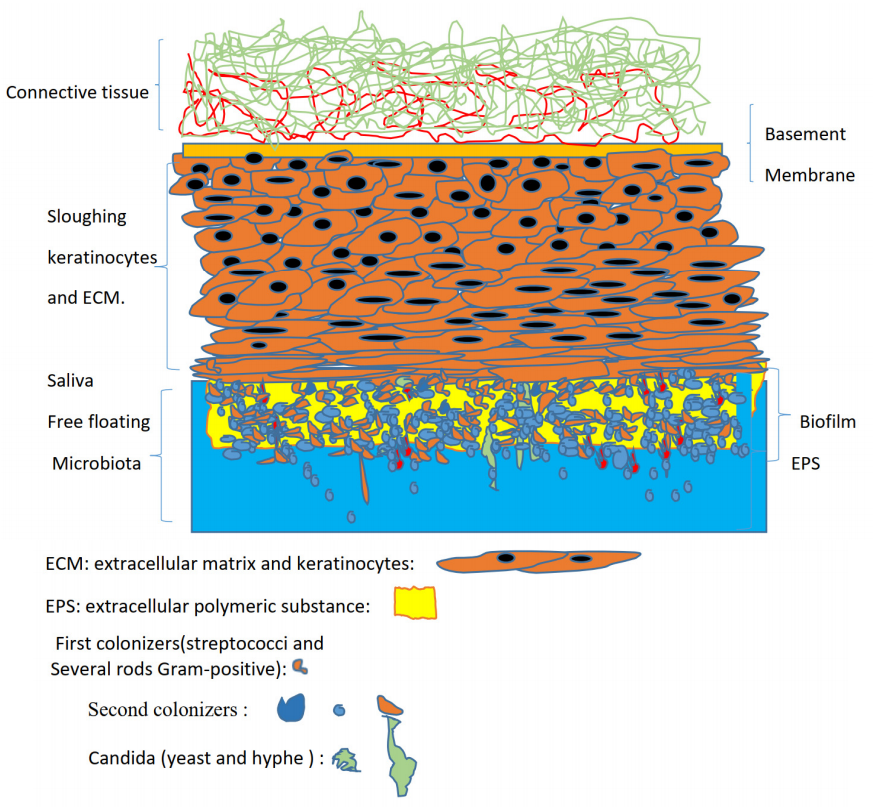
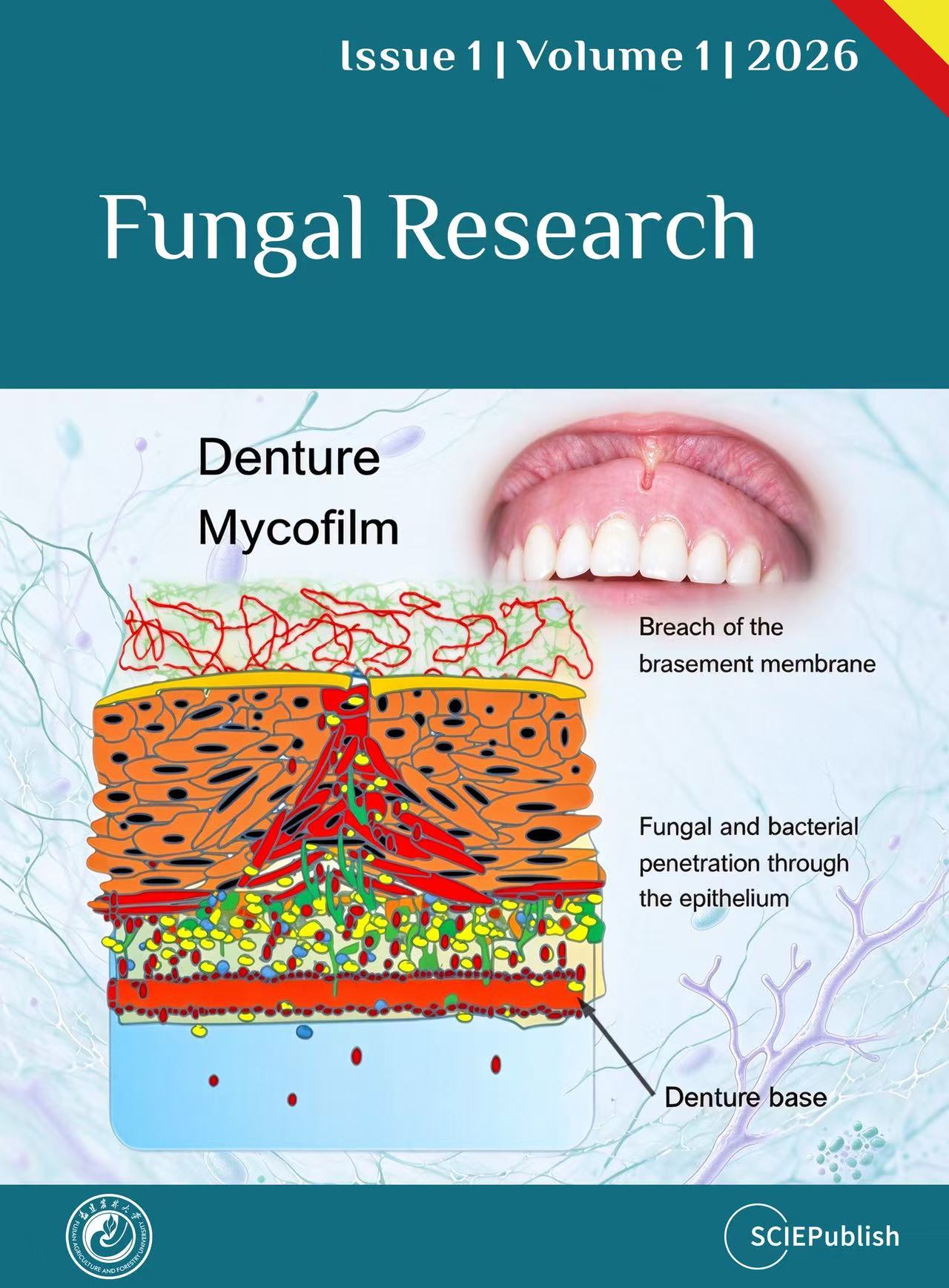
Denture mycofilms (DMs) are complex, structured microbial communities that develop on removable dental prostheses and shape the oral microbiota of denture wearers. Up to three-quarters of individuals wearing removable dentures may develop denture stomatitis (DS), a highly prevalent inflammatory condition of the oral mucosa. Candida species are detected in approximately 70–80% of DS cases, supporting the concept of DS as a denture-associated oral candidiasis. The denture “mycofilm” is a polymicrobial network—dominated by bacterial and fungal taxa—embedded in an extracellular matrix. In the absence of effective denture hygiene, prostheses constitute a reservoir of microorganisms and may promote chronic or latent infection, particularly in vulnerable patients. Metagenomic studies of denture-associated biofilms in DS reveal a multi-kingdom community with strong bacterial–fungal interrelationships. Reported eukaryotic genera include Candida (including Nakaseomyces/Candida glabrata), Saccharomyces, and Malassezia, among others. Because DMs are located at the interface between an abiotic surface (the denture) and a biotic surface (the mucosa), they are exposed to repeated compressive and shear forces during mastication. Their viscoelastic properties, together with saliva-mediated viscosity, facilitate spreading, mechanical resilience, and persistence. Despite mechanical and chemical cleaning procedures, denture mycofilms may persist due to their architecture, composition, and adaptive mechanical behavior. These properties should be considered when designing preventive and therapeutic strategies for denture stomatitis, while accounting for patient-related systemic risk factors.
Denture mycofilms (DMs) are complex, structured microbial communities that develop on removable dental prostheses and shape the oral microbiota of denture wearers. Up to three-quarters of individuals wearing removable dentures may develop denture stomatitis (DS), a highly prevalent inflammatory condition of the oral mucosa. Candida species are detected in approximately 70–80% of DS cases, supporting the concept of DS as a denture-associated oral candidiasis. The denture “mycofilm” is a polymicrobial network—dominated by bacterial and fungal taxa—embedded in an extracellular matrix. In the absence of effective denture hygiene, prostheses constitute a reservoir of microorganisms and may promote chronic or latent infection, particularly in vulnerable patients. Metagenomic studies of denture-associated biofilms in DS reveal a multi-kingdom community with strong bacterial–fungal interrelationships. Reported eukaryotic genera include Candida (including Nakaseomyces/Candida glabrata), Saccharomyces, and Malassezia, among others. Because DMs are located at the interface between an abiotic surface (the denture) and a biotic surface (the mucosa), they are exposed to repeated compressive and shear forces during mastication. Their viscoelastic properties, together with saliva-mediated viscosity, facilitate spreading, mechanical resilience, and persistence. Despite mechanical and chemical cleaning procedures, denture mycofilms may persist due to their architecture, composition, and adaptive mechanical behavior. These properties should be considered when designing preventive and therapeutic strategies for denture stomatitis, while accounting for patient-related systemic risk factors.utf-8