
Is Nitric Oxide the Missing Link Between Food Matrix Chemistry and Fungal Toxigenesis?
Is Nitric Oxide the Missing Link Between Food Matrix Chemistry and Fungal Toxigenesis?
Humana Azhar † Bingqian Hu † Benni Ma † Fenqin Song † Yuxuan Fang Dandan Zhu Ebrahim Abdella Ziyi Zhu Jun Tian * Kunlong Yang *
Received: 18 August 2026 Revised: 16 September 2026 Accepted: 12 October 2026 Published: 26 October 2026

© 2026 The authors. This is an open access article under the Creative Commons Attribution 4.0 International License (https://creativecommons.org/licenses/by/4.0/).
1. Introduction
Fungal spoilage and mycotoxin contamination represent a persistent and chemically driven challenge to food safety and agricultural sustainability, affecting a wide range of commodities across pre- and postharvest stages [1]. Mycotoxins, structurally diverse and chemically stable secondary metabolites produced by filamentous fungi, are of particular concern due to their resistance to processing, environmental persistence, and potent toxicity to humans and animals [2]. Growing evidence suggests that mycotoxin biosynthesis is not solely governed by fungal genetic programs but is critically shaped by the physicochemical environment of food matrices, including oxygen availability, water activity, and redox-active components [3].
To mitigate these risks, a variety of food preservation strategies have been developed, including physical approaches (e.g., low-temperature storage [4]), chemical treatments (e.g., ozone, chlorine dioxide [5]), and biological interventions (e.g., biocontrol agents [6]). As summarized in Table 1, although these methods are widely applied and effective to varying degrees, they primarily function through bulk-level inhibition of microbial growth or general oxidative damage, often lacking specificity at the molecular regulatory level. Moreover, limitations such as incomplete toxin removal, quality deterioration, and regulatory constraints continue to restrict their broader applicability.
Within this context, the small reactive molecule nitric oxide (NO) has emerged as a key mediator linking the chemical environment of food matrices to fungal metabolism [7]. Its effects differ from conventional preservatives in that it participates in redox chemistry that alters cellular targets. Depending on local conditions, NO is converted into reactive nitrogen species with distinct reactivities, leading to variable effects on metabolism and toxin biosynthesis. Reports of both inhibitory and stimulatory effects of NO on mycotoxin production remain difficult to reconcile. This inconsistency reflects the lack of a framework that links NO chemistry to matrix conditions and fungal responses.
This review examines NO in food systems from a chemical perspective, focusing on how matrix-dependent reactions determine its biological effects. The potential of NO as an alternative or complementary approach to existing preservation strategies is assessed with regard to efficacy, stability, and safety.
Table 1. Comparison of major food preservation strategies.
|
Category |
Strategy |
Mechanism of Action |
Advantages |
Limitations |
References |
|---|---|---|---|---|---|
|
Physical methods |
Low-temperature storage |
Reduces enzymatic activity and microbial metabolism |
Widely used, effective, low cost |
Does not eliminate pathogens or mycotoxins; quality loss during freezing |
[4] |
|
Superchilling/micro-freezing |
Partial ice formation slows microbial growth and biochemical reactions |
Extends shelf life while maintaining texture |
Requires precise control; risk of tissue damage |
[8] |
|
|
Modified atmosphere packaging |
Alters O2/CO2 levels to inhibit aerobic microorganisms |
Non-chemical, widely applicable |
Limited efficacy against anaerobes; gas imbalance risk |
[9] |
|
|
Biological & emerging methods |
Plant essential oils |
Disrupt cell membranes, induce oxidative stress |
Natural, broad-spectrum antimicrobial |
Volatility, strong odor, sensory impact |
[10] |
|
Biocontrol agents (e.g., Bacillus, yeast) |
Competitive exclusion, antifungal metabolites |
Environmentally friendly, residue-free |
Strain stability and consistency issues |
[11] |
|
|
Active packaging (including self-modified atmosphere) |
Release/absorb gases or antimicrobial compounds |
Enhances shelf life without direct additives |
Limited control over release kinetics |
[12] |
|
|
Edible coatings (biopolymers) |
Barrier to oxygen/moisture, carrier for antimicrobials |
Biodegradable, multifunctional |
Mechanical stability limitations |
[13] |
|
|
Chemical methods |
Chlorine dioxide (ClO2) |
Strong oxidant damaging proteins and nucleic acids |
Effective disinfectant, rapid action |
Residue concerns, regulatory limits |
[14] |
|
Ozone (O3) |
Oxidative degradation of microbial cell components |
Leaves no residue, strong oxidizing ability |
Can damage food quality; unstable |
[5] |
|
|
Nitric oxide (NO) treatment |
Nitrosative/oxidative stress; S-nitrosylation of proteins; metabolic disruption |
Broad-spectrum, low resistance development, signaling-based regulation |
Instability, dose-dependent dual effects |
[15] |
2. Chemical Reaction Network of Nitric Oxide in Food Matrices
The regulatory effects of NO in food systems are governed by its chemical behavior within complex matrices. NO operates within a dynamic redox network, where its fate depends on reaction kinetics, microenvironmental conditions, and available reactants. As a result, its effects arise from the formation and interconversion of reactive nitrogen species (RNS). These include nitrogen dioxide (NO2), dinitrogen trioxide (N2O3), peroxynitrite (ONOO−), which differ markedly in reactivity and lifetimeand peroxynitrite (ONOO−), which differ markedly in reactivity and lifetime [16]. Therefore, distinguishing between NO and its derived species is essential for interpreting its chemical and biological effects in food matrices. A comprehensive summary of the chemical nature, typical concentrations, and reactivity of key RNS discussed in this section is provided in Table 2.
Table 2. Representative reactions of nitric oxide and derived species relevant to food systems and their approximate rate constants.
|
Reaction |
Rate Constant |
Dominant Conditions |
Implication in Food Systems |
References |
|---|---|---|---|---|
|
2NO + O2 → 2NO2 |
~106 M−2·s−1 |
O2 dependent autoxidation |
Drives formation of nitrosating species |
[17] |
|
NO + NO2 ⇌ N2O3 |
fast equilibrium |
Favored at moderate O2 |
Key nitrosating agent (amines, thiols) |
[17] |
|
NO + O•−2 → ONOO− |
~109–1010 M−2·s−1 |
Diffusion-controlled |
Dominant under oxidative stress |
[18] |
|
ONOO− → NO3− |
rapid |
pH-dependent |
Limits persistence but causes damage |
[19] |
|
N2O3 + GSH → GSNO + H+ + NO2− |
~103–105 M−1·s−1 |
Thiol-rich environments |
S-nitrosylation (signaling/modulation) |
[17] |
|
NO + metal centers (Fe2+/Cu+) → NO+ |
variable |
catalytic |
Alters NO lifetime/reactivity |
[17] |
|
RSNO decomposition |
variable |
light, metals, heat |
Releases NO or forms radicals |
[17] |
|
NO2 + lipids → lipid radicals |
fast |
lipid-rich matrices |
Initiates lipid oxidation |
[20] |
2.1. Fundamental Physicochemical Properties and Lifetime of NO
NO is a neutral, moderately lipophilic free radical capable of diffusing across aqueous and lipid phases, allowing rapid movement within heterogenous food matrices [21]. Its short lifetime is determined by reaction with oxygen, superoxide, thiol, and transition metals, which vary according to local matrix conditions [22]. As a result, NO chemistry in foods is inherently heterogeneous.
2.2. Autoxidation of NO and Formation of Nitrosating Species
Under aerobic conditions, NO undergoes autoxidation according to:
| ```latex2\mathrm{NO} + \mathrm{O}_2 \rightarrow 2\mathrm{NO}_2``` |
followed by rapid equilibration:
| ```latex\mathrm{NO} + \mathrm{NO}_2 \rightleftharpoons \mathrm{N}_2\mathrm{O}_3``` |
This pathway is strongly dependent on both oxygen availability and local NO concentration, making it sensitive to microenvironmental conditions in food matrices. NO autoxidation accelerates with increasing NO levels, favoring the formation of N2O3 as a key nitrosating intermediate. N2O3 mediates S-nitrosylation and amine nitrosation, linking NO chemistry directly to protein modification and potential nitrosamine formation [23]. These reactions are modulated by water activity and microviscosity, which constrain diffusion in low-moisture systems such as grains. However, quantitative kinetics in complex food matrices remain insufficiently characterized.
2.3. Rapid Coupling with Reactive Oxygen Species: The Peroxynitrite Pathway
A major sink for NO under oxidative conditions is its reaction with superoxide:
|
```latex\mathrm{NO} + {\mathrm{O}^{\bullet-}}_2 \rightarrow \mathrm{ONOO}^-``` |
This near diffusion-controlled reaction outcompetes NO autoxidation when ROS flux is elevated, making ONOO− formation the primary pathway under stress conditions [16]. Peroxynitrite is a strong oxidant that promotes lipid peroxidation and protein modification through nitration and thiol oxidation. In lipid-rich foods, this pathway directly couples NO chemistry to oxidative deterioration and fungal stress responses, linking chemical reactions to both quality loss and microbial behavior [24].
2.4. Thiol Chemistry and S-Nitrosothiol Buffering
Thiol-containing molecules represent major sinks for nitrosating species, forming S-nitrosothiols (RSNOs) through S-nitrosation of thiol groups (RSH). RSNOs function as reversible reservoirs that stabilize and redistribute NO bioactivity, extending its effective lifetime in heterogeneous systems [25,26]. This buffering capacity enables localized release of nitrosative signals and regulates the extent of protein modification. In protein-rich food matrices, S-nitrosylation occurs in a site-selective manner and frequently targets regulatory proteins, thereby linking NO chemistry to metabolic and transcriptional control [27].
2.5. Metal-Mediated NO Reactions in Food Matrices
Transition metals such as iron and copper play a central role in NO chemistry through coordination and redox cycling. These processes facilitate the formation of metal-nitrosyl complexes while influencing Fenton and Fenton-like reactions, thereby modulating ROS generation and coupling nitrosative and oxidative pathways [28]. In food matrices, metal ions influence NO reactivity by promoting metal nitrosyl formation and redox reactions that can alter fungal exposure to reactive nitrogen species. This matrix, metal-NO interaction represents a critical but often overlooked axis controlling chemical reactivity in foods.
2.6. Reaction Partitioning and Matrix-Dependent NO Behavior
Due to its moderate lipophilicity, NO partitions between aqueous and lipid phases, where its reactivity depends on the local environment. This phase-dependent distribution determines which reaction pathways dominate in different regions of the food matrix. Phase partitioning influences whether NO undergoes protective or oxidative reactions, thereby affecting the type of NO derived species encountered by fungi. This dual behavior underlies the context-dependent antioxidant and pro-oxidant roles of NO in foods [29]. In low-moisture systems, restricted molecular mobility limits diffusion-driven reactions, but localized moisture-rich niches can sustain NO reactivity. Consequently, NO chemistry is spatially heterogeneous and strongly governed by matrix structure rather than bulk composition.
2.7. Integrated Reaction Framework and Biological Implications
The chemical fate of NO in food matrices is determined by competing nitrosative (via N2O3). The relative contributions of these pathways shift with oxygen availability, ROS levels, and thiol content, resulting in different dominant reaction regimes (Table 2). Under oxidative conditions, rapid reaction with superoxide favors peroxynitrite formation, whereas low ROS environments promote nitrosative chemistry. These pathways lead to distinct outcomes: nitrosation primarily modifies regulatory proteins, oxidative reactions induce molecular damage, and RSNO formation supports sustained low-level signaling [16].
Taken together, NO chemistry can be described as a matrix-dependent redox switch that links chemical reactivity to downstream biological responses, providing the basis for understanding its effects on fungal physiology and toxigenesis.
3. Matrix-Dependent Regulation of NO Chemistry in Food Systems
The chemical fate of NO in food systems is governed by matrix-dependent conditions rather than fixed reaction pathways. In food systems, factors such as oxygen availability, water activity, redox state, and the distribution of lipids, proteins, and metals vary across microenvironments, thereby controlling the switching behavior among nitrosative, oxidative, and buffering reaction pathways.
3.1. Oxygen Availability and Redox Gradients
Oxygen availability is a major determinant of NO behavior in food matrices by regulating the balance between oxidative and nitrosative pathways. Under oxygen rich conditions, NO is more likely to undergo oxidative conversion, whereas oxygen limitation alters the relative contribution of competing reaction pathways [16]. In contrast, reduced oxygen availability limits these reactions and shifts the system toward nitrosative processes.
Oxygen distribution in food matrices is inherently heterogeneous due to diffusion constraints and localized consumption, generating spatially distinct redox environments [30]. These spatial variations in oxygen availability influence the chemical fate of NO and may affect the microbial stress responses and adaptation during food storage and processing [31].
3.2. Water Activity and Microenvironmental Constraints
NO chemistry is also influenced by water activity (aw), which exerts its effects by modulating the molecular mobility and reaction kinetics. In low-moisture foods such as grains and nuts, restricted diffusion limits bimolecular reactions, thereby reducing the overall reactivity of NO [32]. This limitation is spatially heterogeneous: localized moisture-rich regions can sustain diffusion and reaction processes even at low bulk aw. As a result, bulk aw alone poorly predicts reactivity, since small moisture differences can sustain localized microbial activity and spoilage in dry foods. Therefore, water activity influences the intensity of fungal exposure in low moisture food environments [33].
3.3. Phase Partitioning and Lipid-Rich Environments
Lipid composition and phase organization within food matrices determine the extent to which NO derived reaction occur in specific microenvironment, thereby influencing oxidative stability and chemical outcomes [34].
Phase separation in foods creates compartments with different dominant reactions. In the lipid phase, NO can terminate lipid peroxidation by scavenging lipid peroxyl radicals, the balance between protective and oxidative outcomes depends on local oxygen availability, lipid composition, and radical flux within the matrix. The balance between these opposing reactions depends on oxygen availability and radical flux [29]. In practice, these reactions are closely linked to oxidative stability in oil-rich foods, where NO can either delay or accelerate rancidity depending on local conditions [35].
3.4. Metal Ions and Catalytic Microenvironments
The heterogenous distribution of metal ions within food matrices creates localized catalytic microenvironments that influence the extent of NO mediated reactions describes above. The spatial distribution of these catalytic sites determines where NO mediated reactions are enhanced within complex food matrices [16].
In food systems, metal ions derive from both raw materials and external contamination. Their uneven distribution creates localized catalytic sites that accelerate lipid oxidation and protein modification [36]. These reactions are well known to drive oxidative deterioration and can also intensify stress conditions for microorganisms, thereby affecting food stability and safety [37].
The chemical behavior of NO within food matrices determines the type, concentration and persistence of NO derived species encountered by food associated fungi. Therefore, matrix properties such as oxygen availability, moisture status, and redox active components act as regulators of fungal NO exposure. These conditions influence fungal NO homeostasis, including NO production, detoxification and redox signaling, ultimately affecting fungal adaptation and secondary metabolism.
4. Nitric Oxide in Food-Associated Fungi: Production, Detoxification, and Physiological Roles
Food associated fungi are continuously exposed to NO and NO derived reactive nitrogen species generated both from endogenous fungal metabolism and from chemical reaction occurring within food matrices. Nitric oxide is not only an exogenous reactive species in food systems but also an endogenous regulator in fungi, where it participates in growth, metabolism, and stress adaptation. In food-associated fungi, the biological outcome of NO exposure is determined by the balance between its production, detoxification, and downstream redox signaling. This balance defines whether NO functions as a metabolic regulator or a cytotoxic agent under storage and processing conditions.
Unlike classical signaling molecule with defined membrane receptors no dedicated NO receptors or transporter has been identified in food associated fungi to date. Therefore, exogenous NO originating from food matrices is generally considered to enter fungal cell primarily through passive diffusion due to its small size and gaseous nature. Once inside the cell NO can interact with intracellular targets, including metal containing proteins, thiol containing molecules, and reactive oxygen species, thereby influencing fungal redox homeostasis, stress response, and secondary metabolism.
4.1. Effects of NO on Fungal Growth, Development, and Secondary Metabolism
NO is involved in the regulation of fungal growth, differentiation, and secondary metabolism. In filamentous fungi, NO participates in key developmental processes, including spore germination, hyphal extension, and reproductive structure formation [7]. In Aspergillus nidulans, NO is primarily generated via nitrate reductase and exhibits stage-dependent accumulation during growth, with perturbation of this pathway affecting conidiation [38]. In phytopathogenic fungi such as Magnaporthe oryzae, NO is required for appressorium formation and host penetration [39]. These observations support a role for NO as an endogenous regulator of developmental transitions rather than a constitutive metabolic by-product.
In addition to its role in development, NO contributes to the control of secondary metabolism. In A. nidulans, deletion of the flavohemoglobin gene (fhbA), which is involved in NO detoxification, results in increased intracellular NO levels and is accompanied by decreased production of sterigmatocystin [40]. Supplementation with NO donors restores aflR expression and partially recovers mycotoxin biosynthesis. In Aspergillus flavus, NO has also been shown to regulate aflatoxin production through redox-dependent mechanisms, linking intracellular NO homeostasis to toxin biosynthesis [41,42]. Similar effects have been reported in basidiomycetes. In Ganoderma lucidum, NO interacts with Ca2+/calmodulin signaling to regulate ganoderic acid biosynthesis under stress conditions [43]. These observations suggest that NO is integrated into broader regulatory networks controlling secondary metabolite production.
NO effects on fungal secondary metabolism depend on concentration, species, food matrix, and exposure conditions. Low NO levels may regulate metabolism, whereas excessive NO can cause nitrosative stress and inhibit toxin production, as described in Table 3.
Table 3. Factors determining the context dependent effects of nitric oxide on fungal secondary metabolism and mycotoxin production.
|
Factors |
Mechanistic Influence on NO Response |
Representative Fungal and Food System Examples |
References |
|---|---|---|---|
|
NO concentration |
Low or controlled NO level can function as signaling molecule regulating fungal development and secondary metabolism, whereas excessive NO accumulation may cause nitrosative stress and disrupt toxin related pathways |
NO acts as a developmental and metabolic signal in filamentous fungi; distruption of NO homeostasis through flavohemoglobin pathways affects sterigmatocystin and aflatoxin related processes |
|
|
Fungal species |
Different fungi possess distinct NO producing systems, detoxification mechanisms and regulatory pathways resulting in species specific responses |
A. nidulans shows NO dependent regulation of sterigmatocystin; A. flavus shows NO regulation of aflatoxin biosynthesis; Ganoderma lucidum shows NO dependent regulation of secondary metabolism |
|
|
Oxygen status |
Oxygen availability affects NO stability and formation of RNS which can shift NO activity from signaling towards nitrosative/oxidative stress responses |
Oxygen NO interaction regulates NO signaling and RNS formation in fungal system |
|
|
Food matrix conditions |
Food matrix conditions can influence the effectiveness of NO treatments and determines their impacts on fungal growth and mycotoxins production |
In dried apricots NO reduce mycotoxin production and promoted toxin degradation, demonstrating matrix dependent effect |
[42] |
|
Exposure conditions |
Endogenous NO production genetic regulation of NO pathways, NO donor and exogenous NO treatments can produce different fungal outcomes depending on exposure duration and intensity |
Nitrate reduction pathways, NO detoxification system and NO based treatments regulate fungal developments and toxin associated pathways |
4.2. Antimicrobial Mechanisms of Nitric Oxide and Reactive Nitrogen Species
Reactive nitrogen species (RNS), including ONOO−, NO2, and N2O3, are highly reactive intermediates derived from NO metabolism and play critical roles in mediating antimicrobial activity in food-associated fungi. These species can interact with multiple protein functional groups, including reactive thiols, amines, heme centers, iron-sulfur clusters, and aromatic residues such as phenolic groups or tyrosine. For instance, N2O3 and ONOO− can oxidatively modify membrane proteins through thiol reactivity and amine nitrosation, as well as through tyrosine nitration at distinct sites, thereby altering protein structure and function [45,47].
In addition, NO and related RNS can directly target metalloproteins, leading to disruption of metal homeostasis, particularly iron depletion, and can react with free sulfhydryl groups to impair enzyme activity. These modifications collectively result in the inactivation of key metabolic enzymes and collapse of cellular metabolic networks. Beyond protein targets, NO and its derivatives can also interact with nucleic acids, inducing deamination, oxidative damage, and DNA strand cleavage, ultimately compromising genome integrity and leading to cell death. Furthermore, NO derived reactive species can promote lipid peroxidation, disrupt membrane integrity, increasing permeability and impairing essential cellular functions. The combined effects of nitrosative stress, oxidative damage, and metabolic inhibition constitute a multi-target antimicrobial mechanism in which NO exerts pleiotropic toxicity that culminates in cellular dysfunction and eventual cell death [48].
4.3. Nitric Oxide Biosynthesis in Fungi
Fungal NO originates from multiple biochemical routes that are tightly coupled to nitrogen metabolism and environmental conditions.
4.3.1. Nitrate/Nitrite-Dependent Pathway
NO biosynthesis in fungi is less well defined than in mammals and plants, and multiple enzymatic sources have been proposed. Current evidence indicates that nitrate reductase is a major contributor to NO production in several filamentous fungi, linking nitrogen metabolism to NO generation. In this pathway, nitrate reductase (NR) and nitrite reductase (NiR), together with copper-containing nitrite reductases (Nor) [49], contribute to NO formation as a side reaction of nitrogen metabolism (Figure 1).
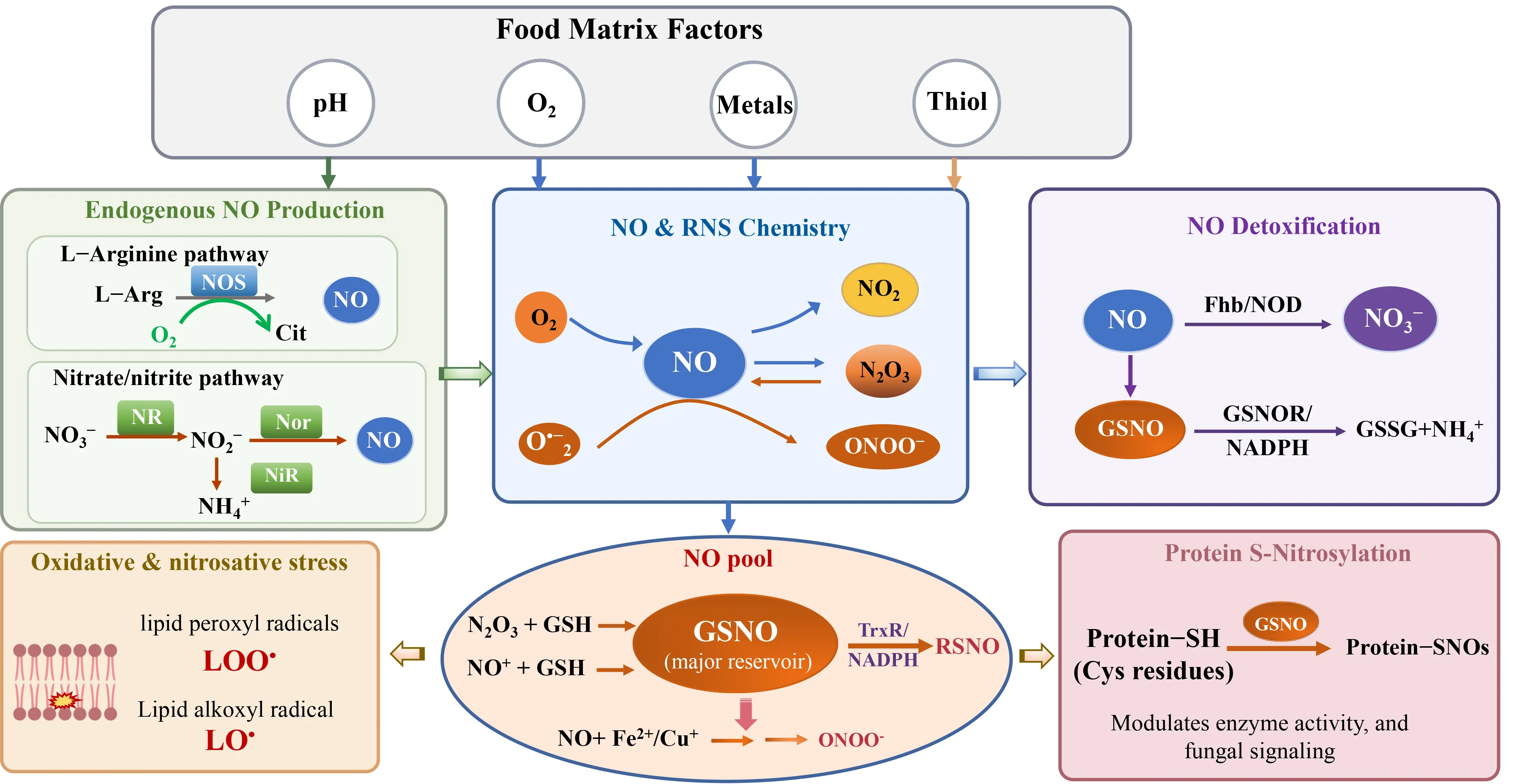
Figure 1. Overview of NO metabolism in fungi and its integration with redox chemistry in response to food matrix factors. Environmental parameters (pH, O2, metals, and GSH) influence fungal NO production via L-arginine oxidation (NOS-like pathway) and nitrate/nitrite reduction (NR/NiR). NO participates in reactive nitrogen species (RNS) chemistry, forming intermediates such as NO2, N2O3, and ONOO−, and establishing a dynamic NO pool. Detoxification in fungi occurs mainly through Fhb/NOD-mediated oxidation of NO to NO3− and GSNOR-dependent turnover of GSNO. GSNO serves as a key NO reservoir that links redox metabolism to protein S-nitrosylation and lipid oxidation, while the Trx/TrxR system mediates denitrosylation and maintains thiol redox homeostasis. NOS, nitric oxide synthase; NR, nitrate reductase; NiR, nitrite reductase; Nor, copper-containing nitrite reductases; GSNO, S-nitrosoglutathione; GSNOR, GSNO reductase; GSH, glutathione; GSSG, glutathione disulfide; Trx, thioredoxin; TrxR, thioredoxin reductase; O2•⁻, superoxide radical; ONOO−, peroxynitrite; LOO•, lipid peroxyl radical; LO•, lipid alkoxyl radical.
In A. nidulans, nitrate reductase activity has been directly associated with intracellular NO accumulation under nitrogen-utilizing conditions, indicating that NO production scales with nitrate assimilation flux [50]. In yeast, perturbation of nitrate/nitrite metabolism alters NO levels, particularly under nitrogen limitation, thereby supporting a regulatory link between nitrogen status and NO signaling [51]. In plant-associated fungi, nitrite-derived NO production increases under hypoxia and host interaction, further connecting nitrogen metabolism to redox signaling [52].
4.3.2. NOS-Like Enzymatic Pathway
In addition to reductive pathways, fungi possess nitric oxide synthase (NOS)-like activities. In mammalian systems, NO is produced by three major NO isoforms: neuronal NOS (nNOS or NOS-I), endothelial NOS (eNOS or NOS-III), and inducible NOS (iNOS or NOS-II) [53]. nNOS and eNOS are constitutively expressed and regulated by Ca2+/calmodulin, whereas iNOS is induced under stress conditions and produces NO independently of Ca2+ regulation. However, fungal NOS-like system remains less characterized and their contribution to NO production varies among fungal species [54]. Despite these regulatory differences, all NOS isoforms catalyze the oxidation of L-arginine to L-citrulline in the presence of molecular oxygen and essential cofactors, resulting in the production of nitric oxide [55].
Although fungi lack well-conserved NOS orthologs, increasing evidence supports the existence of functionally analogous NOS-like enzymes. In Inonotus obliquus, an inducible NOS-like enzyme correlates with increased NO levels and activation of secondary metabolic pathways, including phenylpropanoid biosynthesis [56]. Further studies demonstrated that NO-mediated regulation of styrylpyrone biosynthesis requires thioredoxin-dependent transnitrosylation mechanisms, implicating NOS-derived NO in metabolic control [57].
4.3.3. Non-Enzymatic and Stress-Associated NO Generation
NO can also arise non-enzymatically from nitrite under acidic or oxidative conditions, which are common in food environments. This route is particularly relevant in nitrite-containing systems such as cured foods, where exogenous NO can directly affect fungal cells. For example, NO generated from nitrite has been shown to suppress fungal growth and modulate toxin production in food matrices [42], demonstrating that environmental NO sources can complement endogenous production.
4.4. NO Detoxification and Homeostasis Systems
Excess NO is cytotoxic, causing protein nitrosylation, metal center disruption, and inhibition of respiration. To maintain viability, fungi rely on conserved detoxification systems that control intracellular NO levels.
4.4.1. Flavohemoglobins (Fhb Proteins)
Flavohemoglobins are the primary NO detoxification enzymes, converting NO into nitrate via an oxygen-dependent dioxygenase reaction. In A. flavus, deletion of flavohemoglobin genes results in elevated intracellular NO levels, reduced growth, and significantly altered aflatoxin production [44]. Our recent study in A. flavus also indicates that NO stress is tightly linked to mitochondrial dysfunction, suggesting that Fhb-mediated detoxification is essential for maintaining respiratory activity under NO exposure [41]. Similar phenotypes have been reported across diverse fungal species. In A. nidulans, deletion of the flavohemoglobin gene (fhbA) leads to elevated intracellular NO levels and increased sensitivity to nitrosative stress [40]. In the rice blast fungus M. oryzae, disruption of flavohemoglobin results in defective infection-related development and enhanced sensitivity to host-derived NO, linking NO detoxification to pathogenicity [58]. These findings demonstrate that flavohemoglobin-mediated NO detoxification is a conserved mechanism required for fungal stress tolerance and virulence across filamentous fungi.
4.4.2. S-Nitrosoglutathione Reductase (GSNOR)
GSNOR regulates cellular S-nitrosothiol (RSNO) levels by degrading S-nitrosoglutathione (GSNO), thereby controlling NO-derived signaling. Recent work demonstrates that GSNOR is essential for NO homeostasis in A. flavus, with gene disruption leading to impaired aflatoxin biosynthesis and reduced pathogenicity [46]. In M. oryzae, denitrosylation is required for proper appressorium function, and disruption of NO turnover leads to impaired infection [59]. These results indicate that both NO detoxification and S-nitrosylation turnover are essential for fungal adaptation.
4.4.3. Redox Buffering Systems
Glutathione and thioredoxin systems also contribute to NO detoxification by maintaining redox balance and reversing S-nitrosylation. Disruption of denitrosylation impairs appressorium formation and infection capacity, demonstrating that dynamic control of protein S-nitrosylation is essential for fungal development [59]. In I. obliquus, thioredoxin-dependent transnitrosylation regulates secondary metabolism, further supporting the role of redox buffering systems in NO signaling [57]. The ability of fungi to maintain NO homeostasis determines whether NO functions as a signaling molecule or induces nitrosative stress. These responses directly influence fungal development, secondary metabolism, and mycotoxins biosynthesis.
5. Molecular Mechanisms Underlying NO-Mediated Regulation of Fungal Toxigenesis
5.1. Metabolic Disruption As the Primary Trigger
A consistent consequence of NO exposure is disruption of central carbon metabolism, particularly the tricarboxylic acid (TCA) cycle. This effect is primarily associated with the sensitivity of iron-sulfur cluster-containing enzymes to nitrosative modification, particularly under conditions that favor the formation of NO/RNS. In A. flavus, multiple TCA enzymes are S-nitrosylated under NO stress, resulting in reduced enzymatic activity, impaired mitochondrial function, and decreased ATP production [41].
Similar metabolic perturbations have been reported in A. nidulans, where NO disrupts aconitase activity and depletes key intermediates required for amino acid biosynthesis [60]. Such perturbations alter intracellular redox balance and carbon flux distribution, thereby constraining precursor supply for secondary metabolism. Mechanistic evidence from G. lucidum further demonstrates that NO-mediated S-nitrosylation of aconitase redirects carbon flux toward secondary metabolite biosynthesis, thereby linking metabolic disruption to enhanced production of ganoderic acids [61].
5.2. Transcriptional Reprogramming: Coupling Nitrogen Metabolism to NO Stress
At the transcriptional level, fungal responses to nitrosative stress involve specific regulators that couple redox perturbation to metabolic adaptation. A recent study in A. nidulans identified the cross-pathway control transcription factor CpcA as a key mediator of NO tolerance. Under RNS stress, inhibition of central metabolic enzymes leads to depletion of intracellular amino acids, triggering a compensatory response mediated by CpcA. Deletion of cpcA impairs the induction of amino acid biosynthetic genes and results in severe growth defects under nitrosative stress, demonstrating that CpcA is important for maintaining metabolic homeostasis during nitrosative stress [60]. In G. lucidum, the GATA transcription factor AreA has also been shown to modulate ganoderic acid biosynthesis by coordinating nitrogen metabolism with secondary metabolism [62]. Given that NO production is closely linked to nitrogen assimilation, such regulators may provide an additional layer connecting nitrogen status, NO signaling, and metabolic output.
In addition to metabolic regulators, chromatin-associated transcription factors also contribute to nitrosative stress responses. In Fusarium graminearum, the GATA factor AreB participates in NO adaptation by coordinating nitrogen metabolism and stress-responsive gene expression. Under nitrosative conditions, AreB functions in concert with other transcription factors to recruit the SWI/SNF chromatin remodeling complex, thereby modulating promoter accessibility and enabling transcriptional activation of stress-related genes [47]. Disruption of this regulatory module compromises fungal tolerance to nitrosative stress, highlighting the importance of chromatin remodeling in NO-responsive transcriptional control. The integrated relationship among food matrix dependent NO chemistry, fungal NO responses, and the regulation of toxigenesis is summarized in Figure 2.
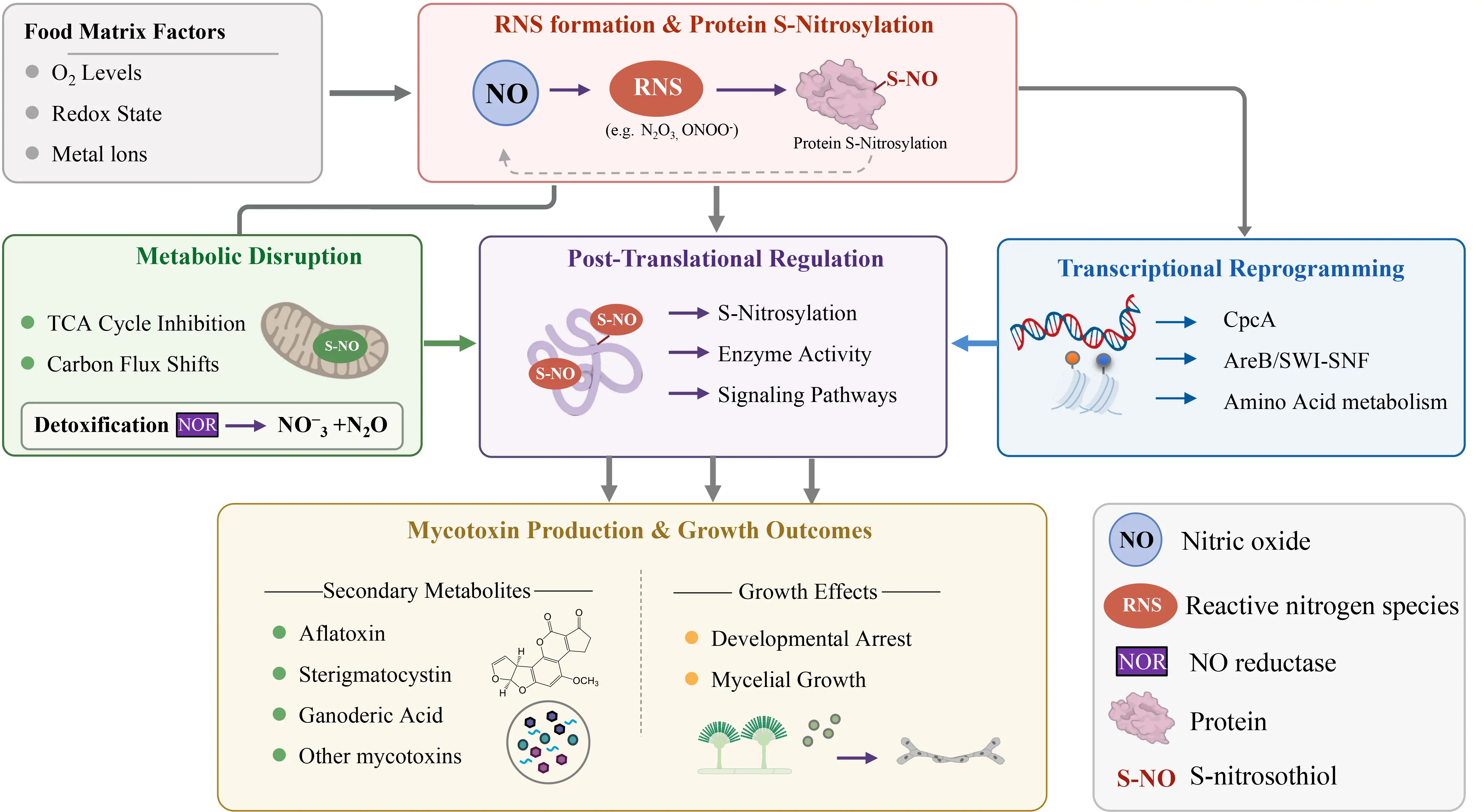
Figure 2. Molecular mechanisms of NO-mediated regulation of fungal development and metabolic reprogramming.
5.3. Post-Translational Control: S-Nitrosylation As a Selective Regulatory Mechanism
At the post-translational level, excess NO derived S-nitrosothiols, including GSNO, promotes S-nitrosylation of cysteine residues, leading to changes in protein activity, stability, and interaction. This modification is reversible and therefore supports dynamic regulation rather than irreversible damage.
In fungi, S-nitrosylation directly targets metabolic enzymes and reshapes central metabolism. In A. flavus, S-nitrosylation targets multiple TCA cycle enzymes, leading to measurable reductions in catalytic activity and altered metabolic flux [41]. A similar mechanism has been reported in G. lucidum, where S-nitrosylation of aconitase modulates ganoderic acid biosynthesis under heat stress, linking NO signaling to secondary metabolism through direct enzymatic control [61]. In addition to carbon metabolism, antioxidant systems are also targeted, where S-nitrosylation of catalase affects its activity and contributes to redox balance and metabolite production in G. lucidum, further illustrating that NO regulates both metabolic and stress-response pathways at the protein level [63].
Proteome-wide analyses in M. oryzae further expand this view. A large set of S-nitrosylated proteins involved in cytoskeleton organization, signaling, and infection-related development has been identified, and disruption of denitrosylation impairs appressorium formation and pathogenicity [59]. These findings indicate that S-nitrosylation is not restricted to metabolism but extends to developmental and virulence-associated processes.
In the context of fungal control NO based preservation strategies are of particular interest because NO/RNS exposure can influence fungal growth, stress tolerance, spore germination, and mycotoxin production. However, the effectiveness of these approaches depends on the fungal species, NO concentration, exposure duration, and food matrix condition.
6. NO-Based Strategies in Food Systems
NO-based strategies in food systems have evolved from simple fumigation approaches to integrated, controllable platforms that couple chemical reactivity with food matrix properties. Unlike traditional preservatives, NO does not act solely as a static antimicrobial agent; instead, it functions as a dynamic redox mediator, whose efficacy depends on release kinetics, local concentration, and interactions with matrix components such as oxygen, lipids, and proteins. NO and reactive nitrogen species influence fungal growth, spore germination, stress tolerance, and mycotoxin production, therefore NO based preservation depends on fungal species treatment conditions, and matrix effect. This section integrates delivery technologies with application scenarios and further addresses the translational challenges and future directions, providing a unified framework for understanding NO as a programmable chemical regulator in food preservation.
6.1. Gaseous NO Fumigation
Gaseous NO represents the most direct strategy for postharvest intervention; however, its practical efficacy depends far more on process control than on the intrinsic properties of NO itself. In real systems, NO rarely acts as an isolated molecule. Instead, its biological effects are dictated by its rapid reactions with oxygen and reactive oxygen species, which simultaneously determine both its antimicrobial efficacy and its potential phytotoxicity.
Under ultralow oxygen (ULO) conditions, NO remains relatively stable, allowing efficient diffusion into plant tissues and microbial cells. This feature underpins its effectiveness in postharvest pest and disease control. For example, fumigation with 1–2% NO at 2–5 °C has been shown to achieve complete mortality of Frankliniella occidentalis without compromising the quality of fresh produce such as lettuce, tomato, and apple [64]. Similarly, strawberries treated with NO under low-oxygen atmospheres exhibited reduced insect infestation and delayed fungal decay, accompanied by better firmness retention during storage.
In addition to its antimicrobial role, NO also functions as a signaling molecule in fruits physiology, climacteric fruits, including tomato, mango, and banana, low dose NO delays ripening. This effect is associated with the suppression of ethylene biosynthesis through inhibition of ACC synthase (ACS) and ACC oxidase (ACO) together with modulation of cellular redox homeostasis [65,66]. Furthermore, NO influences secondary metabolism. In flat peach, for instance, NO fumigation altered the biosynthesis of volatile compounds by regulating fatty acid-derived pathways during cold storage, ultimately affecting aroma quality.
Despite these benefits, the application of gaseous NO is intrinsically constrained by its high reactivity with oxygen. In aerobic environments, NO is rapidly oxidized to nitrogen dioxide (NO2), a highly reactive and phytotoxic species that can cause tissue injury, discoloration, and accelerated quality deterioration. Consequently, effective NO fumigation protocols require strict control of atmospheric composition, including oxygen exclusion (e.g., hermetic or nitrogen-flushed systems), precise regulation of NO concentration and exposure duration, and post-treatment nitrogen flushing to terminate reactions. When such conditions are carefully maintained, residue analyses have shown that nitrate and nitrite levels remain comparable to those in untreated controls, indicating minimal safety concerns [67]. In food associated fungi, NO exposure affects redox homeostasis and stress responses, influencing fungal inhibition or adaptation. Understanding NO metabolism is therefore essential for optimizing NO fumigation strategies and reducing mycotoxin risks.
6.2. NO Donors
Compared with direct NO fumigation, NO donors provide a more controllable and tunable strategy for modulating NO bioavailability in food-related systems. Common NO donors include diazeniumdiolates (NONOates), S-nitosothiol (RSNOs), and metal NO complexes such as sodium nitroprusside (SNP), which differs in their NO release mechanisms and stability.
NONOates release NO spontaneously, with release kinetics determined by chemical structure and environmental condition [68]. In contrast, RSNOs, including S-nitrosoglutathione (GSNO), act as endogenous NO reservoirs and participate in transnitrosylation reactions. Rather than simply releasing free NO, RSNOs can directly modify cysteine residues in target proteins, thereby regulating protein function through S-nitrosylation [69]. Metal-based donors such as SNP release NO through redox-dependent pathways and have been widely used in biological studies due to their stability and ease of handling [68]. However, their potential to generate secondary reactive species (e.g., cyanide) necessitates careful consideration in food applications.
In food systems, the application of NO donors offers an additional advantage in mitigating volatility and rapid diffusion associated with gaseous NO. Controlled NO release from RSNO-based formulations has demonstrated effective antimicrobial activity in localized delivery systems, such as topical matrices and polymer-based carriers, where sustained NO flux leads to significant microbial inactivation while minimizing systemic diffusion [70]. NO donors may also enhance antifungal efficacy when combined with other redox-active compounds. For instance, NO-releasing molecules have been shown to induce severe structural damage to fungal cells and disrupt membrane integrity, effects that are mechanistically complementary to those of membrane-targeting agents such as essential oils [71]. In addition, RSNOs and related NO species function as redox modulators, influencing ROS/RNS balance and protein S-nitrosylation pathways, which overlap with the oxidative stress responses triggered by phenolic compounds [72].
6.3. NO Delivery Systems
While NO donors provide a chemical basis for NO release, their practical effectiveness depends largely on delivery strategies that ensure controlled, targeted, and sustained NO exposure. This has led to increasing interest in the development of NO delivery systems tailored for food preservation applications.
6.3.1. Nanostructured Delivery Systems
Nanostructured carriers, including polymeric nanoparticles, liposomes, and inorganic nanomaterials, have been extensively investigated as platforms for NO delivery due to their nanoscale dimensions (1–100 nm), high surface reactivity, and tunable physicochemical properties [68]. No donor’s immobilization on nanocarriers improves NO stability and antimicrobial activity against biofilm associated microorganisms. Silica based nanoparticles SiO2 are widely used due to their tunable size, surface functionalization, stability, and biocompatibility [73]. Typically, SiO2 nanoparticles are synthesized via sol-gel processes using precursors such as tetraethoxysilane (TEOS) or tetramethoxysilane (TMOS), followed by functionalization with aminosilanes to introduce reactive amine groups. These amine moieties can subsequently react with NO under high pressure to form diazeniumdiolate (NONOate) functionalities, enabling controlled NO storage and release [74]. Such NO-releasing silica nanoparticles have demonstrated high NO loading capacity (e.g., up to 7.60 μmol·mg−1) and strong antimicrobial activity, achieving up to 99% eradication of biofilms formed by multiple microorganisms, including Pseudomonas aeruginosa, Escherichia coli, Staphylococcus aureus, and Candida albicans [73,75].
NO release kinetics from these nanomaterials can be tuned through surface engineering. Modifications of SiO2 nanoparticles with hydrophobic ligands regulates NO release half-life, highlighting the role of surface chemistry in controlling NO delivery [75]. In addition, core-shell nanostructures have been developed to further modulate release profiles. For instance, nanoparticles with a SiO2 core and RSNO-modified chitosan shell can delay burst NO release and provide more sustained delivery, with reported NO loading levels of approximately 0.15 mmol/mg [76].
Polysaccharides based nanocarriers have also been developed for NO delivery. Thiolates starch nanoparticles can bind nitrosating agents to generate NO releasing system with sustained release properties. When incorporated into polymers matrices such as gelatin sponges, these materials provide controlled NO delivery and antibacterial activity against E. coli [77]. The differential susceptibility observed between Gram-negative and Gram-positive bacteria further suggests that cell wall structure influences the efficacy of NO-based antimicrobial nanomaterials [75].
In addition to nanoparticle systems, electrospun nanofibers have emerged as effective NO delivery platforms. These materials, fabricated through electrospinning of viscoelastic polymer solutions, possess tunable fiber diameter, high porosity, and large surface area, enabling efficient loading and sustained release of NO donors [78]. For example, nanofibers prepared from polymers such as polyvinylpyrrolidone or ethyl cellulose and loaded with NONOates can retain high NO content and release NO over extended periods (>24 h), thereby significantly inhibiting bacterial growth, including drug-resistant strains [79]. Similarly, GSNO-incorporated polymeric nanofibers have been shown to reduce bacterial adhesion by approximately 80% after 24 h exposure [80].
Nanogel systems represent another important class of nanostructured NO delivery platforms. These materials are characterized by three-dimensional porous networks (typically 20–250 nm) with high water content, high loading capacity, and tunable responsiveness [81]. Nanogels can protect unstable NO donors and regulates release through environmental triggers through such as pH or enzymatic activity. Chemically crosslinked nanogels provide stable and controlled release, whereas physically crosslinked systems offer greater responsiveness and biocompatibility [82]. For instance, pH-responsive and enzyme-degradable nanogels have been shown to achieve minimal NO release (<8%) under basal conditions, but rapid release (>90%) in the presence of specific enzymes, demonstrating their potential for stimuli-responsive NO delivery [81].
6.3.2. Organic Matrix-Based Systems
Organic matrix-based systems provide tunable platforms for NO delivery incorporating NO donors into polymers or hydrogel networks through covalent conjugation or encapsulation. Polymers based system can stabilize NO donors such as diazeniumdiolates and S-nitrosothiols, while release kinetics are controlled by polymers properties including hydrophilicity, hydrophobicity, and chain architecture [48].
Functional surface engineering further enhances antimicrobial performance. NO releasing polymers coatings and structured films reduce bacterial adhesion by combining controlled NO release with surface physiological properties [83]. These systems demonstrate that spatial control of NO delivery, together with interfacial interactions, is critical for enhancing antimicrobial efficacy.
Hydrogel-based systems represent another important class of organic delivery platforms, characterized by hydrophilic three-dimensional networks with high water content and tunable porosity. Incorporation of NO donors into hydrogel matrices enables controlled release through diffusion, swelling, or matrix degradation, with release kinetics regulated by crosslinking density and network structure [55]. Notably, stimuli-responsive hydrogels can achieve on-demand NO release under specific environmental conditions (e.g., oxidative stress), thereby enhancing antibacterial activity through combined effects on membrane integrity and cellular homeostasis [84].
6.3.3. Inorganic Porous Materials
Inorganic porous materials are promising NO delivery platforms due to their high surface area, structural stability, and tunable pore properties. Materials such as metal coordination system and zeolite based carriers enable efficient NO adsorption, storage, and controlled release through physiochemical interactions [85].
Metal ion-mediated systems play a critical role in regulating NO generation and release. Transition metal ions such as Cu2+ can act as catalytic centers to promote the decomposition of NO donors, thereby enabling sustained NO generation [86]. For instance, hybrid coatings formed by immobilizing Cu2+ complexes (e.g., Cu-DOTA) within organic–inorganic matrices have been shown to prevent the burst release of metal ions while facilitating continuous NO production through catalytic pathways [87]. This strategy highlights the dual function of metal ions in both stabilizing the delivery system and acting as triggers for controlled NO release.
Zeolite based materials are effective inorganic porous carriers due to their high adsorptive capacity and microporous structures. NO loaded clinoptilolite enables sustained NO release through reversible adsorption-desorption processes and provides long term antimicrobial activity against both gram negative and gram positive bacteria [85]. Despite these advantages, the application of inorganic systems requires careful evaluation of material safety, ion migration, and compatibility with complex matrices.
6.4. Safety Considerations: Balancing Efficacy and Chemical Risk
The application of NO and NO-releasing systems in food preservation necessitates careful evaluation of safety and regulatory implications. While NO is an endogenous signaling molecule with well-characterized biological functions, its reactivity also raises concerns regarding potential chemical risks in food systems. One major concern is the formation of nitrosamines, a class of compounds with established carcinogenic potential, which can arise from reactions between NO-derived species (e.g., N2O3) and secondary amines under certain conditions [31]. Nitrosamine formation depends on several factors, including pH, temperature, and the availability of amine precursor. Because these factors vary among food matrices, controlling NO concentration and exposure duration is essential to reduce potential risks. Excessive NO level may also promote oxidative and nitrosative damage to food components, including lipid oxidation and protein modification. These changes may affect nutritional quality and sensory properties. For example, NO mediated lipid oxidation in the meat system has been associated with off flavor development and reduced shelf life [31].
In addition, assessing the practical use of NO based preservation must occur under actual food processing scenarios. This includes managing residual nitrate/nitrite levels, ensuring consistent treatment, and adhering to regulatory standards. Consequently, it is crucial to optimize NO concentration exposure time and delivery methods to achieve a balance between effective preservation and food safety. This highlights the importance of optimizing NO dosage to achieve antifungal efficacy without compromising food quality.
7. Applications of NO in Food Preservation
NO has emerged as a versatile preservation agent in food systems due to its dual functionality as a RNS and a redox signaling molecule. Fungal contamination remains a major challenge in food preservation due to spoilage and mycotoxin production. NO-based approaches may offer an additional strategy by inhibiting fungal growth and modulating NO regulated stress and secondary metabolic pathways. Unlike conventional preservatives that mainly rely on direct antimicrobial toxicity, NO acts through multiple mechanisms, including microbial inhibition, oxidative regulation, and modulation of endogenous metabolic pathways. Current application of NO based food preservation mainly on four areas meat, aquatic products, fruits, and vegetables.
7.1. Meat Preservation
Meat products are highly susceptible to quality deterioration during transportation and storage, primarily due to lipid and protein oxidation, microbial contamination, and endogenous enzymatic autolysis, which collectively lead to undesirable changes in sensory attributes, color stability, and tenderness, ultimately compromising flavor and commercial value.
To mitigate these changes, nitrite and nitrate are widely applied in processed meats as precursors of NO. In cured systems, nitrate is first reduced to nitrite and subsequently to NO through endogenous reductants (e.g., NADH, ascorbate, erythorbate) and microbial activity. The generated NO binds to myoglobin, forming nitrosylmyoglobin and thereby stabilizing the characteristic red color. Concurrently, NO participates in nitrosation reactions with alcohols and phenolic compounds, contributing to flavor formation and modulating microbial activity, thereby contributing to preservation effects [31]. Beyond these chemical effects, NO regulates postmortem muscle metabolism through protein S-nitrosylation, influencing proteolytic pathways involved in myofibrillar degradation. For example, inhibition of iNOS by aminoguanidine hydrochloride reduces myofibrillar fragmentation and preserves mitochondrial integrity in yak meat, indicating a role for NO in cysteine protease mediated tenderization. However, NO effects are concentration dependent, moderate exposure improves water holding capacity and tenderness in pork longissimus dorsi during refrigerated storage, whereas excessive levels increase drip loss and shear force despite improving color stability [88].
These findings show that NO regulates postmortem metabolism through redox dependent mechanisms, with its effect determined by the balance between antioxidative protection and nitrosative stress. This concentration dependent response highlights the importance of matrix conditions and NO exposure levels in food system.
7.2. Aquatic Product Preservation
Aquatic products are particularly prone to spoilage due to high moisture content and rapid microbial proliferation. NO has demonstrated effectiveness in extending shelf life by targeting both microbial activity and nitrogen metabolism associated with spoilage. One representative study showed that NO treatment significantly reduced total volatile basic nitrogen levels in tilapia fillets, indicating suppression of protein degradation and microbial activity [89]. This effect is attributed to NO-mediated inhibition of bacterial respiration and enzyme systems involved in amino acid degradation.
In parallel, NO also contributes to color stabilization in fish muscle through nitrosylation of heme proteins, similar to its role in meat systems. In crustaceans, NO also enhances host defense mechanisms. For example, sodium nitroprusside (SNP), an NO donor, reduced infection by Enterocytozoon hepatopenaei in shrimp and improved immune responses [65]. These studies highlight that NO functions not only as an antimicrobial agent but also as a modulator of biochemical spoilage pathways, particularly those related to nitrogen metabolism. However, challenges remain regarding NO stability and diffusion in high-moisture environments, which require further investigation. The applications of nitric oxide in meat, aquatic products, fruits and vegetables are summarized in Table 4.
Table 4. Applications of NO in the food industry.
|
NO Type |
Food Matrix |
Mechanism |
Outcome |
References |
|---|---|---|---|---|
|
NO gas/nitrite-derived NO |
Cured meat products |
Nitrosylation of myoglobin (heme chemistry), antimicrobial activity |
Color stabilization; flavor development; shelf-life extension |
[90] |
|
NO gas |
Fresh meat (e.g., pork longissimus dorsi) |
Protein S-nitrosylation and redox regulation, microbial inhibition |
Improved tenderness; water-holding capacity; reduced bacterial load |
[88] |
|
NO donor (e.g., SNP) |
Meat products |
Antioxidant regulation (lipid oxidation inhibition), protein protection |
Reduced lipid peroxidation; quality preservation |
[91] |
|
NO donor |
Fish (e.g., tilapia) |
Lipid oxidation inhibition, protein stabilization |
Improved water-holding capacity; extended shelf life |
[89] |
|
NO gas |
Citrus fruits, tomato, peach, plum |
Heme/redox interaction, antimicrobial activity |
Senescence delay; decay inhibition; color retention |
[92] |
|
NO gas |
Apple, kiwifruit, strawberry, banana, grape |
Ethylene biosynthesis inhibition (ACS/ACO), antioxidant enhancement |
Ripening delay; firmness maintenance; shelf-life extension |
[15] |
|
NO gas (ULO conditions) |
Leafy vegetables (e.g., lettuce, broccoli) |
Broad-spectrum antimicrobial activity, pest control |
Microbial reduction; quality maintenance |
[93] |
|
NO gas |
Apple, peach |
Mitochondrial protection and ROS suppression, membrane stabilization |
Reduced oxidative damage; delayed senescence |
[94] |
|
NO donor |
Kiwifruit |
Antioxidant enzyme activation (POD, PAL, APX), ROS scavenging |
Senescence delay; improved storage tolerance |
[95] |
|
NO donor (SNP) |
Banana |
Ethylene signaling antagonism, antioxidant regulation |
Ripening delay; firmness retention |
[96] |
|
NO donor (SNP) |
Lentil seeds |
Redox homeostasis regulation, metabolic stabilization |
Delayed deterioration; extended storage life |
Notes: NO, nitric oxide; SNP, sodium nitroprusside; ULO, ultralow oxygen; ACS, ACC synthase; ACO, ACC oxidase; POD, peroxidase; PAL, phenylalanine ammonialyase; APX, ascorbate peroxidase.
7.3. Fruit Preservation
In fruits, NO primarily acts as a regulator of ripening and senescence, interacting with plant hormone signaling and redox metabolism. A key mechanism is the inhibition of ethylene biosynthesis and signaling, which delays ripening and extends shelf life. NO achieves this by modulating the activity of enzymes such as ACC oxidase and through post-translational modifications of signaling proteins. For example, Zhang et al. (2022) reported that SNP treatment enhanced anthocyanin accumulation and improved flavor quality in blood oranges, while simultaneously delaying senescence [66]. In kiwifruit, NO treatment reduced the respiration rate and oxidative damage, thereby prolonging storage life [95].
In strawberry, exogenous NO delays senescence by enhancing antioxidant defense systems (e.g., SOD, CAT, and APX), reducing lipid peroxidation, and maintaining membrane integrity, thereby preserving firmness and decreasing decay during storage [37]. Additionally, NO fumigation has been shown to directly inhibit fungal pathogens such as Aspergillus spp. in dried fruits, thereby reducing contamination risk in a concentration-dependent manner [97]. Overall, NO serves as a central regulator linking redox homeostasis, hormone signaling, and defense responses, thereby maintaining fruit quality during storage.
7.4. Vegetable Preservation
Vegetables are highly susceptible to postharvest deterioration due to mechanical damage, enzymatic browning, and microbial contamination. NO-based treatments mitigate these processes through antioxidant regulation and antimicrobial activity. For instance, Dai et al. (2023) demonstrated that SNP treatment significantly reduced browning in fresh-cut potatoes by inhibiting polyphenol oxidase activity and enhancing antioxidant enzyme systems [98]. In leafy vegetables, NO fumigation under ultralow oxygen conditions effectively controls microbial contamination while maintaining postharvest quality and texture [93].
Moreover, NO has been shown to disrupt biofilm formation and bacterial adhesion, particularly when combined with other agents. Islam et al. (2020) reported that NO donors synergize with hydrogen peroxide to enhance microbial inactivation on fresh produce surfaces [99]. In mushrooms, combined treatment with NO and 1-methylcyclopropene (1-MCP) improved ROS scavenging capacity and maintained firmness and nutritional quality [100]. These findings demonstrate that NO acts as a multifunctional preservation factor, integrating oxidative stress mitigation with microbial control.
8. Conclusions and Future Perspectives
NO has emerged as a versatile regulator in food systems, functioning beyond a conventional antimicrobial agent to act as a dynamic mediator of redox processes. Its efficacy in food preservation is intrinsically governed by concentration-dependent effects, release kinetics, and interactions with complex food matrices, including oxygen, lipids, proteins, and endogenous redox-active compounds. As summarized in this review, NO-based strategies have evolved from direct gaseous fumigation toward more advanced donor systems and engineered delivery platforms, enabling improved control over spatial and temporal NO bioavailability. These developments collectively highlight a paradigm shift from empirical application to mechanism-driven design.
Despite these advances, several critical challenges remain for the translation of NO-based technologies into practical food applications. First, the instability and high reactivity of NO under aerobic conditions continue to limit its controllability, particularly in open or non-hermetic systems. Second, the behavior of NO donors and delivery systems in real food matrices is not yet fully understood, particularly regarding matrix-dependent diffusion, reaction pathways, and the potential formation of secondary nitrogen species. Third, safety and regulatory considerations, including the accumulation of nitrite/nitrate residues and the use of metal-containing or nanostructured materials, require systematic evaluation under realistic processing and storage conditions. These issues underscore the need for standardized assessment frameworks that integrate chemical, microbiological, and toxicological endpoints.
Many important issues remain to be addressed to advance the application of NO in food systems. A primary priority is the development of stimuli-responsive and matrix-adaptive delivery systems that enable controlled NO release in response to physicochemical parameters such as pH, oxygen availability, and microbial activity. Additionally, the quantitative characterization of NO reaction networks in complex food matrices requires integrating advanced analytical techniques with kinetic modeling approaches. Furthermore, combining NO-based strategies with established preservation technologies, including modified atmosphere packaging, natural antimicrobial compounds, and cold chain management, is essential to achieve predictable and synergistic effects. In parallel, considerations of scalability, material safety, and regulatory compliance must be incorporated at early stages of system design to facilitate industrial translation. Collectively, these efforts will enable the rational development of NO-mediated preservation strategies and support their implementation as reliable, controllable technologies for food applications.
Statement of the Use of Generative AI and AI-Assisted Technologies in the Writing Process
During the preparation of this manuscript, the authors used ChatGPT (OpenAI) to improve language and readability. After using this tool, the authors reviewed and edited the content as needed and take full responsibility for the content of the published article.
Acknowledgments
This work was supported by the National Key Research and Development Program of China (2024YFF1105503), the National Natural Science Foundation of China (32322067), Basic Research Program of Jiangsu (BK20230015), the Jiangsu Province Agricultural Science and Technology Independent Innovation Fund Project (CX(23)3040), High-Quality Research Talent Development Program of Jiangsu Normal University (JSNUGZL2026127), and the Priority Academic Program Development of Jiangsu Higher Education Institutions (PAPD). We apologize to those researchers whose work was not cited due to space limitations.
Author Contributions
H.A.: Writing, original draft, Validation. B.H.: Writing, original draft. B.M.: Writing, original draft. F.S.: Writing, original draft. Y.F.: Data curation. D.Z.: Data curation. E.A.: Data curation. Z.Z.: Data curation. J.T.: Review & editing, Funding acquisition. K.Y.: Writing, review & editing, Conceptualization, Funding acquisition.
Ethics Statement
Not applicable.
Informed Consent Statement
Not applicable.
Data Availability Statement
Not applicable.
Declaration of Competing Interest
The authors declare that they have no known competing financial interests or personal relationships that could have appeared to influence the work reported in this paper.
References
- Chandravarnan P, Agyei D, Ali A. Green and sustainable technologies for the decontamination of fungi and mycotoxins in rice: A review. Trends Food Sci. Technol. 2022, 124, 278–295. DOI:10.1016/j.tifs.2022.04.020 [Google Scholar]
- Akhila PP, Sunooj KV, Aaliya B, Navaf M, Sudheesh C, Sabu S, et al. Application of electromagnetic radiations for decontamination of fungi and mycotoxins in food products: A comprehensive review. Trends Food Sci. Technol. 2021, 114, 399–409. DOI:10.1016/j.tifs.2021.06.013 [Google Scholar]
- Ferrara M, Perrone G, Gallo A. Recent advances in biosynthesis and regulatory mechanisms of principal mycotoxins. Curr. Opin. Food Sci. 2022, 48, 100923. DOI:10.1016/j.cofs.2022.100923 [Google Scholar]
- Qian YF, Yu JY, Xie J, Yang SP. A mini-review on cold-adapted enzymes from psychrotrophic microorganisms in foods: Benefits and challenges. Curr. Res. Biotechnol. 2023, 6, 100162. DOI:10.1016/j.crbiot.2023.100162 [Google Scholar]
- Panebianco F, Rubiola S, Di Ciccio PA. The Use of Ozone as an Eco-Friendly Strategy against Microbial Biofilm in Dairy Manufacturing Plants: A Review. Microorganisms 2022, 10, 162. DOI:10.3390/microorganisms10010162 [Google Scholar]
- Zhang Y, Hua K, Ma B, Yang C, Zhu P, Hu B, et al. Bacillus velezensis ATC-AL suppresses mycotoxin-producing fungi by disrupting membrane integrity and inducing mitochondrial dysfunction. Physiol. Mol. Plant Pathol. 2026, 142, 103099. DOI:10.1016/j.pmpp.2025.103099 [Google Scholar]
- Zhao Y, Lim J, Xu J, Yu J, Zheng W. Nitric oxide as a developmental and metabolic signal in filamentous fungi. Mol. Microbiol. 2020, 113, 872–882. DOI:10.1111/mmi.14465 [Google Scholar]
- Wang B, Liang J, Zhou C, Zhang J, Ji L, Li C, et al. Research Progress on the Effect and Mechanism of Superchilling Preservation Technology on Meat Quality Control. Foods 2024, 13, 3309. DOI:10.3390/foods13203309 [Google Scholar]
- Caleb OJ, Mahajan PV, Al-Said FAJ, Opara UL. Modified Atmosphere Packaging Technology of Fresh and Fresh-cut Produce and the Microbial Consequences—A Review. Food Bioprocess Technol. 2013, 6, 303–329. DOI:10.1007/s11947-012-0932-4 [Google Scholar]
- Sun T, Zhang N, Luo Y, Qiu H, Geng Q, Li Y, et al. p‐Anisaldehyde suppresses Aspergillus flavus infection and aflatoxin biosynthesis via targeting cell structure and Ap1‐regulatory antioxidant system. Food Front. 2024, 5, 1302–1319. DOI:10.1002/fft2.363 [Google Scholar]
- Geng Q, Wang S, Qin Y, Zhu Z, Ma B, Hu B, et al. Biocontrol potential of Bacillus velezensis ATC-AL against Ceratocystis fimbriata and its application in sweetpotato postharvest preservation. Postharvest Biol. Technol. 2026, 231, 113941. DOI:10.1016/j.postharvbio.2025.113941 [Google Scholar]
- Fonseca SC, Oliveira FAR, Brecht JK. Modelling respiration rate of fresh fruits and vegetables for modified atmosphere packages: A review. J. Food Eng. 2002, 52, 99–119. DOI:10.1016/S0260-8774(01)00106-6 [Google Scholar]
- Pillai ARS, Eapen AS, Zhang W, Roy S. Polysaccharide-Based Edible Biopolymer-Based Coatings for Fruit Preservation: A Review. Foods 2024, 13, 1529. DOI:10.3390/foods13101529 [Google Scholar]
- Lee H, Ryu JH, Kim H. Antimicrobial activity of gaseous chlorine dioxide against Aspergillus flavus on green coffee beans. Food Microbiol. 2020, 86, 103308. DOI:10.1016/j.fm.2019.103308 [Google Scholar]
- Zhong Y, Wu X, Zhang L, Zhang Y, Wei L, Liu Y. The roles of nitric oxide in improving postharvest fruits quality: Crosstalk with phytohormones. Food Chem. 2024, 455, 139977. DOI:10.1016/j.foodchem.2024.139977 [Google Scholar]
- Radi R. Peroxynitrite, a Stealthy Biological Oxidant. J. Biol. Chem. 2013, 288, 26464–26472. DOI:10.1074/jbc.R113.472936 [Google Scholar]
- Ford PC, Miranda KM. The solution chemistry of nitric oxide and other reactive nitrogen species. Nitric Oxide 2020, 103, 31–46. DOI:10.1016/j.niox.2020.07.004 [Google Scholar]
- Michalski R, Smulik-Izydorczyk R, Pięta J, Rola M, Artelska A, Pierzchała K, et al. The Chemistry of HNO: Mechanisms and Reaction Kinetics. Front. Chem. 2022, 10, 930657. DOI:10.3389/fchem.2022.930657 [Google Scholar]
- Carballal S, Bartesaghi S, Radi R. Kinetic and mechanistic considerations to assess the biological fate of peroxynitrite. Biochim. Biophys. Acta 2014, 1840, 768–780. DOI:10.1016/j.bbagen.2013.07.005 [Google Scholar]
- Baker PRS, Schopfer FJ, O’Donnell VB, Freeman BA. Convergence of nitric oxide and lipid signaling: Anti-inflammatory nitro-fatty acids. Free Radic. Biol. Med. 2009, 46, 989–1003. DOI:10.1016/j.freeradbiomed.2008.11.021 [Google Scholar]
- Carpenter AW, Schoenfisch MH. Nitric oxide release: Part II. Therapeutic applications. Chem. Soc. Rev. 2012, 41, 3742. DOI:10.1039/c2cs15273h [Google Scholar]
- Wang Y, Chen M, You J, Liu H, Zhao C, Jing G, et al. Nitric oxide maintains mitochondrial function by regulating mitochondrial membrane lipid metabolism. Postharvest Biol. Technol. 2025, 227, 113574. DOI:10.1016/j.postharvbio.2025.113574 [Google Scholar]
- Heinrich TA, da Silva RS, Miranda KM, Switzer CH, Wink DA, Fukuto JM. Biological nitric oxide signalling: Chemistry and terminology. Br. J. Pharmacol. 2013, 169, 1417–1429. DOI:10.1111/bph.12217 [Google Scholar]
- Alcolado CI, Garcia-Rio L, Mejuto JC, Moreno I, Poblete FJ, Tejeda J. Oxidation of Aldehydes Used as Food Additives by Peroxynitrite. Antioxidants 2023, 12, 743. DOI:10.3390/antiox12030743 [Google Scholar]
- Frungillo L, Skelly MJ, Loake GJ, Spoel SH, Salgado I. S-nitrosothiols regulate nitric oxide production and storage in plants through the nitrogen assimilation pathway. Nat. Commun. 2014, 5, 5401. DOI:10.1038/ncomms6401 [Google Scholar]
- Ganzarolli de Oliveira M. S‐Nitrosothiols as Platforms for Topical Nitric Oxide Delivery. Basic. Clin. Pharma. Tox. 2016, 119, 49–56. DOI:10.1111/bcpt.12588 [Google Scholar]
- Wei L, Zhao J, Zhong Y, Wu X, Wei S, Liu Y. The roles of protein S-nitrosylation in regulating the growth and development of plants: A review. Int. J. Biol. Macromol. 2025, 307, 142204. DOI:10.1016/j.ijbiomac.2025.142204 [Google Scholar]
- Thomas DD, Ridnour LA, Isenberg JS, Flores-Santana W, Switzer CH, Donzelli S, et al. The chemical biology of nitric oxide: Implications in cellular signaling. Free Radic. Biol. Med. 2008, 45, 18–31. DOI:10.1016/j.freeradbiomed.2008.03.020 [Google Scholar]
- Shahidi F, Zhong Y. Lipid oxidation and improving the oxidative stability. Chem. Soc. Rev. 2010, 39, 4067. DOI:10.1039/b922183m [Google Scholar]
- Pénicaud C, Guilbert S, Peyron S, Gontard N, Guillard V. Oxygen transfer in foods using oxygen luminescence sensors: Influence of oxygen partial pressure and food nature and composition. Food Chem. 2010, 123, 1275–1281. DOI:10.1016/j.foodchem.2010.05.065 [Google Scholar]
- Skibsted LH. Nitric oxide and quality and safety of muscle based foods. Nitric Oxide 2011, 24, 176–183. DOI:10.1016/j.niox.2011.03.307 [Google Scholar]
- Slade L, Levine H, Reid DS. Beyond water activity: Recent advances based on an alternative approach to the assessment of food quality and safety. Crit. Rev. Food Sci. Nutr. 1991, 30, 115–360. DOI:10.1080/10408399109527543 [Google Scholar]
- Santillana Farakos SM, Schaffner DW, Frank J. Predicting Survival of Salmonella in Low–Water Activity Foods: An Analysis of Literature Data. J. Food Prot. 2014, 77, 1448–1461. DOI:10.4315/0362-028X.JFP-14-013 [Google Scholar]
- Bartesaghi S, Radi R. Fundamentals on the biochemistry of peroxynitrite and protein tyrosine nitration. Redox Biol. 2018, 14, 618–625. DOI:10.1016/j.redox.2017.09.009 [Google Scholar]
- Choe E, Min DB. Mechanisms and Factors for Edible Oil Oxidation. Comp. Rev. Food Sci. Food Safe 2006, 5, 169–186. DOI:10.1111/j.1541-4337.2006.00009.x [Google Scholar]
- Geng L, Liu K, Zhang H. Lipid oxidation in foods and its implications on proteins. Front. Nutr. 2023, 10, 1192199. DOI:10.3389/fnut.2023.1192199 [Google Scholar]
- Li Y, Ji N, Zou W, Nie H, Gao Q, Wang R, et al. Optimal nitric oxide treatment preserves strawberry quality by coordinating antioxidant defense and cell wall metabolism. LWT 2026, 239, 118902. DOI:10.1016/j.lwt.2025.118902 [Google Scholar]
- Marcos AT, Ramos MS, Marcos JF, Carmona L, Strauss J, Cánovas D. Nitric oxide synthesis by nitrate reductase is regulated during development in Aspergillus. Mol. Microbiol. 2016, 99, 15–33. DOI:10.1111/mmi.13211 [Google Scholar]
- Marroquin-Guzman M, Hartline D, Wright JD, Elowsky C, Bourret TJ, Wilson RA. The Magnaporthe oryzae nitrooxidative stress response suppresses rice innate immunity during blast disease. Nat. Microbiol. 2017, 2, 17054. DOI:10.1038/nmicrobiol.2017.54 [Google Scholar]
- Baidya S, Cary JW, Grayburn WS, Calvo AM. Role of Nitric Oxide and Flavohemoglobin Homolog Genes in Aspergillus nidulans Sexual Development and Mycotoxin Production. Appl. Environ. Microbiol. 2011, 77, 5524–5528. DOI:10.1128/AEM.00638-11 [Google Scholar]
- Yang K, Luo Y, Sun T, Qiu H, Geng Q, Li Y, et al. Nitric oxide-mediated regulation of Aspergillus flavus asexual development by targeting TCA cycle and mitochondrial function. J. Hazard. Mater. 2024, 471, 134385. DOI:10.1016/j.jhazmat.2024.134385 [Google Scholar]
- Chen Y, Bi S, Wang C, Zhang J, Chen D, Ying S, et al. Elimination of mycotoxins in dried apricots: The role of nitric oxide in suppressing production and facilitating degradation mechanisms. Food Chem. 2025, 487, 144676. DOI:10.1016/j.foodchem.2025.144676 [Google Scholar]
- Liu R, Shi L, Zhu T, Yang T, Ren A, Zhu J, et al. Cross Talk between Nitric Oxide and Calcium-Calmodulin Regulates Ganoderic Acid Biosynthesis in Ganoderma lucidum under Heat Stress. Appl. Environ. Microbiol. 2018, 84, e00043-18. DOI:10.1128/AEM.00043-18 [Google Scholar]
- Zhou X, Chen D, Yu M, Jiao Y, Tao F. Role of Flavohemoglobins in the Development and Aflatoxin Biosynthesis of Aspergillus flavus. J. Fungi 2024, 10, 437. DOI:10.3390/jof10060437 [Google Scholar]
- Thomas DD. Breathing new life into nitric oxide signaling: A brief overview of the interplay between oxygen and nitric oxide. Redox Biol. 2015, 5, 225–233. DOI:10.1016/j.redox.2015.05.002 [Google Scholar]
- Chen D, Jiao Y, Wang X, Tao F. GSNOR is essential for nitric oxide homeostasis and involved in aflatoxin biosynthesis and pathogenicity in Aspergillus flavus. Appl. Environ. Microbiol. 2026, 92, e0140825. DOI:10.1128/aem.01408-25 [Google Scholar]
- Jian Y, Liu Z, Wang H, Chen Y, Yin Y, Zhao Y, et al. Interplay of two transcription factors for recruitment of the chromatin remodeling complex modulates fungal nitrosative stress response. Nat. Commun. 2021, 12, 2576. DOI:10.1038/s41467-021-22831-8 [Google Scholar]
- Rong F, Tang Y, Wang T, Feng T, Song J, Li P, et al. Nitric Oxide-Releasing Polymeric Materials for Antimicrobial Applications: A Review. Antioxidants 2019, 8, 556. DOI:10.3390/antiox8110556 [Google Scholar]
- Kobayashi S, Hira D, Yoshida K, Toyofuku M, Shida Y, Ogasawara W, et al. Nitric Oxide Production from Nitrite Reduction and Hydroxylamine Oxidation by Copper-containing Dissimilatory Nitrite Reductase (NirK) from the Aerobic Ammonia-oxidizing Archaeon, Nitrososphaera viennensis. Microbes Environ. 2018, 33, 428–434. DOI:10.1264/jsme2.ME18058 [Google Scholar]
- Cánovas D, Marcos JF, Marcos AT, Strauss J. Nitric oxide in fungi: Is there NO light at the end of the tunnel? Curr. Genet. 2016, 62, 513–518. DOI:10.1007/s00294-016-0574-6 [Google Scholar]
- Astuti RI, Nasuno R, Takagi H. Nitric Oxide Signalling in Yeast. Adv. Microb. Physiol. 2018, 72, 29–63. DOI:10.1016/bs.ampbs.2018.01.003 [Google Scholar]
- Yu NN, Park G. Nitric Oxide in Fungi: Production and Function. J. Fungi 2024, 10, 155. DOI:10.3390/jof10020155 [Google Scholar]
- Campbell MG, Smith BC, Potter CS, Carragher B, Marletta MA. Molecular architecture of mammalian nitric oxide synthases. Proc. Natl. Acad. Sci. USA 2014, 111, E3614–E3623. DOI:10.1073/pnas.1413763111 [Google Scholar]
- Kim ME, Lee JS. Advances in the Regulation of Inflammatory Mediators in Nitric Oxide Synthase: Implications for Disease Modulation and Therapeutic Approaches. Int. J. Mol. Sci. 2025, 26, 1204. DOI:10.3390/ijms26031204 [Google Scholar]
- Estes Bright LM, Wu Y, Brisbois EJ, Handa H. Advances in nitric oxide-releasing hydrogels for biomedical applications. Curr. Opin. Colloid. Interface Sci. 2023, 66, 101704. DOI:10.1016/j.cocis.2023.101704 [Google Scholar]
- Zhao Y, Xi Q, Xu Q, He M, Ding J, Dai Y, et al. Correlation of nitric oxide produced by an inducible nitric oxide synthase-like protein with enhanced expression of the phenylpropanoid pathway in Inonotus obliquus cocultured with Phellinus morii. Appl. Microbiol. Biotechnol. 2015, 99, 4361–4372. DOI:10.1007/s00253-014-6367-2 [Google Scholar]
- Zhao Y, He M, Ding J, Xi Q, Loake GJ, Zheng W. Regulation of Anticancer Styrylpyrone Biosynthesis in the Medicinal Mushroom Inonotus obliquus Requires Thioredoxin Mediated Transnitrosylation of S-nitrosoglutathione Reductase. Sci. Rep. 2016, 6, 37601. DOI:10.1038/srep37601 [Google Scholar]
- Samalova M, Johnson J, Illes M, Kelly S, Fricker M, Gurr S. Nitric oxide generated by the rice blast fungus Magnaporthe oryzae drives plant infection. New Phytol. 2013, 197, 207–222. DOI:10.1111/j.1469-8137.2012.04368.x [Google Scholar]
- Hu H, He W, Qu Z, Dong X, Ren Z, Qin M, et al. De‐nitrosylation Coordinates Appressorium Function for Infection of the Rice Blast Fungus. Adv. Sci. 2024, 11, e2403894. DOI:10.1002/advs.202403894 [Google Scholar]
- Amahisa M, Tsukagoshi M, Kadooka C, Masuo S, Takeshita N, Doi Y, et al. The Metabolic Regulation of Amino Acid Synthesis Counteracts Reactive Nitrogen Stress via Aspergillus nidulans Cross-Pathway Control. J. Fungi 2024, 10, 58. DOI:10.3390/jof10010058 [Google Scholar]
- Liu R, Zhu T, Yang T, Yang Z, Ren A, Shi L, et al. Nitric oxide regulates ganoderic acid biosynthesis by the S‐nitrosylation of aconitase under heat stress in Ganoderma lucidum. Environ. Microbiol. 2021, 23, 682–695. DOI:10.1111/1462-2920.15109 [Google Scholar]
- Zhu J, Sun Z, Shi D, Song S, Lian L, Shi L, et al. Dual functions of AreA, a GATA transcription factor, on influencing ganoderic acid biosynthesis in Ganoderma lucidum. Environ. Microbiol. 2019, 21, 4166–4179. DOI:10.1111/1462-2920.14769 [Google Scholar]
- Liu R, Zhu T, Chen X, Wang Z, Yang Z, Ren A, et al. GSNOR regulates ganoderic acid content in Ganoderma lucidum under heat stress through S-nitrosylation of catalase. Commun. Biol. 2022, 5, 32. DOI:10.1038/s42003-021-02988-0 [Google Scholar]
- Yang X, Liu Y. Nitric oxide fumigation for postharvest pest control on lettuce. Pest Manag. Sci. 2019, 75, 390–395. DOI:10.1002/ps.5123 [Google Scholar]
- Jiang H, Li Y, Xu J, Li W, Baloch WA, Yu F, et al. Effect of Exogenous Nitric Oxide on Enterocytozoon hepatopenaei Copy Numbers and Immunity of Exopalaemon carinicauda. Aquac. Res. 2023, 2023, 2250046. DOI:10.1155/2023/2250046 [Google Scholar]
- Zhang ZW, Liu H, Li H, Yang XY, Fu YF, Kang Q, et al. Beneficial Effects of Sodium Nitroprusside on the Aroma, Flavors, and Anthocyanin Accumulation in Blood Orange Fruits. Foods 2022, 11, 2218. DOI:10.3390/foods11152218 [Google Scholar]
- Yang X, Liu YB. Residue analysis of nitric oxide fumigation in nine stored grain and nut products. J. Stored Prod. Res. 2019, 84, 101521. DOI:10.1016/j.jspr.2019.101521 [Google Scholar]
- Andrabi SM, Sharma NS, Karan A, Shahriar SMS, Cordon B, Ma B, et al. Nitric Oxide: Physiological Functions, Delivery, and Biomedical Applications. Adv. Sci. 2023, 10, e2303259. DOI:10.1002/advs.202303259 [Google Scholar]
- Broniowska KA, Hogg N. The Chemical Biology of S-Nitrosothiols. Antioxid. Redox Signal. 2012, 17, 969–980. DOI:10.1089/ars.2012.4590 [Google Scholar]
- Doverspike JC, Zhou Y, Wu J, Tan X, Xi C, Meyerhoff ME. Nitric oxide releasing two-part creams containing S-nitrosoglutathione and zinc oxide for potential topical antimicrobial applications. Nitric Oxide 2019, 90, 1–9. DOI:10.1016/j.niox.2019.05.009 [Google Scholar]
- Grayton QE, Conlon IL, Broberg CA, Schoenfisch MH. Impact of Nitric Oxide-Release Kinetics on Antifungal Activity. J. Fungi 2024, 10, 308. DOI:10.3390/jof10050308 [Google Scholar]
- Demirkol O, Cerit İ, Gümüşay ÖA. S-Nitrosothiols in Food and Biological Systems: Formation, Stability, and Functional Applications. Food Sci. Insights 2026, 1, 27–40. Available online: https://izlik.org/JA25SP37ES (accessed on 22 April 2026).
- Hetrick EM, Shin JH, Paul HS, Schoenfisch MH. Anti-biofilm efficacy of nitric oxide-releasing silica nanoparticles. Biomaterials 2009, 30, 2782–2789. DOI:10.1016/j.biomaterials.2009.01.052 [Google Scholar]
- Shin JH, Metzger SK, Schoenfisch MH. Synthesis of Nitric Oxide-Releasing Silica Nanoparticles. J. Am. Chem. Soc. 2007, 129, 4612–4619. DOI:10.1021/ja0674338 [Google Scholar]
- Slomberg DL, Lu Y, Broadnax AD, Hunter RA, Carpenter AW, Schoenfisch MH. Role of Size and Shape on Biofilm Eradication for Nitric Oxide-Releasing Silica Nanoparticles. ACS Appl. Mater. Interfaces 2013, 5, 9322–9329. DOI:10.1021/am402618w [Google Scholar]
- Chang WL, Peng KJ, Hu TM, Chiu SJ, Liu YL. Nitric oxide-releasing S-nitrosothiol-modified silica/chitosan core–shell nanoparticles. Polymer 2015, 57, 70–76. DOI:10.1016/j.polymer.2014.12.020 [Google Scholar]
- Davari N, Nourmohammadi J, Mohammadi J. Nitric oxide-releasing thiolated starch nanoparticles embedded in gelatin sponges for wound dressing applications. Int. J. Biol. Macromol. 2024, 265, 131062. DOI:10.1016/j.ijbiomac.2024.131062 [Google Scholar]
- Jiffrin R, Razak SIA, Jamaludin MI, Hamzah ASA, Mazian MA, Jaya MAT, et al. Electrospun Nanofiber Composites for Drug Delivery: A Review on Current Progresses. Polymers 2022, 14, 3725. DOI:10.3390/polym14183725 [Google Scholar]
- Wang DC, Clark JR, Lee R, Nelson AH, Maresso AW, Acharya G, et al. Development of Antimicrobial Nitric Oxide-Releasing Fibers. Pharmaceutics 2021, 13, 1445. DOI:10.3390/pharmaceutics13091445 [Google Scholar]
- Douglass M, Hopkins S, Pandey R, Singha P, Norman M, Handa H. S‐Nitrosoglutathione‐Based Nitric Oxide‐Releasing Nanofibers Exhibit Dual Antimicrobial and Antithrombotic Activity for Biomedical Applications. Macromol. Biosci. 2021, 21, e2000248. DOI:10.1002/mabi.202000248 [Google Scholar]
- Garg A, Shah K, Chauhan CS, Agrawal R. Ingenious nanoscale medication delivery system: Nanogel. J. Drug Deliv. Sci. Technol. 2024, 92, 105289. DOI:10.1016/j.jddst.2023.105289 [Google Scholar]
- Arnfast L, Madsen CG, Jorgensen L, Baldursdottir S. Design and Processing of Nanogels As Delivery Systems for Peptides and Proteins. Ther. Deliv. 2014, 5, 691–708. DOI:10.4155/tde.14.38 [Google Scholar]
- Xu LC, Meyerhoff ME, Siedlecki CA. Blood coagulation response and bacterial adhesion to biomimetic polyurethane biomaterials prepared with surface texturing and nitric oxide release. Acta Biomater. 2019, 84, 77–87. DOI:10.1016/j.actbio.2018.11.035 [Google Scholar]
- Zhang J, Zhang G, Wang Y, Qin X, Lu Y, Wu Z, et al. l-Arginine carboxymethyl cellulose hydrogel releasing nitric oxide to improve wound healing. Eur. Polym. J. 2023, 189, 111940. DOI:10.1016/j.eurpolymj.2023.111940 [Google Scholar]
- Gregg ST, Yuan Q, Morris RE, Xiao B. Functionalised solids delivering bioactive nitric oxide gas for therapeutic applications. Mater. Today Commun. 2017, 12, 95–105. DOI:10.1016/j.mtcomm.2017.07.007 [Google Scholar]
- Oh BK, Meyerhoff ME. Spontaneous Catalytic Generation of Nitric Oxide from S-Nitrosothiols at the Surface of Polymer Films Doped with Lipophilic Copper(II) Complex. J. Am. Chem. Soc. 2003, 125, 9552–9553. DOI:10.1021/ja035775x [Google Scholar]
- Jia Q, Jia Q, Zhu S, Zheng Y, Mine Y, Takashima K, et al. A promoting nitric oxide‐releasing coating containing copper ion on ZE21B alloy for potential vascular stent application. J. Magnes. Alloys 2023, 11, 4542–4561. DOI:10.1016/j.jma.2022.08.004 [Google Scholar]
- Liu R, Yang L, Yang T, Qin M, Li K, Bao W, et al. Effect of nitric oxide treatment on pork meat quality, microstructure, and total bacterial count during postmortem aging. Meat Sci. 2022, 190, 108806. DOI:10.1016/j.meatsci.2022.108806 [Google Scholar]
- Wang ZC, Yan Y, Su P, Zhao MM, Xia N, Chen DW. Treatments of tilapia (Oreochromis niloticus) using nitric oxide for quality improvement: Establishing a potential method for large-scale processing of farmed fish. Nitric Oxide 2018, 77, 19–25. DOI:10.1016/j.niox.2018.04.003 [Google Scholar]
- Lee SH, Kim HY. Analysis of Quality and Color Properties according to the Gas Composition (Modified Atmosphere Packaging) of Pork Sous-Vide Ham Preserved in Natural Brine. Food Sci. Anim. Resour. 2023, 43, 580–593. DOI:10.5851/kosfa.2023.e20 [Google Scholar]
- Domínguez R, Pateiro M, Munekata PES, Zhang W, Garcia-Oliveira P, Carpena M, et al. Protein Oxidation in Muscle Foods: A Comprehensive Review. Antioxidants 2021, 11, 60. DOI:10.3390/antiox11010060 [Google Scholar]
- Geng B, Huang D, Zhu S. Regulation of Hydrogen Sulfide Metabolism by Nitric Oxide Inhibitors and the Quality of Peaches during Cold Storage. Antioxidants 2019, 8, 401. DOI:10.3390/antiox8090401 [Google Scholar]
- Yang X, Liu YB. Residual analysis of nitric oxide fumigation on fresh fruit and vegetables. Postharvest Biol. Technol. 2017, 132, 105–108. DOI:10.1016/j.postharvbio.2017.06.006 [Google Scholar]
- Wang C, Huang D, Tian W, Zhu S. Nitric oxide alleviates mitochondrial oxidative damage and maintains mitochondrial functions in peach fruit during cold storage. Sci. Hortic. 2021, 287, 110249. DOI:10.1016/j.scienta.2021.110249 [Google Scholar]
- Zheng X, Hu B, Song L, Pan J, Liu M. Changes in quality and defense resistance of kiwifruit in response to nitric oxide treatment during storage at room temperature. Sci. Hortic. 2017, 222, 187–192. DOI:10.1016/j.scienta.2017.05.010 [Google Scholar]
- Wang Y, Luo Z, Khan ZU, Mao L, Ying T. Effect of nitric oxide on energy metabolism in postharvest banana fruit in response to chilling stress. Postharvest Biol. Technol. 2015, 108, 21–27. DOI:10.1016/j.postharvbio.2015.05.007 [Google Scholar]
- Chen Y, Guo Q, Wei J, Zhang J, Zhang Z, Wang JD, et al. Inhibitory effect and mechanism of nitric oxide (NO) fumigation on fungal disease in Xinjiang Saimaiti dried apricots. LWT 2019, 116, 108507. DOI:10.1016/j.lwt.2019.108507 [Google Scholar]
- Dai Y, Xie H, Zhao X, Zheng Y. The Effect of Sodium Nitroprusside Treatment on Storage Ability of Fresh-Cut Potato. Foods 2023, 12, 221. DOI:10.3390/foods12010221 [Google Scholar]
- Islam M, Durie I, Ramadan R, Purchase D, Marvasi M. Exploitation of nitric oxide donors to control bacterial adhesion on ready‐to‐eat vegetables and dispersal of pathogenic biofilm from polypropylene. J. Sci. Food Agric. 2020, 100, 3078–3086. DOI:10.1002/jsfa.10340 [Google Scholar]
- Wang X, Yang Z, Cui J, Zhu S. Nitric Oxide Made a Major Contribution to the Improvement of Quality in Button Mushrooms (Agaricus bisporus) by the Combined Treatment of Nitric Oxide with 1-MCP. Foods 2022, 11, 3147. DOI:10.3390/foods11193147 [Google Scholar]