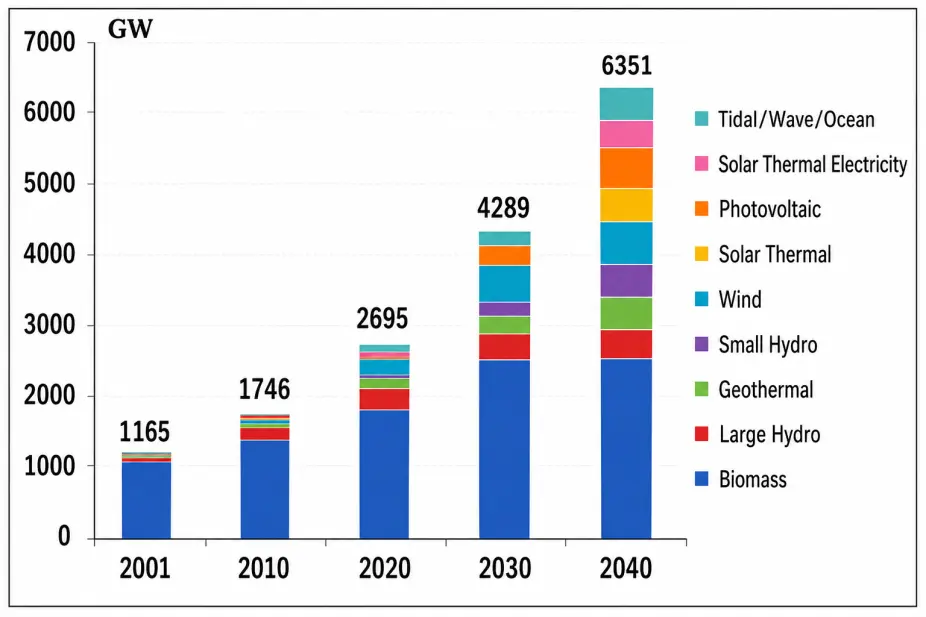
The increasing global demand for electricity has accelerated the integration of renewable energy sources, including solar photovoltaic (PV) systems, wind energy conversion systems (WECS), and battery energy storage systems (BESS), into modern power networks. Although these resources improve sustainability and reduce dependence on fossil fuels, their intermittent and variable nature introduces significant challenges related to system reliability, power quality, operational costs, and energy management, particularly in standalone and off-grid applications. This study presents a comprehensive review and analysis of both standalone and grid-connected renewable energy systems employed in distributed generation. Special emphasis is placed on evaluating the impact of renewable energy variability on system performance and reliability. Furthermore, the study investigates the role of green hydrogen technologies, including electrolyzes and fuel cells, as long-term energy storage solutions in hybrid renewable energy systems. The findings indicate that integrating green hydrogen with solar and wind resources can significantly enhance energy reliability, improve system flexibility, and ensure a continuous power supply in off-grid environments. The study highlights hybrid green hydrogen-based renewable energy systems as a promising pathway toward sustainable, reliable, and resilient future energy infrastructures.
This study provides a comprehensive long-term energy performance evaluation comparing traditional solar space heating systems (water and air collectors) with emerging alternatives, namely photovoltaic (PV)-driven heat pumps and photothermal solar heat extractors. The comparison is performed per unit collection area under idealized heat use and storage assumptions, rather than as a full building-level heating system analysis. Utilizing hourly meteorological and radiometric data from Rock Springs, US (2001–2022), the results reveal that while solar water heat extractors are more efficient than traditional heaters, their heating gain factor remains below 1.2, whereas emerging solar air heat extractors demonstrate low future potential. Over annual cycles, crystalline silicon PV-driven heat pumps outperform traditional solar water heating due to their superior efficiency under the low-to-moderate solar irradiance levels that dominate the heating season, despite traditional systems performing better at peak heat fluxes. Ultimately, this underscores that long-term technology dominance is strictly non-linear and governed by local radiative climates. Complementing the technical study, a preliminary economic screening is performed based strictly on component capital costs, without factoring in long-term operational dynamics such as maintenance, degradation, or discounting. Within this simplified financial framework, the analysis indicates that crystalline silicon or CdTe PV-driven heat pumps can viably replace solar water collectors (unless domestic hot water is a primary requirement) or expensive closed-circuit air collectors. Conversely, solar heat extractors remain viable only in niche applications with exceptionally high thermal energy costs exceeding 0.25 USD/kWh. By establishing these boundary thresholds, this work provides a streamlined decision-making framework that identifies the economic domains in which emerging PV-heat pump configurations achieve market viability relative to traditional thermal systems.
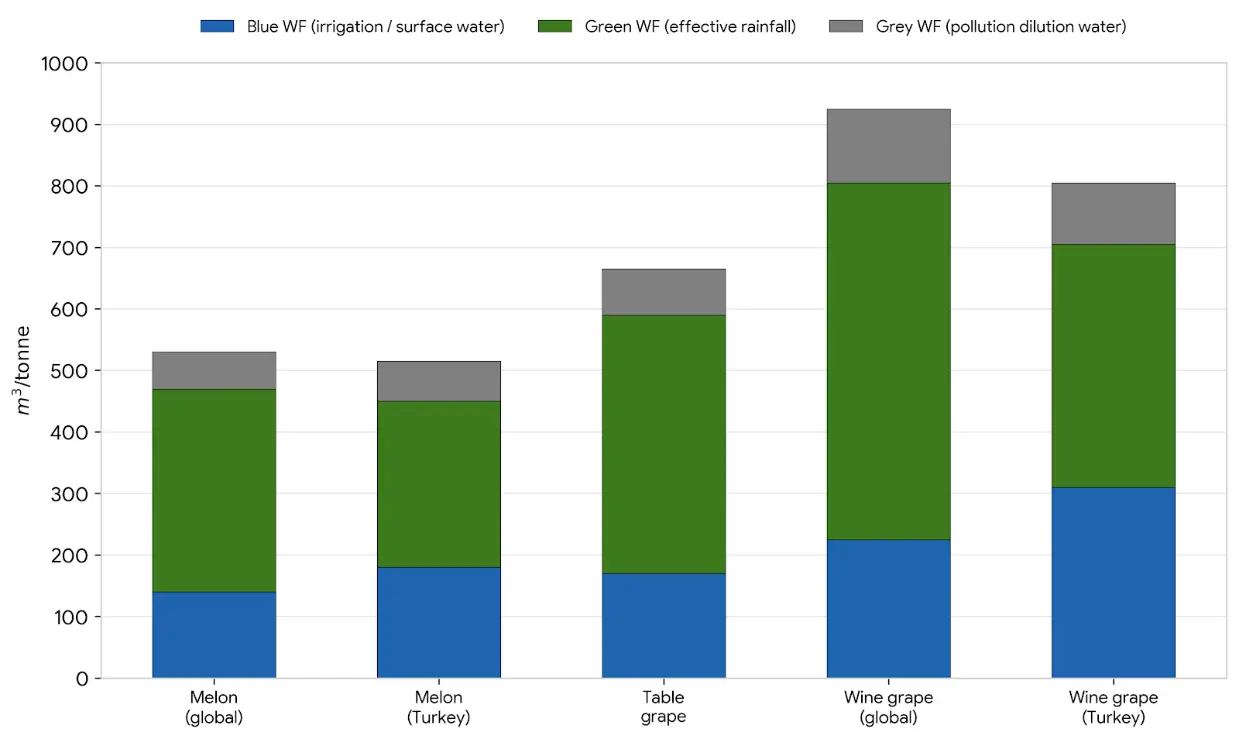
This study applies an integrated water–energy–food (WEF) nexus approach to melon and grape value chains, combining life cycle assessment, water footprinting (blue/green/grey), carbon footprint, and exergy analysis within a circular economy framework. Türkiye, the fourth-largest melon producer (~1.7 Mt/yr) with over 80 indigenous grape cultivars, serves as the primary case study, supplemented by global data. In the wine chain, cultivation (37%) and glass packaging (28%) dominate global warming potential (GWP), with a baseline of 1.38 kg CO2eq per 0.75 L bottle (ReCiPe 2016-H). Recovering pomace bioethanol, polyphenolic extracts, grape seed oil, and tartaric acid in a circular economy scenario lowers the footprint to 1.12 kg CO2eq (−19%). Turkish wine grapes exhibit blue-water shares of 38–41%, well above the global 25%, reflecting irrigation reliance in semi-arid Anatolia (Elazığ, Diyarbakır, Cappadocia). Exergy analysis identifies refrigeration as the top energy sink (280 MJ/t grapes, 32%) and primary exergy destruction site (193 MJ/t; second-law efficiency: 31%). Fermentation records the lowest exergy efficiency (28%) due to the irreversibility of sugar-to-ethanol conversion. These findings demonstrate that combining WEF nexus management with circular bioeconomy strategies can substantially reduce the overall environmental burden, particularly in water-stressed agricultural regions.
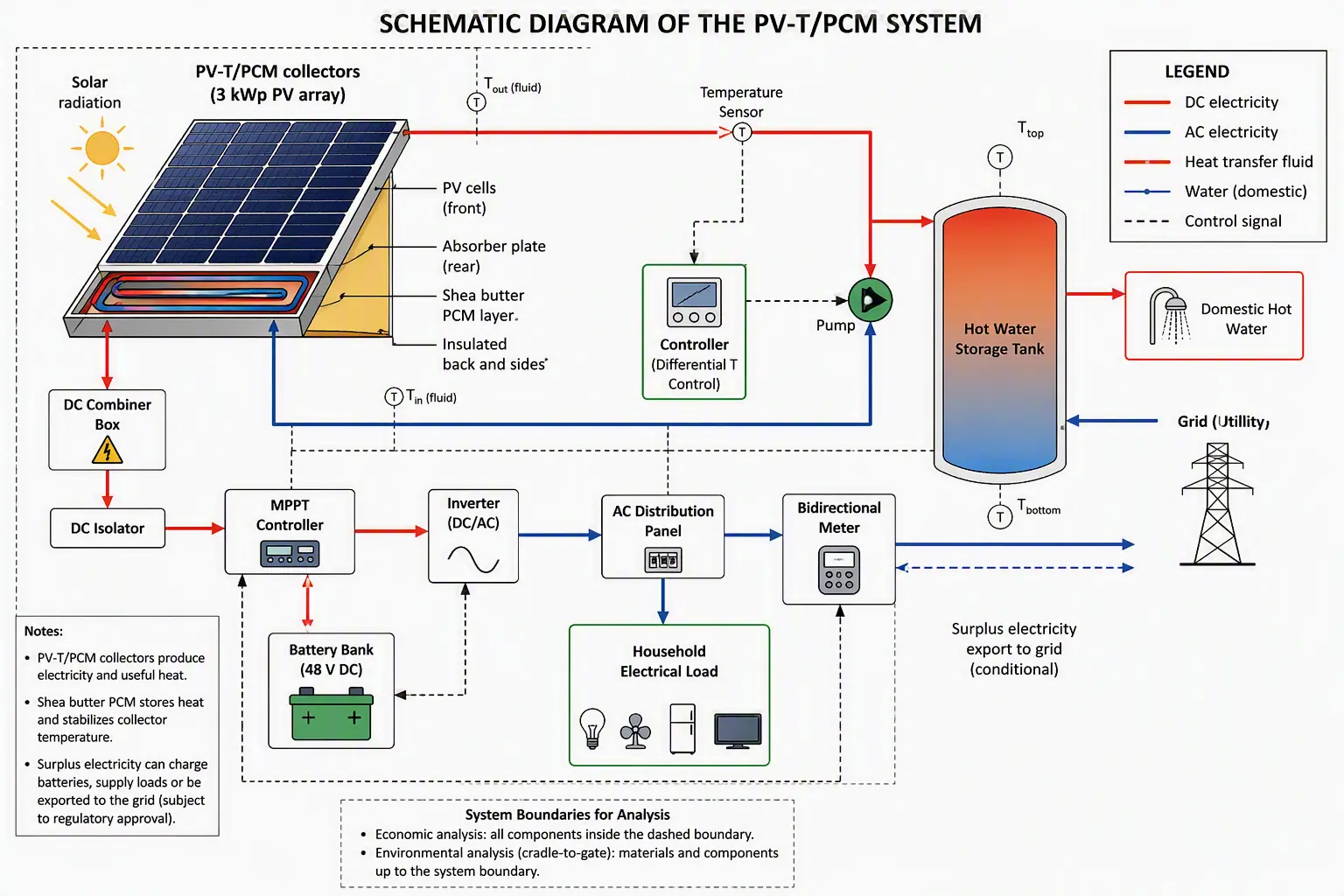
The literature documents the economic and environmental evaluations of conventional phase change materials (PCMs), such as paraffin wax, used in photovoltaic-thermal (PV-T) systems. Nonetheless, there is limited evidence of bio-based PCM applications within PV-T systems. This study investigates the economic and environmental aspects of employing shea butter as a bio-based PCM in a PV-T setup. The photovoltaic-thermal system integrated with shea butter was designed using the Transient Simulation System (TRNSYS). The shea butter system showed superior economic performance, with a levelized cost of energy (LCOE) of US$0.131/kWh, compared with US$0.146/kWh for the paraffin wax system. Its energy costs were also lower than those of the grid and diesel generation in Nigeria. However, the payback period was longer than that of traditional PV systems. Environmentally, shea butter has a global warming potential (GWP) of 0.615 kg CO2e, significantly lower than that of paraffin wax (3.75 kg CO2e).
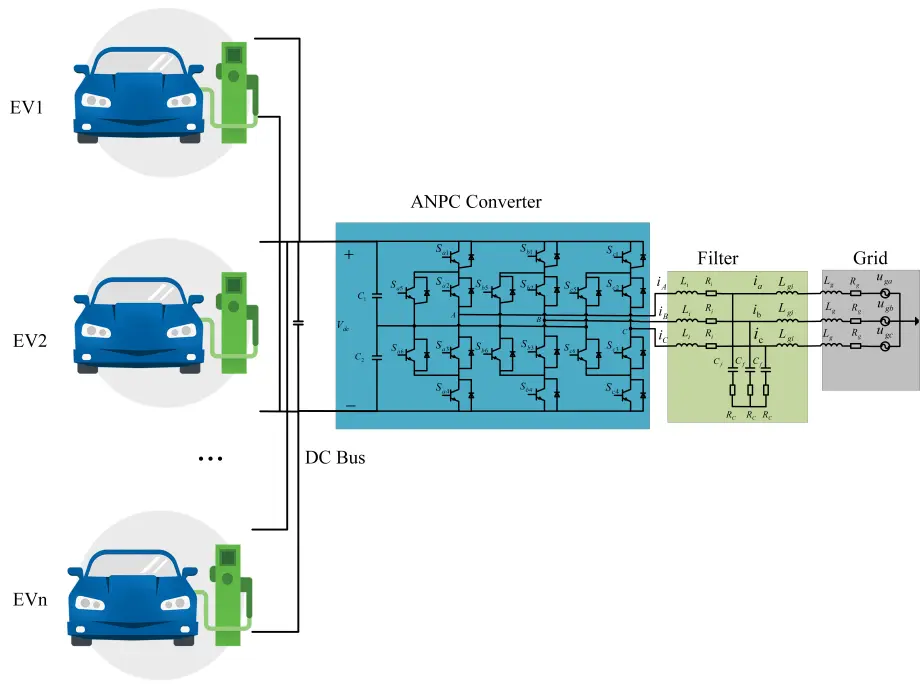
This paper presents an optimal switching strategy and a cost-effective hybrid configuration employing silicon (Si) IGBTs and silicon carbide (SiC) MOSFETs in a three-level active-neutral-point-clamped (ANPC) converter for high-power off-board electric vehicle (EV) chargers. A three-stage switching scheme is proposed to achieve balanced current sharing and minimize switching losses over a wide load range. In addition, a cost-saving function (CSF) is introduced to quantify the total lifecycle cost of the converter utilizing hybrid parallel switch sets, encompassing both the initial device procurement cost and the operating cost arising from power losses over the system lifetime. The proposed CSF effectively identifies the optimal hybrid switch configuration for the ANPC converter. PLECS simulations using actual device data and characteristics from multiple suppliers demonstrate that the proposed design achieves up to a 12.02% reduction in power losses compared with single-Si-switch designs and a 66.42% cost saving relative to all-wide-bandgap solutions, thereby providing an effective efficiency–cost trade-off for next-generation EV charging systems.
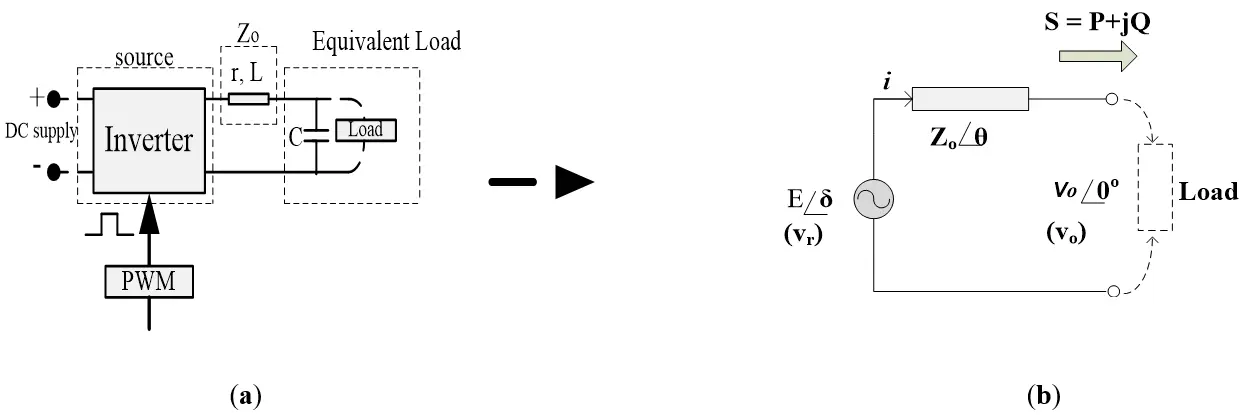
This paper suggests an analytical framework to design the output impedance of a microsource inverter to meet the requirements of proportional load sharing with the permissible range of THD (total harmonic distortion) of the output voltage as per the IEEE 519 standard. In order to achieve the aforementioned objectives, the integral controller is designed in such a way as to make the output impedance of an inverter capacitive in nature. The optimum design of capacitive output impedance at the harmonic frequencies ensures reduced THD levels in the output voltage without affecting proportional load sharing, which is determined by fundamental frequency impedance, ensuring the decoupled design to meet different requirements at the same time. The focus of the work is also laid on the inherent limitations of conventional droop control of inverters and its remedial measures through bolting a regulator on its control loop. The modification of the robust droop control structure for a capacitive inverter is discussed, and small signal stability/PF (participation factor) based analysis is done to ensure the steady state stable operation. In order to enhance the load voltage quality further, a bypassing the harmonic current components strategy is discussed and developed further, which led to THDv < 5%. Subsequently, the basic stability analysis is conducted to determine the finite parameters of BHC by control system principles. The discussed models and schemes are simulated under both linear and nonlinear load conditions to validate the proposed strategies, and their effectiveness is assessed through a comparative analysis.
Worldwide generation of crop residues exceeds four billion tonnes per year, much of which is openly burnt or landfilled, with consequences for air quality, greenhouse-gas emissions, and soil organic matter. Thermochemical conversion of these residues to biochar offers a valorisation route with the potential to contribute simultaneously to water and soil remediation and to durable carbon storage. This structured narrative review consolidates progress on agricultural waste derived biochar (AWDB) reported between 2020 and 2026. Slow pyrolysis, fast pyrolysis, microwave-assisted pyrolysis, and hydrothermal carbonisation are compared in terms of operating conditions, yield, and product attributes. Activation routes (steam, CO2, KOH, ZnCl2, H3PO4) and post-synthetic modifications (heteroatom doping, metal impregnation, magnetic functionalisation) are evaluated against porosity, surface chemistry, and adsorbate selectivity. Applications span heavy-metal, dye, antibiotic, and CO2 removal, together with soil amendment and carbon sequestration. Persistent limitations are identified, including over-reliance on equilibrium capacities, inconsistent test protocols, sparse multicomponent data and incomplete life-cycle accounting. The distinction between biochar, activated biochar, and biochar-derived activated carbon is applied consistently, and the safety profile of the material—residual pyrolysis organics, potentially toxic elements, release of impregnated metals, and management of pollutant-loaded spent adsorbent—is treated as integral to the assessment. Priorities are proposed for standardised evaluation, mechanism-guided synthesis, data-driven design, and techno-economic assessment.
The escalating impacts of global warming have raised concerns at local and global levels, necessitating urgent mitigation efforts, particularly among households in urban settings. However, limited information on household energy consumption and its associated carbon footprint may constrain effective climate mitigation and policy development in Bauchi metropolis. This study assessed household energy consumption in Bauchi metropolis to establish its carbon footprint and inform policy development amid evident climate change. The study adopted a descriptive survey approach involving questionnaires and observational field measurements using a weighing scale to establish the average unit weight of energy sources across six wards. A two stage sampling technique involving cluster and purposive sampling was adopted. Descriptive statistics and the Intergovernmental Panel on Climate Change (IPCC) guidelines were used to analyse the data and estimate the related carbon footprint. The result of 403 analysed responses revealed that the average annual carbon footprint from firewood, charcoal, grid electricity, LPG, petrol, diesel, kerosene, and sawdust was 6.61 tCO2 per household, with firewood and charcoal identified as priority areas for emission reduction. The study concluded that household energy consumption contributes to carbon emissions in the Bauchi metropolis and therefore recommends targeted interventions should reduce dependence on firewood and charcoal and promote cleaner household energy sources.
