Selected Papers from the 4th International Conference on 3D Printing & Additive Manufacturing

Deadline for manuscript submissions: 31 March 2026.

Guest Editor (1)

Ilaria  Cacciotti
Prof. Dr. Ilaria Cacciotti 
Engineering Department, University of Rome ‘Niccolò Cusano’, INSTM RU, 00166 Rome, Italy
Interests: Biomaterials; Agrifood Waste; Nano/Microspheres; Fibrous Membranes; 3D Scaffolds; Electrospinning; Additive Manufacturing; Tissue Engineering/Regenerative Medicine; Drug Delivery; Food Packaging

Special Issue Information

The 4th International Conference on 3D Printing and Additive Manufacturing (3D Printing 2025) (https://3dprintingevents.com/) will be held on September 15–17, 2025, at the University of Niccolò Cusano, Rome, Italy. With the theme “From Imagination to Creation: The 3D Printing Revolution”, this international event will bring together researchers, industry experts, innovators, and enthusiasts from around the globe to share pioneering work and explore the transformative impact of additive manufacturing technologies.

Papers presented at 3D Printing 2025, along with high-quality research aligned with the conference themes, are invited for submission to a dedicated Topic Collection in the Journal Advanced Materials & Sustainable Manufacturing. This special issue will highlight novel research, technological advances, and practical implementations of additive manufacturing across a broad range of disciplines.

Submissions are particularly encouraged in the following key areas:
  • Additive Manufacturing and 3D/4D Printing Technologies
  • 3D Bioprinting and Applications in Medicine, Healthcare, and Life Sciences
  • Metal, Polymers and Nano 3D Printing Techniques
  • 3D Printing in Tissue Engineering and Organ Fabrication
  • Construction-Scale 3D Printing and Smart Infrastructure
  • Laser-Based Additive Manufacturing and Digital Light Processing (DLP)
  • 3D Imaging, Visualization, and Computational Design

Published Papers (2 Papers)

Open Access

Review

16 December 2025

3D-Printed Continuous Fiber Composites: An Overview of Materials, Systems and Processes

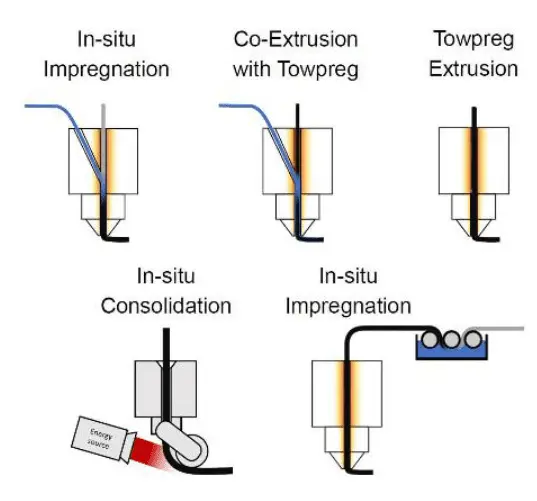
3D-printed composites represent a cutting-edge advancement in additive manufacturing, offering the ability to fabricate high-strength, lightweight structures by embedding continuous fibers within a single deposition process. This innovative approach significantly enhances the mechanical performance of printed parts compared to traditional polymer-based 3D printing. In this article, we present a structured review of recent developments in 3D-printed composite technologies. The discussion is organized into three key areas: (i) the types and properties of continuous fibers used in 3D printing, (ii) the underlying mechanisms and systems that enable fiber deposition, and (iii) emerging strategies involving commingled materials that integrate reinforcement and matrix components at the filament level. This review aims to provide a comprehensive understanding of the current state and future directions of continuous fiber-reinforced additive manufacturing.
Ricardo  Mello Di Benedetto*
Anderson  Janotti
Thiago de FreitasSilvano
Luiz Claudio Pardini
Ilaria  Cacciotti
Francesca Nanni
Antonio Carlos Ancelotti Junior
Adv. Mater. Sustain. Manuf.
2025,
2
(4), 10018; 
Open Access

Article

03 November 2026

Finite Volume Method and Statistical Analysis of Heat Transfer in Hybrid PCM Bricks Containing Paraffin, Zeolite, and Hydrogel Ice Pack

This study evaluates the daytime thermal-regulation performance of a hybrid composite brick integrated with a phase change material (PCM) core containing paraffin, natural zeolite, and a hydrogel ice pack. A one-dimensional finite volume method (1D FVM) model with a 10-node through-thickness grid and an effective heat-capacity formulation was used to represent transient conduction and was validated against outdoor measurements collected at 15-min intervals from 06:00 to 18:00 over six consecutive days. The measured exterior surface reached 45.52 °C at 12:15, whereas the brick core reached 44.58 °C at 13:45, giving a 90-min peak-temperature time lag. The maximum exterior-to-core temperature difference was 7.88 °C and the maximum exterior-to-interior thermal decrement was 4.65 °C. The calculated conduction heat flux reached 32.50 W/m2 during heat absorption and −4.76 W/m2 during heat release. Model validation yielded MAE = 0.577 °C, RMSE = 0.788 °C, and R2 = 0.994. Because the maximum core temperature only approached the lower end of the reported paraffin melting interval (44–60 °C), a linear phase-fraction interpretation indicates only the onset of melting (approximately 3.6% at the core peak), rather than complete PCM melting. The results therefore support the hybrid brick as a thermal-buffering wall concept while defining the scope of the reduced-order model: radiation and free convection are not solved as separate field equations but are embedded in the measured surface-temperature boundary conditions.

Wahyudin Wahyudin
Doddy Irawan*
Muhammad Iwan
Gunarto Gunarto
Raudhatul Fadhilah
Indra Ramadhan
Yeyen DeaArisandi
Adv. Mater. Sustain. Manuf.
2026,
3
(4), 10016 ; 
TOP