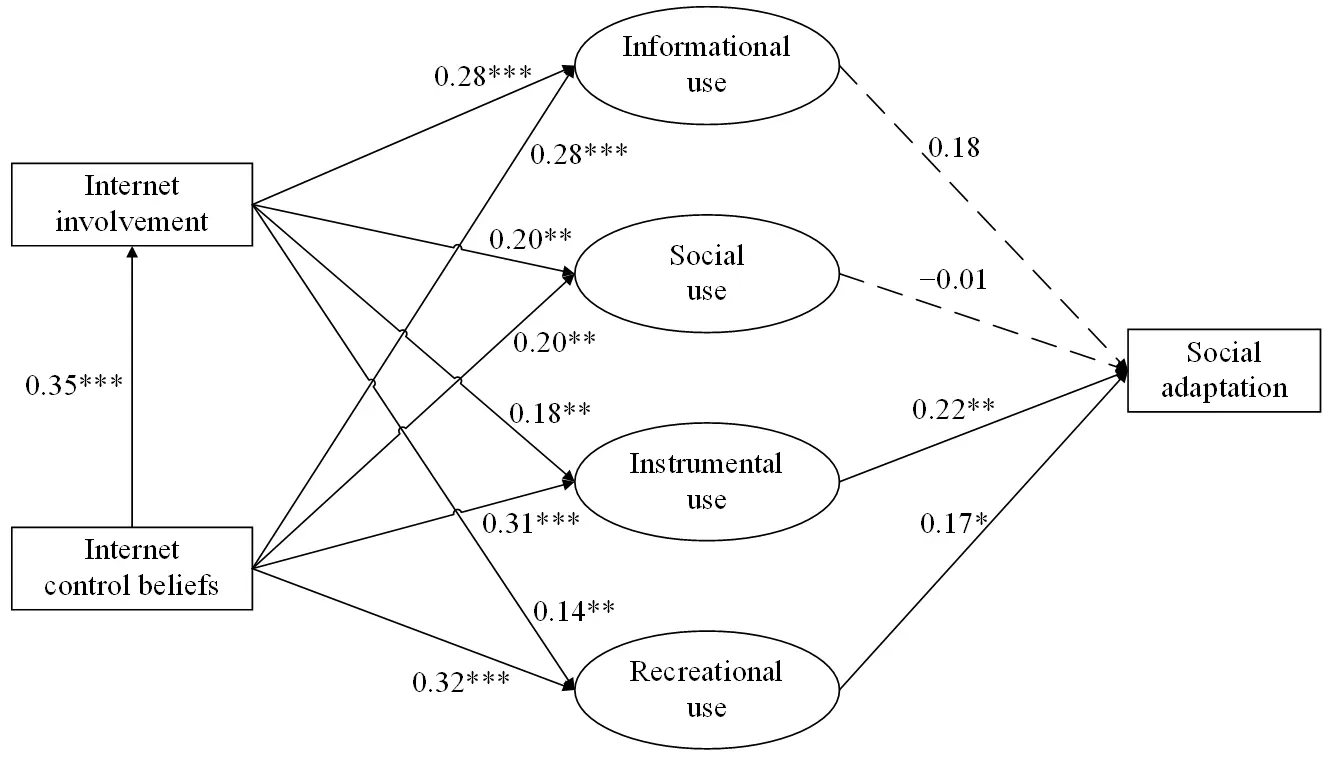
In an increasingly digitalized society, successful aging requires effective social adaptation through Internet engagement, yet empirical evidence on how specific online behaviors affect older adults’ adaptation remains limited. Grounded in the Theory of Planned Behavior, this study examines the associations between four Internet use types—informational, social, instrumental, and recreational—and social adaptation, and their mediating roles between psychosocial antecedents (Internet control beliefs and involvement) and adaptation outcomes. Using data from 388 Chinese older adults (aged 60–83), structural equation modeling revealed that only instrumental and recreational use showed significant positive associations with social adaptation, whereas informational and social use showed no substantial effects. Internet control beliefs and involvement predicted all four usage types, with their effects on adaptation fully mediated by instrumental and recreational activities. By elucidating these domain-specific pathways, the findings refine the application of the Theory of Planned Behavior to digital engagement in aging populations. Accordingly, interventions aimed at enhancing digital inclusion and adaptive aging may benefit from promoting instrumental and recreational Internet use while supporting older adults’ perceived control and active involvement in the digital environment.
This qualitative study explores the evolving attitudes of marriage among Central Asian women living in the United Kingdom. Drawing on a social constructionist framework and employing reflexive thematic analysis, interviews with five single women from Central Asia reveal how migration, education, and exposure to new cultural environments shape their perceptions of marriage. Two overarching themes emerged from the data: the tension between cultural expectations and personal agency, and the negotiation of marriage as a choice shaped by lived experiences, gender norms, and structural constraints. These findings demonstrate a shift toward autonomy and critical reflection, whilst demonstrating a persistence of traditional pressures and patriarchal values. This study provides an in-depth appreciation of how gender, culture, and identity intersect in shaping marriage perceptions among diasporic youth and offers further insight that will inform future research and culturally informed support initiatives.
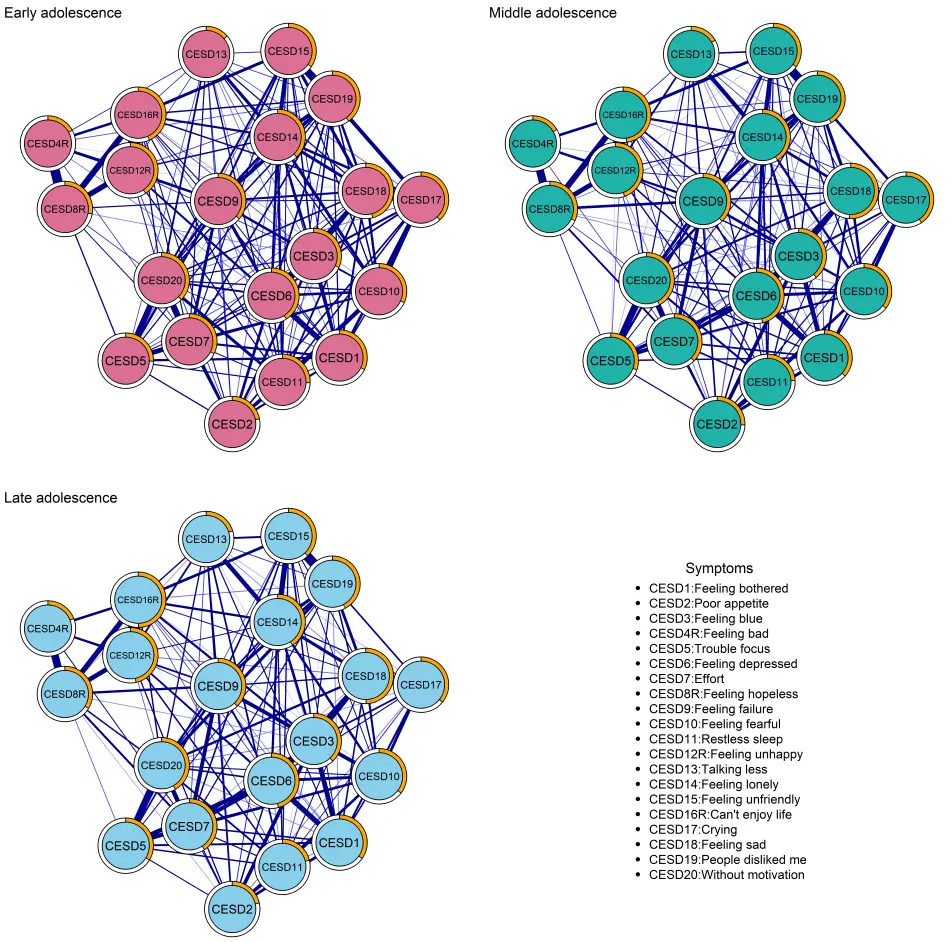
Depressive symptoms are prevalent and demonstrate distinct developmental trajectories throughout adolescence. Although previous research has suggested central symptoms as possible intervention targets, few studies have explored the effects of targeting these symptoms on global network states. Utilizing the Ising model and the NodeIdentifyR algorithm, this study aimed to identify effective intervention targets and examine their associations with central symptoms across different stages of adolescence. A total of 46,842 participants completed the Center for Epidemiologic Studies Depression Scale and provided demographic information. Participants were categorized into early (n = 15,299), middle (n = 15,596), and late (n = 15,547) adolescence. The Ising model identified “feeling sad” and “feeling depressed” as the symptoms with the highest expected influence in early and middle-to-late adolescence, respectively. The expected influence value of “feeling depressed” increased from early to late adolescence. Simulated interventions projected that decreasing the thresholds of “feeling bad” (early adolescence) and “feeling depressed” (middle and late adolescence) would yield the greatest reduction in network activation, identifying them as effective treatment targets. Worsening “feeling sad” and “feeling depressed” (early adolescence) and “feeling blue” (middle and late adolescence) was projected to result in the greatest increase in network activation, making them the effective prevention targets. The most central symptoms were not necessarily congruent with the effective intervention targets identified by simulations. These findings may help practitioners optimize treatment and prevention efforts for adolescents with depressive symptoms across distinct developmental stages.
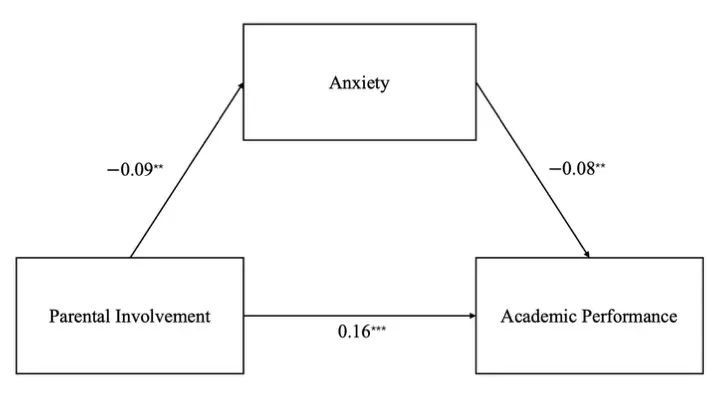
Family-related factors have been consistently linked to children’s academic performance and may also be associated with academic outcomes through psychological processes. Based on this perspective, the present study investigated the association between different family factors (parental involvement, parenting styles, and family functioning) and academic performance among Chinese primary school children. In addition, the potential mediating role of anxiety was examined, as well as whether the associations between these family factors and anxiety differed by student type (students with low versus typical school performance). Data were collected through a cross-sectional survey of 1083 students in Grades 3–5 and their parents from three primary schools in China, with parental involvement, parenting styles, family functioning, and children’s anxiety assessed via parent-reported questionnaires, along with measures of academic performance. The results showed that parental involvement, parenting styles, and family functioning were each significantly associated with children’s academic performance, and that anxiety played an indirect role in these relationships. Student type did not significantly moderate the relationship between these family factors and anxiety. Overall, the findings highlight the relevance of both the family environment and children’s anxiety in understanding variations in academic performance, and they suggest the importance of considering family- and child-related factors in educational research.
Culinary nutrition education (CNE) involves structured, experiential learning that combines cooking skills with nutrition knowledge. While traditionally evaluated for physical health and dietary outcomes, emerging evidence suggests that CNE may also confer psychosocial benefits, such as improvements in self-efficacy, social connectedness, mood, and quality of life. This perspective (1) discusses the latest evidence for the psychosocial impact of CNE across developmental stages, (2) articulates plausible psychosocial mechanisms, (3) highlights limitations in current research, and (4) proposes directions for future research, intervention design, and implementation. Overall, evidence points to potential psychosocial benefits across the lifespan, although current research quality is variable. This perspective suggests that CNE, as an experiential learning approach, may support mental health by fostering self-efficacy building, promoting autonomous decision-making, enhancing social connection, and contributing to social identity formation across the lifespan. Integrating CNE into schools, communities, and other settings has the potential to deliver scalable, equitable psychosocial benefits. Future research should further examine effects over time, dose-response relationships, and the underlying psychosocial mechanisms. CNE interventions should be evidence-based, systematically co-designed with consumers, and tailored to participants’ developmental stage and needs to maximise their psychosocial benefits.
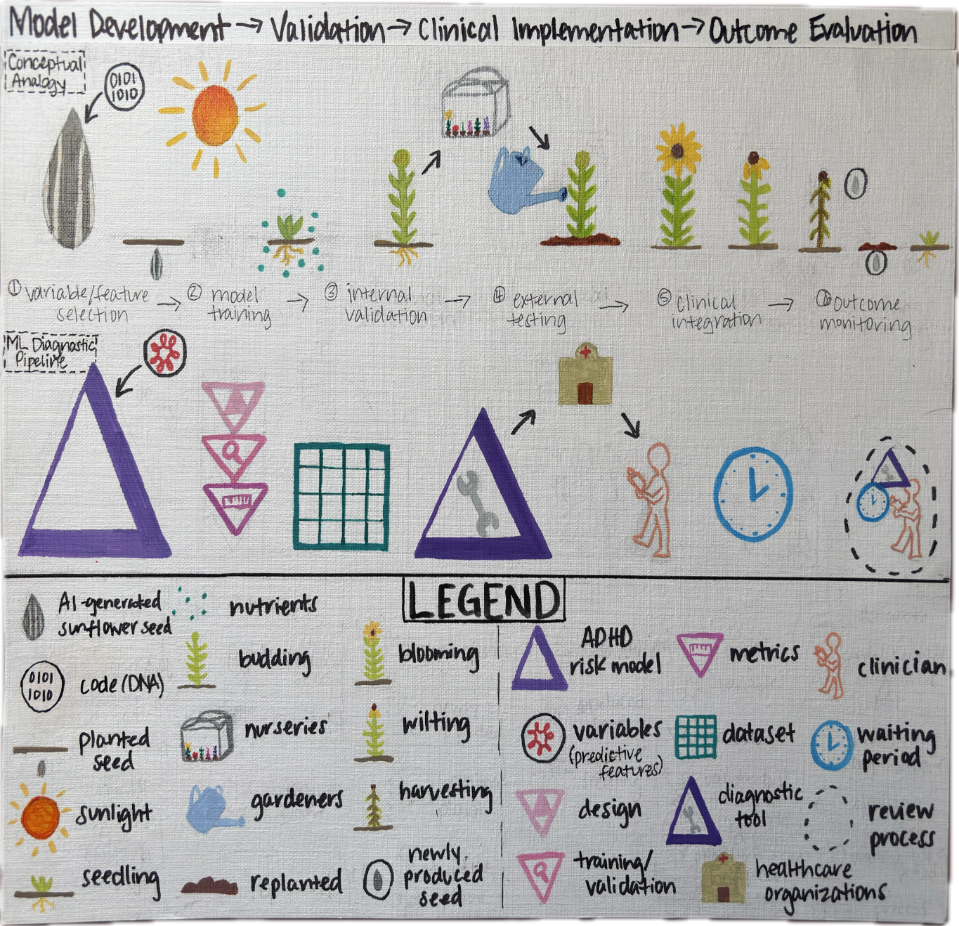
Attention-Deficit/Hyperactivity Disorder (ADHD) presents diagnostic challenges due to heterogeneity, comorbidity rates, and reliance on subjective, phenomenological criteria, resulting in misdiagnosis or treatment delays. This structured narrative review with quantitative tabular synthesis, conceptual mapping, and clinical workflow integration employed a sunflower life-cycle metaphor to bridge clinical expertise and machine learning (ML) technologies, while surveying recent empirical studies (2017–2023) to capture methodological variation in ADHD assessment workflows. Ten studies were selected based on relevance to ML applications for ADHD identification and classification, with deliberate representation of diversity in study design, sample characteristics, data modalities, and ML model-type. The method comprised (a) broad interpretive literature searches, (b) extraction of study-level data, and (c) mapping of ML approaches onto a standardized evidence-based ADHD assessment workflow. Analyses included qualitative synthesis of sample characteristics (youth-focused, N = 38–238,696), data modalities (behavioral surveys, EHR, neuroimaging, genetics), ML models (RF, SVM, DNN), performance metrics, phenotype- and genotype-based distinctions; quantitative aggregation of reported performance metrics (accuracy 66–93%, AUC 0.66–0.94); cross-validation practice, and model-level considerations; and tabular summarization of limitations and multidimensional predictors. Syntheses produced comparative tables, a human–AI diagnostic workflow diagram, and explicit alignment of ML applications with each clinical stage to highlight integration points and gaps.