This Perspective paper is motivated by a novel understanding of the human glymphatic system (GS) functional anatomy, its critical role in Alzheimer’s disease (AD), Parkinson’s disease (PD), and other neurodegenerative and autoimmune disorders, as well as by novel therapeutic possibilities critically relevant in enhancing the GS function and its healing. Non-invasive transcranial magnetic stimulation (TMS) technology and administration of cell-free extracellular vesicles (EVs) in clinical conditions may well constitute potentially synergistic, versatile, and effective next generation neurotherapeutic approaches to treat human GS dysfunctions. Brain stimulation approaches, such as TMS, act upon brain circuits, which have been strongly considered candidate endophenotypes and factual targets in neuromodulation interventions using multimodal neuroimaging. The dorsolateral prefrontal cortex (DLPFC) has been proposed as a potential target for neuromodulating the GS, a fluid-compartment mechanism involved in waste disposal that is not entirely elucidated in humans, yet considered of critical importance for the normal functioning of the brain and a key factor for its dysfunction in such neurodegenerative conditions as Alzheimer’s disease (AD) and Parkinson’s disease (PD). Likewise, EVs have been proposed as potential GS therapeutic agents, given their capability to traverse the blood-brain barrier (BBB), reduce neuroinflammation, increase cellular communication and central nervous system (CNS) homeostasis, and promote healing. The combined effect of TMS-EEG (TMS-Electroencephalography), and EV approach is putatively complementary, and thus we envision their combined use as a promising, versatile, and potentially effective next generation neurotherapeutic strategy to treat human GS dysfunctions and to become a powerful asset in the treatment of neurodegenerative and autoimmune disorders. Furthermore, anatomically accurate neuroimaging-based navigation of TMS and the assessment of GS functionality via diffusion tensor imaging analysis along the perivascular space (DTI-ALPS) enable precision-medicine personalized interventions in these disorders. On these grounds, we formulate a hypothesis-driven conceptual framework connecting neurocircuitry-based neuromodulation, EV-mediated neuroimmune effects, and DTI-ALPS assessable glymphatic function to identify directions for future experimental and translational clinical research.
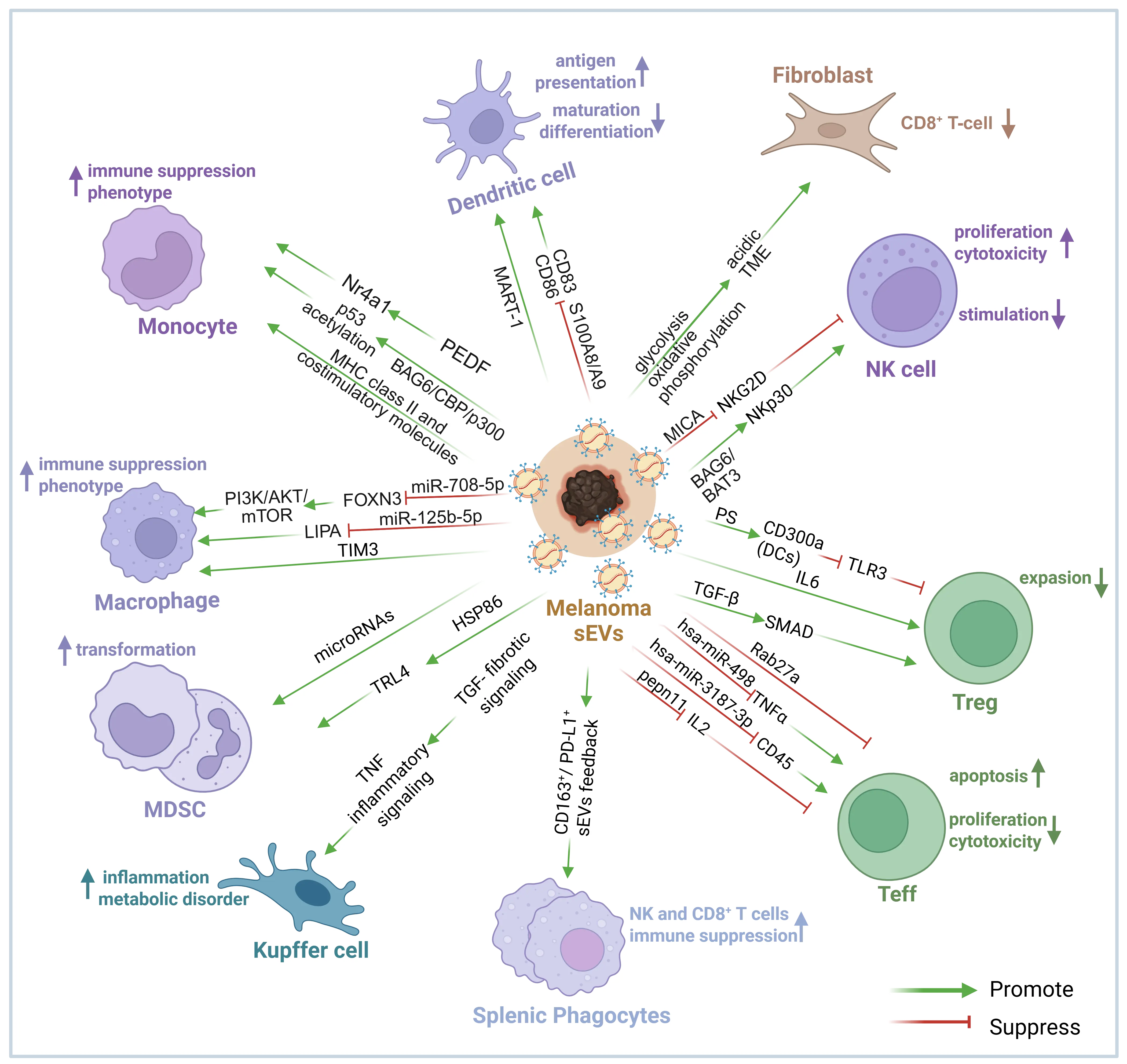
Melanoma is a highly lethal malignant skin tumor. While immune checkpoint therapy has notably improved patient prognosis, formidable challenges, including drug resistance and immune-related adverse events, remain unresolved. Small extracellular vesicles (sEVs), pivotal mediators of intercellular communication, exert critical roles in melanoma immunoregulation and immune escape. This review focuses on the immunomodulatory effects of sEVs derived from melanoma cells and immune cells (including natural killer cells, macrophages, and dendritic cells) within the tumor immune microenvironment. It further delineates their regulatory mechanisms governing distinct immune cell populations, as well as their intricate associations with immunotherapy resistance. Additionally, the potential of sEVs and their cargo molecules as therapeutic targets and diagnostic biomarkers is explored, offering a theoretical foundation for overcoming immune checkpoint inhibitor resistance and advancing the development of novel melanoma immunotherapies.
Liver cancer ranks as the sixth most common cancer globally, with hepatocellular carcinoma (HCC) being its predominant form, accounting for 90% of cases. HCC is closely linked to chronic inflammation and fibrosis driven by factors such as hepatitis B and C, alcoholic liver disease, and metabolic dysfunction-associated steatotic liver disease (MASLD). In the liver, persistent regenerative responses trigger activation of hepatic stellate cells (HSCs), collagen deposition, and fibrosis, which collectively pave the way for carcinogenesis. For patients diagnosed in the early stages of liver cancer, curative options such as surgical resection or liver transplantation may be viable. However, the majority of cases are diagnosed at advanced stages, rendering surgical intervention unsuitable. Systemic treatments for advanced liver cancer often show limited efficacy, highlighting the importance of understanding liver cancer’s development processes to enhance early diagnosis and therapeutic strategies. This review delves into the molecular mechanisms underpinning the progression of liver cancer, tracing the pathological continuum from hepatitis to cirrhosis and ultimately to liver cancer. It explores the immune responses activated during this transition, particularly focusing on inflammatory responses and their central roles. Furthermore, it highlights the significance of inflammatory cytokines and HSCs in liver fibrosis, which creates a microenvironment conducive to cancer development. The review also examines immune regulation and cell signaling in the tumor microenvironment, offering insights into the transformation from hepatitis to liver cancer and paving the way for improved treatment strategies.
