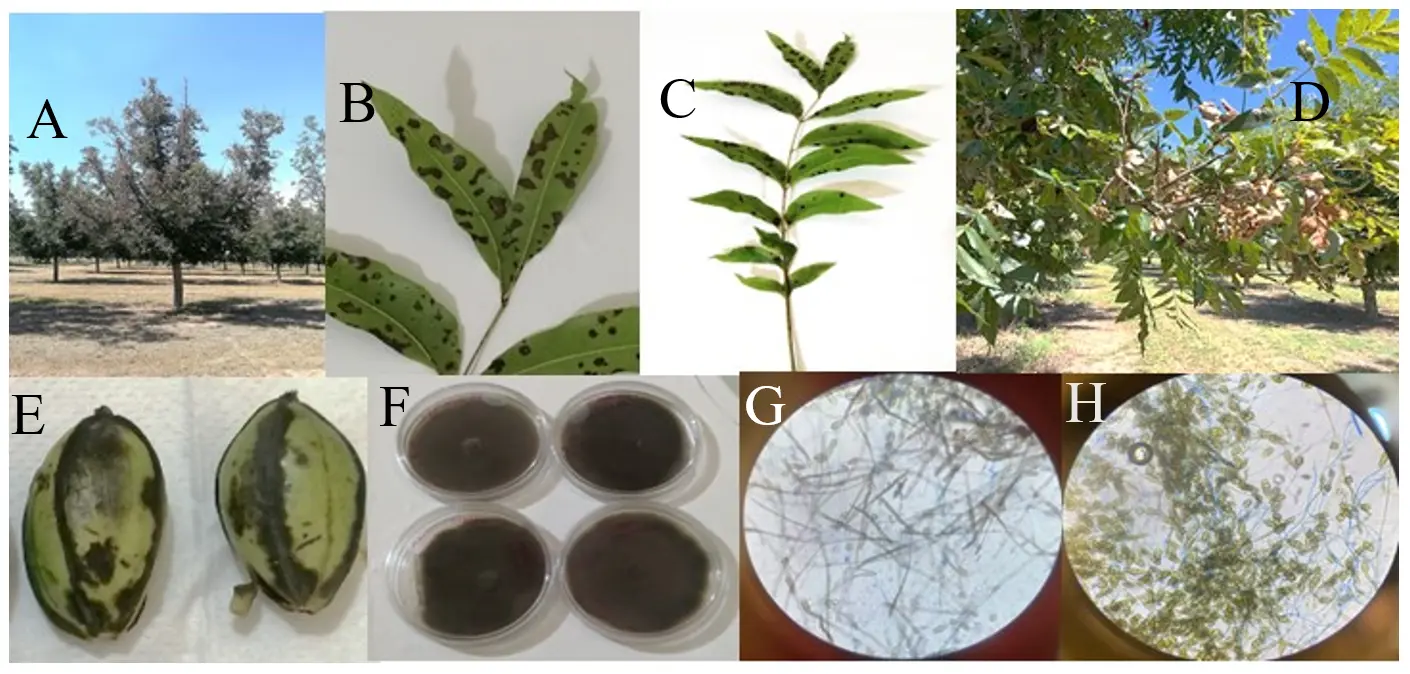
Preliminary observations show that scab-like symptoms are present in pecan orchards in southern Chihuahua, Mexico. However, its presence has gone unnoticed by growers, who attribute the damage to zinc deficiencies. This disease can cause significant damage to trees and may represent a potential risk for pecan production. Two fungi were frequently isolated from the affected trees, Cladosporium-like fungus and Alternaria-like fungus, making it urgent to identify them using molecular techniques. The role of these fungi in the development of the disease—which commonly is attributed to Cladosporium spp.—should be determined through pathogenicity tests. The incidence and severity of the disease across the various growing regions must be assessed, and crop losses must be calculated. Research into disease epidemiology is also important for developing integrated management strategies that emphasize biological control and predictive systems.
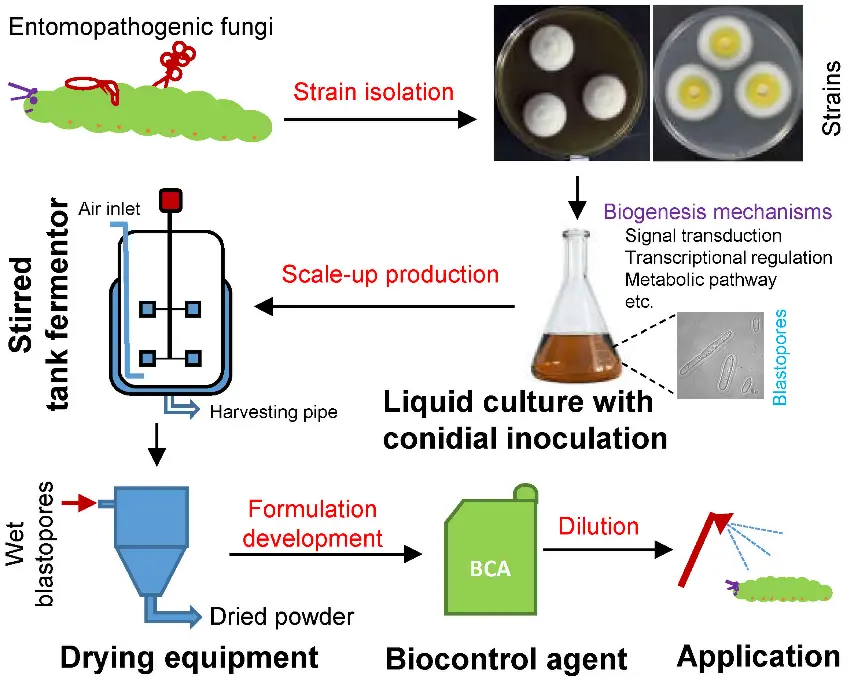
Entomopathogenic fungi (EPF) have been employed worldwide in biological control programs due to their natural abilities to control the host populations. In these applications, aerial conidia are the widely used active ingredients of products. EPF produces yeast-like blastospores not only in the host hemocoel but also in artificial liquid media in large quantities. Here, we review advances in biogenesis mechanisms and the application of blastospore, an emerging, promising active ingredient in biocontrol agents, attributed to recent molecular advances and formulation improvements. Molecular advances in blastospore biogenesis offer opportunities to increase fungal virulence and reduce production costs through genetic modification. Many efforts/techniques have been utilized to improve the blastospore viability and stability in final products; however, more investigations are highly desirable in exploring the mechanisms underlying fungal adaptation to abiotic stresses during formulation preparation and storage. Future perspectives in the exploration of molecular mechanisms are suggested as well as the strategies for formulation development.
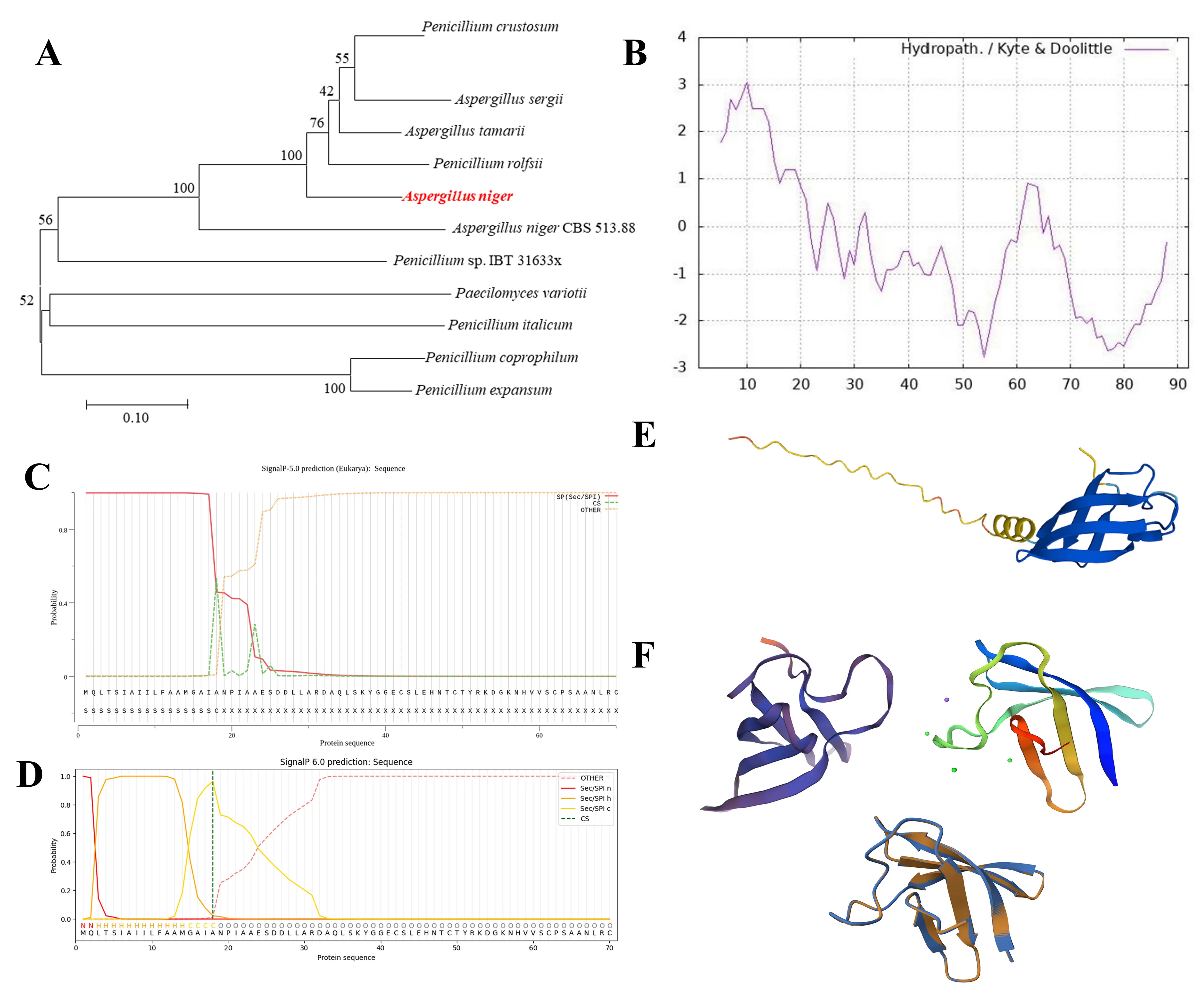
Aspergillus flavus is an agriculturally important and aflatoxigenic fungus, underscoring the need for alternative antifungal strategies. Cysteine-rich antifungal proteins (AFPs) are promising bioactive molecules, yet their recombinant production and genetic determinants of fungal tolerance remain insufficiently characterized. Here, we investigated AnAFP, an antifungal protein from Aspergillus niger, and evaluated its activity against A. flavus. Bioinformatic analyses predicted an N-terminal signal peptide, a putative intrinsically disordered region, and a mature cysteine-rich domain structurally related to known fungal AFPs. Guided by these features, the predicted mature region of AnAFP was expressed in Escherichia coli and purified through Ni-NTA affinity chromatography, tag cleavage, cation-exchange chromatography, and size-exclusion chromatography. Purified AnAFP inhibited A. flavus growth, and comparison with PgAFP and AfAFP confirmed antifungal activity at micromolar concentrations. To identify genes associated with AFP tolerance, Δado1, Δdef1, and Δadk1 mutants were generated by homologous recombination. All three mutants showed increased sensitivity to AnAFP, PgAFP, and AfAFP relative to the wild-type strain, suggesting that ado1, def1, and adk1 may contribute to AFP tolerance. Deletion of these genes also affected colony growth, conidiation, sclerotial formation, stress responses, and aflatoxin production. These findings establish a recombinant production strategy for AnAFP and provide preliminary evidence linking ado1, def1, and adk1 to AFP sensitivity and fungal physiology more broadly in this pathogenic and aflatoxigenic species.
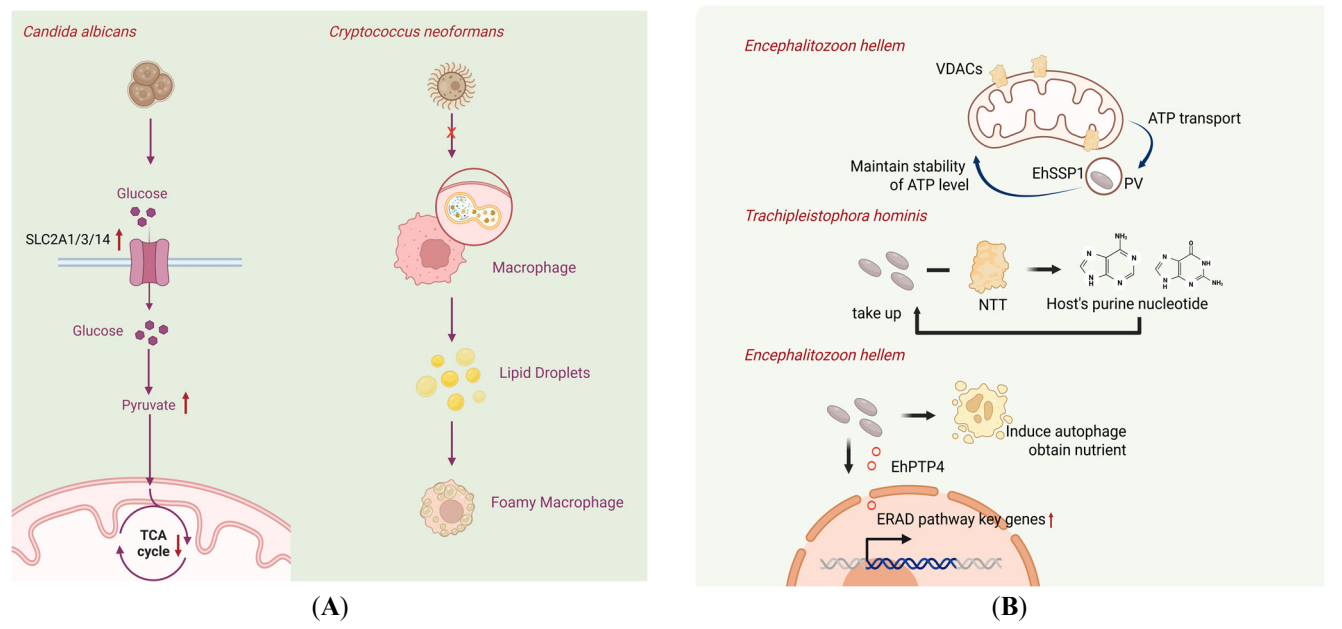
Microsporidia are a group of obligate intracellular fungal pathogens with extremely wide host ranges. Among these, zoonotic microsporidia such as Encephalitozoon hellem, Encephalitozoon cuniculi, and Enterocytozoon bieneusi can infect humans as well as other animals, causing recurrent diarrhea, hepatitis, and even death in immune-compromised individuals. The abilities of zoonotic microsporidia to regulate their hosts are essential to their survival and thriving within hosts. The manipulations of zoonotic microsporidia on hosts are employed in multiple ways, including metabolic modulation, immune suppression, signaling pathway regulations, and epigenetic modification. This review focuses on pathogen-host interactions between zoonotic microsporidia and their hosts, and compares their regulatory characteristics with those of typical fungal pathogens such as Candida albicans. In summary, unraveling the regulatory strategies of zoonotic microsporidia not only deepens our understanding of microsporidia pathogenesis but also provides potential targets for therapeutic intervention against these emerging pathogens. Comparative studies with typical fungal pathogens further highlight the unique and sophisticated host-manipulating mechanisms evolved by microsporidia from the fungal kingdom.
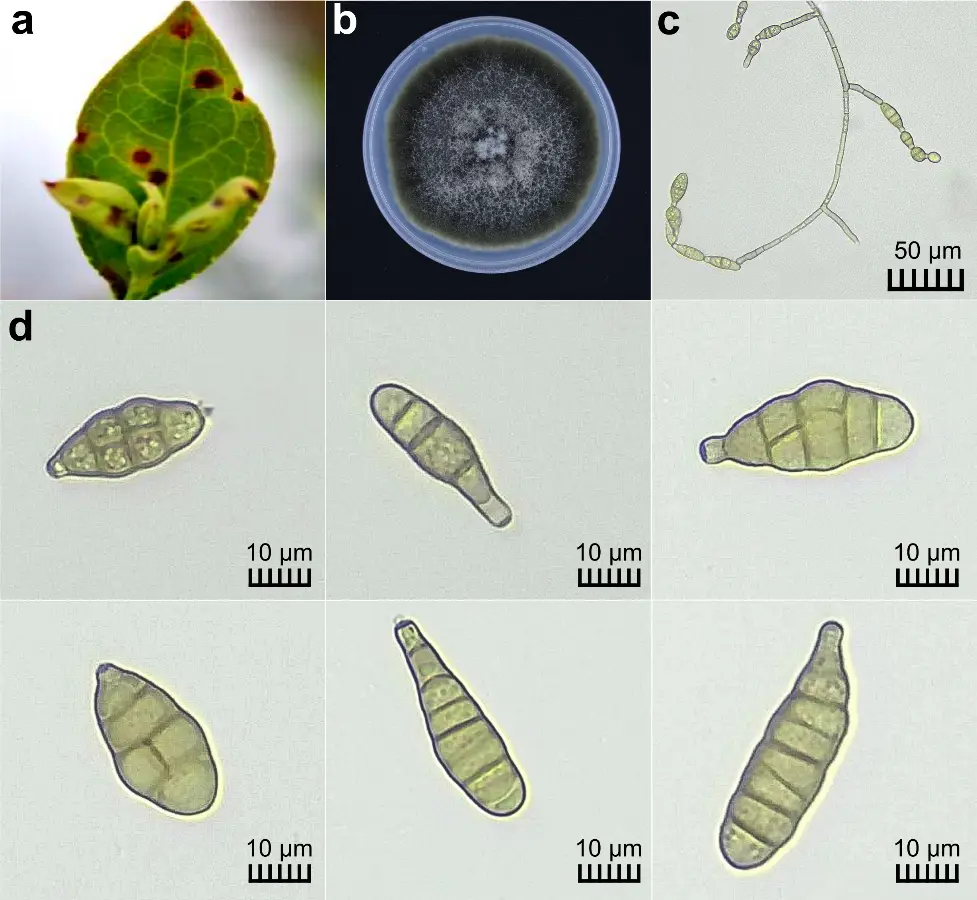
Blueberries (Vaccinium corymbosum L.), valued for their nutritional benefits and economic significance, have become Peru’s leading agro-export crop. However, intensive cultivation can lead to phytosanitary problems if not addressed promptly, posing a serious threat to blueberry production. This study aimed to isolate and identify the causal agent of leaf spot symptoms initially observed in blueberries cultivated in Peru, marking the first formal documentation of its presence in the country. In 2022, leaf spot symptoms were recorded on V. corymbosum cv. Biloxi, in the north of Lima, Peru. Field observations revealed necrotic, sunken spots on leaves and fruits, with 4.84% of leaves diseased and 1.28% of fruits affected. Pathogen isolation and microscopic studies identified Alternaria alternata as the primary causal agent, which was confirmed by genome sequencing using Oxford Nanopore Technology. Pathogenicity tests demonstrated the fungus’ ability to reproduce symptoms identical to those observed in the field, fulfilling Koch’s postulates. Under experimental conditions, disease severity increased over time, with the affected leaf area ranging from 9.35% to 25.61% between 7 and 14 days post-inoculation. This study establishes A. alternata as a pathogen of blueberries in Peru and provides essential insights for future research and strategies to mitigate its impact on the industry.
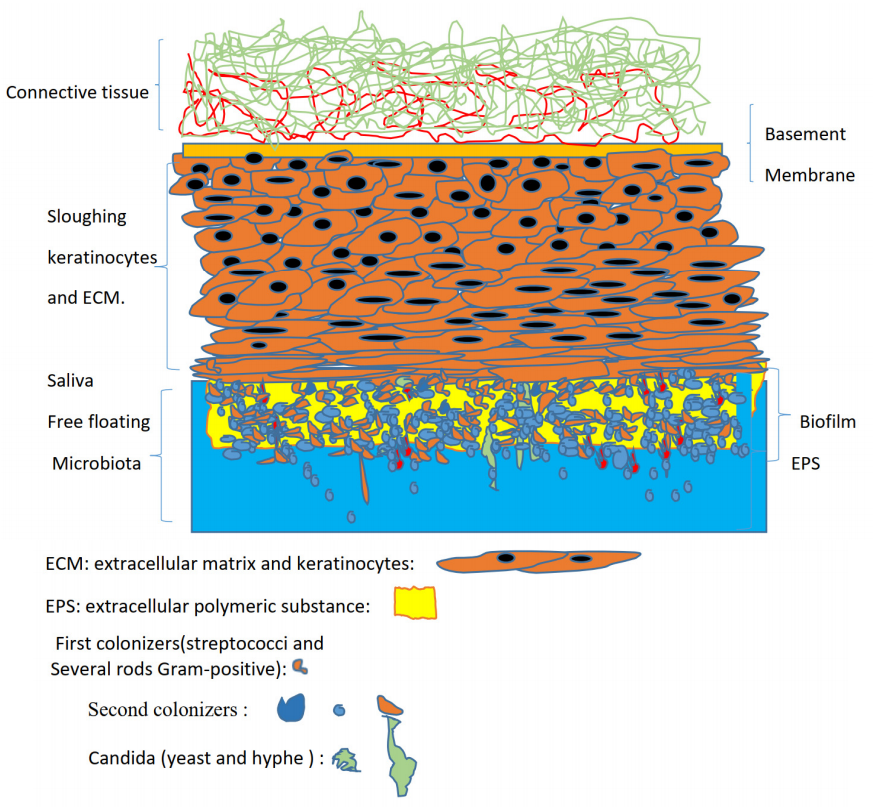
Denture mycofilms (DMs) are complex, structured microbial communities that develop on removable dental prostheses and shape the oral microbiota of denture wearers. Up to three-quarters of individuals wearing removable dentures may develop denture stomatitis (DS), a highly prevalent inflammatory condition of the oral mucosa. Candida species are detected in approximately 70–80% of DS cases, supporting the concept of DS as a denture-associated oral candidiasis. The denture “mycofilm” is a polymicrobial network—dominated by bacterial and fungal taxa—embedded in an extracellular matrix. In the absence of effective denture hygiene, prostheses constitute a reservoir of microorganisms and may promote chronic or latent infection, particularly in vulnerable patients. Metagenomic studies of denture-associated biofilms in DS reveal a multi-kingdom community with strong bacterial–fungal interrelationships. Reported eukaryotic genera include Candida (including Nakaseomyces/Candida glabrata), Saccharomyces, and Malassezia, among others. Because DMs are located at the interface between an abiotic surface (the denture) and a biotic surface (the mucosa), they are exposed to repeated compressive and shear forces during mastication. Their viscoelastic properties, together with saliva-mediated viscosity, facilitate spreading, mechanical resilience, and persistence. Despite mechanical and chemical cleaning procedures, denture mycofilms may persist due to their architecture, composition, and adaptive mechanical behavior. These properties should be considered when designing preventive and therapeutic strategies for denture stomatitis, while accounting for patient-related systemic risk factors.