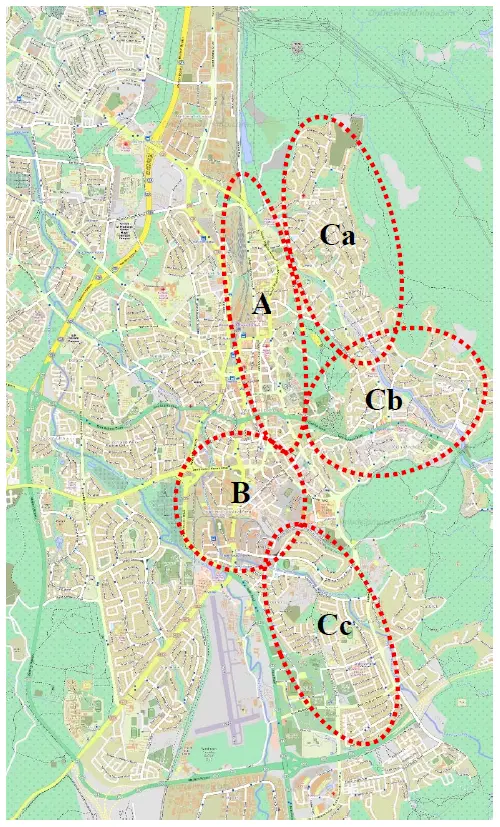
Towns and cities may provide suitable habitats for wildlife, including birds. In Africa, ecological studies on avian communities are, however, rare. Namibia is an exception to the rule, but even here, there is still an urgent need to conduct such studies in various urban habitats. This study has been conducted on breeding bird communities in Windhoek, the largest city in the country. Bird communities were quantified in five distinguished habitats by means of the line transect method. In total, 16 transects were designed, with a total length of 82.8 km. The studies were conducted in August 2020. The avian assemblage was composed of 32–45 resident (breeding) bird species in various habitats of the city, with 4–7 dominant species distinguished in each habitat. In all distinguished habitats, granivores comprised more than half of all birds recorded. Frugivores comprised 20.4–28.0% in most habitats. In most habitats, birds nesting on trees or shrubs comprised at least 50%, except for the city centre, where they comprised only 30.6%. On the other hand, only in the city center, species nesting on/in buildings comprised as much as 68.2%; in all other habitats their contribution ranged between 39.2% and 48.5%. The Shannon’s Diversity Index ranged slightly between 1.17 and 1.26. Also the Pielou’s Evenness Index was much the same (0.31–0.36) in all habitats investigated.
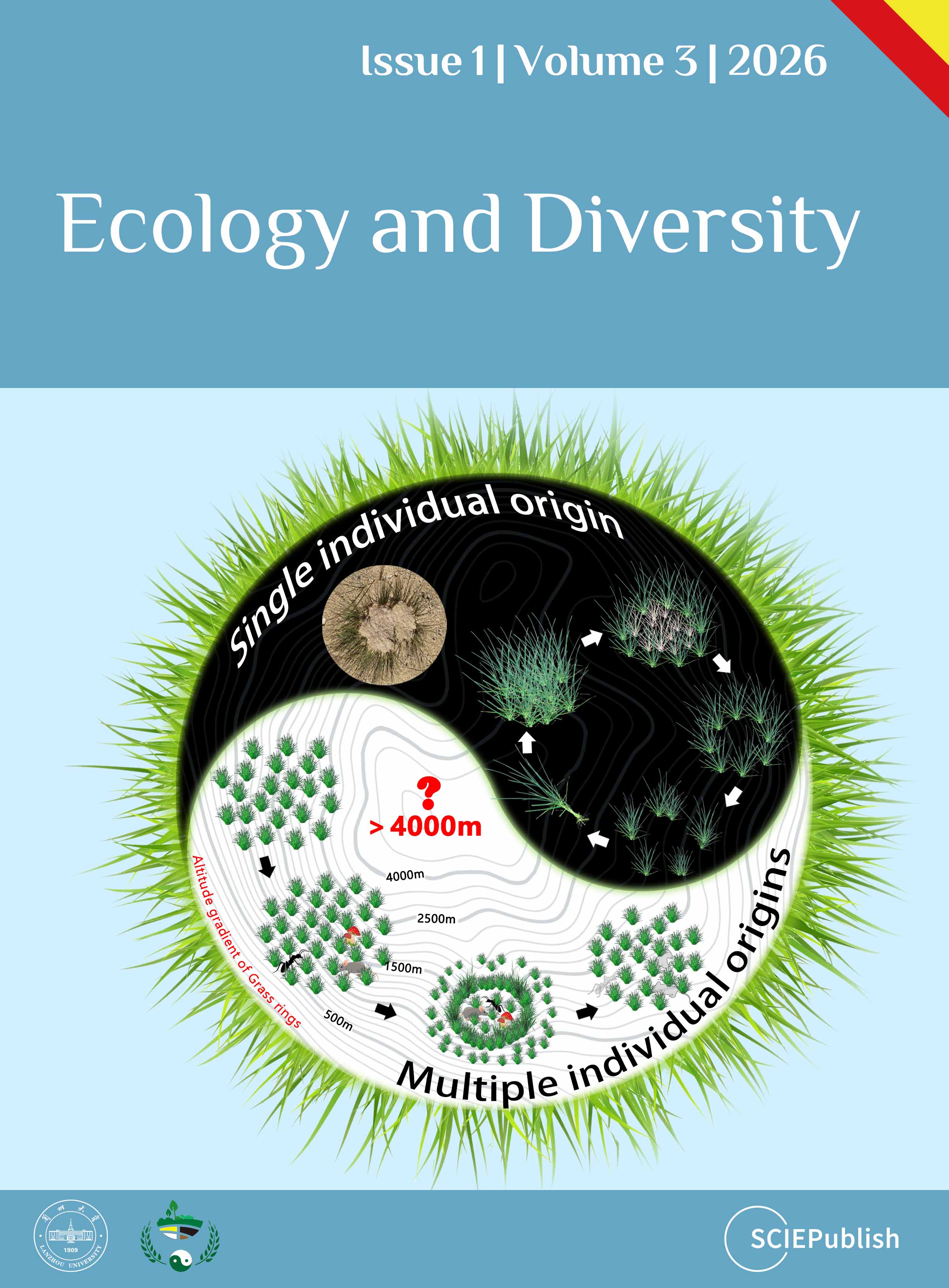
The grass ring phenomenon remains an interesting and enduring puzzle. Previous research has proposed various mechanisms, including Environmental stress and physical disturbance, Nutrient and water depletion, and the Self-Organization hypothesis, to explain ring formation. However, this process is highly complex and dynamic, hindering the development of a unified theory. This is primarily because grass rings of different origins, and even those at different developmental stages, are influenced by diverse factors. Furthermore, existing studies have often been limited to isolated cases, which highlights the need for more comprehensive, global-scale studies. Through a systematic analysis of publications, this review proposes three claims. First, they are classified based on genetic origin into single and multiple individual origins, which align with formation driven primarily by death-based and growth-based formation modes, respectively. Second, the grass ring is essentially a superorganism. Third, although grass rings are globally widespread, their formation mechanisms in regions above 4000 m remain elusive. Future research should prioritize key directions, including quantifying complete life cycles and elucidating mechanisms of high-altitude formation. This requires establishing international monitoring networks that integrate multi-omics with hyperspectral remote sensing to predict how grass rings develop under global climate change.

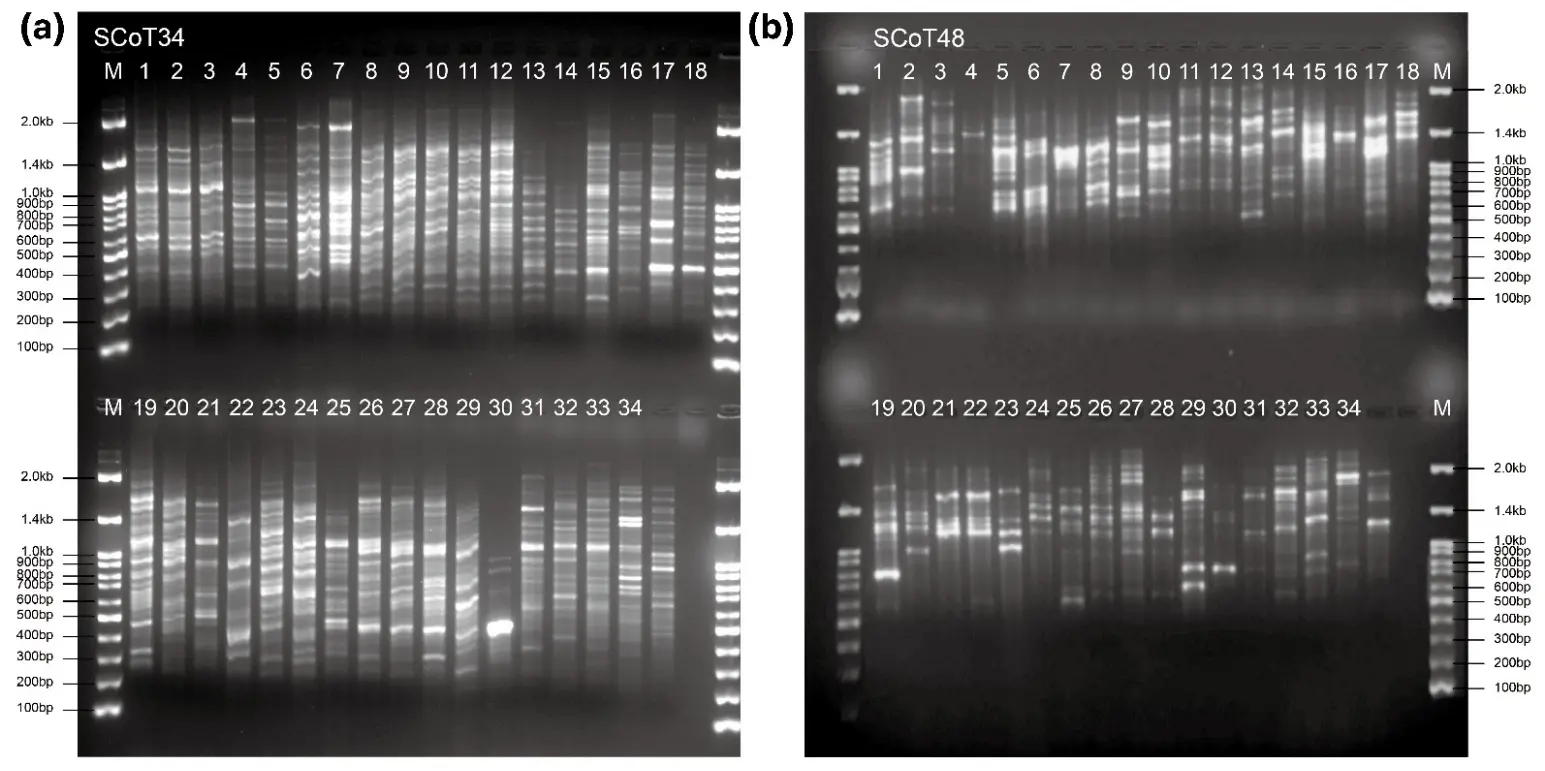
The genus Viburnum (Adoxaceae) comprises deciduous broad-leaved shrubs with a thicket-like growth habit, and globally about 150–200 species are recognized. In Korea, several native Viburnum taxa have recently been listed as threatened, emphasizing the need for robust genetic information to support conservation and management. This study aimed to evaluate genetic diversity and interspecific relationships among 33 Viburnum taxa and to establish a practical framework for their identification and management using start codon targeted (SCoT) markers. SCoT markers were chosen because they are easier to apply than simple sequence repeat (SSR) and generally provide richer nuclear variation than chloroplast DNA (cpDNA), offering a simple yet informative tool for distinguishing closely related members of this shrub genus. Seventeen SCoT primers produced 489 polymorphic bands, revealing substantial nuclear variation among the 33 Viburnum taxa. An unweighted pair-group method with arithmetic mean (UPGMA), we grouped the 33 accessions into four major genetic clusters, and this clustering pattern was in good agreement with the structure inferred from principal component analysis. These clusters highlighted the genetic isolation of the V. plicatum group and the close affinity of the V. carlesii complex, while also indicating complex relationships among East Asian species. In contrast, V. plicatum formed Cluster IV, highlighting the taxonomic positions of these lineages and their potential priority for conservation and breeding. Overall, the results demonstrate that SCoT markers provide an efficient, operationally simple system for discriminating between closely related accessions and major genetic lineages within Viburnum. The SCoT-based approach developed here provides baseline information for species and cultivar identification. It also supports germplasm conservation and the selection of genetically divergent parents for future breeding programs.
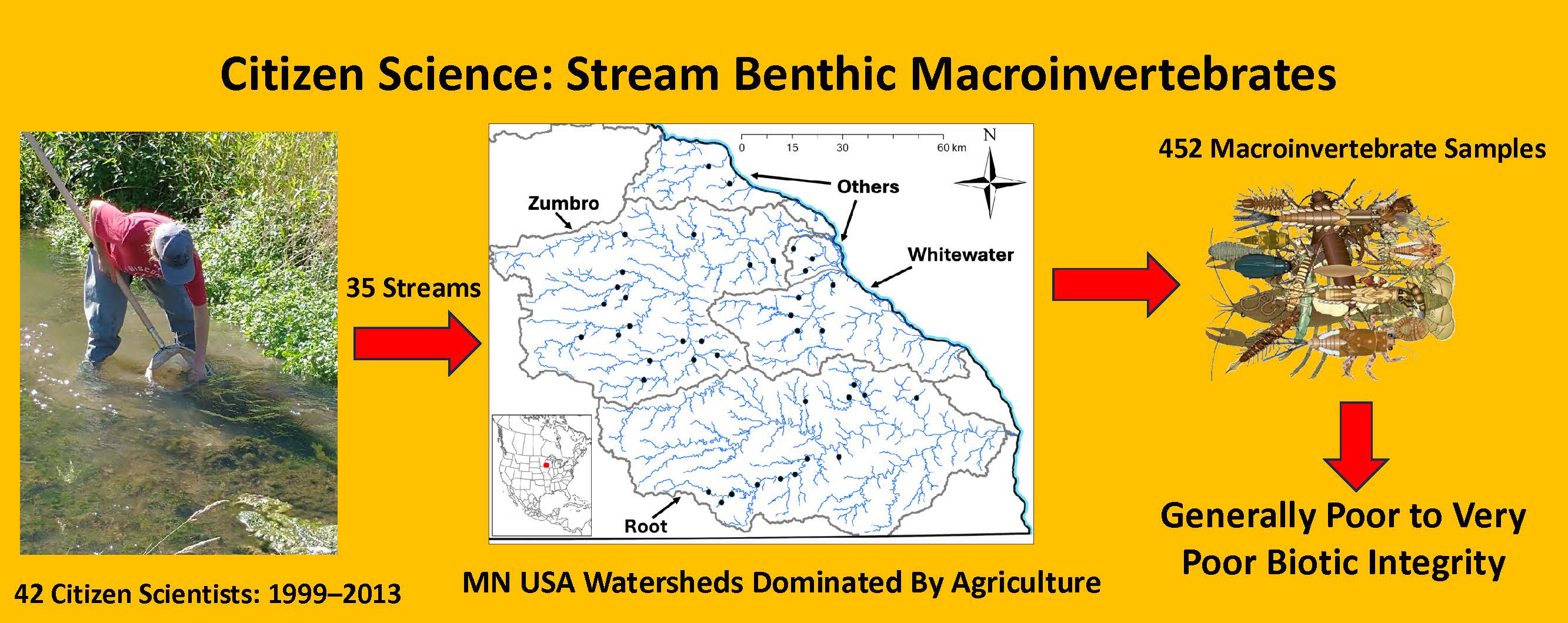
Volunteer citizen scientists collected benthic macroinvertebrate samples from 35 streams throughout multiple watersheds in southeastern Minnesota, USA, during the period 1999–2013 to assess community diversity, taxa richness, and biotic integrity as indicators of water quality and general habitat conditions. In total, 452 invertebrate samples containing >46,000 organisms were collected, processed, and analyzed. Only 45% of the citizen scientists completed their 5-year sampling commitment. However, their samples generally demonstrated significant differences in total taxa richness, Ephemeroptera-Plecoptera-Trichoptera (EPT) taxa richness, Simpson and Shannon diversities, and a regional benthic index of biotic integrity (BIBI) within and/or among the watersheds examined. Streams in the two larger watersheds averaged significantly higher taxa richness and BIBI scores than those in smaller watersheds. Overall, streams in this region exhibited mostly poor or very poor biotic integrity based on their macroinvertebrate communities, indicating continued impacts from environmental stressors within these agricultural watersheds.