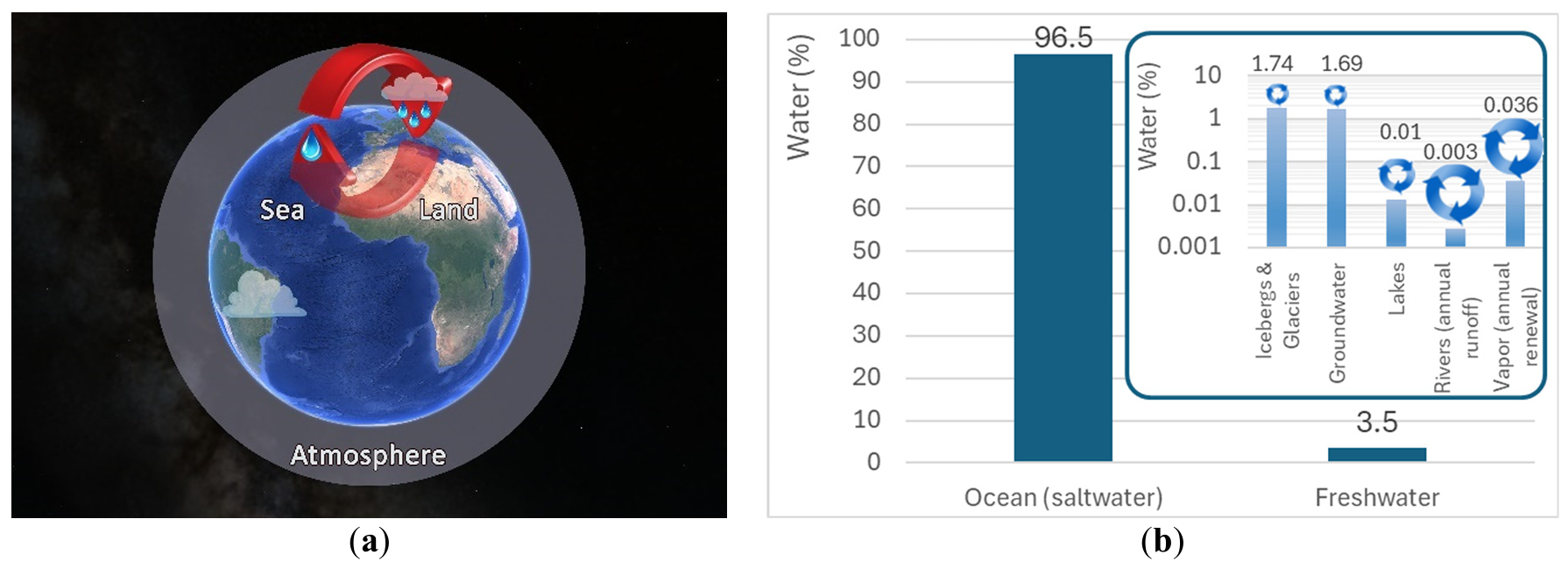
Greece confronts intensifying water scarcity driven by population growth, urbanization, tourism, and climate variability, despite its extensive coastline. Traditional sources are strained, with agriculture consuming ~80% of withdrawals (surface water ~38%, groundwater ~62%). Desalination, predominantly reverse osmosis (RO), offers a mature solution, already meeting 30–95% of domestic needs in Aegean islands, but its energy intensity challenge sustainability within the water–energy–food nexus. This study presents a geospatial framework to assess energy requirements for a hypothetical scenario in which seawater desalination fully supplies domestic water demand in Greece. High-resolution GIS data, WorldPop population grids, and hydrological networks enable estimation of daily demand (173 L/capita/day) and energy decomposition: desalination (SEC = 5 kWh/m3 SWRO), elevation pumping plus residual pressure (15 m head), and frictional losses. The hypothetical pipelines follow reverse natural drainage paths for realistic routing. Results highlight substantial spatial disparities: inland cities face significantly higher and more uniform energy costs (Ioannina: mean dynamic head 8.3 kWh/m3, ~43% higher than the coastal reference of Athens at 5.8 kWh/m3), driven by elevation and distance; coastal centres show lower means but greater variability (Athens: highest total ~3.35 GWh/day). In summary, fully supplying domestic water demand via desalination would necessitate an additional ~8% of the country’s total electricity consumption. Findings affirm desalination’s potential for coastal/island supply while revealing energy barriers inland.
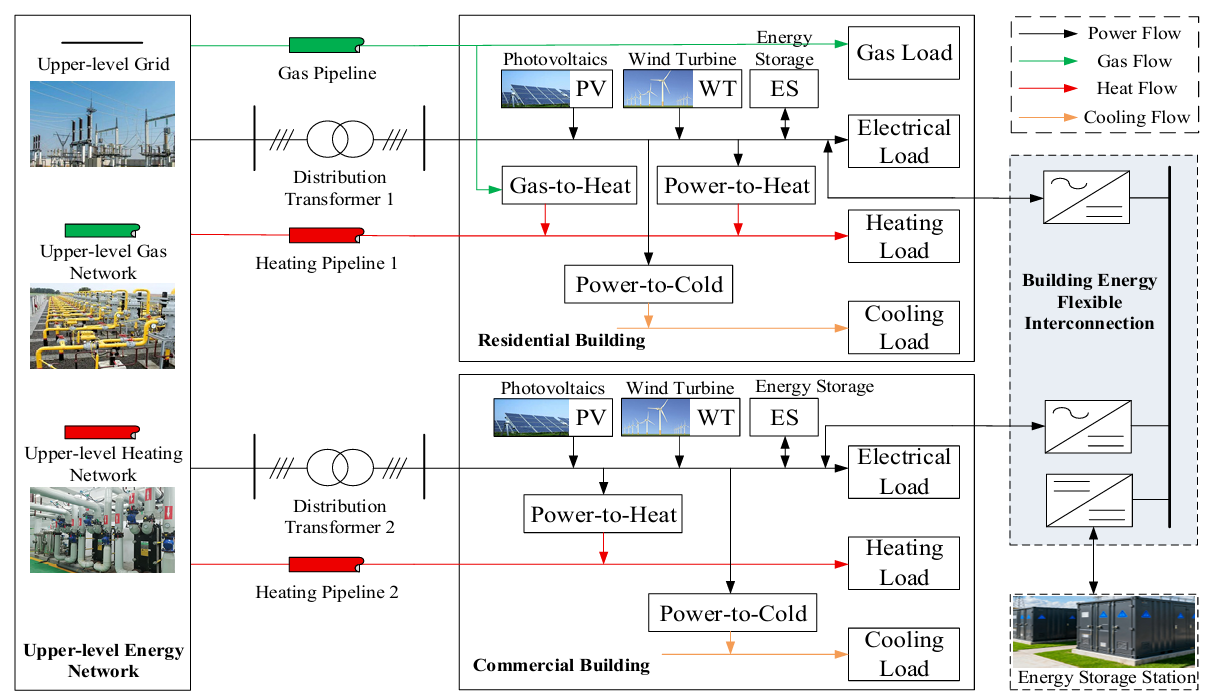
Flexible interconnection among different building types holds significant importance for integrating distributed energy resources, mitigating regional load peak-valley differences, and enhancing the local consumption capacity of renewable energy. Addressing the issue of insufficient multi-energy synergy in multi-building clusters, this paper proposes a bi-level optimal configuration method for flexible interconnected energy systems that accounts for multi-energy complementarity. By constructing a comprehensive multi-energy flow model encompassing all elements of source, network, load, storage, and conversion, a bi-level optimization framework is established. The upper level aims to minimize total lifecycle cost and carbon emissions, while the lower level targets maximizing the renewable energy self-consumption rate and minimizing daily operational cost. An improved NSGA-II algorithm integrating Lévy flight and a good point set is employed for an efficient solution. Simulation results demonstrate that the proposed scheme can achieve cross-spatiotemporal energy transfer and multi-energy collaborative optimization. In a typical summer day scenario, the system’s renewable energy self-consumption rate increased to 96.20%, operational cost was reduced by 8.83%, and carbon emissions decreased by 10.18%, validating the effectiveness and superiority of the method in improving energy utilization efficiency and supporting the low-carbon and economic transition of regional building systems. The outcomes of this study can provide theoretical support and engineering reference for the low-carbon, economical, and efficient planning of multi-building energy systems.
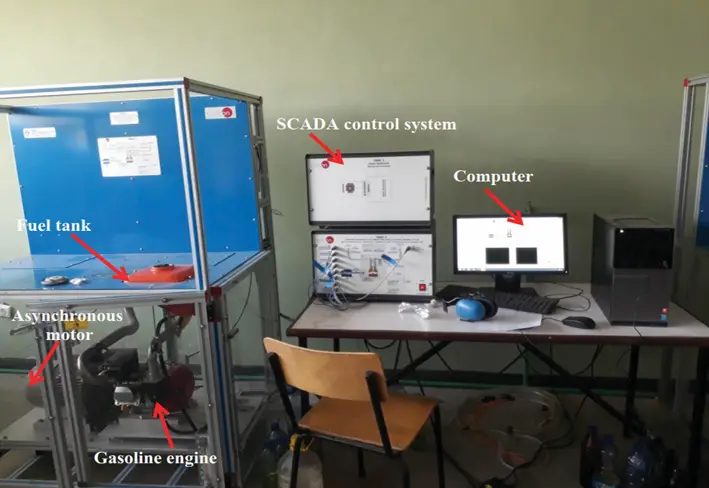
Although fossil fuels are the primary source of energy in the world, their greenhouse gas emissions and other pollutants provide serious environmental problems. This study uses a gasoline blend with ethanol and methanol to examine the emissions and performance of a spark ignition (SI) engine. An experimental design focused on engine input factors such as load and fuel blends. Brake-specific fuel consumption (BSFC), brake thermal efficiency (BTE), and emissions of carbon monoxide (CO), hydrocarbons (HC), and nitrogen oxides (NOx) were examined about these parameters using Taguchi’s L16 orthogonal array and ANOVA via Minitab 18. The results show that 80% engine load and a 15% blend for both ethanol and methanol provide the best engine performance, greatly lowering BSFC and raising BTE. Notably, 20% engine load and 15% blend result in the lowest CO emissions, whilst 20% load and 0% blend result in the lowest NOx emissions. Also, 20% load and 15% blend result in the lowest HC emissions. This study highlights the potential of alternative fuel blends to improve engine efficiency and reduce hazardous emissions.
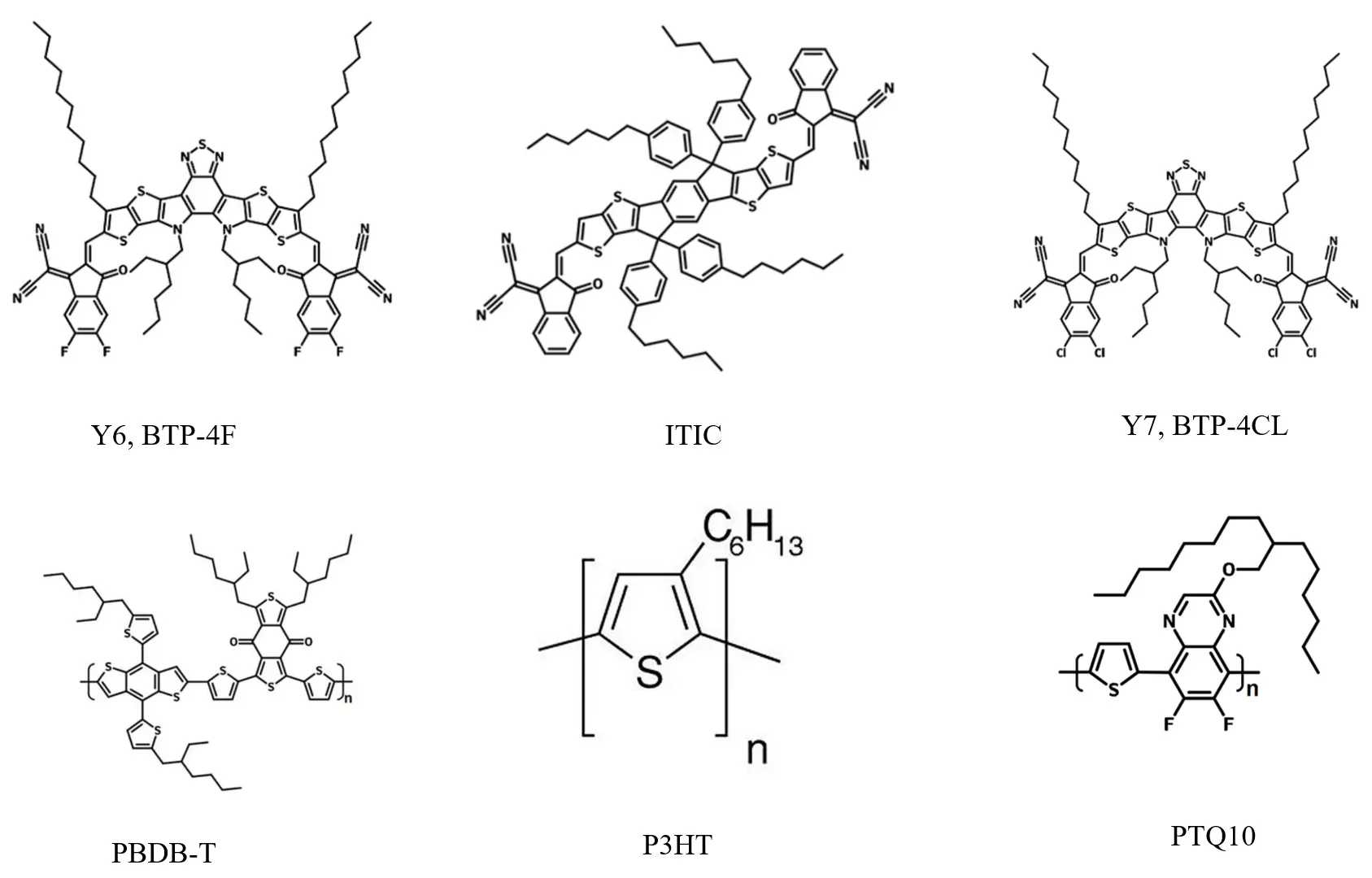
Organic solar cells (OSCs) are attracting attention as a possible replacement for traditional photovoltaics because they are low-cost, lightweight, and have adjustable optoelectronic features. The commercialization of single-junction OSCs still faces challenges in achieving high power conversion efficiency (PCE) and operating stability. Recent developments in photonic crystals, plasmonics, nanophotonics, and metamaterials have significantly addressed these issues, especially in single-junction systems. This paper reviews the latest advancements in charge transport engineering, nanophotonic light-trapping methods, and nanostructured interfaces specifically designed for single-junction OSCs. It also highlights recent record-breaking efficiencies that exceed 20% PCE. We discussed integrating plasmonic nanoparticles, optical microcavities, nanostructured electrodes, and improved photonic materials to increase light absorption, exciton dissociation, and charge collection within the specific limitations of single-junction devices. Furthermore, we stress the important role of computational modeling and recent experimental breakthroughs in enhancing optical and electrical performance. Rather than treating optical and electrical processes independently, this review emphasizes the synergistic role of photonic enhancement strategies in simultaneously improving light trapping and charge transport, highlighting how nanophotonic designs influence carrier generation, recombination, and extraction in single-junction OSCs.
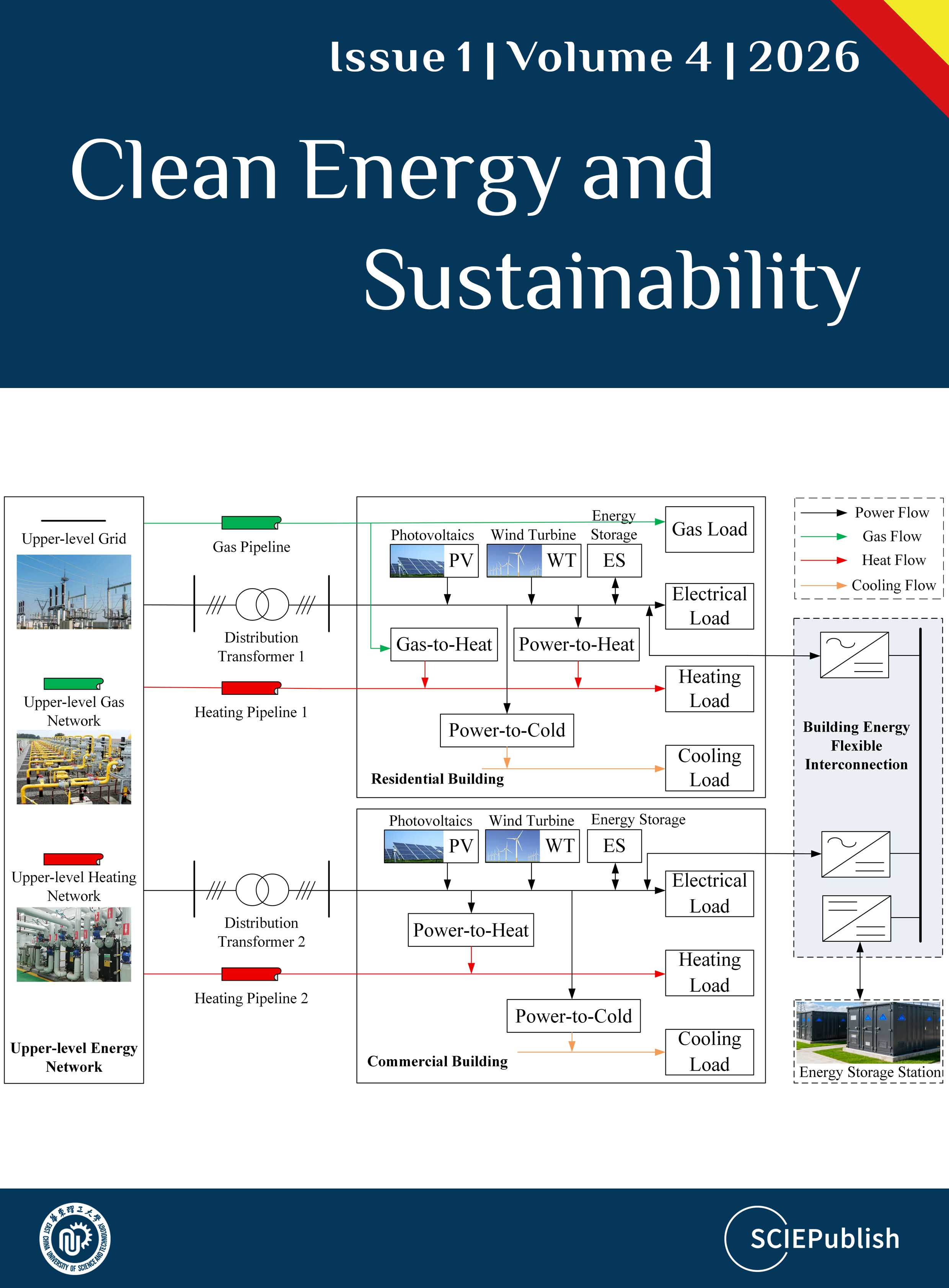
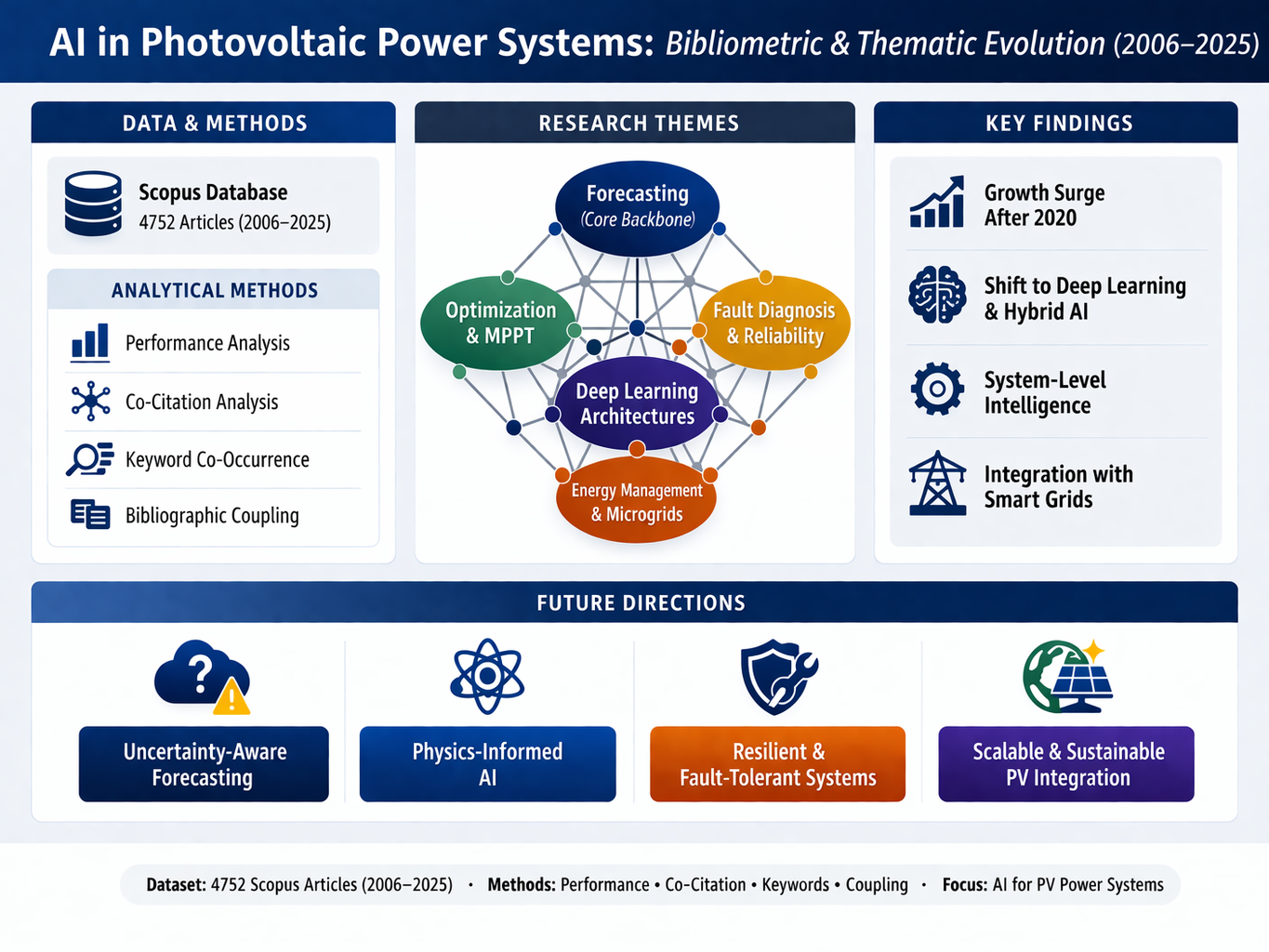
Artificial intelligence (AI) has rapidly become a core enabling technology in photovoltaic (PV) power systems, supporting improvements in forecasting accuracy, operational control, fault diagnosis, and system-level energy management. Despite the rapid growth of this field, a comprehensive understanding of its intellectual structure, thematic evolution, and emerging methodological directions remains fragmented. To address this gap, this study develops an integrated bibliometric-thematic analysis framework to systematically map the knowledge structure, research trajectories, and methodological frontiers of AI applications in PV power systems. The analysis is based on 4752 peer-reviewed journal articles indexed in Scopus (2006–2025). It combines performance analysis, co-citation analysis, keyword co-occurrence analysis, and bibliographic coupling to answer five structured research questions. The results demonstrate that PV power forecasting constitutes the central intellectual backbone of AI-based PV research, with the highest citation concentration and the strongest thematic connectivity across clusters. Thematic evolution analysis reveals a clear methodological transition from conventional machine learning models toward hybrid deep learning architectures, uncertainty-aware prediction frameworks, and physics-based AI integration. Furthermore, emerging research frontiers are characterized by generative learning models, multi-source data fusion strategies, and resilience-oriented fault diagnostics, while critical gaps persist in benchmarking standardization, uncertainty quantification, system-level integration, and large-scale industrial deployment. Unlike prior reviews that focus on isolated technical applications, this study provides the first integrated performance analysis and science-mapping synthesis that connects intellectual foundations, thematic evolution, and frontier innovations across the entire AI-based PV ecosystem. The findings offer a structured research roadmap and actionable guidance for researchers, PV plant operators, and policymakers aiming to design intelligent, scalable, and resilient PV energy systems that support the global low-carbon transition.
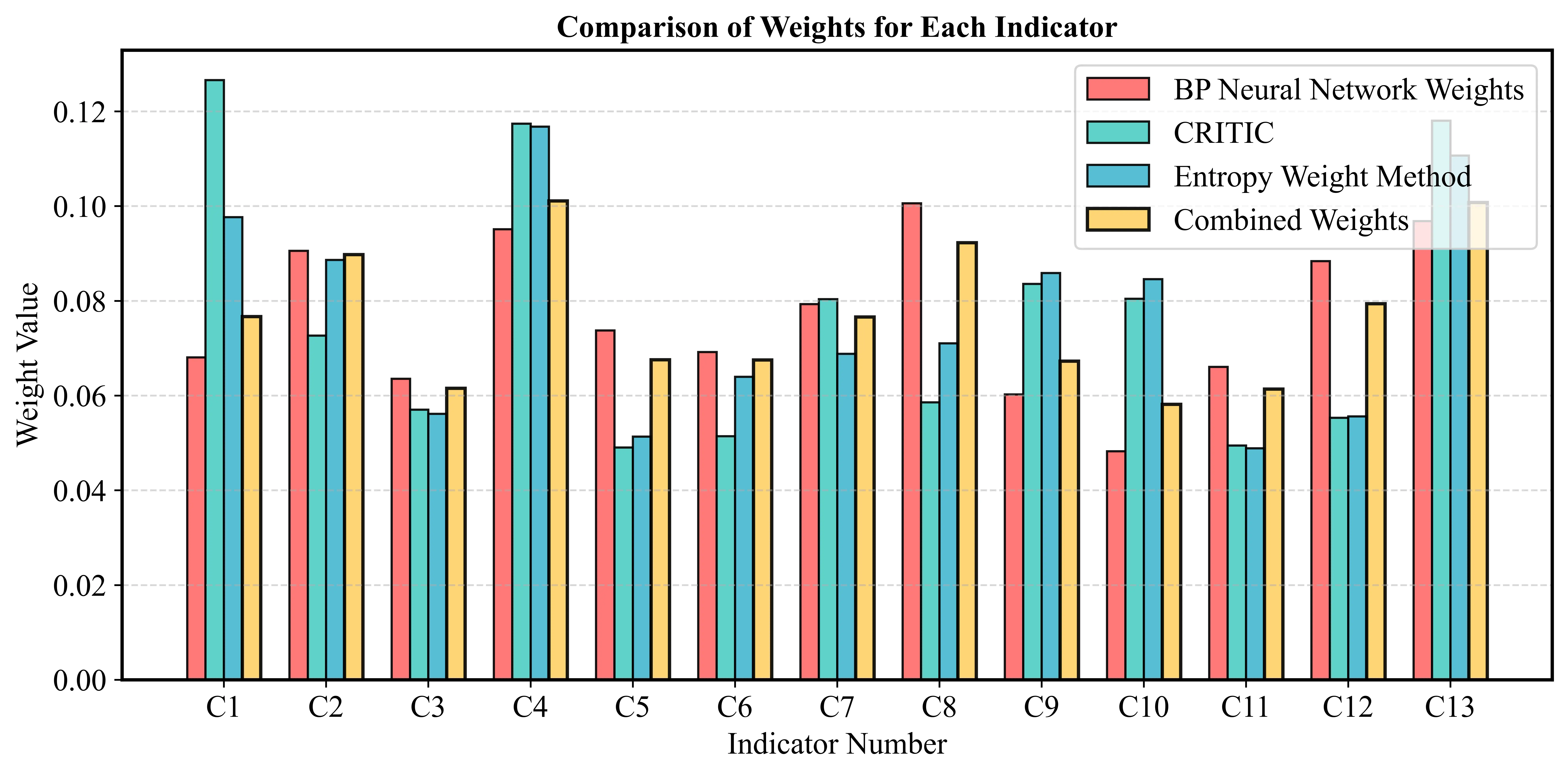
The evaluation of investment effectiveness in power grids oriented towards new-type power systems is a critical issue for advancing grid transformation and enhancing the scientific basis of investment decision-making. To address the current challenges—such as single-dimensional evaluation, strong subjectivity in index weighting, and insufficient consideration of risks and decision-makers’ psychological factors—this paper aims to construct a hybrid evaluation framework that comprehensively reflects both objective data and subjective decision-making preferences. First, a comprehensive evaluation index system is established, encompassing four dimensions: low-carbon performance, safety, economic efficiency, and intelligence. Second, an innovative integration of the Back Propagation Neural Network (BPNN), the CRITIC method, and the Entropy Weight Method (EWM) is conducted. The combination weights are determined through game theory to scientifically quantify the importance of each index. Based on this, the Improved Cumulative Prospect Theory (ICPT) is introduced to characterize decision-makers’ psychological behavior under uncertainty. Furthermore, by combining Grey Relational Analysis (GRA) and the Technique for Order Preference by Similarity to an Ideal Solution (TOPSIS), an ICPT-GRA-TOPSIS comprehensive evaluation model is constructed. An empirical study of 13 typical urban power grids in China reveals that the proposed model can effectively identify the strengths and weaknesses of investment effectiveness across different regions, categorizing them into development tiers such as “multi-objective collaborative leading type”, “key breakthrough but unbalanced type”, and “system-lagging type”. More importantly, the sensitivity analysis of decision-making psychology demonstrates that the evaluation of investment strategies is highly dependent on decision-makers’ risk attitudes and value orientations. This provides critical quantitative decision-making references for formulating differentiated, precise investment strategies for power grids, offering significant theoretical and practical value for guiding power grid enterprises in optimizing resource allocation and supporting the construction of new-type power systems.