Found 493 results
Open Access
Opinion
27 May 2024The Strange Question of Species: Biocratic Implications in Interwar Paleoanthropology
Species was one of the most controversial concepts in biological science. Not even the “New Systematics” of the 1930s and 1940s succeeded in bringing complete clarity to the issue. During the first half of the twentieth century the conceptualization of species was challenged by paleontology, a then-emerging discipline, but an ancient essentialist conception resisted, whereby each species is characterized by its own immutable essence (eidos). This simplification was transferred to physical anthropology in the study of human populations, with further cultural and political outcomes. For example: the meaning of species developed a series of biopolitical and legal implications regarding the construction of a society preserved from foreign dangerous bodies. From this perspective, the racial policy of the Third Reich established that the German national community was to be based on belonging to a same species (Art), from which Jewish population was excluded, considering it an alien species (Artfremd) and therefore incompatible. The concept of species, defined from an essentialist perspective, was in fact considered more differentiating and selective than that of “race”. Consequently, foreignness to the human species became a more radical distinguishing factor than racial classification. The article, with a focus on German academia, aims to reconstruct the debate in paleoanthropology during interwar period.

Open Access
Article
23 May 2024Proposal for A Systemic Human Ecological Turn for Health Science and Medicine
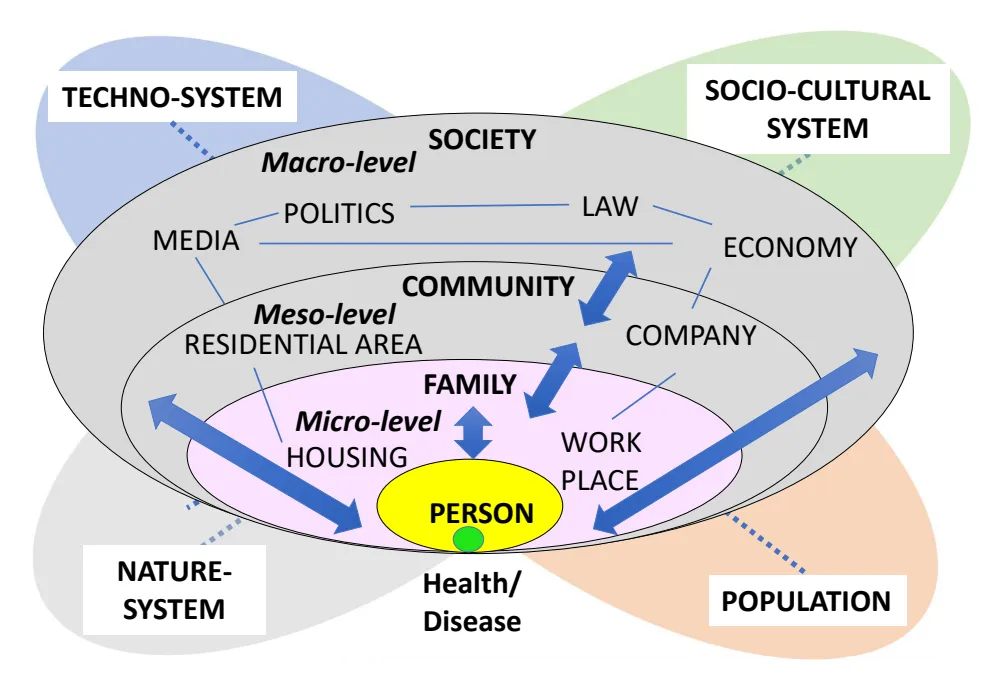
Industrial development processes, accompanied by extreme growth processes, regards world population, pollution, food production and the exploitation of natural resources have caused severe ecological problems. This has been well known since 1972 through the study ‘The Limits to Growth’, in which humanity and the world society was called upon to make an ecological turn and to change its consumption model and the type of economic development that was not suited to finite natural resources (or a finite planet). However, the relationships between the state of the environment and human health have hardly been considered, although an ecological view of health was already proposed by Hippocrates, and as in the meantime, the technical terms “Environmental Health” and “Environmental Medicine” have become established at universities. It is only in recent times that global terms such as climate medicine, One Health, Eco Health, etc. have become powerful pragmatic and action-oriented initiatives. They can be understood as calls for a worldwide health-related ‘ecologization’ of (health) culture. Regarding these approaches we highlight theoretical and metatheoretical aspects, since in general, any real action is only as good as the analytical quality of the plan that serves as a guide for that action. From this point of view, we find that these approaches exhibit striking weaknesses. These are, among other things: the neglect of epistemological challenges combined with inconsistent conceptualizations of the category environment, the very superficial models of human beings, weaknesses of ecological frameworks in relation to the macro-, meso- and micro-eco-social levels of the targeted topics, and a vague notion of systems methodology. Following on from this, we call for an explicit social-/human-ecological framework (New Viennese School, Australian School) for environmental health issues as it has been established for decades in the field of environmental, sustainability and transformation sciences.
Open Access
Article
14 May 2024Measurement and Structure of Common Prosperity of Urban Residents the Case of Hangzhou, China
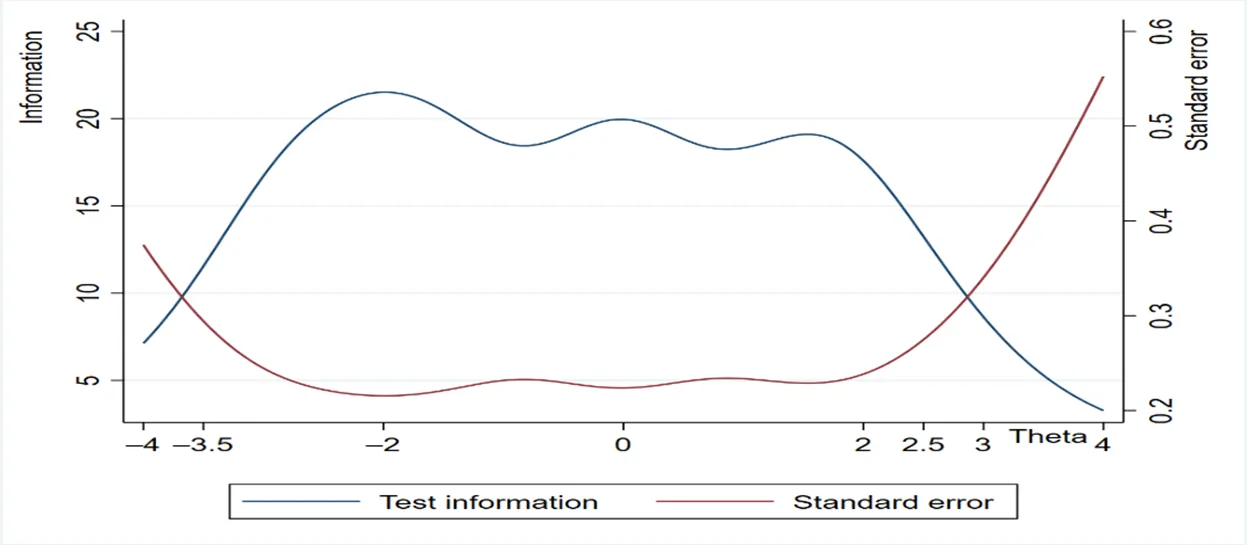
Common prosperity is an important feature of the social state that the people of the world aspire to, and an important feature of the Chinese path to modernization. Taking common prosperity as the result of income and assets does not facilitate a full understanding of people’s common prosperity, because common prosperity also includes people’s pursuit of subjective happiness such as happiness and satisfaction. From the perspective of the need for a better life in China, this study constructs a subjective evaluation system of the common prosperity of urban residents, including 5 dimensions and 25 specific indicators. It uses survey data from 460 participants and applies the graded response models to estimate parameters and predict latent variables. We find that 21 indicators are in line with the reasonable range of basic assumptions and parameters. They have a strong ability to distinguish the common prosperity of residents in different regions, but have different functional characteristics. The confirmatory factor analysis shows that the common prosperity index of residents includes four potential factors: income, education, medical care, and old-age care, and ecology, which has a good structural effect. In terms of weight, education, medical care and old-age care are the most important factors influencing common prosperity. Among them, the classification policy of high school entrance examination, the quality and fairness of primary and secondary education, the degree of medical insurance security, and the waste sorting and community security are important aspects of evaluating the Common prosperity of residents.
Open Access
Article
13 May 2024Expression of Redox Partner Fusions for Light Driven Cytochrome P450s in the Cyanobacterium Synechocystis sp. PCC. 6803
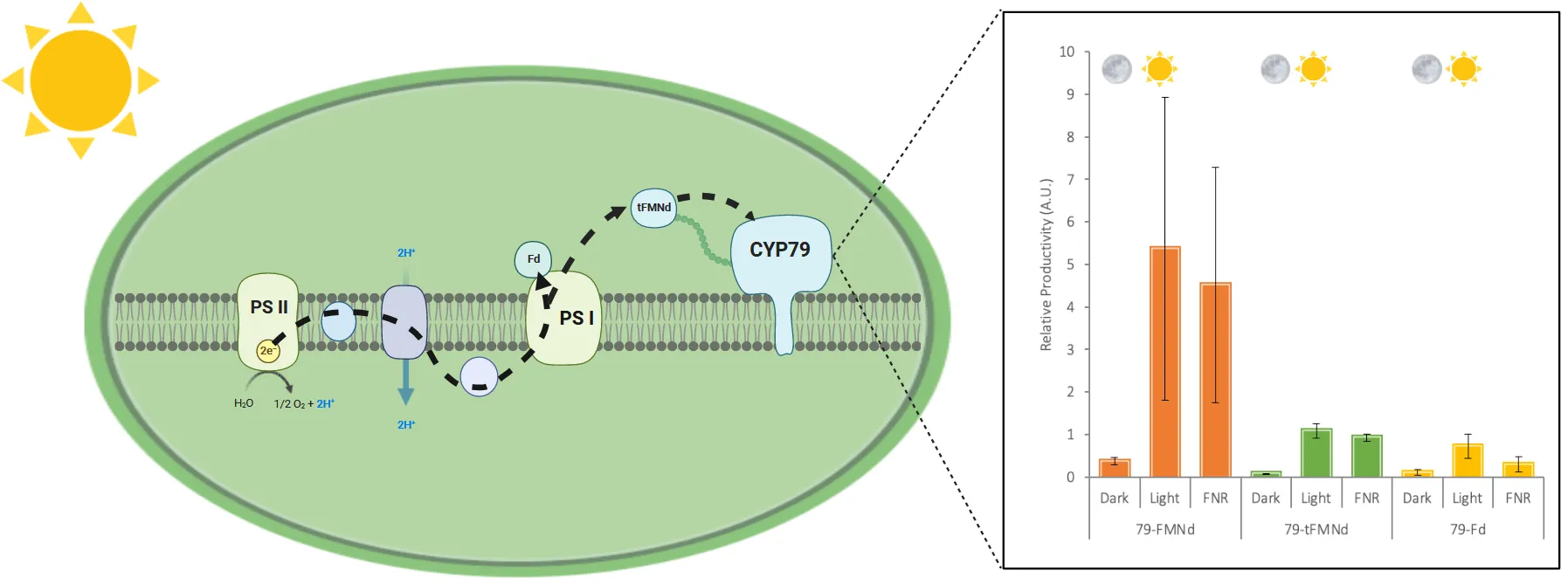
Cytochrome P450s (P450s) catalyze stereo- and regioselective monooxygenations in the biosynthesis of a wide range of valuable natural compounds. The turnover of P450s requires dedicated electron transfer, usually via a NADPH-dependent reductase. The need for an NADPH-dependent reductase can be circumvented if expressed in photosynthetic organisms by exploiting the photosynthetic reducing power. However, partitioning reducing equivalents towards the P450s needs further optimization. Using our model P450, SbCYP79A1, we have previously shown that by targeting this P450 to the thylakoid membrane, the P450 can obtain its reducing power directly from photosystem I via soluble ferredoxin. Furthermore, we demonstrated using transient expression that fusing a soluble electron carrier to this P450 improves electron partitioning towards the P450 in tobacco. In order to characterize these fusions in a stably transformed organism, we expressed three different redox partner fusions in the cyanobacterium Synechocystis sp. PCC. 6803. We show that biochemical trends observed in the tobacco system are recapitulated in stably transformed Synechocystis sp. PCC. 6803. Overall, the FMN binding domain fusion produces the most oxime per unit of enzyme with and without the presence of the endogenous competing electron sink FNR and NADP+. However, the overall yield of oxime is comparable to the other strains, due to poor steady state levels of the fusion protein. Synechocystis sp. PCC. strains expressing the P450-FMN fusion also display a chlorotic phenotype that can be rescued by switching the nitrogen source from nitrate to ammonia, implying impaired nitrate assimilation. Optimizing electron transport towards the P450 is indeed possible in vivo but also highlights interference with native metabolic processes.
Open Access
Article
08 May 2024Assessing Drone Return-to-Home Landing Accuracy in a Woodland Landscape
While aerial photography continues to play an integral role in forest management, its data acquisition can now be obtained through an unmanned aerial vehicle (UAV), commonly referred as a drone, instead of conventional manned aircraft. With its feasibility, a drone can be programed to take off, fly over an area following predefined paths and take images, then return to the home spot automatically. When flying over forests, it requires that there is an open space for a vertical takeoff drone to take off vertically and return safely. Hence, the automatic return-to-home feature on the drone is crucial when operating in a woodland landscape. In this project, we assessed the return-to-home landing accuracy based on a permanently marked launch pad nested in a wooded area on the campus of Stephen F. Austin State University in Nacogdoches, Texas. We compared four models of the DJI drone line, with each flown 30 missions over multiple days under different weather conditions. When each drone returned to the home launch spot and landed, the distance and direction from the launch spot to the landing position was measured. Results showed that both the Phantom 4 Advanced and the Spark had superior landing accuracy, whereas the Phantom 3 Advanced was the least accurate trailing behind the Phantom 4 Pro.

Open Access
Article
30 April 2024Arrestin beta 1 Regulates Alveolar Progenitor Renewal and Lung Fibrosis
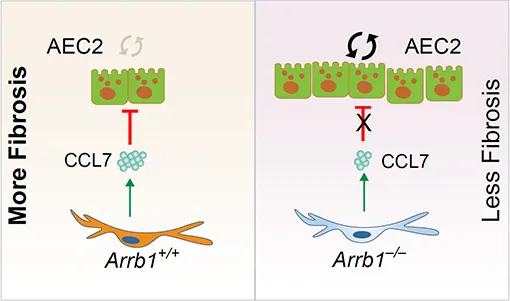
The molecular mechanisms that regulate progressive pulmonary fibrosis remain poorly understood. Type 2 alveolar epithelial cells (AEC2s) function as adult stem cells in the lung. We previously showed that there is a loss of AEC2s and a failure of AEC2 renewal in the lungs of idiopathic pulmonary fibrosis (IPF) patients. We also reported that beta-arrestins are the key regulators of fibroblast invasion, and beta-arrestin 1 and 2 deficient mice exhibit decreased mortality, decreased matrix deposition, and increased lung function in bleomycin-induced lung fibrosis. However, the role of beta-arrestins in AEC2 regeneration is unclear. In this study, we investigated the role and mechanism of Arrestin beta 1 (ARRB1) in AEC2 renewal and in lung fibrosis. We used conventional deletion as well as cell type-specific deletion of ARRB1 in mice and found that Arrb1 deficiency in fibroblasts protects mice from lung fibrosis, and the knockout mice exhibit enhanced AEC2 regeneration in vivo, suggesting a role of fibroblast-derived ARRB1 in AEC2 renewal. We further found that Arrb1-deficient fibroblasts promotes AEC2 renewal in 3D organoid assays. Mechanistically, we found that CCL7 is among the top downregulated cytokines in Arrb1 deficient fibroblasts and CCL7 inhibits AEC2 regeneration in 3D organoid experiments. Therefore, fibroblast ARRB1 mediates AEC2 renewal, possibly by releasing chemokine CCL7, leading to fibrosis in the lung.
Open Access
Article
26 April 2024Exact and Heuristic Approaches to Surveillance Routing with a Minimum Number of Drones
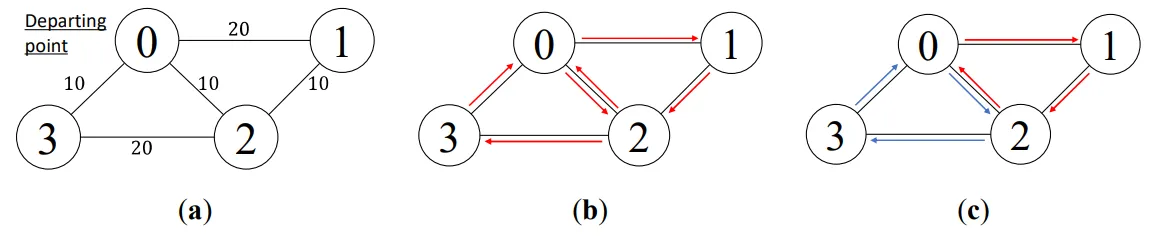
The rising cost and scarcity of human labor pose challenges in security patrolling tasks, such as facility security. Drones offer a promising solution to replace human patrols. This paper proposes two methods for finding the minimum number of drones required for efficient surveillance routing: an ILP-based method and a greedy method. We evaluate these methods through experiments, comparing the minimum number of required drones and algorithm runtime. The findings indicate that the ILP-based method consistently yields the same or a lower number of drones needed for surveillance compared to the greedy method, with a 73.3% success rate in achieving better results. However, the greedy method consistently finishes within one second, whereas the ILP-based method sometimes significantly increases when dealing with 14 more locations. As a case study, we apply the greedy method to identify the minimum drone surveillance route for the Osaka-Ibaraki Campus of Ritsumeikan University.
Open Access
Commentary
25 April 2024Monitoring Complexity in Clean Energy Systems Applications
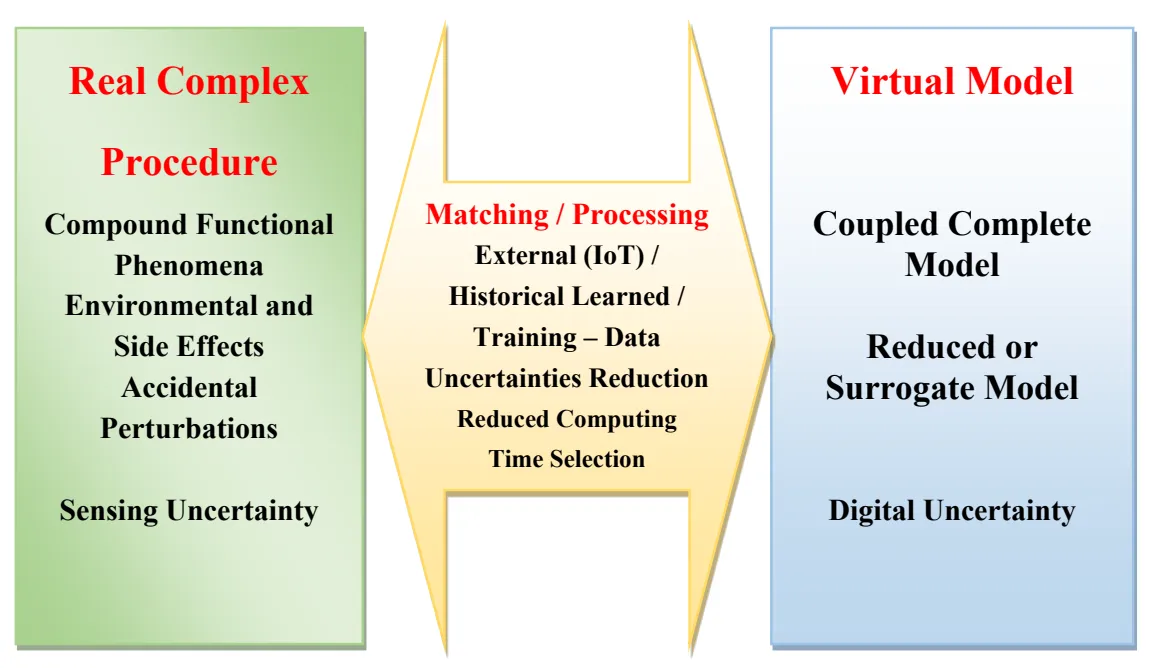
Clean energy applications often involve systems with technological process monitoring. This supervision aims to optimize operation, in particular efficiency, performance and compatibility with dedicated criteria. Most of these energy systems involve complex procedures. A complex procedure is an arrangement of compound processes interacting in interdependent behaviors. The supervision of these complex procedures focuses on the interaction of compound processes, their digital coupling and the handling of uncertainties in their detection and digital tools. Real-virtual pairs, such as digital twins, could carry out such surveillance. This commentary aims to analyze and illustrate such supervision in clean electromagnetic energy systems based on a review of the literature. The notion of complexity and the interactions of the compound processes involved are first addressed and detailed. The modeling of these interactions is presented through the mathematical coupling of the electromagnetic equations with other equations of the phenomena involved. These phenomena are linked to the functional or environmental behaviors of the systems. Compound process monitoring in complex procedures is then analyzed taking into account threats, unsolicited external events and uncertainties related to the sensing and digital tools involved. This contribution illustrated several points relating to, the relationship between the complexities of a real energy procedure and its coupled virtual model, the dependence of the model reduction strategy on each specific application and the reduction of uncertainties through the matching of real-virtual pairs. The different analyses are supported by literature references permitting more information when necessary.
Open Access
Article
22 April 2024Paleo-Asian Cultural Phenomena of Ancient Beringia: Population Convergence and Solution of Ethnic Self-Identification
Authors offer for a discussion the materials from studies of archaic culture elements that include body modifications in ethnic groups in the context of population genetic data from native peoples of the Far North. The authors consider materials from the territory of ancient Beringia which include a part of Chukotka and Kamchatka in Russia, Alaska in the USA and several island groups in between. The working hypothesis of the study involves the identification of common and specific features of body modifications in ethnic groups having similar population genesis. This allows to clarify the specifics of the regional contacts. Body modifications (tattoos, piercings, etc.) are considered as a way of a person’s self-identification and a form of his group membership (in this case—ethnic group). The study used ethnographic, archaeological, paleo-history, folklore materials and up-to-date data that include genetic research of contemporary ethnic groups inhabiting the territory of ancient Beringia and maintaining their traditional way of life. The methodology base of the research is based on formalized approach and cross-cultural analysis evidence of the similarity/difference of the population in combination with the method of comparative analysis of DNA data and information about their genetic structure.

Open Access
Article
22 April 2024
Construction of a Comprehensive International Legal
Protection Mechanism for Climate Refugees
Climate refugee has become an unavoidable major right crisis challenge for the international community. However, the corresponding development of positive international law is obviously imperfect. The basic rights of climate refugees cannot be fully guaranteed by international law. They are always facing problems such as unclear legal status lack of protection of basic rights, and imperfect relief mechanism. Those vulnerable groups who lack resources and migration abilities suffer more serious rights violations because they are forced to stay in place. Compared with the risk-management framework and right-protection framework, the comprehensive international legal protection mechanism is the inevitable choice for climate refugees’ rights relief in the post-2012 period. The rights of climate refugees set out in the preamble of the Paris Agreement in 2015, the New York Declaration on Refugees and Migrants in 2016, the Global Refugee Compact in 2018, and the Global Compact for Security, Order and Regular Migration formally incorporated the issues of refugees and migrants caused by climate change, laying the foundation for this choice. However, it is a long and difficult way to build a perfect comprehensive international response to climate change. It is not only necessary to realize the integration of human rights law and climate law at the conceptual level, but also to integrate the different perspectives of the two laws and build a set of scientific and reasonable cooperation mechanism.