Found 301 results
Open Access
Perspective
04 March 2024Trees—Protectors against a Changing Climate
There are estimated to be about 3 trillion trees on Earth, or about half the number that existed before the dawn of human civilization. Trees are vital to at least four major biogeochemical cycles, namely, the carbon, water, nitrogen and oxygen cycles. In addition to absorbing carbon, and releasing oxygen through photosynthesis, trees are critical for maintaining biodiversity, providing habitat for 80% of land based wildlife, feeding the soil, generating clouds and increasing albedo (thus causing global cooling), influencing rainfall and weather patterns. The loss of trees, therefore, weakens our chances of reaching climate and biodiversity targets, and so proforestation and other practices to stringently preserve the functionality of and holistically restore forest ecosystems, must be adopted as a matter of urgency, paying due attention to soil, and species diversity including mycorrhizae; not being limited to insouciant “tree planting” solutions. Indeed, due to the tardiness of our actions to repair the Earth and its climate, severe restrictions to the cutting of mature trees must actually be enabled globally. However, this alone is not enough, and must be integrated with other forms of land, wetland, grassland and agricultural protection and restoration. Such Nature Based Solutions could provide over one-third of the climate mitigation needed by 2030 to keep within the 2 °C global heating limit. Nonetheless, it is also critical to curb greenhouse gas emissions at source, not only by implementing low-carbon, renewable energy, but also energy demand reduction strategies, such as insulating buildings, societal relocalisation, and local food growing.

Open Access
Review
29 February 2024Conceptualizing an Informational Paradigm in the Pursuit of Sustainable Cities and Communities
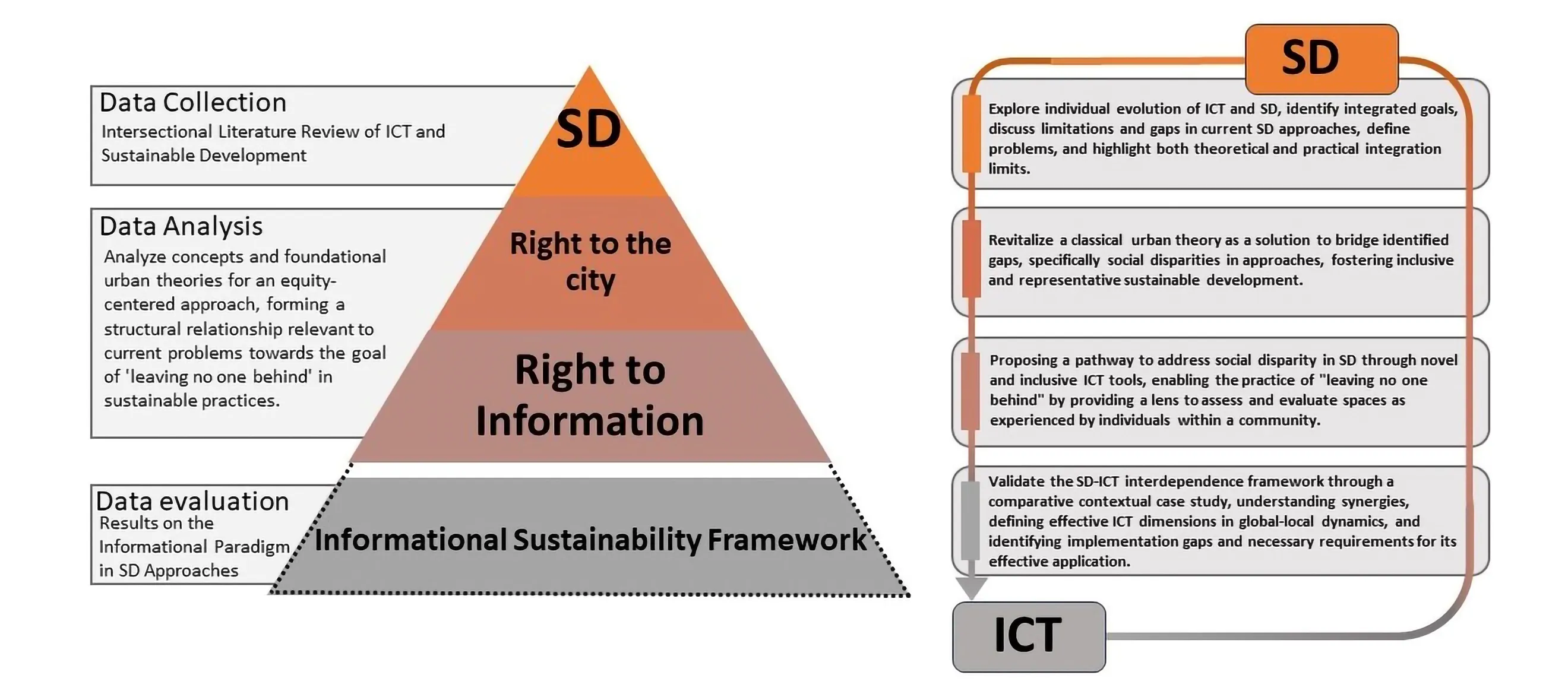
This study seeks to conceptualize ‘Informational Sustainability’ by examining the dynamic relationship between Sustainable Development and the Information and Communication Technologies (ICT) Revolution through the exploration of two prominent urban theories—Lefebvre’s ‘Right to the City’ and Castells’ ‘Rise of the Network Society’—to underscore the importance of knowledge integration in the development of informed, sustainable communities. Conducting a cross-country comparison between developed and developing nations, the study underscores the critical role of informational transformation in enabling resource efficiency, knowledge sharing, innovation, and informed decision-making—key for achieving Sustainable Development Goals (SDGs), while also highlighting potential risks associated with resisting ICT adoption, including hindered growth, increased inequalities, and reduced social engagement and environmental stewardship. The core focus of this conceptual framework is to validate the precursor role of ICT in building sustainable cities and communities by identifying synergies in Sustainable Development, defining dimensions for effective ICT application within the dynamic interplay of global and local levels, and identifying implementation gaps and necessary presumptions for its effective use.
Open Access
Commentary
21 February 2024
Open Access
Review
21 February 2024One-pot Multi-enzyme Cascade Synthesis of Bifunctional Compounds from Vegetable Oils
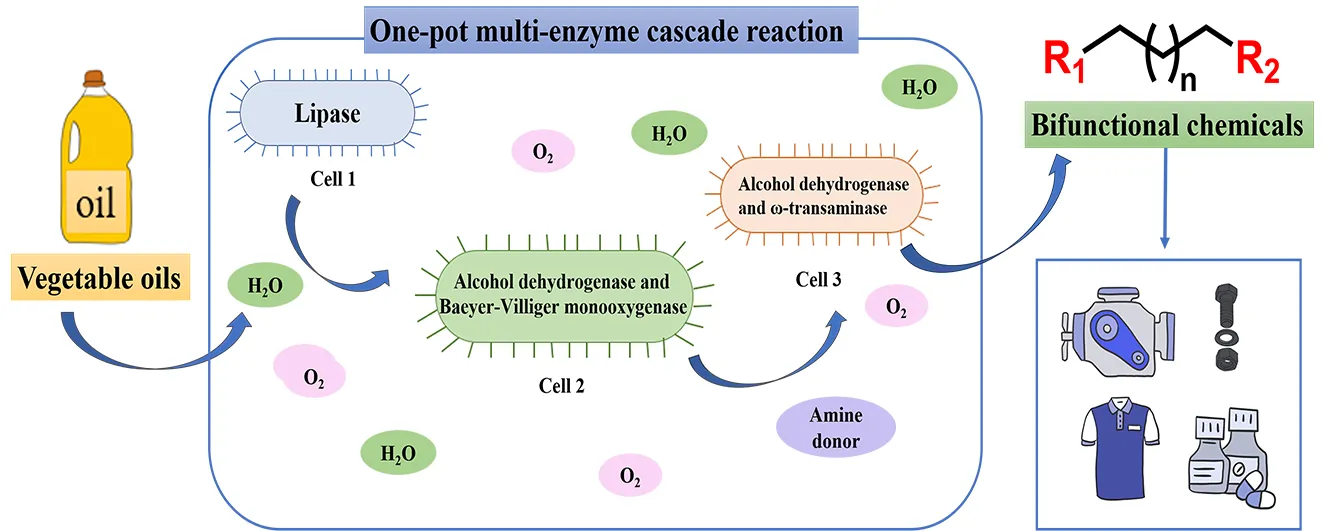
Green and efficient biocatalytic technology has become a complementary or alternative means of organic synthesis. Chemicals with two functional groups, such as α,ω-dicarboxylic acids, ω-amino fatty acids and ω-hydroxy fatty acids, are widely used in the synthesis of polymers such as polyesters and polyamides. In recent years, the production of biodegradable materials using renewable and abundant vegetable oils as green raw materials has attracted increasing attention, receiving an additional impetus from synthetic biology. This paper presents the recent research progress in the production of bifunctional chemicals with medium chain lengths of C8–C12 using multi-enzyme cascades. Recent studies have developed multilevel optimization strategies to improve the efficiency, economics, and sustainability of multi-enzyme cascades. Cofactor regeneration strategies were developed to avoid large additions of expensive coenzymes. Protein engineering strategies were applied to improve enzyme stability and catalytic performance. In addition, blocking the β-oxidation pathway, improving the efficiency of substrate transport across membranes and increasing cellular robustness are effective optimization strategies for whole-cell catalytic systems. In addition, we discuss the development prospects of producing high value-added fine chemicals from vegetable oils using one-pot multi-enzyme reaction systems.
Open Access
Meeting Report
20 February 2024The Cellular and Metabolic Bases of Organ Fibrosis: UNIA Workshop 2023 in Baeza, Spain
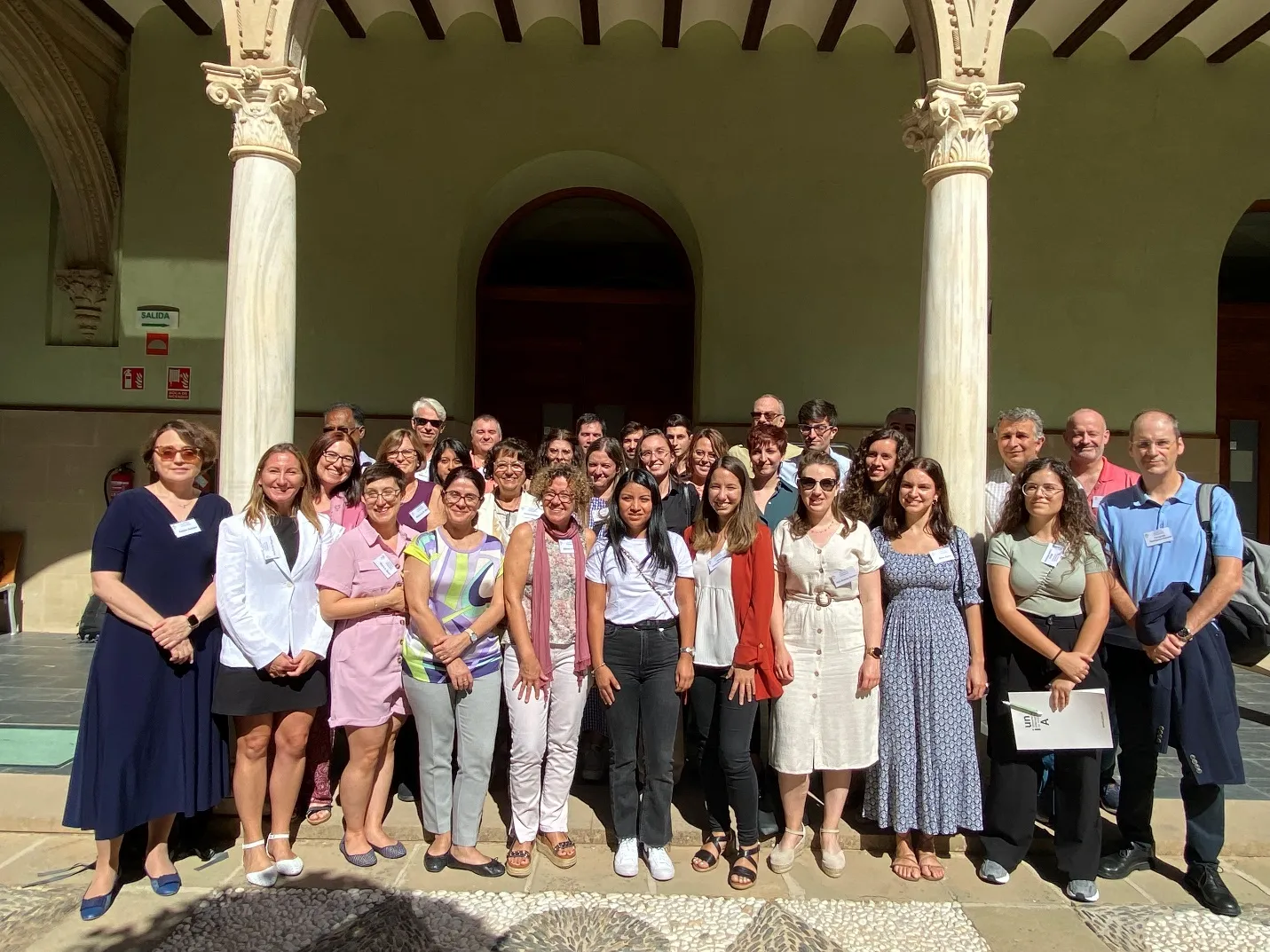
Fibrosis is defined by scarring and tissue hardening caused by excess deposition of extracellular matrix components, mainly collagens. A fibrotic response can occur in any tissue of the body and is the final outcome of an unbalanced reaction to inflammation and wound healing induced by a variety of insults, including persistent infections, autoimmune reactions, allergic responses, chemical exposure, radiation, and tissue injury. The accumulation of extracellular matrix proteins replaces the living tissue and disrupts the architecture leading to organ malfunction. Fibrosis remains a major clinical and therapeutic challenge and has been estimated to account for 45% of deaths in the developed world. While major advances regarding mechanistic knowledge on the underlying cell biology alterations in fibrosis have helped to characterize the main phases and mediators involved, this knowledge has not yielded significant progress in treatment. Only recently, the metabolic features associated to fibrosis have begun to emerge. This information, likely representing only the tip of the iceberg, suggests that metabolic derangement is a key culprit in the pathophysiology of fibrogenesis. The Workshop on The Cellular and Metabolic Bases of Organ Fibrosis, International University of Andalusia, Baeza, Spain, October 8–11, 2023 aimed to discuss the current knowledge and novel perspectives on the mechanisms contributing to the development of fibrosis in different organs and tissues, with particular focus on new methodological developments in metabolomics and therapeutic strategies.
Open Access
Article
20 February 2024Wind Influence on the Electrical Energy Production of Solar Plants
Solar energy, as a clean source of energy, plays a relevant role in this much desired (r)evolution. When talking about photovoltaics, despite the multiple studies on parameters that affect the panels operation, concrete knowledge on this matter is still in an incipient stage and precise data remains dispersed, given the mutability of outer factors beyond technology-related properties, hence the difficulties associated with exploration. Wind is one of them. Wind loads can affect the temperature of photovoltaics, whose efficiency is reduced when higher temperatures are reached. The viability of wind as natural cooling mechanism for solar plants and its influence on their electrical energy production is studied in this research work. Some appropriate results were achieved: depending on the module temperature prediction model used and on the photovoltaic technology in question, solar panels are foreseen to be up to approximately 3% more productive for average wind speeds and up to almost 7% more productive for higher speeds. Taking into consideration that wind speed values were collected in the close vicinity of the modules, these results can be proven to be even higher. That being said, this article contributes with accurate insights about wind influence on electrical energy production of solar plants.

Open Access
Article
18 February 2024The Sustainable Development Concept in the Polish Legal Space from a Legal-Dogmatic Perspective
The sustainable development concept is of crucial importance for the socioeconomic development processes, not only at the international community level, but also—or, perhaps, particularly—at the national or even local levels. The aim of the article is to demonstrate, from a legal-dogmatic perspective, the place, role and significance of the sustainable development concept in the Polish legal space. This perspective applies to both the state policy intended to formulate a strategy which provides a basis for law-making processes and to find normative solutions making it possible to reconcile legally protected values which sometimes compete with one another, with account taken of the needs of future generations. The sustainable development concept has been very broadly followed in Poland not only in the legal doctrine, but also in the doctrine of economic and social sciences. This term has turned out to be such an effective political catchword that it has been commonly abused and, therefore, it has lost a good deal of its social importance; this makes it substantially more difficult to apply a normative approach to the issues related to the implementation of the concept in legislative practice. In the Polish legal space, the sustainable development concept has become the leading theme of many documents and legal acts, particularly those concerned with environmental protection, but also, although to a much more modest extent, those addressing the issues of socioeconomic development.

Open Access
Article
31 January 2024Design of Intelligent and Sustainable Manufacturing Production Line for Automobile Wheel Hub
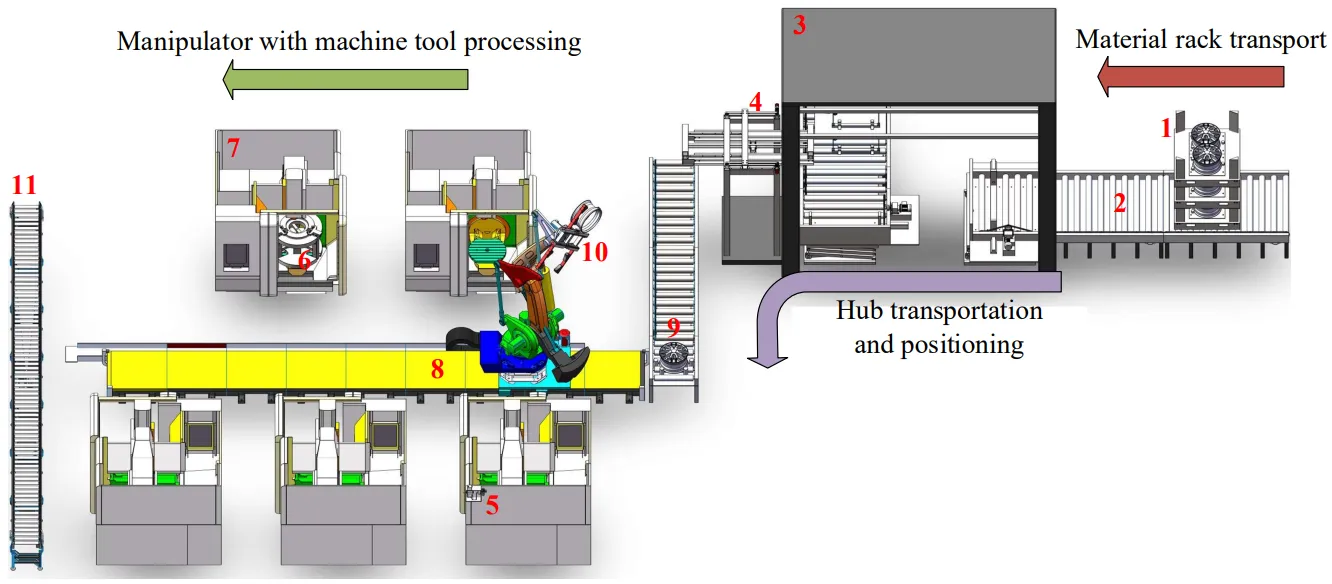
The wheel hub is an important part of the automobile, and machining affects its service life and driving safety. With the increasing demand for wheel productivity and machining accuracy in the automotive transport sector, automotive wheel production lines are gradually replacing human production. However, the technical difficulties of conventional automotive wheel production lines include insufficient intelligence, low machining precision, and large use of cutting fluid. This paper aims to address these research constraints. The intelligent, sustainable manufacturing production line for automobile wheel hub is designed. First, the machining of automotive wheel hubs is analyzed, and the overall layout of the production line is designed. Next, the process equipment system including the fixture and the minimum quantity lubrication (MQL) system are designed. The fixture achieves self-positioning and clamping functions through a linkage mechanism and a crank–slider mechanism, respectively, and the reliability of the mechanism is analyzed. Finally, the trajectory planning of the robot with dual clamping stations is performed by RobotStodio. Results show the machining parameters for a machining a wheel hub with a diameter of 580 mm are rotational speed of 2500 rpm, cutting depth of 4 mm, feed rate of 0.5 mm/r, and minimum clamping force of 10881.75 N. The average time to move the wheel hub between the roller table and each machine tool is 27 s, a reduction of 6 s compared with the manual handling time. The MQL system effectively reduces the use of cutting fluid. This production line can provide a basis and reference for actual production by reasonably planning the wheel hub production line.
Open Access
Article
29 January 2024A Novel High Step-up DC-DC Converter Using State Space Modelling Technique for Battery Storage Applications
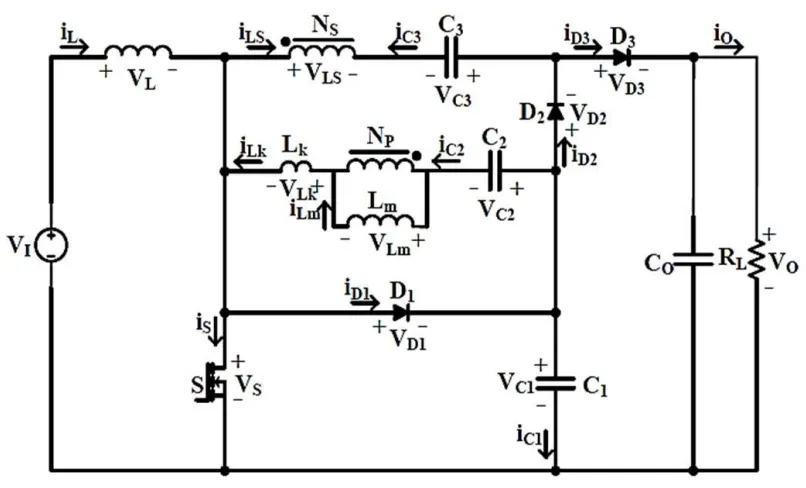
This paper focuses a novel non-isolated coupled inductor based DC-DC converter with excessive VG (voltage gain) is analyzed with a state-space modeling technique. It builds up of using three diodes, three capacitors, an inductor and CI (coupled inductor). The main switch S is turn on due to body diode and voltage stress is reduced at the switch S by using diode D1 and Capacitor C1. This paper focuses on design modelling, mathematical calculations and operation principle of DC-DC converter is discussed with state-space modelling technique. The performance has been presented for two different voltages for EV applications, i.e., 12 V, 48 V as input voltages with a high step-up outputs of 66 V and 831.7 V respectively. The converter stability is studied and determined the bode plot along with simulation performance results which are carried out using MATLAB R2022B.
Open Access
Article
29 January 2024The “Global Change Data Base” GCDB Facilitates a Transition to Clean Energy and Sustainability
This article presents the opportunities for constructing a global data base picturing underlying trends that drive global climate change. Energy-related CO2 emissions currently represent the key impact on climate change and thus become here the object of deep, long-term and historiographic analysis. In order to embrace all involved domains of technology, energy economy, fuel shares, economic efficacity, economic structure and population, a “Global Change Data Base” (GCDB) is suggested, based on earlier worldwide accepted data repositories. Such a GCDB works through regressions and statistical analysis of time series of data (on extensive magnitudes such as energy demand, population or Gross Domestic Product, GDP) as well as generation of derived data such as quotients of the former, yielding intensive magnitudes that describe systems and their structural properties. Moreover, the GCDB sets out to compute the first and second time derivatives of said magnitudes (and their percentual shares) which indicate new long-term developments already at very early phases. The invitation to participate in this foresight endeavour is extended to all readers. First preliminary GCDB results quantitatively portray the evolutionary structural global dynamics of economic growth, sectoral economic shifts, the shifts within energy carriers in various economic sectors, the ongoing improvements of energy intensity and energy efficiency in many economic sectors, and the structural changes within agricultural production and consumption systems.