
Comparative Life Cycle Assessment of Construction Materials for Drywall Application: Plastic Waste and Natural Fiber Composite Versus Conventional Gypsum Board
Comparative Life Cycle Assessment of Construction Materials for Drywall Application: Plastic Waste and Natural Fiber Composite Versus Conventional Gypsum Board

Received: 29 December 2025 Revised: 15 April 2026 Accepted: 22 May 2026 Published: 05 June 2026

© 2026 The authors. This is an open access article under the Creative Commons Attribution 4.0 International License (https://creativecommons.org/licenses/by/4.0/).
1. Introduction
Plastic packaging plays a fundamental role in the modern world due to its versatility, lightness, low production cost, and efficiency in providing the necessary barrier performance for product protection. Given this scenario, global production of plastic material exceeds 400 million tons annually, which, coupled with the short packaging lifespan, results in a large amount of waste, often disposed of improperly [1,2]. Among these materials, metallized biaxially oriented polypropylene (met-BOPP) stands out, widely used in the food sector. Its excellent barrier properties against gases, moisture, and light are crucial for preserving and extending the shelf life of foodstuffs [3,4].
However, the structural complexity of multilayer packaging, such as met-BOPP, poses significant challenges to its effective circularity. Recent literature highlights that, although advanced routes such as chemical recycling and solvent delamination are cited as promising solutions for the future, these technologies still face challenges for large-scale application due to high energy and operational costs [5,6,7]. In the current scenario, where mechanical recycling is well-established, the presence of contaminants, such as aluminum and additives, leads to the formation of recycled material with degraded properties, restricting its applications and reducing the economic interest in the selective collection of this waste [8,9].
Therefore, given the limitations of the met-BOPP recycling process, incorporating the raw waste into composites emerges as a valorization strategy. While the residual polymeric material can serve as the matrix phase, natural fibers are interesting candidates for the reinforcement phase, creating a scenario not only for the reuse of this material to avoid disposal, but also as a proposed alternative to reduce the extraction of virgin resources [10]. In pursuit of sustainable development, several studies have investigated the incorporation of natural fibers, such as jute and cotton, as a substitute for conventional materials, like glass or carbon fibers, since these materials combine suitable mechanical properties with the renewal of natural resources, including in construction applications [11,12,13,14,15,16]. Among such reinforcements, cellulose fibers derived from Pinus taeda kraft pulp have been investigated in thermoplastic polymer matrices, generally leading to increased stiffness and strength, as well as improved thermal stability of the resulting composites [17,18].
However, most studies on natural fibre-reinforced composites concentrate on fiber-matrix interfacial adhesion and mechanical performance analysis, often overlooking the assessment of the impacts of the polymer matrix and the resulting biocomposites [19,20]. Thus, there is still a lack of research on the environmental profile of biocomposites made from natural fibers and plastic waste, compared to the conventional materials they are intended to replace, such as drywall. This gap generates uncertainty about the environmental consequences of incorporating met-BOPP waste, highlighting the need to evaluate whether replacing current end-of-life practices (incineration and landfill) or substituting the standard market product indeed results in environmental benefits.
To clarify these uncertainties, Life Cycle Assessment (LCA) is adopted as a solid and standardised methodology capable of quantifying and comparing the environmental impacts associated with the stages of the production systems under study [21,22]. By identifying environmental hotspots and balancing the burdens and benefits associated with waste reuse and virgin material substitution, LCA provides a robust basis for evaluating whether the use of composite solutions can effectively reduce impacts relative to conventional gypsum boards.
The scientific literature underscores the importance of comparative life-cycle studies in the construction sector, particularly for gypsum-based materials and bio-based boards. Several LCA have evaluated conventional gypsum plasterboard or recycled gypsum production, as well as bio-based composite panels for drywall applications, showing that natural fibre-reinforced boards can significantly reduce embodied greenhouse gas emissions compared with standard gypsum boards [23,24,25,26,27].
However, these studies consider composites based on virgin biobased resins or conventional polymer matrices and do not address the valorisation of post-consumer multilayer plastic packaging waste for drywall production. To the best of the authors’ knowledge, no published work has performed a cradle-to-gate LCA comparing a cellulose fibre-reinforced composite material produced from met-BOPP packaging waste with conventional gypsum plasterboard in a drywall context. Therefore, the main objective of this study is to quantify and compare the environmental impacts of a cellulose fiber-reinforced composite made from met-BOPP waste and those of a conventional gypsum plasterboard used in drywall systems. The objective is to assess whether the proposed waste-based composite can represent a lower-impact alternative for the construction sector, shedding light on the environmental gains related to the valorization of packaging waste.
2. Materials and Methods
The study was conducted following the guidelines of ISO 14040 and ISO 14044 [28,29] standards for Life Cycle Assessment (LCA), following the four phases of goal and scope definition, life cycle inventory, impact assessment, and interpretation. The LCA methodology was applied to quantify and compare the potential environmental impacts of a recycled met-BOPP composite reinforced with cellulose fiber (CF) and a conventional gypsum plasterboard for drywall production. Modelling was performed using OpenLCA software (version 2.5) and the Ecoinvent database (version 3.6).
2.1. Composite Production
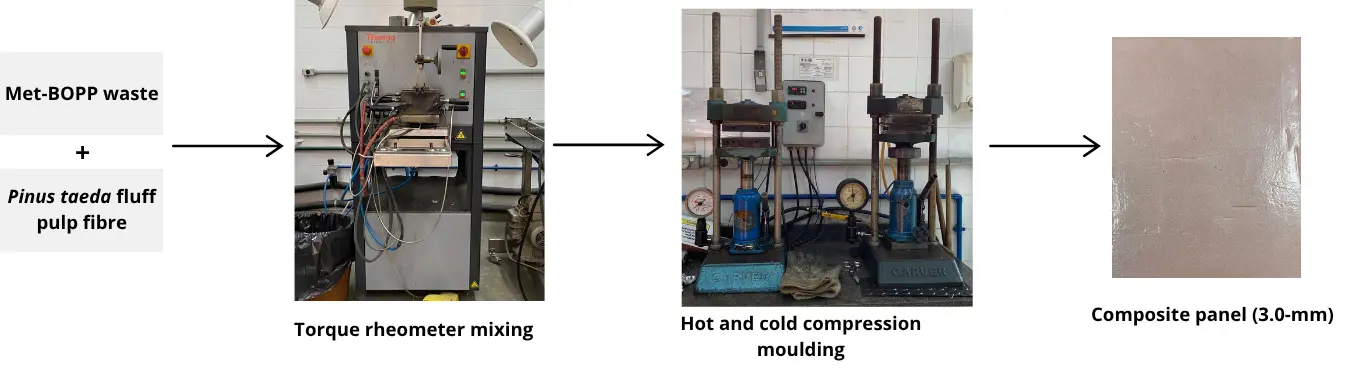
The composite panels were produced by Almeida [30] at the Institute of Macromolecules in the Federal University of Rio de Janeiro (IMA/UFRJ), as schematized in Figure 1. Briefly, post-consumer metallised biaxially oriented polypropylene (met-BOPP) waste was manually cut and fed into a torque rheometer (HAAKE Polylab OS Rheodrive 7, Rheomix 600 chamber, Thermo Electron GmbH, Karlsruhe, Germany) operating at 200 °C for 10 min, together with CF-bleached fluff pulp fibres of Pinus taeda (99% cellulose purity, supplied by Arauco Brazil) at a mass ratio of 95% met-BOPP and 5% CF, as this formulation exhibited the highest tensile strength compared to the samples with different mass ratios of the same materials. The homogenised melt was then compression moulded through hot and cold pressing to yield a 3.0-mm thick panel. This processing route, referred to as the Haake–Press (HP) route, was selected among the alternatives evaluated based on its superior mouldability, homogeneity, and mechanical.
2.2. Life Cycle Assessment (LCA)
The Life Cycle Assessment (LCA) compares two product systems: the met-BOPP/CF composite described in Section 2.1 and the conventional gypsum board used in drywall systems. Primary data for the composite’s manufacturing stage were obtained from the experimental study by Almeida [3], while secondary data for the remaining stages of both systems were sourced from the Ecoinvent 3.6 database.
2.2.1. Goal and Scope Definition
The goal of this LCA is to quantify and compare the cradle-to-gate environmental impacts associated with the production of a composite panel reinforced with cellulose fiber, using met-BOPP waste as a polymeric matrix, and the impacts of the gypsum board used in drywall systems. The functional unit adopted in the study was the production of a panel with an area of 1 m2 for internal partitioning, ensuring performance equivalent to the conventional drywall system. In this study, the conventional system will be referred to as “gypsum plasterboard”.
To guarantee this function, reference flows are determined for each system:
-
-
Gypsum plasterboard system: A standard thickness of 12.5 mm was adopted, corresponding to an average mass of 10 kg/m2 of plasterboard, according to the technical specifications of local manufacturers [31].
-
-
Composite system: The parameters were defined from the extrapolation of experimental data from the laboratory scale. Based on the density and composition obtained by Almeida [30], the mass required for a 3.0-mm thick board was calculated.
The technical specifications are presented in Table 1.
Table 1. Technical specifications and definition of reference flows for composite and plasterboard systems.
|
System Product |
Thickness (mm) |
Volumetric Density (kg/m3) |
Reference Flux (kg/m2) |
|---|---|---|---|
|
Composite |
3.0 |
1000 |
3.0 |
|
Gypsum Plasterboard * |
12.5 |
648 |
8.1 |
* The volumetric density of the plasterboard was calculated based on the average surface density (8.1 kg/m2) and the nominal thickness (12.5 mm), according to the technical data sheet from Placo do Brasil (2024).
The two systems exhibited distinct geometries due to the differences in their production processes. The 3.0-mm thick composite corresponds to the material experimentally produced by Almeida [30] on a laboratory scale, while the 12.5-mm-thick gypsum board corresponds to a conventional material used in drywalls available on the Brazilian market. Although these thicknesses differ from each other, the functional unit of 1 m2 of internal partition panel was maintained as a common basis for comparison, since both products are intended to fulfil the same area in drywall systems, an approach also adopted by Quintana et al. [26], who compared composite boards of varying thicknesses to gypsum plasterboard using 1 m2 as the functional unit. To account for possible thickness adjustments in commercial applications, a sensitivity analysis is subsequently performed (Section 3.6), in which the composite thickness is varied to match the gypsum board configuration, thereby ensuring results are evaluated under a similar geometry.
The end-of-life of the met-BOPP waste was avoided, as the proposed approach consisted of using the material as a feedstock for the production of a recycled product. Therefore, the environmental benefits of diverting packaging waste from landfill were accounted for as an avoided burden. However, the end-of-life of the composite would occur later in the process, after its use in the civil construction sector, which is not considered as part of the scope of this LCA.
For the composite system, a key methodological assumption employed in this research is the expansion system with a substitution approach, in which system boundaries are expanded to equalize input and output flows, thereby enabling the computation of avoided burdens. Measuring the impacts of recycling in LCA is not a straightforward task, because the recycling process is shared between two product systems, one that produces the material that can later be recycled, and another that uses this residue as a raw material, which makes recycling a multifunctional process in LCA studies. The system expansion with substitution method is a way to account for the benefits of avoiding the extraction of virgin resources. In addition, the method addresses the benefits of extending the life cycle of the materials, consideringthat waste is used as feedstock and substitutes for the impacts of producing virgin raw materials, granting credits for the first use. Consequently, assigning environmental credits to the met-BOPP waste was the choice adopted to reflect the avoided burden associatedlandfilling, as this is the conventional end-of-life destinationfor this kind of waste. To strengthen the robustness of the results and to explicitly assess the influence of allocation choices, an additional sensitivity analysis was carried out to test alternative modelling approaches. In this analysis, the baseline system expansion modelling based on the “avoided waste” feature available in openLCA was compared with a pure cut-off approach, in which met-BOPP waste enters the system with zero upstream burdens and no avoided burden credits are granted.
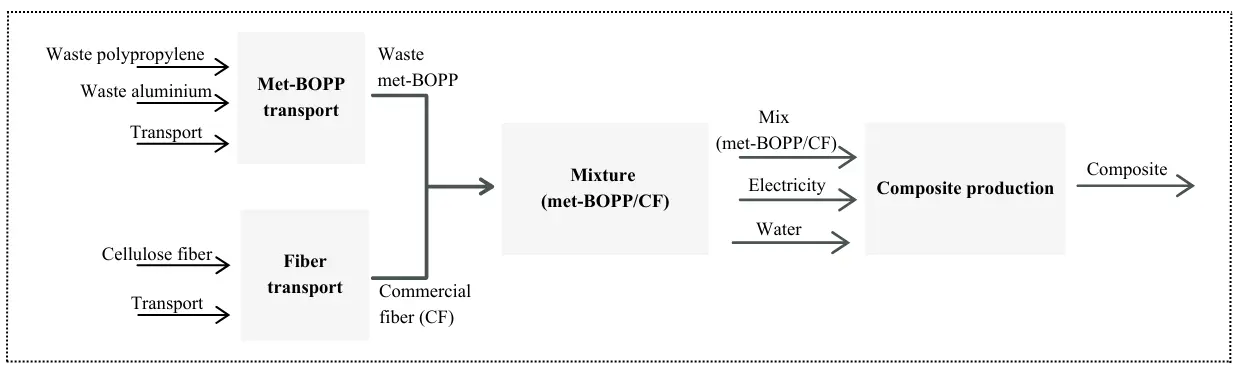
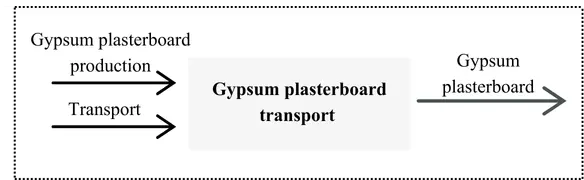
Regarding the gypsum board system, the boundary covers everything from gypsum mining to cardboard production, modelled from secondary data to board processing. The schematic diagrams in Figure 2 and Figure 3 illustrate the main processes and the respective elementary flows for both systems.
2.2.2. Life Cycle Inventory (LCI)
For the construction of the LCI, a combination of primary (composite production) and secondary data (remaining stages of both systems from ecoinvent 3.6) was used.
Composite Modelling
The inventory for composite panel production (3.0 kg) was modelled based on primary data obtained on the laboratory scale at the Institute of Macromolecules in the Federal University of Rio de Janeiro (IMA/UFRJ), using the reference processes of the major constituents as proxies. The waste input stream consisted of 2.82 kg of the reference process “waste polypropylene” and 0.03 kg of “waste aluminum”, assuming that the pigments and additives are incorporated into the reference process of the polymer. For the cellulose fiber (0.15 kg), the process called “cellulose fiber, inclusive blowing in” was used.
Supply chain logistics considers the actual road transport distances from the origin of the materials to the production unit. Transportation was modeled using the process “transport, freight, lorry 16–32 metric ton, EURO4” for all segments.
Utility consumption was accounted for during the manufacturing stage. For the mixing (Torque Rheometer, HAAKE Polylab OS Rheodrive 7, Thermo Electron GmbH, Karlsruhe, Germany) and hot pressing (Hydraulic Press, Carver; Model 3851-0, S/N 43000-1328) stages, the electrical demand was calculated based on nominal power and operating time, totalling 1.925 kWh (process called “electricity, medium voltage”). The mould cooling consumed 12 kg of water, modeled by the “tap water” flow. Life cycle inventory (LCI) data to produce the composite are consolidated in Table 2.
Table 2. LCI for composite production.
|
Input Group |
Flow/Process Name |
Quantity |
Unit |
|---|---|---|---|
|
Materials |
waste polypropylene |
2.82 |
kg |
|
waste aluminium |
0.03 |
kg |
|
|
cellulose fibre, including blowing in |
0.15 |
kg |
|
|
Transport * |
Transport, freight, lorry |
319.02 |
kg*km |
|
Electricity |
Electricity, medium voltage |
1.95 |
kWh |
|
Water ** |
tap water |
12 |
kg |
* The value of kg*km is calculated by multiplying the mass transported by the distance. For the met-BOPP, the distance considered was 66.2 km, while for the cellulose fiber, it was 869.0 km. ** The mass of the water was calculated from the measured volume and the density of water, considering an approximate density of 1 kg/L.
Gypsum Plasterboard Modelling
To represent the conventional drywall system, the reference process “gypsum plasterboard production” was selected, assuming that this dataset encompasses the cradle-to-gate boundary, including gypsum mining, input production, calcination, and final board drying. A reference flow of 8.1 kg (Section 2.2.1) was adopted as the input for this process to fulfil the function of 1 m2 of sealing, aligned with the manufacturer’s specifications for 12.5-mm boards [31].
General Assumptions
To ensure compatibility between the composite and the drywall systems, standardized assumptions were made for modelling:
-
-
Transportation Logistics: The transportation of all inputs and raw materials was standardized as road transport. The process called “transport, freight, lorry 16–32 metric ton, EURO4” was used to represent the average Brazilian fleet. Logistics distances were modelled considering the real routes estimated through a georeferencing tool (Google Maps).
-
-
Process Efficiency: An ideal mass balance was adopted for both systems. Methodological simplifications were applied to disregard material losses during manufacturing and transportation, considering that all the input mass is incorporated into the final product.
2.3. Life Cycle Impact Assessment (LCIA)
Environmental impact assessment was performed using the ReCiPe 2016 Midpoint (H) method. This methodology was selected for its robustness and broad scientific acceptance, providing globally updated characterization factors [32]. In this study, the standard Hierarchical (H) perspective was adopted, which considers a 100-year time horizon and represents the scientific consensus for addressing long-term uncertainties.
In order to fully encompass the environmental profile, all 18 midpoint impact categories available in the method were quantified, namely: Global warming, Terrestrial acidification, Marine ecotoxicity, Mineral resource scarcity, Stratospheric ozone depletion, Ionizing radiation, Fine particulate matter formation, Human non-carcinogenic toxicity, Freshwater ecotoxicity, Water consumption, Ozone formation, Terrestrial ecosystems, Land use, Freshwater eutrophication, Human carcinogenic toxicity, Fossil resource scarcity, Marine eutrophication, Terrestrial ecotoxicity, and Ozone formation, Human health.
3. Results and Discussion
This section presents the results of the comparative Life Cycle Impact Assessment (LCIA) of the composite board and the conventional gypsum board. The analyses were conducted using a functional unit of 1 m2 of partition panel. The subsequent discussion addresses the global environmental performance of the systems, detailing the main impact categories and the hotspots associated with each process. Furthermore, two sensitivity analyses were performed, one to evaluate the influence of composite thickness variation on the comparative profile and another to assess the baseline system expansion scenario. Finally, the limitations of the study are discussed.
3.1. Comparative Environmental Profile
The consolidated impact assessment results for both systems are presented in Table 3. The comparative analysis indicates a substantial environmental advantage for the composite panel over the conventional gypsum board. The conventional system exhibited adverse environmental impacts (positive values) across all evaluated categories. In contrast, the composite system not only reduced the overall environmental burden but also generated credits (negative values) in 8 of the 18 categories. This outcome is attributed to the system expansion approach, in which incorporating met-BOPP waste as a feedstock benefits by avoiding the final disposal of the aluminum-metallized polymer.
Table 3. Results of the impact categories for both product systems.
|
Impact Category |
Composite |
Gypsum Plasterboard |
Reference Unit |
|---|---|---|---|
|
Global warming |
−6.623 |
6.143 |
kg CO2 eq |
|
Terrestrial acidification |
0.001 |
0.024 |
kg SO2 eq |
|
Marine ecotoxicity |
−0.710 |
0.197 |
kg 1,4-DCB eq |
|
Mineral resource scarcity |
1.76 × 10⁻⁴ |
0.022 |
kg Cu eq |
|
Stratospheric ozone depletion |
8.72 × 10⁻⁷ |
2.75 × 10⁻⁶ |
kg CFC11 eq |
|
Ionizing radiation |
0.081 |
0.188 |
kBq Co-60 eq |
|
Fine particulate matter formation |
0.001 |
0.011 |
kg PM2.5 eq |
|
Human non-carcinogenic toxicity |
−3.475 |
3.252 |
kg 1,4-DCB eq |
|
Freshwater ecotoxicity |
−0.492 |
0.135 |
kg 1,4-DCB eq |
|
Water consumption |
7.836 |
10.361 |
m3 |
|
Ozone formation, Terrestrial ecosystems |
−1.02 × 10⁻⁵ |
0.022 |
kg NOx eq |
|
Land use |
0.016 |
0.108 |
m2a crop eq |
|
Freshwater eutrophication |
5.73 × 10⁻⁵ |
0.001 |
kg P eq |
|
Human carcinogenic toxicity |
−0.018 |
0.148 |
kg 1,4-DCB eq |
|
Fossil resource scarcity |
0.116 |
1.759 |
kg oil eq |
|
Marine eutrophication |
2.54 × 10⁻⁵ |
2.04 × 10⁻⁴ |
kg N eq |
|
Terrestrial ecotoxicity |
−19.420 |
45.062 |
kg 1,4-DCB eq |
|
Ozone formation, Human health |
−3.20 × 10⁻⁵ |
0.0221 |
kg NOx eq |
The table emphasizes the magnitude of the discrepancies between the two systems. The composite panel consistently outperforms the environmental performance of gypsum, particularly in the categories of Marine ecotoxicity and Freshwater ecotoxicity. In these categories, beyond providing an environmental benefit, the proposed material exhibited a percentage variation exceeding 450% relative to the conventional system, underscoring the substantial resource demand and emissions associated with gypsum production. For categories with very low absolute impacts for both systems, such as Stratospheric ozone depletion and Marine eutrophication, the results were retained in the table for transparency purposes. However, they are not discussed in detail compared to other categories.
3.2. Global Warming Potential (GWP)
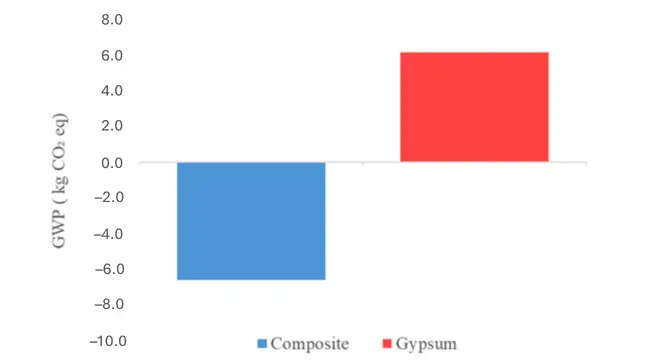
The Global Warming category warrants particular attention, given the current urgency in mitigating Greenhouse Gas (GHG) emissions and its alignment with global decarbonization goals [33]. Figure 4 illustrates the comparative carbon performance for the two systems.
The gypsum board resulted in an impact of 6.143 kg CO2 eq. The contribution analysis indicates a profile split between production and logistics. Approximately 50.7% of emissions originate from manufacturing, with the calcination of gypsum (stucco) and the burning of fossil fuels representing the primary hotspots. The production of folding boxboard accounts for an additional 9.3% of the total impact. The remaining 49.3% are associated with transportation, explained by the considerable distance (2178 km) between the gypsum industrial park in the Araripe region, PE [34], and the production center in Rio de Janeiro, RJ.
In contrast, the composite board presents a negative balance of −6.623 kg CO2 eq, effectively removing GHGs from the atmosphere through credits generated by waste valorization. Analysis of the composite’s hotspots reveals that energy consumption for its production accounts for 75.4% of the GHG emissions generated. Fiber production and the transport of inputs (met-BOPP and fiber) contribute 17.4% and 9.7%, respectively. It is noteworthy that the impact of energy consumption reflects the laboratory scale of composite production, where energy efficiency is expected to improve under industrial conditions, suggesting potential enhancement of the material’s environmental performance at this life cycle stage. In this sense, the present LCA should be interpreted as a reference, laboratory-scale scenario for the composite, providing a first estimate of its environmental profile rather than a definitive representation of future industrial performance.
Furthermore, the environmental benefits of recycling met-BOPP mitigate emissions associated with its production process, thereby contributing to a favorable environmental balance for the proposed material. A quantitative estimate of the reduction in energy-related impacts under continuous industrial processing would require detailed process design and scaling studies, which are beyond the scope of the present work.
3.3. Human Toxicity and Ecotoxicity
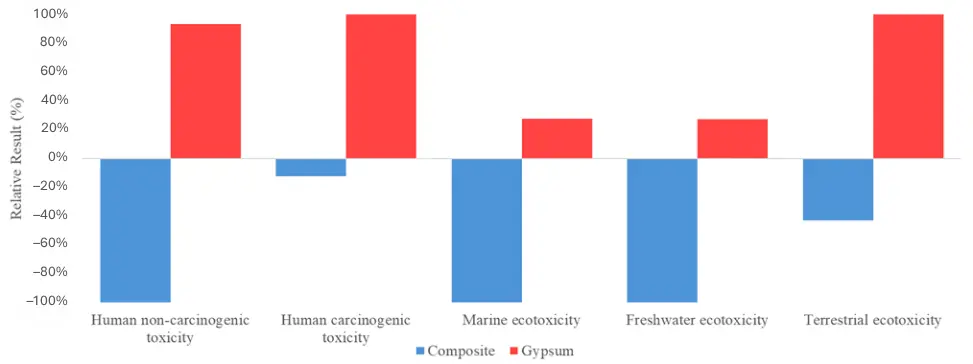
This section presents the assessment of the Human Toxicity (carcinogenic and non-carcinogenic) and Ecotoxicity (terrestrial, freshwater, and marine) categories, expressed in kg 1,4-DCB eq. (dichlorobenzene equivalent).
The drywall system exhibited inferior performance across all categories, with distribution logistics identified as the primary hotspot. In the Terrestrial Ecotoxicity category, total emissions reached 45.06 kg 1,4-DCB eq., with transportation accounting for 88.4% of the impact, substantially exceeding the contribution from material production (11.6%). This predominance is attributed to diesel combustion and the release of heavy metals, particularly copper and zinc, resulting from brake and tire wear. In the Human Toxicity and Aquatic Ecotoxicity categories, the contribution profile is more balanced, with transportation and production each responsible for approximately 45–55% of the impacts. Within the manufacturing stage, the main hotspots are fuel combustion during calcination and paperboard production, both of which release toxic organic and inorganic substances.
Conversely, the composite system exhibited negative net environmental impacts across all toxicological categories. To interpret this outcome, it is necessary to examine the balance between the gross load (emissions generated during fiber production and composite manufacturing processes) and the credits obtained through the incorporation of met-BOPP residue:
-
-
Gross Load (Process Impacts): When isolating the production stages and temporarily disregarding credits, the natural fiber production chain emerges as a significant hotspot in the aquatic ecotoxicity categories, contributing 67.4% of emissions, followed by electricity (approximately 21.8%). A detailed analysis of the elemental flows indicates an association with the industrial infrastructure required for fiber processing. As shown in the contribution tree, the load originates from the construction and maintenance of factory facilities, where the use of heavy metals, such as copper and steel, accentuates the toxicity profile.
-
-
Credits obtained (Effect of avoided waste): Despite the load generated in production, the environmental credit derived from the valorization of met-BOPP waste exceeds 100% of the gross load impact. By avoiding incineration or landfill disposal, the release of toxic chemical compounds into the environment is prevented. Consequently, the result is a negative balance, demonstrating that the composite contributes to reducing the overall toxicity of the production system.
Figure 5 illustrates this performance discrepancy, exemplified by the Terrestrial Ecotoxicity category. The gypsum impact bar contrasts with the negative projection observed for the composite system. The reversal of axes demonstrates that the credits generated surpass the production loads, thereby evidencing the effectiveness of met-BOPP valorization in mitigating ecotoxicological risks.
3.4. Natural Resources and Scarcity
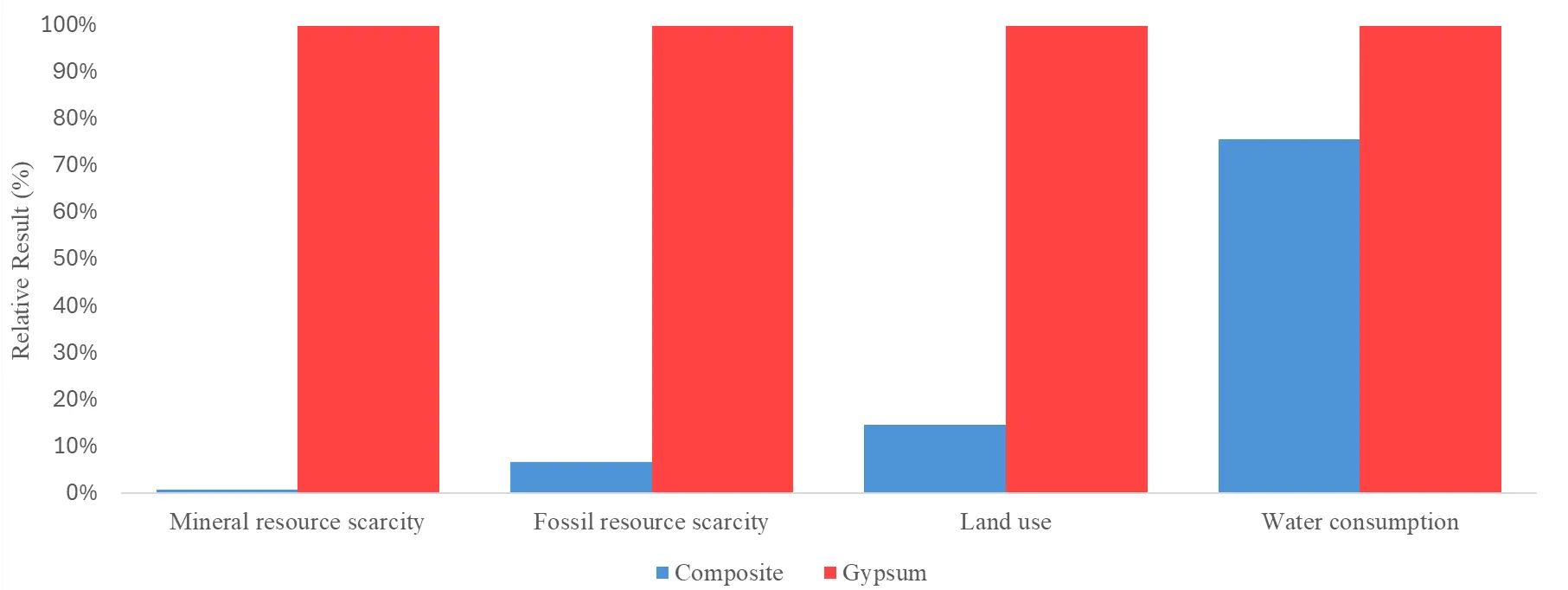
This section assesses the impacts associated with the use of natural resources, encompassing the categories of Mineral Resource Scarcity, Fossils, Land Use, and Water Consumption, as illustrated in Figure 6.
The drywall system was found to be highly intensive in the consumption of non-renewable resources. In the Mineral Resources category, gypsum extraction represents the dominant hotspot, contributing more than 98%, as gypsum is the base raw material for the panel. In the Fossil Resource scarcity category, transportation accounts for 58% of the impact, while the remaining 42% is linked to energy demand used in the production process, particularly the use of natural gas and coal in calcination kilns. With respect to Land Use, the main contribution is associated with transportation, whereas Water Consumption impacts are primarily related to cardboard production and mining infrastructure.
In contrast, the composite exhibited a favorable profile in terms of resource conservation. Even in categories where valorizing met-BOPP waste does not yield significant direct credits, such as water and land, the composite’s gross emissions remained lower than those of gypsum board. The primary hotspot identified was energy consumption. Within the Water Consumption category, the composite recorded the highest impact (7.83 m3), which directly reflects the characteristics of the Brazilian energy matrix, which is predominantly hydroelectric. Nevertheless, although this represents a considerable value, it corresponds to a reduction of approximately 24% compared to the water consumption of the conventional process.
3.5. Other Environmental Impacts
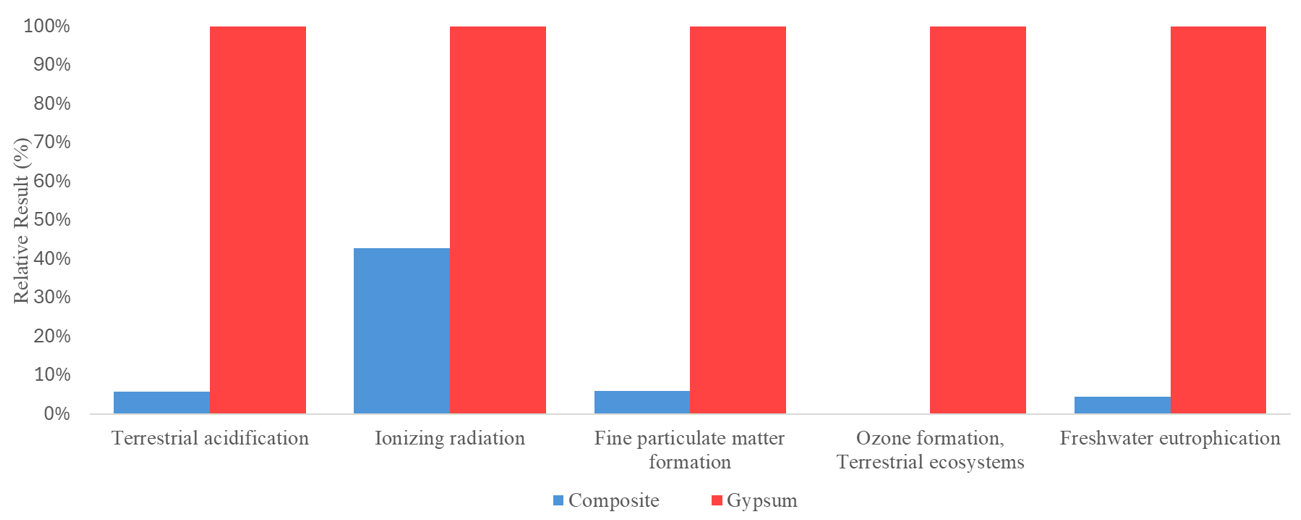
This section presents the impact assessment for additional relevant categories: Terrestrial acidification, Ionizing radiation, Fine particulate matter formation, Ozone formation, Terrestrial ecosystems, and Freshwater eutrophication. The relative impacts are presented in Figure 7.
For the gypsum board system, the environmental profile is strongly influenced by combustion and transportation processes. The generation of heat and electricity for burning gypsum is the main hotspot for Terrestrial acidification and Fine particulate matter formation. In the Ionizing radiation category, approximately 50% of the load comes from energy demand and stucco production, while cardboard production represents a notable contribution, accounting for 21% of emissions. Cardboard production also emerges as the second largest hotspot for Freshwater eutrophication, surpassed only by thermal energy consumption.
For the composite system, the contribution tree reveals a predominance of energy consumption, accounting for more than 80% of emissions in the categories of Terrestrial acidification, Ionizing radiation, Fine particulate matter formation, Ozone formation, and Terrestrial ecosystems. The exception is observed in the Freshwater eutrophication category, where the profile is shared with the natural fiber stage and encompasses processes from cultivation to transportation.
Although the composite system exhibits emissions associated with electricity use and fiber production, the overall balance in these categories remains lower than that of gypsum board, as illustrated in Figure 7. This outcome is explained by the environmental credit generated from met-BOPP recycling, which prevents polymer pollution and offsets a substantial portion of the gross load arising from production and transportation activities.
3.6. Sensibility Analysis
3.6.1. Sensitivity to Composite Thickness
To ensure the robustness of the environmental benefits attributed to the composite system in comparison to the gypsum board, a sensitivity analysis was conducted by equating the thickness of the composite to that of the gypsum board, assuming a proportional increase in mass. Three scenarios were evaluated within the Climate Change category (GWP): gypsum board (12.5 mm), base composite (3.0 mm), and a hypothetical scenario of composite with equal thickness (12.5 mm).
Figure 8 demonstrates that increasing the thickness of the composite panel enhances its environmental benefit. In the base scenario (3.0 mm), the system presented a credit of −6.62 kg CO2 eq. In the equal thickness scenario (12.5 mm), although the gross emission load of the process increases due to the higher energy consumption for the production of composite and fibers, the environmental credit is −28.96 kg CO2 eq. This outcome results from the incorporation of a substantially larger amount of met-BOPP waste per square meter of board. Since the credit factor generated by recycling surpasses the emission factor of production, the net balance becomes more favorable; in other words, the greater the mass of waste reintroduced into the cycle, the larger the quantity of fossil carbon diverted from conventional disposal.
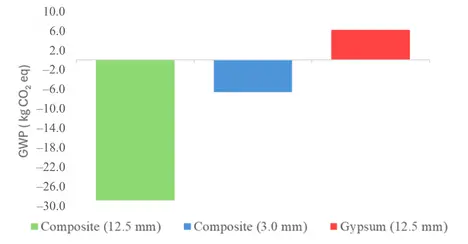
Figure 8. Sensitivity comparison between conventional gypsum and composite scenarios (3.0 and 12.5 mm).
Therefore, the sensitivity analysis confirms that the environmental advantage of the composite is not restricted to its reduced thickness compared to standard gypsum plasterboard. Even under a conservative scenario, in which the physical dimensions of gypsum must be matched, the waste valorization strategy ensures superior performance (negative balance). This outcome validates the robustness of the proposal and indicates a promising scenario for the application of the met-BOPP and natural fiber composite on a larger scale.
3.6.2. Sensitivity to Allocation Modelling
To assess the influence of the allocation method, Figure 9 compares the composite LCA results obtained with the baseland pure cut-off scenarios, along with gypsum plasterboard results for comparison. In the baseline scenario, the methodology is based on the incorporation of credits associated with waste recovery through a system expansion approach. This methodological choice was adopted because met-BOPP does not yet have a consolidated recycling chain and is therefore conventionally destined for landfilling or incineration.
In order to confirm the environmental benefits of the met-BOPP and fibre composite in relation to gypsum plasterboard, a sensitivity analysis was conducted considering a scenario without system expansion. In this scenario, met-BOPP waste enters the process burden-free, and no credit is attributed to the valorisation of the material. Figure 9 shows the results of this analysis for the GWP category, indicating that, even without the incorporation of credits, the met-BOPP and fibre composite still represents a more environmentally favourable alternative than conventional gypsum board. When comparing the cut-off scenario with the baseline scenario, an absolute difference of 7.18 kg CO2 eq. per m2 of board produced. However, when the cut-off scenario is compared with gypsum plasterboard, the reduction in impact remains highly significant, at approximately 90.8% in terms of GWP.
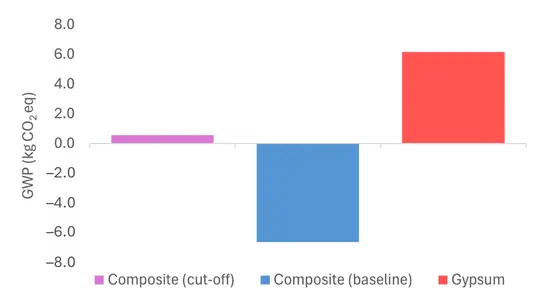
Figure 9. Sensitivity comparison of GWP between gypsum plasterboard and the composite allocation modelling (system expansion and cut-off).
The sensitivity analysis was not restricted to the GWP category but was extended to all 18 impact categories of the ReCiPe 2016 Midpoint (H) method in order to ensure the robustness of the study. Figure 10 presents the relative results for those categories that showed a variation greater than 10% when comparing the composite under the two allocation approaches. In absolute terms, the category with the largest difference between the cut-off and baseline scenarios was Terrestrial ecotoxicity, with a change of 21.31 kg 1,4-DCB eq per m2 of board produced. However, when the cut-off scenario is compared with gypsum plasterboard, the reduction in Terrestrial ecotoxicity remains substantial, at approximately 95.8%.
Overall, all impact categories show significant reductions when the composite in the cut-off scenario is compared with gypsum plasterboard. This indicates that, although the magnitude of the impacts is influenced by the choice of allocation method, the plastic waste and natural fibre composite still proves to be environmentally advantageous compared with the gypsum board.
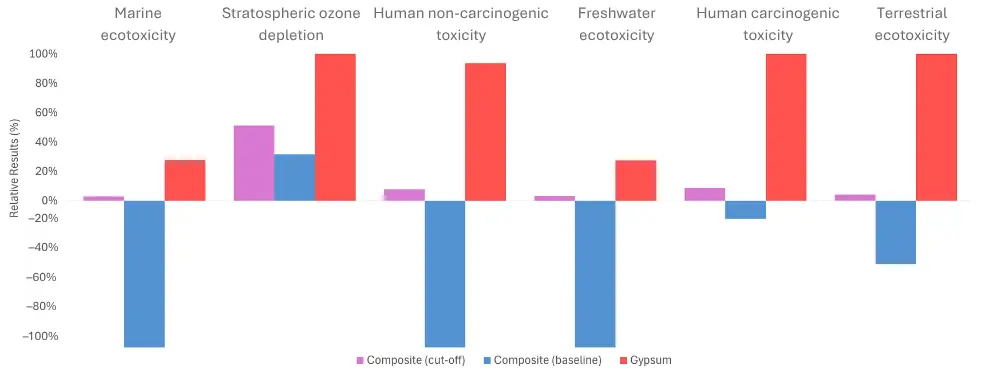
Figure 10. Sensitivity comparison for selected impact categories between gypsum plasterboard and the composite allocation modelling (system expansion and cut-off).
3.7. Limitations and Recommendations
To ensure transparency and replicability, this section discusses the main methodological constraints encountered and provides recommendations for future research. The limitations are concentrated on three main fronts: disparities in production scale, data representativeness, and system boundary.
-
-
Scale and Inventory Disparity: An asymmetry exists in the level of technological maturity between the compared systems. The composite inventory is based on primary laboratory-scale data, where steps such as mixing in the torque rheometer lack the energy efficiency of a continuous production line. In contrast, industrial processes are optimized for greater efficiency in energy consumption, water use, and waste generation, which may influence the impact profile of the composite. Conversely, the reliance on generic secondary data for plasterboard may underestimate the complexity of Brazilian transport logistics, as highlighted by Condeixa et al. [35].
-
-
Data and Representativeness: Life Cycle Assessment is intrinsically dependent on data availability. The scarcity of inventories specific to Brazilian reality required the use of international datasets as proxies.
-
-
System Boundary: This study adopted a cradle-to-gate approach, focusing on the stages of raw material supply, transportation, and panel manufacturing. Consequently, material performance aspects related to the use stage were not included within the defined system boundary. Such analysis, involving performance such as tensile strength, fire resistance, acoustic insulation, and lifespan, must be experimentally evaluated and integrated into future assessments that include the use phase, such as cradle-to-grave or cradle-to-cradle analyses.
4. Conclusions
Confronted with the challenge of recycling complex plastics, such as metallized BOPP packaging, and the need to develop more sustainable materials for the construction industry, this study evaluated, through the Life Cycle Assessment methodology, a novel composite made from metallized BOPP waste and natural fibers for application in drywall systems.
From a cradle-to-gate perspective, the composite board exhibits a substantially lower potential environmental impact compared with gypsum plasterboard. Key quantitative findings include:
-
-
For Global Warming Potential (GWP), the composite shows a net negative balance of −6.623 kg CO2 eq, while gypsum plasterboard presents 6.143 kg CO2 eq, corresponding to a net environmental credit equivalent to about 208% of the gypsum impact.
-
-
In Marine ecotoxicity, the composite achieves −0.710 kg 1,4-DCB eq compared with 0.197 kg 1,4-DCB eq for gypsum, corresponding to a credit of approximately 460% relative to the gypsum impact.
-
-
For Human non-carcinogenic toxicity, the results are −3.475 kg 1,4-DCB eq for the composite versus 3.252 kg 1,4-DCB eq for gypsum , yielding a credit of about 207% of the gypsum impact.
-
-
Despite these advantages, the main hotspots in the composite production process are related to water consumption and energy use, underscoring the importance of optimizing energy efficiency to further minimize environmental burdens.
The sensitivity analysis evaluating the influence of board width showed that the overall impact on composite production demonstrated the robustness of the proposed solution. The results showed that increasing the mass of the composite to match the dimensions of conventional gypsum board (12.5 mm) does not compromise its sustainability; on the contrary, it increases the environmental credit by incorporating a larger volume of met-BOPP waste into the life cycle, which would normally be disposed of in landfills or incinerated.
Furthermore, the sensitivity analysis related to allocation modelling indicated that, regardless of the allocation approach adopted, the met-BOPP and natural fibre composite remains an environmentally advantageous alternative to gypsum plasterboard across the assessed impact categories. When comparing the cut-off scenario to gypsum, a 90.8% reduction in Global Warming Potential was observed. For six other impact categories, the cut-off approach exhibited environmental burdens greater than 10% relative to the impacts of the baseline composite, but still more beneficial than the gypsum board.
It is worth noting that this study represents a lab-scale baseline cradle-to-gate scenario for the composite, providing an estimate of its environmental profile. Future studies should, therefore, address use-phase performance and industrial-scale production scenarios to support decision-making for large-scale applications. Nonetheless, the developed composite proves to be a promising solution aligned with the principles of Circular Economy, effectively mitigating the problem of disposing of complex packaging structures while acting as a low-emission and environmentally viable alternative for the construction sector.
Statement of the Use of Generative AI and AI-Assisted Technologies in the Writing Process
During the preparation of this manuscript, the authors used Grammarly and generative AI tools (e.g., Perplexity, Gemini) to improve language and clarity and graphical abstract. After using these tools/services, the authors reviewed and edited the content as needed and take full responsibility for the content of the published article.
Acknowledgments
The authors acknowledge the support of the INCT Circularidade em Materiais Poliméricos and the Brazilian National Council for Scientific and Technological Development (CNPq).
Author Contributions
Conceptualization, N.M.B., G.H.M. and A.d.R.D.M.; Methodology, G.H.M., A.d.R.D.M. and N.M.B.; Software, A.d.R.D.M.; Validation, G.H.M. and A.d.R.D.M.; Formal Analysis, N.M.B., G.H.M. and A.d.R.D.M.; Investigation, N.M.B., G.H.M. and A.d.R.D.M.; Resources, N.M.B., G.H.M. and A.d.R.D.M.; Data Curation, N.M.B., G.H.M. and A.d.R.D.M.; Writing—Original Draft Preparation, N.M.B.; Writing—Review & Editing, A.d.R.D.M. and G.H.M.; Visualization, G.H.M., A.d.R.D.M. and N.M.B.; Supervision, A.d.R.D.M. and G.H.M.; Project Administration, A.d.R.D.M. and G.H.M.; Funding Acquisition, N.M.B., G.H.M. and A.d.R.D.M.
Ethics Statement
Not applicable.
Informed Consent Statement
Not applicable.
Data Availability Statement
No new datasets were generated or analyzed for this study.
Funding
This research was funded by Brazilian National Council for Scientific and Technological Development—CNPq through INCT Circularidade em Materiais Poliméricos grant number #406925/2022-4.
Declaration of Competing Interest
The authors declare that they have no known competing financial interests or personal relationships that could have appeared to influence the work reported in this paper.
References
-
Jacobsen LF, Pedersen S, Thøgersen J. Drivers of and barriers to consumers’ plastic packaging waste avoidance and recycling—A systematic literature review. Waste Manag. 2022, 141, 63–78. DOI:10.1016/j.wasman.2022.01.021 [Google Scholar]
-
United Nations Environment Program (UNEP). Turning off the Tap: How the World Can End Plastic Pollution and Create a Circular Economy; UNEP: Nairobi, Kenya, 2023. Available online: https://www.unep.org/resources/turning-off-tap-end-plastic-pollution-create-circular-economy (accessed on 22 December 2025).
-
Niazmand R, Yeganehzad S, Niazmand A. Application of laminated and metalized films to prolong the shelf life of dried barberries. J. Stored Prod. Res. 2021, 92, 101809. DOI:10.1016/j.jspr.2021.101809 [Google Scholar]
-
Türksever C, Koç B, Esmer OK. Sustainable alternatives in multilayer packaging: Storage stability of pudding powder under accelerated storage conditions. Foods 2025, 14, 3806. DOI:10.3390/foods14223806 [Google Scholar]
-
Ügdüler S, De Somer T, Van Geem KM, De Wilde J, Roosen M, Deprez B, et al. Analysis of the kinetics, energy balance and carbon footprint of the delamination of multilayer flexible packaging films via carboxylic acids. Resour. Conserv. Recycl. 2022, 181, 106256. DOI:10.1016/j.resconrec.2022.106256 [Google Scholar]
-
Li T, Theodosopoulos G, Lovell C, Loukodimou A, Maniam KK, Paul S. Progress in solvent-based recycling of polymers from multilayer packaging. Polymers 2024, 16, 1670. DOI:10.3390/polym16121670 [Google Scholar]
-
Jiang X, Bateer B. A systematic review of plastic recycling: Technology, environmental impact and economic evaluation. Waste Manag. Res. 2025, 43, 1159–1178. DOI:10.1177/0734242X241310658 [Google Scholar]
-
Cabrera G, Li J, Maazouz A, Lamnawar K. A Journey from Processing to Recycling of Multilayer Waste Films: A Review of Main Challenges and Prospects. Polymers 2022, 14, 2319. DOI:10.3390/polym14122319 [Google Scholar]
-
Schyns ZOG, Shaver MP. Mechanical Recycling of Packaging Plastics: A Review. Macromol. Rapid Commun. 2021, 42, 2000415. DOI:10.1002/marc.202000415 [Google Scholar]
-
Fuentes Molina N, Fragozo Brito Y, Polo Benavides JM. Recycling of residual polymers reinforced with natural fibers as a sustainable alternative: A review. Polymers 2021, 13, 3612. DOI:10.3390/polym13213612 [Google Scholar]
-
Elfaleh I, Abbassi F, Habibi M, Ahmad F, Guedri M, Nasri M, et al. A comprehensive review of natural fibers and their composites: An eco-friendly alternative to conventional materials. Results Eng. 2023, 19, 101271. DOI:10.1016/j.rineng.2023.101271 [Google Scholar]
-
Ita-Nagy D, Vázquez-Rowe I, Kahhat R, Shimada C, Martín-Gullón I. Life cycle assessment of bagasse fiber reinforced biocomposites. Sci. Total Environ. 2020, 720, 137586. DOI:10.1016/j.scitotenv.2020.137586 [Google Scholar]
-
Kamarudin SH, Mohd Basri MS, Rayung M, Abu F, Ahmad S, Norizan MN, et al. A review on natural fiber reinforced polymer composites (NFRPC) for sustainable industrial applications. Polymers 2022, 14, 3698. DOI:10.3390/polym14173698 [Google Scholar]
-
Ardanuy M, Claramunt J, Toledo Filho RD. Cellulosic fiber reinforced cement-based composites: A review of recent research. Constr. Build. Mater. 2015, 79, 115–128. DOI:10.1016/j.conbuildmat.2015.01.035 [Google Scholar]
-
Sadrolodabaee P, Claramunt J, Ardanuy M, de la Fuente A. Mechanical and durability characterization of a new textile waste micro-fiber reinforced cement composite for building applications. Case Stud. Constr. Mater. 2021, 14, e00492. DOI:10.1016/j.cscm.2021.e00492 [Google Scholar]
-
Rakhsh Mahpour A, Sadrolodabaee P, Ardanuy M, Haurie L, Lacasta AM, Rosell JR, et al. Serviceability parameters and social sustainability assessment of flax fabric reinforced lime-based drywall interior panels. J. Build. Eng. 2023, 76, 107406. DOI:10.1016/j.jobe.2023.107406 [Google Scholar]
-
Agnes EA, Mello TV, Hillig E, Miyahara RY. Wood pulp for polymer composites production. Floresta 2021, 51, 44–53. DOI:10.5380/rf.v51i1.67291 [Google Scholar]
-
Poletto M. Polystyrene cellulose fiber composites: Effect of the processing conditions on mechanical and dynamic mechanical properties. Matéria 2016, 21, 552–559. DOI:10.1590/S1517-707620160003.0053 [Google Scholar]
-
Abu Bakar H, Ismail LH, Samsudin EM, Nik Soh NMZ, Yaman SK, Tami H. A Systematic Literature Review on Factors Affecting the Compatibility of Natural Fibre as Cement Board Reinforcement. Pertanika J. Sci. Technol. 2025, 33, 2207–2236. DOI:10.47836/pjst.33.5.08 [Google Scholar]
-
Ajayi NE, Rusnakova S, Ajayi AE, Ogunleye RO, Agu SO, Amenaghawon AN. A comprehensive review of natural fiber reinforced polymer composites as emerging materials for sustainable applications. Appl. Mater. Today 2025, 43, 102666. DOI:10.1016/j.apmt.2025.102666 [Google Scholar]
-
Hauschild MZ, Rosenbaum RK, Olsen SI. Life-Cycle Assessment: Theory and Practice; Springer International Publishing: Cham, Switzerland, 2018. [Google Scholar]
-
Sitarska M. Life cycle assessment in theory—Introduction. Zesz. Nauk. SGSP 2025, 1, 119–133. DOI:10.5604/01.3001.0055.1233 [Google Scholar]
-
Meral Ç, Pasaoglu O, Ozcelik G. Life-cycle assessment of a basic external drywall system in Turkey. In Proceedings of the 11th International Congress on Advances in Civil Engineering (ACE 2014), Istanbul, Turkey, 21–25 October 2014. DOI:10.13140/2.1.2937.0880 [Google Scholar]
-
Mansor MR, Mastura MT, Sapuan SM, Zainudin AZ. The environmental impact of natural fiber composites through life cycle assessment analysis. In Durability and Life Prediction in Biocomposites, Fibre-Reinforced Composites and Hybrid Composites; Jawaid M, Thariq M, Saba N, Eds.; Woodhead Publishing: Cambridge, UK, 2019; pp. 257–285. DOI:10.1016/B978-0-08-102290-0.00011-8 [Google Scholar]
-
Ibrahim M, Ebead U, Al-Ansari M. Life-cycle assessment of fibre reinforced polymer (FRP) composites used in concrete beams: A state-of-the-art review. In Proceedings of the International Conference on Civil Infrastructure and Construction (CIC); Qatar University Press: Doha, Qatar, 2020; pp. 777–784. DOI:10.29117/cic.2020.0101 [Google Scholar]
-
Quintana A, Alba J, del Rey R, Guillén-Guillamón I. Comparative life cycle assessment of gypsum plasterboard and a new kind of bio-based epoxy composite containing different natural fibers. J. Clean. Prod. 2018, 185, 408–420. DOI:10.1016/j.jclepro.2018.03.042 [Google Scholar]
-
Quintana-Gallardo A, Alba J, del Rey R, Crespo-Amorós JE, Guillén-Guillamón I. Life-cycle assessment and acoustic simulation of drywall building partitions with bio-based materials. Polymers 2020, 12, 1965. DOI:10.3390/polym12091965 [Google Scholar]
-
ISO 14040:2006; Environmental Management—Life Cycle Assessment—Principles and Framework. ISO: Geneva, Switzerland, 2006. [Google Scholar]
-
ISO 14044:2006; Environmental Management—Life Cycle Assessment—Requirements and Guidelines. ISO: Geneva, Switzerland, 2006. [Google Scholar]
-
Almeida CC. Desenvolvimento de compósitos híbridos de polipropileno biorientado metalizado pós-consumo com fibra celulósica como alternativa à construção civil [Development of Hybrid Composites of Post-Consumer Metallized Biaxially Oriented Polypropylene with Cellulosic Fibre as an Alternative for Civil Construction]. Master’s Thesis, Programa de Pós-Graduação em Ciência e Tecnologia de Polímeros, Universidade Federal do Rio de Janeiro (UFRJ), Rio de Janeiro, Brazil, 2026. [Google Scholar]
-
Placo do Brasil. Technical Data Sheet: Standard Board (ST), Rev. 04; Saint-Gobain: Mogi das Cruzes, Brazil, 2024. [Google Scholar]
-
Huijbregts MAJ, Steinmann ZJN, Elshout PMF, Stam G, Verones F, Vieira M, et al. ReCiPe2016: A harmonized life cycle impact assessment method at midpoint and endpoint level. Int. J. Life Cycle Assess. 2017, 22, 138–147. DOI:10.1007/s11367-016-1246-y [Google Scholar]
-
IPCC. Climate Change 2021: The Physical Science Basis. In Contribution of Working Group I to the Sixth Assessment Report of the Intergovernmental Panel on Climate Change; Cambridge University Press: Cambridge, UK, 2021. Available online: https://www.ipcc.ch/report/ar6/wg1/ (accessed on 22 December 2025).
-
Sindusgesso. Dados do Setor. Available online: https://sindusgesso.org.br/dados-do-setor/ (accessed on 22 December 2025).
-
Condeixa KMSP. Comparação entre materiais da construção civil através da avaliação do ciclo de vida: sistema drywall e alvenaria de vedação [Comparison Between Construction Materials Through Life Cycle Assessment: Drywall System and Masonry Partition Walls]. Master’s Thesis, Universidade Federal Fluminense, Niterói, Brazil, 2013. [Google Scholar]