
Evaluation of University Students’ Perspectives on the Relationship Between Sustainability and Energy
Evaluation of University Students’ Perspectives on the Relationship Between Sustainability and Energy

Received: 24 January 2026 Revised: 23 April 2026 Accepted: 13 May 2026 Published: 26 May 2026

© 2026 The authors. This is an open access article under the Creative Commons Attribution 4.0 International License (https://creativecommons.org/licenses/by/4.0/).
1. Introduction
The increase in fossil fuel consumption continues to affect climate conditions, energy security, and sustainability goals. Although investments in renewable energy have expanded, energy demand cannot be addressed only through energy production. It is also necessary to manage energy consumption systematically through monitoring, performance indicators, and institutional energy management practices. In this context, controlling energy use is important for supporting the transition toward more sustainable, low-carbon systems.
Energy management is one of the key parameters for improving sustainability performance in institutions and organizations. It contributes to increasing energy efficiency, ensuring compliance with regulations, reducing environmental impacts, and lowering unnecessary consumption [1]. National and international standards have therefore been developed to support systematic energy management practices. Among these standards, ISO 50001 provides a structured framework for establishing, implementing, maintaining, and improving an Energy Management System (EnMS) through a continuous improvement logic based on the Plan-Do-Check-Act cycle [2]. Recent research also emphasizes that ISO 50001-based energy management systems can function as a practical pathway for decarbonization when energy performance data are systematically monitored and used in decision-making processes [3].
The applicability of ISO 50001 is not limited to a single sector. Previous studies and applications show that ISO 50001 has been used across diverse organizational contexts, including industrial facilities, manufacturing enterprises, hotels, university buildings, and other energy-intensive institutional environments [4,5,6,7,8,9]. This broad range of applications indicates that ISO 50001 can be adapted to different institutional scales and operational conditions. For university campuses, this adaptability is particularly important because campuses include multiple buildings, user groups, and energy-consuming activities that require systematic monitoring and continuous improvement.
Universities are not only centers of education and research but also complex, resource-intensive environments that function like small cities. Their high occupant density, diverse building functions, and continuous operational demands make them significant energy consumers and contributors to environmental impacts. At the same time, campuses provide a unique opportunity to implement, test, and model sustainability practices that can influence both institutional performance and individual behavior [10]. Recent literature on sustainable campus operations highlights that energy use, carbon neutrality, environmental management, stakeholder engagement, governance, and data reporting are central themes in higher education sustainability research [11]. These studies also indicate the need for more integrated, data-driven, and stakeholder-oriented approaches to improve the effectiveness of campus sustainability practices [11].
Students are among the key stakeholders in this transformation. Their engagement in sustainability initiatives can extend beyond traditional learning and support behavioral change, institutional awareness, and practical sustainability action. Previous studies have shown that student involvement in living labs and participatory sustainability projects can foster deeper learning, empower students as change agents, and support long-term behavioral change [12,13]. More recent studies also show that student engagement is an important component of green-smart campus development [14] and that participation in campus sustainability activities can contribute to the development of sustainability-related competencies [15]. Similarly, urban living lab and active learning approaches in higher education emphasize the value of real-world experimentation, interdisciplinary collaboration, and student participation in addressing sustainability problems [16,17].
Energy management is an essential component of campus sustainability because it addresses both environmental and financial dimensions. While the transition to renewable energy is crucial, managing consumption efficiently is equally important. The ISO 50001 Energy Management System provides a standardized framework for continuous improvement in energy performance and has increasingly been discussed in relation to higher education contexts [18,19]. Previous higher education applications suggest that ISO 50001 can be integrated into university management systems and student training. Studies from Ukraine and the USA show that ISO 50001-oriented practices may support institutional energy efficiency while creating opportunities for students to develop energy management and auditing competencies [18,19].
Empirical studies on university buildings further show that thermal comfort conditions, air conditioning, lighting, and computer equipment can strongly influence campus energy consumption [20,21]. These findings highlight the importance of connecting operational building data with user awareness and behavior. In other words, campus energy management should not be understood only as a technical facility-management issue; it also requires the participation of building users who understand how energy is consumed, monitored, and improved in daily campus life.
However, despite this growing literature, an important research gap remains. Existing studies often examine campus energy performance, student sustainability awareness, or living lab approaches separately. Fewer studies combine longitudinal building-level energy consumption data with students’ awareness, technical energy literacy, department-based differences, and willingness to participate in ISO 50001-oriented campus energy management. In particular, there is still limited empirical evidence on how students from different academic backgrounds understand operational energy concepts such as energy performance indicators, TOE, ISO 50001-related processes, and real campus-level energy consumption data. This gap is important because student participation in energy management cannot be effective if it is based only on general sustainability awareness without operational energy literacy.
This study addresses this gap by investigating university students’ knowledge, attitudes, and willingness to participate in campus energy management at Ankara Yıldırım Beyazıt University (AYBU), Etlik Campus. The study combines building-level energy consumption data from 2019–2023 with survey findings from students enrolled in the Faculty of Engineering and Natural Sciences. The ISO 50001 Energy Management System is used as a guiding framework to connect technical energy performance assessment with student-centered participation. Specifically, this research aims to:
-
-
assess students’ awareness and understanding of sustainability, energy efficiency, energy management, ISO 50001, and related technical concepts;
-
-
identify differences in awareness and engagement potential across academic departments;
-
-
evaluate students’ operational familiarity with actual campus energy consumption data;
-
-
propose a student-centered framework for integrating energy management into campus life through awareness, technical training, and participatory mechanisms.
By linking technical energy performance data with student engagement, this study contributes to the literature on sustainable campus operations, energy management in higher education, and student-centered sustainability practices. The findings are intended to inform universities seeking to align ISO 50001-based energy management with sustainability education and participatory campus governance.
The present manuscript is an expanded and substantially complementary version of our preliminary work [22], where we mainly presented the initial idea of a student-centered approach to campus energy efficiency, without performing any survey, such as the one presented here. The systematic analyses of this newly presented student survey allow us to reach robust findings about how student-led energy management units can support ISO 50001-oriented campus sustainability practices.
2. Materials and Methods
2.1. Study Design and Approach
The relationship between campus energy performance and students’ awareness, attitudes, and willingness to engage in energy management activities was investigated in this study using a mixed-methods case study design. The study was carried out at the Etlik Campus of Ankara Yıldırım Beyazıt University (AYBU), Faculty of Engineering and Natural Sciences. The research sought to combine building-level energy consumption statistics with user-based survey data within a particular institutional context, which is why the case study design was chosen.
The ISO 50001:2018 Energy Management System (EnMS), which emphasizes continuous improvement in energy performance through methodical planning, execution, monitoring, and evaluation, served as the foundation for the methodological framework. The ISO 50001 framework served as a basis for this study’s identification of pertinent energy performance indicators, interpretation of building energy consumption patterns, and creation of survey items pertaining to student engagement, energy efficiency, and energy awareness.
2.2. Technical Energy Data Collection and Comparative Energy Analysis
The building energy consumption data were used as a descriptive and contextual component of the study. They were not intended to constitute a complete energy audit, a weather-normalized performance assessment, or direct evidence of achieved energy savings. Instead, these data provided an operational background for interpreting students’ awareness of actual campus energy use and for designing survey items related to energy management.
2.2.1. Data Sources and Time Frame
For the Faculty of Engineering and Natural Sciences building, monthly data on natural gas and electricity use were gathered from January 2019 to December 2023. To increase data dependability, the information was taken from university facility management records and compared to utility bills. The five-year time frame was chosen to evaluate changes in building energy use before, during, and after the COVID-19-related restrictions and to enable year-to-year comparisons.
2.2.2. Data Processing
To allow for year-to-year comparison, the closed building area of 44,577.74 m2 was used to normalize the electricity and natural gas consumption statistics. In order to offer a standardized energy indicator in line with energy management methods, the electricity consumption was expressed in kWh/m2, and the natural gas and electricity statistics were also translated into tons of oil equivalent per square meter (TOE/m2). The conversion variables used were 1 kWh = 0.000086 TOE and 1 m3 of natural gas = 0.000857 TOE. Using Turkish energy market standards, the approximate conversion factor for natural gas was determined to be 10.64 kWh/m3.
2.2.3. Comparative Energy Analysis
The technical energy data were analyzed comparatively across years, months, and seasonal operating periods. 2019 served as the baseline since it reflected the faculty building’s pre-pandemic functioning state. To examine whether energy-use intensity increased or decreased over time, annual consumption intensity values were compared with the baseline year. In order to differentiate high-occupancy academic periods from lower-occupancy summer periods, monthly patterns were also looked at. The 2020–2021 period received particular attention, as occupancy levels and energy usage patterns may have been affected by pandemic-related limitations. The interpretation of building energy performance was supported by descriptive measures, including monthly and annual totals, normalized consumption intensity, and percentage change from baseline. Table 1 shows the monthly electricity consumption intensity for 2019–2023 (kWh/m2).
Table 1. Monthly electricity consumption intensity for 2019–2023 (kWh/m2) [22].
|
kWh Consumption Per m2 by Month (kWh/m2) |
|||||
|---|---|---|---|---|---|
|
2019 |
2020 |
2021 |
2022 |
2023 |
|
|
January |
17.68 |
19.17 |
17.75 |
21.95 |
15.75 |
|
February |
12.98 |
17.93 |
15.84 |
17.39 |
17.64 |
|
March |
12.28 |
16.36 |
17.80 |
20.77 |
15.28 |
|
April |
11.19 |
2.01 |
10.84 |
9.50 |
5.22 |
|
May |
6.33 |
7.01 |
2.23 |
2.35 |
2.95 |
|
June |
3.39 |
2.08 |
2.37 |
5.43 |
2.36 |
|
July |
4.58 |
1.97 |
2.52 |
3.81 |
4.11 |
|
August |
4.35 |
1.89 |
4.41 |
4.13 |
4.66 |
|
September |
4.01 |
1.75 |
2.68 |
2.90 |
3.41 |
|
October |
3.56 |
1.77 |
13.32 |
8.30 |
3.47 |
|
November |
13.46 |
16.60 |
16.05 |
15.32 |
11.52 |
|
December |
18.01 |
19.86 |
18.37 |
17.53 |
18.17 |
|
TOTAL |
111.81 |
108.39 |
124.20 |
129.37 |
104.54 |
The processed energy data were used to calculate baseline energy performance indicators and to support the design of survey items related to students’ awareness of building energy use.
2.3. Student Survey on Energy Awareness and Engagement
Students’ knowledge of sustainability and energy management concepts, their familiarity with specific ISO 50001-related phrases, and their readiness to take part in student-led energy efficiency initiatives were all evaluated using an in-person survey. Students’ recommendations for energy-saving strategies and renewable energy sources, as well as their perceived locations of high energy use on campus, were also gathered through the survey.
2.3.1. Survey Design
There were two sections to the questionnaire. Twelve Likert-scale items with five-point ratings, from 1 for “Definitely not” to 5 for “Very much”, were included in the first portion. These questions were created to gauge students’ knowledge, attitudes, and past exposure to important ideas, including energy management, sustainability, energy efficiency, energy saving, carbon footprint, ISO standards, TOE, and involvement in energy management initiatives.
In order to gather more in-depth qualitative information about students’ opinions of campus energy use, recommendations for cutting energy use, willingness to join energy efficiency teams, and preferences for renewable energy solutions, the second section contained eight open-ended questions.
The ISO 50001 framework, institutional sustainability policies, and the results of the technical energy analysis were considered when developing the survey items. Ten students participated in a pilot test of the questionnaire to evaluate its phrasing, clarity, and completion time. Before complete deployment, a few minor phrasing changes were made. The survey questions are given in Table 2.
Table 2. Survey items used in the questionnaire [22].
|
Section 1: Likert-Scale Items |
Section 2: Open-Ended Questions |
|---|---|
|
|
2.3.2. Sampling Strategy and Participant Profile
In order to reach students who were actively using the Faculty of Engineering and Natural Sciences building throughout the data collection period, a convenience sampling method was implemented. Students found in public study spaces, labs, and during lecture breaks were deemed suitable respondents, as the study aimed to increase users’ awareness, perceptions, and willingness to engage in energy management activities. This method limited the findings’ applicability outside of the questioned faculty and campus setting, even if it made it possible to reach pertinent case building users.
The questionnaire was completed by 201 students, or almost 81% of the students who were contacted. Nine departments from the Faculty of Engineering and Natural Sciences provided participants. Table 3 displays the participants’ demographic profile, including department, abbreviation, number of respondents, percentage distribution, and academic year.
Table 3. Distribution of participants by department and academic year.
|
Department |
Abbreviation |
Graduate |
1st Year |
2nd Year |
3rd Year |
4th Year |
% |
|---|---|---|---|---|---|---|---|
|
Mechanical Engineering |
MCE |
0 |
0 |
64 |
9 |
5 |
40 |
|
Energy Systems Engineering |
ESE |
1 |
18 |
23 |
19 |
15 |
39 |
|
Computer Engineering |
CENG |
0 |
2 |
3 |
10 |
0 |
7.7 |
|
Civil Engineering |
CE |
0 |
0 |
0 |
7 |
2 |
4.6 |
|
Software Engineering |
SE |
0 |
4 |
0 |
0 |
0 |
2.1 |
|
Industrial Engineering |
IE |
0 |
2 |
5 |
0 |
1 |
4.1 |
|
Metallurgical and Materials Engineering |
MME |
0 |
0 |
1 |
0 |
0 |
0.5 |
|
Electrical and Electronics Engineering |
EE |
0 |
0 |
0 |
1 |
0 |
0.5 |
|
Mathematics |
MATH |
0 |
1 |
2 |
0 |
0 |
1.5 |
Note: Percentages were calculated based on valid responses with complete department and class/year information (n = 195). Six respondents had missing class/year information and were excluded from this cross-tabulation; therefore, the total does not equal the overall sample size (N = 201).
Because of their importance to energy systems, building operations, and engineering-based sustainability practices, Energy Systems Engineering (ESE) and Mechanical Engineering (MCE) were kept as distinct department groupings for comparative analysis and visualization. Due to smaller subgroup sizes, the remaining departments were placed under the “Other” category. This grouping decreased volatility in subgroup-level data and made it possible to compare disciplinary trends more clearly.
2.3.3. Quantitative Survey Analysis
The quantitative data from the twelve Likert-scale items were analyzed using SPSS 28.0. A five-point rating system was used to code the responses, with 1 denoting “Definitely not” and 5 denoting “Very much”. Students’ awareness, attitudes, and desire to engage in energy-management activities were summarized using descriptive statistics, such as frequency, percentage, mean, standard deviation, median, and interquartile range.
The internal consistency of the twelve Likert-scale items was assessed using Cronbach’s alpha. A Cronbach’s alpha value above 0.70 was considered acceptable for exploratory research. Department-based comparisons were conducted across three groups: Energy Systems Engineering (ESE), Mechanical Engineering (MCE), and other departments. Since Likert-scale responses are ordinal and the department groups were independent, the Kruskal-Wallis test was used as the primary non-parametric test to examine whether response distributions differed across department groups.
In addition, chi-square tests of independence were used as complementary analyses to examine whether categorical response distributions varied by department group. Cramer’s V was calculated to assess the strength of association between department group and response category. Statistical significance was evaluated at p < 0.05. Since post-hoc pairwise comparisons were not conducted, statistically significant results were interpreted as indicating overall department-based differences rather than specific pairwise differences between department groups. Chi-square results were interpreted cautiously when expected cell-count assumptions were not fully met.
2.3.4. Qualitative Analysis of Open-Ended Responses
Open-ended responses from the second part of the survey were analyzed using thematic content analysis following Braun and Clarke’s six-step framework. The analysis involved iterative familiarization with the data, generation of initial codes capturing recurring concepts (e.g., energy-saving measures, renewable energy preferences, perceived areas of excessive consumption, and willingness to participate in energy management), and the organization of these codes into broader themes. The identified themes were subsequently reviewed and refined to ensure internal coherence and conceptual clarity, and final theme labels were assigned. To enable comparison with quantitative findings, the frequency and percentage distribution of each theme were calculated.
To enhance coding consistency, two researchers independently coded the responses, and discrepancies were resolved through discussion and consensus.
2.4. Integration of Technical and Social Data
During the interpretation phase, the technical and survey-based results were combined. Temporal patterns in building energy use, such as seasonal peaks and baseline variations, were descriptively examined using technical energy data. The degree to which students’ awareness, technical expertise, and willingness to engage in energy management activities aligned with these operational patterns was then assessed using survey data. Through this integration, the study was able to determine possible areas where student-led energy management initiatives could assist institutional energy efficiency goals and to compare actual campus energy performance with students’ perceptions of energy use.
3. Results and Discussions
3.1. Building Energy Consumption Trends
The monthly electricity intensity data show that consumption is higher in January–March and November–December and lower in May–September. Although this pattern is consistent with seasonal and academic calendar-related operations, the trend should be read descriptively rather than causally because weather-normalized indicators and direct occupancy data were excluded.
3.2. Overall Response Patterns in Likert-Scale Items
Twelve Likert-scale items were added in the survey’s first section to gauge students’ knowledge, attitudes, and past exposure to sustainability, energy efficiency, energy management, ISO standards, TOE, and student involvement in energy management initiatives. The general range of answers to these questions is shown in Figure 1.
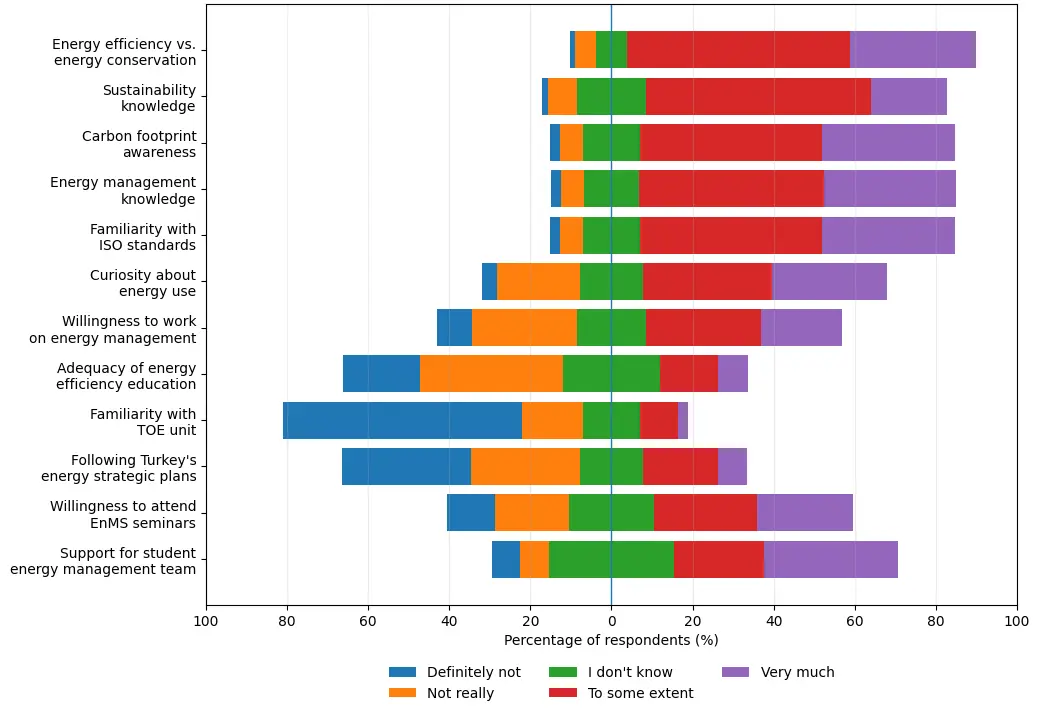
Self-reported understanding of general sustainability-related concepts, such as sustainability, carbon footprint, energy efficiency, and energy management, is comparatively greater, as shown in Figure 1. Students’ energy awareness appears to be higher at the conceptual level than at the practical or policy-oriented level, as seen by the relatively weaker replies to questions about TOE, national energy plans, and the perceived sufficiency of energy-efficiency education.
3.3. Department-Based Differences in Awareness and Engagement
To further examine whether these patterns varied by academic background, mean Likert scores were compared across department groups, namely ESE, MCE, and other departments.
The mean Likert scores per department group are shown in Table 4, and the statistical test findings for department-based differences are summarized in Table 5. With a Cronbach’s alpha value of 0.753, the twelve Likert-scale items’ internal consistency was deemed adequate for exploratory analysis.
Table 4. Mean Likert scores by department group.
|
Likert Item |
ESE |
MCE |
Other |
Overall Mean |
|---|---|---|---|---|
|
Energy efficiency vs. energy saving |
4.15 |
4.16 |
3.86 |
4.06 |
|
Sustainability knowledge |
3.95 |
3.81 |
3.67 |
3.81 |
|
Carbon footprint awareness and support |
4.16 |
3.86 |
3.95 |
3.99 |
|
Energy management definition and importance |
4.13 |
3.84 |
3.71 |
3.90 |
|
Familiarity with ISO standards |
3.49 |
3.41 |
2.42 |
3.11 |
|
Curiosity about energy use in occupied spaces |
3.99 |
3.62 |
2.93 |
3.51 |
|
Willingness to work in energy management |
4.07 |
3.00 |
2.33 |
3.13 |
|
Adequacy of energy efficiency education |
3.00 |
2.31 |
2.07 |
2.46 |
|
Familiarity with TOE unit |
2.32 |
1.64 |
1.23 |
1.73 |
|
Following Turkey’s energy strategic plans |
3.16 |
2.14 |
1.58 |
2.29 |
|
Willingness to attend energy management seminars |
4.32 |
2.74 |
2.49 |
3.18 |
|
Support for volunteer energy team |
4.08 |
3.30 |
3.67 |
3.68 |
Table 5. Statistical summary of department-based differences in Likert-scale items.
|
Item |
Survey Item |
Kruskal-Wallis p-Value |
Pearson χ2 |
χ2 p-Value |
Cramer’s V |
Interpretation |
|---|---|---|---|---|---|---|
|
1 |
Energy efficiency vs. energy saving |
0.151 |
χ2(8) = 15.788 |
0.046 |
0.199 |
Not robust; χ2 significant but expected-cell assumption was weak |
|
2 |
Sustainability knowledge |
0.094 |
χ2(8) = 10.912 |
0.207 |
0.165 |
Not significant |
|
3 |
Carbon-footprint awareness and support |
0.178 |
χ2(8) = 9.667 |
0.289 |
0.155 |
Not significant |
|
4 |
Energy management definition and importance |
0.045 |
χ2(6) = 13.349 |
0.038 |
0.183 |
Significant, weak association |
|
5 |
Familiarity with ISO standards |
<0.001 |
χ2(8) = 26.691 |
0.001 |
0.258 |
Significant, small-to-moderate association |
|
6 |
Curiosity about energy use in occupied spaces |
<0.001 |
χ2(8) = 25.010 |
0.002 |
0.250 |
Significant, small-to-moderate association |
|
7 |
Willingness to work in energy management |
<0.001 |
χ2(8) = 59.364 |
<0.001 |
0.385 |
Significant, moderate association |
|
8 |
Adequacy of energy-efficiency education |
<0.001 |
χ2(8) = 29.715 |
<0.001 |
0.272 |
Significant, small-to-moderate association |
|
9 |
Familiarity with TOE unit |
<0.001 |
χ2(8) = 35.919 |
<0.001 |
0.300 |
Significant, moderate association; χ2 interpreted cautiously |
|
10 |
Following Turkey’s energy strategic plans |
<0.001 |
χ2(8) = 52.040 |
<0.001 |
0.361 |
Significant, moderate association |
|
11 |
Willingness to attend energy-management seminars |
<0.001 |
χ2(8) = 85.255 |
<0.001 |
0.462 |
Significant, strongest association |
|
12 |
Support for volunteer student energy-management team |
<0.001 |
χ2(8) = 25.589 |
0.001 |
0.253 |
Significant, small-to-moderate association |
Note: SPSS values reported as 0.000 are presented as p < 0.001. Kruskal-Wallis results were used as the primary basis for interpreting ordinal Likert-scale differences. Chi-square results were considered complementary and were interpreted cautiously where expected cell-count assumptions were not fully satisfied.
The first three items—energy efficiency vs. energy saving, sustainability knowledge, and carbon-footprint awareness—did not differ significantly across department groups, according to the Kruskal-Wallis findings. This implies that students from all academic backgrounds had a comparatively equal general understanding of sustainability. The energy management item, however, as well as the remaining technical, policy-oriented, and engagement-related items—such as familiarity with ISO standards, curiosity about energy use, willingness to work in energy management, adequacy of energy-efficiency education, familiarity with TOE, following Turkey’s energy strategic plans, willingness to attend energy-management seminars, and support for a volunteer student energy-management team-showed statistically significant differences.
This pattern was generally supported by the chi-square and Cramer’s V results, which demonstrated greater department-based relationships for items pertaining to technical energy literacy and engagement potential. The strongest association was observed for willingness to attend energy-management seminars, followed by willingness to work in energy management and to follow Turkey’s energy strategic plans. In general, ESE students tended to report higher mean scores on several technical and engagement-oriented items. However, this pattern should be interpreted cautiously because the department groups were unbalanced and several smaller departments were combined under the “Other” category. Therefore, the results indicate general descriptive associations between disciplinary background and energy-management awareness rather than definitive department-specific differences. In addition, because post-hoc pairwise comparisons were not conducted, statistically significant results should be understood as overall group-level differences rather than verified differences between specific department pairs.
3.4. Accuracy of Student Estimates of Campus Energy Use
To evaluate students’ operational familiarity with campus energy data, their estimates of annual electricity and natural gas consumption were compared with the actual measured consumption values. The results are summarized in Table 6.
Table 6. Accuracy of student estimates for annual electricity and natural gas consumption.
|
Energy Type |
Actual Annual Consumption |
Closest Response Category |
Students with Close Estimates (%) |
Main Response Pattern |
Interpretation |
|---|---|---|---|---|---|
|
Electricity |
1,606,825.062 kWh |
1,250,000–2,000,000 kWh |
4.61 |
Many students selected “over 2,000,000 kWh” or gave “I don’t know/invalid response”. |
Students generally had limited knowledge of actual campus electricity consumption and tended to overestimate the annual value. |
|
Natural gas |
333,577.610 m3 |
250,000–400,000 m3 |
5.64 |
Many students selected “over 400,000 m3” or gave “I don’t know/invalid response”. |
Students also showed limited familiarity with actual natural gas consumption data and tended to perceive campus energy use as higher than measured. |
Only a small percentage of students chose the response group that most closely matched the measured annual values for natural gas and electricity consumption. The response pattern shows significant ambiguity and a propensity for some students to choose higher consumption categories or give erroneous or unclear answers. This suggests limited operational familiarity with campus-level energy consumption data. Students’ operational grasp of campus energy use may therefore be strengthened by increasing the visibility of building energy data through dashboards, awareness campaigns, or student-led energy monitoring initiatives.
3.5. Thematic Analysis of Open-Ended Responses
To complement the closed-ended Likert-scale findings, the open-ended responses were examined through thematic categorization. This additional step provided a more nuanced understanding of how students conceptualize energy-saving measures in the campus context and which types of interventions they consider most relevant. The coded response patterns are presented in Figure 2.
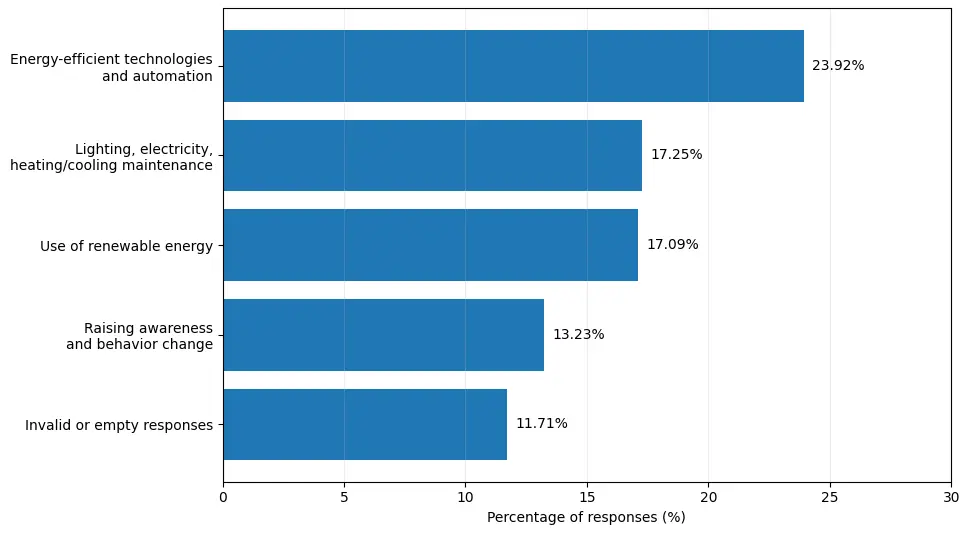
According to Figure 2, energy-efficient technologies and automation were the most frequently reported recommendations, followed by renewable energy utilization and lighting, power, and HVAC system maintenance. These categories show that students typically frame energy-saving strategies in terms of technology and operations. However, additional technical and administrative evaluation is necessary to determine the viability and institutional priority of these recommendations. According to these results, students could be an important stakeholder group for participatory campus energy-management projects, especially if their recommendations are backed by institutional coordination and technical advice.
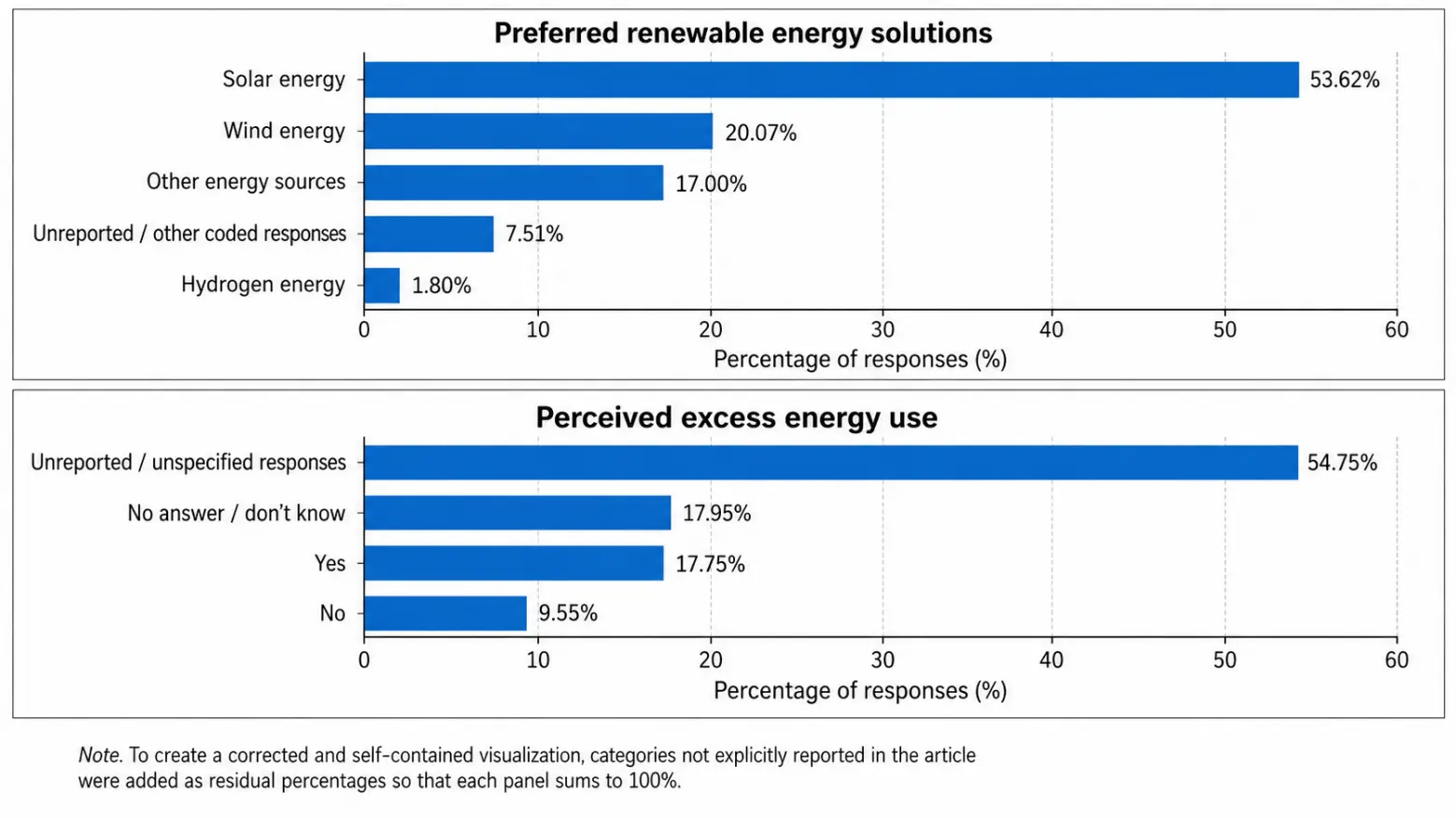
In addition to identifying general energy-saving actions, students were asked to indicate which renewable energy solutions they considered most suitable for the campus and whether they perceived excessive energy use in certain areas. Examining these responses reveals not only students’ technological preferences but also their level of awareness of campus-level energy consumption patterns. The coded results are presented in Figure 3.
The most popular renewable energy choice among respondents was solar energy, as seen in Figure 3. Students’ perceived preference for or familiarity with solar technologies is reflected in this finding; however, a separate feasibility evaluation would be necessary to determine whether solar energy is the most technically and financially viable alternative for the campus. On the other hand, unreported or vague responses predominate in the excess-energy-use responses. As a result, it seems less evident from the given data that students are able to pinpoint particular locations of excessive energy use. Claims regarding HVAC systems, lighting, or other operational inefficiencies would need to be supported by more specific categorization.
3.6. Broader Implications for Student-Led Energy Management
Students’ capacity for participation is multifaceted, as indicated by the combined results of Likert-scale items, department-based comparisons, energy consumption estimates, and open-ended responses. Students showed a conceptual understanding of sustainability and energy efficiency, but they had limited practical knowledge of national energy planning, ISO 50001-related procedures, or campus energy indicators. As a result, the results should serve as a foundation for creating an organized student-led energy management strategy, in addition to providing an awareness evaluation. The key conclusions and their consequences for student involvement in campus energy management are outlined in Table 7.
Table 7. Summary of key findings and practical implications for student-led campus energy management.
|
Main Finding |
Interpretation |
Implication for Student-Led Energy Management |
|---|---|---|
|
Students demonstrated stronger awareness of general sustainability-related concepts. |
Awareness is mainly conceptual rather than operational. |
Awareness activities should be supported with technical training. |
|
TOE, strategic energy planning, and perceived adequacy of energy efficiency education received comparatively lower scores. |
Operational energy literacy remains limited. |
ISO 50001, EnPI, TOE, and energy policy topics should be included in seminars and courses. |
|
ESE students tended to show higher mean Likert scores than MCE and Other groups. |
Disciplinary background appears to be associated with technical energy awareness and engagement-oriented responses. |
Students from energy-related departments may take technical leadership roles in student energy teams. |
|
Students showed limited accuracy in estimating actual electricity and natural gas consumption. |
Students may not have had enough exposure to or interaction with campus-level energy statistics, as seen by the low accuracy of their consumption estimations. |
Building-level energy dashboards and periodic energy reports should be shared. |
|
Students frequently suggested automation, efficient technologies, maintenance measures, and renewable energy solutions. |
Students can propose potential intervention areas, although technical feasibility requires further assessment. |
Student-led teams can support facility management by reporting visible energy waste and promoting efficiency actions. |
|
Solar energy was the most preferred renewable energy option. |
Students associate campus sustainability with familiar and visible clean energy technologies. |
Renewable energy awareness activities can be linked to campus-level feasibility discussions. |
|
Some responses indicated uncertainty or contained invalid/empty answers. |
Awareness and participation are uneven across the student body. |
Engagement strategies should include both technical and general awareness pathways. |
The results indicate that students can participate in campus energy management, but an institutional framework is necessary to support their involvement, as summarized in Table 7. For students to participate effectively, general sustainability awareness is insufficient; they also require access to real energy data, rudimentary instruction on energy indicators, and clearly defined roles within campus energy management procedures. In this way, student-led energy management should be viewed as a participatory mechanism that links facility management, sustainability education, and behavioral change, rather than merely a volunteer awareness exercise.
These findings suggest that student-led energy-management units should not be designed merely as voluntary awareness groups. Instead, they may benefit from a differentiated role structure in which students from energy-related departments provide technical leadership on ISO 50001, EnPI, TOE, and energy monitoring, while students from other departments contribute to interdisciplinary dissemination, awareness-building, and behavioral engagement.
Such a student-led organization may assist the Plan-Do-Check-Act cycle within the ISO 50001 continuous improvement framework by helping with awareness campaigns, gathering user input, identifying visible energy waste, and informing students about building-level energy performance. Universities may be able to change energy management from a largely administrative and technical process to a participatory learning process with the aid of this strategy. The policy recommendations, limitations, and future research directions covered in the conclusion are based on these wider consequences.
4. Conclusions
4.1. Main Findings and Contributions
This study provides an empirical foundation for identifying opportunities to improve participatory campus energy management practices in higher education by combining building-level energy-consumption data with students’ self-reported awareness, disciplinary backgrounds, and willingness to participate.
The results demonstrate that students’ conceptual awareness of sustainability, energy efficiency, carbon footprint, and energy management is moderate. They are still unfamiliar with national energy policy frameworks, TOE, ISO 50001-related procedures, and operational indicators. Though this relationship should be understood as descriptive rather than causal, the higher mean scores obtained by ESE students may be linked to their increased curricular exposure to energy-related disciplines. The necessity for integrated energy management education is demonstrated by the more moderate or varied response patterns displayed by MCE students and students from other departments.
The reliability analysis indicated satisfactory internal consistency among the twelve Likert-scale items (Cronbach’s alpha = 0.753). The Kruskal-Wallis results showed that department-based differences were not statistically significant for the broadest sustainability-awareness items, whereas significant differences emerged for technical, policy-oriented, and engagement-related energy-management items. Complementary chi-square analyses and Cramer’s V values further indicated stronger department-based associations for items related to willingness to participate, seminar attendance, strategic energy planning, and technical energy concepts. These findings suggest that disciplinary background is more closely associated with operational energy literacy and participation-oriented attitudes than with general sustainability awareness.
Additionally, the open-ended answers show that students are able to recognize specific energy-saving measures, such as automation, energy-efficient devices, lighting, heating-cooling maintenance, and renewable energy sources. These findings suggest that students may contribute meaningfully to campus energy-awareness and monitoring initiatives if they are provided with transparent energy data, institutional coordination, and structured training.
4.2. Policy Recommendations
Based on the findings, policy recommendations can be organized at two complementary levels: university-level actions and public policy-level actions. Table 8 summarizes the proposed recommendations, the responsible actors, and the expected contributions of each action.
Table 8. Policy recommendations for student-led campus energy management.
|
Level |
Recommendation |
Responsible Actor |
Expected Contribution |
|---|---|---|---|
|
University |
Establish student-led energy management units |
Rectorate, faculty administration, facility management |
Supports participation and visible energy monitoring |
|
University |
Publish building-level energy data through dashboards or reports |
Facility management, sustainability office |
Improves transparency and operational energy literacy |
|
University |
Integrate ISO 50001, TOE, EnPI, and basic energy auditing into courses |
Engineering departments, sustainability programs |
Reduces the gap between conceptual awareness and technical knowledge |
|
University |
Organize interdisciplinary energy seminars |
Faculties, student clubs, sustainability office |
Encourages participation beyond energy-related departments |
|
Government |
Incentivize ISO 50001 adoption in public universities |
Ministries, higher education authorities |
Supports national energy efficiency goals |
|
Government |
Fund student-led campus energy efficiency projects |
TÜBİTAK, YÖK, public agencies |
Links sustainability education with practical energy action |
|
Government |
Require annual campus energy performance reporting |
Public authorities, university administrations |
Enables benchmarking and accountability |
Instead of viewing student engagement as a voluntary or informal activity, the guidelines highlight the necessity of institutionalizing it at the university level. Students can connect abstract sustainability principles to real building-level energy performance through student-led energy management units, transparent energy dashboards, and curriculum-integrated ISO 50001 training. The proposals emphasize the significance of funding programs, reporting systems, and incentives that promote ISO 50001-based energy management practices in higher education institutions at the level of public policy. These actions could help university students develop sustainability competencies while also supporting national energy efficiency goals.
4.3. Limitations
This study has several limitations. First, the study was limited in its applicability to other campuses, building types, and institutional contexts because it was carried out in a single academic building at a single university. Second, because convenience sampling was used for the survey, the sample might not accurately reflect the opinions of all university students. Third, only students from one university’s Faculty of Engineering and Natural Sciences were included in the sample. As a result, students from social sciences, arts, health sciences, or other non-technical academic subjects may not be adequately represented in the results.
Fourth, the survey depended on self-reported answers, which could be impacted by variations in students’ interpretations of Likert-scale items or social desirability bias. Lastly, the study did not quantify the actual energy-saving benefits of student-led energy management units, despite combining technical energy data with survey results. Therefore, rather than being a tested intervention with confirmed energy savings, the suggested model should be seen as a framework based on awareness, willingness, and perceived contribution.
Additionally, post hoc pairwise comparisons were not conducted, even though department-based differences were examined using the Kruskal-Wallis and chi-square tests. Therefore, rather than focusing on specific differences between individual department pairings, statistically significant results show overall disparities among department groupings. Additionally, some chi-square tests included cells with expected counts below the suggested threshold; as a result, the chi-square findings were treated as complementary to the Kruskal-Wallis results and interpreted with caution.
4.4. Future Research
The suggested student-led energy management paradigm should be tested on other campuses, faculties, and building types in further studies. To determine if student-led energy teams, energy dashboards, ISO 50001-based training, and curriculum-integrated energy management activities result in quantifiable decreases in energy use over time, longitudinal and intervention-based studies are required.
In order to further understand how disciplinary background influences energy literacy, environmental attitudes, and desire to participate in campus sustainability activities, future research should also compare students from engineering and non-engineering fields. Stronger evidence of the true impact of student participation on campus energy efficiency could be obtained by combining survey data with behavioral observations, dashboard analytics, and post-intervention energy performance indicators.
5. Highlights of Contribution
This study contributes to sustainability in higher education by integrating an ISO 50001-oriented energy-performance assessment with students’ self-reported awareness, attitudes, and engagement potential. Unlike studies that examine campus energy management and student sustainability perceptions separately, this research brings these dimensions together within a student-led energy-management framework. The proposed framework does not claim to demonstrate actual energy savings; rather, it provides a participatory model through which higher education institutions may connect operational energy monitoring, sustainability education, and campus governance.
Statement of the Use of Generative AI and AI-Assisted Technologies in the Writing Process
ChatGPT (OpenAI) was used only to assist in generating the graphical visualization. The authors reviewed and verified the final figure and take full responsibility for its accuracy.
Acknowledgments
The authors gratefully acknowledge the support of the Facility Management Unit of Ankara Yıldırım Beyazıt University for providing the building energy consumption records. The authors also thank the students who voluntarily participated in the survey.
Author Contributions
Conceptualization, Ö.Ö.E. and B.Y.; Methodology, İ.S.U. and Ö.Ö.E.; Software, İ.S.U.; Validation, Ö.Ö.E. and B.Y.; Formal Analysis, İ.S.U. and Ö.Ö.E.; Investigation, İ.S.U.; Resources, Ö.Ö.E. and B.Y.; Data Curation, İ.S.U. and Ö.Ö.E.; Writing—Original Draft Preparation, İ.S.U. and Ö.Ö.E.; Writing—Review & Editing, Ö.Ö.E. and B.Y.; Visualization, İ.S.U. and Ö.Ö.E.; Supervision, B.Y. and Ö.Ö.E.; Project Administration, B.Y.; Funding Acquisition, İ.S.U. All authors have read and agreed to the published version of the manuscript.
Ethics Statement
The study was conducted according to the guidelines of the Declaration of Helsinki and approved by the Ankara Yıldırım Beyazıt University Science and Engineering Sciences Ethics Committee (decision no. 04/14, approval date: 25 October 2024; document no. E-84892257-300-333275).
Informed Consent Statement
Informed consent was obtained from all participants before completing the survey.
Data Availability Statement
All aggregated data supporting the findings of this study are included in the article. Additional anonymized survey data and processed building energy-consumption records can be made available by the corresponding author upon reasonable request, subject to institutional permission and ethical considerations.
Funding
The first author (İ.S.U.) received Tübitak Bideb BSc Student Graduation Project support (under contract number of 1919B012324771) for this work.
Declaration of Competing Interest
The authors declare that they have no known competing financial interests or personal relationships that could have appeared to influence the work reported in this paper.
References
-
Porras Landivar MS, Guayasamin Arias EC. Propuesta de Implementación de un Sistema de Gestión Energético Basado en la Normativa ISO 50001:2018 para la Reducción del Consumo Energético. Master’s Thesis, Universidad Politécnica Salesiana, Quito, Ecuador, 2024. [Google Scholar]
-
ISO 50001:2018; Energy Management Systems—Requirements with Guidance for Use. International Organization for Standardization: Geneva, Switzerland, 2018. [Google Scholar]
-
Fuchs H, Therkelsen P, Miller WC, Siciliano G, Sheaffer P. ISO 50001-Based Energy Management Systems as a Practical Path for Decarbonization: Initial Findings from a Survey of Technical Assistance Cohort Participants. Energies 2023, 16, 5441. DOI:10.3390/en16145441 [Google Scholar]
-
Prasetya B, Wahono DR, Dewantoro A, Anggundari WC, Yopi. The role of Energy Management System based on ISO 50001 for Energy-Cost Saving and Reduction of CO2-Emission: A review of implementation, benefits, and challenges. In IOP Conference Series: Earth and Environmental Science; IOP Publishing: Bristol, UK, 2021. DOI:10.1088/1755-1315/926/1/012077 [Google Scholar]
-
Solano FU, Valarezo ES. Análisis Energético de la Luminaria del Edificio Administrativo del Gobierno Autónomo Descentralizado Municipal de Píllaro. Master’s Thesis, Universidad Técnica de Ambato, Ambato, Ecuador, 2024. [Google Scholar]
-
Henning S, Hasselbring W, Burmester H, Möbius A, Wojcieszak M. Goals and measures for analyzing power consumption data in manufacturing enterprises. J. Data Inf. Manag. 2021, 3, 65–82. DOI:10.1007/s42488-021-00043-5 [Google Scholar]
-
Ruales R, Calle AJ. Estudio de Factibilidad para la Implementación de un Sistema Fotovoltaico Interconectado a la Red para el Bloque F de la Universidad Politécnica Salesiana sede Sur. Master’s Thesis, Universidad Politécnica Salesiana, Quito, Ecuador, 2023. [Google Scholar]
-
Fernando M, Peiris S, Halwatura D, Wickramasinghe D. A Comparative Assessment of Environmental Sustainability in Hospitality Industry with a Special Focus on Resource Efficiency and Cleaner Production Indicators. J. Environ. Prof. Sri Lanka 2022, 11, 27. DOI:10.4038/jepsl.v11i1.7881 [Google Scholar]
-
Santamaria Tullume JC. Diseño de un sistema de gestión de la energía basado en la Norma ISO 50001 para mejorar la eficiencia energética en la Molinera Sudamérica S.A.C. Lambayeque-2018. Undergraduate Thesis, Universidad Católica Santo Toribio de Mogrovejo, Chiclayo, Peru, 2023. [Google Scholar]
-
Filho WL, Salvia AL, Paço A, Anholon R, Quelhas OLG, Rampasso IS, et al. A comparative study of approaches towards energy efficiency and renewable energy use at higher education institutions. J. Clean. Prod. 2019, 237, 117728. DOI:10.1016/j.jclepro.2019.117728 [Google Scholar]
-
Oliveira MC, Proença J. Sustainable Campus Operations in Higher Education Institutions: A Systematic Literature Review. Sustainability 2025, 17, 607. DOI:10.3390/su17020607 [Google Scholar]
-
Evans J, Jones R, Karvonen A, Millard L, Wendler J. Living labs and co-production: University campuses as platforms for sustainability science. Curr. Opin. Environ. Sustain. 2015, 16, 1–6. DOI:10.1016/j.cosust.2015.06.005 [Google Scholar]
-
Brundiers K, Barth M, Cebrián G, Cohen M, Diaz M, Doucette-Remington S, et al. Key competencies in sustainability in higher education—Toward an agreed-upon reference framework. Sustain. Sci. 2021, 16, 13–29. DOI:10.1007/s11625-020-00838-2 [Google Scholar]
-
Al-Dmour H. Green-Smart University Campuses: The Mediating Role of Student Engagement in Enhancing Corporate Image. SAGE Open 2023, 13, 21582440231219591. DOI:10.1177/21582440231219591 [Google Scholar]
-
Noor MFM, Mamat MZ, Mohamad ZF. Impact of Engagement in Campus Sustainability Activities to Competency Development: Change Agents’ Experiences and Perspectives. Sustainability 2024, 16, 1780. DOI:10.3390/su16051780 [Google Scholar]
-
Morales I, Segalàs J, Masseck T. Urban Living Labs: A Higher Education Approach to Teaching and Learning about Sustainable Development. Sustainability 2023, 15, 14876. DOI:10.3390/su152014876 [Google Scholar]
-
Nansen C. Active Learning, Living Laboratories, Student Empowerment, and Urban Sustainability. Sustainability 2024, 16, 3902. DOI:10.3390/su16103902 [Google Scholar]
-
Fihurka MV. ISO 50001 International Standard Implementation Specifics for Ensuring Economic Stability of Institutions of Higher Education in Ukraine. Bull. Kyiv Natl. Univ. Technol. Des. Ser. Econ. Sci. 2018, 5, 12–22. DOI:10.30857/2413-0117.2018.5.1. [Google Scholar]
-
Bostanci H, Boubekri N. An experiential education framework to train next-generation energy-conscious engineers through UNT Industrial Assessment Center. In Proceedings of the 2023 ASEE Gulf-Southwest Annual Conference, Denton, TX, USA, 15–17 March 2023. [Google Scholar]
-
Yıldırım N, Şekerci H, Ongun ŞB. Isıl konfor ve enerji tüketimi açısından iki üniversite binasının incelenmesi. In Proceedings of the 14th National Plumbing Engineering Congress, İzmir, Turkey, 17–20 April 2019. [Google Scholar]
-
Caicedo Vega MD. Cumplimiento de los requerimientos que conforman las etapas planificación e implementación de la norma ISO 50001 en la Universidad Autónoma de Bucaramanga UNAB Campus El Jardín. Available online: https://repository.unab.edu.co/handle/20.500.12749/1430 (accessed on 20 September 2025).
-
Uğuz İ, Erat ÖM, Yeşilata BÜ. Student-centered approach for increasing energy efficiency in university campus buildings. In Proceedings of the 5th International Science and Innovation Congress (V. Uluslararası Bilim ve İnovasyon Kongresi), Ankara, Turkey, 4–6 October 2024. [Google Scholar]