
Overview on the Current Global Market and Sustainability of Hydrogen Supply Chain Based on China
Overview on the Current Global Market and Sustainability of Hydrogen Supply Chain Based on China
Shiyin Wang
1,†
Jiayu Pan
2,3,4,†
Hang He
5
Jieshan Qiu
6
Maorong Chai
7
Jiajie Bi
2
Zhaolun Wang
2
Xiaojuan Hao
3
Rui Zhang
1,*
Chao'en Li
4,*

Received: 12 April 2026 Revised: 18 May 2026 Accepted: 02 June 2026 Published: 12 June 2026

© 2026 The authors. This is an open access article under the Creative Commons Attribution 4.0 International License (https://creativecommons.org/licenses/by/4.0/).
1. Introduction
As the largest consumer and import destination of energy in the world, China’s economic development is largely driven by the stability of its energy supply. However, the significant negative impact of fossil energy consumption on the ecological environment has become a critical issue. China has also become one of the world’s major CO2 emitters since 2006. Data show that China’s total primary energy consumption has reached 3.13 billion tonnes of oil equivalent in 2017, ranking first in the world. Coal consumption was the highest proportion of the primary energy, reaching 60% [1]. In 2019, the share of coal decreased to 57.6%, but still exceeded the combination of all other energy sources [2]. In 2015, it was announced that China would flatten CO2 emissions by around 2030 and aim to reach a plateau as soon as possible [3]. In September 2020, China further announced that it would adopt stronger policies and regulations to strive to reach the peak of CO2 emissions by 2030 and achieve carbon neutrality by 2060 [4]. Currently, China is aiming for basically net-zero CO2 emissions by 2050 under the 1.5 °C temperature control target scenario [5].
Coal accounts for the largest share of China’s energy consumption, making it the largest source of CO2 emissions. The development of low carbon energy almost determines whether it can achieve the goal of carbon neutrality and energy transition. As a secondary energy source, hydrogen energy is clean and carbon-free, and has flexible, efficient, and rich application scenarios. Hydrogen energy not only can be obtained from primary fossil energy sources such as coal but also is an ideal medium to support the large-scale development of renewable energy and the best choice to achieve deep decarbonization in transportation, industry, and construction.
Hydrogen is traditionally classified as grey, blue, and green hydrogen according to the intensity of the carbon emission from the production process:
-
Grey hydrogen refers to the hydrogen produced from the reforming of fossil fuels with high carbon intensity. The technologies for producing grey hydrogen are mature, offer a significant cost advantage, and are suitable for large-scale hydrogen production. However, grey hydrogen production directly releases the carbon dioxide generated during the production process into the atmosphere. In addition, greenhouse gas (CH4) leakage may occur during the extraction and transportation of methane feedstock.
-
Blue hydrogen includes industrial by-product hydrogen and the hydrogen production from fossil energy sources retrofitted with carbon capture and storage (CCS) technology, with a significant reduction in carbon emissions in comparison to the production of grey hydrogen. The carbon emissions associated with blue hydrogen primarily depend on variations in CCS technologies across different projects. Some advanced projects can achieve carbon capture rates exceeding 95%, whereas others capture only around 60% of emissions [6]. At the same time, blue hydrogen also faces the issue of greenhouse gas leakage during the extraction and transportation of raw materials.
-
The item of green hydrogen can be used for hydrogen production from renewable and nuclear energies, and almost no carbon emission is generated during the hydrogen production, which is treated as the mainstream direction of hydrogen production in the future.
In December 2020, the China Hydrogen Energy Alliance released low-carbon hydrogen, clean hydrogen, and renewable hydrogen standards and certification to quantify hydrogen’s carbon emissions for the first time, from a formal standard perspective. The standard states that in terms of carbon emissions per unit of hydrogen, the threshold is 14.51 kg-CO2,eq/kg-H2 for low-carbon hydrogen and 4.90 for clean and renewable hydrogen, and that renewable hydrogen requires a renewable energy source to be used to produce the hydrogen [7]. In simple terms, renewable and clean hydrogen is roughly equivalent to what is commonly known as green hydrogen, and low-carbon hydrogen is roughly equivalent to blue hydrogen [8].
To successfully transition to a hydrogen economy, it is necessary to consider several factors, including the impact of the current economic model on an emerging regulated industry, the characteristics of the hydrogen supply chain, potential regulatory solutions comparable to those in other regulated industries, and how these findings can be reconciled to overcome the regulatory challenges in the development of the emerging hydrogen economy [9]. A range of assessment criteria for evaluating hydrogen economy transitions is presented, including distributive, procedural, and cosmopolitan justice, as well as recognition of justice, and the interaction of these criteria with other aspects of assessment [10]. The hydrogen economy is based on low carbon and needs to take geopolitical considerations into account. Whether the time is ripe for a hydrogen economy depends on whether researchers, companies, countries, and international organizations work together and whether the geopolitical consequences are manageable [11].
Reviews of hydrogen energy in recent years have mainly focused on the state-of-the-art of hydrogen production [12,13], storage [14,15,16], and transport [17,18,19,20,21,22,23] at the technological level, as well as the challenges faced by each of these technologies. Reviews on hydrogen energy policies and strategies are also seen somewhere [24,25,26]. The status and proposed future perspectives of hydrogen energy in many countries including Australia [27], United Kingdom [28], North America [29] including USA [30], Canada [31], and Mexico [32], Japan [33], South Korea [34], India [35], Middle East and North Africa [36], Malaysia [37], etc., have been analyzed and summarized.
According to the World Economic Forum’s white paper, China is the largest producer and consumer of hydrogen globally, but less than 0.1 percent of the hydrogen comes from renewable energy sources [38]. However, the review regarding the specificities of China is behind the fast-emerging hydrogen industry. As hydrogen energy will become an important part of its energy system in the future, if China wants to gain a foothold in the energy market, it will face challenges such as the lack of key technologies, imperfect standards and norms, high costs, imperfect infrastructure, geographic differences in resources and demand, unclear public acceptance, and a lack of policy [39].
Based on the latest data, this paper firstly examines the hydrogen energy market from a global perspective. It then takes attention to China’s hydrogen energy market and proposes countermeasures and recommendations to address issues such as hydrogen shortages and geographic differences that may be faced by a booming hydrogen economy.
2. Global Status of Hydrogen Energy
Hydrogen is widely used in industrial and energy sectors, including chemical synthesis [40], and oil refinery and desulfurization processes [41]. In the metallurgy field, hydrogen is used to replace coke for carbon-free steel manufacturing [42]. As a renewable energy carrier, hydrogen can be used as a fuel to replace traditional gasoline in ships, trains, cars, and other applications [43], and to generate electricity for fuel cells and energy storage [44]. In the industrial sector, demand for hydrogen is stable and market volume is large, but current consumption is mainly based on grey hydrogen. Although the demand for green hydrogen is growing rapidly, its proportion is still relatively small due to the limitations of high cost and difficult to recoup infrastructure [45].
The development and utilization of hydrogen energy have become important pathways towards energy transition in several economies. In 2024, the low-emission hydrogen use has increased by 10% compare to 2023, and the global hydrogen demand has reached 100 million tonnes with a 2% of increase from 2023 [46]. The top three countries in total hydrogen energy consumption are China, the United States, and the Middle East, followed by India and Europe (Table 1) [46].
Green hydrogen can only be truly clean in the sense of low carbon emissions. In 2024, total global hydrogen production was almost entirely from fossil fuels without combining with carbon capture, utilization, and storage (CCUS) technologies [46]. Among the total hydrogen production, less than 1 million tonnes of low-emission hydrogen were produced, almost all from fossil fuels with CCUS, with only 35 thousand tonnes from electricity via water electrolysis. However, the deployment of hydroelectric installations is increasing globally; for example, a 10-time increase of hydrogen production via electrolysis by 2030 compared to 2024 has been expected.
The current hydrogen energy system must be transited from grey toward a low-carbon hydrogen economy primarily through increasing the proportion of blue and green hydrogen pathways. Firstly, CCUS technologies can be employed to reduce emissions from fossil fuel-based hydrogen production [46]. On the other hand, renewable energy sources such as wind and solar power can support the development of water electrolysis for green hydrogen production. At the same time, supporting infrastructure, including hydrogen storage and transportation networks, refueling stations, and hydrogen-related industrial supply chains, must be further developed. In addition, policy instruments such as carbon trading mechanisms, government subsidies, and green certification systems are essential for enhancing the economic competitiveness of low-carbon hydrogen [47,48].
Nevertheless, this transition continues to face several major challenges. These include the relatively high cost of green hydrogen production, instability in hydrogen supply caused by the intermittency of renewable energy sources, insufficient storage and transportation infrastructure and safety measures, the limited commercial maturity of CCUS technologies, and the absence of unified hydrogen standards and market mechanisms across countries and regions. Collectively, these factors constrain the large-scale deployment of a low-carbon hydrogen economy [49].
2.1. United States (US)
Based on the existing demand, various countries have made projections for future hydrogen production requirements. According to the National Clean Hydrogen Strategy and Roadmap published by the Department of Energy, United States, the hydrogen demand of the country will rise to 10, 20, and 50 million tonnes per year in 2030, 2040, and 2050, while reducing the cost of hydrogen production to 2 and 1 US$/kg-H2 by 2030 and 2035, respectively [50].
Most of the hydrogen in the United States comes from natural gas through steam methane reforming (SMR). The gas produced using SMR technology must undergo hydrogen purification and carbon capture and storage (CCS) technology before it can be classified as blue hydrogen. The commonly used technologies include absorption [51,52,53,54], pressure swing adsorption (PSA) [55,56,57], membrane separation [58,59], cryogenic distillation [60], and de-sublimation [61], etc. Those technologies are quite mature with technology readiness levels (TRLs) of 9, 7, 7, and 5, respectively [62].
SMR costs vary by location depending on the natural gas price, with higher costs in Delaware, Rhode Island, etc., reaching 1.5–2.0 US$/kg-H2, while lower in Kansas, Oklahoma, Louisiana, etc., down to 0.62 US$/kg-H2. If CCS technology is applied, an additional cost of 0.4 US$/kg-H2 is required [63]. In Europe, the price of natural gas is going to be 7–8 US dollars per metric million British thermal unit (US$/MMBTU). Thus, the cost of hydrogen production from SMR in Europe is much higher in comparison to places like Kansas in US.
Hydrogen produced in the United States from renewable energy generation through water electrolysis is 3–4 times more costly than SMR with CCS [64], in which the electricity costs account for 59–68% of the total cost of electrolytic hydrogen production [65]. The cost of hydrogen production from renewable energy sources varies a lot between plants, ranging from as low as 2.6 to as high as 12.3 US$/kg-H2. Among them, 81 plants from 20 states have already declared hydrogen production costs below 4.0 US$/kg-H2 [66].
2.2. Europe
Europe stands ahead in hydrogen production projects using water electrolysis. The share of hydrogen in the total energy structure of European countries is currently only 2%, mainly from natural gas, and there is an urgent need for European countries to produce hydrogen through renewable energy sources [67]. However, the cost of green hydrogen in Europe is high (2.67–5.88 US$/kg-H2), and the European hydrogen roadmap proposed three phases for the implementation of renewable hydrogen electrolyzers in the timeframes of 2024, 2030, and 2050, respectively, in order to achieve the goal of large-scale production of renewable hydrogen [68]. European Commission plans to import 10 million tonnes of renewable hydrogen by 2030 to free Europe from dependence on Russian fossil fuels [46]. At the same time, the European hydrogen roadmap expected the export potential up to 70 billion euros by 2030 and tightening the industrial cooperation with rapidly growing hydrogen and fuel cell markets in Asia in order to hedge against market risks [69].
According to current project plans, Europe is expected to install 40 GW of renewable hydrogen electrolysers over five years (2024–2030) and produce 10 million tonnes of green hydrogen for use in the steel industry and transport (rail or ship) [70]. Germany has secured funding to expand its installed capacity of green hydrogen production to 100 MW, with the project expected to reach 40 GW of capacity by 2030 [71]. Portugal’s Green Flamingo project, with a planned investment of 57 billion euros, establishes a 1 GW scale of electrolysis [72].
2.3. Japan
Japan is among the top few countries to set clear national strategies for the transition to hydrogen energy. Currently, 70% of Japan’s electricity comes from fossil fuels, with the rest coming from 7% of nuclear, 21% of renewables, and 2% of others [73]. Japan aims to achieve a supply cost of 30 JPY/Nm3-H2 in 2030 (less than 1/3 of the current selling price), and the hydrogen supply scale will reach 3 million tonnes in 2030 [74]. It plans to achieve domestic hydrogen production of 3 and 20 million tonnes per year in 2030 and 2050, respectively, according to its carbon-neutrally green growth strategy by 2050 [75].
Considering import as the important sector in its energy structure, Japan has already had several projects underway for international collaborations, with the first liquid hydrogen ship delivered in December 2019 and the first blue ammonia (i.e., ammonia synthesized using the hydrogen produced from methane reforming with CCS) delivered in September 2020 [76]. Japan’s Hydrogen Supply Chain Technology Research Association (HySTRA) attempts to establish a liquid hydrogen supply chain from Australia to Japan using liquid hydrogen tanks with a capacity of 2500 cubic meters [77]. Without the contribution of hydrogen imports, Japan’s electricity demand in 2050 would be twice that in 2019 [78]. The Japanese government will strengthen international competitiveness by focusing on areas where it can take advantage of Japanese companies’ technology, such as hydrogen-powered gas turbines, commercial vehicles such as trucks driven by fuel cells, and hydrogen-applied steel manufacturing [74].
2.4. South Korea
South Korea has also set a hydrogen supply strategy based on renewable energy sources, mainly solar energy. Solar power alone is not enough to cope with all the green hydrogen needs. Therefore, importing hydrogen while expanding its hydrogen production is a solution. By 2030, green hydrogen production is expected to be about 17,450 tonnes/year, while 900,000 tonnes are expected to be imported [79]. The Act on Promotion of Hydrogen Economy and Management of Hydrogen Security also sets the goal of replacing imported crude oil with imported hydrogen by 2050 [75,80]. South Korea aims to become the No. 1 producer of hydrogen fuel cell vehicles and fuel cells by 2040. It plans to consume around 27 million tonnes of hydrogen by 2050 to meet its decarbonization target [34].
2.5. Australia
Since 2020, Australia has overtaken Qatar, becoming the world’s largest LNG exporter. In 2021, Australia’s share in global LNG exports stood at 21.1% [81]. About 95% of Australia’s hydrogen is derived from fossil fuels, produced by steam reforming or partial oxidation of natural gas and coal gasification [82]. The cost of hydrogen production in Australia is approximately 1.58–4.22 US$/kg-H2 [27]. The levelized cost of hydrogen (LCOH) from SMR is about 1.88–2.30 US$/kg-H2 [83].
Australia has redundant renewable energy resources such as solar, wind, and tidal energies [84]. Up to 3 million tonnes of hydrogen could be produced from renewable electricity in Australia. However, large-scale hydrogen production through electrolysis also requires substantial water resources. Approximately 9–10 L of deionized water is required to produce 1 kg of hydrogen, excluding additional water treatment losses [85]. Since arid or semi-arid climates characterize many renewable-rich regions in Australia, freshwater availability may become a limiting factor for future green hydrogen hubs. Therefore, seawater desalination is expected to play an important supporting role in coastal hydrogen production facilities. Nevertheless, previous studies have shown that the energy consumption and additional cost associated with seawater desalination are relatively small compared with the overall electricity demand and cost of electrolysis. The contribution of desalination to the levelized cost of hydrogen (LCOH) is generally estimated to be 0.1–0.2 US$/kg-H2 [86]. Consequently, while water supply infrastructure should be considered in project planning, it is unlikely to significantly alter the long-term economic competitiveness of Australian green hydrogen exports [87].
In 2018, LCOH through electrolysis in Australia was estimated at 4.78–5.84 and 6.08–7.43 US$/kg-H2 for alkaline water electrolysis (AE) and proton exchange membrane (PEM) water electrolysis technologies, respectively [84]. The upfront capital costs of solar photovoltaic (PV) installations and onshore wind turbines have continued to decline over the last decade. The levelized cost of electricity (LCOE) for solar PV and onshore wind turbines by 2030 is projected to be 21.15 and 29.48 US$/MWh, respectively, which would make the cost of hydrogen production between 1.44 and 1.95 US$/kg-H2 [88]. At this cost level, Australian green hydrogen export would be competitive.
Besides the hydrogen production cost, the transportation cost of exporting hydrogen must also be considered, and seeking an effective way to reduce the transportation sort has shown the importance. As it is geographically close to key emerging hydrogen import markets in Asia and has established renewable hydrogen supply chain relationships with a number of countries [89], Australia is expected to become a major renewable hydrogen exporter in the future. In 2022, Australia exported its first shipment of liquefied hydrogen to Japan, becoming the first country to export liquid hydrogen to the overseas market [90]. The Hydrogen Energy Supply Chain (HESC) project represents a landmark collaboration between Australia and Japan in the field of hydrogen trade and constitutes one of the world’s earliest pilot initiatives for establishing a liquid hydrogen supply chain. Both countries have set the objective of realizing stable, large-scale hydrogen trade by 2030. As the first successful demonstration of a long-distance liquid hydrogen supply chain, the HESC project provides an important reference framework for future hydrogen transportation initiatives worldwide [91]. Raab et al. [92] used the transportation of hydrogen from Australia to Japan as a case study, and conducted a techno-economic evaluation of three routes: liquefied hydrogen (LH2), dibenzyltoluene (DBT), and toluene (TOL) as hydrogen carriers. The LH2 pathway was proven to have more energy advantages compared to the TOL one, the TOL pathway is more economically efficient, and the DBT scenario is superior overall.
2.6. Middle East and North Africa (MENA)
A solar module in a prime location like Africa or Arabia produces about twice as much energy as a solar module in a prime location like Germany [93]. Thanks to the significantly higher location quality of sunny countries, disadvantages regarding efficiency can therefore be largely eliminated. In addition, countries such as Namibia or Saudi Arabia have enormous areas of land favoring optimized mass production of renewable energy.
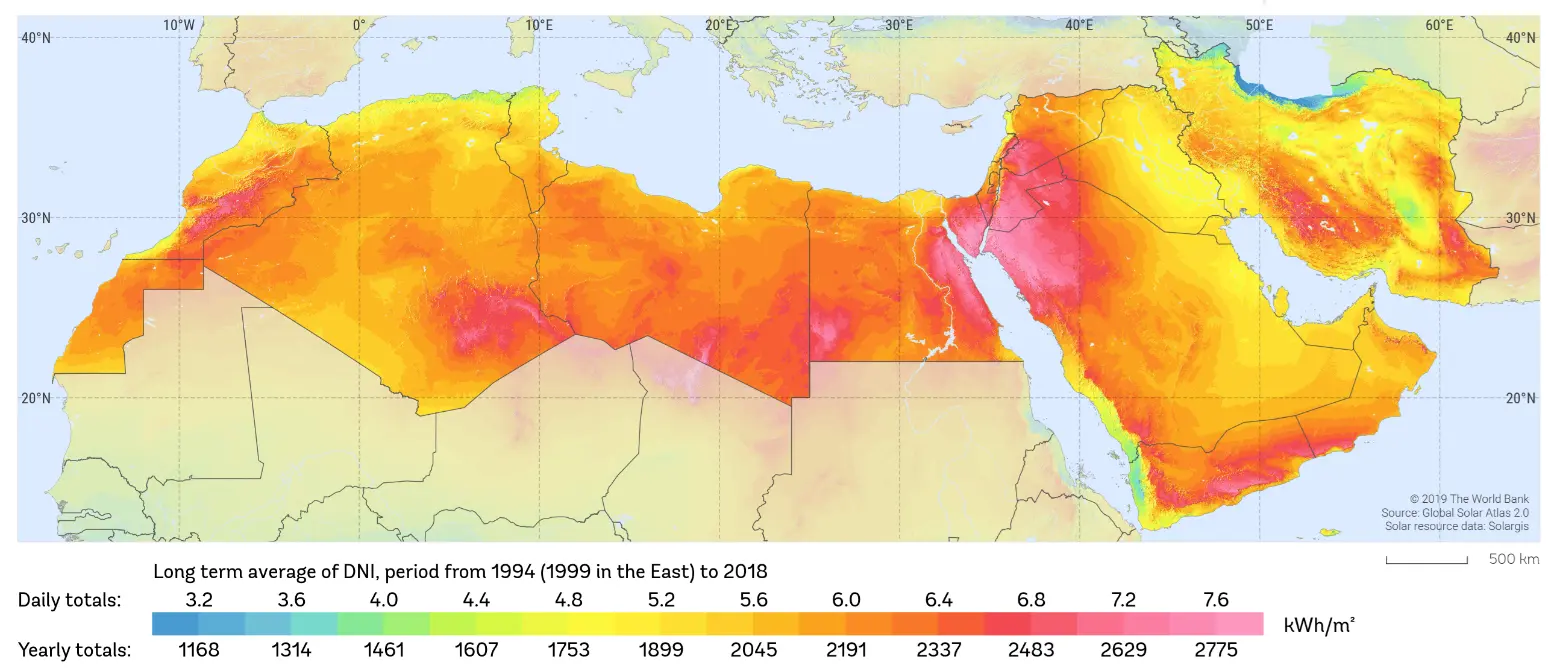
The Middle East and North Africa (MENA) are rich in solar radiation. The distribution of solar energy resources in the Middle East and North Africa is shown in Figure 1 [94]. The average annual light intensity exceeds 2000 kWh/m2 in Morocco, Egypt, Saudi Arabia, etc. Up to early 2021, large projects such as the 510 MW Nouao photovoltaic project in Morocco, 186 MW Benban project in Egypt, 300 MW Saqqaqa project in Saudi Arabia, 950 MW project in Dubai, and 1177 MW Noor project and 1500 MW Dafurah project in Abu Dhabi have been built or are under construction in the region [95].
Currently, countries in the Middle East, such as Saudi Arabia, the United Arab Emirates (UAE), and Oman, are actively developing hydrogen energy. These three countries are already among the top 25 global hydrogen producers and plan to become the world’s leading exporters of hydrogen and ammonia [96]. Saudi Arabia commits the world’s largest green hydrogen project in 2025, and plans to build a green hydrogen and ammonia plant with an installed capacity of 4 GW at Neom New City, capable of producing 650 tonnes of green hydrogen per day, approximately 5 million barrels of oil equivalent per year, and approximately 1.2 million tonnes of ammonia per year [96,97]. The UAE has established a hydrogen energy alliance, aiming to develop hydrogen energy projects on its territory, with a focus on hydrogen fuel cells and the application of hydrogen in the aviation industry. Qatar has the third largest natural gas reservation in the world and the largest per capita gas share in the world [98]. Combined with its natural gas resources and CCUS technologies, Qatar has the potential to become a large-scale, low-cost producer of blue hydrogen.
Countries like those mentioned above, which have redundant renewable resources and promising prospects for hydrogen energy development, can cooperate with industrial countries with relatively limited renewable energy sources but strong hydrogen production technologies to promote the globalization and maximization of the hydrogen energy economy in the world. For example, Saudi Arabia and Germany are actively advancing the Saudi–German Hydrogen Bridge project, aiming to export 200,000 tonnes of green hydrogen to Germany annually by 2030 [99]. Meanwhile, Japan is also strengthening the cooperation with Saudi Arabia and the UAE in the development of hydrogen export projects.
The MENA region endows abundant solar and wind resources, as well as well-established oil and gas export infrastructure; therefore, it is emerging as a major potential hub for the export of low-carbon hydrogen. However, the development of the hydrogen economy in the region faces significant geopolitical and infrastructural challenges. Regional conflicts, maritime security, and geopolitical competition among major powers could substantially increase transportation and insurance costs while undermining supply stability. On the other hand, following Europe’s efforts to reduce its dependence on Russian natural gas, a new form of structural dependence on energy supplies from the Middle East and North Africa may emerge. In addition, green hydrogen production requires substantial amounts of electricity and freshwater resources. In North African countries where water scarcity is also a pressing issue, this may generate tensions between export-oriented hydrogen development and domestic social and economic needs. Overall, future hydrogen trade in the Middle East and North Africa is more likely to evolve into a regionalized energy system characterized by long-term contracts, secure transportation corridors, and political coordination, rather than a fully globalized market similar to the contemporary oil trade system [100].
2.7. Rest of the World
In addition to the countries mentioned above, green hydrogen is also competitive in regions with favorable conditions, such as Patagonia, where it is possible to achieve green hydrogen production at a cost of about 2.5 US$/kg-H2 [46]. Electrolytic hydrogen is expected to exceed 4 million in 2030 in Latin America, the Middle East, and Africa. Air Liquide has a 20 MW PEM electrolyser in Becancour, Canada, in operation by the end of 2020. Chile commits to 5 GW of electrolysis capacity in 2025 [76].
If all the projects currently under construction come to fruition, the global production of hydrogen with low carbon emissions will reach 16–24 million tonnes by 2030, of which 9–14 million tonnes could be from electrolysis. The installed capacity of electrolysers will reach 134–240 GW by 2030, with a lower limit similar to Germany’s installed renewable energy capacity and an upper limit across Latin America [46].
International trade in hydrogen energy has huge potential for growth, with the global hydrogen energy market of approximately 125 billion US dollars in 2022. By 2050, about 25% of the world’s hydrogen energy could be traded across borders [46]. The first knot in the hydrogen supply chain is economical and sustainable hydrogen supply. Steam methane reforming (SMR) is by far the most widely used method of hydrogen production, currently accounting for 48% of global production [84]. SMR is a process in which natural gas is thermochemically reformed at high temperature under catalytic conditions to produce hydrogen, carbon monoxide (CO), and carbon dioxide (CO2).
3. Hydrogen Energy in China
3.1. China’s Energy Structure
Currently, China is adopting a three-step strategy to advance energy modernization. Firstly, the energy modernization process is initiated during the period from 2016 to 2030 to facilitate the transformation of energy production and consumption. By 2030, the share of coal consumption is expected to fall below 50%, while the share of non-fossil energy is projected to exceed 20%. The second step is to accelerate the process with the completion of industrialization and urbanization. By 2040, the share of coal consumption is expected to fall to approximately 40%, while the share of non-fossil energy is projected to rise to around 35%. The third step is to deepen the modernization. By 2050, the share of coal consumption will drop to 30%, and the share of non-fossil energy will increase to 50% [101].
The comparison of China’s energy production and consumption for fossil sources (coal, oil, and natural gas) over the 10 years between 2010 and 2020 is shown in Figure 2 [102].
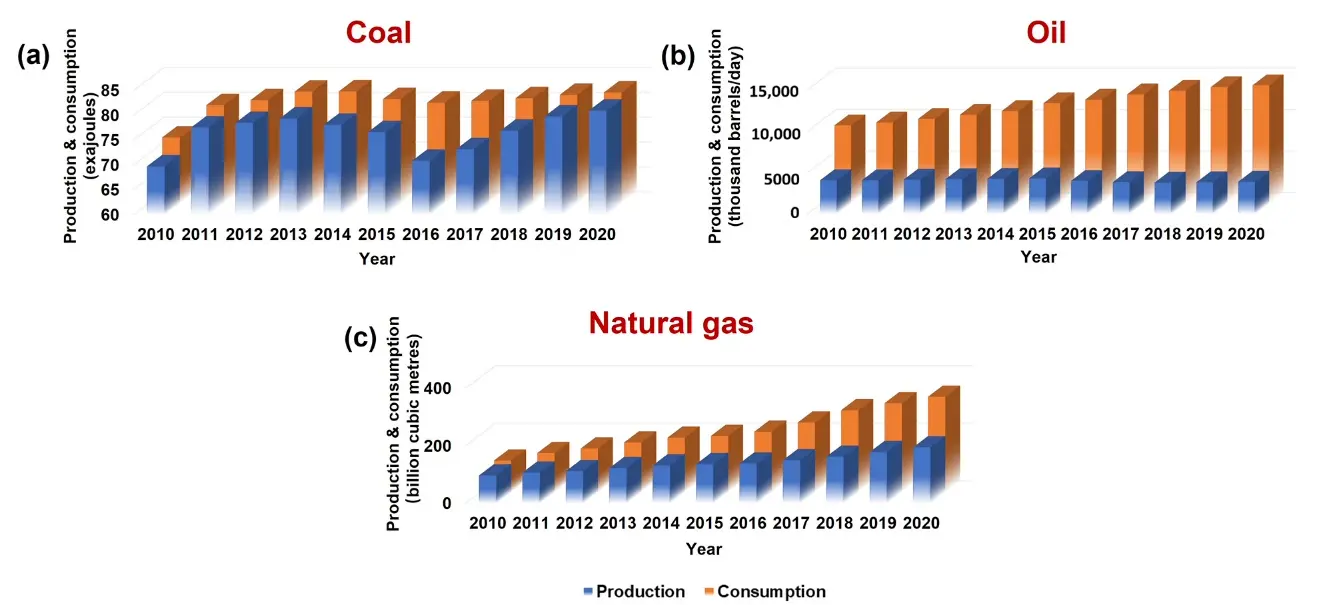
From the startup of its reforming strategy to the present, China has witnessed continuous optimization of its energy consumption structure, steady upgrading of its economic structure, and sustained declines in energy intensity [103]. Although the demand for energy keeps rising, China’s energy structure is gradually moving away from the dominance of fossil energy sources and closer to the vigorous development of renewable energy sources. Research predicts that China’s coal demand will touch the roof in 2022 and continue to decline until 2060 [104]. Natural gas demand will peak as well in 2041 at 557 million tonnes per year. China’s annual oil consumption is the second largest in the world, and the demand mainly stems from transportation vehicle consumption. With the development of electric vehicles, the dynamic growth path of oil demand was examined. It was concluded that China’s oil consumption will peak in 2029 and decline to 667.8 million tonnes in 2040 [105].
Renewable energy sources are favored for their natural recyclability, inexhaustibility, and sustainable availability. The exploration of renewable energy will determine the success of China’s transition from fossil energy to a low-carbon, sustainable energy system. The medium- and long-term development plan for renewable energy has identified key areas for renewable energy development, including hydropower, biomass, wind, solar, geothermal, and tidal energies. In 2021, China’s renewable energy generation reached 2.48 trillion kWh. Hydro, wind, photovoltaic, and biomass power generation accounted for 16.1, 7.9, 3.9, and 2% of total electricity consumption, respectively, for the whole society [106]. In 2030, the proportion of non-fossil energy in China’s primary energy consumption is expected to exceed 25%, and the total installed capacity of wind and solar power will reach 1.6–2 billion kilowatts [107].
3.2. The Hydrogen Production Status in China
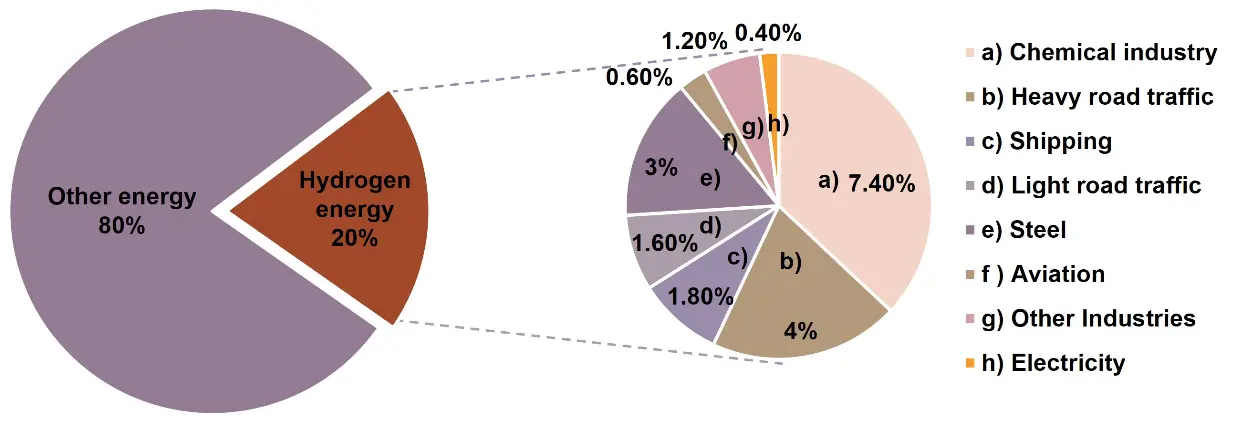
China produced 37.81 million tonnes of hydrogen in 2022, making it the world’s largest hydrogen producer [75]. The targets for China’s hydrogen energy development was divided into three stages: near (2020–2025), medium (2025–2030), and long- (beyond 2050) terms [108]. According to a report of China Hydrogen Alliance in 2022, the forecasted long-term demand for hydrogen energy in China is shown in Figure 3a [107].
In the roadmap published by the Alliance in 2019, it was predicted that in the mid-term 2030, China’s hydrogen demand will reach 35 million tonnes [109,110]. However, China produced approximately 35.33 million tonnes of hydrogen in 2021, already exceeding the forecast for hydrogen demand in 2025. The total demand for hydrogen energy was expected to reach 37–40 million tonnes in 2030, with renewable hydrogen supply up to about 7.7 million tonnes [107]. To reach the goal of carbon neutrality, hydrogen energy demand will increase 2–3 times compared to 2020, to about 100–130 million tonnes per year, of which renewable hydrogen will account for about 75–80%, which is 0.75–100 million tonnes per year. Figure 3b gives the proportion of hydrogen demand by sector in a zero-carbon scenario. The highest demand is in the chemical sector, which was forecasted to reduce emissions through hydrogen energy by 3.8 billion tonnes between 2020 and 2060.
3.3. Hydrogen Production Costs
Coal provides about 62% of China’s hydrogen, which is 21.24 million tonnes per year [7,111]. Other portions mainly come from natural gas and oil refining, and industrial co-products including coke oven gas, chlor-alkali tail gas, and propane dehydrogenation. Only about 1% of hydrogen is produced by electrolysis of water, with an annual production of about 500,000 tonnes [7]. The cost of hydrogen production is affected by the regional differences in renewable energy and electricity prices [112], market demand [113], provincial coal prices, with or without CCS technology applied [114], and the cost of carbon emissions [115], etc. Coal gasification combined with CCS technology and hydroelectric water electrolysis (HWE) may play an ultimate role in China due to their abundant feedstock and low costs [116].
China has abundant coal reserves. The cost of hydrogen production by coal gasification is about 1.14–2.68 US$/kg-H2 [117]. The cost of producing hydrogen from coal with and without CCS differs between areas. For example, Xinjiang is rich in coal resources, and the cost of coal-based hydrogen production is 0.90 and 1.44 US$/kg-H2 without and with CCS, respectively, while the cost reaches 2.11 US$/kg-H2 with CCS technology applied in Guangxi where is far from coal mines [114].
China is lagging behind in the development of methane steam reforming technology, but the first generation of hydrogen generators is now in place, and the cost of hydrogen production is in the range of 18–23 CNY/kg-H2 when the market price of natural gas is between 2.3 and 3.24 US$/m3 [118]. However, the natural gas produced in China has a high sulfur content, and complicated pre-treatment steps before reforming are required, so that the economic competitiveness is weak in comparison with other countries.
The use of renewable energy as a source of hydrogen or nuclear-based high-temperature electrolysis is still in the pilot stage in China. The three main technologies for hydrogen production from water electrolysis are alkaline, proton exchange membrane, and solid oxide water electrolyzers (AE, PEM, and SOEC). Among them, the AE technology is mature and has a high market share, but there are still certain challenges in terms of hydrogen production efficiency and other important technical indicators. The PEM technology is still in its infancy and lacks market verification [8]. The cost of hydrogen production from water mainly depends on the cost of power generation. The levelized cost of hydrogen (LCOH) for electricity generated from coal, wind, and photovoltaic powers in China range from 2.25–3.28, 3.65–4.87, and 5.60–7.09 US$/kg-H2, respectively [119]. Although the cost of green hydrogen is expected to fall to 2.74–3.43 US$/kg-H2 by 2030 this [120], the US Department of Energy estimates that green hydrogen will only be economically competitive with blue hydrogen if it is less than 2 US$/kg-H2 [121]. It is said that China could reach this goal by 2037 and even lower the price to 1.2 US$/kg-H2 by 2050 [122].
3.4. Hydrogen Storage and Transportation
To considerably minimize the impediment to the hydrogen economy caused by the green hydrogen gap, the contradiction between the way in which hydrogen is produced and the distance where it is transported must be resolved. For example, the price of hydrogen produced from photovoltaic and hydroelectric powers is lower in west of China, and there is a need to transport hydrogen to central and eastern China in an economical way. It was believed that building the national pipeline network was the proper choice for this energy transition in China [123]. However, hydrogen embrittlement is one of the difficult problems to solve for pipeline transportation [124]. Due to the presence of embrittlement, pipeline construction companies have to use higher cost materials and conduct more frequent inspections. When cracks appear in the pipeline, the transportation system will fail. To solve this problem, some efforts including hydrogen-resisted coatings were made [125,126,127].
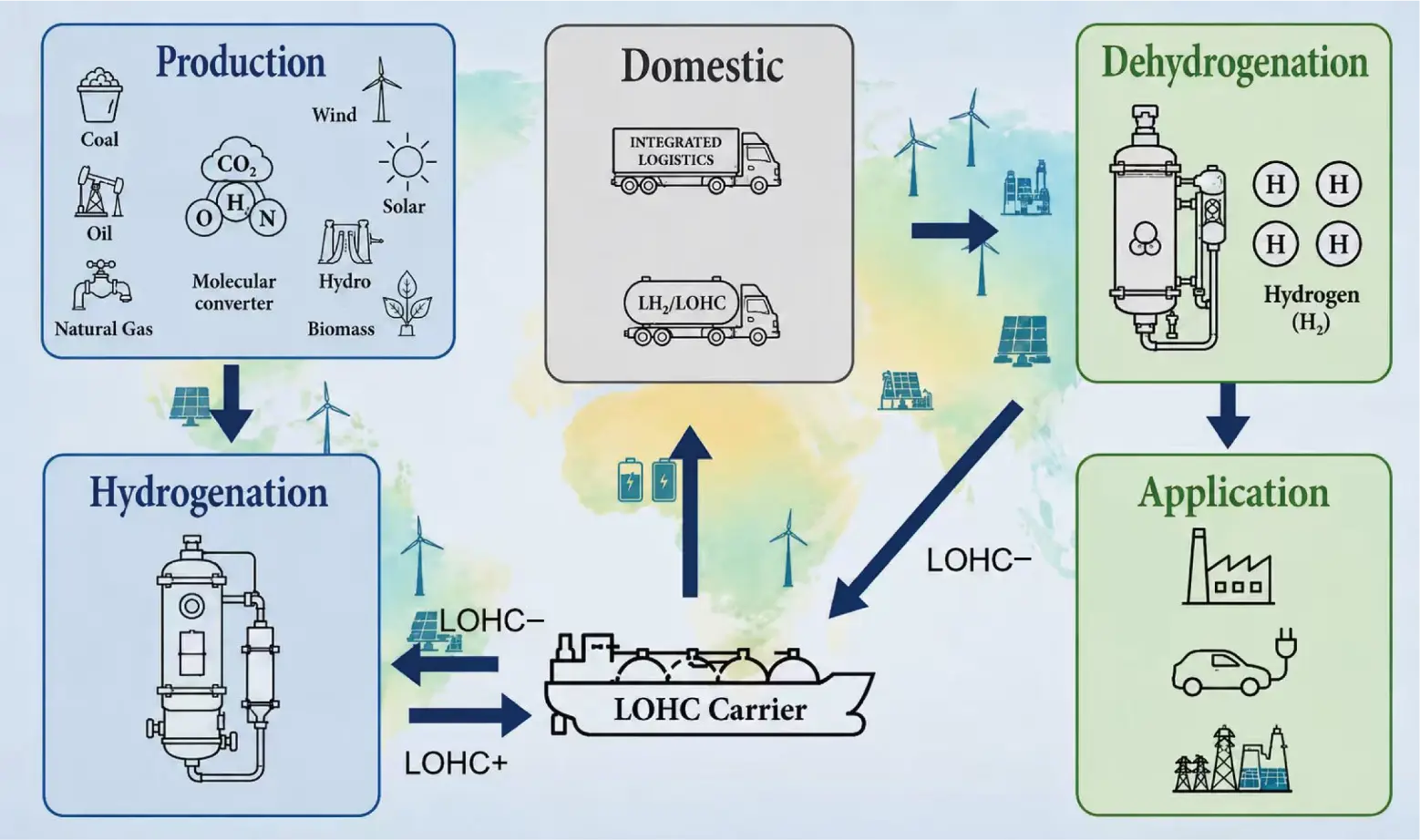
Well-known technologies for hydrogen storage include highly pressured gaseous and liquified hydrogen storages, solid adsorbent technologies, and liquid organic hydrogen carriers (LOHC). Researchers usually measure hydrogen storage performance in terms of volumetric density, mass fraction, reversibility (rate of hydrogen charging and desorption), energy consumption, recyclable life, and safety, etc. [128]. Domestic transportation methods normally include high-pressure gas hydrogen trailers, liquid hydrogen tank trucks, and pipeline hydrogen transport, etc. The choice of hydrogen storage and transportation techniques mainly considers low cost, long-term storage, and low hydrogen losses. The cost and economic distance of domestic transportation modes are shown in Table 2 [129]. However, Vessel is almost the only choice for an intercontinental transportation method. In these cases, the liquid organic carrier (LOHC) technology is more attractive from the view of transportation cost and safety, as shown in Figure 4.
High pressured gaseous hydrogen storage is quite mature and widely used, in which hydrogen is stored in high-pressured cylinders and transported in a tube trailer at above the critical temperature of hydrogen. However, the hydrogen only accounts for 1% of the total weight of the gas cylinder made of ordinary steel when the pressure is 15 MPa [130]. At present, long-tube trailers can transport hydrogen at a pressure of 20 MPa, however, it does not have an advantage when transported over long distances, such as >150 km. From the viewpoint of economics, long-tube trailers and pipelines are normally used for the domestic transportation of gaseous hydrogen. However, China currently has only 400 km of hydrogen pipeline infrastructure, while the United States and Europe have 2500 and 1569 km, respectively [111].
Storing and delivering hydrogen in liquid form is also a practical approach that offers a high hydrogen energy density but requires liquefying hydrogen at a low temperature (−253 °C). Similar to air liquefaction, hydrogen is compressed and cooled before passing through a throttle valve to form the cryogenic liquid phase [131]. The liquefaction process involves a combination of compressors, heat exchangers, expansion engines, and throttle valves [132]. From the viewpoint of the gravimetric and volumetric density, liquified hydrogen storage is ideal. However, long-term liquefied hydrogen storage and long-distance transportation face the challenge of huge hydrogen loss caused by its fast evaporation rate.
Solid hydrogen storage technology is to store hydrogen onto solid storage materials through physical or chemical adsorptions, and then release the hydrogen via depression or decomposition. Compared with the previous two methods, the solid hydrogen storage technique has advantages of high hydrogen storage density, good safety performance, and low pollution. However, it is still in the experimental stage and has not been scaled up yet.
The liquid organic hydrogen carrier (LOHC) transport chain can significantly improve the economics of long-distance transport and is suitable for large-scale and seasonal energy storage [133,134], as shown in Figure 4. The organic compounds (LOHC−) are hydrogenated to form hydrogen-loaded organic compounds (LOHC+). LOHC+ can be stored for a long time without self-discharging, providing favorable conditions for long-distance transport. In addition, LOHC+ can be recycled after dehydrogenation, that is, the LOHC system cannot be affected by hydrogenation-dehydrogenation cycles, and only hydrogen is delivered in the whole process [132]. An important advantage of LOHC transport is its high degree of compatibility with the existing energy infrastructure. At present, this technique is still in a demonstration stage, however, it has been promoting the applications in hydrogen refueling stations, building heating, and industrial fields.
In 2019, a 3-billion-CNY plant of LOHC was officially put into production in Yidu, China, with an expected annual production capacity of 1 million tonnes of LOHC [135]. In January 2023, a demonstration plant for the integration of hydrogen storage at room temperature and normal pressure in the form of LOHC and a refueling station was set up for operation [136]. The project invested by China National Chemical Construction and Investment Company pushed the LOHC technology forward to the stage of commercialization in China.
LOHCs, such as ethyl carbazoles and methylcyclohexanes, can be transported through existing tankers and pipelines as fuel, which shows a big feasibility for intercontinental energy trade [137]. Dürr et al. [138] pointed out that if H18-dibenzyltoluene is used as the hydrogen carrier in the future global renewable energy trade, a fully loaded tanker can carry 9300 tonnes of hydrogen. In 2018, Chiyoda Corporation built a pilot plant for large-scale hydrogenation and dehydrogenation of LOHC materials and launched the world’s first global LOHC transport hydrogen supply chain demonstration project [139]. Germany has also confirmed that hydrogen loading with LOHCs is the best option for importing renewable energy resources [140]. In the future, liquid organic hydrogen carrier transport is expected to become the main mode of transport for domestic hydrogen energy deployment and international trade.
Table 2. Costs and economic distances of domestic transport modes [129].
|
Storage States |
Transportation |
Pressure (MPa) |
Carrying Capacity (kg-H2/load) |
Volumetric Density (kg/m3) |
Gravimetric Density (wt%) |
Cost (CNY/kg-H2) |
Energy Consumption (kWh/kg-H2) |
Economic Distance (km) |
|---|---|---|---|---|---|---|---|---|
|
High-Pressure Gaseous |
Trailer |
30 |
300–400 |
14.5 |
1.1 |
2.02 |
1–1.3 |
<150 |
|
Cryogenic Liquid |
Pipeline |
1–6.3 |
- |
3.2 |
- |
0.3 |
0.2 |
>500 |
|
Truck |
0.6 |
7000 |
64 |
14 |
12.25 |
15 |
200 |
|
|
Solid |
Truck |
4 |
300–400 |
50 |
1.2 |
- |
10–13 |
<150 |
|
Organic liquid |
Truck |
0.1 |
2000 |
40–50 |
4 |
15 |
- |
200 |
However, the high thermal energy consumption required for dehydrogenation at elevated temperatures and the use of expensive catalysts such as Pt, Pd, and Ru, etc., are main concerns for the application of LOHC technologies [141]. In addition, different hydrogen storage methods have their own advantages and disadvantages [142], each could be the most economically efficient and profitable under a certain condition. The materials, energy consumption, safety, and maintenance costs jointly determine the proper choice for hydrogen transportation and storage.
4. Scenarios Proposed for Accelerating the Hydrogen Supply Chain
China has accumulated experiences in hydrogen preparation, storage, and transportation, and application technologies within recent years, but the shortage of hydrogen in comparison of the rapid growing energy requirement is still a big challenge. To overcome this problem, the following scenarios might be considered.
4.1. Eastern-Forward Gas Transmission
The uneven distribution of energy resources between the east and the west of China results in a mismatch between the energy resources and demand. The central and western regions are rich in fossil fuel and renewable energy resources and have redundant capability for hydrogen production. However, the lack of a hydrogen storage, transportation, and distribution system is a constraining factor [39].
China’s main consumption areas for resources and energy are the economic zone around Beijing (the so called Beijing-Tianjin-Hebei region), and the Yangtze and the Pearl River Delta areas, while the energy resources are mainly concentrated in the central and western regions such as Xinjiang, Sichuan, Inner Mongolia, and Shanxi, etc. [143]. Western China is rich in renewable energy, but suffers from overcapacity but underutilization. For example, Sichuan in the southwest has 143 GW of theoretical hydropower reserves with ca 120 GW available for immediate development and utilization. However, the output of the Sichuan power system creates a huge surplus during the rainy season. By 2014, Sichuan has lost 9.70 tWh of hydroelectric capacity [144]. Northwest China is rich in solar energy resources, and the cumulative installed capacity of the photovoltaic accounts has reached about 1/5 of the whole country [145]. The price of green electricity from renewable sources there is already below 0.2 CNY/kWh [146]. In Xinjiang, for example, the installed photovoltaic capacity reached 5.286 billion Watts in 2015, but the photovoltaic power grid enterprises lost 1.51 tWh of photovoltaic power in 2015 [147]. Therefore, the use of green power, such as photovoltaic and wind powers, to produce hydrogen in the western region is economically and technically possible and feasible.
Hydrogen refueling stations in China are currently concentrated in the central and eastern regions such as Guangdong, Jiangsu, Shanghai, Hubei, and Hebei, etc. Hydrogen produced in the west is transported to these locations for the end use, such as fuel cell vehicles. In 2022, Liu et al. [145] performed a feasibility analysis for photovoltaic-coupled hydrogen production from the view of economics. They assessed that large-scale photovoltaic off-grid hydrogen production in Northwest China is better than that of grid-connected centralized hydrogen production at the user end, based on the ability to use the excess photovoltaics that are lost during the electricity transmission.
Overall, the inversely distributed pattern of China’s energy supply and demand is unique in the world, with “rich in the west and poor in the east, more in the north and less in the south” in terms of resource distribution, and the opposite the demands [148]. Large-scale and long-distance transport is required to achieve the west-to-east transmission of hydrogen. As a result, the “west-to-wast gas transmission” system was proposed for renovation to enable the transmission of liquid hydrogen [143]. In this scenario, natural gas is reformed to produce hydrogen at the supply end of natural gas. The produced hydrogen is liquified. The liquified hydrogen acts as a coolant to make the power line working at a superconducting status in a more efficient way, in which the power line is parallel to the gas pipeline. This scenario enables a complementary resource pattern for hydrogen and electricity hybrid transmissions.
Europe has already begun a European Hydrogen Backbone (EHB) project, which aims to utilize the wind energy from the North Sea and the solar energy from Spain to produce hydrogen, and then to transport it to major industrial regions such as Germany, France, and the Netherlands. The project is expected to facilitate the transfer of energy from resource-rich regions to manufacturing and industrial centers [149]. China could draw upon the experience of this project when considering the development of its own hydrogen equivalent of the west–east gas pipeline system.
4.2. Possibility for Wind Power Export from Northeast China to Japan and South Korea
More than 90% of China’s wind energy resources are located in the north, ranging from west to east, including Xinjiang, Gansu, Hebei, Inner Mongolia, Heilongjiang, Jilin, and Liaoning [150]. Among them, the contributions of wind energy to the national power grid in Heilongjiang, Jilin, and Liaoning have reached 6.11, 5.57, and 8.32 billion Watts, respectively, in 2019 [151]. However, the abandonment of wind power in those three provinces has reached 180, 300, and 80 bWh, respectively [151]. Wind abandonment is defined here as the total amount of electricity that wind turbines can generate based on wind resources, but is discarded by wind farms due to limitations in transmission lines or potential safety issues in the grid [152].
Therefore, the use of wind power in the northeastern region of China remains a way to rationalize the efficient use of abandoned wind resources and convert them into hydrogen energy for storage. In 2023, the first integrated new energy power generation and hydrogen refueling project to go into operation in the city of Baicheng in northeast China was successfully launched with a designed capacity of 10.6 MW, including 6.6 MW of wind power and 4.0 MW of photovoltaic, which will contribute to the construction of the “Hydrogen Valley” in Northern China in Baicheng [153]. It was estimated that under isolated grid operation conditions, the use of wind energy for in-situ hydrogen production in the city of Baicheng can sustain a selling price of around 40 CNY/kg-H2 at the exit of the hydrogen refueling station [154]. If being used to refuel hydrogen fuel cells, it has the potential to compete with gasoline.
In addition to the local application of hydrogen produced from wind power in Northeast China, the produced hydrogen can be exported to Japan and South Korea nearby. Japan and South Korea possess relatively limited territorial areas and are highly dependent on imported energy resources. Given the geographical proximity of Northeast China to both countries, transportation costs associated with energy trade are comparatively lower. This would help to release the hydrogen shortage in these two countries. Indeed, study [155] demonstrates that hydrogen production from Chinese offshore wind can be delivered in quantities and at costs consistent with Japan’s idealized future projections. The case for South Korea is similar, even more possibilities for supply locations can be adapted.
4.3. International Cooperation in the Hydrogen Energy Supply Chain
Against the backdrop of a low-carbon transition, hydrogen energy will play an important role in our energy structure. Hydrogen production, storage, transport, and refueling have different challenges and different strengths in different countries, and synergistic cooperation is the only way to promote the international development of the hydrogen energy industry. A number of countries and organizations have issued bilateral and multilateral cooperation agreements and initiatives related to hydrogen energy, including the Clean Energy Ministerial Hydrogen Initiative, the Hydrogen Innovation Mission, and the Global Hydrogen Energy Partnership of the United Nations Industrial Development Organization [156].
As mentioned above, the hydrogen supply chain from Australia to Japan and Germany has been operated at a demonstration level or proposed for further collaboration [90]. The solar intensive areas such as the Middle East and Africa have huge potentials for renewable hydrogen as well as blue hydrogen production. Synergistic cooperation between the energy importing counties such as China, Japan, and Korea, with those countries with abundant renewable energy resources, such as Australia, the Middle East, and Africa, will play an important role in the future after the oil era. The energy supply sustainability in the incoming hydrogen era has been considered.
5. Conclusions
In summary, the weight of fossil energy in China’s consumption structure is gradually declining, while clean energy, including renewable-derived hydrogen, is gaining prominence as a sustainable option.
From an economic perspective, renewable hydrogen is not yet cost-competitive but holds great potential and is expected to outperform blue hydrogen in the future. Long-distance hydrogen transport remains challenging. For intercontinental delivery, chemical carriers may be the most viable option, though technical barriers remain, such as developing high-energy-density LOHC molecules, lowering hydrogen recovery temperatures, and improving catalysts. In countries with strong infrastructure capabilities, such as China, a nationwide pipeline network could be an alternative.
The gap between the energy demand and hydrogen supply persists. Three scenarios are proposed to strengthen the hydrogen economy both in China and globally: (1) utilizing western China’s abundant solar and wind powers to produce hydrogen and transporting it to central-eastern regions; (2) enhancing international cooperation in hydrogen discovery and trade, for example, countries like China and Japan could import hydrogen from renewable-rich regions such as Australia and the Middle Asia; and (3) exporting the renewable resource potentials (such as wind power) at northeast China to nearby Japan and South Korea.
In the long term, establishing a fully integrated, cost-efficient hydrogen supply chain should be the emphasis. This includes constructing a nationwide pipeline network in countries with sufficient infrastructure capacity, advancing high-energy-density liquid organic hydrogen carriers (LOHCs), etc. Overall, a phased strategy is the core that balances immediate feasibility with sustainable growth, ensuring that renewable hydrogen becomes both economically competitive and globally impactful over time.
Acknowledgments
The financial support from National Natural Science Foundation of China (22578371) and Research Start-up Foundation of Xiangtan University (21QDZ56) are fully appreciated. Support from Engineering Research Center for Low-Carbon Chemical Processes and Resource Utilizations of Hunan Province is also acknowledged. J.P. thanks the top-up scholarship from Wenzhou Institute, University of Chinese Academy of Sciences.
Author Contributions
Conceptualization, C.L., R.Z., M.C. and J.Q.; Methodology, S.W., J.P. and H.H.; Software, S.W., J.P. and H.H.; Validation, C.L., M.C., J.Q., S.W. and J.P.; Formal Analysis, C.L., S.W. and J.P.; Investigation, S.W., J.P. and H.H.; Resources, C.L., R.Z., X.H., Z.W. and J.B.; Data Curation, C.L., S.W. and J.P.; Writing—Original Draft Preparation, S.W. and H.H.; Writing—Review & Editing, C.L., S.W. and J.P.; Visualization, S.W. and J.P.; Supervision, C.L., R.Z., Z.W., J.B. and X.H.; Project Administration, R.Z. and C.L.; Funding Acquisition, R.Z., C.L., Z.W. and X.H.
Ethics Statement
Not applicable.
Informed Consent Statement
Not applicable.
Data Availability Statement
No linked data available.
Funding
This research received no external funding.
Declaration of Competing Interest
The authors declare that they have no known competing financial interests or personal relationships that could have appeared to influence the work reported in this paper.
References
-
Wang L, Yang S, Liu B. Energy-biased Technological Progress, Energy Consumption Structureand China’s Energy Intensity. J. Northeast Norm. Univ. (Philos. Soc. Sci.) 2022, 75–87. DOI:10.16164/j.cnki.22-1062/c.2022.01.009 (In Chinese) [Google Scholar]
-
Liu X, Cui L, Li B, Du X. Research on the high-quality development path of China’s energy industry under the target of carbon neutralization. J. Beijing Inst. Technol. Soc. Sci. Ed 2021, 3, 1–8. DOI:10.15918/j.jbitss1009-3370.2021.7522 (In Chinese) [Google Scholar]
-
Gao Y. China’s response to climate change issues after Paris Climate Change Conference. Adv. Clim. Change Res. 2016, 7, 235–240. DOI:10.1016/j.accre.2016.10.001 [Google Scholar]
-
Wang C, Sun R, Zhang J. Supportive technologies and roadmap for China’s carbon neutrality. China Econ. 2021, 16, 32–70. DOI:10.19602/j.chinaeconomist.2021.09.02 [Google Scholar]
-
He J, Li Z, Zhang X, Wang H, Dong W, Du E, et al. Towards carbon neutrality: A study on China’s long-term low-carbon transition pathways and strategies. Environ. Sci. Ecotechnol. 2022, 9, 100134. DOI:10.1016/j.ese.2021.100134 [Google Scholar]
-
Zhou Y, Baldino C. Recommendations for a Stringent ISO Standard on the GHG Emissions from Blue Hydrogen Production; The International Council on Clean Transportation (ICCT): Washington, DC, USA, 2023; pp. 1–55. [Google Scholar]
-
Liu W, Wan Y, Xiong Y, Gao P. Green hydrogen standard in China: Standard and evaluation of low-carbon hydrogen, clean hydrogen, and renewable hydrogen. Int. J. Hydrogen Energy 2022, 47, 24584–24591. DOI:10.1016/j.ijhydene.2021.10.193 [Google Scholar]
-
China Hydrogen Energy Alliance. China’s Hydrogen Energy and Fuel Cell Industry White Paper 2020; People’s Daily Press: Beijing, China, 2021. [Google Scholar]
-
Zhang M, Yang X. The Regulatory Perspectives to China’s Emerging Hydrogen Economy: Characteristics, Challenges, and Solutions. Sustainability 2022, 14, 9700. DOI:10.3390/su14159700 [Google Scholar]
-
Dillman KJ, Heinonen J. A ‘just’ hydrogen economy: A normative energy justice assessment of the hydrogen economy. Renew. Sustain. Energy Rev. 2022, 167, 112648. DOI:10.1016/j.rser.2022.112648 [Google Scholar]
-
van de Graaf T, Overland I, Scholten D, Westphal K. The new oil? The geopolitics and international governance of hydrogen. Energy Res. Soc. Sci. 2020, 70, 101667. DOI:10.1016/j.erss.2020.101667 [Google Scholar]
-
Younas M, Shafique S, Hafeez A, Javed F, Rehman F. An overview of hydrogen production: Current status, potential, and challenges. Fuel 2022, 316, 123317. DOI:10.1016/j.fuel.2022.123317 [Google Scholar]
-
Tang D, Tan GL, Li GW, Liang JG, Ahmad SM, Bahadur A, et al. State-of-the-art hydrogen generation techniques and storage methods: A critical review. J. Energy Storage 2023, 64, 107196. DOI:10.1016/j.est.2023.107196 [Google Scholar]
-
Krevor S, de Coninck H, Gasda SE, Ghaleigh NS, de Gooyert V, Hajibeygi H, et al. Subsurface carbon dioxide and hydrogen storage for a sustainable energy future. Nat. Rev. Earth Environ. 2023, 4, 102–118. DOI:10.1038/s43017-022-00376-8 [Google Scholar]
-
Qureshi F, Yusuf M, Arham Khan M, Ibrahim H, Ekeoma BC, Kamyab H, et al. A State-of-The-Art Review on the Latest trends in Hydrogen production, storage, and transportation techniques. Fuel 2023, 340, 127574. DOI:10.1016/j.fuel.2023.127574 [Google Scholar]
-
Bosu S, Rajamohan N. Recent advancements in hydrogen storage-Comparative review on methods, operating conditions and challenges. Int. J. Hydrogen Energy 2024, 52, 352–370. DOI:10.1016/j.ijhydene.2023.01.344 [Google Scholar]
-
Li H, Cao X, Liu Y, Shao Y, Nan Z, Teng L, et al. Safety of hydrogen storage and transportation: An overview on mechanisms, techniques, and challenges. Energy Rep. 2022, 8, 6258–6269. DOI:10.1016/j.egyr.2022.04.067 [Google Scholar]
-
Allendorf MD, Stavila V, Snider JL, Witman M, Bowden ME, Brooks K, et al. Challenges to developing materials for the transport and storage of hydrogen. Nat. Chem. 2022, 14, 1214–1223. DOI:10.1038/s41557-022-01056-2 [Google Scholar]
-
El-Sharkawy A, Sami A, Hekal AER, Arora D, Uddin A. Analysis of the Effect of Heat Pipes on Enhancement of HEV/PHEV Battery Thermal Management. In SAE Technical Paper Series; SAE International: Warrendale, PA, USA, 2021; pp. 1–9. [Google Scholar]
-
El-Sharkawy A, Sami A, Arora D, Gaffar S, Bakr M. Three-Dimensional Thermal Simulation of a Hybrid Vehicle with Energy Consumption Estimation and Prediction of Battery Degradation under Modern Drive-Cycles. In SAE Technical Paper Series; SAE International: Warrendale, PA, USA, 2023; pp. 1–17. [Google Scholar]
-
Arora D, El-Sharkawy A, Panchal S. Development of time-temperature analysis algorithm for estimation of lithium-ion battery useful life. In SAE Technical Paper Series; SAE International: Warrendale, PA, USA, 2024. [Google Scholar]
-
Vinten N, Jianu O, El‐Sharkawy A, Arora D. Transient Thermal Simulation of Lithium-Ion Batteries for Hybrid/Electric Vehicles. Energy Technol. 2025, 13, 2401331. DOI:10.1002/ente.202401331 [Google Scholar]
-
Bagheri Sarvestani A, Vakilzadeh AH, Javaherdeh K, Kamali R, Panchal S. 3D numerical study of a novel fan-shaped heat sink with triangular cavities and nano-enhanced PCMs. Appl. Therm. Eng. 2025, 280, 128408. DOI:10.1016/j.applthermaleng.2025.128408 [Google Scholar]
-
Falcone PM, Hiete M, Sapio A. Hydrogen economy and sustainable development goals: Review and policy insights. Curr. Opin. Green Sustain. Chem. 2021, 31, 100506. DOI:10.1016/j.cogsc.2021.100506 [Google Scholar]
-
Pal A, Kakran S, Kumar A, Youssef AB, Singh UP, Sidhu A. Powering squarely into the future: A strategic analysis of hydrogen energy in QUAD nations. Int. J. Hydrogen Energy 2024, 49, 16–41. DOI:10.1016/j.ijhydene.2023.06.169 [Google Scholar]
-
Liu P, Han X. Comparative analysis on similarities and differences of hydrogen energy development in the World’s top 4 largest economies: A novel framework. Int. J. Hydrogen Energy 2022, 47, 9485–9503. DOI:10.1016/j.ijhydene.2022.01.038 [Google Scholar]
-
Kar SK, Sinha ASK, Bansal R, Shabani B, Harichandan S. Overview of hydrogen economy in Australia. Wiley Interdiscip. Rev. Energy Environ. 2023, 12, e457. DOI:10.1002/wene.457 [Google Scholar]
-
Edwards RL, Font-Palma C, Howe J. The status of hydrogen technologies in the UK: A multi-disciplinary review. Sustain. Energy Technol. Assess. 2021, 43, 100901. DOI:10.1016/j.seta.2020.100901 [Google Scholar]
-
Madadi Avargani V, Zendehboudi S, Cata Saady NM, Dusseault MB. A comprehensive review on hydrogen production and utilization in North America: Prospects and challenges. Energy Convers. Manag. 2022, 269, 115927. DOI:10.1016/j.enconman.2022.115927 [Google Scholar]
-
Hosseini SE. The US hydrogen fuel industry today and future. Future Energy 2022, 1, 1. DOI:10.55670/fpll.fuen.1.1.7 [Google Scholar]
-
Razi F, Dincer I. Challenges, opportunities and future directions in hydrogen sector development in Canada. Int. J. Hydrogen Energy 2022, 47, 9083–9102. DOI:10.1016/j.ijhydene.2022.01.014 [Google Scholar]
-
Palacios A, Cordova-Lizama A, Castro-Olivera PM, Palacios-Rosas E. Hydrogen production in Mexico: State of the art, future perspectives, challenges, and opportunities. Int. J. Hydrogen Energy 2022, 47, 30196–30212. DOI:10.1016/j.ijhydene.2022.04.009 [Google Scholar]
-
Chaube A, Chapman A, Shigetomi Y, Huff K, Stubbins J. The role of hydrogen in achieving long term Japanese energy system goals. Energies 2020, 13, 4539. DOI:10.3390/en13174539 [Google Scholar]
-
Hong S, Kim E, Jeong S. Evaluating the sustainability of the hydrogen economy using multi-criteria decision-making analysis in Korea. Renew. Energy 2023, 204, 485–492. DOI:10.1016/j.renene.2023.01.037 [Google Scholar]
-
Qureshi F, Yusuf M, Kamyab H, Zaidi S, Junaid Khalil M, Arham Khan M, et al. Current trends in hydrogen production, storage and applications in India: A review. Sustain. Energy Technol. Assess. 2022, 53, 102677. DOI:10.1016/j.seta.2022.102677 [Google Scholar]
-
Razi F, Dincer I. Renewable energy development and hydrogen economy in MENA region: A review. Renew. Sustain. Energy Rev. 2022, 168, 112763. DOI:10.1016/j.rser.2022.112763 [Google Scholar]
-
Zakaria Z, Kamarudin SK, Ikhmal Salehmin MN, Rosyadah Ahmad NN, Aminuddin MA, Hanapi IH, et al. Energy scenario in Malaysia: Embarking on the potential use of hydrogen energy. Int. J. Hydrogen Energy 2023, 48, 35685–35707. DOI:10.1016/j.ijhydene.2023.05.358 [Google Scholar]
-
CGTN. China Generates 99.9% Pure ‘Green Hydrogen’ as World’s Largest H2 Producer. 2023. Available online: https://news.cgtn.com/news/2023-06-30/China-generates-99-9-pure-green-hydrogen-world-s-largest-producer-1l3jTKlJuO4/index.html#:~:text=According%20to%20the%20World%20Economic,comes%20from%20renewable%20energy%20sources (accessed on 3 July 2023).
-
Ren X, Dong L, Xu D, Hu B. Challenges towards hydrogen economy in China. Int. J. Hydrogen Energy 2020, 45, 34326–34345. DOI:10.1016/j.ijhydene.2020.01.163 [Google Scholar]
-
Makaryan IA, Sedov IV, Salgansky EA, Arutyunov AV, Arutyunov VS. A comprehensive review on the prospects of using hydrogen–methane blends: Challenges and opportunities. Energies 2022, 15, 2265. DOI:10.3390/en15062265 [Google Scholar]
-
Tang J, Chu MS, Li F, Feng C, Liu ZG, Zhou YS. Development and progress on hydrogen metallurgy. Int. J. Miner. Metall. Mater. 2020, 27, 713–723. DOI:10.1007/s12613-020-2021-4 [Google Scholar]
-
Babich IV, Moulijn JA. Science and technology of novel processes for deep desulfurization of oil refinery streams: A review☆. Fuel 2003, 82, 607–631. DOI:10.1016/S0016-2361(02)00324-1 [Google Scholar]
-
Albatayneh A, Juaidi A, Jaradat M, Manzano-Agugliaro F. Future of electric and hydrogen cars and trucks: An overview. Energies 2023, 16, 3230. DOI:10.3390/en16073230 [Google Scholar]
-
Marchenko OV, Solomin SV. The future energy: Hydrogen versus electricity. Int. J. Hydrogen Energy 2015, 40, 3801–3805. DOI:10.1016/j.ijhydene.2015.01.132 [Google Scholar]
-
Edwards PP, Kuznetsov VL, David WIF. Hydrogen energy. Philos. Trans. R. Soc. A: Math. Phys. Eng. Sci. 2007, 365, 1043–1056. DOI:10.1098/rsta.2006.1965 [Google Scholar]
-
IEA. Global Hydrogen Review 2025; International Energy Agency: Paris, France, 2025; pp. 1–288. [Google Scholar]
-
Brauer J, Villavicencio M, Trüby J. Green hydrogen—How grey can it be. In Robert Schuman Centre for Advanced Studies Research Paper; European University Institute: Fiesole, Italy, 2022. [Google Scholar]
-
Saha P, Akash FA, Shovon SM, Monir MU, Ahmed MT, Khan MFH, et al. Grey, blue, and green hydrogen: A comprehensive review of production methods and prospects for zero-emission energy. Int. J. Green Energy 2024, 21, 1383–1397. DOI:10.1080/15435075.2023.2244583 [Google Scholar]
-
Vallejos-Romero A, Cordoves-Sánchez M, Cisternas C, Sáez-Ardura F, Rodríguez I, Aledo A, et al. Green hydrogen and social sciences: Issues, problems, and future challenges. Sustainability 2022, 15, 303. DOI:10.3390/su15010303 [Google Scholar]
-
U.S. Department of Energy. National Clean Hydrogen Strategy and Roadmap; U.S. Department of Energy: Washington, DC, USA, 2023; pp. 1–99. [Google Scholar]
-
Bhown AS, Freeman BC. Analysis and Status of Post-Combustion Carbon Dioxide Capture Technologies. Environ. Sci. Technol. 2011, 45, 8624–8632. DOI:10.1021/es104291d [Google Scholar]
-
Dutcher B, Fan M, Russell AG. Amine-Based CO2 Capture Technology Development from the Beginning of 2013—A Review. ACS Appl. Mater. Interfaces 2015, 7, 2137–2148. DOI:10.1021/am507465f [Google Scholar]
-
Zhai R, Yang Y, Duan L, Yan Q. Exergy analysis of CO2 recovery process by specific consumption. In Proceedings of the 2008 IEEE International Conference on Sustainable Energy Technologies, Singapore, 24–27 November 2008. [Google Scholar]
-
Singh P, Van Swaaij WP, Brilman DW. Energy efficient solvents for CO2 absorption from flue gas: Vapor liquid equilibrium and pilot plant study. Energy Procedia 2013, 37, 2021–2046. DOI:10.1016/j.egypro.2013.06.082 [Google Scholar]
-
Luberti M, Friedrich D, Brandani S, Ahn H. Design of a H2 PSA for cogeneration of ultrapure hydrogen and power at an advanced integrated gasification combined cycle with pre-combustion capture. Adsorption 2014, 20, 511–524. DOI:10.1007/s10450-013-9598-0 [Google Scholar]
-
Riboldi L, Bolland O. Pressure swing adsorption for coproduction of power and ultrapure H2 in an IGCC plant with CO2 capture. Int. J. Hydrogen Energy 2016, 41, 10646–10660. DOI:10.1016/j.ijhydene.2016.04.089 [Google Scholar]
-
Ruthven DM, Farooq S, Knaebel KS. Pressure Swing Adsorption; John Wiley & Sons: Hoboken, NJ, USA, 1996. [Google Scholar]
-
Khalilpour R, Mumford K, Zhai H, Abbas A, Stevens G, Rubin ES. Membrane-based carbon capture from flue gas: A review. J. Clean. Prod. 2015, 103, 286–300. DOI:10.1016/j.jclepro.2014.10.050 [Google Scholar]
-
Adhikari S, Fernando S. Hydrogen membrane separation techniques. Ind. Eng. Chem. Res. 2006, 45, 875–881. DOI:10.1021/ie050644l [Google Scholar]
-
Wang Y, Peh SB, Zhao D. Alternatives to cryogenic distillation: Advanced porous materials in adsorptive light olefin/paraffin separations. Small 2019, 15, 1900058. DOI:10.1002/smll.201900058 [Google Scholar]
-
Yurata T, Lei H, Tang L, Lu M, Patel J, Lim S, et al. Feasibility and sustainability analyses of carbon dioxide—Hydrogen separation via de-sublimation process in comparison with other processes. Int. J. Hydrogen Energy 2019, 44, 23120–23134. DOI:10.1016/j.ijhydene.2019.07.032 [Google Scholar]
-
Hong WY. A techno-economic review on carbon capture, utilisation and storage systems for achieving a net-zero CO2 emissions future. Carbon Capture Sci. Technol. 2022, 3, 100044. DOI:10.1016/j.ccst.2022.100044 [Google Scholar]
-
Ramadan MM, Wang Y, Tooteja P. Analysis of Hydrogen Production Costs across the United States and over the next 30 years. arXiv 2022, arXiv:2206.10689. DOI:10.48550/arXiv.2206.10689 [Google Scholar]
-
Majumdar A, Deutch JM, Prasher RS, Griffin TP. A framework for a hydrogen economy. Joule 2021, 5, 1905–1908. DOI:10.1016/j.joule.2021.07.007 [Google Scholar]
-
Levene JI, Mann MK, Margolis RM, Milbrandt A. Analysis of Hydrogen Production from Renewable Electricity Sources. Sol. Energy 2007, 81, 773–780. DOI:10.1016/j.solener.2006.10.005 [Google Scholar]
-
Guerra OJ, Eichman J, Kurtz J, Hodge BM. Cost competitiveness of electrolytic hydrogen. Joule 2019, 3, 2425–2443. DOI:10.1016/j.joule.2019.07.006 [Google Scholar]
-
Aziz G, Sarwar S, Waheed R, Khan MS. Significance of hydrogen energy to control the environmental gasses in light of COP26: A case of European Countries. Resour. Policy 2023, 80, 103240. DOI:10.1016/j.resourpol.2022.103240 [Google Scholar]
-
Cuevas F, Zhang J, Latroche M. The Vision of France, Germany, and the European Union on Future Hydrogen Energy Research and Innovation. Engineering 2021, 7, 715–718. DOI:10.1016/j.eng.2021.04.010 [Google Scholar]
-
Fuel Cells and Hydrogen Joint Undertaking. Hydrogen Roadmap Europe Report. 2019, pp. 1–70. Available online: https://docslib.org/doc/3162379/hydrogen-roadmap-europe-report-pdf#:~:text=HYDROGEN%20ROADMAP%20EUROPE%20A%20SUSTAINABLE%20PATHWAY%20FOR%20THE,view%20of%20the%20industry%20represented%20by%20Hydrogen%20Europe (access on 11 June 2026). [Google Scholar]
-
IRENA. Green Hydrogen Costs Down: Expanding Electrolysers to Meet 1.5c Climate Target. 2020. Available online: https://www.irena.org/publications/2020/Dec/Green-hydrogen-cost-reduction (accessed on 24 August 2023).
-
Umbach F, Pfeiffer J. Germany and the EU’s Hydrogen Strategies in Perspective—The Need for Sober Analyses. 2020. Available online: https://www.kas.de/documents/274425/8492225/German+%2B+EU+Hydrogen+Strategies.pdf/b069d44b-5af0-9ec8-da1c-e0c10335e08e?version=1.0&t=1597804839540 (accessed on 24 August 2023).
-
Capurso T, Stefanizzi M, Torresi M, Camporeale SM. Perspective of the role of hydrogen in the 21st century energy transition. Energy Convers. Manag. 2022, 251, 114898. DOI:10.1016/j.enconman.2021.114898 [Google Scholar]
-
Esily RR, Chi Y, Ibrahiem DM, Chen Y. Hydrogen strategy in decarbonization era: Egypt as a case study. Int. J. Hydrogen Energy 2022, 47, 18629–18647. DOI:10.1016/j.ijhydene.2022.04.012 [Google Scholar]
-
METI. Green Growth Strategy Through Achieving Carbon Neutrality in 2050. 2021. Available online: https://www.meti.go.jp/english/policy/energy_environment/global_warming/ggs2050/index.html (accessed on 18 September 2023).
-
Zhang R. Global Hydrogen Energy Development and Utilization Competition is in Full Swing. 2023. Available online: http://www.nea.gov.cn/2023-03/24/c_1310705392.htm (accessed on 22 September 2023).
-
Taibi E, Miranda R, Carmo M, Blanco H. Green Hydrogen Cost Reduction. 2020. Available online: https://www.h2knowledgecentre.com/content/researchpaper1613?crawler=true&mimetype=application/pdf (accessed on 11 June 2026).
-
Kim C, Cho SH, Cho SM, Na Y, Kim S, Kim DK. Review of hydrogen infrastructure: The current status and roll-out strategy. Int. J. Hydrogen Energy 2023, 48, 1701–1716. DOI:10.1016/j.ijhydene.2022.10.053 [Google Scholar]
-
Burandt T. Analyzing the necessity of hydrogen imports for net-zero emission scenarios in Japan. Appl. Energy 2021, 298, 117265. DOI:10.1016/j.apenergy.2021.117265 [Google Scholar]
-
Chu KH, Lim J, Mang JS, Hwang MH. Evaluation of strategic directions for supply and demand of green hydrogen in South Korea. Int. J. Hydrogen Energy 2022, 47, 1409–1424. DOI:10.1016/j.ijhydene.2021.10.107 [Google Scholar]
-
Hydrogen Economy Promotion and Hydrogen Safety Management Act. 2022. Available online: https://faolex.fao.org/docs/pdf/kor209415.pdf (accessed on 9 September 2023).
-
Vivoda V. LNG export diversification and demand security: A comparative study of major exporters. Energy Policy 2022, 170, 113218. DOI:10.1016/j.enpol.2022.113218 [Google Scholar]
-
Boretti A. Production of hydrogen for export from wind and solar energy, natural gas, and coal in Australia. Int. J. Hydrogen Energy 2020, 45, 3899–3904. DOI:10.1016/j.ijhydene.2019.12.080 [Google Scholar]
-
Osman AI, Mehta N, Elgarahy AM, Hefny M, Al-Hinai A, Al-Muhtaseb AH, et al. Hydrogen production, storage, utilisation and environmental impacts: A review. Environ. Chem. Lett. 2022, 20, 153–188. DOI:10.1007/s10311-021-01322-8 [Google Scholar]
-
Milani D, Kiani A, McNaughton R. Renewable-powered hydrogen economy from Australia’s perspective. Int. J. Hydrogen Energy 2020, 45, 24125–24145. DOI:10.1016/j.ijhydene.2020.06.041 [Google Scholar]
-
Rashid MM, Al Mesfer MK, Naseem H, Danish M. Hydrogen production by water electrolysis: A review of alkaline water electrolysis, PEM water electrolysis and high temperature water electrolysis. Int. J. Eng. Adv. Technol 2015, 4, 2249-8958. DOI:10.1016/j.rineng.2023.101426 [Google Scholar]
-
Khan MA, Al-Attas T, Roy S, Rahman MM, Ghaffour N, Thangadurai V, et al. Seawater electrolysis for hydrogen production: A solution looking for a problem? Energy Environ. Sci. 2021, 14, 4831–4839. DOI:10.1039/D1EE00870F [Google Scholar]
-
El Saliby I, Okour Y, Shon HK, Kandasamy J, Kim IS. Desalination plants in Australia, review and facts. Desalination 2009, 247, 1–14. DOI:10.1016/j.desal.2008.12.007 [Google Scholar]
-
Longden T, Jotzo F, Prasad M, Andrews R. Green Hydrogen Production Costs in Australia: Implications of Renewable Energy and Electrolyser Costs; Centre for Climate & Energy Policy: Canberra, Australia, 2020. [Google Scholar]
-
Australian Trade and Investment Commission. Hydrogen. 2023. Available online: https://www.globalaustralia.gov.au/industries/net-zero/hydrogen (accessed on 16 September 2023).
-
Wang F, Swinbourn R, Li C. Shipping Australian sunshine: Liquid renewable green fuel export. Int. J. Hydrogen Energy 2023, 48, 14763–14784. DOI:10.1016/j.ijhydene.2022.12.326 [Google Scholar]
-
Wang J, Fan J, Zhu B, Farnoosh A. Comprehensive assessment of China’s hydrogen energy supply chain: Energy, environment, and economy. Int. J. Hydrogen Energy 2025, 113, 715–729. DOI:10.1016/j.ijhydene.2025.02.467 [Google Scholar]
-
Raab M, Maier S, Dietrich RU. Comparative techno-economic assessment of a large-scale hydrogen transport via liquid transport media. Int. J. Hydrogen Energy 2021, 46, 11956–11968. DOI:10.1016/j.ijhydene.2020.12.213 [Google Scholar]
-
Schmitz K. Hydrogen—Import Option Overrules Concerns. MTZ Worldw. 2021, 82, 76. DOI:10.1007/s38313-021-0670-y [Google Scholar]
-
Solargis. Global Solar Energy Atlas. 2019. Available online: https://globalsolaratlas.info/download/middle-east-and-north-africa (accessed on 16 June 2022).
-
Yu K, Huang L, Yan T, Feng Z, Liu W, Radia S. Grid Interconnection and Sustainable Development in Middle East and North Africa (MENA). Glob. Energy Interconnect. 2022, 5, 71–84. DOI:10.19705/j.cnki.issn2096-5125.2022.01.009 [Google Scholar]
-
Shang Y, Zhang C, Gao C, Wang Y, Sun L. Analysis on the progress of energy transformation in the Middle East. Int. Oil Econ. 2022, 30, 83–89. DOI:10.3969/j.issn.1004-7298.2022.05.012 [Google Scholar]
-
Jiang H, Xu X, Liu Z, Zhang R, Hu X. Energy transition and hydrogen development prospects in Saudi Arabia. Energy Storage Sci. Technol. 2022, 11, 2354–2365. Available online: https://kns.cnki.net/kcms2/article/abstract?v=wGRGwcz8A0dCfRjV4AXx8lcUlx_S029lhSFwNe4C8TtUs-1qeEPAiwnzYrQ8M8_iEvD6XDqmsNja1rP8jH2MiDCY79AbYXd5IEGsIaCPgrxW_wTFnDj1HOoe5R-EMLHlSFEnPepFlLxmr-duSF71OA&uniplatform=NZKPT&captchaId=e3d3d092-bf52-4c0a-8cd7-c6ea0ff5dfcc (accessed on 16 June 2022).
-
Naji AA, Qatar General Petroleum Cooperation. Natural Gas Reserves, Development and Production in Qatar (No. INIS-QA–0005); Qatar General Petroleum Cooperation: Doha, Qatar, 1998. [Google Scholar]
-
Braun JF, Wijk AV, Westphal K. Europe’s Hydrogen Pathways: Toward a balanced partnership with Saudi Arabia and the Gulf. In The Clean Hydrogen Economy and Saudi Arabia; Routledge: London, UK, 2024; pp. 208–258. [Google Scholar]
-
Sweidan OD, Elbahnasawy NG. Geopolitical risk spillovers and interconnectedness: Evidence from the MENA region and key global powers. Def. Peace Econ. 2026, 37, 343–366. DOI:10.1080/10242694.2025.2505471 [Google Scholar]
-
Feng T, Sun L, Zhang Y. The relationship between energy consumption structure, economic structure and energy intensity in China. Energy Policy 2009, 37, 5475–5483. DOI:10.1016/j.enpol.2009.08.008 [Google Scholar]
-
British Petroleum Corporation. World Energy Statistics Yearbook (2021 Edition); British Petroleum Corporation (BP p.l.c): London, UK, 2021. [Google Scholar]
-
Xu G, Schwarz P, Yang H. Adjusting energy consumption structure to achieve China’s CO2 emissions peak. Renew. Sustain. Energy Rev. 2020, 122, 109737. DOI:10.1016/j.rser.2020.109737 [Google Scholar]
-
Qiu S, Lei T, Wu J, Bi S. Energy demand and supply planning of China through 2060. Energy 2021, 234, 121193. DOI:10.1016/j.energy.2021.121193 [Google Scholar]
-
Lin B, Wu W. The impact of electric vehicle penetration: A recursive dynamic CGE analysis of China. Energy Econ. 2021, 94, 105086. DOI:10.1016/j.eneco.2020.105086 [Google Scholar]
-
Zhao F, Bai F, Liu X, Liu Z. A Review on Renewable Energy Transition under China’s Carbon Neutrality Target. Sustainability 2022, 14, 15006. DOI: 10.3390/su142215006. [Google Scholar]
-
Li T, Liu W. The Key to a New Era of Green Hydrogen Energy: China’s 2030 “Renewable Hydrogen 100” Development Roadmap; Rocky Mountain Institute: Basalt, CO, USA; China Hydrogen Energy Alliance Research Institute: Beijing, China, 2022. [Google Scholar]
-
Cao J, Zhang W, Li Y, Zhao C, Zheng Y, Yu B. Current status of development of hydrogen production technology in China. Adv. Chem. 2021, 33, 2215. Available online: https://kns.cnki.net/kcms2/article/abstract?v=wGRGwcz8A0e7oh7bnG1zv8EJumVULHaZd1g4x5R5SAbtv-p-owk8RWIFw9SrpwWLNXkonmpEz2RDTFchdk8CW8wZLSmPbS72RzwRldSxdSSUJ36T9MHZ1OGDWkjvkhILad9KdX9umHVtkhUMiLGZ0g&uniplatform=NZKPT&captchaId=8ff190e1-187b-40c2-98e3-7f9715b1db46 (accessed on 16 June 2022). (In Chinese)
-
China Hydrogen Energy Alliance. White Paper on China’s Hydrogen Energy and Fuel Cell Industry; China Hydrogen Energy Alliance: Beijing, China, 2019. [Google Scholar]
-
Guo B, Luo D, Zhou H. Recent advances in renewable energy electrolysis hydrogen production technology and related electrocatalysts. Chem. Prog. 2021, 40, 2933–2951. DOI:10.16085/j.issn.1000-6613.2020-1889 (In Chinese) [Google Scholar]
-
Sun D, Zhang J, Wu X, Zheng X, Sun B. China’s hydrogen energy industry development status, challenges and countermeasures. China Energy 2022, 44, 27–35. DOI:10.3969/j.issn.1003-2355.2022.09.004 [Google Scholar]
-
Pan G, Gu W, Hu Q, Wang J, Teng F, Strbac G. Cost and low-carbon competitiveness of electrolytic hydrogen in China. Energy Environ. Sci. 2021, 14, 4868–4881. DOI:10.1039/D1EE01840J [Google Scholar]
-
Xu D, Liu Z, Zhu J, Fang Q, Shan R. Linking Cost Decline and Demand Surge in the Hydrogen Market: A Case Study in China. Energies 2023, 16, 4821. DOI:10.3390/en16124821 [Google Scholar]
-
Li J, Wei YM, Liu L, Li X, Yan R. The carbon footprint and cost of coal-based hydrogen production with and without carbon capture and storage technology in China. J. Clean. Prod. 2022, 362, 132514. DOI:10.1016/j.jclepro.2022.132514 [Google Scholar]
-
Zhang W, Li X, Yang J, Liu J, Xu C. Economic analysis of hydrogen production from China’s province-level power grid considering carbon emissions. Clean Energy 2023, 7, 30–40. DOI:10.1093/ce/zkac091 [Google Scholar]
-
Ren J, Gao S, Tan S, Dong L, Scipioni A, Mazzi A. Role prioritization of hydrogen production technologies for promoting hydrogen economy in the current state of China. Renew. Sustain. Energy Rev. 2015, 41, 1217–1229. DOI:10.1016/j.rser.2014.09.028 [Google Scholar]
-
Zou C, Li J, Zhang X, Jin X, Xiong B, Yu H, et al. Industrial status, technological progress, challenges, and prospects of hydrogen energy. Nat. Gas Ind. B 2022, 9, 427–447. DOI:10.1016/j.ngib.2022.04.006 [Google Scholar]
-
Zhang C, Song P, Sui Y, Hou J, Wang X. Economic competitiveness of compact steam methane reforming technology for on-site hydrogen supply: A Foshan case study. Int. J. Hydrogen Energy 2022, 47, 32359–32371. DOI:10.1016/j.ijhydene.2022.07.149 [Google Scholar]
-
Fan JL, Yu P, Li K, Xu M, Zhang X. A levelized cost of hydrogen (LCOH) comparison of coal-to-hydrogen with CCS and water electrolysis powered by renewable energy in China. Energy 2022, 242, 123003. DOI:10.1016/j.energy.2021.123003 [Google Scholar]
-
Wang Y-Z, Ou X-M, Zhou S. Future cost trend of hydrogen production in China based on learning curve. Adv. Clim. Change Res. 2022, 18, 283. DOI:10.12006/j.issn.1673-1719.2021.248 [Google Scholar]
-
Alternative Fuels and Feedstocks Office. Technical Targets for Proton Exchange Membrane Electrolysis. 2020. Available online: https://www.energy.gov/eere/fuelcells/technical-targets-proton-exchange-membrane-electrolysis (accessed on 6 September 2023).
-
Yang X, Nielsen CP, Song S, McElroy MB. Breaking the hard-to-abate bottleneck in China’s path to carbon neutrality with clean hydrogen. Nat. Energy 2022, 7, 955–965. DOI:10.1038/s41560-022-01114-6 [Google Scholar]
-
Zhang C. Analysis and Outlook for 2025! Policies, Development Status, Market Landscape, and Future Prospects of China’s Hydrogen Transmission Pipeline Industry. 2025. Available online: https://www.chyxx.com/industry/1220739.html (accessed on 27 April 2025).
-
Cotterill P. The hydrogen embrittlement of metals. Prog. Mater. Sci. 1961, 9, 205–301. DOI:10.1016/0079-6425(61)90005-6 [Google Scholar]
-
Li Y, Barzagli F, Liu P, Zhang X, Yang Z, Xiao M, et al. Mechanism and Evaluation of Hydrogen Permeation Barriers: A Critical Review. Ind. Eng. Chem. Res. 2023, 62, 15752–15773. DOI:10.1021/acs.iecr.3c02259 [Google Scholar]
-
Zhou L, Li Y, Wang S, Zhao J, Wu Z, Hao X, et al. Layer-by-layer assembled graphene oxide-enhanced poly(vinyl alcohol)/polyurethane coatings on stainless-steel substrate as hydrogen barriers. Mater. Chem. Phys. 2025, 346, 131396. DOI:10.1016/j.matchemphys.2025.131396 [Google Scholar]
-
Zhang R, Huang X, Wang S, Li Y, Zhou L, Barzagli F, et al. Synergistic Enhancement of Mechanical, Thermal, and Hydrogen Barrier Properties of Nylon with PEI-GO-EVOH Nanocomposite Coatings. Energy Fuels 2026, 40, 11128–11141. DOI:10.1021/acs.energyfuels.6c00410 [Google Scholar]
-
Zhang S. A review of research on solid hydrogen storage materials. Mater. Res. Appl. 2017, 11, 211–215. Available online: https://wenku.baidu.com/view/de1ccd2232687e21af45b307e87101f69e31fbe9?fr=xueshu_top&_wkts_=1781163574550 (accessed on 16 June 2022). (In Chinese)
-
Zhang G, Jiang Z. Overview of hydrogen storage and transportation technology in China. Unconv. Resour. 2023, 3, 291–296. DOI:10.1016/j.uncres.2023.07.001 [Google Scholar]
-
Feng C, Zhou Y, Liu H. Current status and analysis of hydrogen storage and transport technology. Technol. Inf. 2021, 19, 44–46. DOI:10.16661/j.cnki.1672-3791.2109-5042-8196 (In Chinese) [Google Scholar]
-
Xu W, Tao Z, Chen J. Advances in hydrogen storage research. Adv. Chem. 2006, 200–210. Available online: https://kns.cnki.net/kcms2/article/abstract?v=wGRGwcz8A0d3j1Tey9PPRAjivT0t4QW37gt7At35tYbCaZhuZZdnH09_MMGZEdCcc70GD9dpP9_8nbpiY8o-RIig2kitnX76aIJFejdCnqmm6DJXRunSqBDOXPH2NCU_Sm-emJR-gJg&uniplatform=NZKPT&captchaId=60d980df-4b96-4605-8647-74a6256d28d8 (accessed on 16 June 2022). (In Chinese)
-
Faye O, Szpunar J, Eduok U. A critical review on the current technologies for the generation, storage, and transportation of hydrogen. Int. J. Hydrogen Energy 2022, 47, 13771–13802. DOI:10.1016/j.ijhydene.2022.02.112 [Google Scholar]
-
Hurskainen M, Ihonen J. Techno-economic feasibility of road transport of hydrogen using liquid organic hydrogen carriers. Int. J. Hydrogen Energy 2020, 45, 32098–32112. DOI:10.1016/j.ijhydene.2020.08.186 [Google Scholar]
-
Newson E, Haueter T, Hottinger P, Von Roth F, Scherer GW, Schucan TH. Seasonal storage of hydrogen in stationary systems with liquid organic hydrides. Int. J. Hydrogen Energy 1998, 23, 905–909. DOI:10.1016/S0360-3199(97)00134-1 [Google Scholar]
-
Liu Z, Li Y. The First Liquid Htdrogen Storage Material Plant in Yidu. 2019. Available online: https://www.sohu.com/a/304451497_179357 (accessed on 28 March 2019).
-
Yu Z. Demonstration Plant for Integration of Storage and Refuelling of Liquid Organic Carriers at Ambient Temperature and Pressures. 2023. Available online: http://www.sasac.gov.cn/n2588025/n2588124/c26972652/content.html (accessed on 12 January 2023).
-
Teichmann D, Arlt W, Wasserscheid P. Liquid Organic Hydrogen Carriers as an efficient vector for the transport and storage of renewable energy. Int. J. Hydrogen Energy 2012, 37, 18118–18132. DOI:10.1016/j.ijhydene.2012.08.066 [Google Scholar]
-
Dürr S, Zilm S, Geißelbrecht M, Müller K, Preuster P, Bösmann A, et al. Experimental determination of the hydrogenation/dehydrogenation-Equilibrium of the LOHC system H0/H18-dibenzyltoluene. Int. J. Hydrogen Energy 2021, 46, 32583–32594. DOI:10.1016/j.ijhydene.2021.07.119 [Google Scholar]
-
Chiyoda Corporation. Development of a Technology for Large-Scale Storage and Transportation of Hydrogen. 2026. Available online: https://www.challenge-zero.jp/en/casestudy/647#:~:text=Chiyoda%20successfully%20developed%20a%20technology%20named%20SPERA%20Hydrogen,can%20be%20safely%20and%20economically%20stored%20and%20transported (accessed on 11 June 2026).
-
Runge P, Sölch C, Albert J, Wasserscheid P, Zöttl G, Grimm V. Economic comparison of different electric fuels for energy scenarios in 2035. Appl. Energy 2019, 233, 1078–1093. DOI:10.1016/j.apenergy.2018.10.023 [Google Scholar]
-
Sage V, Patel J, Hazewinkel P, Yasin QUA, Wang F, Yang Y, et al. Recent progress and techno-economic analysis of liquid organic hydrogen carriers for Australian renewable energy export—A critical review. Int. J. Hydrogen Energy 2024, 56, 1419–1434. DOI:10.1016/j.ijhydene.2023.12.269 [Google Scholar]
-
Li C, Sage V, Wang T, Tang L, Yang Y, Lee WJ, et al. Evaluation and outlook for Australian renewable energy export via circular liquid hydrogen carriers. Int. J. Hydrogen Energy 2024, 49, 1509–1527. DOI:10.1016/j.ijhydene.2023.10.009 [Google Scholar]
-
Shang Y, Yue G, Li Z, Liu W. Large-scale hydrogen-electricity blending study for China’s West-East gas transmission corridor. Petrochem. Technol. 2018, 25, 34. Available online: https://kns.cnki.net/kcms2/article/abstract?v=wGRGwcz8A0d6HdvdfrBtT7Mw345-4C0Fvh_r2QR4-WzcHeeXz6TQ-ZMQHVthHDeNccTmcTBa9wVMHKK1cdieez8lFWRqrS84TfN_9X7_A3reB5j69rfECQd2qCEWhjYJhiOc4DxfetnD8LosSnR1ZA&uniplatform=NZKPT&captchaId=cd104af6-7a14-4bcd-9159-68403067ca00 (accessed on 11 June 2026). (In Chinese)
-
Hu Y, Huang W, Wang J, Chen S, Zhang J. Current status, challenges, and perspectives of Sichuan’s renewable energy development in Southwest China. Renew. Sustain. Energy Rev. 2016, 57, 1373–1385. DOI:10.1016/j.rser.2015.12.138 [Google Scholar]
-
Liu C, Guo W, Kong X, Zhang H, Li Z, Guo J, et al. Progress and development prospects of off-grid hydrogen production technology for wide power PV in Northwest China. J. Power Eng. 2022, 42, 762–768. DOI:10.19805/j.cnki.jcspe.2022.08.010 [Google Scholar]
-
Han H, Yang Z, Wang M, Liu S, Wen Q, Tian G, et al. Current status and outlook of hydrogen production and utilization in China. China Coal 2021, 47, 59–63. DOI:10.19880/j.cnki.ccm.2021.05.010 (In Chinese) [Google Scholar]
-
Zhong Y, Zhao X. Reflections on the Development of New Energy Power Industry—Taking Xinjiang Wind Power and Photovoltaic Power Generation Industry as an Example. Financ. Dev. Rev. 2017, 74–81. DOI:10.19895/j.cnki.fdr.2017.07.009 (In Chinese) [Google Scholar]
-
China Hydrogen Energy Alliance. China Hydrogen and Fuel Cell Industry Handbook 2020 Edition. 2020. Available online: https://www.pvmeng.com/2021/05/06/18680/ (accessed on 6 March 2023).
-
Wang A, van der Leun K, Peters D, Buseman M. European Hydrogen Backbone: How a Dedicated Hydrogen Infrastructure Can Be Created. 2020, pp. 1–29. Guidehouse. Available online: https://pgjonline.com/media/6906/2020_european-hydrogen-backbone_report.pdf (accessed on 17 July 2020).
-
Zhang Y, Tang N, Niu Y, Du X. Wind energy rejection in China: Current status, reasons and perspectives. Renew. Sustain. Energy Rev. 2016, 66, 322–344. DOI:10.1016/j.rser.2016.08.008 [Google Scholar]
-
National Energy Administration. Grid-Connected Operation of Wind Power in 2019. 2019. Available online: http://www.nea.gov.cn/2020-02/28/c_138827910.htm (accessed on 3 March 2023).
-
State Electricity Regulatory Commission. Calculation Method of Wind Energy Rejection (a Tentative Version). 2013. Available online: https://news.bjx.com.cn/html/20130117/414204.shtml (accessed on 3 March 2023).
-
Hydrogen Cloud Chain. PEM+Alkaline! The first integrated new energy generation to hydrogenation project to go into operation in the Northeast. Shanghai Energy Sav. 2023, (1), 76. Available online: https://kns.cnki.net/kcms2/article/abstract?v=3uoqIhG8C44YLTlOAiTRKibYlV5Vjs7ioT0BO4yQ4m_mOgeS2ml3UCC4rHfUl3xew-LqOwAehsmj5NBSor2EnDerLM345ZAm&uniplatform=NZKPT (accessed on 3 March 2023).
-
Zhang X, Ma J, Wang G, Zhang X, Li W, Zhao D. Wind energy to hydrogen system solution for a typical northern city and its economic evaluation. Energy Concerv. Technol. 2020, 38, 221–224+239. Available online: https://kns.cnki.net/kcms2/article/abstract?v=3uoqIhG8C44YLTlOAiTRKibYlV5Vjs7i8oRR1PAr7RxjuAJk4dHXosSmOtB86HY9UybmJU80NBo1HNVcW-uRw6-PV5mAVLEZ&uniplatform=NZKPT (accessed on 3 March 2023). (In Chinese)
-
Song S, Lin H, Sherman P, Yang X, Nielsen CP, Chen X, et al. Production of hydrogen from offshore wind in China and cost-competitive supply to Japan. Nat. Commun. 2021, 12, 6953. DOI:10.1038/s41467-021-27214-7 [Google Scholar]
-
Lü J. Science and Technology Innovation Is the Key to Achieving High-Quality Development of China’s Hydrogen Energy Industry. 2022. Available online: https://www.ndrc.gov.cn/xxgk/jd/jd/202203/t20220323_1320044.html?code=&state=123#:~:text (accessed on 21 September 2023).