Deadline for manuscript submissions: 30 March 2026.

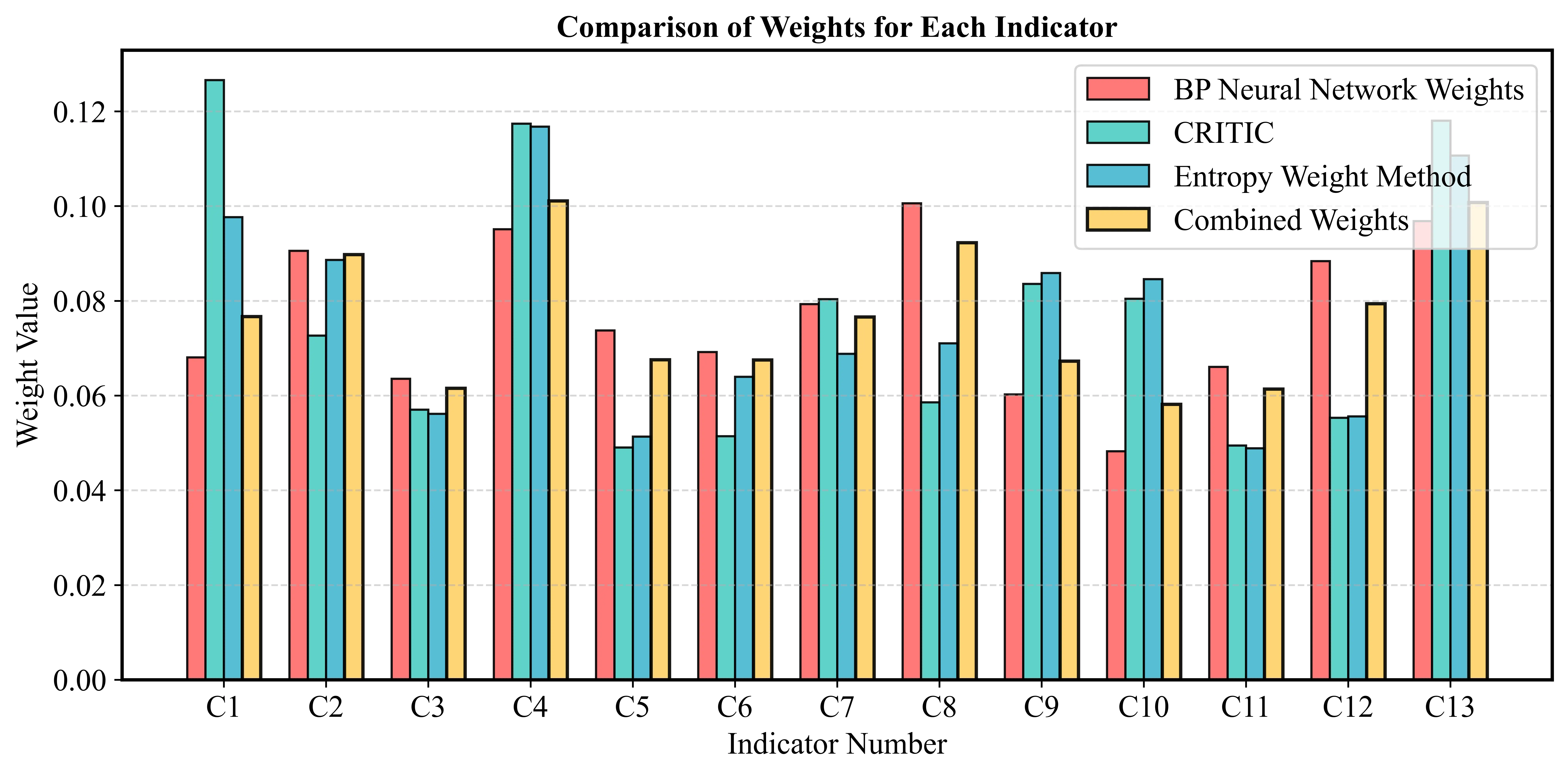
The evaluation of investment effectiveness in power grids oriented towards new-type power systems is a critical issue for advancing grid transformation and enhancing the scientific basis of investment decision-making. To address the current challenges—such as single-dimensional evaluation, strong subjectivity in index weighting, and insufficient consideration of risks and decision-makers’ psychological factors—this paper aims to construct a hybrid evaluation framework that comprehensively reflects both objective data and subjective decision-making preferences. First, a comprehensive evaluation index system is established, encompassing four dimensions: low-carbon performance, safety, economic efficiency, and intelligence. Second, an innovative integration of the Back Propagation Neural Network (BPNN), the CRITIC method, and the Entropy Weight Method (EWM) is conducted. The combination weights are determined through game theory to scientifically quantify the importance of each index. Based on this, the Improved Cumulative Prospect Theory (ICPT) is introduced to characterize decision-makers’ psychological behavior under uncertainty. Furthermore, by combining Grey Relational Analysis (GRA) and the Technique for Order Preference by Similarity to an Ideal Solution (TOPSIS), an ICPT-GRA-TOPSIS comprehensive evaluation model is constructed. An empirical study of 13 typical urban power grids in China reveals that the proposed model can effectively identify the strengths and weaknesses of investment effectiveness across different regions, categorizing them into development tiers such as “multi-objective collaborative leading type”, “key breakthrough but unbalanced type”, and “system-lagging type”. More importantly, the sensitivity analysis of decision-making psychology demonstrates that the evaluation of investment strategies is highly dependent on decision-makers’ risk attitudes and value orientations. This provides critical quantitative decision-making references for formulating differentiated, precise investment strategies for power grids, offering significant theoretical and practical value for guiding power grid enterprises in optimizing resource allocation and supporting the construction of new-type power systems.
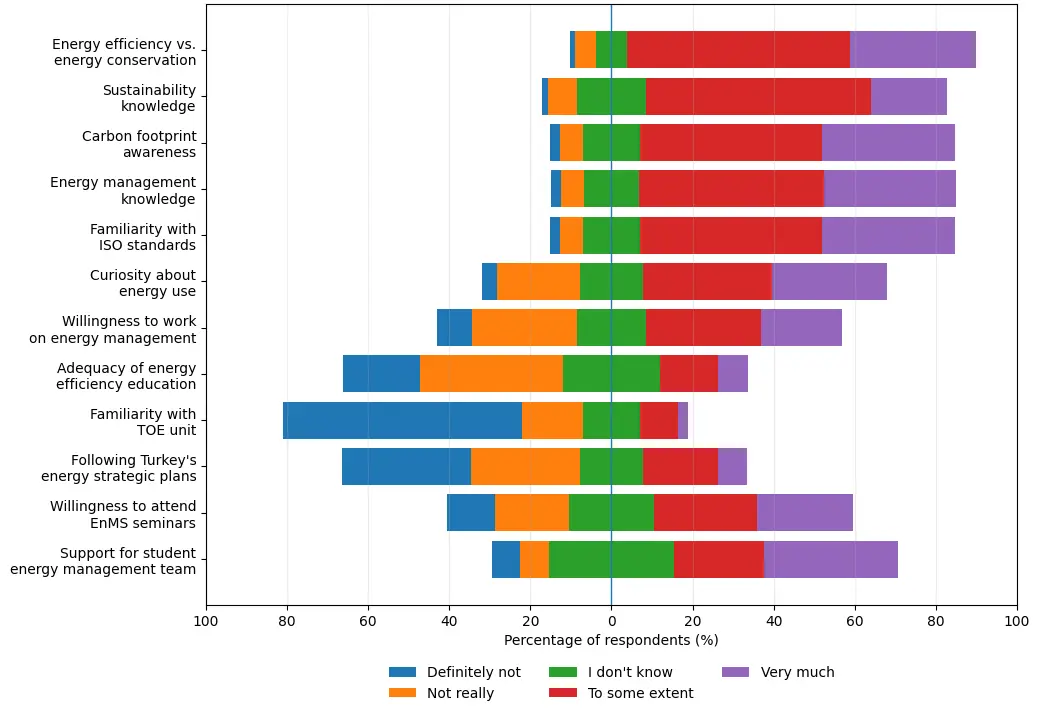
Narrowing the gap between energy demand and supply, while improving the efficiency of energy consumption, has become one of the central sustainability challenges addressed in global policy agendas. Implementing energy management systems in public institutions and organizations is important for achieving this balance. University campuses can be considered small cities, as they serve as living spaces for students. Therefore, since establishing an energy management system is a long-term process, its timely implementation and the creation of an effective system can only be achieved if the students actively using the campus understand and take ownership of the concept. This study explores the role of students as active participants in campus energy management, with a particular focus on integrating the ISO 50001 Energy Management System into higher education environments. A mixed-methods approach was used at Ankara Yıldırım Beyazıt University’s (AYBU) Etlik Campus, combining longitudinal building energy consumption data (2019–2023) with a face-to-face survey of 201 students from nine departments within the Faculty of Engineering and Natural Sciences. The survey assessed students’ knowledge, attitudes, and willingness to participate in energy efficiency and sustainability initiatives. The findings suggest that while students are generally aware of sustainability concepts, their technical familiarity with standards such as ISO 50001 and units such as ton of oil equivalent (TOE) remains limited. Notably, Energy Systems Engineering (ESE) students tended to report higher awareness and stronger support for forming volunteer, student-led energy management units. Based on the findings, student-led energy management units may serve as a participatory mechanism to improve energy-data transparency, strengthen operational energy literacy, and support sustainability-oriented campus practices. This approach offers a repeatable framework for higher education institutions seeking to align operational energy performance with student-led sustainability actions.
The increasing global demand for electricity has accelerated the integration of renewable energy sources, including solar photovoltaic (PV) systems, wind energy conversion systems (WECS), and battery energy storage systems (BESS), into modern power networks. Although these resources improve sustainability and reduce dependence on fossil fuels, their intermittent and variable nature introduces significant challenges related to system reliability, power quality, operational costs, and energy management, particularly in standalone and off-grid applications. This study presents a comprehensive review and analysis of both standalone and grid-connected renewable energy systems employed in distributed generation. Special emphasis is placed on evaluating the impact of renewable energy variability on system performance and reliability. Furthermore, the study investigates the role of green hydrogen technologies, including electrolyzes and fuel cells, as long-term energy storage solutions in hybrid renewable energy systems. The findings indicate that integrating green hydrogen with solar and wind resources can significantly enhance energy reliability, improve system flexibility, and ensure a continuous power supply in off-grid environments. The study highlights hybrid green hydrogen-based renewable energy systems as a promising pathway toward sustainable, reliable, and resilient future energy infrastructures.