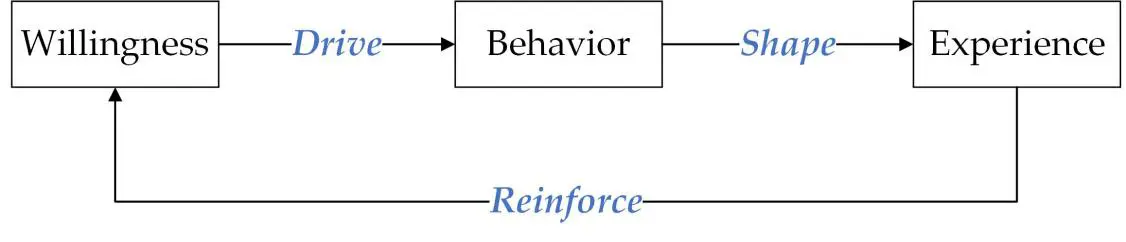
Against the backdrop of homogeneous mass tourism, reverse tourism, as a trend where tourists avoid popular destinations and pursue niche experiences, is reshaping the paradigm of rural tourism development. This paper systematically analyzes the connotation, framework, and feasibility of reverse tourism using comparative analysis, model derivation, and practical verification. The study reveals that reverse tourism is characterized by three key dimensions: reflection on the essence of tourism, aberration in tourist behavior, and distinction in tourist experience, forming a dynamic cycle mechanism of “willingness-behavior-experience”. Additionally, centering on tourists is crucial for constructing the analytical framework, classifying visitors based on their travel participation history, and creating a role transition matrix, which helps uncover the endogenous driving forces of tourist behavior. Furthermore, evolving tourist demands, improvements in rural public services, and the successful replication of “small yet beautiful” models have created favorable conditions for implementing reverse tourism in rural areas. Finally, the virtuous cycle of “protection-development-benefit” formed by supply-demand coupling provides a systematic solution for rural revitalization that balances ecology, culture, and economy. This paper systematically expounds the theoretical logic, mechanism, and practical path of reverse tourism as a new paradigm for rural tourism transformation, offering research conclusions with both theoretical innovation and practical guidance for promoting rural sustainable development.
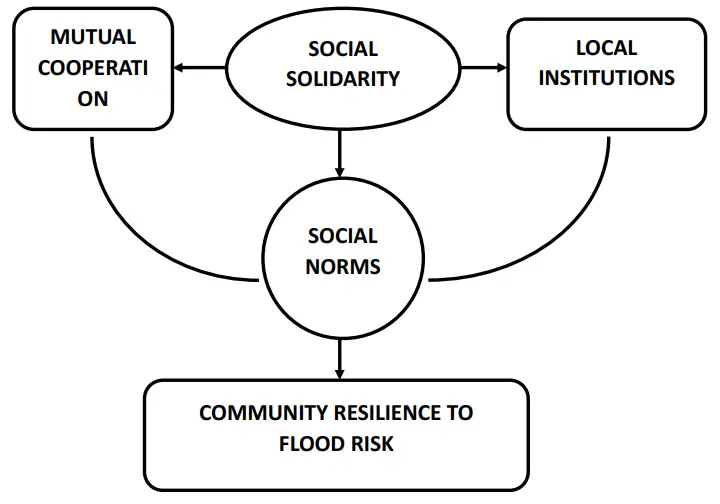
This study uses a qualitative, descriptive, and phenomenological approach to understand the adaptation of flood-prone village communities in Southeast Sulawesi through social, economic, and environmental capacity analysis based on the Building Village Index. The results of the study show that socio-ecological resilience is formed through solidarity synergy, social capital bonding-bridging-linking, and adaptive local institutional mechanisms. Mechanical solidarity, mutual cooperation, and reconstruction of ecological norms encourage the formation of collective actions that strengthen responses to recurrent floods. Main Findings: Community resilience in flood-prone villages emerges through solidarity, social capital, and adaptive institutions reinforcing collective ecological action. The C-BS-ERCM confirms that resilience develops iteratively through risk identification, coordination, learning, and sustainable village governance. Theoretically, this study enriches the study of resilience by combining the perspectives of Durkheim, Putnam, and Scott–North institutional theories into the Community-Based Social-Ecological Resilience Cycle Model (C-BS-ERCM), which is a community-based resilience cycle. In practical terms, these findings provide a direction for strengthening village adaptive governance through institutional collaboration, social capacity building, and integration of local values in sustainable flood mitigation and adaptation strategies.
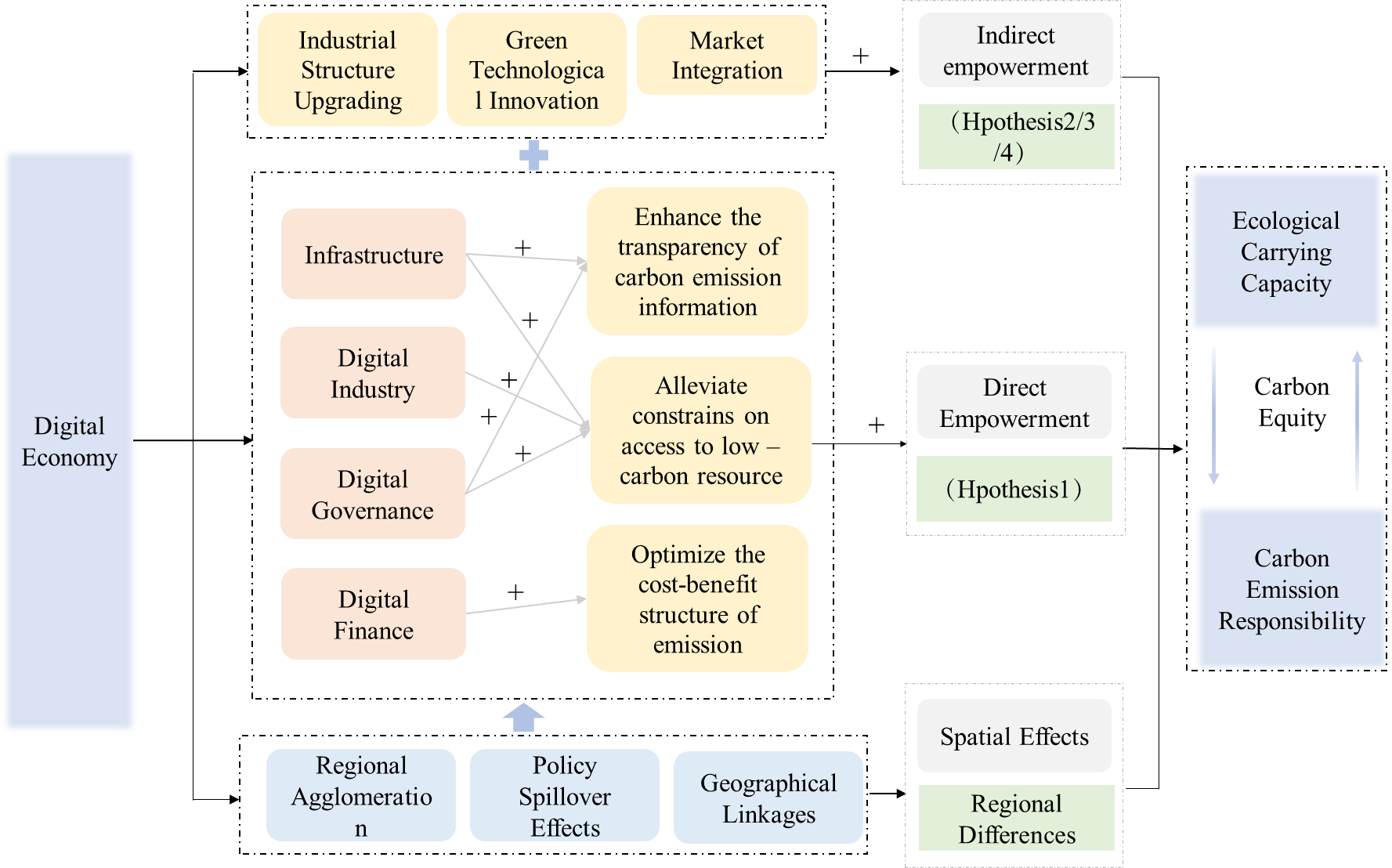
Regional carbon equity reflects the spatial alignment between carbon-emission responsibility and ecological carrying capacity, and represents an important dimension for understanding the distributive consequences of low-carbon transitions. As the digital economy becomes increasingly embedded in resource allocation, technological innovation, and environmental governance, whether and how it reshapes regional carbon equity remains insufficiently examined. Using panel data for 281 Chinese cities from 2010 to 2023, this study constructs a city-level carbon equity index and employs two-way fixed-effects models, mechanism tests, and a spatial Durbin model to investigate the effect of the digital economy on carbon equity, its transmission channels, and its spatial spillover effects. The results show that carbon equity in Chinese cities has improved slowly over time, although regional disparities remain pronounced and significant “high–high” and “low–low” spatial clustering patterns persist. The digital economy significantly improves urban carbon equity, with the strongest effect observed in central China. Mechanism tests indicate that the digital economy enhances carbon equity mainly by promoting industrial structure upgrading, stimulating green technological innovation, and strengthening market integration. Further spatial analysis shows that the digital economy improves carbon equity within local cities but exerts a negative spillover effect on neighboring cities, revealing a spatial pattern of “local promotion and neighboring suppression”. This study extends the literature on the environmental consequences of the digital economy by introducing a regional carbon equity perspective. It provides policy implications for optimizing the spatial allocation of digital resources, improving interregional coordination in low-carbon governance, and advancing a more equitable low-carbon transition.
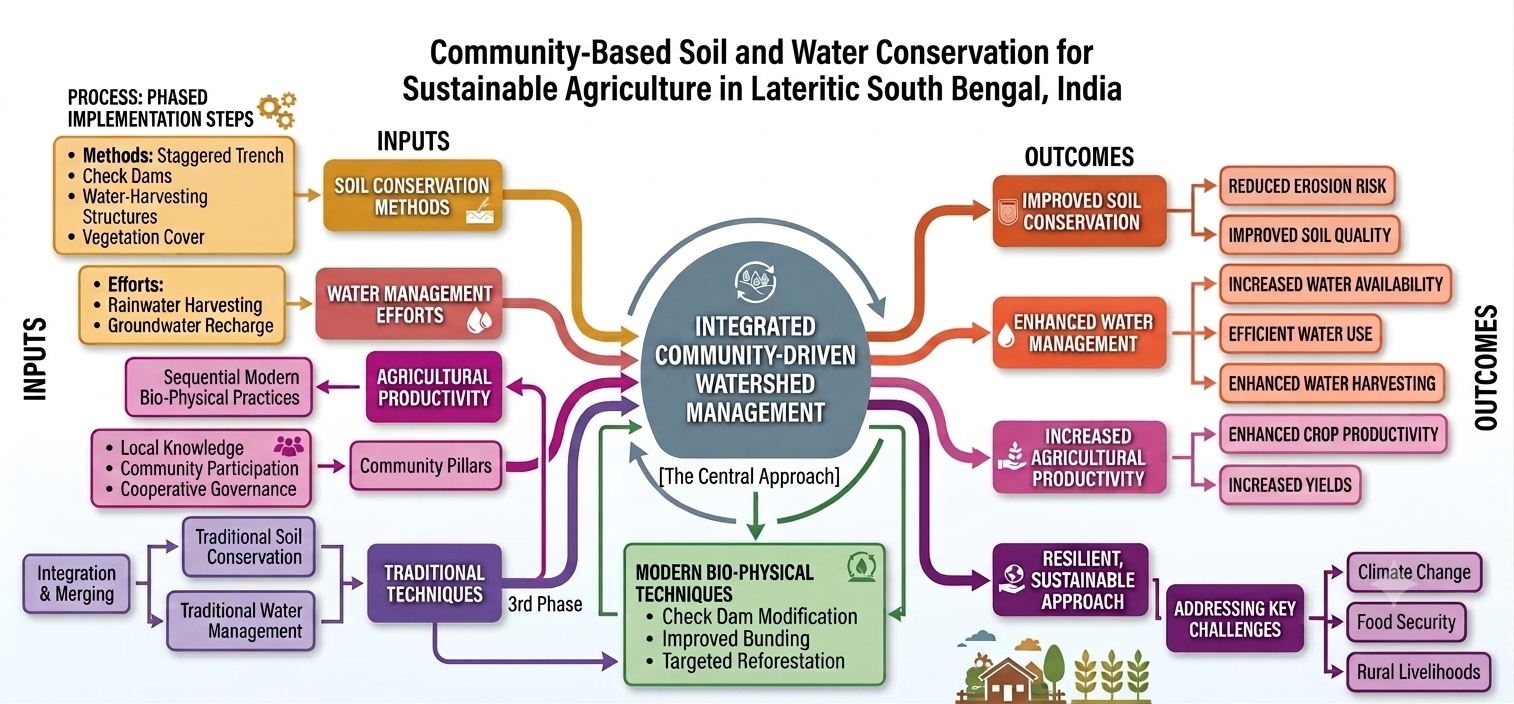
Sustainable agriculture is becoming increasingly essential in regions facing soil erosion, water scarcity, and declining productivity. Combining traditional soil and water conservation methods with biophysical techniques and community-based watershed management offers effective solutions to these challenges. This research investigates how community-driven watershed management methods impact soil conservation, water management, and agricultural productivity, using case studies from the lateritic region of South Bengal. This area faces significant issues, including soil erosion, unpredictable rainfall, and water scarcity, with local communities adopting traditional and modern watershed practices to enhance agricultural sustainability and output. The study evaluates the effectiveness of these techniques through two case studies, focusing on soil conservation methods such as terracing, check dams, water-harvesting structures, and vegetation cover, as well as water management efforts such as rainwater harvesting and groundwater recharge. Using field surveys, interviews with community members, and crop yield data, the research examines the relationship between these practices and improvements in soil quality, water availability, and crop productivity. Qualitative evidence from case studies suggests that community-led initiatives have reduced erosion risk, improved water availability, and enhanced agricultural production in some locations, especially when fully integrated into local farming systems. Additionally, the study highlights the vital role of community participation, local knowledge, and cooperative governance in ensuring the success and sustainability of these practices. The results from two case studies in different districts of the lateritic region of South Bengal emphasise the importance of incorporating community-driven strategies into watershed management to achieve long-term soil conservation, efficient water use, and increased agricultural yields. The findings suggest that merging traditional and modern techniques provides a resilient, sustainable approach to agricultural management, and expanding these methods can help address challenges related to climate change, food security, and rural livelihoods in similar regions. However, as the study is based primarily on farmer perceptions, case-study evidence, and existing records rather than direct biophysical measurements (e.g., soil loss, groundwater dynamics, or pre- and post-intervention crop yields), the findings should be interpreted as indicative rather than causal and should be further validated through field-based empirical assessments.
An exploratory study of rural mountain regions in Scotland and North Carolina used a matched-pair multiple case design to consider rural and small-town community planning and local governance, and to understand and compare perceived assets and strengths as well as challenges facing communities in these two regions. Key informants who sat for interviews included planning and related professionals, community leaders, and anonymous residents in 12 towns, revealing some consistent themes and distinctive differences across regions and roles. Notably, housing, employment, access to services, and traffic congestion and parking were universal concerns in these rural and small-town settings, while self-sufficiency, community identity, and attachment to the rural landscape were dominant positive themes. The commonly reported challenges (housing, employment, congestion) are often framed as urban problems—but clearly afflict these rural and small-town settlements.
