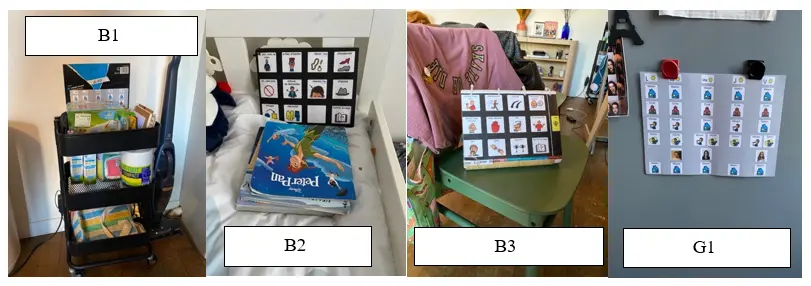
This study explores communication, autonomy, and self-determination in individuals with Angelman syndrome (AS), a rare genetic condition characterised by severe intellectual disability and the absence of speech. AS is associated with severe developmental delay, motor disorders, epilepsy, hyperactivity, and a characteristically cheerful disposition. Communication is significantly impaired: expressive language is virtually absent, while receptive language is retained, giving rise to the use of Augmentative and Alternative Communication (AAC). The qualitative methodology draws on ethnographic fieldwork conducted with families, comprising six home observation sessions and sixteen semi-structured interviews with parents, childminders, or educators. The analysis examines the role of AAC and a form of ‘everyday communication’ through the lens of autonomy and self-determination. Although AAC has been recognised by the United Nations since 2006, it remains underused in everyday contexts owing to constraints of time and complexity. Multimodal communication relies on interpersonal interaction (gestures, eye contact, routines), thereby promoting functional autonomy (mobility, eating) and identity formation. Autonomy begins with survival (basic needs), under constant supervision necessitated by associated risks, and gradually evolves towards the expression of preferences (leisure activities, choices) through a co-constructed relationship. Self-determination incorporates relational and social dimensions through the progressive development of a positive identity despite dependence. In conclusion, AAC complements ‘everyday communication’ in supporting self-expression beyond the family sphere. Self-determination is grounded in meaningful exchanges that sustain identity notwithstanding intellectual disability. The recommendations aim to extend AAC to social contexts and to contextualise autonomy within an inclusive support framework.
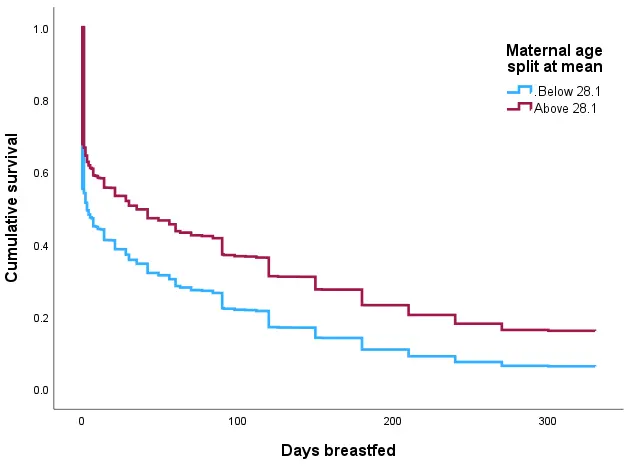
Evolutionary theory has been applied to help understand and predict parenting decisions. Parent-offspring conflict theory posits that conflicts between mothers and infants are inevitable because they share only half of their genes. A prediction drawn from this body of theory is that infants will typically benefit from later weaning than the timing that most benefits the mother, who has other arenas in which she must allocate her energy to ensure her family has enough resources, that her other children are cared for, and that she has energy to allocate to future pregnancies. This research tested whether the timing of weaning from breastmilk, measured as the maternally reported age at which their infant last breastfed, is consistent with expectations from parent-offspring conflict theory in the UK Millennium Cohort. Cox proportional hazards models predicting age last breastfed for the entire sample, including those never breastfed (adjusted model N = 15,825), and models for the subsample who ever breastfed were carried out (adjusted model N = 9678). Many of the results were consistent with predictions, including for variables that would not logically link to early weaning without thinking from an evolutionary perspective, such as preeclampsia (HR for weaning ever-breastfed infants = 1.08; 95% CI 1.00–1.17), and birthweight (HR for each 1 kg increment = 0.90; 95% CI 0.88–0.93). Older mothers weaned their infants later (HR for each year of maternal age = 0.94; 95% CI 0.92–0.97). The findings are discussed from evolutionary and public health perspectives as an example of the utility of evolutionary thinking for understanding health-related behaviours.
This essay examines the understanding of artificial intelligence, humanoid robots, and biohybrid systems—or synthetic life forms—from an indigenous perspective in the Americas. Building on a critical examination of the ontological turn, this essay explores the significance of relationality for indigenous peoples beyond concepts such as animism or new animism. The ontological turn does not establish substantive connections to the modern world regarding these entities. However, techno-animism seems to suggest an ontological approach to artificial intelligence, though it does not explain how ontology develops in practice for humans and nonhumans alike. Based on reflections on indigenous perspectives in the Americas, this essay attempts to develop an alternative foundation for ontology regarding artificial intelligence, humanoid robots, and biohybrid systems or synthetic life forms—entities that are more than just tools or machines.
