
From Autonomy to Self-Determination: Intra-Familial Forms of Communication and Identity Perspectives in Situations of Rare Disability
From Autonomy to Self-Determination: Intra-Familial Forms of Communication and Identity Perspectives in Situations of Rare Disability
Received: 09 December 2025 Revised: 24 February 2026 Accepted: 24 June 2026 Published: 01 July 2026

© 2026 The authors. This is an open access article under the Creative Commons Attribution 4.0 International License (https://creativecommons.org/licenses/by/4.0/).
1. Introduction
Angelman syndrome (AS) is a neurodevelopmental disorder first described in 1965 by the British paediatrician Harry Angelman (Andersen et al., 2001: 2) [1]. Its prevalence ranges between 1/12,000 and 1/20,000, depending on the estimate, making it a rare disability1 [2]. According to Pearson et al. (2019) [3], it is a rare syndrome of genetic origin that manifests through distinctive corpo-socio-cognitive features. Individual variations exist and are attributable in part to the fact that, depending on the type of genetic anomaly on chromosome 15, the complexity of genomic imprinting entails differing degrees of impairment and developmental trajectory (Keute et al., 2021: 3625) [4], and that certain genetic mechanisms may remain unknown (Wheeler et al., 2017: 164) [5], which simultaneously complicates and individualises prognoses. Without exception, individuals with AS present with severe developmental delay resulting in profound language impairment (a virtual absence of words and expressive language inferior to receptive language), despite a strong drive to communicate (Calculator & Black, 2010: 31) [6], combined with disorders of movement and balance. According to Anderson et al. (2001) [1], in the majority of cases these impairments are accompanied by epileptic seizures, hyperactivity, and a particularly joyful disposition characterised by smiling and laughter. Taken together, these features, the interactions between the various deficits, their sometimes paradoxical manifestations (for example, when a joyful expression in fact signals distress), and the vulnerability of individuals with AS add a dimension of considerable complexity to the management of what is already a rare condition.
The impairment of language, both at the phonological-articulatory and symbolic levels, leads practitioners to consider the use of Augmentative and Alternative Communication (AAC)2 [7], alongside other means such as “a combination of vocalisations, words, attempted words, pointing to pictures, photographs or objects, sign language, natural gestures, body language, and facial expression”3. These multimodal forms serve the purpose of everyday exchange and play a role in the inclusion of the individual with AS. Since 2006, the right to AAC has been enshrined in the United Nations Convention on the Rights of Persons with Disabilities. This right forms part of the advocacy efforts of the Groupement National de Coopération Handicaps Rares (GNCHR) for the roll-out of AAC in 2023, supported by the CAAp’t collective4 [8], and the deployment of AAC was decided upon by public authorities in 20255.
In her speech-language therapy study, Agnès Catala-Cottini (2022) [9] demonstrates the value of using various forms and functions of multimodal communicative acts and AAC with children with AS, in order to develop their receptive and productive capacities in exchange. However, the author also observes that:
“the scientific literature affords only limited insight into their use of language in social contexts. Clinical evaluations do not take into account the individual’s environment, which nevertheless plays an important role in the development of communication. The individual’s competencies are consequently often underestimated (…).” (Catala-Cottini, 2022: 10) [9]
Accordingly, the relationship between the individual and their environment must be carefully analyzed to grasp the complexities of multimodal communication and, above all, to understand its effects on autonomy and self-determination, which will be defined on the basis of in situ analysis. In so doing, examining the modalities through which meaning is produced in the course of everyday exchanges, in connection with the development of self-determination in the person with AS, broadens reflection on the question of support—shifting from a utilitarian conception of AAC as a tool to a consideration of how the subject makes sense of their experience through a relationship.
In the present study, autonomy is understood primarily from a functional standpoint, centred on vital needs. Self-determination, by contrast, is conceived as the capacity of a subject, regardless of the nature of their disability, to be recognised at the level of identity, as a bearer of intentionality and singular forms of self-expression, which will be analysed here. As a corollary, the development of the identity of the person with AS rests, in our view, on the quality of everyday support, which encompasses communicative relationships in a situation of rare and complex disability. Self-determination thus raises the question of the relationship of individuals with AS to their environment, through a problematic that is fully embedded in contemporary debates on the rights, social participation, and self-determination of disabled persons. The disabilities restrict the autonomy of individuals with AS. Yet their situation of dependence is further reinforced by processes of stigmatisation—that is, according to Erving Goffman (1975) [10], the labelling of the subject on the basis of a discriminating attribute, particularly in relation to their intellectual developmental disorder (IDD) and the representation of ‘ineducability’ associated with their condition (Winance & Barral, 2013: 248) [11]. Within the medico-social sector6 such conceptions persisted until the 1960s, while in civil society, social representations regarding persons with AS may still today be marked by a pejorative connotation associated with the idea of an ‘atypical being’ (Richier, 2011: 37) [12]. The mark of ‘strangeness’ attached to them, as well as their sometimes unpredictable behaviour, leads to a quasi-systemic exclusion from society.
The resulting discrimination—defined by Denise Jodelet through the idea that “certain individuals, on account of one characteristic (among others), will be treated differently from others (worse or better) in a comparable situation” (Jodelet, 1996: 66) [13]—confines them to an ‘inferior’ status linked not only to their deficits but, more broadly, to their personality, or simply to their difficulties of comprehension and/or expression within social interaction.
In this situation, it is clear that the great majority of those concerned will not attain a level of autonomy sufficient to enable independence. Yet such a finding does not exhaust the potential for developing a fully fledged social and personal identity, of which self-determination constitutes the core. According to Bégin, Bleau, and Landry [14], identity may be defined as:
“[…] the character of that which remains identical to itself, the feeling that a person has of being the same, the awareness of one’s individuality […] It is also the meaning and the certainty of what one is, the feeling of being unified rather than compartmentalised. Identity is likewise constituted by numerous elements bound together by an integrative process that makes the person unique and different from any other.” (Bégin, Bleau & Landry, 2000: 28) [14]
The biomedical conception of autonomy rests primarily on a functional principle according to which the subject is able to manage independently and/or take independent decisions. Yet beyond this approach, the subject of self-determination occupies the interface between individual identity issues and the social relationships that underpin them. Self-determination concerns a person’s capacity to express their choices and preferences in a situation or, more broadly, a context and mode of communication that affords them the opportunity to do so. In the present study, we posit that the self-determination of individuals with AS is constructed through a communicative relationship that is co-built on a daily basis. Indeed, according to Annick Mauroux et al., “the phenomenological nature of the concept of self-determination is captured by taking into account its relational, situational and pragmatic dimensions” (Cudré-Mauroux et al., 2020: 147) [15]. This requires attention not only to AAC tools but also to the modalities of exchange that accompany them. The aim is therefore to confer a situated character upon self-determination, recalling that individual choices are a ‘negotiated’ capacity in the sense of symbolic interactionism.
At the individual level, IDD gives rise to differential social treatment, which further restricts the opportunities for fulfilment and development available to persons with AS, notwithstanding the fact that their cognitive learning capacities have been demonstrated elsewhere7. The consequences of these social processes are detrimental to the self-esteem, wellbeing and, more broadly, the psychological equilibrium of individuals with AS. The aim here is therefore to apprehend their vulnerability in their inability to express themselves within a structural relationship to their environment, by analysing the determinants and outcomes of self-determination in the context of intra-familial relations. In this way, a shift occurs that compels a break with the vicious circle identified by Matthew Clair: “Here, stigma has been understood as both cause and effect: it justifies exclusion of devalued others and, through such exclusion, reifies devalued stereotypes” (Clair, 2018: 4) [16].
The aim of this study is to analyse the different modalities of communication and their effects on the support of the person with AS, through the lens of autonomy and self-determination. The research question that emerges is therefore: under what conditions can an adapted communicative relationship—which involves, though is not limited to, the use of AAC—contribute to the flourishing of the person with AS?
2. The ‘Milestones’ of Support for a Person with AS
According to the AFSA8 [7,17], intellectual disability classically produces, in the majority of cases, life trajectories anchored in “medico-social institutions for individuals with AS”, although an increasing number of families today are seeking a longer period of inclusion in mainstream settings (Mouton, 2018: 7) [18]. The AFSA also notes that in France, parental investment remains substantial and most often compensates for the shortage of places in residential facilities, as well as the difficulties of personalised support once institutional integration has taken place. In the majority of situations, one of the two parents (frequently the mother) stops working for at least a period of time before the individual enters a medico-social institute, in order to accompany the person with AS to their outpatient appointments (speech-language therapy, psychomotor therapy, physiotherapy, equine therapy, occupational therapy, etc.), to gather the information necessary for providing support (AAC, home adaptations, social assistance, MDPH9 file, etc.), or simply to provide care at home for the person with AS.
3. Multimodal Communication
Language impairment, at both the phonological-articulatory and symbolic levels, leads practitioners to consider the use of AAC, among other modalities of multimodal communication (Rivière, 2022: 281) [19]. Until the term ‘multimodality’ was introduced in the 1990s, “the activity of oral production was considered the standard in the study of human communication” (Rivière, 2022: 281) [19]. Yet beyond the functional characteristics of exchanges, of which oral language is the primary exemplar, there also presides a search for meaning through which individuals organise their relationships to the world and to others. Thus Véronique Rivière adds: “multimodality is thus embedded in a theory of meaning (that of the motivated sign) which conceptualises the relationships between modes (oral, written, gestural, visual, movement, gaze, object manipulation) and their meaning-making potential in a given cultural context” (Rivière, 2022: 282) [19].
AAC tools fall within the field of multimodal communication and may be organised into three broad categories.
The first is unaided AAC, which requires no material or human assistance and is body-based: facial expression, sign language, body position, etc.
The second requires aided AAC (such as Makaton and the Picture Exchange Communication System) through simple technical means, such as pictograms (images or drawings representing words or ideas) or photographs.
The third broad category encompasses AAC supported by technological devices with associated speech synthesis.
Finally, there exist so-called robust devices that enable any type of message to be expressed. These offer a varied vocabulary and may be technological or otherwise: examples include PODD and Proloquo2Go, the digital equivalent of PODD.
In our sample, all parents are familiar with AAC, particularly pictograms. Some families (N = 6) continue to practise AAC use on a regular basis, although the flow of everyday life is essentially based on interpersonal communication without technical supports. The presence of AAC tools in the home varies from one family to another: some families (N = 1) restrict them to a dedicated practice room; others (N = 5) position them strategically in the kitchen, near the table, in the bedroom, or in the hallway; while others (N = 10) make no use of them at all. More sophisticated technological devices are not employed owing to the complexity of their use.
Although AAC is intended to compensate for the absence of oral expression, we observed that it remains little employed within the exchanges constituting ‘everyday communication’, which will be elaborated upon below. While a small number of families (N = 2) make an effort to translate their requests using tools or signs in everyday contexts, for those who do make use of AAC, it is confined to daily or weekly practice sessions in a dedicated setting. The pace of daily life, together with routinisation, works against the effective use of AAC tools, which require a specific organisational framework.
Nevertheless, in ‘everyday communication’, without AAC as in AAC itself, parents demonstrate similar qualities and competencies. Their expertise rests on a developed capacity for observation, initiative, perseverance, and patience—all forms of experiential knowledge progressively integrated into their daily exchanges with the person with AS.
The present study has made it possible to analyse the characteristics and challenges of this ‘everyday communication’, which goes beyond a strict use of AAC tools. Our hypothesis is that this form of ‘everyday communication’ produces exchanges conducive to self-determination insofar as it rests essentially on an interpersonal, historicised relationship nourished by familiarity. It thus complements a more formalised, structured form of communication through the use of AAC, whose purpose responds to the need to foster the self-determination of the person with AS outside the family sphere.
4. Methodology
In 2024, this research project10 was conducted in collaboration with the Association Française du Syndrome d’Angelman (AFSA) and involved the completion of an anthropological fieldwork phase combining ethnographic observations and semi-structured interviews in the homes of sixteen families in the Île-de-France and Grand Est regions. Over the course of six observation sessions (each lasting three hours in the family home), data were collected on the communicative practices and conditions of exchange with the person with AS. These sessions took place in the presence of, and with the participation of, the children or adults with AS, through direct contact with them (during snack time, play activities, or AAC sessions) or through observation of interactions between the parents, various practitioners, and the individuals concerned. The researcher took notes during and after the participant observation sessions, to the extent permitted by the exchange situations at the time. This fieldwork journal served to document the non-verbal dimension of exchanges, while a number of photographs were also taken in the family homes—with prior consent—in order to provide visual documentation (Figure 1) of the placement of AAC tools within the domestic setting.
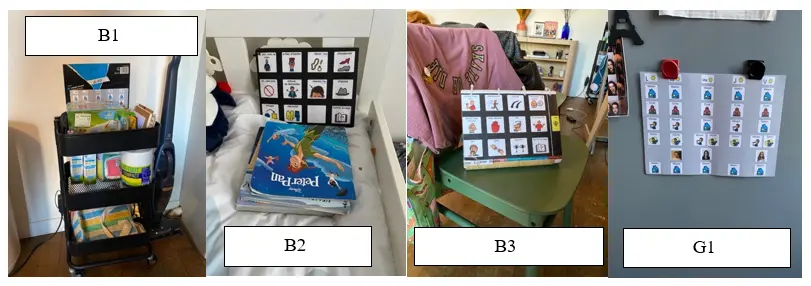
Figure 1. Placement of AAC tools in the home. B1: Kitchen/living room; B2: Bedroom; B3: Dining room/living room; G1: Entrance hall.
The sixteen semi-structured interviews addressed care pathways directly or indirectly related to communication (tools, objectives, challenges). The respective roles of the parents were expressed by each of them through descriptions of their investments and interactions concerning communication with their child or adult with AS. The question of adaptation (new forms of parenthood, empowerment and resourcefulness, experiential learning, socialisation, development of the person with AS) received particular attention. All of these topics were addressed in each interview and adapted to the interlocutors according to a discursive methodology specific to anthropology. Ten mothers, three fathers, three couples (father/mother), as well as a childminder and a home educator, participated in interviews and/or participant observation sessions to capture the intra-familial dynamics of communication with the person with AS and their implications for autonomy and self-determination. Half of these families were recruited through the partner association (AFSA); the other half were found independently to avoid introducing bias into the sample, through medico-social establishments that accommodate individuals with AS, and then through parents. With the same concern in mind, the socioeconomic and professional categories represented are varied, as are the conjugal and more broadly familial situations. The use of AAC at home was not retained as an exclusive criterion; on the contrary, the aim was to understand the actual forms of communication practised, with or without AAC, and the manner in which each family approached them from an organisational, relational, and educational standpoint. Finally, the age categories of the individuals with the syndrome are diversified in order to allow for a diachronic understanding: early childhood, adolescence, young adulthood, and adulthood. The youngest participant is three and a half years of age; the oldest is twenty-nine.
Table 1 lists the age/sex categories of the individuals with AS, the socio-professional characteristics of each family, and the participants in the interviews.
Table 1. Sample characteristics.
|
Family |
Age of P.AS |
Family Situation |
SPC |
Interview |
Family |
Age of P.AS |
Family Situation |
SPC |
Interview |
|---|---|---|---|---|---|---|---|---|---|
|
A |
Girl, 3½ |
With father, 1 child |
Artisans |
Mother |
I |
Girl, 9 |
Divorced, 2 children |
Employee |
Mother |
|
B |
Girl, 4½ |
Divorced, 1 child |
Senior exec. |
Mother + childminder |
J |
Boy, 13 |
With father, 2 children |
Senior exec. |
Mother |
|
C |
Girl, 4½ |
With father, 2 children |
Unemployed |
Mother |
K |
Girl, 16 |
Divorced, 2 children |
Unemployed |
Mother |
|
D |
Boy, 4½ |
With mother, 2 children |
Shopkeeper |
Father |
L |
Man, 17 |
Divorced, 2 children |
Shopkeeper |
Mother |
|
E |
Girl, 8 |
With father, 3 children |
Employee |
Mother |
M |
Man, 19 |
With father, 2 children |
Senior exec. |
Mother |
|
F |
Girl, 9 |
With father, 2 children |
Employee |
Mother |
N |
Man, 21 |
With mother, 6 children |
Worker |
Father & Mother |
|
G |
Boy, 9 |
With mother, 1 child |
Senior exec. |
Father |
O |
Woman, 23 |
Divorced, 1 child |
Employee |
Father |
|
H |
Boy, 9 |
With mother, 2 children |
Unemployed |
Father & Mother |
P |
Man, 29 |
With father, 5 children incl. P.AS in common |
Shopkeeper |
Mother & father + educator |
Content analysis facilitated work on themes related to autonomy and self-determination, using communication as a guiding thread, within a diachronic approach to the support of the person with AS. More specifically, it shed light on the meanings, as well as the areas of everyday life and future prospects, through which parents were able to correlate their representations and practices regarding communication with the complex situation of their child, as the latter developed over time.
5. Some Theoretical Elements on Autonomy and Self-Determination
Within the family context, AAC is one of the means through which the person with AS and their entourage can exchange and attempt to understand one another. However, the sphere of communication does not constitute the sole preoccupation of parents: nutrition and motor development are at the forefront of their concerns. Accordingly, other priorities tend to ‘saturate’ the sense of urgency experienced by the family carers accompanying them, thereby rendering the topic of self-determination all the more difficult to apprehend.
At a general level, autonomy is defined as:
“the right of the individual to freely determine the rules to which they submit […] Conversely, dependence is the situation of an individual who cannot fulfil themselves without the intervention of a third party or an object, who cannot manage alone.” (Ameline & Levannier, 2021: 21) [20]
The concept of self-determination emerged in the 1970s and developed in the 1990s at the interface of individual capacities and environmental adaptations. Recognition of the role of the social relationship in the construction of autonomy laid the groundwork for an expanded conception of the autonomous subject, linked to the social and cultural resources, norms, and expectations of their environment. In political philosophy, the emergence of ‘relational autonomy’ echoed this approach, recalling that autonomy is not an absence of connection but the capacity of an individual to assert themselves within these connections. According to Laurence Ricard, it is necessary to:
“recognise that autonomy is more than a rational capacity but also represents a specific social and affective situation (…) it may be supposed that autonomy is a quite specific phenomenon of self-determination that requires certain emotional and social conditions.” (Ricard, 2013: 160) [21]
Furthermore, as with agency, as Anthony Giddens (1979) [22] addresses it in connection with the intentionality of individuals, relational autonomy incorporates a pragmatic dimension—no longer merely a moral one—attentive to the manner in which an individual is capable of acting in accordance with their preferences within a given social environment. Considering through the notion of agency that the individual can not only act autonomously according to the rules of their society but also make sense of their action, the question of autonomy is here examined through the lens of the construction of individual and social identity, thereby coinciding with Laurence Ricard’s (2013) conception of self-determination.
The assessment carried out by Lachapelle et al. (2022) on the subject of self-determination underscores the “multidimensional character of self-determination” (Lachapelle et al., 2022: 39) [23]. In a functional approach, Michael L. Wehmeyer defines self-determination as “the ability to make choices and decisions in accordance with one’s preferences, values and goals so as to determine the degree of control a person wishes to have over their own life and to maintain or enhance its quality” (Wehmeyer, 1992 [24], cited by Stepięn, 2017) [25]. However, this process is conditioned by the capacity to gather information, to comprehend, and to express oneself before acting—so many communicational competencies that are not necessarily possessed by all individuals, at least not in an equal and normative manner. Thus, the collective and collaborative dimension of self-determination is all the more highlighted in cases of IDD and the absence of speech.
Against this background, it is appropriate to structure the discussion around the communicative relationship, which is, on the one hand, determined by the acquisition of functional autonomy and, on the other, oriented towards the development of self-determination in the person with AS.
6. Autonomy in a Situation of Rare Disability
6.1. Communicating in Order to Become Autonomous; Becoming Autonomous in Order to Survive
The process of learning autonomy is common to all living beings with a view to preserving life at both the individual and collective levels. In this perspective, autonomy is closely associated with survival, and its acquisition passes first through the mastery of walking, then the capacity to feed oneself independently, and finally the ability to communicate and to manage personal hygiene.
“For me, the priority is the physiotherapy side, because it really is… for her to be able to walk.” Mother, E3p22
For these parents, their child’s becoming autonomous rests on their ability to act independently in order to meet their essential needs. This emphasis on independent behaviour defines a relationship to autonomy essentially characterised by control over one’s existence.
Eating disorders constitute a major concern for parents.
“The difficulties are really to do with mealtimes. (…) In terms of oral orders, there are lots of things, (…) Sometimes, it’s… morally speaking, the hardest thing is still the meal for us.” Mother, E3p2
Indeed, the acquisition of solid food intake can prove laborious and requires parental patience as well as speech-language therapy sessions to address oral orders, the absence of a sense of satiety, or conversely, of hunger.
Accordingly, until puberty, the domain of personal hygiene appears, for example, secondary in relation to those of nutrition and mobility.
“As for cleanliness, for now, there’s nothing at all (…) I mean, it’s not so terrible… at least she walks and has a minimum of autonomy.” Mother, E13p10
In this perspective, the child’s interactional capacities are sought as a condition for the expression of primary needs: nutrition, pain, fatigue… One might speak of ‘elementary-function communication’, precisely because it is determined by the satisfaction of primary needs.
“My objective was, let’s say, perhaps in the shorter term, for him to achieve walking, but I also knew it was fundamental that we should find a way for him to be able to express himself, since apparently language could not be his preferred means of communication.” Mother, E8p7
Placed in the perspective of survival, communication also serves the need to protect the person with AS.
“That is, people don’t realise that everything has to be calculated, everything has to be meticulously planned, everything is a source of danger. Everything is a potential danger.” Mother, E9p20
Communication is not feasible with a third party who has not been trained with regard to the child or who is unfamiliar with the condition, which obliges parents to maintain a constant and specific vigilance that practically precludes any other caregiving arrangement and therefore any respite. This permanent availability remains necessary even at an age when physical distance-taking would normally be accompanied by greater independence across other dimensions.
“Mr: If there’s something that interests him on the other side of the road, he just goes! Mrs: He goes, and if there’s a nice car, he goes too! If there’s a car, we’ve lost him!” Father & Mother, E1p36
In this context, the autonomy of the person with AS rests on the paradox of ‘independence under supervision’, which only the routinisation of daily life can, at times, facilitate.
“He plays alone a bit. There are moments when he plays by himself, and that has to keep improving too. (…) When we can no longer hear any noise, he will have opened the window, he will have thrown things off the roof… so in fact, we can’t leave him… anywhere. Constant vigilance, always.” Father, E4p10
In this context, autonomy in itself represents a source of anxiety for parents—an anxiety that persists at the expense of learning independence.
“That’s it, it’s a constant anxiety for me to think: the day I’m no longer here, what happens? (…) it’s an anxiety about a child who will not have autonomy.” Mother, E6p34
6.2. What Scope for Autonomy?
Faced with this dependence, the acquisition of autonomy must also be considered from the standpoint of the parents themselves, who in turn attempt to shed their initial reflexes of ‘overprotection’ and ‘overstimulation’ in order to find a new equilibrium between support and mutual independence. This two-way process of ‘de-fusion’ generally takes shape during childhood and allows the whole family to “reconstruct different boundaries” (Arborio, 2024: 46) [26]. Thus, the autonomisation of the person with AS is accompanied by that of the parents in relation to them. Yet access to this equilibrium is always impeded by a predominant and persistent sense of vulnerability.
Only very gradually do parents develop knowledge drawn from experience. They eventually acquire confidence and adapt their support not only to the child but also to the family context as a whole. At the social, organisational, psychological, medical, educational, and familial levels, parents structure this support in singular ways, drawing both on “tactics or arts of practice” in the sense of Michel de Certeau (1980) [27] and on profound renegotiations of their relationship to reality.
“We went through the phase of the electric razor in X.’s room, turning the electric razor on to get him to sleep (…) (In everyday life) everything is oversized all the time. Completely. Everything has to be rethought, everything has to be reinvented, every time.” Father, E4p11 and 44
Yet this necessary omnipresence of the parent raises questions about the limits of supporting a person with severe IDD who does not use speech. In particular, the relationship to intimacy—an irreducible space of individual existence, progressively acquired through socially shared markers—will here remain that of ‘an other-than-self’. Parents are compelled to reconsider the symbolic boundaries of intimacy and, by extension, of the autonomy that might naturally flow from it.
“I… I already know her inside out, to the point of knowing when she’s going to need the toilet. I can sense in her, through her non-verbalisation… I anticipate her needs, I understand them, (…) and she reads me too, she knows when I’m really angry (…)” Mother, E6p34
The process of autonomy thus symbolically raises questions about individual boundaries and integrity through a development that is at once corporeal, existential, and identity-related for the person with AS. In this interpersonal space, each person must find a place that makes sense with respect to socially defined characteristics such as age, sex, rights and duties, and, more broadly, the relationship to independence and to social and individual existence. Such observations lead to a repositioning and rethinking of autonomisation within the framework of a complex support relationship, notably based on the construction of a relationship of trust, despite the vulnerability of the person with AS.
“In terms of physiotherapy… X. found a really great person! It’s true that I had a tendency to overprotect her from everything, from home, from the outside world, from lots of things. For example, making her go upstairs—I wouldn’t have let her, for fear she’d fall, when it turns out she was perfectly capable.” Mother, E15p6
This confidence also extends to those in charge of the child in settings independent of the family. By fostering adaptation, identification, and, thereby, processes of imitation and singularisation, integration into a specialist establishment participates in the autonomisation of the person with AS.
“(She made a lot of progress at school) in communication, in reproduction, in mimicry. Now she takes her shoes off by herself. She puts her bib on by herself because at school (…)” Mother, E6p28
The capabilities approach, developed by Amartya Sen (1985) [28], emphasised the development of existing capacities in a person with a disability, rather than the repair or compensation of a deficit. The aim here is to conceive of the creation of new competencies, notably in relation to the capacities that others attribute to the individual a priori. Thus, despite the necessary assistance and a form of obligatory intervention for survival, the integrity of the person with AS must be preserved. To achieve this, a conceptual distinction must be drawn between the situation of dependence and the individual themselves, thereby opening the possibility of envisaging for the latter an autonomous reality of a singular character, from which the conditions of support can be considered. In this sense, the functional dimension of dependence must not obscure the existential and subjective dimension that accompanies every individual’s relationship to autonomy.
7. From Autonomy to Self-Determination: An Unbounding of the Subject
Approaching autonomy from a functional angle confines it to the subject’s capacity for action, enabling them to behave in a manner consistent with both themselves and the rules of their group. The communication associated with this pursuit is, above all, driven by a pragmatic objective of satisfying primary needs. Moreover, it rests on the a priori assumption that the subject can act in a relatively rational manner, thereby converging with a utilitarian conception of action.
More broadly, however, autonomy is also embedded in the possibility of self-expression by the person with AS, through a relationship to the world and to reality that is their own and that allows them to position themselves by making their own choices. Amartya Sen (1999) [29] evokes the possibility of individual development not through effective achievements but according to the possibilities (or freedoms) of choosing the life one wishes to lead. In this perspective, the functional dimension of autonomy is interwoven with an existential dimension and leads to new questions about the self-determination of the disabled person.
At this juncture, AAC plays an essential role insofar as it supports the capacity to respond to elemental needs but also to express preferences as a person in their own right. And, as Stern & Stern (1928) [30] noted, language acquires its specifically human character when it fosters the emergence of intention—itself conceived as the beginning of an intellectualisation and objectivation of language. In the present context, preferences relate to individuals, activities, food tastes, places, etc., or any other situation in which a personal choice can be expressed.
Recontextualising Autonomy in Order to Consider Self-Determination
Apprehended within the domain of leisure, self-determination represents a space for self-expression rather than mere satisfaction of elemental needs. Here, the emphasis is placed on an approach to autonomy that integrates individual and social construction as a dimension in its own right of an independent existence. In their conception of self-determination, Deci and Ryan (1985) [31] emphasise three fundamental psychological needs (competence, autonomy, affiliation). Self-determination consists in providing an appropriate response to these needs, and the moral dimension is accorded equal weight to that of physical needs. And as Herman recalls:
“becoming autonomous is an objective assigned to everyone which, from childhood, is established as a principle of education: the child must become autonomous in their gestures (what is termed here corporeal independence) in order to subsequently become so in their choices (a notion inseparable from autonomy) and finally in their ‘personality’, their ‘identity’.” (Herman, 2007: 42) [32]
Non-compulsory activities such as leisure pursuits provide occasions for the expression of individual preferences and the sharing of pleasures. The leisure practices mentioned by parents range from simple walks to equine therapy, swimming, climbing, cycling, golf, assisted trail running, adapted gymnastics, music, dining out, travel, and shows.
The self-determination linked to leisure must be grasped within the social and cultural context that characterises it. One might speak of a form of ‘sociocultural self-determination’, illustrated by the fact that certain families will develop their child’s motor capacities more extensively while others, according to their location and way of life, will emphasise cultural and/or social activities. The identity and self-determination of the person with a disability thus rest on a progressive elaboration of preferences, notably initiated from the characteristics of the family’s way of life, including in the case of AS.
“I think we were a little more focused on the motor aspect, a bit more stimulating, one might say. I’m a dancer, and my husband is a psychomotor therapist, so I think we have more affinities in that direction.” Mother, E12p3
This tends to demonstrate that self-determination must be apprehended, beyond the satisfaction of individual needs, as a manifestation of interests that are ‘contextually situated’ within the existence of the person with AS. In this perspective, it represents an identity process through which the support relationship fosters not only the acquisition of the competencies necessary for survival but also identification with one’s family group.
In this logic, communication is situated at the interface of two major identity registers (Figure 2): that of elemental needs and that of individuality, and it fulfils two complementary functions: survival and individual and social flourishing.
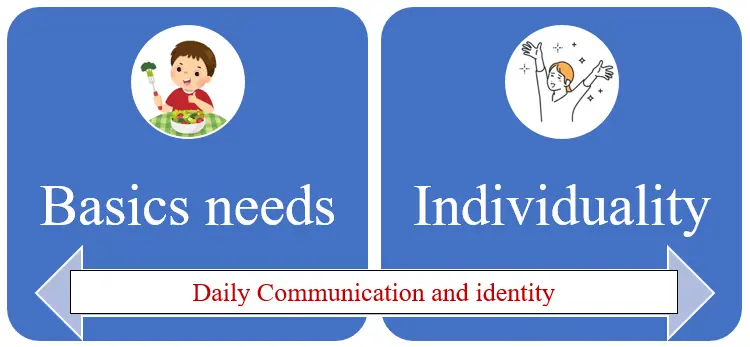
Figure 2. The interstitial position of communication within the process of self-determination: between individuality and elemental needs.
8. Everyday Communication and Identity
Communication serves to express needs but also to ‘speak of oneself’ in the context of the relationship to the other: through gestures, behaviours, expressions, or any other meaningful intermediary within exchanges.
Needs Versus ‘Self-Expressions’
According to the Canadian Council of Ministers (2003), in all individuals, language development is considered a vector of identity and cultural construction. In our research, parents are equally aware that while satisfying their child’s needs is a relatively accessible task in everyday life, their child’s capacity to express more abstract notions, such as feelings, thoughts, or to situate their discourse in time, remains problematic, notably owing to a lack of means adapted to the various circumstances of their use. Yet in everyday life, parental concerns also bear on the child’s capacity to ‘speak of themselves’ in a relationship to the world rendered meaningful through appropriate communication.
“There are so many things he could say that he’d want to say. We work on it bit by bit.” Father, E4p15
In any case, the expression of preferences remains possible through meaningful behaviour that indicates the choice of the person with the syndrome.
“(…) As soon as he got into the taxi, he just froze. So only the headteacher… the headteacher of [anonymised establishment] was nice, (…) he even came to pick him up. And when it was him, it was fine, but if it wasn’t him, he froze.” Mother, E14p17
The expression of preferences fosters a positioning of the self in a singular relationship to the world. Pleasure or refusal, even anger, are in themselves signs of desire that should be taken into account as so many singular forms of expression. Anticipating them responds to the initial concern of mutual understanding, notably through the establishment of ‘routines’ in exchange, but tends, in return, to restrict the capacity for choice of the person with AS.
“I’ve never really tested it, but if I now take one or two toys in my hands, I know very well which one she’ll go to by herself—the toy she prefers—but it’s true that I’ve never said to her: which one do you prefer? (…) Except that it’s not good and she needs to make her own choices, but it’s true that automatically I arrive at something she likes.” Mother, E13p14
Indeed, an understanding that is systematised by routine and apprehended a priori can also be detrimental to self-expression, even if it facilitates the day-to-day running of family activities. Conversely, a lack of interpersonal knowledge risks hampering communication with the person with AS owing to the resulting difficulties of adaptation. How, in these considerations, is it possible to find an adequate posture that can simultaneously foster singular expression without presuming it, while accompanying it through interpersonal knowledge? Behind this question lies the entire ethical challenge of the communicative relationship, which consists in letting an other emerge while offering them the conditions of attention and support necessary for self-expression.
Working through this challenge brings into perspective an approach to dependence that would be confined exclusively to a problematic of functional autonomy, and an ‘integrative’ conception of dependence that would acknowledge and exploit an individual’s capacity to ‘be in the world’, whatever their level of independence.
What is at stake is the recognition and creation of conditions for exchanges and sharing more generally, in which self-expression can be fostered beyond communicative performance.
“He watches TV with us, a film or two. He watches films and he understands everything! Everything! Any film! (He understands because) he squeezes my hand, and through his participation. And then he laughs. He loves comedy. He doesn’t miss a thing! But when it’s moving, he goes “ooh” and when it ends well, he goes “aaah”.” Father & Mother, E14p26
“(With her sister) she can sit next to her on the sofa for ten minutes, a quarter of an hour, just in cuddle mode, having her scratch her back—yes, she really likes that too.” Mother, E13p13
These situations of simple sharing can be satisfying for all parties insofar as they give rise to the certainty of an interpersonal exchange, without any need to interpret its meaning beyond the lived experience itself. They allow the person with ID to make a connection between an action, a shared moment, and a pleasure, becoming aware of the possibility of intersubjectivity with or without words. Using the word or its signifier then takes on the meaning of the possible repetition of an experience of pleasure and sharing. As Lydie Morel recalls in relation to child development, “all of these certainties are the crucible of the child’s thinking space, of their experience of being a creator of connections, of their capacity to elaborate with respect to their actions and to the relations between objects” (Morel, 2005: 170) [33]. Being able to express and wanting to express are two complementary facets of the communicative relationship: while the former constitutes a form of ‘feat’ in the light of disability—which leads some parents to describe certain of these children as ‘extra-terrestrials’ (E4)—the latter belongs to the domain of education in the broad sense and bears upon the intellectual, affective and social development of an individual.
“The point of communicating with her is that she can tell me where it hurts or that she can tell me something isn’t right (…). And also to see what she wants to tell me.” Mother, E9p17
Exchanging is equivalent to sharing, to creating a connection, and can be made possible through a ‘unison atmosphere’ in which each person can find their place and manifest their interest in one form or another. Such a situation offers the person with AS the possibility of ‘situating themselves’ within the framework of social relations and thereby confers upon them a sense of social existence that takes into account their intention to communicate.
“(Between the two brothers) you can clearly see the development is different and will remain different, but he’s found his place and he has lots of activities, he’s happy there. So, we’re pleased about that. He’s found his place.” Mother, E13p12
This feeling, already identified by Deci and Ryan (2000) [31] and recognised by Lachapelle et al. (2022), is identified as a fundamental need for:
“social ‘affiliation (belonging)’ which corresponds to the need to feel loved, accepted and to belong to a group. This translates into a relationship that generates satisfaction derived from a feeling of connection with others; caring for and being cared for by others (Deci et al. 2013 [31]; Ryan & Deci, 2000 [34]).” (Lachapelle et al., 2022) [23].
In the present case, although they lack speech, individuals with AS generally possess a propensity for sociability that facilitates the development of attachment bonds.
“Besides, it’s not difficult to enter into interaction with X. and to create a fairly rapid attachment relationship, but… (her childminder) understands X. very well and… I have 100% confidence.” Mother, E6p30
“We’re not always on the same wavelength as her father, because sometimes I interpret things, I say: she didn’t mean that at all, she just raised her arm or… but I try, even if I get it wrong, to do it often because… to show her that her gestures have an impact.” Mother, E12p14
This mother’s idea rests on the desire to show the child that their behaviour is perceived, if not always in an effective manner, at least in a meaningful one. The sense of control over an act by the subject, made possible by the positive reactions of those around them, confers an ‘executive feeling’—at the interface of their desire and the behaviour enacted towards another. From this point of view, Picq’s (2016) assertion, cited by Sorsana & Tartas (2018) [35], that “all intelligence is an emergent property of interactions”, can be reversed to evoke the idea that all interaction is a property of presupposed intelligence.
Furthermore, the capacity to give, receive, and return through communication is a condition of social existence. In this perspective, the ‘failure’ of a communicative situation can be relativised when the address to another is, in itself, an act recognised as a fully-fledged exchange. The latter presupposes an inscription of the self within a social relationship, with or without immediate success. Through this dynamic, the person with AS can become aware of their own existence, distinct from that of their parents, and is then capable of ‘expressing the desire to express themselves’ regardless of the immediate outcome of the other’s understanding. Abery & Stancliffe (2003) [36] consider, in this regard, that the interdependence of individuals could be seen as a source of self-determination insofar as the desire to control or not to control certain aspects of existence remains respected and supported by a third party. Supporting this desire amounts to making the person with AS exist within the framework of a social relationship and more broadly within a historicity that includes them. In this perspective, the child or young adult projects themselves into a singular development and allows themselves to make its reality manifest to others. Such an observation also leads to extending the use of AAC to any communicative relationship in which these conditions of recognition of the other through exchange can be reified.
The development of the capacities of the person with AS thus distinguishes two complementary levels of communication: one in a pragmatic perspective, based on the use of AAC tools as facilitators of the relationship; the other in an existential perspective, anchored in an objective of self-expression through intentions, choices, and, more broadly, the affirmation of a singular and evolving relationship to the world.
The following extract highlights the main elements of mutual exchange from which the singularity of the person with AS is acknowledged.
“She has a very, very strong character, so generally, if we get it wrong… I don’t know, for example: if we offer her an apple and she wants a banana, she’ll very much know how to tell us we got it wrong.” Mother, E15p7
‘offer’: gives the possibility of choice
‘wants’: self-affirmation
‘know how to tell us’: intention associated with a communicative act
Lucie Gauvin (2009) [37] identifies four types of knowledge that contribute to an individual’s capacity to construct their place in the world: knowing-how-to-be, knowing-how-to-do, knowing-how-to-become, and knowing-how-to-live-together. Through multimodal communication, ‘occasions’ are created for the person with AS to become aware of their identity and that of their group of belonging, in as broad a manner as possible. The relational context is thus necessarily a medium to be worked on in order to create interactive ‘situations’ favourable to the personal and social flourishing of the person with the syndrome, beyond the performative dimension of the communicative act. Allowing someone to ‘speak of themselves’ with respect to what they wish, experience, and feel is to make them a ‘being in the world’, since they are able to give an account of their own singularity to another.
Furthermore, if one wishes to deepen the identity development of the person with AS, it is necessary to support their anchoring within a historicity, through the expression of their own evolution, in favour of a ‘knowing-how-to-become’. Thus, their identity is elaborated within the framework of social relationships and relations with their environment, and is the product of progressive construction throughout life. Placing the person with AS in conditions that allow them to ‘speak of themselves’ (‘knowing-how-to-do’) amounts to helping them situate themselves in a universe of meaning that they share (‘knowing-how-to-live-together’) at the same time as it singularises them (‘knowing-how-to-be’) throughout their existence (‘knowing-how-to-become’).
9. General Conclusions
AS is accompanied by IDD and an absence of speech in the individual who has it. In this study, based on an ethnographic methodology, the aim was to analyse the relationship between the latter and their family, through multimodal communication and AAC, through the lens of autonomy and self-determination. Beyond its functional dimension, the use of AAC tools extends to the communicative relationship on a subjective and intersubjective plane. Within the framework of this research, it has been reaffirmed to what extent the self-determination of individuals with AS is an area of essential concern for families. A first finding rests on the fact that AAC fosters an elaboration of a certain type, complementary to ‘everyday communication’, which is itself essentially based on the historicity of bonds and interpersonal knowledge. Thus, AAC can enrich ‘everyday communication’ by enabling the person with the syndrome to make themselves known to others, outside the family circle, in a commonly comprehensible language. It will also offer an expanded vocabulary beyond functional and affective exchanges, facilitating self-expression for the person with AS and ultimately fostering recognition of the person’s singularity within the framework of social exchange.
Secondly, more precisely defining the scope of the notion of autonomy has made it possible to underscore the subjective dimension that the prefix ‘self’ 11 itself suggests.
Finally, while communication is essential to interpersonal understanding, it only achieves its true objective through a context of exchange rendered socially meaningful, from which a singular relationship to self-determination is elaborated. Indeed, the particular features of communication specific to each person with AS require a quality of exchange between parents and their child in order to transcend a functional use in favour of an approach that supports self-determination and a positive identity construction for the person with AS.
There is a challenge here of capital importance, which links the communicational dimension to that of the subject’s identity in every social exchange and, even more so, in the situation of IDD and absence of speech.
Footnotes
-
https://www.orpha.net/pdfs/data/patho/Pub/fr/Angelman-FRfrPub90v01.pdf, accessed on 1 Februrary 2026
-
According to ISAAC (International Society for Augmentative and Alternative Communication): “AAC encompasses all means of communication (other than spoken language) used to express thoughts, needs, desires and ideas. It includes gestures, sign language, symbols, communication boards and assistive communication technologies”. Aims to facilitate social participation and inclusion in all areas of life for people who do not speak or who have difficulty speaking, expressing themselves, understanding and being understood. https://isaac-online.org/english/home/ accessed on 1 Februrary 2026. Facial expressions, sign language, body position, simple technical processes such as cards, life notebooks, and communication binders, using pictograms (images or drawings expressing words or ideas) or photos, for example, robust devices that allow any type of message to be expressed
-
https://www.assistiveware.com/fr/blog/faire-et-ne-pas-faire-de-la-caa-communication-multimodale accessed on 1 Februrary 2026
-
CAApt’ is a collective, cross-organisational initiative aimed at attracting as many members and partner organisations as possible, with a view to placing AAC at the heart of major national and international public events. It contributed to the open letter published in *Le Monde* on 13 September 2024
-
Instruction DGCS/DS3B/2025/86 du 23 June 2025
-
ibid
-
https://www.livret-angelman-afsa.org/fiches-thematiques/les-apprentissages et https://www.sante-sur-le-net.com/maladies/maladies-rares-genetiques/syndrome-angelman/ accessed on 1 Februrary 2026
-
https://www.angelman-afsa.org accessed on 1 Februrary 2026
-
Departmental Centre for People with Disabilities
-
AFSA funding from january to june 2024
-
With thanks to Ms Colin Deat for the wording—Personal communication—November 2026
Acknowledgments
The author wishes to thank the Association Française du Syndrome d’Angelman (AFSA) for its financial contribution to the ALFA research project from which this study derives. Thanks are also extended to the families who participated in the qualitative study.
Ethics Statement
Ethical review and approval were waived for this study, given that the interviews did not directly involve individuals with AS, but rather their families, who provided informed consent. In France, where the study was conducted, recorded consent is sufficient to interview individuals who do not have the condition and have been informed of the study's objective and procedure.
Informed Consent Statement
In France, where the study was conducted, recorded consent is sufficient to interview individuals who do not have the sick condition and have been informed of the study's objective and procedure. We have the recorded consent.
Data Availability Statement
An accessibility of research data is possible at this email address: arborio6@univ-lorraine.fr.
Funding
This research was funded by Association Française du Syndrome d’Angelman grant number 1-2024.
Declaration of Competing Interest
The study was the subject of a consultation process. Nevertheless, a contract was established with the AFSA that granted the researcher complete freedom regarding the framing of the research problem, methodology, data collection and analysis, and the dissemination of results.
References
-
Andersen WH, Rasmussen RK, Strømme P. Levels of cognitive and linguistic development in Angelman syndrome: A study of 20 children. Logop. Phoniatr. Vocology 2001, 26, 2–9. DOI:10.1080/14015430117324 [Google Scholar]
-
Available online: https://www.orpha.net/pdfs/data/patho/Pub/fr/Angelman-FRfrPub90v01.pdf (accessed on 1 February 2026).
-
Pearson E, Wilde L, Heald M, Royston R, Oliver C. Communication in Angelman syndrome: A scoping review. Dev. Med. Child Neurol. 2019, 61, 1266–1274. DOI:10.1111/dmcn.14257 [Google Scholar]
-
Keute M, Miller MT, Krishnan ML, Sadhwani A, Chamberlain S, Thibert RL, et al. Angelman syndrome genotypes manifest varying degrees of clinical severity and developmental impairment. Mol. Psychiatry 2021, 26, 3625–3633. DOI:10.1038/s41380-020-0858-6 [Google Scholar]
-
Wheeler AC, Sacco P, Cabo R. Unmet clinical needs and burden in Angelman syndrome: A review of the literature. Orphanet J. Rare Dis. 2017, 12, 164. DOI:10.1186/s13023-017-0716-z [Google Scholar]
-
Calculator SN, Black T. Parents’ priorities for AAC and related instruction for their children with Angelman syndrome. Augment. Altern. Commun. 2010, 26, 30–40. DOI:10.3109/07434610903585406 [Google Scholar]
-
Available online: https://www.sante-sur-le-net.com/maladies/maladies-rares-genetiques/syndrome-angelman/ (accessed on 1 February 2026).
-
Available online: https://www.assistiveware.com/fr/blog/faire-et-ne-pas-faire-de-la-caa-communication-multimodale (accessed on 1 February 2026).
-
Catala-Cottini A. Du profil pragmatique pour les personnes utilisant la CAA à l’élaboration de profils de communication: Le cas du syndrome d’Angelman; Mémoire d’orthophonie: Lyon, France, 2022. [Google Scholar]
-
Goffman E. Stigmate. Les usages sociaux des handicaps; Kihm A, Trans.; Collection Le sens Commun; Edition de Minuit: Paris, France, 1975. [Google Scholar]
-
Winance M, Barral C. From ‘ineducability’ to ‘rare disabilities’: Evolution and emergence of political categories involved in shaping the French medico-social sector. Alter 2013, 7, 244–259. DOI:10.1016/j.alter.2013.08.002 [Google Scholar]
-
Richier JY. Croire à la Normalité: Les Représentations Sociales des Parents de l’enfant Déficient Intellectuel; Presses Universitaires de Grenoble: Grenoble, France, 2011. [Google Scholar]
-
Jodelet D. Les processus psycho-sociaux de l’exclusion. In L’exclusion. L’état des savoirs; La Découverte: Paris, France, 1996; pp. 66–77. [Google Scholar]
-
Bégin L, Bleau M, Landry L. L’école orientante: La formation de l’identité à l’école; Éditions Logiques: Montreal, QC, Canada, 2000; p. 112. [Google Scholar]
-
Cudré-Mauroux A, Piérart G, Vaucher C. Co-construire l’autodétermination au quotidien. Vers un partenariat entre professionnel·le·s et personnes avec une déficience intellectuelle; Éditions ies: Geneva, Switzerland, 2020. [Google Scholar]
-
Clair M. Stigma: An Attribute Conveying Devalued Stereotypes. In Core Concepts in Sociology, 1st ed.; Harvard University: Cambridge, MA USA, 2018. [Google Scholar]
-
Available online: https://www.livret-angelman-afsa.org/fiches-thematiques/les-apprentissages (accessed on 1 February 2026).
-
Mouton I. Le Handicap—Le Syndrome d’Angelman. Master’s Thesis, Paris Descartes, Paris, France, 2018. [Google Scholar]
-
Rivière V. Multimodalité. In Dictionnaire des Concepts de la Professionnalisation; Jorro A, Ed.; De Boeck Supérieur: Louvain-la-Neuve, Belgium, 2022; pp. 281–285. [Google Scholar]
-
Ameline S, Levannier M. Chapitre 4. L’autonomie. In DEAS: Tout-en-un; Ameline S, Levannier M, Eds.; Vuibert: Paris, France, 2021; pp. 21–23. [Google Scholar]
-
Ricard L. L’autonomie relationnelle: Un nouveau fondement pour les théories de la justice. Philosophiques 2013, 40, 139–169. DOI:10.7202/1018381ar [Google Scholar]
-
Giddens A. Central Problems in Social Theory: Action, Structure, and Contradiction in Social Analysis; University of California Press: Berkeley, CA, USA, 1979. [Google Scholar]
-
Lachapelle Y, Fontana-Lana B, Petitpierre G, Geurts H, Haelewyck M. Autodétermination: Historique, définitions et modèles conceptuels. La nouvelle revue—Éducation et société inclusives 2022, 94, 25–42. DOI:10.3917/nresi.094.0025 [Google Scholar]
-
Wehmeyer ML. Self-determination and the education of students with mental retardation. Educ. Train. Ment. Retard. 1992, 27, 302–314. DOI:10.1177/104298599202700402 [Google Scholar]
-
Stepięn F. Autodétermination: Vers une nouvelle mission dans nos établissements; Livret: Vanves, France, 2017. [Google Scholar]
-
Arborio S. Analyses qualitatives des conditions sociales et culturelles de la relation quotidienne d’échange avec les personnes atteintes du Syndrome d’Angelman; Research report; Association Française du Syndrome d’Angelman: Paris, France, 2024. [Google Scholar]
-
De Certeau M. L’invention du quotidien. 1. Arts de faire; Folio Essais; Éditions Gallimard: Paris, France, 1990. [Google Scholar]
-
Sen A. Commodities and Capabilities; Elsevier Science Publishers: Amsterdam, The Netherlands, 1985. [Google Scholar]
-
Sen A. Development as Freedom; Oxford University Press: New York, NY, USA, 1999. (Fr. trans.: Un Nouveau Modèle Économique. Développement, Justice, Liberté; Odile Jacob: Paris, France, 2000) [Google Scholar]
-
Stern C, Stern W. Die Kindersprache. In Vygotsky, L. (1934). Pensée et Langage, 4th ed.; Sève F, Trans.; La Dispute: Paris, France, 1928. [Google Scholar]
-
Deci EL, Ryan RM. Intrinsic Motivation and Self-Determination in Human Behavior; Springer Science & Business Media: Berlin/Heidelberg, Germany, 1985. [Google Scholar]
-
Herman E. La notion d’autonomie et ses impensés dans la socialisation enfantine. Mouvements 2007, 49, 46–52. DOI:10.3917/mouv.049.0046 [Google Scholar]
-
Morel L. Favoriser le développement de conduites langagières chez les jeunes enfants déficients mentaux. Contraste 2005, 22–23, 167–186. DOI:10.3917/cont.022.0167 [Google Scholar]
-
Ryan RM, Deci EL. Self-determination theory and the facilitation of intrinsic motivation, social development, and well-being. Am. Psychol. 2000, 55, 68–78. DOI:10.1037/0003-066X.55.1.68 [Google Scholar]
-
Sorsana C, Tartas V. L’intelligence. Collection Mythes et Réalités; Retz: Paris, France, 2018. [Google Scholar]
-
Abery BH, Stancliffe RJ. An ecological theory of self-determination: Theoretical foundations. In Theory in Self-Determination: Foundations for Educational Practice; Wehmeyer ML, Abery BH, Mithaug DE, Stancliffe RJ, Eds.; Thomas: Springfield, MA, USA, 2003; pp. 25–42. [Google Scholar]
-
Gauvin L. La construction langagière, identitaire et culturelle: Un cadre conceptuel pour l’école francophone en milieu minoritaire. Cahiers franco-canadiens de l’Ouest 2009, 21, 87–126. DOI:10.7202/045325ar [Google Scholar]