Deadline for manuscript submissions: 30 June 2026.

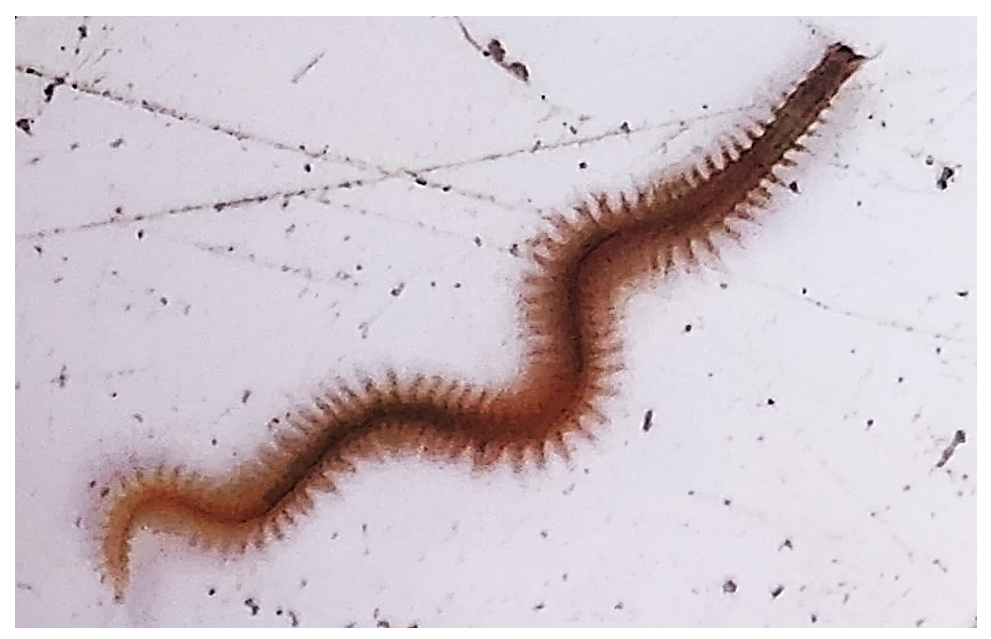
This study aimed to determine the acute dietary toxicity and Maximum Allowable Concentration (MAC) of selenium (Se-NPs) and iron (Fe-NPs) nanoparticles for the ragworm (Hediste diversicolor). This worm is a critical live feed source in sturgeon aquaculture, directly influencing the health and growth of larvae and juveniles. However, the safe dietary levels of these nanoparticles for the ragworm itself, and consequently the risk of trophic transfer to sturgeon, remain unknown. Determining safe dietary levels of nanoparticles in this organism is therefore essential for ensuring the safety of the entire sturgeon feed chain. Worms were exposed to six concentrations (0, 100 μg/kg, 1, 10, 100 mg/kg, and 1 g/kg diet) of each nanoparticle for 96 h in three replicates. Throughout the experiment, aeration was provided, and worm behavior was monitored. Cumulative mortality was recorded at 24, 48, 72, and 96-h intervals. Data were recorded in Microsoft Office Excel 2019, and statistical analysis was performed using SPSS software (Version 26). Data were analyzed by Probit analysis with a 95% confidence level. The LC10, LC50, and LC90 values for Se-NPs were calculated to be 291.2, 989.8, and 1690 mg/kg, respectively. For Fe-NPs, these values were 924.3, 3300, and 5700 mg/kg, respectively. Using a standard Safety Factor (SF) of 10, the calculated MAC are 98.98 mg/kg for Se-NPs and 330.0 mg/kg for Fe-NPs. This study establishes critical toxicity thresholds for Se-NPs and Fe-NPs in ragworm. The findings provide essential data for developing safe feeding protocols in sturgeon aquaculture, helping to prevent potential nanoparticle toxicity transfer through contaminated live feed and ensuring sustainable sturgeon production.
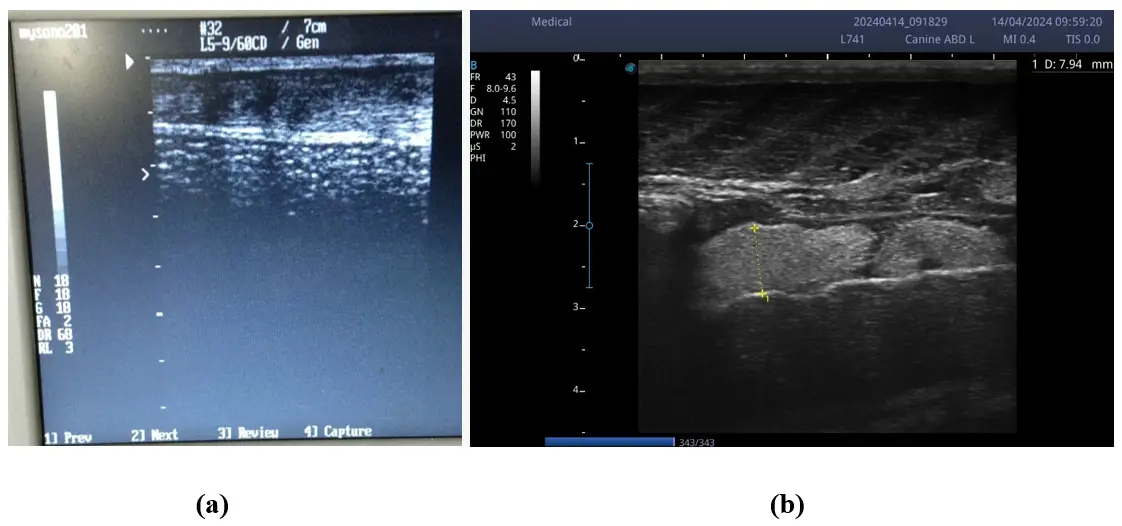
To restore the stocks of sturgeon fish species in a depressed state, it is necessary to form broodstocks in hatchery farms. The technology of forming stocks in industrial conditions is far from perfect due to the low quality of breeders. The aim of this work was to identify the frequency of occurrence of anomalies and diseases of sturgeon internal organs using the method of ultrasound scanning and histological study. Two-dimensional black-and-white image, Doppler, elastography, and panoramic scan were used. Regular sonographic studies of abdominal organs, carried out in 2018–2025 at 20 fish farms, revealed a number of common pathologies and diseases in generative tissue: cystosis and polycystosis, fatty degeneration, underdevelopment and torsion of testes, neoplasm, hermaphroditism, sludge in the gallbladder, ascites, and others. The maximal number of individuals with disorders in the development of internal organs reached 67.9%, an average is 24.8%. Two stages of cystic degeneration of the ovaries were characterized by ultrasonic scanning. A significant increase in the number of females over 9 years old, with replacement of generative tissue with connective tissue (13.6%), was noted. The nature of ‘ink spots’ on the skin of Siberian sturgeon natural populations was studied. Malignant skin neoplasms were detected, and treatment routes were outlined.
The interruption of natural reproduction in the Chinese sturgeon, Acipenser sinensis, is an urgent ecological concern, and the thermal mechanisms underlying its stepped deterioration warrant attention. To systematically elucidate these mechanisms, this study quantified thermal dynamics throughout the reproductive cycle using a multi-scale retrospective analysis of water temperature and historical spawning records. A pronounced, stepwise mismatch between Yangtze River water temperatures and the reproductive requirements of the Chinese sturgeon was identified, manifested as significantly intensified thermal stress and temporal delay. Kernel density estimation (KDE) was used to quantify the thermal requirements for overwintering gonadal development and spawning. Period-stratified statistical tests were then applied to evaluate the alignment between ambient thermal regimes and species-specific requirements. Based on the interdecadal evolution of this mismatch, an intersection analysis between seasonal cooling curves and median spawning temperature was introduced to evaluate synchrony between spawning dates and thermal cues. These analyses revealed that spawning dates passively followed the postponement of the thermal cue, whereas the preferred temperature remained fixed. Collectively, this study demonstrates that thermal mismatches have intensified stepwise through both absolute exceedance of overwintering thresholds and mistimed arrival of suitable spawning temperatures, leading to the sequential degradation of reproduction.
