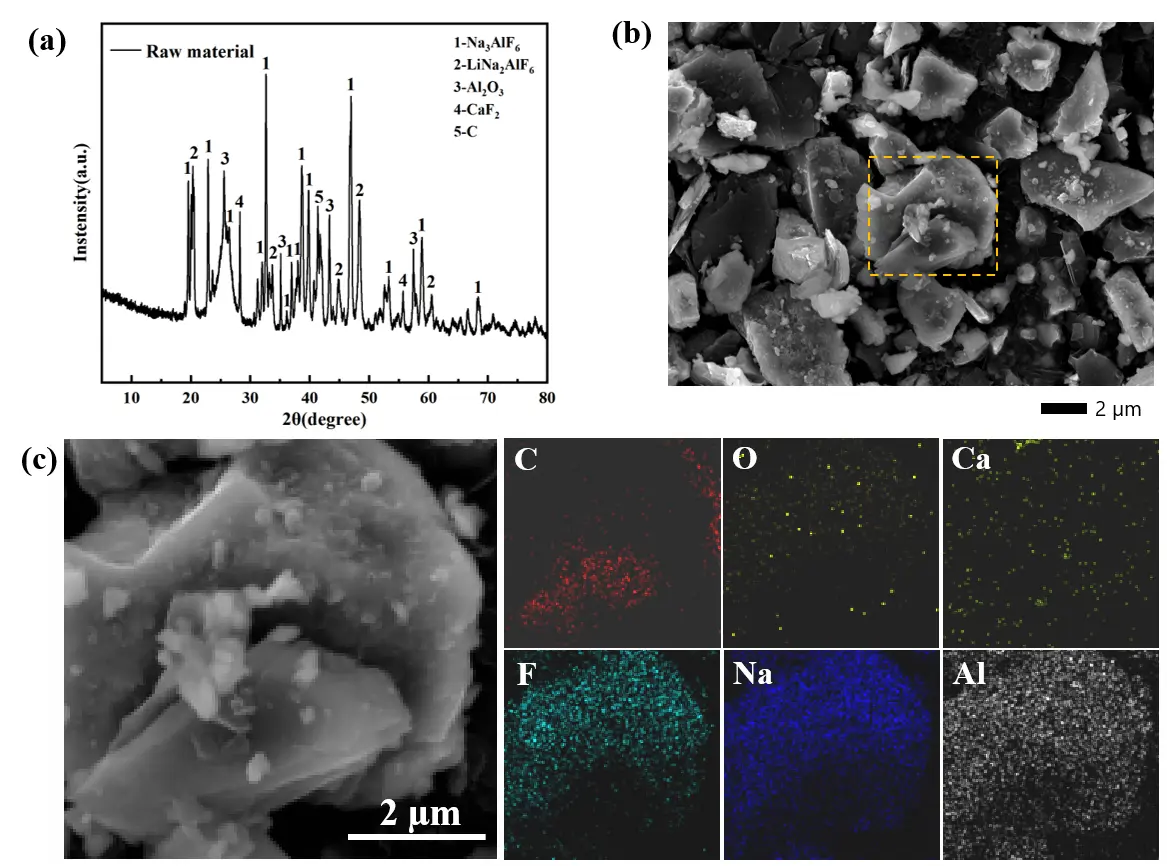
This paper proposes an integrated coupling process of alkali leaching, HBTA-TOPO synergistic extraction, and carbonation for the resource utilization of spent carbon anode (SCA), a typical lithium-bearing industrial solid waste from electrolytic aluminum production, whose lithium content exceeds the ore grade. Compared with conventional acid leaching methods, the adopted alkaline leaching approach features mild reaction conditions, low equipment corrosion risk, and eliminates the volatilization of toxic hydrogen fluoride (HF) gas, thus showing prominent environmental safety advantages. Under the optimal alkaline leaching conditions (NaOH concentration of 10 mol/L, reaction temperature of 90 °C, liquid-to-solid ratio of 10:1, and reaction time of 120 min), the maximum Li+ leaching rate reaches 89.46%. As the leaching process proceeds, lithium in the carbon slag rapidly migrates to the alkaline leaching solution. The Na–Al–F bonds of cryolite (Na3AlF6) and lithium cryolite (Na2LiAlF6) present in the SCA gradually break, and soluble ions such as Na+, Li+, Al3+, and F− enter the solution. High-concentration Na+ reacts with free F− to form sodium fluoride (NaF), which adheres to the SCA, leading to an increase in the sodium-aluminum ratio (Na/Al) of the SCA. The HBTA-TOPO synergistic extraction system is proposed for the extraction and enrichment of lithium in the lithium alkaline leaching solution, and the extraction residue is used to repair and regenerate cryolite. The extraction efficiency of Li+ reaches and the yield of cryolite reaches 81.54% and 76.54%. The molecular ratio of sodium fluoride to aluminum fluoride in synthetic cryolite products is relatively high. This integrated process realizes the efficient recovery of lithium and the high-value regeneration of cryolite from SCA, providing a sustainable technical route for the clean utilization of electrolytic aluminum solid waste. This integrated closed-loop process realizes the simultaneous recovery of lithium and high-value regeneration of cryolite from SCA, which not only mitigates the environmental pollution caused by SCA stacking and the scarcity of lithium resources, but also provides a sustainable technical route for the clean and high-value utilization of electrolytic aluminum solid waste.
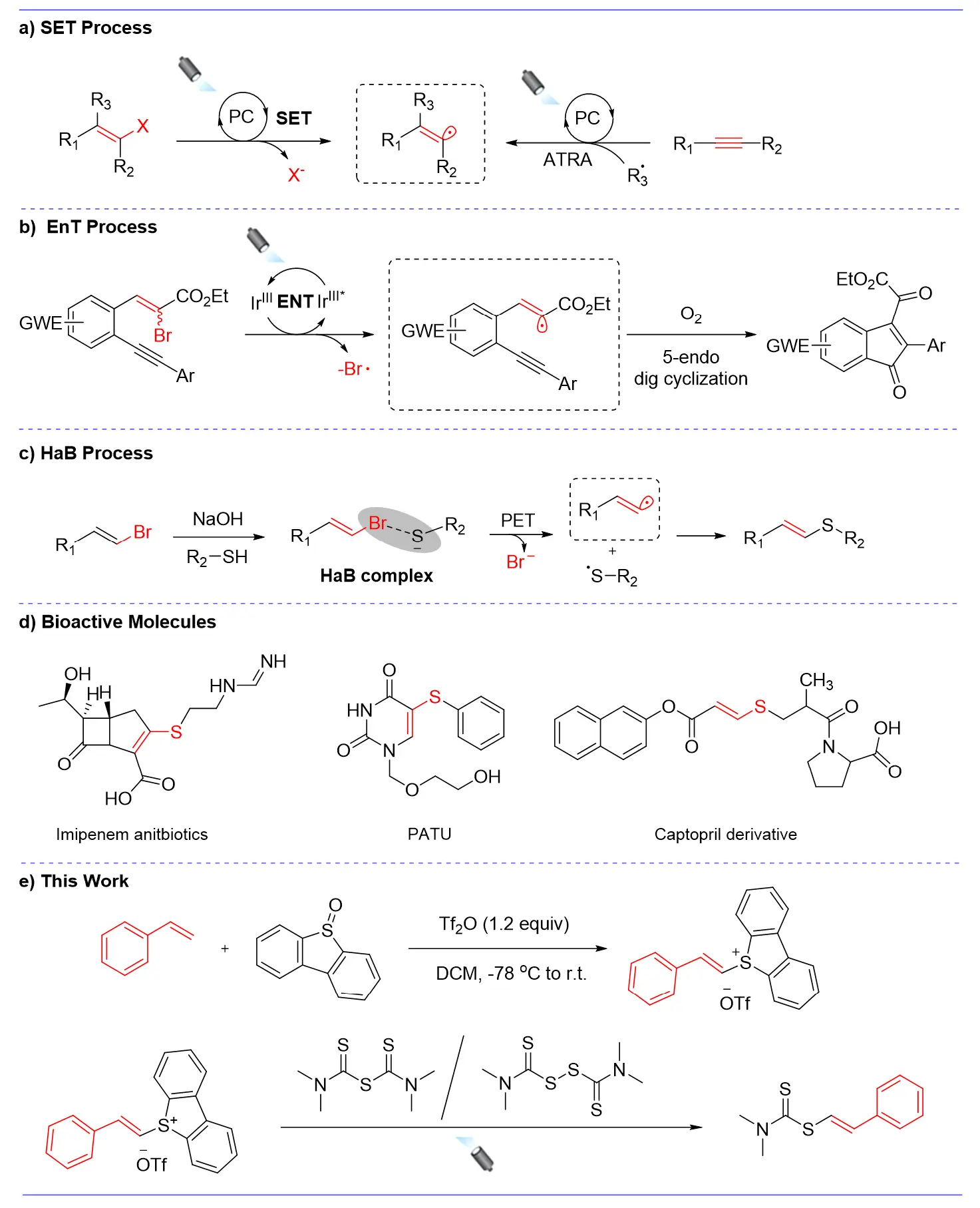
In recent years, visible-light-induced transformations have taken a central role in driving forward the progress of modern organic synthesis. Despite the abundance of synthetic strategies enabling access to aryl- and alkyl-centered radicals, the exploitation of photochemistry to generate highly reactive alkenyl radicals has remained notably underdeveloped. Herein, we report a sustainable strategy for generating alkenyl radicals based on a photocatalytic single-electron transfer process. Through systematic optimization of conditions such as photocatalysts, light sources, and additives, we confirmed that radical reactions can efficiently occur under metal-free conditions using styrenylthiophene salt as radical donors, thiuram derivatives as radical acceptors, and 4CzIPN (1,2,3,5-tetrakis(carbazol-9-yl)-4,6-dicyanobenzene) as the photocatalyst. This method is operationally simple, environmentally friendly, and does not require the addition of precious metal reagents, providing a novel strategy for the methodology of alkenyl radical generation.
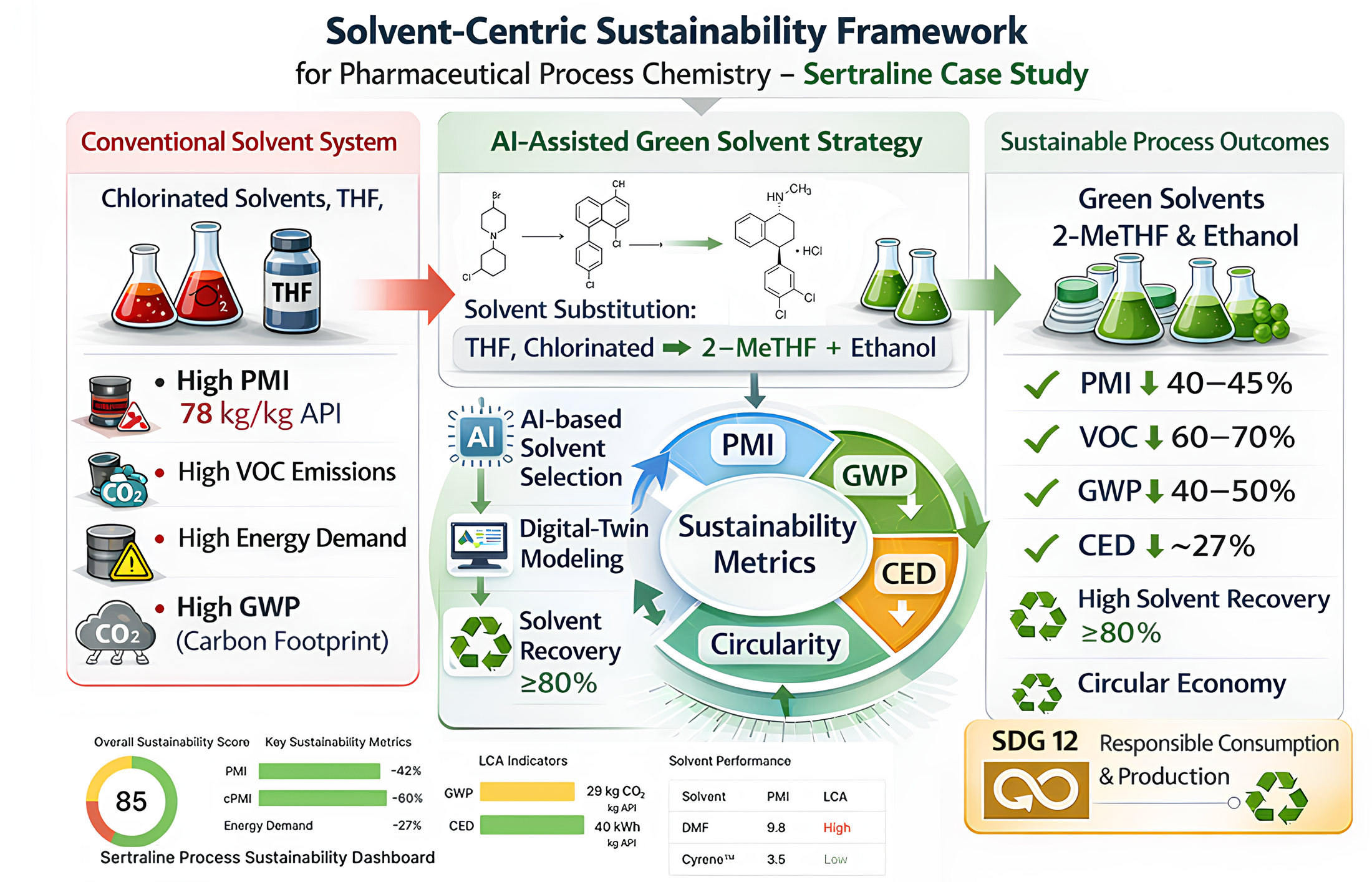
Solvents dominate mass input, energy demand, and environmental impact in pharmaceutical manufacturing, yet solvent selection and recovery are often evaluated using fragmented or non-comparable metrics. Here, we present a solvent-centric sustainability framework that integrates mass-based indicators with life-cycle and energy metrics to enable transparent comparison of conventional and redesigned solvent systems. The framework harmonizes Process Mass Intensity (PMI), circular PMI (cPMI), Global Warming Potential (GWP), and Cumulative Energy Demand (CED) within consistent cradle-to-gate system boundaries, supported by literature-derived data, machine-learning (ML) models, and digital-twin–based sustainability assessment tools. The methodology is demonstrated using Sertraline as a representative solvent-intensive active pharmaceutical ingredient (API). A simplified, literature-based synthesis route contextualizes solvent use across key reaction and isolation steps. Targeted solvent substitutions—most notably replacement of tetrahydrofuran, chlorinated solvents, and dipolar aprotic media with 2-methyltetrahydrofuran and ethanol-based systems—are evaluated alongside enhanced solvent recovery and catalytic hydrogenation. Relative to the solvent-dominant subsequence of the synthesis (PMI ≈ 78 kg·kg−1 API), for which detailed solvent mass-balance data are available, the redesigned solvent strategy reduces PMI to approximately 45 kg·kg−1 API, achieves a cPMI of 6–10 at ≥80% solvent recovery, and consistently decreases GWP and CED. By explicitly mapping solvent redesign outcomes to the 12 Principles of Green Chemistry, this study demonstrates how solvent-focused interventions, supported by predictive digital tools with excellent agreement between modelled and empirical trends, can deliver substantial sustainability improvements without modifying the underlying synthetic route or relying on proprietary process data. While not intended as an industrial benchmark, the Sertraline case study illustrates how harmonized metrics, life-cycle thinking, and AI-enabled digital assessment can support evidence-based solvent selection and sustainability-oriented process development in API manufacturing.
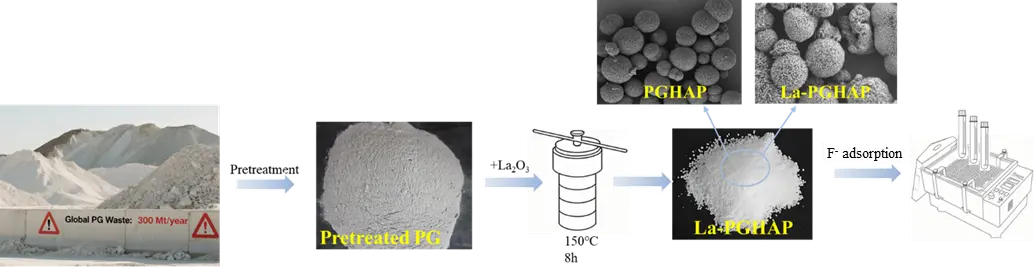
To address the environmental challenges posed by massive phosphogypsum (PG) stockpiles and groundwater fluoride contamination, this study developed an eco-friendly strategy for synthesizing lanthanum-doped hydroxyapatite (La-PGHAP) from PG waste via an acid precipitation-hydrothermal method. The synthesized La-PGHAP exhibited a spherical morphology, high crystallinity, and a significantly enhanced specific surface area of 53.11 m2/g. Batch adsorption experiments revealed that pH critically influenced fluoride (F−) removal, with maximum adsorption capacities of 8.20 mg/g (PGHAP) and 31.98 mg/g (La-PGHAP) at pH 4. The adsorption process followed pseudo-second-order kinetics and the Langmuir isotherm model, indicating chemisorption-dominated monolayer adsorption. La doping introduced Lewis acid-base interactions through La3+–F− coordination, improving both adsorption capacity and stability across a wide pH range (2–10). Reusability tests demonstrated that La-PGHAP retained 85.4% of its initial capacity after 4 cycles. This “waste-to-waste” approach not only repurposes PG into a high-efficiency adsorbent but also provides a sustainable solution for mitigating fluoride pollution, showcasing significant potential for industrial-scale water treatment applications.
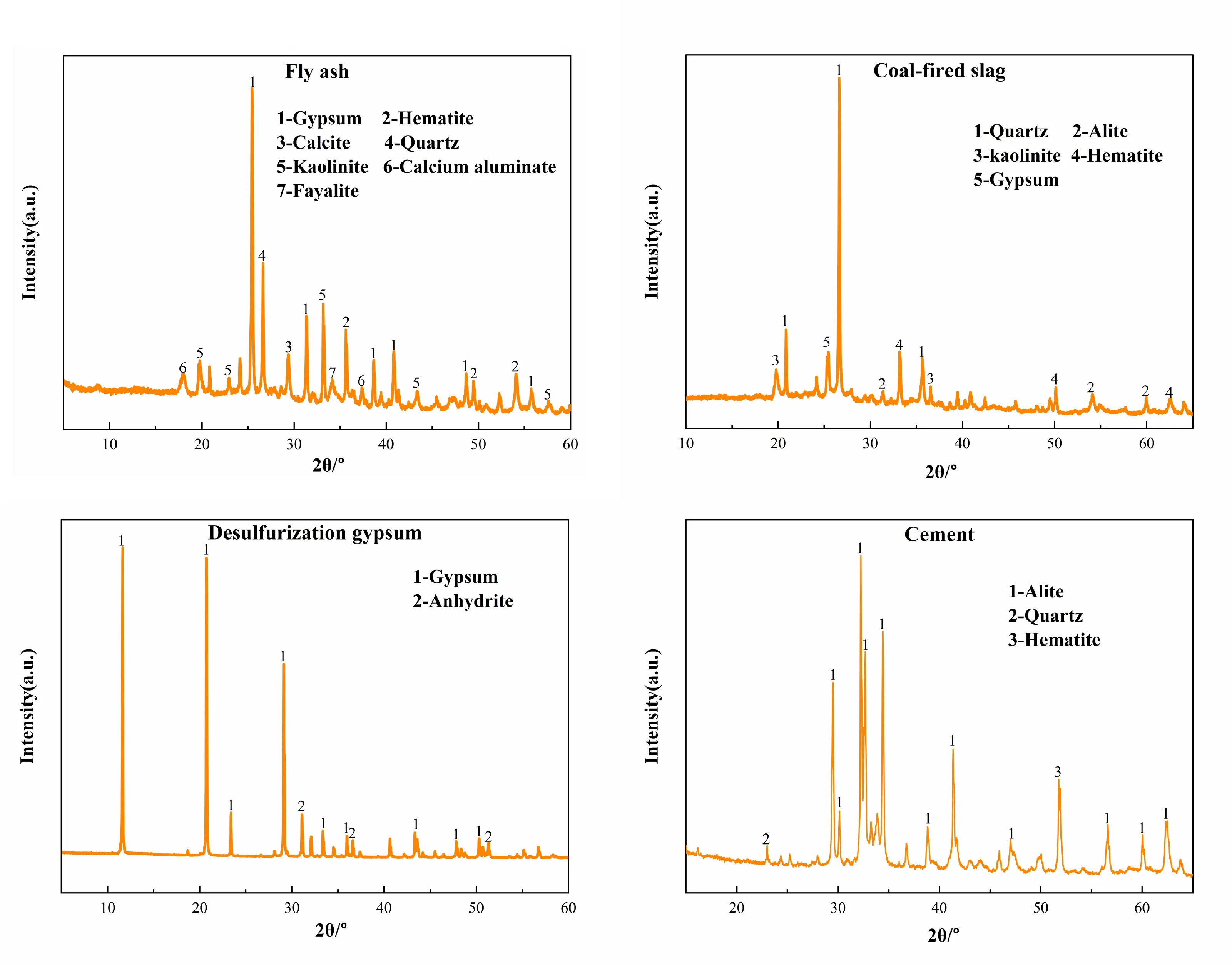
To realize high-value synergistic utilization of the three major solid wastes from thermal power generation (fly ash-FA, coal-fired slag-CS, desulfurization gypsum-DG), a Box-Behnken response surface model was established with CS, DG, and cement as factors and FA as the matrix. Unlike existing research focusing on single or binary solid waste composites, this study systematically optimized the synergistic blending ratios of the three wastes without additional activation. The 7d/28d strength models showed significant statistical validity (R2 = 0.9918/0.9979, p < 0.001). The optimal mix ratio (CS 21.38%, DG 10.96%, cement 16.15%, FA 51.51%) achieved 7d strength of 13.60 MPa and 28d strength of 19.07 MPa, with a model deviation rate below 2%. The statistical model results are deeply correlated with the mechanisms of hydration and microstructural evolution: cement and DG drive early-stage hydration reactions to form rapid-strength products, while CS continuously generates hydration gel through slow pozzolanic reactions to develop late-stage strength. XRD/SEM analysis confirmed significant formation of calcium-aluminum-silicate hydrate (C-(A)-S-H), calcium hydroxide (CH), and ettringite (AFt), verifying full activation of pozzolanic substances in FA and CS. This study innovatively overcomes bottlenecks in the simultaneous high-value utilization of three thermal wastes, providing a scientific pathway for optimizing cementitious materials from multi-source solid wastes.
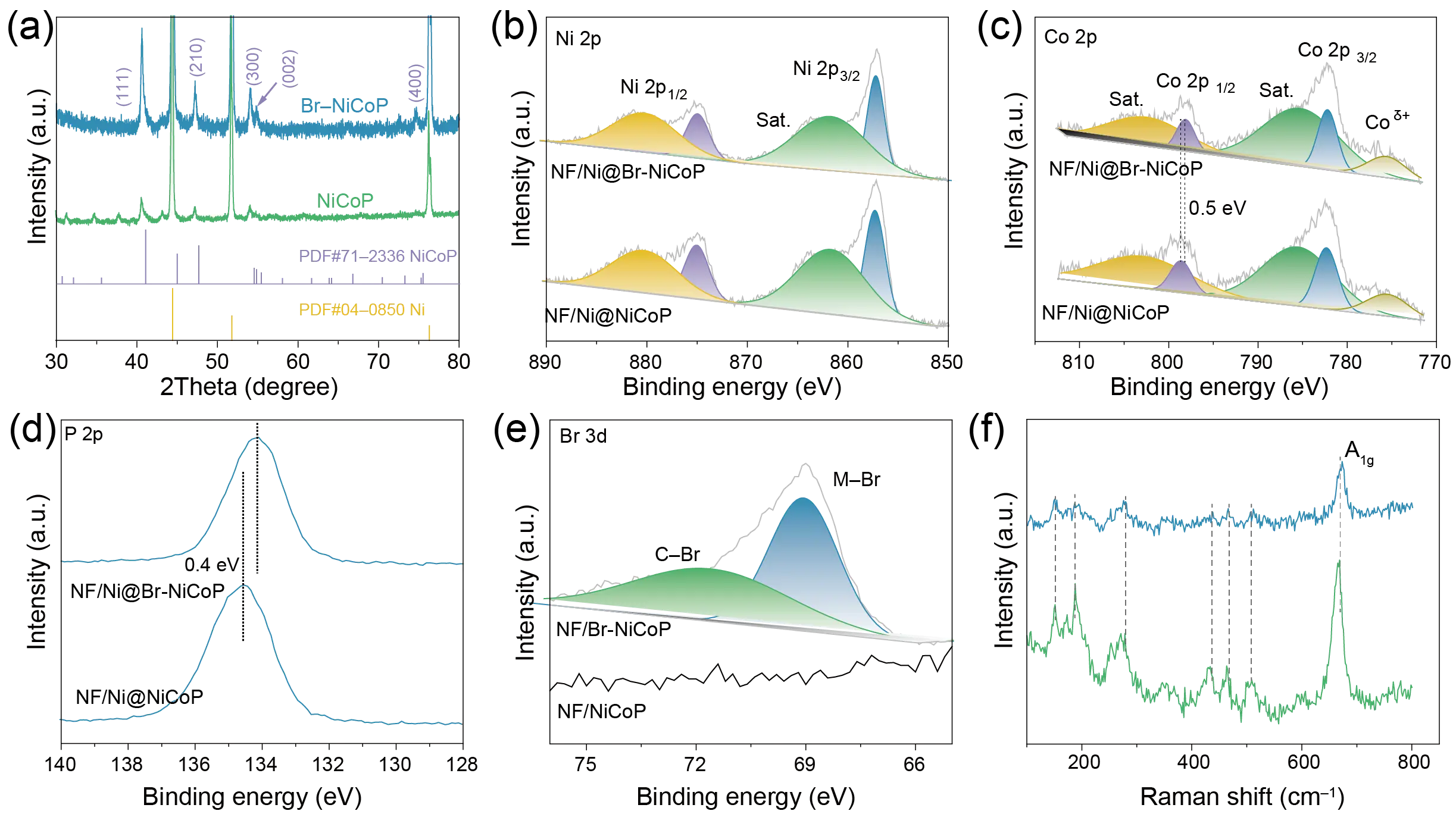
The rational design of cost-effective electrocatalysts for the oxygen evolution reaction (OER) is pivotal for advancing green hydrogen production. This study presents a substrate-engineered Br-doped nickel-cobalt phosphide (NiCoP) electrocatalyst fabricated through a stepwise synthesis protocol. A porous and roughened nickel foam (NF) is initially constructed to provide a 3D conductive scaffold, followed by the hydrothermal growth of vertically aligned NiCo-layered double hydroxide (LDH) nanosheets. Subsequent controlled pyrolysis in the presence of a bromine source yields Br-doped NiCoP nanoarrays securely anchored on the NF/Ni substrate. Comprehensive structural characterization confirms the successful Br incorporation, which induces lattice distortion and optimizes the electronic configuration of NiCoP, while the interconnected porous architecture enhances electrolyte infiltration and gas release. Electrochemical evaluations reveal exceptional OER performance, achieving an ultralow overpotential of 220 mV at 10 mA·cm−2 and a Tafel slope of 61.2 mV·dec−1 in 1 M KOH, surpassing most reported NiCo-based phosphides. In-situ Raman spectroscopy and post-OER characterization uncover dynamic surface reconstruction into Br-enriched (oxy)hydroxide active species, elucidating the dual role of Br as both an electronic modulator and a stabilizer for reactive intermediates. This work demonstrates a substrate-guided heteroatom doping strategy to engineer high-performance bimetallic phosphide electrocatalysts, offering insights into interface engineering for sustainable energy technologies.
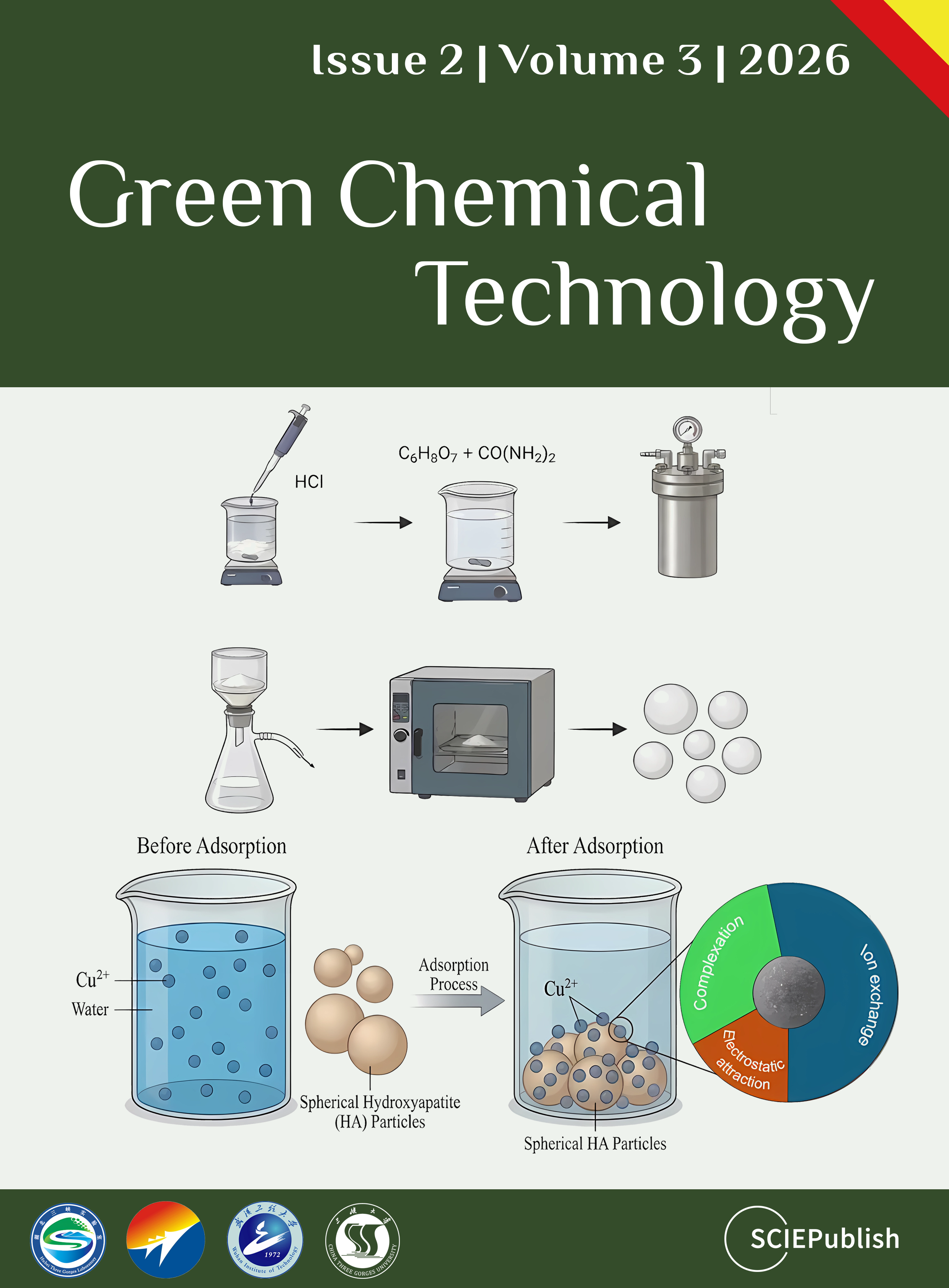
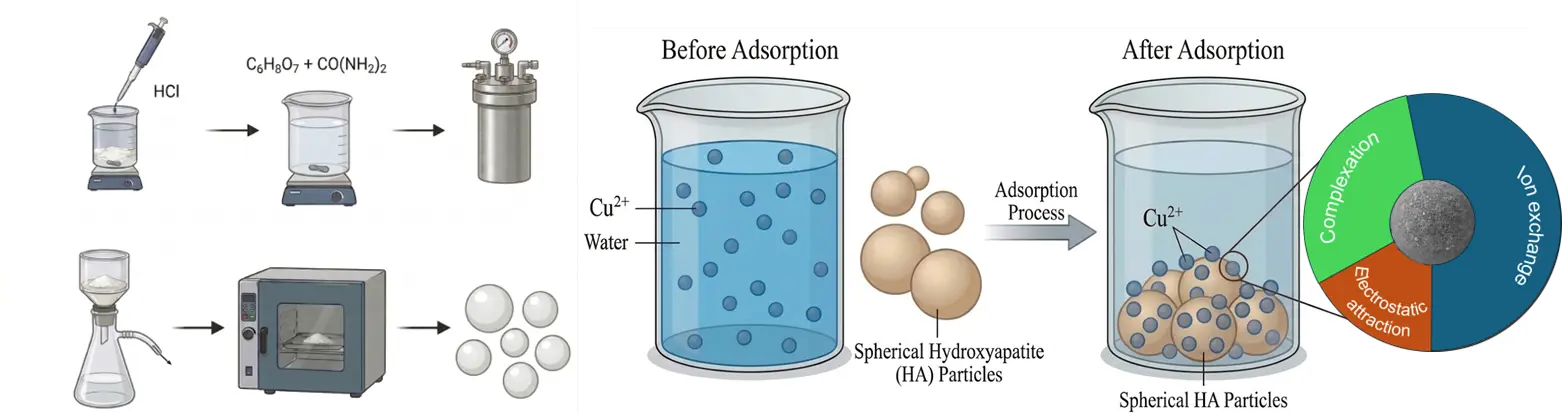
Copper is a common heavy metal contamination source for water bodies, and achieving sustainable and cost-effective removal of Cu2+ from Cu-containing wastewater remains a challenge. In this study, an economical and eco-friendly adsorbent—hydroxyapatite (HA) porous microspheres—was synthesized via a simple one-step hydrothermal method. Adsorption experiments demonstrated that the maximum adsorption capacity of HA porous microspheres for Cu2+ is 116 mg/g, approximately 3.74 times that of reported HA nanosheet adsorbents. The adsorption process follows the pseudo-second-order kinetic model and the Sips isotherm model. The correlation coefficient R2 = 0.9997. Linear fitting of the amounts of Cu2+ removed and Ca2+ leached at the same time revealed an R2 value as high as 0.997, indicating that ion exchange is the dominant adsorption mechanism. Therefore, the excellent adsorption performance is attributed to the high specific surface area (207 m2/g) and mesoporous structure of the spherical HA adsorbent, which provides abundant active sites and promotes efficient ion diffusion. These structural advantages significantly enhanced the two primary adsorption mechanisms: ion exchange and surface complexation. Furthermore, the effects of adsorbent dosage, solution pH, reaction time, initial Cu2+ concentration, and temperature on adsorption performance were systematically investigated. Finally, the adsorption mechanism was investigated by characterizing the adsorbed material using XRD, FTIR, and XPS. It was determined that ion exchange, complexation, and electrostatic attraction are the main adsorption mechanisms. This study enhances the adsorption capacity of HA materials for Cu2+ by controlling morphology, offering new perspectives for developing high-performance, economical, eco-friendly, and sustainable adsorbents.
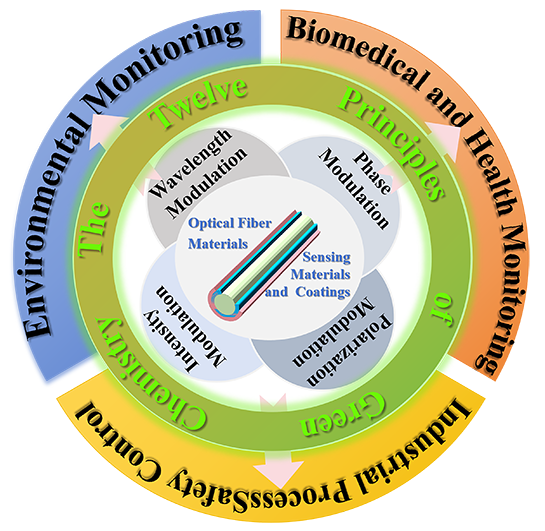
Optical fiber sensing technology offers high sensitivity, electromagnetic immunity, and distributed sensing capabilities, with broad applications in environmental, biomedical, and industrial monitoring. However, its reliance on heavy-metal-doped glasses, rare-earth elements, and non-biodegradable polymers imposes significant environmental burdens across their lifecycle. This review establishes a systematic framework based on the Twelve Principles of Green Chemistry to assess and redesign optical fiber sensing materials, including silica, soft glass, and polymer matrices, as well as functional coatings, fluorescent probes, and plasmonic nanostructures. It highlights green alternatives such as sol-gel synthesis, bio-based polymers, carbon quantum dots, and biosynthesized nanoparticles. A multi-dimensional sustainability assessment, covering performance, environmental impact, economics, and social factors, identifies key challenges such as performance-environment trade-offs and scaling-up costs. Future pathways integrating AI-assisted design, additive manufacturing, modular systems, and policy support are proposed. The study argues that green attributes and high performance are synergistic, positioning green optical fiber sensing as essential for achieving circular economy goals and UN Sustainable Development Goals.