Found 4 results
Open Access
Article
19 January 2026Life Cycle Assessment of the Emissions Reduction Potential of Recycled-Carbon-Fibre for Western-Australian Offshore Wind Turbine Blades
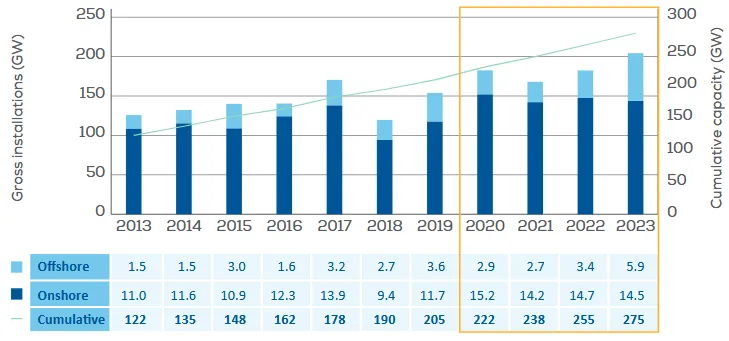
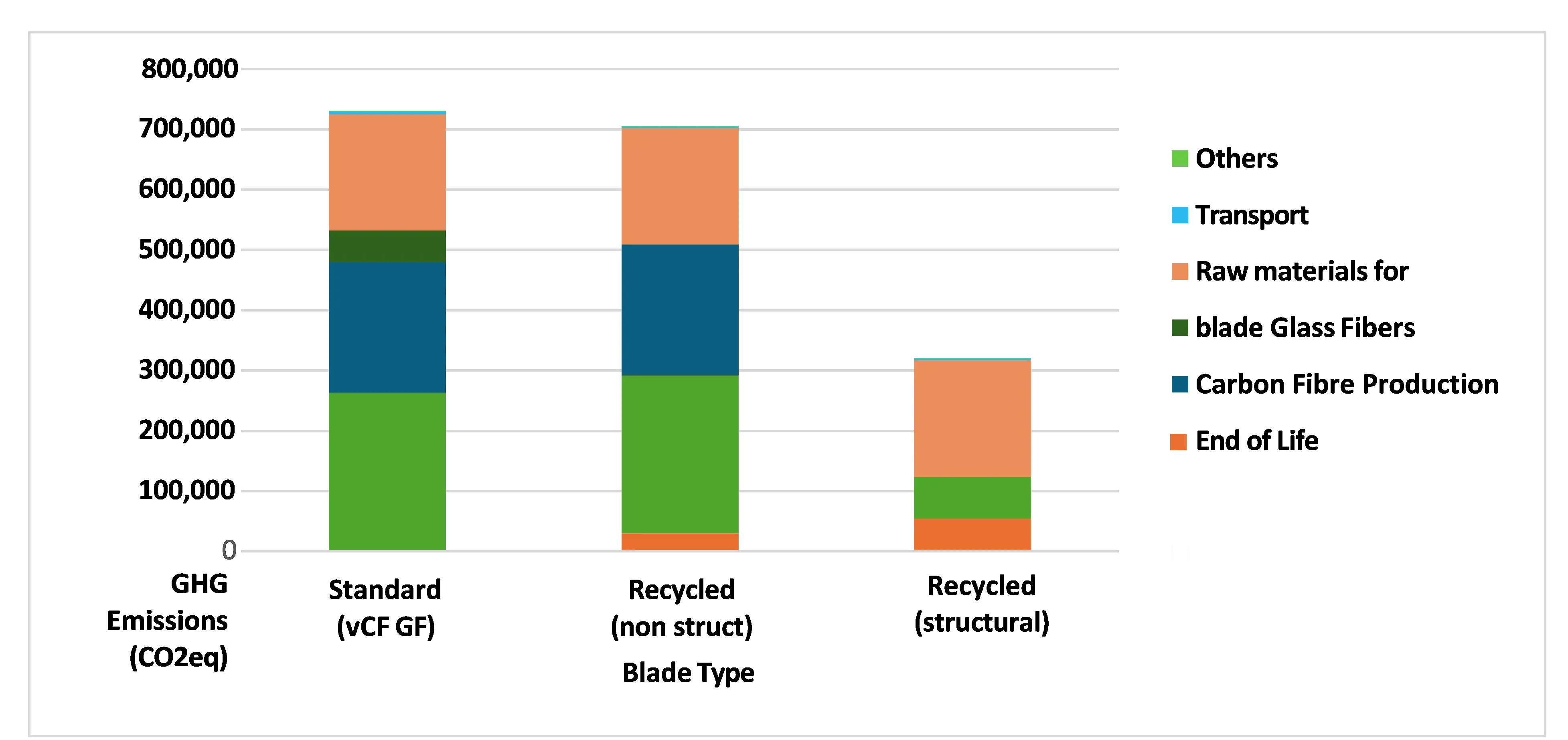
The objective of this study is to conduct a review of recycled-carbon-fibre (rCF) wind turbine blades’ feasibility, through a comparison of global and Australian wind sector waste, and a comparison of virgin-carbon-fibre (vCF) with rCF wind turbine blades’ greenhouse-gas GHG-emissions, and, recommend an approach for carbon-fibre CF-use in the fledgling Australian offshore wind industry, based on global-warning-potential GWP. This study assesses the life-cycle GHG-emissions of virgin-carbon-fibre wind turbine blades versus recycled-carbon-fibre wind turbine blades, in both non-structural and structural configurations. All production, use and recycling is assessed in terms of a West Australian context, in which the functional unit is three turbine blades used on an onshore wind farm, towards potential applicability for (as yet, non-existent) offshore WA fields. An approach incorporating a GaBi/Sphera database-study provides a timely screening/preliminary study, in which it was found that non-structural recycled carbon fibre wind turbine blades had very similar GHG emission levels compared to standard virgin carbon fibre blades, with sensitivity analysis revealing that in worst-case scenarios, non-structural carbon fibre has higher GHG emissions. Structurally recycled carbon fibre blades performed significantly better than standard virgin carbon fibre wind turbine blades with a 56% reduction in GHG emissions; savings were not affected significantly by parameter changes during sensitivity analysis. It is evident that recycled-carbon-fibre can significantly reduce wind turbine blades’ GWP and contribute to the circular economy in the fledgling West Australian offshore-wind-turbine sector.
Open Access
Article
19 November 2025Effects of Platform Motions on Dynamic Responses in a Floating Offshore Wind Turbine Blade
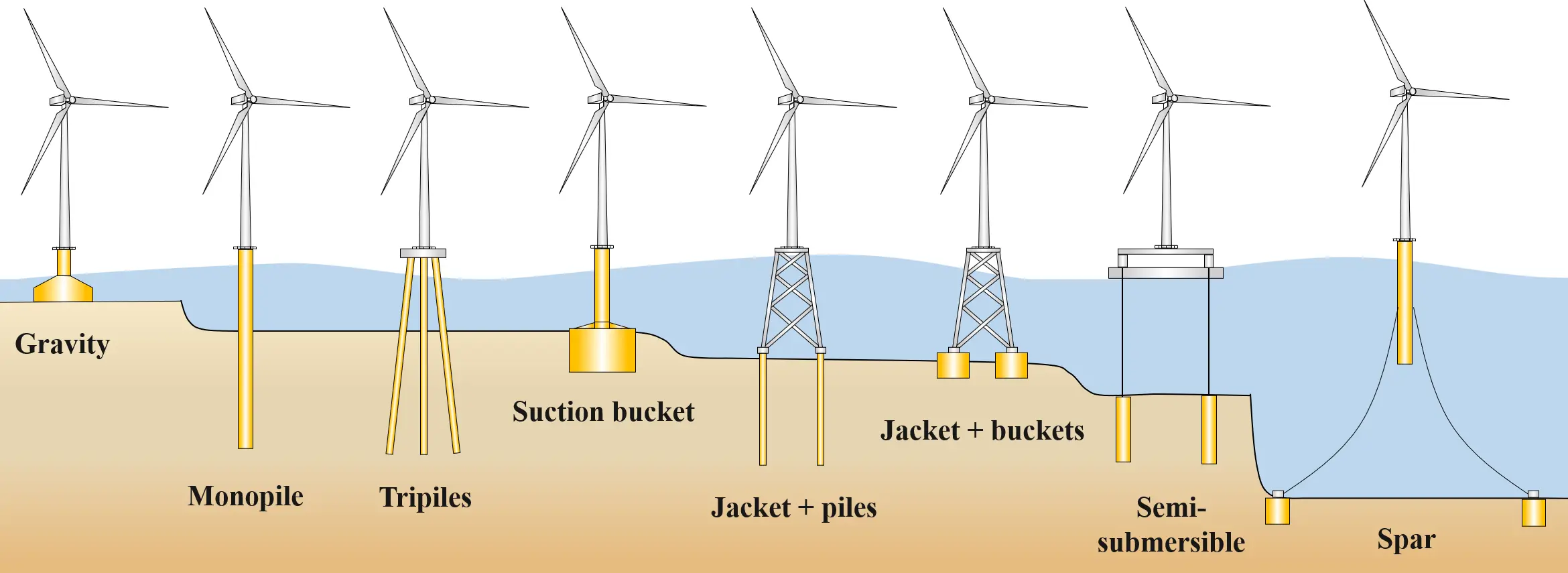
Floating offshore wind turbines (FOWTs) offer great potential for harnessing deep-sea wind energy. This study examines the effects of six-degree-of-freedom (6-DOF) platform motions on the dynamic structural responses of a FOWT blade by comparing its performance with a fixed-bottom system. Integrated aero-hydro-servo-elastic simulations for a 5-MW spar-type FOWT were conducted under various design load cases. Results indicate that the floating tower’s first-order natural frequency was about 29% higher than that of the fixed-bottom tower. Platform motions markedly influenced blade flapwise and torsional responses, with the effect intensifying under larger waves. For instance, as the significant wave height increased from 1.70 m to 9.90 m, the differences in peak response between the floating and fixed-bottom systems grew from 0.104 m to 0.363 m for blade-tip flapwise deflection, from 528.1 kN·m to 1817.4 kN·m for the root flapwise bending moment, and from 5.02 kN·m to 18.73 kN·m for the root torsional moment. In contrast, blade edgewise responses showed negligible changes, with peak deflection differences below 0.05 m. Blade loads were more sensitive to wave conditions, while platform motion magnitudes were more affected by wind. These findings offer insights into the load characteristics and structural design of FOWT blades.
Open Access
Article
06 November 2025Application of Blades Aerodynamic Optimization Design Platform Based on the Performance of Offshore Wind Turbines
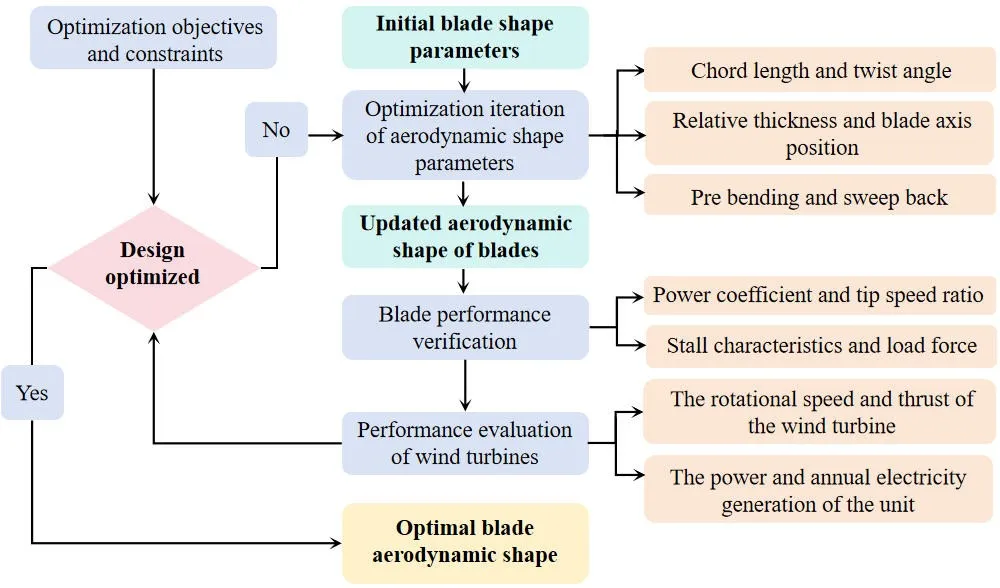
Optimizing aerodynamic performance with low loads is a core objective in high-power wind turbine blade design. This study develops a blade aerodynamic optimization design platform based on the performance of a wind turbine. By applying automated design principles, the platform rapidly iterates to obtain blade profiles that meet turbine development requirements, significantly improving design efficiency and reliability. Key findings include That Optimizing chord length and relative thickness distributions substantially contribute to enhancing power generation while reducing load levels. Relative thickness and twist angle distributions are critical parameters influencing stall characteristics during blade operation. Superior aerodynamic performance notably increases annual rated power generation hours but simultaneously elevates blade thrust and root loads. Among the evaluated designs meeting turbine specifications, the #436 blade achieves a maximum power coefficient of 0.4679 while maintaining low ultimate and fatigue loads. Furthermore, when paired with the wind turbine, its rated wind speed reaches 10.9 m/s, and its annual rated power generation hours under various inflow wind speed conditions all meet the turbine system’s development requirements. Consequently, the #436 blade demonstrates exceptional system compatibility, making the 8.5 MW turbine equipped with this blade highly competitive in the market.
Open Access
Review
22 August 2025The Recyclability of Wind Turbine Blade Material, Manufacturing Process, and Recycling Technology
As wind energy continues to be deployed at a significantly increasing rate, the number of decommissioned wind turbines is expected to increase accordingly. To improve material efficiency, a large amount of waste requires appropriate identification and recycling, particularly the composite materials used in wind turbine blades (WTB). This study focuses on two life cycle stages, manufacturing and the decommissioning stage, which contribute most to the waste generation of WTB. This study investigates the material efficiency factors in WTB and organises fragmental information in manufacturing waste management, focusing on the recycling factor and quantifying the recyclability of wind turbine blade material regarding the different recycling technologies. This study fills the gap in existing research by evaluating recycling methods for specified carbon fibre-reinforced polymers (CFRPs) and glass fibre-reinforced polymers (GFRPs) using a revised recyclability index. Additionally, innovative sustainable materials and recent composite recycling studies have also been incorporated into the quantification and evaluation to update the current progress. The current source of WTB post-production waste, the corresponding disposal method, and opportunities were also reviewed and identified. The findings quantified recyclability and revealed that the recyclability of WTB materials varies significantly depending on the specific composite type and the recycling method employed. Furthermore, the calculated recyclability, combined with other factors such as global warming potential (GWP), cost, and technology readiness level (TRL), is discussed, along with the potential for improving material efficiency by selecting future material recycling technology and effective manufacturing waste management.