Found 492 results
Open Access
Article
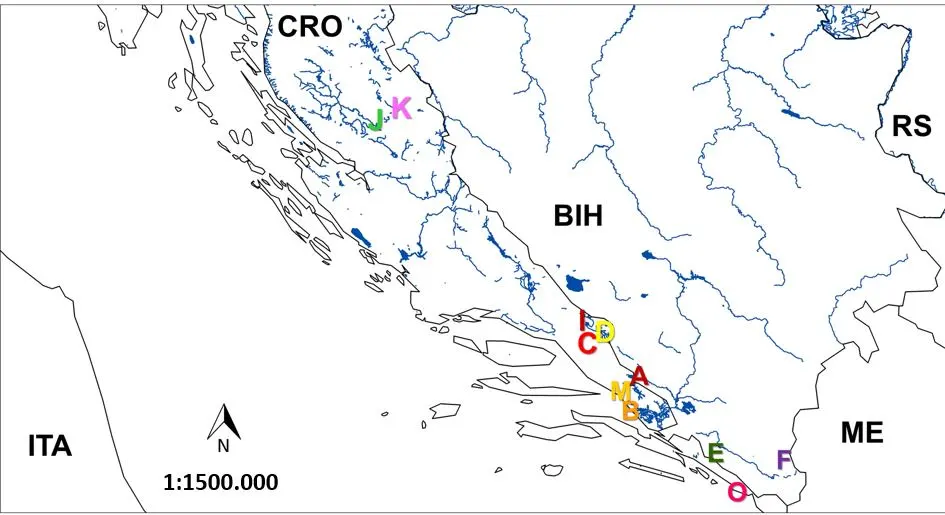
25 September 2024Evolution in the Dinarids: Phylogeography, Diversity and Evolutionary History of the Endemic Genus Delminichthys (Actinopteri; Leuciscidae)
The origin of exceptionally rich fish communities harboured within the freshwater systems of southern Europe is usually explained by allopatric speciation due to a long isolation of water basins. On the other hand, hybridization events have been recorded in several fish species, but they role in the speciation of freshwater fishes in the Southern Europe has not received significant attention. Contrary to most species within the Leuciscidae family, the genus Delminichthys inhabits a geographically restricted area (middle and southern Dinarides) and consists of only four endemic species. This study analysed the population genetic structure and demographic history of each Delminichthys species as a contribution to the understanding of the evolutionary peculiarities in Dinaric water systems. The obtained results revealed pronounced mito-nuclear and nuclear-nuclear discordance, likely the result of incomplete lineage sorting, as well as nuclear introgression observed in the Ombla River population in southernmost Croatia. In addition to allopatric speciation, ancient hybridization might have played an important role in the evolutionary history of this genus. The origin of the genus Delminichthys can be dated back to the Oligocene/Miocene boundary, to a period of significant tectonic activity in the Mediterranean region, and its ancestor likely inhabited the region of the central Dinarides. Intrageneric divergences occurred in the lower Miocene and Pliocene. Similarly, as previously proposed for Delminichthys adspersus, traces of underground migrations were found among Delminichthys ghetaldii populations, implying adaptations to underground life to be characteristic for the genus. All Delminichthys species express high levels of genetic diversity, likely as a consequence of their old origin. Size of D. adspersus is currently decreasing, while the remaining three species appear stable.
Open Access
Review
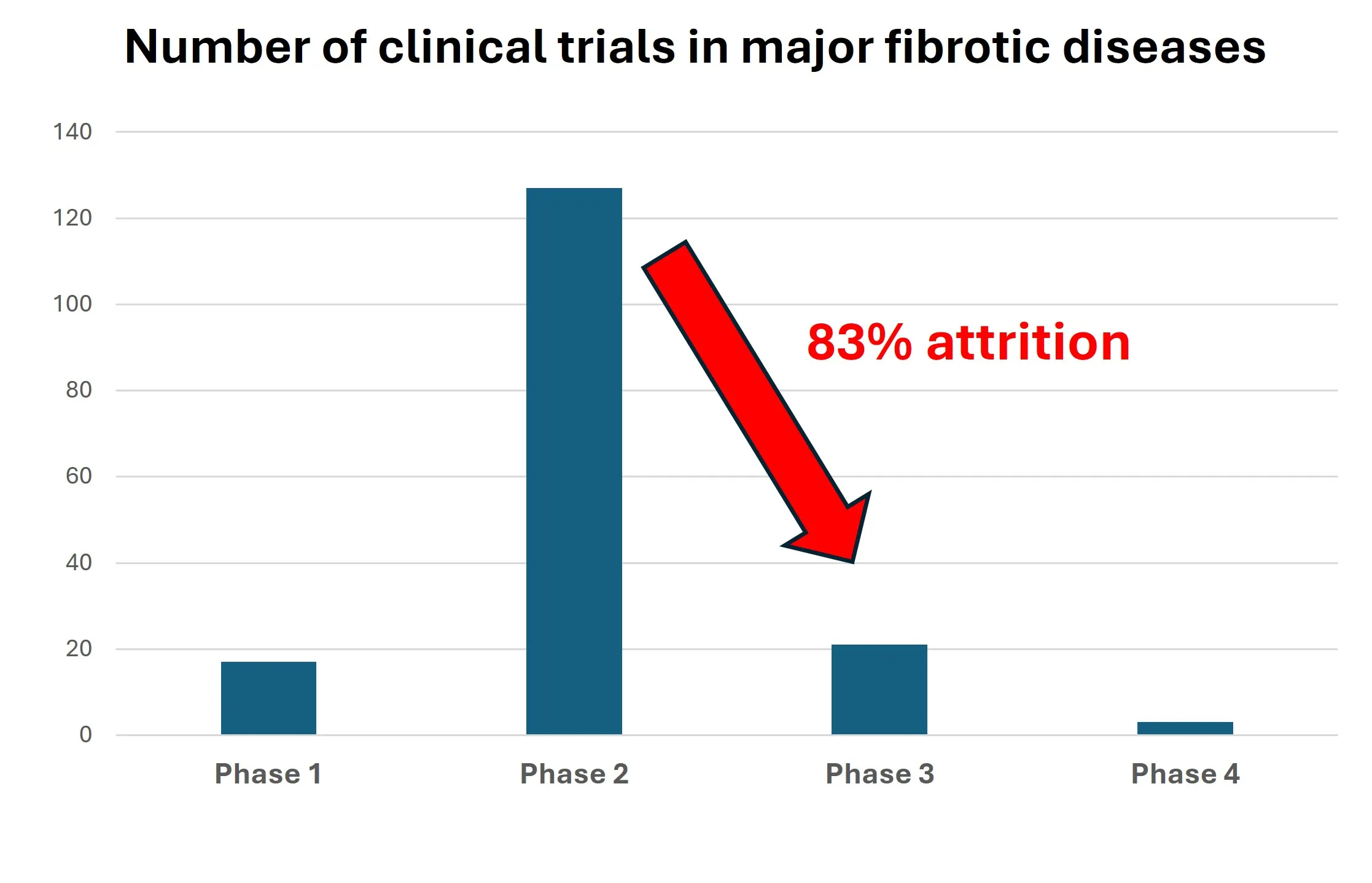
10 September 2024A Review of the Current Landscape of Anti-Fibrotic Medicines
Fibrosis is defined as the excessive accumulation and disorganized deposition of extracellular matrix components, affecting any organ in the human body. Fibrotic diseases of the vital organs such as lung, heart, kidney and liver can be chronic, progressive, irreversible and fatal. Although fibrotic diseases account for 45% of the mortality in the Western world, the available treatment options are limited in numbers, efficacy and safety. There is certainly a lack of progress in developing novel anti-fibrotics even though the market size for fibrotic diseases is estimated to be ~$30B and several pharmaceutical companies have active R&D programmes in this field. We reviewed the current efforts in developing novel anti-fibrotic medicines focusing on lung, heart, kidney, liver and skin fibrosis. Our analysis revealed an estimated 83% attrition rate from Phase 2 to Phase 3 trials across the five fibrotic diseases. The possible reasons for the slow pace and high attrition rates in developing new anti-fibrotics are discussed and potential solutions are proposed.
Open Access
Review
02 September 2024A Review on the Application of Nanomaterials to Boost the Service Performances of Carbon-Containing Refractories
To meet the high-quality requirements for clean steel production and fully exploit the performance advantages of carbon-containing refractories, nanomaterial has been introduced into the matrix to develop advanced carbon-containing refractories. Nanomaterials, as critical additives, play a crucial role in developing novel refractories. The service performances of carbon-containing refractories are affected not only by their physical and chemical properties but also by their microstructure. This review provides a comprehensive overview of the latest research on oxide-carbon composite refractories containing nanomaterials, categorized by their composition: nanocarbons, nano oxides, and nano non-oxides. Incorporating nanomaterials can enhance the service performances of the refractories, optimizing phase composition and microstructure. Furthermore, future research directions in nanomaterial technology for carbon-containing refractories are discussed.

Open Access
Article
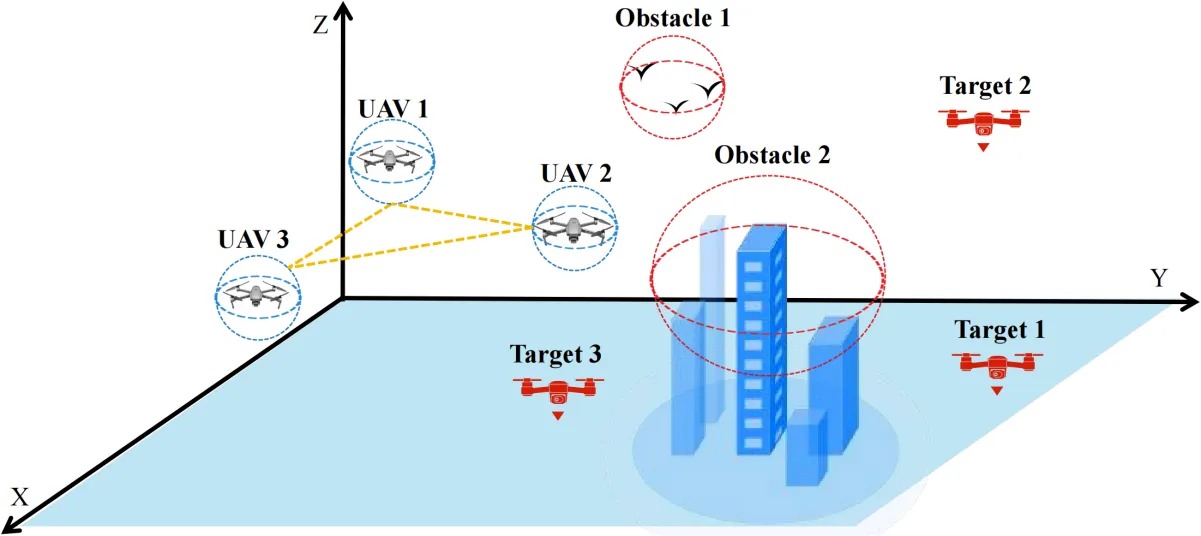
02 September 2024Multi-Robot Cooperative Target Search Based on Distributed Reinforcement Learning Method in 3D Dynamic Environments
This paper proposes a distributed reinforcement learning method for multi-robot cooperative target search based on policy gradient in 3D dynamic environments. The objective is to find all hostile drones which are considered as targets with the minimal search time while avoiding obstacles. First, the motion model for unmanned aerial vehicles and obstacles in a dynamic 3D environments is presented. Then, a reward function is designed based on environmental feedback and obstacle avoidance. A loss function and its gradient are designed based on the expected cumulative reward and its differentiation. Next, the expected cumulative reward is optimized by a reinforcement learning algorithm that makes the loss function update in the direction of the gradient. When the variance of the expected cumulative reward is lower than a specified threshold, the unmanned aerial vehicle obtains the optimal search policy. Finally, simulation results demonstrate that the proposed method effectively enables unmanned aerial vehicles to identify all targets in the dynamic 3D airspace while avoiding obstacles.
Open Access
Article
30 August 2024Model for Forecasting the Raw Material Base of the Textile Industry Based on the Analysis of the Dynamics of Production Volumes
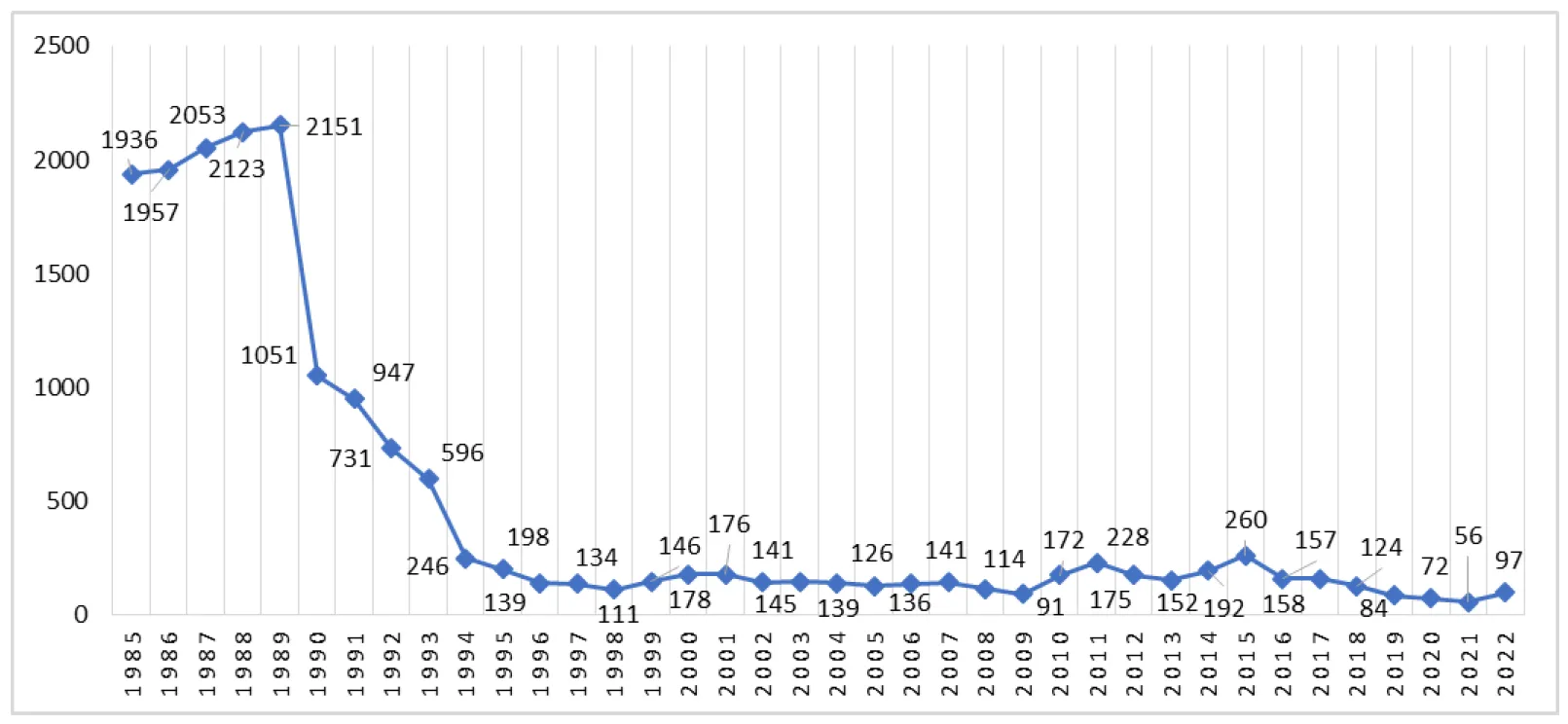
The scientific article analyzes the dynamics of textile industry production in the USSR and the Russian Federation from 1985 to 2022 years.The article provides a fairly complete overview of modern methods of forecasting the development of objects, mainly based on time series analysis, including issues of forecasting cyclic and discontinuous processes, forecasting multidimensional objects with a correlated system of indicators. Authors calculate the forecast until 2026 year based on a bank of mathematical forecasting models implementing various monotonic nonlinear transformations both along the ordinate axis and along the abscissa axis. The criterion of the minimum variance of the forecast error was used as a criterion for selecting a specific model from the bank. The scientific value of the article lies in the fact that, for the first time, it offers a criterion for choosing a mathematical model from a set of them, which uses the minimum estimate of the variance of forecast errors for this model. This work can be considered a step towards the creation of artificial intelligence since the selection of the optimal model for a specific time series allows to obtain a training sample for it, which is fundamentally impossible to obtain without it.
Open Access
Article
30 August 2024Fast-Track Documentation of the Alterations on the Landscape, before and after a Natural Hazard—Case Study: North Euboea Greece before and after Storms Daniel and Elias
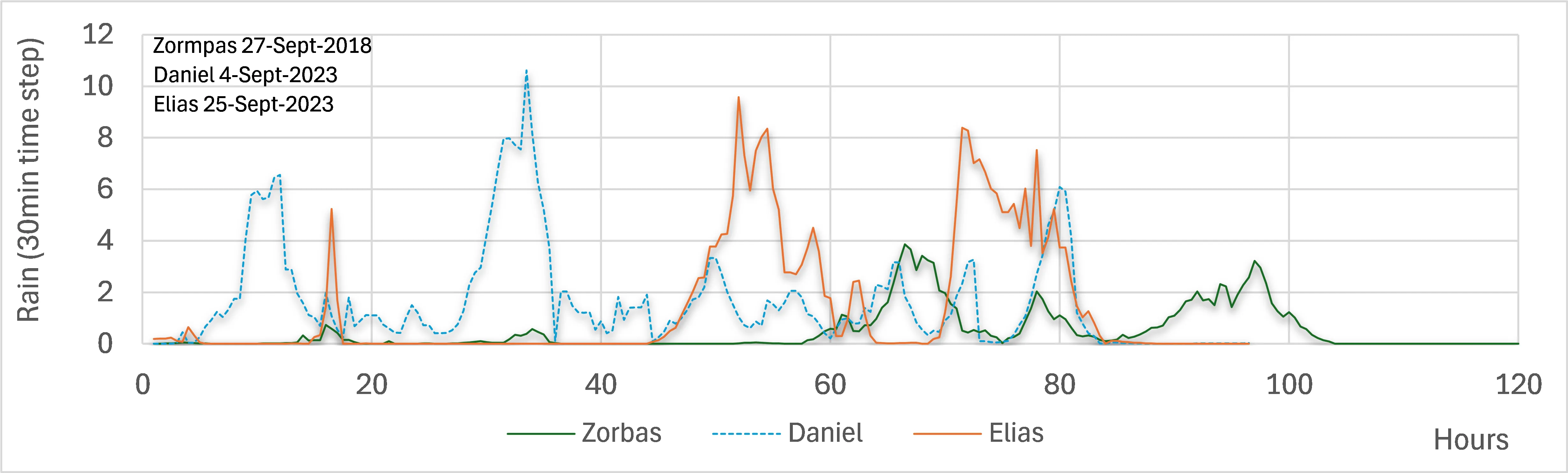
This paper presents a methodology for fast-track documentation of landscape alterations before and after natural hazards, specifically focusing on the impacts of storms Daniel and Elias (2023) in Northern Euboea, Greece, which flooded larger areas than the storm Zorbas (2018). This happened because the plane trees had been affected by the disease Ceratocystis platani and had dried up, and the forest had burned. Therefore, the water moved faster, and in recent storms, the riverbed widened. This research aims to capture the transformed landscape rapidly by utilizing modern mapping technologies, including Google Earth, digital terrain models and drone-based photogrammetry. The methodology involves on-site inspections and the creation of three-dimensional models to document and analyze the affected areas. This approach facilitates a more comprehensive understanding of how the landscape can dynamically change due to a natural disaster. It highlights the importance of the on-site landscape inspection with sophisticated tools based on commercial equipment and open-source software.
Open Access
Article
28 August 2024Metallurgical Characteristics of 316L Stainless Steel by Laser Additive Manufacturing
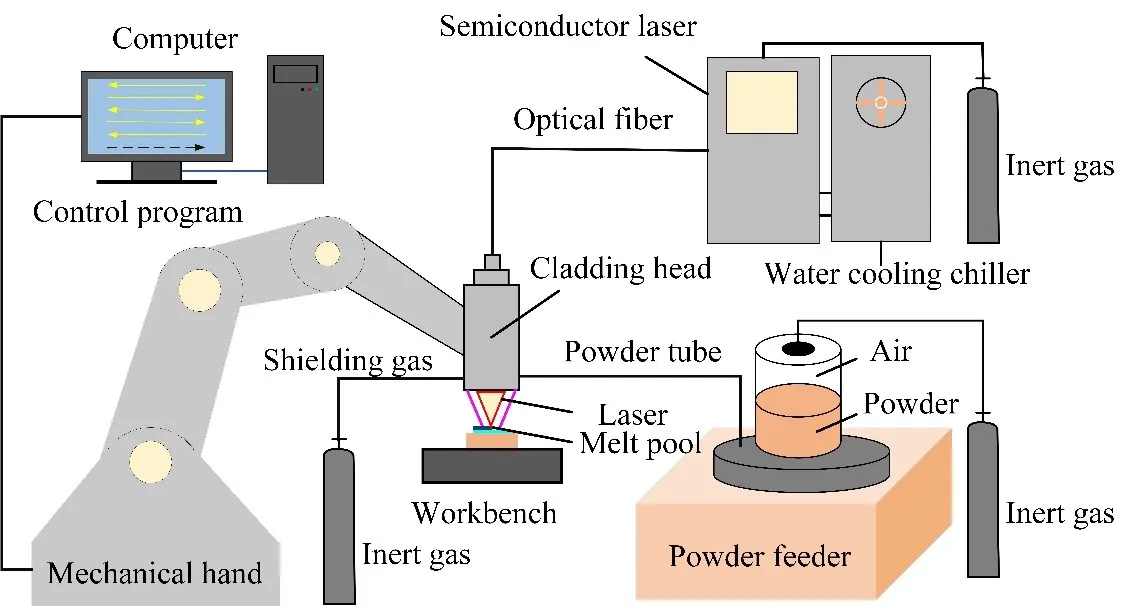
Laser Additive Manufacturing (LAM), an avant-garde technology in manufacturing, harnesses the precision of laser energy to fabricate intricate parts through the meticulous process of melting and subsequently depositing layers of metal powders. Among the esteemed materials employed, 316L stainless steel (316L SS) stands out for its unparalleled corrosion resistance, exceptional high-temperature tolerance, and remarkable creep strength, making it a ubiquitous choice in the aerospace, medical, and nuclear power sectors. LAM has distinguished itself in the fabrication of intricate 316L SS components, yet enhancing the metallurgical bonding strength within these structures remains a pivotal area of ongoing research. This research endeavor delves into the intricate microstructure and mechanical properties that characterize the interface between the LAM-produced 316L SS cladding layer and its substrate, further investigating how varying laser energy densities (E) subtly influence these properties within the additive manufactured components. Remarkably, the interface region exhibits a tensile strength of 615.1 MPa, surpassing that of both the deposited layer and the substrate by 5.4% and 7.4% respectively, underscoring a robust bond between the two layers. This investigation not only sheds light on the unique process capabilities and performance merits of LAM in crafting 316L SS cladding layers but also pioneers novel approaches and conceptual frameworks for bolstering the metallurgical bonding strength of this esteemed material. As such, it constitutes a treasure trove of insights for subsequent research endeavors and practical applications across related disciplines.
Open Access
Review
27 August 2024Strongly Correlated Electrons and High Temperature Superconductivity
It is very important to clarify the mechanism of high-temperature superconductivity in strongly correlated electron systems. The mechanism of superconductivity in high temperature cuprate superconductors has been studied extensively since their discovery. We investigate the properties of correlated electron systems and mechanism of superconductivity by using the optimization quantum variational Monte Carlo method. The many-body wave function is constructed by multiplying by correlation operators of exponential type. We show that d-wave superconducting phase exists in the strongly correlated region where the on-site repulsive interaction is as large as the bandwidth or more than the bandwidth. The d-wave pairing correlation function is shown as a function of lattice sites, showing that the long-range order indeed exists.

Open Access
Review
27 August 2024A Novel Comprehensive Program Combining Optimal Medical Treatment with Lifestyle Modification for Type 2 Diabetes
There are more and more individuals with type 2 diabetes (T2D) in the globe. It’s a huge burden of public health and a great challenge in clinical due to a high linkage with atherosclerosis, cardiovascular disease (CVD), stroke, and cancer. However, little is known about a comprehensive program of management and self-management of T2D. This article introduces briefly the current status in T2D and an updated classical standardized comprehensive program which combines optimal medical treatment (OMT) (the glucagon-like peptide-1 receptor agonists, the sodium-glucose cotransporter 2 inhibitors, and the ultralong-acting, once-daily basal insulin) with lifestyle modification, that is, intervention of RT-ABCDEFG (iRT-ABCDEFG) for control and prevention of T2D, and discusses its advantages and prospects. As an effective comprehensive program and strategy for interventions of diabetes, this program can be used as a reversible, right, and routine treatment. Several pivotal goals including less major adverse cardiocerebrovascular events (MACCE) and diabetic complications, less medical costs, longer life expectancy, lower morbidity and mortality, and higher quality of life, will be realized by consistently practicing this program due to early diagnosis, OMT, and lifestyle modification for overall prevention. All in all, since T2D highly links to CVD and cancer, as well as other MACCE, this novel iRT-ABCDEFG program is very helpful in comprehensive management and self-management of T2D and worth recommending for further application and health care of T2D due to better clinical efficacy and cost-effective relationship.

Open Access
Article
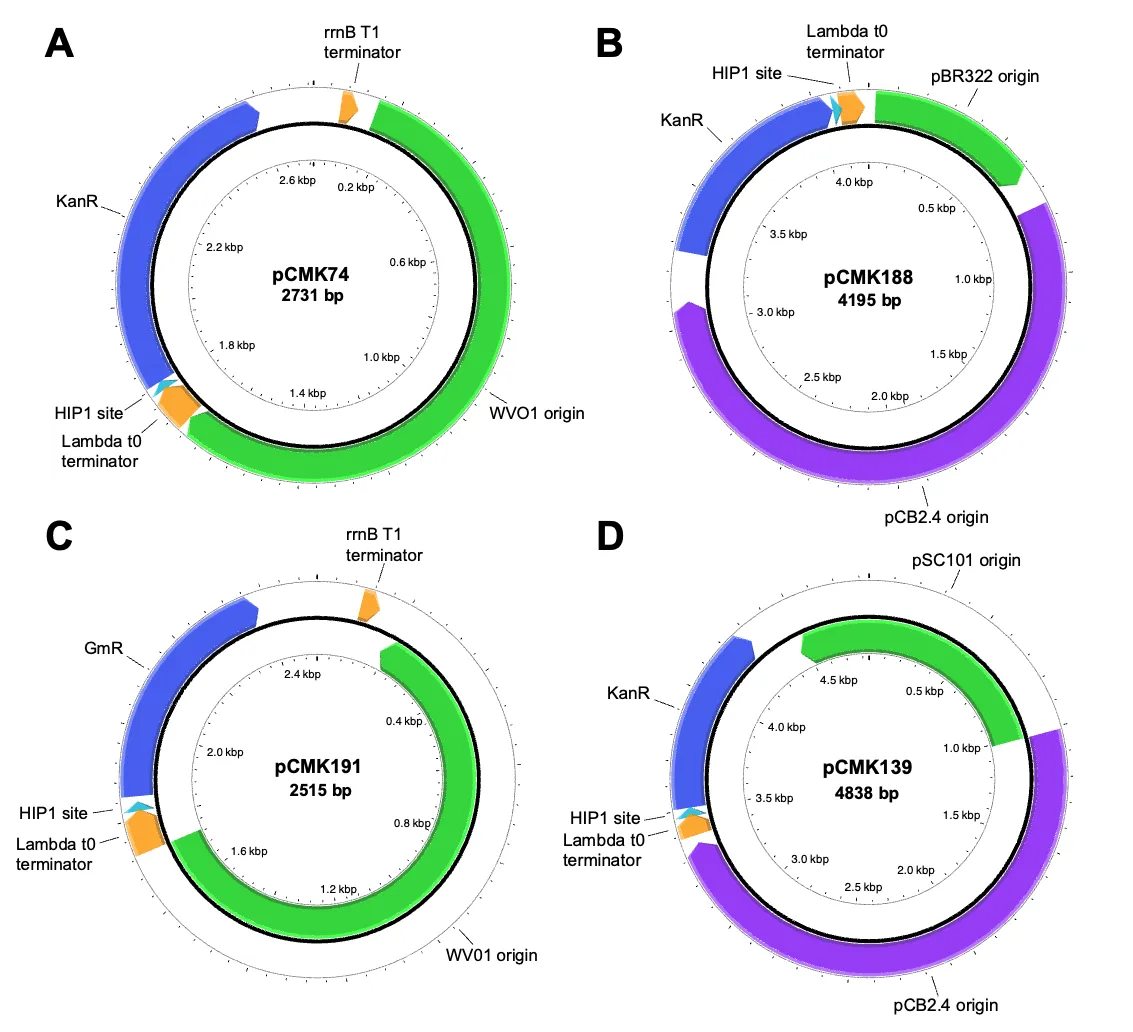
26 August 2024Delivery of Novel Replicating Vectors to Synechococcus sp. PCC 7002 Via Natural Transformation of Plasmid Multimers
In most cyanobacteria, genetic engineering efforts currently rely upon chromosomal integration; a time-consuming process due to their polyploid nature. To enhance strain construction, here we develop and characterize two novel replicating plasmids for use in Synechococcus sp. PCC 7002. Following an initial screen of plasmids comprising seven different origins of replication, two were found capable of replication: one based on the WVO1 broad host range plasmid and the other a shuttle vector derived from pCB2.4 from Synechocystis sp. PCC 6803. These were then used to construct a set of new replicating plasmids, which were shown to be both co-transformable and stably maintained in PCC 7002 at copy numbers between 7–16 and 0.6–1.4, respectively. Lastly, we demonstrate the importance of using multimeric plasmids during natural transformation of PCC 7002, with higher order multimers providing a 30-fold increase in transformation efficiency relative to monomeric plasmids. Useful considerations and methods for enhancing multimer content in plasmid samples are also presented.