Found 492 results
Open Access
Article
28 September 2025Enhancing the Performance of Sr2Fe1.3Ni0.2Mo0.5O6−δ as Methane-Fueled SOFC Anode via In-Situ Exsolution of Ni-Fe Nano-Catalyst
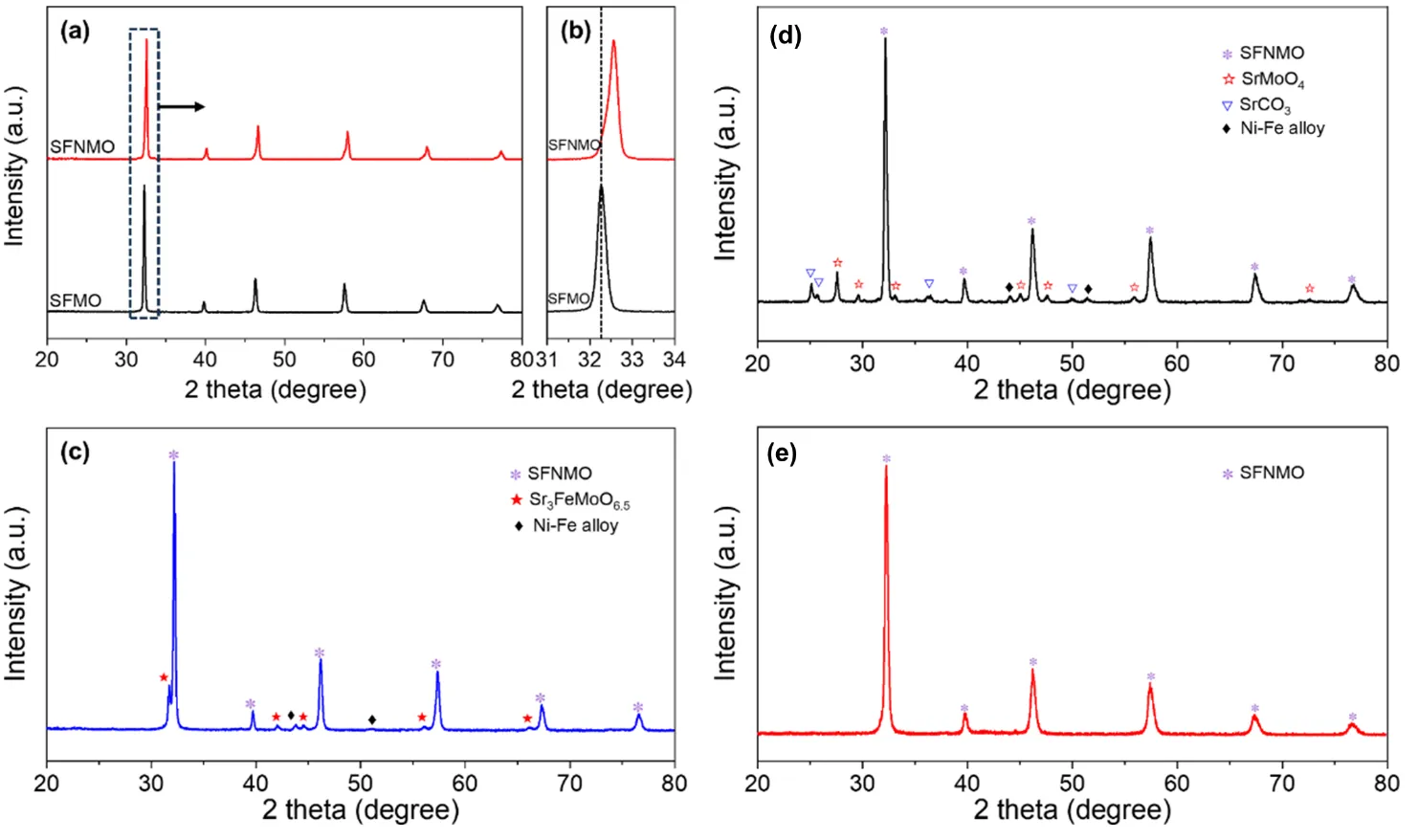
The Sr2Fe1.5Mo0.5O6−δ (SFMO) perovskite exhibits promising performance as a solid oxide fuel cell (SOFC) anode for hydrogen fuel but demonstrates limited catalytic activity with hydrocarbon fuels. To address this limitation, a Sr2Fe1.3Ni0.2Mo0.5O6−δ (SFNMO) perovskite was developed via B-site Ni substitution, and its in-situ exsolution behavior and methane electrooxidation performance were systematically investigated. Combined XRD, SEM, and TEM-EDS analyses reveal the in-situ exsolution of Ni-rich Ni-Fe alloy nanoparticles from the SFNMO matrix under a hydrogen atmosphere. A symmetrical SOFC employing Gd0.1Ce0.9O2−δ (GDC) electrolyte and SFNMO electrodes achieved an initial maximum power density of 82 mW cm−2 in wet methane fuel at 800 °C, which represents an approximately 33% improvement over the symmetrical cell with SFMO electrode (61 mW cm−2). Remarkably, the cell maintained stable operation under constant current for 50 h in methane fuel, with the peak power density further increasing to 113 mW cm−2, demonstrating the excellent catalytic activity of the in-situ exsolved Ni-Fe nanoparticles for methane conversion.
Open Access
Commentary
28 September 2025From Crisis to Coordination: How AI Transformed Public Health Policies during COVID-19
The COVID-19 pandemic showed the shortcomings of traditional policy-making procedures and highlighted serious flaws in international public health institutions. Artificial intelligence (AI) became a transformative force in response to the crisis’s urgency, allowing for data-driven, flexible, and better-coordinated public health measures. This viewpoint article examines how AI improved communication, accelerated vaccine development and distribution, enhanced decision-making, and optimized healthcare delivery during the COVID-19 pandemic. These advancements collectively contributed to significant changes in public health policy. Real-time analysis of large, complex datasets, ranging from case numbers and mobility patterns to hospital capacities and disinformation trends, was made possible by AI technologies including machine learning (ML) and natural language processing (NLP). Timely interventions like resource allocation, targeted lockdowns, and control of misinformation were made possible by this capability. AI also played a crucial role in forecasting infection trends, identifying vulnerable populations, and informing evidence-based decisions. AI-powered solutions further enhanced public involvement and cross-sector cooperation through chatbots and digital platforms delivering trustworthy health information. Additionally, AI-powered solutions enhanced public involvement and cross-sector cooperation, including the use of chatbots and digital platforms to provide trustworthy health information. AI sped up supply chain optimization and candidate screening in vaccine development, guaranteeing efficient, and quick delivery. However, ethical issues including bias, data privacy, and equity in healthcare access were also brought about by the integration of AI. This study emphasizes the need for open, inclusive, and morally sound AI governance by highlighting AI’s twin roles as a technological enabler and a tool for policy. The pandemic provides a fundamental lesson for countries preparing for future health emergencies: AI may be a key instrument in creating public health systems that are more robust, responsive, and equitable if it is applied properly.

Open Access
Article
26 September 2025Cashew Nut Shell Liquid as Natural Antimicrobial Preservative for Beef: Characterization, Formulation, Efficacy and Application
Food spoilage caused by microbial contamination has remained a major challenge in meat preservation, especially in regions with limited refrigeration infrastructure. The potential of cashew nut shell liquid (CNSL) as a natural antimicrobial preservative for beef, which is culturally significant and a highly consumed meat product worldwide, was investigated. The CNSL was extracted using ethanol and characterized by Gas Chromatography-Mass Spectrometry (GC-MS) and Fourier-Transform Infrared Spectroscopy (FTIR). Results revealed a high abundance of phenolic lipids, cresols, cardanol and resorcinol derivatives, with active O-H and C-O functional groups. The antimicrobial efficacy against Pseudomonas, Clostridium spp. and Proteus spp., which are major bacteria implicated in meat spoilage, was assayed by applying different concentrations (0.5%, 1.0% and 2.0%) of CNSL to the meat samples and evaluating microbial loads over a 14-day storage period. Results indicate a significant reduction in total viable counts and pathogenic bacteria, with optimal preservation observed at 2.0% CNSL. The study demonstrates that CNSL exhibits potential to act as an effective natural preservative and sets the foundation for its application in sustainable meat preservation strategies.

Open Access
Article
26 September 2025Land Use and Land Cover Assessment of Jalandhar, India: A Comparative Analysis of Machine Learning and Visual Interpretation
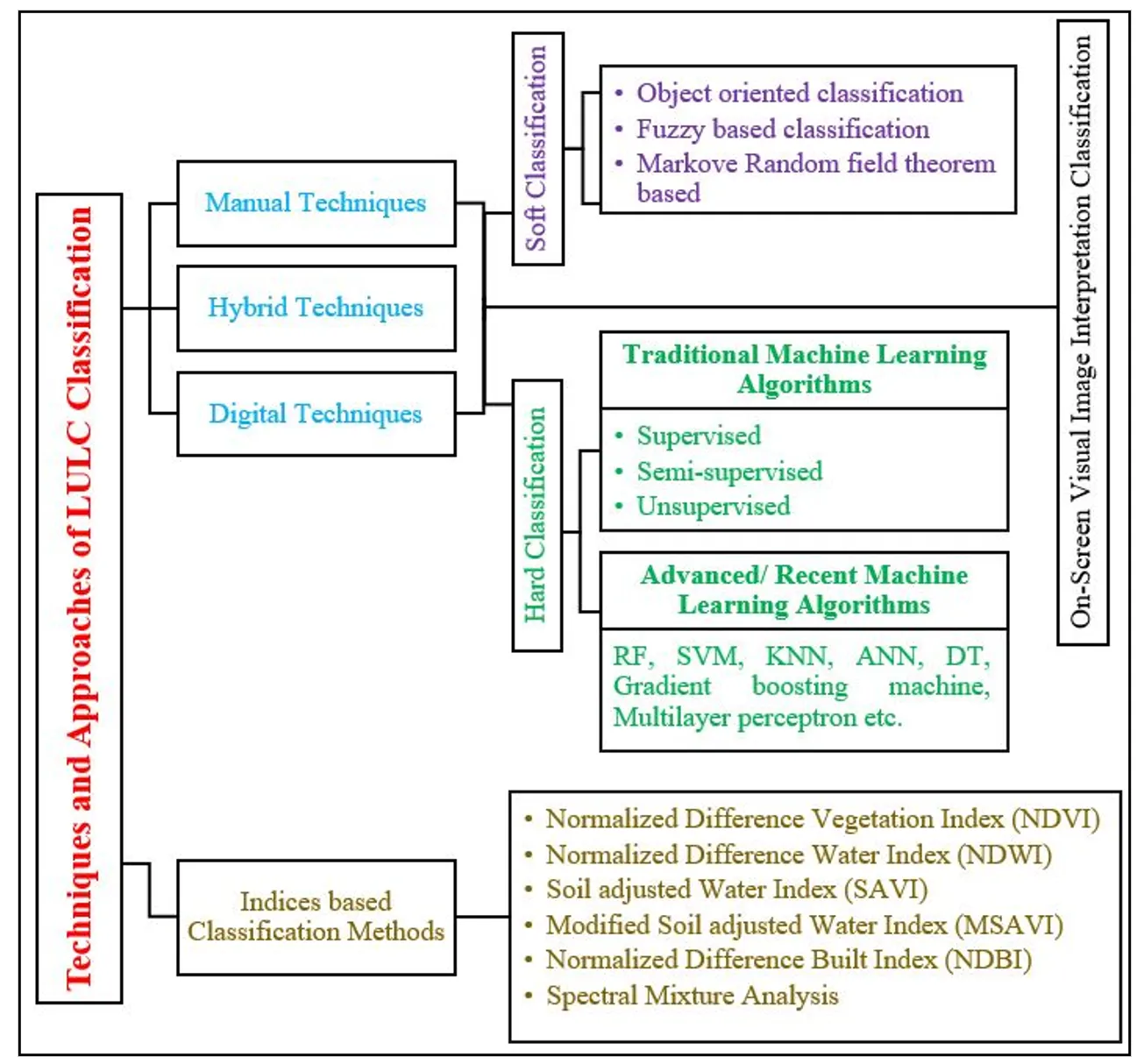
For the sustainable management of natural resources and to understand how the climate affects the landscape, accurate land use and land cover (LULC) classification is essential. Robust classification techniques and high-quality datasets are necessary for precise and effective LULC classification. The effectiveness of various combinations of satellite data and classification techniques must be carefully evaluated to help choose the optimal strategy for LULC classification, given the growing availability of satellite data, geospatial analysis tools, and classification techniques. This study focuses on the LULC classification of Jalandhar, Punjab, India, using machine learning (ML) algorithms and visual image interpretation. Sentinel-2 satellite data, with its high spatial and spectral resolution, has been utilized for feature extraction and classification. Python was employed for implementing various ML algorithms, including Random Forest (RF), Support Vector Machine (SVM), K-Nearest Neighbor (KNN), Gradient Boosting (GB), Multi-Layer Perceptron (MLP), and Decision Tree (DT), while ArcGIS was used to classify LULC using visual image interpretation and for maps preparation. Agriculture was the dominant class across all methods, with GB estimating 1774.26 sq.km, followed by plantation (268.13 sq.km) and built-up areas (171.76 sq.km). Waterbodies were mapped with high precision due to their distinct spectral features, with estimates ranging from 18.34 sq.km (GB) to 26.05 sq.km (Visual interpretation). Among all models, GB outperformed others with the highest overall accuracy (95.0%) and a kappa value of 0.94, followed by RF (94.2%), and SVM (93.8%). Visual interpretation achieved a comparative accuracy of 90.1%, though it showed limitations in distinguishing spectrally mixed classes like plantation and built-up. This study concludes that while Visual interpretation remains a useful and accessible method, especially for real-time interpretation, ML-based approaches, particularly GB and RF, offer superior accuracy and reliability. The study highlights the importance of visual interpretation for a better accurate LULC at a regional level; meanwhile, leveraging advancements in ML algorithms in a hybrid approach will enhance the accuracy in many-fold.
Open Access
Review
25 September 2025Forensic Diagnosis of Drowning in Animals: A Critical Review of Diagnostic Modalities and the Efficacy of the Diatom Test in Veterinary Medicine
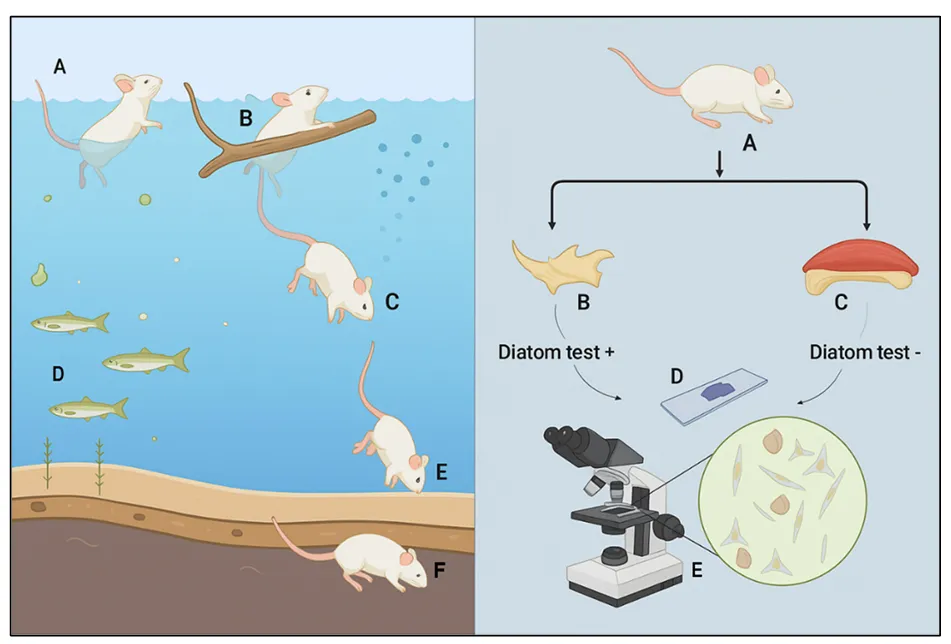
Veterinary forensic pathology is an interdisciplinary field that critically investigates animal mortality under suspicious or unlawful circumstances. Among various causes of death, drowning remains one of the most diagnostically challenging conditions due to its pathophysiological complexity and the lack of pathognomonic post-mortem findings. Drowning in animals typically results from submersion or immersion in liquid, leading to asphyxial death with distinct physiological consequences depending on the medium, either freshwater or saltwater. The post-mortem diagnosis of drowning is complicated by factors such as environmental contamination, autolysis, and the difficulty in distinguishing ante-mortem from post-mortem immersion. While classical diagnostic indicators, such as pulmonary oedema and frothy exudate, are frequently non-specific, the diatom test remains widely utilised in forensic investigation. However, environmental confounders and inconsistent protocols limit the technique’s reliability. This review critically evaluates current diagnostic methodologies for drowning in animals, including macroscopic, microscopic, and ancillary techniques, with particular attention to the diatom test and emerging technologies. It proposes an integrated diagnostic approach to enhance diagnostic accuracy and support judicial and animal welfare outcomes.
Open Access
Correction
24 September 2025
Open Access
Article
24 September 2025Policy Analysis and Stakeholders Insights to Achieve SDGs in Kurashiki, Japan: Opportunities and Challenges of Applying Big Data to SDG Localization
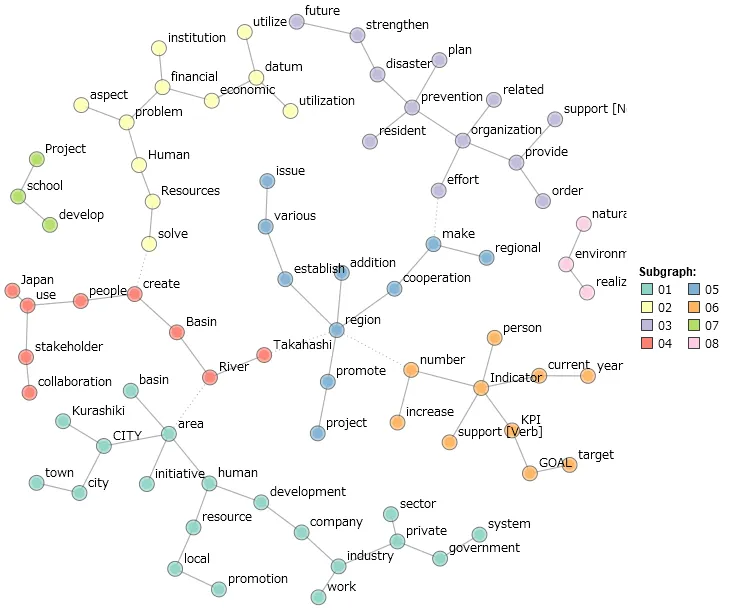
This paper provides a comprehensive analysis of policy and stakeholder insights related to the achievement of the Sustainable Development Goals (SDGs) in Kurashiki, Japan. It critically examines both the opportunities and the inherent challenges of harnessing big data and open data technologies for SDG localization in the context of a medium-sized city. In the field of sustainable urban development, especially within the framework of the United Nations Sustainable Development Goals (SDGs), it has become crucial to understand the role of advanced technology and data analytics in policy formulation and implementation. While megacities are often at the center of such discussions, cities such as small and medium-sized ones are equally compelling due to their unique challenges and opportunities. As an SDGs future city in Japan, Kurashiki City, SDGs-related policies and initiatives that are gaining prominence in the region, especially policies that utilize big data and open data to advance the SDGs. This study first contextualizes the SDGs within the global and Japanese frameworks, providing insights into the critical role of big data and technology in improving the effectiveness of policies to achieve the goals. Secondly, it highlights Kurashiki’s unique challenges and opportunities. It explores the city’s current strategies and measures for implementing the SDGs by using a mixed methodology of qualitative and quantitative analysis, including policy analysis and stakeholder interviews. Key findings suggest that while Kurashiki has made significant progress in aligning with the SDGs, there are still areas that can be greatly improved regarding big data and open data technology integration. The research identified gaps in the current literature and provided insights from local stakeholders, including government agencies, private sectors, and community groups. The findings emphasize the importance of contextualized strategies, public-private partnerships, and adaptive technology infrastructure and establish a stakeholder policy implementation framework that attempts to serve as a guide for similar medium-sized cities aiming to harness big data and open data in their quest for sustainable development. It concludes with targeted recommendations for policymakers and stakeholders in Kurashiki, emphasizing the need for a more integrated, data-driven approach to effectively achieve the SDGs.
Open Access
Article
23 September 2025Side Chain Piperidinium Functionalized AEMs with an Ethylene Oxide Spacer for Improving Ion Conductivity and Alkaline Stability
In this work, grafting alkaline stable piperidinium cations via ethylene oxide (EO) spacers onto an aryl ether-free poly(oxindole terphenylene) backbone was adopted as a strategy for designing self-aggregating side chain AEMs with optimized alkaline stability. Aryl ether-free poly(oxindole terphenylene) backbones were synthesized via superacid-catalyzed step-growth polycondensation and were subsequently functionalized with either piperidinium containing hydrophilic, dipolar EO or hydrophobic alkyl spacer, aiming to explore the effect of side chain-engineering on conductivity and alkaline stability of the resulting AEMs. The AEM membrane containing dipolar ethylene oxide spacer, despite its lower ion exchange capacity (IEC), exhibited a more pronounced microphase separated morphology as evidenced by TEM, and higher ionic conductivity (reaching up to 30.5 mS cm−1 at 80 °C) compared to the hydrophobic alkyl spacer-containing AEM membrane. This was attributed to its higher water uptake stemming from the EO hydrophilic nature and the formation of interconnected ion-conducting channels due to piperidinium–EO interactions. Additionally, the hydrophilic nature of the ethylene oxide groups endowed the membrane with enhanced alkaline stability, preserving its mechanical integrity and retaining 71.5% of its initial conductivity after 3 weeks of immersion in 2 M KOH at 80 °C. In contrast, the AEM with an alkyl spacer experienced severe degradation under the same conditions. These results suggest that incorporating flexible alkoxy-containing spacers onto an aryl ether-free backbone is a promising and simple route for fabricating mechanically and chemically robust AEMs with sufficient conductivity.

Open Access
Article
23 September 2025Promoting Sustainable Development through Community Education on Flood- and Storm-Resistant Architecture
Pakistan is experiencing climate-induced disasters such as floods and storms with an increased frequency and intensity every single year. This study aims to explore the integration of resilient architecture into environmental education as a pathway toward sustainable development and disaster risk reduction. The research examines current levels of understanding regarding flood- and storm-resistant building practices and identifies key barriers to their adoption in high-risk regions of Pakistan. The study used a mixed-methods approach by administering surveys. These surveys were administered to 500 community members in different cities of Sindh and Punjab. The study also incorporated two in-depth case studies: the Heritage Foundation’s low-cost housing initiative in Makli, Sindh, and the Aga Khan Agency for Habitat’s Safe Housing Program in Chitral, Khyber Pakhtunkhwa. These cases provide valuable insights into effective, culturally appropriate, and scalable models of resilient construction in Pakistan. Findings of the present study reveal that public awareness of resilient architecture is below a satisfactory level, with common misconceptions. Challenges, including high costs, lack of technical knowledge, and minimal government support, were identified as significant obstacles. Despite these issues, communities showed strong interest in learning about safer building practices when exposed to practical examples and local success stories. The study recommends integrating resilient construction education into community outreach, school curricula, and builder training programs. It also advocates for greater government involvement, financial incentives, and replication of proven models to foster widespread adoption of resilient architecture for long-term sustainability.
Open Access
Article
23 September 2025A Survey on XR-Based Drone Simulation: Technologies, Applications, and Future Directions
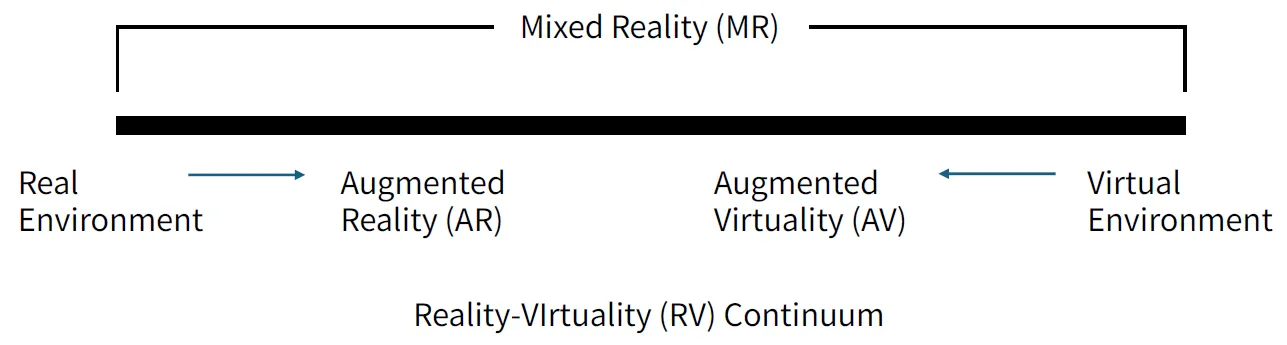
This paper presents a comprehensive survey of Extended Reality (XR)-based drone simulation systems, encompassing their architectures, simulation engines, physics modeling, and diverse training applications. With a particular focus on manual multirotor drone operations, this study highlights how Virtual Reality (VR) and Augmented Reality (AR) are increasingly vital for pilot training and mission rehearsal. We classify these simulators based on their hardware interfaces, spatial computing capabilities, and the integration of game and physics engines. We analyze specific platforms such as Flightmare, AirSim, DroneSim, Inzpire Mixed Reality UAV Simulator, and SimFlight XR are analyzed to illustrate various design strategies, ranging from research-grade modular frameworks to commercial training tools. In this paper, we also examine the implementation of spatial mapping and weather modeling to enhance realism in AR-based simulators. Finally, we identify critical challengesthat remain to be addressed, including user immersion, regulatory alignment, and achieving high levels of physical realism, and propose future directions in which XR-integrated drone training systems can advance.