
Bitter Taste in Fungi
Bitter Taste in Fungi

Received: 21 June 2026 Revised: 06 July 2026 Accepted: 29 July 2026 Published: 12 August 2026

© 2026 The authors. This is an open access article under the Creative Commons Attribution 4.0 International License (https://creativecommons.org/licenses/by/4.0/).
1. Introduction
Historical accounts from antiquity and the Middle Ages mention the bitterness of some edible and medicinal mushrooms and emphasize the delayed onset of this flavor perception and its lingering character. The physician and Franciscan mystical writer De Laredo (1452–1540) [1] indicated that the bitter flavor is a consequence of the mushroom age. Also, Matinez de Leache (1615–1673) [2], a Navarro pharmacist who discussed the works of Yuhanna ibn Masawayh (ca. 777–857 AD), showed that Masawaiyh had also agreed with this evolution of bitterness, not only in age, but also in the mouth, since bitter notes would be the last ones to be noticed after eating the “agarikon”. In turn, the text cited by Martinez de Leache indicates that Masawaiyh’s source is Galen itself. Still, García Rollan [3] shows that he based this opinion on Dioscorides (ca. 40–90 AD), who also proposed a correlation between the age of the agarikon and its bitterness [4]. Some of the most interesting records on this matter come from Pliny the Elder’s Naturalis Historia (ca. 77–79 AD), confirming that the bitterness of the “female” Agarikon (probably Fomitopsis officinalis) is such that it is not perceived immediately and persists as a long-lasting aftertaste [5]. These observations underscore the relevance of this feature and may be of paramount importance for designing masking strategies for these flavors. Far from being a historical curiosity, this issue gains relevance in the modern food industry due to the active development of novel food preparations based on mushrooms and mycelia, as Happel [6] indicates: “Bitterness can also be a problem for the application of fungi in food products”.
Food production must address the nutritional needs of a growing global population while also protecting the environment. In this context, plant-based proteins have become increasingly important. Although the environmental impact of producing plant proteins is lower than that of animal proteins, there are still challenges to consider, such as yield fluctuations and land-use regulations. Furthermore, plant-derived proteins may not supply all essential amino acids or provide them in the correct proportions required for a complete protein source.
Fungal-derived proteins have been gaining global popularity. Mycoprotein is a widely accepted food product, as exemplified by the mycoprotein derived from microfungus Fusarium venenatum (Ascomycota) mycelia, which was launched in the UK market in 1985 under the trade name Quorn, and since then it has spread and is currently soldin 17 countries worldwide, including the United States. Mycoprotein also has a benign environmental footprint, as demonstrated by lifecycle analysis [7].
From a nutritional perspective, mushrooms typically consist of 50% to 65% carbohydrates, 19% to 35% protein (including biologically and medicinally active lectins), and 2% to 6% fat, with unsaturated fatty acids more prevalent than saturated ones. They are rich in fat-soluble vitamins and contain all essential amino acids. Due to their ergosterol content, mushrooms are a significant source of vitamin D [8,9]. Additionally, mushrooms provide dietary fiber, along with a variety of bioactive compounds, such as glucans, triterpenoids, and antioxidants, which have garnered significant interest due to their biological effects and potential medicinal properties [8].
Plant- and mushroom-based foods provide a diverse array of nutrients and bioactive compounds that support overall health and help prevent chronic diseases, including heart disease, diabetes, and cancer. However, the recommendation to consume more of these foods is often overlooked. One reason for this is that many beneficial phytonutrients and mycochemicals have a bitter, acrid, or astringent taste, which can make these foods less appealing [10]. Humans generally tend to avoid foods that taste excessively bitter. This aversion serves as a natural defense mechanism against potential toxins, but it can also hinder the adoption of dietary choices that promote health [10].
The field of functional foods offers a unique opportunity for the food industry, but it also presents significant challenges in appealing to a broad audience. While demand for these products is increasing, several barriers must be overcome to achieve widespread acceptance. The most notable of these barriers is taste, which remains a major limitation. Unless this issue is addressed, functional foods are likely to remain popular only among the small group of consumers who already prefer these options.
In the quest for sustainable and nutritionally complete alternatives to animal-derived proteins, mycoproteins, sourced from mushrooms and mycelium, are emerging as promising options. These proteins have a favorable environmental footprint, a good amino acid profile, and are rich in vitamins and bioactive compounds, positioning them at the forefront of future food innovations. However, their successful incorporation into mainstream diets relies not only on their nutritional and ecological benefits but also on their sensory appeal. Bitterness, often associated with fungal peptides and metabolites, poses a significant barrier to the broader acceptance of these products among consumers. This study addresses the occurrence in fungi of the various molecules reported to produce bitter flavors in other systems and discusses the extant mycological literature dealing with bitterness. It also analyzes the mechanisms behind flavor perception and some strategies for masking undesirable tastes.
2. The Perception of the Bitter Taste
The sense of taste in humans and animals plays a crucial role in determining which foods are safe to eat and which should be avoided. Sweet and umami flavors suggest that food is high in calories, while salty flavors indicate the presence of essential electrolytes. In contrast, sour and bitter tastes act as warning signs, helping prevent the consumption of potentially harmful substances, since many toxic plants have these distinct flavors [11]. However, bitterness should not be interpreted as a direct indicator of toxicity. This is particularly relevant in fungi, where bitter taste may occur in both edible and inedible species, and where some toxic mushrooms may not necessarily taste bitter [12]. Therefore, in fungal-derived foods, bitterness should be considered not only as a biological warning cue but also as a sensory attribute that can strongly influence consumer acceptance and product development.
Among the five basic tastes, bitterness is the most chemically diverse. Bitter taste is detected by type 2 taste receptors (TAS2Rs), a family of G protein-coupled receptors expressed in bitter-responsive taste receptor cells [13,14]. In humans, this family comprises 25 functional genes and 11 pseudogenes, allowing the detection of a wide range of structurally unrelated bitter compounds [14,15]. By contrast, sweet and umami tastes are mediated by heterodimers of TAS1R receptors: TAS1R2 + TAS1R3 for sweet taste and TAS1R1 + TAS1R3 for umami [16]. This receptor-level complexity helps explain why bitter taste cannot be attributed to a single chemical group.
Perception of bitterness also varies substantially among individuals. Approximately 25% of the population is unable to detect certain bitter compounds due to a mutation in a gene member of the T2R family of bitter taste receptor genes [17]. Sensitivity to bitter taste is influenced by multiple gene sets and can be inherited [18,19,20]. This phenomenon is already known from mushrooms such as Caloboletus radicans, whose bitterness is not perceived by a portion of the population, accounting for the possible genetic variability in bitter taste perception [21].
Age, dietary habits, repeated exposure, and cultural background may further modulate the perception and acceptance of bitter foods [22]. This variability is especially important for fungal foods, because bitterness may be rejected in some matrices but tolerated, or even appreciated, when balanced with umami, sweetness, saltiness, aroma, or culinary familiarity.
A wide variety of molecules causes bitter taste in foods. Bitterness is influenced by several physicochemical factors, including hydrophobicity, molecular rigidity, molecular size, stereochemistry, and the spatial arrangement of polar and hydrophobic groups [23,24,25]. Even subtle stereochemical differences can markedly alter taste perception, as illustrated by α-D-mannose, which tastes sweet, and β-D-mannose, which tastes bitter despite their close structural similarity [26] (Figure 1). Bitter taste has also been associated with specific chemical features, such as nitro groups (–NO2), sulfur-containing linkages (–S–S– or C=S), and certain inorganic salts, including magnesium sulfate and calcium oxide [27]. This structural diversity is relevant for fungal matrices because mushrooms and mycelia contain chemically heterogeneous metabolites, and processing may further modify their sensory properties through enzymatic reactions, hydrolysis, oxidation, or thermal degradation.
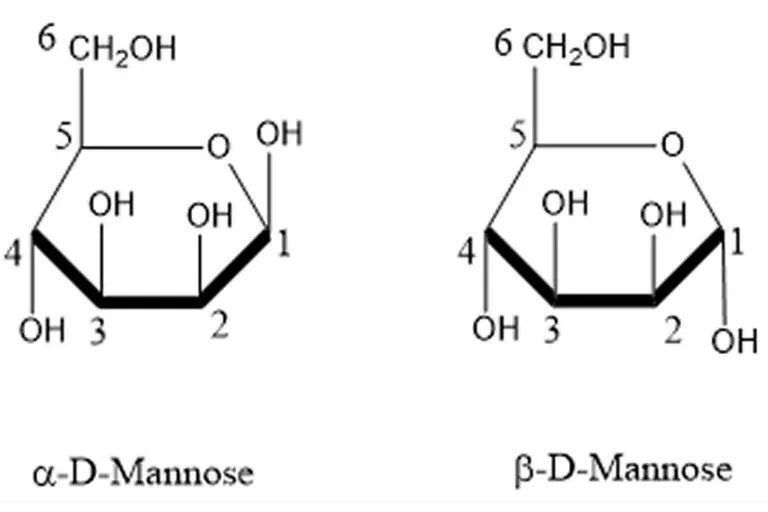
Figure 1. Illustration of a ∝-D-Mannose (sweet taste) and β-D-Mannose (bitter taste) molecule. The difference can be seen at carbon 1, where the OH functional group differs in assumption.
The broad structural diversity of bitter compounds has led to the development of predictive tools based on molecular descriptors and bitter compound databases. BitterPredict uses machine learning algorithms trained on known bitter and non-bitter molecules to classify compounds according to their likelihood of tasting bitter [28]. Similarly, e-Bitter applies extended-connectivity fingerprints and consensus models, including KNN, SVM, Random Forest, Gradient Boosting, and Deep Neural Networks, to predict bitterness [29]. BitterX follows a two-step approach, first classifying molecules as bitterants and then predicting their potential recognition by human TAS2Rs [30]. Although these tools are useful for screening chemical libraries, their predictive value for fungal-derived foods remains limited unless combined with chemical identification, sensory validation, and receptor-based assays.
Schmitz [12] observed that most natural bitter compounds in the database BitterDB are metabolites of flowering plants, and only a few are of bacterial or animal origin. The authors noted that this bias towards flowering plants—an evolutionarily “young” group (200 my)—compared to the longer history of vertebrate TAS2R evolution (500 my), creates a gap. This gap highlights the need to investigate bitter compounds from older organisms, such as fungi, which remain understudied. Bitterness has been reported as a sensory attribute of fungal mycelia [31] and sporocarps [32] according to sensory evaluations, but these kinds of studies remain scarce.
For fungal-based foods, understanding bitter perception has practical implications. Since different bitter compounds may activate different TAS2Rs and vary in polarity, solubility, molecular size, and stability, no single debittering or masking strategy is likely to be universally effective. Instead, strategies should be selected according to the suspected chemical drivers of bitterness. For example, approaches such as strain selection, control of substrate and fermentation conditions, thermal processing, washing or blanching, enzymatic modification, formulation with salt, sweetness or umami, and aroma-based masking may differ in effectiveness depending on whether bitterness is mainly associated with soluble metabolites, hydrophobic peptides, phenolics, terpenoids, or processing-derived compounds. However, many of these strategies remain extrapolated from non-fungal food systems and require validation in mushrooms, mycelium, and fungal-protein matrices.
3. Types of Molecules That Produce Bitter Flavors: What Should We Look for in Fungi?
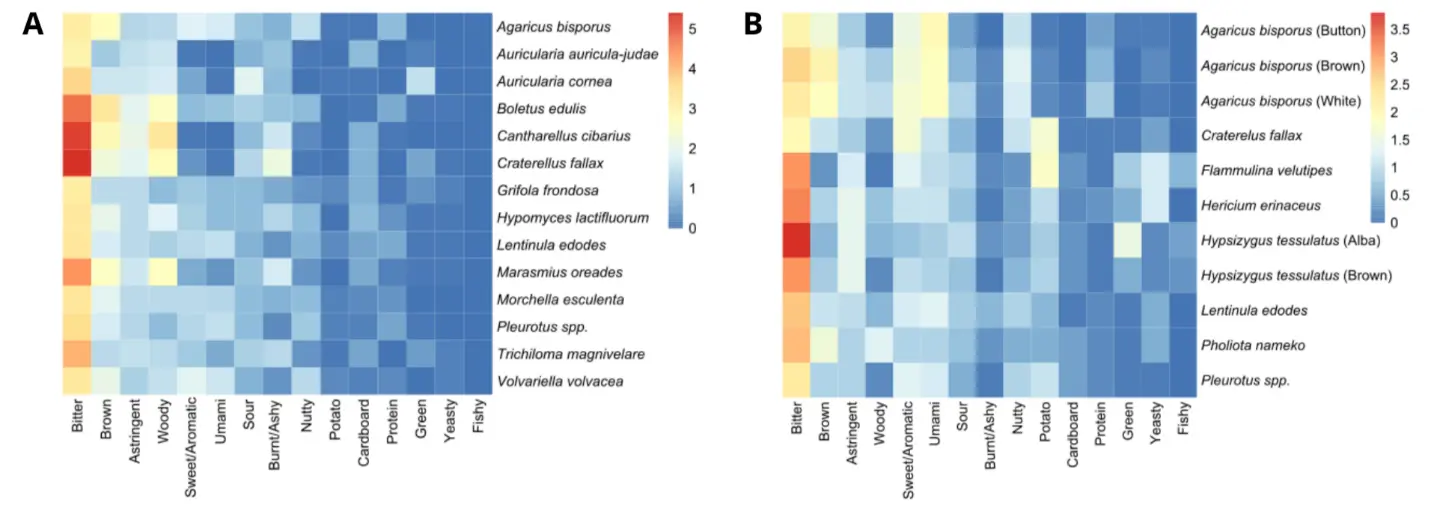
Chun et al. [32] conducted a study with a highly trained sensory panel that identified, defined, and documented 27 flavor attributes in 27 commercial sporocarp samples representing 21 edible mushroom species. One notable finding from the study is that among the 27 defined attributes, bitterness recorded the highest average values, ranging from 2 to 5.4 on a 0–15-point scale. This was followed by the attributes of “mushroomy” (0.1–3.9), “brown” (0.3–3.4), “woody” (0.1–3.4), and “astringent” (0.8–2.1). The significant difference in the perceived intensity of bitterness compared to other flavors, including the “typical” mushroom flavor, indicates that bitterness is a notorious characteristic of these mushrooms (Figure 2).
The fungal mycelium is noted to exhibit bitter, sour, salty, and umami notes according to a sensory evaluation of fungal burger patties [31], but bitterness was not found to be a relevant attribute in the sensory evaluation of Rhizopus oligosporus biomass produced under solid and submerged state fermentation [33].
A bitter taste in food can be evoked by diverse compounds. Many of them are well known from plants, including cyanogenic glycosides, glucosinolates, glycoalkaloids, phenolics, polyacetylenes, triterpenes, saponins, and sesquiterpene lactones. Based on the chemical composition of Fungi, bitterness could be mainly attributed to peptides, phenolics, triterpenes, and alkaloids.
Phenolic compounds are responsible for the bitterness and astringency of many foods and beverages. There are different classes of dietary phenolic compounds, ranging from simple phenolic molecules to high-molecular-weight polymers. Low-molecular-weight phenolic compounds tend to be bitter, and high-molecular-weight polymers are more likely to be astringent [10]. Polyphenolic compounds are associated with bitter tastes in tea and cacao (such as catechins and epicatechins), wine (including proanthocyanidins), and coffee (like caffeic acid).
The bitter taste of fungal mycelia and fruit bodies can be inferred from studies characterizing the taste of phenolic compounds [34,35], despite a scarcity of direct analyses. Soares [34] analyzed the activation of human bitter taste receptors (TAS2Rs) by six different phenolic compounds widely present in plant-derived foods and beverages. They found that the various compounds activate different combinations of the about 25 TAS2 receptors. Some of them activate receptors even at very low concentrations, demonstrating the significant contribution of polyphenols to the bitter taste.
Alkaloids also contribute to the bitterness. A fungal example is the indoalkaloid infractopicrin, responsible for the bitter taste of Cortinarius infractus [12].
Peptides are another type of molecule that can produce bitter flavors. Generally, proteins do not have a bitter taste, but their hydrolysis can result in the formation of bitter peptides [36]. The bitterness level is influenced by several factors, with hydrophobicity being a primary contributor to its perception [37], though it is not the only factor. There is typically an inverse relationship between peptide size and bitterness; smaller peptides tend to be perceived as more bitter [38,39]. This relationship may be attributed to the fact that smaller peptides can more easily interact with taste receptors, as taste perception requires contact with the molecule. However, Cho [39] also found that bitterness intensity decreases again for peptides that are smaller than 1000 Daltons (Da). Bitterness intensity is also dependent on the location of hydrophobic amino acids on the peptide chain, as well as chain length, N- or C-terminal amino acid residue, and isomeric configuration [40].
The terpenoid family is a highly diverse chemical group that contains many bitter substances, with well-known examples including limonene, menthol, narignenin [41], and oligoporins [12], but also sweet compounds [42], and bitterness-masking molecules [43]. In fungi, the triterpene glucosides oligoporins have been demonstrated to belong to the family of most potent bitter agonists [12].
4. Bitter Compounds: What We Already Found in Fungi
Mushrooms exhibit a wide and varied range of flavors, offering significant potential for developing culinary products and enhancing food items, thereby offering consumers unique taste experiences [32]. Recent reviews on mushroom-enriched foods also emphasize that sensory characterization of mushrooms should go beyond umami and include terms such as earthy, musty, fermented, nutty, salty, sweet, and texture-related descriptors, while noting that many studies still rely mainly on hedonic acceptability rather than compound-specific sensory analysis [44].
Although some fungi exhibit distinct bitter flavors [32,45], they are seldom discussed in the scientific literature concerning food bitterness. Comprehensive reviews on this subject, such as those by Drewnowski and Gomez-Carneros [10] and Qiao et al. [41], primarily focus on bitter compounds found in vegetables, overlooking the presence of bitterness in fungi. As a result, most of the natural bitter compounds reported in the BitterDB database are metabolites from plants [12]. Bitterness can be found across various genera of mushrooms, including both edible and inedible species. Species such as Leucopaxillus gentianeus, Leucopaxillus alboalutaceus, Sarcodon imbricatus, and Hydnellum scabrosus have been described as having varying degrees of bitterness [46]. Sherratt et al. [47] proposed that bitterness may function as a deterrent against vertebrate and invertebrate fungivores, thereby protecting fungal reproductive structures, an idea supported by Camazine [48], Courtney et al. [49], and Hanski [50].
Bitterness of mushrooms and mycelia could be inferred or predicted from their chemical composition. The presence of bitter molecules can offer insights into their potential bitterness. Table 1 presents the bitter compounds reported in fungi, along with the fungal species in which they have been documented, and the type of study or evidence that substantiates their bitterness.
Bitter compounds recorded in mushrooms include hydrophobic peptides, polyphenols, terpenes, terpenoids, and lactones, among others. Among these groups, the strongest direct evidence currently comes from specific fungal secondary metabolites that have been isolated and tested for bitter taste or receptor activation. Schmitz [12] isolated five triterpene glucosides, oligoporins A, B, and D–F, from the bitter bracket Amaropostia stiptica, and included the bitter indole alkaloid infractopicrin from Cortinarius infractus in receptor assays. All six fungal compounds activated at least one human TAS2R receptor, providing direct evidence that mushroom-derived bitter compounds can be recognized by human bitter taste receptors. Oligoporin D was particularly potent, activating TAS2R46 at submicromolar concentration, whereas infractopicrin showed a more restricted activation profile, mainly involving TAS2R14 [12]. This is one of the clearest examples linking isolated fungal metabolites with human bitter taste perception.
The oligoporin group also illustrates the importance of taxonomic and chemotaxonomic precision when discussing fungal bitter compounds. Oligoporins A and B had previously been reported from Oligoporus tephroleucus, although Schmitz [12] noted that the bitter species in that complex is more appropriately interpreted as Postia lactea rather than the non-bitter Postia tephroleuca. In Amaropostia stiptica, oligoporins D–F were identified as new triterpene glucosides, while oligoporin C was not detected and may represent a potential chemotaxonomic marker for the bitter Postia/Oligoporus lineage [12]. These findings are relevant to the present review because they show that bitterness may vary not only among genera but also among closely related or taxonomically confused species, making accurate species identification essential when compiling lists of bitter fungal compounds.
Regarding triterpenoids, research on fungal representatives of this group has primarily focused on triterpenoids found in Ganoderma spp. due to their bioactivities [51]. However, many other genera are known to produce bitter terpenoids such as grifolin or grifolic acid (e.g., Albatrellus spp., Table 1). The perception of bitterness associated with these compounds remains to be researched. However, some studies indicate that this response involves the type 2 receptor TAS2R46 in the case of sesquiterpene lactones [52] and some diterpenoids, which also stimulate TAS2R50 receptors [53]. Given the considerable chemical heterogeneity of this family, it is expected that no single pathway accounts for the perception of their bitterness. In fungal systems, Schmitz et al. [12] provide particularly relevant evidence because structurally related triterpene glucosides showed overlapping but distinct receptor activation profiles, indicating that small structural changes may strongly affect receptor activation and perceived bitterness.
Other bitter compounds reported in fungi are oligoisoprenoids such as gymnopilin, which has been isolated from the mushroom Gymnopilus spectabilis [23]. Alkaloids are also relevant, although less broadly documented as fungal bitterants. Infractopicrin from Cortinarius infractus is currently one of the clearest examples of a fungal alkaloid directly tested against human bitter receptors [12].
Mushrooms and mushroom-based foods are known for their high content of polyphenols, which are important bioactive compounds found in fungi. These polyphenols come from both the mushroom itself (whether it be the sporocar or mycelium) and from the breakdown of the substrate [54], a process facilitated by enzymes secreted by the fungus. Although their bitterness has not been specifically evaluated in fungi, it can be inferred from other studies [34,35].
Table 1. Bitter compounds reported in fungi, fungal species where they have been documented, and the type of study or evidence substantiating their bitterness. Free amino acids and peptides are listed together; both are included as inferred contributors, although hydrophobic peptides are generally more potently and persistently bitter than free amino acids.
|
Molecule |
Fungal Species |
References |
Type of Molecule |
Evidence of Bitterness |
|---|---|---|---|---|
|
Absinthin |
Ganoderma lucidum |
[55] |
Sesquiterpene lactone |
Direct sensory evidence |
|
O-Acetylcalopin O-Acetylcyclocalopin |
Caloboletus calopus, C. coniferarum, C. conifericola, C. peckii, C. radicans, C. rubripes, Butyriboletus peckii |
Acetylated lactone δ-lactone derivative |
Reported as bitter in the source |
|
|
Infractopicrin |
Cortinarius infractus |
Alkaloid |
Direct sensory evidence |
|
|
Allocyathin B2 |
Sarcodon scabrosus |
Cyathin diterpenes |
Direct sensory evidence |
|
|
Amanitins |
Cenococcum geophilum, Galerina fasciculata, G. helvoliceps, G. marginata, Amanita bisporigera, A. brunneitoxicaria, A. cheelii, A. exitialis, A. ocreata, A. phalloides, A. suballiacea, A. subjunquillea, A. subpallidorosea, A. tenuifolia, A. verna, A. virgineoides, A. virosa, A. hygroscopica, A. fuliginea, A. pallidorosea, A. cokeri, A. fuligineoides, A. rimosa, A. brunnescens, Conocybe filaris, Galerina marginata, Lepiota brunneoincarnata, L. subincarnata, L. venenata, L. elaiophylla, L. spiculata, L. farinolens, L. bondieri |
Cyclic peptide (Amatoxins) |
Inferred from known bitter chemistry |
|
|
Amygdalin |
Aspergillus fumigatus, Saccharomyces cerevisiae, Pleurotus ostreatus |
Cyanogenic glycoside |
Inferred from known bitter chemistry |
|
|
L-Arginine |
Agaricus blazei, Agrocybe cylindracea, Auricularia fuscosuccinea, A. mesenteria, A. polytricha, Coprinus comatus, Pleurotus cystidiosus, P. eryngii, Tremella fuciformis |
Amino acid |
Inferred from known bitter chemistry |
|
|
Benzaldehyde |
Amanita ovoidea, A. rubescens, Boletus edulis, B. phinophilus, L. quercinum |
[67] |
Aromatic aldehyde |
Inferred from known bitter chemistry |
|
Benzyl alcohol |
Agaricus bisporus, A. smithii, Bjerkandera adusta, Dichomitus squalens, Ischnoderma benzoinum |
Aromatic alcohol |
Inferred from known bitter chemistry |
|
|
Caffeic acid |
Agaricus silvicola, A. silvaticus, Boletus edulis, Cantharellus cibarius, C. clavatus, Fistulina hepatica, Flammulina velutipes, Lactarius sangifluus, Lentinus sajor caju, L. squarrulosus, Macrolepiota procera, Morchella anguiticeps, M. conica, Phellinus linteus, Pleurotus djamor, P. floriida, Russula brevepis, Sparassis crispa, Termitomyces heimii, T. tylerance, T. microcarpus, T. shimperi |
Phenolic acid |
Inferred from known bitter chemistry |
|
|
Calopin |
Caloboletus calopus, C. conifericola, C. radicans, C. rubripes, Butyriboletus peckii |
[21] |
Cathechol |
Reported as bitter in the source |
|
Chalciporone |
Chalciporus piperatus |
[56] |
Azepine alkaloid |
Inferred from known bitter chemistry |
|
Chrysin |
Pleurotus ostreatus |
[74] |
Flavanone |
Inferred from known bitter chemistry |
|
o-Coumaric acid |
Inonotus obliquus |
[73] |
Phenolic acid |
Inferred from known bitter chemistry |
|
p-Coumaric acid |
Agaricus arvensis, A. silvicola, Fistulina hepatica, Hygrophorus agathosmus, Lepista nuda, Tricholoma atrosquamosum |
Phenolic acid |
Inferred from known bitter chemistry |
|
|
Coumarin |
Agaricus sp., Armillariella tabenscens, Aspergillus, Fomitopsis officinalis, Ganoderma lucidum, Macrolepiota mastoidea, Penicillium, Pestalotiopsis sp., Phellinus sp., Streptomyces spheroides, Streptomyces niveus, Talaromyces flavus, Trametes versicolor, Trichosporon asahii, Xylaria sp. |
Benzopyrone |
Inferred from known bitter chemistry |
|
|
Cryptoporic acids A-B-C-D-E-F-G |
Cryptoporus volvatus, Albatrellus dispansus |
[77] |
Sesquiterpenoids |
Inferred from known bitter chemistry |
|
Cucurbitacins B and D |
Leucopaxillus gentianeus |
[78] |
Triterpenoid |
Inferred from known bitter chemistry |
|
Cyanidin chloride/Cyanidin-3-glucoside |
Auricularia auricula-judae |
[79] |
Anthocyanidin |
Inferred from known bitter chemistry |
|
Cyclocalopin A, B, D |
Caloboletus calopus, C. conifericola, C. radicans, C. rubripes, Butyriboletus peckii |
[21] |
Cathechol |
Reported as bitter in the source |
|
Cyclocalopin C1/C2 |
Caloboletus radicans |
[21] |
Cathechol |
Inferred from known bitter chemistry |
|
Cyclocalopin D |
Caloboletus calopus, C. conifericola, C. radicans, C. rubripes, Butyriboletus peckii |
[21] |
Cathechol |
Inferred from known bitter chemistry |
|
Cyclocalopin E |
Caloboletus calopus, C. conifericola, C. radicans, C. rubripes, Butyriboletus peckii |
[21] |
Catechol |
Inferred from known bitter chemistry |
|
Fasciculol |
Hypholoma fasciculare |
[80] |
Triterpenoid |
Inferred from known bitter chemistry |
|
Ferulic acid |
Cantharellus cibarius, C. clavatus, Lactarius deliciosus, L. sangifluus, Lentinus squarrulosus, Macrolepiota procera, Morchella conica, Pleurotus djamor, P. florida, P. sajor-caju, Sparassis crispa, Termitomyces heimii, T. microcarpus, T. shimperi |
Phenolic acid |
Inferred from known bitter chemistry |
|
|
Gallic acid |
Agaricus bisporus, Agaricus blazei, Auricularia polytricha, Cantharellus cibarius, Cantherallus clavatus, Flammulina velutipes, Ganoderma lucidum, Geastrum arinarius, Helvella crispa, Hydnum repandum, Inonotus obliquus, Lactarius deliciosus, Lactarius sangifluus, Lentinula edodes, Lentinus sajor caju, Lentinus squarrulosus, Macrolepiota procera, Morchella anguiticeps, Morchella conica, Phellinus linteus, Pleurotus djamor, Pleurotus eryngii, Pleurotus ostreatus, Pleurotus sajor-caju, Russula brevepis, Sparassis crispa, Termitomyces heimii, T. microcarpus, T. mummiformis, T. shimperi, T. tylerance |
[72] |
Phenolic acid |
Inferred from known bitter chemistry |
|
Ganoderic acids A-B |
Ganoderma lucidum |
[56] |
Triterpenoid |
Direct sensory evidence [63] |
|
Grifolin |
Albatrellus dispansus |
[77] |
Triterpenoid |
Inferred from known bitter chemistry |
|
Gymnopilin |
Gymnopilus spectabilis |
[81] |
Sesquiterpenoids |
Inferred from known bitter chemistry |
|
Hesperetin |
Pleurotus florida |
[73] |
Flavanone |
Inferred from known bitter chemistry |
|
Histidine |
Agrocybe cylindracea, Agaricus blazei, Coprinus comatus, Pleurotus cystidiosus, P. eryngii |
[64] |
Amino acid |
Inferred from known bitter chemistry |
|
Infractopicrin |
Cortinarius infractus |
[12] |
Indolalkaloid |
Inferred from known bitter chemistry |
|
L-Isoleucine |
Agaricus blazei, Auricularia fuscosuccinea, A. mesenteria, A. polytricha, Agrocybe cylindracea, Boletus edulis, Cantharellus cibarius, Coprinus comatus, Pleurotus cystidiosus, P. eryngii, P. ostreatus, Tremella fuciformis |
Amino acids |
Inferred from known bitter chemistry |
|
|
L-Valine |
Agaricus blazei, Auricularia fuciformis, A. fuscosuccinea, A. mesenteria, A. polytricha, Agrocybe cylindracea, Boletus edulis, Calocybe gambosa, Cantharellus cibarius, C. comatus, Tremella fuciformis, Pleurotus cystidiosus, P. eryngii |
Amino acid |
Inferred from known bitter chemistry |
|
|
Lascivol |
Tricholoma lascivum, T. aestuans, T. virgatum |
Oligopeptide |
Inferred from known bitter chemistry |
|
|
L-Leucine |
Agaricus blazei, Agrocybe cylindracea, Boletus edulis, Calocybe gambosa, Coprinus comatus, Pleurotus cystidiosus, P. eryngii, P. ostreatus |
Amino acid |
Inferred from known bitter chemistry |
|
|
Leucopaxillones A and B |
Leucopaxillus gentianeus |
[78] |
Triterpenoid |
Inferred from known bitter chemistry |
|
Lucidenic acids A, B, and C. |
Ganoderma lingzhi, G. tsugae, G. sessile, G. colossum, G. curtisii, G. subresinosum, G. hainanense. Homalium zeylanicum, Amauroderma rugosum. |
[86] |
Triterpenoid |
Inferred from known bitter chemistry |
|
L-Lysine |
Agaricus blazei, Agrocybe cylindracea, Boletus edulis, Calocybe gambosa, Cantharellus cibarius, Coprinus comatus, Pleurotus cystidiosus, P. eryngii, P. ostreatus |
Amino acid |
Inferred from known bitter chemistry |
|
|
Methionine |
Agaricus blazei, Agrocybe cylindracea, Boletus edulis, Calocybe gambosa, Cantharellus cibarius, Coprinus comatus, Pleurotus cystidiosus, P. eryngii, P. ostreatus |
Amino acid |
Inferred from known bitter chemistry |
|
|
Muscarine |
Clitocybe phyllophila |
[59] |
Alkaloid |
Inferred from known bitter chemistry |
|
Naematolin |
Clitocybe phyllophila, Hypholoma fasciculare |
Sesquiterpenoid |
Inferred from known bitter chemistry |
|
|
Naringenin |
Pleurotus florida, Tropicoporus linteus |
[73] |
Flavanone |
Inferred from known bitter chemistry |
|
3-octanol, 3-octanone and 1-octen-3-ol |
Pleurotus citrinopileatus, P. djamor, P. flabellatus, Tuber maculatum |
Octane oxidation products |
Inferred from known bitter chemistry |
|
|
Oligoporins |
Amaropostia stiptica |
[31] |
Triterpenoid glucoside |
Direct sensory evidence |
|
Pantothenic acid (Vitamin B5) |
Amanita boudieri, Pleurotus spp. |
beta-amino acid and derivative |
Inferred from known bitter chemistry |
|
|
Phe-Phe-Phe, Phenylalanyl-Phenylalanyl-Phenylalanine |
Auricularia fuscosuccinea, A. mesenteria, A. polytricha, Tremella fuciformis |
[66] |
oligopeptid |
Inferred from known bitter chemistry |
|
L-Phenylalanine |
Agaricus blazei, Agrocybe cylindracea, Boletus edulis, Calocybe gambosa, Cantharellus cibarius, Coprinus comatus, Pleurotus cystidiosus, P. eryngii, P. ostreatus |
[64] |
Amino acid |
Inferred from known bitter chemistry |
|
Phenylacetaldehyde |
Phallus impudicus |
[91] |
Aromatic aldehyde |
Inferred from known bitter chemistry |
|
Pisosterol |
Pisolithus tinctorius |
[59] |
Triterpenoid |
Inferred from known bitter chemistry |
|
Quercetin |
Agaricus blazei, Amanita hamibapa, A. princeps, Auricularia auricula, Cantharellus cibarius, Craterellus aureus, Fistulina hepatica, Flammulina velutipes, Ganoderma lucidum, Inonotus obliquus, Lactarius volemus, Lentinus squarrosulas, L. polychrous, L. edodes, Russula alboareolata, R. cyanoxantha, R. delica, R. densfolia, R. emetica R. galochroides, R. luteotacta, R. nigricans, R. violeipes, Sparassis crispa, Suillus luteus, S. granulatus, Termitomyces fuliginosus, T. clypeatus, Trechispora crassum, Volvariella volvacea |
Flavonoid |
Inferred from known bitter chemistry |
|
|
Sarcodonin A-H |
Sarcodon scabrosus |
Cyathane diterpenoid |
Direct sensory evidence |
|
|
Scabronines G and H |
Sarcodon scabrosus |
[57] |
Diterpenoid |
Inferred from known bitter chemistry |
|
Thiamine (Vitamin B1) |
Pleurotus ostreatus |
[94] |
pyrimidinyl-substituted thiazole |
Inferred from known bitter chemistry |
|
L-Tryptophan |
Boletus edulis, Calocybe gambosa, Cantharellus cibarius, Pleurotus ostreatus |
[84] |
Amino acid |
Inferred from known bitter chemistry |
|
L-Tyrosine |
Agaricus blazei, Agrocybe cylindracea, Auricularia fuscosuccinea, A. mesenterica, A. polytricha, Pleurotus cystidiosus, P. eryngii, Tremella fuciformis |
Amino acid |
Inferred from known bitter chemistry |
|
|
Vanillic acid |
Auricularia polytricha, Cantherallus clavatus, Helvella crispa, Hydnum repandum, Lactarius sangifluus, Lentinus sajor caju, L. squarrulosus, Lycoperdon molle, Macrolepiota procera, Morchella conica, Pleurotus djamor, P. florida, P. sajorcaju, Termitomyces heimii, T. microcarpus, T. shimperi, Tricholoma acerbum |
Phenolic acid |
Inferred from known bitter chemistry |
Figure 3 summarizes the main bitter compounds in BitterDB, which have been reported to be present in the most important edible/medicinal mushroom species. The figure shows that the potential bitter chemical space in these fungi is chemically diverse, with amino acids, phenolic compounds, C8-related molecules, aromatic compounds, terpenes, and triterpenoids represented across several species. Amino acids, particularly hydrophobic or basic residues such as leucine, isoleucine, valine, phenylalanine, methionine, histidine, lysine, and arginine, appear as a prominent group, suggesting a possible contribution to bitterness depending on concentration and matrix effects. Phenolic acids and triterpenoids, including ganoderic acids in Ganoderma lucidum, may also be relevant contributors. However, the presence of a BitterDB-listed compound in a mushroom species should be interpreted as candidate evidence rather than proof of sensory impact, requiring validation by quantitative analysis, sensory-guided fractionation, and receptor-based assays. The most represented species in Figure 3 belongs to the genus Pleurotus, which may be explained by the greater number of studies conducted on this genus.
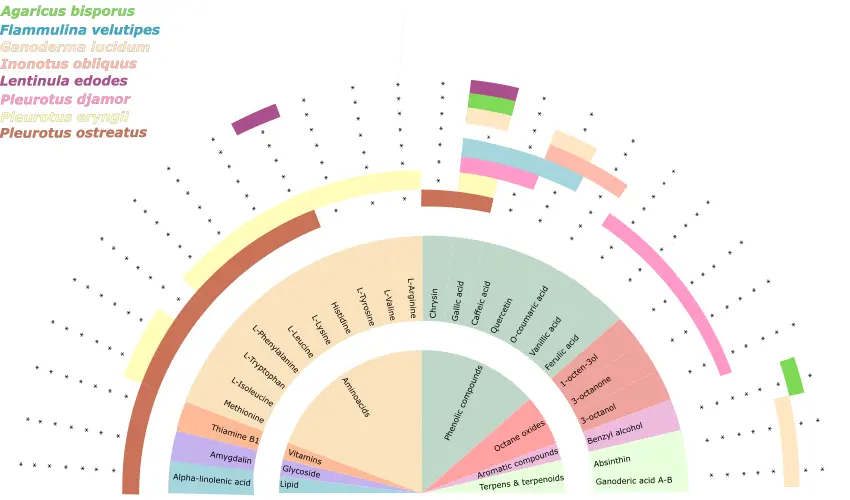
Figure 3. Candidate bitter compounds reported in major edible and medicinal mushroom species, grouped by chemical class. The graph was generated from BitterDB entries and literature reports of compounds occurrence in fungi. Asterisks (*) denote compounds not reported for the corresponding fungal species in BitterDB or the surveyed literature.
5. Studies of Bitterness and Bitter Molecules in Fungal Systems and Applications
Table 1 lists both free amino acids and peptides, two classes that differ markedly in bitter potency. Native proteins are generally not bitter, but their enzymatic or acid hydrolysis releases bitter peptides, and hydrophobic oligopeptides are typically perceived as more intense and more persistent than the corresponding free amino acids [36,37,38,39,40]. This does not render free amino acids irrelevant: several hydrophobic and basic residues—notably tryptophan, tyrosine, phenylalanine, leucine, isoleucine, valine, arginine, and histidine—are themselves bitter, which is why they appear in Table 1. There, both amino acids and most peptides are flagged as inferred contributors, included based on their documented occurrence in fungal biomass and their known bitter character in other matrices, rather than as compounds whose sensory impact has been directly confirmed in fungi.
Chang [95] studied the proximate composition, soluble sugar, free amino acid, and 5′-nucleotides contents in mycelia of three medicinal mushrooms (Agaricus blazei, Antrodia camphorata, and Cordyceps militaris) to predict their flavors. They found bitter free amino acids (Arginine, Histidine, Isoleucine, Leucine, Methionine, Phenylalanine, and Valine), but hypothesized that the presence of sweet arabitol, trealosa, and glucose could mask bitter perception.
Chen et al. [96] compared the presence of free hydrophobic amino acids in various proportions using hydrolysates of Craterellus tubaeformis in tasting panels. The amino acids Ser, His, Arg, Val, Met, Phe, Ile, and Leu were associated with bitterness in the products, among which Arg, His, and Met had a stronger bitter perception. However, a high concentration of bitter amino acids does not necessarily result in a bitter taste. This is because the overall flavor is primarily determined by the balance of various non-volatile compounds rather than by a single component. Recent work with Flammulina velutipes mycelium cultivated on potato pulp further supports this interpretation. Happel [6] showed that enzymatic hydrolysis of F. velutipes mycelial biomass increased the degree of hydrolysis and markedly increased free glutamate, generating umami and flavor-enhancing properties. However, because protein hydrolysis can also release taste-active peptides and amino acids, the sensory outcome of fungal hydrolysates likely depends on the enzyme used, the degree of hydrolysis, the substrate, and the balance among umami, kokumi, and bitter peptides [6].
One example of the bitter effect generated by certain hydrophobic amino acids in food products is soy sauce, which evokes diverse taste sensations, including saltiness and umami, as well as acidic and bitter properties [97,98,99]. This distinctive bitter taste is associated with the presence of specific di- and tripeptides such as His-Pro-Ile, Lys-Pro, Leu-Pro, Ser-Val-Pro, and His-Phe [100]. In addition, a greater bitterness intensity has been linked to peptides containing hydrophobic amino acids at the C-terminal end [100,101,102]. Although much of this evidence comes from non-fungal matrices, it is relevant for fungal-derived foods because mycelium fermentation and enzymatic hydrolysis can release peptides and free amino acids. Therefore, hydrophobic peptides should be considered plausible contributors to bitterness in mycoprotein, fungal hydrolysates, and mycelium-based ingredients, but their role still requires direct confirmation in fungal matrices.
Recent studies on formulated foods show that mycelium can increase, decrease, or mask bitterness, depending on the matrix and inclusion level. Zhang [103] evaluated oyster mushroom mycelium in a fried plant-based beef analog and reported that moderate mycelium addition increased meat-like and fat-like aroma while reducing undesirable beany flavor. Electronic tongue and sensory data indicated that mycelium levels below 8% may inhibit bitterness and astringency, whereas higher inclusion levels were more closely associated with increased bitterness, aftertaste-bitterness, and astringency.
Fermentation studies also show that fungal mycelium can reshape sensory profiles by modifying both volatile and non-volatile compounds. Wang [104] fermented highland barley with Cordyceps militaris, Stropharia rugoso-annulata, Morchella esculenta, Schizophyllum commune, and Tremella sanguinea. Fermentation reduced grassy notes associated with hexanal, decanal, and 2-pentylfuran, while generating floral, sweet, mushroom-like, oily, and fruity notes. However, the effect was species-dependent: Schizophyllum commune produced a heavier sour taste, whereas Tremella sanguinea increased methyl 4-methoxybenzoate and reduced acceptability. Morchella esculenta showed the highest acceptance in this matrix [104].
6. The Bitter Taste in the Industry: Strategies to Mask Undesired Bitter Tastes
Chun [32] and Saldaña & Rios-Mera [44] have shown that mushrooms possess a diverse range of flavor profiles, which can be described as musty, earthy, fermented, bitter, salty, sour, sweet, aromatic, astringent, leathery, fishy or seafood-like, nutty, burnt, potato-like, and yeasty, among others. These flavors can vary significantly depending on the processing of the mushrooms, especially when comparing their fresh and dried states. Fresh mushrooms typically exhibit umami, sweet, earthy, yeasty, and fermented flavors, whereas dried mushrooms often display bitter, burnt, musty, astringent, and even some notes reminiscent of fresh mushrooms. The study shows how important bitterness is in edible mushroom species and also how relevant it is for consumers compared to other attributes.
Most people, particularly children, dislike bitter flavors, which can significantly hinder acceptance of mushrooms and mushroom-based foods. Consequently, one of the main challenges facing the mushroom food industry is managing or masking these bitter tastes. This issue is especially pertinent in the rapidly growing mycoprotein industry, particularly in products derived from solid-state fermentation. This sector must address not only the inherent bitterness of fungi but also the bitter compounds produced in the substrate as a result of the fungus’s breakdown processes, such as polyphenols from lignin degradation and peptides formed during protein breakdown. A key limitation in this context lies in reducing the intensity of bitterness without compromising the functional and nutritional integrity of the final product, as many of the compounds responsible for bitterness—such as polyphenols, triterpenes, and peptides—also contribute significantly to its bioactivity.
Classical strategies to reduce bitterness in food and medicines have been classified by Ley [105] under the following categories:
-
Removal of bad-tasting components;
-
Physical barriers (e.g., [micro, nano] encapsulation, coatings, emulsions, suspensions);
-
Scavengers, complexing agents;
-
Strong flavors or tastants (e.g., salt, sweeteners, acid, intense fruit flavors);
-
Congruent flavors (e.g., chocolate, grapefruit, coffee);
-
Masking flavors (e.g., against the rancid or fishy flavor of polyunsaturated fats);
-
Bitter taste reducing compounds on a molecular level.
Some of these methodologies are suitable for applying to mushrooms (Table 2). In the case of physical barriers, the application is restricted to medical preparations since they cannot be used in whole foods. However, mycoprotein or nutraceuticals derived from mushrooms or fungal fermentation could benefit from this technology, and the same can be said for complexing agents. Intense flavors are the oldest known recipe to cover bitterness.
6.1. Methods for Reducing Bitterness Caused by Peptides
One effective strategy for managing hydrophobic peptides is to use complexation with activated carbon or cyclodextrin. Cyclodextrin (CD) is a cyclic oligosaccharide composed of glucopyranose units that are linked by α-(1, 4) bonds. This molecule forms a truncated cone shape, featuring a hydrophobic internal cavity and a hydrophilic external surface. This design is particularly suitable for forming complexes, as the hydrophobic cavity can strongly interact with hydrophobic bitter peptides and sequester them, preventing them from interacting with bitter taste receptors in the mouth, as shown by Linde [106]. Another approach to reducing bitterness caused by peptides involves enzyme treatment. Most bitter peptides contain amino acid residues at either the N- or C-terminal positions, which contribute to their bitterness [40,101]. Additionally, the intensity of bitterness appears to be directly related to the chain length of the peptides [98]. Therefore, applying exopeptidases is an effective method for reducing bitterness [40] by decreasing the amount of hydrophobic amino acids and shortening the chain length of these bitter peptides. However, the effectiveness may depend on the specific amino acids involved in peptide bond formation. Therefore, the selection of enzyme treatment should be based on the types of peptides responsible for the bitter taste. It may be necessary to test different debittering exopeptidases to identify the most effective option [40]. Studies in fungi have demonstrated that hydrolysis can effectively enhance the taste of mycelia and mycelium-based foods. Chen [36] studied the effects of continuous enzymatic hydrolysis on Lentinula edodes mycelia using e-tongue and sensory evaluation. They found that hydrolysis increased the amount of bitter peptides, but not the bitter flavor, which could have been masked by the small umami molecules such as the amino acids Glu, Asp, Gln, and nucleotide 5′-AMP, which also increased with the hydrolysis. Also, Happel [6] demonstrates through a sensory evaluation of a pre-trained panel that hydrolysis by peptidases enhances the umami taste of Flammulina velutipes mycelia, which is correlated with free glutamate contents, but the results depend heavily on the type and amount of enzyme used and the duration of the treatment, and can even lead to an increased bitterness. Fermentation with bacteria, but also with molds such as Aspergillus spp., is a methodology that might be useful for suppressing bitterness, probably due to the release of compounds such as AMP, whose sweetness can act as a masker against bitter notes [107].
Another method for reducing the bitter flavor, particularly in hydrolysates, is to pass the product through a hydrophobic column [40]. This process enables the separation of hydrophobic peptides. It is essential to strike a balance between enhancing the flavor and the potential risk of losing bioactive peptides during this process.
6.2. Methods for Reducing Bitterness Caused by Other Molecules
Whereas peptides constitute a more or less homogeneous group, the remaining bitter principles are difficult to group. The strategies for mitigating their bitterness must focus on their solubilities or, when they cannot (or should not) be removed, on their interaction with other tastants. Techniques for eliminating or reducing polyphenols or triterpene bitter compounds from plant-processed foods include adsorption to polymers, adsorption through resins, passage through enzyme matrix, passage through microbial mass, use of cyclodextrin polymers, fermentation, precipitation with proteins, adsorption to polyvinyl, use of solvents (hexane), use of microorganisms, and membrane ultrafiltration [10]. Kola [108] used resin adsorption techniques to reduce bitterness caused by limonin, a furanoid triterpenoid. As in the case of peptides, the challenge is to reduce bitter taste without compromising the functional properties of the products.
Boiling, blanching, or washing is helpful in removing water-soluble polyphenols and other water-soluble bitter compounds, as is the case with the blanching of Gymnopilus spp. in the Uruguayan market [88]. Mushrooms from the genus Tylopilus are traditionally used in Southeast Asian cuisines, particularly in soups and other preparations. For example, the inhabitants of Besut and Kelantan, two districts in Malaysia, consume Tylopilus felleus and Tylopilus griseipurpureus, respectively. These species are classified as inedible due to their intense bitterness [109,110]. Local culinary practices involve boiling the sporocarps for 10 min to reduce bitterness before further cooking. Similar debittering treatments are applied to species such as Gymnopilus spectabilis [31], Lactarius necator [109], and Lentinus edodes [111]. In the case of mycelium-based foods resulting from solid-state fermentation, blanching, in combination with congruent flavors, has also been successful in mycelium matrices proposed as meat substitutes [112]. While these methods for reducing bitter taste may be effective and applicable in the food industry, their use in functional foods requires careful evaluation. This is necessary to assess the potential reduction in antioxidant capacity that may result from the removal of water-soluble polyphenols during processing.
Encapsulation constitutes an option in cases where bioactive bitter molecules need to be retained or added. This technique has been successfully employed for debittering extracts of the medicinal mushroom Ganoderma spp. while maintaining the biologically active compounds [113,114,115]. Mirmazloum [113] found that double-layer calcium-alginate hydrogel beads exhibited the best performance with Ganoderma lingzhi and the probiotic Lactobacillus acidophilus. Chen [114] utilized 2-hydroxypropyl-β-cyclodextrin (2-HP-β-CD) to form inclusion complexes with bitter triterpenoids of G. lucidum extracts through an ultrasonic-assisted technique. The efficacy of the debittering process was quantitatively evaluated using an electronic tongue system, which demonstrated an 80.74% reduction. Chuensun [115] employed freeze-drying using a composite wall material system consisting of maltodextrin, gum Arabic, modified rice starch, and Ganoderma lucidum extracts. Encapsulation significantly mitigated the bitterness and off-flavors according to sensory descriptive analysis by a trained panel and a gas chromatography electronic nose (GC-E-Nose).
A review discussing the encapsulation of bioactive compounds in food can be found in Zabot [116]. Unfortunately, research specifically focused on fungi in this area remains limited.
The remaining strategies can be grouped under the concept of “flavor interactions”, or “maskers” in a broad sense. These strategies are the most successful and widely used, but their scientific bases rest on highly complex phenomena that make formal study challenging. Furthermore, because masking is more relevant to the pharmaceutical and food industries than to scientists, many studies do not appear in peer-reviewed journals; instead, they often take the form of patent applications. As a result, it is not always possible to quantify or validate the reported findings [106].
Keast & Brestlin [117] studied the dynamics of two-component interaction systems and revealed that the dominance, enhancement, inhibition, or other outcomes of dual mixtures depend on the relative in a not always linear relationship. In the case of bitter taste perception, these authors found that it was suppressed by salt, while salty taste was not affected by bitterness. Combinations of bitter and sweet responded variably at low intensity, while moderate and high concentrations of both resulted in mutual suppression. At low concentration, bitter and sour compounds were perceived more intensely, while at moderate concentration, sourness was enhanced by bitter compounds and bitterness was suppressed by sour substances, and at high concentration, sour taste was suppressed by bitter flavors and bitter perception was variably modulated by sour-tasting compounds.
In this framework, one of the most commonly used masking strategies in the food industry involves the use of intense, congruent flavors, such as chocolate or grapefruit. Additionally, it is common to incorporate sweeteners like sucrose, glucose, aspartame, and erythritol, as well as sodium salts. Often, a combination of these substances is used, including umami glutamic acid and other compounds [105]. Glutamic acid has been shown to mask the bitter taste of mycelia [6], indicating it is a good candidate in masking strategies.
Flavorings are a suitable masking alternative, as a significant aspect of taste perception is influenced by the food’s aroma. Aromas that evoke sweetness, like vanilla, apple, and strawberry, can help reduce the perception of bitterness [118]. Mukai [118] found that strawberry aroma, which evoked an image of both sweetness and sourness, was particularly successful in inhibiting bitterness, suggesting that both sweetness and sourness evocation in the aroma is necessary for effective bitterness suppression.
Some strategies have been applied to improve flavor in foods with similar bitterness profiles as mushrooms or mycelium. Bhandari [119] reported that cooking and boiling lower the furanoid terpene bitterness in wild yams. García [120] showed diminished bitterness due to phenolic compounds in olive oil after heating treatments. A selection of these and other reduction and masking methods, together with their applicability to fungal bitterness, is compiled in Table 2.
A final consideration concerns regulation, which conditions the translational value of all of these strategies. β-Cyclodextrin is authorised in the EU as food additive E 459 [121] (ADI 5 mg/kg body weight per day) and is GRAS in the United States, in both cases only for defined food categories. Whereas its derivative 2-HP-β-CD [114] is established mainly as a pharmaceutical excipient, its food use must be assessed case by case. Common encapsulation wall materials such as maltodextrin, gum arabic and modified starches [115] are broadly accepted in both regions, and masking flavourings are governed by distinct EU [122] and US [123] frameworks, so neither authorisation nor natural/synthetic status transfers automatically across markets. Because the least-restricted maskers—salt and sugars—conflict with the health positioning of functional fungal foods, early alignment between the chosen debittering approach and the target market’s additive-approval regime is advisable.
As mentioned above, fungi have been known since early times for their bitter aftertaste. That particular form of lingering perception has been a challenge for flavor scientists, especially in the food industry [124], and will, in our view, be one of the issues to be solved in the mycelium-based food industry in the coming years.
Table 2. Selection of methods of reduction that can be applied against fungal bitterness.
|
Method |
Agent |
Bitterness Nature |
Product |
Drawback |
Advantages |
|---|---|---|---|---|---|
|
Blanching |
Hot water |
Ions and soluble molecules (e.g., amino acids, phenols) |
Whole mushrooms, solid mycelium matrices |
Product modifications by temperature, removal of desired flavors or nutrients |
No extra ingredients added. |
|
Hydrolisis |
Enzymes, acid/alkaline treatments |
Peptides |
Liquid or powdered preparations |
Expensive, enzymes or chemical treatment required |
Minor nutritional modifications might improve digestibility |
|
Masking |
Diverse (e.g., salt, sugar, sweeteners, spices) |
Diverse |
Diverse |
Addition of strong competing or compatible flavors, extra ingredients |
High diversity of available allowed maskers |
|
Scavenging |
Encapsulating polymers (e.g., dextrins, alginates) |
Diverse |
Nutraceuticals, extracts |
High cost, only justified for reduced intake products, and texture modifications of the products |
Effective even against extreme bitterness |
|
Fermentation |
Bacteria |
Diverse |
Whole mushrooms |
Time-consuming, it frequently requires previous blanching |
No chemicals added, it improves nutritional properties. |
7. Discussion
The perception of bitter taste is a complex phenomenon as shown by the large number and diversity of TAS2Rs bitter receptors. This perception is influenced by several factors, including the molecular structure of the substance, the biological aspects of the perceiver (such as genetics, sex, and age), and cultural and psychological traits. While bitter flavors are often associated with toxic substances, they can also be linked to healthy and medicinal properties. This creates a significant challenge for the food industry. To appeal to a mass market, companies must find ways to mask bitter tastes. However, when targeting a specialized or selective audience that values health and wellness, it is vital to preserve these flavors in an appropriate balance.
Determining the exact cause of the bitter taste in mushrooms is challenging due to the variety of fungal metabolites and their different combinations. This complexity arises not only from the metabolites produced by the fungi themselves but also from molecules generated during degradation processes. These include peptides resulting from protein breakdown and phenolic compounds derived from lignin degradation, among others. One specific topic that deserves to be discussed is the nature of the bitterness itself in terms of biological meaning. It seems evident from all the literature revised that bitterness is not linked to toxicity as reported for many plant species [11,12]. Alternative explanations need to take into account the enormous metabolic diversity within the fungal kingdom. Given the fact that so many different chemical functions are perceived as bitter, the occurrence of bitterness in fungi might be understood as a random consequence of this diversity. This is also interesting for applied purposes: if fungal bitterness is multicausal, mitigation strategies must be developed for single species or groups and will not be useful for fungi in general. Some of the removal techniques mentioned in sections 6–8 can effectively reduce the bitter flavors in mushrooms. However, these methods might not always be the best choice as they can lead to the loss of important metabolites that contribute to the food’s unique functional properties. In such cases, using masking agents is the most effective strategy for fungal food products.
It is crucial to ensure that the addition of masking agents does not compromise the nutritional or functional quality of the food, nor negatively impact consumers’ perceptions of its health benefits. For instance, adding salt or sugar might reduce the appeal of the food for consumers seeking healthier options. Alternatively, using flavorings with no side effects, such as natural flavors, can be a viable alternative, given the significant influence of food’s aroma on taste perception.
The functional food market has been growing rapidly, with particular attention focused on fungal-based proteins and fungal-based functional foods in recent years. This interest has prompted numerous studies over the past two decades that examine the perception of bitter taste, the molecules responsible for it, and strategies to mitigate bitterness in the food industry. However, this topic remains complex and not fully understood. The intricate nature of bitter taste perception and the various interactions between molecules—both within the food matrix and with receptors in the oral cavity—make it difficult to accurately predict bitterness and to assess the effectiveness of masking techniques. Consequently, developing an effective masking strategy often requires trial and error. Nonetheless, the increasing demand for functional foods is expected to drive further research in this area. This will contribute to the development of improved predictive flavor systems and enhance our understanding of the interactions between molecules and receptors, which are essential for designing effective masking systems.
The proliferation of new mycelium-based foods also opens new possibilities that will need to be addressed in the future. Fruiting-bodies represent complex reproductive structures that display a much higher degree of differentiation than mycelium and cannot be modified without compromising the production itself. However, the metabolic complexity of mycelium can be tuned by modifying the nutritional sources, the culture conditions, and the fermentation time [54]. Further studies focusing on the timing and production conditions of bitter metabolites can contribute to design fermentations with enhanced flavor profiles. Another point that will need to be addressed in the future is the influence of the downstream processes (e.g., drying, toasting, cooking) of mycelium basd foods. Since fermentation releases sugars and amino acids due to the action of hydrolytic enzymes [125], and these compounds are the main substrates for Maillard reactions [126] responsible for the aroma and flavor of many foods, a complex scenario of interplay between fermentation and downstream
8. Conclusions
Understanding and modifying bitterness in mushrooms is a complex topic that involves different approaches from the food sciences but also from fungal biology and perception physiology. The growing field of mycelium-based foods is opening a virtually unexplored space that will extend the discussion from a culinary one to an industrial challenge in liquid and solid-state fermentation.
Research lines need to focus on a series of questions, such as:
-
-
Causality: Is a certain chemical family responsible for this phenomenon in fungi, or is their bitterness multicausal?
-
-
Metabolism: Is mycelium bitterness tunable through fermentation conditions? If so, will this tuning compromise nutritional power?
-
-
Mitigation and masking: can we develop widely applicable methodologies? Do we need to work on a case by case basis?
-
-
Downstream: How will fermentation products react to downstream processes in terms of bitter compounds?
Despite continued efforts by scientists in academia and the food industry, bitterness remains a poorly understood phenomenon. Experiences led by the legume processing industry and legume protein fields are promising, but, unlike fungi, legumes constitute a much more limited group in terms of taxonomic and chemical diversity.
The realization of the nutritional power of fungi and their potential to partially replace animal protein opened development possibilities whose impact we see in the number of financed industrial projects and research lines, but also in start-ups in the fungi based field. The future of this tendency and its contribution to human nutrition and the economy depend heavily on our capacity to solve problems related to food safety, scaling up, and consumer acceptance. Since the quest for sustainable and affordable alternative proteins moves fast in the direction of microbial or fermentation based sources, the relevance of this challenge is not limited to a gourmet consumer sector, but to the sustainability of the future food industry.
Author Contributions
All authors were involved in writing the original draft, reviewing and editing the manuscript. All authors have read and agreed to the published version of the manuscript.
Ethics Statement
Not applicable.
Informed Consent Statement
Not applicable.
Data Availability Statement
Not applicable.
Funding
This research received no external funding.
Declaration of Competing Interest
The authors declare that they have no known competing financial interests or personal relationships that could have appeared to influence the work reported in this paper.
References
- de Laredo B. Metaphora Medicine et Cirurgie; Laín Martínez M, Ruiz Otín D, Eds.; Ediciones Doce Calles: Madrid, Spain, 2013. [Google Scholar]
- Martinez de Leache M. Controversias pharmacopales: Adonde se explican las preparaciones y elecciones de Mesue...; por Juan García Infanzón 1688. Available online: https://www.cervantesvirtual.com/obra/controversias-pharmacopales-adonde-se-explican-las-preparaciones-y-elecciones-de-mesue/ (accessed on 25 October 2025).
- García Rollán M. Los Hongos en Textos Anteriores a 1700. Vol. I; Ministerio de Agricultura, Pesca y Alimentación, Centro de Publicaciones: Madrid, Spain, 2003; 583p. [Google Scholar]
- Haars M. De Gustibus Non Est Disputandum: On the Epistemological Status of Taste Perception in Galen’s Specific Pharmacology. NTM 2023, 31, 143–169. DOI:10.1007/s00048-023-00358-x [Google Scholar]
- Reginald Buller AH. The fungus lore of the Greeks and Romans. Trans. Br. Mycol. Soc. 1914, 5, 21–66. DOI:10.1016/S0007-1536(14)80007-7 [Google Scholar]
- Happel K, Zeller L, Hammer AK, Zorn H. Umami Enhancing Properties of Enzymatically Hydrolyzed Mycelium of Flammulina velutipes Cultured on Potato Pulp. Food Sci. Nutr. 2025, 13, e70128. DOI:10.1002/fsn3.70128 [Google Scholar]
- Finnigan T, Mach K, Edlin A. Mycoprotein: A Healthy New Protein with a Low Environmental Impact. Sustain. Protein Sources 2024, 2, 539–566. DOI:10.1016/B978-0-323-91652-3.00011-3 [Google Scholar]
- Rathore H, Prasad S, Sharma S. Mushroom nutraceuticals for improved nutrition and better human health: A review. PharmaNutrition 2017, 5, 35–46. DOI:10.1016/j.phanu.2017.02.001 [Google Scholar]
- Cardwell G, Bornman JF, James AP, Black LJ. A Review of Mushrooms as a Potential Source of Dietary Vitamin D. Nutrients 2018, 10, 1498. DOI:10.3390/nu10101498 [Google Scholar]
- Drewnowski A, Gomez-Carneros C. Bitter taste, phytonutrients, and the consumer: A review. Am. J. Clin. Nutr. 2000, 72, 1424–1435. DOI:10.1093/ajcn/72.6.1424 [Google Scholar]
- Meyerhof W. Elucidation of mammalian bitter taste. In Reviews of Physiology, Biochemistry and Pharmacology; Springer: Berlin/Heidelberg, Germany, 2005; pp. 37–72. DOI:10.1007/s10254-005-0041-0 [Google Scholar]
- Schmitz LM, Lang T, Steuer A, Koppelmann L, Di Pizio A, Arnold N, et al. Taste-Guided Isolation of Bitter Compounds from the Mushroom Amaropostia stiptica Activates a Subset of Human Bitter Taste Receptors. J. Agric. Food Chem. 2025, 73, 4850–4858. DOI:10.1021/acs.jafc.4c12651 [Google Scholar]
- Jeruzal-Świątecka J, Fendler W, Pietruszewska W. Clinical Role of Extraoral Bitter Taste Receptors. Int. J. Mol. Sci. 2020, 21, 5156. DOI:10.3390/ijms21145156 [Google Scholar]
- Risso D, Tofanelli S, Morini G, Luiselli D, Drayna D. Genetic variation in taste receptor pseudogenes provides evidence for a dynamic role in human evolution. BMC Evol. Biol. 2014, 14, 198. DOI:10.1186/s12862-014-0198-8 [Google Scholar]
- Matsunami H, Montmayeur JP, Buck LB. A family of candidate taste receptors in human and mouse. Nature 2000, 404, 601–604. DOI:10.1038/35007072 [Google Scholar]
- Ahmad R, Dalziel JE. G Protein-Coupled Receptors in Taste Physiology and Pharmacology. Front. Pharmacol. 2020, 11, 587664. DOI:10.3389/fphar.2020.587664 [Google Scholar]
- Kim U, Drayna D. Genetics of individual differences in bitter taste perception: Lessons from the PTC gene. Clin. Genet. 2005, 67, 275–280. DOI:10.1111/j.1399-0004.2004.00361.x [Google Scholar]
- Delwiche JF, Buletic Z, Breslin PAS. Covariation in individuals’ sensitivities to bitter compounds: Evidence supporting multiple receptor/transduction mechanisms. Percept. Psychophys. 2001, 63, 761–776. DOI:10.3758/BF03194436 [Google Scholar]
- Hansen JL. Heritability and Genetic Covariation of Sensitivity to PROP, SOA, Quinine HCl, and Caffeine. Chem. Senses 2006, 31, 403–413. DOI:10.1093/chemse/bjj044 [Google Scholar]
- Tepper BJ, White EA, Koelliker Y, Lanzara C, D’Adamo P, Gasparini P. Genetic Variation in Taste Sensitivity to 6‐n‐Propylthiouracil and Its Relationship to Taste Perception and Food Selection. Ann. New York Acad. Sci. 2009, 1170, 126–139. DOI:10.1111/j.1749-6632.2009.03916.x [Google Scholar]
- Hellwig V, Dasenbrock J, Gräf C, Kahner L, Schumann S. Calopins and cyclocalopins−bitter principles from Boletus calopus and related mushrooms. Eur. J. Org. Chem. 2002, 2002, 2895–2904. DOI:10.1002/1099-0690(200209)2002:17%3C2895::AID-EJOC2895%3E3.0.CO;2-S [Google Scholar]
- Drewnowski A. The Science and Complexity of Bitter Taste. Nutr. Rev. 2009, 59, 163–169. DOI:10.1111/j.1753-4887.2001.tb07007.x [Google Scholar]
- Belitz H, Wieser H. Bitter compounds: Occurrence and structure‐activity relationships. Food Rev. Int. 1985, 1, 271–354. DOI:10.1080/87559128509540773 [Google Scholar]
- Acree TE, Shallenberger RS, Ebeling S. Thirty years of the AH-B theory. Dev. Food Sci. 1998, 40, 1–13. DOI:10.1016/S0167-4501(98)80027-7 [Google Scholar]
- Eggers SC, Acree TE, Shallenberger RS. Sweetness chemoreception theory and sweetness transduction. Food Chem. 2000, 68, 45–49. DOI:10.1016/S0308-8146(99)00154-5 [Google Scholar]
- Shallenberger RS, Acree TE. Chemical Structure of Compounds and Their Sweet and Bitter Taste. In Handbook of Sensory Physiology; Beidler LM, Ed.; Springer: Berlin/Heidelberg, Germany, 1971; pp. 221–277. DOI:10.1007/978-3-642-65245-5_12 [Google Scholar]
- Kionka H, Strätz F. Setzt der Geschmack eines Salzes sich zusammen aus dem Geschmack der einzelnen Ionen oder schmeckt man jedes Salz als Gesamtmolekül? Arch. Exp. Pathol. Pharmakol. 1922, 95, 241–257. DOI:10.1007/BF01863065 [Google Scholar]
- Dagan-Wiener A, Nissim I, Ben Abu N, Borgonovo G, Bassoli A, Niv MY. Bitter or not? BitterPredict, a tool for predicting taste from chemical structure. Sci. Rep. 2017, 7, 12074. DOI:10.1038/s41598-017-12359-7 [Google Scholar]
- Zheng S, Jiang M, Zhao C, Zhu R, Hu Z, Xu Y, et al. e-Bitter: Bitterant Prediction by the Consensus Voting from the Machine-Learning Methods. Front. Chem. 2018, 6, 82. DOI:10.3389/fchem.2018.00082 [Google Scholar]
- Huang W, Shen Q, Su X, Ji M, Liu X, Chen Y, et al. BitterX: A tool for understanding bitter taste in humans. Sci. Rep. 2016, 6, 23450. DOI:10.1038/srep23450 [Google Scholar]
- Rousta N, Hellwig C, Wainaina S, Lukitawesa L, Agnihotri S, Rousta K, et al. Filamentous Fungus Aspergillus oryzae for Food: From Submerged Cultivation to Fungal Burgers and Their Sensory Evaluation—A Pilot Study. Foods 2021, 10, 2774. DOI:10.3390/foods10112774 [Google Scholar]
- Chun S, Chambers E, Han I. Development of a Sensory Flavor Lexicon for Mushrooms and Subsequent Characterization of Fresh and Dried Mushrooms. Foods 2020, 9, 980. DOI:10.3390/foods9080980 [Google Scholar]
- Massa A, Delgado Placeres M, Axpe E, Rothschild LJ, Sanz ML, Ricatti MJ, et al. Sensorial and chemical characterization of a new food ingredient of Rhizopus oligosporus biomass produced under solid and submerged state fermentation. Future Foods 2025, 12, 100730. DOI:10.1016/j.fufo.2025.100730 [Google Scholar]
- Soares S, Kohl S, Thalmann S, Mateus N, Meyerhof W, De Freitas V. Different Phenolic Compounds Activate Distinct Human Bitter Taste Receptors. J. Agric. Food Chem. 2013, 61, 1525–1533. DOI:10.1021/jf304198k [Google Scholar]
- Osakabe N, Shimizu T, Fujii Y, Fushimi T, Calabrese V. Sensory Nutrition and Bitterness and Astringency of Polyphenols. Biomolecules 2024, 14, 234. DOI:10.3390/biom14020234 [Google Scholar]
- Chen D, Chen W, Li W, Wen X, Wu D, Zhang Z, et al. Effects of continuous enzymolysis on the umami characteristics of Lentinula edodes and the flavor formation mechanism of umami peptides. Food Chem. 2023, 420, 136090. DOI:10.1016/j.foodchem.2023.136090 [Google Scholar]
- Zhang SB, Wang Z, Xu SY. Downstream Processes for Aqueous Enzymatic Extraction of Rapeseed Oil and Protein Hydrolysates. J. Am. Oil Chem. Soc. 2007, 84, 693–700. DOI:10.1007/s11746-007-1080-2 [Google Scholar]
- Aubes-Dufau I, Seris JL, Combes D. Production of Peptic Hemoglobin Hydrolyzates: Bitterness Demonstration and Characterization. J. Agric. Food Chem. 1995, 43, 1982–1988. DOI:10.1021/jf00056a005 [Google Scholar]
- Cho MJ, Unklesbay N, Hsieh FH, Clarke AD. Hydrophobicity of Bitter Peptides from Soy Protein Hydrolysates. J. Agric. Food Chem. 2004, 52, 5895–5901. DOI:10.1021/jf0495035 [Google Scholar]
- Aluko RE. Structural Characteristics of Food Protein‐Derived Bitter Peptides. In Bitterness: Perception, Chemistry and Food Processing, 1st ed.; Aliani M, Eskin MNA, Eds.; John Wiley & Sons: Hoboken, NJ, USA, 2017; pp. 105–129. DOI:10.1002/9781118590263.ch6 [Google Scholar]
- Qiao K, Zhao M, Huang Y, Liang L, Zhang Y. Bitter Perception and Effects of Foods Rich in Bitter Compounds on Human Health: A Comprehensive Review. Foods 2024, 13, 3747. DOI:10.3390/foods13233747 [Google Scholar]
- Gammacurta M, Waffo-Teguo P, Winstel D, Dubourdieu D, Marchal A. Isolation of Taste-Active Triterpenoids from Quercus robur: Sensory Assessment and Identification in Wines and Spirit. J. Nat. Prod. 2020, 83, 1611–1622. DOI:10.1021/acs.jnatprod.0c00106 [Google Scholar]
- Li J, Pan L, Fletcher JN, Lv W, Deng Y, Vincent MA, et al. In Vitro Evaluation of Potential Bitterness-Masking Terpenoids from the Canada Goldenrod (Solidago canadensis). J. Nat. Prod. 2014, 77, 1739–1743. DOI:10.1021/np5001413 [Google Scholar]
- Saldaña E, Rios-Mera JD. The Consumer Is Always Right: Research Needs on Sensory Perception of Mushroom-Enriched Meat Products. Agriculture 2025, 15, 1061. DOI:10.3390/agriculture15101061 [Google Scholar]
- Hallock RM. The taste of mushrooms. McIlvainea 2007, 17, 33–41. Available online: https://namyco.org/wp-content/uploads/2023/08/Hallock.pdf (accessed on 20 October 2025).
- Laessoe T, Petersen JH. Fungi of Temperate Europe, 1st ed.; Princeton University Press: Princeton, NJ, USA, 2019; Volume 1. [Google Scholar]
- Sherratt TN. The coevolution of warning signals. Proc. R. Soc. Lond. B 2002, 269, 741–746. DOI:10.1098/rspb.2001.1944 [Google Scholar]
- Camazine S. Mushroom chemical defense: Food aversion learning induced by hallucinogenic toxin, muscimol. J. Chem. Ecol. 1983, 9, 1473–1481. DOI:10.1007/BF00988513 [Google Scholar]
- Courtney SP, Kibota TT, Singleton TA. Ecology of Mushroom-feeding Drosophilidae. Adv. Ecol. Res. 1990, 20, 225–274. DOI:10.1016/S0065-2504(08)60056-2 [Google Scholar]
- Hanski I. Fungivory: Fungi, insects and ecology. In Insect–Fungus Interactions; Wilding N, Collins NM, Hammond PM, Webber JF, Eds.; Academic Press: London, UK, 1989, pp. 25–68. DOI:10.1016/C2009-0-02797-4 [Google Scholar]
- Galappaththi MCA, Patabendige NM, Premarathne BM, Hapuarachchi KK, Tibpromma S, Dai DQ, et al. A Review of Ganoderma Triterpenoids and Their Bioactivities. Biomolecules 2022, 13, 24. DOI:10.3390/biom13010024 [Google Scholar]
- Yanagisawa T, Misaka T. Characterization of the Human Bitter Taste Receptor Response to Sesquiterpene Lactones from Edible Asteraceae Species and Suppression of Bitterness through pH Control. ACS Omega 2021, 6, 4401–4407. DOI:10.1021/acsomega.0c05599 [Google Scholar]
- Behrens M, Brockhoff A, Batram C, Kuhn C, Appendino G, Meyerhof W. The Human Bitter Taste Receptor hTAS2R50 Is Activated by the Two Natural Bitter Terpenoids Andrographolide and Amarogentin. J. Agric. Food Chem. 2009, 57, 9860–9866. DOI:10.1021/jf9014334 [Google Scholar]
- Mazzola A, Kuhar F, Greslebin AG. Progression Over Time of Nutritional Content and Antioxidant Activity of Grains Fermented with the Medicinal Mushrooms Pleurotus ostreatus and Ganoderma sessile (Agaricomycetes). Int. J. Med. Mushrooms 2024, 26, 55–67. DOI:10.1615/IntJMedMushrooms.2024054939 [Google Scholar]
- Leskosek-Cukalovic I, Despotovic S, Lakic N, Niksic M, Nedovic V, Tesevic V. Ganoderma lucidum—Medical mushroom as a raw material for beer with enhanced functional properties. Food Res. Int. 2010, 43, 2262–2269. DOI:10.1016/j.foodres.2010.07.014 [Google Scholar]
- Spiteller P. Chemical Defence Strategies of Higher Fungi. Chem. A Eur. J 2008, 14, 9100–9110. DOI:10.1002/chem.200800292 [Google Scholar]
- Ma B, Zhu H, Liu J. Isolation and Characterization of New Bitter Diterpenoids from the Basidiomycete Sarcodon scabrosus. Helv. Chim. Acta 2004, 87, 2877–2881. DOI:10.1002/hlca.200490259 [Google Scholar]
- Shibata H, Tokunaga T, Den’ei K, Hirota A, Nakayama M, Nozaki H, et al. Isolation and Characterization of New Bitter Diterpenoids from the Fungus Sarcodon scabrosus. Agric. Biol. Chem. 1989, 53, 3373–3375. DOI:10.1080/00021369.1989.10869820 [Google Scholar]
- Böllmann J, Elmer M, Wöllecke J, Raidl S, Hüttl RF. Defensive strategies of soil fungi to prevent grazing by Folsomia candida (Collembola). Pedobiologia 2010, 53, 107–114. DOI:10.1016/j.pedobi.2009.06.003 [Google Scholar]
- Muraoka S, Fukamachi N, Mizumoto K, Shinozawa T. Detection and Identification of Amanitins in the Wood-Rotting Fungi Galerina fasciculata and Galerina helvoliceps. Appl. Environ. Microbiol. 1999, 65, 4207–4210. DOI:10.1128/AEM.65.9.4207-4210.1999 [Google Scholar]
- Vetter J. Amanitins: The Most Poisonous Molecules of the Fungal World. Molecules 2023, 28, 5932. DOI:10.3390/molecules28155932 [Google Scholar]
- Dietl AM, Meir Z, Shadkchan Y, Osherov N, Haas H. Riboflavin and pantothenic acid biosynthesis are crucial for iron homeostasis and virulence in the pathogenic mold Aspergillus fumigatus. Virulence 2018, 9, 1036–1049. DOI:10.1080/21505594.2018.1482181 [Google Scholar]
- Choi JY, Gihaz S, Munshi M, Singh P, Vydyam P, Hamel P, et al. Vitamin B5 metabolism is essential for vacuolar and mitochondrial functions and drug detoxification in fungi. Commun. Biol. 2024, 7, 894. DOI:10.1038/s42003-024-06595-7 [Google Scholar]
- Li W, Gu Z, Yang Y, Zhou S, Liu Y, Zhang J. Non-volatile taste components of several cultivated mushrooms. Food Chem. 2014, 143, 427–431. DOI:10.1016/j.foodchem.2013.08.006 [Google Scholar]
- Mau JL, Tseng YH. Nonvolatile Taste Components of Three Strains of Agrocybe cylindracea. J. Agric. Food Chem. 1998, 46, 2071–2074. DOI:10.1021/jf971016k [Google Scholar]
- Mau JL, Wu KT, Wu YH, Lin YP. Nonvolatile Taste Components of Ear Mushrooms. J. Agric. Food Chem. 1998, 46, 4583–4586. DOI:10.1021/jf9805606 [Google Scholar]
- Turiño LC. Estudio de los Compuestos Volátiles de Diferentes Especies de Setas Silvestres. Bachelor’s Thesis, Universidad de Valladolid, Valladolid, España, 2016; 44p. [Google Scholar]
- Noble R, Dobrovin-Pennington A, Hobbs PJ, Pederby J, Rodger A. Volatile C8 compounds and pseudomonads influence primordium formation of Agaricus bisporus. Mycologia 2009, 101, 583–591. DOI:10.3852/07-194 [Google Scholar]
- Wood WF, Largent DL. Benzaldehyde and benzyl alcohol, the odour compounds from Agaricus smithii. Biochem. Syst. Ecol. 1999, 27, 521–522. DOI:10.1016/S0305-1978(98)00116-1 [Google Scholar]
- Ribeiro B, Valentão P, Baptista P, Seabra RM, Andrade PB. Phenolic compounds, organic acids profiles and antioxidative properties of beefsteak fungus (Fistulina hepatica). Food Chem. Toxicol. 2007, 45, 1805–1813. DOI:10.1016/j.fct.2007.03.015 [Google Scholar]
- Barros L, Dueñas M, Ferreira ICFR, Baptista P, Santos-Buelga C. Phenolic acids determination by HPLC–DAD–ESI/MS in sixteen different Portuguese wild mushrooms species. Food Chem. Toxicol. 2009, 47, 1076–1079. DOI:10.1016/j.fct.2009.01.039 [Google Scholar]
- Ferreira I, Barros L, Abreu R. Antioxidants in Wild Mushrooms. Curr. Med. Chem. 2009, 16, 1543–1560. DOI:10.2174/092986709787909587 [Google Scholar]
- Im K, Nguyen T, Shin D, Lee K, Lee T. Appraisal of Antioxidant and Anti-Inflammatory Activities of Various Extracts from the Fruiting Bodies of Pleurotus florida. Molecules 2014, 19, 3310–3326. DOI:10.3390/molecules19033310 [Google Scholar]
- Jayakumar T, Thomas PA, Geraldine P. In-vitro antioxidant activities of an ethanolic extract of the oyster mushroom, Pleurotus ostreatus. Innov. Food Sci. Emerg. Technol. 2009, 10, 228–234. DOI:10.1016/j.ifset.2008.07.002 [Google Scholar]
- Vaz JA, Barros L, Martins A, Morais JS, Vasconcelos MH, Ferreira ICFR. Phenolic profile of seventeen Portuguese wild mushrooms. LWT Food Sci. Technol. 2011, 44, 343–346. DOI:10.1016/j.lwt.2010.06.029 [Google Scholar]
- Rojas-Franco P, Cano-Europa E, Ortiz-Butron R, Valenzuela-Garza R, Blas-Valdivia V. Efecto hepatoprotector del micelio de Trametes versicolor en un modelo de ratón de la cepa NIH. Rev. Mex. Cienc. Farm. 2015, 46, 56–63. Available online: https://www.scielo.org.mx/scielo.php?pid=S1870-01952015000100056&script=sci_arttext (accessed on 12 October 2025).
- Asakawa Y, Nagashima F, Hashimoto T, Toyota M, Ludwiczuk A, Komala I, et al. Pungent and Bitter, Cytotoxic and Antiviral Terpenoids from Some Bryophytes and Inedible Fungi. Nat. Prod. Commun. 2014, 9, 1934578X1400900331. DOI:10.1177/1934578X1400900331 [Google Scholar]
- Clericuzio M, Tabasso S, Bianco MA, Pratesi G, Beretta G, Tinelli S, et al. Cucurbitane Triterpenes from the Fruiting Bodies and Cultivated Mycelia of Leucopaxillus gentianeus. J. Nat. Prod. 2006, 69, 1796–1799. DOI:10.1021/np060213n [Google Scholar]
- Odamtten GT, Addo J, Wiafe-Kwagyan M. Record of medicinal Jew’s (Auricularia auricula-judae (Bull.) Quél) ear mushroom growing in the Greater Accra Region, Ghana and its possible health values. Ghana J. Sci. 2022, 62, 25–35. DOI:10.4314/gjs.v62i2.3 [Google Scholar]
- Roth L, Frank H, Kormann K. Giftpilze Pilzgifte, 1st ed.; Nikol Verlagsgesellschaft mbH & Co. KG: Hamburg, Germany, 1990; 328p. [Google Scholar]
- Kusano G, Koike Y, Inoue H, Nozoe S. The constituents of Gymnopilus spectabilis. Chem. Pharm. Bull. 1986, 34, 3465–3470. DOI:10.1248/cpb.34.3465 [Google Scholar]
- Mau JL, Lin YP, Chen PT, Wu YH, Peng JT. Flavor Compounds in King Oyster Mushrooms Pleurotus eryngii. J. Agric. Food Chem. 1998, 46, 4587–4591. DOI:10.1021/jf980508 [Google Scholar]
- Soto-Velazco C, Serrata JC, López MR, López PG. Análisis proximal y de aminoácidos de los residuos de cosecha del hongo Pleurotus spp. Sci. Fungorum 2005, 21, 49–53. Available online: http://www.scientiafungorum.org.mx/index.php/micologia/article/download/955/1135 (accessed on 18 September 2025).
- Palacios Romero I. Extracción y caracterización de polisacáridos y estudio del perfil de compuestos volátiles en hongos comestibles. Ph.D. Thesis, Universidad de Valladolid, Valladolid, Spain, 2015; 175p. [Google Scholar]
- Oba Y, Urai M, Wu J, Tomizawa M, Kawagishi H, Hashimoto K. Bitter compounds in two Tricholoma species, T. aestuans and T. virgatum. J. Antibiot. 2020, 73, 697–701. DOI:10.1038/s41429-020-0338-x [Google Scholar]
- Zheng C, Rangsinth P, Shiu PHT, Wang W, Li R, Li J, et al. A Review on the Sources, Structures, and Pharmacological Activities of Lucidenic Acids. Molecules 2023, 28, 1756. DOI:10.3390/molecules28041756 [Google Scholar]
- Zawirska-Wojtasiak R, Siwulski M, Mildner-Szkudlarz S, Wąsowicz E. Studies on the aroma of different species and strains of Pleurotus measured by GC/MS, sensory analysis and electronic nose. Acta Sci. Pol. Technol. Aliment. 2009, 8, 47–61. Available online: https://www.food.actapol.net/pub/5_1_2009.pdf (accessed on 2 October 2025).
- Kuhar F, Tejedor-Calvo E, Sequeira A, Pelissero D, Cosse M, Donnini D, et al. Comprehensive Characterization of Tuber maculatum, New in Uruguay: Morphological, Molecular, and Aromatic Analyses. J. Fungi 2024, 10, 421. DOI:10.3390/jof10060421 [Google Scholar]
- Kirchmair M, Carrilho P, Pfab R, Haberl B, Felgueiras J, Carvalho F, et al. Amanita poisonings resulting in acute, reversible renal failure: New cases, new toxic Amanita mushrooms. Nephrol. Dial. Transplant. 2012, 27, 1380–1386. DOI:10.1093/ndt/gfr511 [Google Scholar]
- Bano Z, Rajarathnam S. Vitamin values ofPleurotus mushrooms. Plant Food Hum. Nutr. 1986, 36, 11–15. DOI:10.1007/BF01091748 [Google Scholar]
- Cronin DA, Ward MK. The characterisation of some mushroom volatiles. J. Sci. Food Agric. 1971, 22, 477–479. DOI:10.1002/jsfa.2740220912 [Google Scholar]
- Ribeiro B, Rangel J, Valentão P, Baptista P, Seabra RM, Andrade PB. Contents of Carboxylic Acids and Two Phenolics and Antioxidant Activity of Dried Portuguese Wild Edible Mushrooms. J. Agric. Food Chem. 2006, 54, 8530–8537. DOI:10.1021/jf061890q [Google Scholar]
- Butkhup L, Samappito W, Jorjong S. Evaluation of bioactivities and phenolic contents of wild edible mushrooms from northeastern Thailand. Food Sci. Biotechnol. 2018, 27, 193–202. DOI:10.1007/s10068-017-0237-5 [Google Scholar]
- Cano-Estrada A, Romero-Bautista L. Valor económico, nutricional y medicinal de hongos comestibles silvestres. Rev. Chil. Nutr. 2016, 43, 75–80. DOI:10.4067/S0717-75182016000100011 [Google Scholar]
- Chang HL, Chao GR, Chen CC, Mau JL. Non-volatile taste components of Agaricus blazei, Antrodia camphorata and Cordyceps militaris mycelia. Food Chem. 2001, 74, 203–207. DOI:10.1016/S0308-8146(01)00127-3 [Google Scholar]
- Chen X, Yu J, Cui H, Xia S, Zhang X, Yang B. Effect of Temperature on Flavor Compounds and Sensory Characteristics of Maillard Reaction Products Derived from Mushroom Hydrolysate. Molecules 2018, 23, 247. DOI:10.3390/molecules23020247 [Google Scholar]
- Ishibashi N, Arita Y, Kanehisa H, Kouge K, Okai H, Fukui S. Bitterness of Leucine-containing Peptides. Agric. Biol. Chem. 1987, 51, 2389–2394. DOI:10.1080/00021369.1987.10868411 [Google Scholar]
- Ishibashi N, Sadamori K, Yamamoto O, Kanehisa H, Kouge K, Kikuchi E, et al. Studies on flavored peptides. Part II. Bitterness of phenylalanine- and tyrosine-containing peptides. Agric. Biol. Chem. 1987, 51, 3309–3313. DOI:10.1271/bbb1961.51.3309 [Google Scholar]
- Zhao CJ, Schieber A, Gänzle MG. Formation of taste-active amino acids, amino acid derivatives and peptides in food fermentations—A review. Food Res. Int. 2016, 89, 39–47. DOI:10.1016/j.foodres.2016.08.042 [Google Scholar]
- Otagiri K, Shigenaga T, Kanehisa H, Okai H. Studies of bitter peptides from casein hydrolyzate. IV. Relationship between bitterness and hydrophobic amino acids moiety in the C-terminal of BPIa (Arg-Gly-Pro-Pro-Phe-Ile-Val). Bull. Chem. Soc. Jpn. 1984, 57, 90–96. DOI: 10.1246/bcsj.67.438 [Google Scholar]
- Otagiri K, Nosho Y, Shinoda I, Fukui H, Okai H. Studies on a Model of Bitter Peptides Including Arginine, Proline and Phenylalanine Residues. I. Bitter Taste of Di- and Tripeptides, and Bitterness Increase of the Model Peptides by Extension of the Peptide Chain. Agric. Biol. Chem. 1985, 49, 1019–1026. DOI:10.1080/00021369.1985.10866857 [Google Scholar]
- Tamura M, Miyoshi T, Mori N, Kinomura K, Kawaguchi M, Ishibashi N, et al. Mechanism for the Bitter Tasting Potency of Peptides Using O-Aminoacyl Sugars as Model Compounds. Agric. Biol. Chem. 1990, 54, 1401–1409. DOI:10.1080/00021369.1990.10870166 [Google Scholar]
- Zhang Z, Zang M, Chen J, Zhang K, Wang S, Li D, et al. Effect of the mycelium of oyster mushrooms on the physical and flavor properties of a plant-based beef analogue. LWT 2024, 198, 116029. DOI:10.1016/j.lwt.2024.116029 [Google Scholar]
- Wang K, Yang C, Dai Z, Wen Z, Liu Y, Feng X, et al. The Flavor Profiles of Highland Barley Fermented with Different Mushroom Mycelium. Foods 2022, 11, 3949. DOI:10.3390/foods11243949 [Google Scholar]
- Ley JP. Masking Bitter Taste by Molecules. Chem. Percept. 2008, 1, 58–77. DOI:10.1007/s12078-008-9008-2 [Google Scholar]
- Linde GA, Junior AL, Faria EVD, Colauto NB, Moraes FFD, Zanin GM. The use of 2D NMR to study β-cyclodextrin complexation and debittering of amino acids and peptides. Food Res. Int. 2010, 43, 187–192. DOI:10.1016/j.foodres.2009.09.025 [Google Scholar]
- Chen Z, Gao H, Wu W, Chen H, Fang X, Han Y, et al. Effects of fermentation with different microbial species on the umami taste of Shiitake mushroom (Lentinus edodes). LWT 2021, 141, 110889. DOI:10.1016/j.lwt.2021.110889 [Google Scholar]
- Kola O, Kaya C, Duran H, Altan A. Removal of limonin bitterness by treatment of ion exchange and adsorbent resins. Food Sci. Biotechnol. 2010, 19, 411–416. DOI:10.1007/s10068-010-0058-2 [Google Scholar]
- Awang NA, Ali AM, Abdulrahman MD, Mat N. Edible bitter mushroom from Besut, Malaysia. Agrobiotechnology 2018, 9, 70–79. Available online: https://journal.unisza.edu.my/agrobiotechnology/index.php/agrobiotechnology/article/view/135/153 (accessed on 9 November 2025).
- Shyen YL, Mohammad A. Local Knowledge of Edible Gelam Mushroom in Terengganu. J. Sustain. Sci. Manag. 2020, 15, 100–108. DOI:10.46754/jssm.2020.06.010 [Google Scholar]
- Li B, Liu C, Fang D, Yuan B, Hu Q, Zhao L. Effect of boiling time on the contents of flavor and taste in Lentinus edodes. Flavour Fragr. J. 2019, 34, 506–513. DOI:10.1002/ffj.3532 [Google Scholar]
- Sanchez-Rey P, De Giacomi J, Moro Cordobés F. Edible Myceliated Composition. Patent No. WO2023126389A1, 6 July 2023. [Google Scholar]
- Mirmazloum I, Ladányi M, Omran M, Papp V, Ronkainen VP, Pónya Z, et al. Co-encapsulation of probiotic Lactobacillus acidophilus and Reishi medicinal mushroom (Ganoderma lingzhi) extract in moist calcium alginate beads. Int. J. Biol. Macromol. 2021, 192, 461–470. DOI:10.1016/j.ijbiomac.2021.09.177 [Google Scholar]
- Chen S, Song S, Tan Y, He S, Ren X, Li Z, et al. Optimization of ultrasonic-assisted debittering of Ganoderma lucidum using response surface methodology, characterization, and evaluation of antioxidant activity. PeerJ 2024, 12, e17943. DOI:10.7717/peerj.17943 [Google Scholar]
- Chuensun T, Chewonarin T, Laopajon W, Samakradhamrongthai RS, Chaisan W, Utama-ang N. Evaluation of the phytochemical, bioactive compounds and descriptive sensory of encapsulated lingzhi (Ganoderma lucidum) extracts with combined wall materials for masking effect on the perception of off-flavour and bitterness. Heliyon 2024, 10, e40094. DOI:10.1016/j.heliyon.2024.e40094 [Google Scholar]
- Zabot GL, Schaefer Rodrigues F, Polano Ody L, Vinícius Tres M, Herrera E, Palacin H, et al. Encapsulation of Bioactive Compounds for Food and Agricultural Applications. Polymers 2022, 14, 4194. DOI:10.3390/polym14194194 [Google Scholar]
- Keast RSJ, Breslin PAS. An overview of binary taste–taste interactions. Food Qual. Prefer. 2003, 14, 111–124. DOI:10.1016/S0950-3293(02)00110-6 [Google Scholar]
- Mukai J, Tokuyama E, Ishizaka T, Okada S, Uchida T. Inhibitory Effect of Aroma on the Bitterness of Branched-Chain Amino Acid Solutions. Chem. Pharm. Bull. 2007, 55, 1581–1584. DOI:10.1248/cpb.55.1581 [Google Scholar]
- Bhandari MR, Kawabata J. Bitterness and Toxicity in Wild Yam (Dioscorea spp.) Tubers of Nepal. Plant Foods Hum. Nutr. 2005, 60, 129–135. DOI:10.1007/s11130-005-6841-1 [Google Scholar]
- García JM, Yousfi K, Mateos R, Olmo M, Cert A. Reduction of Oil Bitterness by Heating of Olive (Olea europaea) Fruits. J. Agric. Food Chem. 2001, 49, 4231–4235. DOI:10.1021/jf001302n [Google Scholar]
- European Parliament and Council. Regulation (EC) No 1333/2008 of 16 December 2008 on Food Additives. Official Journal of the European Union, L 354, 31 December 2008; pp. 16–33. Available online: https://eur-lex.europa.eu/eli/reg/2008/1333/oj/eng (accessed on 12 September 2025).
- European Parliament and Council. Regulation (EC) No 1334/2008 of 16 December 2008 on Flavourings and Certain Food Ingredients with Flavouring Properties for Use in and on Foods. Official Journal of the European Union, L 354, 31 December 2008; pp. 34–50. Available online: https://eur-lex.europa.eu/eli/reg/2008/1334/oj/eng (accessed on 22 July 2026).
- U.S. Food and Drug Administration. Substances Generally Recognized as Safe; Final Rule. Federal Register 81, no. 159, 17 August 2016; pp. 54960–55055. Available online: https://www.federalregister.gov/documents/2016/08/17/2016-19164/substances-generally-recognized-as-safe (accessed on 22 July 2026).
- Naim M, Nir S, Spielman AI, Noble AC, Peri I, Rodin S, et al. Hypothesis of Receptor-Dependent and Receptor-Independent Mechanisms for Bitter and Sweet Taste Transduction: Implications for Slow Taste Onset and Lingering Aftertaste. In Chemistry of Taste: Mechanisms, Behaviors, and Mimics, 1st ed.; Given P, Paredes D, Eds.; American Chemical Society: Washington, DC, USA, 2002; pp. 2–17. DOI:10.1021/bk-2002-0825.ch001 [Google Scholar]
- Nielsen JC, Nielsen J. Development of fungal cell factories for the production of secondary metabolites: Linking genomics and metabolism. Synth. Syst. Biotechnol. 2017, 2, 5–12. DOI:10.1016/j.synbio.2017.02.002 [Google Scholar]
- El Hosry L, Elias V, Chamoun V, Halawi M, Cayot P, Nehme A, et al. Maillard Reaction: Mechanism, Influencing Parameters, Advantages, Disadvantages, and Food Industrial Applications: A Review. Foods 2025, 14, 1881. DOI:10.3390/foods14111881 [Google Scholar]