
Green Unmanned Aerial Vehicles: A Review of Hydrogen Fuel Cell and Solar-Powered Drones
Green Unmanned Aerial Vehicles: A Review of Hydrogen Fuel Cell and Solar-Powered Drones
Pranav Samta Agrawal
1
 Piyush Ashok Kokate
1,2,*
Anirban Middey
1,2
Piyush Ashok Kokate
1,2,*
Anirban Middey
1,2
Received: 31 March 2026 Revised: 02 June 2026 Accepted: 17 June 2026 Published: 09 July 2026

© 2026 The authors. This is an open access article under the Creative Commons Attribution 4.0 International License (https://creativecommons.org/licenses/by/4.0/).
1. Introduction
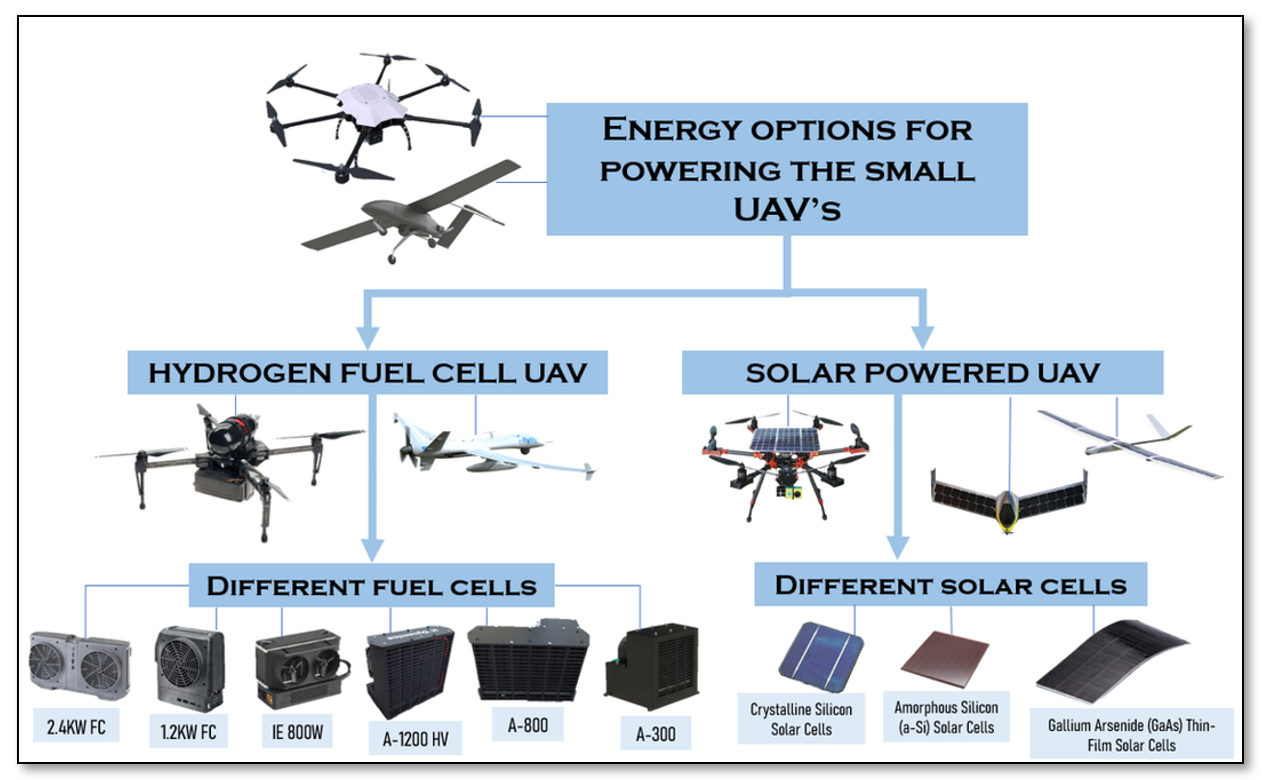
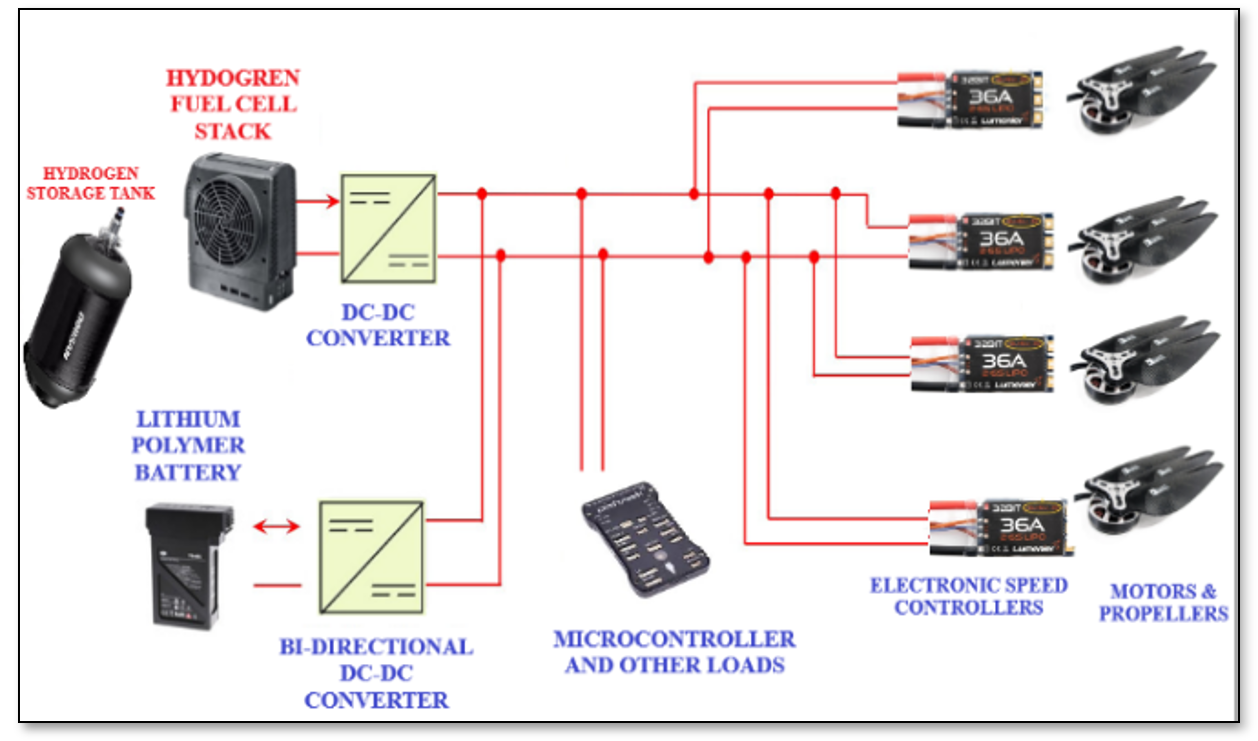
Unmanned aerial vehicles (UAVs), commonly known as drones, have become important tools in both civil and defense sectors. Their applications now range from agriculture and logistics to surveillance and environmental monitoring. Despite this rapid expansion, the endurance of UAVs remains a key limitation. Most battery-powered UAVs operate for less than one hour, which significantly restricts mission range and operational flexibility. To address this limitation, alternative propulsion systems are being explored. Among these, hydrogen fuel cells and solar-electric systems have attracted considerable attention due to their potential to extend flight duration without a substantial increase in system weight. Figure 1A and 1B show the basic operation of HFC and a schematic diagram of a proton exchange membrane (PEM) fuel cell, respectively. Figure 2 outlines the green powertrain options for UAVs, while Figure 3 illustrates the integration of an HFC system in a UAV. This paper reviews the progress made in these two technologies. It examines their performance, challenges, and areas of application. The study also identifies future directions for improving UAV endurance through sustainable and efficient power systems.
The rapid expansion of UAV applications has increased demand for propulsion systems capable of supporting longer, more reliable missions. Conventional battery technology, although widely used, remains limited by its relatively low energy density. As a result, researchers have increasingly explored alternative propulsion technologies that can extend endurance without significantly increasing platform weights. Hydrogen fuel cell systems and solar-powered propulsion have emerged as the two most promising solutions for addressing this problem.
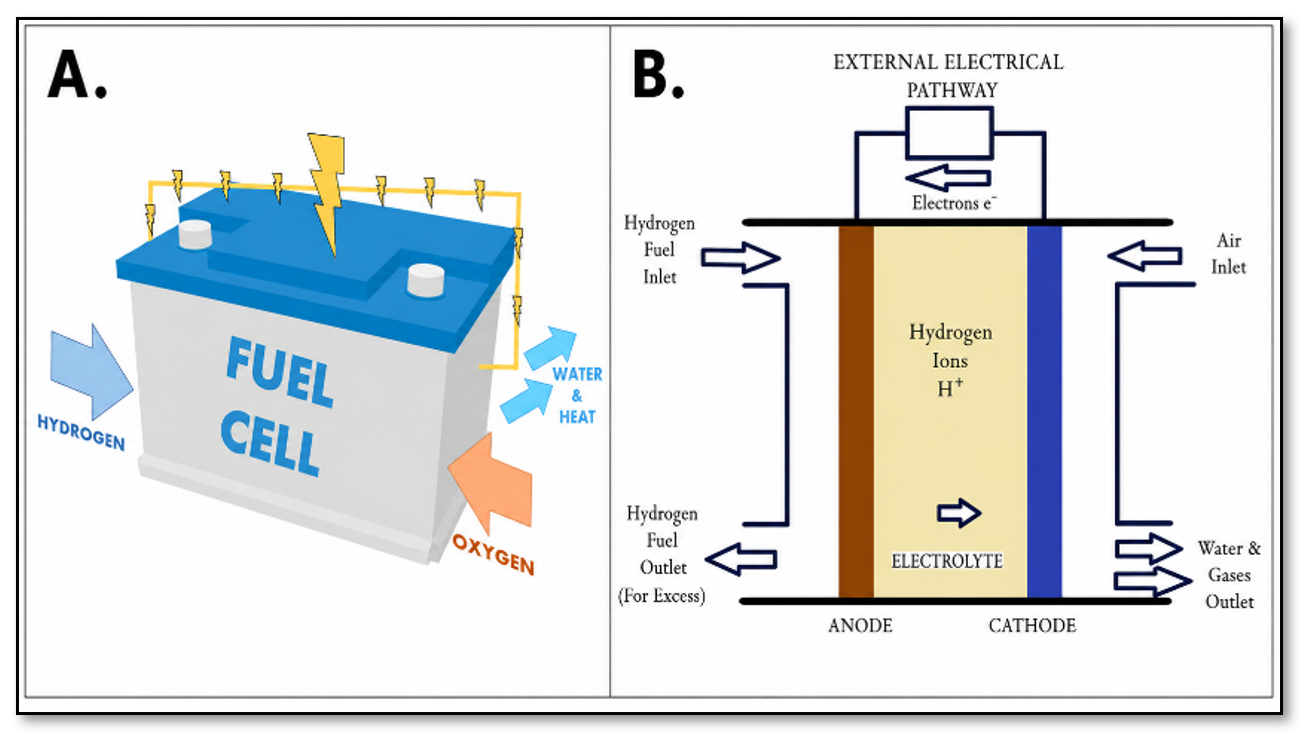
Figure 1. (A) Basic working of a HFC and (B) Schematic diagram of a HFC PEM (Proton Exchange Membrane).
2. Hydrogen Fuel Cell UAVs
In practical deployments, hydrogen fuel cell UAVs are increasingly considered in propulsion technology, offering the potential for longer flight durations and reduced environmental impact [1,2]. The increasing need for drones across industries, including agriculture, logistics, surveillance, and environmental monitoring, has led to the use of hydrogen fuel cells [3,4]. This integration has the potential to significantly enhance the capabilities and sustainability of these airborne platforms [5,6,7]. Proton Exchange Membrane (PEM) fuel cells utilize compressed hydrogen and are the most advanced technologically and commercially accessible lightweight fuel cell technologies for use in unmanned aerial vehicles [8,9].
Advantages
-
HFC-powered drones offer longer flight durations compared to battery-powered UAVs, reforming tasks like surveillance without frequent recharging [10,11].
-
Rapid refueling, like filling a petrol tank, reduces downtime between missions, enabling seamless and uninterrupted operations [12,13].
-
As hydrogen fuel cells emit only water vapor and heat, they drastically reduce carbon footprints, offering an eco-friendly alternative for UAV flights [14,15,16].
-
HFC systems easily integrate into various drone sizes and designs. Many of the systems are highly adaptable. Also, research is ongoing to enhance efficiency, reliability, and energy density for lighter, more efficient drone systems [17,18].
3. Solar-Powered UAVs
In recent years, solar-powered drones have emerged as a viable alternative. Solar technology is leveraging renewable energy to propel drones toward extended flights, increased efficiency, and reduced environmental impact [19]. The solar power harnesses the sun’s energy, offering a sustainable solution that holds immense promise across various industries. The applications include agriculture, surveillance, environmental research, and telecommunications [20,21]. To enhance the efficiency of solar cells plates, research is already going on for ethylene vinyl acetate (EVA) encapsulant at a pace [22].
Advantages
-
Solar-powered drones harness solar energy through integrated photovoltaic cells, extending flight time by combining solar power with onboard energy storage [23].
-
These drones operate with minimal to zero greenhouse gas emissions, aligning with global initiatives to reduce reliance on non-renewable resources and combat climate change [24].
-
They adapt to various conditions and terrains, providing access to remote locations for environmental monitoring, disaster relief, and agricultural surveys requiring continuous aerial coverage.
-
While setup costs are higher, they offer long-term savings by reducing fuel reliance, maintenance, and operational costs. Ongoing research focuses on improving solar cell efficiency and energy storage, and on addressing regulatory limitations to enhance their performance and reliability.
In the background of the hydrogen economy, researchers like [25,26,27] have presented the potential future of hydrogen using existing statistics and difficulties in the economy. Numerous academic and industrial organizations of several governments of the world have also seized a keen interest in these technologies. Ref. [28] have implemented and analyzed the suitability of fuel cells in a quadcopter. Moreover, Ref. [29] talks about the potential of solar-powered UAV to outperform a battery only operated UAV, especially when the task is being a pseudo satellite, which entails long operational hours. Ref. [12,30] have conceptualized initial designs of a solar-powered UAV and have drawn positive conclusions. Ref. [31] has characterized the UAVs into two categories, pure fuel cell systems and hybrid systems grounded on their propulsion system.
Many numerical and experimental pieces of analysis have been performed to investigate the possibility of using the PEMFC in drones. Ref. [32] have examined fuel cell operating conditions at different flight altitudes by altering the pressure and utilizing unalike compressor pressure ratios by using simulations and real-world tests. They presented that by flying in high altitudes, due to declining pressure, the power generation of the system tends to be condensed. Ref. [33] Worked on the theoretical concept of combining fuel cells to the aircraft propulsion systems and determined that there is a relationship between the humidity administration of the fuel cells’ membrane and their efficiency. They recommended eliminating external humidification for simpler performance and a decrease in weight. Ref. [34] performed multiple investigational experiments for defining the effect of temperature and relative humidity on the performance of PEMFCs [35].
Also, Ref. [36] talks about the possibility of continuous self-sustained flight for potential applications of the solar UAV technology for purposes such as information relay, surveillance, and monitoring. The use of solar power as an energy resource for UAV, allows small scale UAVs to carry weightier, more prevailing sensor payloads, as mentioned by [20,37]. Drone applications could become much broader if its flight endurance can be prolonged, solar-powered UAV promises notable prolongation in flight endurance [38]. Powered by renewable solar energy, solar-powered unmanned aerial vehicles designed for high-altitude, long-endurance (HALE) missions can sustain flight at approximately 70,000 feet for extended periods, ranging from several months to years. These UAVs effectively serve as pseudo-satellites in the stratosphere [39,40]. Solar-powered unmanned aerial vehicles (UAVs) represent a significant advancement in aerial technology, offering a blend of sustainability and endurance. The use of solar power in UAVs, as highlighted by [41], addresses growing concerns about environmental sustainability in aviation technology. These UAVs, especially in high-altitude long-endurance (HALE) missions, can operate at altitudes akin to satellites, as discussed by [17,42,43]. This capability allows for prolonged missions without the need for recurrent refueling, significantly plummeting operational costs and environmental impact. Moreover, the research by [44,45] emphasizes the versatility of solar-powered UAVs in various applications, from environmental monitoring to telecommunications. This versatility, coupled with their eco-friendly nature, positions solar-powered UAVs as a really capable technology for future novelties in aerial surveillance and research [19].
Moreover, a paper describes the development and testing of a fully operational small-scale demonstrator to generate and supply hydrogen for 2 to 3 daily fuel cell-powered UAV operations [41,46,47]. The designed system incorporates concentrated photovoltaic arrays (CPV), hydrogen storage, and compression units to ensure efficient UAV refueling. It also accounts for varying demands throughout the year in which it touches upon the initiation of off-grid testing to evaluate the working aspects of the refueling system powered exclusively just from the solar sources. In another manuscript, which is employing a standard aircraft design approaches and computational simulations, a blended wing body UAV with a 25 kg maximum take-off weight and 4 m wingspan was developed [48]. To design a more efficient system, they conducted a comprehensive study. They are exploring a combined system that integrates both a solid oxide fuel cell (SOFC) and a gas turbine, utilizing liquefied hydrogen as its fuel source. Their findings reveal noteworthy improvements in system efficiency and weight when transitioning from a single-cell stack design to a modular configuration with multiple discrete stacks. Moreover, this approach involves parallel fuel distribution and a series-based air supply. By implementing this technology, it is projected that a UAV carrying roughly 780 kg of liquefied hydrogen could eventually extend its mission duration to last up to one week [12,15].
4. Materials and Methods
In the literature research, we have utilized respected scientific journals and high-quality databases, ensuring reliable and credible findings [24]. The literature survey was conducted using Scopus, Web of Science, IEEE Xplore, and ScienceDirect databases. Search terms included “hydrogen fuel cell UAV”, “fuel cell drone”, “solar-powered UAV”, “HALE UAV”, and related keywords associated with sustainable UAV propulsion technologies. Publications and technological developments from 2009 to 2024 were reviewed. Publications reporting endurance, payload capacity, operational altitude, propulsion system characteristics, or practical deployment aspects were considered for inclusion in the review. The data have been extracted, and the most imperative parameters were used to draw the conclusion [49]. Where peer-reviewed performance data were unavailable, selected specifications from established UAV manufacturers were included to provide representative examples of current technological capabilities. The data analysis has been carried out using different tabular charts [44,50]. The specific parameters compared for the HFC drones were aircraft name, country of origin, maximum payload, HFC Specification, wingspan, MTOW, flight time, maximum flight altitude, and the maximum speed. The specific parameters compared for the solar powered drones were the aircraft name, country of origin, maximum payload, wingspan, MTOW, maximum speed, PV specification, maximum flight time and the range [51]. The specific parameters compared for the normal drones were the aircraft name, country of origin, maximum payload, MTOW, maximum speed, maximum flight time, maximum altitude, and range.
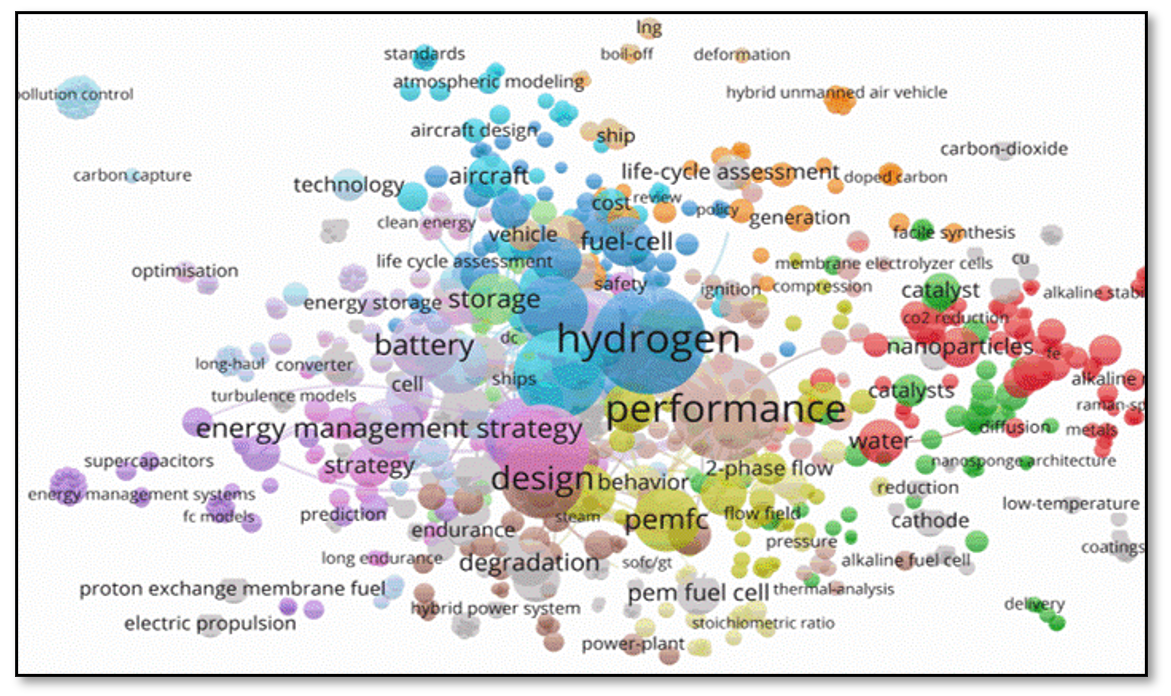
Figure 4 illustrates the keyword co-occurrence network generated from the reviewed literature. The clustering indicates strong research links between hydrogen fuel cells, energy management, battery systems, solar energy utilization, and UAV endurance optimization. The figure highlights the multidisciplinary nature of sustainable UAV propulsion research. The largest clusters are centered around hydrogen, fuel cells, energy management, and battery systems, indicating their dominant role in current UAV propulsion research.
5. Results
The literature survey for this review was conducted using major scientific databases, including Scopus, Web of Science, IEEE Xplore, and ScienceDirect. Relevant studies related to hydrogen fuel cell UAVs, solar-powered UAVs, and alternative UAV propulsion technologies were identified using keywords such as hydrogen fuel cell UAV, solar-powered UAV, HALE UAV, and UAV propulsion systems. Publications between 2009 and 2024, and the commercially available options, were examined to capture both early developments and recent technological advancements in sustainable UAV propulsion.
The data summarized in Table 1 indicate that hydrogen fuel cell propulsion systems can significantly extend UAV flight endurance compared with conventional battery-powered platforms. Several of the reported systems achieve flight durations ranging from two to ten hours, depending on aircraft configuration and hydrogen storage capacity. The improved endurance is primarily attributed to the high energy density of hydrogen fuel. However, the integration of pressurized hydrogen tanks and fuel cell systems introduces additional structural and system complexity, which must be carefully considered during drone design.
The solar-powered UAV platforms listed in Table 2 demonstrate extremely long endurance capabilities compared with conventional UAV systems. These aircraft rely on photovoltaic panels integrated into the wings or airframe structure to harvest solar energy during flight. As a result, several high-altitude long-endurance platforms are capable of remaining airborne for multiple days under favourable environmental conditions. However, these systems generally require large wingspans in order to maximize solar energy collection, which limits their payload capacity and operational flexibility.
Table 1. Comparison between different HFC powered UAV and their specifications.
|
SR. NO. |
Aircraft |
Country |
Maximum Payload |
HFC Specification |
Wingspan |
MTOW |
Flight Time |
Maximum Flight Altitude |
Maximum Speed |
|---|---|---|---|---|---|---|---|---|---|
|
Hyun An et al. |
Korea |
1.25 kg |
2 kW fuel cell |
3.5 m |
25 kg |
6 h |
1000 m |
126 km/h |
|
|
[48] |
Sweden |
N.A. |
650 W fuel cell |
4 m |
25 kg |
2 h |
500 m |
72 km/h |
|
|
[52] |
The Netherlands |
N.A. |
800 W fuel cell |
2.24 m |
8 kg |
N.A. |
N.A. |
61.2 km/h |
|
|
1. |
[53] |
US |
N.A. |
500 W PEM fuel cell |
6.5 m |
16.4 kg |
52 min |
35 m |
70.2 km/h |
|
2. |
[54] |
Spain |
2 kg |
500 W PEM fuel cell |
4.7 m |
11 kg |
2 h and 17 min |
200 m |
61.2 km/h |
|
Özbek et al. [55] |
Turkey |
0.5 kg |
250 W PEM fuel cell |
3 m |
6.5 kg |
5 h |
1000 m |
57.6 km/h |
|
|
1. |
Intelligent Energy [4] |
UK |
0.5 kg |
650 W Fuel Cell |
VTOL |
4 kg |
1 h |
3000 m |
50 km/h |
|
2. |
MMC Micro Multi Copter Aero Technology Co., Ltd. Skypatrol 2700 VTOL |
China |
10 kg |
H1 fuel cell |
3.75 m |
22 kg |
up to 7 h |
5000 m |
110 km/h |
|
3. |
MMC Micro Multi Copter Aero Technology Co., Ltd. HyDrone 1550 |
China |
5 kg |
H1 fuel cell |
VTOL |
22 kg |
150 min |
2500 m |
36 km/h |
|
4. |
H3 Dynamics HYWINGS hydrogen fuel cell UAV [56] |
Singapore |
2 kg+ |
HES H2 FC system |
3.5 m |
7 kg |
up to 10 h |
200 m |
70 km/h |
|
5. |
H3 Dynamics HYCOPTER UAV [56] |
Singapore |
1 kg+ |
HES fuel cell |
VTOL |
5.2 kg |
up to 4 h |
500 m |
56 km/h |
|
6. |
Sparkle Tech Ltd. Eagle Plus VTOL [57] |
Hong Kong |
10 kg |
Hydrogen storage |
3.5 m |
21 kg |
5 h |
500 m |
115 km/h |
|
7. |
FlightWave Aerospace Systems Inc JUPITER-H2 UAS [58] |
US |
1 kg+ |
H2 fuel cell |
VTOL |
N.A. |
2 h |
200 m |
100 km/h |
|
8. |
NRL’s Ion Tiger Fuel Cell Powered UAV [36] |
US |
2.5 kg |
H2 fuel cell |
5.2 m |
16.78 kg |
48 h |
500 m |
N.A. |
|
9. |
AeroVironment PUMA [26] |
US |
1 kg |
H1 fuel cell |
2.8 m |
5.9 kg |
9 h |
150 m |
83 km/h |
|
10. |
Insitu Scan Eagle |
US |
5 kg+ |
H1 fuel cell |
3.11 m |
22 kg |
9 h |
6000 m |
140 km/h |
Abbreviations: HES = Hybrid Energy System; MTOW = Maximum Take-Off Weight; N.A. = Not available; PEM = Proton Exchange Membrane; UAV = Unmanned Aerial Vehicle; VTOL = Vertical Take-Off and Landing.
Table 2. Comparison between different solar powered UAV and their specifications.
|
SR. NO. |
Aircraft |
Country |
Payload |
Wingspan |
MTOW |
Maximum Speed |
PV |
Maximum Flight Time |
Range |
|---|---|---|---|---|---|---|---|---|---|
|
1. |
Boeing Phantom Works Solar Eagle |
US |
5 kg |
120 m |
60 kg |
N.A. |
5 kW |
30 days |
N.A. |
|
2. |
Google (Titan Aerospace) Solara 50 |
US |
10 kg |
60 m |
22 kg |
100 km/h |
7 kW |
5 years |
4.54 million km |
|
3. |
Lockheed Martin Hale-D |
US |
36 kg |
N.A. |
1724 kg |
48 km/h |
15 kW |
N.A. |
965 km |
|
4. |
Airbus (QinetiQ) Zephyr 8/S |
US |
5 kg |
25 m |
60 kg |
55 km/h |
Amorphous silicon |
26 days |
56,000 km |
|
5. |
Bye Engineering Silent Falcon UAV |
US |
1.3 kg |
4.27 m |
13.5 kg |
112 km/h |
Ascent Solar Thin Film Photovoltaic |
N.A. |
100 km |
|
6. |
Atlantik Solar |
Switzerland |
0.8 kg |
5.6 m |
6.3 kg |
30 km/h |
1.4 m2 |
81 h |
5000 km |
Abbreviations: MTOW = Maximum Take-Off Weight; N.A. = Not available; UAV = Unmanned Aerial Vehicle.
In contrast to HFC and solar-powered systems, conventional Li-Po battery UAVs typically exhibit much shorter flight endurance. Most commercially available platforms operate between 20 and 60 min, depending on payload and mission profile. While these systems offer simplicity and lower system cost, their limited endurance restricts their usefulness for long-duration missions. This limitation has motivated the continued development of alternative propulsion technologies capable of improving UAV endurance.
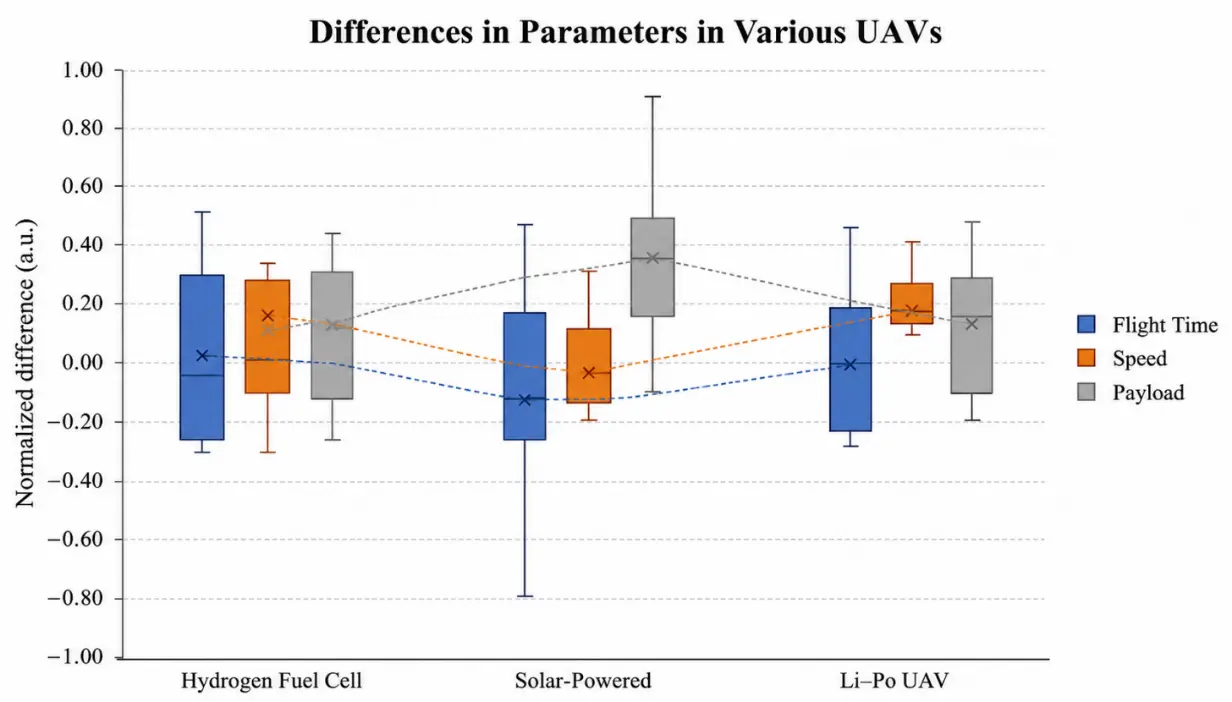
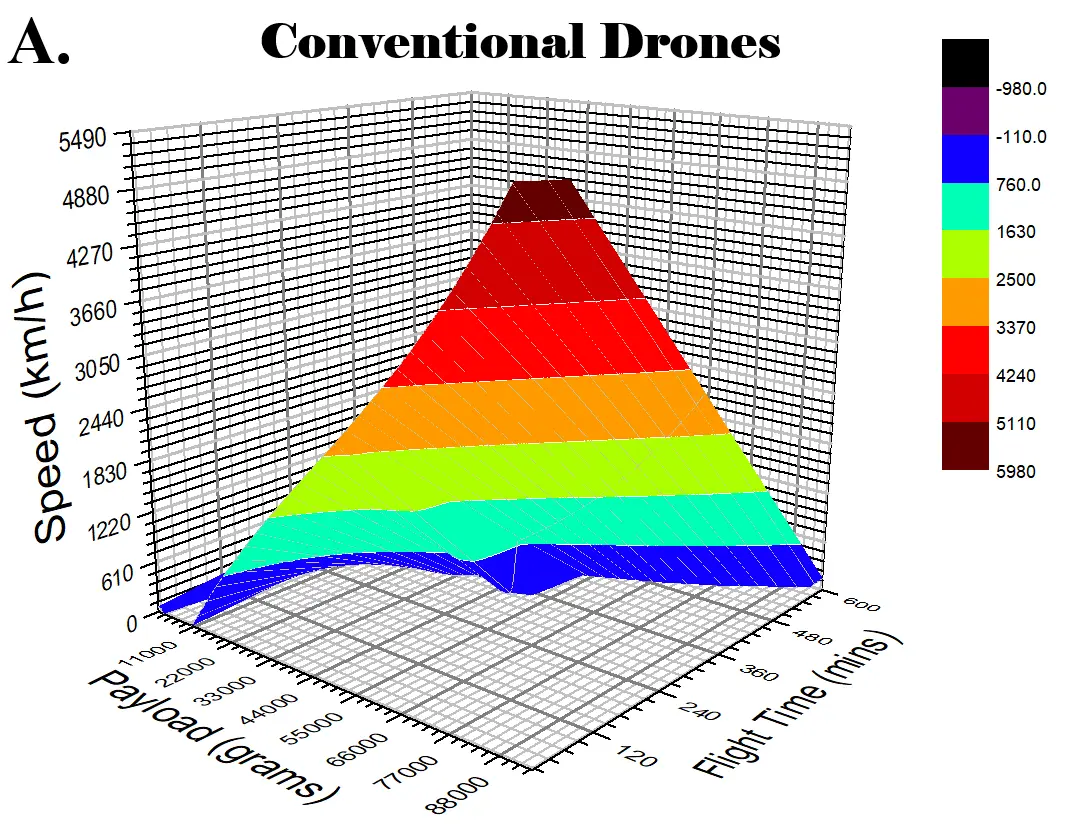
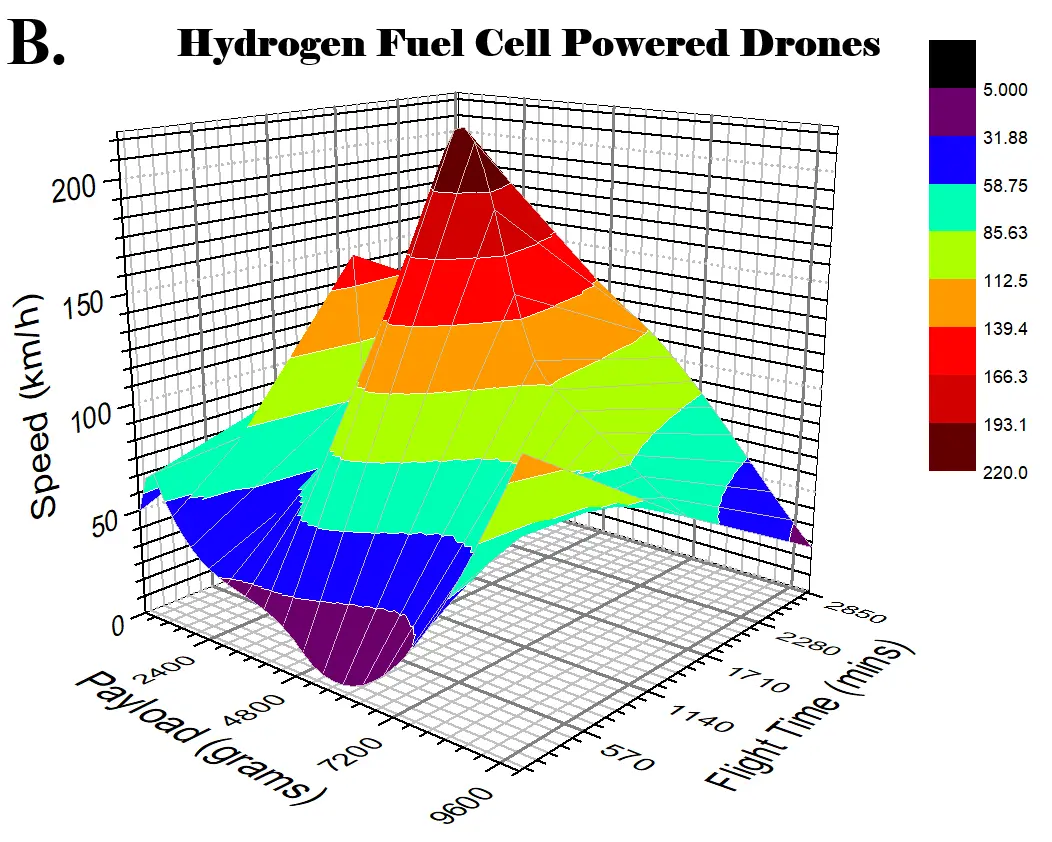
To further illustrate the differences between propulsion technologies, a graphical analysis was performed using the compiled drone performance data. These visualizations highlight variations in parameters such as endurance, payload capacity, and operational altitude across different drone platforms. The graphical comparison helps identify general performance trends among conventional battery-powered drones, hydrogen fuel cell UAVs, and solar-powered systems. The following graphs depict the differences in various parameters for Li-Po Powered, Solar, and Hydrogen Fuel Powered drones as visible in Figure 5 and Figure 6.
 |
 |
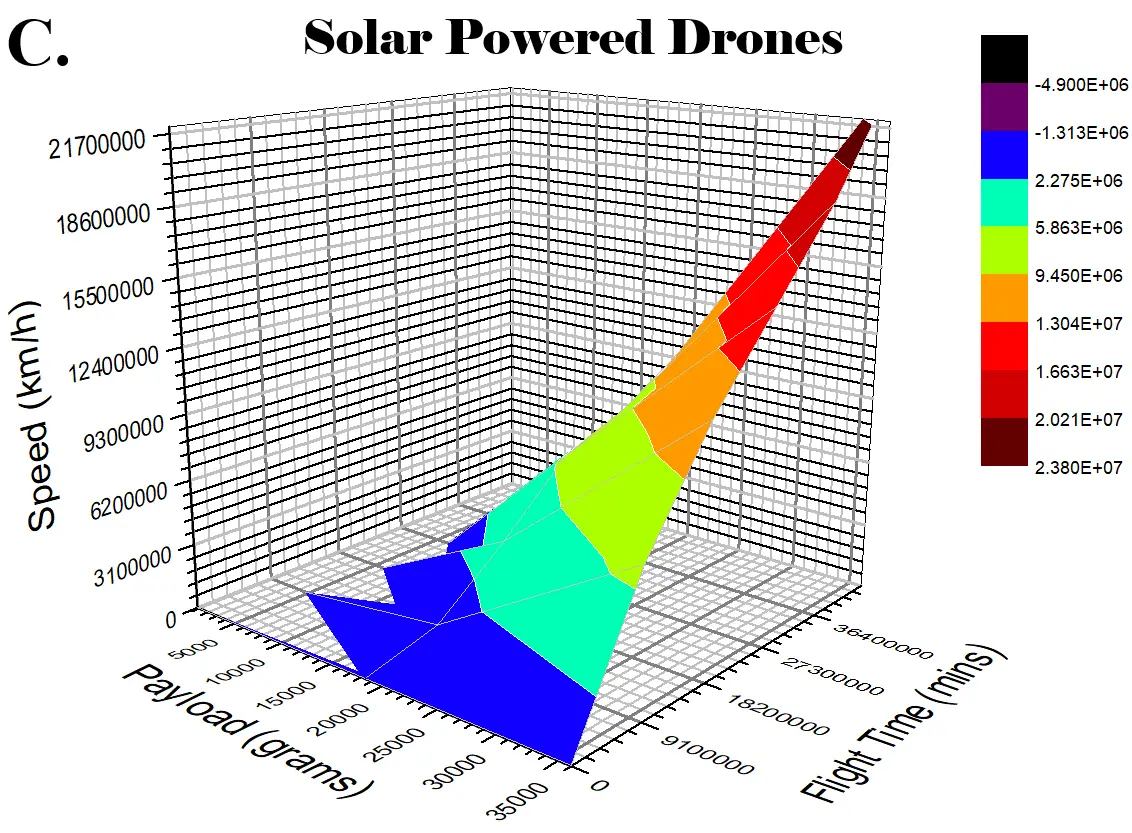 |
Figure 6. Performance characteristics of different UAV propulsion systems: (A) Conventional drones; (B) Hydrogen fuel cell-powered drones; (C) Solar-powered UAVs.
6. Discussion
UAVs provide versatility but remain constrained by limited endurance. HFC technology extends endurance substantially. For example, platforms such as the DJ25 achieve flight durations of up to 330 min (5.5 h) and payloads of 4 kg, outperforming conventional lithium-battery UAVs by a large margin. In parallel, Solar-powered systems like Airbus Zephyr have sustained flight for more than 26 days at altitudes of 18–23 km. Table 1, Table 2 and Table 3 compare UAV specifications across hydrogen, solar, and conventional battery-powered UAVs, demonstrating clear endurance and altitude benefits for these green technologies. Figure 5 and Figure 6 further visualize trends in payload, altitude, and flight duration across different platforms. While hydrogen UAVs excel in rapid deployment and mid-altitude missions, solar UAVs dominate in persistent and stratospheric roles. Although dependent on the sunlight availability, solar-powered UAVs demonstrate potential for very long missions where endurance (flight time) is prioritized over payload capacity. Together, these technologies highlight a transition from short-duration operations to sustainable long-endurance and higher altitude missions.
Table 3. Comparison between different normal UAV drones and their specifications.
|
Sr. No. |
Aircraft |
Country |
Payload |
MTOW |
Maximum Speed |
Maximum Flight Time |
Maximum Altitude |
Range |
|---|---|---|---|---|---|---|---|---|
|
1. |
DRDO Rustom-1 [59] |
India |
95 kg |
720 kg |
150 km/h |
10 h |
6100 m |
200 km |
|
2. |
DRDO Nishant |
India |
45 kg |
380 kg |
216 km/h |
4 h 30 min |
4000 m |
100 km |
|
3. |
DRDO Imperial Eagle |
India |
0.25 kg |
2.9 kg |
90 km/h |
60 min |
4600 m |
15 km |
|
4. |
Dhaksha Unmanned DH Q4 |
India |
0.5 kg |
5.14 kg |
55 km/h |
40 min |
122 m |
5 km |
|
5. |
Skyhawk Aerospace Pushpak |
India |
1.5 kg |
5.8 kg |
30 km/h |
20 min |
5700 m |
5 km |
|
6. |
IoTechworld Avigation Agribot |
India |
12 kg |
23.2 kg |
112 km/h |
25 min |
12 m |
3 km |
|
7. |
UAVE Prion Mk3 |
UK |
15 kg |
42.88 kg |
30 km/h |
2 h |
3688 m |
1000 km |
|
8. |
Hubblefly Technologies StarEdge |
India |
1 kg |
4.25 kg |
25 km/h |
45 min |
3000 m |
3 km |
|
9. |
DJI Matrice 100 |
China |
0.6 kg |
3.4 kg |
79 km/h |
40 min |
4000 m |
5 km |
|
10. |
DJI Phantom 4 Pro |
China |
0.35 kg |
1.5 kg |
72 km/h |
30 min |
5000 m |
10 km |
|
11. |
Parrot Anafi AI |
France |
0.2 kg |
0.9 kg |
60 km/h |
32 min |
5000 m |
6 km |
Abbreviations: MTOW = Maximum Take-Off Weight.
The observed differences between propulsion technologies are largely influenced by the energy density of the power source and the structural characteristics of the UAV platform. Hydrogen fuel cells provide higher energy density compared with batteries, enabling longer endurance for medium-scale drone platforms. Solar-powered UAVs, on the other hand, depend strongly on wing surface area and solar irradiance, which explains why most solar UAV designs feature large wingspans and operate at high altitudes. From the reviewed studies, it appears that endurance improvements are strongly linked to energy density rather than platform size alone.
A direct comparison between a hydrogen fuel cell and solar-powered propulsion reveals that both technologies address different operational requirements. Hydrogen fuel cell UAVs provide higher payload capability and relatively stable performance across varying weather conditions, making them suitable for low- to mid-altitude missions such as inspection, logistics, and emergency response. In contrast, solar-powered UAVs are optimized for extremely long-endurance operations at high altitudes, where continuous solar irradiance allows sustained flight for extended durations. Consequently, hydrogen fuel cell systems are more appropriate for tactical and medium-duration missions, while solar-powered UAVs are better suited for persistent monitoring and pseudo-satellite applications. The complementary characteristics of these propulsion systems indicate that both technologies will play important roles in the future development of sustainable drone platforms. The UAV platforms reviewed in this study differ considerably in size, configuration, and intended application. The analyzed systems include small multirotor drones, fixed-wing UAVs, and high-altitude long-endurance platforms that are designed for different operational requirements. Therefore, the comparisons presented in this review should be interpreted as indicators of general propulsion trends and capabilities rather than direct performance rankings among all UAV categories.
The suitability of each propulsion technology depends strongly on the mission profile. Hydrogen fuel cell systems are particularly attractive for inspection, surveillance, mapping, logistics, and emergency response applications where higher payload capacity and rapid refueling are important. Solar-powered UAVs are better suited for long-endurance applications such as environmental monitoring, communication relay, and high-altitude observation, where flight duration is prioritized over payload capacity. As a result, the selection of a propulsion system should be guided by operational requirements rather than endurance alone. Recent advances in lithium-ion batteries, lithium-sulfur batteries, and emerging solid-state battery technologies have improved the endurance of conventional UAVs. These developments offer the advantage of compatibility with existing drone architectures and charging infrastructure. However, despite these improvements, hydrogen fuel cells and solar-powered systems continue to provide advantages for missions requiring substantially longer flight durations.
Despite the advantages discussed, both hydrogen fuel cells and solar-powered UAV systems face practical limitations. Hydrogen storage introduces safety and infrastructure challenges, while solar-powered systems are highly dependent on environmental conditions such as sunlight availability and weather variability. These constraints must be addressed for wider commercial adoption. A closer examination of the data suggests that the observed performance differences are not only due to propulsion technology but also influenced by platform design, including wing geometry, structural weight, and mission profile.
7. Conclusions
These drone propulsion systems are gradually shifting toward more sustainable and high-endurance solutions. HFC UAVs offer practical low to mid altitude endurance with fast refueling, making them ideal for inspection missions, deliveries, and emergency response missions. Solar-powered UAVs, by distinction, provide much higher endurance at stratospheric (very high) altitudes. Solar-powered UAVs are particularly suitable for communication relay missions. Future innovations are expected to integrate lightweight composite hydrogen tanks, hybrid solar–fuel cell systems, and next-generation photovoltaic and battery technologies. These developments promise UAV platforms that are cleaner, longer-flying, and more capable, strengthening their role in both civil and defense applications. Further innovations can pave the way for future hybrid systems that combine the strengths of both hydrogen and solar power. The findings indicate that no single propulsion technology is universally optimal, and the selection of a suitable system depends strongly on mission requirements, payload demands, and operational environment. Instead, the most suitable propulsion architecture depends on the intended mission, operating environment, and endurance requirements.
Future research in UAV propulsion is expected to focus on improving hydrogen storage technologies, lightweight composite structures, and high-efficiency photovoltaic materials. In addition, hybrid propulsion architectures combining solar energy, fuel cells, and advanced battery systems may offer improved endurance and operational flexibility. In practice, the choice between these systems depends strongly on mission requirements rather than a single performance metric. Continued advancements in energy management and system integration will play an important role in enabling next-generation long-endurance UAV platforms.
Statement of the Use of Generative AI and AI-Assisted Technologies in the Writing Process
During the preparation of this manuscript, the authors used ChatGPT (OpenAI) for limited language refinement and sentence rephrasing to improve readability and grammatical clarity. The authors reviewed, edited, and verified all content and take full responsibility for the accuracy, originality, and scientific conclusions presented in this manuscript.
Acknowledgments
The authors would like to thank the anonymous reviewers and the editor for their valuable comments and suggestions, which helped improve the quality of this manuscript.
Author Contributions
Conceptualization, P.S.A. and P.A.K.; Methodology, P.S.A.; Investigation, P.S.A.; Data Curation, P.S.A.; Writing—Original Draft Preparation, P.S.A.; Writing—Review & Editing, P.A.K. and A.M.; Supervision, P.A.K.; Project Administration, P.A.K.
Ethics Statement
Not applicable.
Informed Consent Statement
Not applicable.
Data Availability Statement
Not applicable.
Funding
This research received no external funding.
Declaration of Competing Interest
The authors declare that they have no known competing financial interests or personal relationships that could have appeared to influence the work reported in this paper.
References
- Xu L, Huangfu Y, Ma R, Xie R, Song Z, Zhao D, et al. A Comprehensive Review on Fuel Cell UAV Key Technologies: Propulsion System, Management Strategy, and Design Procedure. IEEE Trans. Transp. Electrific. 2022, 8, 4118–4139. DOI:10.1109/TTE.2022.3195272 [Google Scholar]
- Tian W, Liu L, Zhang X, Shao J, Ge J. A coordinated optimization method of energy management and trajectory optimization for hybrid electric UAVs with PV/Fuel Cell/Battery. Int. J. Hydrogen Energy 2024, 50, 1110–1121. DOI:10.1016/j.ijhydene.2023.11.030 [Google Scholar]
- Boukoberine MN, Zhou Z, Benbouzid M. A critical review on unmanned aerial vehicles power supply and energy management: Solutions, strategies, and prospects. Appl. Energy 2019, 255, 113823. DOI:10.1016/j.apenergy.2019.113823 [Google Scholar]
- Hydrogen Fuel Cell Manufacturer, Intelligent Energy Limited. Available online: https://www.intelligent-energy.com/ (accessed on 15 January 2024).
- Ventura D, Bruno M, Jona Lasinio G, Belluscio A, Ardizzone G. A low-cost drone based application for identifying and mapping of coastal fish nursery grounds. Estuar. Coast. Shelf Sci. 2016, 171, 85–98. DOI:10.1016/j.ecss.2016.01.030 [Google Scholar]
- Liu Z, Sengupta R, Kurzhanskiy A. A power consumption model for multi-rotor small unmanned aircraft systems. In Proceedings of the 2017 International Conference on Unmanned Aircraft Systems (ICUAS), Miami, FL, USA, 13–16 June 2017; pp. 310–315. DOI:10.1109/ICUAS.2017.7991310 [Google Scholar]
- Cook B. Introduction to fuel cells and hydrogen technology. Eng. Sci. Educ. J. 2002, 11, 205–216. DOI:10.1049/esej:20020601 [Google Scholar]
- An JH, Kwon DY, Jeon KS, Tyan M, Lee JW. Advanced Sizing Methodology for a Multi-Mode eVTOL UAV Powered by a Hydrogen Fuel Cell and Battery. Aerospace 2022, 9, 71. DOI:10.3390/aerospace9020071 [Google Scholar]
- Sharaf OZ, Orhan MF. An overview of fuel cell technology: Fundamentals and applications. Renew. Sustain. Energy Rev. 2014, 32, 810–853. DOI:10.1016/j.rser.2014.01.012 [Google Scholar]
- Kim J, Kim T. Compact PEM fuel cell system combined with all-in-one hydrogen generator using chemical hydride as a hydrogen source. Appl. Energy 2015, 160, 945–953. DOI:10.1016/j.apenergy.2015.03.084 [Google Scholar]
- Dutczak J. Compressed hydrogen storage in contemporary fuel cell propulsion systems of small drones. IOP Conf. Ser. Mater. Sci. Eng. 2018, 421, 042013. DOI:10.1088/1757-899X/421/4/042013 [Google Scholar]
- Panagiotou P, Tsavlidis I, Yakinthos K. Conceptual design of a hybrid solar MALE UAV. Aerosp. Sci. Technol. 2016, 53, 207–219. DOI:10.1016/j.ast.2016.03.023 [Google Scholar]
- Letsios K, Charisiou ND, Skodras GS, Goula MA, Douvartzides SL. Hydrogen Compression Choices for Tomorrow’s Refueling Stations: Review of Recent Advances and Selection Guide. Hydrogen 2026, 7, 25. DOI:10.3390/hydrogen7010025 [Google Scholar]
- Tiele A, Esfahani S, Covington J. Design and Development of a Low-Cost, Portable Monitoring Device for Indoor Environment Quality. J. Sens. 2018, 2018, 5353816. DOI:10.1155/2018/5353816 [Google Scholar]
- Jiang Z. Design and testing of a fuel-cell powered battery charging station. J. Power Sources 2003, 115, 279–287. DOI:10.1016/S0378-7753(02)00725-5 [Google Scholar]
- Allafi I, Iqbal T. Design and implementation of a low cost web server using ESP32 for real-time photovoltaic system monitoring. In Proceedings of the 2017 IEEE Electrical Power and Energy Conference (EPEC), Saskatoon, SK, Canada, 22–25 October 2017; pp. 1–5. DOI:10.1109/EPEC.2017.8286184 [Google Scholar]
- Hwang S, Kim S, Lee Y. Developing High Altitude Long Endurance (HALE) Solar-powered Unmanned Aerial Vehicle (UAV). J. Aerosp. Syst. Eng. 2016, 10, 59–65. DOI:10.20910/JASE.2016.10.1.59 [Google Scholar]
- Pochwała S, Gardecki A, Lewandowski P, Somogyi V, Anweiler S. Developing of Low-Cost Air Pollution Sensor—Measurements with the Unmanned Aerial Vehicles in Poland. Sensors 2020, 20, 3582. DOI:10.3390/s20123582 [Google Scholar]
- Bahrami Torabi H, Sadi M, Yazdian Varjani A. Solar Power System for experimental unmanned aerial vehicle (UAV); design and fabrication. In Proceedings of the 2011 2nd Power Electronics, Drive Systems and Technologies Conference, Tehran, Iran, 16–17 February 2011; pp. 129–134. DOI:10.1109/PEDSTC.2011.5742404 [Google Scholar]
- Morton S, D’Sa R, Papanikolopoulos N. Solar powered UAV: Design and experiments. In Proceedings of the 2015 IEEE/RSJ International Conference on Intelligent Robots and Systems (IROS), Hamburg, Germany, 28 September–2 October 2015; pp. 2460–2466. DOI:10.1109/IROS.2015.7353711 [Google Scholar]
- Herwitz S, Johnson L, Arvesen J, Higgins R, Leung J, Dunagan S. Precision Agriculture as a Commercial Application for Solar-Powered Unmanned Aerial Vehicles. In Proceedings of the 1st UAV Conference, Portsmouth, VA, USA, 20–23 May 2002. DOI: 10.2514/6.2002-3404. [Google Scholar]
- Naskar M, Dharmendra HM, Sarode GL. Preparation and properties of nano zinc oxide doped ethylene vinyl acetate nanocomposites for solar cell encapsulation. Mater. Today Proc. 2020, 27, 1939–1942. DOI:10.1016/j.matpr.2020.04.791 [Google Scholar]
- Aguiar P, Brett D, Brandon N. Solid oxide fuel cell/gas turbine hybrid system analysis for high-altitude long-endurance unmanned aerial vehicles. Int. J. Hydrogen Energy 2008, 33, 7214–7223. DOI:10.1016/j.ijhydene.2008.09.012 [Google Scholar]
- Furrutter MK, Meyer J. Small fuel cell powering an unmanned aerial vehicle. In Proceedings of the AFRICON 2009, Nairobi, Kenya, 23–25 September 2009; pp. 1–6. DOI:10.1109/AFRCON.2009.5308096 [Google Scholar]
- Delorme A, Rousseau A, Sharer P, Pagerit S, Wallner T. Evolution of Hydrogen Fueled Vehicles Compared to Conventional Vehicles from 2010 to 2045; SAE Technical Paper 2009-01–1008; SAE International: Warrendale, PA, USA, 2009. DOI:10.4271/2009-01-1008 [Google Scholar]
- Rousseau A, Wallner T, Sylvain P, Lohse-Busch H. Prospects on Fuel Economy Improvements for Hydrogen Powered Vehicles; SAE Technical Paper 2008-01–2378; SAE International: Warrendale, PA, USA, 2008. DOI:10.4271/2008-01-2378 [Google Scholar]
- Singla MK, Nijhawan P, Oberoi AS. Hydrogen fuel and fuel cell technology for cleaner future: A review. Environ. Sci. Pollut. Res. 2021, 28, 15607–15626. DOI:10.1007/s11356-020-12231-8 [Google Scholar]
- Apeland J, Pavlou D, Hemmingsen T. Suitability Analysis of Implementing a Fuel Cell on a Multirotor Drone. J. Aerosp. Technol. Manag. 2020, 12, e3220. DOI:10.5028/jatm.v12.1172 [Google Scholar]
- Rajendran P, Smith H. Modelling of solar irradiance and daylight duration for solar-powered UAV sizing. Energy Explor. Exploit. 2016, 34, 235–243. DOI:10.1177/0144598716629874 [Google Scholar]
- Harasani W, Khalid M, Arai N, Fukuda K, Hiraoka K. Initial conceptual design and wing aerodynamic analysis of a solar power-based UAV. Aeronaut. J. 2014, 118, 540–554. DOI:10.1017/S0001924000009350 [Google Scholar]
- Pan ZF, An L, Wen CY. Recent advances in fuel cells based propulsion systems for unmanned aerial vehicles. Appl. Energy 2019, 240, 473–485. DOI:10.1016/j.apenergy.2019.02.079 [Google Scholar]
- Hordé T, Achard P, Metkemeijer R. PEMFC application for aviation: Experimental and numerical study of sensitivity to altitude. Int. J. Hydrogen Energy 2012, 37, 10818–10829. DOI:10.1016/j.ijhydene.2012.04.085 [Google Scholar]
- Novillo E, Pardo M, García-Luis A. Novel Approaches for the Integration of High Temperature PEM Fuel Cells into Aircrafts. J. Fuel Cell Sci. Technol. 2011, 8, 011014. DOI:10.1115/1.4002400 [Google Scholar]
- Rinaldi F, Marchesi R. Polimeric Electrolyte Membrane Fuel Cells: Characterization Test Under Variable Temperature and Relative Humidity Conditions. J. Fuel Cell Sci. Technol. 2007, 4, 231–237. DOI:10.1115/1.2713786 [Google Scholar]
- Barelli L, Bidini G, Gallorini F, Ottaviano A. Analysis of the operating conditions influence on PEM fuel cell performances by means of a novel semi-empirical model. Int. J. Hydrogen Energy 2011, 36, 10434–10442. DOI:10.1016/j.ijhydene.2010.06.032 [Google Scholar]
- Jashnani S, Nada TR, Ishfaq M, Khamker A, Shaholia P. Sizing and preliminary hardware testing of solar powered UAV. Egypt. J. Remote Sens. Space Sci. 2013, 16, 189–198. DOI:10.1016/j.ejrs.2013.05.002 [Google Scholar]
- Maurya NK, Tripathi AK, Chauhan A, Pandey PC, Lamine S. Recent Advancement and Role of Drones in Forest Monitoring. In Advances in Remote Sensing for Forest Monitoring; John Wiley & Sons, Ltd.: Hoboken, NJ, USA, 2022; pp. 221–254. DOI:10.1002/9781119788157.ch11 [Google Scholar]
- Chu L, Li X, Xu J, Neiat AG, Liu X. A Holistic Service Provision Strategy for Drone-as-a-Service in MEC-based UAV Delivery. In Proceedings of the 2021 IEEE International Conference on Web Services (ICWS), Chicago, IL, USA, 5–10 September 2021; pp. 669–674. DOI:10.1109/ICWS53863.2021.00092 [Google Scholar]
- Cestino E. Design of solar high altitude long endurance aircraft for multi payload & operations. Aerosp. Sci. Technol. 2006, 10, 541–550. DOI:10.1016/j.ast.2006.06.001 [Google Scholar]
- Liu N, Xu Z, Morrin A, Luo X. Low fouling strategies for electrochemical biosensors targeting disease biomarkers. Anal. Methods 2019, 11, 702–711. DOI:10.1039/C8AY02674B [Google Scholar]
- Salazar F, Martinez-Garcia MS, Castro AD, Logroño N, Cazorla-Logroño MF, Guamán-Molina J, et al. Optimization of the solar energy storage capacity for a monitoring UAV. Sustain. Futures 2024, 7, 100146. DOI:10.1016/j.sftr.2023.100146 [Google Scholar]
- Gao XZ, Hou ZX, Guo Z, Zhu XF, Liu JX, Chen XQ. Parameters determination for concept design of solar‐powered, high‐altitude long‐endurance UAV. Aircr. Eng. Aerosp. Technol. 2013, 85, 293–303. DOI:10.1108/AEAT-Jan-2012-0011 [Google Scholar]
- Frulla G, Cestino E. Design, manufacturing and testing of a HALE-UAV structural demonstrator. Compos. Struct. 2008, 83, 143–153. DOI:10.1016/j.compstruct.2007.04.008 [Google Scholar]
- Ramesh SS, Ma J, Lim KM, Lee HP, Khoo BC. Numerical evaluation of station-keeping strategies for stratospheric balloons. Aerosp. Sci. Technol. 2018, 80, 288–300. DOI:10.1016/j.ast.2018.07.010 [Google Scholar]
- Tsach S, Peled A, Penn D, Keshales B, Guedj R. Development Trends for Next Generation of UAV Systems. In Proceedings of the AIAA Infotech@Aerospace 2007 Conference and Exhibit, Rohnert Park, CA, USA, 7–10 May 2007. DOI:10.2514/6.2007-2762 [Google Scholar]
- Troncoso E, Lapeña-Rey N, Valero O. Solar-powered hydrogen refuelling station for unmanned aerial vehicles: Design and initial AC test results. Int. J. Hydrogen Energy 2014, 39, 1841–1855. DOI:10.1016/j.ijhydene.2013.11.064 [Google Scholar]
- Banu TP, Borlea GF, Banu C. The Use of Drones in Forestry. J. Environ. Sci. Eng. B 2016, 5, 557–562. DOI:10.17265/2162-5263/2016.11.007 [Google Scholar]
- Suewatanakul S, Porcarelli A, Olsson A, Grimler H, Chiche A, Mariani R, et al. Conceptual Design of a Hybrid Hydrogen Fuel Cell/Battery Blended-Wing-Body Unmanned Aerial Vehicle—An Overview. Aerospace 2022, 9, 275. DOI:10.3390/aerospace9050275 [Google Scholar]
- HES multirotor drone, designed and built in US, has 3h flight time. Fuel Cells Bull. 2018, 2018, 5. DOI:10.1016/S1464-2859(18)30446-2 [Google Scholar]
- Belmonte N, Staulo S, Fiorot S, Luetto C, Rizzi P, Baricco M. Fuel cell powered octocopter for inspection of mobile cranes: Design, cost analysis and environmental impacts. Appl. Energy 2018, 215, 556–565. DOI:10.1016/j.apenergy.2018.02.072 [Google Scholar]
- Padwad D, Naidu HK, Kokate P, Agrawal P. Smart IoT System for Indoor Plants with Augmented Artificial Lighting. In Proceedings of the 2023 11th International Conference on Emerging Trends in Engineering & Technology—Signal and Information Processing (ICETET—SIP), Nagpur, India, 28–29 April 2023; pp. 1–6. DOI:10.1109/ICETET-SIP58143.2023.10151545 [Google Scholar]
- De Wagter C, Remes B, Ruijsink R, van Tienen F, van der Horst E. Design and Testing of a Vertical Take-Off and Landing UAV Optimized for Carrying a Hydrogen Fuel Cell with a Pressure Tank. Unmanned Syst. 2020, 8, 279–285. DOI:10.1142/S2301385020500223 [Google Scholar]
- Bradley T, Moffitt B, Fuller T, Mavris D, Parekh D. Design Studies for Hydrogen Fuel Cell Powered Unmanned Aerial Vehicles. In Proceedings of the 26th AIAA Applied Aerodynamics Conference, Honolulu, HI, USA, 18–21 August 2008. DOI:10.2514/6.2008-6413 [Google Scholar]
- Lapeña-Rey N, Blanco JA, Ferreyra E, Lemus JL, Pereira S, Serrot E. A fuel cell powered unmanned aerial vehicle for low altitude surveillance missions. Int. J. Hydrogen Energy 2017, 42, 6926–6940. DOI:10.1016/j.ijhydene.2017.01.137 [Google Scholar]
- Özbek E, Yalin G, Ekici S, Karakoc TH. Evaluation of design methodology, limitations, and iterations of a hydrogen fuelled hybrid fuel cell mini UAV. Energy 2020, 213, 118757. DOI:10.1016/j.energy.2020.118757 [Google Scholar]
- H3 Dynamics Launches Hydrogen Fuel Cell UAV with 10 Hour Flight Time|Unmanned Systems Technology. Available online: https://www.unmannedsystemstechnology.com/2016/11/h3-dynamics-launches-fuel-cell-electric-uav-with-10-hour-flight-time/ (accessed on 15 January 2024).
- Sparkletech—Built for Tough Missions. Available online: https://www.sparkletech.hk/ (accessed on 15 January 2024).
- Flightwave, FlightWave Aerospace, Inc. Announces Hydrogen-Powered Jupiter-H2 UAS, FlightWave Aero. Available online: https://www.flightwave.aero/newsentry/flightwave-aerospace-inc-announces-hydrogen-powered-jupiter-h2-uas/ (accessed on 15 January 2024).
- Fahlstrom PG, Gleason TJ, Sadraey MH. Introduction to UAV Systems; John Wiley & Sons: Hoboken, NJ, USA, 2022. [Google Scholar]