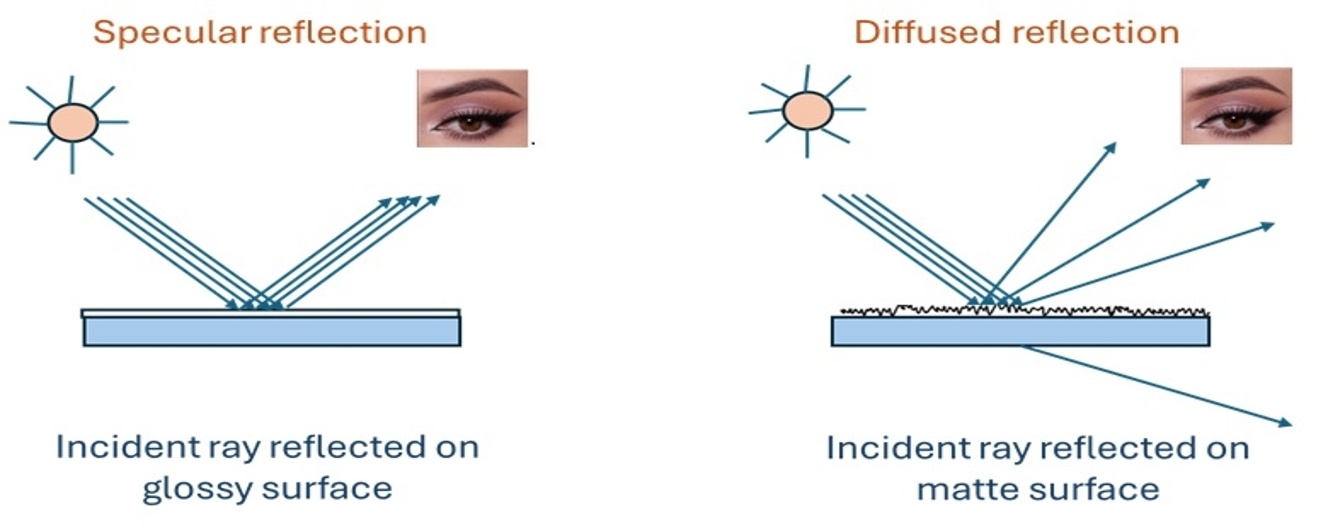
The conventional way of reducing the gloss of coating is to use matting agents such as silica, wax, and fillers. The demerits of these matting agents are sedimentation, poor compatibility, and deterioration of mechanical properties over time. Recent advances in organically modified matting agents and self-matting polymers have addressed these limitations by enabling uniform matte finishes without compromising film integrity. Organically modified silica, functionalized with silane or acrylate moieties, has been shown to deliver lower gloss values in the range of 5–14 gloss units at 60°, in contrast to the typically observed >70 gloss units for conventional high-gloss coatings. Similarly, self-matting polymers, particularly waterborne polyurethane (WBPU) and acrylate dispersions, achieve matte effects through intrinsic micro-roughness during film formation. The gloss value achieved with self-matting acrylic resin synthesized using hydrolyzable silane functionality is 6.3 units at 60°. This review emphasizes distinct techniques for organic modifications of matting agents, synthetic approaches for self-matting polymeric architectures, and their applications in the fields of decorative coatings, industrial coatings, and wood coatings.
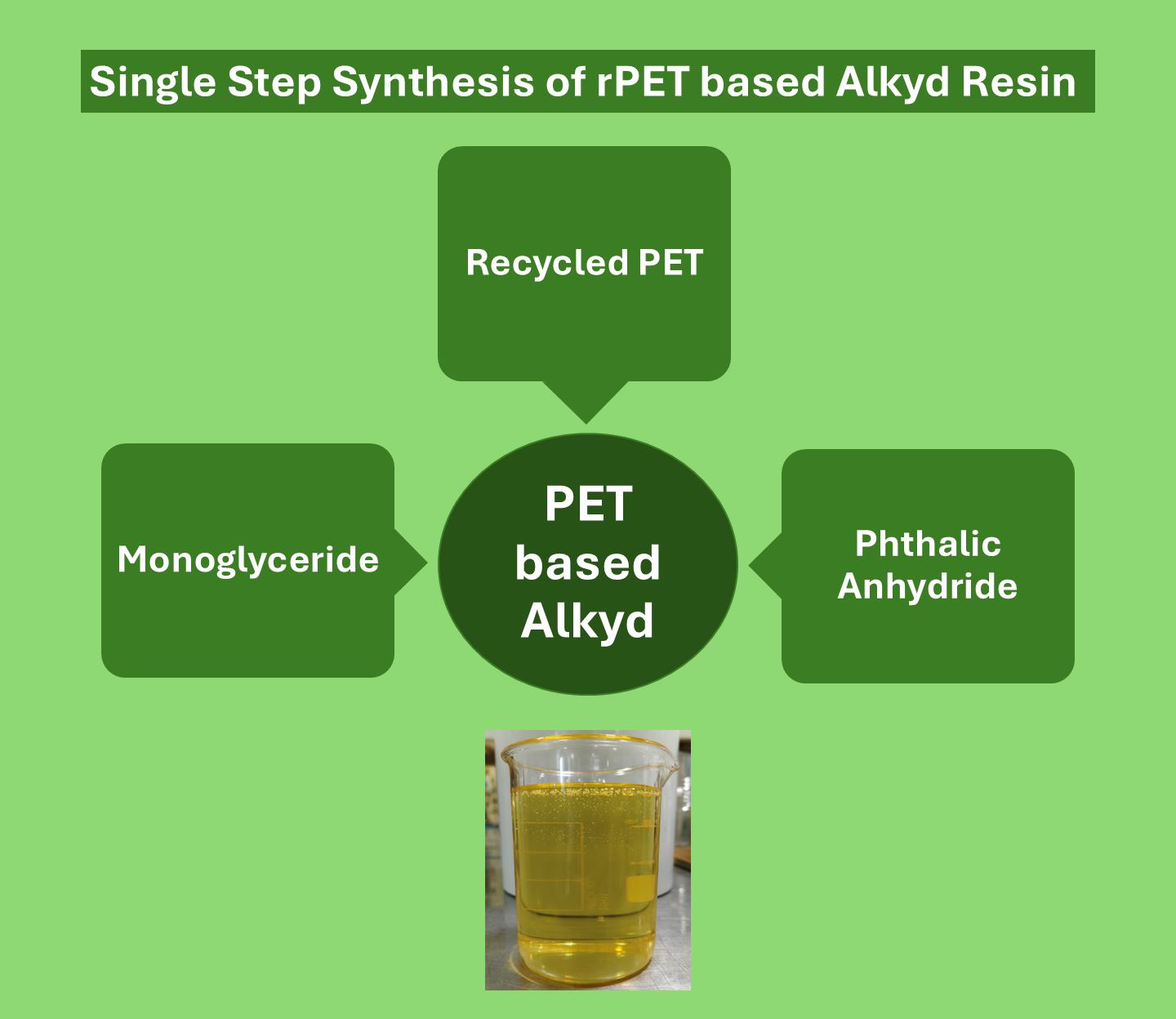
Reducing carbon footprints is an essential requirement in the chemical industry. Researchers are concentrating on creating sustainable products derived from renewable resources or waste materials. Polyethylene terephthalate (PET) waste significantly contributes to carbon footprints; the chemical recycling of PET waste possesses extensive opportunities within the chemical sector. For instance, PET waste can be transformed into valuable alkyd resin, which is utilized in the production of oil-based paints. This research work focuses on the synthesis of long oil alkyd resin using recycled polyethylene terephthalate (rPET). As the incorporation of rPET in alkyd resin has several limitations such as two-step synthesis, inability to produce long oil alkyd, and long drying time. To overcome these limitations, a novel synthesis route has been devised to produce long oil alkyd resin. In this study, three long oil alkyd resins were synthesized, each containing varying amounts of rPET. The presence of rPET in the alkyd resins was confirmed by spectroscopic techniques. To assess the impact of rPET content on alkyd resin, physicochemical properties, performance testing, and instrumental analysis have been conducted. A comparison is made between these resins and the benchmark long oil alkyd resin, and the results are discussed. Furthermore, to synergize the coating applications, viscoelastic behavior and mechanical properties of the dried films were assessed, including exterior durability. Alkyd resin containing 8% rPET shows performance properties that are comparable to the benchmark alkyd resin. This alkyd requires 80 min for surface drying and 4 h to reach a tack-free state. It has a gloss value of 86 at 20° angle. The scratch hardness is recorded as 900 g, while the gloss retention stands at 88.34% following 240 h of QUV exposure. This novel synthesis route helps to incorporate the rPET in the alkyd backbone with reduced carbon footprint to meet the goal of sustainability and the circular economy.
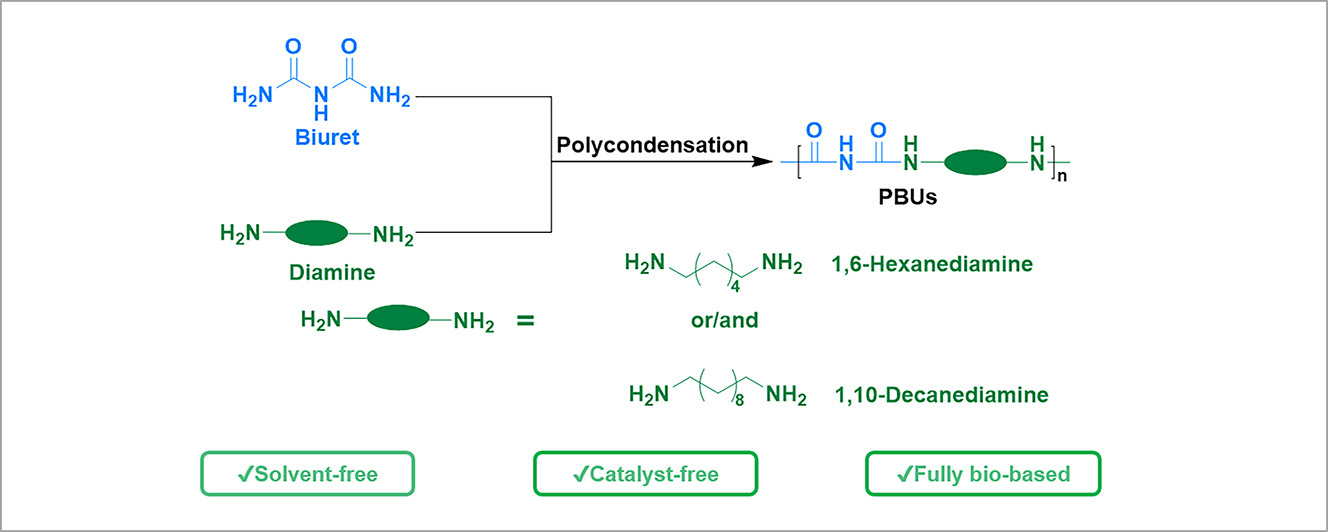
In this work, fully biobased polybiurets (PBUs) were prepared from the polymerizations of biuret, a green and environmentally friendly chemical derived from urea, with 1,10-decanediamine and 1,6-hexanediamine. No solvent and no catalyst is needed in such polymerizations. Both biuret and urea functions can be observed in the obtained products. The PBUs possess higher glass transition temperature than the corresponding polyureas (~40 °C higher). The strength at break achieves as high as 77 MPa. The mechanical and thermal properties of the PBUs can be feasibly tuned by altering the proportions of the two diamines. It is provided in this work a new strategy in the construction of biobased polymers with high performance.
The demand for sustainable, biodegradable alternatives in the food industry has increased globally due to the growing environmental impact of plastic packaging. Due to their outstanding film-forming qualities, safety, affordability, and renewability, starch-based edible coatings have become a promising solution. This article offers a thorough overview of starch-based edible coatings, including formulation strategies, coating application techniques, chemical modification methods, and sources of starch. A critical review is conducted of the functional aspects of starch coatings, such as barrier qualities, mechanical behavior, biodegradability, and compatibility with active additives like antimicrobials, antioxidants, and nanoparticles. Applications across a variety of food systems, including fruits, vegetables, meat, seafood, dairy, bakery, and confectionery products, demonstrate the ability of starch coatings to reduce moisture loss, delay oxidative and microbial spoilage, and extend shelf life. Advancements in nanocomposite films, intelligent pH-sensitive systems, and starch-polymer blends highlight emerging opportunities for next-generation active and smart packaging. Despite their potential, commercial adoption is hindered by factors like moisture sensitivity, limited mechanical strength, and scale-up barriers. The review also emphasizes the need for optimized modification methods, green processing technologies, and improved cost-effectiveness to enhance industrial applicability.
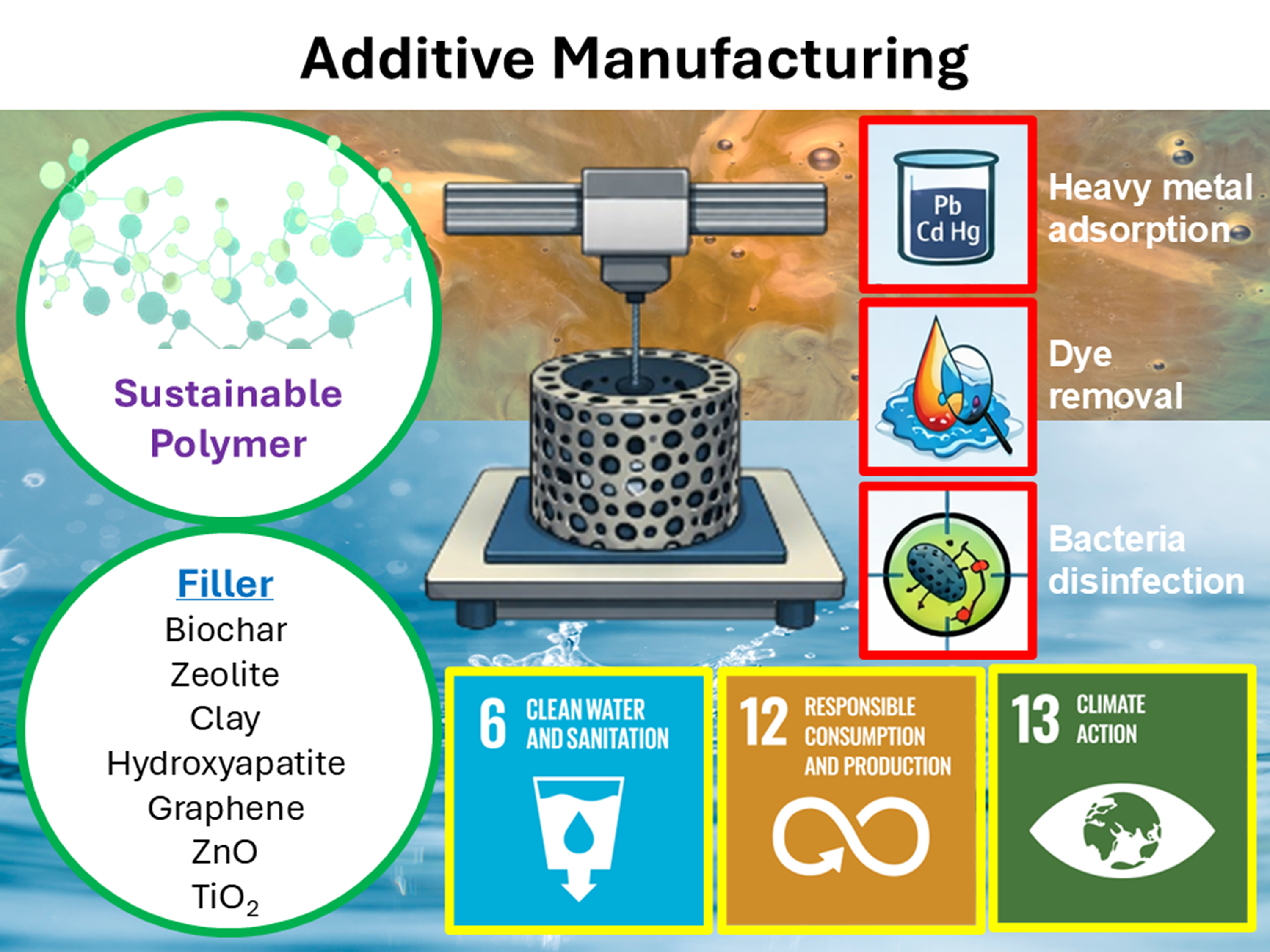
The increasing demand for clean water, coupled with growing concerns over energy consumption and environmental impact, has intensified the search for sustainable materials and fabrication strategies for water treatment technologies. Polymer composites have emerged as highly promising candidates due to their tunable chemistry, lightweight nature, and compatibility with functional fillers. At the same time, additive manufacturing (AM) offers unique advantages in terms of design freedom, material efficiency, and customizable architectures. This review provides a comprehensive assessment of sustainable polymer composites fabricated via additive manufacturing for advanced water treatment applications. Major AM techniques, including material extrusion, vat photopolymerization, material jetting, powder bed fusion, binder jetting, and sheet lamination, are critically evaluated with respect to their printability, design flexibility, and environmental footprint. Emphasis is placed on sustainable polymer matrices such as polylactic acid, polyhydroxyalkanoates, cellulose-based polymers, and recycled plastics, as well as eco-friendly fillers and functional additives, including biochar, lignin, chitosan, nanocellulose, clays, zeolites, hydroxyapatite, and functional nanomaterials (e.g., AgNPs, TiO2, ZnO, and graphene). The role of composite architecture, surface modification, and hierarchical porosity enabled by AM in enhancing adsorption, catalytic activity, and antimicrobial performance is highlighted. This review demonstrates that integrating sustainable materials with additive manufacturing enables the development of multifunctional, energy-efficient, and circular water treatment systems. The findings support the advancement of purification technologies aligned with the United Nations Sustainable Development Goals, particularly SDG 6, SDG 12, and SDG 13.