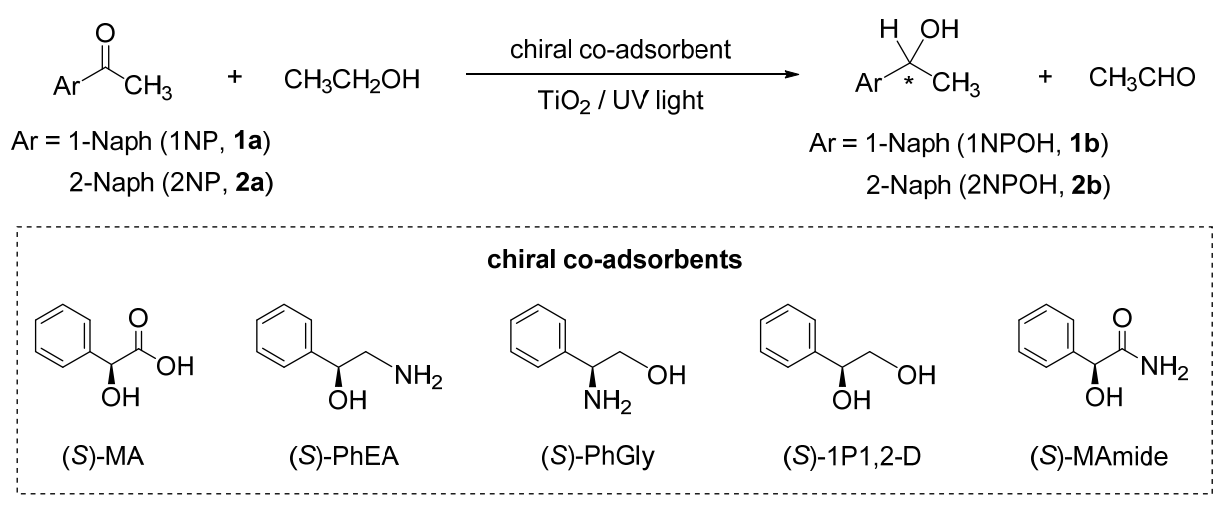
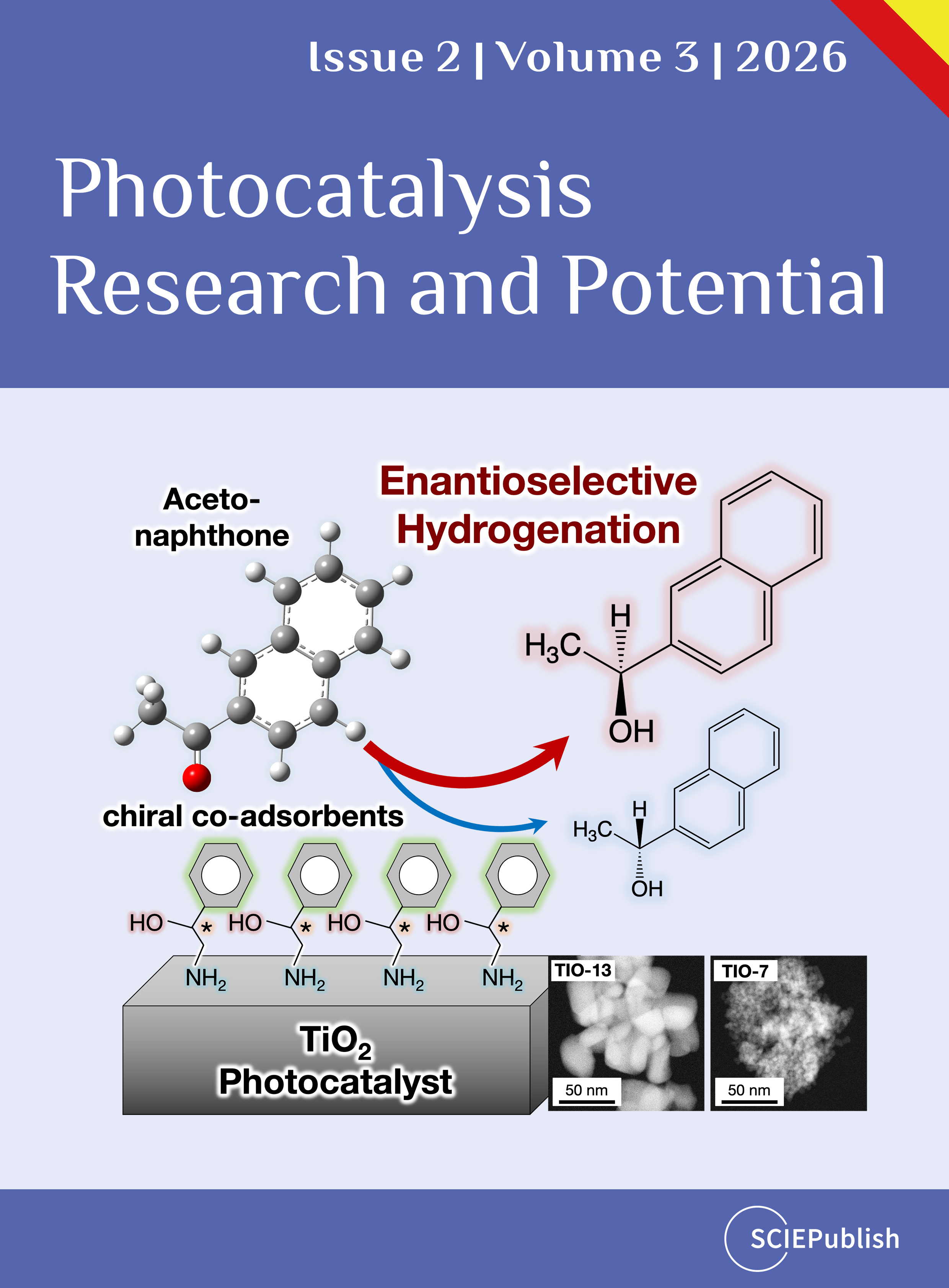
Enantioselective photohydrogenation using semiconductor photocatalysts remains challenging because of the heterogeneity of solid surfaces and the difficulty in controlling adsorption geometries. In this study, we systematically investigated the enantioselective photohydrogenation of aromatic ketones using TiO2 photocatalysts in the presence of chiral co-adsorbents, focusing on the combined effects of co-adsorbent structure and TiO2 crystal morphology. Chiral aromatic amino alcohols, such as 2-amino-1-phenylethanol (PhEA), were identified as effective and relatively photostable co-adsorbents, affording moderate enantioselectivity with reduced inhibition compared with carboxylate-type co-adsorbents. Structural analyses revealed pronounced differences in particle size, lattice distortion, and inferred exposed crystal facets among anatase TiO2 samples. TIO-13, composed of larger particles with relatively well-defined surface structures, exhibited higher and more reproducible enantioselectivity, whereas TIO-7, composed of smaller nanoparticles with more heterogeneous surfaces, showed higher reaction rates but lower enantioselectivity. Consecutive photohydrogenation experiments provided supportive evidence that residual surface-adsorbed chiral co-adsorbent contributes to both asymmetric induction and inhibition of the reaction. Although the present work should be regarded primarily as a fundamental study rather than a practically optimized catalytic methodology, it provides useful insight into the design of chiral semiconductor photocatalysts for heterogeneous asymmetric photocatalysis.