
Foreword to the Commemorative Issue Honoring Professor David Ollis
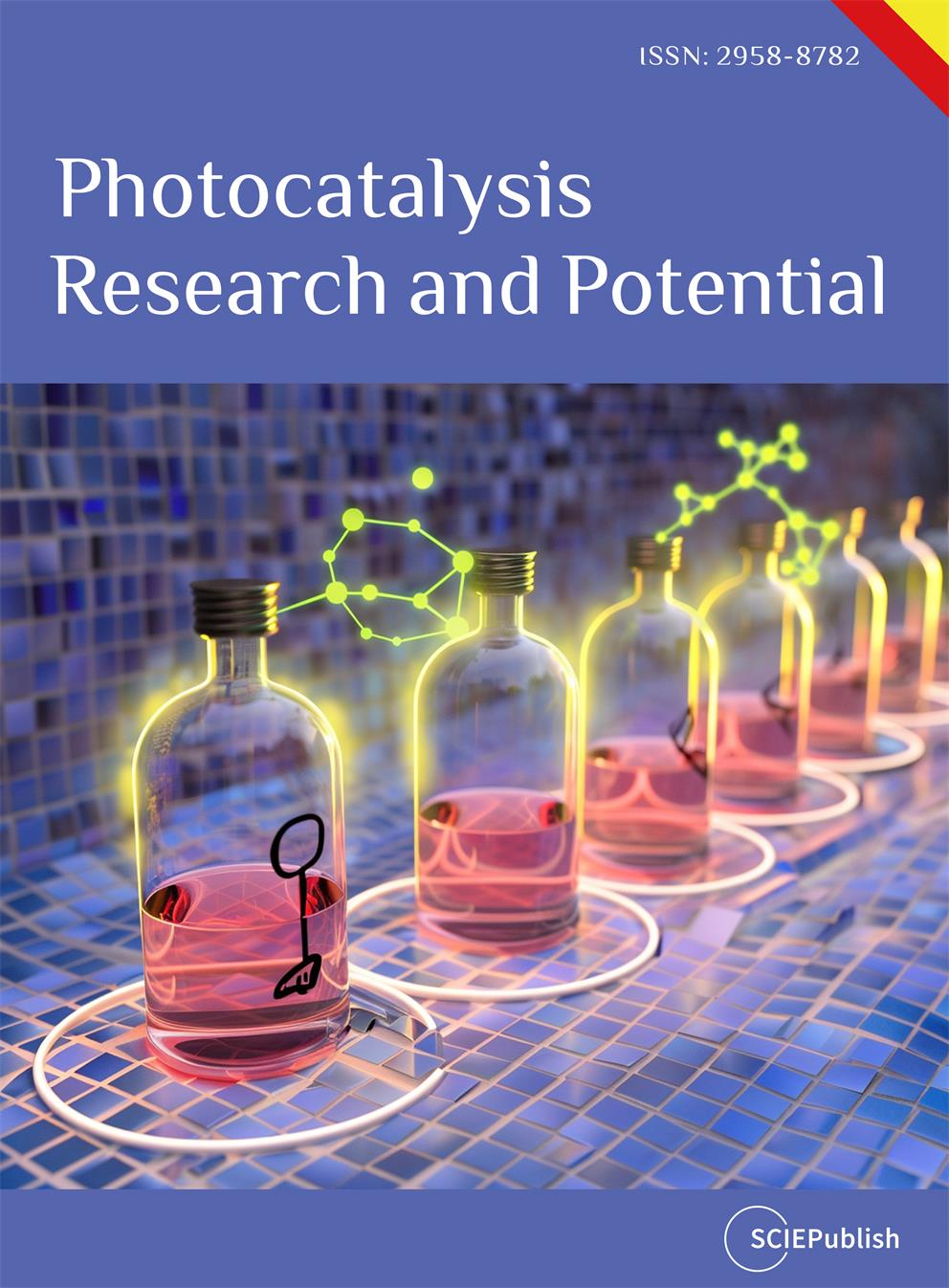
Foreword to the Commemorative Issue Honoring Professor David Ollis
Received: 21 May 2026 Accepted: 21 May 2026 Published: 27 May 2026

© 2026 The authors. This is an open access article under the Creative Commons Attribution 4.0 International License (https://creativecommons.org/licenses/by/4.0/).
This special issue commemorates the noteworthy contributions and outstanding influence of Professor David Ollis. David has been recognized as a pioneer for being one of the first to explore heterogeneous photocatalysis and as a mentor for the excellence of his research, which helped guide other scientists. I thank very much the well-known corresponding authors of this issue’s 17 articles and their collaborators. All of these corresponding authors have known David Ollis, listened to his effective presentations at conferences, and, of course, read his remarkable papers.
Contributing to this commemorative issue was an elegant way for them to pay tribute to him.
This issue covers many aspects of photocatalysis, from fundamentals to field experiments. These aspects are detailed below.
Basic photocatalytic mechanisms are explored through analysis of either the reaction kinetics, the isotopic exchange of oxygen, or the dependencies on irradiance. The photocatalysts used are the usual simple oxides, such as TiO2, ZnO, and WO3, or, in one case, the less investigated mixed oxide Bi4V2O11. The roles of co-catalysts, particularly Pt, and nitrogen modification of TiO2 are also considered. Coating methods, including 3-D printing, for photocatalysts on various supports are also described. Some studies involve the use of electrodes (photoelectrocatalysis), or thermal activation in addition to activation by photons (photothermocatalysis).
Among the potential applications, the purification of air or water (including field trials in this case) is the objective of several of the investigations reported. Other articles discuss water splitting and its related production of hydrogen, or the emerging field of light-assisted thermocatalytic reforming of methane. An article shows that the calculation of quantum efficiency is necessary to correctly compare the activity of different photocatalysts. Finally, an opinion article presents reflections on the progress in photocatalysis since David Ollis drew the attention of scientists to this research area.
In conclusion, I think this issue is a good illustration and acknowledgement of the numerous fallouts of the research for which David Ollis was a prestigious initiator. Through some of the various current developments in heterogeneous photocatalysis, it is shown that David’s influence continues. The broad recognition of David Ollis’ studies is also reflected in the fact that the authors in this dedicated issue work in 12 countries across all the continents except Africa. I am also sure that this issue will be helpful to researchers, offering valuable, diverse, and perhaps inspiring examples of the facets of photocatalysis in this easily accessible cluster of papers presented by prominent scientists.
Declaration of Competing Interest
The author declares that he has no known competing financial interests or personal relationships that could have appeared to influence the work reported in this paper.