Issue 3, Volume 3 – 1 articles

Cover Story (View full-size image):
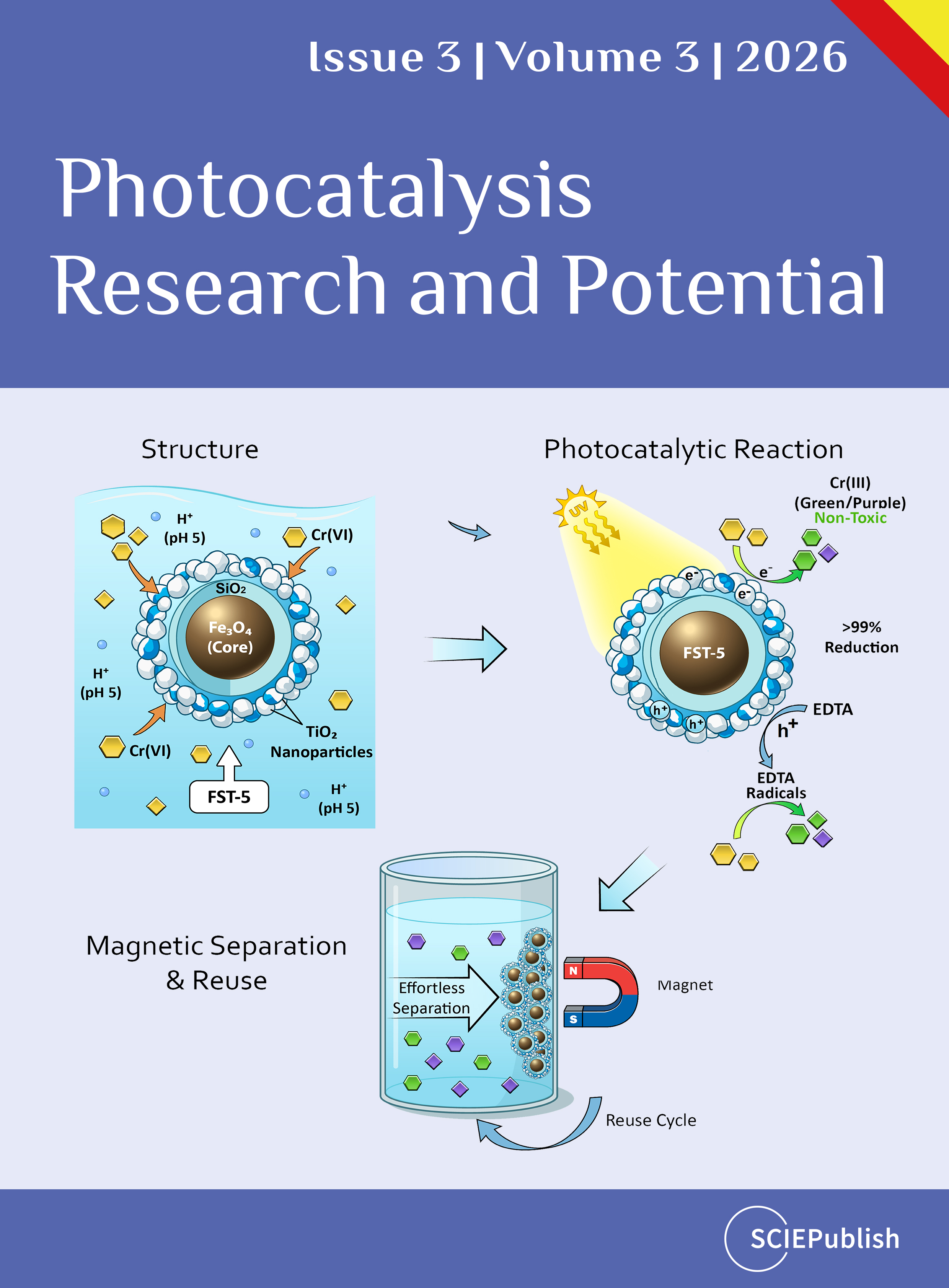
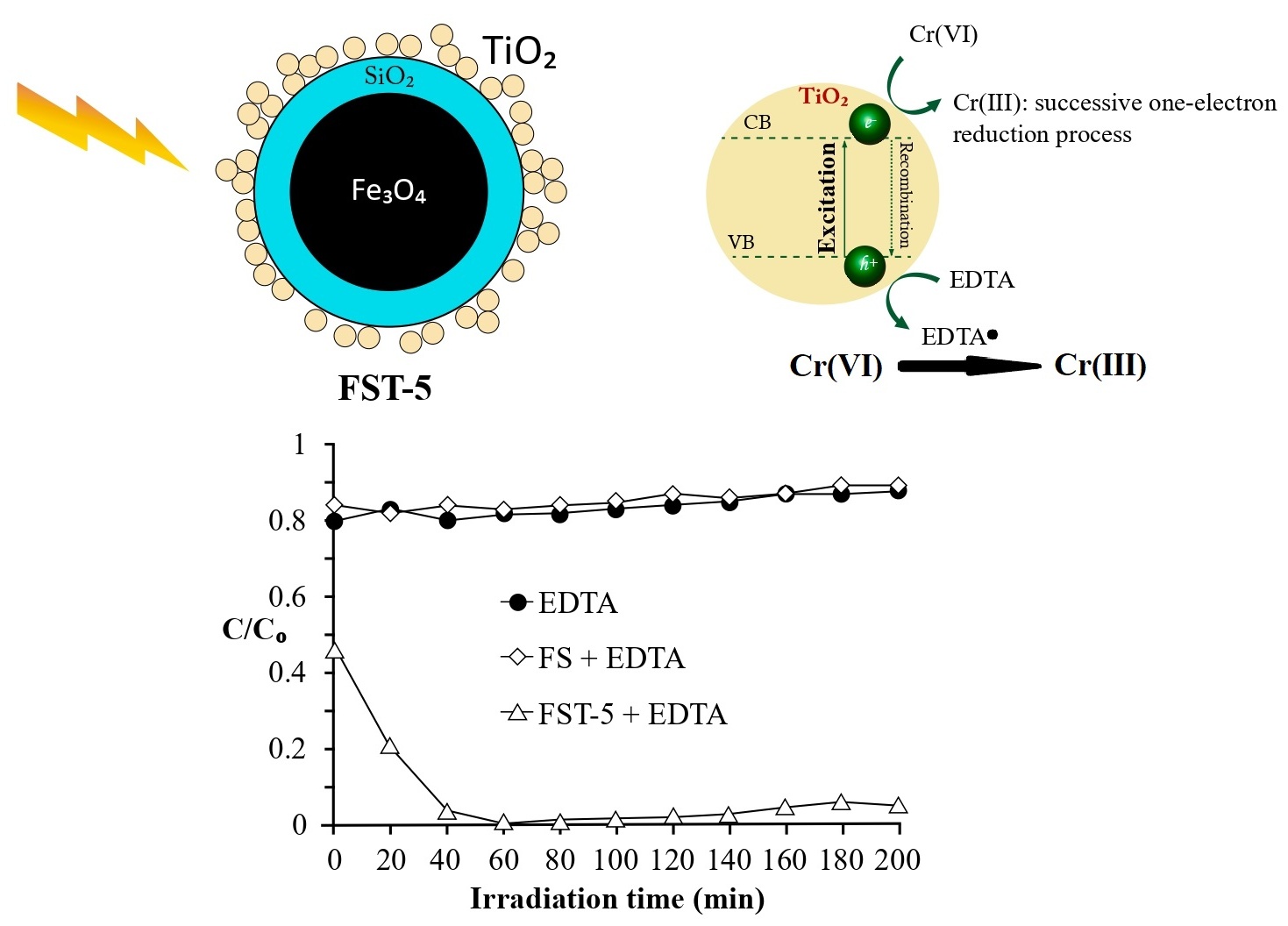
Cr(VI) compounds are considered carcinogenic to humans. Significant efforts must be made to minimize its impact on the environment and human health, for example, its photoreduction to Cr(III). This species is relatively non-toxic and an essential nutrient for humans. Irradiating TiO2 with UV light photogenerates electrons that drive the reduction of toxic hexavalent chromium. Nevertheless, the fast recombination of electrons with positive holes (which are generated simultaneously) limits its effective application. In such cases, an auxiliary reducing agent is required, with EDTA being the most commonly used. This compound reacts with positive holes, preventing electron-hole recombination while simultaneously producing strongly reducing EDTA• radicals. This cover illustrates how the combined action of EDTA and the FST-5 catalyst (TiO2 supported on SiO2-coated magnetite particles, which facilitates its subsequent removal) efficiently reduces Cr(VI) to Cr(III) via sequential one-electron reactions. This is a promising method for remediating water bodies contaminated with Cr(VI).
View this paper
Open Access

Article

28 September 2026

Photocatalytic Reduction of Cr(VI) with Titanium Dioxide Supported on SiO2-Coated Magnetite Particles

Hexavalent chromium compounds are considered carcinogenic to humans. Its reduction to Cr(III), which is relatively non-toxic and an essential nutrient for humans, is a critical process. Heterogeneous photocatalysis with TiO2 is a promising remediation method with satisfactory results. However, this semiconductor cannot be released into an aqueous media because it is dangerous to multiple forms of life. The removal of TiO2 requires laborious and costly methods, so a practical method is needed. One of these alternatives is to immobilise TiO2 on magnetic particles to facilitate its extraction. In this work, the photocatalytic reduction of Cr(VI) is carried out with TiO2 immobilised on SiO2-coated magnetite particles, called FST-5. As a sacrificial reduction agent, EDTA (Ethylenediaminetetraacetic acid) was used with satisfactory results. When both are combined, a significant decrease in the aqueous Cr(VI) amount is observed. It indicates its potential application for the remediation of water courses contaminated with this heavy metal.

TOP